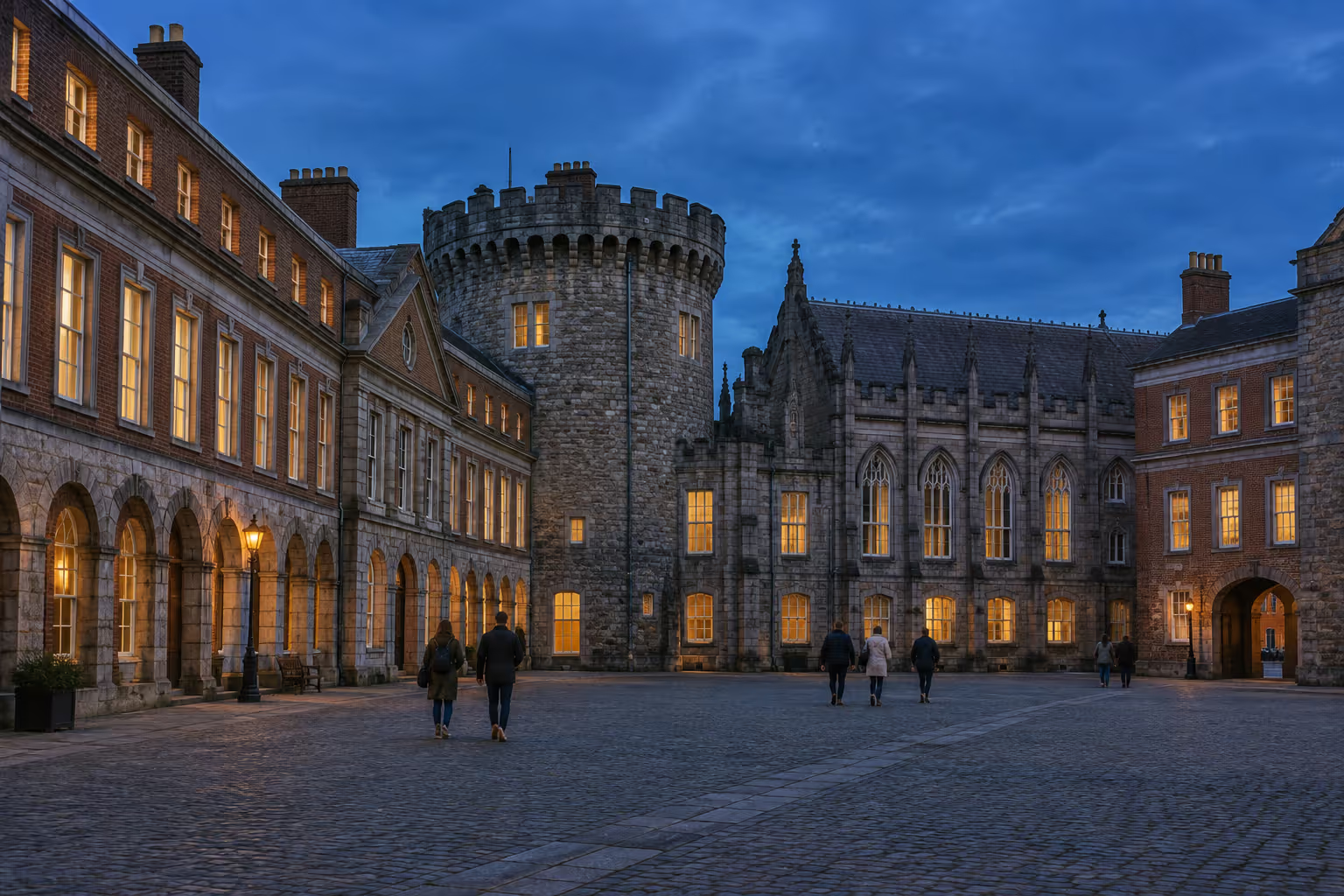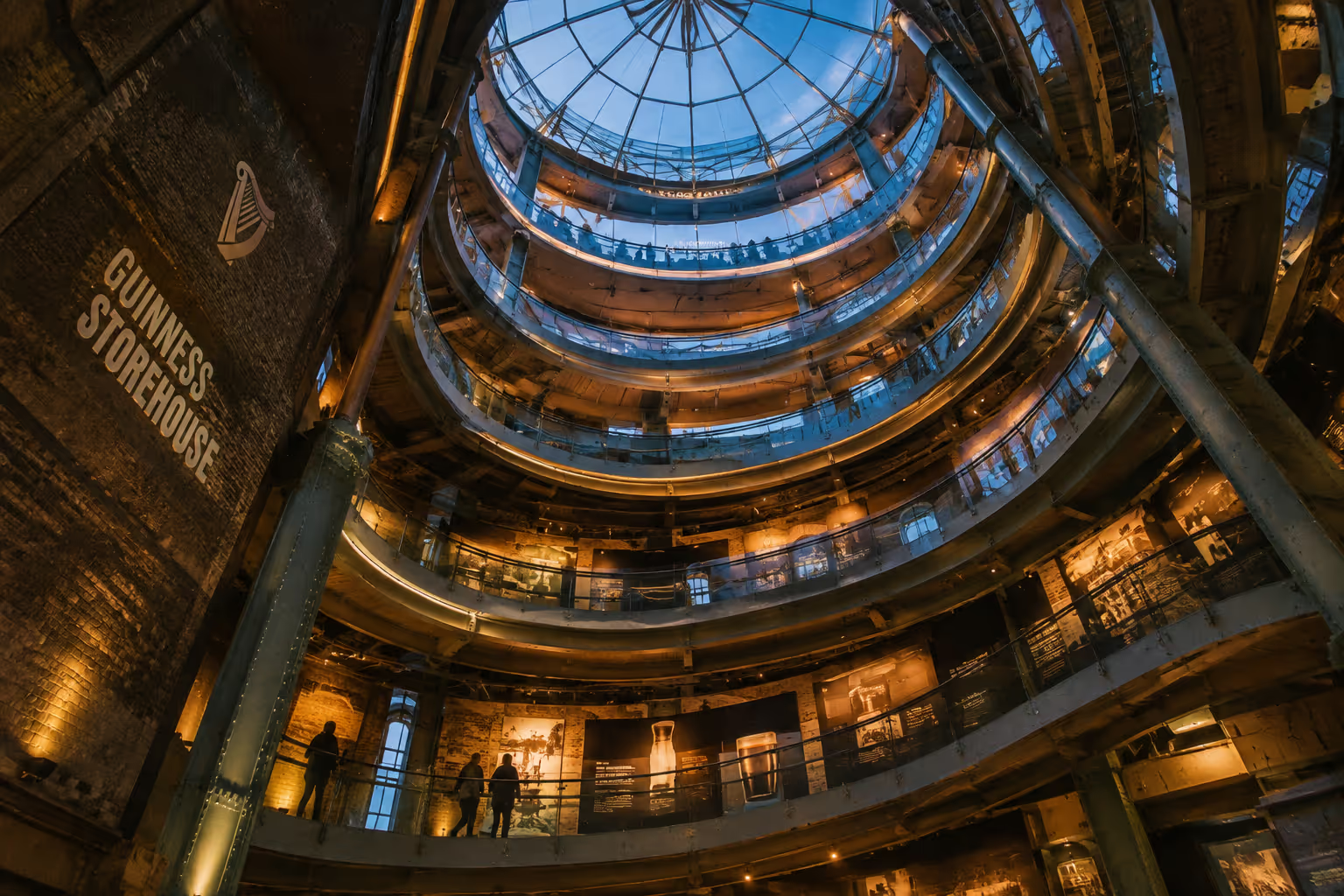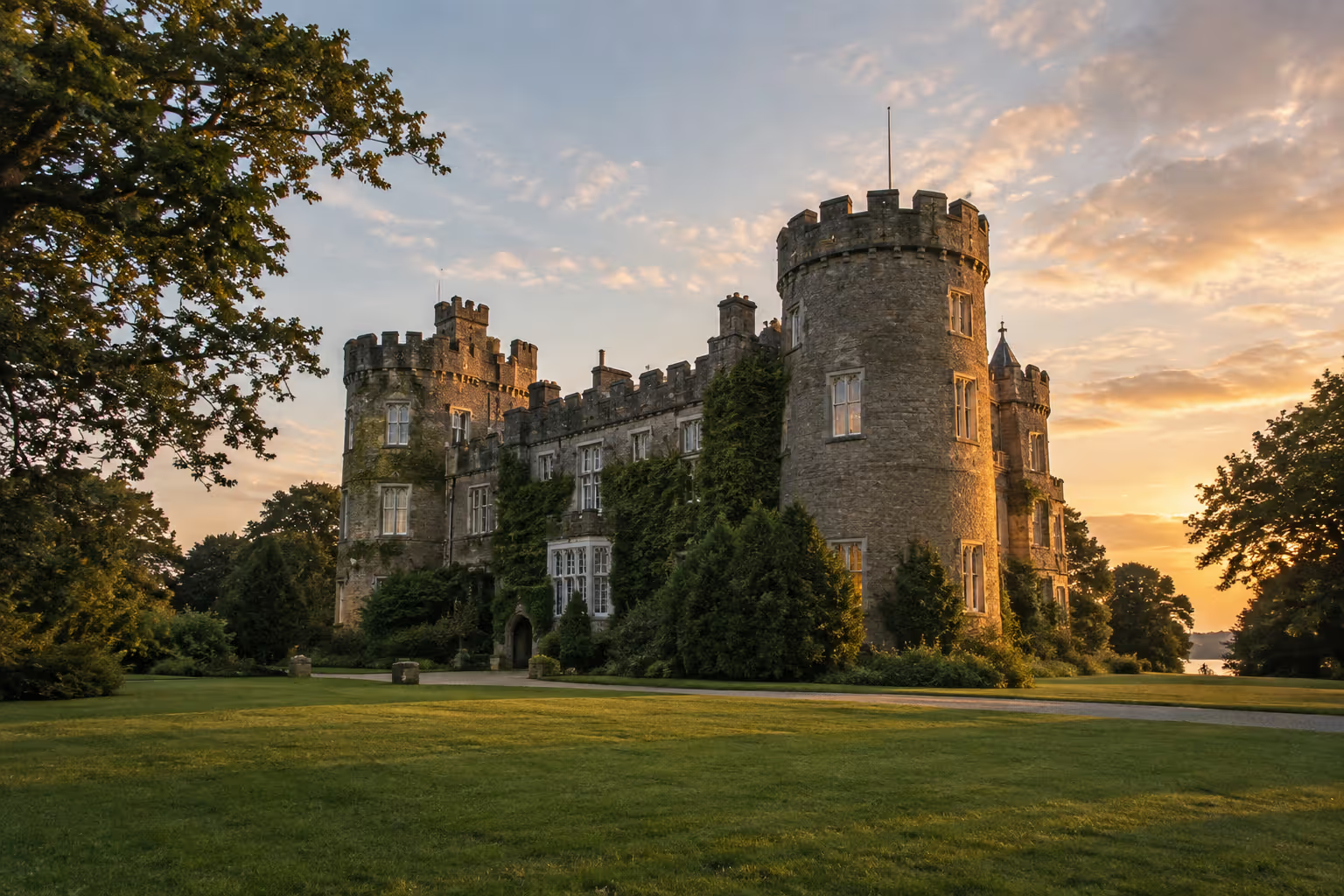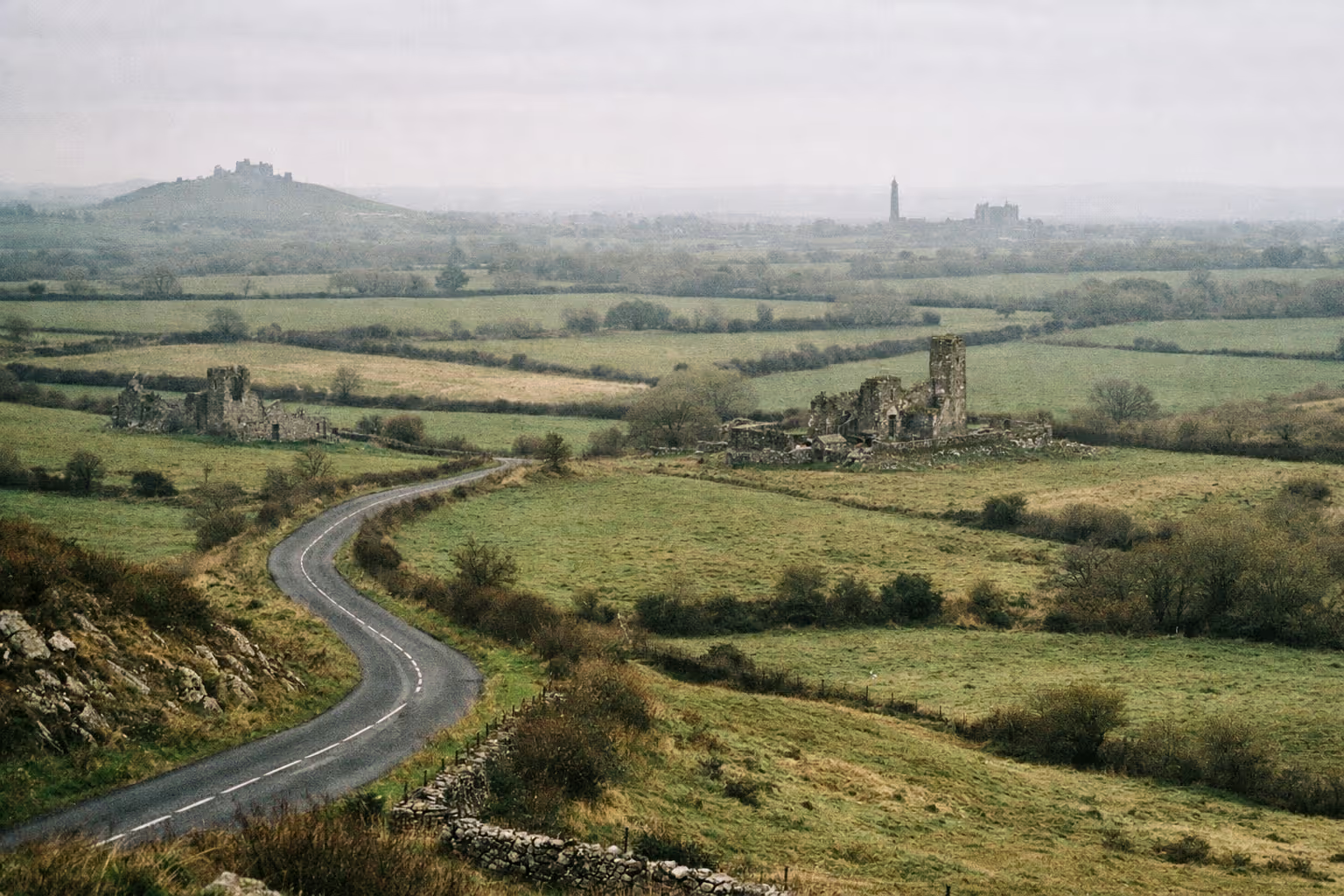
Ireland’s Ancient East covers more than 5,000 years of recorded human presence across 17 counties, and that scale is exactly why most visitors only scratch the surface. Unlike the Wild Atlantic Way, there’s no single signposted road to follow. You build your own route between passage tombs, monastic cities, and medieval castles. That’s not a flaw. It means you can plan a trip around what actually interests you, whether that’s Neolithic tombs older than the pyramids or Viking-era Waterford, rather than dutifully following someone else’s line on a map.
The catch is that this freedom demands more planning than a coastal drive where you just keep the sea on one side. This guide gives you the mental map: the region’s structure, the five sites worth building a trip around, three route options by length, and the booking mechanics that actually matter, chiefly that Newgrange sells out. Pick your era, pick your loop, and go.
Road-tripping the region has real advantages and a few honest trade-offs. On the plus side: you set the pace, you can go deep on one theme instead of skimming everything, and Dublin makes a clean start-and-finish hub for car hire and flights. The downsides are equally real. There’s no marked route, so you plan every connection yourself; driving times on regional roads run longer than the distances suggest; and the most significant prehistoric site, Newgrange, requires advance booking that trips up unprepared visitors. If you want a route you can follow on autopilot, this isn’t it. If you want a trip built around your actual interests, it’s hard to beat.
✓ Pros
- Flexible itinerary allows focus on specific historical eras or themes
- Dublin serves as a convenient start and end point with good transport links
- Opportunity to explore less-touristed sites beyond the main attractions
✗ Cons
- No continuous signage or fixed driving route; requires careful planning
- Driving times on regional roads often longer than expected
- Advance booking needed for key sites like Newgrange to avoid disappointment
Getting There and Getting Around
Dublin is the practical entry point for Ireland’s Ancient East. Dublin Airport connects directly to most major European cities and has transatlantic routes from North America; from the airport, car hire desks are in the arrivals hall and you’re on the M1 or M50 within minutes. Cork Airport works as an alternative entry if you’re planning to run the route south-to-north or focus on the Celtic Coast zone.
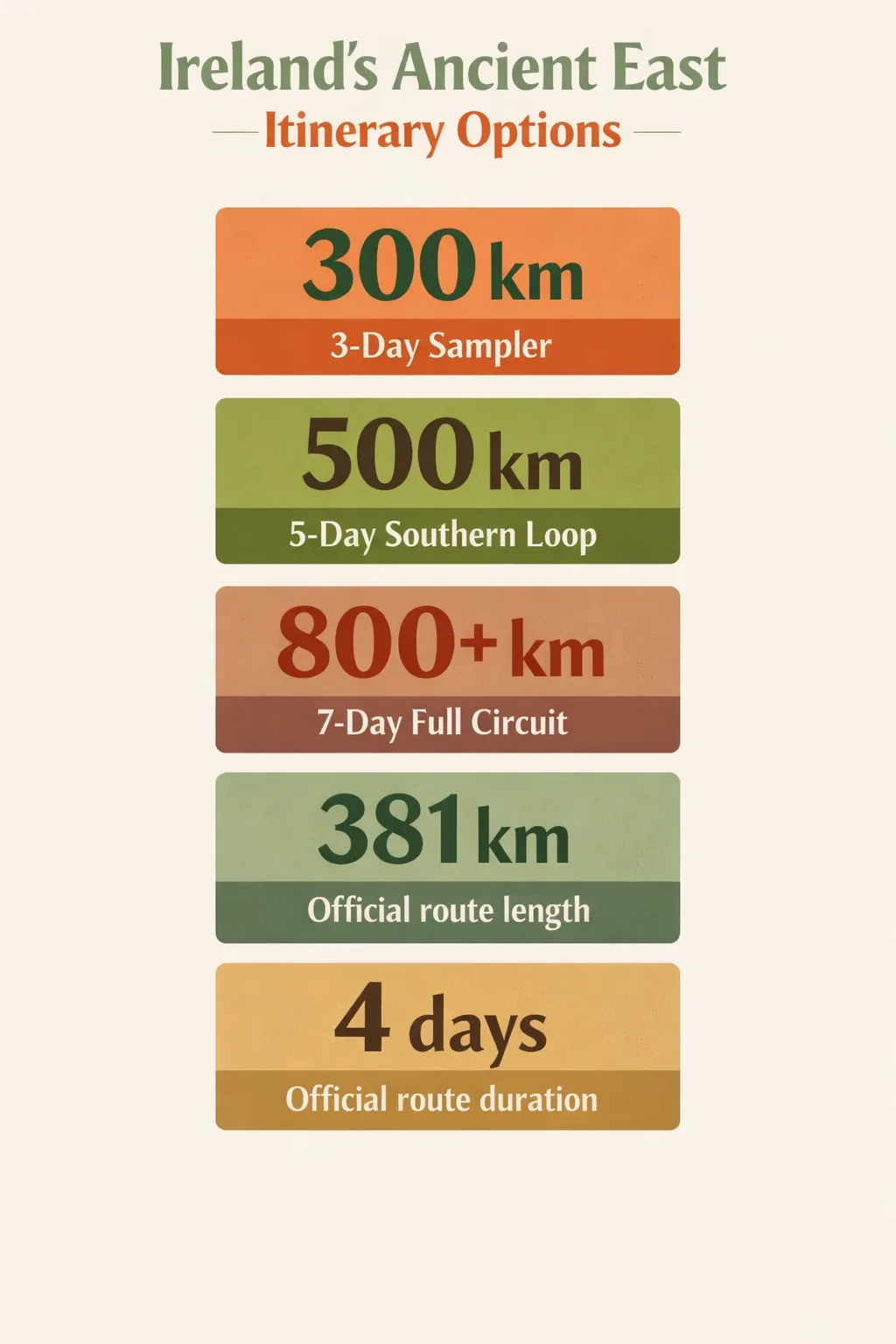 Itinerary options and official benchmarks for Ireland’s Ancient East, with driving distances and route metrics.
A car is non-negotiable. The main arteries are the M11 (Dublin to Wicklow), the M9 (Dublin to Kilkenny and Waterford), the M8 (Dublin to Cashel), and the N25 (Waterford east to Wexford and west toward Cork). Regional roads branch off all of these. Expect them to be narrow, occasionally unsigned, and slower than the distance suggests.
Best month to visit: May or September. (Best Time to Visit Ireland breaks the year down month by month.) May gives you long daylight hours (15-plus by mid-month), lower crowd levels than July-August, and green countryside before the summer coach-tour peak. September keeps the light, drops the crowds noticeably, and the weather holds more reliably than October. July and August are viable but Glendalough’s car park fills before 10am on weekends and Newgrange slots go fast. If your priority is the Boyne Valley and outdoor sites, avoid the short days of November through February.
What most guides get wrong: they treat Ireland’s Ancient East as a southern loop and quietly drop the Boyne Valley. The Dublin-Glendalough-Kilkenny-Cashel-Waterford circuit is well-documented and easy to follow, but it skips Newgrange, Knowth and the Hill of Tara, the most significant prehistoric landscape in Ireland and the reason the region exists as a concept. If you have five days, the Boyne Valley deserves one of them more than a second afternoon in Kilkenny.
Cost range: budget varies widely depending on accommodation choices and how many OPW sites you visit. As a relative benchmark, Ireland’s Ancient East runs more expensive than a comparable road trip in Portugal or rural France but cheaper than equivalent heritage circuits in the UK. The main paid sites (Newgrange, Kilkenny Castle, Rock of Cashel, the Waterford Treasures museums) each carry admission fees; several others, including the Hill of Tara and Glendalough’s monastic ruins, are free. Check the OPW Heritage Card if you’re hitting four or more managed sites: it covers most of the major stops and pays for itself quickly.
What Ireland’s Ancient East Actually Is (and Isn’t)
Ireland’s Ancient East is a Fáilte Ireland tourism brand covering 17 counties across Leinster and parts of Munster (5), not a single road and not a coastal route. For a broader overview of the country’s top destinations, Best Cities to Visit in Ireland: Dublin, Galway and Cork provides useful context. It connects historic sites through more than 5,000 years of heritage, stretching from Brú na Bóinne and the Boyne Valley in the northeast, through the midlands and Wicklow, down to Kilkenny, Waterford, Wexford and the southern counties (1). The concept is built around four historical pillars: Ancient Ireland, Early Christian Ireland, Medieval Ireland, and Anglo Ireland (5).
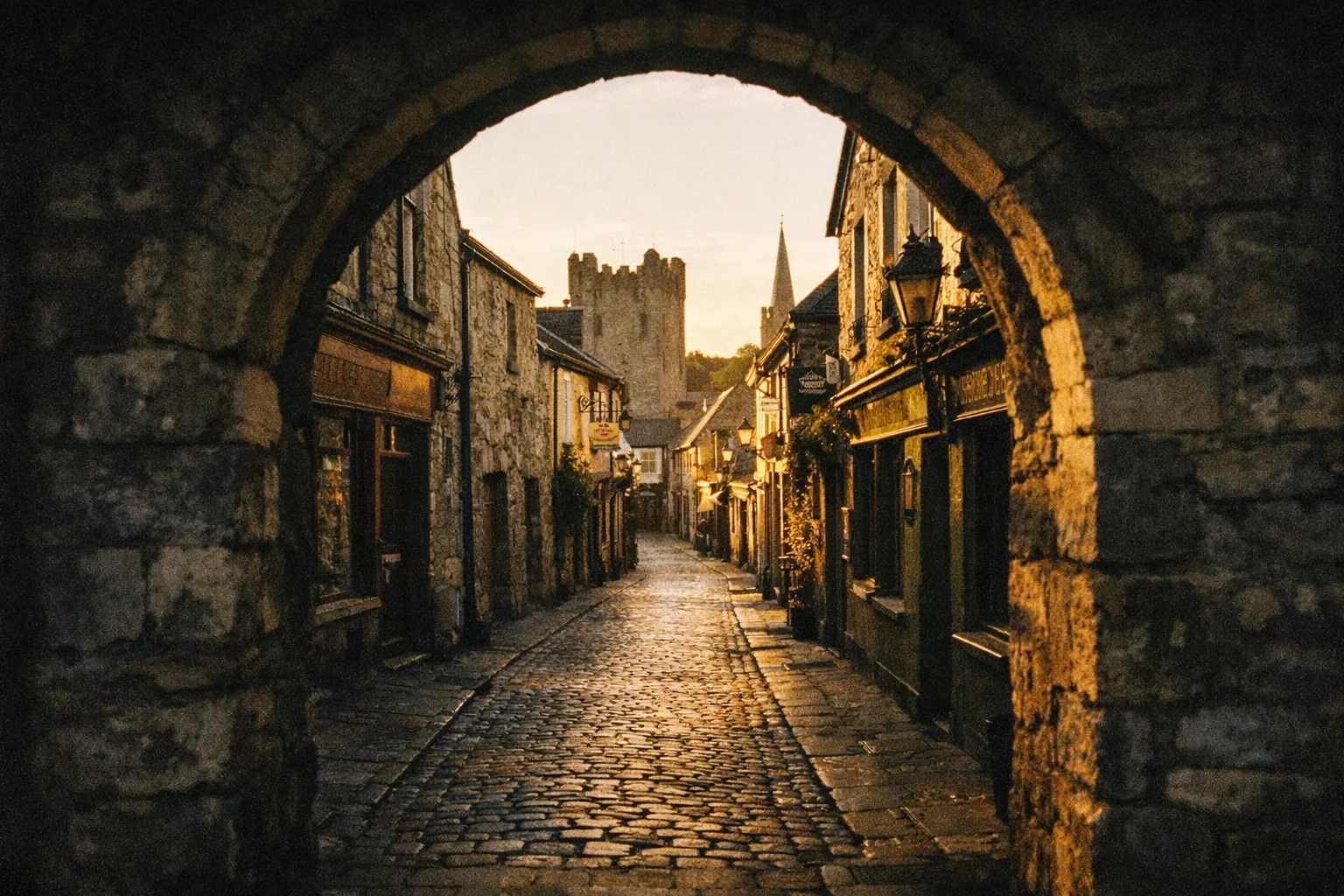
Deciding which of those four eras pulls at you is the single most useful planning move you can make before you book anything else.
The three zones and what they cover
The region divides into three narrative zones. The Land of 5,000 Dawns covers Cavan, Longford, Louth, Meath, Monaghan and Westmeath. This is prehistoric and early Christian territory, home to Newgrange, Knowth, Dowth and the Hill of Tara. The Historic Heartlands span Carlow, Kildare, Kilkenny, Laois, Offaly, Limerick and Tipperary, taking in Clonmacnoise, Kilkenny Castle and the Rock of Cashel. The Celtic Coast covers Cork, Waterford, Wexford and Wicklow, with Glendalough, Waterford’s Viking quarter, Hook Head and Blarney Castle (5).
Most 4-6 day trips realistically cover two zones at most. Trying to hit all three in one visit turns a history trip into a driving holiday. Concentrate on one area per day (the Boyne Valley one day, Wicklow and Glendalough the next) and let the country roads set your pace.
How this differs from the Wild Atlantic Way
The Wild Atlantic Way is one continuous signposted coastal road. Ireland’s Ancient East is a region with no set driving route (5). You can enter and exit at multiple points, which is genuinely useful for building a custom loop, but it also means you’re responsible for plotting every connection between sites. Dublin is the logical hub for all the major itinerary formats. It’s the main arrival point for international visitors and the easiest base for car hire and a city day at either end, and Hidden Gems in Dublin: 10 Experiences Worth Seeking is worth reading before you arrive.
The People Who Built This Landscape: Ireland Before and Beyond the Celts
The people who shaped this landscape arrived long before the Celts, and the region layers all of them. That’s worth understanding before you drive it, because it changes how you read the sites. The earliest evidence of human settlement in Ireland dates to about 10,500 years ago, when Mesolithic hunter-gatherers arrived. The Neolithic farmers who followed built the great passage tombs. The Celts didn’t turn up until roughly 600 to 300 BC, millennia later, and they built on top of an already complex society rather than replacing a blank slate.
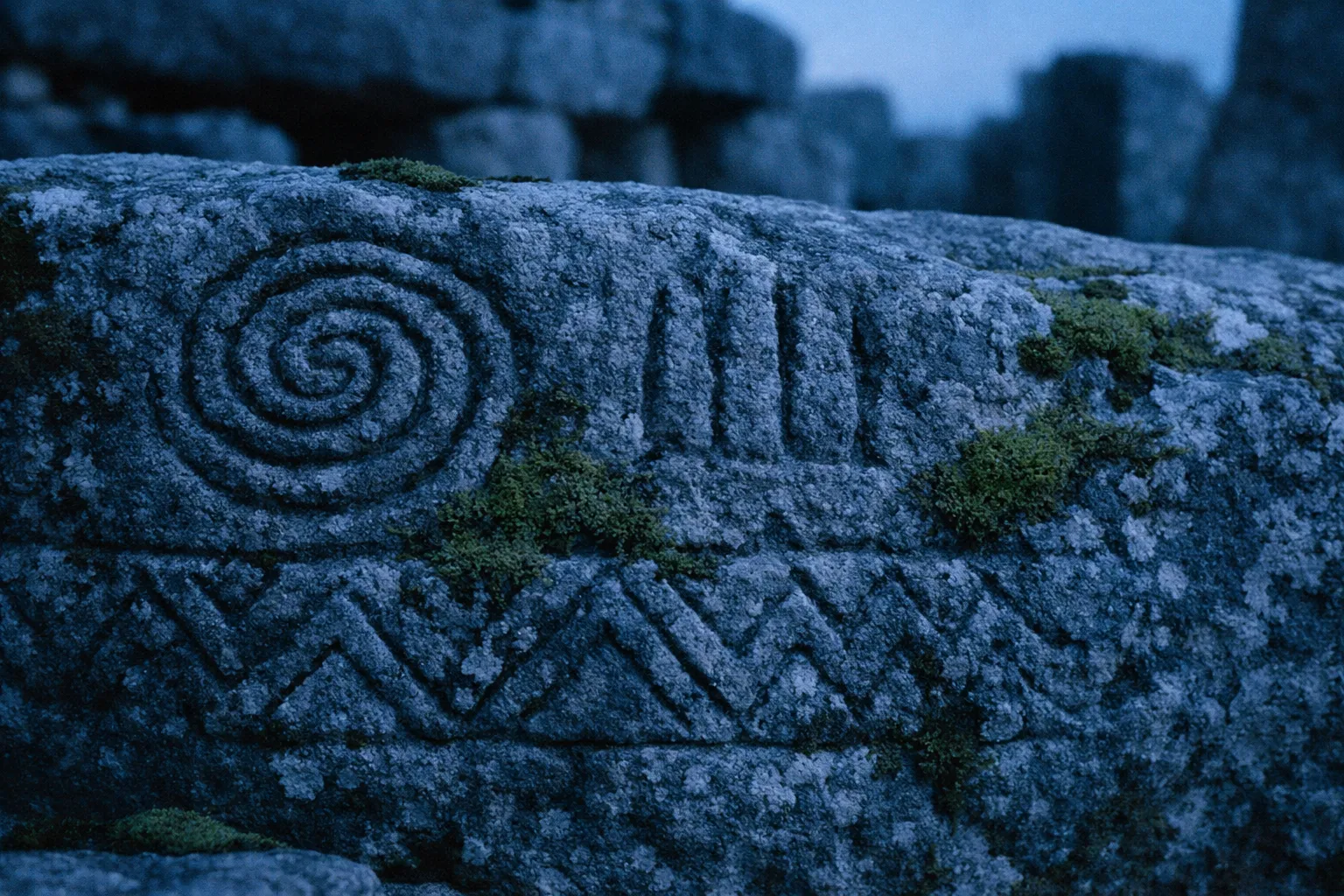
Neolithic Ireland: the tomb builders of the Boyne
Newgrange was built around 3200 BCE, predating both Stonehenge and the Egyptian pyramids (8). For a broader itinerary that weaves Newgrange into a week-long trip, Things to Do in Ireland: A Week of Hidden Gems and Classics is a useful companion. The passage tomb builders belonged to the Neolithic, which means they were in Ireland thousands of years before any Celtic migration. Genetic studies of ancient Irish remains suggest the first settlers had dark hair, dark eyes and darker skin tones, quite different from later populations. Subsequent Bronze Age and Celtic migrations brought lighter pigmentation, so the modern Irish genetic mix reflects several waves of migration rather than one founding people.
From Ériu to Ireland: names, myths, and early kingdoms
Ireland was known in antiquity by several names. In Old Irish it was Ériu (later Éire), the source of the English “Ireland”; the Greeks called it Ierne, and the Romans knew it as Hibernia. The Romans never invaded, which is a large part of why so much pre-Christian Gaelic culture survived intact, including the high-kingship system centred on the Hill of Tara.
This history maps directly onto the road trip: Newgrange, Tara and the Boyne Valley are pre-Celtic; Glendalough and Clonmacnoise are early Christian; Kilkenny and Waterford are Norse and Norman. Choose your era, and the itinerary starts to write itself.
Five Anchor Sites
Five sites appear in every serious itinerary, each representing a different era and a different kind of visit. These places are genuinely popular. The OPW reported 13.8 million visitors across its heritage sites in 2024 (10), so planning matters, and for one of them, advance booking is non-negotiable.
Newgrange and the Boyne Valley: Ireland’s prehistoric heart
Newgrange is a Neolithic passage tomb built around 3200 BCE, older than the pyramids (8), and its winter-solstice alignment, when sunlight floods the inner chamber at dawn, is one of the most dramatic prehistoric phenomena in Europe. Solstice places are so sought-after they’re allocated by lottery (8).
Access is through the Brú na Bóinne Visitor Centre only, via timed guided tours to Newgrange and Knowth. The site recorded 133,991 visitors in 2024 (10), and same-day tickets are not reliable in peak season. Booking windows vary by season: the online system opens 30 days ahead from 1 April to 1 November, and just 7 days ahead from 2 November to 31 March, per Heritage Ireland / OPW (15), so the winter window is tighter than most guides suggest. This is the one booking to lock in first. Adult admission for the tour plus Newgrange chamber is €18.00, per Discover Boyne Valley / Brú na Bóinne Visitor Centre (OPW) (16).
The Boyne Valley extends well beyond Newgrange. Knowth is the largest passage tomb in Ireland, with the greatest concentration of megalithic art in Western Europe; Dowth and the Hill of Tara (free, open access, about 20 minutes south) complete a tight geographic cluster. Newgrange sits roughly 50 km north of Dublin via the N2/M1. Allow a half-day minimum, or a full day to combine Newgrange, Knowth and Tara.
Glendalough: monastic city in the Wicklow Mountains
Glendalough (“valley of two lakes”) is a 6th-century monastic settlement founded by St Kevin, and its round tower, cathedral ruins and lakeside setting make it one of the most visually striking early Christian sites in Ireland. It sits within Wicklow Mountains National Park, about 38 miles (61 km) from Dublin via the scenic R115 (9), the route National Geographic sends you along, through Wicklow Mountains National Park.
Glendalough recorded 362,721 visitors in 2023. Arrive early. The car park fills by mid-morning on summer weekends, and the difference between arriving at 8:30am and arriving at 11am is significant, both in crowd size and in how the light sits on the upper lake. Beyond the monastic ruins, the Upper Lake trail and connections to the Wicklow Way extend a half-day visit into a full day of hiking. Without a car, St Kevin’s Bus runs twice daily from Dublin (journey around 1h20); self-driving via the N11/M11 and R755 takes 45-60 minutes from the city centre.
Kilkenny Medieval Mile: a medieval city you can still walk through
The Kilkenny Medieval Mile is a 1 km stretch of medieval streetscape connecting Kilkenny Castle (Anglo-Norman, 12th century, built by William Marshal) to St Canice’s Cathedral, 13th century, with a climbable round tower. Kilkenny is the most intact medieval city in Ireland, and the Black Abbey, Rothe House, the narrow medieval alleyways known as “slips” and the Smithwick’s Experience all sit within easy walking distance. For a deeper look at what the city offers, the Kilkenny city guide covers the rest.
Plan at least half a day here, but an overnight is better. The streetscape after 6pm, once the coach tours have left, is a meaningfully different experience, quieter, more atmospheric, worth the extra night. Kilkenny sits about 120 km southwest of Dublin via the M9, the natural midpoint between Dublin and Waterford on the classic southern loop. One thing to flag: Kilkenny to Waterford is a short leg, roughly 31-32 miles (50-52 km), around 35-40 minutes by car, per Rome2Rio (18), but the roads narrow quickly once you leave the N10, so don’t rush it.
Rock of Cashel: kings, saints, and a skyline that earns its reputation
The Rock of Cashel rises 60 metres above the Tipperary plain, a limestone outcrop topped with a 12th-13th century cathedral, a round tower, Cormac’s Chapel (one of the finest Romanesque buildings in Ireland) and a medieval castle. Before the Norman invasion, Cashel was the seat of the kings of Munster; St Patrick reportedly baptised King Aenghus here in the 5th century, and the Rock was later gifted to the Church.
The OPW manages the site, and it ranks among Ireland’s most visited heritage attractions, behind Dublin Castle and Kilkenny Castle in the 2024 figures (10), so it gets busy. Morning visits are noticeably quieter. Cashel sits roughly 160 km from Dublin via the M8 and slots naturally between Kilkenny and Waterford on the southern loop, or works as a day trip from Kilkenny (about 45 minutes). Allow 2-3 hours on site; the views across the Golden Vale from the top of the Rock are worth the climb alone.
Waterford Viking Triangle: where Norse history meets a working city
Waterford is Ireland’s oldest city, founded by Vikings in 914 AD, and the Waterford Viking Triangle is a compact heritage quarter holding Reginald’s Tower (the oldest civic urban building in Ireland, c. 1003), the Medieval Museum and the Bishop’s Palace. The three Waterford Treasures museums sit within a few minutes’ walk of each other; the Medieval Museum holds the only surviving piece of Viking-age embroidery in Ireland and the 15th-century Great Charter Roll.
Waterford also makes a practical base for the wider area, and the surrounding Munster coastline is covered in detail in Discover Munster Ireland: Culture, Nature, and Key Sights. The Dunbrody Famine Ship in New Ross (about 30 minutes away) and Hook Head Lighthouse, one of the oldest operational lighthouses in the world, are both within easy reach. The Waterford Greenway, a 46 km off-road cycling and walking trail, starts in the city and runs to Dungarvan; worth knowing if you want to mix activity with history. Waterford is the natural end point of the classic Dublin-Glendalough-Kilkenny-Cashel-Waterford loop; the return to Dublin runs roughly 2.5 hours via the N25/M9.
How to Choose Your Route
Three itinerary formats cover most travellers: a 3-day Dublin doorstep sampler, a 5-day classic southern loop, and a 7-day circuit that adds the northern Boyne Valley. The guiding principle across all three is the same: pick one or two zones maximum. Cramming all three into a single trip produces a driving holiday, not a history trip.
Here’s how the three formats compare. The 3-day sampler suits first-timers with limited time: key stops are Glendalough, the Rock of Cashel and Trim Castle, with around 300 km of total driving, one or two overnight bases, and only Glendalough parking worth planning around. It covers the Celtic Coast and Historic Heartlands zones. The 5-day southern loop is the format most travellers should choose: it adds Kilkenny and Waterford, running about 500 km total with overnights in Kilkenny and Waterford, longest driving days of 2-3 hours, and the same two zones covered more deeply. Add Cashel’s busy mornings to your planning. The 7-day full circuit suits history enthusiasts: it adds the Boyne Valley and Meath to the southern loop, pushing total driving past 800 km, adding a base in Drogheda or Trim, covering all three zones, and making advance Newgrange booking essential.
3-day loop: Dublin, Glendalough, and Cashel
A tight Dublin-based loop runs Powerscourt → Glendalough → Rock of Cashel → Trim Castle. It gives you a representative sample (early Christian, medieval and Norman) without driving as far as Waterford. Good for a long weekend or a bolt-on to a Dublin city break.
5-day loop: the classic southern circuit
The most widely recommended format is Dublin → Glendalough → Kilkenny → Rock of Cashel → Waterford → Dublin, with longest driving days commonly around 2-3 hours. If you want to extend the trip westward, the Ring of Kerry Ireland: Route, Stops, and Drive Times connects naturally from Waterford through Cork. Overnight in Kilkenny and Waterford. This is the sweet spot for a first proper Ancient East trip: enough time at each site, one clear theme (medieval and early Christian), manageable daily legs.
7-day loop: full coverage including the Boyne Valley
The fuller circuit adds the northern Land of 5,000 Dawns counties, Meath and Louth in particular, to the southern loop, and it’s the format most likely to include both the southern cities and the Boyne Valley. A shorter four-day version starts and ends in Dublin and runs through Louth, Monaghan, Cavan, Westmeath and Meath, which is the best format if your focus is squarely prehistoric and early Christian. EV drivers have a charging-friendly variant too: Tourism Ireland’s three-day electric route runs Bray → Wicklow Mountains → Glendalough → Wexford → Kilkenny (17), with chargers at Enniscorthy and Bunclody and shorter legs between stops.
Ireland's Ancient East Itinerary Options
| Best for First-timers 3-Day Sampler | Most Popular 5-Day Southern Loop | For History Enthusiasts 7-Day Full Circuit | |
|---|---|---|---|
| Best For | First-timers, limited time | Most travellers | History enthusiasts |
| Key Stops | Glendalough, Cashel, Trim | Glendalough, Kilkenny, Cashel, Waterford | Boyne Valley, Meath, Kilkenny, Waterford |
| Total Driving | about 300 km | about 500 km | about 800+ km |
| Overnight Bases | 1-2 | Kilkenny, Waterford | Kilkenny, Waterford, Drogheda or Trim |
| Zones Covered | Celtic Coast + Heartlands | Celtic Coast + Heartlands | All three zones |
| Advance Booking Needed | Glendalough parking | Glendalough parking, Cashel mornings | Glendalough parking, Cashel mornings, Newgrange |
Practical Logistics for Driving
A car is the only realistic way to cover Ireland’s Ancient East properly. Public transport reaches a handful of the major sites, but only a handful. The main access roads are the M11 (Dublin-Wicklow), the N81 (Wicklow-Meath), the M9 (Dublin-Kilkenny-Waterford), the M8 (Dublin-Cashel) and the N25 (Waterford-Wexford-Cork). Expect a mix of motorways, national primary roads and narrow regional roads, the R115 over the Wicklow Gap being a scenic example. Sat-nav helps, but it can route you onto roads that are technically passable and painfully slow.
When to go: season, daylight, and crowds
May to September gives the best conditions. Around midsummer, Ireland’s latitude yields 15-plus hours of daylight, which matters for outdoor sites like Glendalough, Hook Head and the Boyne Valley passage tombs. The region is promoted as year-round, and the Glendalough Visitor Centre is open all year with seasonal hours, but winter days are short and some sites shift to reduced hours. Crowds are the trade-off for good weather: Glendalough’s 362,721 visitors in 2023 concentrate in July and August, and the car park fills early. Arriving at opening is a genuinely different experience from arriving at 11am.
What to know about Irish roads before you drive
Traffic drives on the left, speed limits are in km/h, and regional roads are narrow with occasional passing places; Driving in Ireland: Rentals, Roads and Left-Hand Rules covers the rental and insurance side. If you’re not used to left-hand driving, give yourself an easy first leg out of Dublin before tackling anything like the R115. That scenic route from Dublin through Wicklow Mountains National Park to Glendalough (38 miles) is worth the detour on a clear day: the drive itself is part of the value.
Planning Your Ireland's Ancient East Road Trip
About 1 hourStep-by-step guide to preparing your itinerary and bookings
- 1
Choose your trip length and zones
Decide how many days you have and which zone(s) interest you most.
- 2
Select your itinerary format
Pick the 3-day, 5-day, or 7-day route based on your interests and time.
- 3
Book Newgrange tickets early
If visiting the Boyne Valley, secure Brú na Bóinne tickets as soon as the window opens: 30 days ahead in season, 7 days ahead in winter.
- 4
Arrange car hire
Rent a car from Dublin or Cork and ensure you're comfortable driving on the left, especially on narrow roads.
- 5
Reserve accommodations
Book overnight stays in Kilkenny, Waterford, and optionally Drogheda or Trim for longer trips.
- 6
Plan daily driving legs
Limit driving to 2-3 hours per day to maximize time at sites.
- 7
Check opening hours
Verify seasonal hours for all sites before traveling to avoid surprises.
Tips for Getting More Out of Each Stop
The biggest single improvement to an Ancient East trip is structuring it around one thematic zone rather than trying to tick off counties. One trip per zone gives deeper, less rushed experiences than a broad sweep across all three.
Pair the headline sites with quieter counterparts. Newgrange goes naturally with the Hill of Tara, which is free, open access, about 20 minutes south, and rarely crowded even in summer. If you’re drawn to Ireland’s castle heritage more broadly, Exploring Castles in Ireland: History, Stays, and Top Sites covers the full picture. The Rock of Cashel pairs with Cahir Castle, about 30 minutes away: dramatically intact and far less busy. Glendalough works well with a section of the Wicklow Way or a stop at Powerscourt. Kilkenny sits 30 minutes from Jerpoint Abbey, a Cistercian ruin that rarely sees a crowd.
Arrive early at the big three. Glendalough, Cashel and Kilkenny Castle all see their heaviest crowds between 11am and 3pm; being there at opening changes the visit entirely.
Give Kilkenny an overnight rather than an afternoon. The medieval streetscape after 6pm, once the day-trippers have gone, is quieter and more atmospheric. And while the Waterford Viking Triangle is compact enough to cover in 2-3 hours, the surrounding area (Hook Head, New Ross, the Copper Coast) justifies a second night if you have it.
Combining sites efficiently: which stops pair well
Think in day-clusters. A northern day: Newgrange + Tara + Trim Castle. A Wicklow day: Glendalough + Powerscourt. A Tipperary afternoon: Cashel + Cahir. A Kilkenny day: the Medieval Mile + Jerpoint Abbey. Each pairing keeps driving short and stacks a marquee site with a quieter one, which is, in practice, how you avoid spending the whole trip in car parks.
Common Mistakes That Derail Road Trips
Assuming there’s a marked route. Ireland’s Ancient East is a tourism region, not a continuous signposted trail like the Wild Atlantic Way (5). You plan your own connections between sites with a map or sat-nav. Visitors expecting a road to follow are the ones who end up frustrated.
Underestimating driving times on regional roads. The Kilkenny-Waterford leg is only about 31-32 miles (50-52 km) and takes under an hour, but other connections (Cashel to Waterford, or anything involving the R115) run longer than the distances suggest. Treat every regional-road estimate conservatively and you won’t end up rushing the last site of the day in fading light.
Not pre-booking Newgrange. With 133,991 visitors to Brú na Bóinne in 2024 (10) and tickets released 30 days ahead in limited numbers, same-day slots at Newgrange and Knowth are not reliable in summer. This is the one booking that can genuinely derail a trip if skipped.
Trying to cover all 17 counties. The region is too large for that in one visit; official and unofficial itineraries alike narrow to three to six core hubs for good reason. More counties means more driving and less time at each site.
Ignoring the northern zone entirely. Most blog itineraries stick to the southern loop and skip the Boyne Valley, which means missing Newgrange, Knowth and Tara, arguably the most significant prehistoric landscape in Ireland. If prehistory interests you at all, don’t let the southern circuit crowd it out.
Frequently Asked Questions
- What is Ireland's Ancient East and how many counties does it cover?
- Ireland's Ancient East is a tourism brand covering 17 counties across Leinster and parts of Munster, organised into three zones and four historical pillars.
- Who was in Ireland before the Celts?
- Mesolithic hunter-gatherers arrived about 10,500 years ago, followed by Neolithic farmers who built Newgrange around 3200 BCE; the Celts arrived later around 600 BC.
- What was Ireland called in ancient times?
- Ireland was known as Ériu in Old Irish, Ierne by the Greeks, and Hibernia by the Romans, who never invaded, preserving much Gaelic culture.
- What did the original Irish people look like?
- Ancient genetic studies show earliest inhabitants had dark hair, eyes, and skin; later migrations brought lighter pigmentation, creating today's mixed genetic profile.
- Do I need to pre-book sites on Ireland's Ancient East?
- Yes, Newgrange and Knowth require advance booking; Glendalough car parks fill early; Rock of Cashel and Kilkenny Castle usually allow walk-ins outside peak months.
- How long do I need for Ireland's Ancient East?
- Minimum 3 days for a sampler; 5 days for the southern loop; 7 days to include the Boyne Valley and northern counties without rushing.
- Can I do Ireland's Ancient East without a car?
- Only partially. Some sites have bus service, but most rural and key sites require self-drive for full access.
Start With the Booking That Unlocks Everything
The region’s lack of a fixed route is the feature, not the bug. It lets you build the trip around what actually pulls at you, whether that’s standing inside a 5,000-year-old chamber at Newgrange, walking Kilkenny’s medieval streets after the coaches leave, or reaching the Rock of Cashel at opening before the crowds arrive. But that freedom only pays off if you focus. Pick one or two zones, choose a loop that matches your days, and keep daily driving under three hours.
Then do the one thing that matters most: if the Boyne Valley is on your route, book Brú na Bóinne now. Those slots open 30 days ahead in season and just 7 days ahead in winter, and they go fast. If you’re staying south, commit to a zone and build outward from Dublin. The region rewards focus. Pick your era, pick your loop, and go.