The best cities to visit in Ireland really come down to three, and they play very different roles. Dublin is the arrival city, home to the country’s most-booked attractions like the Guinness Storehouse and Kilmainham Gaol, both needing timed tickets well ahead. Galway is the one most people underrate: a compact, car-free western base with day tours out to the Cliffs of Moher and the best food-and-music weekend in the country. Cork rounds out the south. Pick your base by pace, then build outward.
The Best Cities to Visit in Ireland: Exploring Urban Gems from Bustling Capitals to Hidden Corners
When considering the best cities to visit in Ireland, you’ll find a fascinating blend of history, culture, and modernity across its urban landscapes. As a digital nomad, I’ve had the pleasure of immersing myself in the vibrant city life and unique charm that these Irish cities offer.
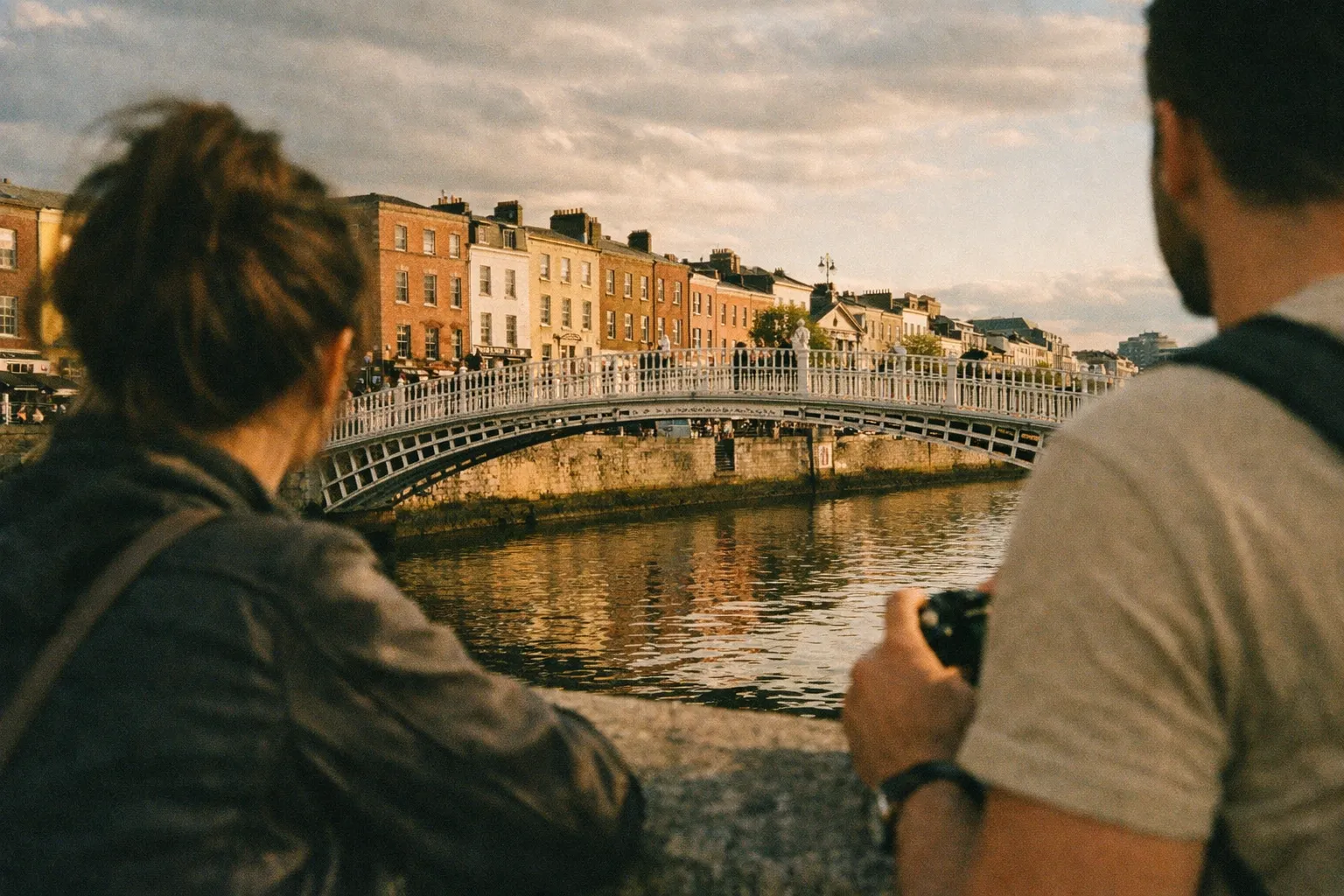
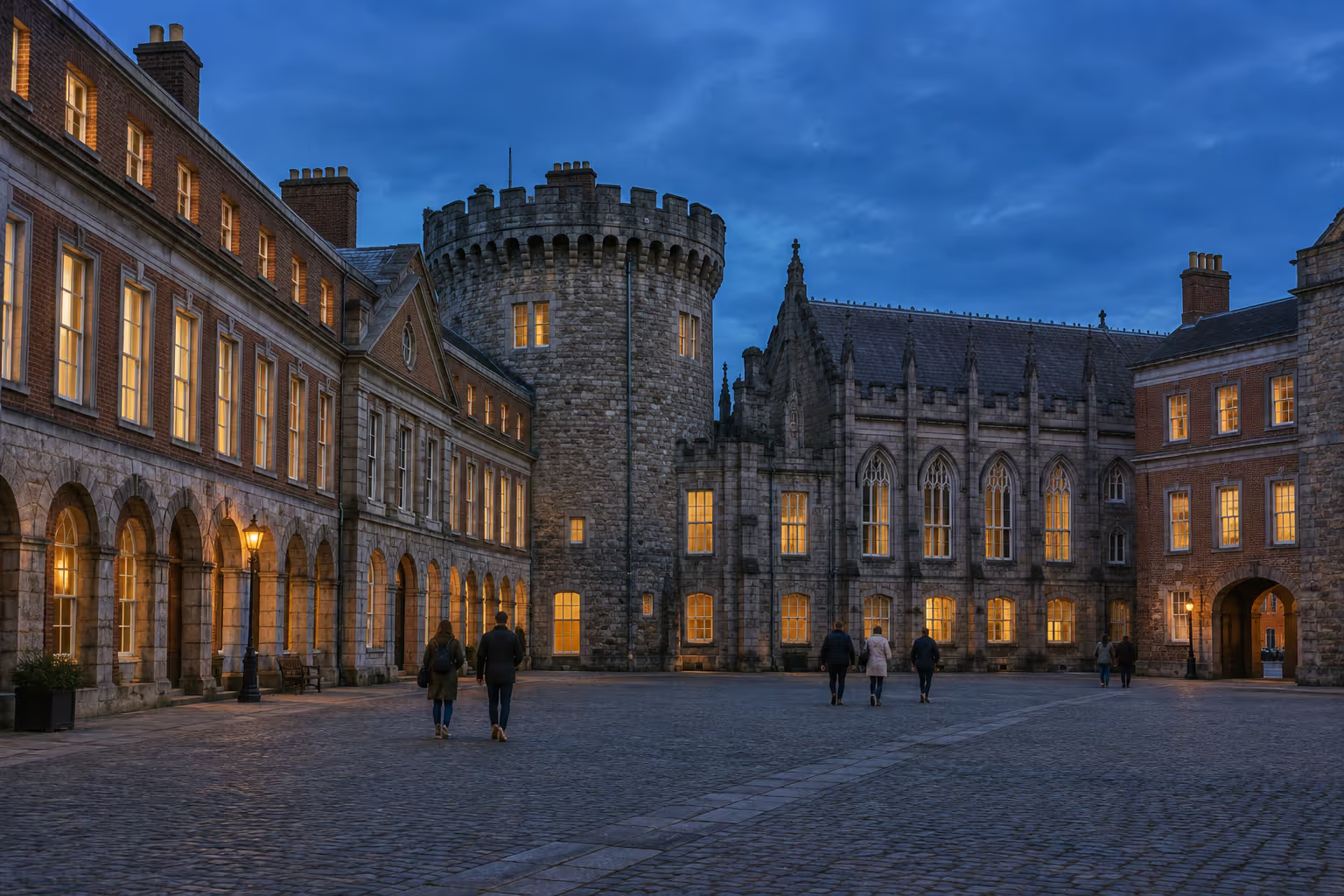
Dublin, the capital and largest city, stands out with its vibrant energy and rich heritage - and it’s also the main gateway for overseas visitors. In 2024, Ireland welcomed 6.6 million overseas visitors, generating €6 billion (≈$6.5B USD) in tourism export revenue (8). Dublin continues to be the country’s dominant hub by visitor numbers, clocking 6,644,000 visitors in the most recent detailed benchmark year.
But Ireland’s urban charm extends far beyond its capital. Cork, the second-largest city, offers a mix of traditional Irish culture and contemporary food-and-design energy - and it anchors the South-West region, which recorded 2,335,000 visitors in the same benchmark breakdown.
Other major cities that left a lasting impression on me include:
- Limerick: Known for its medieval architecture and vibrant arts scene
- Galway: A coastal city with a music-forward, pub-to-gallery kind of rhythm; Galway city and county welcomed 2.2 million visitors in 2023 (2)
- Waterford: Ireland’s oldest city, famous for Viking history and crystal craftsmanship
Ireland doesn’t have “54 cities” in the strict administrative sense. What you’ll find in practice is a small number of official cities and a lot of large towns that travelers experience like small cities - walkable cores, strong food scenes, and enough history to fill a long weekend. That’s why lists of the best cities in Ireland to visit often include places like Kilkenny, Killarney, or Westport alongside the official city roster.
If you’re planning your route, this is the mental model that works:
- Dublin for iconic sights and day trips
- Galway for the West Coast base (Connemara, Aran Islands, Cliffs of Moher day tours)
- Cork for food plus coastal towns (Cobh, Kinsale) and island history (Spike Island)
- Belfast if you’re also covering Northern Ireland’s big hitters (Titanic Belfast, Giant’s Causeway)
Urban migration and the rise of Irish city life
As a traveler who’s always curious about local trends, I was struck by the significant shift in Ireland’s population distribution.
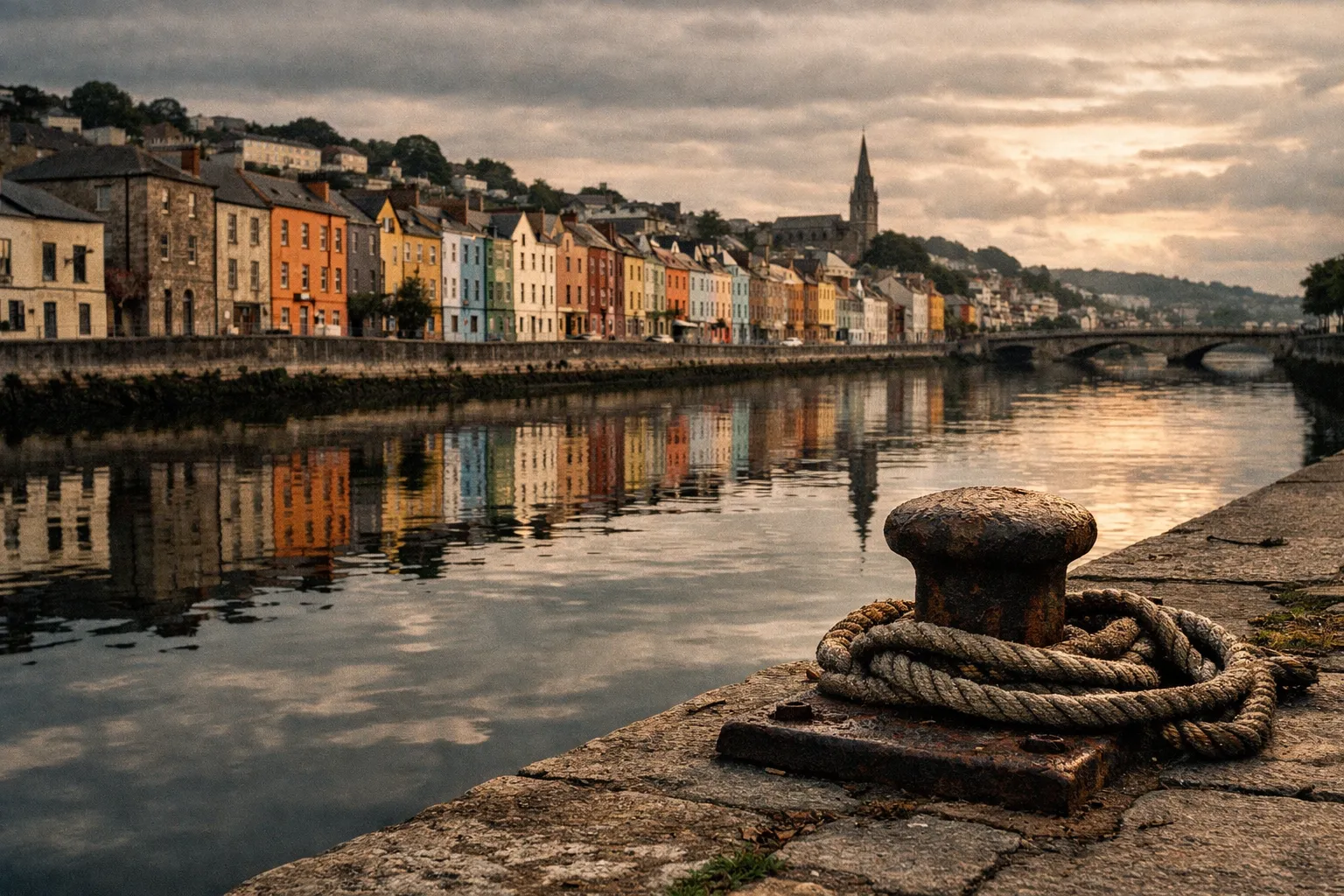
Around three-quarters of Ireland’s population lives in urban areas, a pattern that’s shaped everything from housing pressure to better transit links between the big hubs. (This is one of those stats that moves around depending on definitions and year, so treat it as a “roughly” rather than a fixed number.)
Cities offer a wealth of opportunities that are hard to resist:
- Enhanced educational prospects
- Diverse employment options
- Rich cultural experiences
- Improved infrastructure and services
Seeing how this urban shift has impacted Ireland’s development is fascinating. Major cities are now spread across the island, creating a diverse mix of urban experiences.
One interesting quirk I discovered during my travels is the case of Kilkenny. Although governed as a town, it retains the ceremonial title of “city.” This blend of tradition and modernity is standard in Irish urban centers.
Practical implication for travelers: because so much demand concentrates in a few urban hubs - especially in summer - you’ll feel price spikes first in Dublin and Galway, then in compact weekend favorites like Kilkenny. If you’re traveling July-September, book earlier than you think you need to, particularly in Galway where peak season is explicitly called out as the busiest stretch (2).
Heritage and history: The soul of Irish cities
As a self-proclaimed history buff, I was in awe of Ireland’s rich heritage, evident in its urban landscape.
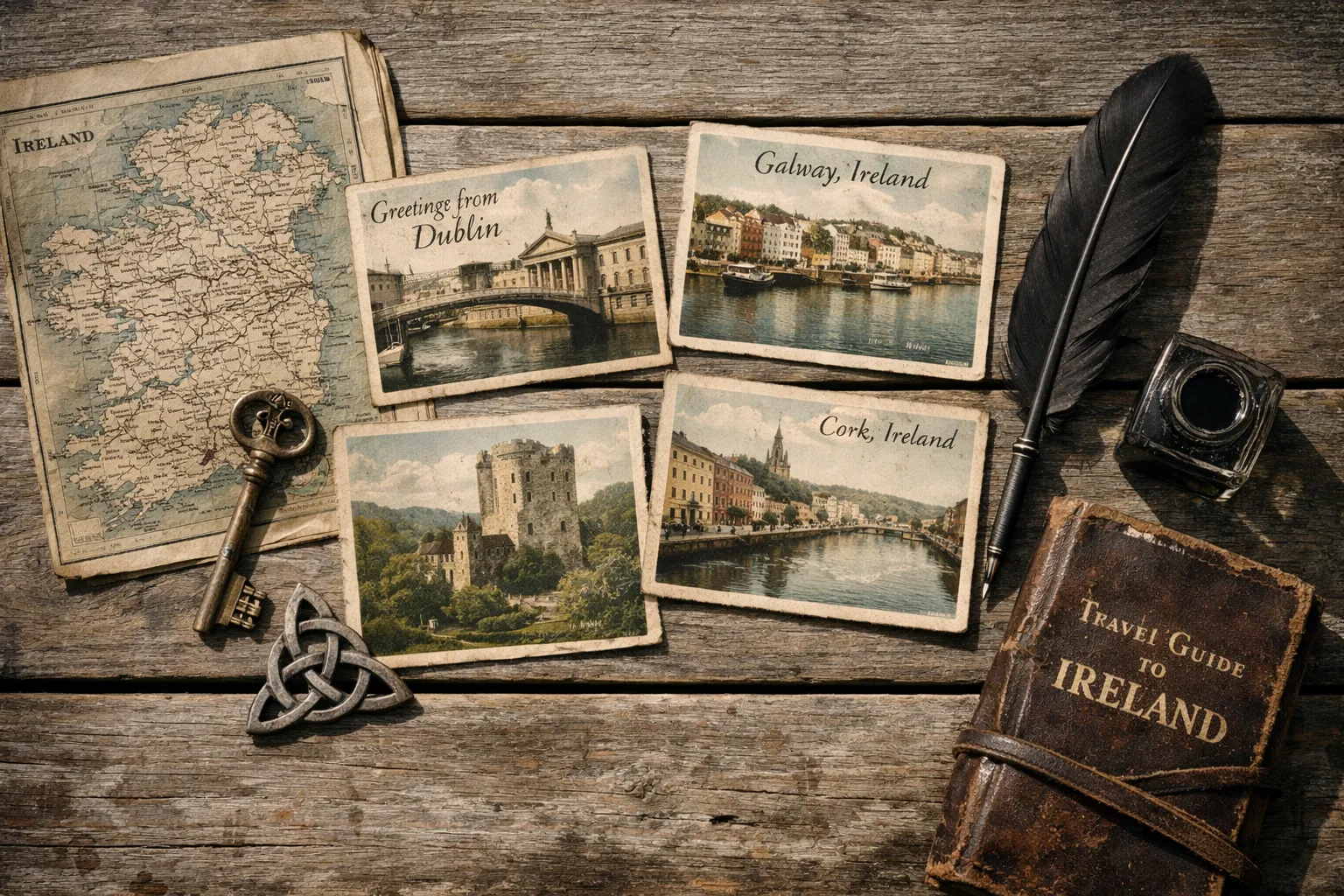
Many Irish cities boast critical historical sites that transport you through time. From medieval castles to Viking settlements and stunning Georgian architecture, there’s no shortage of cultural treasures to explore.
During my journey, I had the pleasure of visiting several heritage towns that left a lasting impression:
Heritage Towns and Their Notable Features
| Carlingford | Trim | Kilkenny | Waterford | Cobh | |
|---|---|---|---|---|---|
| Notable Features | Medieval architecture, stunning Cooley Peninsula views | Impressive Norman castle, featured in the film 'Braveheart' | Medieval mile, beautiful castle gardens | Viking heritage, world-renowned crystal | Last port of call for the Titanic, colorful harbor houses |
One of my most memorable experiences was visiting Cobh, a colorful harbor town with a poignant maritime history.
It was a truly humbling moment to stand at the spot where the Titanic made its final stop before its ill-fated journey. The colorful houses cascading down to the harbor created a postcard-perfect scene I’ll never forget.
These heritage towns offer a glimpse into Ireland’s past while maintaining their relevance in the modern world. As a digital nomad, I found working from cafes in centuries-old buildings inspiring, bridging the gap between history and the digital age.
Booking reality check: several of Ireland’s most in-demand historic attractions operate on timed entry and sell out in summer - Kilmainham Gaol in Dublin is the classic example, and it’s also ranked in the national top-10 list of visitor attractions. If it’s on your list, don’t leave it to “we’ll see.”
Sustainable urban development: Irish cities leading the way
As someone passionate about sustainable travel, I was thrilled to learn about Ireland’s commitment to creating eco-friendly urban environments.
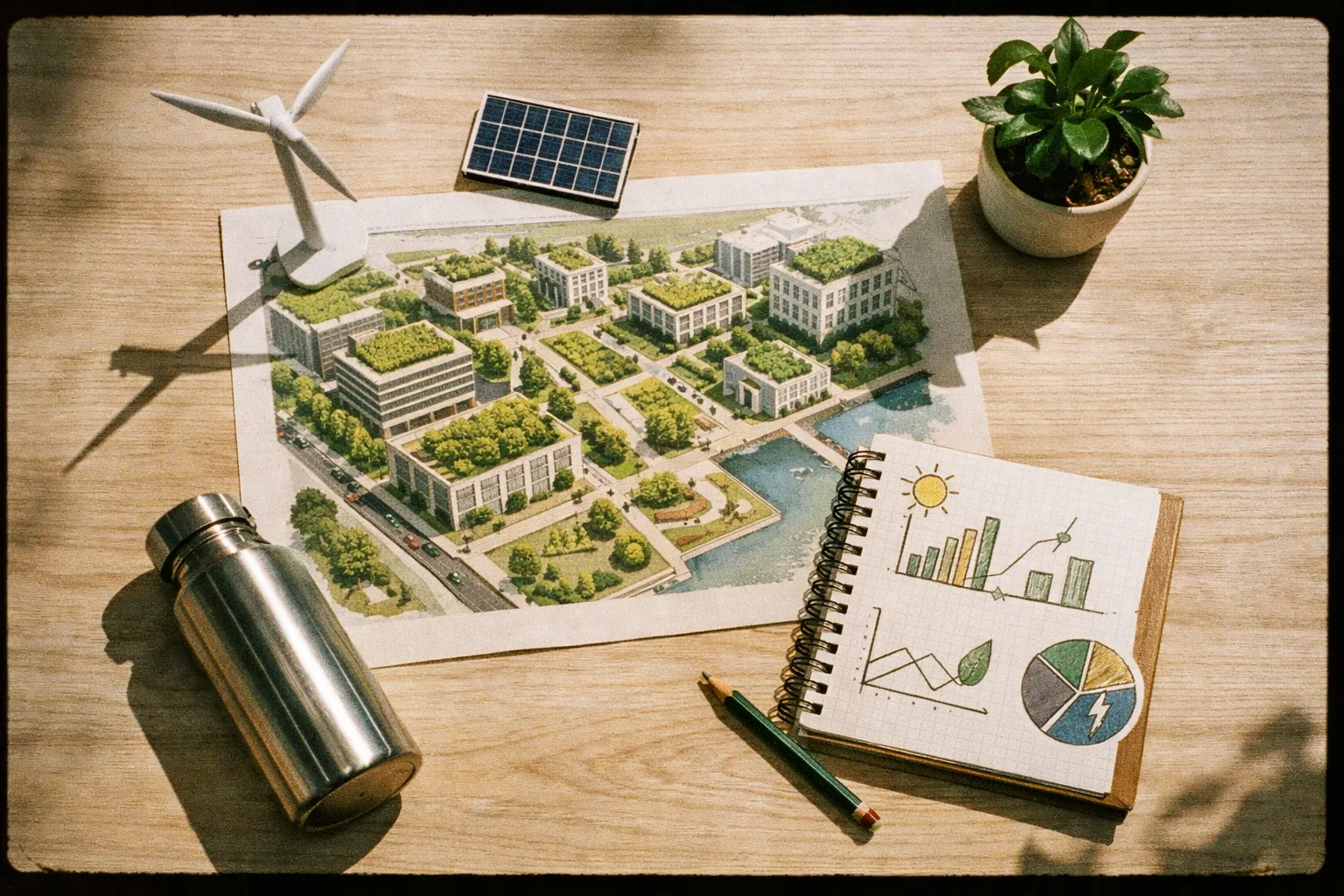
Cities like Dublin, Cork, and Galway have been part of the broader European push toward decarbonizing transport and buildings - something you’ll notice most as a visitor through:
- More protected cycle lanes in central areas
- Expanded bus corridors and updated ticketing
- Better pedestrianization in historic cores
- More visible discussion around overtourism and peak-season crowd management (Galway in particular has been planning around July-September pressure) (2)
The challenge is real. Urban areas consume a large majority of national energy and produce most emissions, so cities are where policy has to work first.
Traveler tip that actually helps: if you’re choosing between car rental and public transport for a city-to-city trip (Dublin → Galway → Cork), you can keep your footprint - and stress - lower by using trains/buses between hubs, then renting a car only for the countryside leg. The national tourism policy explicitly frames Dublin as a gateway and encourages dispersal beyond the capital (8), which is easier to do when you’re not trying to drive and park in the center of Dublin.
Highlights for exploring Dublin: a tight, realistic 2-3 day plan
Dublin rewards you when you plan around neighborhoods, not a checklist. You’ll walk more than you think, and you’ll waste less time crossing the city back and forth.
Day 1: classic Dublin, but timed properly
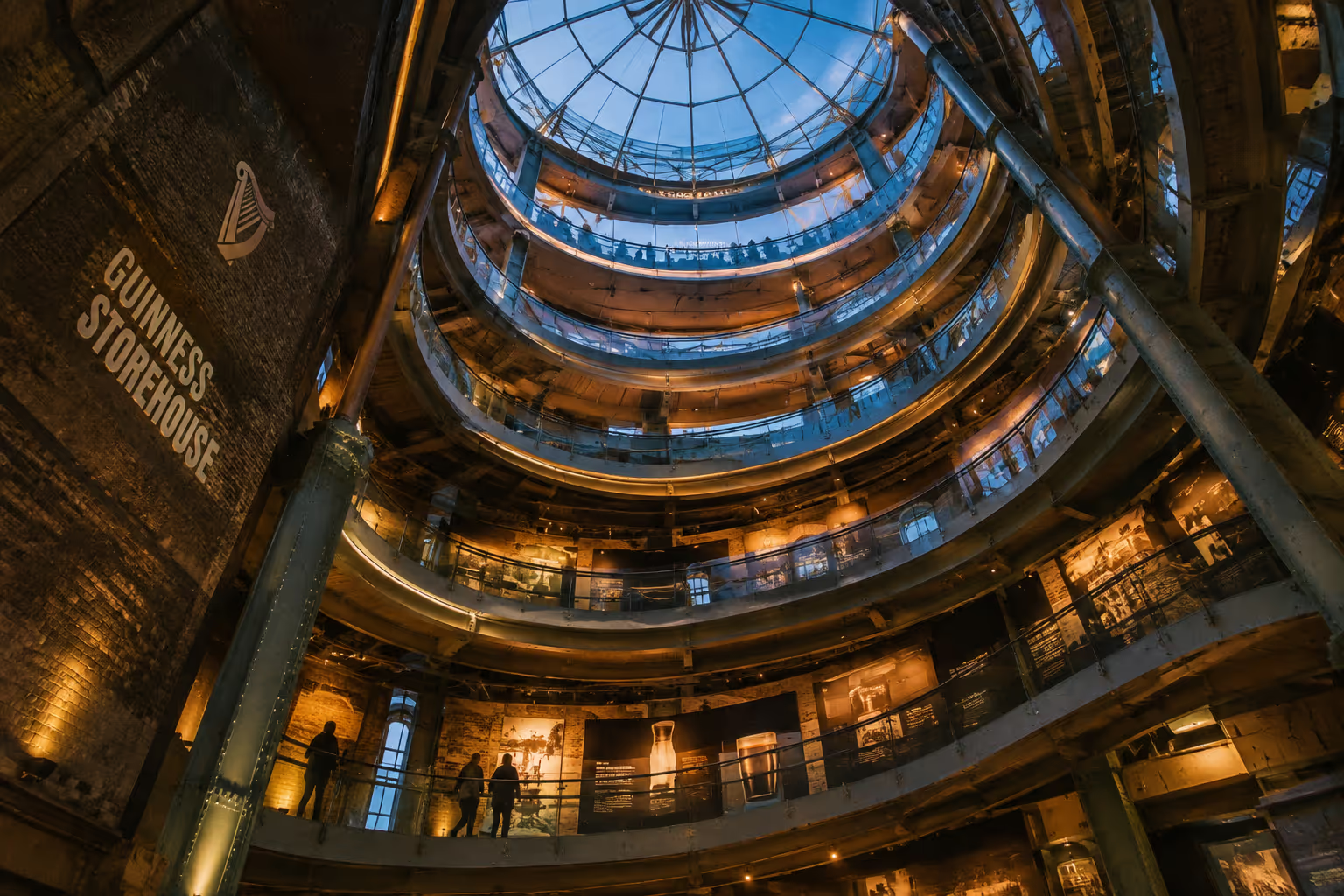
- Guinness Storehouse: still the headline attraction nationwide (ranked #1 on a 2024 top-10 visitor attractions list) (5). Book a timed slot in advance in high season.
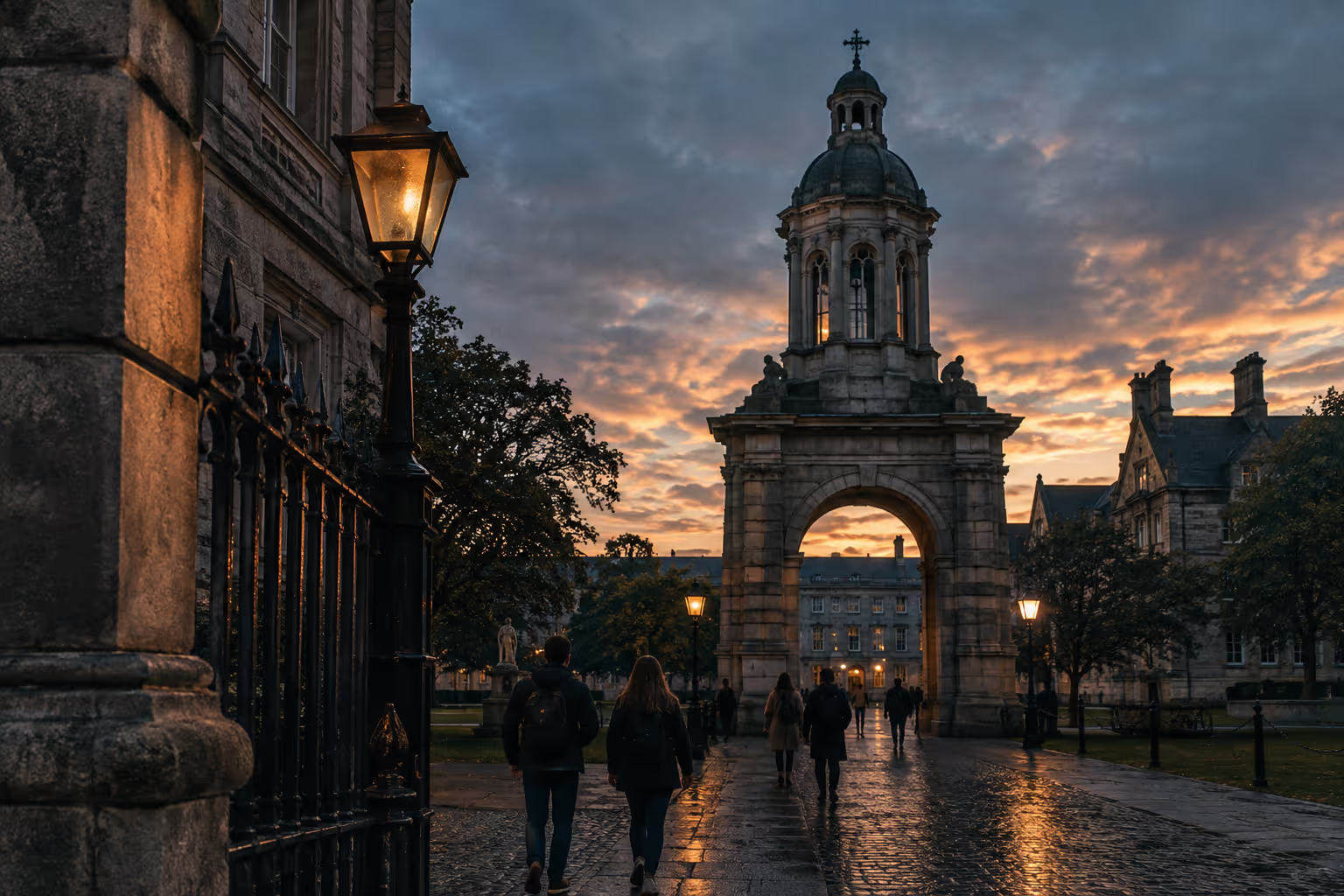
- Trinity College area: even if you don’t go deep into campus touring, this is a good anchor point for strolling.
- Temple Bar (area) vs. Temple Bar (pub): walk through, take your photo, then eat/drink a few streets away where it’s calmer and better value.
Day 2: history that hits harder than you expect
- Kilmainham Gaol: ranked #9 on the same 2024 top-10 list (5). It’s one of the most meaningful visits in the city, and one of the easiest to miss if you don’t book ahead.
- Phoenix Park + Dublin Zoo: Dublin Zoo ranked #4 on the 2024 list (5). Even if you’re not a zoo person, Phoenix Park is a good reset if you’ve been museum-hopping.
Day 3: an easy coastal half-day (no car required)
If the weather behaves, you can take a short trip out toward the coast for a change of pace. It’s a good way to balance the pub-and-museum version of Dublin.
Etiquette note (Dublin + beyond): tipping isn’t automatic the way it is in the U.S. If service is good, rounding up or leaving about 10% in a sit-down restaurant is normal; in pubs, people often tip by offering “and one for yourself” or leaving small change, but it’s not compulsory.
Exploring Galway’s music, food, and West Coast day trips without a car
Galway is compact, social, and built for wandering. It’s also a strategic base: you can sleep in one place and day-trip hard.
Galway city and county welcomed 2.2 million visitors in 2023 (2), and peak season pressure is heaviest July-September (2). That’s exactly when you’ll want to plan ahead.
In the city: keep it simple and atmospheric
- Latin Quarter: this is the core for evenings - pub-to-pub traditional music, small restaurants, and the kind of street energy that doesn’t require planning.
- Seafood dinner: Galway is where I’d steer you toward oysters, mussels, and chowder (fish soup). Go early if you’re traveling in summer; places fill fast.
Best day trips from Galway (pick 1-2, don’t try to collect them all)
- Cliffs of Moher: ranked #2 on the 2024 top-10 visitor attractions list (5). You can do it as a day tour from Galway if you don’t have a car. Start early; mid-day gets crowded.
- Connemara: lakes, stone walls, and big skies - this is one of the regions that comes up repeatedly in lists of the most beautiful places in Ireland (1).
- Aran Islands: a full day, but doable. Go if you want wind, sea views, and a real break from cities.
Timing tip that saves money and patience
If your schedule allows it, aim for May-June or late September. You’ll still get long evenings, but you sidestep the highest accommodation markups that hit in July-August (and Galway is one of the first places you feel it).
Cork’s city energy plus Cobh, castles, and island history
Cork is where a lot of travelers accidentally under-plan - then realize they could have stayed longer. It works as a city break on its own, but it’s even better as a base for the South Coast.
In Cork city: food-first exploring
- English Market: an easy win for lunch grazing - cheese, bread, seafood, pastries, the works.
- River Lee walk: the city’s shape makes it naturally walkable; wander without trying to “optimize” too much.
Easy day trips that justify a 3-night Cork base
- Cobh: the Titanic connection is real (and moving), and the hillside harbor view is one of the most photogenic scenes in the south.
- Spike Island: ranked #10 on Ireland’s 2024 top-10 visitor attractions list (5). It’s a ferry trip plus a guided visit - book ahead in summer.
- Blarney Castle: touristy, yes, but it’s also one of those classic Ireland stops that many people genuinely enjoy. If you go, go early to avoid the longest lines.
If you’re building a “cities + coast” trip without a car, Cork is still workable: you can do some trips by rail/bus, then choose one organized tour for the harder-to-reach spots.
Limerick and Waterford: worthwhile stops if you want smaller-city Ireland
If Dublin feels like too much and you’re not trying to pack every famous sight into one week, Limerick and Waterford are useful “pace change” cities.
Limerick: medieval bones, modern rhythm
Limerick is the kind of place that surprises you if you stay overnight. It’s a good stop if you’re moving between Galway and Cork and want to break up the journey, or if you want a city that still feels lived-in rather than tour-optimized.
What to prioritize:
- A castle/history anchor (Limerick does this well)
- A pub evening where the crowd is mostly people who live nearby
Waterford: Viking history + outdoors on the edge of the city
Waterford’s big name is crystal, but the more modern reason it keeps popping up in itineraries is outdoors access.
The Waterford Greenway ranked #3 on Ireland’s top 10 visitor attractions list for 2024 (5). If you like cycling or long walks, this is one of the most straightforward “active day” additions to a city trip.
A practical “top 5 cities” list (and why these are the easiest to plan)
People search for “What are the top 5 cities in Ireland?” because they want a short list that won’t backfire. Here’s a defensible, traveler-friendly set - based on visitor gravity, transport logic, and how often these places anchor first-timer itineraries:
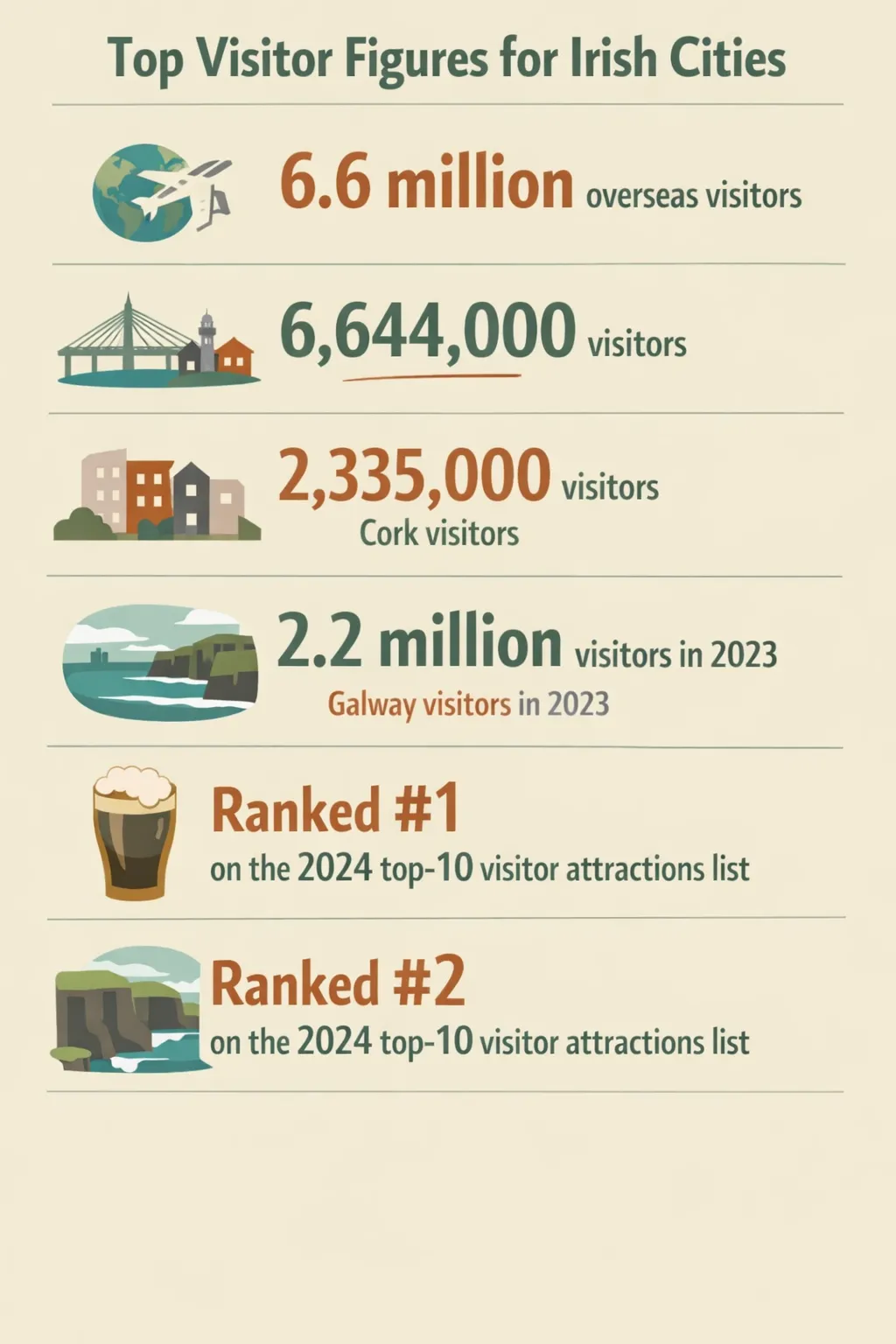 Ireland drew 6.6 million overseas visitors in 2024; Dublin saw 6,644,000 visitors, Cork 2,335,000, Galway 2.2 million in 2023, with Guinness Storehouse ranked #1 and Cliffs of Moher ranked #2 on the 2024 top-10 list.
Top 5 Cities in Ireland for First-Time Visitors
| Gateway Dublin | Galway | Cork | Belfast | Kilkenny | |
|---|---|---|---|---|---|
| Description | Gateway city, densest concentration of headline attractions | West Coast base for Connemara, Cliffs of Moher day trips, culture-forward evenings | South Coast hub: Cobh, Spike Island, Kinsale energy nearby | Northern Ireland hub with Titanic Belfast and Giant's Causeway access | Small enough to feel intimate, big enough for a full weekend; historic overnight stop |
| Visitor Numbers | 6.6M overseas visitors (2024) | 2.2M visitors (2023) | 2.3M visitors (South-West region, 2024) | N/A | N/A |
| Region | East Coast | West Coast | South-West | Northern Ireland | South-East |
If you want to swap based on your interests:
- Replace Kilkenny with Waterford for cycling (Waterford Greenway) (5)
- Replace Belfast with Limerick if you’re staying entirely in the Republic and prioritizing a slower pace
This also answers a related intent: if you’re looking for the best urban spots for a first trip, the list above minimizes logistics mistakes.
Where is the most beautiful city in Ireland? (A real answer, with context)
If you’re forcing me to pick one “most beautiful city” on the island in terms of setting, walkability, and how quickly it rewards you, I’d say Galway - especially on a clear evening when you can drift from the old center toward the waterfront.
But “beautiful” depends on what you mean:
- If you mean architecture and elegance, parts of Dublin (especially Georgian streets) win.
- If you mean harbor views and color, Cobh is one of the strongest contenders - though it’s a town, not a city.
- If you mean dramatic landscape right at the edge of town, Galway’s positioning for day trips (Cliffs/Connemara) gives it an edge (1).
So: Galway is my pick for the question people actually mean when they ask it - but you can choose your own definition and still be “right.”
Most beautiful places in Ireland: pair one city with one landscape region
A city guide that ignores scenery isn’t very Irish. The trick is pairing one urban base with one knockout landscape so you don’t spend the whole trip repacking.
Here are combinations that work (and map cleanly to what’s consistently ranked as Ireland’s standout scenery):
City and Landscape Pairings in Ireland
| Dublin | Galway | Galway | Cork | Killarney (town) | Belfast | |
|---|---|---|---|---|---|---|
| Landscape Region | Wicklow Mountains | Connemara | Cliffs of Moher | South Coast (Cobh/Kinsale) | Killarney National Park | Giant's Causeway |
| Notes | Easy day trip; good if you don't want to change hotels | Big "wide-open west" feeling | High-impact day trip; ranked #2 attraction | Harbors, seafood, colorful towns | Ranked #6 on 2024 top-10 attractions list | If you're going north; ranked #8 |
If you’re asking “What is the most beautiful part of Ireland to visit?” the honest answer is that it’s usually one of the west/southwest landscape regions - Connemara, Kerry (Killarney area), or the Atlantic coast around the Cliffs - because that’s where the scenery shifts from “pretty” to “stop the car” (1).
Romantic and practical: Best places to visit in Ireland for couples
Couples trips to Ireland can go two ways: cozy and low-key (pubs, long walks, good food), or full-on “once-in-a-decade” (castles, private tours, upgraded rooms). Both work. The only mistake is trying to do both styles every day and blowing your budget by day three.
Here are experiences that consistently show up in couples-focused itineraries, with realistic price expectations:
1) A castle night (pick one, not three)
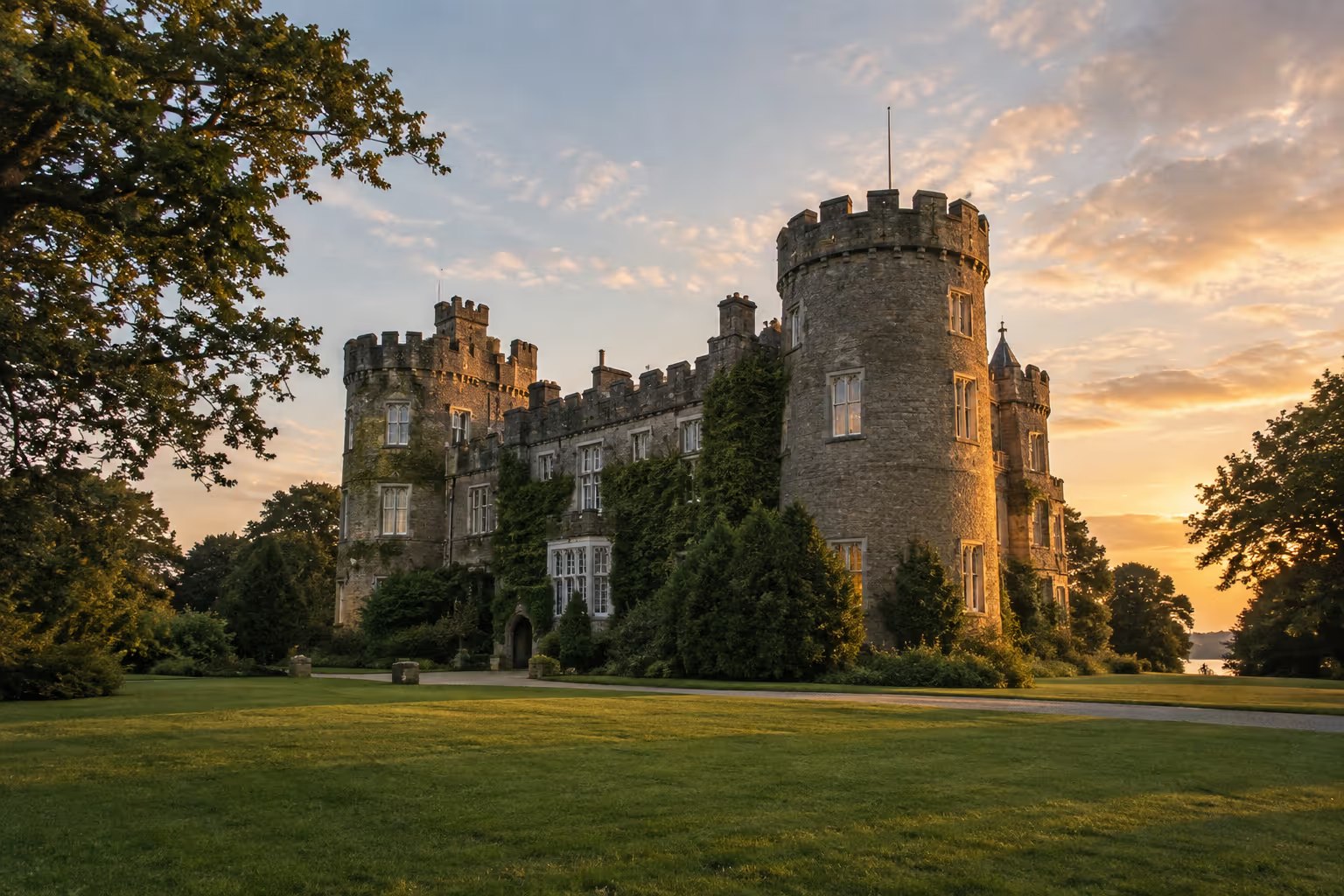
Operators that specialize in couples trips regularly highlight Ashford Castle and Dromoland Castle as flagship overnights, with rooms often €460-€830+ EUR / $500-$900+ USD per night depending on season and package (7). If you do this, build your itinerary around it - arrive early, use the grounds, book dinner.
2) Sunset at the Cliffs of Moher (but plan the transport)
The Cliffs are iconic for a reason, and they’re also the #2 visitor attraction in Ireland on a 2024 ranking (5). For couples, the move is going at a quieter time (early or later), not mid-day when it feels like a theme park queue.
3) Galway food + music as a “no-car romance” plan
Galway is strong for couples because you can do a whole romantic weekend without a car: food tour energy, seafood, and live traditional music concentrated in a small core (7). It’s social without being chaotic.
4) Killarney lakes (classic, for a reason)
Couples itineraries often feature private boat rides on the Killarney Lakes as a signature experience (7). Even if you don’t splurge on fully private, spending a half-day on the water is one of the best “slow travel” moments in Ireland.
What to budget so you don’t argue about money
A useful benchmark: The Irish Road Trip’s 2026 cost modeling estimates a 7-day mid-range trip for two at about $8,269 USD total (June 2026), including a 15% buffer (6). If you add a castle night, expect to push above that unless you balance it with simpler nights elsewhere.
How to link Irish cities without burning your whole trip on transit
This is where most first itineraries fall apart: people see a map, underestimate drive times, then wonder why they’re always arriving tired.
A few rules that keep your plan sane:
- Use Dublin as your flight in/out hub, then leave it. Ireland’s own tourism policy frames Dublin as the gateway city, with a strong push to spread visitor time beyond the capital (8).
- Pick 2-3 bases max for a 7-day trip. Trying to do Dublin + Galway + Cork + Belfast + Killarney + Cliffs in one week is how you end up seeing Ireland through a windshield.
- Public transport between major hubs is doable. Travelers regularly stitch together Dublin → Galway by bus/train, then add day tours (8).
- Book your “pain point” attractions early: Guinness Storehouse (#1), Cliffs of Moher (#2), Kilmainham Gaol (#9), Spike Island (#10) are all on the national top-10 list and can sell out in peak season.
If you want one clean, first-timer route that hits the big city experiences and the landscapes people picture when they think of Ireland:
- Dublin (2-3 nights) → Galway (2-3 nights) → Cork (2 nights)
This aligns with the main visitor gravity zones (Dublin + West + South-West) shown in regional visitor breakdowns. For those who want to dig deeper into what Ireland’s hidden treasures have to offer beyond the main hubs, there’s plenty more to explore once you’ve covered the essentials.
Frequently Asked Questions
- Are there official cities beyond the main five in Ireland?
- Ireland has a few official cities, but many large towns function like cities for visitors, such as Kilkenny and Killarney.
- Is renting a car necessary for exploring Ireland's cities and surroundings?
- Public transport connects major cities well; renting a car is best reserved for countryside exploration beyond urban hubs.
- When is the best time to visit Galway to avoid crowds and high prices?
- Visiting in May-June or late September helps avoid peak season crowds and accommodation markups in Galway.
- What's the tipping etiquette in Irish pubs and restaurants?
- Tipping is not compulsory; rounding up or leaving about 10% in restaurants is common, while pub tips are often small or informal.
- Can you visit the Cliffs of Moher without a car?
- Yes, day tours from Galway and public transport options make the Cliffs accessible without a car.
- Are historic attractions like Kilmainham Gaol easy to visit without advance booking?
- No, popular historic sites often sell out in summer; booking timed entry tickets in advance is recommended.
- What are practical city combinations for a first trip to Ireland?
- A 7-day trip combining Dublin, Galway, and Cork balances city experiences with nearby landscapes efficiently.