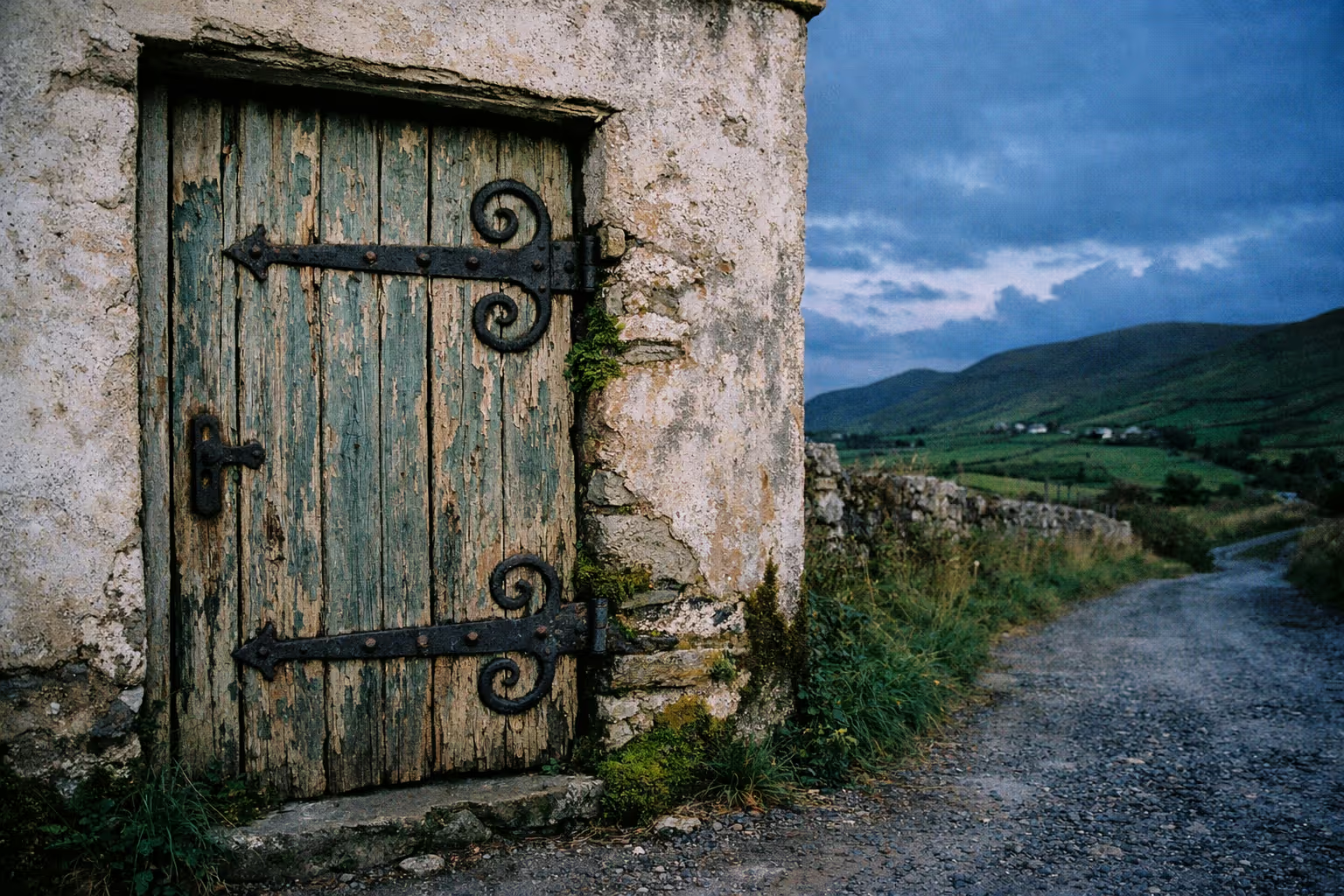
The best time to visit Ireland is the shoulder, April to May or September to October, when the weather is mild, the crowds thin, and everything is still open. If you can pick one month, make it May: it is the sunniest, greenest, and stacked with village festivals before the summer rush. Chasing value instead? January runs 30 to 40 percent cheaper, though the daylight is short and some rural sites close. Just avoid late November through February, when the damp cold and closures make the countryside a slog.
When is the Best Time to Visit Ireland?
Finding the best time of year to visit Ireland really comes down to balancing weather and crowds. For me, spring (April-May) and autumn (September-October) strike that balance best.
I’ve had some of my most relaxed and rewarding visits during those shoulder seasons. Local guides and tour operators frequently point to May, September, and October as the months with the best mix of weather, daylight, and manageable visitor numbers (2)(10).
In spring, the countryside bursts with wildflowers and fresh green hills. Temperatures hover between 8°C and 15°C (46°F to 59°F), and the days are long enough to get plenty of exploring done. One May, I stumbled on a small village’s May Day festival - something you’d likely miss during the crush of summer tourists.
Autumn casts Ireland in shades of gold and rust. The air feels crisp but not cold, with temperatures similar to spring. It’s a great time to hike or focus on photography.
If I had to pick the single best month to visit Ireland, I’d go with May. It’s one of the sunniest months, averaging 5 to 6.5 hours of sunshine daily nationwide, and up to 7 hours near Wexford and Waterford in the southeast. September isn’t far behind, offering warmth without the crowds of July and August.
Still, Ireland’s weather can change fast. The locals joke, “If you don’t like the weather, wait five minutes.” So no matter when you visit, pack a waterproof. It’s part of the deal.
Ireland Weather by Season
Thanks to the Gulf Stream, Ireland’s climate stays mild year-round - but mild doesn’t mean dry. Rain and cloud cover are spread evenly through the year, so don’t let any month fool you into skipping your rain gear.
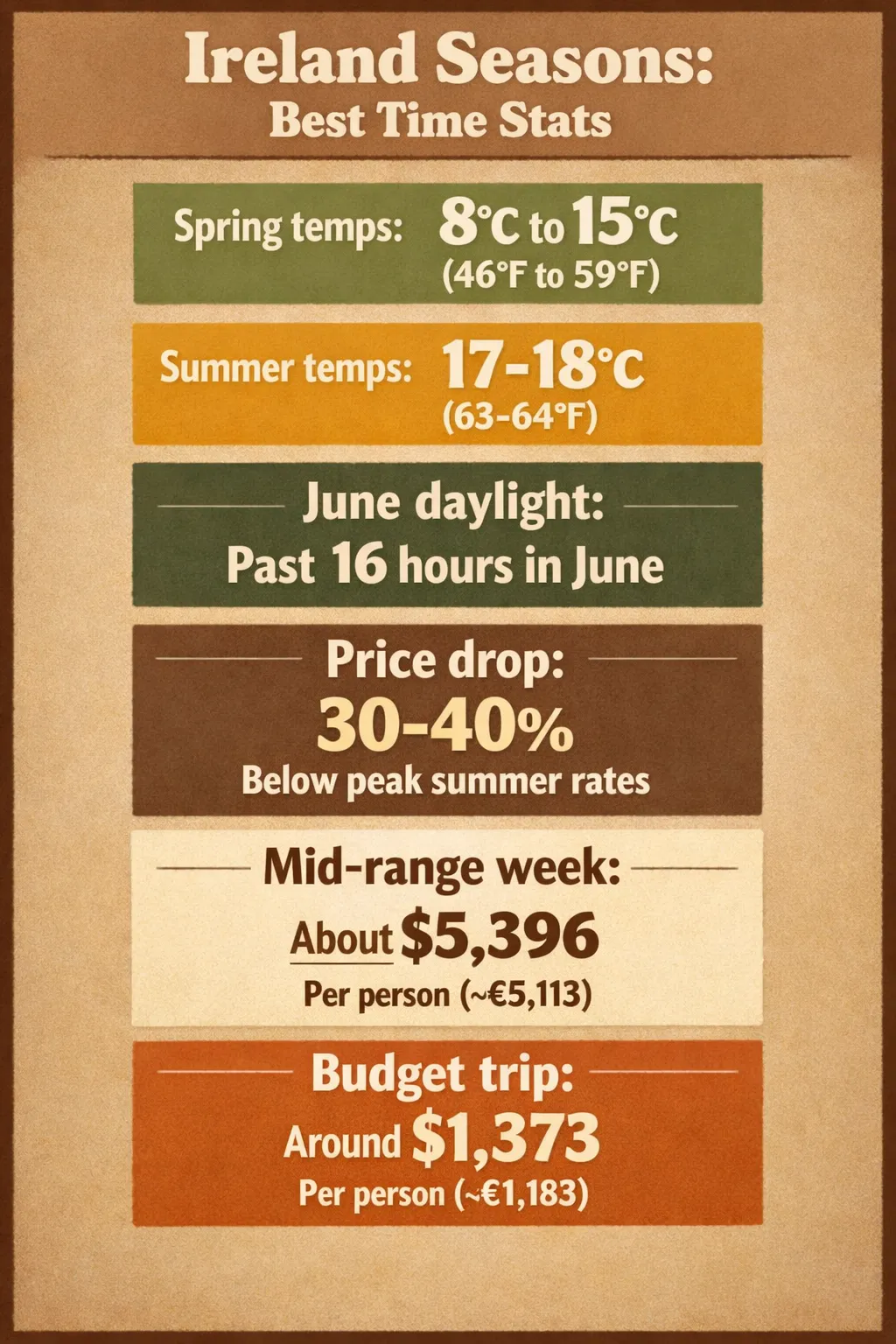 Seasonal ranges show spring 8–15°C, summer 17–18°C, June daylight over 16 hours, and typical costs from around $5,396 per person for a mid-range 7-day trip to about $1,373 per person for budget stays.
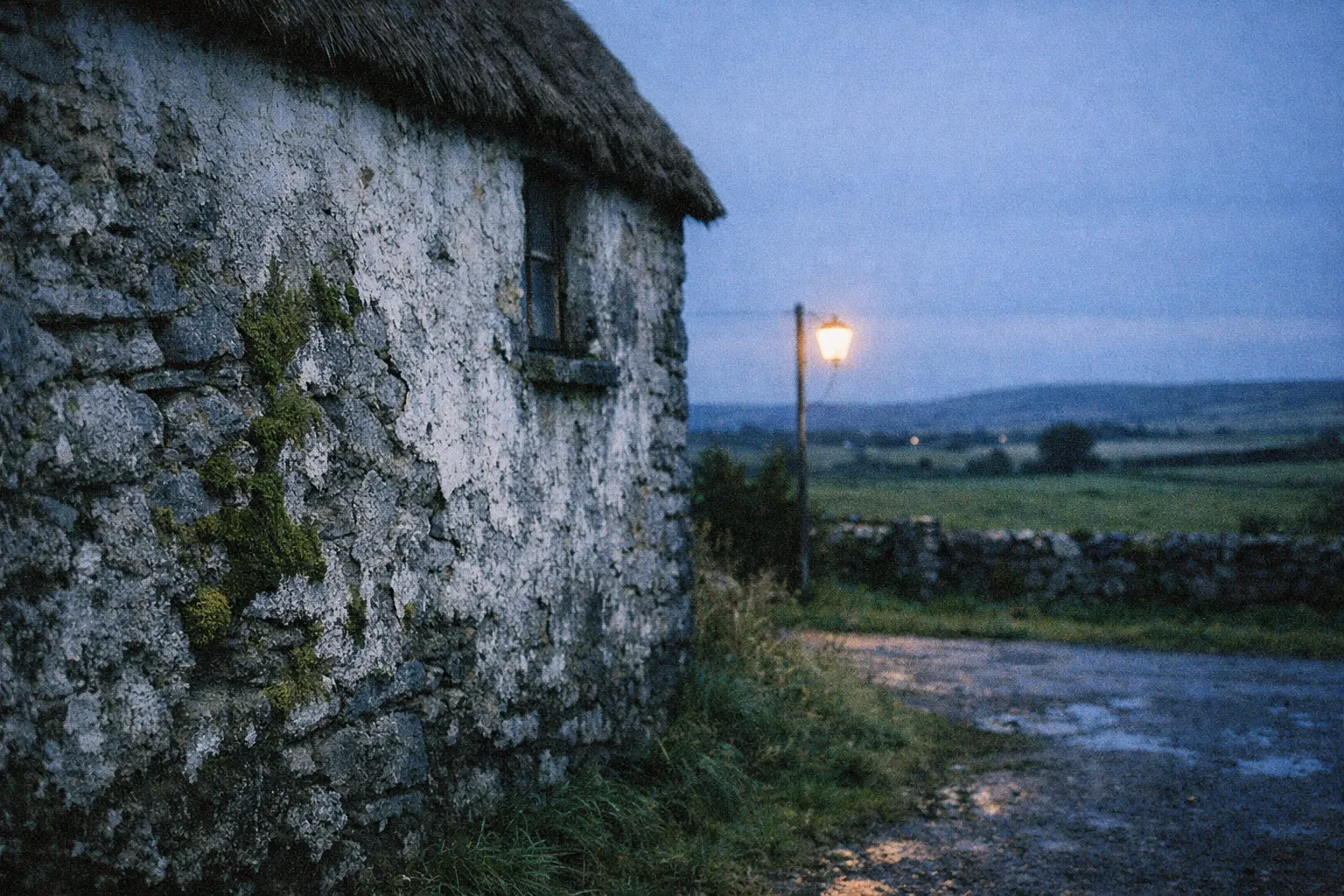
Here’s a quick rundown:
- Spring (March-May): March and April see more rain, but by May the weather tends to brighten with warmer, sunnier days. Temperatures usually range from 8 to 15°C (46-59°F).
- Summer (June-August): The warmest stretch, with highs around 17-18°C (63-64°F) and daylight stretching past 16 hours in June. This is also the busiest and priciest season.
- Autumn (September-October): Crisp air, changing leaves, and harvest festivals define this time, with temperatures close to spring. November starts to tip toward winter.
- Winter (December-February): Cold and damp, with daylight often under eight hours. Some rural attractions reduce hours or close (2)(10).
May and June are typically the sunniest months. I’ve enjoyed some of my best hikes along the Cliffs of Moher and through Killarney National Park in late spring.
But don’t get too attached to old seasonal guides. Weather patterns have shifted. For example, July 2025 recorded rainfall at 103% of the long-term average, making it the wettest July since 2023. Autumn 2025 was also one of the wettest on record, with six of the ten wettest autumns happening since 2001 (5). The takeaway? Check recent forecasts rather than relying solely on historic averages.
What is the rainiest month in Ireland?
There’s no clear-cut rainy month. December and January have traditionally been among the wettest, but lately, autumns have grown wetter, and mid-summer rain spells are more common (5). Rain falls somewhere in Ireland roughly 150 days a year, so the safest bet is to assume you’ll see some. Some of my most memorable moments came right after a shower, when the landscape shines and rainbows appear.
Why Visit Ireland in the Spring
Spring is quietly my favorite season to visit. April, especially after Easter, offers decent weather, plenty of daylight, and prices that haven’t yet jumped to summer highs (2)(8). By May, the countryside is at its greenest, lambing season is underway, and places like Killarney and Connemara National Parks are alive with color.
The crowds are smaller too. April and October are the months tour operators recommend for fewer visitors while still having mild weather and nearly all attractions open (7). You can explore popular sites without feeling packed in or stuck behind a tour bus.
Top things to do in Ireland in the spring
- Hike the Wicklow Mountains and Glendalough, where the trails are quiet and the valleys lush (6).
- Visit Kilmainham Gaol and Dublin’s museums without the long lines of summer.
- Drive the Dingle Peninsula and coastal roads of Kerry - parking is far easier than in July.
- Explore Killarney and Connemara National Parks as wildflowers begin to bloom.
Fall is Also a Great Time to Go
If spring doesn’t fit your schedule, autumn offers a similar experience. September and early October bring mild weather, golden foliage, harvest festivals, and shoulder-season prices. Most attractions stay open, with far fewer sold-out time slots than summer (1)(8).
November moves quickly toward winter, and recent autumns have been wetter than usual (5). If you want a good balance, stick to September through mid-October and treat late November more as low season than a mild fall.
Peak Season and the Cheapest Time to Visit Ireland
Peak season runs June through early September. This is when Ireland is at its warmest, with highs around 17-18°C (63-64°F) and daylight stretching past 11 pm in June. The long days are great for sightseeing, but expect crowds and high prices.
Accommodation in Dublin, Killarney, and Galway often sells out three to six months ahead, especially on weekends and during festivals (8). I once spent 45 minutes waiting to kiss the Blarney Stone in August - definitely not the quiet experience I imagined. If you go in summer, book early and budget for premium rates.
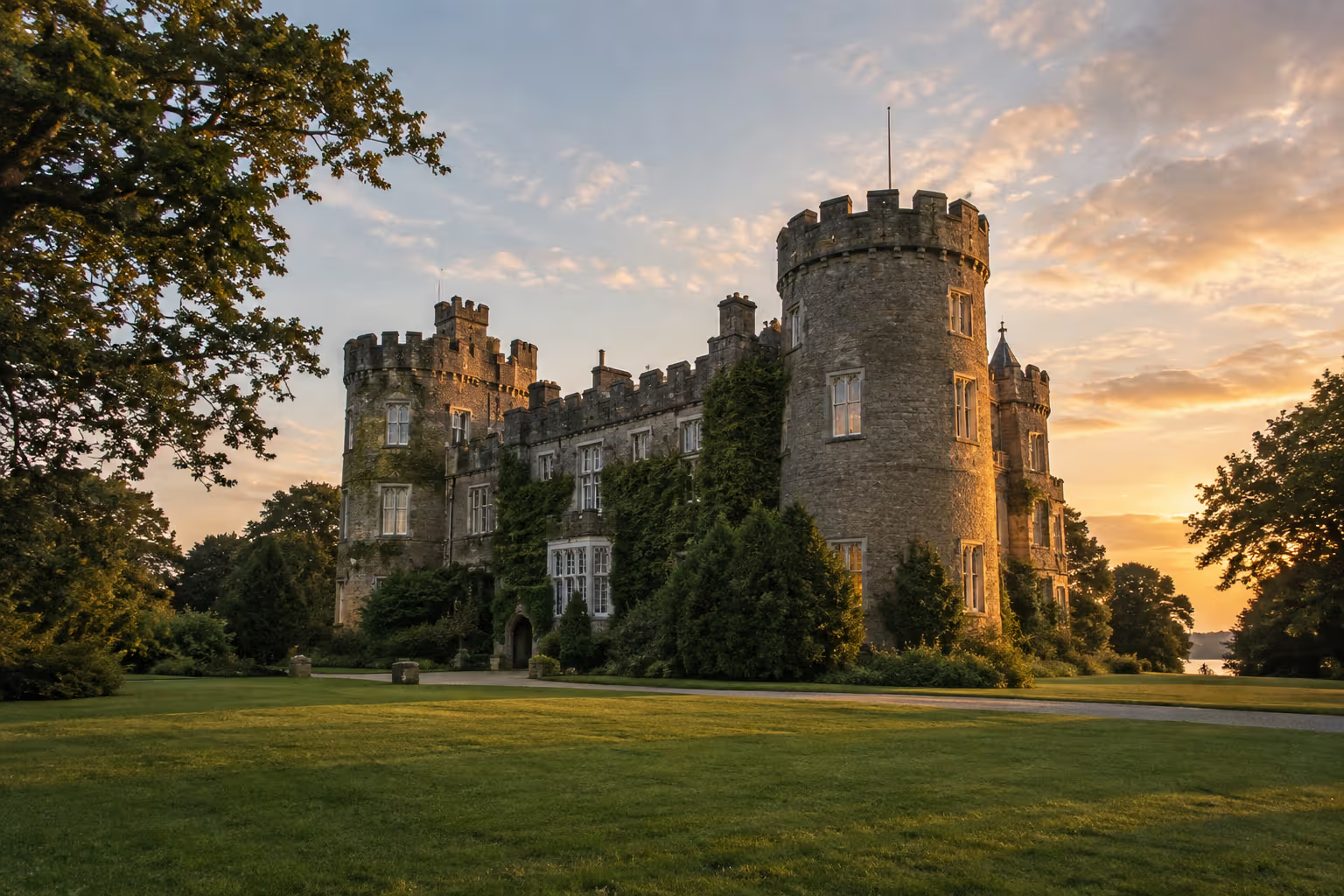
The cheapest time to visit Ireland is usually January, February, and November (excluding the Christmas and New Year period). Prices can be 30-40% below peak summer rates, and you’ll find far fewer tourists. Flights from the US East Coast to Dublin tend to be cheapest from January through March, with January standing out as particularly affordable. I’ve scored great deals on cozy B&Bs and even castle stays during these quieter months.
The trade-off is shorter days and some reduced opening hours at smaller sites. However, major attractions like the Cliffs of Moher and the Guinness Storehouse remain open year-round (4).
Seasonal Overview of Visiting Ireland
| Spring (Apr-May) | Summer (Jun-Aug) | Autumn (Sep-Oct) | Winter (Nov-Mar) | |
|---|---|---|---|---|
| Crowds | Moderate | High | Moderate | Low |
| Price Level | Moderate | High | Moderate | Low |
| Weather | Mild | Warm | Mild | Cold |
Heads-up: St. Patrick’s Day (March 17th) drives up prices and crowds, especially in Dublin. It’s a lively time, but book well ahead and prepare for packed streets.
What is the cheapest month to go to Ireland?
January takes the prize. After the holidays, demand drops sharply, flights hit their lowest points, and hotel rates follow suit. February and November aren’t far behind. If saving euros is your priority and you’re okay with short days and cooler weather, January is your best bet.
Best Time to Visit Dublin, Ireland
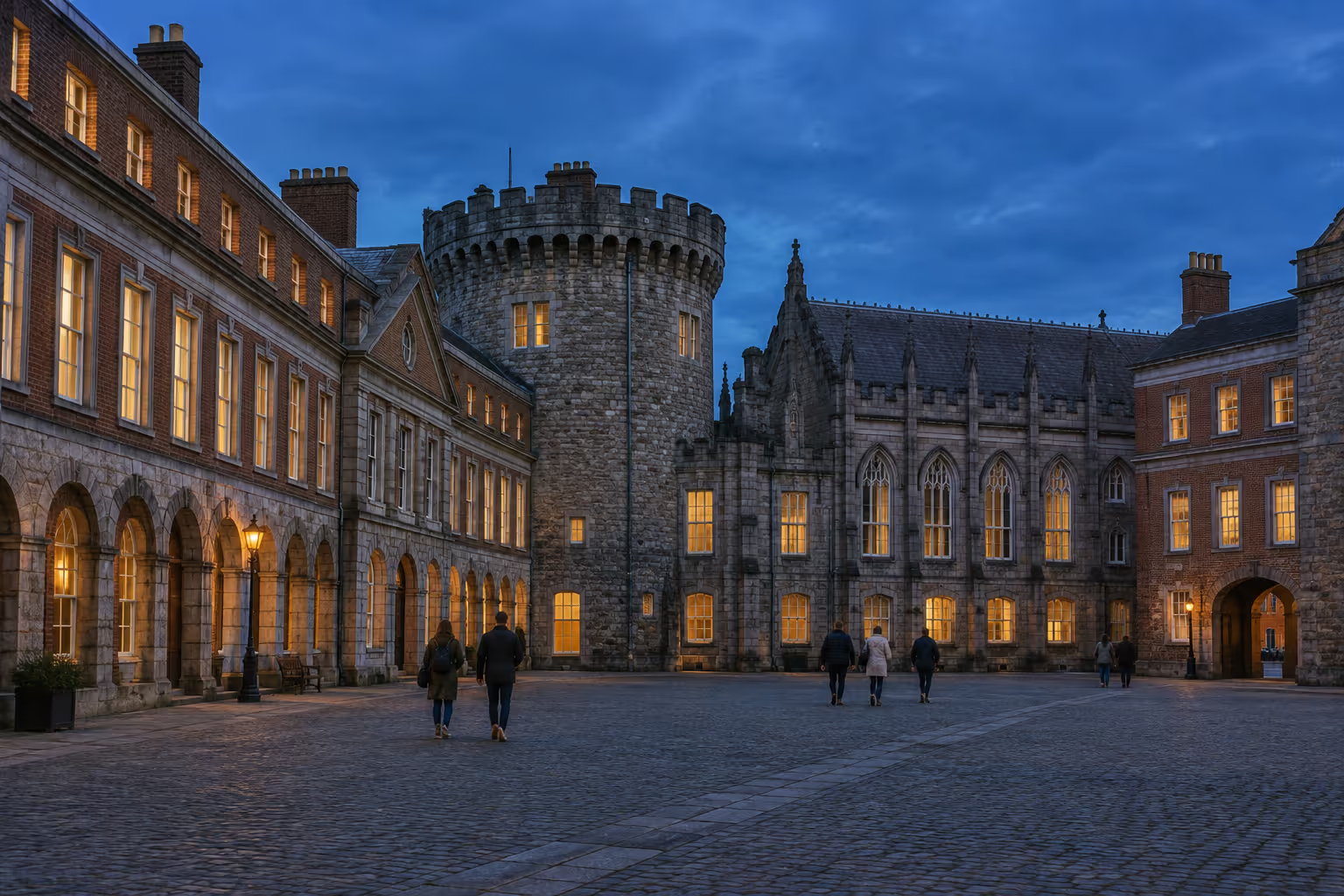
Dublin’s rhythm differs from the countryside. Summer is the obvious choice for festivals, nightlife, and long evenings in Temple Bar - but that comes with peak prices and crowds.
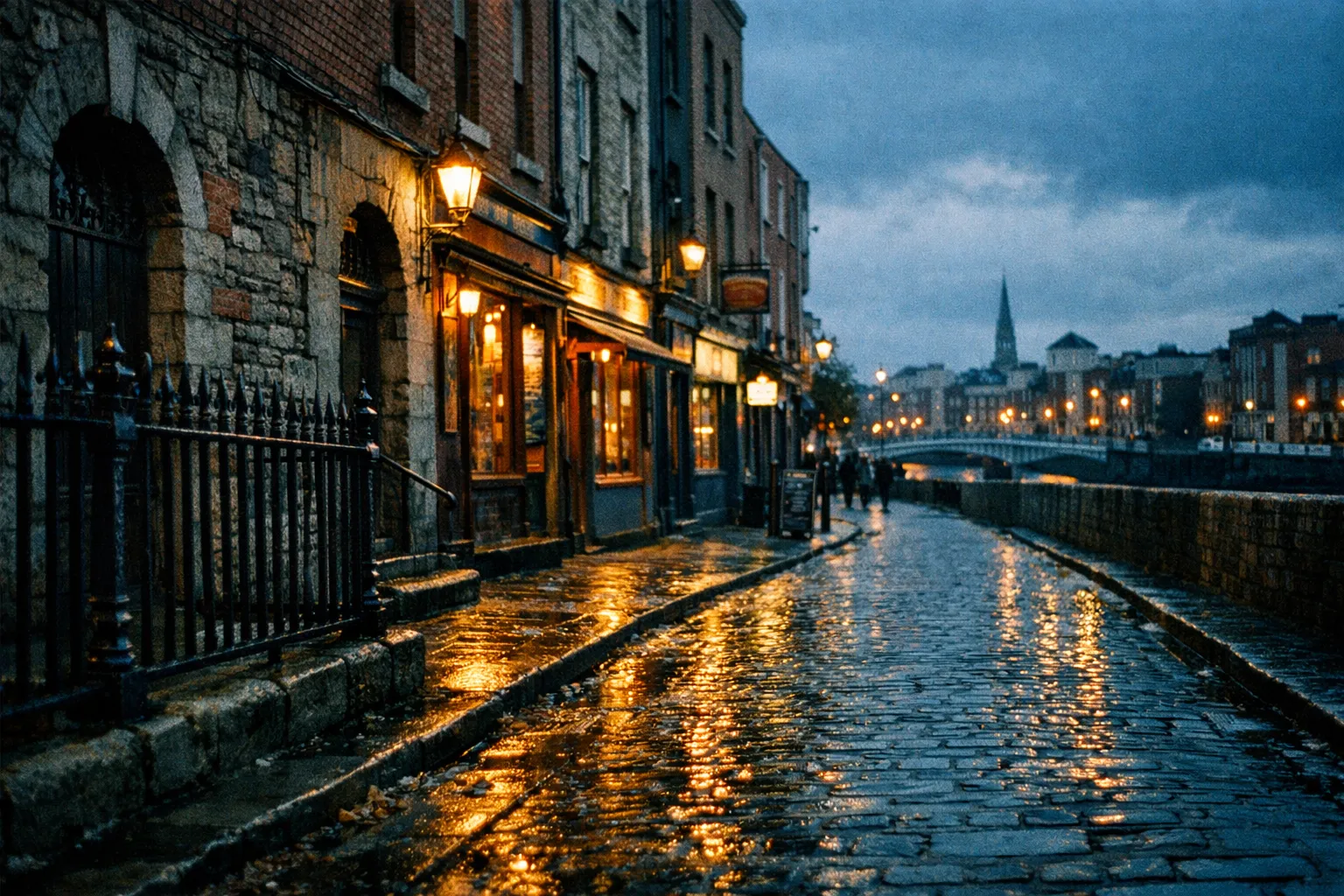
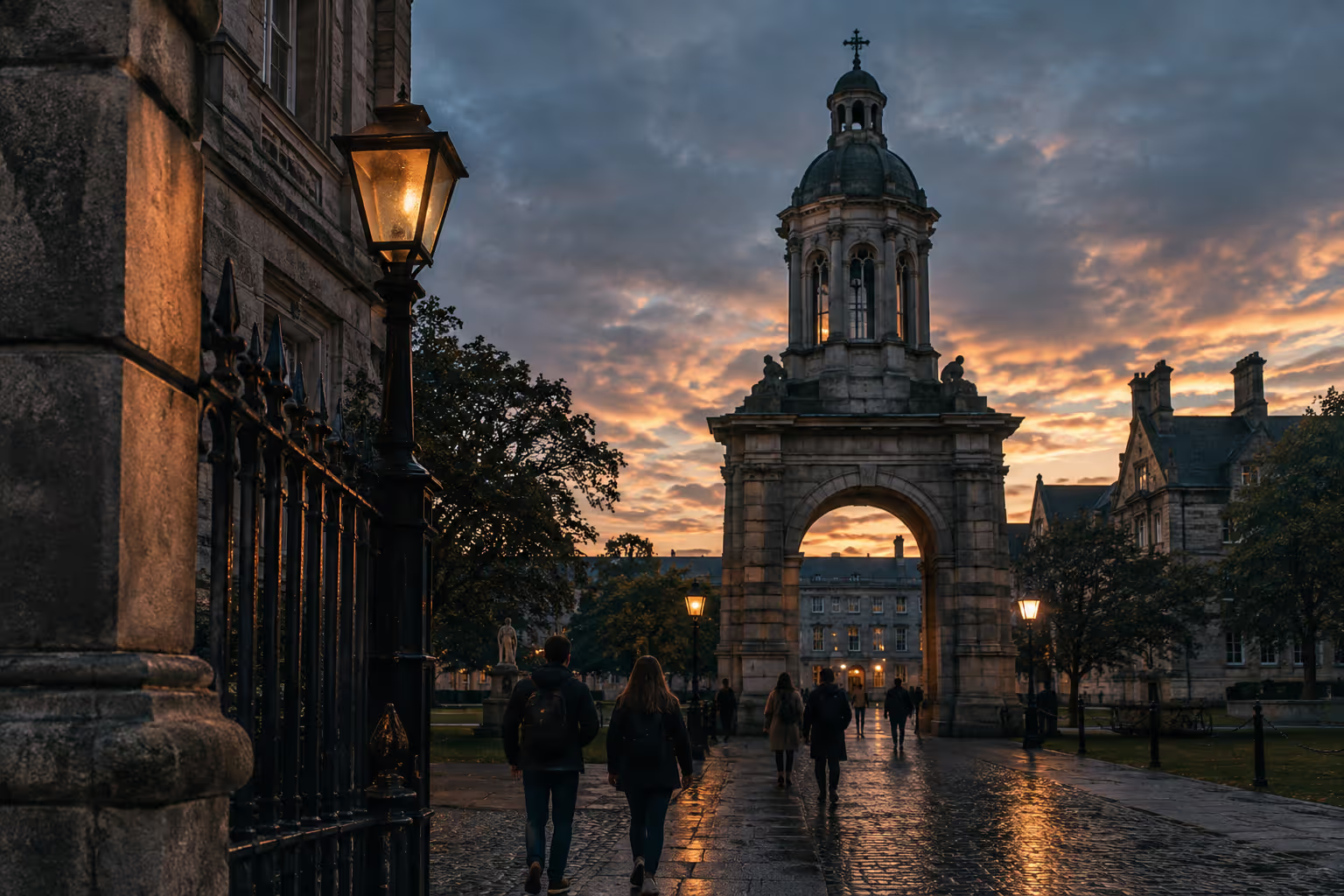
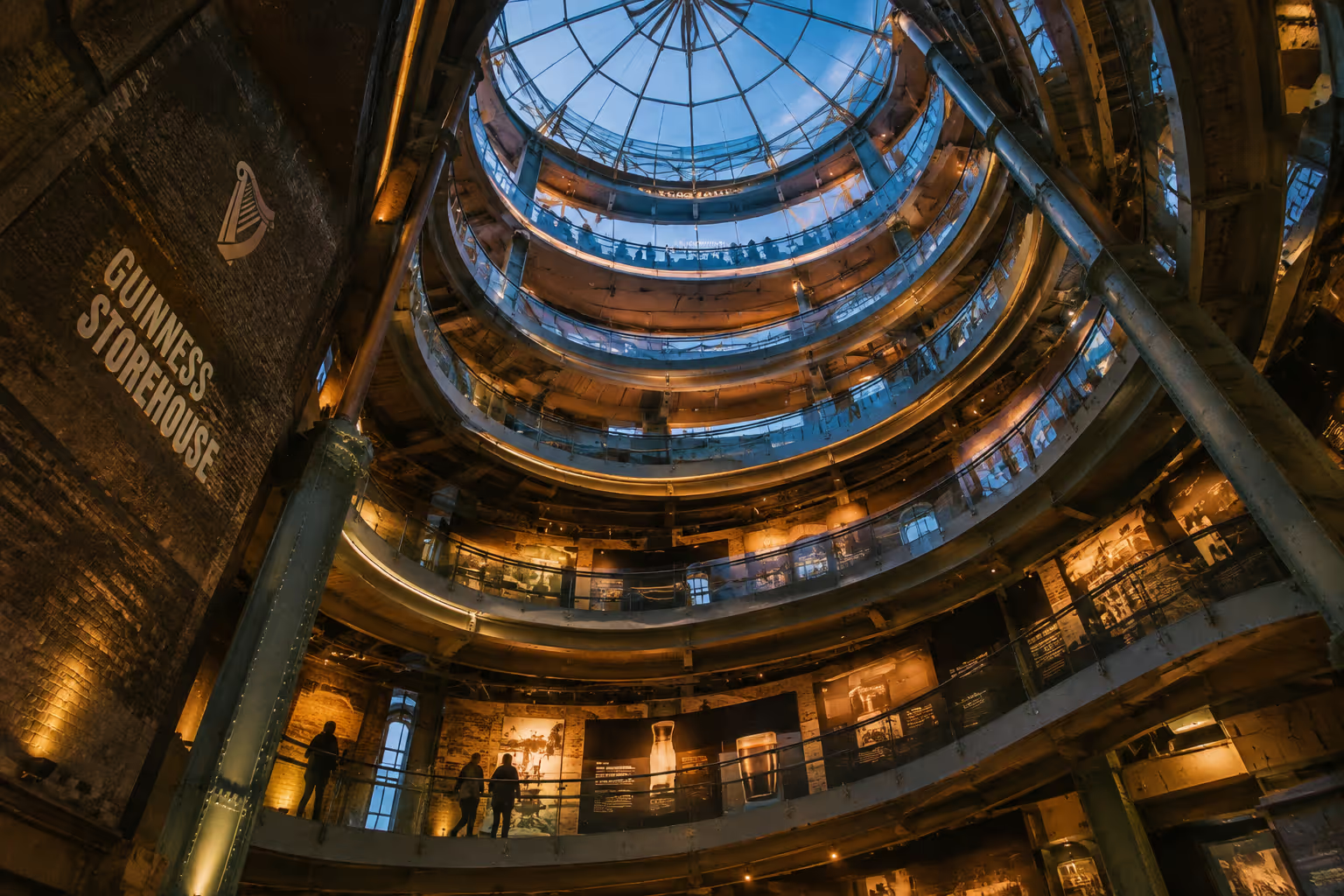
For the best time to visit Dublin, Ireland, I recommend November. It’s a strong month for city breaks: cheaper flights and hotels, a lively vibe as the city gears up for the festive season, and none of the summer crush (2). With main attractions like the Guinness Storehouse, Kilmainham Gaol, and Trinity College’s Long Room indoors, you won’t miss out even if the weather turns.
The shoulder seasons (April-May, September-October) also work well, offering mild days and easy access to museums without the tourist surge.
Worst Time to Visit Ireland
If you’re after scenery, the worst time to visit Ireland tends to be late November through February. Days shrink to under eight hours of light, weather turns cold and damp, and some rural attractions close or reduce hours (2)(8). Driving country roads in the dark is a challenge many first-timers underestimate.
The other contender for worst is peak July-August - not because of weather, but due to crowds and cost. Popular spots fill up, parking near natural attractions becomes a hassle, and last-minute lodging can be either outrageously expensive or unavailable. Plus, summer isn’t guaranteed dry - July 2025 was both warmer than average and the wettest July since 2023.
Tips for Avoiding Crowds While Traveling Ireland
If you want space and quiet more than warmth, September through April offers the most breathing room at popular sites (7). A few tactics help too:
- Travel in April or October. These months combine lower crowds with mild weather and full or nearly full attraction access (7).
- Arrive mid-week. Flights and hotels often cost less Monday through Thursday, and sites are less busy.
- Visit major attractions early or late. The Cliffs of Moher and Killarney National Park are noticeably quieter outside the mid-day tour bus rush (4).
- Book shoulder-season flights three to four months ahead. You’ll get better rates and more mid-week options.
- Head rural. Places like the Dingle Peninsula, Connemara, and Wicklow clear out quickly once you leave the main coach routes. For a deeper dive into one of these wild regions, consider Discovering Connemara: Ireland’s wild and rugged gem.
How Many Days Do You Need, and What Will It Cost?
How many days are enough for Ireland?
Most itineraries feel right around 7 to 10 days (3)(6). A week lets you cover Dublin, Wicklow, County Clare (Cliffs of Moher), and Kerry (Ring of Kerry and Dingle) without rushing. Ten days gives you time to add the north or take it slower along the Wild Atlantic Way. Under five days means picking one region plus Dublin.
How much would a 7-day trip to Ireland cost?
Costs have crept up. 2026 estimates put a mid-range week at about $5,396 per person (roughly €5,113), including flights, car rental, lodging, and activities. Budget travelers using cheaper lodging and public transport can pull that down to around $1,373 per person (≈€1,183), excluding long-haul flights. Reports from travelers cluster near $1,000 per day for two people - about $500 per person daily for lodging, rental car, meals, admissions, and a couple of tours - adding up to roughly $7,000 for two over seven days (3).
A common mistake is budgeting only flights and hotels, then getting hit with surprise costs for car rental, meals, and entry fees. Plan for the full picture.
✓ Pros
- Mild weather year-round thanks to the Gulf Stream
- Shoulder seasons offer a good balance of weather, crowds, and prices
- Major attractions remain open year-round
- Varied landscapes and festivals throughout the year
✗ Cons
- Weather can be unpredictable, rain possible any month
- Peak summer is crowded and expensive
- Winter days are short with some closures
- Late November to February can be cold and damp
Essential Tips for Your Irish Adventure
Before you pack for Ireland, keep these in mind:
- Prepare for variable weather. Layer your gear and always carry a waterproof jacket - rain can show up any month.
- Match the season to your interests. Summer offers the most festivals; spring and autumn balance weather and crowds better.
- Book ahead. This is crucial for peak season and St. Patrick’s Day, when Dublin fills fast.
- Get out of the cities. Some of Ireland’s best scenery is rural - Connemara, Dingle, Wicklow.
- Stay flexible. Have indoor options ready. A rainy afternoon can be the perfect excuse for a pub, a pint of Guinness, and live music.
Etiquette note
Tipping in Ireland is lighter than in the US. In restaurants, round up or leave about 10% if service was good, but check first - some bills include a service charge. Pubs don’t usually expect tips for drinks at the bar, though buying the bartender a drink is a friendly gesture. When there’s live music in a pub, don’t talk over the session - locals take their traditional music seriously.
Ireland’s appeal isn’t tied to one season. Whether you chase May sunshine, autumn colors, or a quiet, budget-friendly January city break in Dublin, there’s a right time for the trip you want. Pick what matters most - weather, cost, or crowds - and let that guide your timing. Sláinte!
Frequently Asked Questions
- Can I visit Ireland year-round?
- Yes, Ireland is open year-round but expect shorter days and some closures in winter.
- Is it necessary to rent a car in Ireland?
- Renting a car is recommended for rural areas like Dingle and Connemara but less needed in cities like Dublin.
- How early should I book for peak season?
- Book accommodations and tours three to six months ahead for summer and festival periods.
- Are there any special considerations for St. Patrick's Day?
- Expect crowded streets and higher prices in Dublin; book well in advance and prepare for busy events.
- What should I pack for Ireland's weather?
- Pack layers and a waterproof jacket year-round due to frequent rain and variable conditions.
- Can I find budget accommodations in shoulder seasons?
- Yes, shoulder seasons offer lower prices and fewer crowds, making budget stays easier to find.
- Is tipping expected in Irish pubs?
- Tipping at the bar is not expected, but buying the bartender a drink is a friendly gesture.