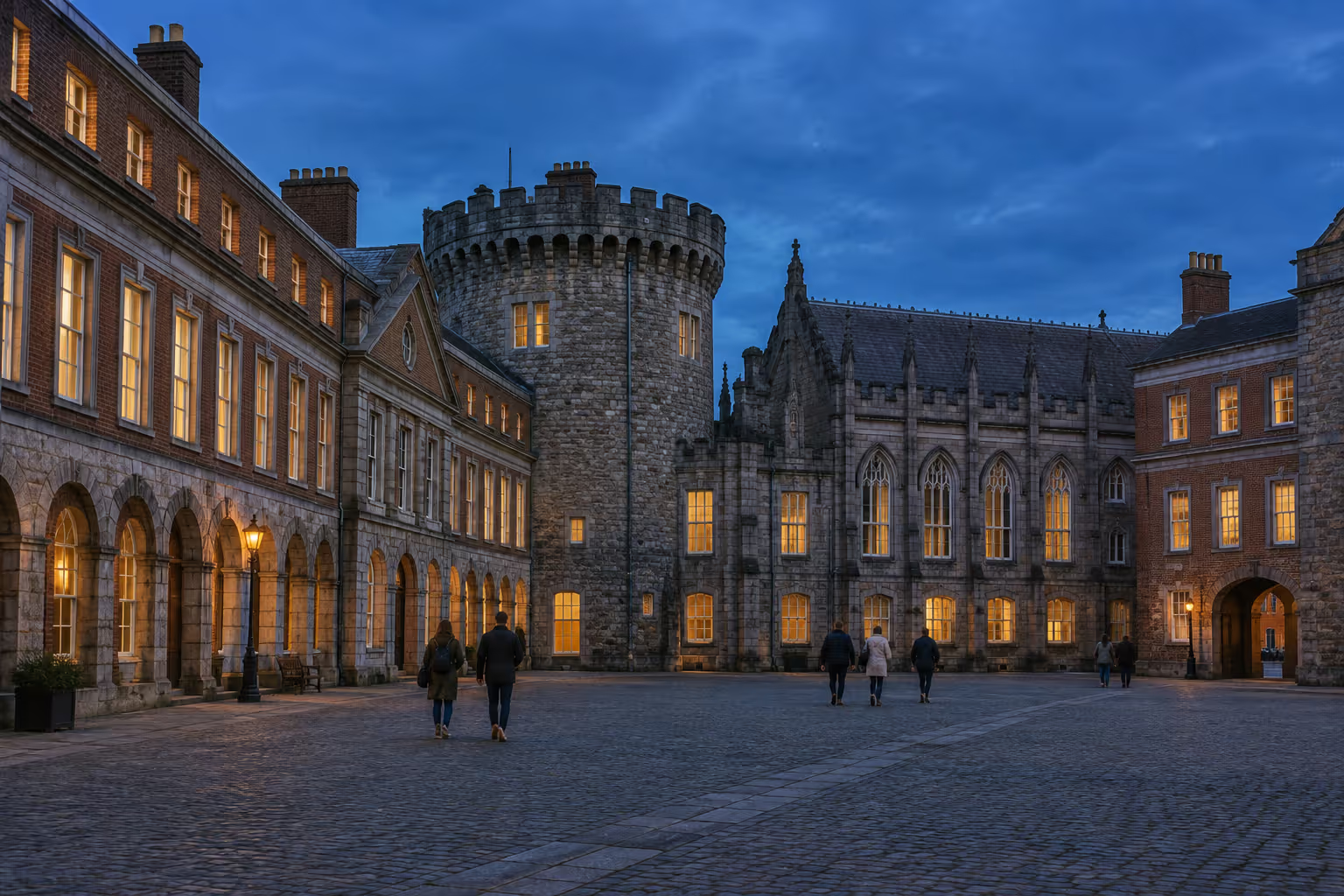
Dublin Castle has been closed to the public since 15 June 2026 and stays shut through 31 December 2026 while Ireland holds the EU Council Presidency (3). The official ticket page still lists hours and prices with no closure notice, so don’t read it as an open door. This guide covers when you can visit, what the tickets cost once it reopens, and which parts are worth your limited Dublin hours.
✓ Pros
- A compact way to connect Ireland's governing history with the rooms where state ceremonies still happen.
- An indoor visit that can fit between nearby city-centre stops.
✗ Cons
- A working state venue means access to rooms can change around official business.
- The visit is not an option during the 2026 closure, so plans need a reopening check.
Once it reopens, the place has a lot going for it. It sits in the middle of the city centre, it holds eight centuries of ceremonial history, and a self-guided adult ticket is listed at €8.00 as of October 2026 (2). The downsides: the site is closed for the rest of 2026 (3), same-day tickets are limited, and rooms can close at short notice for official functions (2).
Dublin Castle Visitor Status: Closed Through 2026
The castle is closed to the public through 31 December 2026, and its entire campus has been off-limits since Monday 15 June 2026 so the Irish government can host the Presidency of the Council of the European Union (3). Heritage Ireland says it expects to welcome visitors back in January 2027 (3).
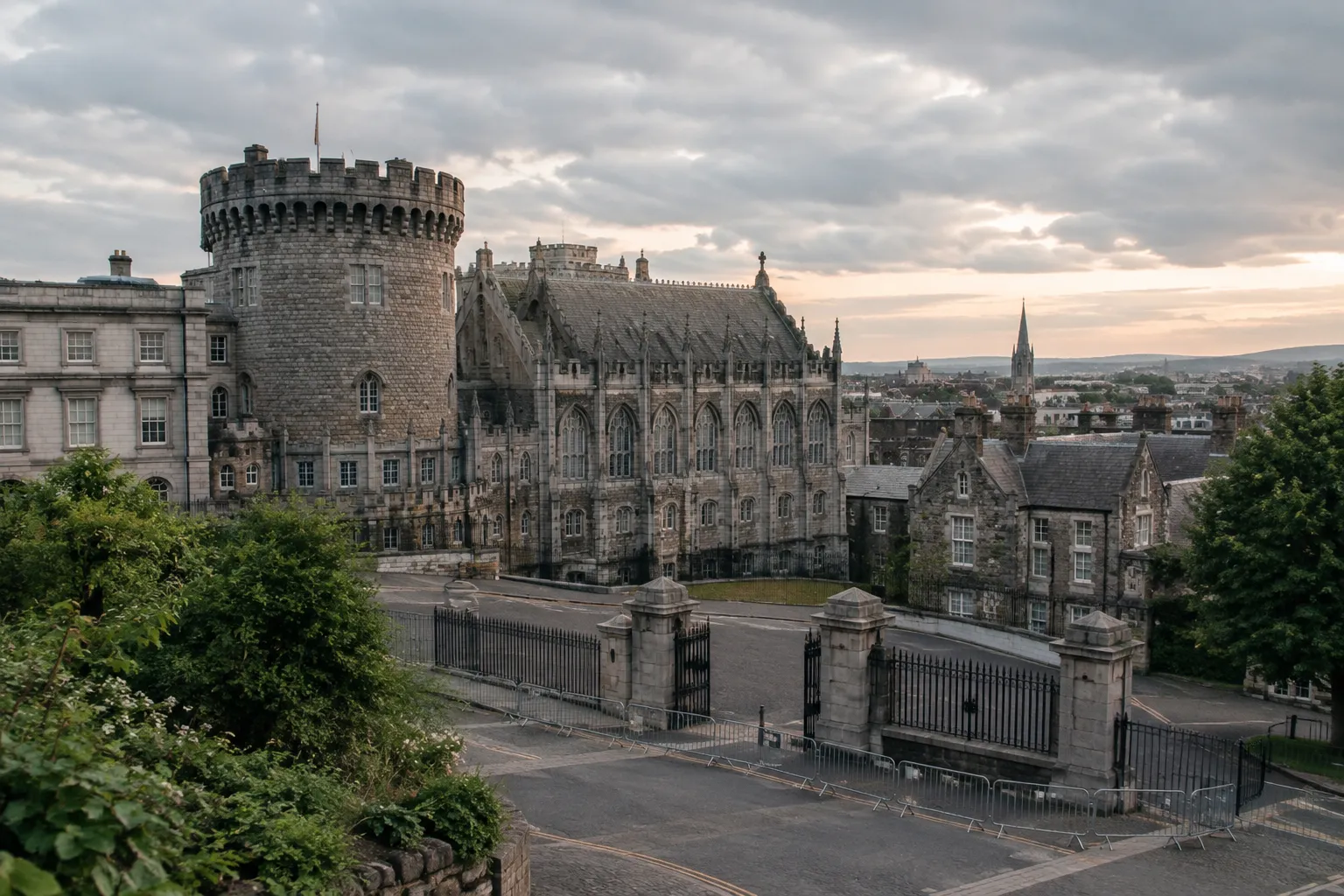
EU member states rotate the Council Presidency every six months. Ireland’s term runs from 1 July to 31 December 2026, the eighth time it has held the role since 1973, and more than 270 events are planned nationwide (4). The castle is the main state venue, hosting more than one hundred of those events: conferences, meetings, dinners, cultural events and receptions (3). An informal meeting of EU transport ministers held there on 20-21 September 2026 is typical of the schedule (5).
The closure covers more than the buildings. Heritage Ireland states there is no public access at all, and specifically no through access from Dame Street (Palace Street Gate) to Ship Street (3). If you usually cut across the castle yard between the south city streets, plan another route.
Three neighbouring streets are also shut. Castle Street, Ship Street Little and Ship Street Great are closed to both pedestrians and traffic until 31 December 2026 as part of the policing and security operation (4)(5). Local access is facilitated, but you can’t use these streets as a shortcut while sightseeing nearby (5). An Garda Síochána also flags temporary restrictions around specific meetings, so check current Garda notices if you are staying in the area (4)(5).
Castle History Highlights: Viking Origins to Georgian Palace
Its history runs from a Viking settlement through a 13th-century fortress to a Georgian palace rebuilt after a fire in April 1684. That layering explains why the building doesn’t look like the fortress you probably picture (1).
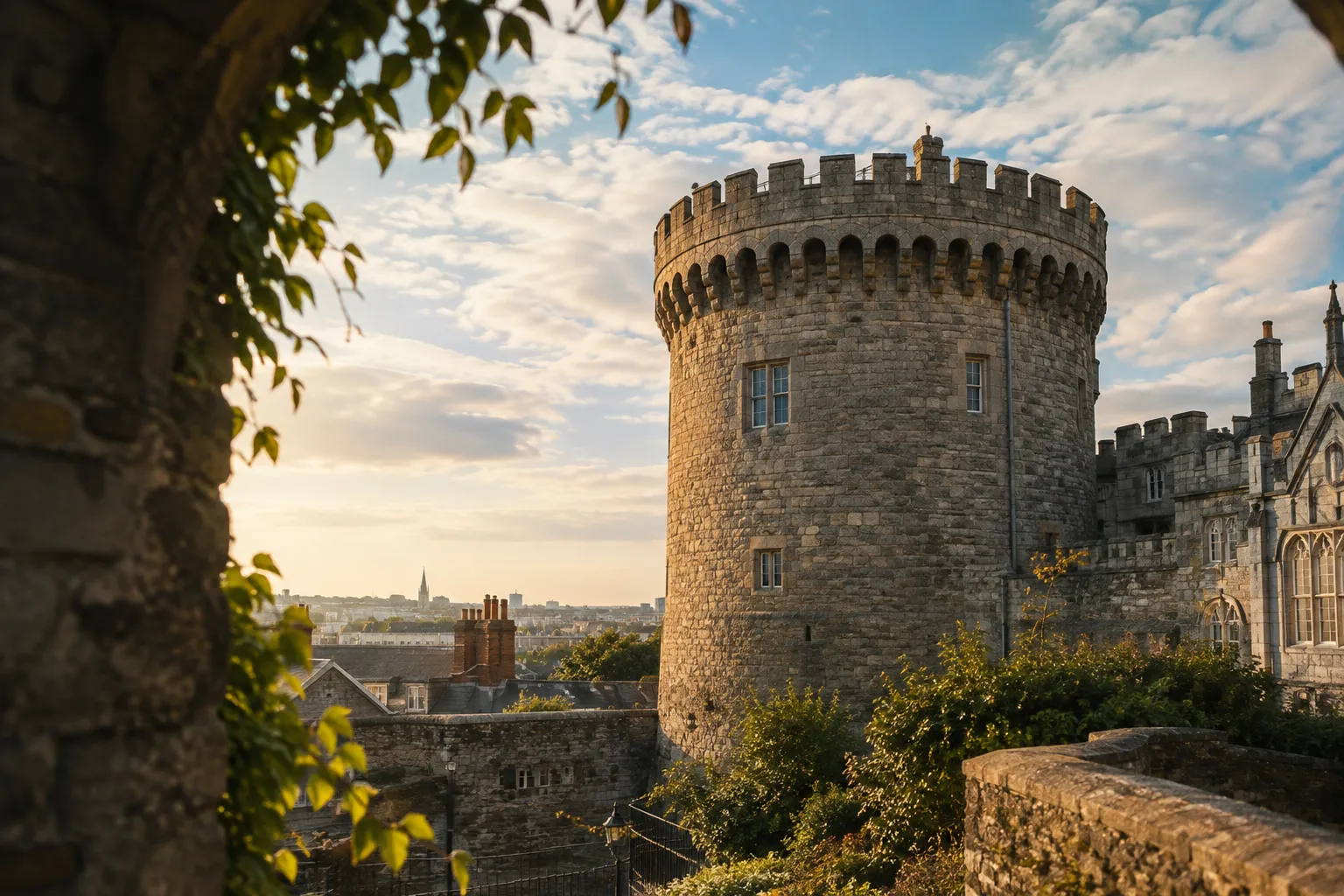
Viking settlement and the medieval fortress
The site has been occupied for longer than the castle has existed. The castle stands on elevated ground once held by an earlier Viking settlement, roughly where the Upper Castle Yard sits today (1). Visit Dublin notes the original fortification may have been an early Gaelic ring fort, followed by a Viking fortress (6). The city’s name comes from the same spot: “Dubh Linn,” the Black Pool, lay where the present castle garden is, at the meeting of the River Liffey and the River Poddle (6).
King John of England ordered the medieval fortress. It was built around a large central enclosure, with four corner towers linked by high curtain walls (1).
The 1684 fire and Georgian rebuilding
The medieval castle stayed largely intact until April 1684, when a major fire severely damaged much of the building (1). What replaced it was a residence rather than a fortress. The State Apartments were built as the residential quarters of the Viceregal court (6), and the Chapel Royal followed in the early nineteenth century (1).
Dublin Castle is not a preserved medieval fortress. You mostly walk through Georgian state rooms, with the medieval and Viking structures that survived the fire beneath and beside them (1). If you want battlements and a keep, other castles in Ireland will suit you better. If you want to see how power was staged in Ireland, this is the place.
1204-1922: seat of English and British rule
From 1204 to 1922 the castle was the seat of English, and later British, rule in Ireland (1). It served mainly as the residence of the Viceroy, the monarch’s representative in Ireland, and as a ceremonial and administrative centre (1). That 700-year run is the short answer to why Dublin Castle is so famous. For more than seven centuries, decisions about the country were made inside these walls.
1922 Handover and the Castle’s Role Today
On 16 January 1922 the last Viceroy of Ireland handed Dublin Castle over to Michael Collins and the government of the newly independent Irish state (1). The handover followed the Easter Rising of 1916 and the Irish War of Independence (1).
The castle did not become a museum after that. It remains a working government complex and the venue for Irish state ceremonies. Every Irish president has been inaugurated in St Patrick’s Hall since 1938 (1). The State Apartments also host official state visits, state functions and exhibitions (6). This dual role is why rooms can close at short notice even in normal years (2), and why the castle was the obvious main venue for the Presidency.
It is also a major tourist attraction. The castle’s official history reports over a quarter of a million visitors each year (1). Counting both end dates, the closure runs 200 days, from 15 June to 31 December 2026 (3), more than half of a normal visiting year.
What to See: State Apartments, Chapel Royal and Medieval Undercroft
The State Apartments are the core of any Dublin Castle visit, and the Chapel Royal and the Viking excavation in the medieval undercroft are what the guided ticket adds. The castle’s FAQ and Visit Dublin both say these two can only be visited on a guided tour (6)(7).
Once the castle reopens, here is how the sights rank.
Worth the detour:
- Medieval undercroft: excavated remains of the original 13th-century castle, guided tour only (6)(7)
- Chapel Royal: early 19th-century Gothic Revival chapel, guided tour only (1)(7)
- St Patrick’s Hall: presidential inauguration venue since 1938 (1)
Skip if short on time:
- The rest of the State Apartments circuit beyond the main halls, if you have already seen St Patrick’s Hall
- The 13th-century tower, which Visit Dublin lists as not currently open (6)
St Patrick’s Hall and the State Apartments
The State Apartments are where both ticket types take you, and they are what a short visit should focus on (2)(6). St Patrick’s Hall is the ceremonial centrepiece and the room with the most direct link to modern Irish statehood (1).
Paintings are the collection’s main strength, alongside sculpture, furniture, clocks, china, glassware, prints, tapestries, stained glass and textiles from the 17th century to the present day (6). Self-guided visitors can pick up a brochure on the museum rooms in 15 languages, from Irish to Japanese, beside the ticket desk (7). Don’t assume every room will be open on the day. The State Apartments may close for official purposes (6).
Chapel Royal and the medieval undercroft
The Chapel Royal was added in the early nineteenth century (1). The castle’s own history calls this Gothic Revival building one of the architectural highlights of Georgian Dublin (1), and you only get inside with a guide (6)(7).
The undercroft is what survived. Visit Dublin says the tower and medieval undercroft remain from the original 13th-century castle (6). The castle’s own history confirms that parts of the medieval and Viking structures made it through the 1684 fire (1). If your interest in Dublin runs to how the city began, this is the reason to visit.
This is the practical point about the guided tour. The €4 difference between the adult self-guided and guided tickets is small (2), but only the guided tour covers these two spaces (6)(7). If the Chapel Royal or the undercroft is why you came, book guided.
Visit Dublin files the castle under its rainy-day options (6). Since it is an indoor visit, it works in any month once it reopens. The earliest realistic month is January 2027, the month Heritage Ireland has named for reopening (3), provided you confirm first.
Tickets, Hours and Booking (For When the Castle Reopens)
As of October 2026, the official ticket page lists an adult self-guided ticket at €8.00 and an adult guided ticket at €12.00 (2). None of these tickets can be used until the campus closure ends (3).
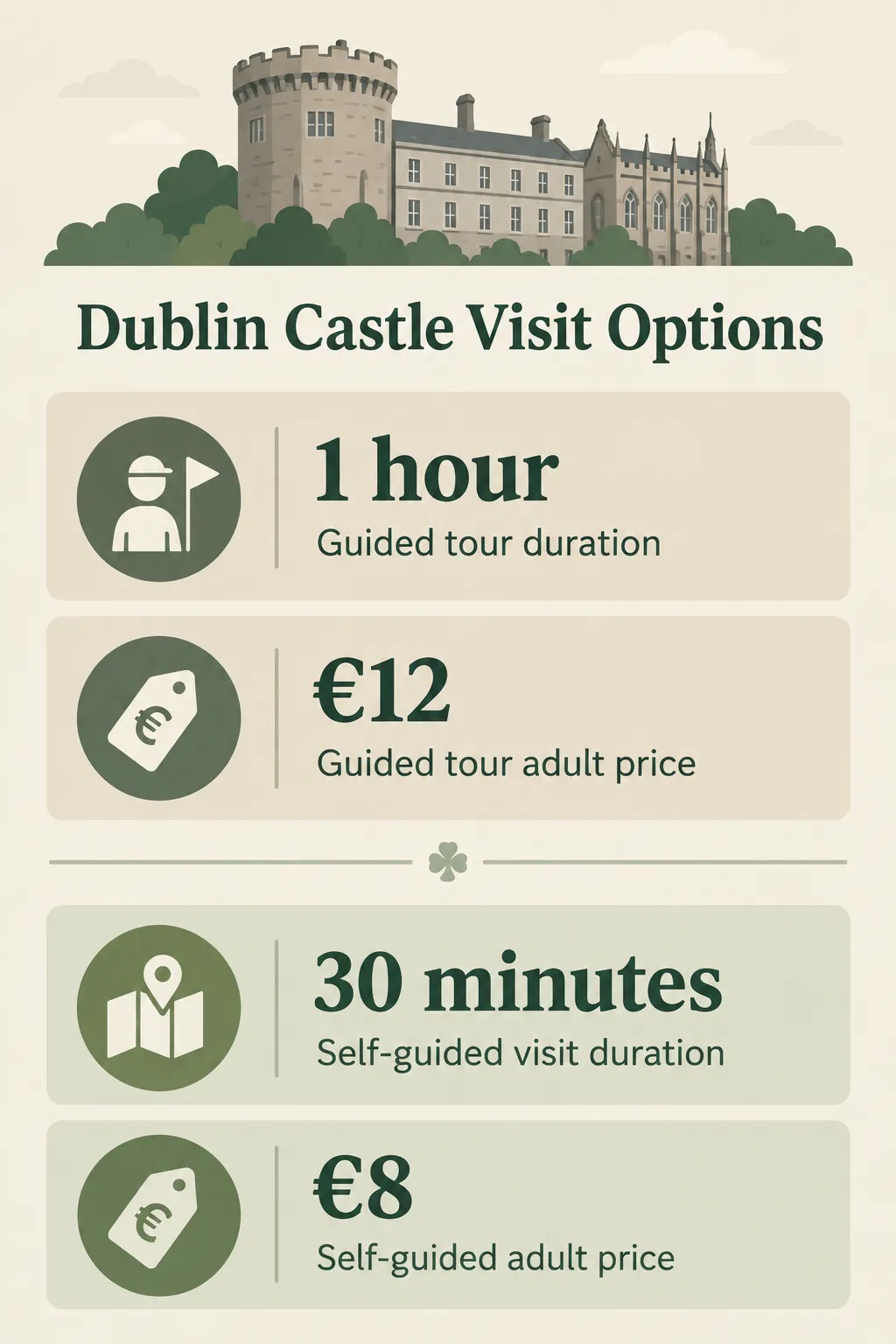 Official average visit lengths and adult prices, as listed by Dublin Castle in October 2026: about 1 hour and €12 for the guided tour, about 30 minutes and €8 for the self-guided visit.
The hours and booking rules below describe normal operations, and the closure through 31 December 2026 overrides them (2)(3). Heritage Ireland also warns against buying tickets from other sites and presents its own Dublin Castle page as the official booking page (3).
Standard opening hours and last admission
As listed in October 2026, under normal operations the castle opens 09:45-17:45 daily, including bank holidays, with last admission at 17:15 (2). It closes on 25-27 December and 1 January (8). Tours run from 10:00 to 16:30 (2). The castle gives an average visit length of 1 hour for the guided tour and 30 minutes for a self-guided visit (8), and Visit Dublin suggests allowing 1 to 1.5 hours in all (6). Aim to arrive well before last admission, especially if you want a guided slot.
Self-guided vs guided tour tickets
The official adult self-guided and guided rates are listed in the table below (2). On the same page, as of October 2026, seniors (60+) and students (18+) pay €6.00 self-guided or €10.00 guided, children aged 12-17 pay €4.00 or €6.00, and children under 12 go free (2).
The self-guided ticket suits you if you have an hour between other stops and mainly want the State Apartments. The guided ticket suits anyone who wants the Chapel Royal and the medieval undercroft, which the castle’s FAQ and Visit Dublin list as guided-only (6)(7). For a history-focused trip, guided is the better choice.
Book online rather than turning up. The ticket page says both guided and self-guided tickets can be booked online from 15 days in advance, and only a limited number are sold at the ticket desk on the day (2).
Family tickets and group bookings
A family ticket covers 2 adults and 3 children and costs €20.00 self-guided or €30.00 guided, as listed in October 2026 (2).
Groups of more than 10 must book in advance and contact the castle about group rates (2), because the online booking system is not meant for group bookings (7). For 2027 group enquiries, Heritage Ireland directs guided tour requests to the Guiding Section at dublincastle@opw.ie. Education programme bookings, including Irish Language Tours, ISL Tours and Autism-Friendly Tours, go to dublincastleeducation@opw.ie (3). School visits are free but also need advance booking (2).
Dublin Castle ticket options (as listed in October 2026)
| Self-guided | Guided | |
|---|---|---|
| Adult price | €8.00 | €12.00 |
| Family price (2 adults, 3 children) | €20.00 | €30.00 |
| Visit duration | About 30 minutes (official average) | About 1 hour (official average) |
| Chapel Royal and undercroft | No | Yes |
| Best for | A short visit focused on the State Apartments | Visitors who want access to the Chapel Royal and medieval undercroft |
How to plan a Dublin Castle visit after it reopens
Confirm access first, then choose a ticket and plan around the booking window and daily admission cutoff.
- 1
Confirm the castle is open
Check the official Dublin Castle site and Heritage Ireland for an updated reopening notice before making plans.
- 2
Choose the ticket that fits your visit
Choose guided access if the Chapel Royal and undercroft are priorities; choose self-guided for the State Apartments.
- 3
Book within the release window
Buy online when tickets are released 15 days ahead. Groups of more than 10 should contact the castle in advance.
- 4
Check access and arrive in time
Recheck room availability near your visit date and arrive before last admission.
Location, Getting There and Nearby Landmarks
Dublin Castle is on Dame Street in Dublin 2, postcode D02 XN27, behind City Hall on the south side of the city centre (3). Heritage Ireland puts it a five-minute walk from Trinity College, on the way to Christ Church (3).
The castle is easy to reach on foot from Temple Bar and the rest of the south city centre, and it fits into a day with other things to do in Dublin. Many bus routes stop on nearby Dame Street, Lord Edward Street and George’s Street, and the closest Luas stops are St Stephen’s Green on the Green Line and Jervis on the Red Line (7). For current routes, the Transport for Ireland journey planner is more reliable than any static list. There is no visitor parking at the castle (7), so driving into this part of the city is not worth it, and during the Presidency the security cordon makes it worse.
Keep the closure map in mind until the new year. Castle Street, Ship Street Little and Ship Street Great are closed to pedestrians and traffic through 31 December 2026 (5). Walking routes around the castle’s south and west sides will be longer than a map app might assume.
Frequently Asked Questions
- Is Dublin Castle worth visiting once it reopens?
- Dublin Castle is worth visiting if you want to understand where Irish state ceremonies and centuries of administration took place; it is less rewarding if you expect a preserved medieval fortress.
- Why is Dublin Castle famous?
- Dublin Castle is famous as the centre of English and British administration in Ireland and as a continuing venue for Irish state ceremonies.
- What was filmed at Dublin Castle?
- Dublin Castle does not publish a list of productions filmed there. Filming and commercial photo shoots on site need permission from the castle's events office, and drones are not allowed.
- Can you visit Dublin Castle while it hosts official events?
- Public access may be restricted when official functions are taking place, so check the castle's room and visitor notices close to your planned date.
- Is there a dress code for Dublin Castle?
- Dublin Castle publishes no dress code for visitors. Wear comfortable shoes for the State Apartments, and expect to leave a backpack in one of the free lockers before your visit.
- Can visitors enter Dublin Castle's courtyards without buying a ticket?
- No public access to the castle campus is available during the stated closure; check the official access notice after the scheduled closure period before treating the grounds as a pass-through.
- Can visitors with limited mobility access the historic rooms?
- The State Apartments are fully accessible, with a lift to the first-floor museum rooms. The Viking excavation can only be reached by stairs, and the castle's own pages differ on whether the Chapel Royal is fully or partly accessible, so ask when you book.
Before You Book
The site stays closed through 31 December 2026, and until then you can’t walk through the grounds or along Castle Street, Ship Street Little or Ship Street Great (3)(5). Before you commit to a 2027 visit, check both the official tickets page and Heritage Ireland’s listing for confirmed reopening dates (2)(3). Then book guided if the Chapel Royal and undercroft matter to you. Tickets open 15 days ahead, and that is the only window you can rely on.