Things to do in Navan make sense the moment you stop judging the town itself and start counting what sits within 45 minutes: Newgrange, the Hill of Tara, and Trim Castle. First clear up the trap that catches visitors, the Iron Age Navan Fort is in Armagh, two hours north, not here. The free Boyne Ramparts river walk and Hill of Tara fill a day for nothing, and Dublin is a 45 to 60 minute bus with no direct train. Come for the radius, not the postcard.
Things to Do in Navan: A Complete Guide for Couples, Families, Adults, and Budget Travelers
If you’re wondering about things to do in Navan, the answer is yes - there’s plenty to explore both in the town and its surroundings. Navan is the county town of County Meath, and within a 30-45 minute radius you’ve got Newgrange, the Hill of Tara, Trim Castle, and the Loughcrew Cairns - a concentration of heritage sites that few small towns in Europe can match.
Navan works best as a base rather than a destination you stare at for three days. The town gives you hotels, restaurants, a decent shopping centre, and the 8 km Boyne Ramparts riverside walk right on the edge of the centre. From there you fan out. If you’re a history person, that radius is the whole point. If you’re travelling with kids, Emerald Park (the former Tayto Park) is a 25-minute drive and Navan Adventure Centre is in town.
What Navan is not: a picturesque tourist village with cobbled lanes full of craft shops. It’s a working town - practical, walkable, and unpretentious. Set your expectations to “smart base camp” and you won’t be disappointed.
✓ Pros
- Central location near multiple major heritage sites within 30-45 minutes
- Affordable free outdoor activities like the Boyne Ramparts walk
- Family-friendly attractions nearby such as Emerald Park and Navan Adventure Centre
- Practical town with hotels, restaurants, and shopping
✗ Cons
- Not a quaint or picturesque village for strolling cobbled streets
- No direct rail link to Dublin, limiting transport options
- Limited nightlife or cultural attractions within the town itself
The Historical Background Worth Knowing
Navan’s story begins long before anything was written down. The town grew up at the confluence of the River Boyne and the Blackwater, and the Normans arrived in the 12th century to found the settlement we walk through today. That confluence made Navan strategically important - controlling river traffic between the Irish Sea coast and the inland plains - which is why the town kept attracting fortifications, markets, and ecclesiastical foundations across several centuries.
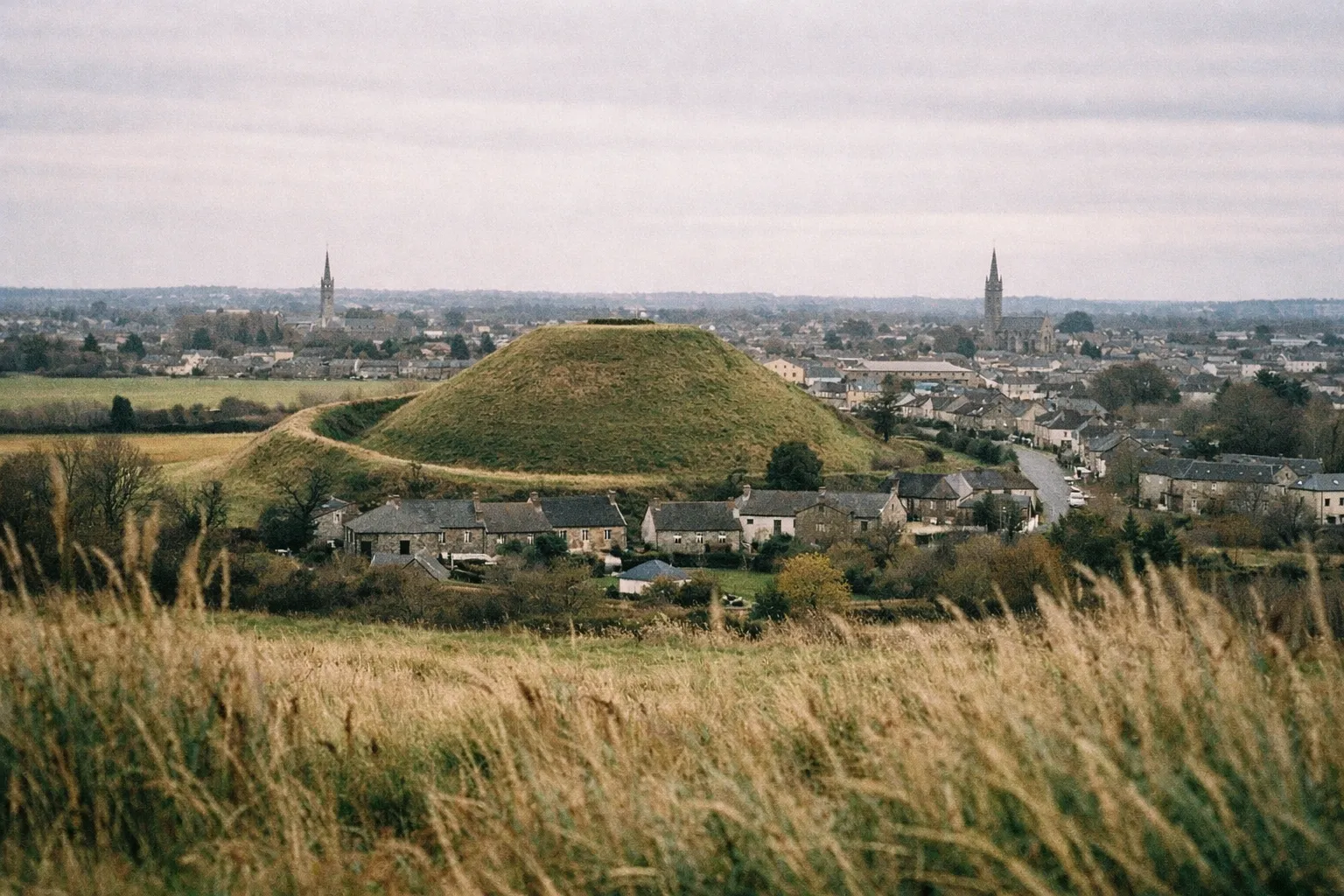
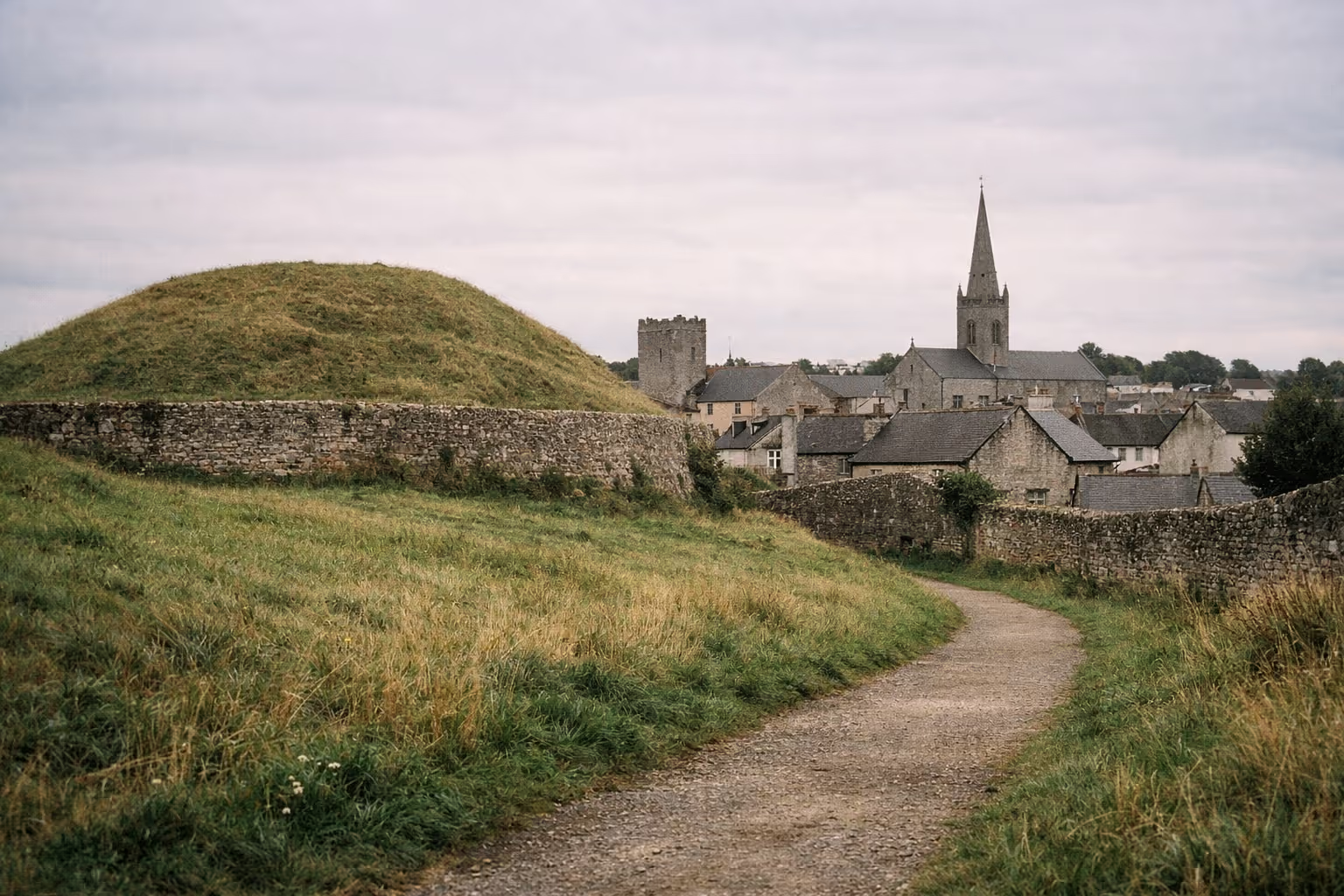
The most visible reminder of that period is the Great Motte, an earthwork about 16 m (52 ft) high to the west of town (10). It’s a Norman motte - the raised mound that once carried a timber fortification - and standing at its base gives you a real sense of how the town was defended when it was a frontier outpost. I visited on a grey November morning and had the whole thing to myself, which felt appropriate.
Wander the centre and you can still trace the original medieval layout in the street names. Trimgate Street - the main commercial drag running northeast from the town square - was literally the road to Trim, the Norman garrison town 25 minutes away. Watergate Street drops toward the river confluence, and Ludlow Street anchors the western side of the old core. Walking these three streets in sequence takes about 15 minutes and gives you the bones of the medieval town without a guide. Just outside town, at Donaghmore, a 13th-century church and round tower mark an even older Christian site (10), and Teltown Hill nearby was once an ancient royal residence (10). None of this costs anything to visit, which matters when you’re planning a budget-conscious day.
A note on the name: you’ll often see Navan referred to as An Uaimh (pronounced roughly “un EEV”), its Irish name meaning “the Cave.” The town’s medieval market charter dates to 1258, granted under the de Lacy lordship, which gives you a sense of how long it has functioned as a commercial hub for the surrounding county. You’ll also - confusingly - find a place called Navan Fort that has nothing to do with this town. That’s covered in the next section, because it trips people up more than you’d expect.
The Navan Fort Confusion - Read This Before You Book
Here’s the pitfall that catches travellers every year. Search “Navan Fort” and you’ll find a genuine Iron Age ceremonial site with reconstructed dwellings, guided “Meet the Warriors” tours, and workshops in willow weaving and coppersmithing (5). It looks fantastic.
It’s in Armagh, in Northern Ireland - not in County Meath.
The Navan Centre and Fort near Armagh is roughly two hours’ drive north of Navan town and sits across an international-ish border (still the island of Ireland, but a different jurisdiction, currency, and set of opening hours). If you booked accommodation in Navan, Meath, expecting to walk to an Iron Age fort, you’ve mixed up two places that share a name.
For the record: the Armagh site is also the trailhead for Saint Patrick’s Way, an 82-mile heritage trail that marked its 10th anniversary in 2025 (3). Worth doing - just not on a Navan, Meath, itinerary. If you want the Iron Age experience close to Navan town, the Hill of Tara is your equivalent, and it’s 20 minutes down the road.
What Couples Can Do in Navan
A day built for two here is easy to assemble and doesn’t need to be expensive.
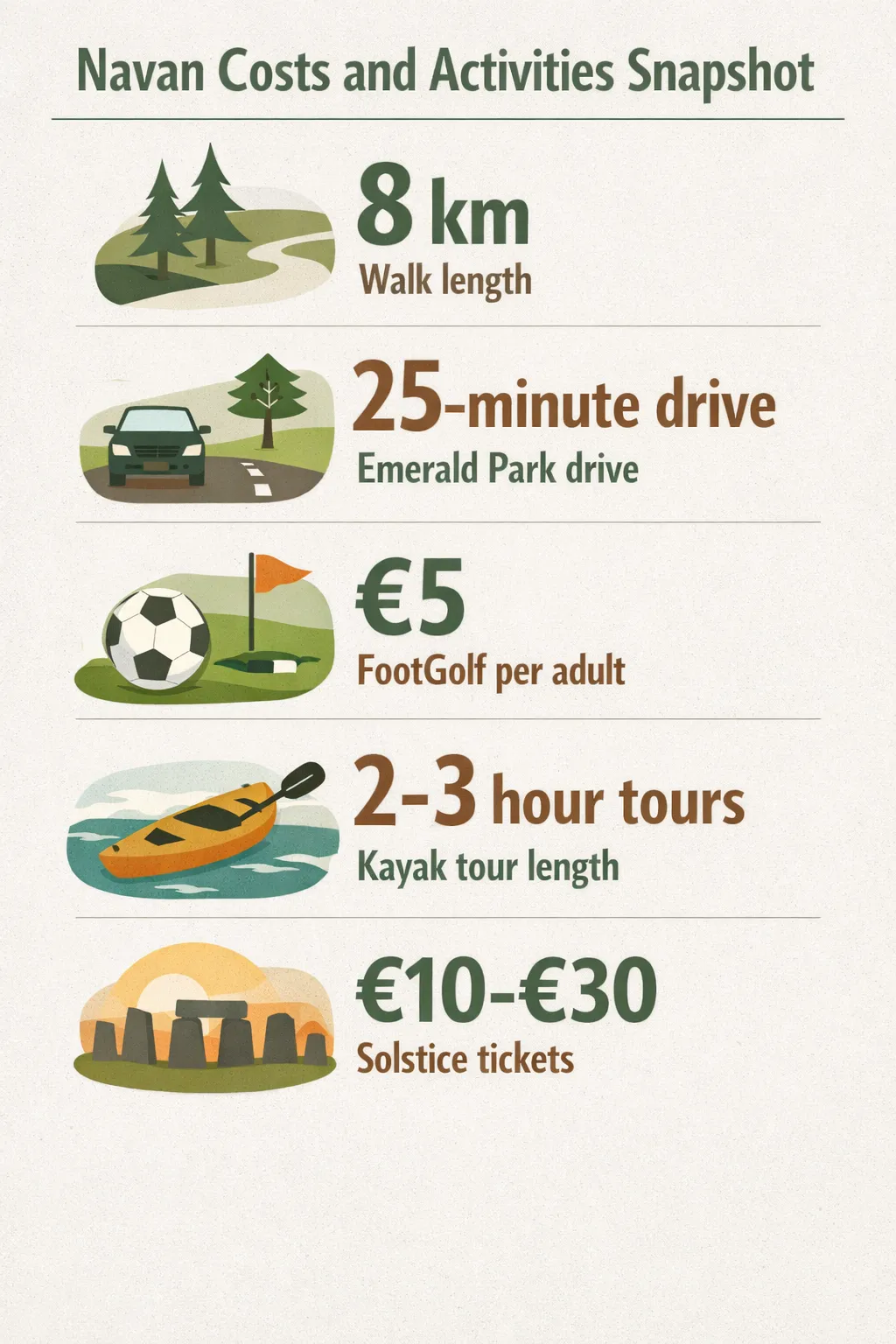 Navan’s cost-friendly activities include an 8 km river walk, a 25-minute drive to Emerald Park, FootGolf at €5 per adult, 2-3 hour kayaking tours, and Solstice tickets in the €10-€30 range.
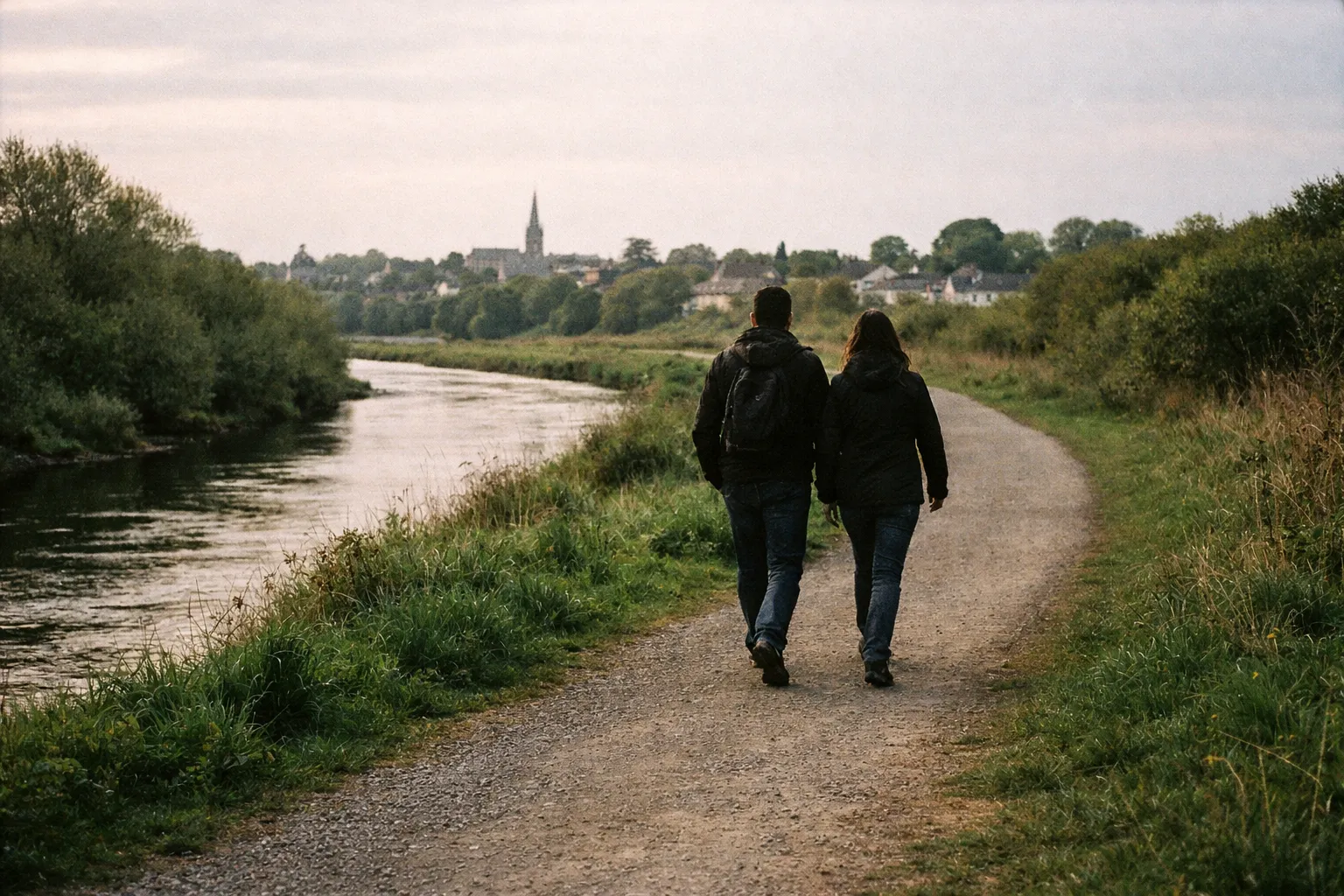
Start with the Boyne Ramparts River Walk. This 8 km riverside route follows the River Boyne from the Athlumney end of town eastward, and the trailhead off Athlumney Road is accessible within a couple of minutes’ walk from central hotels like the Newgrange Hotel on Bridge Street (1). Time it for late afternoon so you finish around sunset. It’s flat, well-surfaced, and quiet - the kind of walk where you can actually talk. Budget: free, unless you pack a picnic.
Then an evening at Solstice Arts Centre. Navan’s contemporary arts venue runs exhibitions and live performances, and tickets typically land in the €10-€30 (about USD 11-32) range depending on the show. Check the programme before you travel - it’s the town’s cultural anchor and the thing most “top attractions” lists overlook.
For a more playful afternoon, FootGolf at Navan Adventure Centre is low-stakes fun, with entry from around €5 per adult (about USD 5.50) for selected activities. Pair it with dinner in town afterward.
If you want to push the boat out, kayaking on the River Boyne with Boyne Valley Activities runs 2-3 hour tours (1) and makes for a more memorable outing than another restaurant meal. I did this on a quiet Tuesday in October and we had the river almost entirely to ourselves - worth timing for a weekday if you can.
Family-Friendly Activities Near Navan
Navan is genuinely strong for families, mostly because of what’s within a short drive.
Navan Adventure Centre runs a family package built around a 3-hour block of multi-activity play: inflatable obstacle courses, off-road pedal go-karts, pedalo boats, a train ride, mini golf, and football golf (2). Some individual activities start from around €5 per adult (about USD 5.50), and the multi-activity package is far better value than paying per ride. Pre-book online during school holidays - July and August slots sell out.
Emerald Park (formerly Tayto Park) is about a 25-minute drive from Navan and delivers roller coasters and themed rides (1)(7). Expect Irish theme-park pricing - plan for a full 4-6 hours in the park and confirm current ticket prices when you book, as day passes run in the €40-€50 range for adults.
One practical warning: don’t stack Emerald Park and Navan Adventure Centre on the same day with young kids. Each is a 3-6 hour commitment, and doing both back-to-back ends in meltdowns (yours and theirs). Split them across a weekend.
For a free family afternoon, Blackwater Park gives you green space and cycling paths, and it doubles as the start point for community events.
Adult and History Buff Highlights Around Navan
This is where Navan earns its keep. Use the town as a hub and radiate out:
- Newgrange - the 5,000-year-old passage tomb, older than the Egyptian pyramids, accessed via the Brú na Bóinne visitor centre. Roughly 20 minutes away.
- Hill of Tara - the ancient seat of the High Kings of Ireland, a sweeping earthwork complex you can walk for free. About 20 minutes south.
- Trim - anchored by Trim Castle, the largest Anglo-Norman castle in Ireland, and ringed by a dense cluster of medieval ruins including the Yellow Steeple, Talbot’s Castle, and the Sheep Gate (6). Around 25 minutes away.
- Loughcrew Cairns - Neolithic passage tombs on a hilltop with wide-open Meath views. A bit further, but the drive is part of the appeal.
Tour operators run private guided Boyne Valley trips from Navan if you’d rather not drive (6). A single history-focused day can comfortably link Tara, Trim, and the town’s own Great Motte and Donaghmore round tower (10). Newgrange entry is timed and ticketed through the Brú na Bóinne visitor centre - slots sell out weeks ahead in summer, so book online before you arrive rather than hoping for walk-up availability. On my first time doing this circuit, I underestimated Trim and ran out of time - give it at least two hours, not one.
Enjoying Navan Without Spending a Euro
You can fill a full day here without spending anything beyond food.
- Boyne Ramparts River Walk (8 km): the town’s best free asset, accessible in minutes from the centre (1). Allow 2-3 hours out-and-back at a moderate pace.
- Hill of Tara: free access to the earthworks and the views across the Boyne Valley - one of the most significant free heritage sites in Ireland. If you’re building a wider itinerary around Ireland’s ancient sites, things to do in Ireland offers a useful week-long framework that puts Tara in context alongside other classics.
- Great Motte, Donaghmore church and round tower: self-guided, no admission (10).
- Loughcrew Cairns viewpoints: free to reach and walk the hilltop (the tombs themselves have seasonal access) (7).
- Monthly community cycle: the “Last Sunday of the Month Cycle” starts near Chekhov’s OTG by the Blackwater Park bridge with no entry fee - a good way to see the area and meet people.
- Navan’s market and shopping streets: browsing costs nothing, and the town’s commercial heart is the practical heart of County Meath.
The mistake I see repeatedly: people budget as if everything in Navan is a paid attraction and end up overspending. Mix the free walks and viewpoints with one or two paid activities and your costs stay sensible.
Getting Between Navan and Dublin: Transport, Times, and Costs
Getting between the two is the logistics detail most guides skip, so here it is in plain numbers. The Navan to Dublin road distance is roughly 48-51 km (4)(9), and it is not the quick urban hop some visitors assume. Bus Éireann and private operators run multiple daily departures from Navan’s bus stops on Kennedy Road, with the earliest services leaving before 07:00 and the last return from Dublin city centre typically around 23:00 - worth checking the current timetable on the operator’s site before you travel.
By bus: regular regional services connect the towns. Expect journey times around 45-60 minutes depending on traffic, and fares in the region of €12-€20 (about USD 13-22) return.
By car: the drive takes 45-60 minutes. Fuel for the about 100 km round trip runs roughly €10-€15 (about USD 11-16) at 2025 prices, plus Dublin parking if you’re heading into the city centre. Dublin itself rewards a day trip - hidden gems in Dublin are worth seeking out if you have time to explore beyond the obvious sights.
By taxi: possible but expensive for the distance - a one-way 50 km intercity fare typically lands in the €80-€120 (about USD 87-130) range. Only worth it late at night or in a group.
Timing tip: if you’re basing yourself in Dublin and day-tripping to Navan (or vice versa), early connections run from around 06:22, which gets you a full day on the ground. Frequent daily services mean you’re rarely stuck waiting long.
One thing to keep in mind: Navan is one of the larger towns in Ireland without a direct rail link into Dublin, so the bus and car are your realistic options. Plan the return journey before you leave - the last services back run earlier than you’d expect.
How to Travel Between Navan and Dublin
About 1 hourStep-by-step guide for common transport options between Navan and Dublin.
- 1
By Bus
Take a regional bus from Navan to Dublin. Journey times are 45-60 minutes with fares around €12-€20 return.
- 2
By Car
Drive approximately 48-51 km, taking 45-60 minutes. Budget €10-€15 for fuel plus parking costs in Dublin.
- 3
By Taxi
Taxi fares for the 50 km trip range from €80-€120 one way. Best for late-night travel or groups.
- 4
Plan Your Return
Check the last bus or transport service back to Navan, as they run earlier than expected.
Essential Navan: Before You Go
Quick reference:
Getting there: buses connect Navan to Dublin and the wider region; a car gives you the flexibility to reach Newgrange, Tara, Trim, and Loughcrew on your own schedule.
Where to base yourself: central hotels like the Newgrange Hotel put you within a 2-minute walk of the Boyne Riverwalk access (1), which cuts out transport faff for the town’s best free activity.
Etiquette note: in Irish pubs, buying rounds (“your round” / “my round”) is the social norm rather than everyone paying separately - if you’re drinking in a group, take your turn at the bar. Tipping isn’t obligatory but rounding up or leaving 10% in a sit-down restaurant is appreciated.
Language: English is universal, but you’ll hear Navan called An Uaimh (“the Cave”). A “grand” (fine) or “cheers” (thanks) goes a long way.
Navan’s famous names: County Meath has produced a disproportionate share of Irish cultural figures. The county’s GAA clubs are among the most active in Leinster, and camogie (the women’s stick-and-ball sport related to hurling) has a strong following across Meath - local club fixtures run through the summer and are free to watch if you happen to be in town on a match day.
Frequently Asked Questions
- Can I visit the Iron Age Navan Fort from Navan town?
- No, the Iron Age Navan Fort is in Armagh, Northern Ireland, about two hours from Navan, Meath.
- Is tipping expected in Navan's pubs and restaurants?
- Tipping is not obligatory; rounding up or leaving 10% in sit-down restaurants is appreciated, and buying rounds is the pub norm.
- Are there direct trains from Navan to Dublin?
- No, Navan lacks a direct rail link to Dublin; buses and cars are the main transport options.
- When is the best time to visit Navan for fewer crowds?
- Weekdays, especially outside school holidays, offer quieter experiences at sites like the Boyne River and kayaking tours.
- Can I combine Emerald Park and Navan Adventure Centre in one day with kids?
- It's not recommended; each requires 3-6 hours, so split them across separate days to avoid meltdowns.
- What is the best way to experience Navan's heritage sites without driving?
- Private guided Boyne Valley tours operate from Navan, linking key sites like Tara and Trim.