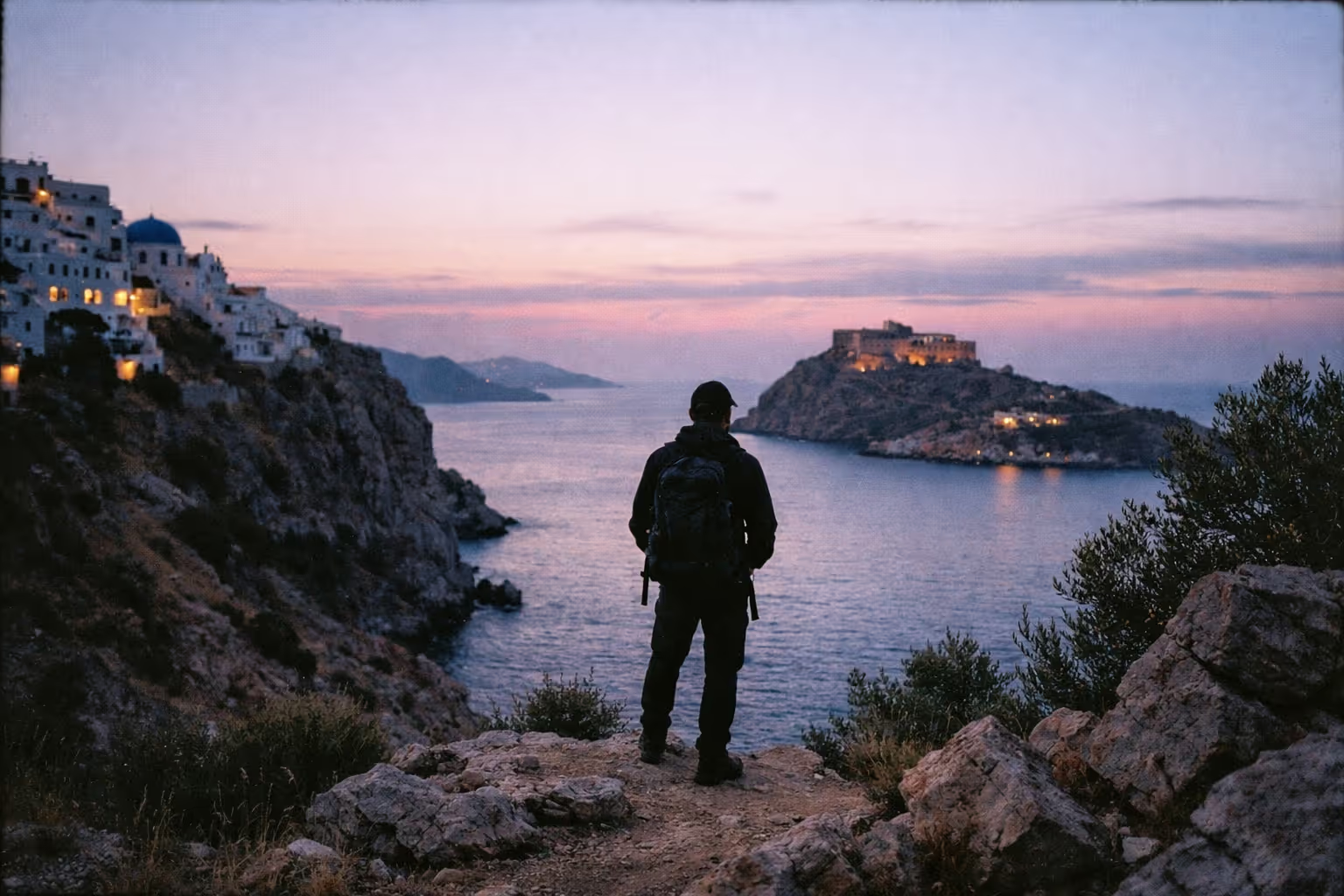
Greece has 227 inhabited islands, and the hardest part of planning a trip isn’t getting there - it’s deciding which ones actually deserve your limited days. Most first-timers default to Santorini or Mykonos because that’s what the algorithm serves up. Those are legitimate choices, but only if they match what you actually want from a week off.
Here’s what nobody tells you upfront: there is no single best island. There’s only the best island for you, and the fastest way to figure that out is understanding how the six island groups genuinely differ before you start collecting names. This guide works group-first, then maps islands to traveler types, then gives you realistic trip structures. For the deep dives on specific islands, I’ll point you to the individual guides as we go.
How the Six Greek Islands Groups Actually Differ
Greece splits into six island groups that behave differently on the ground: the Cyclades, Ionian, Dodecanese, Sporades, Saronic Gulf, and Crete as its own category. Pick your group first and your itinerary gets simpler. Pick islands scattered across groups and you’ll spend the trip on ferries and in airports.
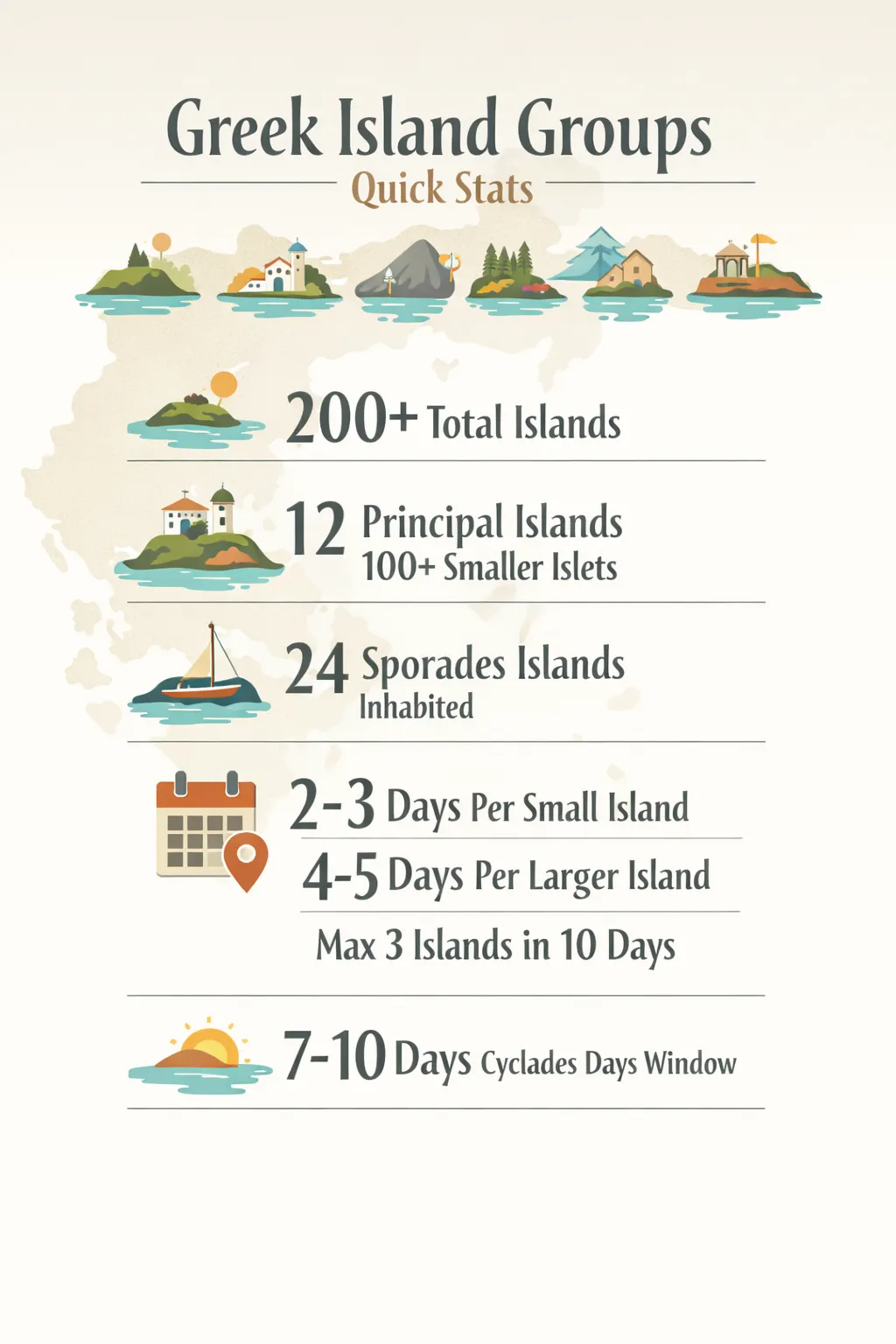 Counts of islands and travel-time guidelines for the six Greek island groups: Cyclades-more than 200 islands; Dodecanese-12 principal islands plus more than a hundred smaller islets; Sporades-24 inhabited islands; travel-day guidance appears in the data points.
Cyclades - the Iconic Starting Point
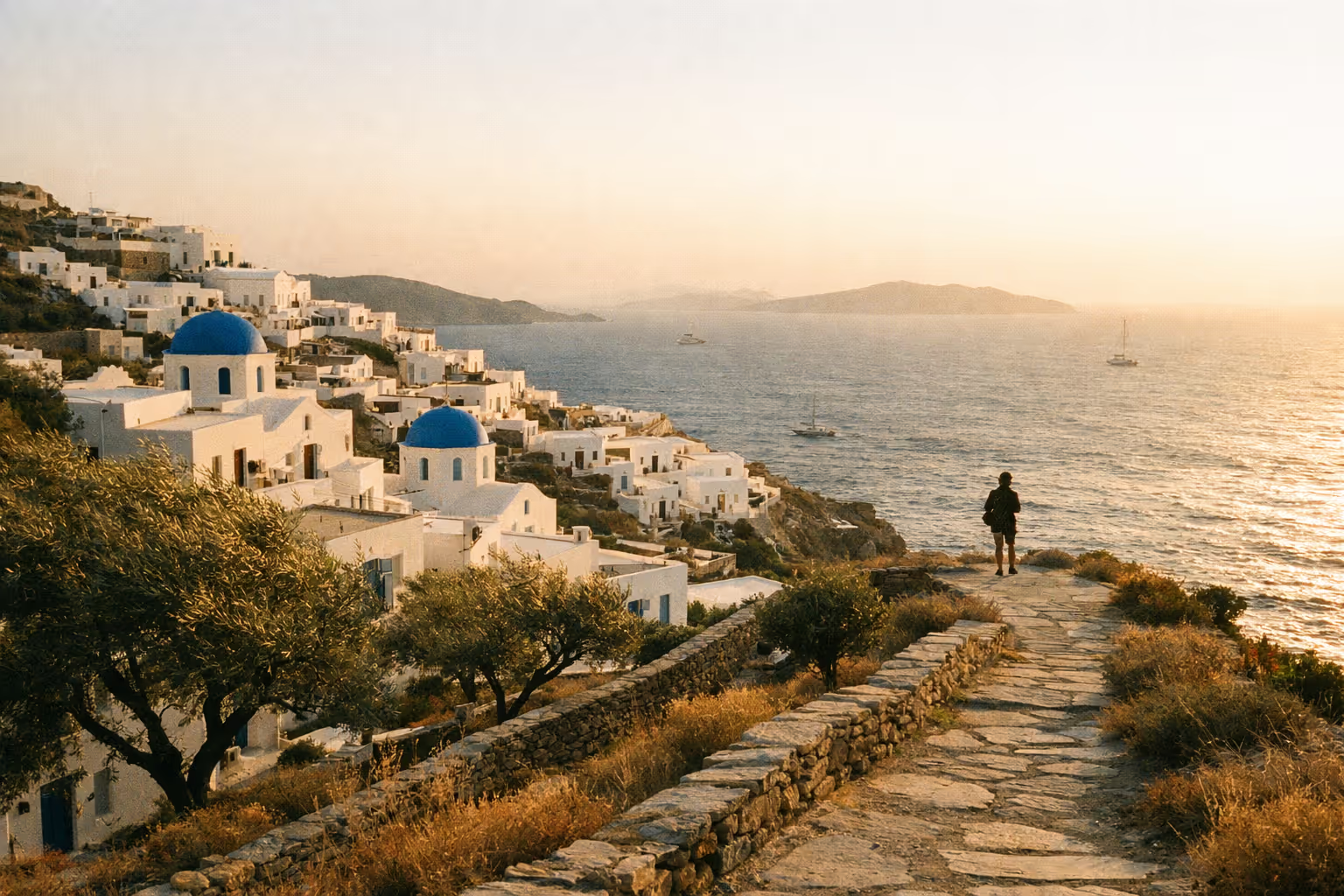
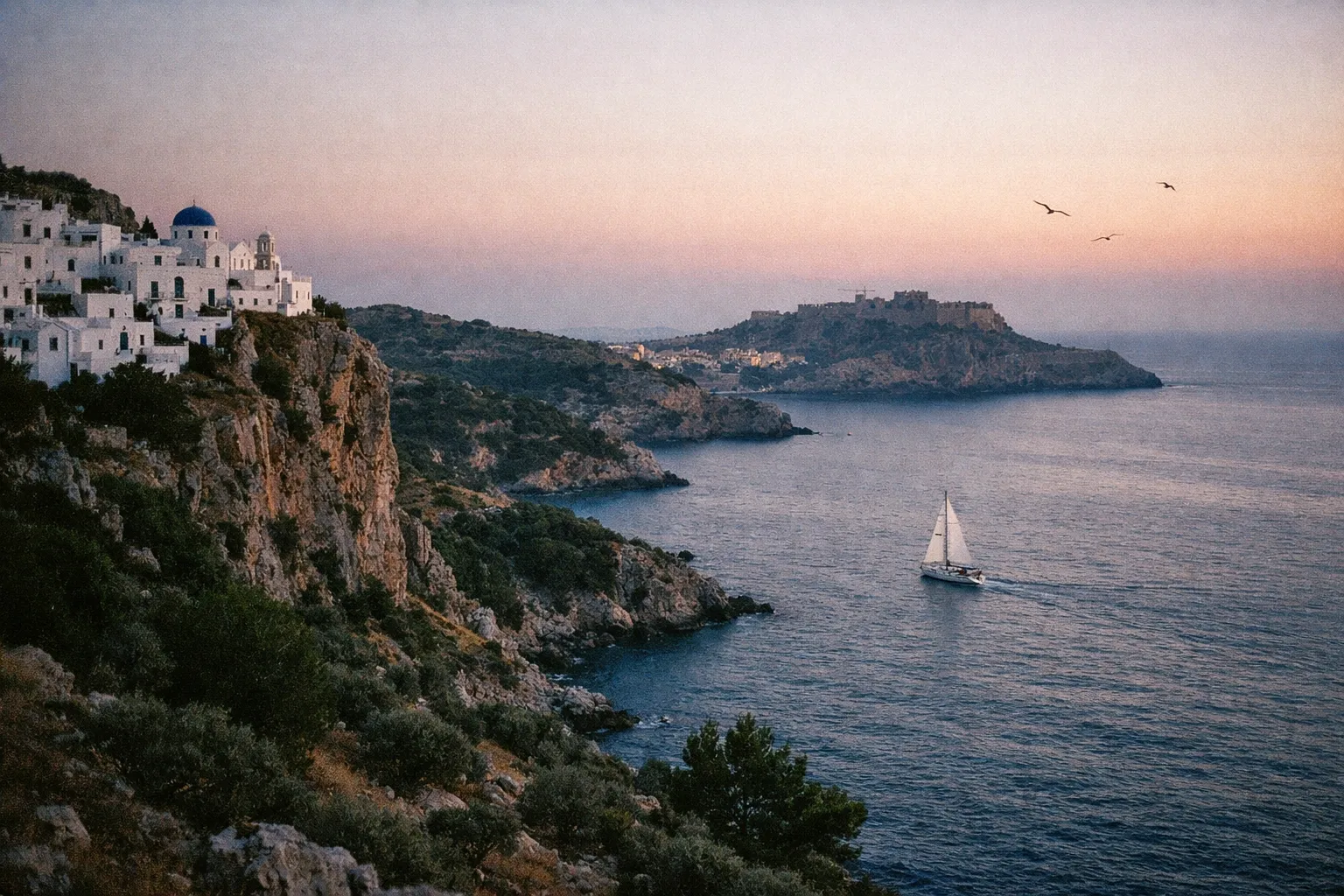
The Cyclades are what your brain pictures when someone says “Greece”: white-cube villages, blue-domed churches, and light that makes marble glow at dusk. The group holds more than 200 islands, though only about 20 have real tourist infrastructure. These are the most scenic greek islands in the postcard sense, and they’re the easiest to hop between - short ferry crossings, frequent routes, central hubs at Paros town (Parikia and Naoussa are the two main villages worth knowing) and Naxos Town on the island’s west coast.
The trade-offs are real. Prices run higher than anywhere else in Greece, and the meltemi (a strong northerly summer wind that funnels down the Aegean from late June through August) kicks up by midday in July and August, chopping up ferry schedules and afternoon beach time. Go in June or September and the wind eases considerably.
Etiquette note for the Cyclades: dress modestly when entering churches and monasteries - shoulders and knees covered, no swimwear. Most sites keep a supply of wraps at the door, but carrying your own is faster.
Ionian Islands - Greener, Calmer, Better Value
The Ionian Islands sit off Greece’s west coast, facing Italy, and they feel like a different country. Think Corfu, Paxos, Lefkada, Kefalonia, Zakynthos, Ithaca, and Kythira - greener landscapes, calmer seas, more sand, and better-sheltered bays than the wind-exposed Cyclades. Everyday costs, especially at restaurants, tend to run lower.
The cyclades vs ionian islands question usually comes down to this: the Cyclades win on iconic visuals and easy hopping; the Ionian wins on beach quality and value. The catch is access. There are no direct ferries between the two groups, so trying to combine them in a short trip is a logistical headache. The Ionian works on its own west-coast logic, often reached by direct flight into Corfu.
Dodecanese - Culture and the Edges of Greece
The Dodecanese stretch across the southeastern Aegean and carry the strongest historical identity of any group - medieval walls, fortress towns, and layers of Ottoman and Italian influence visible in the architecture. The group counts 12 principal islands plus more than a hundred smaller islets. Rhodes anchors it with its walled Old Town; Symi, Astypalea, and Kos fill out the range.
Smaller Dodecanese islands feel less package-driven than mass-market spots. The downside is distance: you’re on the far edge of the Aegean, so getting here means a longer ferry or a flight.
Sporades, Saronic Gulf, and Crete
The Sporades - a group of 24 inhabited islands in the northwest Aegean, led by Skiathos, Skopelos, and Alonissos - are forested, family-friendly, and softer than the Cyclades, with accessible beaches and gentler conditions.
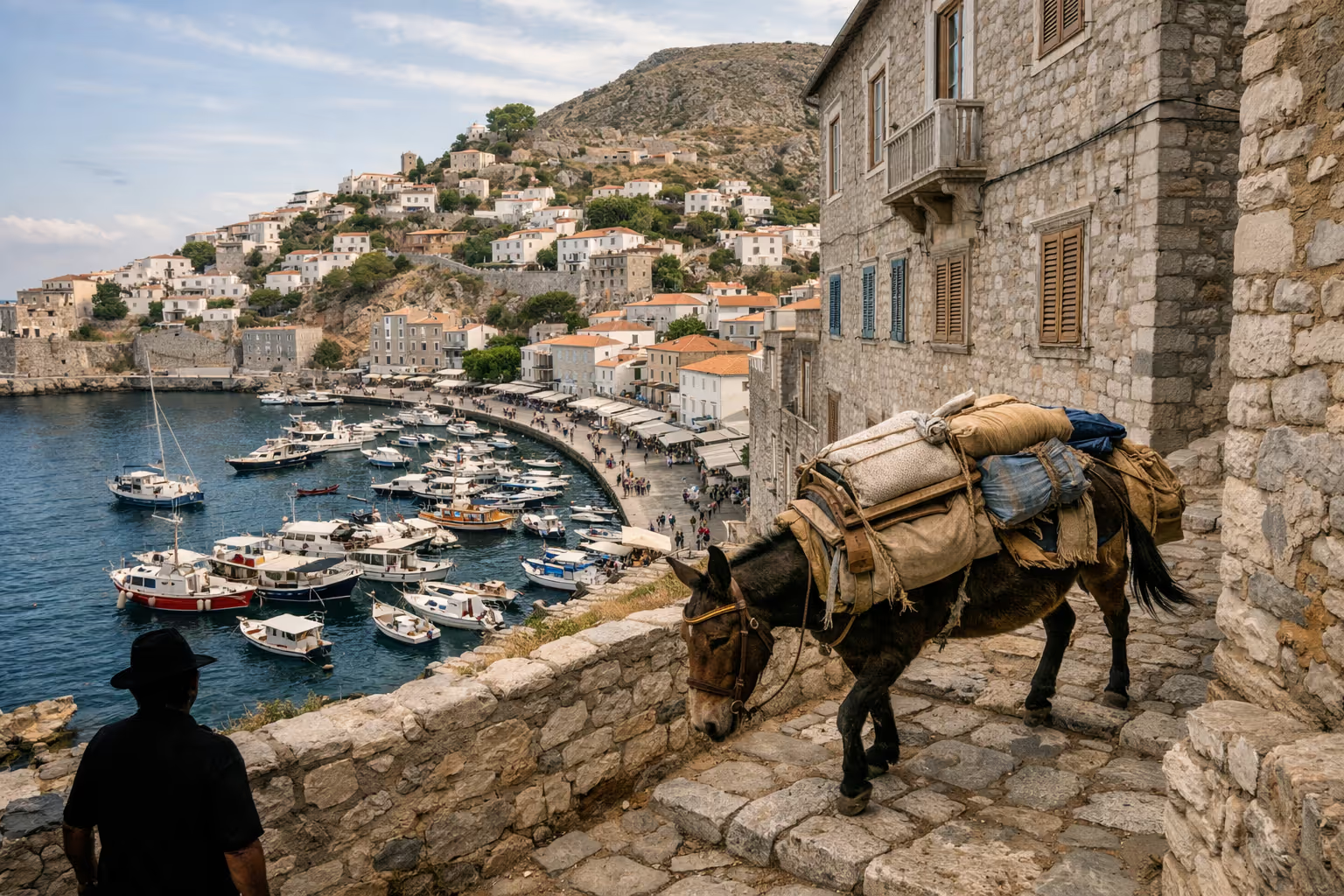
The Saronic Gulf islands (Hydra, Spetses, Poros, Aegina, Kea, Agistri, Kythnos) sit closest to Athens and are built for short breaks. You can reach them by ferry without flying, which makes them the natural add-on to a city stay.
Crete is a category of its own - Greece’s largest island, effectively a mini-continent with mountains, gorges, major towns, and long beaches. Treat it as a standalone trip needing at least 7 to 10 days.
The Best Islands by Traveler Type
The fastest way to answer which greek island to visit is to start with your travel style, not a top-10 list. Pick your profile below, take the shortlist of two or three islands, and go deeper from there.
First-Timers and Couples
For greek islands for first timers, Paros is the most consistently recommended base - it sits in the Cyclades, hops easily to Naxos, Mykonos, and Santorini, and delivers a genuine balance of beaches, villages, food, and nightlife without Santorini’s crowds or prices. Paros runs roughly 30 to 40% cheaper than Santorini for comparable accommodation in peak season, which is why it’s the smart first move. Naxos is the strong alternative: bigger, more varied, sandy beaches, and arguably the best food scene in the Cyclades. Santorini earns its reputation for the caldera, but go in May or September to skip the super-peak crush.
Couples and honeymooners split two ways. If dramatic scenery and boutique stays are the goal, pair Santorini with a smaller Cycladic island like Milos or Folegandros - fewer crowds, equally cinematic coastline. If you’d rather have lush and quiet romance, the Ionian is the better call: Paxos or Kefalonia give you green hillsides, calm swimming, and evenings that don’t revolve around beach clubs.
Families and Mixed Groups
Skiathos in the Sporades is built for families - easy logistics, good facilities, and calmer sea conditions than the wind-exposed Cyclades. Naxos works well too: long sandy beaches, real infrastructure, and no party-island reputation to navigate around kids. For families who want size and variety in one place, Corfu delivers - big enough to keep everyone occupied, greener than the Aegean islands, and reachable by direct flight, which spares you a ferry with tired children.
The common thread is calm water and short transfers. Skip islands where the beach turns into a nightclub after dark unless that’s the specific trip you booked.
Nightlife, Quiet Escapes, and Hikers
Mykonos is the headline nightlife island - beach clubs, design hotels, DJs - and if that’s explicitly what you want, it delivers. Just know the cost-to-experience ratio is steep. For a more balanced night out, Paros and Ios pair real nightlife with quiet corners you can retreat to the next morning, and parts of Rhodes do the same.
For genuine quiet escapes, the Dodecanese and lesser-known Cyclades come into their own. Symi is a standout - a colorful harbor, far fewer mass-tourism crowds, and evenings that are actually silent. Astypalea, Amorgos, and Serifos deliver the same slow rhythm.
Hikers should look to Crete first: the Samaria Gorge (a 16-kilometer gorge hike through the White Mountains, one of Europe’s longest canyon walks) charges a modest entry fee, with mountain routes and a long season that stays walkable into fall. Amorgos combines dramatic terrain with swimmable beaches, and Alonissos in the Sporades wraps a marine park, quiet trails, and low crowds into one under-visited package.
Greek Island Groups Comparison
| Iconic Cyclades | Ionian | Dodecanese | Sporades | Saronic Gulf | Crete | |
|---|---|---|---|---|---|---|
| Best For | First-timers, couples, iconic visuals | Beaches, value, quiet romance | Culture, history, quiet | Families, easy beaches | Quick escapes, Athens add-ons | All-rounders, hikers, road trips |
| Vibe on the Ground | White villages, blue domes, lively | Green, calm, relaxed | Medieval towns, distinct identity | Forested, calm, gentle | Low-key, walkable | Mini-continent, mountains + coast |
| Beach Quality | Good, can be windy | Excellent, sheltered | Good | Good, sheltered | Modest | Excellent, varied |
| Relative Cost | High | Moderate | Moderate | Moderate | Low | Moderate |
| Access from Athens | Ferry from Piraeus; short hops | Direct flight (Corfu) or domestic | Flight or long ferry; Rhodes hub | Flight or ferry via mainland | Ferry, no flight needed | Direct flight from Athens |
| Realistic Days Needed | 7-10 for 2-3 islands | 7-10, standalone | 7-10, standalone | 5-7 | 2-3 per island | 7-10 minimum |
One structural warning worth repeating: Crete and the Ionian run on different access logic than the Cyclades. There are no direct ferries linking the Ionian to the central Aegean, so don’t try to stitch east and west coasts together in under 10 days.
Getting There - Access from Athens and Realistic Trip Lengths
Access from Athens shapes every itinerary decision, so choose your group around how you’ll actually travel, not just around which islands look good. The rule of thumb: 2 to 3 days per small island, 4 to 5 for larger ones, and no more than three islands in 10 days without sacrificing depth.
Because almost every ferry route starts in Athens, the mainland ends up on your path whether you planned it or not. Delphi, Meteora and the Peloponnese sit within a few hours of the port, and the mainland sites worth building a Greece trip around pair naturally with an island week - most first-time itineraries end up doing exactly that.
Quick Escapes from Athens (Saronic Gulf, 4-5 Days)
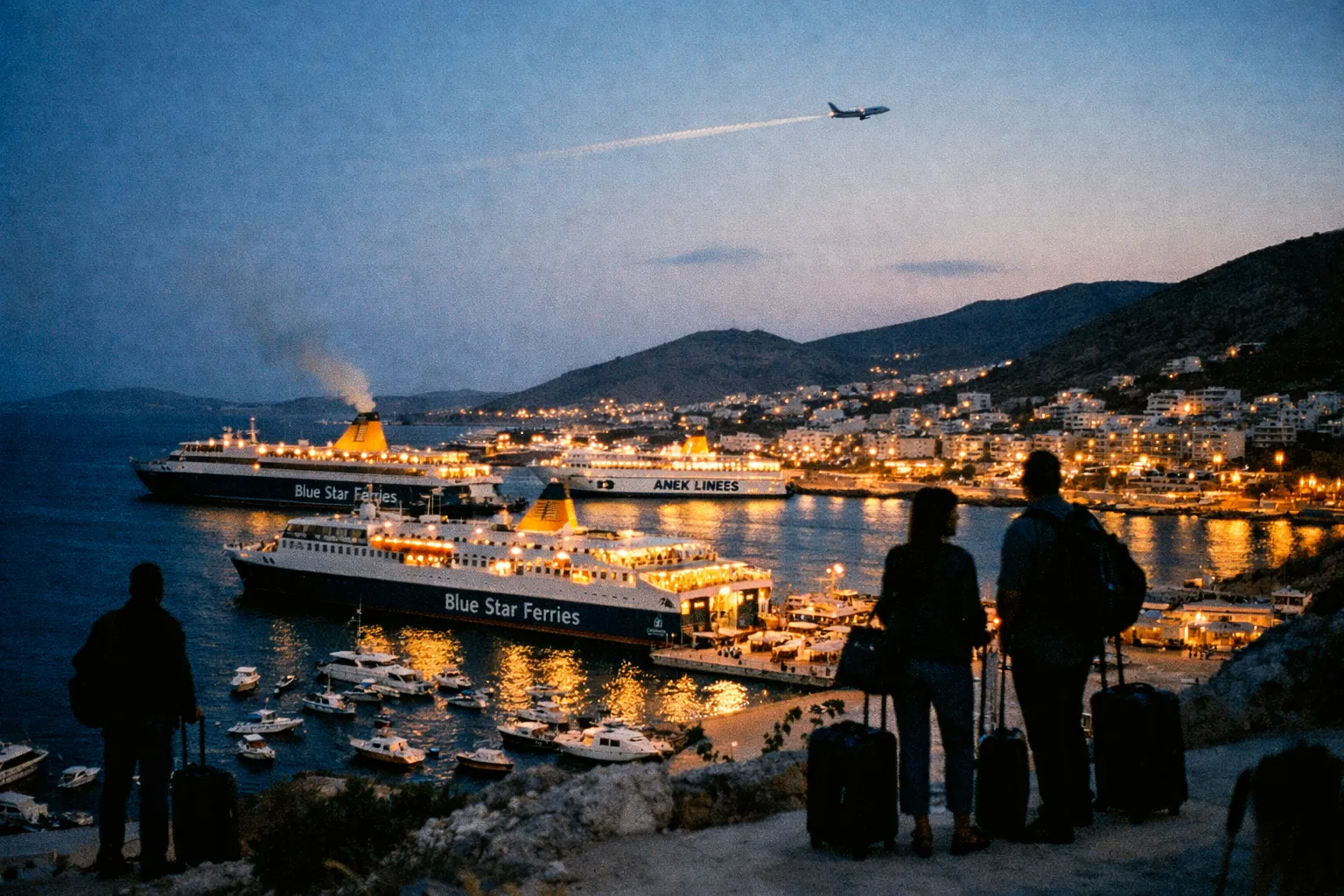
The Saronic Gulf islands are the easiest add-on to a city trip - Hydra, Aegina, Spetses, and Poros are all reachable by ferry from Athens’s port without any flying. Two to three days each is plenty. This is the move for a 4 to 5 day trip that combines Athens with a real taste of island life. Hydra, with its car-free harbor, is the standout for a short, atmospheric stay.
Classic Island Hopping (Cyclades, 7-10 Days)
Cyclades trips run on ferries from Piraeus, with Paros and Naxos as the central hubs. Short inter-island hops make multi-stop trips efficient, and 7 to 10 days is the natural window for two or three islands. Build the itinerary around one hub, then add a smaller neighbor - the crossings are short enough that you’re not losing half a day to transit.
Watch the meltemi in July and August: strong summer winds can delay Cyclades ferries and roughen the water. If you or your kids are prone to seasickness, the Ionian’s calmer seas are the safer bet - worth weighing before you commit to a windy August crossing.
Longer Trips - Ionian, Dodecanese, and Crete (10-14 Days)
The Ionian sits on the west coast with its own ferry and flight patterns; Corfu is usually reached by direct international flight or a domestic connection, and the group doesn’t combine efficiently with the Cyclades in under 10 days. The Dodecanese, out in the southeastern Aegean, needs a longer hop or a flight, with Rhodes as the main gateway - worth the extra travel time for the right traveler. Crete gets direct flights from Athens and much of Europe; treat it as a standalone 7 to 10 day trip minimum.
For seasonal detail on when to go, see the best-time-to-visit-Greece guide.
Sample Itineraries for 3 Trip Lengths
These are frameworks, not rigid schedules. Two to three islands in 7 to 10 days is the sweet spot; adjust the nights to your pace and pull the individual island guides for the fine detail.
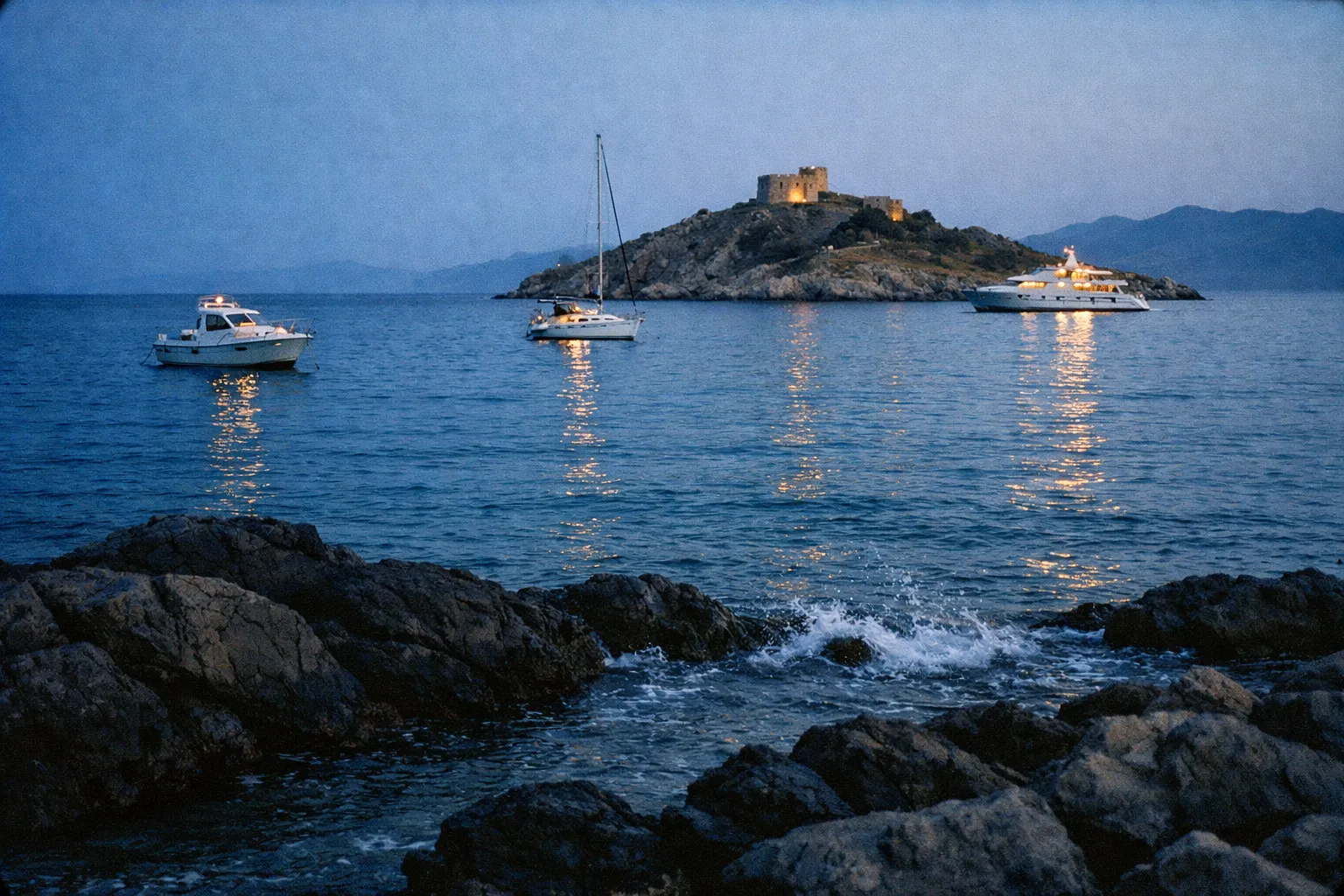
4-5 days (Athens + one island): Two nights in Athens for the Acropolis and Plaka, then 2 to 3 nights on Hydra or Aegina. No flying, minimal transit, and a genuine introduction to island rhythm without overcommitting.
7-9 days (focused Cyclades hop): Athens overnight, then three nights on Paros using it as your hub, two nights on Naxos, with an optional overnight on Koufonisia or Milos. Swap Paros for Santorini if caldera views are the whole point of the trip. This is the classic first-timer circuit and it works.
10-14 days (extended options): Three routes, each staying inside one region.
- Option A - Cyclades circuit: Athens plus Milos, Paros, Naxos, and Amorgos. Rising-star beaches, easy hops, real variety.
- Option B - Ionian focus: Athens plus Corfu, Kefalonia, and Zakynthos. Better beaches, calmer water, lower food costs.
- Option C - Crete standalone: Give Crete the full 10 days it deserves, with one Saronic island tacked on before or after your Athens connection.
Don’t mix Cyclades and Ionian in under 10 days. The absence of direct ferries turns what sounds like a dream itinerary into a repacking marathon. For deeper planning, the Santorini, Paros, Crete, and Corfu guides go island by island.
Islands Worth Skipping (or Approaching Carefully)
None of these islands is bad. They’re just wrong fits for certain travelers, and the mistake is almost always a mismatch rather than the island itself.
Mykonos isn’t a universal skip, but the cost-to-experience ratio is genuinely poor unless nightlife and beach clubs are the explicit goal. A frequent traveler who has visited 27 Greek islands would leave it off the list entirely - worth noting before you pay Mykonos prices for scenery you can get cheaper elsewhere.
Kos can feel like a package-holiday resort strip rather than a Greek island experience. It’s a fine base for day trips to Symi, but for most independent travelers it isn’t a destination in its own right.
Santorini in August is the timing trap. The island is worth visiting, but the super-peak crush - cruise ships, sold-out ferries, prices up to 40% higher than shoulder season - makes May or September a far better call. The smaller Cyclades quiet down sharply from November to April (Roafly), so shoulder-season timing matters here.
Then there are the mismatches: quiet-seekers who accidentally book party-heavy Ios, families who land on a nightlife strip, nightlife travelers who pick Paxos and discover it closes at 10 p.m. The fix isn’t a different island - it’s matching the island to your actual profile before you book.
The Most Popular Destinations - and What They’re Actually Like
Popularity doesn’t equal best fit. Here are honest reads on the headline names so you can calibrate expectations, then refer back to the traveler-type section to confirm your choice.
- Santorini - Caldera views and volcanic beaches, genuinely spectacular, genuinely crowded. Best in May or September. See the Santorini guide.
- Mykonos - Nightlife, design hotels, high prices. Worth it only if that’s explicitly what you want. See the Mykonos guide.
- Crete - The all-rounder: mountains, gorges, towns, and beaches. Needs a week minimum. See the Crete guide.
- Paros - The best first-timer Cyclades base, balanced and well-connected. See the Paros guide.
- Rhodes - Medieval Old Town, solid infrastructure, and the Dodecanese gateway. See the Rhodes guide.
- Corfu - The most sophisticated Ionian island, with Venetian architecture and green hills. See the Corfu guide.
- Milos - Dramatic volcanic coastline, less crowded than Santorini, rising fast. See the Milos guide.
- Naxos - The biggest Cycladic island, the best food scene, great for families. See the Naxos guide.
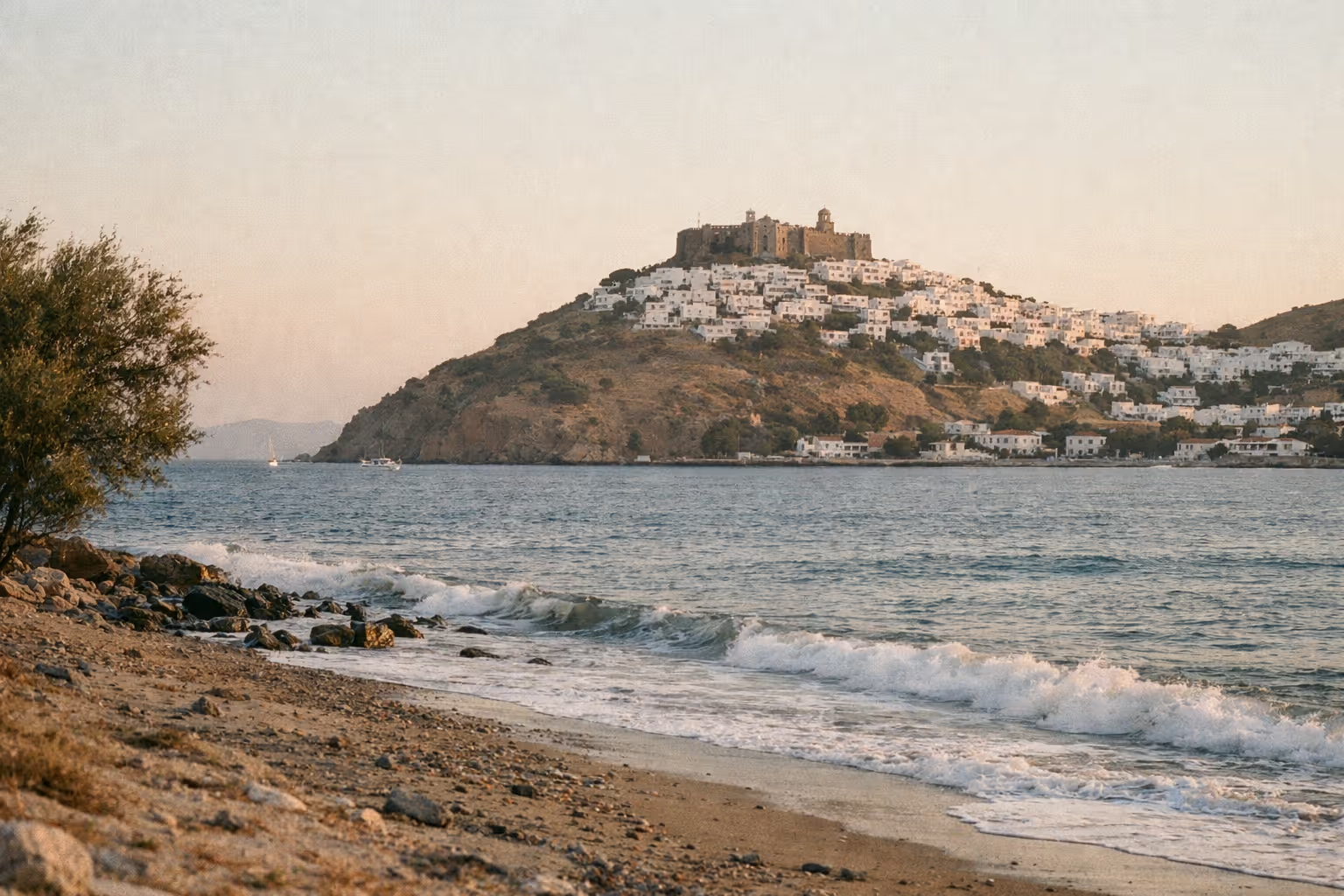
- Patmos - The Dodecanese pilgrimage island: the Cave of the Apocalypse, a hilltop Chora, and a quieter, spiritual pace. See the Patmos guide.
- Symi - A Dodecanese standout: colorful harbor, quiet evenings, few crowds.
- Skiathos - Sporades, family-friendly, easy access, calm beaches.
Rhodes and Corfu belong to entirely different island systems - Dodecanese versus Ionian - which is why their appeal comes from such different strengths. Don’t let a top-10 list flatten that distinction.
Common Mistakes When Choosing a Greek Island
Assuming there’s one best island. There isn’t. With 227 inhabited islands, the “single best” premise is wrong from the start - each group wins on different criteria.
Underestimating travel time between groups. Cyclades plus Ionian in seven days isn’t a highlight reel, it’s a logistics nightmare, because there are no direct ferries between them. Pick one group and go deep.
Ignoring the meltemi. These strong summer winds disrupt Cyclades ferry schedules and some beaches in July and August. The Ionian stays calmer - a real factor for families and anyone prone to seasickness.
Booking too many islands. Four or five islands in 10 days means you’re mostly on ferries and repacking. Two or three done properly beats a rushed circuit every time.
Picking islands that don’t match your style. The mismatch problem again - use the traveler-type section before you book, not after.
Booking too late. For July and August, ferries and hotels sell out months ahead. Peak season rewards early planning and punishes procrastination.
Frequently Asked Questions
- What are the 10 most popular Greek islands?
- Santorini, Mykonos, Crete, Rhodes, Corfu, Paros, Naxos, Zakynthos, Milos, and Skiathos top visitor counts. Popularity doesn't equal best fit; Paros or Naxos often offer better value.
- Which Greek island should I visit for the first time?
- Paros is the most recommended start with good ferry links, beaches, villages, and food without extreme crowds or prices. Naxos is a spacious alternative.
- What are the best Greek islands to visit for beaches?
- The Ionian Islands like Kefalonia, Lefkada, and Zakynthos have the best beaches with calmer seas and better shelter. Milos in the Cyclades offers dramatic coastline.
- Which Greek islands should I avoid?
- No island is universally bad, but Mykonos is costly and crowded unless nightlife is your goal. Kos feels package-touristy; Santorini in August is overcrowded and expensive.
- How many Greek islands can I realistically visit in one trip?
- Two to three islands in 7 to 10 days is ideal, allowing time to settle. More islands mean excessive ferry time and repacking.
- What is the difference between the Cyclades and Ionian Islands?
- Cyclades have iconic white villages and blue domes with easy hopping. Ionian Islands are greener, calmer, and cheaper but require different access and don't combine well with Cyclades on short trips.
- Do I need to fly between Greek islands, or can I take ferries?
- Ferries are standard and frequent within the Cyclades. For Ionian, Dodecanese, or Crete, domestic flights from Athens are often faster and sometimes cheaper. Saronic Gulf islands are reachable by ferry without flying.
- When is the best time to visit the Greek islands?
- Mid-May to mid-June and mid-September to early October offer warm weather, fewer crowds, and prices 20-30% below August peaks. August is busiest and most expensive.
Where to Start
Pick your group first, then your islands, then your trip length - in that order. If you’re a first-timer with 7 to 9 days, the Cyclades anchored on Paros or Naxos is the most efficient starting point. If beaches and value matter more than iconic visuals, the Ionian is worth the slightly more complex access. And if you want mountains, gorges, and long beaches in one place, give Crete its own trip.
The actual next step: use the traveler-type section to identify your profile, check the comparison table to confirm your group, then open the individual island guides for the specific islands you’ve shortlisted. That’s the job done.