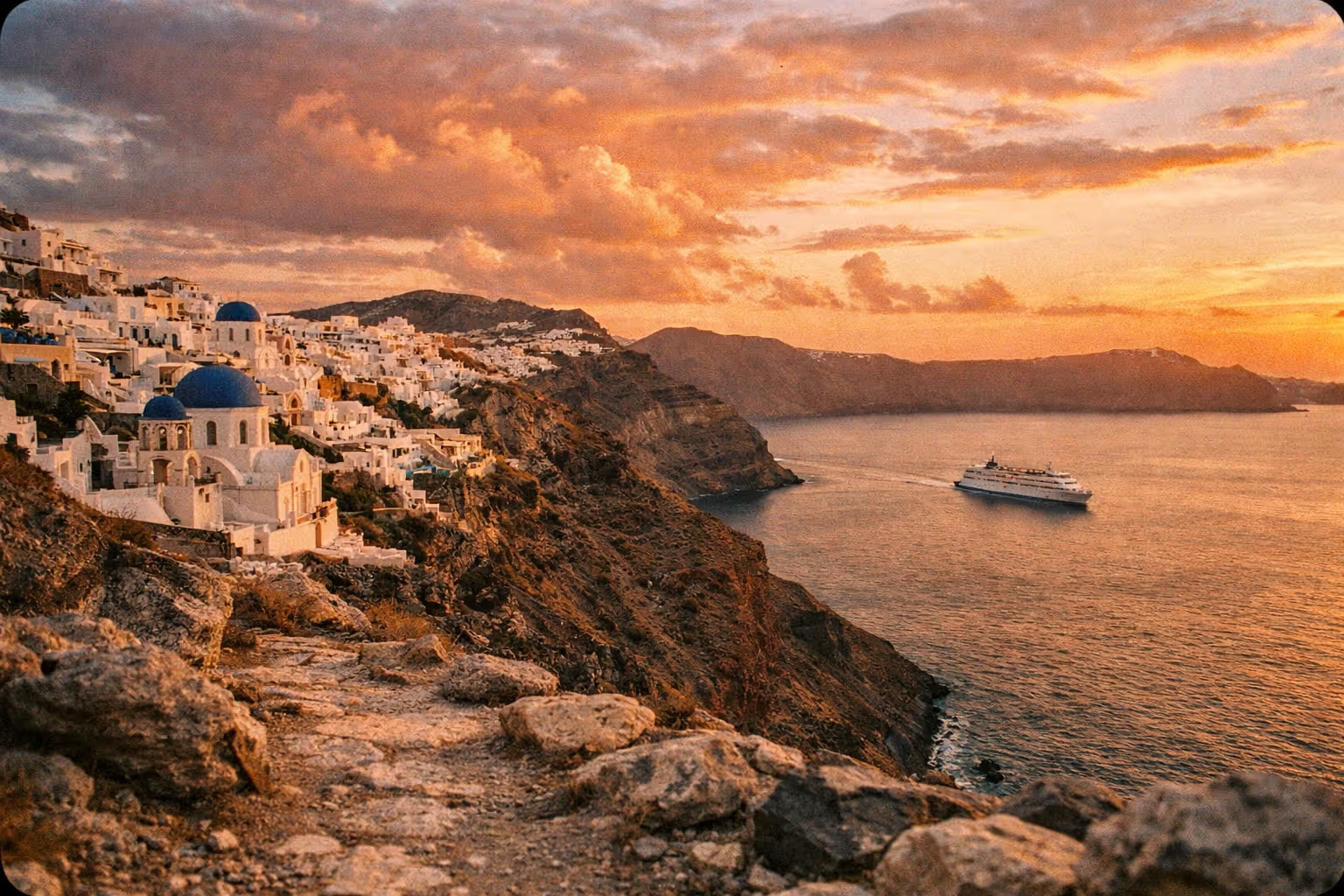
The best things to do in Santorini reach past the postcard caldera view. The standout is the free 10-kilometer rim hike from Fira to Oia, best started before 9 a.m. to beat the July heat. For sunset, skip the Oia crush and scramble five minutes to Skaros Rock in Imerovigli, same view, no queue. Book a caldera catamaran two weeks ahead, since they sell out. And come in the May or October shoulder, when hotels drop 30 to 50 percent and the sea is still warm.
Santorini’s volcanic origins
Santorini’s dramatic landscape is a direct result of its fiery past, and exploring the island reveals some of the most unique things to do in Santorini. When I hiked along the caldera’s edge on my first visit, what struck me wasn’t just the beauty - it was the sheer scale of the destruction that made it. A massive volcanic eruption around 1600 BC left behind a water-filled crater that gives the island its distinctive crescent shape, and the cliffs you’re standing on are essentially the remnants of that collapsed volcano.
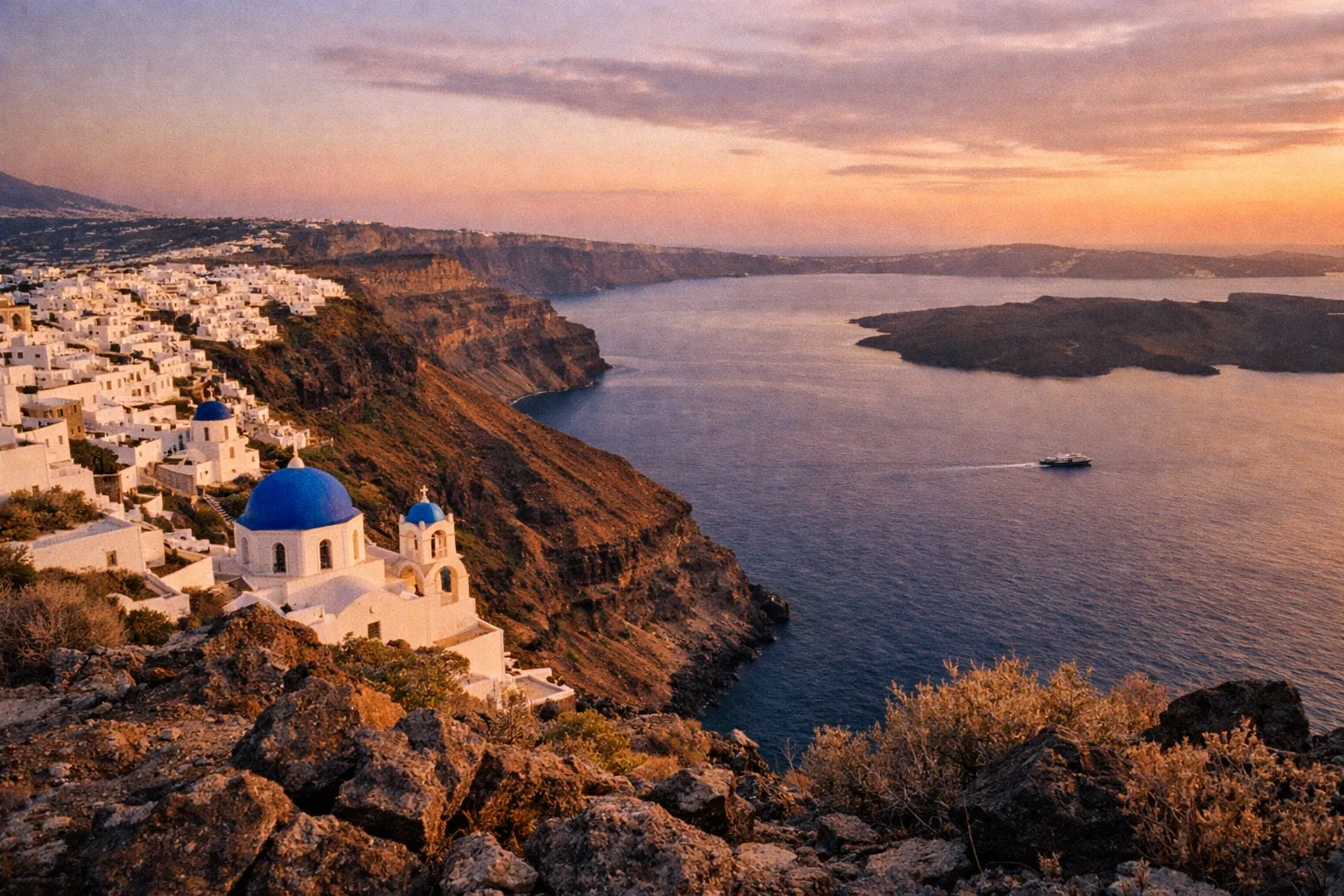
The eruption may have inspired the legend of Atlantis. I find that easier to believe standing at the rim than reading about it in a book.
The ruins of Akrotiri - an ancient Minoan settlement preserved under layers of volcanic ash - are the most tangible connection to that history. Walking through the excavated streets, you’re looking at a Bronze Age city frozen mid-life. Entry runs €20 (approximately $22), and guided tours add roughly $30-$60 per person. Worth it if you want context beyond the placards, which are decent but thin on narrative.
The island’s volcanic beaches, with their red and black sands, are unlike anything else in Greece. A boat tour around the caldera is the best way to appreciate the full scale of it - from the water, the cliffs look even more improbable.
| Time Period | Event |
|---|---|
| about 1600 BC | Major volcanic eruption forms the caldera |
| about 197 BC | Emergence of Palea Kameni island |
| 1707-1711 AD | Formation of Nea Kameni island |
| 1956 AD | Devastating earthquake reshapes parts of the island |
Things to Do in Santorini: Fira, Oia, and the Caldera Rim
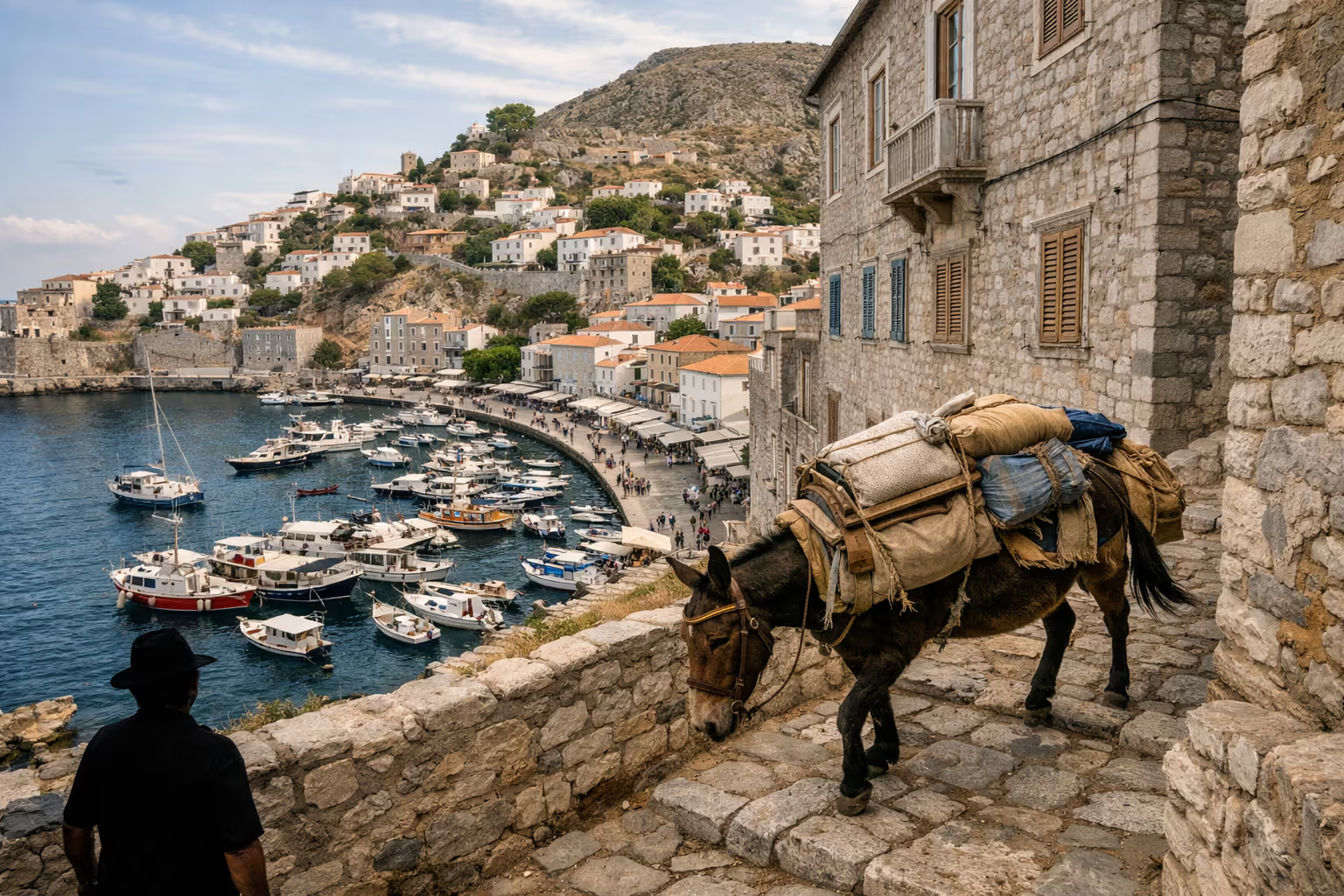
The caldera towns are where most people spend their days, and for good reason. Fira, the island’s capital, is the practical center - the main bus hub, so nearly every route runs through here, and it has the widest range of hotels, bars, and shops. Wandering its cliff-edge lanes with a coffee, ducking into the small museums, and catching your first proper caldera view are all easy things to do in Fira Santorini. The cable car down to the old port costs a few euros and beats the donkey path. Skip the donkeys - it’s not a good experience for the animals.
Oia Greece Santorini is the postcard: blue domes, whitewashed cave houses stacked down the cliff, and the most famous sunset in the Aegean. The catch is that everyone knows it. If you plan to watch the sunset from the castle ruins, arrive 60-90 minutes early in summer, not 15 - otherwise you’re staring at the backs of a thousand phones (5). Below Oia, a steep set of steps drops down to Amoudi Bay, where you can eat grilled fish at the water’s edge and cliff-jump off the rocks near the little chapel if you’re feeling brave.
Connecting the two towns is the Fira-Oia hike - the walk I’d rank as the single best free thing on the island. It runs about 10-11 km along the caldera rim and takes 3-4 hours at a relaxed pace, passing through Firostefani and Imerovigli along the way. It’s moderate - some elevation, plenty of loose stone - so wear proper shoes and start before 9 am in July and August, when temperatures regularly climb above 30°C. Bring more water than you think you need. I made the mistake of underestimating this on a July morning and spent the last hour rationing what I had left.
Exploring Santorini’s two coasts
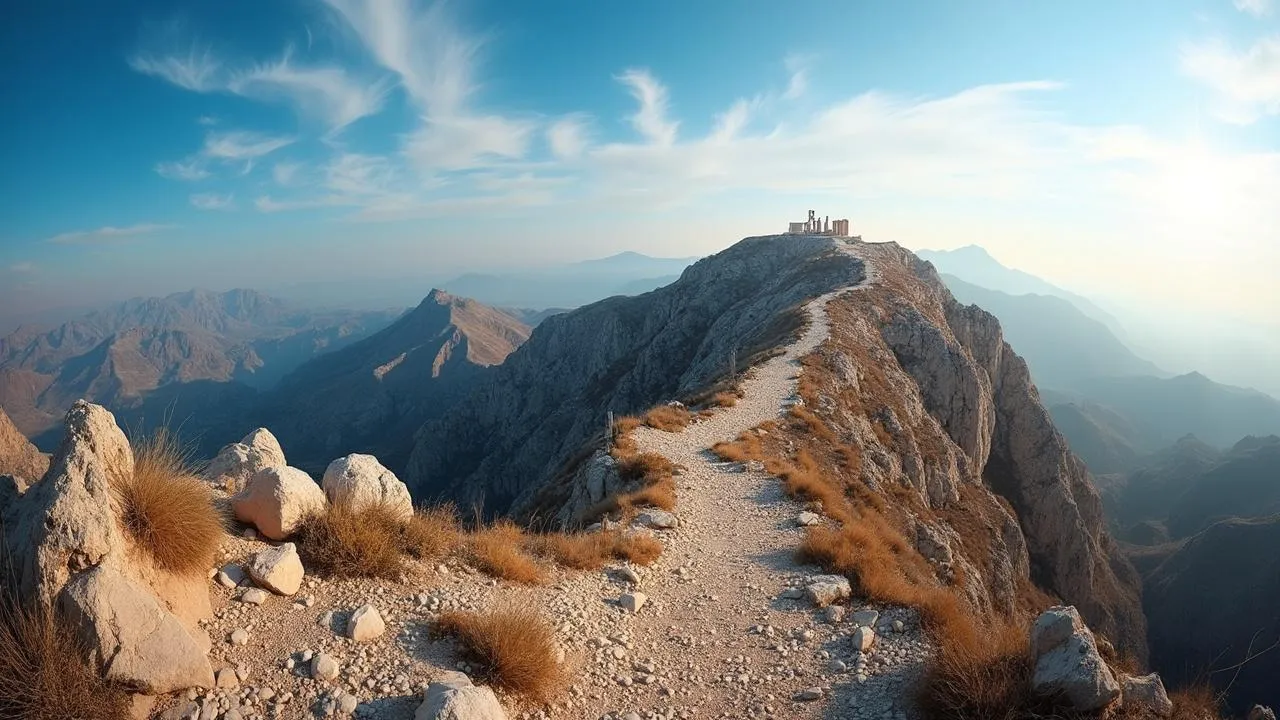
The contrast between the western and eastern coasts is what makes the island feel bigger than it is. The western side, with its whitewashed villages perched atop the cliffs, is what fills your camera roll. The east coast is a different story entirely.
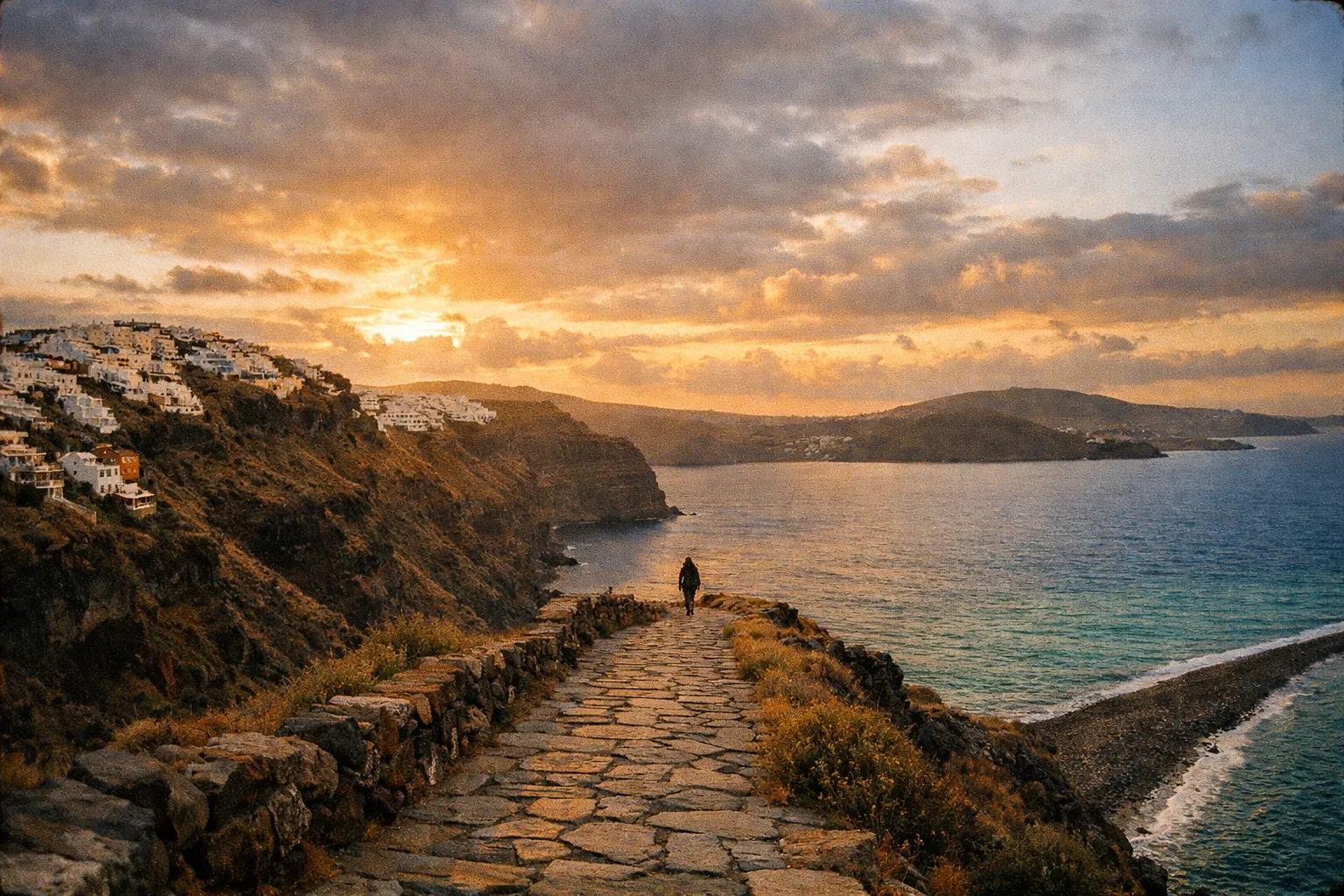
On the caldera side, Imerovigli sits highest on the rim and stays noticeably quieter than Fira or Oia. Below it, a short scramble takes you out to Skaros Rock - a former Venetian fortress site with a sunset view that rivals Oia’s and a fraction of the crowd (7). I watched the sun go down from here on a September evening with maybe thirty other people. In Oia that same night, the castle ruins were packed solid.
The east coast runs at a different pace. Perissa and Kamari are the two main beach towns - flatter, more relaxed, and far more practical for families than Oia’s endless steps. I spent a long afternoon on Perissa alternating dips in the water with frappés (iced coffee, whipped to a foam) at a beachside taverna. Between the two towns, the Vlychada area has dramatic wind-carved cliffs behind a quieter dark-sand beach. The Red Beach near Akrotiri is worth a look for its rust-colored cliffs, but check current access before you go - rockfall closures happen.
For a solid half-day, hike from Perissa up Mesa Vouno mountain to Ancient Thera. The trail is a steep switchback climb, but the ruins at the top and the views over both coasts make it worth the effort.
Santorini’s food and wine
Santorini’s volcanic soil and dry climate produce some genuinely distinctive food. Two things you have to try.
Santorini fava - not the green bean. Here it’s a creamy yellow split-pea purée, often served warm with caramelized onions and a drizzle of olive oil. Simple, and hard to stop eating.
Cherry tomatoes - tiny, intense, and sweet in a way that makes mainland tomatoes taste watery. They turn up in the Santorini salad, a local riff on the Greek classic with capers, cucumber, and soft goat cheese instead of feta.
And the wine. Santorini has around 20 wineries, and the star grape is Assyrtiko - bone-dry, mineral, high-acid, and a natural match for grilled seafood (5). Standard tastings at estates like Santo Wines run about €15-€30 (approximately $16-$33) for several pours, with premium sunset-terrace flights and food pairings starting around €40+ (approximately $44) per person - prices. Santo’s terrace faces the caldera, so book a late-afternoon slot and let the tasting run into golden hour.
Other local specialties worth ordering:
- Tomatokeftedes (tomato and herb fritters)
- Chlorotyri (a soft, tangy goat cheese)
- Apochti (sun-dried, spiced pork)
- Melitinia (sweet cheese pastries, especially around Easter)
A restaurant tip: book caldera-view tables 1-2 weeks ahead in peak season, and balance those splurge dinners with non-view tavernas in Pyrgos, Finikia, or Kamari, where the prices drop noticeably and the crowd skews more local.
Santorini restaurants in Greece: where to eat by area
Where you eat matters as much as what you order, because the view carries a serious premium. Some guidance on Santorini restaurants in Greece by area:
- Oia and Imerovigli: caldera-view fine dining. Expect $60-$120+ per couple with wine for a proper dinner. Amoudi Bay’s tavernas below Oia do fresh grilled fish sold by weight - spectacular, but confirm the price before it hits the grill.
- Fira: the widest range, from souvlaki counters (a few euros) to mid-range sit-down tavernas around $25-$40 per person.
- Pyrgos: the hilltop village inland is where I’d send anyone who wants great food without the sunset markup. Tavernas here serve slow-cooked local dishes to a mostly Greek clientele.
- Kamari and Perissa: beachfront tavernas, casual and family-friendly, good value on seafood.
One practical note: most mid-range and upscale spots take cards, but small family tavernas and kiosks are often cash-only for bills under €15, so keep some euros on hand. Tipping isn’t obligatory - rounding up or leaving 5-10% for good service is normal and appreciated, not expected.
Unusual things to do on the island
Once you’ve done the sunsets and the beaches, the island has a second layer that most day-trippers never reach. Some of the more unusual things to do in Santorini:
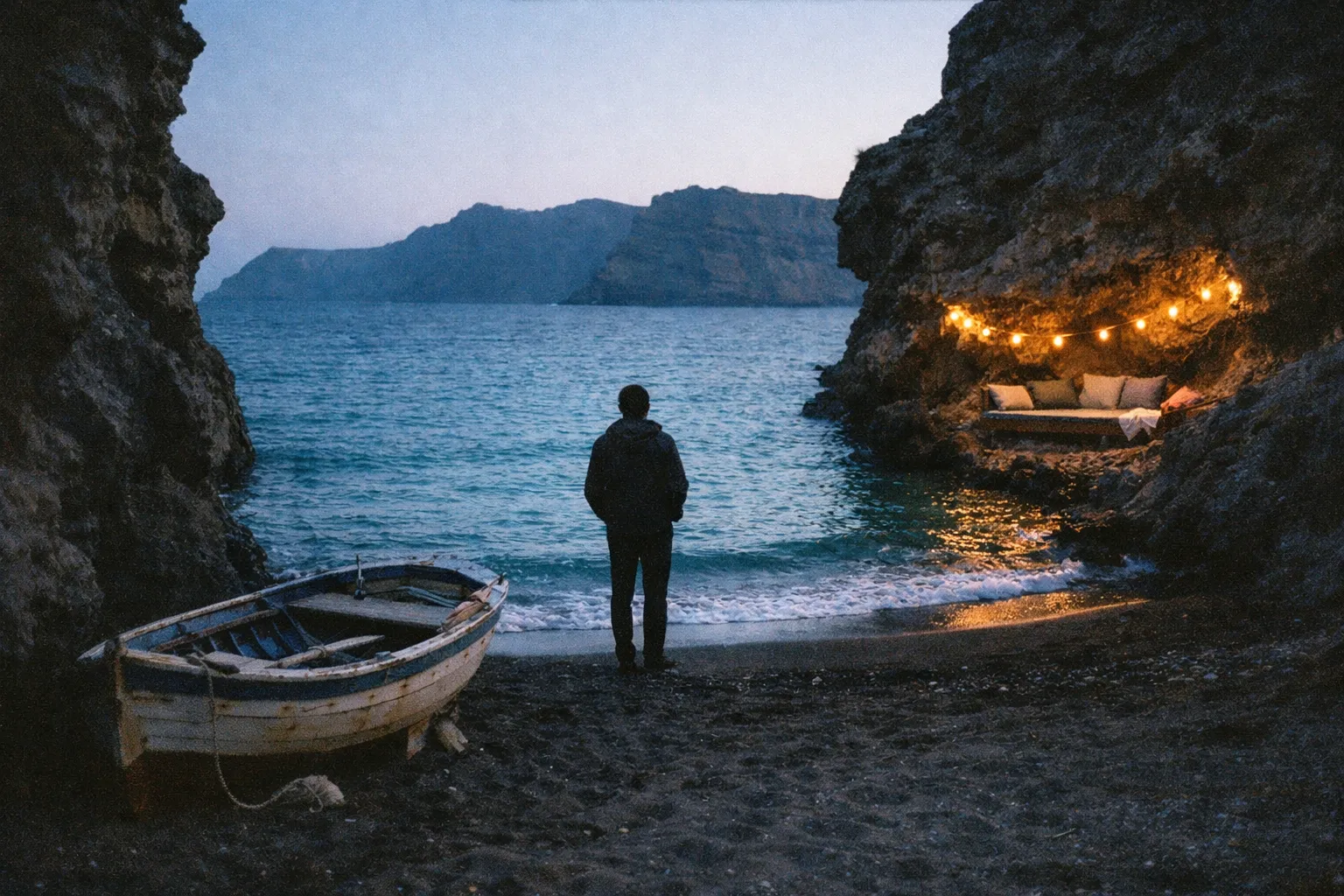
- Boat trip to Nea Kameni: the young volcanic island in the middle of the caldera. You can walk the crater rim and then swim in the warm sulphur springs off Palea Kameni - the water shifts from cold to bath-warm as you approach the vents (1).
- Sunset sea kayaking: roughly 5-hour tours along the south coast that include swimming and snorkeling. You’ll need basic swimming ability and some upper-body stamina.
- Discovery scuba diving in the caldera: beginner dives are capped around 10-12 m and require a medical questionnaire, but there’s something genuinely strange about diving inside a submerged volcano (7).
- Horseback riding near Akrotiri: rides down to the quieter black-sand beaches on the south coast.
- The Greek Wedding Show: a theatrical dinner experience with plate-smashing, dancing, and audience participation. It runs about 1.5-2 hours, tickets typically $50-$80 per adult including appetizers and wine (7). Cheesy in the best way, and a fun date night if you’re not precious about that kind of thing.
- Quiet villages: Finikia, a five-minute walk from Oia, keeps the architecture and drops the crowds. Pyrgos has the island’s traditional hilltop core and a castle ruin with panoramic views. Both feel like Santorini before the cruise ships arrived.
Where to stay in Santorini
Where you base yourself shapes the whole trip, because the island’s geography means “20 minutes away” can mean a long, winding bus ride. Here’s how the main areas compare.
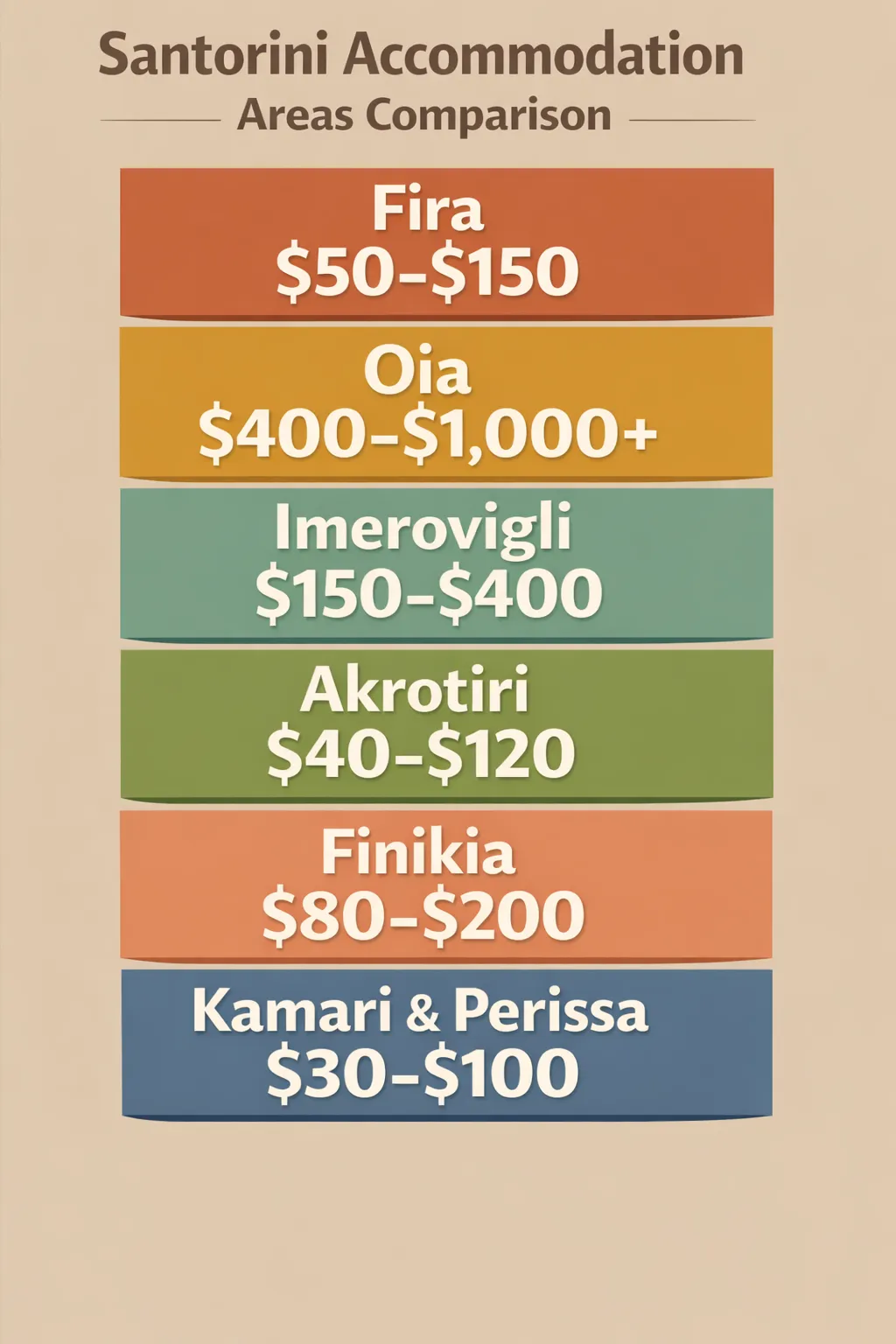 Accommodation price ranges by area in Santorini.
Fira is the best all-round base. It’s central, it’s the bus hub, and it has the widest price range - from budget hostels to mid-range hotels. Nightlife lives here too. The trade-off: it’s busier and less romantic than the alternatives (9).
Oia is the most photogenic and the top pick for honeymooners and luxury travelers. Caldera-view cave suites with private pools run $400-$1,000+ per night in season. It’s also the most expensive village overall and heaving at sunset, so weigh the price against how much time you’ll actually spend elsewhere (3)(9).
Imerovigli is quieter and arguably more romantic than Fira, with premium caldera hotels and far fewer day-trippers. A strong choice for couples who want the view without the crush.
Akrotiri is an underrated base on the south end, near the archaeological site, diving, and horseback riding. Prices generally sit below the caldera villages, making it good value for active travelers who don’t need to be on the postcard strip.
Finikia sits right next to Oia but stays calmer and cheaper - ideal if you want quick access to Oia’s lanes without paying Oia’s rates or fighting its crowds (9).
Quick rule of thumb: caldera-view towns (Oia, Imerovigli, Fira) for the views and romance; east-coast towns (Kamari, Perissa) for beaches, families, and value; Akrotiri or Finikia if you want quiet without giving up access. Book caldera hotels well ahead - peak-season rooms sell out and can cost 2-3 times the shoulder-season rate for the same room.
Santorini Accommodation Areas Comparison
| Best All-Round Fira | Luxury & Romance Oia | Imerovigli | Akrotiri | Finikia | Kamari & Perissa | |
|---|---|---|---|---|---|---|
| Price Range (per night) | Hostels to mid-range hotels; $50-$150 | $400-$1,000+ | Mid to premium; $150-$400 | Budget to mid-range; $40-$120 | Mid-range; $80-$200 | Budget to mid-range; $30-$100 |
| Best For | Central access, nightlife, budget to mid-range | Honeymooners, luxury travelers | Couples seeking quiet romance | Active travelers, archaeology lovers | Access to Oia without crowds | Families, beach lovers, value |
| Location | Caldera rim, island center | Caldera rim, north end | Caldera rim, between Fira and Oia | South coast | Near Oia | East coast |
| Ambience | Bustling, lively | Photogenic, crowded at sunset | Quiet, romantic | Quiet, practical | Calm, traditional | Casual, family-friendly |
Best time to visit Santorini Greece
The single biggest lever on your trip’s cost and comfort is timing. The best time to visit Santorini Greece is the shoulder season - roughly May-June and September-October.
Late September and October are worth making the case for specifically: the sea is still warm at 20-23°C, the crowds thin out, and hotel prices drop sharply from the July-August peak (4). I visited in late September and had the Fira-Oia hike almost to myself for the first two hours. May and June are the other sweet spot - mild, dry, and green before the summer heat settles in.
July and August bring the most reliable heat and the fullest schedule of events - the Santorini Jazz Festival runs in July in Kamari - but also the biggest crowds, the highest prices, and midday temperatures that make the Fira-Oia hike genuinely tough. With Greece’s tourism revenue hitting about $20.6 billion in 2024, up from $17.7 billion in 2019 according to the Greek Tourism Confederation (SETE), high-season island prices have climbed noticeably, which makes shoulder season even more appealing (8). If you’re planning to island-hop, discover Mykonos as another strong shoulder-season destination that rewards early or late visits.
If you’re set on peak summer, pre-book everything: catamaran tours, sunset restaurant tables, and popular hotels can all sell out weeks ahead (1).
What Santorini Offers Couples
Santorini earns its reputation as a honeymoon island, and the romantic things to do in Santorini for couples cluster around a few reliable hits:
- Sunset catamaran cruise - a small-group caldera cruise with snorkeling, the hot springs, and a meal on board runs 4-5 hours and typically costs $110-$180 per person, with private charters above $400 per couple (1)(7). Booking a sunset departure is the move.
- A caldera-view dinner in Oia or Imerovigli, timed to the sunset.
- A private wine tasting at one of the estates, ideally on a terrace facing the caldera.
- A photo session in Oia’s blue-domed lanes or along the Imerovigli rim early in the morning, before the crowds arrive.
- The Greek Wedding Show if you want something interactive rather than a quiet dinner.
For a quieter romantic base, I’d point couples toward Imerovigli or Finikia over Oia itself - same views, far less elbowing for space. Couples who want to extend their Greek adventure beyond Santorini might also consider Corfu’s hidden treasures for a lush, quieter contrast to the caldera’s drama.
✓ Pros
- Shoulder season (May-June, late September-October) offers warm seas, thinner crowds, and hotel rates 30-50% below the July-August peak
- The Fira-Oia caldera rim hike is one of the best free half-days in the Aegean - 10-11 km of dramatic scenery with no entry fee
- Santorini's volcanic soil produces genuinely distinctive food and wine - Assyrtiko white wine and Santorini fava are hard to find at this quality elsewhere in Greece
- Strong range of accommodation bases: Fira for flexibility, Imerovigli for romance, east coast for beach value
- Unusual activities - caldera diving, sea kayaking, Nea Kameni crater walk - give the island real depth beyond the sunset photos
✗ Cons
- July and August crowds are intense: Oia's sunset castle fills up 60-90 minutes early and caldera-view restaurants book out weeks ahead
- Caldera-view hotels and dinners carry a steep premium - cave suites in Oia run $400-$1,000+ per night in peak season
- The island's geography makes getting around slow: 'nearby' can mean a long winding bus ride, and the bus network stops running late at night
- Akrotiri entry is €20 ($22) and popular catamaran tours run $110-$180 per person - costs add up quickly
- Red Beach and some coastal paths are subject to rockfall closures; always check access before building them into your day
Frequently Asked Questions
- What should I not miss in Santorini?
- Must-see highlights include the Oia sunset, Fira-Oia hike, Akrotiri ruins, a beach day at Perissa or Kamari, and a boat trip to Nea Kameni volcano.
- Is 3 days too much in Santorini?
- Three full days is a comfortable minimum to enjoy beaches, boat trips, wine tastings, and exploring villages without rushing.
- Can I flush my toilet paper in Santorini?
- No, used toilet paper should be placed in bins next to toilets due to narrow plumbing pipes prone to clogging.
- What is Santorini best known for?
- Santorini is best known for its caldera cliffs, white-and-blue architecture, volcanic beaches, dry Assyrtiko wine, and iconic Oia sunset.
- Are donkeys still used for transport in Santorini?
- Donkeys are used but it's discouraged due to animal welfare concerns; cable cars or walking are better options.
- Is tipping customary in Santorini restaurants?
- Tipping is appreciated but not obligatory; rounding up or leaving 5-10% for good service is normal.
- Can I visit Santorini year-round?
- Yes, but the best comfort and prices are in shoulder seasons May-June and September-October; winter is quiet with fewer services.
- What are the best things to do in Santorini for first-time visitors?
- Walk the Fira-Oia caldera rim hike (10-11 km, free), visit the Akrotiri archaeological site (€20 entry), watch the sunset from Skaros Rock in Imerovigli for a fraction of the Oia crowd, and do a half-day catamaran cruise that includes the hot springs off Palea Kameni.
- What unusual things can you do in Santorini beyond the sunsets?
- Walk the crater rim on Nea Kameni and swim in the sulphur springs off Palea Kameni, try a beginner scuba dive inside the submerged caldera (capped at 10-12 m), go sunset sea kayaking along the south coast, or ride horses down to the quieter black-sand beaches near Akrotiri. The hilltop villages of Pyrgos and Finikia also reward an afternoon away from the caldera strip.
- What are the best things to do in Santorini for couples?
- A sunset catamaran cruise is the classic move - book a group tour or a private charter and pair it with an early-morning walk through Oia's blue-domed lanes before the day-trippers arrive. For a quieter base, Imerovigli or Finikia gives you the same views as Oia with far less competition for space.
- How much does it cost to eat at Santorini restaurants?
- Caldera-view fine dining in Oia or Imerovigli runs $60-$120+ per couple with wine. Fira has the widest range - souvlaki counters for a few euros up to mid-range tavernas at $25-$40 per person. Pyrgos and Kamari are where prices drop and the crowd skews more local. Keep cash on hand for small family tavernas, which are often cash-only for bills under €15.
- When is the best time to visit Santorini, Greece?
- Shoulder season - May-June and late September-October - offers warm seas, thinner crowds, and lower hotel rates. July and August bring the fullest event schedule but also the biggest crowds and highest prices.
Final planning notes
Three full days minimum. Base yourself in Fira if you want flexibility, Imerovigli or Finikia if you want quiet, the east coast if you want beaches and better value. Visit in May-June or late September-October if you can, book your catamaran and sunset dinners ahead in summer, and carry cash for the small tavernas.
Pack real walking shoes for those cobblestones and the caldera hike. Keep water on you in the heat. Use the bins for your toilet paper.
Do that, and the island lives up to every one of its postcards - plus a few corners the postcards never show.