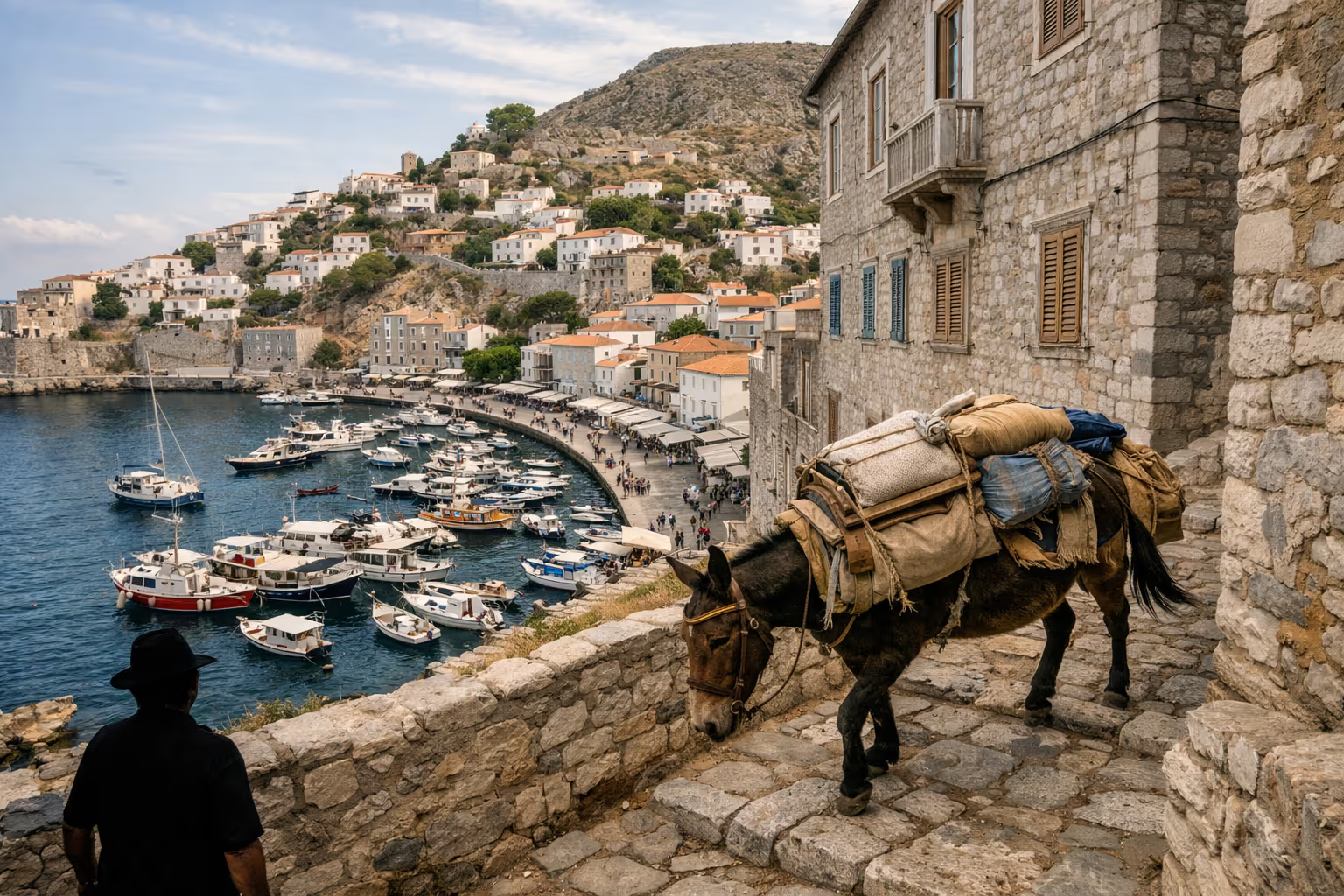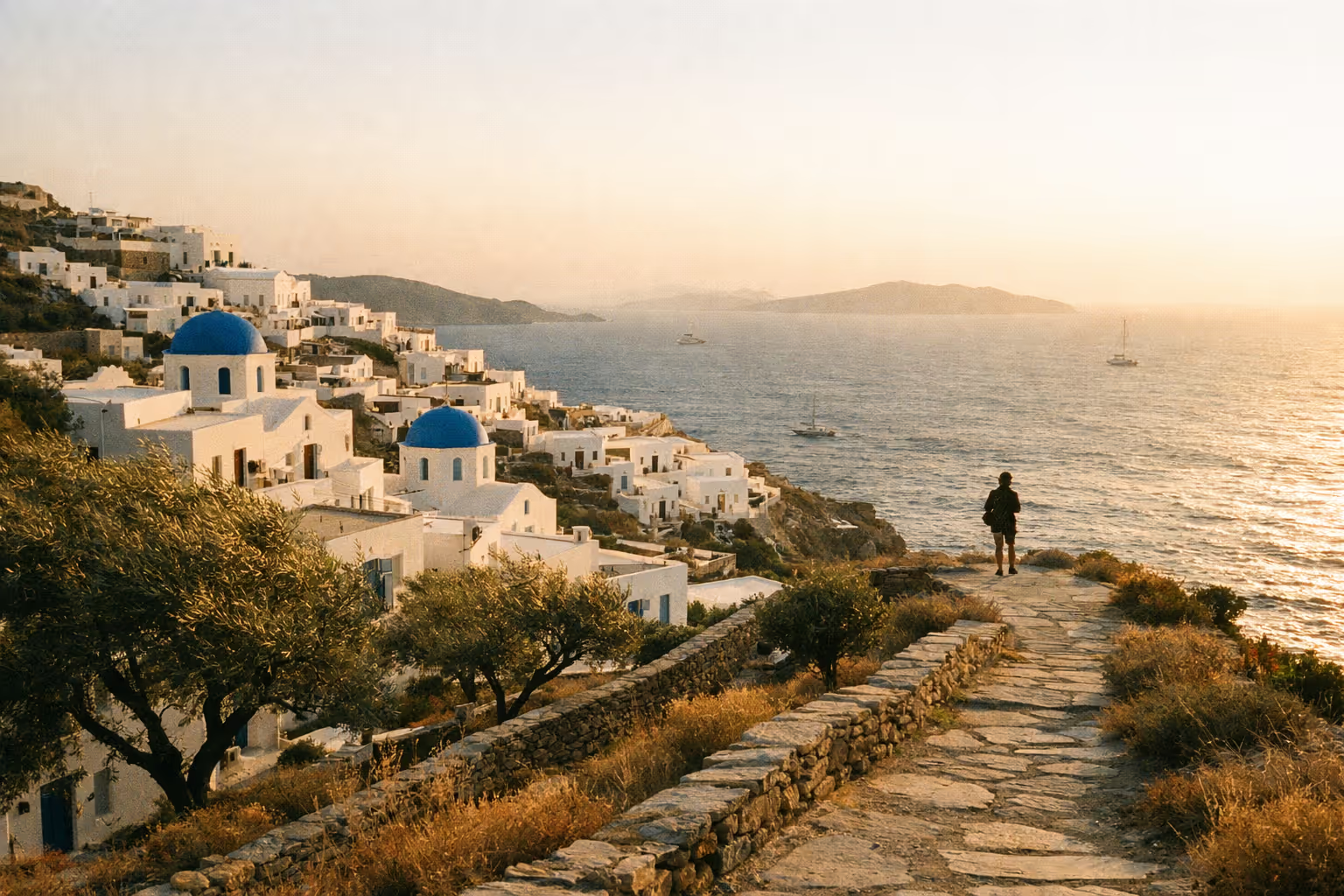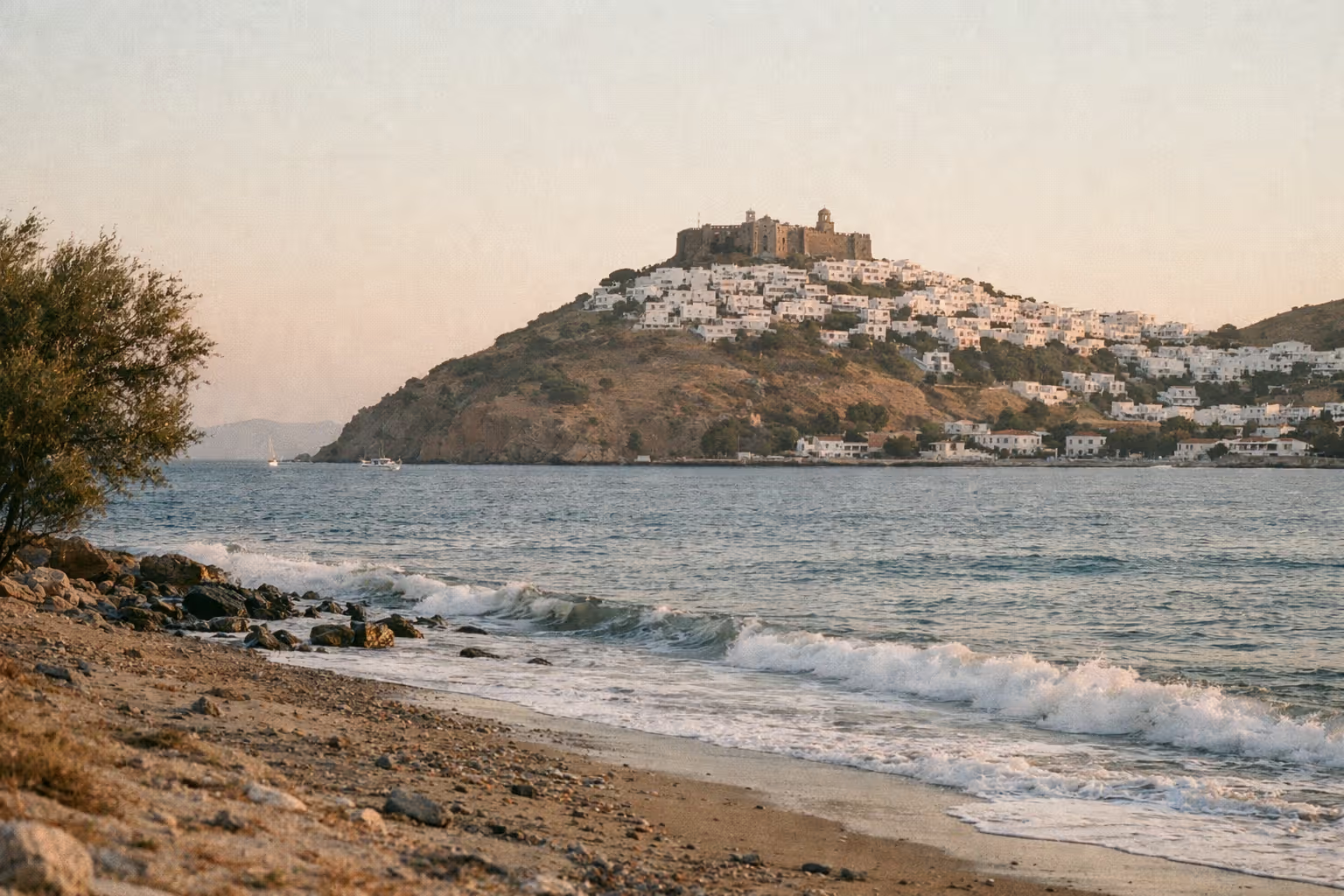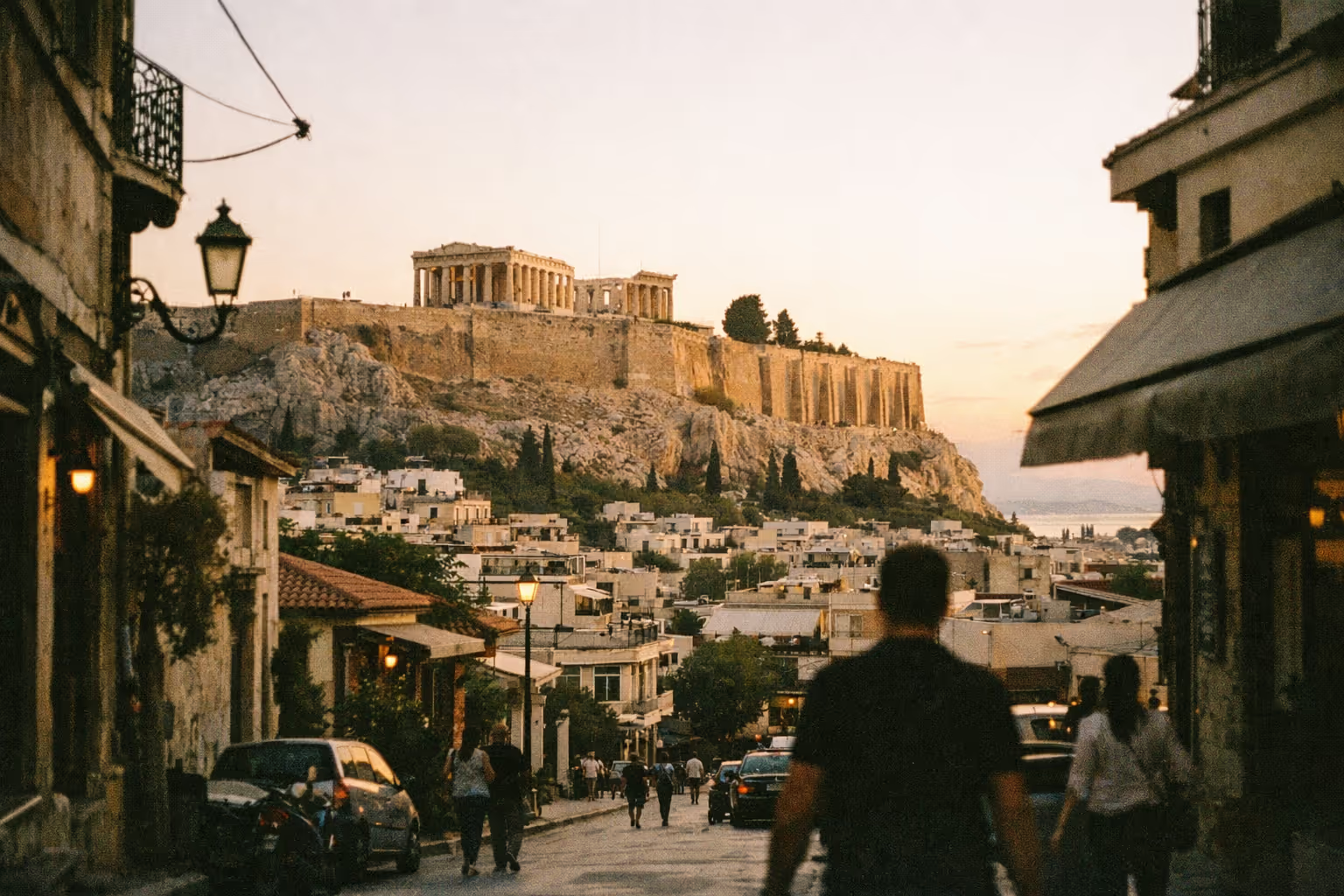
Most first-timers spend one rushed day on the mainland, see Delphi through a tour-bus window, and never quite figure out why it felt like a blur. The hardest part of planning things to do in Greece isn’t finding options - it’s deciding which version of Greece you’re actually going on. With roughly 6,000 islands and 21 UNESCO World Heritage Sites, the sheer scale forces a choice you’re better off making before you book, not after you land.
This guide does three things: gives the mainland the honest assessment it deserves, lays out a clear framework for island choices, and hands you realistic day-splits for 7, 10, and 14 days. The core decision is islands versus mainland versus ancient sites - and how you divide your days between them determines whether the trip feels balanced or like a forced march.
Greece at a Glance: Where to Go and How Long to Allow
| Athens | Delphi | Meteora | Peloponnese (Nafplio base) | Olympia | Santorini | Crete | Paros / Naxos | Corfu | Rhodes | |
|---|---|---|---|---|---|---|---|---|---|---|
| Type | City / Ancient | Ancient Site | Monastery / Nature | Ancient Circuit | Ancient Site | Island / Cyclades | Island / Large | Island / Cyclades | Island / Ionian | Island / Dodecanese |
| Minimum Days | 2-3 | 1 (overnight ideal) | 1-2 (overnight) | 2-3 | 1 | 2-3 | 3-5 | 2-3 | 2-3 | 2-3 |
| Best For | First-timers, history | Archaeology, scenery | Drama, photography | Mycenae, Epidaurus | Olympic history | Caldera views, sunsets | Diversity, Knossos | Beaches, villages | Venetian history, green landscapes | Medieval history, beaches |
| Don't Skip | Acropolis Museum | Site + museum combo | Sunrise from the rock viewpoints | Overnight in Nafplio | On-site museum | Oia, Fira | Heraklion Museum | Quieter than Santorini | Old Town | Old Town |
Things to Do in Greece: Athens, the Unavoidable Starting Point (and Why It Deserves More Than One Night)
When planning things to do in Greece, Athens deserves at least two full days - three if you want the National Archaeological Museum and time in a neighborhood beyond the ancient core. Nearly every Greece itinerary starts and ends here because Athens is the country’s air and ferry hub in one place. Athens International Airport handled over 28 million passengers in 2023, and the Blue Line metro connects the airport to Piraeus ferry port in about 60 minutes (2). Piraeus itself is Europe’s largest passenger ferry port and the main departure point for the Cyclades, Crete, and the Dodecanese - which is why the city functions as both your gateway and your launch pad.
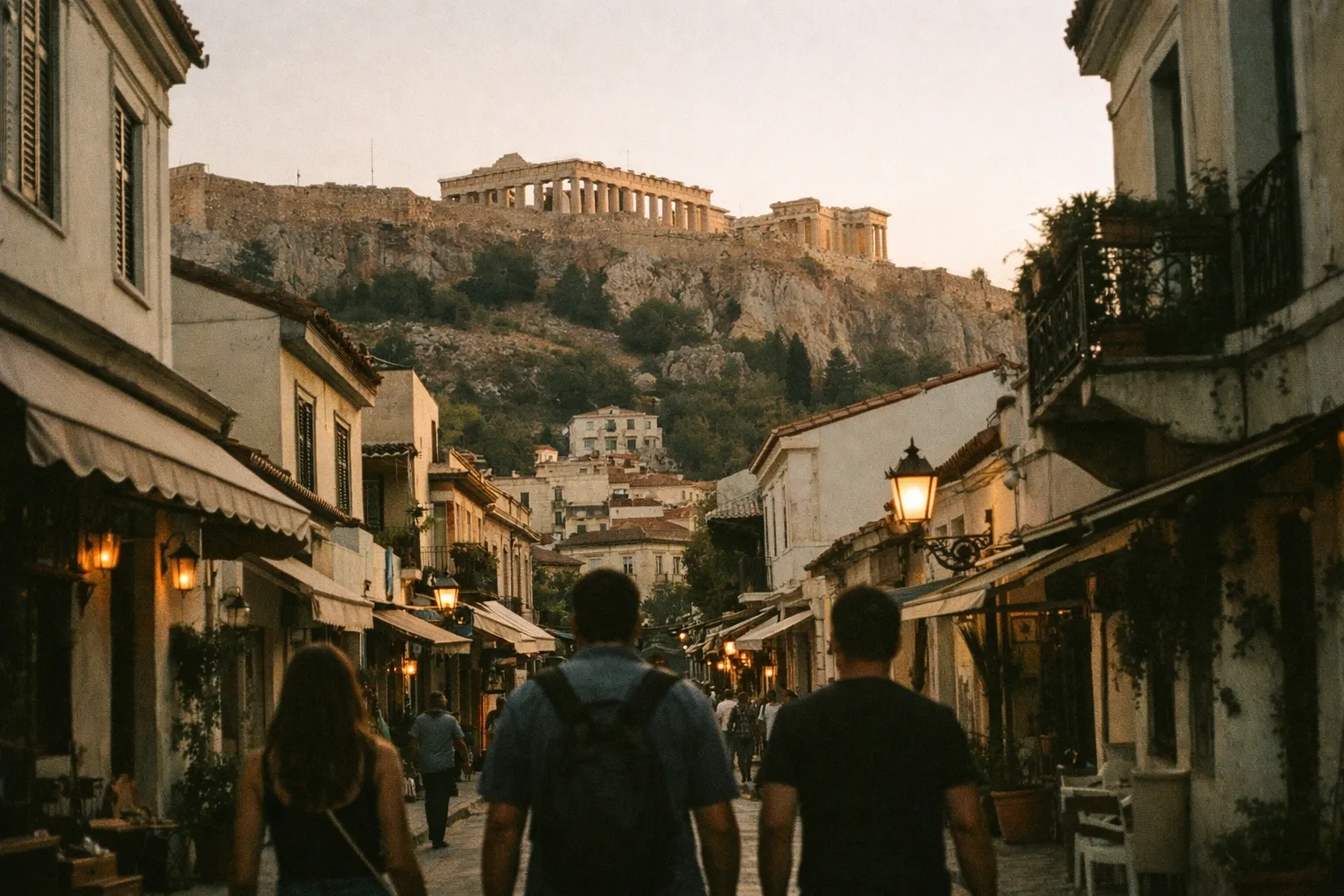
Treating Athens as a one-night transit stop is the most common mistake first-timers make. The city holds the Acropolis and Parthenon, the Acropolis Museum, the Ancient Agora, the Temple of Olympian Zeus, the National Archaeological Museum, the Panathenaic Stadium, and the changing of the guard at Syntagma Square. Add the neighborhoods - Plaka’s stepped lanes, Monastiraki’s flea market - and the Athens Riviera at Glyfada and Vouliagmeni, and you have easily three days of material.
One ticketing change matters for planning. A multi-site combo ticket does exist - covering the Acropolis, Ancient Agora, Roman Agora, Hadrian’s Library, Temple of Olympian Zeus, and a handful of other sites - but the terms and pricing have been updated, and seasonal rates apply. Check the official Greek Ministry of Culture site before booking, because the per-site math shifts depending on how many sites you’re combining and when you’re visiting (3).
Etiquette note: Tipping in Greek tavernas is optional and modest - rounding up or leaving 5-10% for good service is the norm, and locals often just leave loose coins.
What to See in Athens in 2-3 Days
Day 1 is the Acropolis circuit. Start at the 08:00 opening or in the final two afternoon hours, because midday heat in July and August regularly exceeds 32°C (90°F). I’ve done both, and the early morning slot wins - fewer people, better light, and you’re done before the heat peaks. Cover the Parthenon, Propylaea, Erechtheion, and Temple of Athena Nike, then walk down to the Acropolis Museum for context, and finish through Plaka and the Ancient Agora.
Day 2 is museums and neighborhoods: the National Archaeological Museum in the morning, then time in Psirri, Exarchia, or Koukaki. Day 3 is a day trip or the Riviera.
Athens as a Day-Trip Base
Athens works as a base for several worthwhile day trips, though some stretch the definition. Cape Sounion and the Temple of Poseidon are an easy half-day, best timed for sunset. Aegina is a short ferry from Piraeus, and Hydra - a car-free island - is about 90 minutes out. Delphi is doable as a long day trip but genuinely better as an overnight, which brings us to the ancient-site circuit.
Ancient Sites in Greece Worth Building Your Trip Around
The ancient sites in Greece worth building a trip around are best treated as a road trip, not a series of day trips from Athens - the distances are real and the driving adds up fast. Athens to Delphi is around 178 km (111 miles), roughly 2.5 to 3 hours by car. Delphi to Meteora is another 215 km (134 miles). Athens to Delphi to Meteora comes to nearly 400 km of driving one way, and about 750 km if you return to Athens by the direct route. It works best as a 3-4 day itinerary with two overnights.
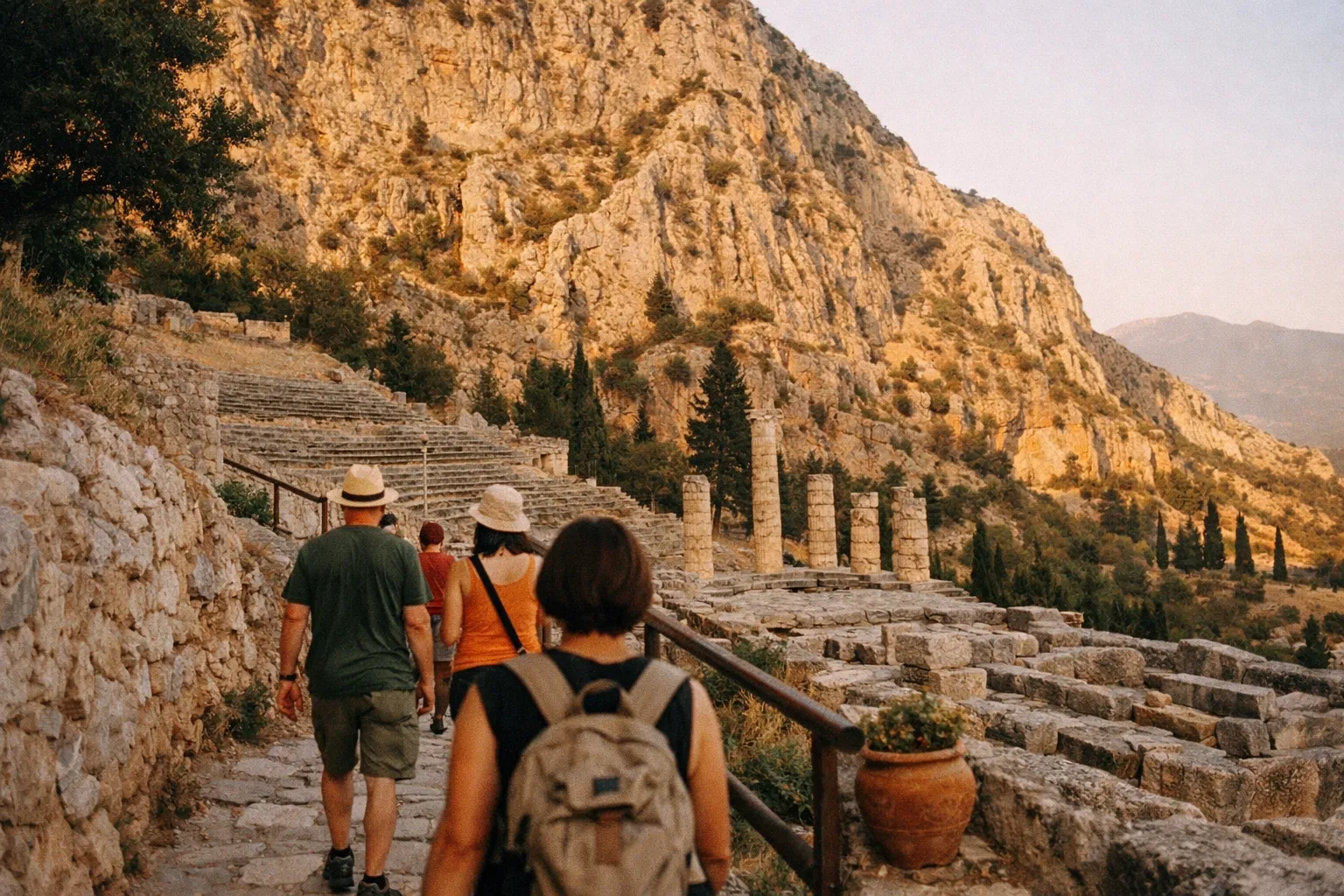
Delphi: How Long and How to Get There
Delphi deserves a full day for the site and museum, and the mountain setting on Parnassus is half the reason to go. Inscribed by UNESCO in 1987 as the sanctuary of Apollo and the center of the ancient Greek world, it isn’t a site you rush (4). When I visited on a weekday in late May, the site was busy by 10am - arriving at opening made a noticeable difference. Nearby Arachova, a stone mountain town, makes a good lunch or overnight stop. You can do Delphi as a long day trip from Athens, but staying over lets you catch the site early and continue north to Meteora without a brutal drive.
Meteora: Why It Needs an Overnight
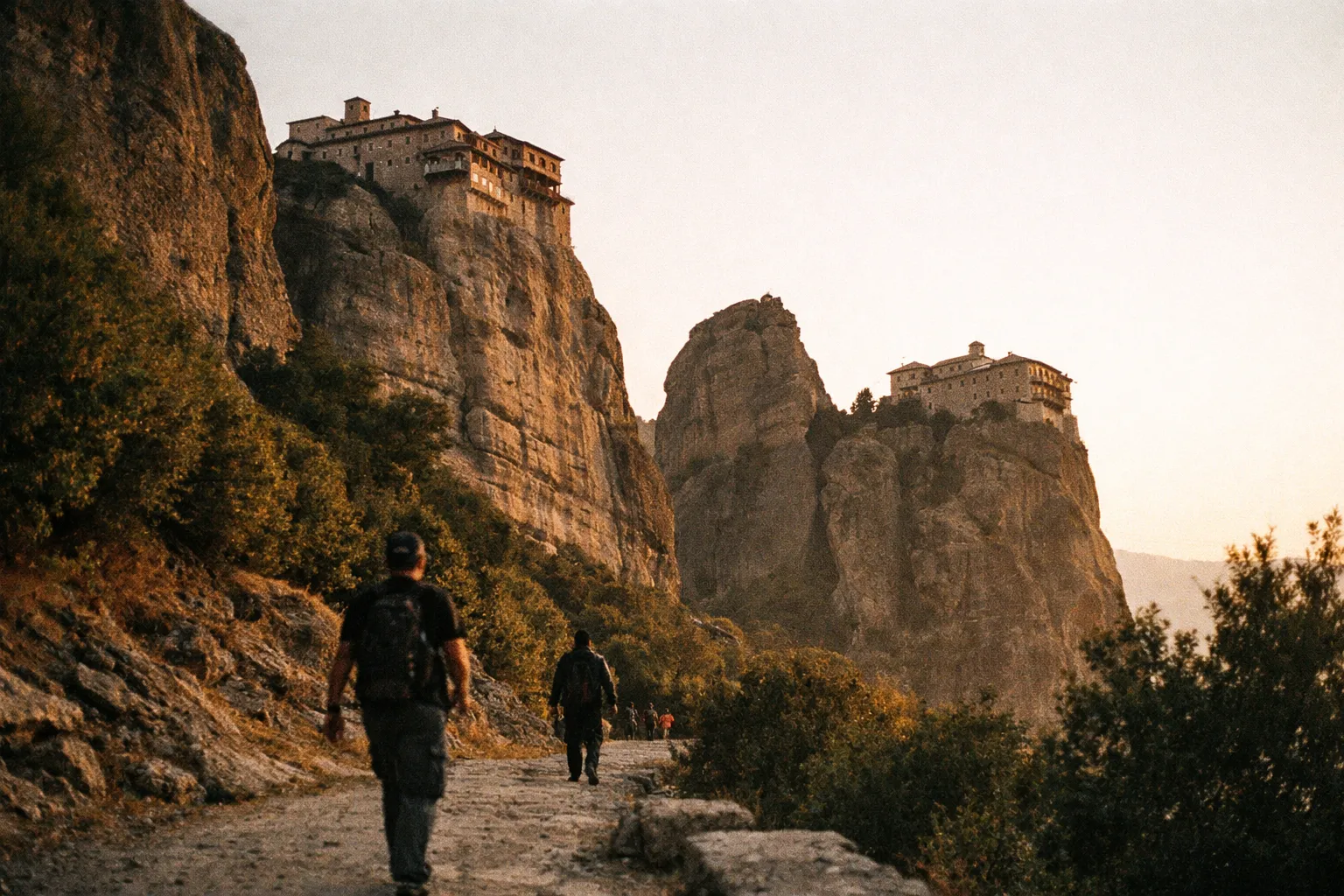
Meteora is the rock monasteries above Kalambaka, and at 350 km from Athens it’s a genuine overnight commitment, not a day trip. UNESCO inscribed the site in 1988; six monasteries remain active on pinnacles rising up to 400 meters above the plain, and there’s nothing else in Greece that looks like it (5). Reach it by road, or by train as far as Paleofarsalos with a connecting Hellenic Train coach for the last stretch: the Paleofarsalos to Kalambaka line has been out of service since the September 2023 storms and restoration was still under way in August 2026, so check hellenictrain.gr before you plan around rail. If you’re watching costs, Larissa is about an hour east by car (82 km) and runs cheaper than staying in Kalambaka itself, but with the rail line still closed there is no train between the two, so it only works if you’re driving.
Etiquette note: The monasteries enforce covered shoulders and knees. Wraps are sometimes available at the entrance, but carrying a light scarf or sarong is easier than hoping they have your size. Two more things shape the day. None of the six opens before 09:00, and Great Meteoron not until 09:30, so there is no sunrise visit to be had inside them (6). And each monastery closes on a different weekday: in summer that is Monday for St Stephen, Tuesday for Great Meteoron, Wednesday for Rousanou, Thursday for Holy Trinity and Friday for Varlaam, with St Nicholas Anapafsas open daily and all six open at weekends (6). Winter closures are wider still, so check the current timetable before you build a single night on the rock around one specific monastery.
The Peloponnese Circuit: Mycenae, Epidaurus, and Olympia
The Peloponnese holds the densest cluster of ancient sites in the country, and Nafplio makes the ideal base. Mycenae, the Bronze Age citadel, sits about 90 minutes from Athens and just over 20 km from Nafplio, which pairs naturally with the theater at Epidaurus and Ancient Corinth. Rather than attempting all three as a single day trip from Athens, spend at least one night in Nafplio - it’s the most attractive mainland town, with a walkable historic core and a harbor worth lingering over.
Olympia is a further full day west. GetYourGuide frames an Athens-Olympia loop through Corinth, Mycenae, and Nafplio as a 7-day, 590 km route - which tells you plainly that fitting the full circuit in requires several nights in the Peloponnese, not day-tripping.
Beyond the Big Names: Messene, Mystras, and Nemea
The famous sites aren’t the only ones worth your time. Ancient Messene is one of the most complete classical sites in Greece and draws a fraction of the crowds - I’ve walked it nearly alone on a Tuesday afternoon when Mycenae was packed. Mystras is a Byzantine ruin near Sparta, layered with churches and palaces on a hillside. Nemea and Acrocorinth reward a detour too. Travelers combining mainland Epirus with the Ionian Islands can add Nikopolis, Cassope, and Dodoni, all reachable via short drives from Preveza or the Lefkada causeway.
Islands or Mainland Greece - How to Actually Decide
The islands or mainland Greece question isn’t really an either/or - it comes down to how many days you have and what you’re optimizing for. Under 10 days, pick one and commit. At 10-14 days, a combined trip becomes genuinely realistic.
When to Choose Islands Over the Mainland
Island-heavy trips suit beach-first travelers, shorter trips of around seven days, and anyone who wants to slow down in one place rather than move constantly. If your non-negotiables are Santorini’s caldera, Mykonos nightlife, or Crete specifically, an island focus makes sense. Islands are also the easier choice if ferry logistics stress you out and you’d rather settle in than pack and unpack every two nights.
When the Mainland Deserves More of Your Trip
Mainland-heavy trips suit archaeology enthusiasts, road-trippers, and travelers with 10 or more days who want depth over variety. A 14 to 21-day mainland road trip taking in Mycenae, Epidaurus, Corinth, Olympia, Messene, Mystras, Nemea, Meteora, and Delphi is a completely valid “deep history” trip - skipping islands entirely is a legitimate choice, not a compromise.
One practical warning: ruin fatigue is real. Ancient sites back-to-back start to blur, so mix in mountain villages like Dimitsana, Vitina, and Stemnitsa in the Peloponnese, or a coastal town, to break the rhythm. It keeps the itinerary from becoming a checklist.
Ferries vs. Domestic Flights: What Shapes the Plan
Every island leg via Piraeus effectively costs about half a day once you add check-in, boarding, and port transfers. Ferry fares vary considerably by route, class, and season - economy deck seats are the cheapest option, cabin berths on overnight routes cost noticeably more, and high-season surcharges push prices up across the board. An island-heavy plan can quietly allocate a significant chunk of your budget and several travel days to transit alone. That’s why 2-3 islands is the realistic maximum for a 10-day trip (7).
Domestic flights from Athens to Heraklion, Rhodes, Corfu, or Santorini save time on longer hops and are sometimes comparably priced. Factor in a buffer day if you’re island-hopping in shoulder season, because weather-related ferry disruption does happen.
Greece Destinations at a Glance
| Athens | Delphi | Meteora | Peloponnese (Nafplio base) | Santorini | Paros / Naxos | Mykonos | Crete | Corfu | Rhodes | |
|---|---|---|---|---|---|---|---|---|---|---|
| Best For | Ancient sites, museums, city neighborhoods | Oracle sanctuary, mountain scenery | Rock monasteries, dramatic landscape | Mycenae, Epidaurus, Olympia, Corinth | Caldera views, sunsets, Cyclades classic | Beaches, quieter Cyclades, better value | Nightlife, Cyclades scene | Minoan history, gorge hiking, south coast beaches | Venetian architecture, green landscape, calmer pace | Medieval old town, eastern Aegean |
| Minimum Days | 2-3 | 1 (overnight recommended) | 1-2 (overnight required) | 3-4 | 2-3 | 2-3 | 2-3 | 3-5 | 2-3 | 2-3 |
| Mainland or Island | Mainland | Mainland | Mainland | Mainland | Island (Cyclades) | Island (Cyclades) | Island (Cyclades) | Island (largest Greek island) | Island (Ionian) | Island (Dodecanese) |
| Key Logistics | Airport and ferry hub; Blue Line metro to Piraeus | 178 km from Athens; best paired with Meteora | 350 km from Athens; by road, or train to Paleofarsalos plus connecting coach while the Kalambaka line is closed | 90 min from Athens; 590 km full circuit | Ferry from Piraeus or domestic flight; book well ahead in peak season | Ferry from Piraeus; pairs well with Santorini | Ferry from Piraeus or domestic flight | Ferry from Piraeus or domestic flight to Heraklion | Domestic flight from Athens; not on Cyclades ferry routes | Domestic flight or long ferry; works with Turkey multi-country trips |
Which Island Group Fits Your Trip
Choose your island group by ferry-route logic, not a wish list - mixing the Cyclades with the Ionian Islands in one trip means flying between them, which adds cost and complexity.
Cyclades: The Classic First-Timer Circuit
The Cyclades are the classic first-timer circuit: Santorini for caldera views and sunsets, Paros and Naxos for beaches with fewer crowds and better value, Mykonos for nightlife. Santorini recorded over 2 million overnight stays in 2023, far more than its neighbors - which is exactly why pairing it with a quieter island balances the trip. Santorini plus Paros is a solid two-island combo for 5-6 days.
Crete: The Island That Competes With the Mainland
Crete is the one island that competes seriously with the mainland on ancient history, and it deserves 3-5 days minimum. Knossos drew 977,299 visitors in 2025 and passed a million in 2024, while the Heraklion Archaeological Museum recorded 387,682 in 2025 (ELSTAT, the Greek statistical authority) (8). Together they cover the Minoan world with a density no other island matches. Add the Samaria Gorge for hikers and the south coast for quieter beaches, and Crete easily fills the longer end of that range.
Ionian Islands: Greener, Calmer, Venetian
The Ionian Islands - Corfu, Zakynthos, Kefalonia, Lefkada - are greener and calmer than the Aegean, with strong Venetian influence visible in the architecture. Corfu Old Town was inscribed as a UNESCO World Heritage Site in 2007 for its Venetian fortifications (9). Zakynthos has Navagio Beach, and Lefkada connects to the mainland by a floating bridge and causeway, so you can reach it by car without a ferry - handy for anyone who prefers driving to port schedules. For the full picture, see our Corfu guide and our full Greek islands guide.
Dodecanese: Rhodes, Kos, and the Eastern Aegean
The Dodecanese lean toward medieval rather than classical history. Rhodes Old Town, inscribed by UNESCO in 1988, is one of the best-preserved medieval cities in Europe, with intact fortifications and Gothic architecture that genuinely earns the description (10). Kos adds beaches and ruins. This group stays warm later into October and works well if you’re combining Greece with Turkey on a multi-country trip.
Greece Itinerary Options for 7, 10, and 14 Days
These are frameworks, not rigid schedules - ferry timetables and flight availability will shift the specifics. What holds across all three is that Athens anchors the start, and the number of days you have decides whether you go mainland-first, island-first, or both.

7 Days in Greece: Pick a Lane
Seven days works only if you’re realistic about scope. Two options land well: Athens for two nights plus one island (Santorini or Crete, 3-4 nights), or Athens plus a Peloponnese circuit based in Nafplio for two nights and no islands. The Athens-Olympia road trip alone is a 590 km, 7-day route, which shows how fast a focused mainland loop fills a week. Trying to combine the full mainland circuit and multiple islands in seven days produces a punishing transit-to-sightseeing ratio.
10 Days: Where a Combined Trip Starts to Work
Ten days is the threshold where a combined trip stops feeling rushed. A workable split: Athens for 2-3 nights, Delphi overnight, Meteora overnight, then two islands such as Santorini and Paros for 4-5 nights total. The Athens to Delphi to Meteora run, roughly 400 km out and about 750 km if you drive back, sits comfortably as a 3-4 day segment, leaving the balance for the Cyclades without a constant sprint.
14 Days: The Threshold for Doing It Properly
Fourteen days is the realistic minimum for seeing both mainland highlights and multiple islands without constant transit. A strong version: Athens for 2-3 nights, the full Peloponnese circuit through Nafplio and Olympia (3-4 nights), Delphi and Meteora, then 2-3 islands (11). Rick Steves’ community itineraries show travelers fitting Santorini, Meteora, Delphi, Nafplio, Monemvasia, Kardamyli, and Athens into two weeks - proof the pacing holds if you plan it.
For July and August, book ferries and accommodation months ahead; popular routes sell out and peak rates run up to 40% above shoulder season. Domestic flights are often faster and comparably priced for longer island hops.
What Not to Miss on a First Trip to Greece
If you do nothing else, these are the experiences Greece does that nowhere else does. Don’t try to hit all of them in one trip unless you have 14-plus days - pick the ones that fit your length and travel style.
- Acropolis and Acropolis Museum, Athens. Non-negotiable. Visit the site and museum on the same day or back-to-back for full context.
- Delphi. The oracle site on Parnassus. The mountain setting makes it far more than ruins.
- Meteora. The rock monasteries, visually unlike anything else in the country.
- Mycenae. The Bronze Age citadel, 90 minutes from Athens via Nafplio, and an easy pair with Epidaurus.
- Knossos and the Heraklion Archaeological Museum, Crete. The Minoan world - the museum is the essential context for the site.
- Santorini caldera. Oia and Fira, the classic view, worth it despite the crowds if you manage your timing.
- Nafplio. The most underrated mainland town and the best base for the Peloponnese circuit.
Frequently Asked Questions
- Is 7 days enough in Greece?
- Seven days works, but only if you're realistic about scope. Athens (2 nights) plus one island (3-4 nights) is a satisfying trip. Athens plus a Peloponnese circuit also works. Trying to combine both mainland ruins and multiple islands in 7 days turns the trip into a transit marathon. Pick one focus and do it properly.
- What are the top 5 things to do in Greece?
- The Acropolis and Acropolis Museum in Athens; Delphi's oracle site on Mount Parnassus; the monasteries at Meteora; the Bronze Age citadel at Mycenae; and Knossos on Crete paired with the Heraklion Archaeological Museum. That's a mainland-heavy list by design - these five experiences are what Greece does that nowhere else does.
- Islands or mainland Greece - which should I prioritize?
- Depends on your trip length and what you're after. Under 10 days: pick one and commit. Islands suit beach-first travellers and shorter trips; the mainland suits archaeology enthusiasts and road-trippers. At 10-14 days, a combined trip becomes realistic. The mistake most first-timers make is trying to do both on a 7-day trip.
- How many days in Greece do I actually need?
- Three days in Athens is a solid minimum for the city alone. Add 2-3 days for a Peloponnese circuit, 1-2 days for Delphi and Meteora, and 4-6 days for islands. Ten days is the practical minimum for a combined trip that doesn't feel rushed. Fourteen days is where it all fits comfortably.
- Can girls wear shorts in Greece?
- Yes, throughout Greece - in cities, on islands, at beaches, and in most outdoor settings. The exception is religious sites: monasteries and churches require covered shoulders and knees. Wraps are sometimes available at the entrance, but carrying a light scarf or sarong is easier. Meteora's monasteries enforce this; so do some Athens churches.
- What's the best time of year to visit Greece?
- Mid-May to mid-June or mid-September to early October. Temperatures are comfortable (22-28°C), seas are warm enough to swim, crowds are thinner than August, and hotel rates run 20-30% below peak. July and August are the most expensive and crowded - if that's when you're going, book ferries and accommodation well in advance.
- Do I need to book ferry tickets in advance?
- For July and August, yes - book as early as possible. Popular routes (Athens/Piraeus to Santorini, Mykonos, Crete) sell out months ahead during peak season. Shoulder season (May-June, September-October) is more forgiving, but advance booking still helps on busy weekend routes. Domestic flights are sometimes faster and comparably priced for longer island hops.
- Do U.S. travelers need anything new to enter Greece in 2026?
- Not right now. ETIAS, the online authorization that visa-exempt travelers including Americans will eventually need, was due in the last quarter of 2026, but eu-LISA has said that is no longer feasible and as of August 2026 it has slipped into 2027 with no date announced. It is a quick online application, not a visa (12). Check the official EU travel portal (travel-europe.europa.eu) close to departure rather than relying on a date published earlier (13).
The single decision that unlocks everything else: figure out how many days you have, then commit to a mainland-first or island-first trip. A combined trip only works cleanly at 10 days and up. Under that, splitting your time three ways is the mistake that leaves Delphi a blur and the ferries eating your week.
Athens is the starting point no matter which way you go, so book those nights first and build outward from there. Once you’ve settled on islands, our Greek islands guide and individual guides to Santorini, Crete, and Corfu cover the ferry routes and on-island logistics in detail.