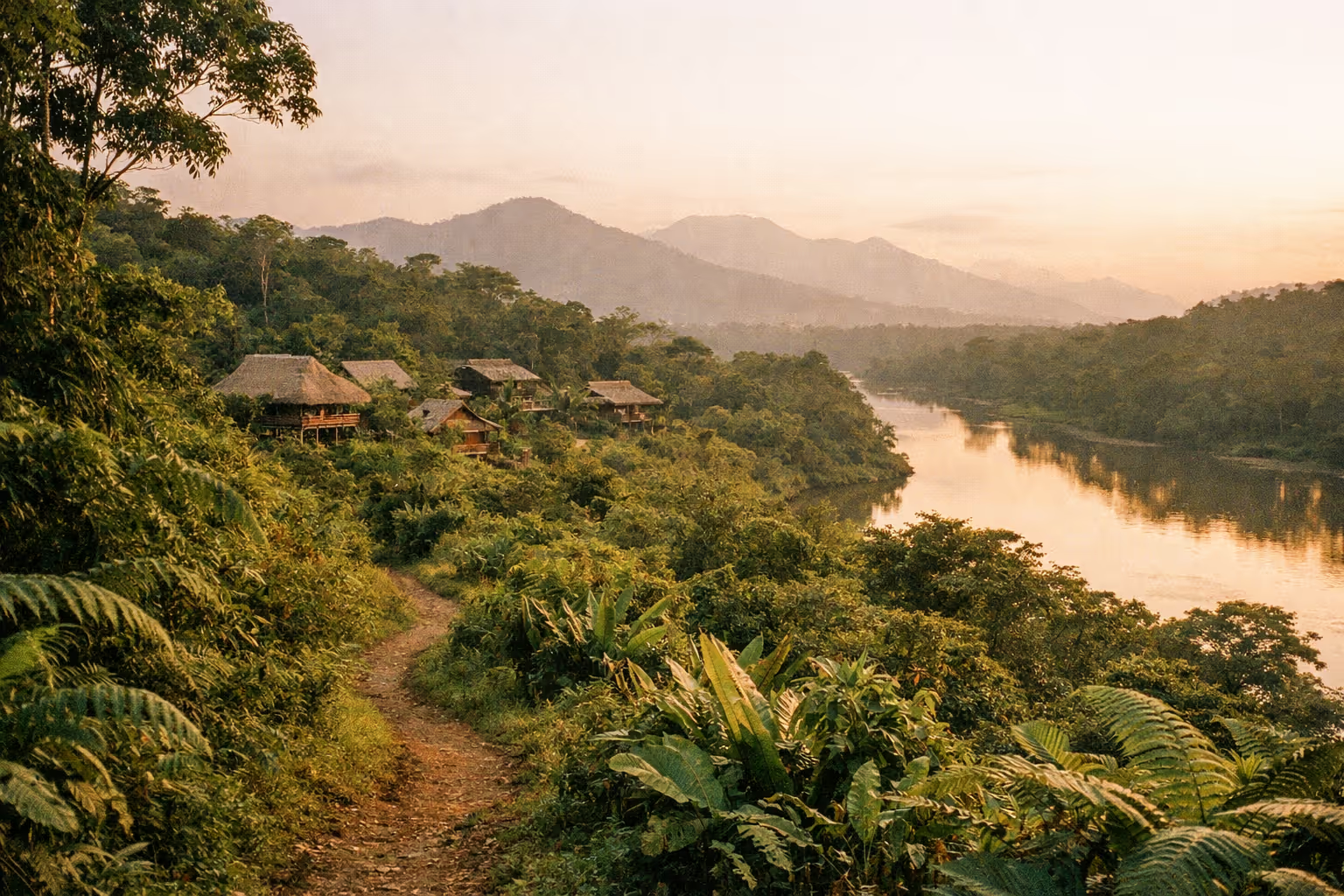
Costa Rica ecotourism is real but heavily greenwashed, so the skill is telling genuine lodges from marketing. The country earns it, 57 percent forest cover and a quarter of its land protected, but not every lodge flying the eco flag delivers. Check the CST certificate, the government’s five-leaf scale, and cap your tour groups at six to eight. For the actual nature, Monteverde, Arenal, and Corcovado lead; treat Manuel Antonio as a half-day, not an anchor. Budget $1,800 to $2,400 a person for a mid-range week.
What Costa Rica ecotourism actually means in 2025
Costa Rica’s tourism board defines ecotourism as travel built around observing ecological, geological, and biological processes (3). In practice: national parks, guided wildlife walks, birding, volcano hikes, canopy tours, and lodges that try not to wreck the forest they sit in.
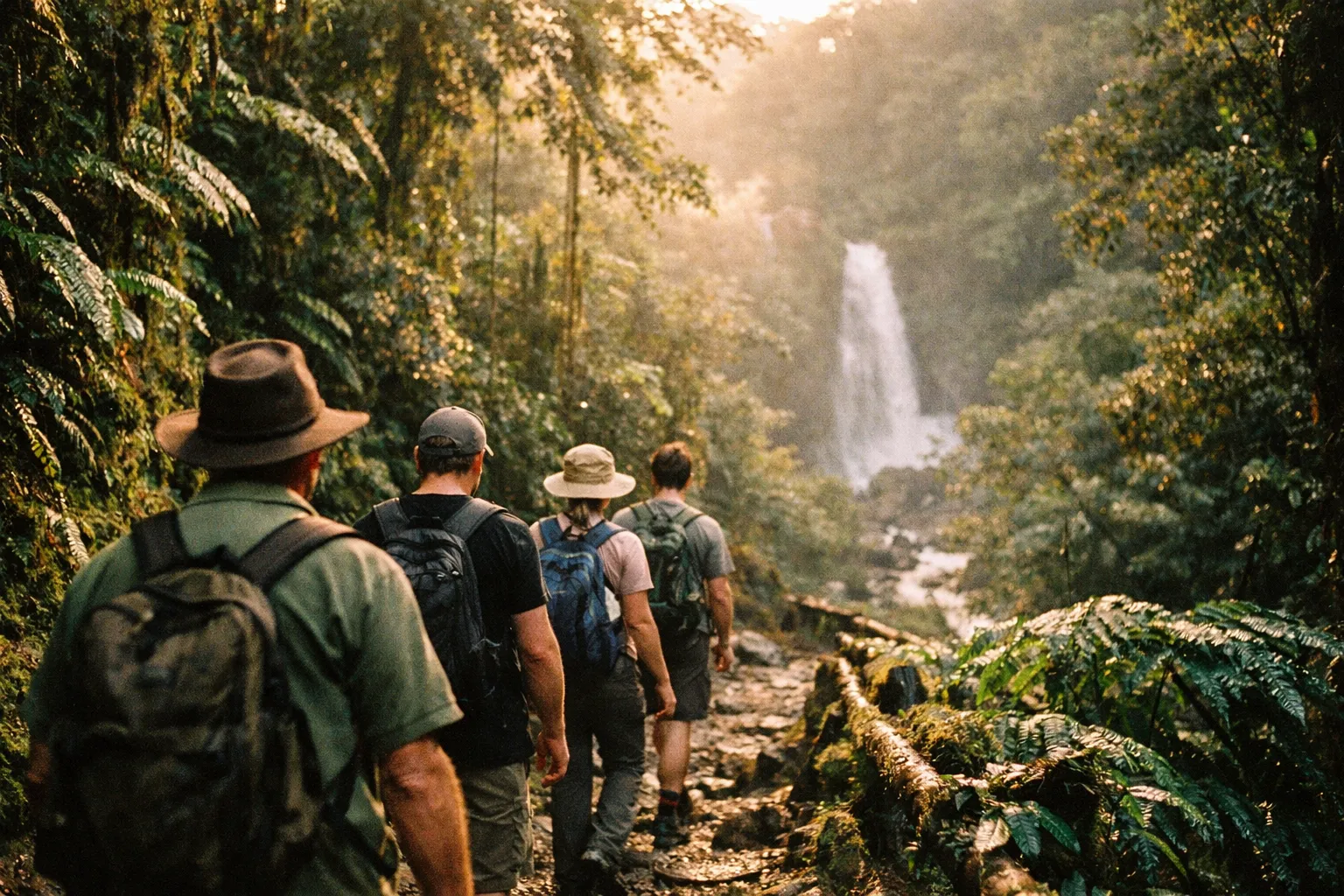
The numbers are unusual for a country this size:
- 57% forest cover - Costa Rica is the first tropical country to reverse deforestation (1)
- 26% of national territory protected, including 30 national parks, 19 wildlife refuges, and 8 biological reserves (3)
- $4.3 billion in annual international tourism revenue, per UNDP (5)
- Tourism’s economic value is projected to more than triple by 2032 (1)
Here’s the part most guides skip. Mongabay reported in late 2024 that conservation experts now consider “sustainable tourism” insufficient on its own, citing pressure from mass tourism and cruise ships, and pushing operators toward a regenerative tourism model that funds restoration rather than just minimizing harm (1). The eco-label alone is no longer proof of anything. You have to look at how a lodge or tour actually spends its revenue.
✓ Pros
- Strong national commitment to forest protection and biodiversity
- Wide network of protected areas and biological reserves
- Growing economic value of tourism supports conservation efforts
✗ Cons
- Mass tourism and cruise ships exert increasing pressure
- Eco-labels can be misleading without transparency on revenue use
- Sustainable tourism is evolving toward a more demanding regenerative model
Is $1,000 enough for a week in Costa Rica?
Short answer: yes, if you travel like a backpacker. No, if you want private guides and mid-range eco-lodges.
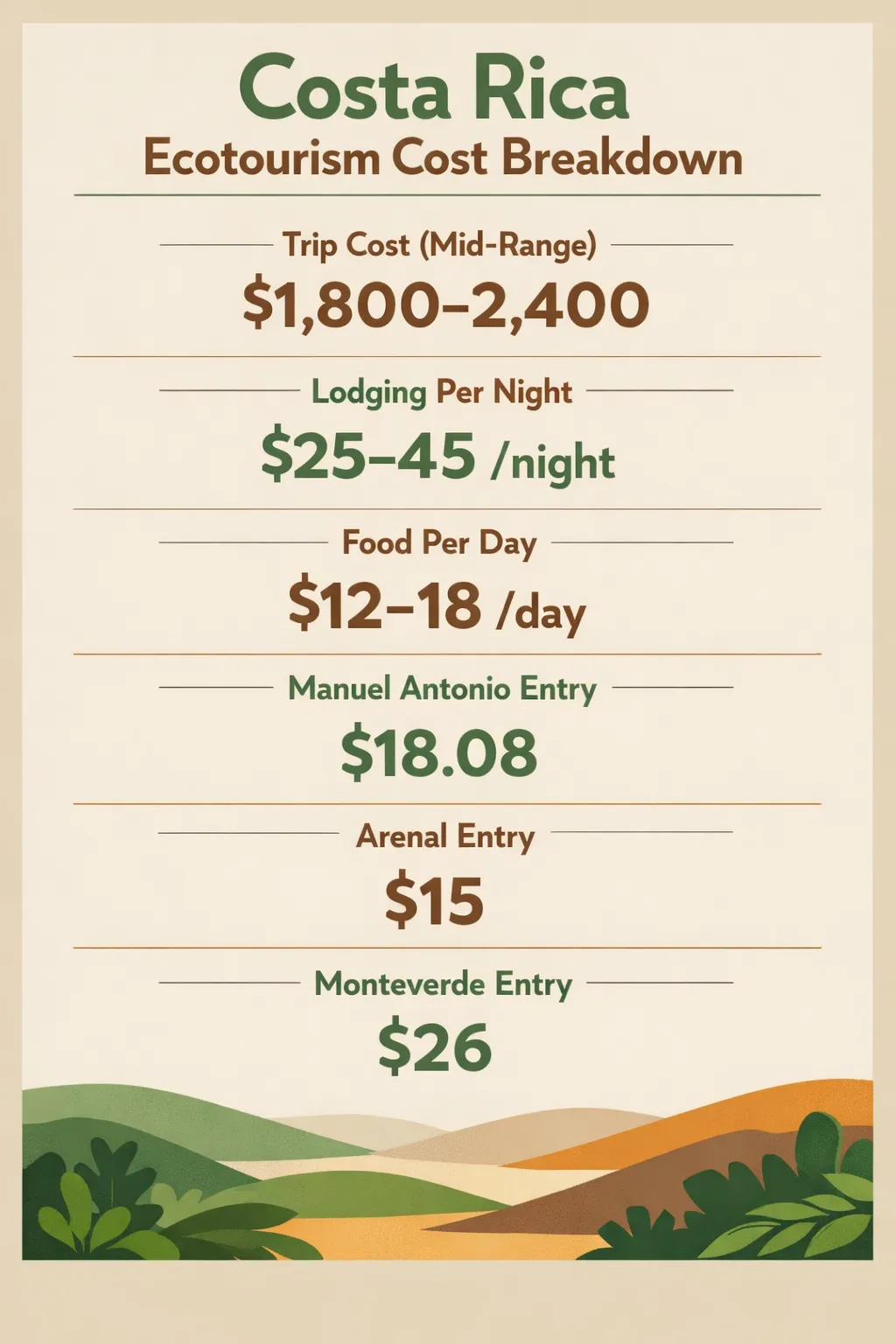 A mid-range 7-day Costa Rica ecotourism trip costs about $1,800-2,400 per person, with lodging at $25-45 per night and park entries from $15 to $26.
Here’s a realistic breakdown for a 7-day budget eco-trip at roughly $1,000 per person (excluding international flights):
- Lodging (6 nights): $25-45/night at hostels or budget cabinas in Monteverde, La Fortuna, or Puerto Viejo = $150-270
- Food: $12-18/day eating at sodas (local family-run restaurants) = $85-125
- Local buses and shared shuttles: $80-150 for the week (public buses are cheap; shared shuttles between hubs run $50-60 per leg)
- Park entries: Manuel Antonio $18.08, Arenal Volcano $15, Monteverde Reserve around $26 - budget $80-120 for 3-4 parks
- One paid guided tour: $50-90 (a night walk in Monteverde or a guided birding tour delivers more than another bus ride to a fourth region)
- Buffer: $150-200 for water, snacks, tips, one beach day
That math works in shoulder season with advance bookings. In peak weeks around Christmas, New Year, and Easter, expect lodging to climb 30-50% and the same week to run closer to $1,300-1,500.
For mid-range comfort - a real eco-lodge with breakfast, shared shuttles instead of buses, two private excursions - plan on $1,800-2,500 per person per week. Premium eco-trips with naturalist guides, Osa Peninsula lodges, and small-plane transfers run $3,500+.
The single biggest lever on cost is transport. A rental 4x4 runs $60-90/day plus fuel and insurance. Shared shuttles are cheaper for two regions; buses are cheapest but eat half a day each leg. If you want to stretch your money further, costa rica on a budget has detailed seasonal strategies for affordable flights and activities.
What’s the best month to visit Costa Rica?
There isn’t one nationwide answer. Costa Rica has multiple climate zones, and the Pacific and Caribbean coasts run opposite seasons.
Dry season (mid-December to April) is the default recommendation for the Pacific side and the Central Valley. Trails are open, roads are reliable, and wildlife is easier to spot near shrinking water sources. The downside: it’s also peak crowds and peak prices, especially late December through mid-January and the week of Easter. Lodges in Monteverde and Manuel Antonio sell out 3-6 months ahead for those windows.
Green season (May to mid-November) brings afternoon rain on the Pacific side and significantly lower prices. Mornings are usually clear. Wildlife is more active, the forest is a deep, saturated green, and you’ll have trails to yourself. September and October are the wettest months on the Pacific - some roads in the Osa Peninsula become genuinely difficult - but they’re the driest months on the Caribbean coast (Tortuguero, Puerto Viejo, Cahuita).
The practical recommendations:
- First-time wildlife trip: late January to early March - dry trails, peak animal activity, fewer holiday crowds
- Birding and turtle nesting: July to October on the Caribbean side; green sea turtle nesting at Tortuguero peaks July-September
- Budget travelers: May, June, or November - green season prices without the worst rain
- Surfing the Pacific: April to October for bigger swells
- Avoid if possible: mid-December to January 5 (price spike), Easter week (everything closes or doubles in price)
I drove the Pacific coast from Uvita down to the Osa Peninsula in October - the Rio Drake crossing was passable but only just, and the descent into Drake Bay was slick enough that the rental company’s “any 4x4” recommendation was an understatement. Dry season really does matter down there.
Best ecotourism destinations in Costa Rica
Ranked by worth-the-detour, not presented as equal options.
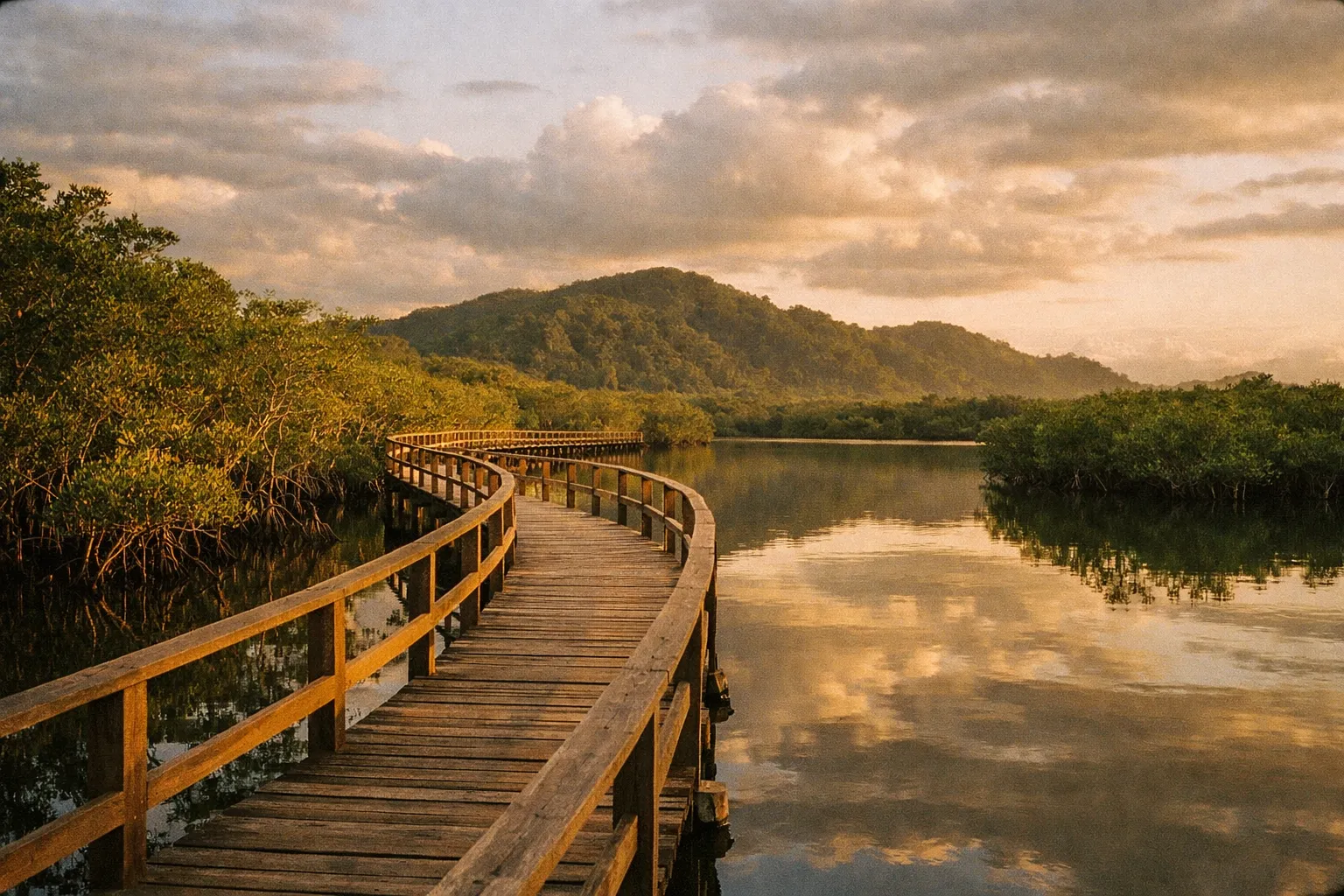
Monteverde Cloud Forest - worth the detour
This is the flagship for ecotourism in Monteverde Costa Rica, and the one region I’d refuse to skip on a first trip. The cloud forest sits at around 1,440m elevation, which means cool mornings, constant mist, and a wildly different ecosystem from the lowland rainforest. The Monteverde Cloud Forest Biological Reserve protects more than 2,500 plant species and is the easiest place in the country to see the resplendent quetzal between January and July.
Logistics that matter:
- Entry to the reserve is around $26; trails open at 7:00 AM
- A guided dawn walk dramatically increases what you actually see - expect $25-50 per person for a small group
- Hanging bridges and zip-line operators cluster nearby; Selvatura and Sky Adventures are the two largest
- Road access from the Pan-American Highway is paved now (the old gravel road was rerouted) but still slow
Book a night walk separately from your day visit. Two-thirds of cloud-forest wildlife is nocturnal, and the night-walk operators along the main road run small groups with red-filtered flashlights. It’s one of the better $30 decisions you’ll make on this trip.
Arenal and La Fortuna - worth the detour
Arenal Volcano stopped erupting in 2010, but the surrounding ecosystem - lake, hot springs, rainforest, hanging bridges - is the most accessible nature hub in the country. Park entry is around $15. Arenal pairs naturally with Monteverde via the Lake Arenal shuttle-boat-shuttle route (roughly 3.5 hours, $25-30), which is far better than driving around the lake.
This is the region for hot springs after a hike. Free public access exists at the Rio Chollin - locals call it “the free hot springs” and park along the road just outside Tabacón. The commercial spas (Tabacón, Baldi, Ecotermales) run $40-80 for day passes.
Osa Peninsula and Corcovado - worth the detour for wildlife
National Geographic called Corcovado “the most biologically intense place on Earth,” and that’s not marketing. Tapirs, scarlet macaws, all four Costa Rican monkey species, occasional jaguars. The trade-off: it’s the hardest region to reach, requires a guide inside the park (mandatory since 2014), and ranger-station stays book out months ahead.
Plan a minimum of 3 nights in the region, use Drake Bay or Puerto Jiménez as your base, and budget $90-150 per day for a guided park visit including boat transfer.
Tortuguero - worth the detour in nesting season
Caribbean coast, reachable only by boat or small plane. Green sea turtles nest July through October; leatherbacks earlier in the year. Outside nesting season the canal wildlife - caimans, river otters, three species of monkey, 300+ bird species - still justifies a 2-night stop.
Manuel Antonio - skip if short on time, but easy if you’re not
The most visited park in the country, which is both why it’s worth a half-day and why I rank it lower. The beach-meets-rainforest setup is genuinely distinctive and white-faced capuchins are guaranteed sightings. But it’s crowded, the town has overdeveloped, and the wildlife density per quiet trail is lower than Corcovado or Tortuguero. Worth it if you’re already in the area. Not worth restructuring an itinerary for.
Caño Negro, Rincón de la Vieja, and the Nicoya Peninsula - skip on a first trip
Excellent on a second or third visit, but these stretch a 7-day itinerary too thin.
How to pick a real ecotourism tour in Costa Rica
The market is flooded with operators using “eco” as decoration. A few filters that actually work:
Small group sizes. Quality wildlife guides cap groups at 6-8 people. Buses of 25 don’t see jaguars, and they crowd the trail for everyone else.
Local guides. Costa Rican guides certified by the ICT (Instituto Costarricense de Turismo) carry a credential - ask for it. Research on ecotourism in Costa Rica consistently finds that local participation is what separates real sustainable models from extractive ones (4)(7).
No wildlife interaction. No feeding, no touching, no posed sloth photos. Reputable operators won’t let you approach within the standard 7m guideline.
The CST certificate. The Certificate for Sustainable Tourism is the ICT’s official ranking system for hotels and tour operators, with five levels. It’s imperfect but it’s the closest thing to a verified standard. Check at turismo-sostenible.co.cr before booking.
Where the money goes. The harder question. Lodges and operators that fund local schools, employ from nearby villages, or buy from local farms are doing something measurably different from those that flew in foreign owners and import everything (4)(5).
Ecotourism activities in Costa Rica worth prioritizing:
- Guided night walks (Monteverde, La Fortuna, Drake Bay) - $25-45
- Dawn birding tours - $50-90 with a quality guide
- Whitewater rafting on the Pacuare - Class III-IV, run by Ríos Tropicales or Exploradores Outdoors, around $100 day trip
- Sea turtle nesting tours in Tortuguero - strictly regulated, $25-35, only with licensed guides
- Volunteer conservation projects - Worldpackers and SEE Turtles run multi-day placements, useful for travelers willing to commit a week or more
What are the best eco lodges in Costa Rica?
Lodging is where most travelers either commit to the sustainability story or quietly abandon it. The four regions that pair real conservation with proper eco-lodge infrastructure are Monteverde, Arenal, the Osa Peninsula, and Tortuguero (3). For a deeper look at how luxury and budget options compare across these regions, Costa Rica: Luxury Eco-Lodges or Budget Hostels? breaks down the trade-offs in detail.
Categories worth considering, with price ranges per night for two:
Budget eco-lodges ($60-120/night):
- Monteverde: Cala Lodge, Sloth Backpackers (hostel with eco-credentials)
- La Fortuna: Arenal Hostel Resort, Essence Arenal (mid-budget, B-Corp certified)
- Puerto Viejo: La Kukula Lodge
Mid-range eco-lodges ($150-280/night):
- Monteverde: Hotel Belmar (CST 5-leaf, family-run since 1985)
- Arenal: Arenal Observatory Lodge (the only lodge inside the national park boundary)
- Manuel Antonio: Si Como No Resort (CST 5-leaf, solar-powered)
Premium eco-lodges ($400-900/night):
- Osa Peninsula: Lapa Rios Lodge (1,000-acre private reserve, often cited as one of the country’s flagship eco-lodges)
- Osa Peninsula: Bosque del Cabo
- Tortuguero: Tortuga Lodge & Gardens
Two booking notes: lodges in remote regions sell out 3-6 months ahead for dry season, and many include meals because there’s nowhere else nearby to eat. Factor that into the nightly rate comparison.
Practical sustainable travel habits that matter in Costa Rica
The eco-lodge does part of the work. The traveler does the rest.
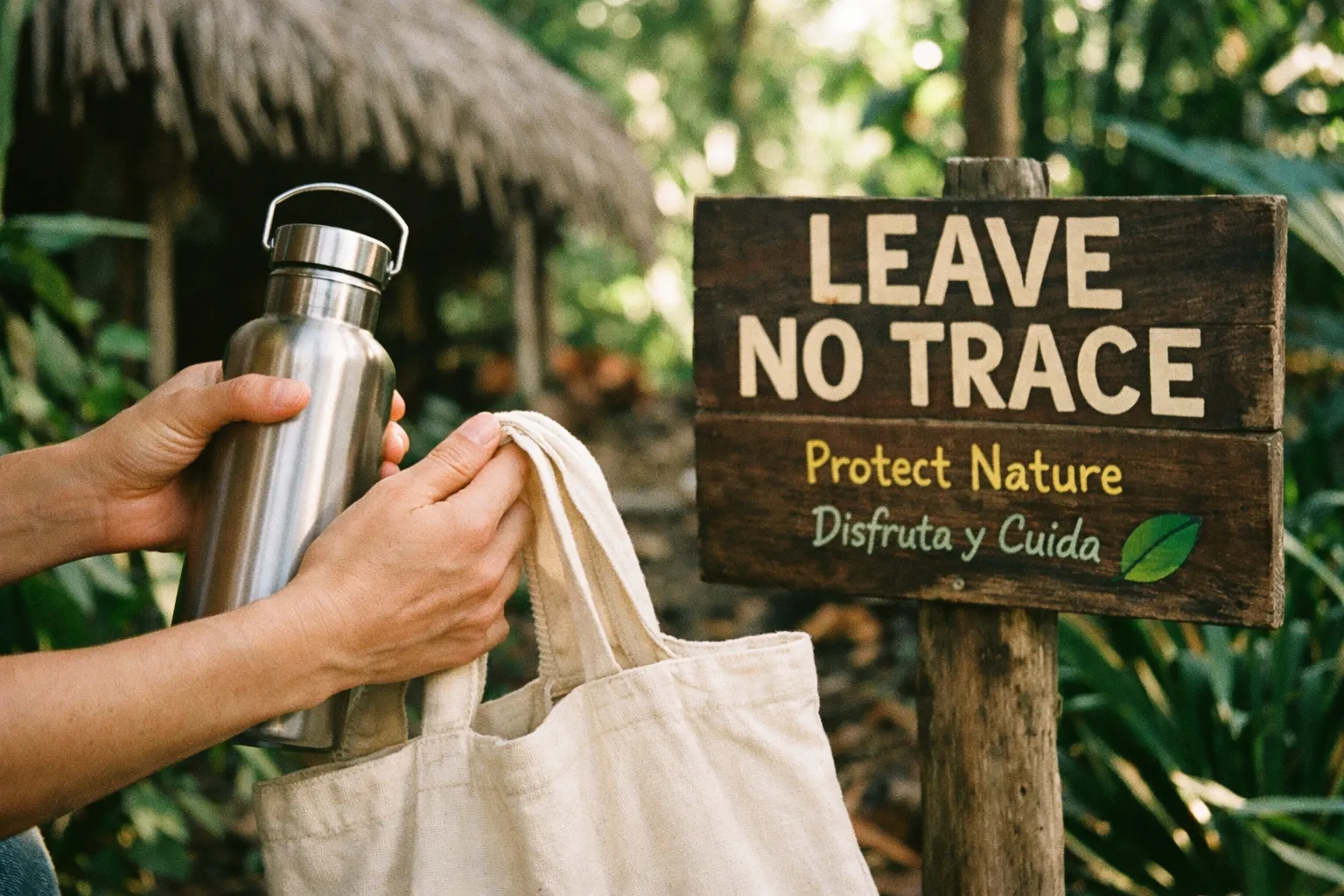
Reduce single-use plastic. Costa Rica set a goal of phasing out single-use plastics, though full implementation has lagged. Carry a reusable water bottle - tap water is safe in most of the country - a metal straw, and a small set of reusable cutlery. Refill stations are common in eco-lodges and many hostels.
Use ground transport between regions, not domestic flights. Sansa and Skyway domestic flights are tempting (San José to Drake Bay in 50 minutes vs. 8 hours by road), but the per-passenger emissions are significant. Shared shuttles cut emissions and cost.
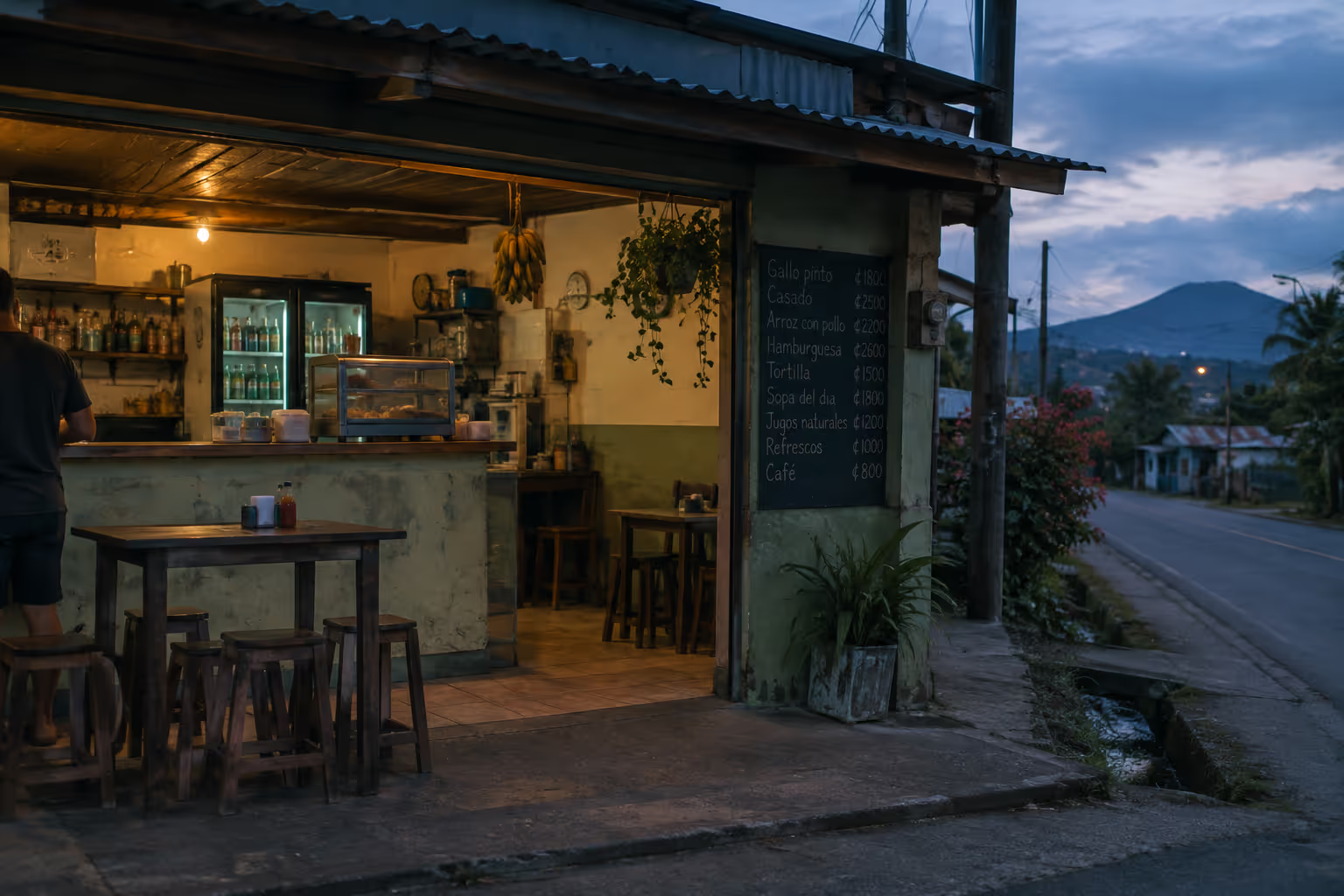
Eat at sodas. Family-run restaurants serve casado - rice, beans, plantain, salad, protein - for $6-9. The money stays local, the portions are honest, and the food is better than the resort buffet.
Buy from artisans directly. Boruca masks from the Boruca Indigenous community, Chorotega pottery from Guanacaste, coffee directly from cooperatives in Monteverde or Tarrazú. UNDP has been highlighting Indigenous-led tourism startups as a growing piece of the sector (5).
Respect wildlife distance. Use binoculars (8x42 is the standard birding spec). Don’t feed monkeys - habituated troops attack tourists and have to be relocated. Don’t touch sloths for photos; the stress measurably shortens their lifespan.
Tip guides well. $10-20 per person per tour for quality work. Guides are the front line of conservation funding in a way that lodges often aren’t.
Why is tourism declining in Costa Rica?
The premise needs a small correction. Tourism in Costa Rica isn’t declining structurally - UNDP and Mongabay both describe a market that’s growing and projected to more than triple in value by 2032 (1)(5). What’s actually happening is more nuanced:
- Cost concerns: Costa Rica has gotten more expensive than budget travelers expect, especially compared to Guatemala, Nicaragua, or Colombia for similar nature content
- Crowding at flagship destinations: Manuel Antonio, Monteverde, and La Fortuna can feel overwhelmed in peak weeks
- Mass tourism pressure: Cruise-ship arrivals at Puntarenas and Limón are creating sustainability concerns that experts say the country’s eco-brand can’t absorb indefinitely (1)
- A reputation shift, not a volume drop: the debate is whether the country can hold its “regenerative” credibility as visitor numbers climb
Some months show year-over-year dips tied to flight capacity or weather events, but the underlying trajectory is up. If you’ve read that tourism is “declining,” it’s usually a specific month or specific market segment, not the sector.
A realistic 7-day itinerary for Costa Rica ecotourism
Duration: 7 days / 6 nights
Total cost estimate (mid-range, per person): $1,800-2,400 including domestic transport, lodging, meals, park fees, and two guided tours. Excludes international flights.
7-Day Costa Rica Ecotourism Itinerary
7 daysA practical day-by-day plan covering three ecosystems with mid-range costs.
- 1
Day 1 - Arrive San José
Skip the city. Take an afternoon shuttle (3 hours, $55) to La Fortuna. Overnight Arenal area.
- 2
Day 2 - Arenal
Morning hike on the 1968 lava trail in the national park ($15 entry). Afternoon at Rio Chollin free hot springs or Ecotermales ($44). Overnight La Fortuna.
- 3
Day 3 - Transfer to Monteverde
Jeep-boat-jeep across Lake Arenal (3.5 hours, $30). Afternoon at the Monteverde Cloud Forest hanging bridges. Night walk with a licensed guide ($30-45). Overnight Monteverde.
- 4
Day 4 - Monteverde Cloud Forest Reserve
Dawn entry at 7:00 AM with a guide ($55 including entry). Quetzal sightings most likely January-July. Afternoon free for the Bat Jungle or a local coffee tour. Overnight Monteverde.
- 5
Day 5 - Transfer to Manuel Antonio
Shared shuttle (4.5 hours, $55). Beach afternoon at Playa Espadilla. Overnight Quepos area.
- 6
Day 6 - Manuel Antonio National Park
Early entry ($18.08, reserve online - walk-up tickets are no longer sold). Guided morning tour for wildlife ($35). Beach afternoon. Overnight Quepos.
- 7
Day 7 - Return to San José
Morning shuttle (3 hours, $50). Late afternoon international departure.
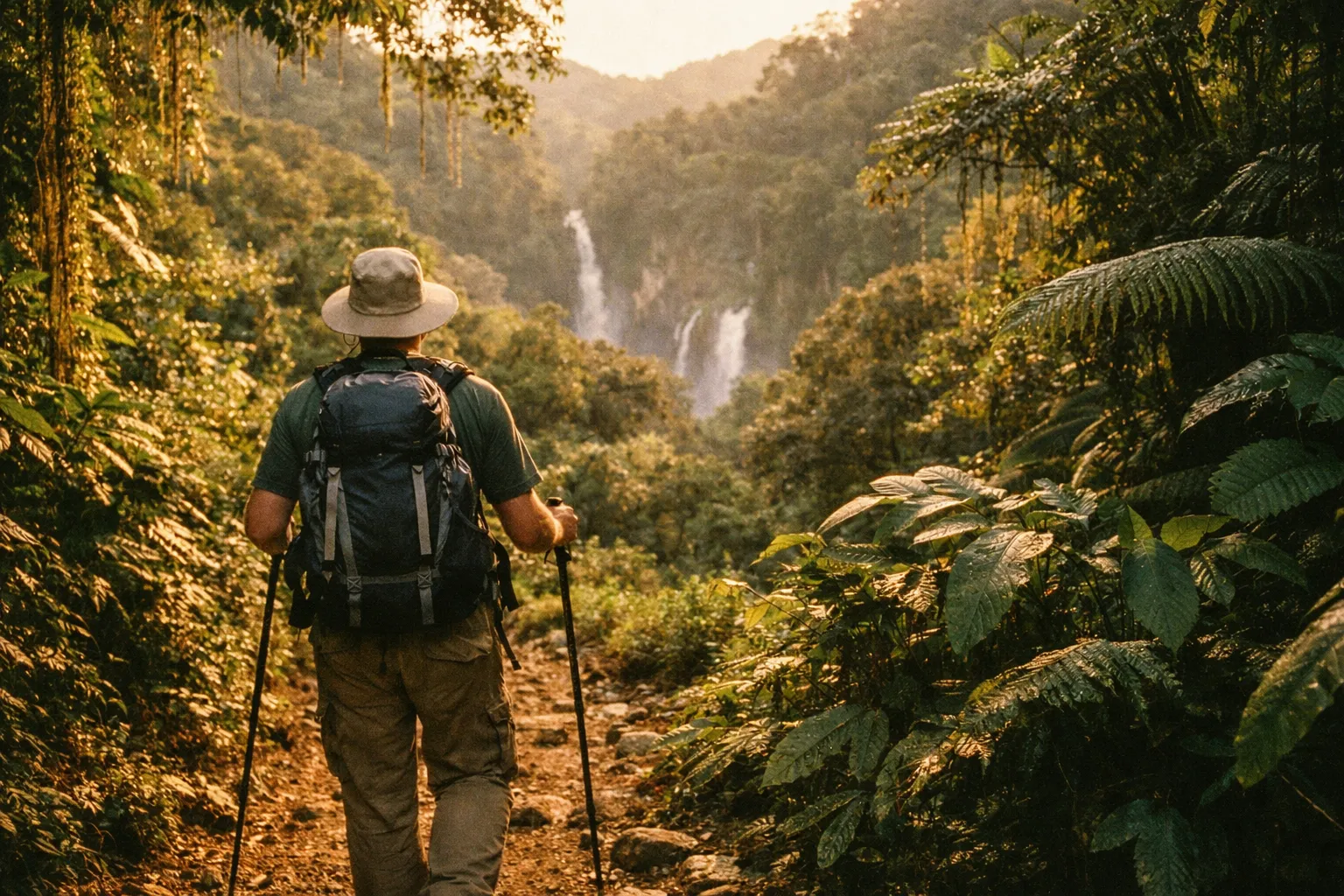
This routing covers three ecosystems - volcanic, cloud forest, and Pacific lowland rainforest - without burning a day on the road in any single transfer. For 10-14 days, add Tortuguero (boat-in only) between Days 1 and 2, or extend with the Osa Peninsula at the end.
FAQ
Frequently Asked Questions
- How can I distinguish a genuinely sustainable lodge from greenwashing?
- Look beyond the eco-label. Check if the lodge supports local communities, employs local staff, sources food locally, and invests in conservation or restoration projects. Transparency on revenue use is key.
- Are shared shuttles reliable for inter-region travel?
- Shared shuttles are generally reliable and cost-effective if booked in advance, but schedules can be affected by weather or road conditions, especially in the green season.
- What should I pack for wildlife viewing in Costa Rica?
- Bring binoculars (8x42 recommended), waterproof clothing for green season, sturdy hiking shoes, insect repellent, and a reusable water bottle to reduce plastic waste.
- Is tipping guides mandatory or just appreciated?
- Tipping is not mandatory but strongly encouraged. Guides rely on tips as a significant part of their income and conservation funding. $10-20 per person per tour is standard.
- Can I visit Tortuguero outside turtle nesting season?
- Yes, the canals offer rich wildlife viewing year-round, including caimans, river otters, and many bird species, making a 2-night stop worthwhile even off-season.
- Are zip-line tours environmentally damaging?
- It varies. Some operators contribute to conservation and use eco-friendly practices, but many are primarily adventure tourism. Research operators carefully and prioritize those with verified sustainability credentials.
- How far in advance should I book eco-lodges in peak season?
- Plan to book 3-6 months ahead for dry season travel (December to April), especially for remote lodges in Monteverde, Osa Peninsula, and Tortuguero.