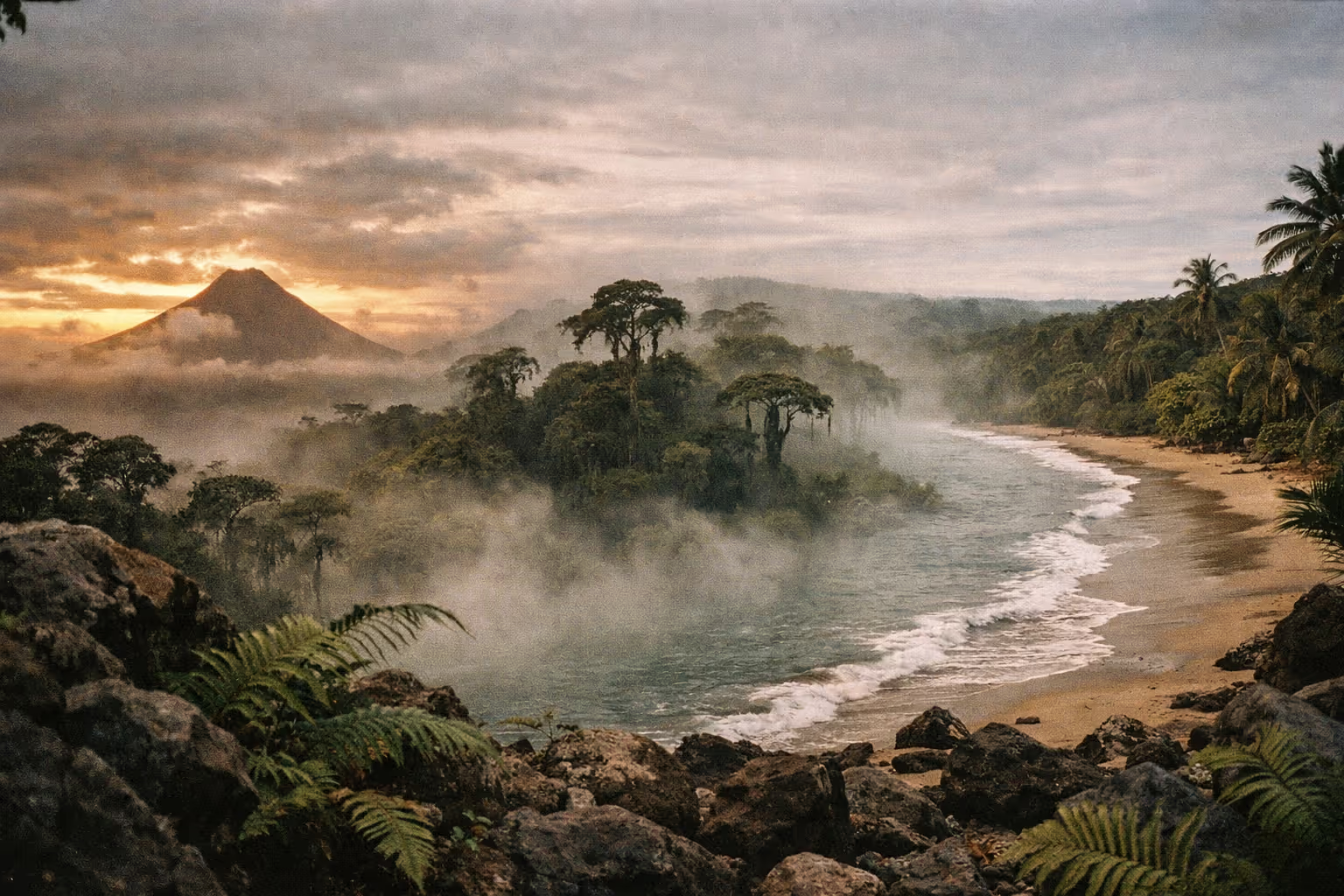
The classic Costa Rica volcanoes cloud forest and beaches itinerary is really one clean loop out of San Jose: up to La Fortuna for the Arenal cone, across to Monteverde’s cloud forest by the boat-jeep-boat shortcut, then down to Manuel Antonio’s beaches before circling back. Driven clockwise, it never doubles back on itself. The traps are all bookable ahead, since Manuel Antonio caps daily tickets and sells out, and the best hot springs take reservations only. Nail the route order and the rest is logistics.
The Triangle Route at a Glance: Map, Distances, and Drive Times
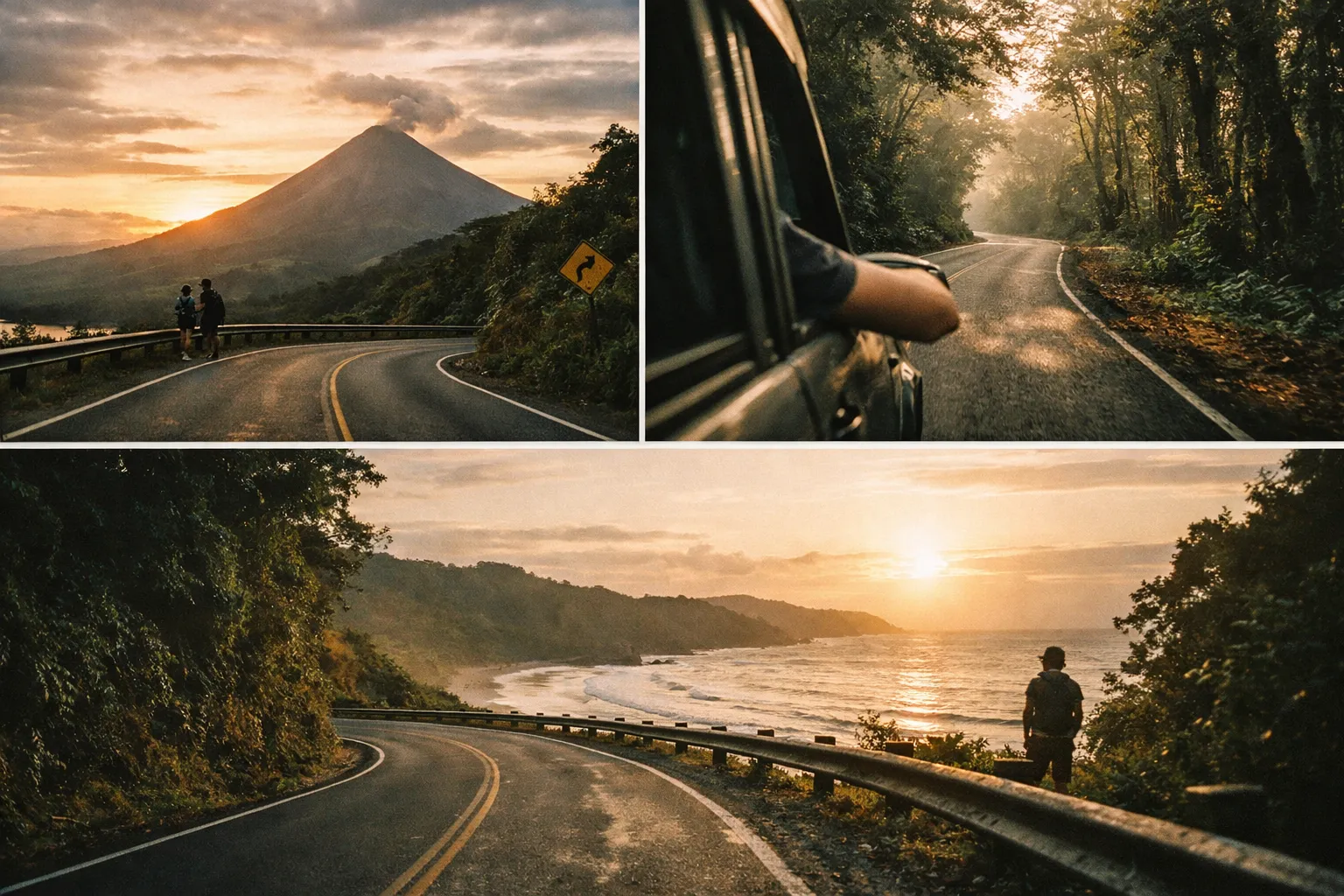
Planning a Costa Rica Volcanoes Cloud Forest and Beaches Itinerary often involves visualizing a rough triangle on Costa Rica’s northwest interior and Pacific coast: San José (SJO) at the bottom-right corner, La Fortuna/Arenal at the top, Monteverde on the left side mid-height, and Manuel Antonio at the bottom-left along the coast. Most travelers drive the loop clockwise - SJO → Arenal → Monteverde → Manuel Antonio → SJO - because it saves the easiest driving for the tired final day.
Drive times between the corners:
- SJO → La Fortuna: 2.5-3.5 hours, ~135 km. Route via Naranjo is faster; route via Vara Blanca passes Poás.
- La Fortuna → Monteverde: 3-3.5 hours by road, or about 3 hours via the Lake Arenal boat-jeep-boat transfer, which cuts out the worst mountain road.
- Monteverde → Manuel Antonio: 3.5-4.5 hours, ~185 km. The longest single drive on the loop (5).
- Manuel Antonio → SJO: 2.5-3 hours, ~170 km on Highway 27, the best-paved road in the country (5).
- Alternate: Monteverde → Tamarindo (Guanacaste) is 3.5-4 hours if you swap a Guanacaste beach for Manuel Antonio (1).
Worth the detour: the Lake Arenal crossing between Arenal and Monteverde. Same total time as driving, but you trade two hours of unpaved switchbacks for a scenic boat ride for roughly $30 per person. Skip if short on time: trying to also fit Tortuguero or the Caribbean coast into this loop. That’s a different climate, a different drive, and a different trip entirely.
Plan transfer days for morning departures so activities don’t compete with driving. Two to four hours behind the wheel is the norm between stops. I drove the Tilarán-to-Santa Elena stretch in October 2024 and a sedan would not have made the final 10 km without scraping bottom - afternoon rain in the mountains makes that approach genuinely rough.
Choosing Your Map: SJO Loop, LIR Loop, or One-Way
Where you fly into determines the shape of the trip. Most guides pick one and ignore the rest.
SJO loop (classic, used in this article’s itinerary). San José → Arenal → Monteverde → Manuel Antonio → San José. Best if you want the Manuel Antonio beach experience and the shortest final-day drive on Highway 27. Total loop distance: ~625 km. Works year-round.
LIR loop (Guanacaste-focused). Liberia → Arenal (2.5-3 hours) → Monteverde → Tamarindo or Playa Conchal → Liberia (1.5 hours from Tamarindo). Best if you want drier beaches and a shorter beach-to-airport leg. Skip Manuel Antonio entirely on this version. The northwest Pacific stays drier than the central Pacific in green season - a real advantage May through November.
One-way SJO → LIR (or reverse). San José → Manuel Antonio → Monteverde → Arenal → Liberia. No backtracking, but rental car drop-off fees run $40-$80, and one-way flights into one airport and out of the other can cost more. Worth it if you have 10+ days and want both coastlines.
Road quality matters here too. Highway 27 (SJO to the central Pacific) and the Pan-American (most of the LIR connections) are smooth paved roads. The Monteverde access road from either direction still has unpaved sections - better than five years ago, but a 4×4 remains the right call in green season (6). Download the offline map for the Tilarán-to-Santa Elena segment before you leave Wi-Fi; cell coverage drops in the mountains.
If you’re a visual planner, drop four pins on Google Maps - SJO, La Fortuna, Santa Elena (Monteverde), and Quepos/Manuel Antonio - and connect them in order. The triangle is the trip.
Arenal Volcano Things to Do: The Adventure Hub
La Fortuna is the town at the base of Arenal Volcano, a near-perfect 1,670 m cone that went dormant in 2010 after a 42-year active period (2). If you arrived expecting glowing lava: it’s not happening. What you get instead is a textbook stratovolcano view, a forested national park, geothermally heated rivers, and the densest concentration of adventure tourism in Costa Rica.
Plan 2-3 nights here. Best month to visit: February or March - driest weather, clearest summit views, lowest mosquito pressure. Avoid late September through mid-October if you actually want to see the cone.
Worth the Detour
- Arenal Volcano National Park - entrance ~$15 per adult. The 1968 Lava Trail and Las Coladas trail are the better hikes; the main park loop is short and easy.
- Mistico Hanging Bridges - $26-$35 self-guided, more with a naturalist. Six suspension bridges through primary rainforest. Go at 7 AM for wildlife; by 10 AM it’s a parade of day-trippers.
- La Fortuna Waterfall - $18-$20, 500 steps down to a 75 m cascade (4). Swim at the base, then climb back up. Bring water.
- Río Celeste day trip (Tenorio Volcano National Park, ~2 hours each way) - the turquoise river is real, but only when the minerals are active. Worth it if you have an extra day.
Skip if Short on Time
- The “Arenal 1968” private trail if you’re already doing the national park - overlapping content.
- Most chocolate-and-coffee combo tours. They’re filler. Pick one or the other.
Adventure Activities and Current Prices
- Zipline / canopy tours: $60-$85 per person. Sky Adventures and Ecoglide are the main operators.
- White-water rafting: Balsa River (Class II-III, family-friendly) $65-$90 with transport and lunch; Sarapiquí (Class III-IV) for experienced rafters.
- Canyoning / waterfall rappelling: $100-$130 with Pure Trek or Desafío. The standout adrenaline activity in the area.
- Sloth-spotting walks: $30-$50 with a guide and spotting scope. You will not find sloths on your own - pay for the guide.
- Night walks: $35-$50. Frogs, snakes, kinkajous. Adds genuinely new wildlife to your trip (1).
Arenal Hot Springs: How to Choose Without Overpaying
The arenal hot springs are heated by the same magma chamber under the volcano, and the resorts have stacked the riverbed with pools at different temperatures. Day passes range from $44 to over $95 depending on whether meals and spa access are included.
What most guides get wrong here: they recommend whichever resort has the best affiliate program. Here’s the actual breakdown.
- Tabacón Thermal Resort & Spa - $90+ day pass with lunch or dinner. The original, with the most natural-feeling river setup and the best landscaping. Worth it once.
- The Springs Resort - $80+ day pass, multiple pool levels, family-friendly with slides. Best if you have kids 8+.
- Baldi Hot Springs - $54 day pass, 25 pools including slides and swim-up bars. Crowded, less natural-feeling, but the best value if you just want to soak.
- EcoTermales - $44, reservation only, capped at 100 visitors at a time. The quietest option and my pick if you want the experience without the resort feel.
- Free option: the public stretch of the Río Chollín under the bridge near Tabacón. Bring water shoes and don’t leave valuables in the car.
Booking note: EcoTermales requires phone or in-person booking 24+ hours ahead in high season. Most others take same-day reservations, but Saturday afternoons fill up December through April. Evening entry (4-9 PM) at the bigger resorts thins the tour-group crowds and often comes bundled with dinner for $80-$120 - better value per hour than a daytime pass.
Monteverde Cloud Forest Reserve Guide: What to Know Before You Go
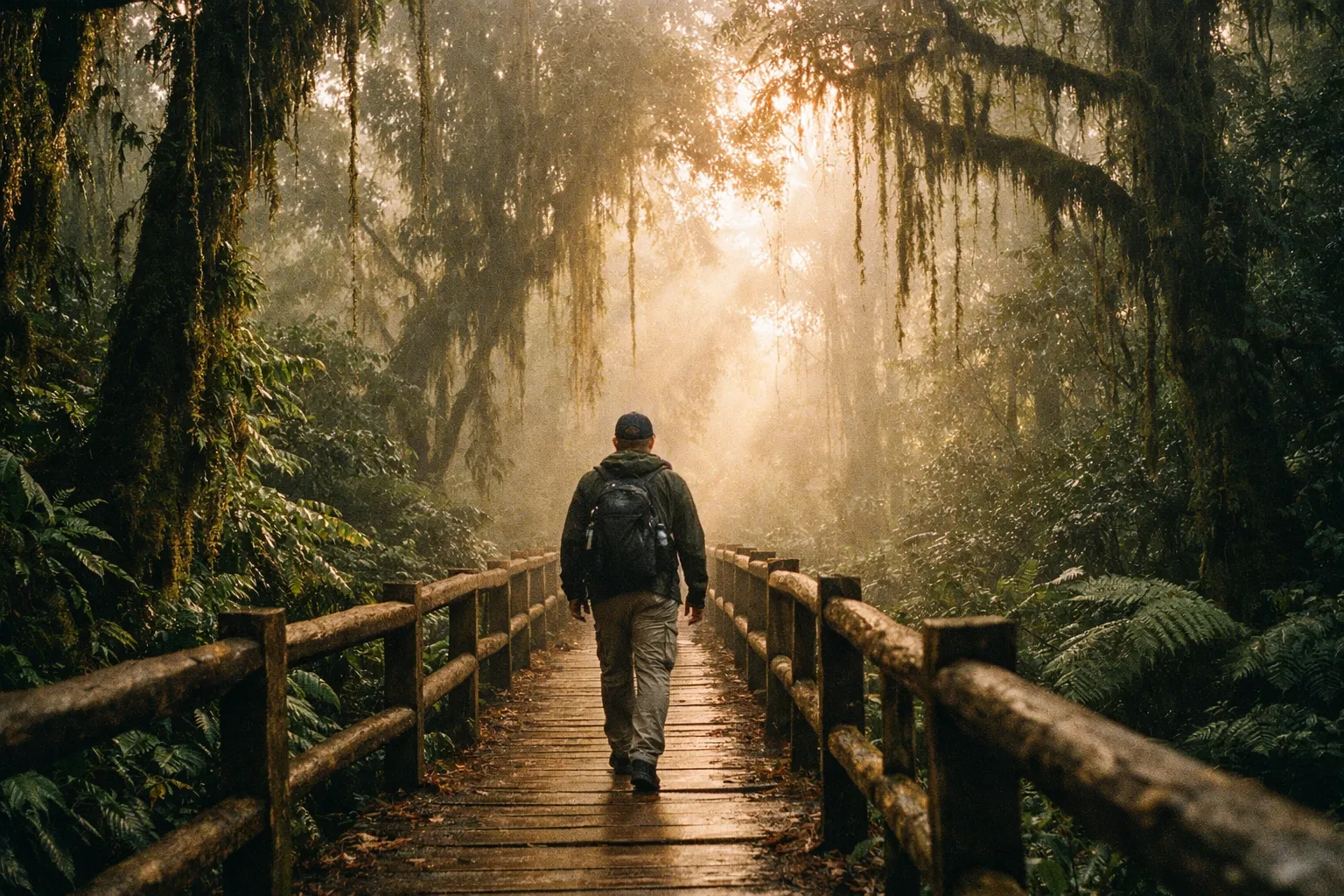
This monteverde cloud forest reserve guide covers the three protected areas, where to stay, and which tours actually move the needle. The main Monteverde Cloud Forest Biological Reserve protects high-elevation forest along the Continental Divide, with more than 400 recorded bird species including the resplendent quetzal. At 1,400-1,600 m elevation with rainfall often exceeding 2,500 mm annually (4), it’s cold, wet, and frequently fogged in. Pack a fleece and a rain shell - I’ve seen too many travelers shivering in tank tops at the trailhead, and that’s a fixable mistake.
Plan 2 nights here. Best months: January through March for clearer views and quetzal nesting season (December-April). Green season works too, but expect afternoon rain by 1 PM most days.
Reserves and Entrance Fees
There are actually three protected areas around the town of Santa Elena, and tourists confuse them constantly:
- Monteverde Cloud Forest Biological Reserve - $25-$30 entry, ~13 km of trails, the most famous of the three. Best for the iconic suspension bridge and the highest chance of quetzal sightings with a guide.
- Santa Elena Cloud Forest Reserve - about $16, smaller crowds, similar ecosystem, often better views on clear days because of its higher elevation.
- Children’s Eternal Rainforest (Bosque Eterno de los Niños) - best known for its Bajo del Tigre night walk, $25-$40, the top wildlife tour in town.
Where to Base
Stay in Santa Elena town for restaurants, cheaper lodging, and walking access to outfitters. Stay closer to the reserve gate (Cerro Plano) if you want dawn birding without driving. The road from Santa Elena to the reserve is 6 km and takes 20 minutes on a good day.
Worth the Detour
- Guided morning walk at the main reserve - $25-$35 added to entry. Worth it. Guides carry scopes and will find a quetzal in 30 minutes that you wouldn’t find in three hours alone.
- Selvatura or Sky Adventures hanging bridges - different from Arenal’s, set in cloud forest. Pick one or the other, not both. $40-$50.
- Ziplining - Monteverde invented canopy tours. Selvatura’s 1 km cable and Sky Trek’s high cables are the standouts, $50-$85.
- Bajo del Tigre night walk - see the forest at its most active. Wear closed shoes.
Skip if Short on Time
- The Butterfly Garden and Hummingbird Gallery as standalone visits - they’re fine, but redundant if you’re already doing a guided forest walk.
- The Curi-Cancha Reserve if you’re tight on time: good for birding but covers similar ground to the main reserve.
Costa Rica Nature Highlights: What This Route Captures (and What It Misses)
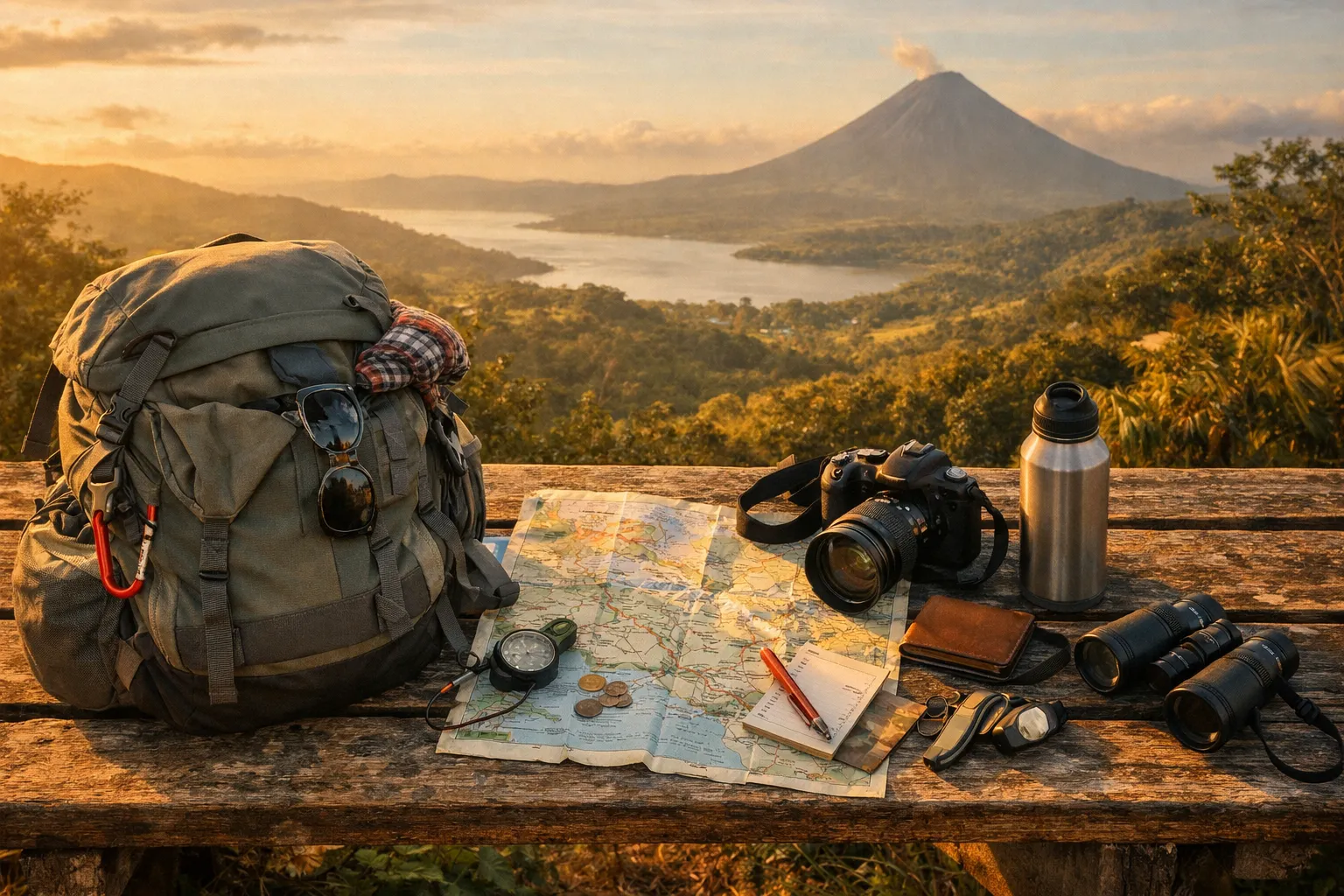
The triangle hits the headline Costa Rica nature highlights: an active volcanic system, primary cloud forest with neotropical fauna, and Pacific dry forest meeting coastline. Between Arenal and Manuel Antonio alone you can reasonably expect to see howler and capuchin monkeys, two- and three-toed sloths, coatis, agoutis, scarlet macaws in the Manuel Antonio area, and 100+ bird species without trying particularly hard.
What this route misses: Tortuguero (Caribbean canal system, sea turtles) and the Osa Peninsula / Corcovado (the most biodiverse area in the country). Both require committed detours. If you want either, build a separate trip. Squeezing Tortuguero into a 10-day triangle leaves you with 6 hours per stop and a permanent frown. The Osa Peninsula loop is covered separately. For a deeper look at the country’s unforgettable experiences beyond this triangle, the full range of wildlife, culture, and adventure is worth exploring before you finalize your plans.
Manuel Antonio National Park Beaches and Wildlife
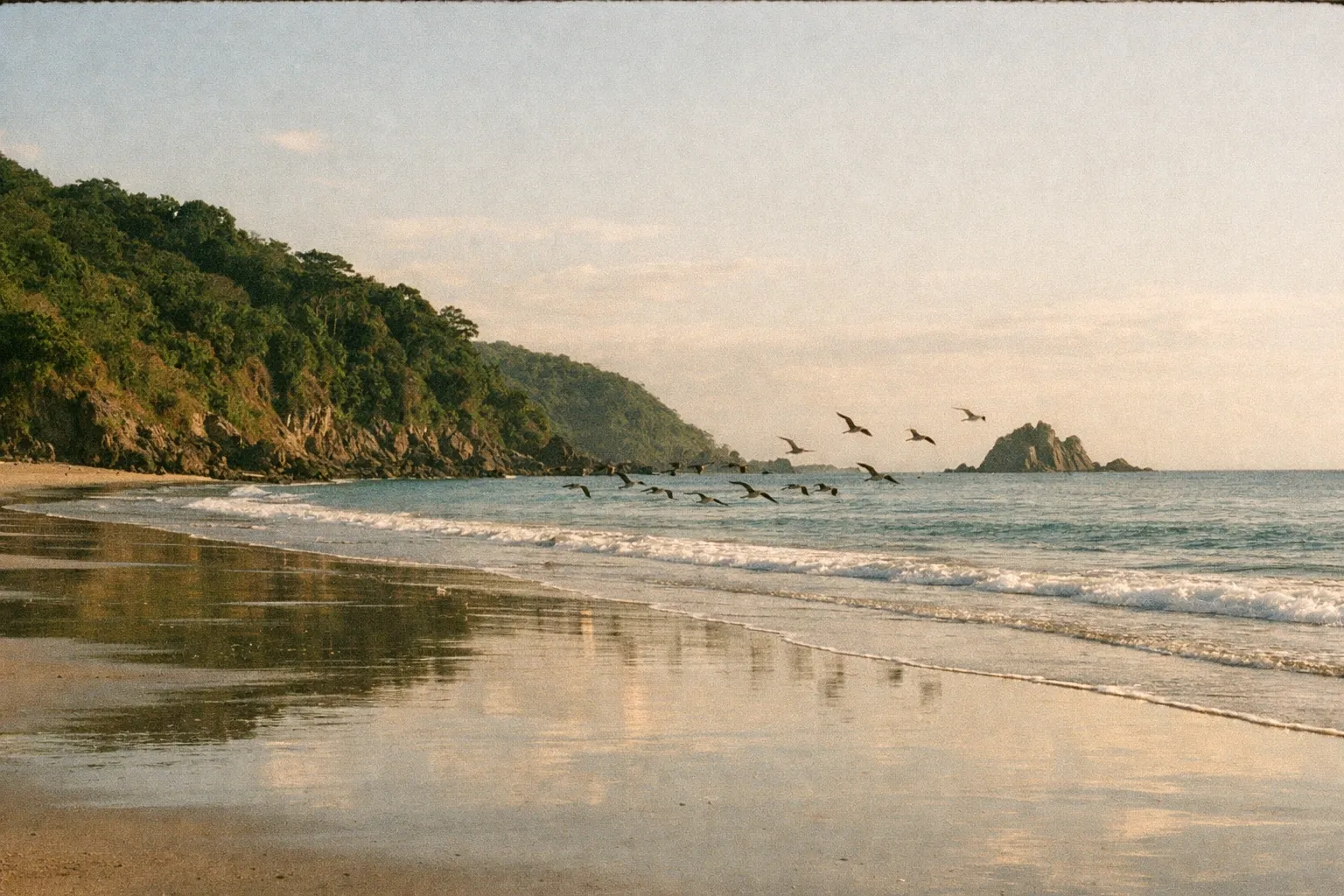
The manuel antonio national park beaches are why this stop is on the loop. The park covers ~2,000 hectares of land plus ~55,000 hectares of marine area - one of the country’s smallest parks by land, and consistently one of its most visited. The pitch is simple: rainforest trails that end at white-sand beaches, with reliable wildlife along the way.
Plan 3 nights here for two beach days and one park day. Best months: December through April for dry beach weather. The park stays open year-round, but September-October sees the heaviest rain.
The Beaches Inside the Park
- Playa Manuel Antonio - the postcard cove. Calm, swimmable, capuchins overhead. Best snorkeling at low tide.
- Playa Espadilla Sur - long, less crowded, good for walking.
- Playa Gemelas and Playa Puerto Escondido - smaller, quieter, requires a bit more walking.
Go to the farthest beaches first in the morning and work your way back as the day-trippers arrive at the main entrance (5). Capuchins will steal food directly from your bag - keep snacks zipped and don’t feed them. It’s enforced now.
Booking Mechanics for Manuel Antonio (This Changed Recently)
Tickets must be purchased in advance through the official SINAC online portal with a defined entry time. The daily visitor cap sits around 1,600 people on regular days, and tickets routinely sell out 48+ hours ahead in high season. Entry fee is $18 per adult for foreigners. The park is closed Tuesdays. Ignore the “guides” at the gate insisting you must hire them - you don’t, though a real guide with a scope ($25-$30 per person joining a group) genuinely improves wildlife spotting.
Aim for the 7 AM opening. By 10 AM the heat is up, wildlife retreats into the canopy, and the trails fill with cruise-ship groups.
Outside the Park
Playa Espadilla (just outside the park entrance) is the public beach for sunset, surfing lessons, and beach bars. Quepos, 7 km north, is where the marina, ATMs, and big grocery store are. If you’re weighing whether to extend your stay along the Costa Rica’s beaches further up or down the Pacific coast, the central Pacific has several quieter options within an hour’s drive.
Worth the Detour
- Mangrove kayak tour in Damas Estuary ($65-$80) - easy paddle, lots of wildlife.
- Catamaran sunset cruise ($75-$95 with food and open bar).
- Surf lesson at Playa Espadilla ($50-$60 for two hours).
Skip if Short on Time
- The “Rainmaker” canopy walk - fine, but you’ve done hanging bridges twice already by this point.
Sample 8-Day Costa Rica Volcanoes, Cloud Forest and Beaches Itinerary
8 daysA practical day-by-day plan including activities and transfers.
- 1
Day 1: Arrival and Transfer to Arenal
Fly into San José (SJO), pick up your rental car, and drive approximately 3 hours to La Fortuna. Overnight in Arenal.
- 2
Day 2: Hanging Bridges, Waterfall, and Hot Springs
Visit Mistico Hanging Bridges in the morning, La Fortuna Waterfall after lunch, and relax at EcoTermales hot springs in the evening.
- 3
Day 3: Volcano Park or Rafting, Sloth Tour or Night Walk
Choose between hiking Arenal Volcano National Park or white-water rafting on the Balsa River in the morning. In the evening, go on a sloth-spotting tour or a night walk.
- 4
Day 4: Transfer to Monteverde
Take the Lake Arenal boat-jeep-boat transfer to Monteverde (about 3 hours). Enjoy the Bajo del Tigre night walk in the afternoon.
- 5
Day 5: Cloud Forest Walk and Adventure Activities
Join a guided morning walk at Monteverde Cloud Forest Reserve, then go ziplining or visit hanging bridges in the afternoon.
- 6
Day 6: Drive to Manuel Antonio
Drive approximately 4 hours to Manuel Antonio. Spend the afternoon at Playa Espadilla beach.
- 7
Day 7: National Park and Water Activities
Visit Manuel Antonio National Park early morning, then choose between a mangrove kayak tour or a catamaran sunset cruise.
- 8
Day 8: Return to San José and Departure
Drive back to San José (about 3 hours) and catch your flight home.
Rental Car vs Shuttles: What Actually Works
A 4×4 rental is the right call for this route 80% of the time. Base rates run $45-$70/day for compact cars and $70-$120/day for SUVs, plus mandatory local insurance ($10-$30/day) that no online booking quote includes upfront. Budget the full insured rate, not the headline number.
Shared shuttles run $40-$60 per person per leg between SJO, Arenal, Monteverde, and Manuel Antonio. For two people doing the full loop that’s roughly $400-$500 total - competitive with a rental for a week, and you skip driving on rough roads. Tradeoff: fixed schedules and no spontaneous side trips.
Private transfers run $160-$260 per leg. Worth it only for families with 4+ people or travelers with mobility concerns.
Rent a 4×4 if you want flexibility and you’ll do the Monteverde road. Take shuttles if you don’t want to drive at all. Don’t mix - one-way rentals between SJO and LIR get expensive fast.
When to Go and What It Costs
- Dry season (December-April): clearest weather on the Pacific, best beach conditions, peak prices. Hotels run 20-40% higher and book out months ahead for Christmas and Easter.
- Green season (May-November): afternoon rain most days, lush landscapes, 15-30% lower lodging prices, fewer crowds. September and October are the wettest months and worth avoiding for this specific itinerary - the Monteverde road is at its worst and beach days get washed out.
- Shoulder sweet spots: late April-early May and late November-early December. Decent weather, lower prices, manageable crowds. My pick if you have any flexibility on dates.
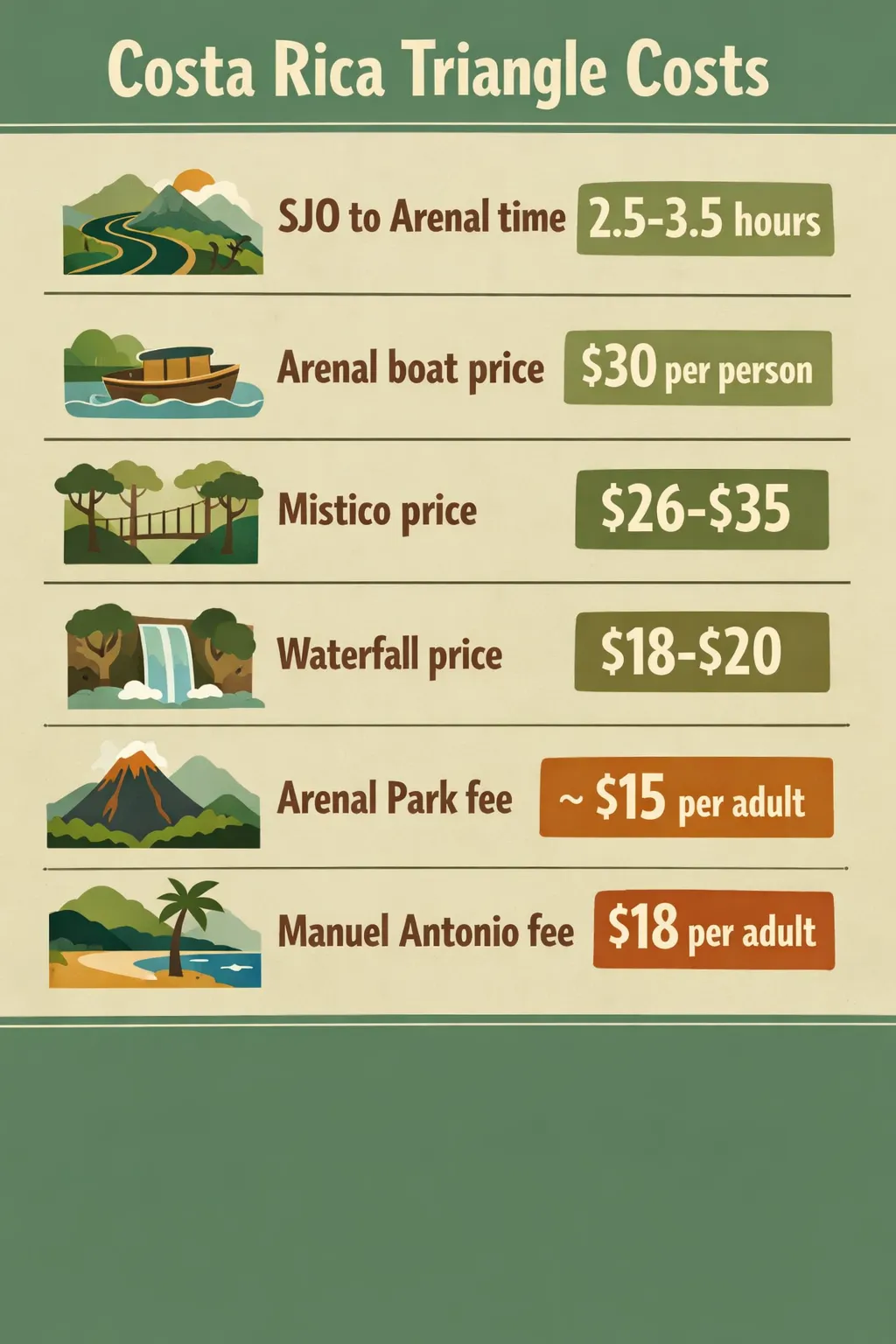 Drive times and key fees along the SJO triangle itinerary, including Arenal, Monteverde, and Manuel Antonio prices.
Daily budget benchmarks per person, excluding flights:
- Budget self-drive: $80-$120/day.
- Mid-range with rental, private rooms, 1-2 tours/day: $150-$250/day.
- Comfort guided package: $1,700-$2,500 for 8 days (2).
Expect another 10-20% bump over older guidebook prices for park fees and tours - across-the-board inflation since 2020 hit Costa Rican tourism hard. Travelers considering expert-led adventure tours that bundle volcano hikes, cultural stops, and transfers often find the per-day cost competitive once you factor in the logistics savings.
Common Mistakes on This Route
- Underestimating drive times to Monteverde. Google Maps lies about the final 30 km. Add 30% in dry season, more in wet.
- Booking Manuel Antonio tickets at the gate. The park frequently sells out. Buy online a week ahead in high season.
- Expecting visible lava at Arenal. It’s been dormant since 2010 (5). The cone view at sunset is genuinely impressive on its own merits - adjust expectations before you arrive.
- Visiting Monteverde mid-day in shorts. The cloud forest sits at 1,400-1,600 m and runs 55-65°F with horizontal mist (4). Layers and a rain shell, not flip-flops.
- Cramming Tortuguero into 7 days. It’s an 8-hour boat-and-bus commitment each way. Save it for a separate trip.
- Driving Monteverde-to-Manuel-Antonio in the dark. Don’t. Leave by 10 AM at the latest.
- Overpaying for last-minute shuttles. Book transfers 3-5 days ahead and you’ll save 30%.
Entry, Insurance, and Practical Logistics
US, Canadian, UK, and EU passport holders can enter visa-free for up to 90 days, with proof of onward travel and a passport valid for the trip’s duration. No yellow fever vaccine required unless arriving from a country where it’s endemic.
Travel insurance covering adventure activities is non-optional for this itinerary. Standard policies often exclude ziplining, canyoning, and white-water rafting unless specifically added. World Nomads and IMG Global both cover these by default.
Money: USD is accepted everywhere tourists go, but you’ll get worse exchange rates than paying in colones. ATMs are reliable in La Fortuna, Santa Elena, Quepos, and Tamarindo. Tip 10% at restaurants if service isn’t already included.
Health: Tap water is generally safe in La Fortuna, Monteverde, and Quepos. Use 20-30% DEET in lowland areas - dengue exists, especially on the Pacific coast.
Connectivity: Buy a Kolbi or Claro SIM at SJO airport for $10-$15 with 5-10 GB. Coverage drops in the Monteverde mountains and on parts of the Manuel Antonio drive - download offline maps before you leave Wi-Fi.
Frequently Asked Questions
- Can I combine this itinerary with Tortuguero or the Osa Peninsula?
- Both Tortuguero and the Osa Peninsula require dedicated trips due to their distance and logistics. Trying to add them into this 7-10 day triangle results in rushed stops and long drives. Plan separate trips for these regions.
- What is the best way to book park tickets and tours?
- Always buy Manuel Antonio National Park tickets online through the official SINAC portal well in advance, especially in high season. For tours like ziplining or rafting, booking 1-2 weeks ahead secures availability and better prices.
- Is it necessary to have a guide in the cloud forest or national parks?
- Guides are optional but highly recommended for wildlife spotting, especially for elusive species like the resplendent quetzal or sloths. They carry scopes and know the best trails, enhancing the experience significantly.
- How reliable are road conditions and driving times?
- Road conditions vary seasonally. The Monteverde road is rough and slow, especially in the wet season. Afternoon rains can make some mountain roads slippery. Plan morning drives and allow buffer time.
- What should I pack for the cloud forest?
- Bring layers including a fleece and rain shell. Temperatures range from 55 to 65°F with frequent mist. Avoid shorts and flip-flops; closed shoes and waterproof gear are essential.
- Are there free or low-cost alternatives to hot springs?
- Yes, the public stretch of Río Chollín near Tabacón offers free hot spring access. Bring water shoes and be prepared for minimal facilities.
Book Manuel Antonio tickets the same day you book your flight. Lock down Monteverde lodging 2-3 months out for dry season. Pack a fleece and a rain shell regardless of what month you’re going. Drive the loop clockwise, keep to morning departures, and don’t try to add a fourth region. That’s the trip.