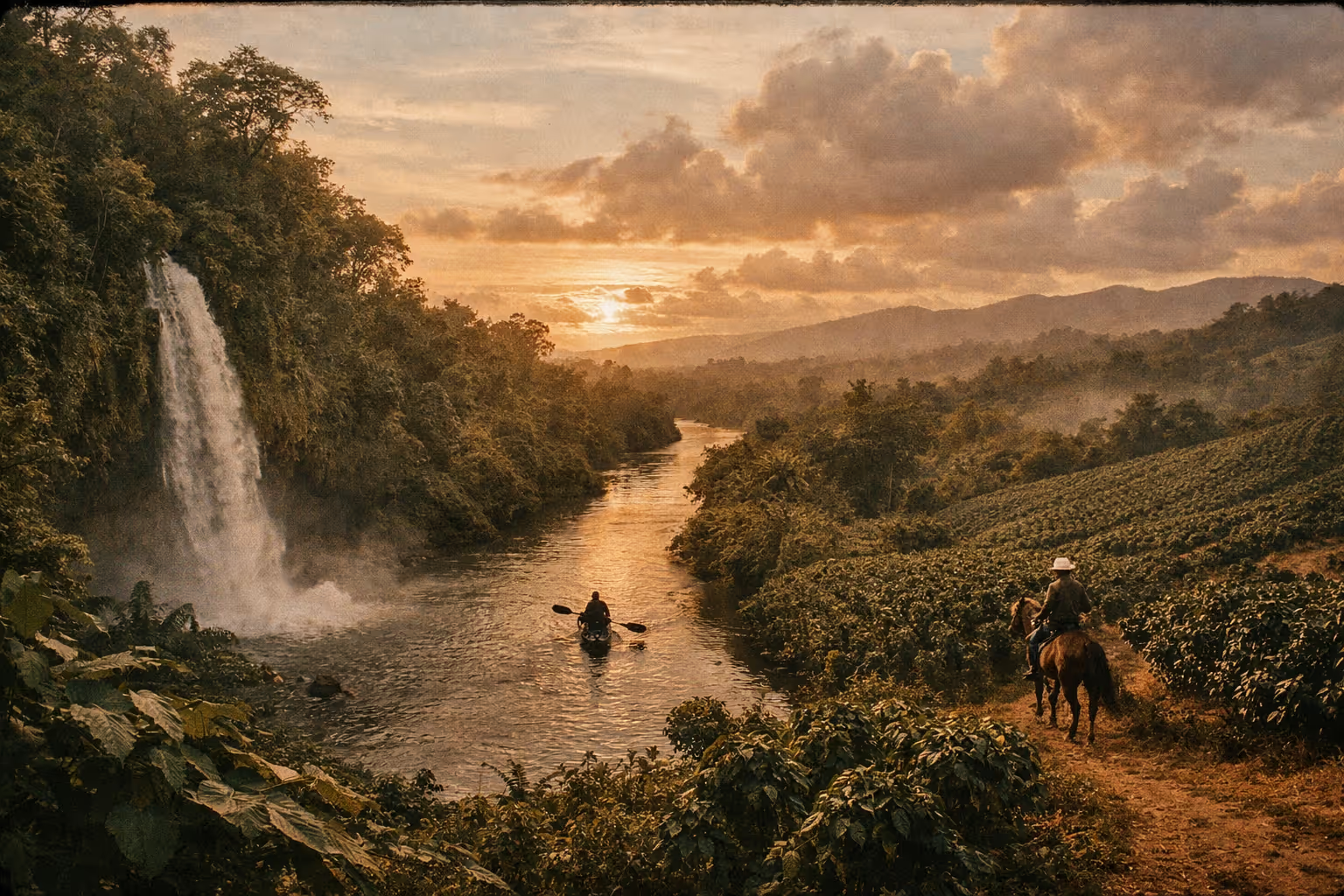
Costa Rica waterfalls are scattered, but they group into three drivable circuits, which is the trick to seeing the good ones without living in your rental car. La Fortuna is the crowd-pleaser at 500-odd steps, Rio Celeste the stunner, though its famous turquoise vanishes to muddy brown after heavy rain, so time it for a dry stretch. Nauyaca rewards the 7:30 opening and a hike-in, truck-out ticket. Pick one circuit, chase the falls that actually flow clear, and skip the rest.
The Best Costa Rica Waterfalls Worth Building a Trip Around
Costa Rica holds roughly 5% of the planet’s species (6) in a country you can drive across in a day. Its waterfalls range from roadside swimming holes to slot-canyon hikes that require a guide. The country logged roughly 2.5-3 million annual visitors in recent years, and the top falls - La Fortuna, Rio Celeste, Nauyaca - absorb most of that traffic. Below are the ones worth building a trip around, ranked by whether they justify a detour or can be skipped if you’re short on days. Budget roughly $150-300 per person per day for a mid-range trip combining park entries, guided tours, transport, and accommodation.
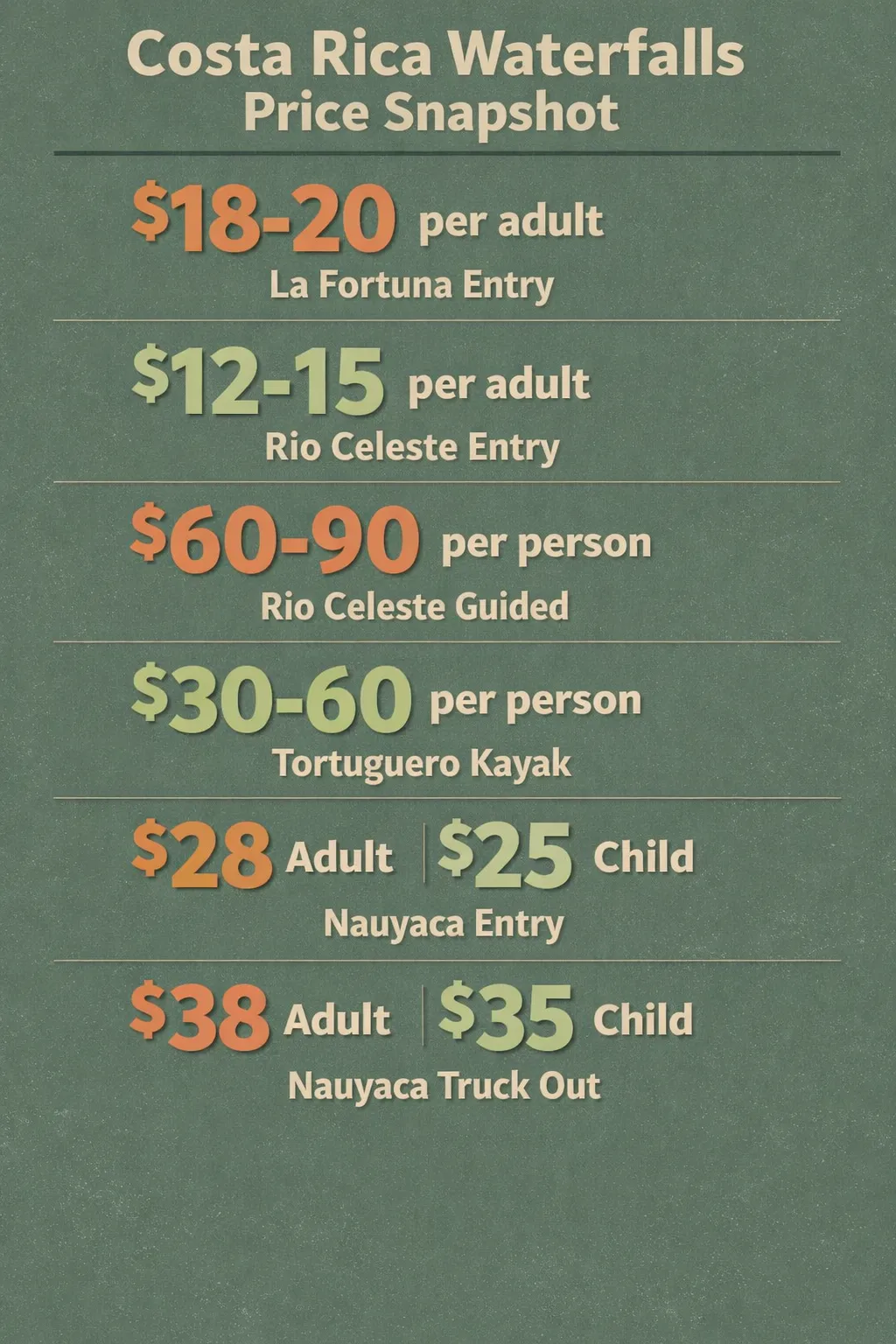 Prices shown reflect waterfall entries and tours for Costa Rica’s top falls.
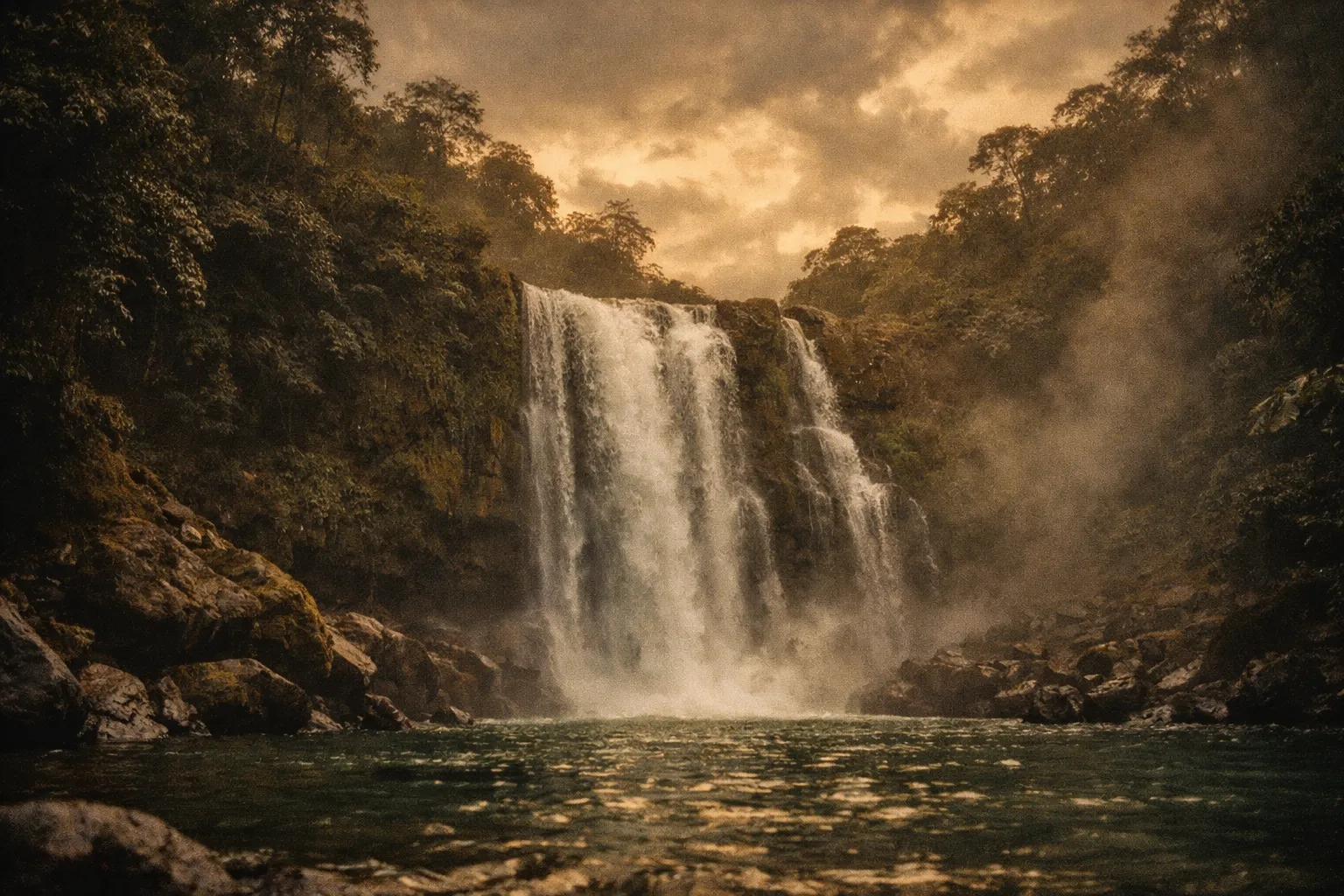
La Fortuna Waterfall (Alajuela Province) - worth the detour. The classic jungle plunge: a single 70-75 m (230-246 ft) drop into a deep pool at the base of Arenal Volcano (3,9). Entry runs about $18-20 per adult (7), and reaching the base means descending 500-600 steps - then climbing them back out. From La Fortuna town, budget 2-4 hours including swimming and photos. Pair it with the area’s thermal hot springs and you have a full, efficient day without any dead time.
Rio Celeste Waterfall (Tenorio Volcano National Park) - worth the detour. If you want the single most photogenic shot in the country, this is it. The water turns an unreal turquoise where two rivers meet and minerals react (7,6,9). The Tenorio hike runs 3-4 hours round trip, with national park entry around $12-15 per adult for foreigners; guided visits with transport from La Fortuna or Liberia run $60-90 per person (9,8). One catch most guides bury: after sustained heavy rain, the river loads up with sediment and goes brownish. The turquoise you’re chasing isn’t guaranteed (6,7). I’d time this for a stretch of drier days, not the morning after a downpour.
Nauyaca Waterfalls Costa Rica (near Dominical) is worth the detour. Two tiers - an upper drop of about 45 m (148 ft) and a wide lower cascade around 20 m (66 ft) with a swimmable pool (1,7). This is the South Pacific’s headline falls, and the access mechanics are specific enough that they get their own section below.
La Paz Waterfalls Costa Rica (Alajuela, near Poás Volcano) - worth it if you want easy access. La Paz Waterfall Gardens strings five waterfalls along a 2.2-2.5 mile network of paved trails and stairs, plus a wildlife sanctuary. It’s the most family-friendly option near San José - guardrails, clear signage, no route-finding required. Entry sits around $50-60 per adult in recent years (confirm at booking) (7). Less wild than the others, but the most reliable option for travelers with kids or limited mobility.
La Leona Waterfall (Curubandé, Guanacaste) - worth the detour for active hikers. A turquoise slot-canyon falls reached via a 3-4 km hike with wading and short swims, usually done with a guide because of the currents (9). The tourism board lists it among the country’s top picks for a reason.
Montezuma Waterfalls Costa Rica (Nicoya Peninsula) - worth it if you’re already in Nicoya. A three-tiered cascade a short walk from Montezuma town, pairing naturally with the quiet beaches and tide pools of the southern peninsula. The cliff-jump culture here is real, and so are the injuries. Only jump where it’s clearly permitted and where locals are actively doing it.
Catarata El Rey (Puriscal, La Cangreja National Park) - skip unless you’re chasing superlatives. The national tourism board calls this the largest waterfall in Costa Rica. Getting there requires a long jungle trek with limited services. The effort-to-payoff equation only works for advanced hikers who specifically want to say they’ve seen the biggest.
How to reach the waterfall regions
Most of these falls cluster into three drivable circuits:
- Arenal/La Fortuna corridor: La Fortuna Waterfall plus Rio Celeste (about 2-3 hours each way to Tenorio), with La Paz an easy day trip on the route back toward San José.
- South Pacific: Nauyaca, near Dominical and Uvita, roughly a 4-hour drive from San José.
- Guanacaste: La Leona and the Oropendola/La Cangreja falls around Rincón de la Vieja, plus Montezuma down on the Nicoya tip.
A 4×4 or high-clearance vehicle is strongly recommended for Nicoya, Rio Celeste access, and Guanacaste back roads during the rainy season (May-Nov) (2). I tested the Nicoya routes after rain - the unpaved stretches turn greasy fast, and a low-clearance rental will leave you parking and walking further than you planned.
Nauyaca Waterfalls Costa Rica: logistics and timing
Nauyaca earns its own section because the access mechanics genuinely change your day. The Nauyaca Waterfall Nature Park in San Salvador de Barú is open 7:30 a.m.-4:30 p.m. daily, with last entrance at 2:30 p.m. and the last truck leaving the lower area at 4 p.m. (1). Show up late and you’re looking at a steep hike out in fading light.
Pricing breaks down like this (1):
- Entrance + self-guided hike: $28 adult, $25 child (ages 3-11)
- Hike in + truck out: $28 adult (same price - you skip the brutal climb back)
- Truck both ways: $38 adult, $35 child
The hike-in, truck-out combo is the smart call. You save $10 versus riding both ways, get a scenic downhill walk while it’s still cool, and avoid the steepest climb when you’re tired and waterlogged (1). Allow 4-6 hours total from the Dominical area, and arrive at opening (7:30-8:00 a.m.) for thinner crowds, easier parking, and better light on the lower pool (1).
Kayaking through Tortuguero canals
Tortuguero’s canal system is a genuine maze - narrow waterways threading through lowland rainforest, with caimans on the banks and frigate birds skimming the surface. It’s quieter than most of Costa Rica’s adventure options, which is exactly the point. A Tortuguero National Park tour by kayak or canoe typically runs 2-3 hours and costs $30-60 per person for a half-day small-group trip with a guide and basic gear (7).
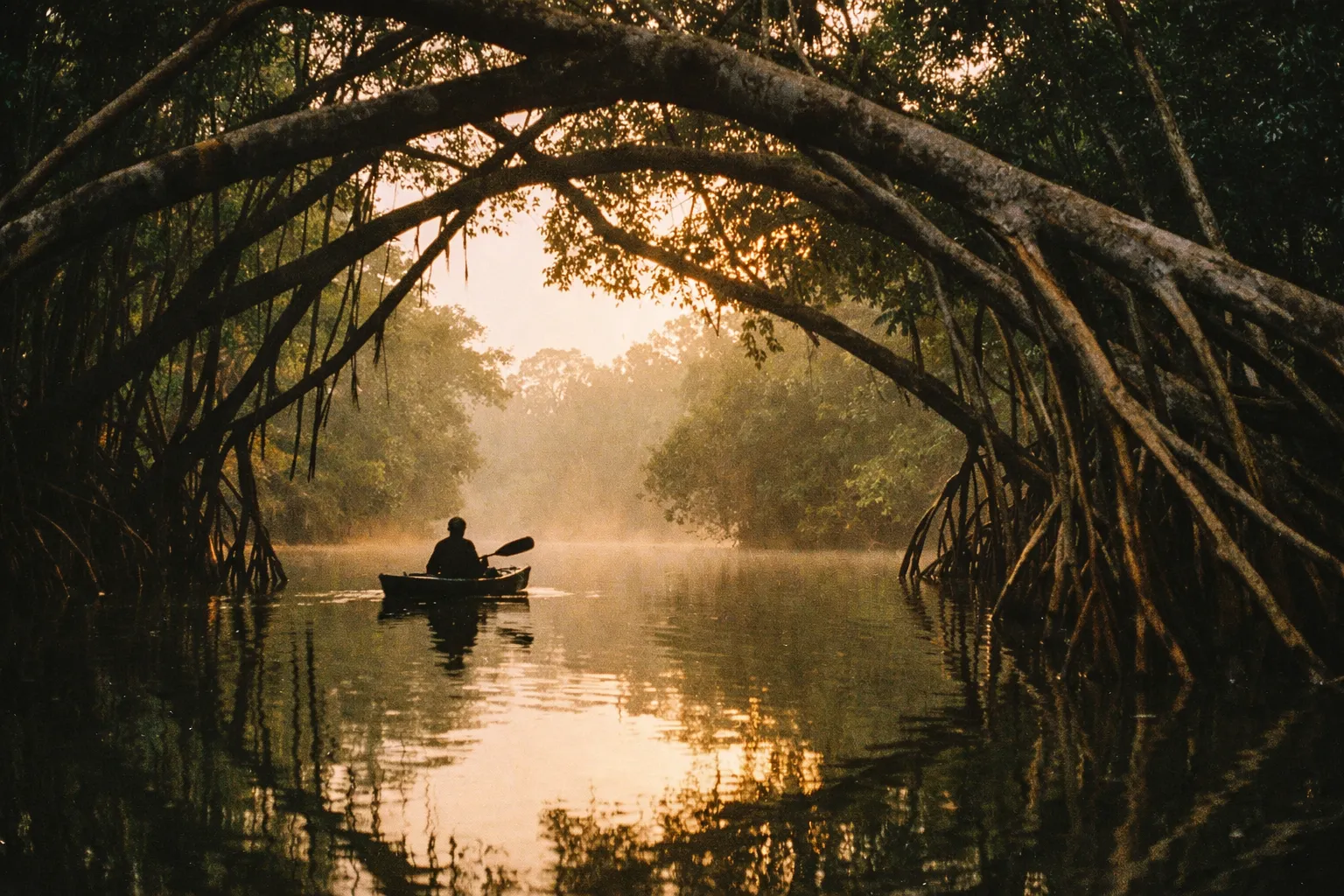
Book morning departures. Wildlife is most active early, the water is calmer, and afternoon thunderstorms are common in the rainy season (May-Nov) (2,8). Most visitors stay 2-3 nights, combining one or two paddle tours with a turtle-nesting tour in season (July-October on the Caribbean side) and time in the village.
One thing most guides get wrong: they pitch Tortuguero as something you can do independently. Don’t self-navigate these canals. The waterways form a genuine maze, currents shift, and you’re sharing the water with wildlife you’d rather observe than surprise (8,9). Go with a guide.
White-water rafting on the Sarapiquí River
The Sarapiquí doesn’t have the name recognition of the Pacuare, but it’s a solid entry point for first-timers. The lower-difficulty sections run Class II-III, which works for families with strong swimmers and anyone who hasn’t been in a raft before. A half-day Sarapiquí trip runs $60-90 per person including transport, gear, and a guide.
If you want the country’s flagship run, that’s the Pacuare River - rated Class III-IV, with 4-5 hours on the water and an 8-10 hour day overall (7). Full-day Pacuare trips from San José or La Fortuna run $90-130 per person including transport, gear, and lunch. Save it for confident swimmers who are comfortable with sustained rapids. The Pacuare is legitimately good, not just well-marketed.
Horseback riding through coffee plantations
The Central Valley and Monteverde highlands are where most coffee plantation rides are based, and the combination works well - you’re moving slowly enough through the rows of coffee bushes to actually absorb what you’re looking at, and the farmers who lead these tours tend to know their land in a way that a walking tour doesn’t quite replicate. Elevations in the Central Valley coffee belt run 1,200-1,800 m (roughly 3,900-5,900 ft), which means cooler mornings, lower humidity, and better riding conditions than the coast. Costa Rica produces around 89,000 metric tons of coffee annually, with the Central Valley and Tarrazú accounting for the bulk of the specialty-grade output - context that makes the plantation stop feel less like a tourist add-on and more like a legitimate look at one of the country’s primary export industries.
Combo tours pairing 2-3 hours of riding with a coffee tasting typically run $70-120 per person, depending on group size and whether lunch is included. The Dota Valley south of San José and the slopes around Naranjo are two of the more accessible areas for these tours - both within 90 minutes of the capital. Ride in the morning, and you can fold in a nearby river or smaller waterfall the same afternoon without the day feeling rushed. Monteverde-based operators often combine the ride with a canopy or hanging-bridges tour in the afternoon, which keeps the day efficient if you’re only spending one night in the highlands. For travelers who want to dig into the culinary side of the trip, the plantations are a good entry point - don’t miss the chance to explore the top culinary delights of whatever region you’re in.
Secluded beaches to pair with the waterfalls
The waterfalls slot naturally into a coastline itinerary if you base yourself well. The Nicoya Peninsula - Montezuma and Santa Teresa - and the Osa Peninsula offer less-developed sand that combines with nearby cascades (3,7,8).
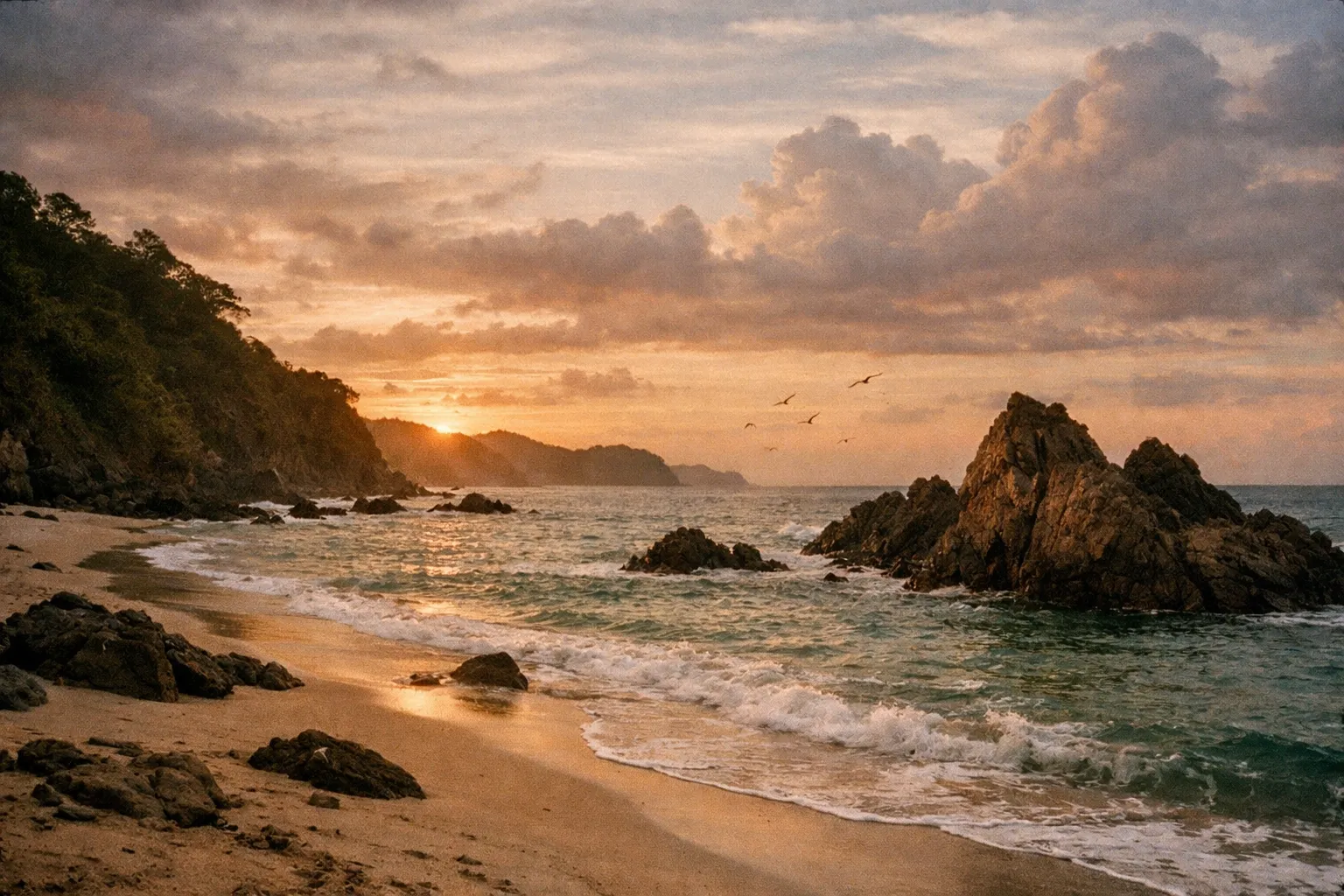
- Nicoya (Montezuma, Santa Teresa): Quiet beaches and tide pools a short walk from the Montezuma waterfalls. For calmer accommodations, book 1-3 km out of the town center - you still get walkable access to restaurants and tour desks without the noise.
- South Pacific (Dominical, Uvita, Osa): Pair Nauyaca with the less-crowded beaches near Dominical and Uvita, then push further into the Osa Peninsula for genuine remoteness.
I drove the Osa region last October and the unpaved access roads after rain are no joke - several crossings near Dominical were passable only with high clearance. Plan beach-and-waterfall days for the morning, when Pacific-side rain tends to hold off until afternoon.
How to plan a realistic waterfall-and-adventure trip
The most common mistake is the over-packed itinerary: Tortuguero, Pacuare rafting, Rio Celeste, and both coasts in seven days. You end up spending the trip in transfers. Here’s how to keep it sane.
- Budget the heat, not just the distance. The stair climbs at La Fortuna, Nauyaca, La Leona, and Rio Celeste are short on the map but brutal in midday humidity (1,3). Go early.
- Read the rain right. Forecast rain icons usually mean short afternoon bursts, not all-day washouts (2). Book waterfall hikes, rafting, and kayaking for the morning, and you’ll rarely lose a full day.
- Book the popular spots ahead. Post-pandemic, Costa Rica is back to roughly 2.5-3 million annual visitors with tourism above 8% of GDP, and demand at the top falls has climbed. Reserve Nauyaca truck slots, La Paz tickets, and Pacuare rafting in advance (8,9).
- Check park rules close to departure. Tenorio (Rio Celeste) and Rincón de la Vieja periodically adjust daily visitor caps, online reservation systems, and entrance fees.
Minimum fitness for the marquee falls is comfortable walking of 3-6 km with steep stairs. Pack closed-toe shoes or grippy sandals, a dry sack for kayaking and rafting, and an IPX7-rated phone case so you can actually photograph the falls without worrying about the spray.
How to Plan a Waterfall and Adventure Trip in Costa Rica
About 3 hoursStep-by-step approach to building a realistic itinerary that balances adventure and logistics.
- 1
Choose 3-4 anchor destinations
Focus your trip on a few key areas such as Tortuguero for kayaking, Arenal for La Fortuna and Rio Celeste, and the South Pacific for Nauyaca and beaches.
- 2
Book popular activities and park entries in advance
Reserve spots for Nauyaca truck rides, La Paz Waterfall Gardens, and Pacuare rafting to avoid sold-out days.
- 3
Plan hikes and activities for the morning
Avoid afternoon heat and rain by scheduling waterfall hikes, kayaking, and rafting early in the day.
- 4
Rent a 4×4 or high-clearance vehicle if visiting Nicoya or Guanacaste
Ensure access to rough roads especially during the rainy season (May-Nov).
- 5
Pack appropriate gear
Bring closed-toe shoes or grippy sandals, a dry sack, and waterproof phone protection for photographing waterfalls.
✓ Pros
- Waterfalls range from roadside swims to slot-canyon hikes - something workable for most fitness levels
- Three drivable circuits (Arenal, South Pacific, Guanacaste) let you cluster multiple falls into 2-3 day bases without constant transfers
- Nauyaca truck-out option cuts the brutal return climb - strong logistics value for the effort
- Tortuguero kayaking is genuinely quieter than most Costa Rica adventure options - wildlife density without the crowds
- Coffee plantation horseback rides double as a slow-travel cultural stop - efficient use of a half-day
✗ Cons
- Rio Celeste turquoise is not guaranteed after heavy rain - sediment load can kill the shot you came for
- La Paz Waterfall Gardens entry ($50-60) is steep for what is essentially a managed wildlife park with paved trails
- Catarata El Rey (largest falls) requires a long jungle trek with limited services - poor effort-to-payoff for most itineraries
- Tortuguero is not self-navigable - mandatory guide adds cost and limits spontaneous timing
- Rainy season (May-Nov) unpaved roads on Nicoya and Osa can close access entirely without a 4x4
Frequently asked questions
Frequently Asked Questions
- Can I visit the waterfalls independently without guides?
- Some waterfalls like La Fortuna and La Paz are accessible independently, but others such as La Leona and Tortuguero canals require guides due to safety and navigation challenges.
- What vehicle is best for accessing remote waterfalls in the rainy season?
- A 4×4 or high-clearance vehicle is strongly recommended for Nicoya, Rio Celeste, and Guanacaste back roads during May to November to handle muddy and slippery conditions.
- Is it possible to combine coffee plantation horseback rides with other activities in one day?
- Yes, morning horseback rides can be paired with an afternoon visit to a nearby river or smaller waterfall without rushing the day.
- How reliable is the turquoise color at Rio Celeste?
- The turquoise hue depends on mineral reactions and can be muddied by heavy rain. Timing your visit during drier stretches improves your chances of seeing the iconic color.
- Are the Nicoya Peninsula beaches walkable from Montezuma waterfalls?
- Yes, beaches and tide pools are a short walk from Montezuma waterfalls. For quieter stays, accommodations 1-3 km outside town offer calm without sacrificing access.
- What is the best time of year to visit for clear waterfalls and good trail conditions?
- It depends on what you're optimizing for. The dry season (December through April) gives you better trail conditions, less mud, and more predictable access roads - the practical choice for most itineraries. The rainy season (May through November) produces fuller, more dramatic water flow at every fall in the country. Rio Celeste and Nauyaca both hit peak volume in the wet months. The trade-off: trails get slick, unpaved roads can close, and afternoon downpours are routine. If you want the best-looking waterfalls and can handle the logistics, shoulder months like November or late April split the difference reasonably well.