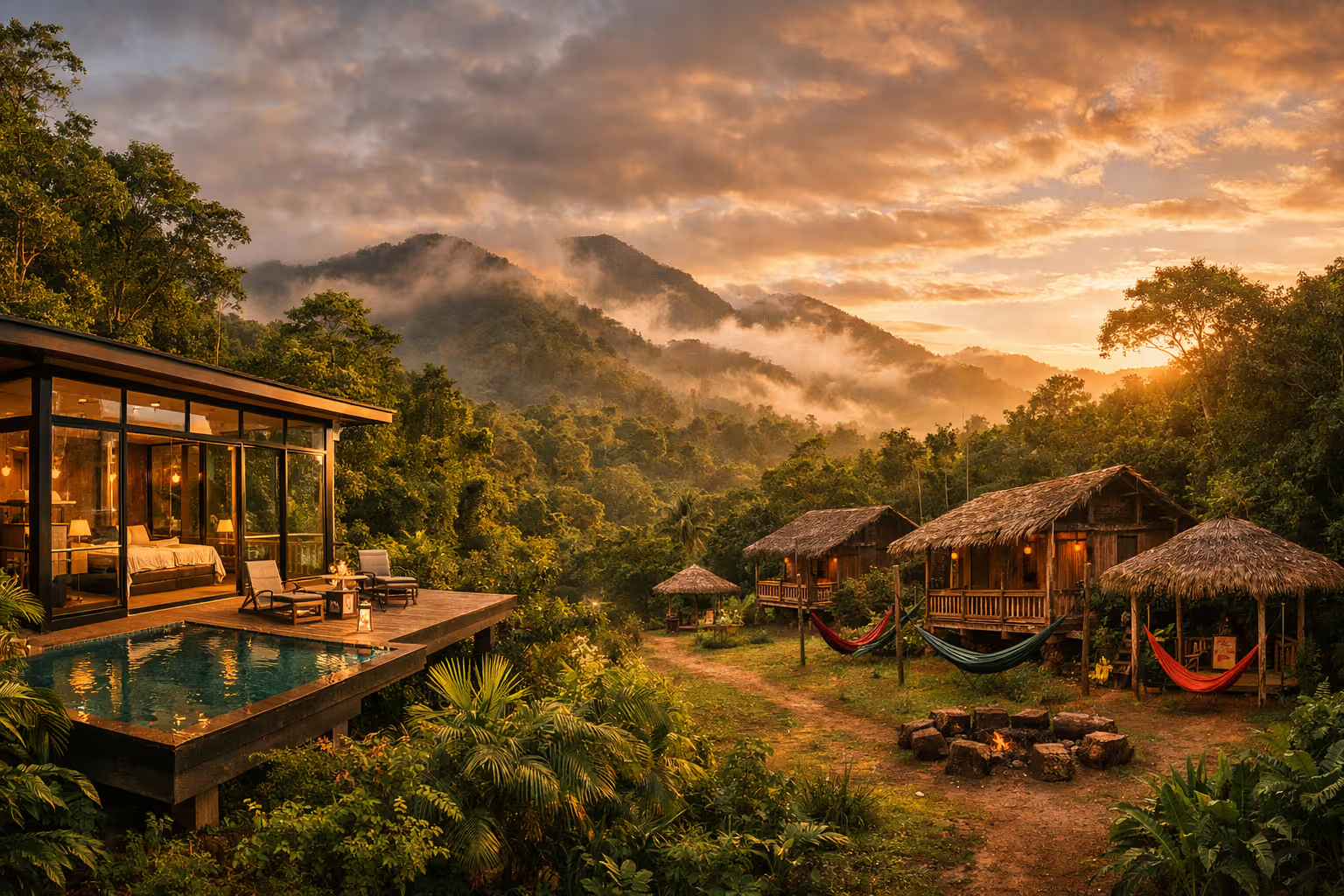
The best eco lodges in Costa Rica span an enormous range, from a 60 dollar cabin to a 1,200 dollar open-air suite on the Osa, and the price tells you almost nothing about how green the place actually is. The only reliable signal is the country’s CST leaf rating: four leaves means real compliance, five means near-total, and plenty of properties slapping eco on the sign have neither. The smart money splits the trip, a few luxury nights against a week of honest mid-range.
How to Tell the Best Eco Lodges in Costa Rica Apart from Greenwashing
Finding the best eco lodges in Costa Rica requires more than trusting the “eco” label many properties use. The national Certification for Sustainable Tourism (CST) rates properties from 0 to 5 leaves, with specific percentages: 1 leaf means 20-39% compliance, 2 leaves 40-59%, 3 leaves 60-79%, 4 leaves 80-94%, and 5 leaves means 95%+ compliance across environmental and social criteria (3). The CST is managed by the Costa Rican Tourism Board and updated every two years to reflect evolving sustainability standards.
The CST evaluates five areas: the physical-biological environment, the “service plant” (waste, energy, and water systems), service management, client involvement, and the socioeconomic environment - meaning whether the lodge hires locally and supports nearby communities (3). The program is updated every two years, and recent revisions have pushed lodges toward solar energy, grey-water treatment, and on-site organic gardens (3). According to the Costa Rican Tourism Board, about 25-30% of the country’s 1,400-plus hotels market themselves as eco-friendly, but only a fraction achieve a 4- or 5-leaf rating, indicating genuine sustainability.
Here’s what most guides get wrong: they list a property as “eco” without ever naming its leaf count. Roughly 25-30% of Costa Rica’s 1,400-plus hotels market themselves as eco-friendly, riding the country’s push to be carbon-neutral with 100% renewable electricity. Far fewer carry a 4- or 5-leaf rating. I’ve seen properties with a single decorative leaf on their website that score a 1 on the actual CST scale. Shortlist using the Costa Rica Tourism Board’s CST directory and filter for 4-5 leaves before you book anything calling itself a costa rica rainforest lodge. This filtering step is crucial to avoid greenwashing and ensure your stay supports genuine sustainability efforts.
Luxury Eco Lodges in Costa Rica: What $500-$1,200 a Night Buys
The luxury eco lodges Costa Rica is known for cluster in three regions: the Osa Peninsula, Bajos del Toro in the central highlands, and the Golfo Dulce near Golfito. These are small, low-density properties - usually 6 to 17 units - built for immersion rather than resort amenities.
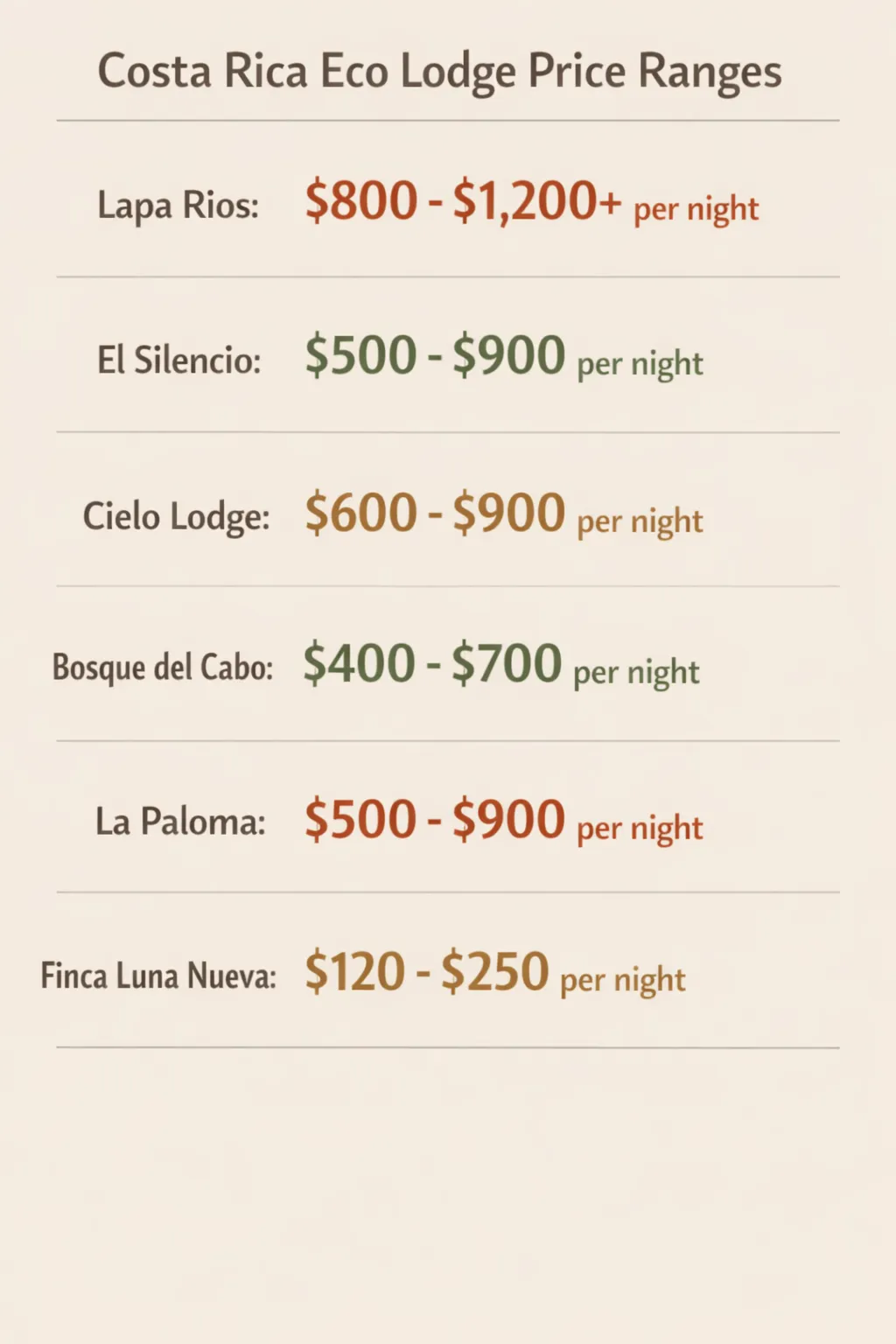 Six Costa Rica eco lodges price ranges: Finca Luna Nueva $120-$250; Bosque del Cabo $400-$700; Lapa Rios $800-$1,200+; El Silencio $500-$900; Cielo $600-$900; La Paloma $500-$900.
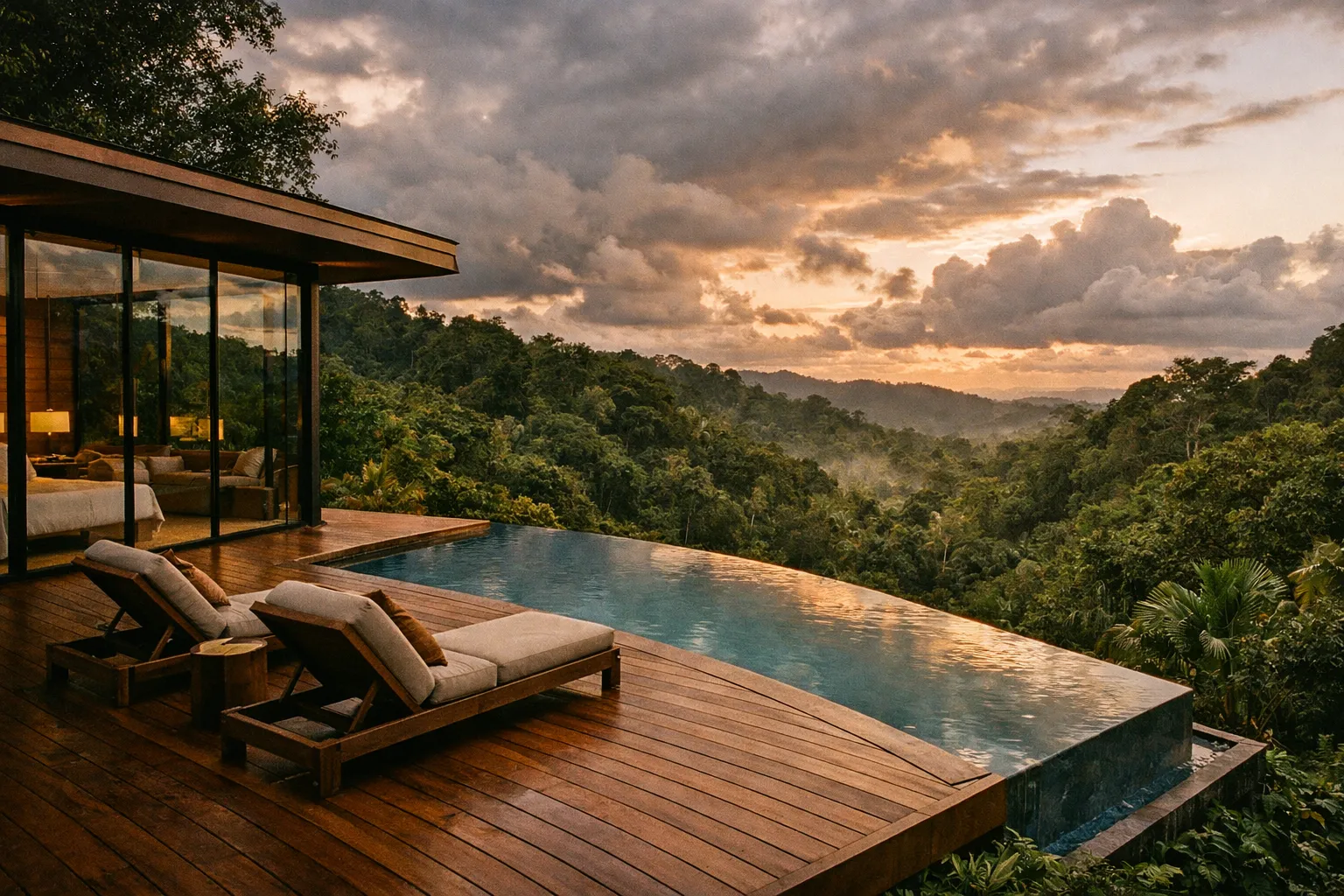
Worth the detour:
- Lapa Rios Ecolodge, Osa Peninsula - 17 bungalows on a 1,000-acre private rainforest reserve adjacent to Corcovado National Park. Rack rates run roughly $800-$1,200+ per night for two adults in high season, but the price includes three à la carte meals daily, snacks, non-alcoholic beverages, guided tours, and Puerto Jiménez airport transfers (2). For wildlife density, this corner of the Osa is hard to beat.
- El Silencio Lodge & Spa, Bajos del Toro - cloud-forest suites with private hot tubs, typically $500-$900 per night in peak season. Easier to reach than the Osa lodges, with waterfalls and trails on-site.
- Cielo Lodge, Golfito - seven open-air luxury suites above the Golfo Dulce, generally $600-$900 per night including farm-to-table meals and curated nature experiences (1). The open-air design means fans and natural ventilation, not air conditioning - a deliberate choice, not a shortcoming.
Worth it if you’re already on the Osa:
- Bosque del Cabo Eco Lodge - cliff-top bungalows, $400-$700 per night with half- or full-board (5).
- La Paloma Lodge, Drake Bay - ocean-view bungalows, $500-$900 per night with meals and some tours.
Post-pandemic demand has pushed peak rates 10-25% higher than three or four years ago at Lapa Rios, La Paloma, and El Silencio, so book early if you want a specific room category (2)(5).
One trade-off to understand before you commit: most of these properties use open-air construction, fans, and screened walls. If your idea of luxury requires sealed, air-conditioned rooms, an eco lodge will disappoint you - that’s not what you’re paying for. You’re paying for naturalist-guided walks with 4-8 guests per guide, location inside protected forest, and not having to plan a single logistic. This design choice reduces energy use significantly compared to conventional lodges, aligning with sustainability goals.
All Inclusive Eco Lodge Costa Rica: When the Package Pays Off
An all inclusive eco lodge Costa Rica package usually bundles airport transfers, three meals daily, non-alcoholic drinks, and one to two guided tours per day. At high-end properties that runs $400-$800 per person per day; mid-range full-board nature lodges run $200-$350 per person per day.
Lapa Rios is the clearest example - its rate covers meals, snacks, non-alcoholic drinks, guided tours, and Puerto Jiménez transfers, so you mainly budget extra for flights, alcohol, and premium excursions (2). Cielo Lodge similarly folds farm-to-table meals, guided hikes, and wildlife excursions into the nightly rate (1).
The math works in your favor when you actually use the included tours. A naturalist walk, a kayak trip, and a night hike booked à la carte easily total $150-$250 a day per person. If those come bundled, all-inclusive is cost-effective. If you’d rather wander on your own and eat in town, an à la carte stay gives more flexibility and can cost less.
Remote lodges, though, often have no “town” within reach. That tilts the decision back toward inclusive packages almost every time.
Affordable Eco Lodges Costa Rica and Mid-Range Nature Stays
You don’t need $600 a night to sleep inside the forest. The affordable eco lodges Costa Rica offers in the mid-range tier deliver strong nature access with optional meal plans.
- Finca Luna Nueva Lodge, near Arenal - an organic farm and rainforest lodge, $120-$250 per night for rooms or bungalows(5).
- Arenal Observatory Lodge & Trails - facing Arenal Volcano with on-site trails included, standard rooms $150-$300 per night (4)(7).
Below that, rustic cabins within or near protected areas run $60-$150 per night, often with solar power, limited A/C, and locally sourced meals. These suit longer stays - two to three weeks - and travelers who care more about waking up to howler monkeys than about thread count.
The smart move for a balanced budget: book two or three nights at a luxury lodge on the Osa or in the cloud forest, then four to seven nights at a mid-range lodge near Arenal or Monteverde where $120-$220 buys a highly rated room. You get the marquee experience without paying marquee rates for the whole trip. I’ve seen this structure work well for first-time visitors who want a real taste of the Osa but aren’t ready to spend $1,000 a night for the duration.
Where to Stay in Costa Rica: Hostels, Camping, and the Budget End
Deciding where to stay in Costa Rica at the budget end is straightforward, and the value is real. Shared dorms in the popular hubs - San José, La Fortuna, Monteverde, Tamarindo - run $15-$25 per night. Basic private rooms with a fan and shared bath run $40-$70; with A/C and a private bath, $60-$90.
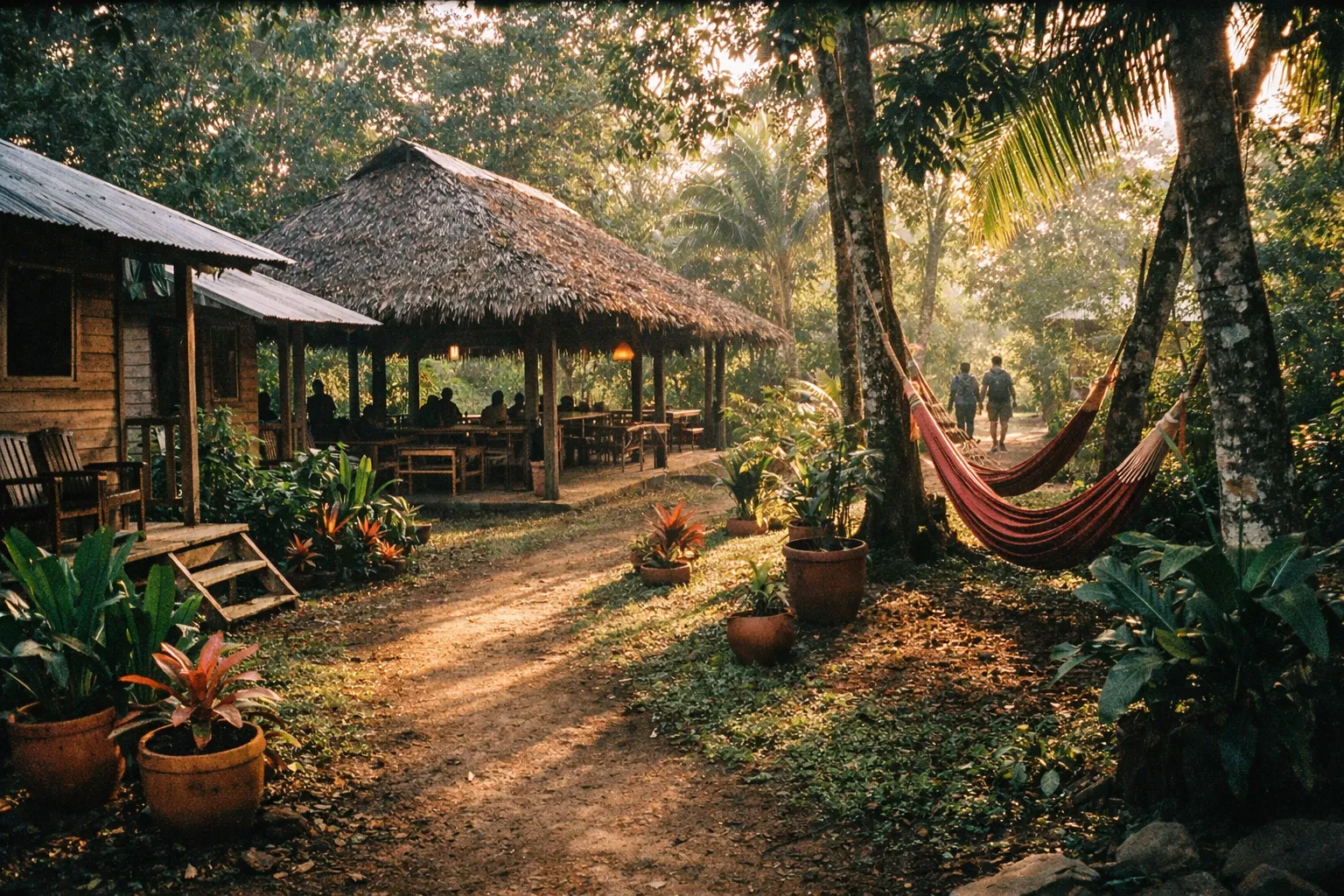
Hostels here function as social engines: shared kitchens, communal lounges, and a calendar of group activities that make solo travel easy. Some eco-oriented hostels run recycling programs, solar water heating, or volunteer schemes, though few pursue full CST certification.
Camping in the national parks puts you closer to the ground. Pitching a tent near a secluded beach with nothing but waves and the distant calls of howler monkeys costs almost nothing and stays with you. It’s raw, and not for everyone - but it’s the most direct line to the landscape Costa Rica actually is.
Best Time to Visit Costa Rica Eco Lodges
The best time to visit Costa Rica eco lodges depends on whether you’re optimizing for weather or for price.
For reliable dry days and easy wildlife viewing on the Pacific side, the dry season runs December through April. The cost: top lodges hit 80-95% occupancy around Christmas, New Year’s, and Easter, and rates peak hard. Book those weeks months ahead - not weeks. Occupancy rates during these peak periods often exceed 90%, driving prices up by 10-25% compared to shoulder seasons.
The green season (May-November) drops rack rates 20-40% at many lodges and thins the crowds considerably. Wildlife is active and the forest is at its lushest. The catch is rain - the Caribbean coast and parts of the Osa get genuinely wet, which can affect boat access and trail conditions. I’d build in at least one buffer day for weather; green-season boat trips and domestic flights get cancelled, and a rigid itinerary leaves no room to absorb that.
The sweet spot is the shoulder months - late November, May, and June - typically 10-30% cheaper than peak with plenty of dry days. Time your trip around what matters most: whale watching in the Golfo Dulce peaks August through October, and Caribbean sea-turtle nesting follows its own calendar entirely.
Getting to the Lodges: Flights, Shuttles, and Time Costs
Remote costa rica rainforest lodges cost time as well as money to reach, and underestimating that wrecks short itineraries.
- Domestic flights to the Osa Peninsula (Puerto Jiménez, Drake Bay) and Golfito run $80-$200 one-way per person.
- Shared shuttles between major hubs - San José to La Fortuna, Monteverde, or Tamarindo - run $40-$65 per person one-way.
- Car rental runs $40-$80 per day for a basic sedan, $70-$120 per day for a 4×4, plus mandatory insurance at $15-$25 per day.
Reaching an Osa lodge often means a domestic flight plus one to two hours of ground or boat transfer. On a seven-day trip, that’s a meaningful chunk of your time gone - plan the arrival and departure days as travel days, not activity days.
Watch the hidden costs at non-inclusive lodges, too. A 10% service fee, roughly 13% sales tax, park entrance fees of $15-$20 per visit, and private tours at $60-$150 each add up faster than most people expect.
Booking mechanics note: Domestic flights on Sansa and other regional carriers to Puerto Jiménez and Drake Bay sell out weeks ahead during dry season. If your Osa lodge stay is fixed, book the domestic legs at the same time you book the lodge - not after. Seat inventory on these small aircraft is genuinely limited.
How to Plan Your Costa Rica Eco Lodge Trip
15 minutesSteps to choose and book the right eco lodge experience in Costa Rica.
- 1
Step 1: Decide Your Budget and Priorities
Determine if you want a luxury eco lodge, mid-range nature stay, or budget hostel experience, or a combination.
- 2
Step 2: Check CST Certification
Use the Costa Rica Tourism Board's CST directory to filter lodges with 4 or 5 leaves for genuine sustainability.
- 3
Step 3: Choose Your Region
Select from Osa Peninsula, Bajos del Toro, Golfo Dulce for luxury; Arenal or Monteverde for mid-range; or budget hubs like San José.
- 4
Step 4: Book Early for High Season
Reserve lodges and domestic flights months ahead if traveling December to April to secure availability and rates.
- 5
Step 5: Plan for Transfers and Hidden Costs
Account for domestic flights, shuttles, park fees, and service charges when budgeting your trip.
Frequently asked questions
Frequently Asked Questions
- Are all eco lodges in Costa Rica certified by the CST?
- No, many properties market themselves as eco-friendly without CST certification. Only about 25-30% of hotels claim eco status, and fewer have 4 or 5 leaves. Always verify certification to avoid greenwashing.
- Can I mix luxury and budget stays in one trip?
- Yes, a common approach is spending 3-4 nights at a luxury eco lodge and 3-6 nights at budget or mid-range accommodations to balance experience and cost.
- What should I expect from open-air eco lodges?
- Most luxury eco lodges use open-air designs with fans and screened walls instead of air conditioning. This supports sustainability but may not suit those expecting sealed, climate-controlled rooms.
- How reliable are domestic flights during the green season?
- Domestic flights can be canceled or rescheduled due to weather during May to November. Booking flexible tickets and allowing buffer days is advisable.
- Is camping a viable way to experience Costa Rica's nature?
- Camping offers the most direct connection to the landscape but requires preparation and comfort with minimal amenities. It's best for those seeking raw nature experiences.
- Do budget hostels offer any eco-friendly features?
- Some hostels run recycling programs, solar water heating, or volunteer schemes, but few have formal CST certification.
Building Your Trip: Luxury, Budget, or Both
The choice between luxury eco lodges and budget hostels doesn’t have to be binary, and for most travelers it shouldn’t be. A common, advisor-recommended structure splits 7 to 10 days into 3-4 nights at a rainforest or coastal eco lodge plus 3-6 nights at budget or mid-range bases near the volcanoes or beaches (4). You get the guided-wildlife depth of the Osa or the cloud forest, then the flexibility and social energy of La Fortuna or a Pacific beach town, without paying lodge rates for the whole week.
Before you book, decide what you’re actually buying. Naturalist-led interpretation and small group sizes are the real product at a luxury lodge. If self-guided trails and a hammock satisfy you, the mid-range and budget tiers deliver the same landscape for a fraction of the cost. Check the CST leaf count so your “eco” stay is genuinely sustainable, time your dates around the shoulder season for the best rate-to-weather ratio, and build in a buffer day for green-season cancellations.
Get those four things right and Costa Rica handles the rest.