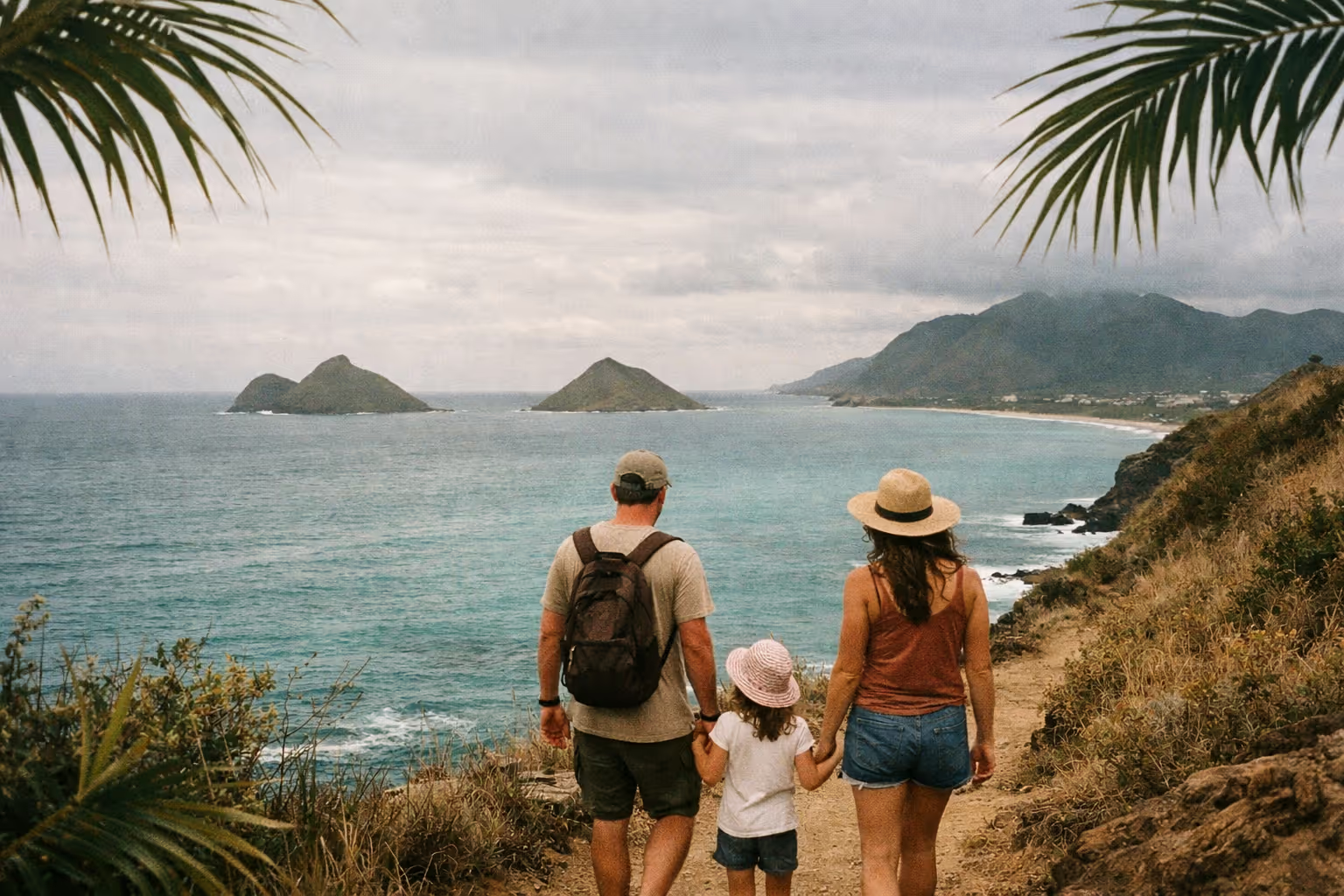
Traveling to Hawaii with kids averaged $11,321 for a family of four in 2024, so it rewards planning over spontaneity. Start on Oahu: about 30 percent cheaper than Maui, with the zoo, aquarium, and safest toddler beaches on one compact island. The budget killers are predictable, resort parking at $210 a week and $210 a day eating out, so get a rental with a kitchen and cook one meal daily. Kids snorkel calm coves like Hanauma Bay around age six; save the Big Island for once they hit eight.
Is it worth taking kids to Hawaii?
Short answer: yes, if you calibrate expectations. Hawaii is not a cheap family destination - the average family-of-four trip ran about $11,321 in 2024, climbing toward $13,736 in more recent estimates (7). But the variety is what earns the price tag. In a single trip you can get calm wading beaches for toddlers, snorkeling reefs for grade-schoolers, volcano hikes for teens, and cultural experiences that stick with kids longer than any theme park.
The thing most guides get wrong: they sell Hawaii as effortless, all-inclusive relaxation. It isn’t. Hawaii resorts are almost never all-inclusive. You’ll pay separately for food, a rental car, parking, and activities - and those add up to hundreds of dollars a day. Go in understanding that Hawaii is a plan-it-yourself destination with premium pricing, and it delivers. Expect a package deal that covers everything, and you’ll be blindsided at checkout.
One more honest note: kids under 3 won’t remember it, and you’ll spend the same as if they were 8. That’s fine - the trip is for the whole family - but don’t stress about “wasting” the experience on a baby.
Traveling with young children: it gets easier
Traveling to Hawaii with kids doesn’t have to be a logistical nightmare, but it does require more structure than a trip without them. I’ve navigated it with a baby in a carrier and again with a restless 5-year-old who wanted to stop at every beach - the planning approach matters more than the destination.
On one of those trips, we spent an afternoon at Punalu’u Black Sand Beach on the Big Island. The kids spotted sea turtles resting on the sand within five minutes of arriving. No entrance fee, no tour guide, no buildup - just turtles on black sand. That’s the kind of thing Hawaii does well with kids, and it doesn’t cost anything.
The young-kid years are manageable with a few structural decisions:
- Book flights around nap and bedtime. A West Coast red-eye or midday flight beats a 6 a.m. gate meltdown.
- Choose one island per trip. Inter-island hops eat a half-day each and exhaust everyone.
- Rent gear locally. Companies deliver cribs, high chairs, and beach toys to your rental so you’re not hauling them from the mainland.
- Cap driving days. For kids under 6, keep any single day under 3-4 hours of car time. A 10-12 hour Road to Hana loop with a toddler is a mistake you make exactly once.
Which Hawaii island is most kid friendly?
If this is your first Hawaii trip with young kids, the answer is fairly settled: go to Oahu (1)(2)(9). It has the widest range of hotel prices, the cheapest flights, real public transit, and the calmest beginner beaches. It also runs roughly 30% cheaper than Maui across flights, lodging, food, and activities (2)(9).
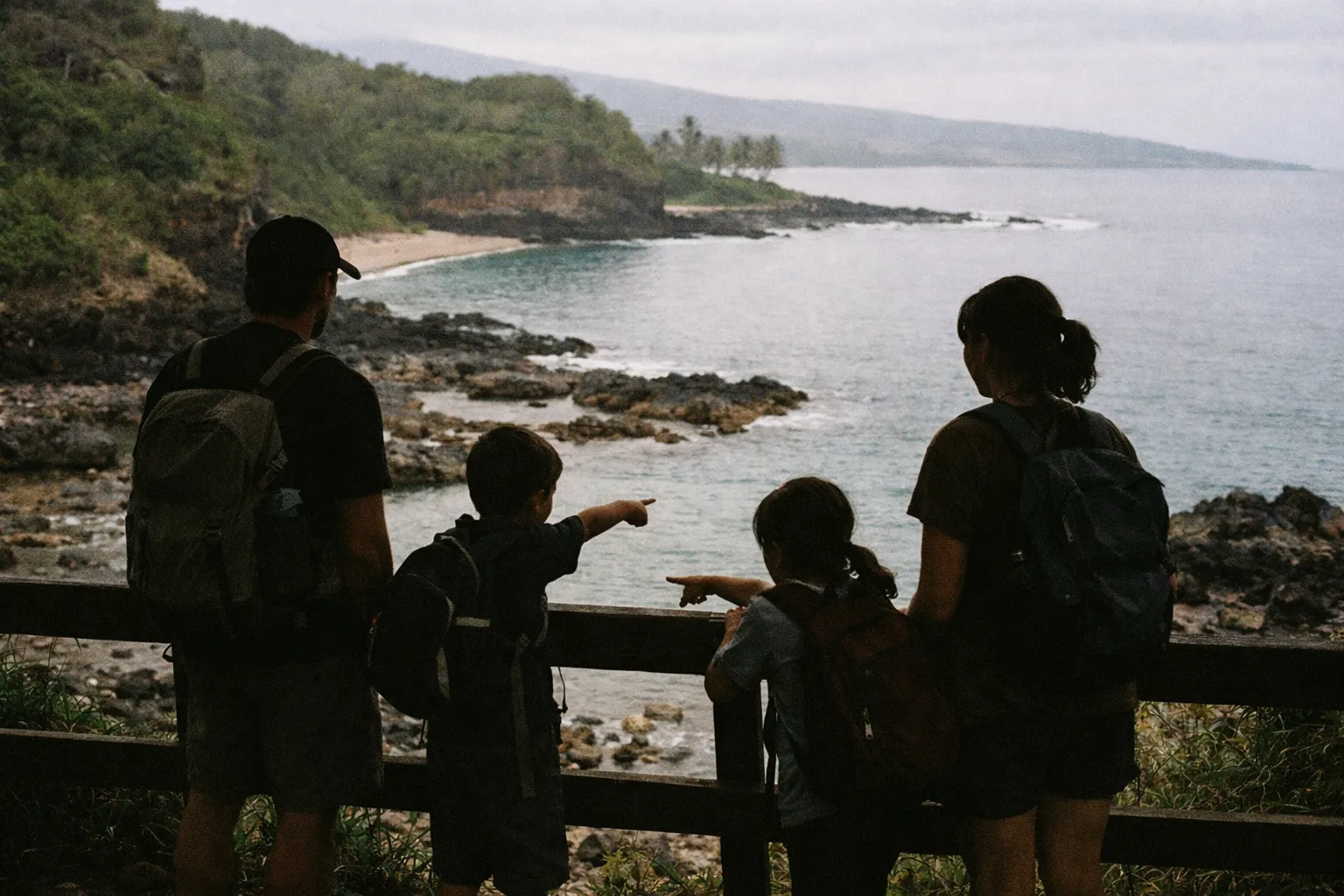
Here’s how the main islands break down for families:
- Oahu - Best for first-timers and kids under 8. Honolulu Zoo, Waikiki Aquarium, Pearl Harbor, and a shoreline built for toddlers. Lowest overall cost.
- Maui - Best for active families with older kids and teens. More resort-oriented, more expensive, better for road trips and snorkeling if your kids can handle full days.
- Big Island (Island of Hawaii) - Best for adventurous families and teens. Volcanoes, lava caves, waterfalls, and a stack of free activities.
- Kauai - Best for families who prioritize nature over attractions. Quieter, greener, fewer crowds, but also fewer kid-specific venues.
Match the island to the ages. Under 8 and it’s a first trip? Oahu, without much debate. Teens who want adventure and you’ve got the budget? Maui or the Big Island earns the airfare. For a fuller breakdown of how each island stacks up by trip type, the best places to visit in Hawaii guide covers the tradeoffs in detail.
✓ Pros
- Wide range of kid-friendly activities across islands
- Oahu offers affordable, convenient options for young kids
- Big Island and Maui provide adventure for older kids and teens
- Kauai offers quiet nature-focused experiences
✗ Cons
- Hawaii is expensive with many hidden costs
- Long drives can be tough for young children
- Maui still recovering from 2023 wildfires affecting travel
- Not all beaches are safe or suitable for young kids
Is Maui or Oahu better for kids?
This is the question that trips up the most families, so let’s settle it by age and budget.
For ages 0-8 and first-time families, Oahu wins. More kid-friendly attractions in a compact area, safer swimming beaches, real transit, and about 30% lower total cost (1)(2)(9). You can base yourself in Waikiki and reach the zoo, the aquarium, and Pearl Harbor without a long drive. The offshore breakwater at Waikiki Beach creates a large, shallow, near-wave-free area that works like a saltwater pool for toddlers - guides specifically flag it as well-suited for young children (9).
For teens and higher budgets, Maui makes a case. The Road to Hana, resort pools, and stronger snorkeling appeal to older kids who can sit through a scenic drive and handle deeper water. There’s also a real-world consideration since the 2023 wildfires: as of 2025, visitor numbers to Maui remain below state targets, with ongoing housing and recovery concerns around the Lahaina area. That can mean more availability and some pricing shifts - but it also means visiting with sensitivity to a community still rebuilding. If you choose Maui, book outside the Lahaina recovery zone and go in aware, not expecting pre-2023 tourism norms.
My default: Oahu unless your kids are teens and you specifically want the Maui road-trip-and-resort combination. The cost difference alone funds an extra activity or two.
Family-friendly beaches that work well for kids

The hawaii family beaches that actually work with kids share three traits: calm water, easy parking, and nearby bathrooms and shade. Here are the ones worth the detour, island by island.
Waikiki Beach (Oahu) - The gold standard for toddlers. The offshore breakwater tames the surf into a shallow wading area, and you’re steps from food, restrooms, and gear rentals (9). Crowded, yes - but that trades off against convenience, and for families with young kids, the infrastructure matters.
Hanauma Bay (Oahu) - A protected cove and the best beginner snorkeling on the island. Reservations are required; it’s closed Mondays and Tuesdays. Book the online window in advance because walk-up spots vanish fast. Worth the extra planning.
Hapuna Beach (Big Island) - Wide, sandy, and one of the best swimming beaches in the state. Non-residents now pay $10 for parking plus $5 per person admission (5), so a family of four should budget about $30 per visit. Bring a card - arriving without payment can mean getting turned away.
Kaanapali Beach (Maui) - A long stretch of sand fronting the resort strip, with calmer sections for kids and snorkeling around Black Rock. Best paired with a resort stay so you’re not fighting for parking.
Beach days are the cheapest days you’ll have in Hawaii - expect $0-$30 per day beyond parking and gear rentals. Stack them between paid-activity days to keep your budget in check.
Snorkeling with kids
Snorkeling with kids in hawaii is one of the strongest reasons to bring them - but it’s also where I see parents make a genuinely dangerous call.
Most kids can learn to snorkel around 6-7 years old, and that’s the right time to start: in a protected cove, in water they can stand up in, with a strong-swimming adult within arm’s reach (2). Hanauma Bay on Oahu and the calm ends of Kaanapali on Maui are the right training grounds.
Here’s the warning experienced Hawaii visitors repeat, and I’ll repeat it too: open-ocean snorkel tours are not safe for 5-year-olds (2). Currents and swells shift without notice, and a small child on a boat-based tour over open water is a risk that isn’t worth the photo. Save the catamaran snorkel trips for kids who are confident swimmers - realistically 8 and up - and stick to protected beach coves for the little ones. When those older kids are ready, a dedicated guide to Hawaii snorkeling tours can help you compare operators and pick the right outing by island.
A few practical things that make it work:
- Buy or rent kid-sized masks that actually seal. An adult mask leaking every 30 seconds ends the session in tears.
- Use a flotation vest for beginners even in shallow water. It lets them relax and look down instead of panicking.
- Go early. Morning water is calmer and clearer, and reefs are more active before the crowds stir up the sand.
Top 11 things to do with kids in Hawaii
Ranked by whether they’re worth rearranging your itinerary for. Costs reflect the most recent research - verify before you go since park and beach fees keep climbing.
- Snorkel at Hanauma Bay (Oahu) - Worth the detour. Best beginner reef in the state, protected water, easy for first-timers. Reserve ahead.
- Hawaii Volcanoes National Park (Big Island) - Worth the detour. Steam vents, lava tubes, and craters kids find genuinely thrilling. Entry runs around $30 per vehicle for 7 days.
- Waikiki Beach wading and lessons (Oahu) - Worth it for young kids. The breakwater makes it the safest intro to ocean swimming, and beginner surf lessons run out of here.
- Honolulu Zoo (Oahu) - Worth it on a hot or rainy day. Compact, walkable, and a reliable toddler pleaser.
- A family luau - Worth it once. Music, dance, and food give kids a real window into Hawaiian culture. Budget $150-$200 per adult; kids’ tickets are cheaper.
- Kaumana Caves (Big Island) - Worth the detour and it’s free (6). A walkable lava tube that feels like an adventure without the price tag. Bring flashlights.
- Waikiki Aquarium (Oahu) - Worth it. Small enough to finish before a meltdown, with reef tanks and monk seals.
- Panaewa Rainforest Zoo & Gardens (Big Island) - Worth it, and free (6). The only rainforest zoo in the U.S., with a petting zoo on weekends.
- Pearl Harbor (Oahu) - Worth it for kids 8+. Skip if your kids are too young to sit through the memorial - the history lands better with school-age children.
- Big Island waterfalls (Rainbow Falls, Akaka Falls) - Worth the short detour. Quick, low-effort payoffs between longer stops.
- Road to Hana (Maui) - Skip if your kids are under 6. A full 10-12 hour day of switchbacks that rewards teens and punishes toddlers (1). Do it only if the ages fit.
For a broader ranked list of experiences across all islands, things to do in Hawaii covers the full range from easy family outings to more demanding adventures.
Where to stay with kids
The best places to stay in hawaii with kids comes down to which lever you’re pulling: budget or convenience.
Vacation rentals with a kitchen are the budget move. On Kauai, a family rental runs $2,000-$2,800 per week, and cooking most breakfasts and lunches trims food costs to roughly $1,000-$1,200 per week instead of $1,500+ eating out. The kitchen alone can save $280-$560 over a week by swapping one restaurant meal a day for a grocery-based one. That’s a real number, not a rounding error. If you want to compare specific properties across price tiers and islands, the best accommodation in Hawaii guide breaks down beachfront resorts, vacation rentals, and eco-lodges side by side.
Resort hotels buy you convenience - pools, on-site activities, walk-to-beach access - at a premium. Basic hotels commonly start at $350+ per night before taxes, and Hawaii’s accommodation taxes run near 19% on top (3). A 7-night basic-hotel stay lands around $2,900 total once tax is added (3). Nicer family resorts run $400-$600 per night.
Watch the hidden line items: resort parking often adds $30-$50 per night, which is another $210-$350 over a week you didn’t see coming.
Cabins, yurts, and staying close to nature
There’s a real payoff to staying somewhere unconventional - a cabin or yurt where the landscape becomes part of the trip. Waking up surrounded by tropical forest or within earshot of the ocean gives kids a connection to the place that a hotel corridor never will.
It also builds in a backup. When a planned hike through Waimea Canyon got cut short by an unexpected downpour, having a comfortable cabin nearby turned Plan B into a day of local museums and cultural stops instead of a washout. Hawaii’s weather is unpredictable enough that you always want an indoor fallback, and a well-chosen stay gives you one.
Is $5,000 enough for a trip to Hawaii?
It can be - but only with discipline, and only if you make the right structural choices up front.
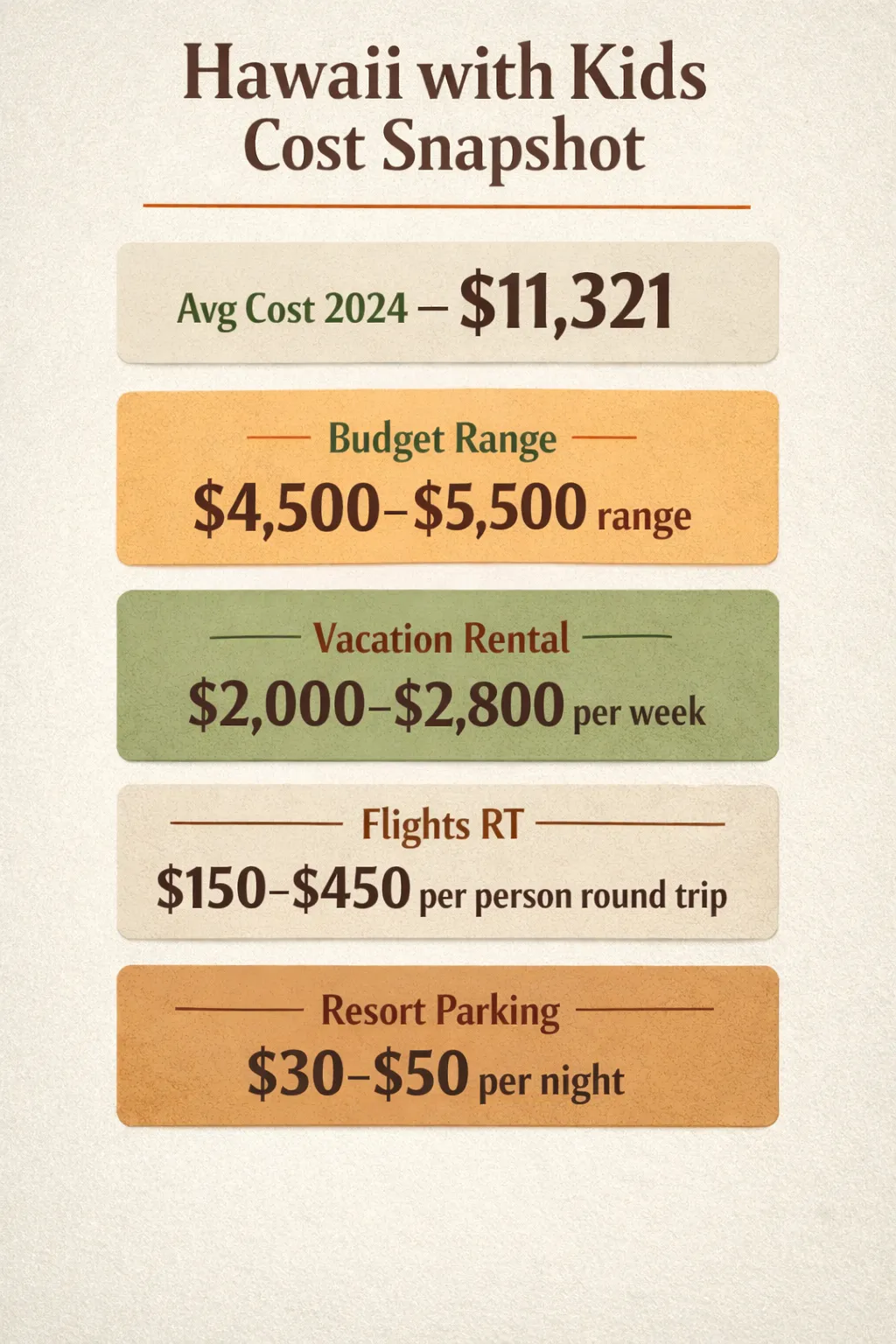 Costs for a Hawaii family of four in 2024 include average spend of $11,321, weekly vacation rental of $2,000-$2,800, and flights $150-$450 per person, with resort parking $30-$50 per night.
Yes, $5,000 works if you: fly from the U.S. West Coast, choose Oahu, stay in a vacation rental with a kitchen, cook most meals, and cap paid activities at two or three key experiences. Here’s a realistic budget-tier breakdown for a family of four over 7 days:
- Flights: $150-$450 per person round trip from the West Coast. Off-season (Jan-Feb) is the difference - one family paid $150 RT per person from Oakland in winter versus $450 in spring, a $1,200 swing for a family of four.
- Vacation rental (7 nights): $2,000-$2,800.
- Rental car (7 days): $500-$700.
- Groceries + limited dining: $1,000-$1,200.
- Activities (2-3 key experiences): $600-$800.
That lands a careful family in the $4,500-$5,500 range.
Be honest with yourself, though: most families aiming for $5,000 actually spend $6,000-$9,000. The usual culprits are underbudgeting food - a family of four eating comfortably runs about $210 per day (7) - and adding “just one more” paid activity. A luau at $150-$200 per adult plus a snorkel tour at $120+ per person can blow the activity budget in two outings (7). A more comfortable midrange trip with a resort hotel and regular dining out runs $8,000-$12,000.
If $5,000 is a hard ceiling, Oahu or Kauai with a kitchen rental and off-season flights is your only realistic path. If you can flex to $8,000, you get resort convenience and more freedom on activities. A solid Hawaii packing list can also help you avoid buying gear on-island at inflated prices, which quietly eats into activity budgets.
Where to next?
Once you’ve picked an island, the natural next question is whether to branch out on a return trip - and this is where post-2023 planning gets nuanced.
If your first trip was Oahu with young kids, the logical second trip is the Big Island as those kids hit the adventurous 8-12 range. Volcanoes, lava caves, and a pile of free activities like Kaumana Caves and Panaewa Rainforest Zoo (6) keep costs down while the terrain steps up considerably. Teens are ready for Maui - but factor in the ongoing wildfire recovery. As of 2025, visitors still aren’t returning to Maui at pre-fire levels, which can mean better availability and pricing but also calls for booking outside the Lahaina recovery area and traveling with awareness of a community still rebuilding.
For families who want the quietest option with the fewest crowds, Kauai is the logical “where to next” that rewards a second or third Hawaii trip once your kids can appreciate hiking and nature over zoos and aquariums. Kauai also hides some of the most rewarding hidden gems in Hawaii - towns, trails, and petroglyphs that older kids and teens find genuinely memorable.
Frequently Asked Questions
- Can I bring a baby to Hawaii even if they won't remember the trip?
- Yes, the trip is for the whole family and costs the same regardless of age, so don't stress about 'wasting' it on a baby.
- Are inter-island flights recommended with young kids?
- No, inter-island flights consume half a day and can exhaust young children; stick to one island per trip for easier logistics.
- What are the key safety tips for snorkeling with kids in Hawaii?
- Start kids snorkeling at 6-7 years old in protected coves with adult supervision; avoid open-ocean tours for children under 8 due to currents.
- How can I save money on food while traveling in Hawaii with kids?
- Rent a vacation home with a kitchen to cook meals, saving $280-$560 per week compared to eating out for every meal.
- What should I know about parking fees at popular family beaches?
- Some beaches like Hapuna charge parking and admission fees; bring a card to pay $10 parking plus $5 per person to avoid being turned away.
- Is it better to stay in a resort or vacation rental with kids?
- Vacation rentals save money with kitchens; resorts offer convenience but add costs like parking fees and higher nightly rates.
- When is the cheapest time to fly to Hawaii with kids?
- Off-season months like January and February offer the lowest airfare, sometimes less than half the price of spring flights.
- What is the best island for a first Hawaii trip with young children?
- Oahu is best for first-timers with young kids due to kid-friendly beaches, attractions, public transit, and lower overall costs.