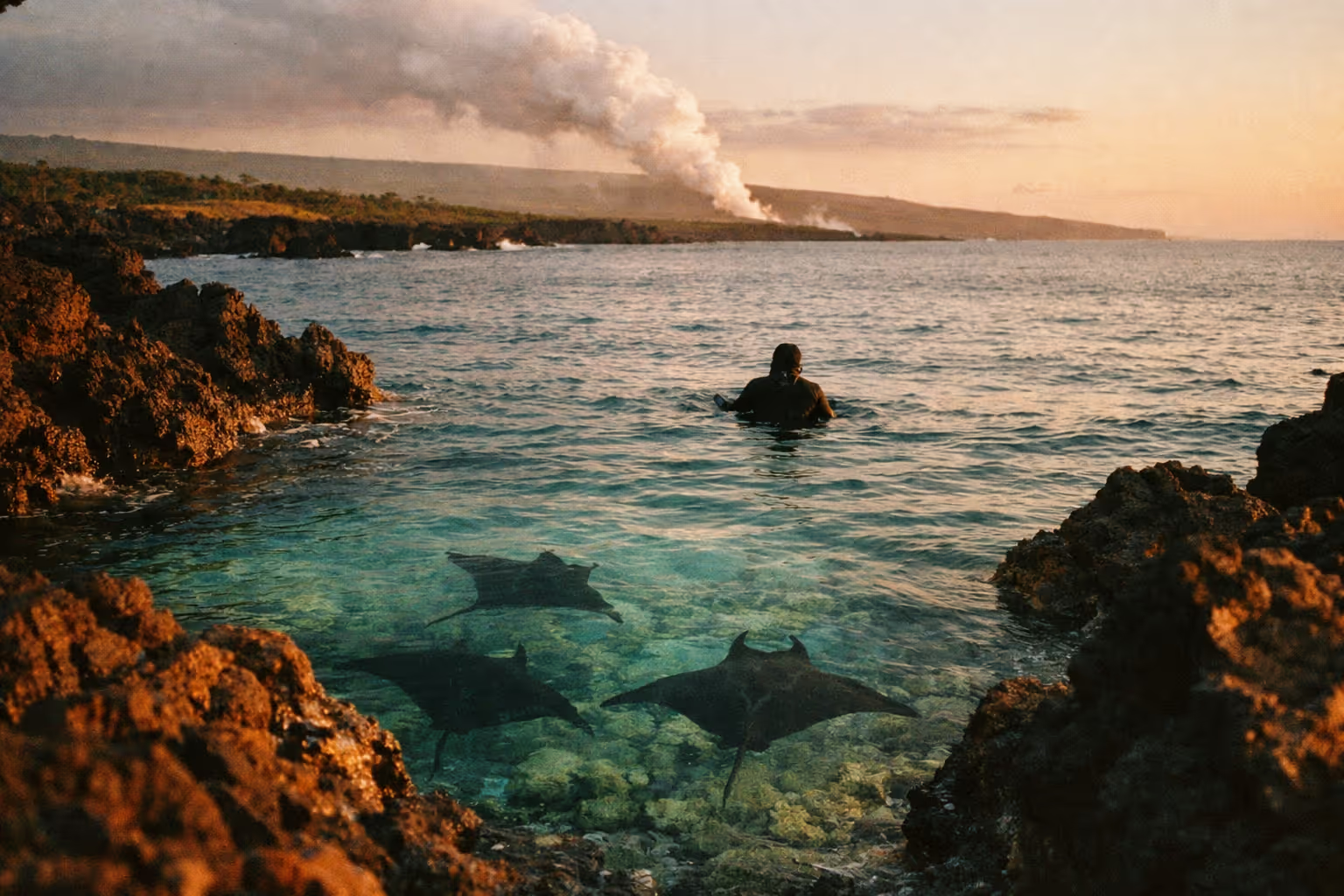
The best things to do in Big Island of Hawaii come with a catch nobody mentions until you are standing at a locked gate: the headliner, Hawaii Volcanoes National Park, closes without much notice when the volcano acts up or a storm rolls in. Plan around that and the island is huge, from a manta ray night snorkel off Kona to the green sand beach at the far south. Here is what is worth doing, ranked, and what to check the week before you fly.
Things to Do in the Big Island of Hawaii: Volcano Hikes and What the Park Actually Offers (When It’s Open)
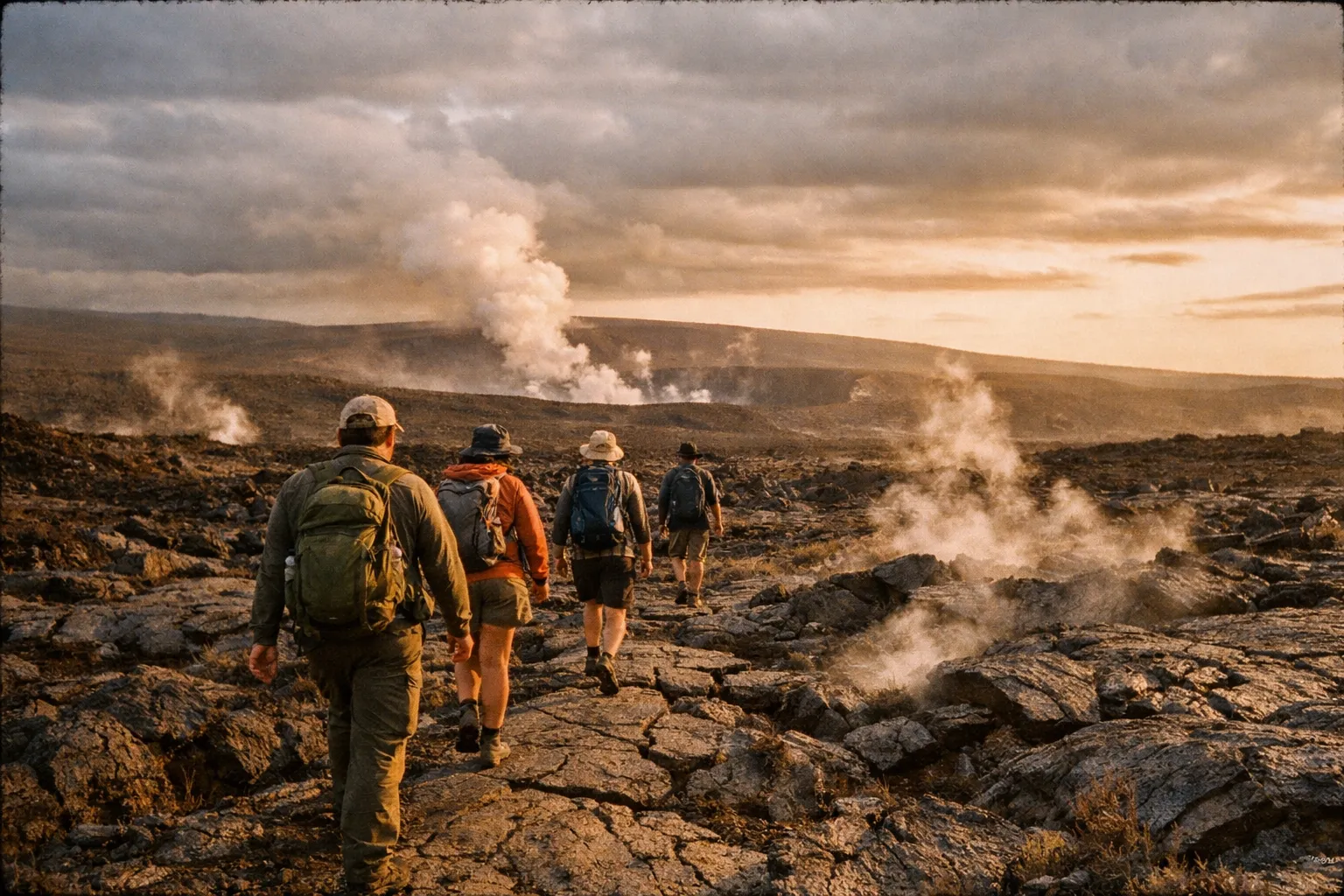
If you’re looking for unique things to do in Big Island of Hawaii, walking across hardened lava with steam venting through cracks a few feet away is an experience unlike any other hike. The ground feels different - hollow in places, weirdly warm in others. Hawaiʻi Volcanoes National Park has trails ranging from easy walks through tree fern forests to full crossings of the Kilauea Iki crater floor, and the range is wider than most people expect.
Here’s what’s worth your time when the park is open:
- Kilauea Iki trail: the crater floor crossing - roughly 4 miles round trip - is the standout. I’ve hiked it twice, and the combination of lunar lava field, active steam vents, and the forested rim trail above it is hard to match anywhere in the US. The scale doesn’t register until you’re standing in the middle of it.
- Cultural and geological depth: many trails cross sites significant to native Hawaiians. The park does a decent job of contextualizing this if you read the trailhead signage, but a ranger-led walk adds considerably more.
- Accessibility range: short paved loops near the visitor center work for families and anyone not up for a full crater hike. The park isn’t just for serious hikers.
Standard entry is $30 per private vehicle, valid for seven days, with a handful of fee-free days each year (7). In a normal year the park sees more than a million visitors (7).
Mauna Kea is a separate matter. The summit sits at 13,803 feet, above the clouds, and the stargazing up there is legitimately extraordinary - above 40% of the atmosphere, with some of the clearest night skies on the planet. But summit temperatures drop below freezing even in summer, altitude sickness is a real risk, and the road access rules are strict. Book a compliant stargazing tour that supplies parkas, hot drinks, and telescopes rather than driving yourself (7). Trying to wing the summit solo is how people end up pulled over by rangers or sick at 12,000 feet.
Before any volcano hike, check my article on Hawaii Volcano Safety: Hike Smarter.
What to do when the park is closed
This is the part most guides skip entirely.
A March 17, 2026 update from Hawaiʻi Volcanoes National Park confirmed it remained closed until further notice following storm impacts and eruption hazards (3)(9). An April 2026 alert cited hazardous tephra and gas at the entrance. By late June 2026, USGS reported that episode 50 of the Halema’uma’u lava fountaining ended around June 27, with the eruption “paused” but volcanic inflation continuing - meaning conditions keep shifting month to month (6)(9).
Don’t book accommodation next to the park entrance assuming you’ll walk in. Check advisories the same week you fly. When the eruption area or entrance is closed, pivot to these:
- Helicopter overflights of Kīlauea, Mauna Loa, and Waipi’o - roughly $350-$600 per person for 45-60 minutes (7)(10). Take motion-sickness precautions; a queasy hour ruins the whole flight.
- Ranger-led programs and safe viewpoints announced monthly. Even with the eruption zone closed, some crater overlooks and trails reopen once hazard assessments update (9).
- Historic Hilo, Kona coffee farms, and geo-features like Waipi’o and Pololū Valleys, which don’t depend on the park being open (4)(7)(10).
Manta ray night snorkeling: how it actually works
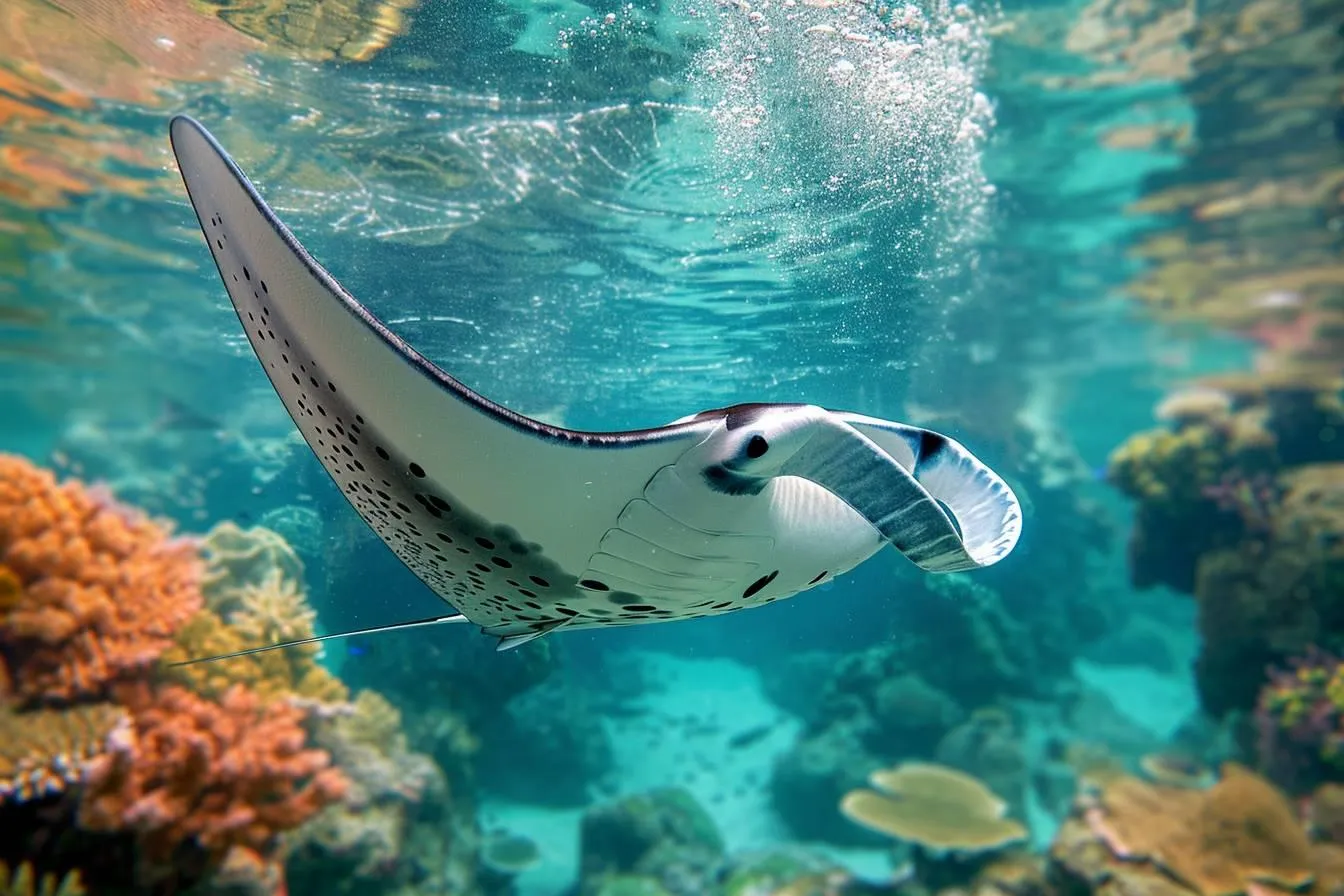
The Big Island’s signature after-dark experience is floating above an underwater light bar while manta rays - some with wingspans of 12-15 feet - circle inches below you (5). The lights attract plankton, the plankton attracts the mantas, and you’re in the middle of it. It sounds gimmicky until you’re actually out there.
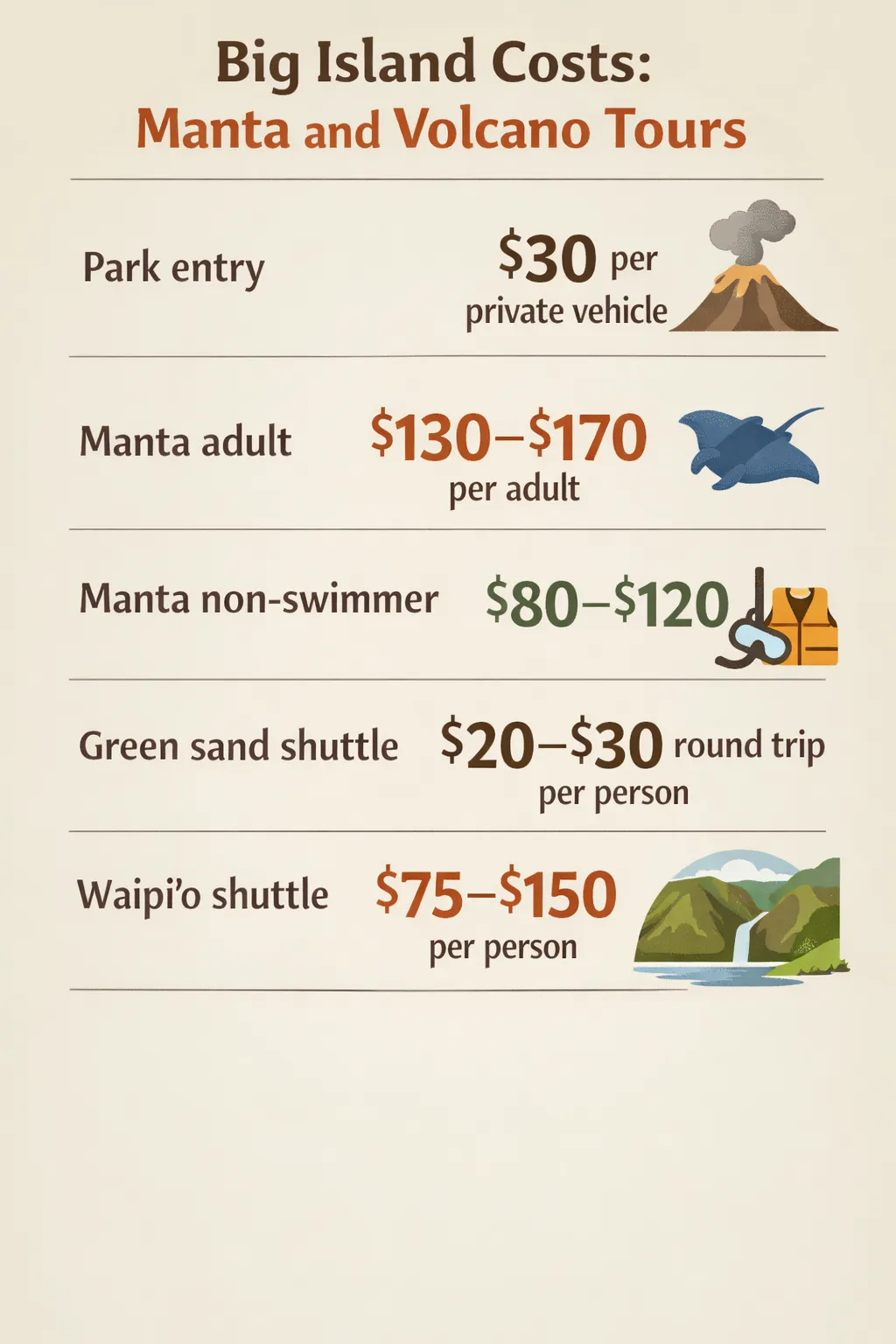 Infographic shows park entry $30 per private vehicle, manta tours $130-$170 per adult, non-swimmer $80-$120, green sand shuttle $20-$30 round trip per person, and Waipi’o shuttle $75-$150 per person.
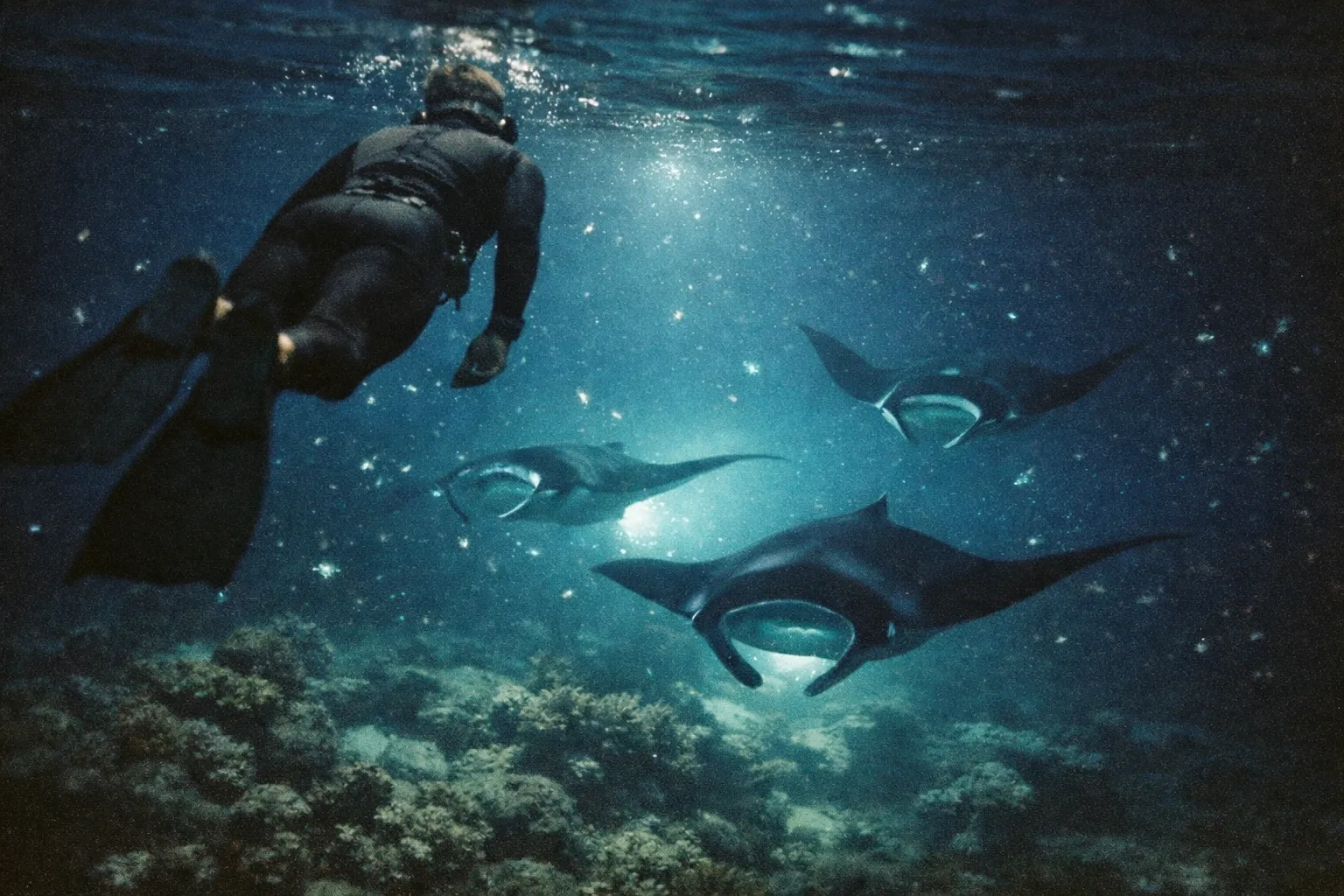
A few things worth knowing before you book:
- Conservation rules are enforced: approaching or touching mantas is illegal and can result in fines (10). Reputable operators brief you on this before you hit the water. If yours doesn’t, that’s a red flag.
- The experience is genuinely accessible: you don’t need to be a strong swimmer, but you do need to be comfortable floating in dark, open water. Gear - wetsuit, snorkel, flotation, lights - is supplied. Water temps run around 75-80°F (8).
- Non-swimmers can watch from the boat at a reduced fare, often $80-$120 (5).
Booking mechanics: what actually matters
Most tours launch from Kailua-Kona, with the two main sites being Manta Village at Keauhou Bay and Manta Heaven north of Kona (8). Here’s the practical breakdown:
- Price: from $130-$170 per adult for a 2-2.5 hour trip (5)(8). Many operators offer a “manta guarantee” - a partial refund or free redo if no mantas show.
- Timing: check-in runs around 5:30-7:30 pm for sunset trips and 8:00-9:00 pm for full-dark trips. The later slots tend to produce stronger plankton activity and better displays, though conditions can be slightly rougher.
- Group size: this is the variable that separates a good trip from a crowded one. Boats range from small groups of 6-12 guests to large boats carrying 25-65 (2)(8). Smaller boats mean more time at the light bar, less jostling, and better photos. Worth paying more for.
- Reservations: book online, and expect cancellation windows of 24-72 hours with fees of 50-100% inside that window. Peak-season tours sell out 3-7 days ahead (7).
Minimum ages are usually 5-8. Take motion-sickness precautions before boarding.
20+ of the best activities on the Big Island
The volcano and the mantas anchor a trip, but the island holds enough to fill two weeks. Below is a ranked rundown - worth building a day around first, then worth the detour, then do it if you have time. Budget a car; crossing from Kona to Hilo takes 1.5-2.5 hours and most of this list is spread across the island (7)(10).
Worth building a day around:
- Hawaiʻi Volcanoes National Park (when open) - craters, steam vents, lava tubes, and the Kilauea Iki trail (4)(7).
- Mauna Kea stargazing - go with a compliant tour; the summit sits above 40% of the atmosphere (7).
- Manta ray night snorkel - the island’s most reliable after-dark experience (5).
- Papakōlea Green Sand Beach - one of only a few green sand beaches on Earth; logistics below (10).
- Waipi’o Valley - private-vehicle access has been restricted for road safety; most visitors now take a shuttle or guided tour running $75-$150 per person (10).
- Kealakekua Bay snorkeling - the island’s best coral and marine life, reachable by kayak or guided boat (8)(7).
- Punalu’u Black Sand Beach - jet-black sand with resting honu; details below (10)(7).
Worth the detour:
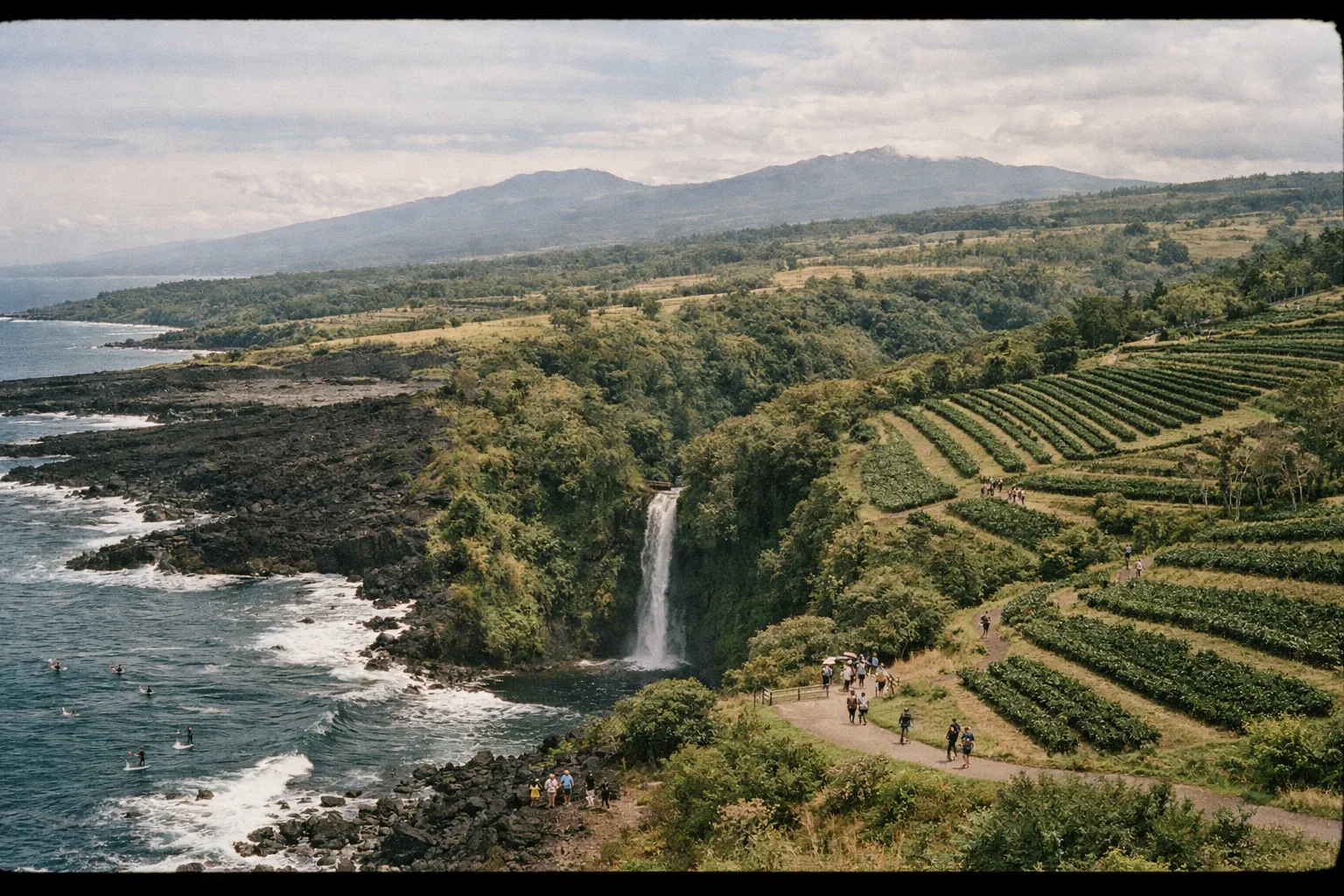
- Akaka Falls State Park - a 442-foot waterfall via a short paved loop near Hilo (1)(4)(10).
- Rainbow Falls - a roadside stop in Hilo, minimal walking, morning light for rainbows (1)(10).
- Kaumana Caves - a lava tube you can walk into, free, just outside Hilo. Bring a headlamp (1).
- Pololū Valley - a steep lookout and hike at the north end of the island near Hāwī (7)(10).
- Kona coffee farm tour - the Kona belt is one of the few US regions that grows coffee commercially; most farms offer tours ending in a tasting (7).
- Hāpuna Beach - wide, sandy, family-friendly swimming on the Kohala coast (7)(10).
- Kahalu’u Beach Park - the easiest snorkeling on the island, shallow and turtle-heavy, good for beginners (1)(7).
- Hilo waterfront and downtown - historic buildings, farmers market, and a rainier, greener side of the island (4)(7).
Do it if you have the time:
- Pu’uhonua o Hōnaunau (Place of Refuge) - a preserved Hawaiian sanctuary and cultural site on the Kona side (7).
- Kaulana Manu Nature Trail - birdwatching in the saddle region between the two big mountains (4).
- Kawa’ā - a rugged black sand and lava-rock shoreline; better for surfing and viewing than swimming, with strong currents (7).
- Farm-to-table meal - many farms offer tours that end in a meal built from what’s grown on-site.
- Merrie Monarch Festival (seasonal, Hilo) - the premier hula competition, held the week after Easter; book lodging months out.
- Humpback whale watching (Dec-Mar) - seasonal boat tours off the Kona coast (10)(7)(10).
Don’t try to chain six of these in one day. Combining too many stops leads to 6-8 hours of driving with little time at each one (7)(10). A smarter Hilo-side move: pair Akaka Falls, Rainbow Falls, and Kaumana Caves into a single half-day - all within easy reach of each other, all with modest walking (1)(10).
Big Island Hawaii green sand beach: Papakōlea
Papakōlea, on the island’s southern tip, is the big island Hawaii Green sand beach most people have seen in photos. The color comes from olivine crystals eroding out of a cinder cone - it’s one of only a few beaches like this on the planet, and getting there takes actual effort.
The logistics most guides gloss over: park at South Point, then either hike 2.5-3 miles each way along an exposed coastal trail or take a local 4x4 shuttle that typically charges $20-$30 round trip per person (10). There’s no shade, no water, and no services at the beach. The trail is hot and often windy. Bring at least 1-2 liters of water per person, sun protection, and real footwear - unprepared visitors regularly overheat out here (10).
I’d take the shuttle out and consider walking back only if you’ve timed it for cooler morning hours. Doing the full hike midday in summer is a bad idea that’s easy to avoid.
Black sand beach Hawaii Big Island: Punalu’u
The most accessible Black sand beach Hawaii big island offers is Punalu’u, near Nā’ālehu. Unlike the green sand hike, this one requires nothing: paved road, free parking, no entry fee (10)(7). The sand is jet black - the result of lava meeting seawater and shattering into fine grains - and green sea turtles (honu) rest on it regularly.
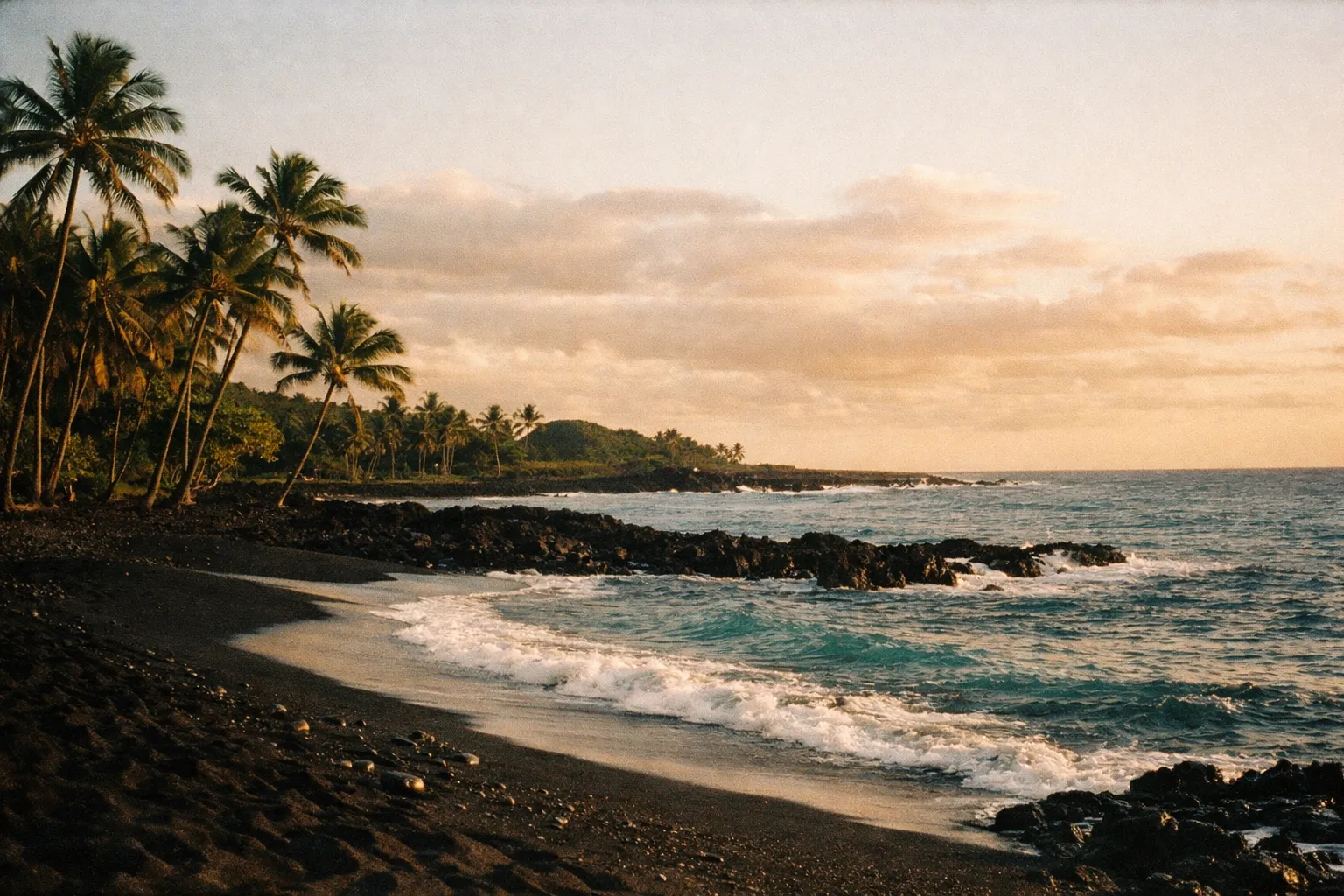
Most travelers stop here for 30-90 minutes while driving between Kona and the Volcano/Hilo side (10)(7). A few things worth knowing:
- Come near sunrise for fewer crowds and better odds of seeing honu on the sand.
- Keep your distance from turtles - it’s the law, and rangers do enforce it (7)(10).
- The water can be cold and rocky; treat this as a viewing-and-wading stop rather than a swim beach.
- Pair it with a stop at a Nā’ālehu bakery for fresh malasadas or sweet bread.
Not every black sand beach is safe to enter. Kawa’ā, farther along the coast, has strong currents and is better admired from shore (7).
Hāwī and the North Kohala coast
Hāwī (pronounced hah-VEE) sits at the island’s northern tip - a former sugar town now full of galleries, small cafés, and a pace that’s noticeably slower than the Kona resort strip. If you’re circling the island, it’s a natural stopping point for the north end.
From Hāwī, the drive to the Pololū Valley lookout is short, and the trail down to the black-sand valley floor is steep but worth the descent (7)(10). This corner of the island is also the birthplace of King Kamehameha I - the original Kamehameha statue stands in nearby Kapa’au, not in Honolulu as most visitors assume. Budget half a day for the Hāwī-Pololū-Kohala stretch rather than treating it as a quick photo stop.
Best time to visit Big Island Hawaii
The best time to visit big island Hawaii is the dry season, roughly April through October. The Kona (west) coast resort areas average closer to 9 inches of rain a year, while Hilo on the east side gets 140+ inches annually - same island, completely different weather (7)(10).
Season by season:
- April-October (dry season): best overall for beaches, hiking, and reliable snorkel conditions. Manta tours run most consistently.
- December-March (winter): more rain, but this is humpback whale season off the Kona coast (10)(7)(10). Bring a rain layer for the Hilo side. The same harbours run charter fishing year-round, whales or no whales.
- Late April: the Merrie Monarch Festival fills Hilo lodging - great if you want the hula competition, a problem if you don’t and didn’t book early.
Here’s what most guides get wrong about timing: they treat “best time” as a single answer for the whole island. It isn’t. If you’re chasing beach days and volcano access, aim for the dry months. If whales are the priority, winter wins despite the rain. And whichever season you pick, the Kona side will almost always be drier than Hilo - plan waterfall-heavy or indoor days for the east coast.
One more thing most guides skip: shoulder season in September and October is arguably the sweet spot. Crowds thin out after summer, prices on rentals and accommodation drop noticeably, and the dry season still holds. Manta tour availability is easier to secure, and the Kona coffee harvest runs October through February - if a farm tour is on your list, this is when the farms are most active (7). The tradeoff is that hurricane season technically runs June through November in Hawaii, though direct hits are rare; check forecasts the week before you fly.
Getting there and getting around
The island has two main airports - Kona (KOA) and Hilo (ITO). Most mainland visitors fly into KOA; high-season round-trips from the West Coast commonly run $500-$900 depending on airline and dates. A rental car is effectively mandatory for this list, with compacts and SUVs typically $60-$120 per day, and more for the 4x4s needed for some remote access (7)(10).
Where to stay on the Big Island
Where you base yourself shapes the whole trip. Kona puts you near manta tours, snorkeling, and the driest weather. Hilo is closer to waterfalls, the volcano (when open), and a greener, rainier setting. Splitting nights between the two sides cuts down on the 1.5-2.5 hour cross-island drives (7)(10).
Accommodation Types on the Big Island
| Beachside cottages | Resorts | Eco-lodges | |
|---|---|---|---|
| Pros | Privacy, closer feel to the coast. | Amenities, organized tours, convenience. | Unique settings, lower environmental footprint. |
| Cons | May lack certain amenities. | Can be crowded and expensive. | Comfort levels vary. |
I’ve stayed across all three categories on the Big Island, and the right call depends entirely on your priorities. Eco-lodges in the interior or on the Hilo side tend to put you closer to the landscape - waking up to forest sounds at elevation is a different experience than a Kohala coast resort. But if your trip is built around the manta snorkel and beach days, staying on the Kona side makes the logistics cleaner.
One hard rule: don’t lock in a hotel next to the national park entrance assuming you’ll have park access. Check closure advisories first (3)(9).
Food worth planning around
The Big Island’s food scene runs from roadside fruit stands to sit-down restaurants in Hilo that take the farm-to-table thing seriously. A few things worth seeking out:
- Kona coffee farm tours: the Kona belt is one of the few places in the US that grows coffee commercially, and most farms offer tours that end in a tasting (7). It’s a better use of two hours than most people expect.
- Luau: a traditional Hawaiian gathering featuring kalua pig roasted in a pit oven - worth doing once for the cultural context as much as the food.
- Fresh seafood: coastal restaurants on both sides of the island serve fish that was in the water recently. Keep it simple and order what’s local.
The farmers market in Hilo on Wednesday and Saturday mornings is one of the better ones in the state - good for picking up fresh fruit, local honey, and snacks for a hiking day.
✓ Pros
- Diverse climate zones and landscapes in one island
- Reliable manta ray night snorkeling experience
- Wide range of activities beyond volcanoes and beaches
- Two airports and rental car availability ease logistics
✗ Cons
- Volcano park closures can disrupt trip plans
- Long drives between key sites if not splitting bases
- Green sand beach hike is strenuous and exposed
- Weather varies drastically between east and west sides
Frequently Asked Questions
- Can I visit Hawaiʻi Volcanoes National Park if it's currently closed?
- No, check the National Park Service advisories the same week you travel for current closures and updates.
- Are manta ray night snorkel tours safe for non-swimmers?
- Yes, non-swimmers can watch from the boat at a reduced fare, typically $80-$120.
- What is the best way to avoid crowds on the green sand beach hike?
- Take the shuttle out and hike back during cooler morning hours to avoid heat and crowds.
- How far in advance should I book a manta ray snorkel tour?
- Reserve 3-7 days ahead in peak season to secure a spot, especially on small-group boats.
- Is it necessary to rent a 4x4 vehicle on the Big Island?
- A standard rental car suffices for most, but 4x4s are needed for some remote access and rough roads.
- Can I drive myself to Mauna Kea summit for stargazing?
- No, strict access rules and altitude risks mean you should book a compliant guided tour.
- What months offer the best weather for beach and hiking activities?
- April through October is the dry season, best for beaches, hiking, and snorkeling.
Bottom line
Build your Big Island trip around two anchors - a volcano experience and a manta ray night snorkel - then fill in beaches, waterfalls, and coffee farms around them. Two things matter most: check the national park’s closure status the same week you fly (3)(9), and reserve your manta tour 3-7 days ahead in high season (7). Rent a car, split nights between the drier Kona side and the greener Hilo side to cut driving, and carry water for the green sand hike. Get those four things right and the rest of the trip takes care of itself.