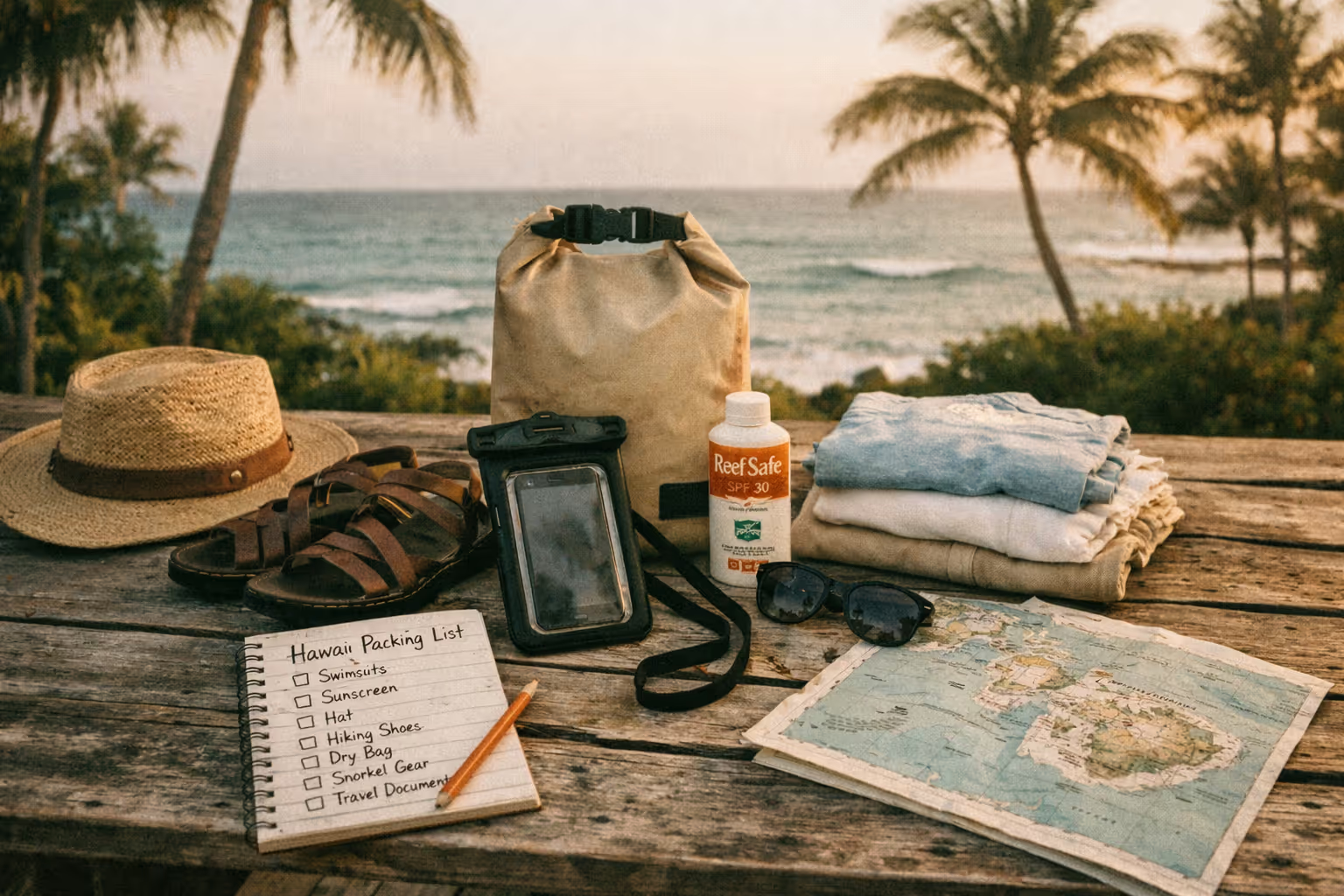
A smart Hawaii packing list starts with two rules the islands impose on you. First, Hawaii law bans chemical sunscreen, so bring reef-safe zinc or titanium from the mainland, where it costs far less than the resort shop. Second, pack an extra swimsuit or two, because nothing dries overnight in that humidity. Then fight to stay carry-on: a 22-inch bag plus a daypack holds a week with packing cubes and skips the $140-to-$160 in checked-bag fees a couple pays round trip.
The Hawaii Packing List: Let’s Start With Luggage
Creating a thorough Hawaii packing list is one of the most important steps before your trip, as how you pack can significantly impact your travel experience and expenses. Checked bags run $35-$40+ per bag, each way on major U.S. carriers (4). For a couple, that’s $140-$160 round trip in fees alone - before you’ve bought a single shave ice.
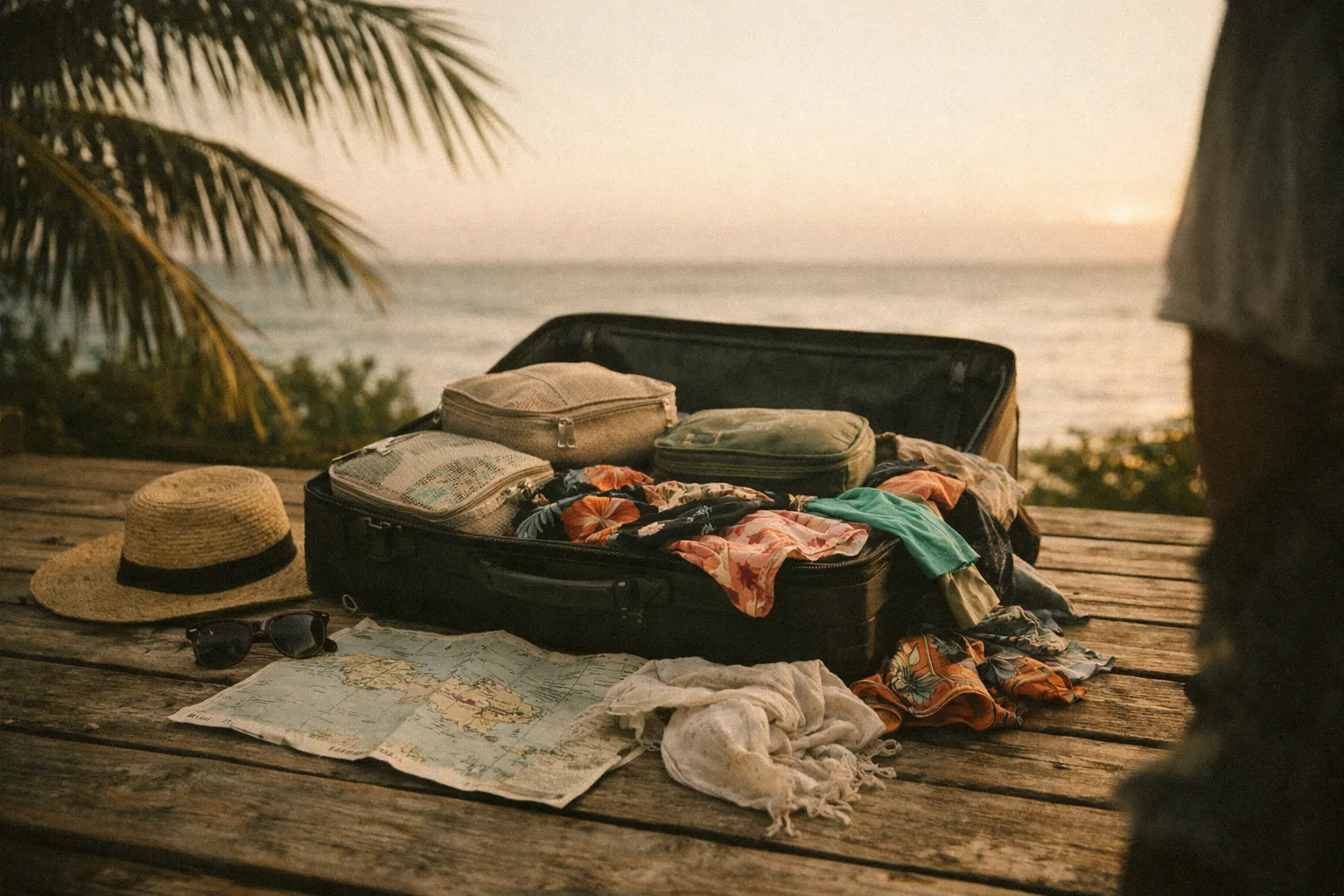
The strategy that works for most 7-day trips is one 22” carry-on plus one personal item (a daypack). Travelers in Hawaii forums regularly fit 8-day trips into a single hard-sided carry-on using compression (4). A hard-sided 22” bag protects gear and forces you to edit. If you’re checking a bag anyway - because you’re bringing snorkel fins, an inflatable board, or you’re a family sharing one large suitcase - then pack the beach gear that saves you rental money on island (more on that below).
Packing cubes and compression bags ($20-$60 for a set) are the difference between a full week of clothes plus beach gear fitting in a carry-on and not. Use them.
For families, the math shifts. Two adults and two kids can share one large checked bag plus carry-ons, and if your fare includes a free checked-bag allowance, use it to bring boogie boards and towels rather than renting.
✓ Pros
- Minimizing checked bags saves $35-$40 each way
- Compression bags and packing cubes maximize carry-on space
- Hard-sided carry-ons protect gear and enforce packing discipline
- Families can leverage free checked-bag allowances for shared gear
✗ Cons
- Bringing bulky items like snorkel fins requires checked bags
- Compression bags add upfront cost ($20-$60)
- Limited space may require laundry mid-trip
1. Light, comfortable clothing
Pack breathable fabrics - quick-dry synthetics and linen - and skip the jeans. Temperatures rarely drop below 78°F during the day, and heavy denim just eats luggage space and stays damp.
A workable 7-day wardrobe for one adult:
- 5 lightweight tops (T-shirts, tanks)
- 3 bottoms (shorts, one pair of light pants)
- 1 casual dress or collared shirt for dinners out
- 1 light jacket, cardigan, or long-sleeve layer
That layer matters more than people think. Haleakalā National Park on Maui sits above 10,000 feet, and summit temperatures can drop into the 40s°F before dawn. I’ve seen the shorts-and-tank crowd shivering in line at the summit parking lot at 5AM - don’t be them. Bring the jacket.
Worth the detour for your packing list: closed-toe shoes. You need one pair of comfortable walking or hiking shoes for trails and lava rock, plus sandals or flip-flops for everything else.
2. Waterproof phone case
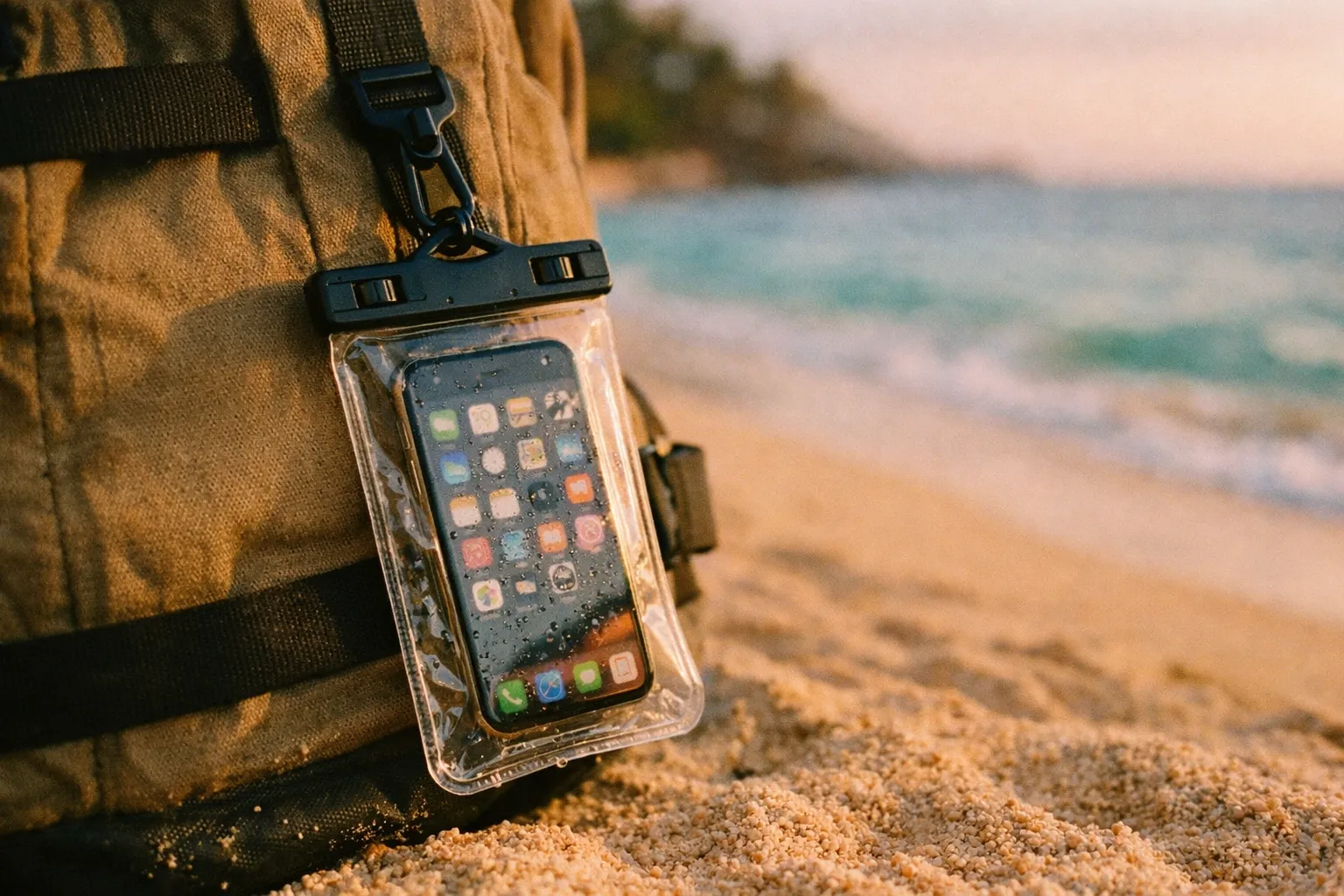
A waterproof phone case ($10-$30) is one of those items you don’t miss until a rogue wave soaks your daypack or you drop your phone off a snorkel boat (1)(3). Get a floating pouch style with a lanyard so you can shoot photos in the shallows and keep it around your neck on catamaran tours. Cruise packing lists now treat these as standard for port days (3).
3. Daytime essentials
Build one grab-and-go daypack (15-25L) and keep it stocked so you’re not hunting for sunscreen every morning. Pre-packing this saves 10-15 minutes at the start of each day.
Your daytime kit, per person:
- Reef-safe sunscreen, SPF 30+ broad-spectrum (3-5 oz)
- Reusable water bottle (18-24 oz)
- Sunglasses with UV protection
- Sun hat with a brim
- Small first-aid kit with insect repellent and any personal medications
- Portable charger - GPS, maps, and photos drain a phone fast
Budget roughly $60-$150 to assemble this kit depending on brands.
A note on reef-safe sunscreen
Hawaii’s reef-safe sunscreen rules were reinforced in 2026, and the guidance is specific: use mineral sunscreens whose only active ingredients are zinc oxide and/or titanium dioxide (8)(9). Chemical formulas containing oxybenzone or octinoxate are discouraged or banned in some locations. Buy your reef-safe sunscreen before you fly - on-island prices at resort shops run 20-50% higher than mainland stores. I got caught by this on a Big Island trip and paid $22 for a tube of mineral SPF I could have grabbed for $12 at home.
4. Mesh water shoes
Bare feet on lava rock is a mistake you make exactly once. Mesh or reef water shoes protect you on rocky snorkel entries, tide pools, and the slippery stream crossings on the Road to Hana (5).
Two solid options worth knowing: the Keen Newport H2 (closed-toe, better for rocky entries and the Road to Hana) or the Speedo Surfwalker Pro (lighter, better for sandy snorkel spots). Prices run $40-$130 per pair. Closed-toe versions double as light hiking shoes, which saves you packing a second pair.
5. Dry bag
A 5-10L dry bag ($15-$40) fits inside your daypack and holds your phone, wallet, and a compact camera on kayak trips, snorkel cruises, and beach days when nobody’s watching your stuff (6). Roll the top three times and clip it. This is the item that keeps your electronics alive when the boat takes a wave over the bow.
6. Sand-resistant beach towel
Hotel towels are bulky, sometimes restricted to the pool, and hold sand like a sponge. A microfiber sand-resistant towel - the Nomadix Original Towel runs about $40-$50, weighs around 1 lb, packs down to roughly 16” x 7” rolled, and is made from recycled materials. It dries between your morning and afternoon swims and shakes clean, which means less sand tracked into your rental car.
Cotton towels are cheaper ($15-$25) but heavier and slower to dry. For a carry-on trip, the microfiber towel earns its price in packed space alone.
7. Underwater camera
Snorkel tours love to sell you a photo package. Over a 7-10 day trip, bringing your own underwater camera or waterproof phone housing saves $100+ in rental and photo fees. Dedicated action cams (GoPro-style) run $200-$400; a budget waterproof phone housing starts at $20-$50 and gets you turtle and reef photos without renting anything. If you already own a GoPro, that’s your answer - just bring extra batteries.
8. Rash shirt
A long-sleeve rash guard rated UPF 50+ is the single most underrated item on this list. Two to three hours in the water and unprotected shoulders will burn straight through morning sunscreen. A rash shirt replaces one or two sunscreen reapplications, protects better in strong UV, and saves product (1). Pack one per swimmer. On boogie-boarding and snorkel-heavy days, it’s the difference between dinner out and dinner in an aloe-covered heap.
9. Beach cover-up
A beach cover-up that passes for casual streetwear lets you walk from the sand into a shop or a beachfront restaurant without changing. Many places have loose dress codes but frown on dripping swimwear. Pack one or two - a linen shirt for men, a light dress or wrap for women. It solves the “we’re hungry but we’re all wet” problem every single beach day.
10. Wrist/waist wallet
Leaving your wallet on a towel while you snorkel is an invitation. A wrist or waist wallet ($15-$40) holds $100-$200 in cash, your ID, and a card or two on your body while you’re in the water. Waterproof wrist versions pair well with your dry bag - cash and cards stay on you, phone and camera go in the bag.
11. Inflatable boogie board
Renting bodyboards at beach stands runs $20-$40 per day (8). A packable inflatable board like the Inflatable Boog Mat costs $169.99-$239, includes a pump, repair kit, and carrying bag, and packs down to about backpack size (20” x 12”) (7). The pump adds 1-2 lb to your luggage. For a family on a longer trip hitting multiple beaches, it pays for itself in about a week and works anywhere you can drive to - not just the spots with rental stands.
Hawaii packing list men
Men’s lists stay lean. The core:
- 2-3 swim trunks (rotate so one dries)
- 4-5 T-shirts
- 2-3 shorts
- 1 pair closed-toe shoes (hiking/walking)
- 1 pair flip-flops or sandals
- 1 UPF 50+ rash guard for snorkel and board days
- 1 collared shirt for dinners out
- Quick-dry underwear, one per day
Prioritize quick-dry shorts that double as swimwear and casual wear - that single swap cuts two items from your bag (9).
What Women Should Pack for Hawaii
Women’s lists add variety for dinners and beach-to-street transitions (4):
- 2-3 swimsuits (bikinis, one-pieces, or a mix)
- 5 tops plus a couple of active tops
- 3 bottoms (denim or linen shorts, one light pant)
- 1 sundress or maxi dress for dinners
- 1-2 beach cover-ups
- 2-3 bras or sports bras
- Seamless underwear - pairs cleanly under light dresses and shorts
- 1 UPF 50+ rash guard
- Casual jewelry you won’t mind losing on a beach
The maxi dress is your worth-the-detour item: it packs flat, works for dinner and casual sightseeing, and covers you at sacred sites where modest dress is expected.
Packing for 10 Days in Hawaii
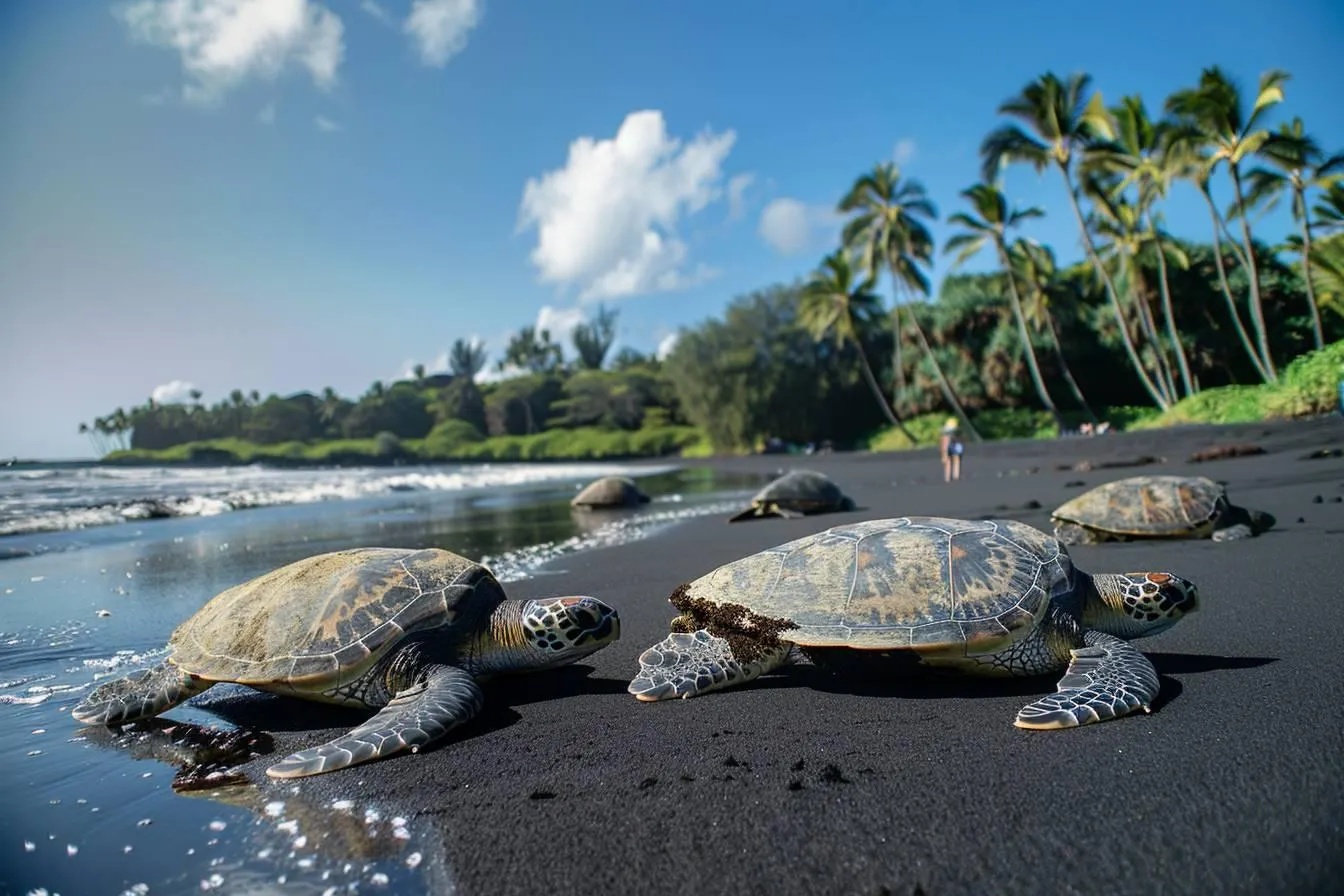
For a 10 days in Hawaii packing list, you’re not simply scaling the 7-day list up by 40% - you’re deciding between packing more or doing laundry. Resort laundry runs $4-$8 per load, so a mid-trip wash at a laundromat or your rental’s machine is often cheaper than checking a second bag.
The efficient approach for 10 days:
- 7 tops, worn on rotation with one laundry cycle
- 4 bottoms
- 3 swimsuits - critical, since suits don’t fully dry overnight in humidity
- 2 rash guards
- 2 pairs of shoes (closed-toe + sandals) plus water shoes
- 7+ pairs of underwear and socks (more if you’re hiking multiple days)
- 1 light jacket for Haleakalā, Mauna Kea, or rainy windward drives
If you’re island-hopping over 10 days, remember inter-island flights have their own baggage rules. Keep the carry-on system going and you avoid fees at every leg.
What to Pack for a Hawaii Cruise
A Hawaii cruise packing list looks different from a land trip. Cabins are small - roughly 120-180 sq ft - with limited closet and shelf space, so multi-use outfits and travel-size toiletries are the rule (3).
Cruise-specific priorities:
- 5 tops, 3 bottoms that mix and match
- 1-2 smart-casual outfits for dinners - most lines require smart casual, not formal
- 1 lightweight rain jacket and a compact umbrella for port days
- 1 daypack for shore excursions
- Waterproof phone case and portable charger for port days
- Swimsuits, hats, sunglasses for beach stops
- Travel-size toiletries - bathroom shelves are tiny
The common cruise mistake is overpacking eveningwear. One dressier outfit plus smart casual covers a 7-10 night itinerary; multiple formal outfits just waste your limited cabin space (3).
Packing for a Family Trip to Hawaii
Traveling with kids changes the quantities more than the categories. The guiding rule: at least 2 swimsuits per person, so nobody waits for a wet suit to dry before the afternoon swim (2).
Family essentials:
- 2 bathing suits per child (and per adult)
- 1-2 pairs of underwear per day, 3-4 pairs of socks if hiking
- Rash shirts for every swimmer - kids burn fast
- Sun hats and sunglasses for each child (2)
- Tennis or hiking shoes plus flip-flops
- Swim diapers for babies (buy before you fly - on-island prices are steep)
- Child-specific reef-safe sunscreen
- 1 beach bag and a sand-resistant towel per person
- Inflatable boogie board - a dedicated water toy that beats per-day rentals
Buy diapers, swim diapers, and kid sunscreen on the mainland. Resort and convenience-store prices run 20-50% higher. For more on keeping the whole crew happy, see our guide to Hawaii Adventure: Kids, Beaches & Culture.
Printable
Here’s a Hawaii packing list Printable table - copy it into your notes or print it for a quick pre-flight check. Quantities are per adult for a 7-day trip; scale up for 10 days or add a column per family member.
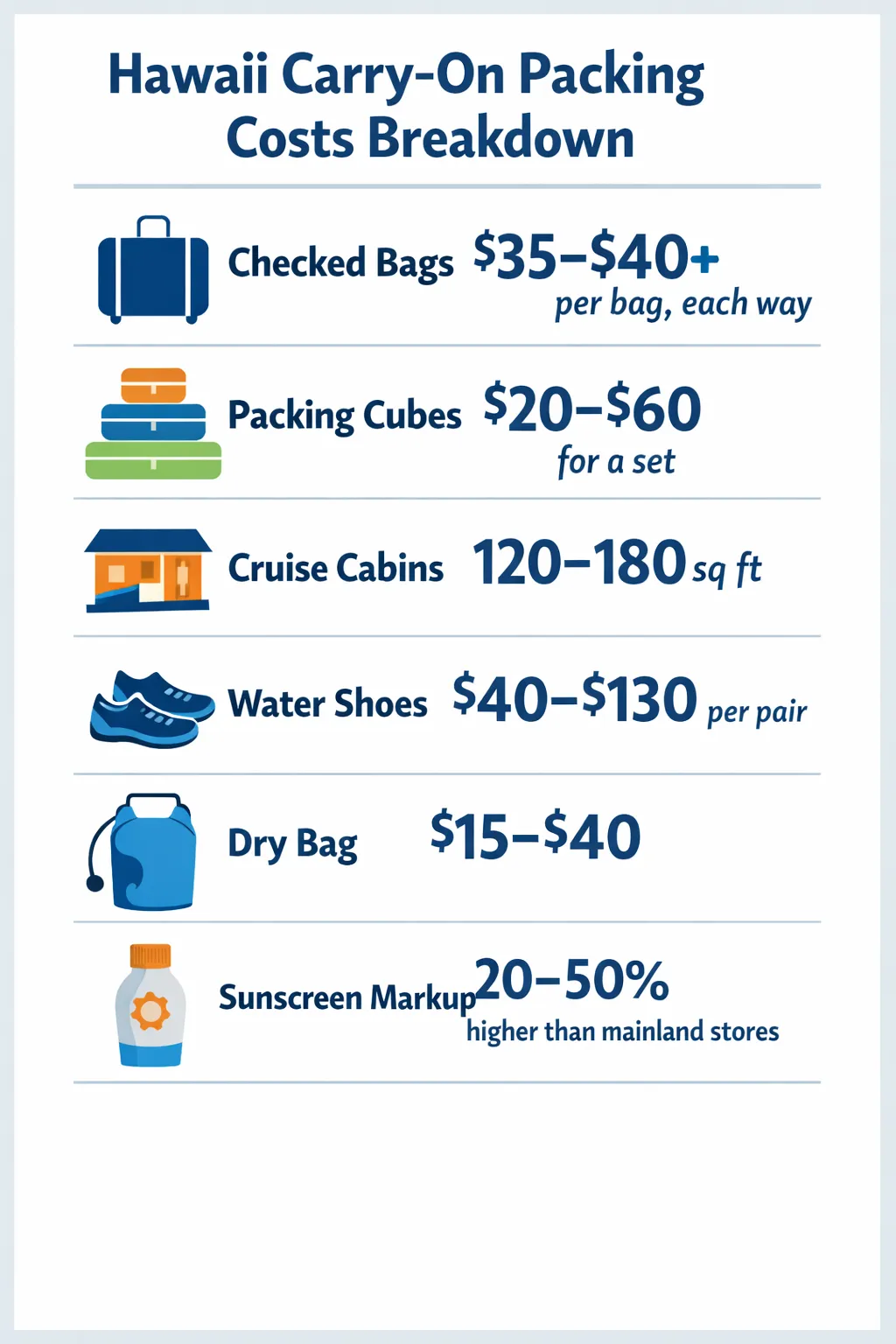 Carry-on packing costs for Hawaii: bag fees ($35-$40+ per bag, each way), packing cubes ($20-$60 for a set), cruise cabins (120–180 sq ft), water shoes ($40-$130 per pair), dry bag ($15-$40), sunscreen markup (20–50% higher than mainland stores).
Hawaii Packing List Printable
| Lightweight tops | Bottoms (shorts/light pants) | Swimsuits | UPF 50+ rash guard | Beach cover-up | Dinner outfit (dress/collared shirt) | Light jacket/layer | Closed-toe shoes | Sandals or flip-flops | Mesh water shoes | Reef-safe sunscreen (zinc/titanium) | Sun hat + sunglasses | Reusable water bottle | Dry bag | Waterproof phone case | Sand-resistant towel | Wrist/waist wallet | Underwater camera/housing | Portable charger | First-aid kit + meds | Packing cubes | |
|---|---|---|---|---|---|---|---|---|---|---|---|---|---|---|---|---|---|---|---|---|---|
| Quantity | 5 | 3 | 2-3 | 1-2 | 1-2 | 1 | 1 | 1 pair | 1 pair | 1 pair | 2 | 1 each | 1 | 1 | 1 | 1 | 1 | 1 | 1 | 1 | 1 set |
| Notes | Quick-dry synthetics or linen | One pair doubles for hikes | Rotate so one dries | Replaces sunscreen reapplications | Beach-to-restaurant transition | Smart casual | For Haleakalā and high elevations | Walking/hiking | Beach and town | Rocky entries, Road to Hana ($40-$130) | SPF 30+, buy before you fly | UV index hits 9-11+ | 18-24 oz | 5-10L ($15-$40) | $10-$30 | Microfiber, about 1 lb ($40-$50) | $100-$200 cash + cards | Saves photo-package fees | Maps and photos drain phones | Include insect repellent, seasickness meds | $20-$60, fits it all in carry-on |
Packing tips for Hawaii travel
Beyond the gear, a few habits make the trip smoother and more responsible.
Buy consumables before you fly. Sunscreen, diapers, snacks, and toiletries all cost 20-50% more on island. Anything you can pack instead of buy is money toward experiences.
Respect the land (aina). Hawaii’s ecosystems are fragile. Stick to marked trails and public beaches, and leave no trace. Reef-safe sunscreen isn’t just a rule - it directly protects the coral you came to snorkel over (9).
Modest dress at sacred sites matters. Heiau and other culturally significant spots expect it. That cover-up and light dress in your bag aren’t just for restaurants.
Know your vehicle’s limits before committing to a remote beach. I drove sections of the Big Island’s rougher access roads last year and watched more than one rental sedan turn back at the first rutted stretch. If the road requires a high-clearance 4WD, believe it.
Frequently Asked Questions
- How many swimsuits should I pack for Hawaii?
- Pack at least two swimsuits per person, three for longer trips, as suits don't fully dry overnight in Hawaii's humidity.
- Do I need reef-safe sunscreen in Hawaii?
- Yes. Hawaii requires mineral sunscreens with zinc oxide and/or titanium dioxide; buy before you fly to avoid higher island prices.
- Can I pack for a week in Hawaii in just a carry-on?
- Yes. A 22" carry-on plus a daypack with packing cubes fits a 7-day wardrobe and avoids checked-bag fees.
- What should I not pack for Hawaii?
- Avoid heavy jeans, multiple formal outfits, full-size toiletries, and non-reef-safe chemical sunscreens.
- What's different about packing for a Hawaii cruise?
- Cruise packing prioritizes multi-use outfits, one smart-casual dinner set, travel-size toiletries, and a daypack with rain gear.