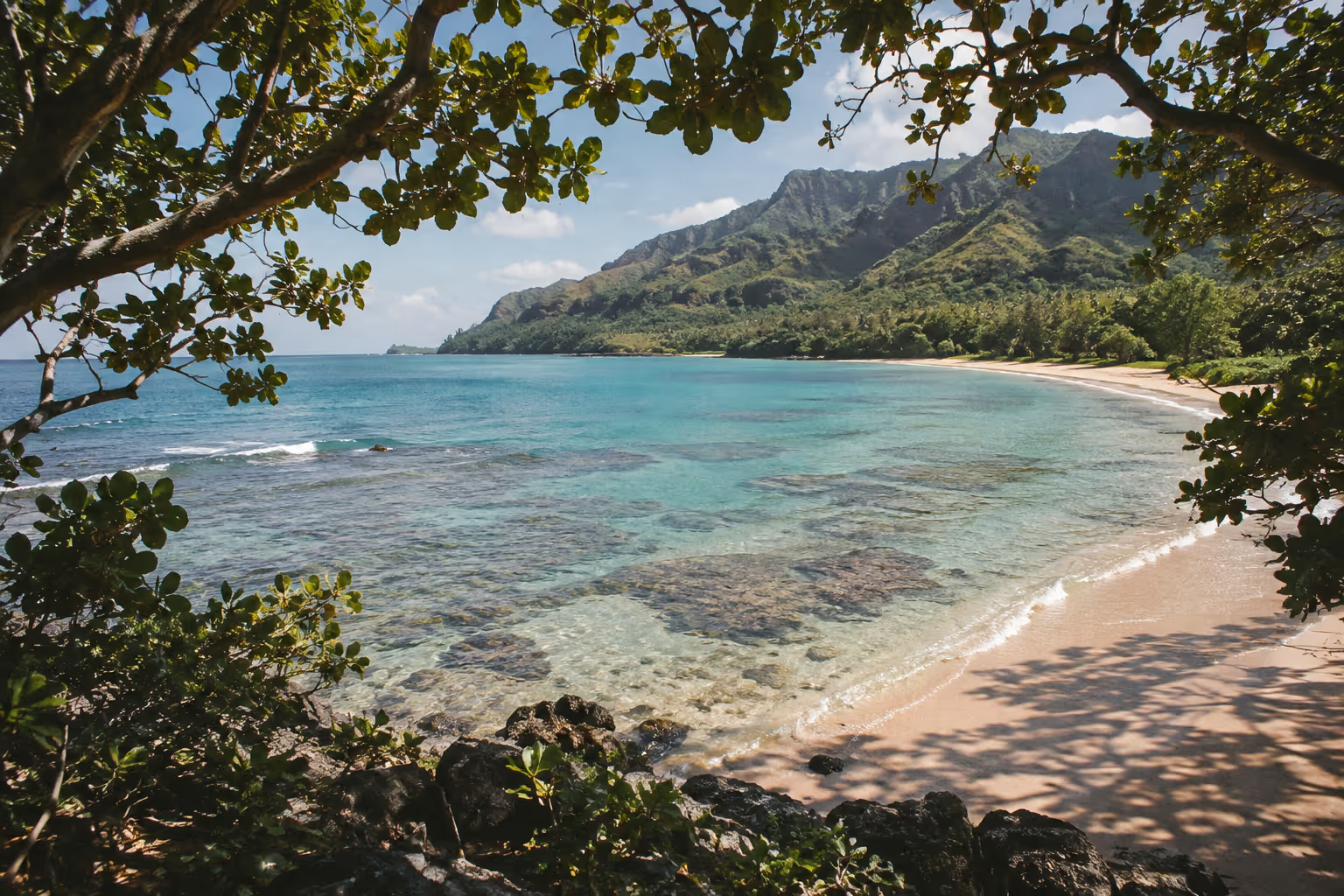
Kauai snorkeling comes down to one question each morning: what is the surf doing on the shore you planned to visit? A beach’s reputation does not answer that. Hawaii’s state ocean safety guidance lists high surf, high winds, heavy shorebreak and strong currents as bad conditions for snorkeling, and says not to go snorkeling if conditions appear dangerous (7). Below, each major beach is matched to its season, its exposure and your swimming ability, followed by the checks to run before you get wet.
On the plus side, Kauai’s reefs sit close to shore, turtles are a regular sight, and you can choose from several sheltered sites, including a lava-rock lagoon and a rock-protected bay. On the downside, seasonal swells shut down whole coastlines for months, Ke’e Beach requires an advance Hā’ena State Park reservation, and parking is limited at several of the best spots.
✓ Pros
- Shore access makes it possible to choose a snorkel site without joining a boat trip.
- Protected lagoons and bays give less experienced swimmers some options when conditions are suitable.
✗ Cons
- A seasonal plan can be overturned by the conditions at a specific beach that morning.
- Some of the most appealing sites require advance planning or compete for limited parking.
Getting there and cost: You fly into Lihue and drive. Every site below is reached by car from the coastal highway, so a rental is the practical choice, and as of October 2026 the stretch from Princeville to Ke’e Beach is open to all traffic again (10). One guide lists free parking at Poipu, Anini and Salt Pond (2). Hā’ena State Park, home to Ke’e Beach, is the exception: the state lists non-resident rates of $5 per person for entry and $10 per vehicle for parking (12), while the Go Hā’ena booking site charges $20 per car per parking timeslot plus $5 per person (8), and as of October 2026 the park is open again after its hurricane closure (9). Compared with a boat tour, shore snorkeling costs very little beyond your gear and the car you were renting anyway.
Kauai Snorkeling by Season: South Shore Winter, North Shore Summer
The Kauai snorkeling season splits by shore: North Shore beaches are calmest from May through September, and South Shore beaches like Poipu are the better bet in winter (2)(6). That is the most useful planning rule for the island, but it is not a safety guarantee. A calm-season beach can still get a swell, and state guidance says not to go snorkeling when high surf, high winds, heavy shorebreak or strong currents make conditions look dangerous (7).
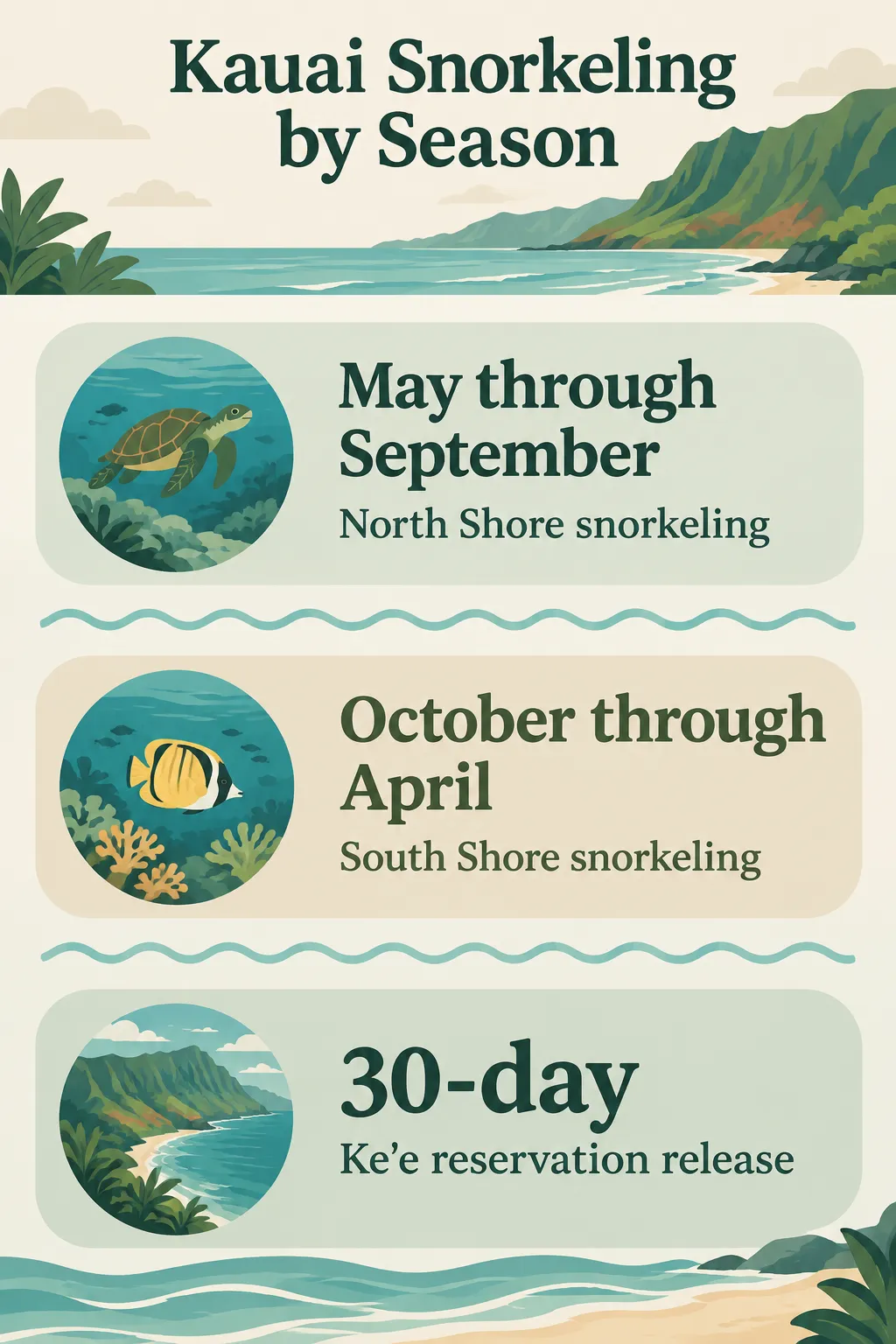 North Shore sites are calmest from May through September and South Shore sites from October through April (2)(6); Hā’ena State Park reservations for Ke’e open 30 days ahead (8).
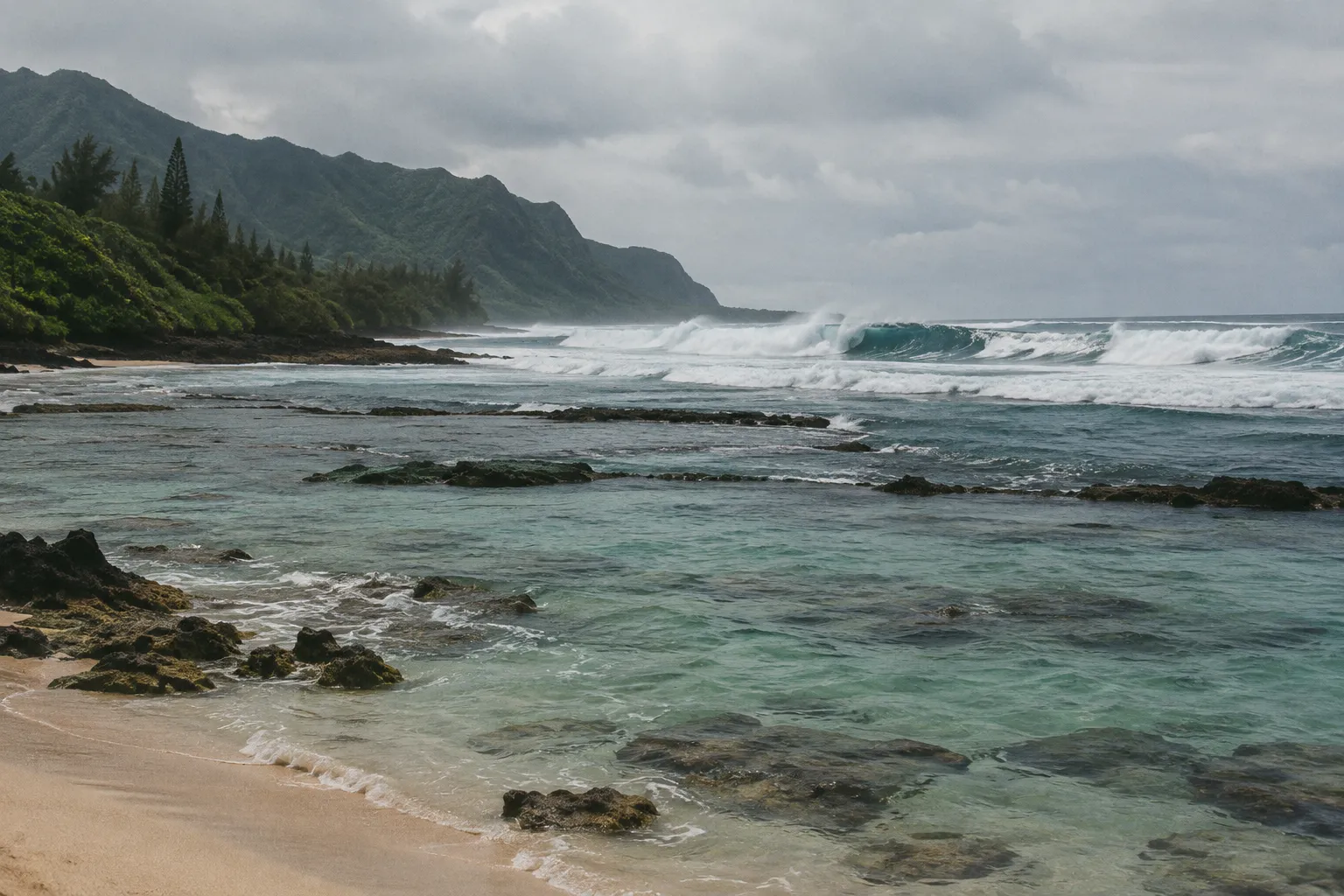
Why South-Facing Beaches Calm Down in Winter
From October through April, north swells hit the North Shore with heavy shorebreak (2). South-facing Poipu does the reverse: it settles down in winter and gets rough in summer (6). If your trip falls between October and April, build it around the South Shore. Poipu Beach Park, Lawai Beach and Salt Pond Beach Park are the usual winter options, and none of them needs a Hā’ena State Park reservation (2). As of October 2026, Salt Pond, on the west side, is still closed: the County of Kaua’i’s October 1 and October 2, 2026 Hurricane Lowell recovery updates list it among closed county parks (11)(13), so check its status before you count on it.
Why North Shore Sites Work Best in Summer
From May through September, the North Shore turns calm and clear (2)(6). That window opens up Tunnels, Ke’e, Anini and Hideaways, the island’s strongest cluster of reef sites. Outside it, treat those beaches as places to look at, not swim at.
Best Snorkeling on Kauai: Matching Beaches to Your Skill Level
The best snorkeling on Kauai for most visitors means picking a sheltered site if you are not a strong ocean swimmer, and saving open reefs for when you are. State guidance says that anyone who plans to snorkel in Hawaii should be an experienced ocean swimmer, familiar with the risks of high surf, strong currents and waves breaking in shallow water (4)(7). The state also notes that more Hawaii visitors drown while snorkeling than during any other activity (7).
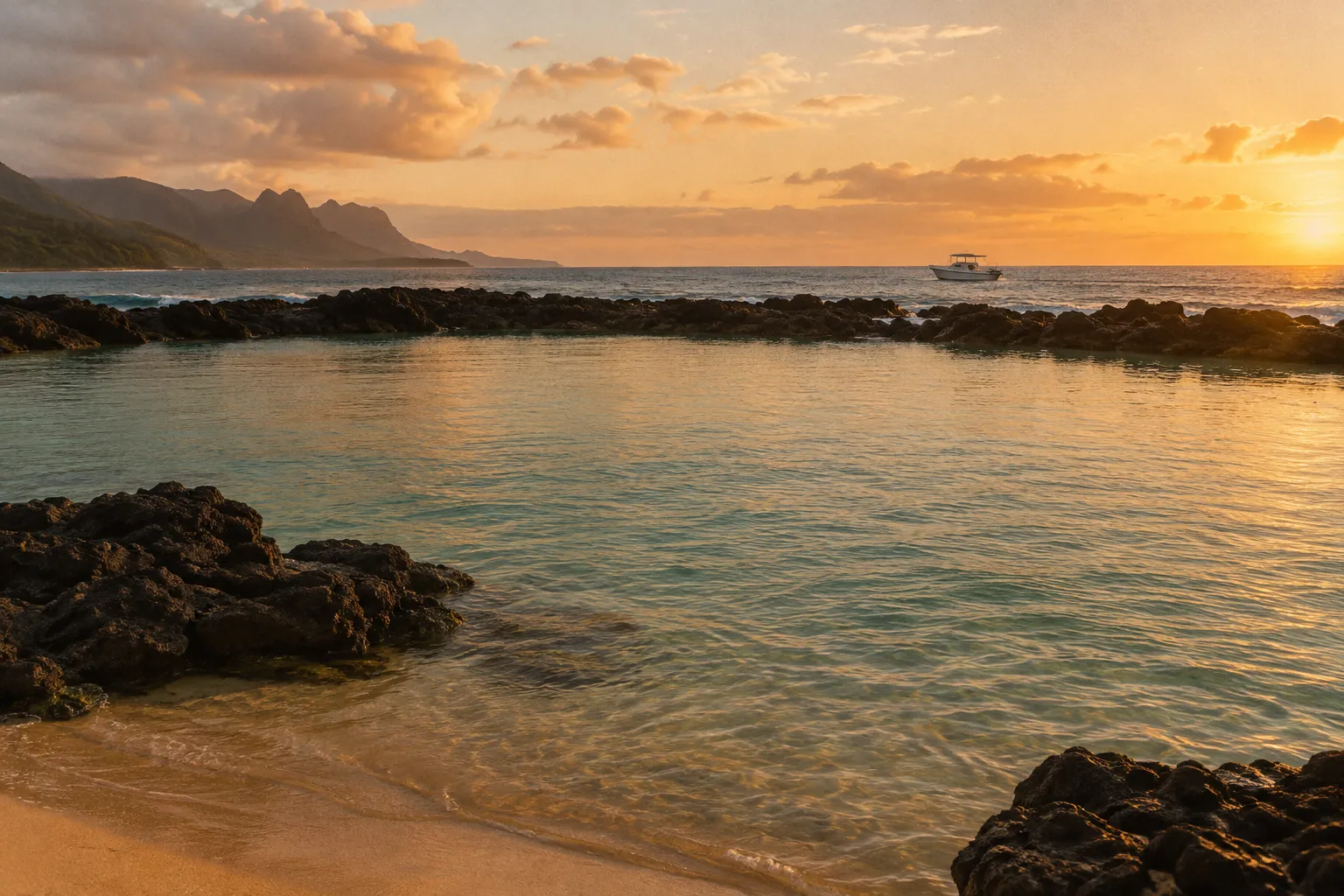
Sheltered, Beginner-Friendly Picks
- Lydgate Beach Park: Two lagoons walled with lava boulders keep out the waves (6). It is the most controlled water on this list.
- Poipu Beach (eastern bay): The east side typically holds calmer water (2). Lifeguards are on duty and the facilities are full.
- Anini Beach: Calm and shallow. North Shore, summer only.
Even at these sites, verify the day’s conditions and stay inside the protected area.
Reef Sites for Experienced Swimmers
- Tunnels (Makua) Beach: Lava tubes, arches and small caverns give the reef its name (6). The outer reef has current (2).
- Ke’e Beach: A fringing reef wraps close to shore, with a strong current near the reef channel at the west end (6), and you need a reservation to get in; as of October 2026, Hā’ena State Park has reopened after its hurricane closure (9).
Here is how the five main sites compare:
- Poipu is on the South Shore and best in winter. It suits beginners in its eastern bay, and one guide lists a free lot (2).
- Lydgate is on the east side and is calm year-round inside its walled lagoons (6). It suits beginners.
- Anini is on the North Shore and best in summer. It suits beginners in calm conditions, and parking is free along the road (2). The water is shallow and calm.
- Tunnels is on the North Shore and best in summer. It is for experienced swimmers, and you park at Haena Beach Park and walk. The outer reef is open water. As of October 2026, the highway there is open to all traffic again (10).
- Ke’e is on the North Shore and best in summer. It is for experienced swimmers and requires a reservation, and as of October 2026 Hā’ena State Park has reopened (9). The reef is protected nearshore, with a strong current near its west-end channel (6).
Poipu Beach Snorkeling: Eastern Bay vs Western Bay
For Poipu Beach snorkeling, choose the eastern bay. A sandbar splits Poipu into two coves that behave differently (2)(6), and the east side typically holds calmer water (2). The eastern side is the one to set up on with a family or a nervous swimmer. Treat the western bay as the more exposed option and check it before you commit.
Facilities at Poipu are among the best on this list: restrooms, showers, picnic tables and parking right by the beach (6), plus lifeguards (2). Lifeguards are a real advantage here. State guidance says to check with a lifeguard about current conditions and potential hazards before you go in (5), and at Poipu you can.
Poipu is a winter beach. In summer it turns rough (6), so a June trip may find the North Shore a better choice.
Tunnels Beach Snorkeling: Reef, Access, and Parking at Haena Beach Park
Tunnels Beach snorkeling means parking near Haena Beach Park and walking a short way down the sand to Tunnels (Makua) Beach, then staying near shore on a reef known for its lava tubes and arches (6). The reef is worth the detour in summer. In winter, or on any day with swell, it isn’t. As of October 2026, the highway there is open to all traffic again (10).
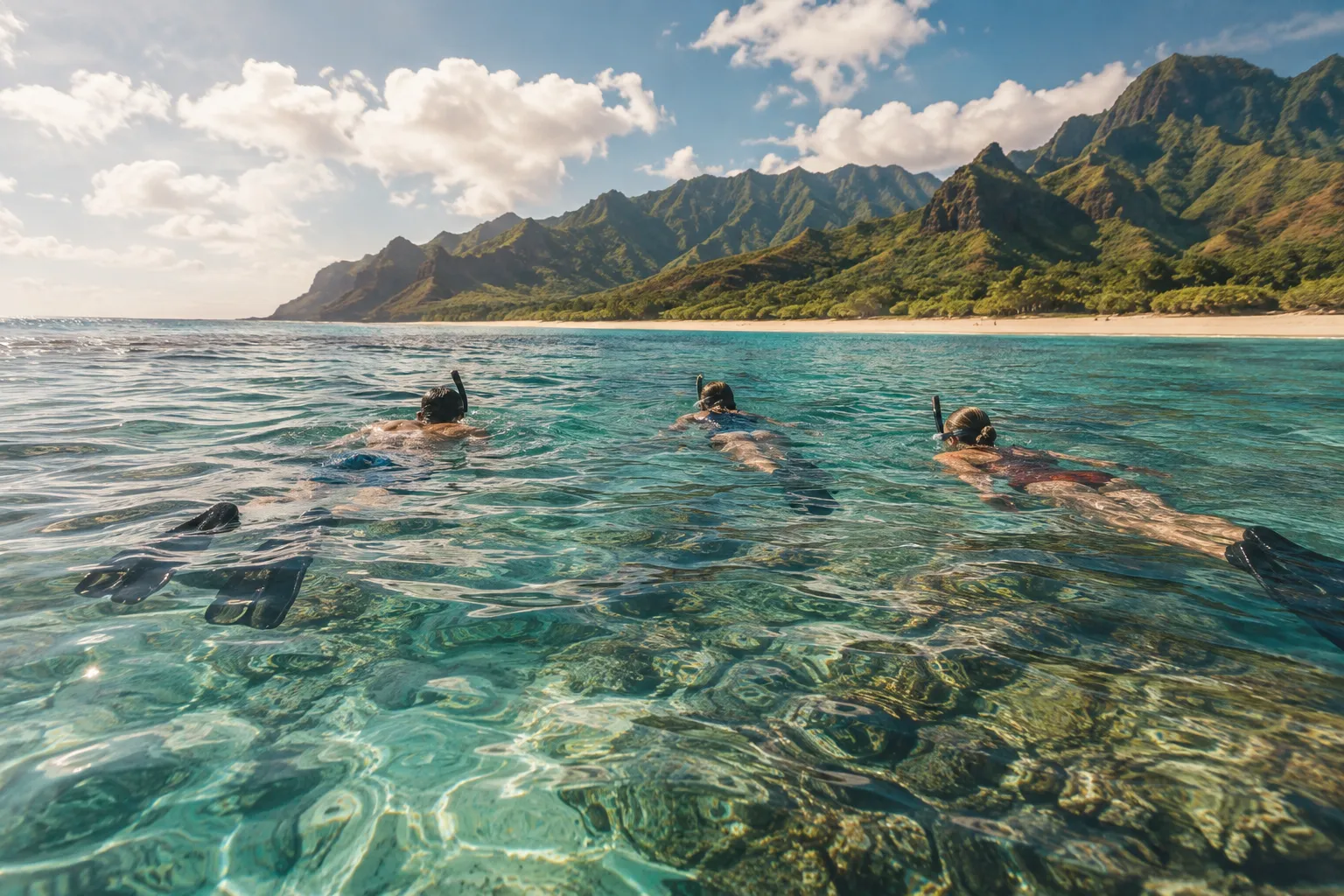
Getting There From Haena Beach Park
Don’t confuse the two Hā’ena names. Haena Beach Park is the access point for Tunnels and does not require the state park reservation. Hā’ena State Park, farther along the road, contains Ke’e Beach and does require one. Mix them up and you either book a reservation you didn’t need or turn up at a gate without one. Roadside parking near Haena Beach Park is limited, so arrive early (6). As of October 2026, the state Department of Transportation lists Kūhiō Highway from Princeville to Ke’e Beach as open to all traffic again, after weeks of local-only access while hurricane debris was cleared (10).
Staying Close to Shore on the Reef
The outer reef at Tunnels has current (2), and state guidance is to stay close to shore so you can get out quickly if you tire (5). It also says to avoid rocky areas and shallow reef where it may be hard to stand or tread water if you need a break (7). On a reef like Tunnels, that means planning your rest stops before you need them. Don’t stand on the reef or touch coral, and keep your distance from green sea turtles (7).
Anini Beach: Shallow Water Behind a Long Fringing Reef
Anini Beach is the calmest North Shore choice for beginners, with shallow, sheltered water behind what one guide calls the longest fringing reef in Hawaii (6). The depth at the shoreline is no more than four to five feet, and there is no lifeguard, so stay in the shallow, sheltered areas and avoid the channel on the northwest side of the beach (6).
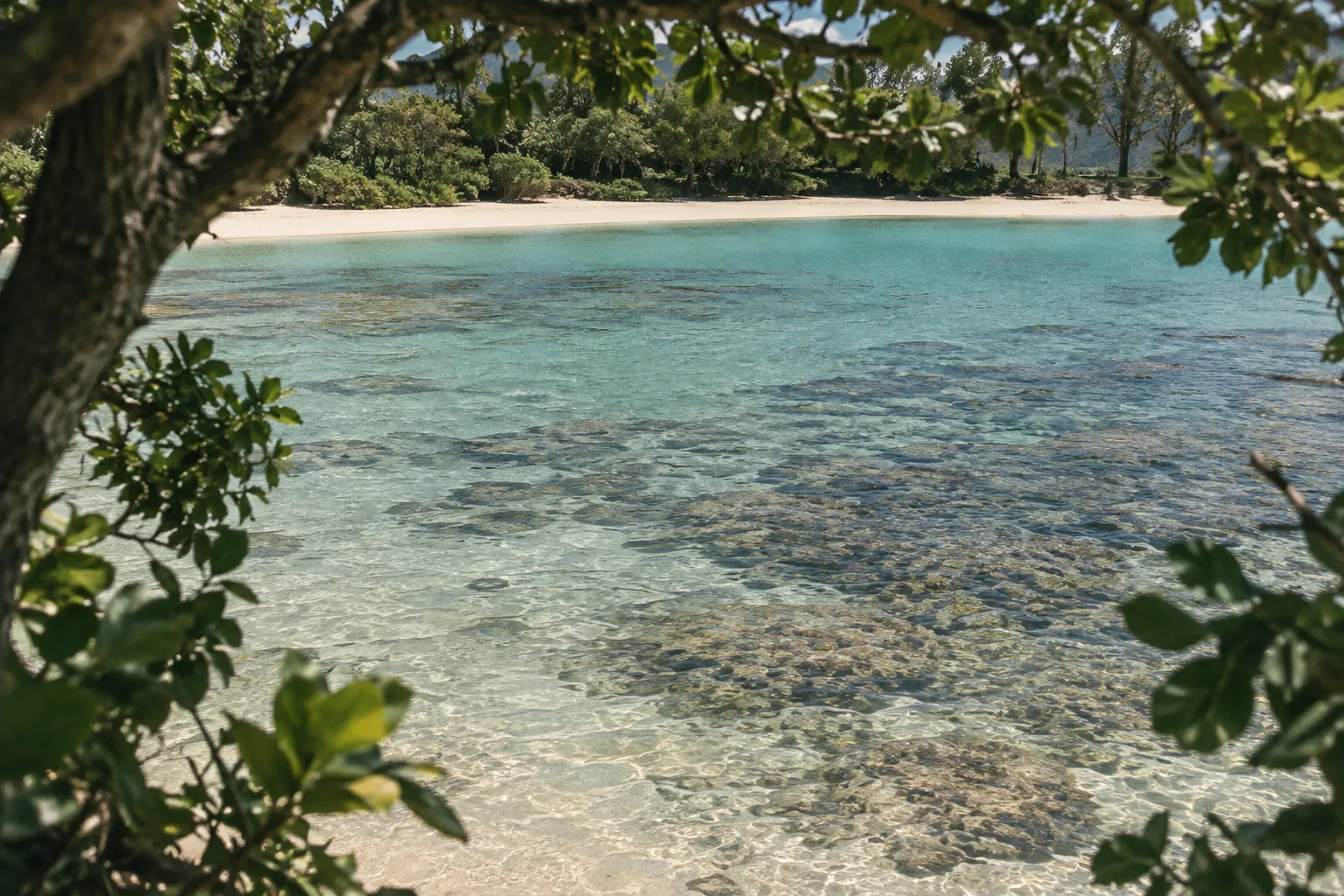
Species diversity increases farther out toward the reef (6), so judge the distance against your swimming ability. For your entry point, pick a sandy stretch rather than going in over rock or shallow reef. That follows the state’s advice to avoid areas where standing or treading water is difficult (7).
Like the rest of the North Shore, Anini becomes an unreliable entry from October through April (2).
Ke’e Beach and Lydgate Lagoon: Reservations, Reefs, and Currents
Ke’e Beach and Lydgate Beach Park both feel protected, and at both the calm water ends at a reef or a rock wall. Stay inside it.
Ke’e’s Reservation Requirement and Reef Current
Ke’e Beach has two separate barriers, and you need to clear both. The first is booking. Ke’e sits inside Hā’ena State Park, which requires an advance reservation through gohaena.com (2). Reservations open 30 days ahead at midnight Hawaii time, and parking slots usually sell out right away (8). As of October 2026, Hā’ena State Park has reopened after its Hurricane Lowell closure, although the state says most other Kaua’i state parks remain closed during recovery from Hurricanes Lowell and Nolo (9), and the Go Hā’ena site says its shuttle service resumed when the park reopened on October 15 (8), so check the park notices before you plan around a date. The second is conditions. The nearshore reef is sheltered, but a strong current runs near the reef channel at the west end (6), so a reservation for the right day still means checking the water that morning. If it looks wrong, the reservation doesn’t matter.
Lydgate’s Lagoon Boundary
Lydgate’s two lagoons are walled with lava boulders that keep the waves out (6). The rule is simple: snorkel inside the lagoon and treat the rock wall as your boundary. That makes Lydgate the best first snorkel on the island for children and first-timers, as long as everyone understands where to stop.
Daily Conditions, Timing, and Safety Checks Before You Go
Before any Kauai snorkel, check that morning’s surf and weather report, read the posted beach signs, and ask a lifeguard if one is on duty (1)(5). This matters more than any season chart. Local weather reports often include a surf forecast with wave heights for each shore (5), which tells you which side of the island is workable that day.
What to Check the Morning You Go
- Surf height for the shore you are heading to, plus wind and any warnings
- Posted warning signs at the beach (5)
- What the lifeguard says about hazards (5)
- Whether you have a buddy, and whether someone on land knows where you are and when you’ll be back (4)(7)
If you are unsure about a state park area, contact the district office (1).
Why Morning Beats Afternoon
Morning is usually the best time to snorkel. Hawaii Ocean Safety cites better visibility, calmer ocean conditions and more marine-life activity then (7). Wind often picks up in the late morning or afternoon, which makes the swim back harder (4). Don’t overcorrect, though. The state advises against snorkeling at dawn, at dusk or in murky water (7). Aim for a mid-morning entry after full daylight.
Snorkeling Gear That Works (and the Mask to Skip)
Good snorkeling gear starts with fit. Your mask should seal without leaking, your fins should fit snugly and your snorkel should be clear. The state recommends testing all of it and using anti-fog treatment before you swim (7). If the gear is unfamiliar, practice with it in shallow water first. If you are a weaker swimmer, consider a snorkeling flotation vest or belt, and save energy by floating rather than kicking constantly (7).
Full-face masks are not an automatic upgrade. Hawaii Ocean Safety says evidence on their risks is still being studied, and recommends correct fit and practicing removal before you enter the water (7). Do not use OUSPT-brand full-face snorkel masks. The state’s page reports a March 2026 CPSC warning against them, citing user complaints of breathing difficulty, light-headedness and loss of consciousness (7). With any mask, get out of the water if you feel dizzy, disoriented or develop a headache. The state identifies these as possible signs of carbon-dioxide buildup (7).
Frequently Asked Questions
- Is snorkeling better in Kauai or Oahu?
- Kauai suits travelers who prefer shore-entry reefs and are comfortable driving between beaches; Oahu is easier to pair with city stays and urban transport.
- Which island is better for snorkeling, Maui or Kauai?
- Choose Maui if boat-based snorkeling is a priority, and Kauai if you want to plan shore-entry sessions around a rental car and daily conditions.
- What are the current snorkeling conditions in Kauai?
- Check Hawaii Ocean Safety and a local surf report on the day you plan to swim; conditions can differ between shores and change after forecasts are posted.
- What is the best time of day to snorkel in Kauai?
- Aim for mid-morning in full daylight, after checking conditions; do not treat an early start as a reason to enter murky or hazardous water.
- When is Ke'e Beach safe for snorkeling?
- As of October 2026, Hā'ena State Park, which contains Ke'e, has reopened after its Hurricane Lowell closure, but check the state park notices first. Ke'e is only a candidate when the nearshore water is calm and the day's conditions are suitable; a park reservation does not establish that the ocean is safe.
- When should you arrive at Hideaways Beach to find parking?
- Arrive early in the morning: parking near the Hideaways trailhead is often just a handful of spaces, and no fill time is guaranteed.
Planning Your Kauai Snorkel Days
Use the seasonal pattern to rough out your plan: South Shore sites like Poipu from October through April, and North Shore sites like Tunnels, Anini and Ke’e from May through September. Then make the real go or no-go decision each morning, based on that day’s surf, wind and current. If Ke’e is on your list, check the state park notices first (Hā’ena State Park reopened in October 2026 after its hurricane closure) (9), then book it ahead and treat the reservation as permission to check the water, not permission to swim. Test your mask and fins before your first snorkel, leave any OUSPT full-face mask at home, and bring a buddy. Before you pack the fins each morning, open Hawaii Ocean Safety’s snorkeling and current conditions pages and check them against the shore you were planning to visit.