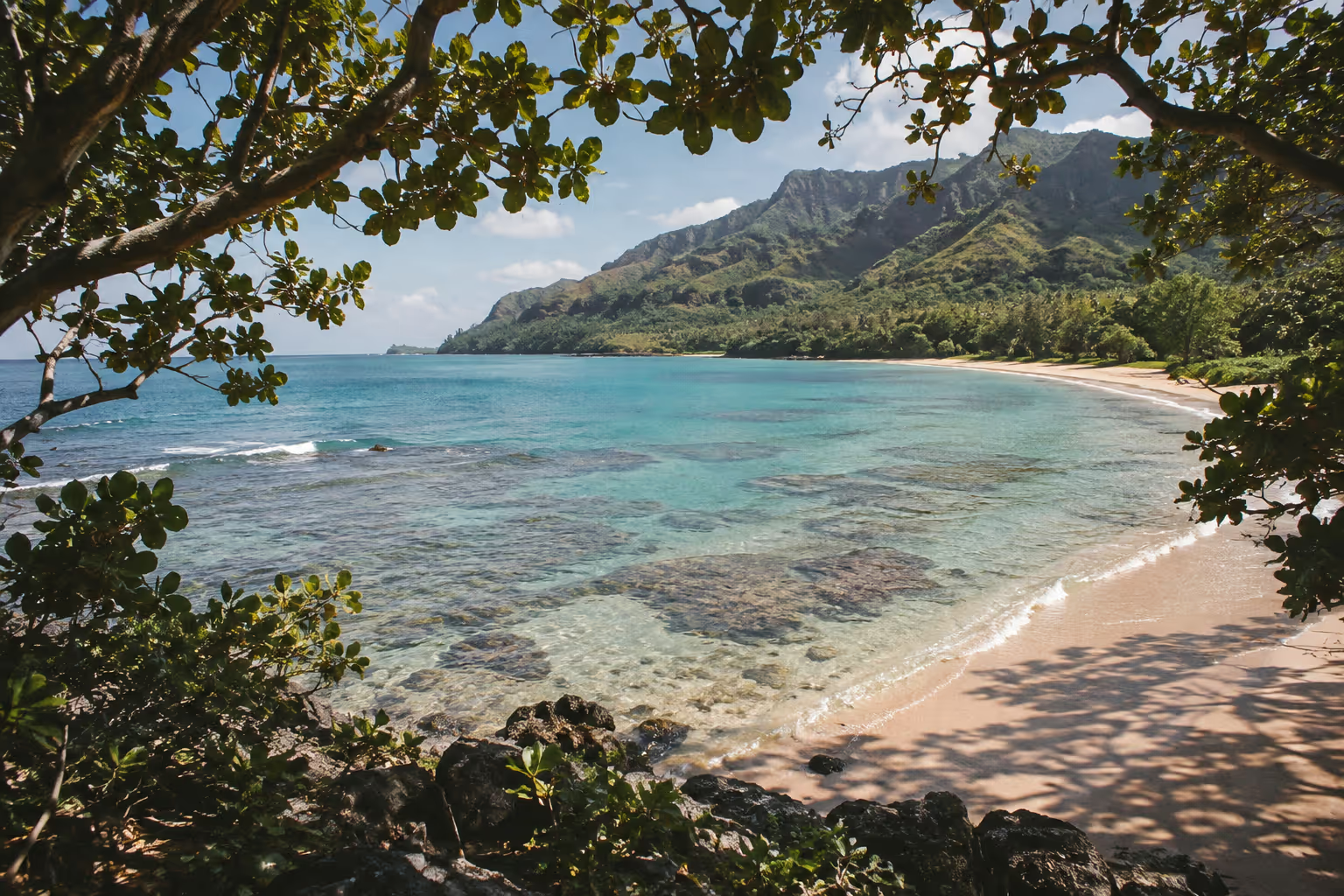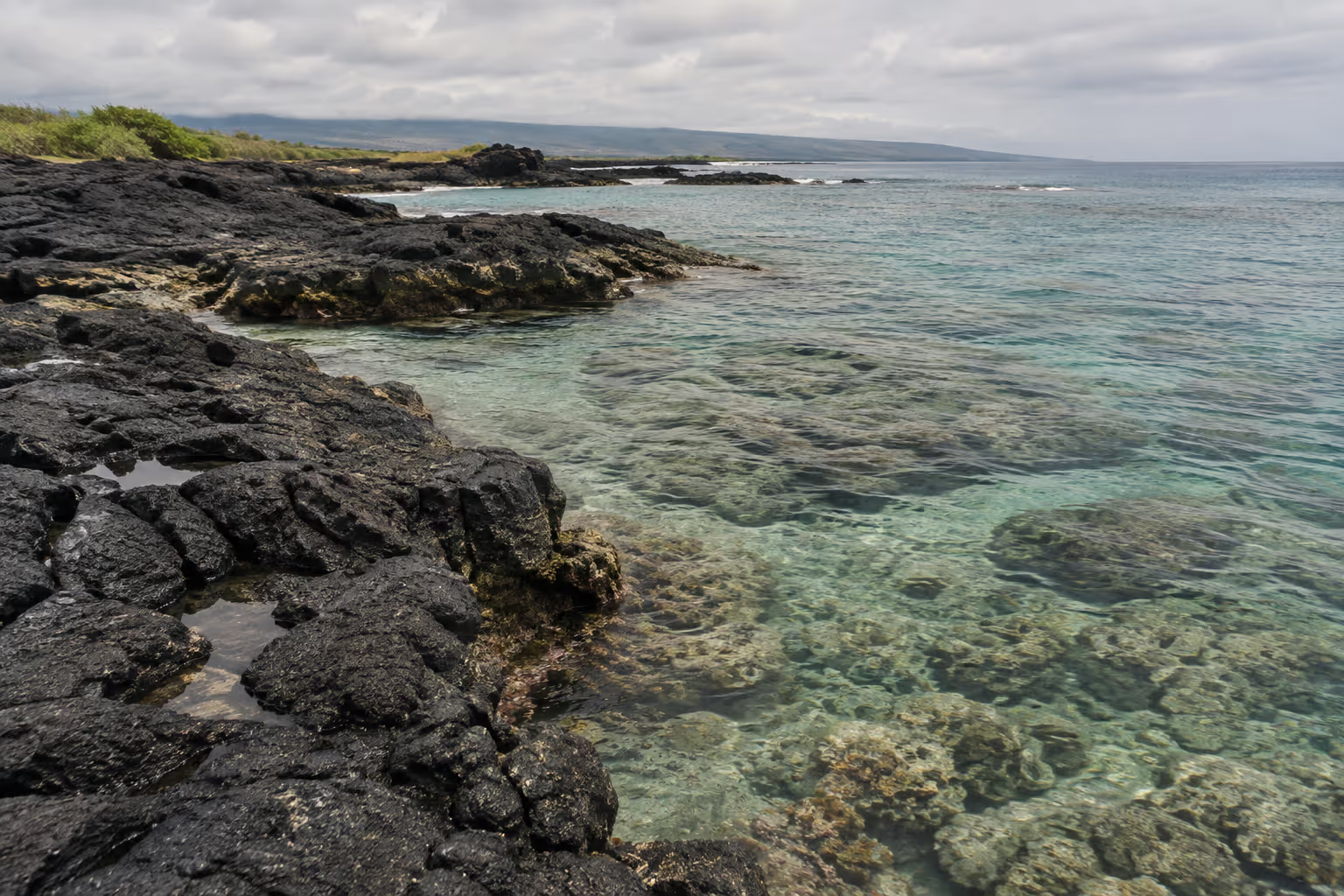
The top snorkeling spots in Hawaii are not tied to one island. On any given morning, the best choice is whichever leeward or protected shore is calm. A north-shore reef that is flat in July can turn unsafe overnight when winter swell arrives. Below, the main spots are sorted by island, skill level and season, with the access rules, fees and permits that decide whether a spot fits your trip.
The case for snorkeling here: clear water, reefs inside protected Marine Life Conservation Districts (MLCDs), and leeward coasts that stay usable year-round. The friction: Hanauma Bay runs on reservations, Kealakekua Bay has vessel permits and no-landing zones, winter surf closes exposed shores, and several of the better reefs start with a rocky or lava-rock entry. Plan around those four and the rest is straightforward.
✓ Pros
- Protected bays and leeward coasts give visitors alternatives when exposed shores are rough.
- The islands offer options for beginners, confident swimmers and guided night snorkeling.
✗ Cons
- Planning around reservations and permits can narrow the days or access methods available.
- Several well-known spots require a confident water entry or a boat, not a simple beach walk.
Top Snorkeling Spots in Hawaii: How to Choose by Island and Season
The best snorkeling in Hawaii depends more on coast and season than on island: the leeward Kona Coast and Maui’s protected west and south shores are the most dependable year-round choices (1). “Best” is a daily call based on calm water, a safe entry and good visibility. Hawaii Ocean Safety advises against getting in during high surf, strong wind, heavy shorebreak or strong currents (7).
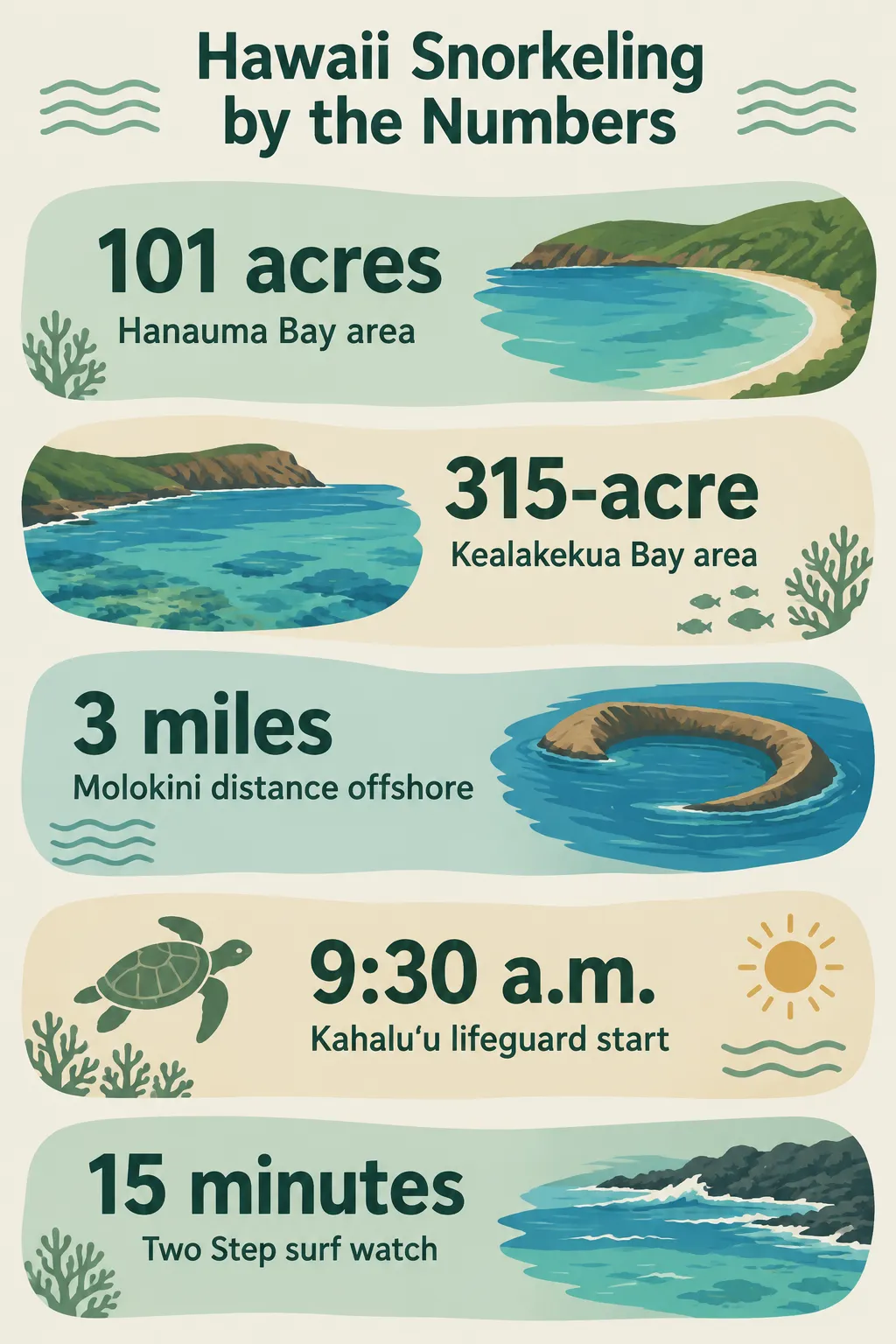 Hanauma Bay covers 101 acres and Kealakekua Bay 315 acres, Molokini lies about 3 miles offshore, Kahalu’u lifeguards start at 9:30 a.m., and Two Step calls for a 15-minute surf watch.
Each island has its own strengths (6):
- Maui has the widest range, from calm shore bays to an offshore crater you can only reach by boat.
- Oahu has the best-managed beginner experience in the state, centered on Hanauma Bay.
- Big Island (Hawaiʻi Island) has the clearest water, plus the Kona manta ray night snorkel.
- Kauai has the Nā Pali Coast as a backdrop, but its best reefs depend heavily on season.
Leeward Kona and Protected Maui Shores vs Exposed North Shores
An island ranking only holds for its season: north shores are not an option in winter (6). On Kauai, the north shore is glassy from May through September and has pounding shorebreak from October through April, while the south shore reverses that pattern (15). Summer adds the north-shore reefs of Oahu and Kauai to your list. Winter takes them away (1).
That makes the month question easier to answer. There is no single best month to snorkel in Hawaii. May through September gives you the most options statewide, because the north shores open up. The Kona Coast and protected Maui bays work in any month (1). Time of day matters more than many visitors expect. Morning hours usually bring better ocean conditions (7), so plan your water time before lunch and save the drives and hikes for the afternoon.
Which is better for snorkeling, Oahu or Maui? Maui, for most visitors. It has more protected shore options plus Molokini by boat, and its west and south sides give you backups when one bay is rough (1)(6). Oahu wins on one point: if a nervous first-timer is in your group, Hanauma Bay’s lifeguards, education video and managed entry make it what one Hawaii guide calls the best-managed beginner experience in the state (6).
Ranked across all four islands for a first trip:
Worth the detour
- Kealakekua Bay (Big Island) by boat
- Molokini Crater (Maui) by boat
- Kona manta ray night snorkel (Big Island)
- Two Step at Honaunau Bay (Big Island), for confident swimmers
- Tunnels Beach (Kauai), summer only
Skip if short on time
- Hanauma Bay, if you have no beginners in the group and your trip includes Maui or the Big Island
- Poipu, unless you are on Kauai between October and April and the north shore is closed out
Oahu Snorkeling: Hanauma Bay Access, Hours and Reservations
Hanauma Bay snorkeling on Oahu runs only Wednesday-Sunday, with entry limited to 6:45 a.m.-1:30 p.m. (5)(2). Nonresidents pay to enter, and the city strongly recommends a reservation (2). The preserve covers 101 acres (41 ha) near Koko Head, at the eastern end of Honolulu. It became the state’s first Marine Life Conservation District in 1967 (5)(2).
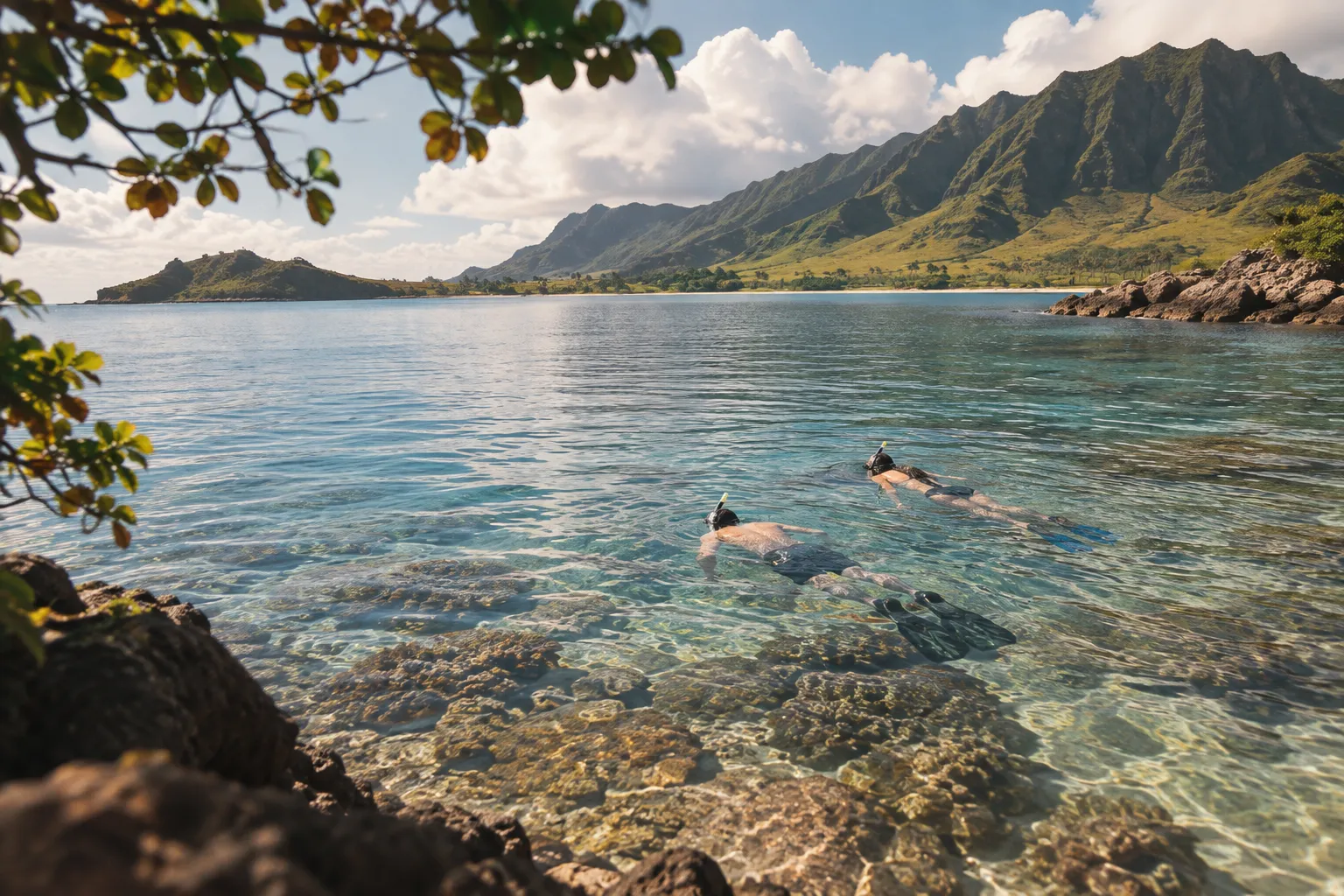
Getting there takes about 15 minutes from Waikiki via Kalaniana’ole Highway (Hwy 72) to Hanauma Bay Road (5). Parking above the bay is limited. City bus service into the preserve has been discontinued, but Route 22 stops on Kalaniana’ole Highway above the bay (2), and the state’s reef page discourages taxis (5). Without a car, the city’s other option is admission with round-trip transportation from the Ala Moana and Waikiki area through Roberts Hawai’i, bookable up to a month ahead (2).
Hanauma Bay Hours, Reservations and the Required Video
The schedule is tight, so build your morning around it:
- Open days: Wednesday-Sunday. The preserve is closed to the public on Mondays and Tuesdays, and on Christmas Day and New Year’s Day (5)(2).
- Entry window: 6:45 a.m.-1:30 p.m. (5).
- Beach clearing: 3:30 p.m., and all visitors must leave by 4 p.m. (5).
- Reservations: Admission-only reservations for nonresidents open 2 days ahead at 7 a.m. HST and stay open until slots fill or midnight the day before (2).
- Walk-in tickets: About a quarter of access is held for walk-in and drive-in visitors, handed out first come, first served from 6:45 a.m. (2).
- Educational video: Every visitor must watch it on every visit, including repeat visitors (2).
- Gear rental: The on-site concession rents gear from 7 a.m. to 3 p.m., and it takes cards only (2).
Booking mechanics: Slots fill fast (6). Set an alarm for 7 a.m. Hawaii time exactly two days before your visit. If you are booking from the mainland, convert the time zone first. Hawaii does not observe daylight saving time, so the gap with your home clock changes during the year.
Aim for the earliest entry you can get. Morning water is usually calmer (7), the video and walk down eat into your time, and an early start gives you a few hours in the water before the 3:30 p.m. beach clearing. The schedule can change at any time. Call (808) 768-6861 for the latest information (5).
Hawaiʻi residents with valid photo ID enter free and without a reservation during public hours (2). That free entry does not extend to nonresidents traveling with a resident (2).
What a Visit to Hanauma Bay Costs
A nonresident visit to Hanauma Bay involves two separate charges before any gear rental. As of October 2026, the city’s Hanauma Bay page lists them as (2):
- Entry: $25 + online fee for each nonresident visitor age 13 or older
- Parking: $3 per nonresident vehicle, paid in cash on site
Children 12 and younger enter free, though a reservation is still recommended. Active U.S. military members and their dependents also enter free with military ID (2). Bring your own mask and snorkel if you already own them, and if you do rent, have a card ready.
Is Hanauma Bay worth it? For beginners, families and anyone staying in Honolulu, yes. Lifeguards and a mandatory education video (2) are why one Hawaii guide calls it the gold standard for first-time snorkelers (6). It is overrated for confident swimmers on a short trip who will also visit Maui or the Big Island. Those islands have reefs that match it without the booking alarm and the Wednesday-Sunday limit. Oahu’s alternative is Kapo’o (Sharks Cove), an MLCD with easy water entry (6). It sits on the North Shore, though, so it is a summer option only.
Maui Snorkeling: Molokini Crater and Other Boat-Access Spots
Molokini Crater snorkeling takes place about 3 miles (about 5 km) off Maui, inside a Marine Life Conservation District that you can only reach by boat (6). A Mā’alaea tour operator’s guide says the crater usually has the clearest water on Maui and calls it the leading boat-only choice for a guided offshore snorkel (17).
Why Molokini Is Boat-Access Only
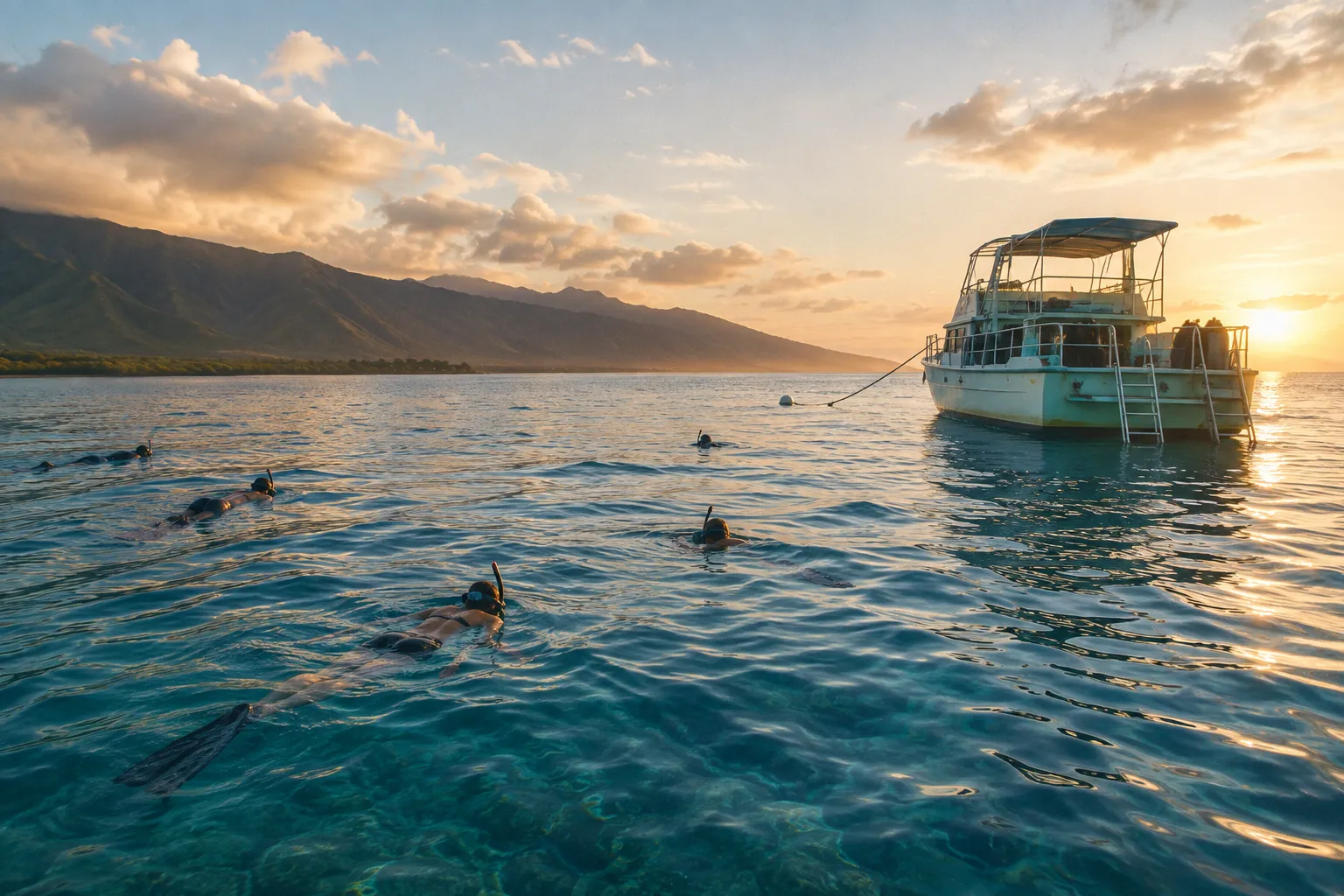
Molokini is the rim of an extinct volcanic crater offshore. There is no sand beach, landing on the islet is prohibited because it is a state seabird sanctuary, and access is by boat only (18). Morning tours leave from Mā’alaea Harbor or Kīhei (6). Pick the morning. Ocean conditions are usually better earlier in the day (7), and currents inside the crater may get stronger in the afternoon when the wind picks up (18).
As an MLCD, Molokini operates under rules that prohibit taking or injuring marine life, feeding it, and taking or altering sand, coral or other geological specimens (18). In practice, that means no feeding fish, no touching coral and no collecting anything, shells included.
As of October 2026, one Hawaii guide puts Molokini boat tours at $80 to $180 per adult (6), while shore spots cost you only the drive and the effort of finding parking. What you pay for is the offshore water clarity and a crew that handles the logistics.
Pairing Molokini with Turtle Town
Some excursions pair Molokini with a second stop: one Mā’alaea operator’s five-hour morning trip adds a second snorkel site, often Turtle Town, when conditions allow (17). Turtle Town is one of the best bets on Maui for seeing honu, the Hawaiian green sea turtle (17). If a turtle sighting is a priority, choose a two-stop trip.
If you would rather skip the boat, Maluaka is the best-known public shore access near Turtle Town (17).
Maui’s shore options, ranked:
Worth the detour
- Kapalua Bay: generally calm water and a sandy entry in any season, one of the most reliably gentle entries on the island (6).
- Ulua: a strong shore starting point on calm mornings (17).
- Maluaka: shore access to the Turtle Town area (17).
Skip if short on time
- Kahekili: convenient beach-park facilities in West Maui and a practical beginner option on calm mornings (17), but less of a reason to plan your day around it.
Not for beginners
- Honolua Bay and ‘Āhihi: both require stronger skills, harder entries and stricter condition checks (17). Honolua’s rocky entry makes it unsuitable for beginners (1)(17).
Big Island Snorkeling: Kealakekua Bay and Kahalu’u Beach Park
Kealakekua Bay is a 315-acre (127 ha) Marine Life Conservation District on the Big Island’s west coast. On its northeastern side, the water below the pali is good for snorkeling in calm conditions, and the bay’s best diving is in Ka’awaloa Cove, near the Captain Cook monument (13). Kahalu’u Beach Park, north of the bay near Kailua-Kona, is the lifeguarded, easier-access alternative (6)(12).
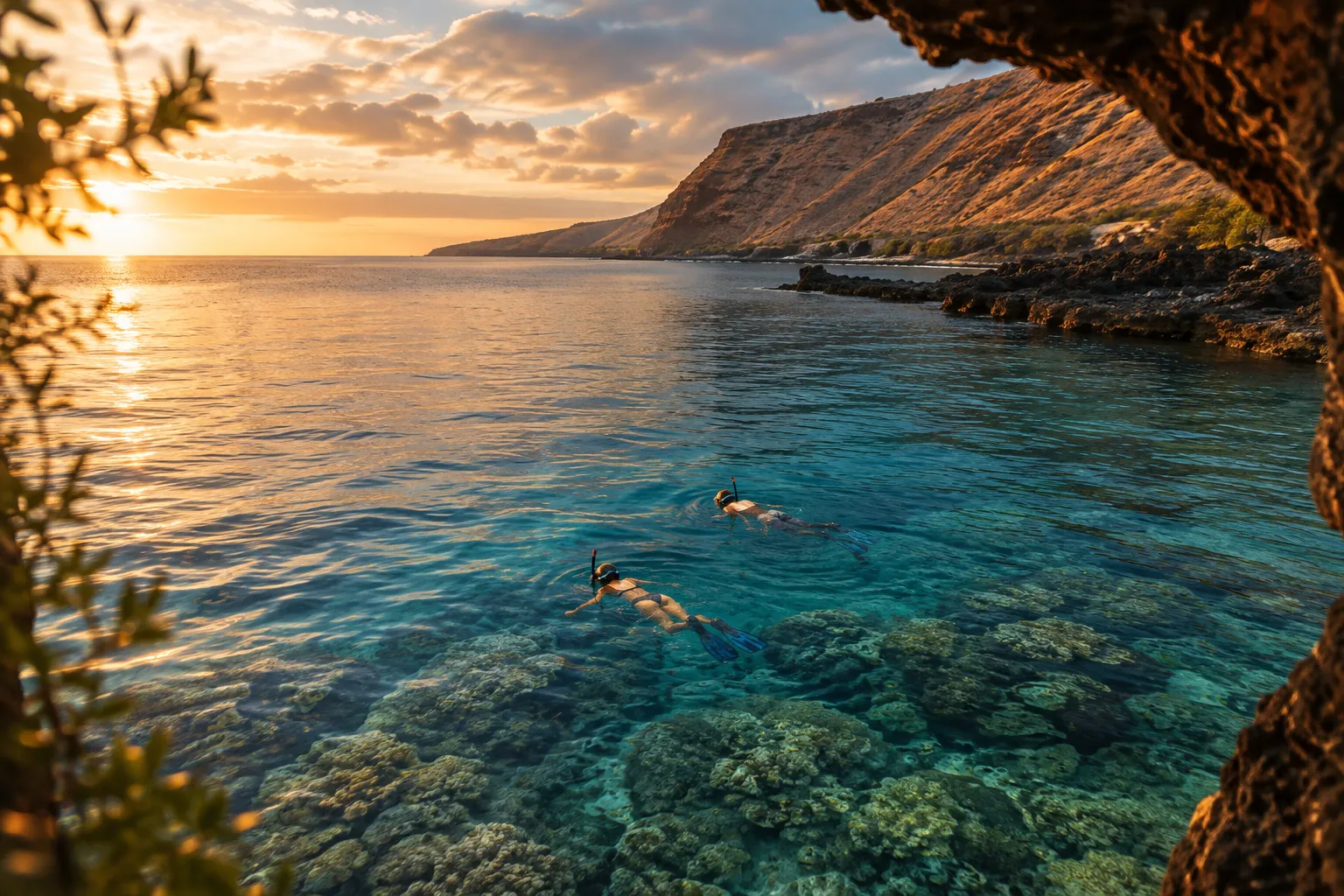
Both sit on the leeward Kona side, which is why the Big Island shares with Maui the title of most dependable year-round base (1). The two spots suit different swimmers, so choose before you drive.
Getting Into Kealakekua Bay: Permits and No-Landing Zones
Kealakekua Bay is about 30 minutes south of Kailua-Kona. From Kailua-Kona, take Hwy 11 south about 18 miles (29 km) to the Nāpō’opo’o turnoff, then turn right and continue 4 miles (6 km) to the bay (13). The road only reaches Nāpō’opo’o Beach on the eastern shoreline. The state’s reef page says Ka’awaloa Cove, at the northern boundary near the Captain Cook monument, can be reached only by boat (13), but State Parks also lists a hike down the historic Ka’awaloa Trail to the monument flat (11).
That is the main logistical problem. The snorkeling area lies along the northern coastline, below the sheer cliff of Pali-kapu-o-Keoua, and it is suitable for snorkeling in calm conditions (13). You cannot drive to it, and paddling over comes with rules:
- Vessel permits: State Parks requires permits for vessels transiting the bay, including kayaks and paddleboards (11).
- No landing: Vessels may not land at Ka’awaloa Flat (11).
- No launching: Launching from Nāpō’opo’o Wharf is prohibited (11).
- Commercial kayak rentals: Operators must hold a Rental Vessel Special Use Permit, and each kayak needs a registered decal (11).
Booking mechanics: The simplest legal routes to the monument side are a permitted boat tour or a permitted commercial kayak tour (3), or the steep Ka’awaloa Trail, which has no restrooms (11) and drops about 1,300 feet (6). Swimming over to the monument from Nāpō’opo’o is not allowed without a state permit (3). You do not need your own permit to rent a kayak, but the kayak must hold a valid transit permit (11), so confirm it with the rental company before you pay and check that a commercial kayak carries its decal. Then read the current rules on the State Parks Kealakekua page, because they change.
As of October 2026, the state historical park lists daily hours of 7:00 a.m. to 8:00 p.m. and no entrance fee. Restrooms are only on the Nāpō’opo’o side (11).
The bay has heavy historical weight. Captain Cook was killed on the shore of Ka’awaloa Cove in 1779, and the lava tube openings in the pali include ancient Hawaiian burial caves (13). Snorkel the reef and leave the cliff alone.
Kahalu’u Beach Park: Lifeguards and Entry via the Channel
Kahalu’u Beach Park is the Big Island’s best spot for kids, with lifeguards, tide pools and easy access (6). The shallow, protected bay is part of the longest interconnected coral reef in the main Hawaiian Islands and acts as a nursery for juvenile species (12).
Posted hours as of October 2026, according to The Kohala Center, which runs the on-site programs (12):
- Park: 7 a.m. to 7 p.m. daily, though hours may vary
- ReefTeach volunteers: 8:30 a.m. to 3 p.m.
- Lifeguards: 9:30 a.m. to 4:30 p.m.
- Visitor parking: $12 for 4 hours for nonresidents; Hawaiʻi residents with ID park free
Wait for the lifeguards at 9:30 a.m. before getting in. Before you enter, ask a ReefTeacher about the day’s conditions. Then enter and exit through the channel by the lifeguard tower, use a buddy, and bring flotation (12). The listed hazards are sharp rocks, sea urchins, waves and currents (12), so reef shoes are worth packing for this entry.
The park can also close because of hazardous weather or ocean conditions, or during sensitive periods such as coral spawning, coral bleaching or extreme low tides (12).
The decision rule for the Big Island is simple. Beginners and families should start at Kahalu’u. Confident swimmers should book Kealakekua by boat or head to Two Step.
Big Island Snorkeling: Honaunau Bay’s Two Step and the Manta Ray Night Snorkel
Two Step at Honaunau Bay is a South Kona snorkel spot (3) with a lava-rock entry, and it is best suited to confident swimmers (1). It also appears on the short list of the Big Island’s most dependable year-round starting points, alongside Kahalu’u and a boat trip into Kealakekua Bay (1).
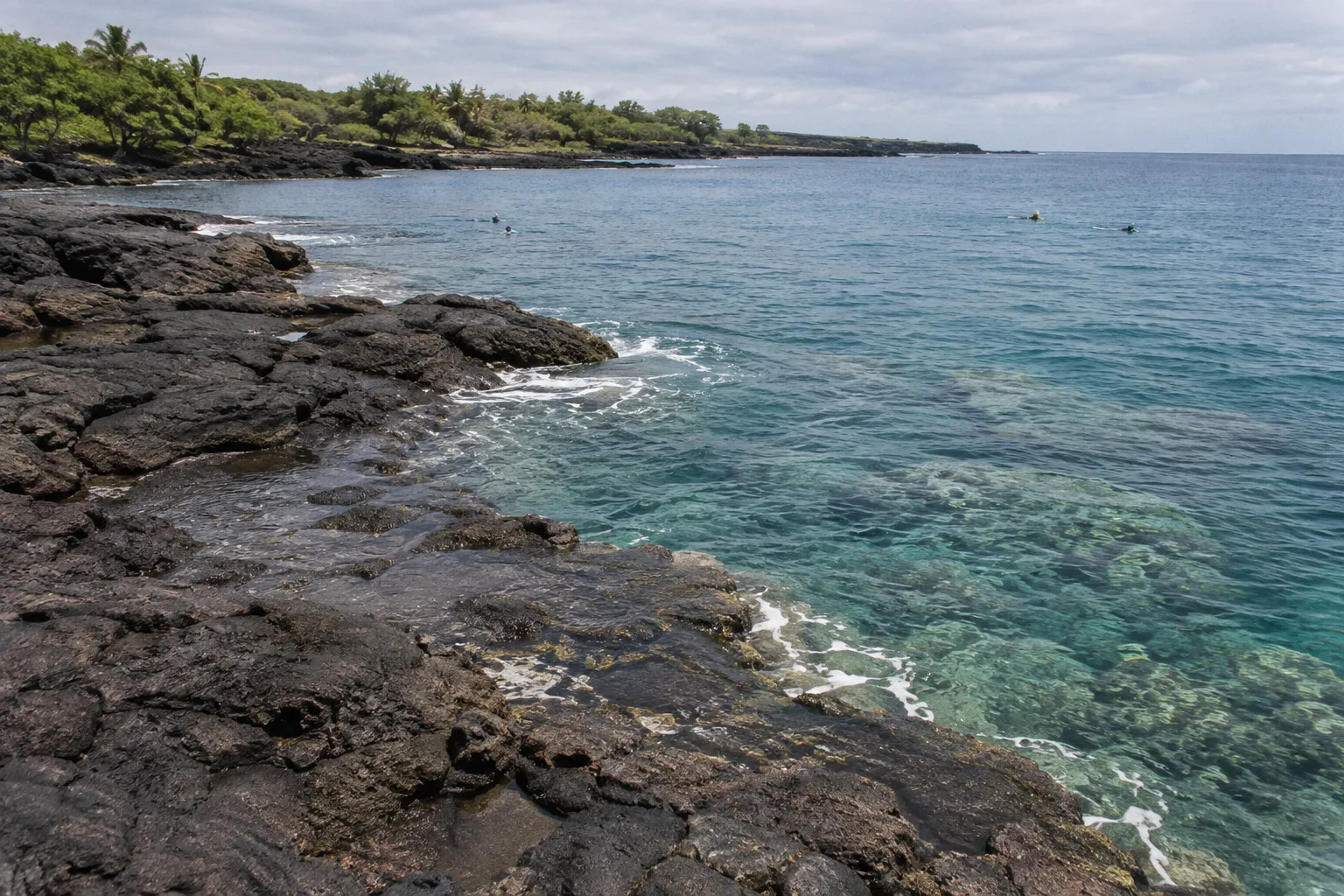
Two Step at Honaunau Bay for Confident Swimmers
The name describes the entry: natural lava shelves serve as the way in and out, with no sandy entry and no lifeguard (6). Parking is limited free roadside spots or a $5 lot that fills by mid-morning, with portable toilets only (3). The entry is fine on a flat morning. With any surge, it becomes a timing exercise, because the rock is uneven and the water moves against it.
Before you get in, watch the waves for about 15 minutes. Sets arrive in groups, and a big one can follow a quiet spell (4). Check the tide too. Waves generally build as the tide comes in, and bigger surf strengthens currents (4). If you are unsure about climbing back out onto the lava with fins in hand, Kahalu’u is the better choice that day.
The Kona Manta Ray Night Snorkel
The Big Island is the only Hawaiian island that offers manta ray night snorkeling. It is a boat trip that takes you into a bay after dark, where underwater lights draw the plankton that mantas come in to feed on (3). It is one of the strongest reasons to put the Kona side on your trip.
This trip is the planned exception to the usual advice to avoid snorkeling at dawn, at dusk or in murky water (7). You go with a guided crew and lights, not on your own from shore. Never try a night swim independently.
Tours run year-round from Honokōhau and Keauhou harbors near Kailua-Kona and from Kawaihae South Boat Harbor on the Kohala Coast, on boats that range from six passengers to catamarans carrying 30 or more (3). Compare several operators on group size, departure harbor and their policy for rough seas, and ask whether they offer a free re-ride if no mantas show up (3). Book early in your trip. That way, if conditions cancel your night, you still have a second evening to try again.
Kauai Snorkeling: Tunnels Beach in Summer, Poipu in Winter
Kauai snorkeling follows a hard seasonal switch: Tunnels Beach on the north shore is glassy from May through September, and Poipu on the south shore is the calmer choice from October through April (15). Plan your Kauai snorkeling by month, not by beach.
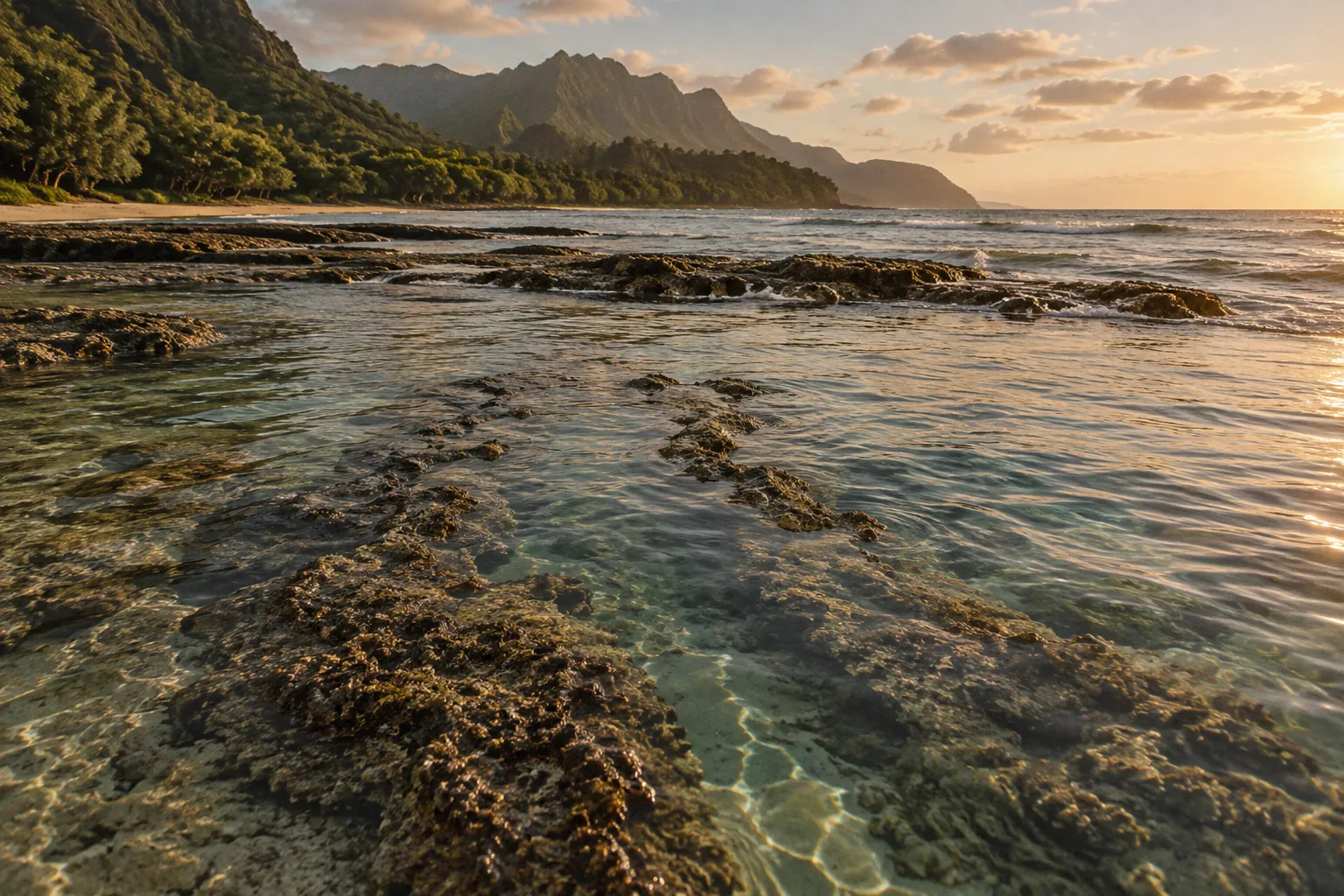
Tunnels Beach in Summer
Tunnels Beach (Makua) sits at Hā’ena on the north shore. It takes its name from the underwater lava tunnels that shape the reef, and it looks out on the Nā Pali Coast (14). Seas are generally calmer in summer. In winter, strong waves and currents make conditions more challenging (14), and one Hawaii guide rules out winter snorkeling there altogether (6).
Know these logistics before you go:
- No lifeguard. Tunnels Beach has no lifeguard on duty (14).
- Parking is limited at Haena Beach Park, and it fills quickly at peak times (14).
- Reservations at the Hā’ena State Park end. Hā’ena State Park, home to Ke’e Beach at the end of the road, requires a reservation through gohaena.com (15). As of October 2026, State Parks lists Hā’ena State Park as reopened since October 15 after its hurricane closure, while most other Kauai state parks are only partly open or still closed (11), so check its park notices before you plan around Hā’ena.
Building north swells from October onward make Tunnels, Ke’e Beach, Anini and Hideaways unreliable entries through April (15). Even in summer, read the water before you go in. Summer only makes calm days more likely.
Poipu as the Winter Backup
From October through April, plan around the south shore. Poipu Beach Park, Lawai Beach and Salt Pond Beach Park are the usual winter choices, and none of them requires the Hā’ena State Park reservation (15). As of October 2026, Salt Pond, on the west side, is still closed after Hurricane Lowell, listed among closed county parks in the County of Kaua’i’s recovery updates (8), so confirm its status before you count on it. Still check conditions on arrival rather than assuming any shore is safe (7). The south shore picks up its own swell in summer.
Poipu is the practical winter choice rather than a destination in its own right. If your Kauai trip falls in winter and snorkeling is your main goal, consider spending more of your trip on the Big Island or Maui.
Quick Comparison of the Main Spots
- Hanauma Bay (Oahu): shore entry, beginner-friendly, open year-round on Wednesday-Sunday except Christmas and New Year’s Day. Nonresidents should reserve (walk-in tickets are limited) and, as of October 2026, pay $25 + online fee plus $3 cash parking.
- Molokini Crater (Maui): boat only, for swimmers comfortable with a deep-water entry, with crew support. Best on morning trips. Requires a tour.
- Kealakekua Bay (Big Island): boat tour, permitted kayak or the Ka’awaloa Trail, intermediate level, year-round on calm days. Vessel permits apply, and landing and launch points are restricted.
- Kahalu’u Beach Park (Big Island): shore entry through the channel, beginner and family level, year-round. Lifeguards from 9:30 a.m.
- Two Step, Honaunau Bay (Big Island): lava-rock shore entry, confident swimmers, year-round on calm days.
- Manta ray night snorkel (Big Island): boat only, with a guide, year-round, for swimmers comfortable in the water; some trips take only ages 8 and up. Book an operator.
- Tunnels Beach (Kauai): shore entry, intermediate, May through September. No lifeguard, and Hā’ena reservations apply to the state park.
- Poipu (Kauai): shore entry, beginner to intermediate, October through April. No Hā’ena reservation needed.
Snorkeling Safety Rules and Reef Etiquette in Hawaii
Snorkeling safety in Hawaii starts with checking conditions before you get in. More Hawaii visitors drown while snorkeling than during any other activity (7). Hawaii Ocean Safety advises that anyone snorkeling here should be an experienced ocean swimmer who understands high surf, strong currents and waves breaking in shallow water (7). A calm-looking beach is not proof of safety.
Before You Get In the Water
The routine below covers the full checklist. Run through it at every spot, every day, in order:
Check conditions before snorkeling in Hawaii
Use this short routine to assess the water and plan a safer snorkel at each spot.
- 1
Check the forecast and tide
Review conditions before leaving your hotel, then ask a lifeguard about local hazards when one is on duty (4)(7).
- 2
Observe the water
Watch the surf for about 15 minutes on arrival; a quiet spell can be followed by a larger set (4).
- 3
Choose a safe time and entry
Prefer morning conditions, avoid dawn, dusk and murky water, and skip the swim if conditions look dangerous (7).
- 4
Set up with a buddy
Stay within a distance you can swim back from, keep track of your exit point and bring flotation, especially at shallow-reef sites such as Kahalu'u (4)(12).
Rip currents usually form in reef channels or near the centers of bays. If one pulls you seaward, do not swim against it. It will usually weaken once you are outside the surf zone (4).
Reef Rules: What Not to Do
- Do not stand on coral. Float above the reef instead (12).
- Do not take or injure marine life in an MLCD. That includes Hanauma Bay, Molokini Crater and Kealakekua Bay (5)(18)(13).
- Do not touch turtles or chase fish. Give honu at least 10 feet of space at all times, at Turtle Town and Kahalu’u alike (12).
- Use a mineral sunscreen. Hawaii has banned oxybenzone and octinoxate since 2021 (6), and The Kohala Center advises checking that the only active ingredients are zinc oxide or titanium dioxide (12). A rash guard cuts down how much sunscreen you need in the first place.
- Respect cultural sites. Kahalu’u is a wahi pana, a sacred place (12), and the pali above Kealakekua contains burial caves (13).
To report a violation, call 643-DLNR (3567) (4).
Frequently Asked Questions
- Which Hawaiian island is the best base for snorkeling year-round?
- The Big Island or Maui makes the most flexible year-round base, with leeward shore options that can serve as alternatives when conditions change.
- Is Hanauma Bay a good choice for confident snorkelers?
- Hanauma Bay is most useful for beginners and families; confident swimmers may prefer less managed alternatives when their itinerary includes other islands.
- What time of year gives snorkelers the most island choices?
- May through September opens more north-shore options, while winter planning favors leeward coasts and Kauai's south shore.
- Should a first-time snorkeler choose Oahu or Maui?
- Choose Oahu if structured support is the priority; choose Maui if you want a wider mix of shore and boat-based options.
- What should visitors know about Hanauma Bay admission?
- Nonresident admission and cash-only parking are separate charges; reservations open two days ahead at 7 a.m. HST and are strongly recommended, with limited walk-in tickets on each open day.
- Can visitors reach Kealakekua Bay's main snorkeling area from shore?
- The road ends at Nāpō'opo'o, across the bay from the monument side; visitors reach it on a permitted boat or kayak tour, in a permitted kayak, or by hiking the steep Ka'awaloa Trail.
- Is Tunnels Beach suitable for snorkeling in winter?
- Tunnels is a poor winter plan because north-shore swell can make entry hazardous; choose a south-shore alternative and assess conditions on arrival.
- Where do guided manta ray night snorkels operate in Hawaii?
- Guided manta ray night snorkels operate off the Big Island's Kona and Kohala coasts; schedule one early enough in your stay to allow for a weather backup.
Planning Your Hawaii Snorkeling Days
Choose your island by season and your spot by skill level. On a winter trip, base yourself on the Kona Coast or Maui’s protected west and south shores. In summer, add Tunnels and Oahu’s North Shore. Beginners should start at Kahalu’u or Hanauma Bay. Confident swimmers can take on Two Step and Honolua. Molokini Crater, Kealakekua Bay and the manta night snorkel all need a boat.
Then check again on the day, every day. Before you drive anywhere, look at the City and County of Honolulu’s Hanauma Bay page for entry changes, the DLNR Division of Aquatic Resources MLCD pages for reef rules, the State Parks Kealakekua page for vessel permits, and Hawaii Ocean Safety for surf and hazard warnings. A spot’s reputation tells you where to look. The water in front of you tells you whether to get in.