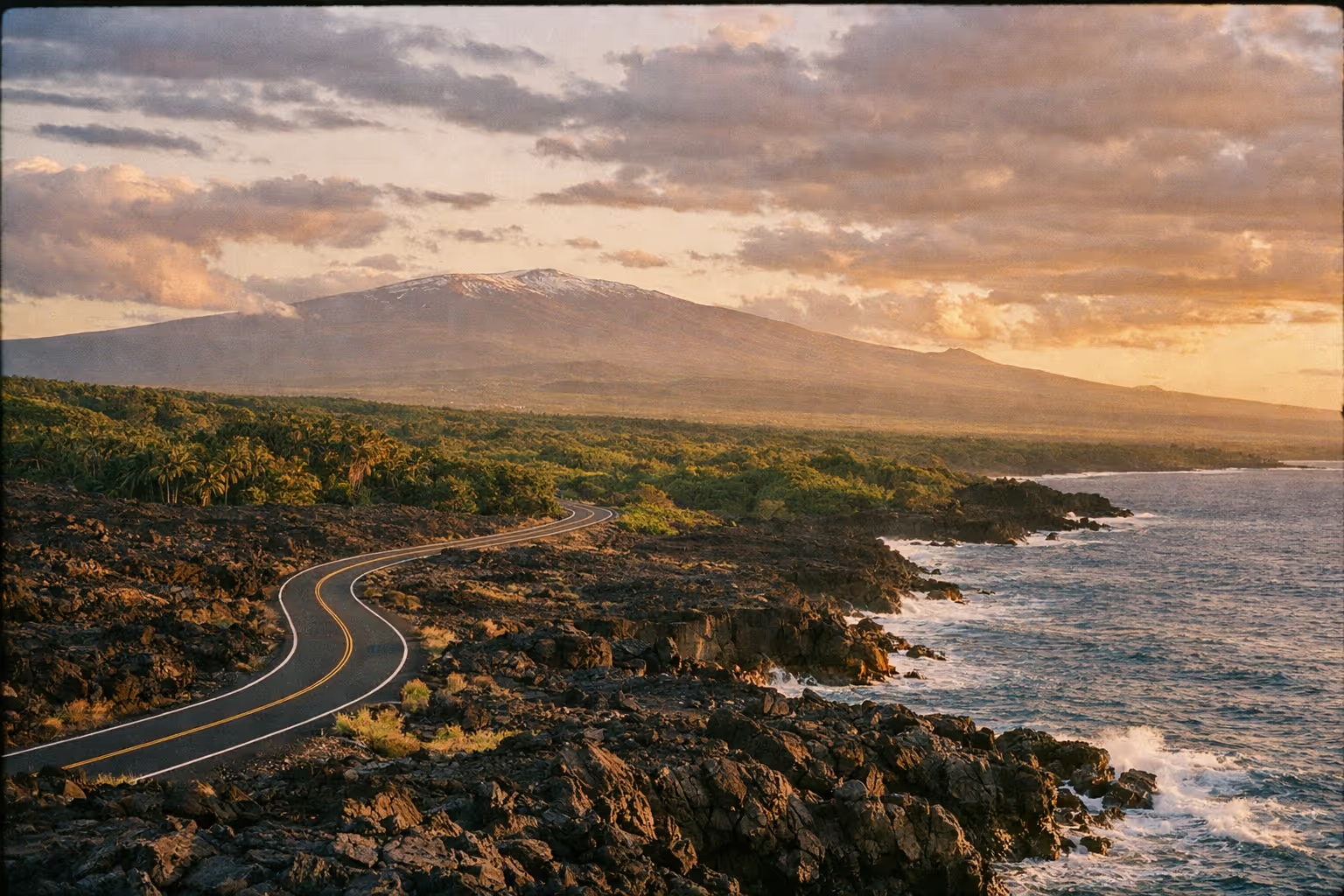
The best hidden gems in Hawaii start where the resort crowds stop, usually a short walk or a wrong turn away. Behind a Big Island shopping center sits a free half-mile loop of ancient petroglyphs almost no guest bothers to find; up the coast, the old sugar town of Hawi feeds you before the trailhead to Pololu Valley. Rainy Hilo, with its real rainforests, is cheaper and more interesting than the Kona strip. Rent a car, drive past Waikiki, and the other Hawaii shows up.
Hidden Gems in Hawaii: How the Islands Differ
The Hawaiian archipelago is volcanic, and among its many attractions are the hidden gems in Hawaii that travelers often overlook. The four islands most visitors consider - Oahu, Maui, Kauai, and the Big Island (Hawaiʻi) - each offer unique experiences that cater to different trip styles. The Big Island alone covers 4,028 square miles, larger than all the other islands combined, with 11 of the world’s 13 climate zones reachable within a 2-3 hour drive (1).
| Island | Best for | Skip if |
|---|---|---|
| Oahu | First-timers, food, mix of city + nature | You want quiet beaches |
| Maui | Scenic drives, snorkeling, upcountry farms | You’re sensitive to post-2023 fire recovery dynamics in West Maui |
| Kauai | Cliffs, rainforest hiking, slow pace | You only have 4 days |
| Big Island | Volcanoes, diverse climates, lesser-known towns | You want a compact, walkable trip |
| Lanai | Disconnecting completely | You’re on a budget |
| Molokai | Deep cultural immersion | You need resort amenities |
Hawaii drew 9.6 million visitors in 2023 per Hawaiʻi Tourism Authority data, and the vast majority funnel into Waikīkī, Kā’anapali, and Kailua-Kona. Spreading out is the whole point of this guide.
✓ Pros
- Covers multiple islands with distinct climates and experiences
- Highlights lesser-known towns and cultural sites
- Includes practical logistics and current access rules
✗ Cons
- Big Island's size requires significant driving time
- Some areas affected by recent natural events (e.g., Maui fires)
- Certain popular spots require advance reservations
Kona vs Hilo: which side of the Big Island actually wins
The kona vs hilo question comes up on every Big Island trip, and the honest answer is they solve different problems.
Kailua-Kona (leeward, west side): Dry, sunny, resort-heavy. Average rainfall around 20 inches a year. This is your base for snorkeling, coffee country, and the airport (KOA) - most flights land here. Sunsets over the Pacific. Prices run higher.
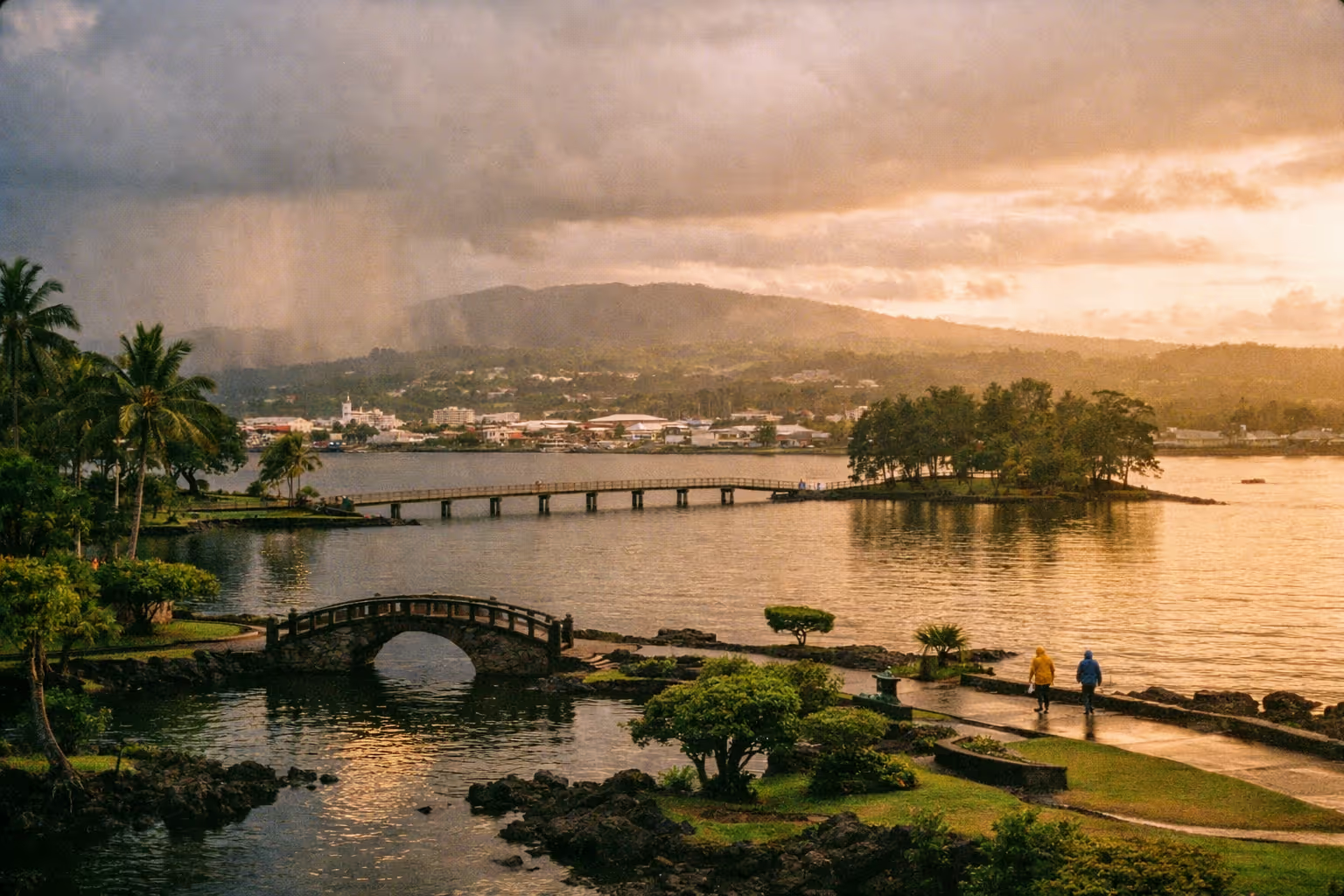
Hilo (windward, east side): Wet - 130+ inches of rain annually - and it shows in the rainforests, waterfalls, and gardens. Downtown has a real working-town feel with bookstores, farmers markets, and old plantation architecture. Cheaper. Closer to Hawaiʻi Volcanoes National Park (about 45 minutes).
Which to pick:
- Worth the detour: both. A proper Big Island trip splits time between them - 3-4 nights Kona side, 2-3 nights Hilo side.
- Skip if short on time: If you only have 4 days, base in Kona and do Hilo as a long day trip via the saddle road (Hwy 200, roughly 1h45m each way).
- What most guides get wrong: They treat Hilo as a quick stop. It’s the more interesting town. Kona has the better beaches; Hilo has the better neighborhood.
Hawi and Holualoa: two towns worth the drive
These are the two big island hidden gems I send people to first, and neither requires much planning to pull off.
Hawi (North Kohala)
Hawi big island sits on the northern tip of the island, about a 1-hour drive (45-50 miles) from Waikoloa up Highway 270. Population around 1,500. It was a sugar plantation town until the mill closed in 1975; the wood storefronts now house galleries, a couple of decent cafés, and one excellent bakery (Kohala Coffee Mill - the macadamia nut sticky buns are the move).
Pair Hawi with the Pololū Valley lookout at the literal end of Highway 270, another 8 miles past town. The lookout itself is free and takes 30 seconds. The trail down to the black-sand beach is 0.6 miles each way, roughly 400 feet of elevation loss, and the climb back is steeper than it looks. Allow 90 minutes round trip.
Booking note: there’s no reservation system for Pololū, but parking fills by 10 a.m. in peak months. Arrive before 9 or after 3.
Holualoa (Kona coffee belt)
Holualoa hawaii sits 15-20 minutes uphill from Kailua-Kona at about 1,400 feet elevation, where the air is 5-10°F cooler than the coast. The town is essentially one street (Mamalahoa Highway) lined with art galleries, a historic post office, and small Kona coffee farms. I drove up on a Tuesday morning last October and had most of the galleries to myself for the first hour.
Plan a half-day: gallery browsing, one farm tour ($10-20 tastings at smaller estates beat the big bus-tour farms), and lunch at Holuakoa Café. First Fridays bring live music and longer hours.
Worth the detour: Yes, especially if you’re already in Kona. Don’t drive across the island for it, but don’t skip it either.
Waikoloa Village: petroglyphs, ponds, and what’s beyond the resorts
Most travelers experience Waikoloa as a row of resorts (Hilton, Marriott, Westin) with golf courses and a couple of shopping centers. The pre-contact archaeology is a 5-minute walk from the parking lot and most guests never see it.
Waikoloa petroglyphs
The waikoloa petroglyphs - properly called the Anaeho’omalu Petroglyph Field - sit on a short loop trail behind the Kings’ Shops. Thousands of ki’i pohaku (rock carvings) on a 0.7-1 mile flat loop through lava. Free, open daylight hours, no reservation. Plan 45-90 minutes including the walk from the parking lot.
Etiquette matters here: do not step on the carvings, do not wet or chalk them for photos, stay on the marked trail. These are protected under state historic preservation law and damaging them carries fines.
For more context, the field at Puakō (15 minutes north) is larger and less visited. Pu’uhonua o Hōnaunau National Historical Park further south combines petroglyphs with a restored royal compound - park entry is $20 per vehicle, valid 3 days.
Anchialine ponds
Brackish ponds fed by underground springs sit on the resort grounds at the Hilton Waikoloa and along the King’s Trail. They support endemic shrimp (‘ōpae’ula) and are quietly fascinating if you know what you’re looking at. The Hilton offers a free self-guided cultural walk pamphlet at the front desk - worth grabbing before you wander.
Big Island wayfinder itinerary: 7 days, self-drive
Scope: 7 days, base-switch from Kona to Hilo. Estimated total cost for two travelers: $2,800-4,200 including mid-range lodging, SUV rental, gas, food, and 2-3 paid tours. Best months: April-May or September-October - dry, lower prices, manageable crowds.
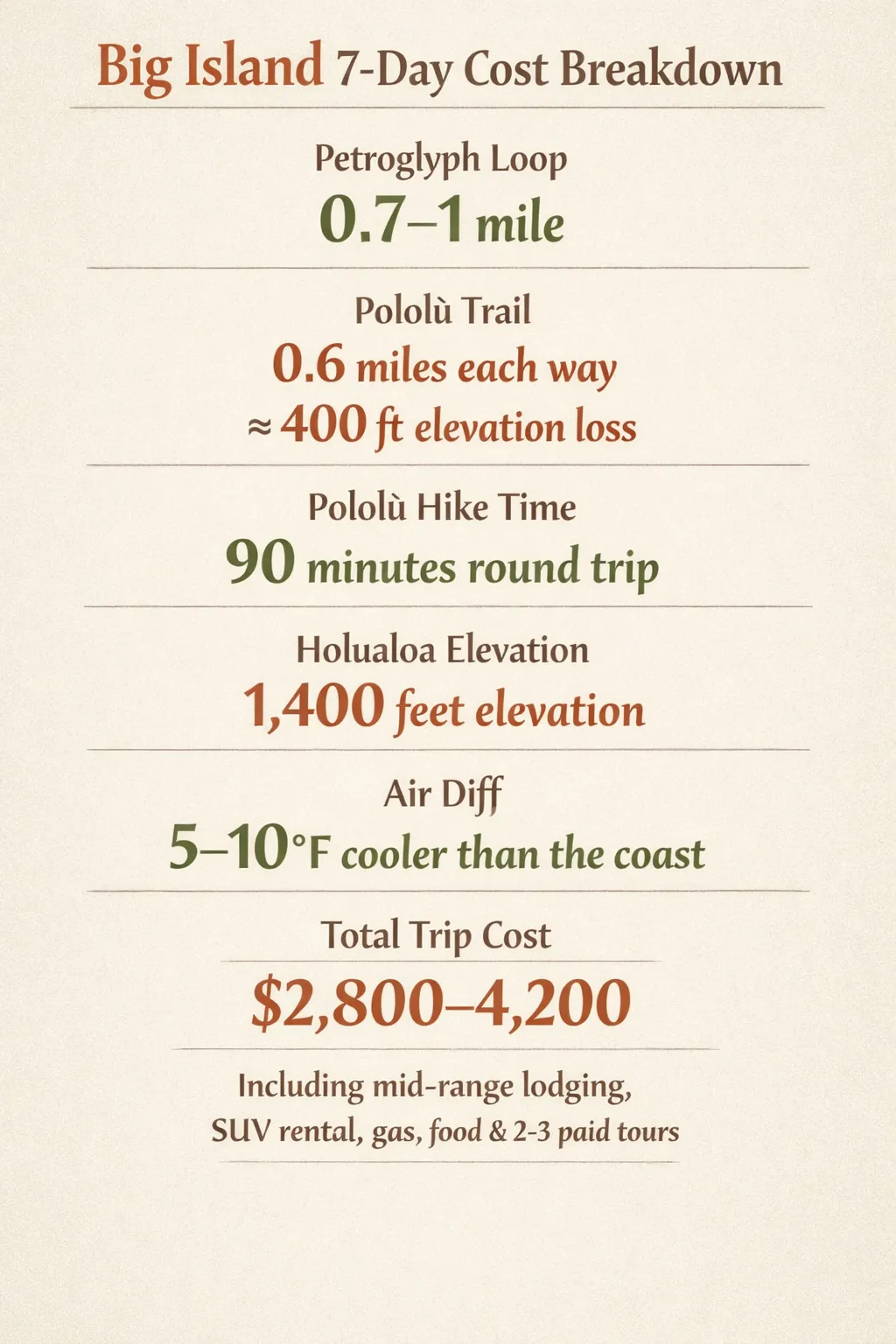 Cost and key activity metrics for a 7-day Big Island self-drive itinerary (two travelers).
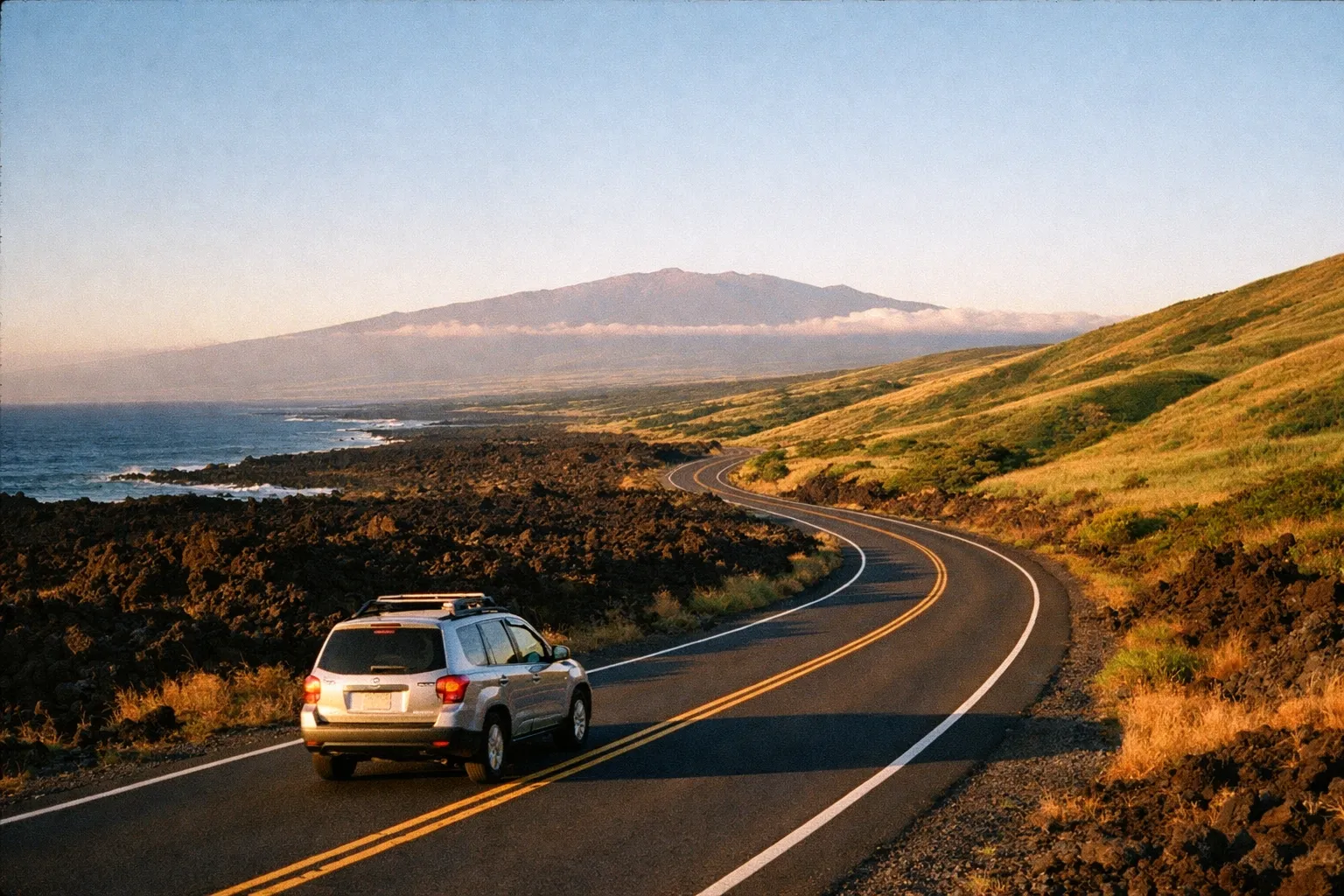
Big Island 7-Day Itinerary
7 daysA self-drive itinerary splitting time between Kona and Hilo with key stops and activities.
- 1
Day 1 - Arrival, Kona, Holualoa
Land at KOA, pick up rental (compact SUV runs $80-110/day in shoulder season; gas averages $4.80/gal). Drive 20 minutes up to Holualoa for galleries and a coffee farm tour. Sunset at Magic Sands Beach.
- 2
Day 2 - South Kona snorkeling
Two Step at Pu'uhonua o Hōnaunau is the best easy-access snorkel on the island - enter off the lava ledge, water is typically 30+ feet visibility. Combine with the historical park ($20/vehicle).
- 3
Day 3 - Ka'ū and Punalu'u
Drive south to Punalu'u Black Sand Beach (66 miles / about 1h45m from Kona). Sea turtles haul out here daily; stay 15+ feet back per state law. Lunch in Nā'ālehu (Hana Hou Restaurant). Setup day for the Volcano area.
- 4
Day 4 - Hawaiʻi Volcanoes National Park
Switch base to Hilo or Volcano Village. Entry is $30/vehicle, valid 7 days. Crater Rim Drive, Thurston Lava Tube, and the lesser-known Kīpukapuaulu birding loop (1.2 miles, almost no one on it).
- 5
Day 5 - Hilo side
Onomea Bay trail (0.5-0.7 miles, free roadside parking), Rainbow Falls, downtown Hilo farmers market if it's Wednesday or Saturday. The 4-Mile Scenic Drive north of Hilo on the old Mamalahoa Highway is worth the detour.
- 6
Day 6 - Cross to Kohala via Saddle Road
Stop at Mauna Kea Visitor Information Station at 9,200 feet (sunset stargazing is free; summit access requires a guided tour at $230-260/person). Continue to Waikoloa, walk the petroglyph loop.
- 7
Day 7 - North Kohala loop
Drive to Hawi for breakfast, continue to Pololū Valley for the morning hike, lunch back in Hawi, return to Kona via the western Kohala coast. Fly out evening or next morning.
What most itineraries get wrong: Trying to “circle the island” in a single day. It’s 250+ miles of coastal road. You’ll drive 8 hours and remember nothing.
Oahu wayfinder itinerary: 5-7 days
Scope: 5-7 days, Honolulu base with day trips. Estimated cost for two: $2,200-3,500 mid-range. Best months: April-May, September-October. The North Shore is calmer - and less crowded - outside winter swell season.
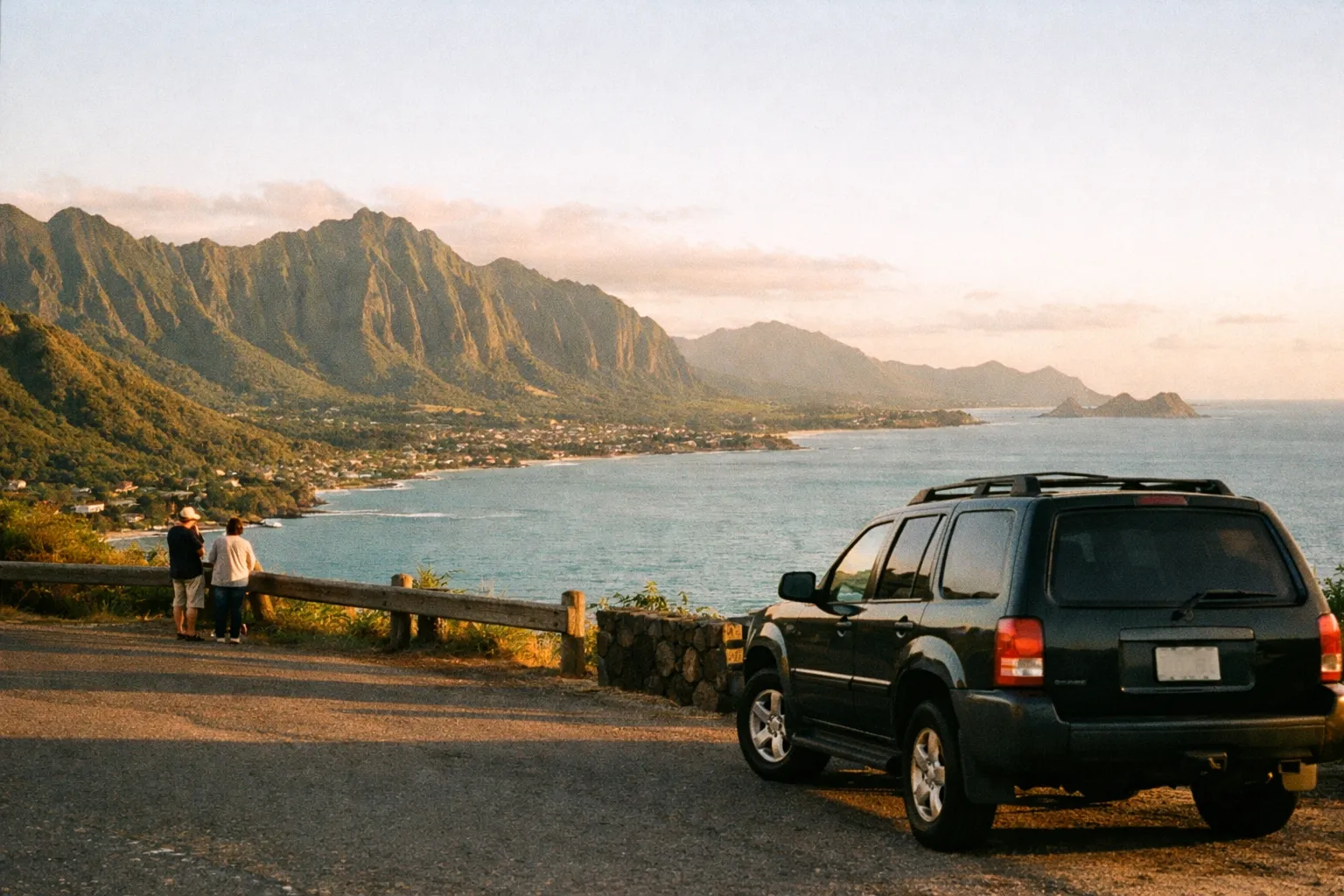
Oahu 5-7 Day Itinerary
5-7 daysDay-by-day plan based in Honolulu with recommended day trips and activities.
- 1
Day 1 - Honolulu basics
Skip the obvious Waikīkī itinerary if you've done it. Walk Kaka'ako for murals, eat at Musubi Cafe Iyasume or Ono Seafood (poke bowls $11-14, cash preferred). Sunset at Tantalus Lookout - 20-minute drive from Waikīkī, free, far better than Diamond Head's reservation system.
- 2
Day 2 - Pearl Harbor and Bishop Museum
The USS Arizona is free but reservation-only ($1 booking fee on recreation.gov; book 8 weeks out). Bishop Museum ($28.95 adult) is the best cultural museum in the state and routinely undervisited.
- 3
Day 3 - Windward coast
Ho'omaluhia Botanical Garden in Kāne'ohe - 400 acres, free entry, but you now need a timed parking reservation since social-media crowds got out of hand. Continue to Lanikai Beach (residential parking, walk in), Kailua town for lunch.
- 4
Day 4 - North Shore
Hale'iwa town, shrimp trucks, Waimea Bay (calm in summer, dangerous in winter). The beaches between the famous surf spots - Laniākea, Chun's Reef - are quieter and better for casual swimming than the main draws.
- 5
Day 5 - West side
Drive to Kaneana (Makua) Cave off Farrington Highway - a 100-foot-high, 450-foot-deep sea cave with real cultural significance. Free roadside parking, no facilities. Respect the area: it's a sacred site, not a photo set. Combine with the Ka'ena Point coastal hike (3 miles each way, no shade, bring 2L water).
- 6
Day 6-7 - Flex
Manoa Falls (early, before 8 a.m., to avoid crowds), Lyon Arboretum, or a day at Hanauma Bay (reservations open 48 hours ahead at 7 a.m. sharp, $25 non-resident entry).
Cruising Hawaii: making port days count
Most Hawaii cruises (NCL’s Pride of America and a handful of Princess/Holland America repositioning runs) cover 2-4 islands over 7-10 nights. Port times are typically 8-10 hours in Oahu and Maui, with the Big Island sometimes getting an overnight or two-day stop split between Kona (tender) and Hilo (dock).
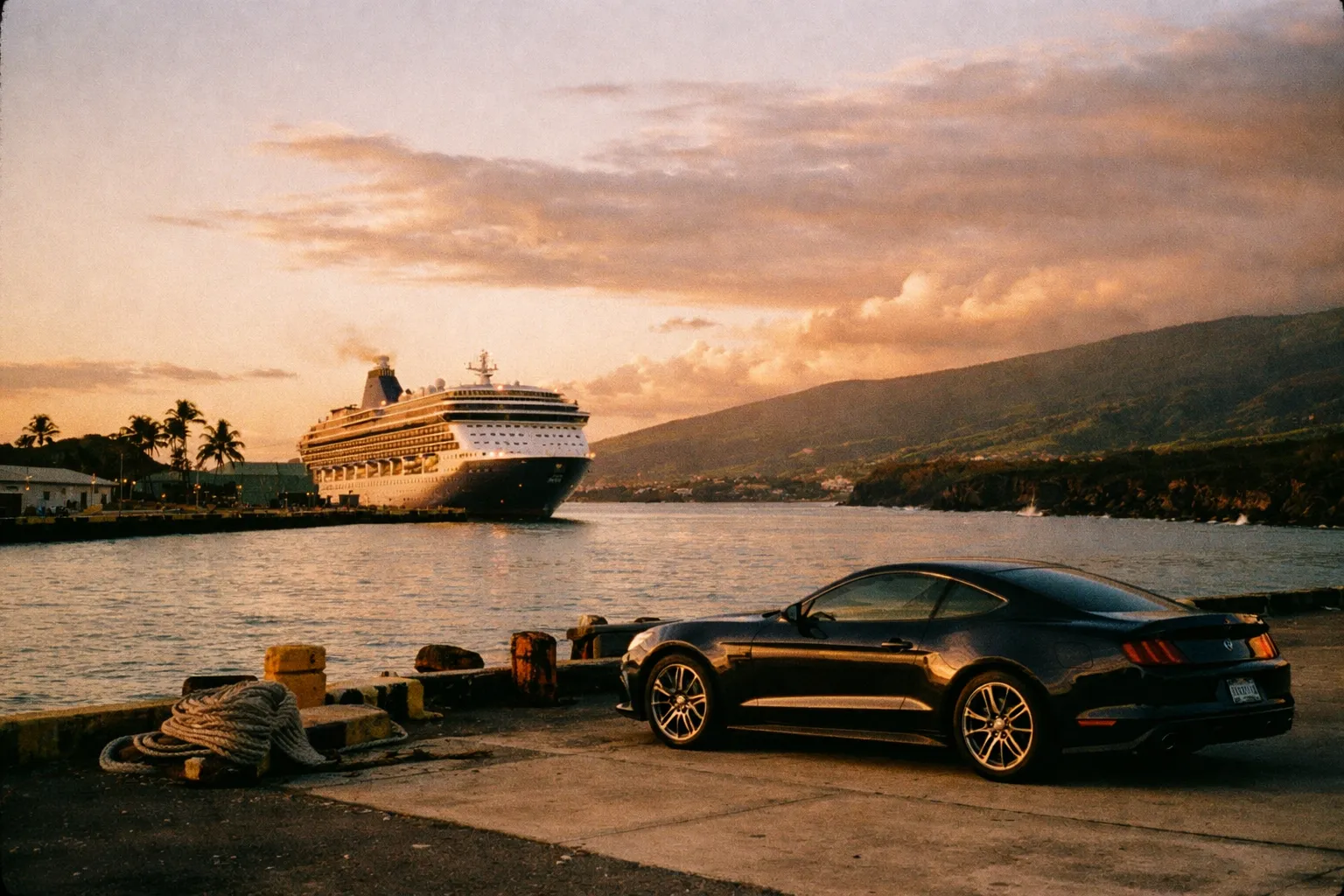
Three approaches, in order of effort:
- Ship excursions. Easiest, most expensive. $80-200/person for a half-day, $150-350 for a full day. You get back to the ship on time guaranteed.
- DIY with a rental car. Best value if you’re willing to plan ahead. Pre-book a car near the port with pier shuttle service - Hilo and Kahului have several. Compact cars run $60-110/day at port.
- Hybrid. One specialty tour per cruise (stargazing on the Big Island, a snorkel charter on Maui), DIY the rest.
Port-by-port matches for travelers looking at hawaii off the beaten path:
- Kona (tender): Tendering adds 30-60 minutes each way. Stick close: Holualoa for a half-day, Waikoloa petroglyphs as a quick stop, or Pu’uhonua o Hōnaunau if you have the full day.
- Hilo (dock): Onomea Bay trail, Rainbow Falls, and a downtown lunch fills a day easily. Volcanoes National Park is doable but tight - 45 minutes each way leaves about 5 hours in the park.
- Kahului, Maui (dock): Iao Valley and upcountry farms beat the Road to Hana for a one-day port. Hana proper is 2.5 hours each way and you won’t have time.
- Nāwiliwili, Kauai (dock): Waimea Canyon overlooks or a short helicopter flight. Most of Kauai’s lesser-known spots need more than a port day.
Booking note: Cruise rental cars sell out 6-8 weeks ahead for popular sailings. Book the day you confirm your cruise.
One rest afternoon per cruise - pick the port you care about least and stay on the ship. The pools are empty and the buffet has no line.
Going off the beaten path in Hawaii: experiences over locations
Some of the best hawaii off the beaten path moments aren’t locations at all. They’re experiences that don’t show up on the standard circuit.
- Whale songs underwater. Snorkel anywhere off the west coast of the Big Island or Maui between mid-December and mid-April. You don’t need a hydrophone - you hear them through the water with your ears (3). This is the single most undersold experience in Hawaii.
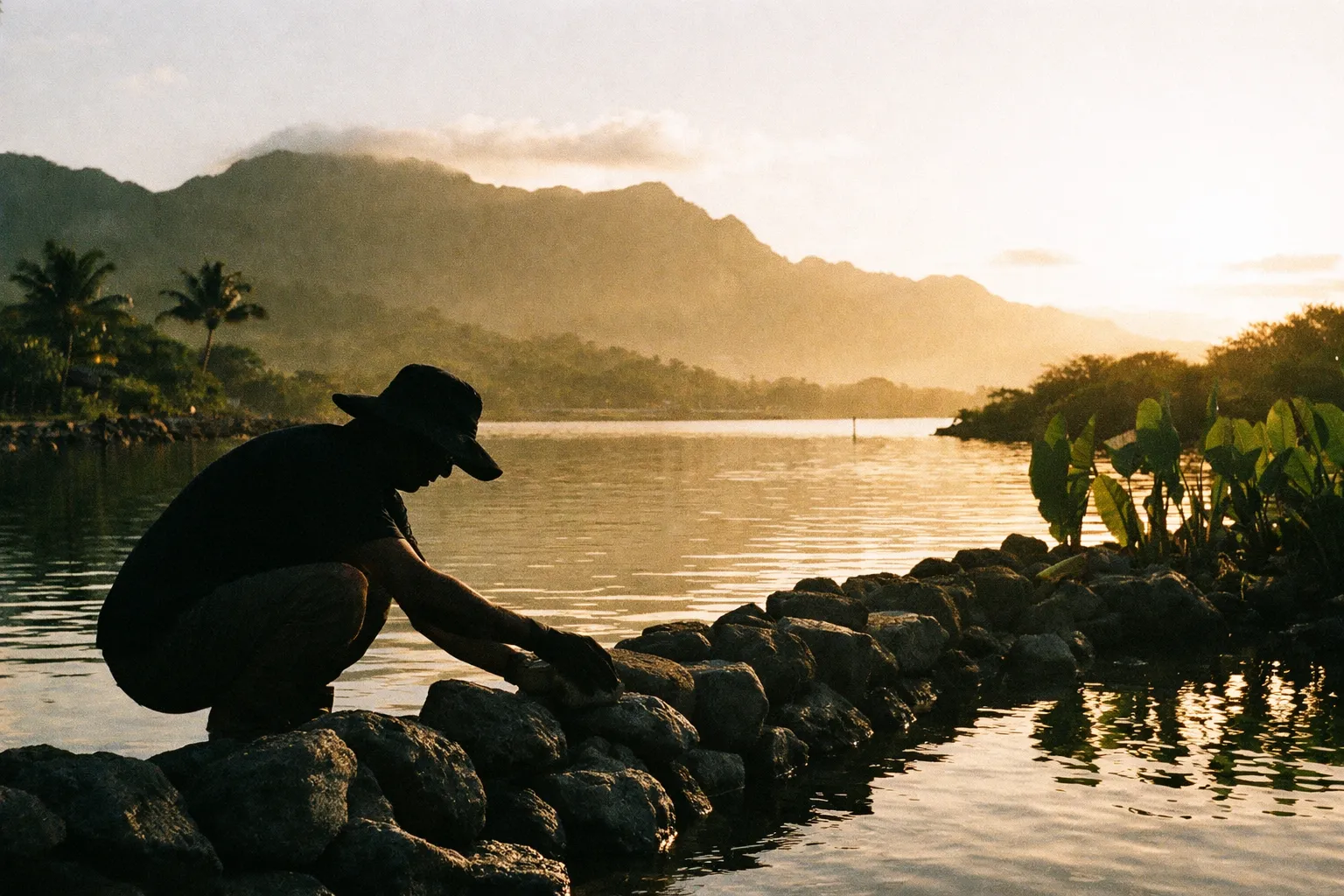
- Community workdays at fishponds or lo’i kalo. Many sites (He’eia Fishpond on Oahu, Waipā on Kauai) host monthly volunteer days that are free with RSVP. You’ll do real work for half a day and learn more about Hawaiian land management than any tour delivers.
- Free hula at small venues. Resort hula shows are fine. Hula performed by hālau at community events - Merrie Monarch satellite events, county park gatherings - is the real thing.
- Kona Cloud Forest Sanctuary. Private forest near Kaloko at 3,000 feet elevation. Guided tours are available - verify current pricing directly with the sanctuary before booking, as rates have changed and published figures are unreliable (1). Worth the detour if you’ve never walked a tropical cloud forest.
- Mauna Kea Visitor Information Station (9,200 ft). Free public stargazing programs typically run Friday-Saturday evenings (check the current schedule - it’s been intermittent post-pandemic). Bring a winter jacket. You don’t need to summit to get the experience.
Cultural questions Google keeps asking
These come up in every Hawaii search and most location guides skip them entirely.
What does 🤙 mean in Hawaii?
The shaka - pinky and thumb extended, three middle fingers curled - is a multi-purpose gesture meaning “aloha,” “thanks,” “right on,” “hang loose,” or “all good.” You’ll see it from drivers thanking you for letting them merge, surfers acknowledging a wave, and people greeting friends across a parking lot. Origin stories vary; the most cited points to Hamana Kalili of Lā’ie, who lost three fingers in a sugar mill accident and used the gesture as a wave. Use it warmly and naturally. Don’t perform it for photos.
Does the $20 trick work in Hawaii?
No, not really. The “$20 trick” - slipping a folded twenty with your ID at hotel check-in to angle for an upgrade - is a Vegas convention that doesn’t map onto Hawaii’s hospitality culture. Front-desk staff are more likely to be quietly uncomfortable than impressed. Upgrades in Hawaii come from loyalty status, low occupancy, special occasions (mention an anniversary honestly), and being genuinely pleasant. Tip generously where it counts (housekeeping $5-10/day, bell staff $2-5/bag, tours 15-20%) and let the rest go.
What is the rarest thing in Hawaii?
A few candidates depending on how you count:
- ‘Akikiki, a Kauaʻi honeycreeper, has fewer than 5 individuals estimated in the wild as of recent counts and may be functionally extinct in habitat.
- Papakōlea Green Sand Beach on the Big Island is one of only four green sand beaches in the world. Reaching it requires a 2.5-mile hike each way from Ka’alehu (6).
- Endemic plants on single ridges of single islands - the silversword (‘āhinahina) on Mauna Kea and Haleakalā being the most accessible example.
Rarer still: a quiet day at Hanauma Bay. The reservation system has helped, but it’s never empty.
Why not whistle at night in Hawaii?
Across Polynesia, whistling after dark is associated with attracting spirits - most specifically the huaka’i pō, or night marchers, processions of ancestral warriors said to travel certain paths. Whether you personally believe it or not, the cultural protocol is clear: don’t whistle at night, especially on rural roads, near heiau (temples), or in the forest. If you hear drums or chanting at night in a remote area, locals will tell you to lie face-down on the ground and not look up until it passes. Treat the belief with respect - it costs nothing and signals you’re paying attention.
What’s changed recently: access, fees, and stewardship
A lot of older “hidden gem” articles are now wrong. The shifts to know:
- Waipi’o Valley access road on the Big Island has been restricted to residents and permitted vehicles for several years following slope safety concerns. Visitors generally need to join an authorized shuttle or tour (1).
- Timed-entry reservations have rolled out at Hā’ena State Park (Kauai), Diamond Head, Hanauma Bay, and Ho’omaluhia Botanical Garden. Book on the state parks portal 14-30 days ahead depending on the site.
- Cliff-jumping spots featured on Instagram in 2018-2021 - Spitting Caves, certain Maui blowholes - have seen fatalities and increased enforcement. Several are now signed off-limits.
- Maui’s West Side remains in recovery after the August 2023 Lahaina fire. Lahaina town itself is closed to general tourism; surrounding areas (Kā’anapali, Kapalua) are operating and actively encouraging visitors who’ll support local businesses respectfully.
- Gas and rental car prices have stayed elevated. Budget $4.50-5.50/gallon and $60-110/day for a compact, $90-150/day for an SUV. Reserve 6+ weeks ahead for December-March travel.
Common mistakes to avoid
- Treating “hidden” as “unrestricted.” Closed valleys, private roads, and posted-off trails get you fined or towed. The fact that someone posted it in 2019 doesn’t mean it’s still legal.
- Underestimating drive times. Big Island circumnavigation is 250+ miles. Road to Hana is 64 miles of switchbacks that takes 3+ hours one way. Plan accordingly.
- Wrong rental car for the terrain. Sedans on the Makalawena access road or the Saddle Road shoulder will eat tires. Spring for the SUV if you’re hitting backroads.
- Touching petroglyphs or climbing heiau. Culturally offensive and legally protected. Use a longer lens (7).
- Over-scheduling cruise port days. One major activity plus a short town walk. Not three excursions in a row.
- Booking the wrong island for the wrong season. Big Island Hilo side is wettest November-March. North Shore Oahu surf makes north-facing beaches dangerous in winter. Match the trip to the season.
What to actually book in advance
In rough order of urgency for a peak-season trip:
- Flights and rental car - 8+ weeks out.
- Mid-range hotels in popular areas - 6-8 weeks.
- Pearl Harbor USS Arizona tickets (free + $1 fee on recreation.gov) - 8 weeks.
- Mauna Kea summit tours ($230-260) - 4+ weeks.
- Hā’ena State Park / Kalalau trailhead parking - 30 days, opens at midnight HST.
- Hanauma Bay reservations - 48 hours ahead, 7 a.m. sharp, sells out in minutes.
- Specialty restaurants (Mama’s Fish House on Maui, Merriman’s) - 60+ days.
The free spots - Pololū, Onomea, Waikoloa petroglyphs, Tantalus, downtown Hilo - don’t need reservations. Show up early, behave respectfully, and you’ll have most of them to yourself for at least the first hour of the day.
That’s the actual trick.
Frequently Asked Questions
- Is it worth visiting both Kona and Hilo on the Big Island?
- Yes, splitting your time between Kona and Hilo offers a fuller experience of the island's diverse climates and cultures. Kona has better beaches and resorts, while Hilo offers rainforests, waterfalls, and a more authentic town feel.
- Can I use the $20 trick to get hotel upgrades in Hawaii?
- No, the $20 trick common in Las Vegas doesn't work well in Hawaii. Upgrades depend more on loyalty, occupancy, special occasions, and being polite. Tipping generously where appropriate is more effective.
- What should I know about visiting petroglyph sites?
- Petroglyphs are protected cultural artifacts. Visitors must stay on marked trails, avoid touching or marking the carvings, and respect signage to avoid fines and preserve the sites.
- How far in advance should I book rental cars and accommodations?
- For peak seasons, book flights and rental cars at least 8 weeks ahead, mid-range hotels 6-8 weeks ahead, and specialty tours or reservations according to their specific lead times.
- Are there any cultural taboos I should be aware of in Hawaii?
- Yes, for example, whistling at night is considered disrespectful as it is believed to attract spirits. Also, avoid climbing on sacred sites and always show respect for local customs.
- What is the best time to visit Hawaii to avoid crowds and high prices?
- April-May and September-October are ideal months with drier weather, lower prices, and manageable crowds, especially for Big Island and Oahu trips.
- Are there any recent access restrictions I should be aware of?
- Yes, some areas like Waipi'o Valley require authorized shuttles or tours due to safety concerns. Timed-entry reservations are now common at popular parks like Hā'ena State Park and Hanauma Bay.