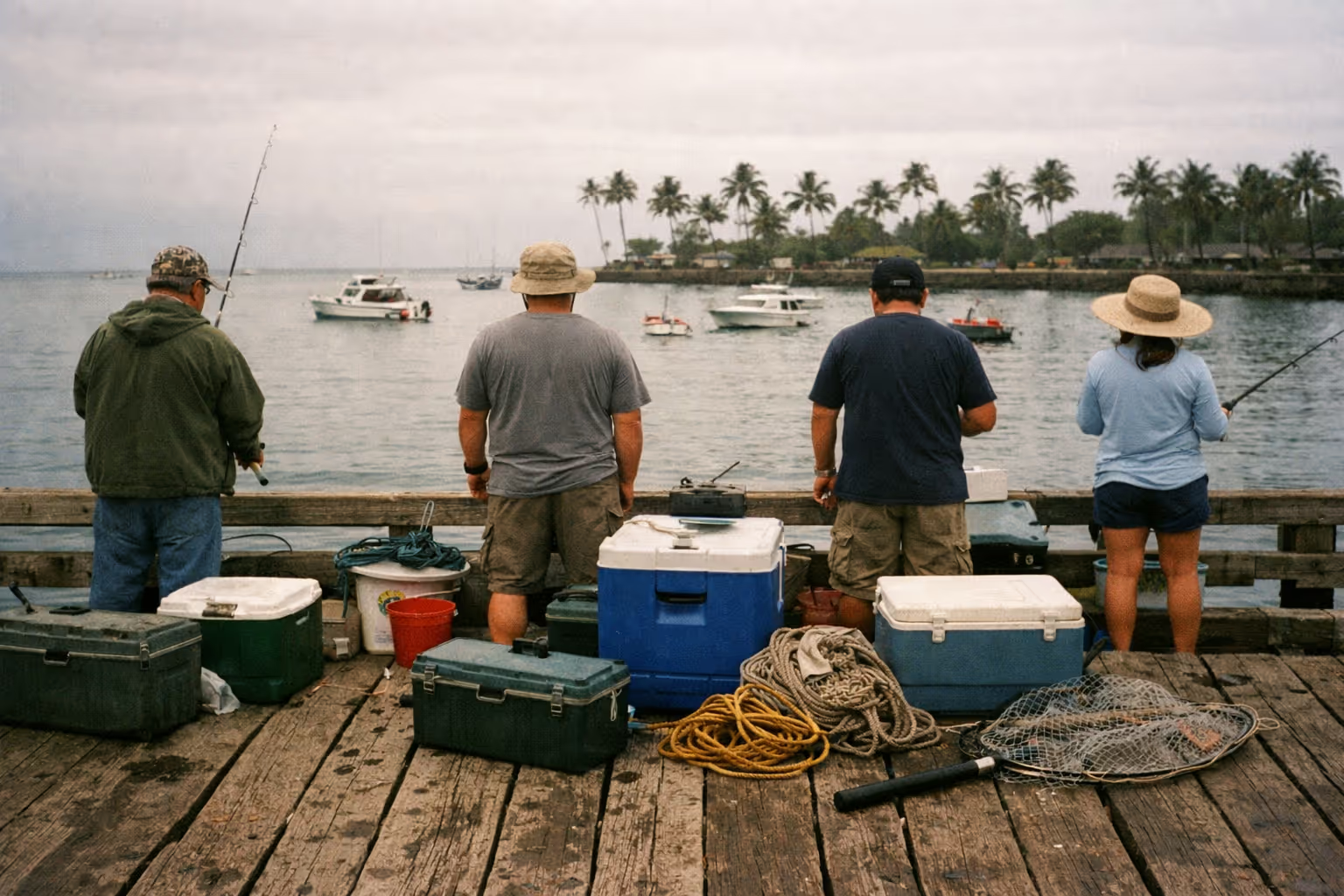
Fishing in Hawaii now starts with a step most visitors miss: since May 2024, even casting off a pier needs a nonresident license, $20 for a day or $40 for the week. Kona is the big-game seat, marlin water less than a mile offshore; Oahu runs the cheapest shared charters, around $180 for a half-day. July stacks the widest mix of marlin, tuna, and ono. Book Kona and Maui boats four to eight weeks out for summer, or you will be watching from the dock.
How to get there and what it costs: fishing in Hawaii
Getting there: All four main islands are served by direct flights from the U.S. mainland. Honolulu (HNL) on Oʻahu has the most connections and lowest average fares - typically $400-$700 round-trip from the West Coast, $600-$1,000 from the East Coast. Kona (KOA) on the Big Island and Kahului (OGG) on Maui have direct mainland service from major hubs. Kauaʻi (LIH) usually requires a connection through Honolulu. Inter-island flights run $60-$130 each way and take 30-50 minutes.
Cost range summary: A fishing-focused week in Hawaii runs roughly $480-$630 per person in fishing costs alone (license, two shared charters, shore tackle) - before lodging or flights. Budget anglers doing mostly shore fishing can keep fishing spend under $150 for the week. Trophy hunters running private big-game charters out of Kona should plan $1,200-$1,600 per boat per day. Full cost breakdown is in the “How much does it cost” section below.
Start here: a step-by-step plan for your first fishing trip to Hawaii
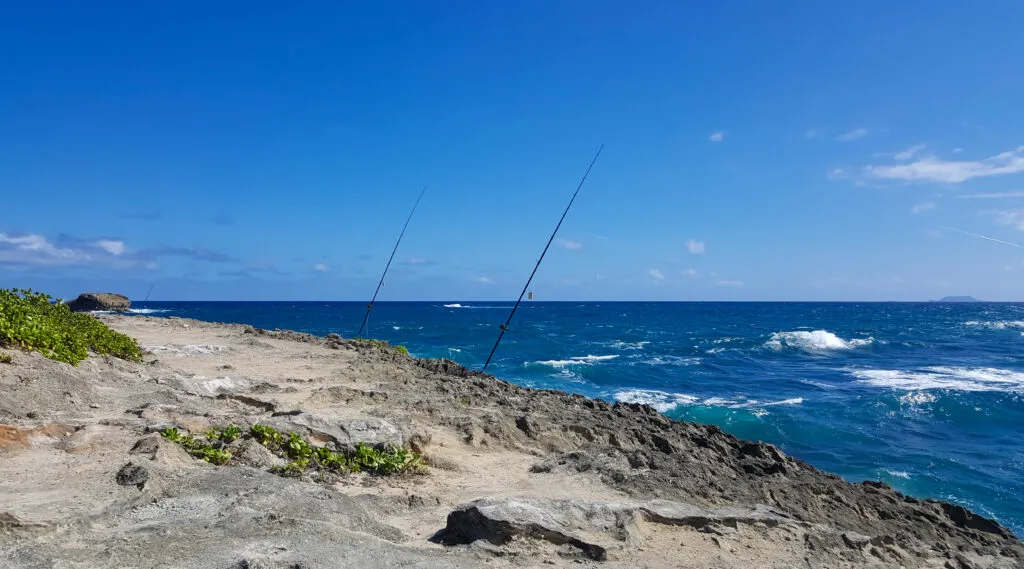
If you’ve never tried fishing in Hawaii, the order of operations matters more than the gear. Here’s the sequence that saves money and prevents a wasted charter deposit.
- Pick your island by goal. Kona for big-game marlin, Oʻahu for budget and variety, Maui for a scenic-plus-fishing mix, Kauaʻi for quiet shore and bottom fishing. More on this below.
- Buy your nonresident marine license online before you arrive. Screenshot and print it. Charter crews now check at the dock, and showing up without one can mean denied boarding (10).
- Book a shorter charter first. A 4-to-6-hour trip lets you test your seasickness tolerance before you commit to a 10-hour big-game day.
- Reserve at least one sunrise and one sunset for shore fishing. Dawn (6-8 a.m.) and dusk (5-7 p.m.) are the productive windows, and they cost you almost nothing.
That’s the whole starter framework. The details - cost, license, season, kit - fill out the rest of this guide.
Marine fishing licenses and permits
This is where old blog advice will get you fined. For years the standard line was “saltwater fishing in Hawaii doesn’t require a license.” That’s no longer true for visitors.
As of May 2, 2024, Hawaiʻi requires a Nonresident Recreational Marine Fishing License for nearly all ocean recreational fishing by nonresidents age 15 and older - including shore casting, boat fishing, and guided charters (10). The Hawaiʻi Division of Aquatic Resources administers it through its online portal (6).
Nonresident marine license fees:
| License | Fee |
|---|---|
| 1-Day | $20 |
| 7-Day | $40 |
| Annual | $70 |
Buy it online at the state portal; allow 15-30 minutes and expect a small processing surcharge (a few dollars) (6). Print or screenshot the confirmation - cell service at remote fishing spots and offshore is unreliable.
Common exemptions: Nonresidents under age 15 and active-duty U.S. military are generally listed as exempt, but they still have to follow size limits and gear rules (10).
Residents: Hawaiʻi residents currently need no recreational marine license for hook-and-line saltwater fishing. Commercial fishing is a different animal - that requires a Commercial Marine License with fees running $100 and up (6).
Freshwater is separate. Every angler, resident or visitor, needs a freshwater permit to fish lakes and reservoirs like Nu’uanu Reservoir or the Wahiawa Public Fishing Area. Resident permits run roughly $6; nonresident tourist permits are about $11 for 7 days and $21-$26 for 30 days (8). Some public fishing areas also require a free entry permit on top of the license.
One thing most guides get wrong: they treat the hawaiian fishing license requirement as charter-only. It isn’t. If you’re a visitor throwing a line off a pier or rock ledge into ocean water, you need the same license. Officers do check at popular spots.
What Hawaiian island is best for fishing?
There’s no single answer - it depends on whether you’re chasing a trophy, a bargain, or a quiet morning. Here’s the honest breakdown.
Island of Hawaiʻi (Kona) - best for marlin and big game. Kona is Hawaiʻi’s #1 blue marlin destination and holds a long list of IGFA records. The deep water sits less than a mile offshore, so you’re trolling productive drop-offs within 20 minutes of leaving the harbor. Blue marlin over 500 lb are realistic here, and true “granders” over 1,000 lb have been recorded off this coast. If big game is the reason you’re flying to Hawaii, this is the island. Worth the detour.
Oʻahu - best for value and variety. Oʻahu has the most charters and the most competitive pricing, with shared half-day trips commonly starting around $180-$220 per person. Honolulu and Waikīkī access make it easy to slot fishing opportunities on Oʻahu between other activities. The Leeward Coast produces marlin and tuna, and the range of operators means you can find a boat for almost any budget.
Maui - best for scenic plus fishing. Lahaina and Ma’alaea harbors serve as hubs for a solid mix of family-friendly and offshore trips. Fishing trips around Maui tend to pair well with the island’s other draws, so it’s a strong pick if not everyone in your group is fishing-obsessed. Mahi mahi, ono, and marlin all show up in season.
Kauaʻi - best for quiet and shore fishing. Kauaʻi has fewer boats and smaller crowds, with strong nearshore and bottom fishing for snapper and trevally out of Nawiliwili Harbor and Port Allen. If you want space and don’t need a fleet of charter options, Kauaʻi offers a calmer experience for shore fishing.
Skip-if-short-on-time note: don’t try to fish all four islands in one trip. Inter-island logistics eat your best morning windows. Pick one, fish it well.
Is the fishing actually good year-round?
Yes - and the reason is water temperature. Hawaiʻi sits in tropical waters that stay between 75 and 82°F year-round, with steep drop-offs close to shore that concentrate pelagic fish. Blue marlin, yellowfin tuna, mahi mahi, and ono are present all 12 months. According to NOAA Fisheries’ Pacific Islands Regional Office catch data, Hawaiʻi’s pelagic fishery ranks among the most productive in the U.S. by weight landed per vessel day - a function of those warm, deep-water conditions that hold bait year-round.
The catch is that “present year-round” doesn’t mean “peak year-round.” Catch rates swing seasonally, and matching your trip to the right target species is the difference between a slow day and a full cooler.
Blue marlin
The headline fish. Blue marlin off Hawaiʻi commonly run 150-400 lb, with the rare grander over 1,000 lb (7). Peak season is June through September, when the water is warmest and bait is abundant. Kona’s proximity to deep ledges makes it the premier spot, though deeper edges off Maui and Oʻahu produce too. Many captains now practice catch-and-release, keeping only fish under certain sizes to support conservation.
Mahi mahi
Bright, fast, and one of the better eating fish you’ll catch. Charter-caught mahi mahi typically run 10-30 lb, and they peak in spring, March through May. Watch for floating debris - logs, pallets - and current lines, because mahi school under structure. Lighter tackle (20-30 lb line) with small lures or ballyhoo draws more bites, and once you find a school, multiple hookups are common.
Yellowfin tuna
Locally called ahi, yellowfin tuna frequently run 20-100 lb, with larger fish topping 150-200 lb in summer. Peak is June through August. Early starts and late-afternoon tides tend to be most productive. Charters that work Fish Aggregating Device (FAD) networks - often with chunking or live bait - post higher hookup rates, which partly justifies their pricing.
Ono
Ono (wahoo) usually run 15-40 lb and peak April through August along island ledges. They hit hard and run blistering fast. High-speed trolling at 10-15 knots with bullet lures and wire leaders is the approach - the wire matters because their teeth cut through mono. Keep drags slightly looser than for marlin to avoid pulling the hook on those first runs.
Seasonal chart
| Species | Peak months | Typical size |
|---|---|---|
| Blue marlin | Jun-Sep | 150-400 lb |
| Yellowfin tuna (ahi) | Jun-Aug | 20-100 lb |
| Mahi mahi | Mar-May | 10-30 lb |
| Ono (wahoo) | Apr-Aug | 15-40 lb |
Best all-around month: July, if you want the widest shot at multiple headline species at once - marlin, ahi, and ono all overlap in summer (4). Book spring instead if mahi mahi is your priority.
Prime locations worth knowing
The islands are dotted with fishing spots that reward different approaches, and a few are worth singling out.
Nawiliwili Harbor and Port Allen on Kauaʻi sit close to deep water and are strong launch points for bottom and nearshore fishing. Oʻahu’s Leeward Coast draws anglers after a trophy marlin or a tuna haul. I’ve found the Leeward side consistently productive for trolling runs, even on half-day trips out of Waianae - the drop-offs there are sharper than most visitors expect.
On Maui, Ma’alaea Harbor and Lahaina are the standard starting points for offshore trips. The variety is real - mahi mahi, ono, and marlin all come through depending on the month, which means back-to-back charter days rarely feel like the same trip.
Can you fish from shore in Hawaii?
Yes, and it’s the most affordable way to fish the islands - but nonresidents still need the marine license covered above.
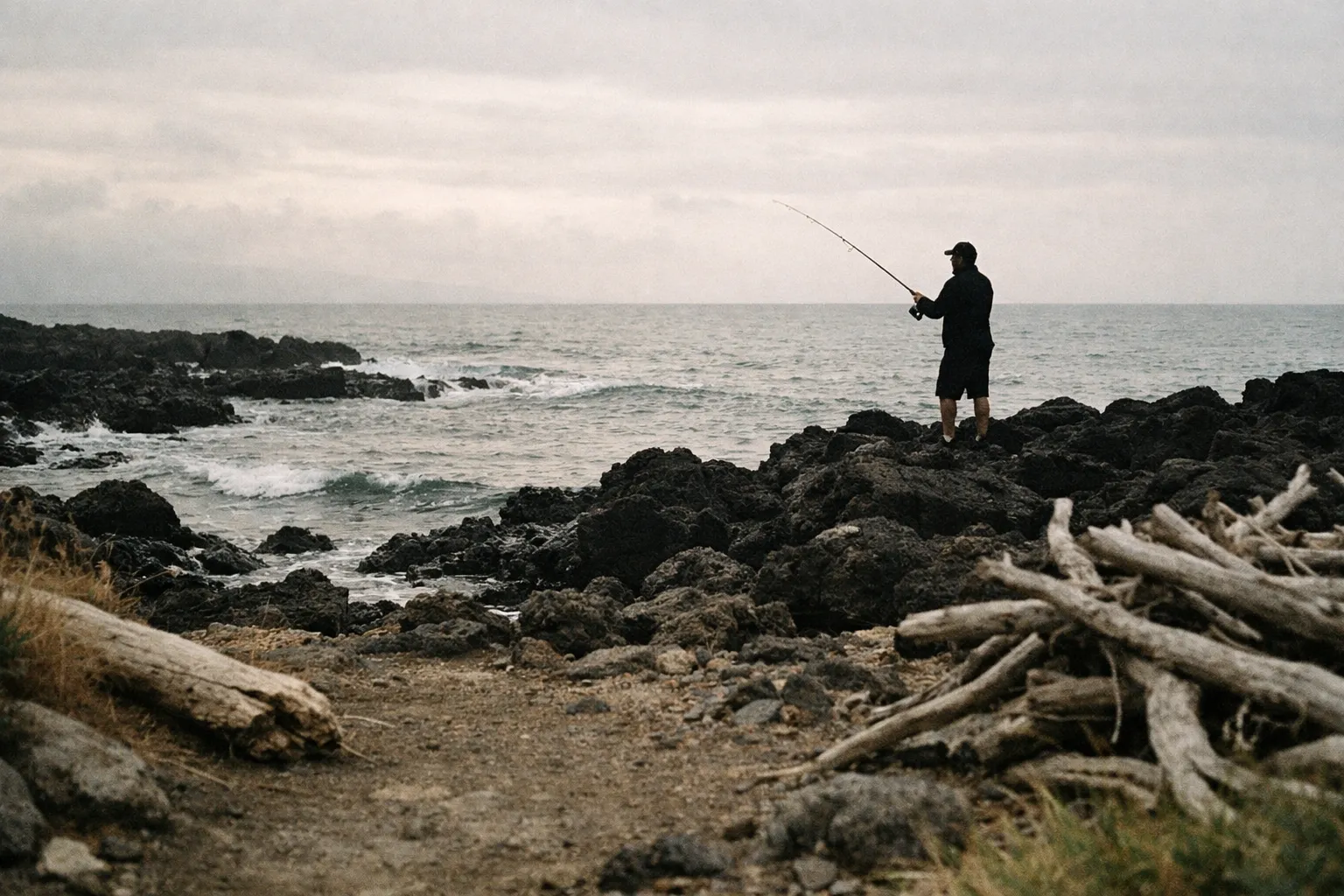
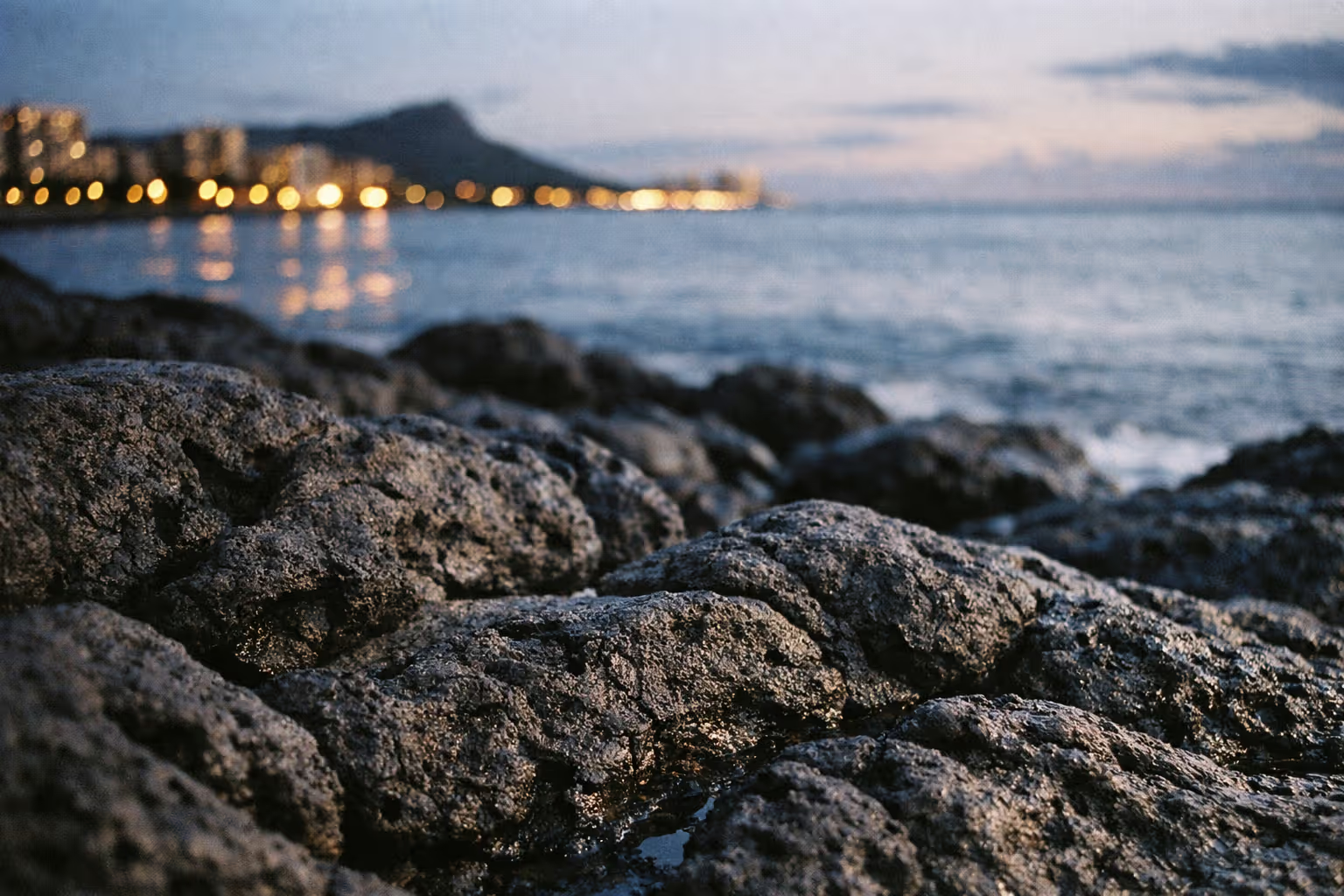
Shore fishing works from piers, rock ledges, jetties, and lava rock points across all four islands. Realistic session length is 2-4 hours, and the productive windows are dawn (6-8 a.m.) and dusk (5-7 p.m.). Your cost per session is basically bait and terminal tackle - $5-$30 - against the $150-$1,500 of a charter.
The prize target from shore is ulua (giant trevally), a brutal fighter that occasionally tops 50 lb. Fish low-light windows with topwater poppers (1-2 oz) and metal jigs, and use a heavy 40-60 lb leader to survive coral and lava rock abrasion. Smaller jacks and reef fish fill out most sessions.
One safety note that’s easy to underestimate: many Hawaiʻi shore spots are rocky, wet, and exposed to swell. People are swept off ledges every year. Watch the sets before you commit to a spot, and never turn your back on the ocean. For a fuller picture of Hawaii ocean safety tips, including how to read conditions and recognize hazards, it’s worth reviewing before your first session.
What to expect on the water: offshore and deep-sea charters
Charter services across the islands are your gateway to the offshore fishing, with crews who know the water and the drop-offs. They’re your best asset for finding fish and running the right spread, whether you’re trolling for marlin off Kona or working FADs for ahi near Oʻahu. For DIY-inclined anglers, understanding the technique still helps you evaluate a charter and hold your own on the rods.
Hawaiian trolling tips
- Run a mixed spread of 4-6 trolling lures at 7-9 knots: larger heads closer to the wake for blue marlin, smaller bullet lures on the long rigger for ono.
- Use leaders of 250-400 lb, 10-15 ft long, with sharp 8/0-10/0 hooks.
- Keep drags smooth and set to roughly 30-35% of line test.
- For ono specifically, bump trolling speed to 10-15 knots and add wire leaders to beat their teeth.
The difference a good crew makes is real. Sonar, GPS marks on productive ledges, and FAD knowledge dramatically raise your odds compared to fishing blind - which is the whole argument for paying charter money over going DIY for pelagics.
How much does it cost to fish in Hawaii?
Costs span from pocket change to four figures depending on how you fish. Here’s the current lay of the land for 2026.
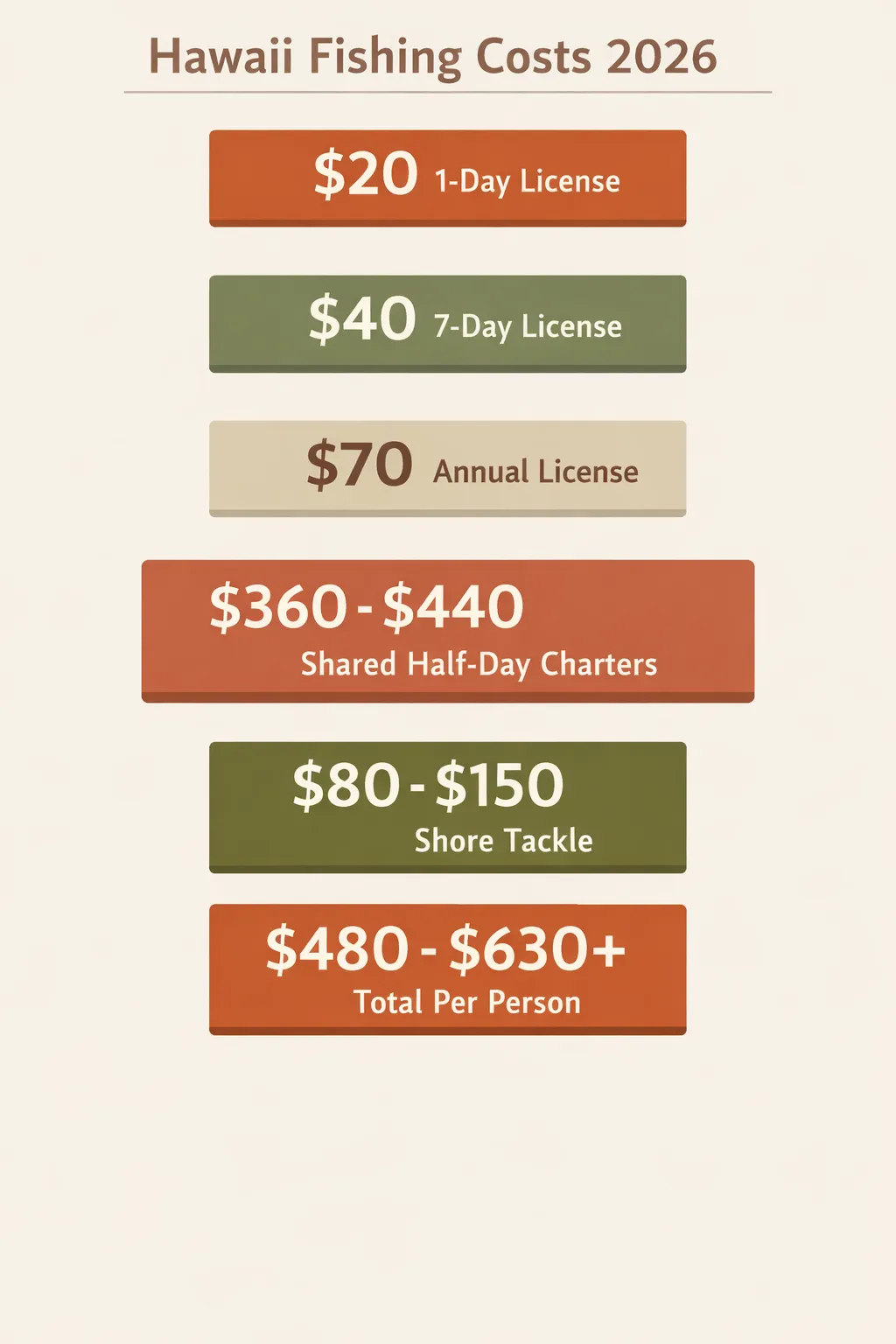 Nonresident license costs and typical Hawaii fishing costs in 2026: $20 for 1-Day, $40 for 7-Day, $70 for Annual licenses, plus two shared half-day charters at $360-$440 and shore tackle at $80-$150, totaling about $480-$630+ per person.
DIY shore fishing: $5-$30 per session for bait and terminal tackle, assuming you own or bring a rod. A serviceable medium-heavy spinning combo runs $60-$120 if you’re buying one for the trip.
Shared charters (budget deep sea fishing options): 4-hour shared sportfishing trips off Kona start around $156 per person. On Oʻahu, shared half-days commonly run $180-$220 per person. The post-pandemic market has added more shared and snorkel-plus-fish combo trips aimed at price-sensitive travelers.
Private half-day charters: From roughly $800 per boat for up to six anglers (2).
Full-day big-game charters: 8-10 hour trolling trips for marlin and ahi typically run $1,100-$1,600 per boat depending on vessel size and what’s included - tackle, fuel, and crew are usually covered, but confirm (2).
A realistic one-week fishing-focused budget per nonresident angler:
- 7-day marine license: $40
- Two shared half-day charters: $360-$440
- Shore tackle and bait: $80-$150
- Total: roughly $480-$630+ per person, excluding lodging and flights.
That’s the number most guides never give you. For context, a comparable week of offshore fishing in the Florida Keys - another top U.S. pelagic destination - runs $600-$800 per person in charter costs alone, according to pricing aggregated by Sport Fishing Magazine, making Hawaii competitive once you factor in the species variety. Trophy hunters targeting multi-day private marlin charters in Kona should budget $1,200-$1,600 per day, plus $1,000-$3,000 for a replica mount if you want one on the wall.
Booking mechanic: Kona and Maui charters book out fastest for summer peak season (June-August) and around holidays. Reserve 4-8 weeks ahead for a specific boat and date in that window; shared trips in shoulder months can often be had a few days out.
What to bring
Open-deck boats and an on-water UV index that regularly hits 10-12 (extreme) punish the unprepared. Pack this minimum kit:
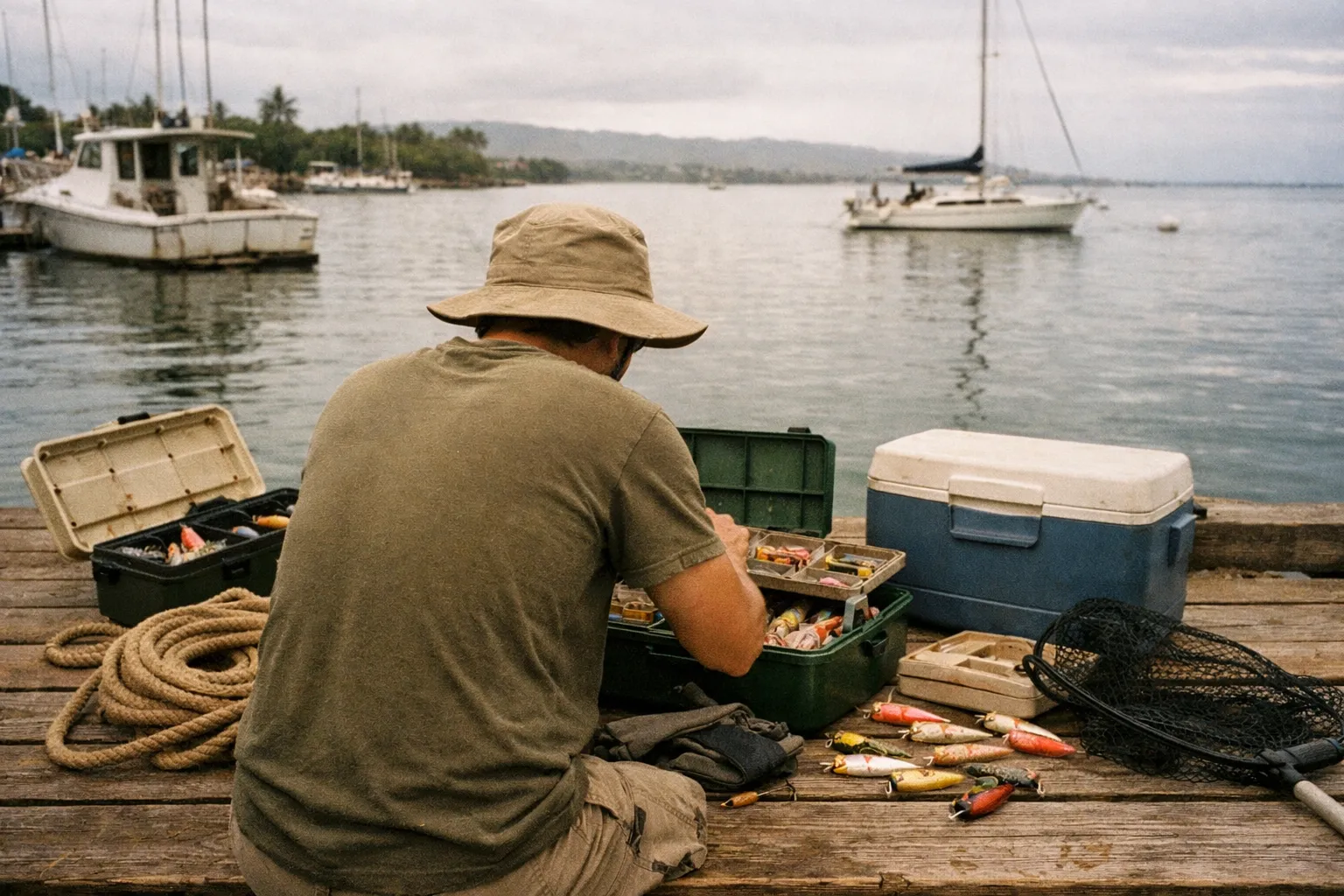
- Sun protection: UPF 50+ long-sleeve shirt, broad-brim hat, reef-safe SPF 30-50. Reapply hourly.
- Seasickness meds: Meclizine 25 mg or a scopolamine patch, applied 4+ hours before departure. Without prep, seasickness sidelines a meaningful share of first-timers on rough days - don’t gamble a $300-$400 trip on your stomach.
- Footwear: Non-marking deck shoes or sandals. Many boats ban black-soled shoes that mark the deck.
- Polarized sunglasses: Costa or Maui Jim cut the glare and help you spot fish and structure.
- Water: 1-2 liters per 4-hour trip, plus a waterproof bag for phone and documents.
For DIY shore fishing, add: a medium-heavy 7-9 ft spinning rod rated 15-30 lb, a 4000-6000 size reel, 1-3 oz sinkers, 1/0-4/0 circle hooks, 20-40 lb fluorocarbon leader, and a few metal jigs and topwater plugs. Local bait (cut squid, “ika,” or fish strips) runs $5-$10 per tray at bait shops.
The most common shore mistake is bringing a light freshwater rod with under-10 lb line. Reef fish and jacks will break you off instantly on coral. Match the gear to the fishery.
Getting the most out of your fishing trip
Preparation and local knowledge decide your results more than anything else. Choose a charter or guide whose target species and season line up with your trip dates - a mahi-focused spring booking and a summer marlin charter are different trips on different boats, and booking the wrong one for the wrong month is an expensive lesson.
Understanding seasonal timing raises your odds more than any single piece of gear. Knowing mahi mahi peaks March through May, or that ahi runs hardest June through August, tells you what to book and when.
The fishing doesn’t have to be the whole trip, either. A morning charter and an afternoon at a black sand beach is an efficient use of a day, and Hawaiʻi’s islands give you plenty to do between tides. Combining time on the water with the rest of what the islands offer makes for a fuller week - and takes the pressure off any single charter to deliver. Families traveling with younger anglers will find useful context in Hawaii with Kids: Islands, Beaches and Real Costs, which covers island comparisons and budgeting for mixed-age groups.
Frequently Asked Questions
- Can I use a freshwater fishing permit for ocean fishing in Hawaii?
- No, freshwater permits only cover lakes and reservoirs; ocean fishing requires a separate marine fishing license.
- Are there any exemptions to the nonresident marine fishing license?
- Yes, nonresidents under 15 and active-duty U.S. military are exempt but must still follow size and gear regulations.
- How far in advance should I book a charter during peak season?
- Reserve 4-8 weeks ahead for summer peak season and holidays to secure your preferred boat and date.
- Is it possible to fish all four main islands in one trip?
- It's not recommended due to inter-island travel cutting into prime fishing windows.
- What safety precautions should I take when shore fishing?
- Watch ocean swell and footing carefully; many rocky shore spots are slippery and exposed to waves.
- Do charter crews provide all necessary tackle and bait?
- Most charters include tackle and bait, but confirm with your operator before booking.
- Can I fish without a license if I only fish from shore?
- No, nonresidents age 15+ must have a marine fishing license for any ocean fishing, including shore casting.