The most useful Hawaii travel tips protect your days, starting with the hardest rule: one island per seven days. Trying to see three means burning half-days on interisland flights and airport lines. If you split a longer trip, fly open-jaw, into Honolulu and out of Kahului, to cut a leg and $100 to $300. Sleep cheap in a Waikiki hostel with a kitchen and you can hold a solo week near $800 on the ground. And at Honolulu, show up two hours early even for an interisland hop.
Hawaii travel tips: how long to stay and which islands to pick
When planning a trip to Hawaiʻi, these hawaii travel tips can help you decide how long to stay and which islands to visit. Hawaiʻi has six visitable islands: Oʻahu, Maui, Kauaʻi, the Island of Hawaiʻi (Big Island), Lānaʻi, and Molokaʻi. The single most common mistake is trying to see too many of them. Most experienced planners cap it at one island per 7 days, and two islands max for a 10-14 day trip (1)(2).
Quick scope before the day-by-day:
- 7 days, ~$1,800-$2,800 mid-range / ~$1,000-$1,400 budget: one island. Pick Oʻahu if it’s your first time (best transit, hostels, variety) or Kauaʻi if you want hiking.
- 10-14 days, ~$3,500-$5,500 mid-range: two islands, open-jaw flight (fly into one, out of another) to skip a backtrack leg.
- 3 weeks: three islands is realistic but still aggressive - keep a minimum of four nights per island.
What most guides get wrong: they sell Maui and the Big Island as interchangeable. They aren’t. Maui is denser, more resort-driven, and centered on the Road to Hāna and Haleakalā. The Big Island is the size of all other islands combined and built around volcanoes, lava terrain, and Kona’s manta ray night dives. Pick one based on what you actually want to do - the best places to visit in Hawaii depend entirely on your trip type.
Best time to visit (and what it costs)
April-May and September-early November are the sweet spot - fewer crowds, lower lodging rates, and the trade winds are still cooperative. Avoid mid-December through early January, mid-February (Presidents’ weekend), and the Ironman period in October on the Big Island unless you’ve booked months ahead; prices spike and inventory disappears.
Mainland-Hawaiʻi roundtrip economy fares typically run $500-$900 from West Coast hubs and $700-$1,200+ from the East Coast. Set fare alerts 3-6 months out for any holiday travel.
Hawaii hostels: what to expect and what they cost
The price gap between a hostel and a beachfront hotel in Hawaii can be 5-8x. That’s not a rounding error - it’s the difference between a week that fits your budget and one that doesn’t. Choosing the right hawaii hostel matters more here than in most destinations.
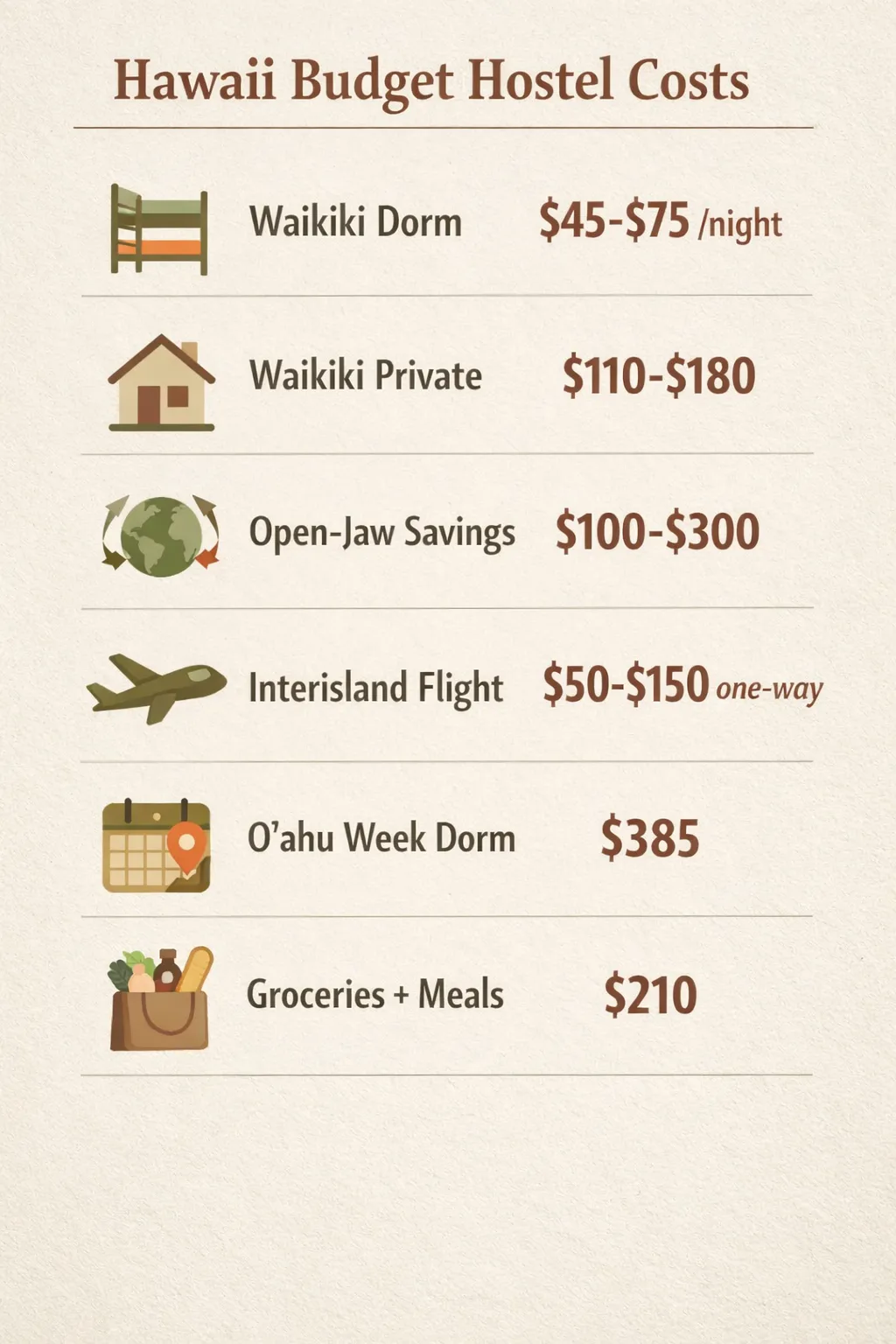 Cost snapshot: Waikīkī dorms $45-$75/night; Waikīkī private $110-$180; open-jaw savings $100-$300; interisland flight $50-$150 one-way; Oʻahu week dorm $385; groceries + meals $210.

Hawaii hostels cluster in a few predictable areas:
- Waikīkī (Oʻahu): the deepest hostel market. Dorm beds typically $45-$75/night, private rooms $110-$180. Walking distance to the beach and TheBus stops.
- North Shore (Oʻahu): a handful of surf-focused hostels around Hale’iwa and Pūpūkea. Prices run higher in winter (big-wave season), often $60-$90 a dorm.
- Hilo and Kailua-Kona (Big Island): smaller scene, dorms around $40-$65. Hilo is the budget base for Volcanoes National Park.
- Kauaʻi and Maui: fewer dedicated hostels and stricter short-term rental rules - expect to pay more or settle for a guesthouse.
I’ve stayed in Waikīkī hostels twice and found the communal kitchen to be the real value - not the social scene, the savings. Cooking even half your meals cuts the food line of your budget by 30-50%. The best hostel stays I’ve had in Hawaii were ones where the front desk actually knew local trails and could point you toward beaches that weren’t on the bus route.
Look for hostels that organize events: sunrise hikes, surf lessons from local instructors, or cultural nights. The communal setup also makes it easy to find ride-share partners for trailheads with no transit.
Worth the detour: hostels with a real kitchen and a reliable parking spot.
Skip if short on time: hostels deep in residential neighborhoods with no transit and no parking. The “cheap” rate gets eaten by rideshares.
Hawaii on a budget: real numbers per week
Two questions dominate the search results: “Is $1,000 enough for a week in Hawaii?” and “Is $5,000 enough for a trip to Hawaii?” Here’s the honest math.
Is $1,000 enough for a week?
Only if your flight is already paid (miles, companion fare, or a prior credit). Then $1,000 covers a single island, hostel dorm, mostly self-cooked food, TheBus on Oʻahu or a shared rental car, and free activities (hikes, public beaches, lookouts). Sample week on Oʻahu:
- Hostel dorm: 7 × $55 = $385
- Food (groceries + 2 food-truck meals): $210
- TheBus 7-day pass ($35) + 4 rideshares: $95
- Activities (Diamond Head $5, snorkel at Hanauma Bay $25, one paid tour ~$80): $110
- Cushion: $200
That’s tight but doable. Add the flight and $1,000 doesn’t get you there.
Is $5,000 enough?
Yes - comfortably. For a solo traveler, $5,000 funds 10-14 days across two islands with a mid-range style: condo or boutique stay, rental car for half the trip, two or three paid tours (a boat trip, helicopter, or dive), and eating out for most dinners. For a couple, $5,000 covers 7-10 days in the same style if you split lodging and the car.
The cost lines that ambush budgets:
- Resort fees and parking: add 15-25% to listed room rates; resort parking is $30-$50/night.
- Rental car taxes/fees: the daily base of $40-$90 can become $70-$130 once airport concession fees and surcharges hit.
- Interisland flights: $50-$150 one-way if booked early, more last-minute.
Island hopping Hawaii without burning days
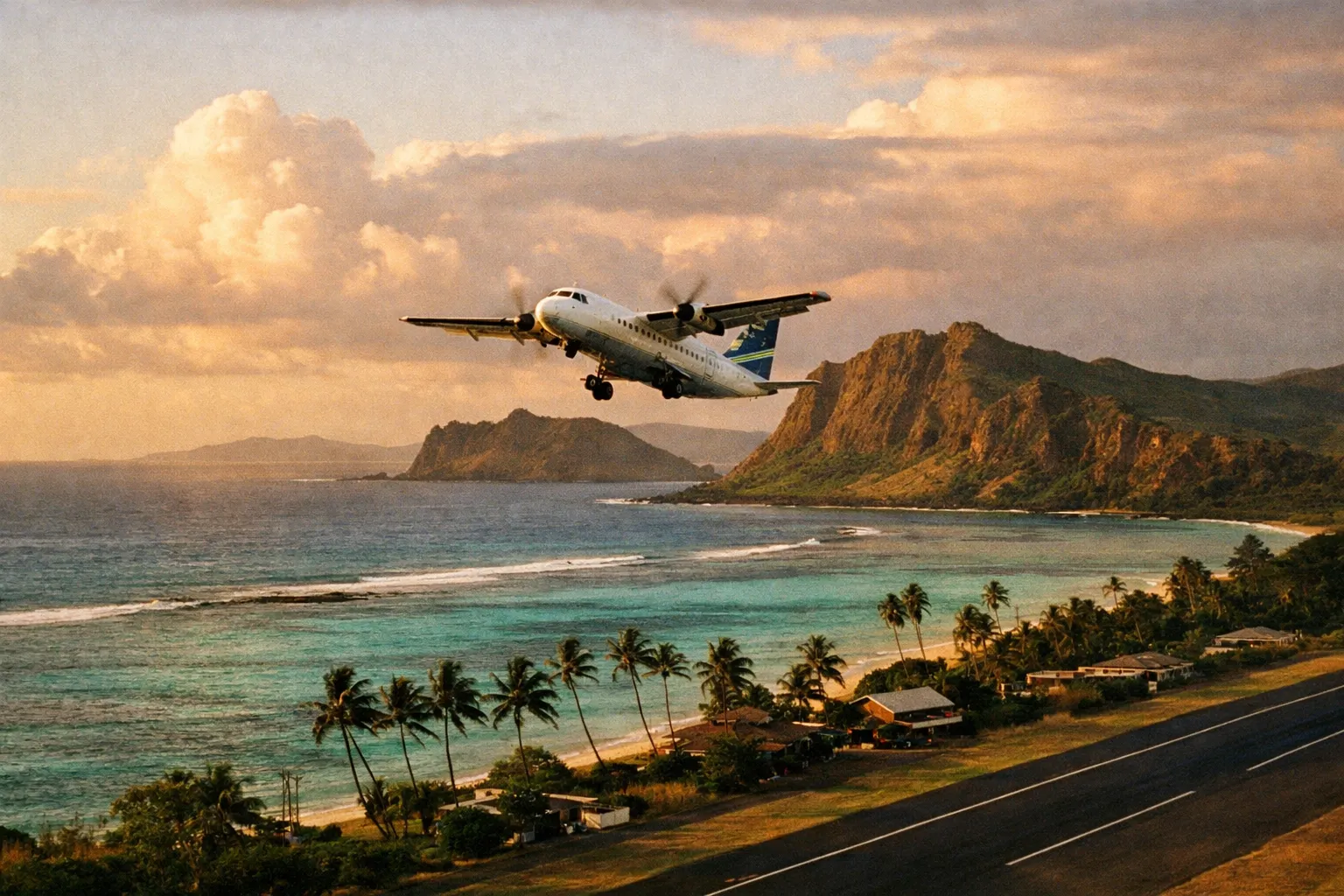
Island hopping Hawaii is fun in theory and exhausting in practice if you don’t batch it right. Flight time between major islands is 30-50 minutes, but the real cost is the 2-hour airport pad on each end.
Rules that have saved me time:
- Open-jaw your mainland ticket. Fly into Honolulu, out of Kahului (or vice versa). This eliminates one full interisland leg - typically $100-$300 saved and a half-day reclaimed.
- Sequence by geography, not Instagram. If you’re doing Oʻahu and Kauaʻi, fly them back-to-back (they’re 25 minutes apart). Don’t sandwich the Big Island between them.
- Three or four nights minimum per island. Anything less and you spend more time at airport curbsides than on trails.
- Carry on only. Checked bags add 30+ minutes per interisland leg and ~$40 each way. A 40L pack covers a two-week Hawaiian trip if you’re disciplined.
- Book the first day of each island light. Flights delay. Don’t pin a sunrise hike or a non-refundable boat tour to a travel day.
Hawaiian Airlines and Southwest run most interisland routes. Southwest tends to be cheaper if booked 4+ weeks out; Hawaiian has more frequencies.
Hawaii travel gear that earns its space
Hawaii’s terrain shifts fast - dry leeward coast in the morning, rainforest by afternoon, alpine at Haleakalā summit. Hawaii travel gear has to flex across all of it.
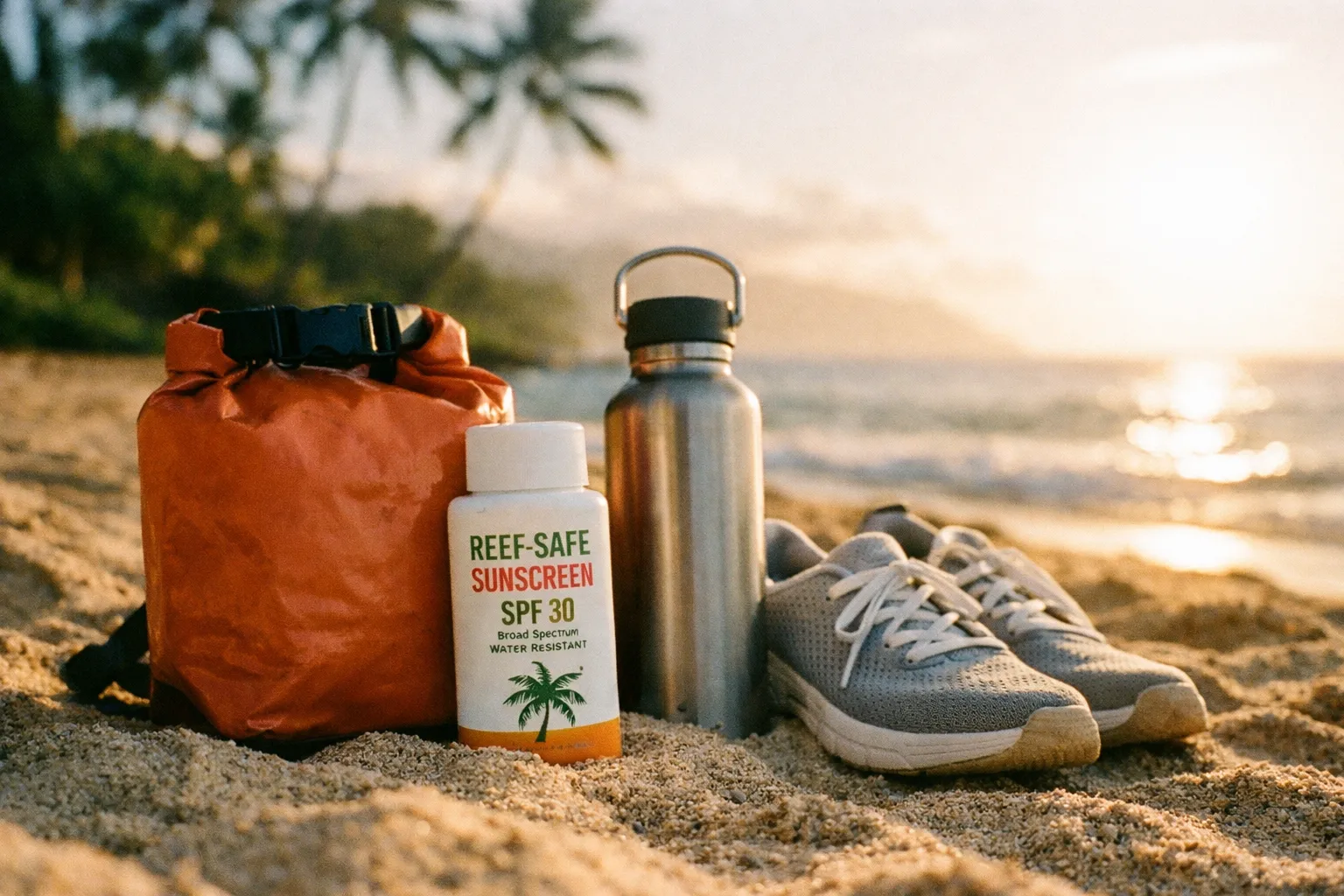
What I always pack:
- Reef-safe sunscreen (zinc or titanium-based). Chemical sunscreens with oxybenzone and octinoxate are banned for sale in Hawaiʻi - bring your own to avoid scrambling on arrival.
- Two swimsuits and a rash guard. A dry set always available. The rash guard doubles as sun protection on long snorkel days (1).
- Your own snorkel and mask. Daily rentals run $8-$15; over a week you’ll exceed the cost of a basic set. Fit matters more than logo.
- Closed-toe trail shoes. The lava fields on the Big Island and the Kalalau corridor on Kauaʻi will shred sandals.
- Dry bag (10-20L). For boat tours, kayak runs, and the inevitable downpour on the windward side.
- Lightweight rain shell. Hāna, Hilo, and the Kauaʻi North Shore all see daily showers.
- Reusable water bottle. Many tours discourage single-use plastics and several state parks have refill stations.
- Headlamp. Haleakalā sunrise is a pre-dawn hike from the parking lot in the dark. Phone flashlights die fast in the cold.
Gear worth noting: Tropicfeel Jungle
Hawaii’s terrain asks a lot from footwear - lava fields, river crossings on the Nā Pali approach, wet pavement in Hilo. I tested the Tropicfeel Jungle sneakers across that range and the water-friendly, quick-drying claim holds up. Crossing streams or getting caught in a windward downpour didn’t leave me hiking in wet shoes for the rest of the day. They’re compact and light enough to pack as a second pair without sacrificing trail space for camera gear. The eco-friendly construction (recycled materials) is a reasonable fit for a place that takes environmental rules seriously. Worth the detour if you want one shoe that handles trail, beach, and city without swapping.
Hawaii airport tips
Nothing tests patience like navigating airports between islands. These hawaii airport tips keep interisland travel from eating your trip:
| Tips | Benefits |
|---|---|
| Check in online and use mobile boarding | Avoid long lines, go straight to security |
| Wear slip-on shoes | Faster through security |
| Carry an empty water bottle | Refill stations are everywhere; airport bottled water is $4-$5 |
| Keep a digital copy of your ID and tickets | Backup if your wallet is lost or stolen |
| Sign up for TSA PreCheck or CLEAR | Honolulu’s main security line can run 45+ minutes at peak |
Extra rules I’ve learned the hard way:
- Arrive 2 hours early at HNL even for interisland. The interisland terminal at Honolulu is in a different concourse and security can back up unpredictably.
- Eat before you fly. On-airport food is overpriced and limited; Kahului and Lihue close down early.
- Rideshare pickup is a maze. At HNL, the rideshare lot is across from baggage claim and requires a crosswalk and an elevator - budget 15 extra minutes.
- Don’t fly through Honolulu if you can avoid it. Direct flights (e.g., Kauaʻi to Maui on Southwest) skip the busiest hub.
Main Hawaiian airports
| Island | Airport |
|---|---|
| Oʻahu | Honolulu / Daniel K. Inouye International (HNL) |
| Maui | Kahului (OGG), Hana (HNM), Kapalua (JHM) |
| Big Island | Kona / Ellison Onizuka International (KOA), Hilo International (ITO) |
| Kauaʻi | Lihue (LIH) |
Ocean safety
The ocean is the single biggest hazard on a Hawaiian trip and the most underestimated. The official Hawaiʻi Tourism Authority and GoHawaii guidance is direct: “When in doubt, don’t go out”.
Concrete rules:
- Only swim at lifeguarded beaches if you’re not an experienced ocean swimmer. Ask the lifeguard about rip currents and shorebreak before you enter (5).
- Never turn your back on the ocean. Rogue waves sweep people off rocky ledges, especially on north-facing shores in winter.
- Read the signs. Posted warnings about high surf, jellyfish, or strong currents are not decorative.
- North shores in winter (Nov-Mar) are for watching, not swimming. Pipeline, Waimea, and Hanalei Bay can have 20+ foot faces.
- Reef shoes for rocky entries at places like Sharks Cove or Two-Step.
Marine animal protection
The official Mālama Hawaiʻi guidance from GoHawaii is unambiguous: keep distance from wildlife, never feed marine animals, and don’t touch coral.
The specifics:
- Green sea turtles (honu): federally protected. Keep at least 10 feet away on land and in water. Photographing is fine; approaching is not.
- Hawaiian monk seals: critically endangered. Stay 50 feet away on land, more if there’s a pup. Beachgoers who crowd resting seals face fines.
- Spinner dolphins: federal rules prohibit approaching within 50 yards by swimming, kayak, or boat. “Swim with dolphins” tours that promise close contact are violating federal law.
- Coral: alive, and dies when you stand on it or touch it. Snorkel horizontally, don’t kick the reef, and never break off pieces.
Learn more about protected species in Hawaiʻi through NOAA’s Pacific Islands office and the GoHawaii Mālama site.
Car rentals, buses, and the in-between
A rental car is essential on most islands and optional on one.
- Oʻahu: car optional. TheBus covers Honolulu, Waikīkī, and most popular spots for $3 a ride or $35 a week pass. Skip the rental for half your stay and pick one up for 2-3 days to do the North Shore loop and windward side.
- Maui: car essential. The Road to Hāna and Haleakalā are not bussable. Expect $50-$110/day including fees.
- Kauaʻi: car essential. Roads are simple but distances add up.
- Big Island: car essential and ideally an SUV for the Saddle Road and Mauna Kea access (rental contracts often restrict the latter).
- Lānaʻi / Molokaʻi: 4WD is needed for off-pavement access; inventory is limited and expensive.
Rental tips:
- Book early. Inventory tightens fast in high season and last-minute rates double.
- Skip the airport pickup if cheaper. Off-airport locations (sometimes a short shuttle away) can cut the daily rate by 20% by avoiding airport concession fees.
- Decline the upsells. Pre-paid fuel is almost always a worse deal than refilling yourself. Skip the GPS - your phone works fine.
- Read the parking warnings. Hotel and resort parking is $30-$50/night on top of the room rate.
- Watch where you park. Residential streets near popular beaches are heavily enforced; towing is common (4).
Dos and don’ts
Do:
- Book key tours (helicopter, Nā Pali boat, manta ray night snorkel) in the first 2-3 days of your itinerary so weather cancellations have buffer to reschedule.
- Reserve state park access in advance where required - Hā’ena State Park on Kauaʻi (the Kalalau trailhead) uses a permit and parking system (3).
- Eat at food trucks and plate-lunch spots. Hearty meals for $12-$18 vs. $30+ entrées at resorts.
- Try a split stay: condo with a kitchen for most nights, one or two nights at a resort for the amenities. Often cheaper overall (2).
- Read at least one book about Hawaiian history or culture before you go. Sarah Vowell’s Unfamiliar Fishes is a solid primer.
Don’t:
- Trespass for waterfall photos or beach access. Posted private property signs are real and enforced (1)(4).
- Block driveways or park on lawns in residential neighborhoods. This is the fastest way to get towed.
- Try to do all four main islands in 10 days. You will see airports (1)(2).
- Feed wildlife - fish, monk seals, turtles, mongooses, anything.
- Use chemical sunscreen with oxybenzone or octinoxate.
- Wait until you arrive to book a Road to Hāna tour or a helicopter ride in peak season. They sell out.
Kauaʻi tips
Kauaʻi is the wettest, greenest, and most hike-driven of the main islands. Prioritize:
- Nā Pali Coast by boat or helicopter. The coast is mostly inaccessible by road; you need water or air to see it properly (1).
- Kalalau Trail. The full 11-mile trek to Kalalau Beach requires a camping permit that books months ahead. The first 2 miles to Hanakāpī’ai Beach are doable in a half-day with a Hā’ena State Park reservation (3).
- Waimea Canyon and Kōke’e State Park. The drive up takes a half-day. Go early - clouds roll in by midday.
- South Shore (Po’ipū) for reliable swimming weather when the North Shore is rained out.
Worth the detour: a sunrise drive to Waimea Canyon. Skip if short on time: the Fern Grotto boat ride - overrated and overpriced.
Oʻahu tips
Oʻahu is the introduction island: best transit, deepest hostel scene, most variety. The trap is staying only in Waikīkī.
- Diamond Head: reservation required for non-residents. Book online ahead.
- Hanauma Bay: reservation required, closed Mondays and Tuesdays. Best snorkeling near Honolulu.
- Pearl Harbor: the USS Arizona Memorial tickets are free but timed and book out - reserve on recreation.gov.
- North Shore: worth a full day or an overnight. Shrimp trucks in Kahuku, big-wave watching at Pipeline (Nov-Feb), turtles at Lāniākea Beach.
- Kailua and Lanikai (windward side): the prettiest beaches on the island. Parking is regulated - read the signs.
Maui, Molokaʻi, and Lānaʻi tips
Maui:
- Haleakalā sunrise: reservation required (book on recreation.gov up to 60 days out). Bring layers - summit is 30-45°F before dawn.
- Road to Hāna: start at dawn. The drive is the destination; don’t try to “get to” Hāna and turn back. Stop at Wai’anapanapa State Park (reservation required), Wailua Falls, and Pipiwai Trail in ‘Ohe’o Gulch.
- Molokini Crater: snorkel boat tours leave from Mā’alaea early; afternoon trips have worse visibility.
- Avoid driving past Hāna to the back road in a sub-compact rental - contracts often prohibit it and the road conditions are real.
Molokaʻi: quiet, undeveloped, and not set up for budget travelers. No hostels, limited rental inventory. Best for repeat visitors who want a slower pace and Halawa Valley hikes.
Lānaʻi: mostly accessed by ferry from Lahaina (currently disrupted post-2023 fires - verify schedules before booking) or short flight. Two resorts dominate lodging. Day-trip from Maui is the realistic budget play.
Island of Hawaiʻi tips
The Big Island packs more ecosystems than any other and rewards a longer stay - minimum 4 nights.
- Hawaiʻi Volcanoes National Park: stay overnight in Volcano village to catch the caldera glow after dark. Conditions change - check NPS alerts day-of.
- Manta ray night snorkel near Kona: the signature Big Island experience. Book early in your stay for weather flexibility (2).
- Mauna Kea summit: 13,800 ft. Most rental contracts prohibit driving past the visitor center. Sunset from the visitor center (9,200 ft) is still excellent and free.
- Hilo side: rainforest, waterfalls (Rainbow Falls, ‘Akaka Falls), and the budget base for Volcanoes NP.
- Kona side: dry, beachy, and where most resorts cluster.
What I wish I knew before going to Hawaii
A short list of things first-timers consistently underestimate:
- Distances are deceptive. The Big Island takes 3+ hours to cross. Maui’s Hāna drive is 64 miles but a full day.
- Sunset is early year-round - closer to 6:00-7:15 pm depending on month. Plan hikes accordingly.
- The wind matters more than the sun. Trade winds keep the leeward sides dry and the windward sides wet - pick your beach by direction.
- Reservations creep up on you. Diamond Head, Hanauma Bay, Haleakalā sunrise, Wai’anapanapa, Hā’ena, USS Arizona - all need advance booking (2)(3).
- Tipping norms apply. 18-20% at sit-down restaurants, $2-$5 per bag for porters, $1-$2 per drink at bars.
- Vog is real. When volcanic activity is up on the Big Island, the haze can affect visibility and respiratory conditions. Check air quality.
- You will pack too much. Two swimsuits, three t-shirts, two pairs of shorts, one set of trail pants, one rain shell, two pairs of shoes. Done.
Supporting conservation in Hawaii
Hawaii’s conservation rules aren’t suggestions - they’re federal and state law backed by fines. But beyond compliance, there’s a case for actively supporting accredited wildlife facilities and conservation programs, particularly around the species you’ll encounter on the water and at the beach.
During a visit to Punaluu Black Sand Beach, I watched a ranger redirect a dozen tourists who were walking toward a resting monk seal. The seal was maybe 30 feet from the waterline and the crowd had no idea they were about to violate federal law. Accredited facilities - wildlife centers, aquariums with conservation programs - do real work educating visitors before they get to the beach. If you’re traveling with kids or want more context on what you’re seeing in the water, they’re worth a stop.
Do your research and support facilities adhering to recognized standards. It contributes to preserving Hawaii’s biodiversity and ensures future generations can learn from these animals in the wild, where they belong.
The view from here
Hawaii works when you commit to it - one or two islands, gear that flexes between wet and dry, hostels and condos instead of $400 resorts, and enough buffer in the schedule to actually look at the ocean. Book the timed reservations early, respect the wildlife rules, refuse the upsells at the rental counter. Go in May, fly open-jaw, eat at the food truck, and leave space for the trail that wasn’t on your list. That’s where the trip actually happens.
Frequently Asked Questions
- Can I island hop without checking bags?
- Yes. Carry-on only is recommended for interisland flights to save time and avoid baggage fees, as checked bags add 30+ minutes and about $40 each way.
- Are hostels safe and clean in Hawaii?
- Hawaiian hostels vary, but those in Waikīkī with communal kitchens and knowledgeable staff offer good value and safety. Look for hostels organizing local events and with reliable parking.
- How early should I book tours like Haleakalā sunrise or Nā Pali boat trips?
- Book key tours at least 2-3 days into your itinerary to allow for weather rescheduling, and reserve popular timed entries (like Haleakalā sunrise) up to 60 days in advance.
- Is a rental car necessary on all islands?
- No. Oʻahu has good public transit and car optional for much of the stay, but Maui, Kauaʻi, and the Big Island require cars, with some needing SUVs or 4WD for certain roads.
- What sunscreen can I use in Hawaii?
- Only reef-safe sunscreens with zinc or titanium-based ingredients are allowed; chemical sunscreens containing oxybenzone or octinoxate are banned for sale.
- Are there any penalties for disturbing marine wildlife?
- Yes. Federal and state laws protect species like monk seals and sea turtles, with fines for approaching or feeding them. Always keep the recommended distances.
- How do I avoid long security lines at Honolulu airport?
- Check in online, wear slip-on shoes, carry an empty water bottle, and sign up for TSA PreCheck or CLEAR to speed through security, especially during peak times.