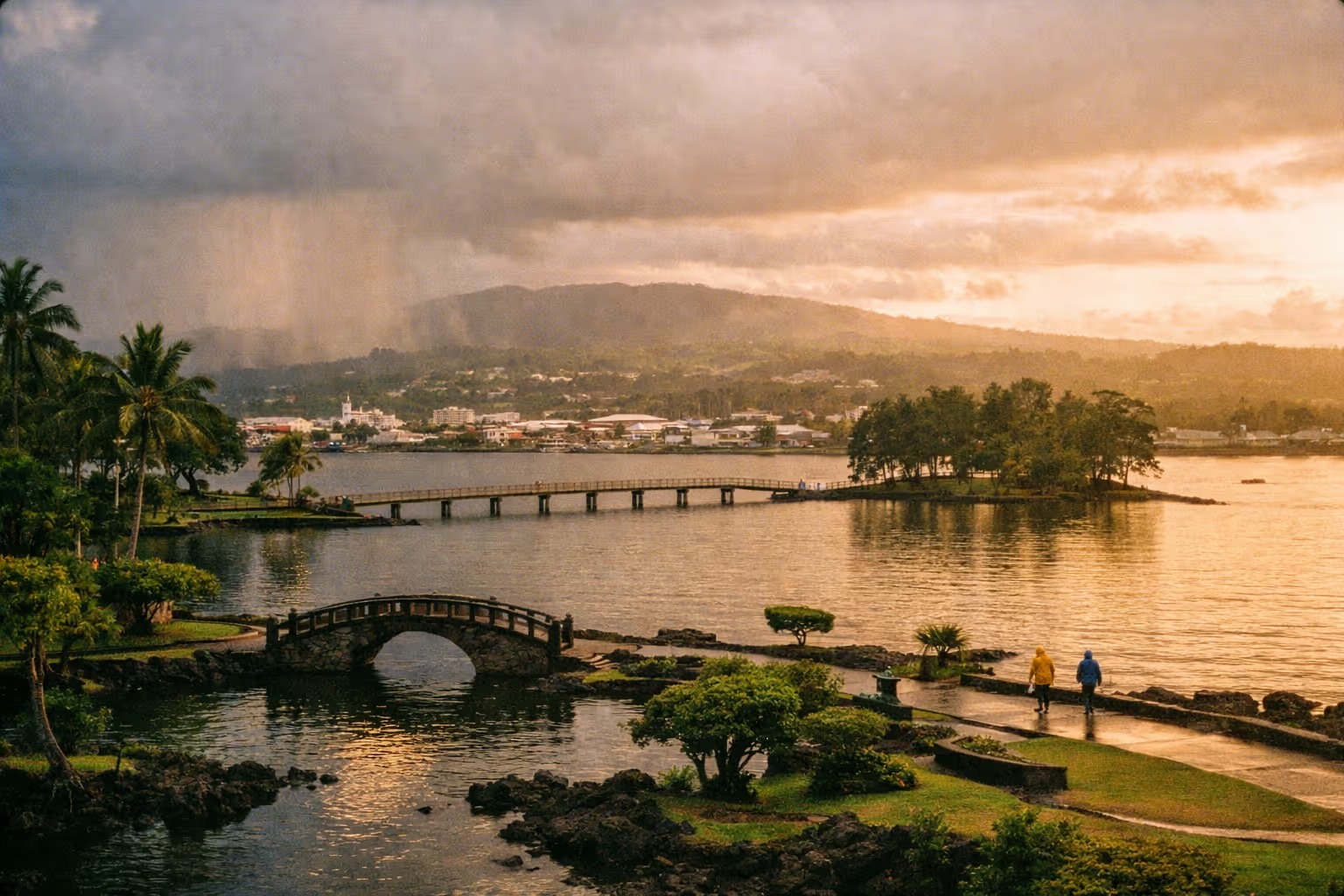
Downtown Hilo gets about 142 inches of rain a year, according to the National Weather Service, and that rain is not a problem to work around - it’s the reason the whole place exists. The best things to do in Hilo run on it: waterfalls that never dry up, a 30-acre garden that stays genuinely green, and a rainforest coast that competes with anything on the drier Kona side. This is the working, local half of the Big Island, and it rewards visitors who show up curious and packing a rain jacket instead of expecting resort-strip sunshine.
Hilo’s core attractions cluster into three zones: the downtown and bayfront area, the waterfall corridor just outside town, and the Hamakua Coast to the north. Most of the best of it is free or close to it. Hawaiʻi Volcanoes National Park sits about a 45-minute drive south, which makes Hilo a practical base for the volcano, not just a waterfall day trip.
✓ Pros
- Most major attractions are free or very low cost
- Waterfalls, gardens, and the bay are all within a short drive of each other
- Fewer tourists than the Kona side; more local character
- Natural base for Hawaiʻi Volcanoes National Park (about 45 min drive)
- Year-round waterfall flow thanks to consistent rainfall
- Strong calendar of community events, especially July
✗ Cons
- Rain is frequent and sometimes heavy - outdoor plans need a backup
- No resort infrastructure; fewer beach options than the west side
- Adventure tours (ATV, zipline, helicopter) require advance booking and add cost
- Driving is required for most attractions; nothing is truly walkable from a single point
What Hilo Is Actually Famous For
Hilo is famous for rain and what the rain produces. It’s the largest town on the Big Island’s wet, windward east side, and that moisture feeds rainforests, waterfalls, and gardens the dry Kona coast simply can’t match. Near the shore, Hilo averages around 130 inches of rain a year with measurable rainfall on roughly 275 days annually, while the foothills upslope can hit 200 to 300 inches, per the National Weather Service. For comparison, downtown Kona gets about 27 inches and the Waikoloa resort area around 9. That gap explains everything about how the two sides feel.
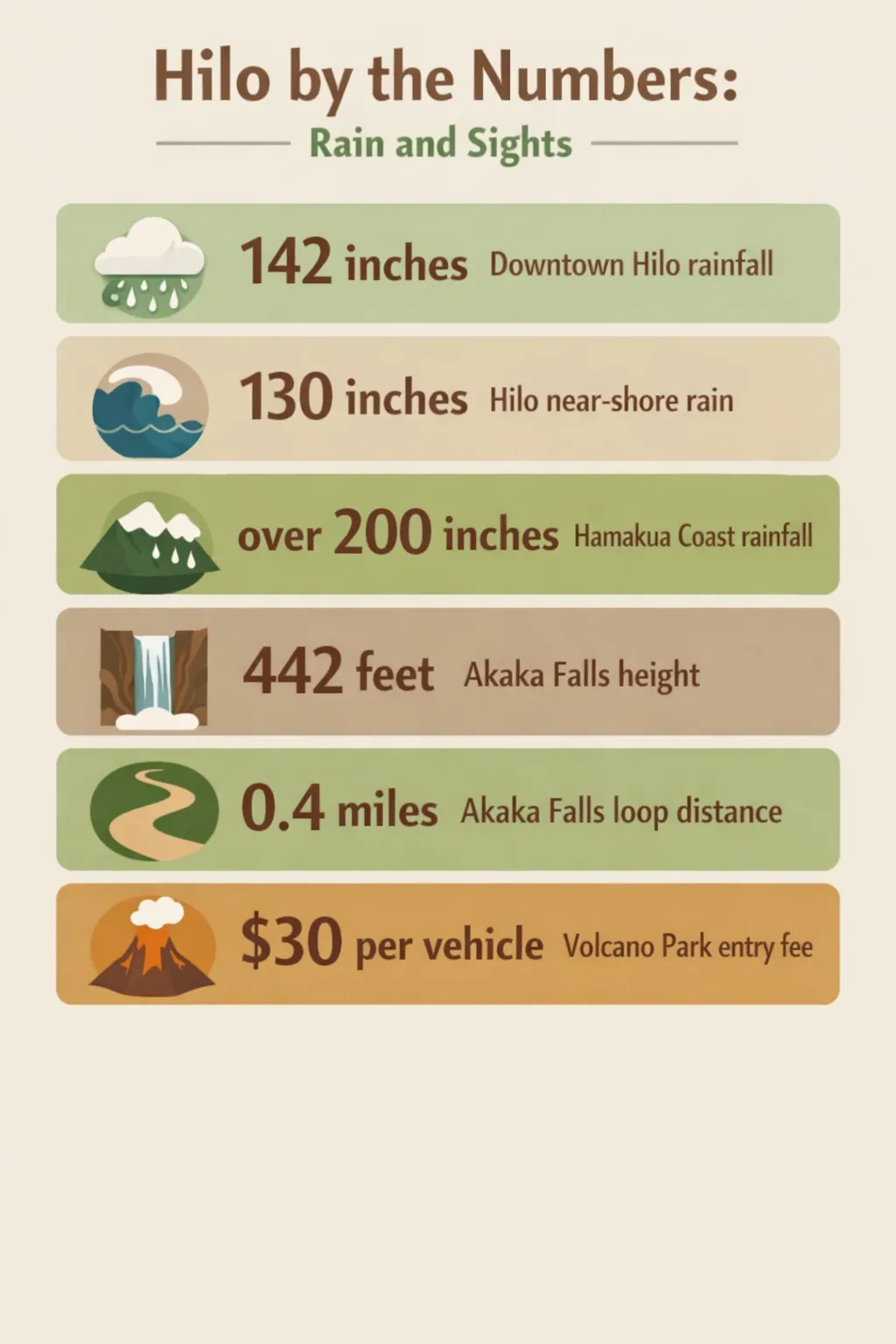 Key rainfall figures, Akaka Falls height, loop distance, and Hawaiʻi Volcanoes National Park entry fee.
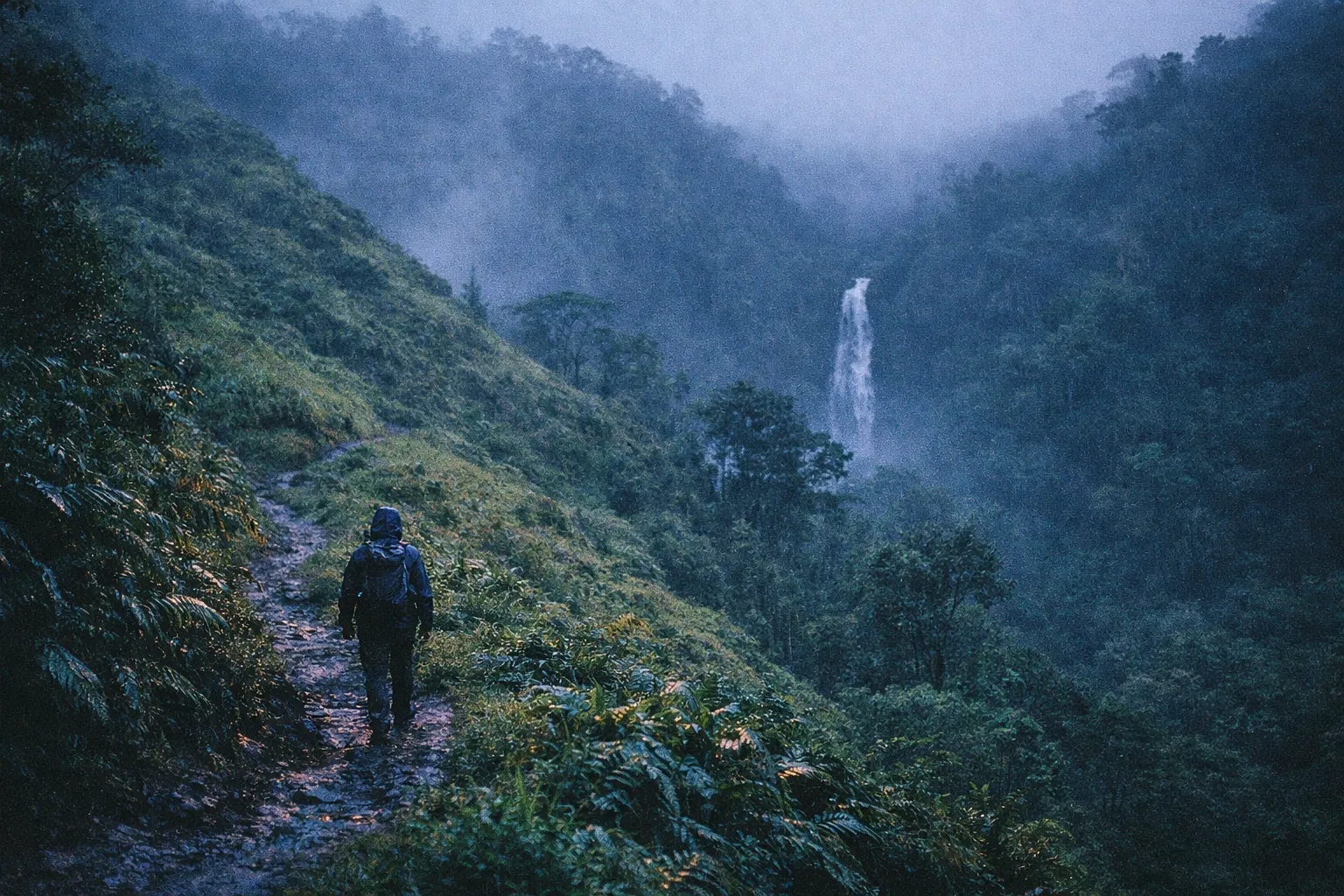
The town itself has a working character you don’t find on the resort coast: plantation-era architecture downtown, open-air markets, independent shops, and a community that grew up around agriculture rather than tourism. Hilo Bay is the geographic anchor of the east side - the bayfront curves around the water, with parks, gardens, and the old downtown all facing out toward the Pacific.
The rain is also why the waterfalls run in every season and why Lili’uokalani Gardens stays lush year-round. And practically speaking, Hilo works as a base for more than waterfalls. Hawaiʻi Volcanoes National Park is about 30 miles and a 45-minute drive south via Highway 11, closer from here than from anywhere on the Kona side. Add in the town’s astronomy connections through Mauna Kea and a calendar of Hawaiian cultural events, and Hilo carries enough to fill two or three days without padding.
Things to Do in Hilo - The Core Attractions
The core things to do in Hilo are a tight cluster of waterfalls, gardens, markets, and bayfront walks, most of them free and within a short drive of each other. Here’s how they rank if your time is limited.
Worth prioritizing:
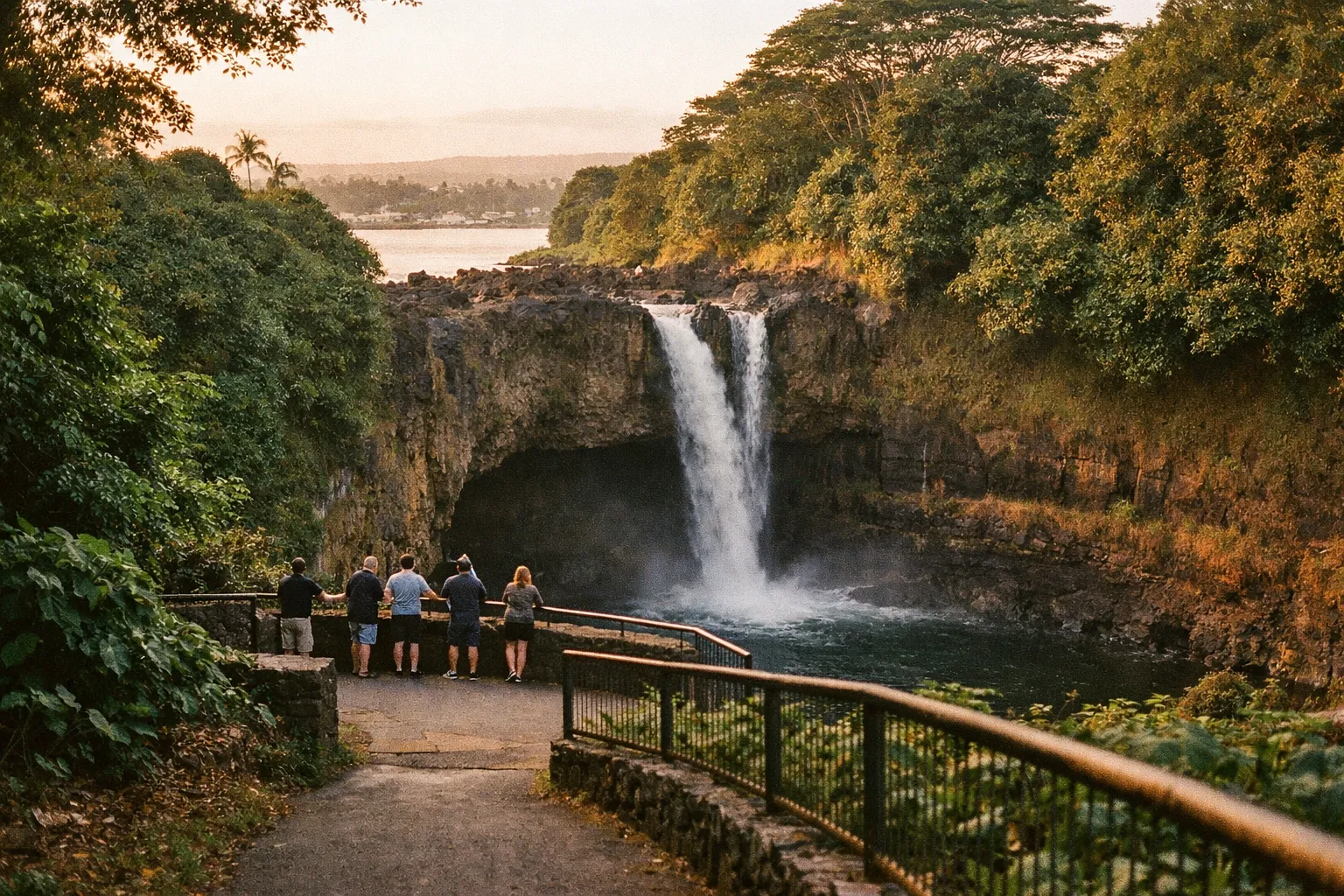
Rainbow Falls (Waiānuenue Falls) - An easy in-town waterfall about 2 miles from downtown, with a paved viewpoint under a five-minute walk from the parking lot. Go early. This is a quick stop, not a hike, and it’s free with no permit required.
Lili’uokalani Gardens - A 30-acre Japanese garden on the bayfront at 189 Lihiwai Street, free to walk, with a footbridge out to Coconut Island for views over the bay. Budget an hour of slow walking.
Hilo farmers market - The most local-feeling stop in town, busiest on Wednesdays and Saturdays. Produce, flowers, crafts, and a genuine sense of the community.
Hilo Bay waterfront - The bay, Mo’oheau Park bandstand, and the bayfront walking area. Good orientation for the whole downtown and worth an hour even without a plan.
Worth it if you have time:
Pana’ewa Rainforest Zoo - The only tropical rainforest zoo in the United States, free admission, and a genuinely unusual family stop. More on it in the family section below.
Kaumana Caves - A lava tube accessed by steep concrete stairs from a county park about 4 miles west of downtown. Bring closed-toe shoes and a flashlight; the cave past the first chamber is unlit and rough. A short but distinct experience.
Downtown Hilo - Plantation-era buildings, local galleries like One Gallery and Hilo Town Market, and the Palace Theater for live events. Worth a slow walk on its own terms.
Rainbow Falls - Timing and What to Expect
Rainbow Falls earns its name in the early morning, when the sun angle catches the mist below the roughly 80-foot drop and throws a rainbow across it. Get there before 9 a.m. for the best odds, and expect a paved viewpoint rather than a trail - it’s about a two-mile, five-to-ten-minute drive from central Hilo, and the walk from the parking area takes under five minutes.
This is the one to hit first thing. No gear beyond a rain jacket, no entrance fee, and it works fine for families with strollers or young kids. I’ve stood at that viewpoint in a light drizzle and still caught the rainbow - the mist doesn’t need clear skies to work, just morning light.
Lili’uokalani Gardens and the Hilo Bay Waterfront
Lili’uokalani Gardens is a 30-acre Japanese-style garden on Hilo Bay, laid out with ponds, stone lanterns, arched bridges, and a footbridge to Coconut Island (Mokuola) that opens up a wide view back over the water. It sits at 189 Lihiwai Street along Banyan Drive, and it’s free. An hour is enough to walk it without rushing.
Coconut Island itself has a small swimming area and a few picnic tables - a low-key spot to let kids poke around. From the garden you’re right on the Hilo Bay waterfront, with Mo’oheau Park and its bandstand a short way along. The whole area functions as Hilo’s event hub. On July 4, the Hilo Bay Veterans 5K Run/Walk/Roll starts here at Lili’uokalani Gardens at 7:00 a.m., and the bay hosts the Hilo Bay Blast fireworks at 8:00 p.m. from a barge offshore.
Hilo Farmers Market - What to Know Before You Go
The Hilo Farmers Market runs daily, but the full market with most vendors operates Wednesdays and Saturdays from 7:00 a.m. to 3:00 p.m., with craft vendors staying until 4:00 p.m. Those two days are when you’ll find the produce stalls, tropical flowers, and local crafts at full strength.
Bring a rain jacket, not because it might rain but because Hilo’s weather doesn’t pause for market day. The produce is genuinely local - papaya, rambutan, lychee in season, apple bananas, taro, and flowers grown on the wet side. Bring cash. It’s one of the stops that gives you the clearest sense of what Hilo actually is when the tour buses aren’t around.
Akaka Falls and the Hamakua Coast Drive
Akaka Falls drops about 442 feet in a single plunge (9), making it one of the tallest road-accessible waterfalls on the Big Island and the clear reason to drive north out of town. It sits in a state park roughly 13 miles north of Hilo, a 25-to-30-minute drive via Highway 19 and the Akaka Falls Road turnoff.
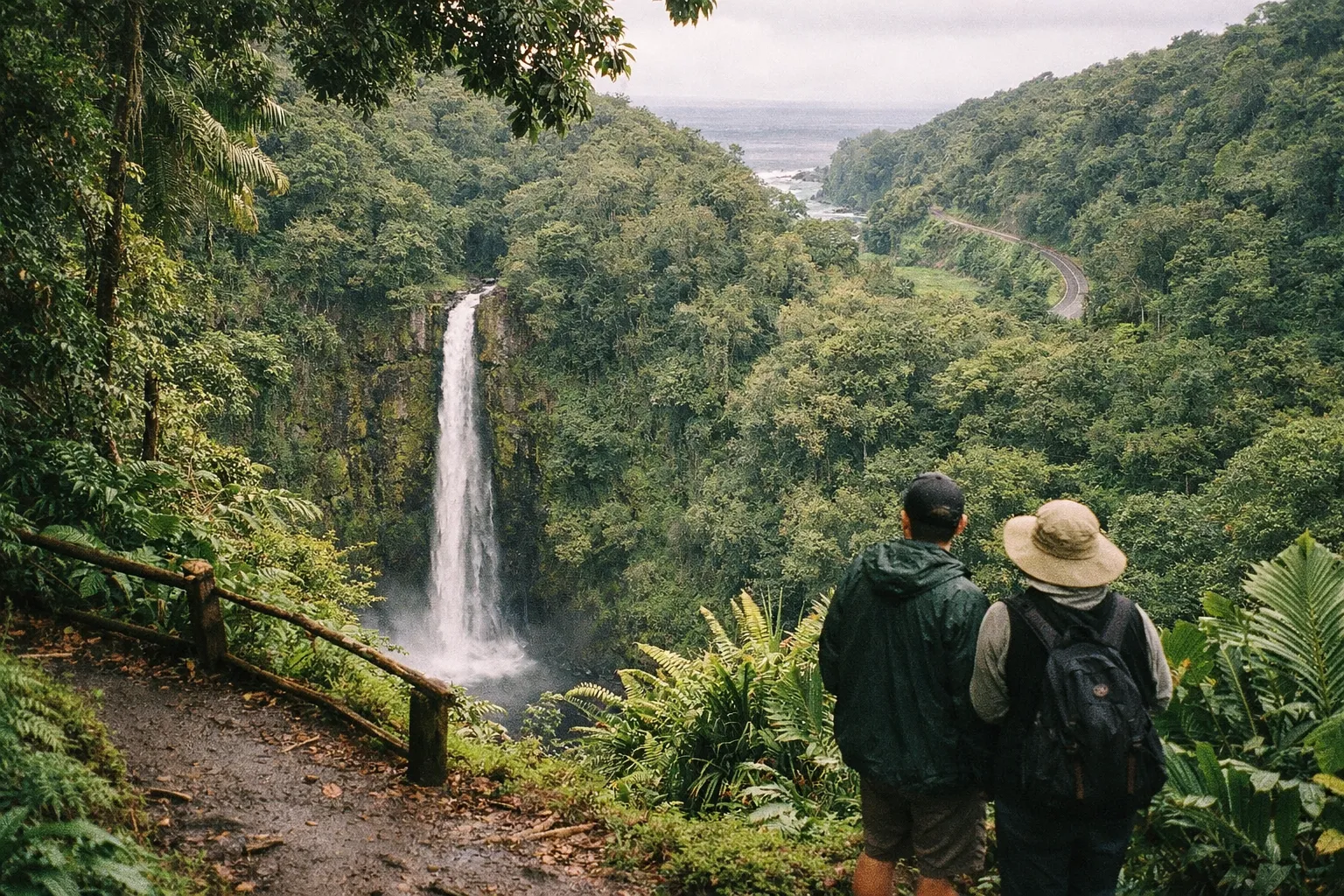
You reach the falls on a loop trail of about 0.4 miles, mostly paved with some stairs, and the state park describes it as suitable for most visitors without specialized gear (9). It’s a real walk through rainforest rather than a parking-lot glance - you pass through dense greenery and a second waterfall, Kahuna Falls, on the loop.
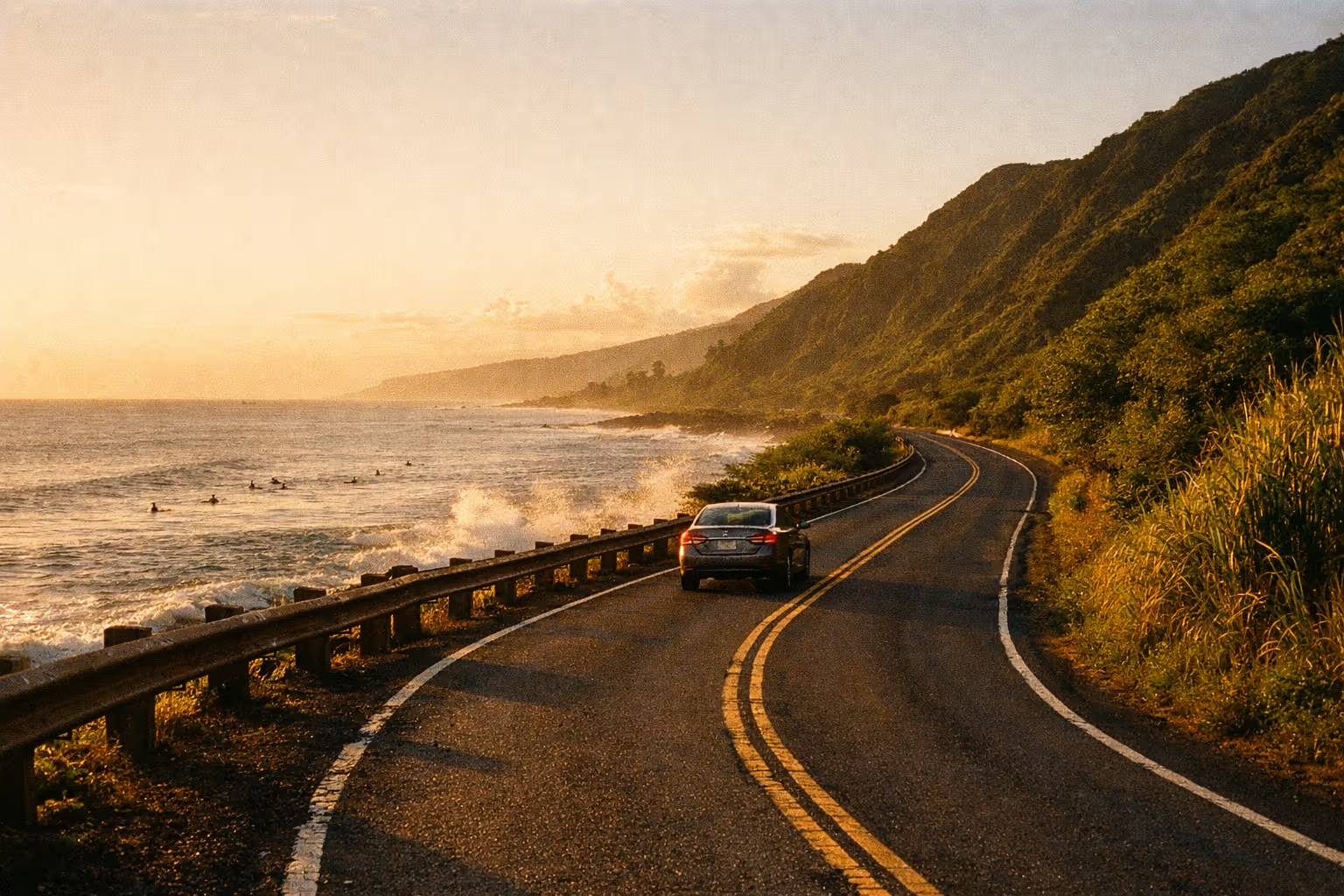
Don’t treat Akaka Falls as a single-stop errand. The smart play is to pair it with a slow drive along the Hamakua Coast, which gets over 200 inches of rain a year and shows it in cliff-lined green landscape, small former plantation communities, and ocean viewpoints. Plan a half-day if you’re doing the coast properly, and pair it with an early Rainbow Falls stop in town before you head north.
Practical Details for Visiting Akaka Falls State Park
Akaka Falls State Park is about a 25-to-30-minute drive north of Hilo, with a short loop trail that takes 45 to 60 minutes to walk at an unhurried pace. The path is mostly paved with sections of stairs, so it’s manageable for most fitness levels - but the stairs and frequent rain mean footing matters.
Wear closed-toe shoes with decent grip and bring a rain jacket as standard; the trail runs through rainforest that stays wet. There’s a small parking fee and vehicle entry charge at the state park for non-residents, so check current rates before you go. Allow the full hour once you factor in the drive and the trail together.
Museums, Science, and Indoor Options for Rainy Days
Hilo has strong indoor attractions that most visitors skip because they’ve mentally filed the town as a waterfall day trip. That’s a mistake when the rain settles in for the afternoon. Two of them are genuinely worth the time rather than consolation prizes.
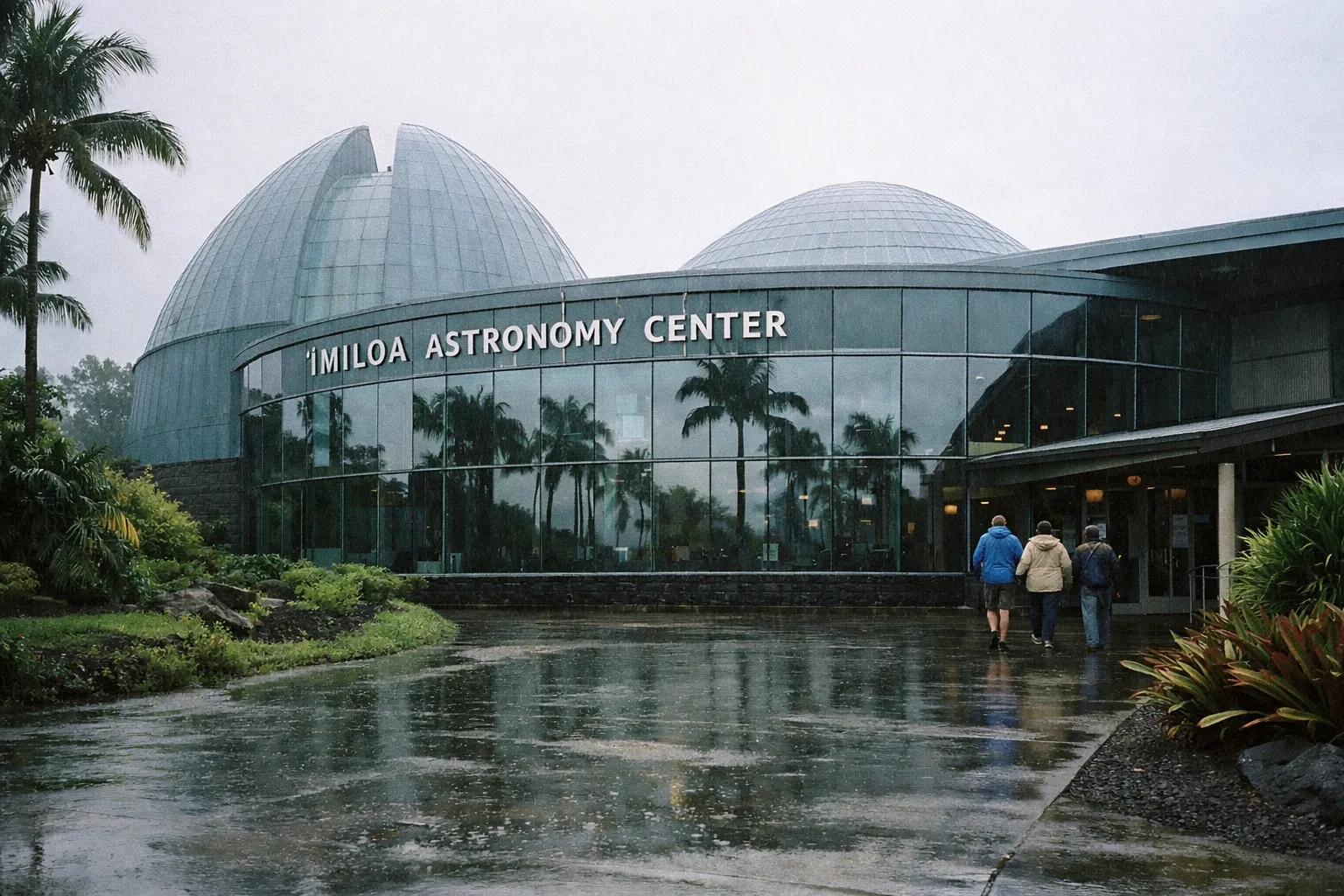
The ‘Imiloa Astronomy Center ties Hawaiian culture to astronomy, connecting the island’s role in modern telescope work on Mauna Kea with traditional Polynesian navigation and star knowledge. General admission runs about $26 for adults, $22 for seniors, and $17 for children ages 5 to 12, with kids under 4 free, and it’s typically open 9:00 a.m. to 5:00 p.m. Tuesday through Thursday and on weekends, with extended Friday hours (as of the center’s current visitor information). Budget two to three hours.
The Lyman Museum and Mission House covers island history and natural history alongside a preserved 19th-century missionary home. General admission is around $10 for adults and $3 for children, with guided Mission House tours offered on weekdays at set times such as 11:00 a.m. and 2:00 p.m. Its natural history collection holds more than 167,000 specimens - a scale that sets it apart from the small regional museums you find on other islands.
For a lower-key stop, the Hilo Brewing Company taproom sits in the town’s industrial area, pouring a rotating selection of house beers in tasting-size pours and 16-ounce pints. It fits a rainy afternoon and the town’s local character without pretending to be a destination.
‘Imiloa and the Lyman Museum together can fill a half-day indoors without feeling rushed - the obvious move when the morning forecast turns heavy.
Adventure Activities and Tours Out of Hilo
Hilo is the launch point for a set of bookable adventures - zipline, ATV, helicopter, rappelling - that all require reservations ahead of time, not a walk-up the morning of. Slots are limited and popular tours fill in peak season, especially July.
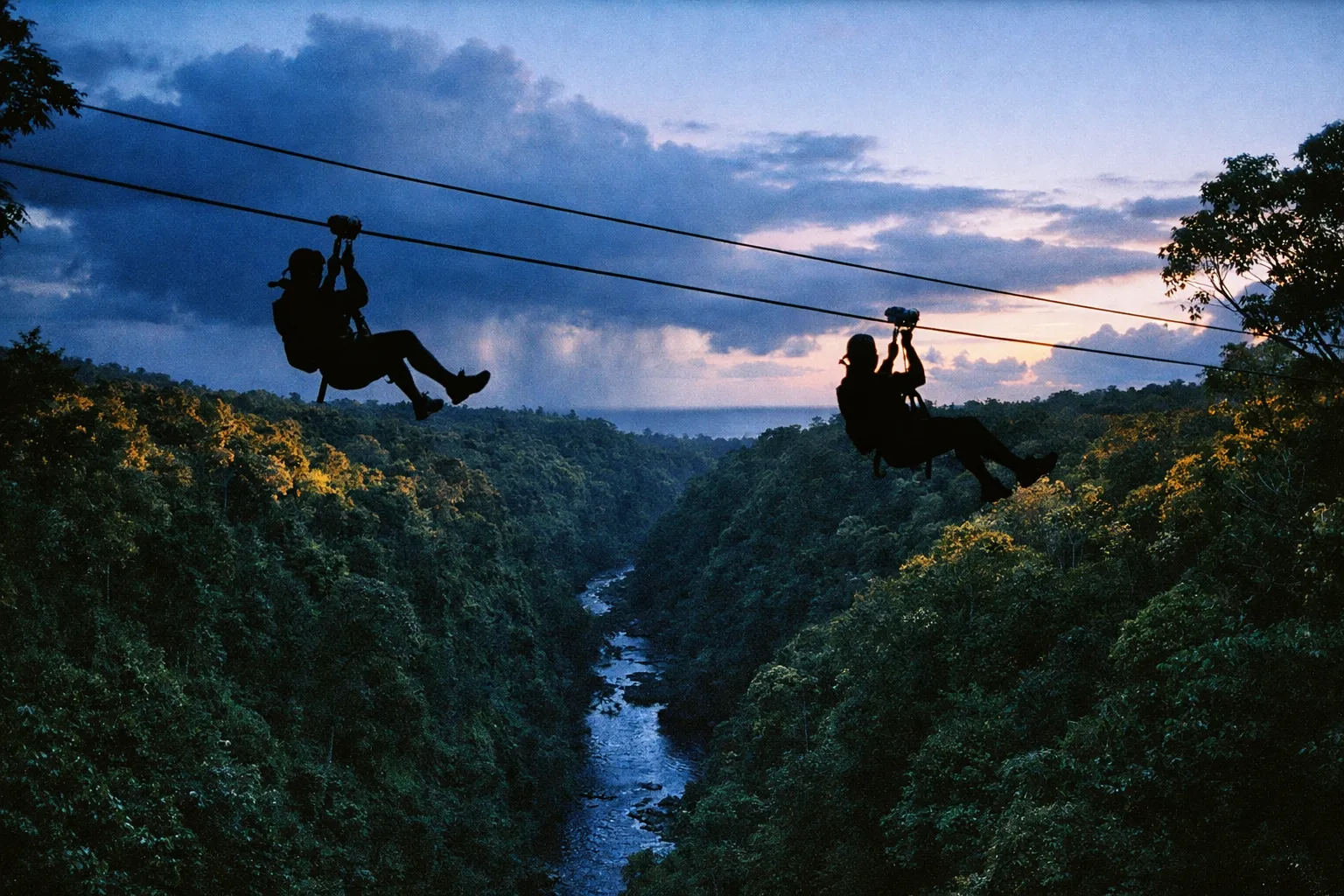
Zipline operators near Hilo and the Hamakua Coast run lines reaching speeds up to about 40 mph over river gorges and waterfalls, with tours typically lasting 2.5 to 3 hours. ATV tours through the region, including cultural routes toward the Waipi’o Valley area, generally cap groups at around 10 to 12 riders, run 2 to 3 hours, and start in the neighborhood of $150 to $180 per person - a clear premium over Hilo’s free waterfalls, but a different kind of day.
Rappelling down waterfalls is a niche option for people who want more than a viewpoint. Helicopter tours out of Hilo International Airport run 45 to 60 minutes to cover windward waterfalls and Kīlauea, commonly starting around $300 to $350 per person, and are often a bit cheaper from Hilo than from Kona because of shorter repositioning flights. Surfing lessons near Hilo and biking inside Hawaiʻi Volcanoes National Park round out the active options.
When Kīlauea is erupting, lava viewing becomes a draw - but conditions and access change constantly. Check the National Park Service alerts before you build a plan around it.
Hawaiʻi Volcanoes National Park - Worth the 45-Minute Drive
Hawaiʻi Volcanoes National Park sits about 30 miles and 45 minutes south of Hilo via Highway 11, with a private vehicle entrance fee of $30 valid for 7 consecutive days. From a Hilo base, that’s the easiest volcano access on the island.
Inside, Crater Rim Drive, the Thurston Lava Tube (Nāhuku), and Chain of Craters Road cover the headline sights, and you can fill a full day without rushing. Treat it as a natural extension of your Hilo stay rather than a separate trip - the drive is short enough that you can be at the park gate well before the day-trippers arriving from Kona, who face nearly two hours each way. For a full breakdown of what to see and how to plan your time there, the Big Island of Hawaii guide covers the volcano alongside the island’s other major draws.
Free and Family-Friendly Attractions in Hilo
The free things to do in Hilo make it one of the better family destinations on the Big Island, anchored by the only tropical rainforest zoo in the United States. Pana’ewa Rainforest Zoo and Gardens offers free admission and free parking, sits in a 12-acre rainforest setting about 5 miles south of downtown, and is typically open 10:00 a.m. to 4:00 p.m. daily. It’s an easy walk-around format that works for young kids.
From there, the rest of a family day builds on short, paved, no-cost stops:
- Rainbow Falls - paved, level, free, and no permit needed. Fine for strollers and quick attention spans.
- Lili’uokalani Gardens - flat paths, ponds, and bridges, with room to let kids roam.
- Coconut Island (Mokuola) - reached by the footbridge from the gardens, with a small swimming area and picnic tables for low-key play in the bay.
- Richardson Ocean Park - a black-sand beach near Hilo where sea turtles (honu) often haul out. State law requires staying at least 10 feet from turtles in the water and 15 feet on land, so keep your distance and let them be.
If you’re visiting over July 4, the Hot Rides Expo runs 10:00 a.m. to 3:00 p.m. at the Hilo Bayfront Soccer Fields, with water slides, bounce houses, and live bands - a free family event.
A practical sequence for a family day: zoo in the morning while everyone’s fresh, gardens and Coconut Island at midday, and Richardson’s for the afternoon turtle-watch. All of it free except gas and lunch.
Seasonal Events Worth Planning Your Trip Around
Hilo’s community event calendar is dense enough to plan a trip around, and July is the busiest stretch, centered on Hilo Bay and Lili’uokalani Gardens. The events run on fixed schedules, so timing matters.
The Hilo Bay Blast on July 4 breaks into distinct blocks. The Hilo Bay Veterans 5K Run/Walk/Roll starts at 7:00 a.m. at Lili’uokalani Gardens. The Hot Rides Expo runs 10:00 a.m. to 3:00 p.m. at the Hilo Bayfront Soccer Fields with water slides, bounce houses, and live bands. In the evening, the Hawaiʻi County Band performs at the Mo’oheau Park bandstand at 7:00 p.m., and fireworks launch from a barge in Hilo Bay at 8:00 p.m.
Beyond the Fourth, Shakespeare in the Park has run in Hilo for nearly five decades, with the 49th annual festival scheduled July 17 to 26 in a recent season - a long-running community theater tradition rather than a tourist add-on. The Hilo Orchid Show at Edith Kanaka’ole Stadium is traditionally held over three days in late July, around July 24 to 26, drawing local growers and visiting enthusiasts. And for something well off the standard circuit, Kolohe Fest drag racing runs at the Hilo Drag Strip at 2295 Ho’olaulima Road, with race days going from morning tech inspection through evening finals - distinctly local, rarely in any guidebook.
The practical takeaway: check dates and times before you arrive. The 5K starts at 7:00 a.m. and the fireworks are at 8:00 p.m. Show up outside those windows and you miss them entirely.
How to Spend One Day in Hilo - A Practical Sequence
One day in Hilo works cleanly if you follow the geography: start in town at Rainbow Falls, move to the bayfront, drive north to Akaka Falls, then loop back to downtown for the evening. That order minimizes backtracking and puts you at the waterfalls when the light and crowds are best.
Rainbow Falls is only about two miles from central Hilo, a five-to-ten-minute drive, so you can be at the viewpoint by 7:30 or 8:00 a.m. From there, Lili’uokalani Gardens and Coconut Island are roughly a 10-minute drive - easy to fold into a morning bayfront walk. If it’s a Wednesday or Saturday, the Hilo Farmers Market runs 7:00 a.m. to 3:00 p.m., which slots in nicely late morning before you head north.
Akaka Falls is a 25-to-30-minute drive north, with a loop trail that takes 45 to 60 minutes to walk - a realistic early-afternoon block, especially if you slow-drive the Hamakua Coast on the way back. That leaves the late afternoon for the free zoo or downtown galleries, and the evening for the bayfront and dinner.
If you only have 2 hours: Do Rainbow Falls, Lili’uokalani Gardens, and a bayfront walk. They’re all within a few minutes of each other, require minimal walking, and cover the essential character of the town without rushing. Cross the footbridge to Coconut Island if there’s time.
Rain contingency: If the morning opens heavy, flip the order. Start indoors at ‘Imiloa or the Lyman Museum, then hit the waterfalls when it clears - and a light rain at either falls doesn’t hurt the experience anyway. Pack a rain jacket regardless of the forecast. Hilo’s weather turns fast.
How to Structure a Day in Hilo
About 10 hoursA practical sequence for visiting Hilo's main attractions efficiently
- 1
Arrive at Rainbow Falls by 7:30-8:00 a.m.
Best light and rainbow odds, minimal crowds.
- 2
Drive to Lili'uokalani Gardens (about 10 minutes)
Walk the gardens and cross to Coconut Island.
- 3
Hit the Hilo Farmers Market (Wednesday and Saturday only)
Bring cash and a rain jacket.
- 4
Drive north to Akaka Falls State Park (about 25-30 minutes)
Short loop trail; allow 45-60 minutes.
- 5
Slow-drive back along the Hamakua Coast
Stop at viewpoints and small towns.
- 6
Afternoon: the free tropical zoo or downtown galleries, or 'Imiloa if rain returns
Choose based on weather and interest.
- 7
Evening: Hilo bayfront for dinner and the bay view
Around the Mo'oheau Park area.
What to Know Before You Go - Rain, Gear, and Logistics
Rain in Hilo isn’t background context - it’s the operating condition, with measurable rainfall on roughly 275 days a year and near-shore totals around 130 inches. Pack a rain jacket and a dry bag for electronics. Umbrellas work, but hands-free is better on any trail.
Closed-toe shoes with grip are the right call for the Akaka Falls loop, Kaumana Caves, and any lava-adjacent walking. For Kaumana Caves specifically, bring a flashlight or headlamp - the lava tube past the first chamber is unlit, uneven, and often wet, and non-slip soles matter.
You’ll arrive at Hilo International Airport (ITO), the main commercial airport on the island’s east side (9), and you’ll need a rental car. The major attractions - Rainbow Falls, Lili’uokalani Gardens, Akaka Falls, and Hawaiʻi Volcanoes National Park - are spread across 20 to 30 miles and aren’t linked by frequent public transit. Nothing here is walkable across the full spread.
Book adventure tours - ATV, zipline, helicopter, rappelling - before you arrive, not the morning of. The free attractions (Rainbow Falls, Lili’uokalani Gardens, the tropical zoo, Kaumana Caves, the bayfront) need no reservations; just arrive early. For the volcano, entry is $30 per vehicle for 7 days, and conditions and viewpoint access shift with volcanic activity, so check current alerts before planning any lava viewing (9).
The biggest mistake is treating Hilo as only a waterfall day trip from Kona. Between the museums, the events, the coast drive, and the volcano within 45 minutes, it holds two to three nights easily. If you’re weighing how Hilo fits into a broader Big Island itinerary, Things to Do in Hawaii: Ranked by Worth-the-Detour offers a useful island-wide perspective on where to spend your time. And if you’re open to exploring beyond the well-known stops, Hidden Gems in Hawaii: Towns, Trails, Petroglyphs covers free spots like Pololū and the Waikoloa petroglyphs that pair well with a Hilo base.
Frequently Asked Questions About Visiting Hilo
- What not to miss in Hilo?
- Rainbow Falls early in the morning, Lili'uokalani Gardens on the bayfront, the Hilo Farmers Market on a Wednesday or Saturday, and Akaka Falls on the Hamakua Coast are the four anchors.
- Is Hilo worth visiting if the weather is bad?
- Yes. 'Imiloa Astronomy Center and the Lyman Museum offer good indoor options, and the farmers market runs rain or shine with a rain jacket.
- Do I need to book anything in advance for Hilo?
- Free attractions need no reservations, but adventure tours like ATV, zipline, and helicopter flights should be booked before arrival.
- How far is Hilo from Hawaiʻi Volcanoes National Park?
- About 45 minutes by car, roughly 30 miles south via Highway 11, with a $30 vehicle entry valid for 7 days.
- What's the difference between visiting Hilo and Kona?
- Kona is drier with more resort infrastructure; Hilo is wetter, greener, with better waterfalls and a more local town feel.
- Are there sea turtles near Hilo?
- Yes, honu often haul out at Richardson Ocean Park; state law requires staying at least 10 feet away in water and 15 feet on land.
- Is one day enough for Hilo?
- One day covers essentials if sequenced right, but two nights lets you add museums, the volcano, and the Hamakua Coast without rushing.
- What to do in Hilo for 2 hours?
- Visit Rainbow Falls, Lili'uokalani Gardens, and walk the bayfront including the footbridge to Coconut Island.
Two nights in Hilo covers the waterfalls, the bayfront, and a Volcanoes day trip without feeling rushed, and that’s the length I’d point most people toward. One day works if you’re tight on time, as long as you run the sequence: Rainbow Falls at dawn, Akaka Falls midday, bayfront in the evening. Pack for rain regardless of what the forecast says, book any adventure tours before you land, and check the July calendar if that’s when you’re going. Hilo is the more interesting side of the Big Island. The people who treat it as a quick stop are the ones who leave wishing they hadn’t.