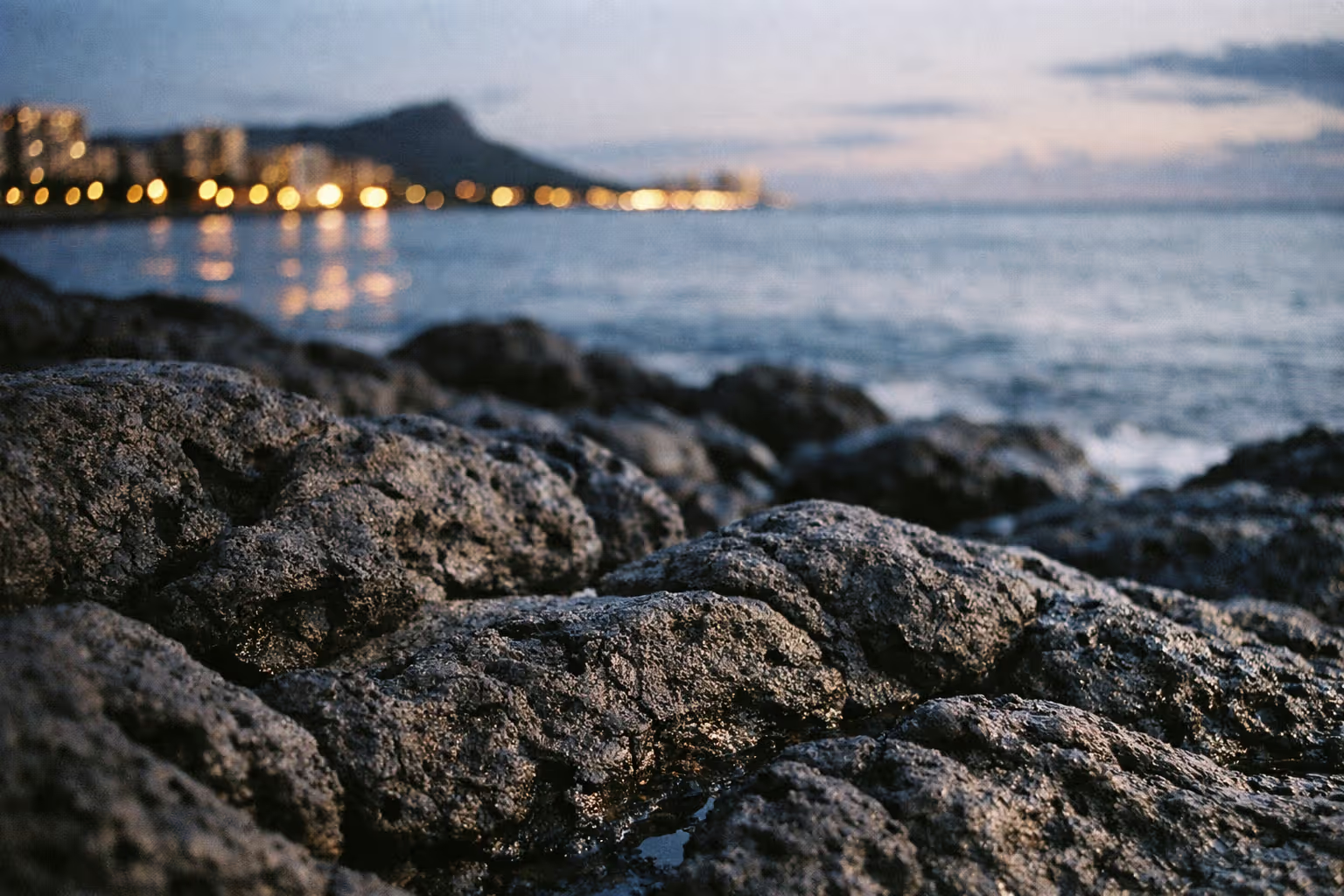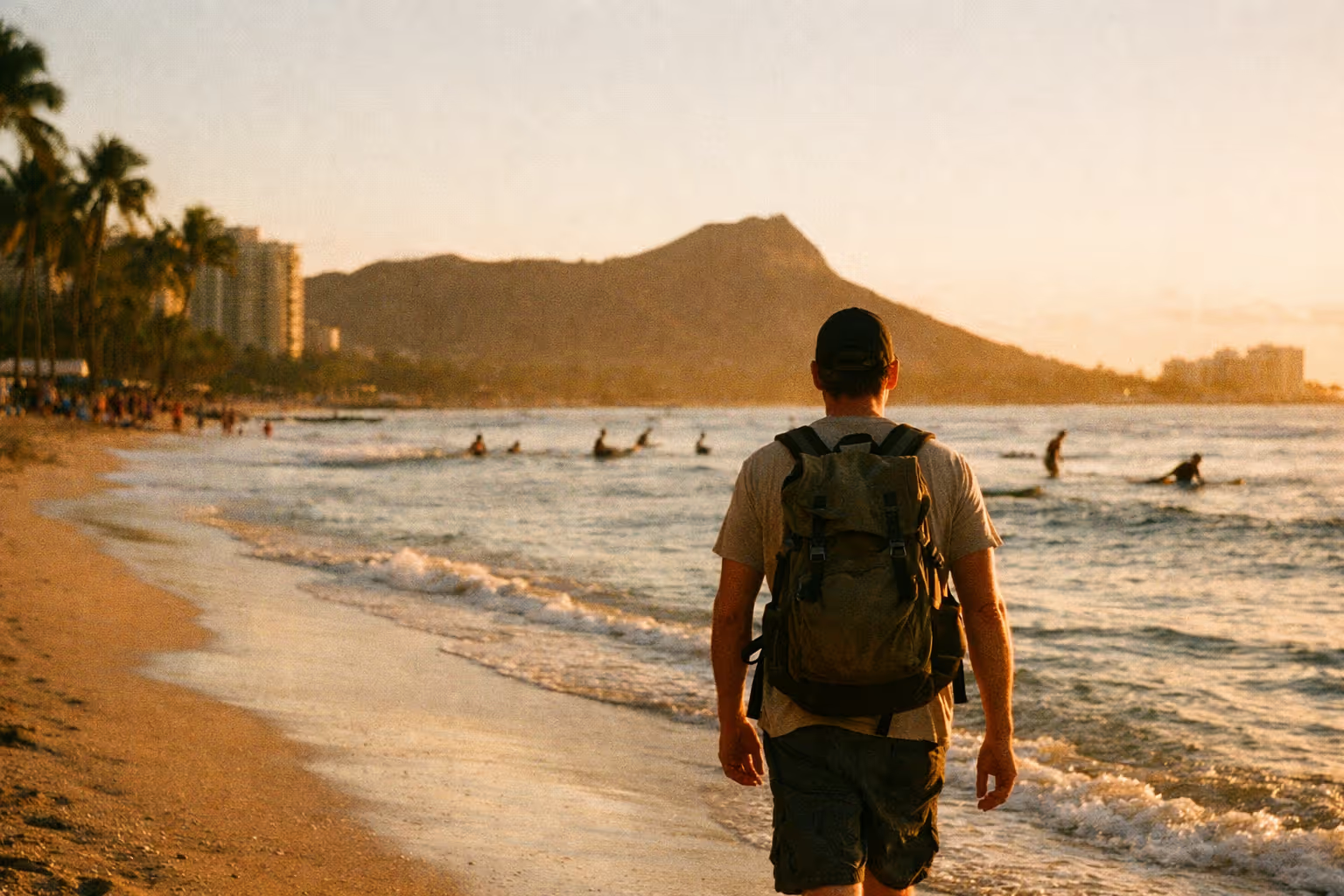
Waikiki packs eight named beaches, a dormant volcano crater, a 42.5-acre zoo, and a full nightclub strip into a two-mile stretch of Honolulu shoreline. The things to do in Waikiki cluster tight, and that density is the whole point: the best activities sit close enough that you can hike Diamond Head before breakfast, learn to surf by noon, and be at a rooftop bar by sunset without ever touching a car. Waikiki has a reputation for tourist traps, and some of it is earned. This guide is about navigating the good stuff and skipping the noise.
What Waikiki Actually Is (and What It Isn’t)
Waikiki is a district within urban Honolulu, not a separate city, spanning roughly 1.5 to 2 miles of south-shore coastline along Kalākaua Avenue and Kūhiō Avenue (1). The Hawaii Tourism Authority puts the boundaries at the Ala Wai Canal to the north and Diamond Head to the east. That’s the mental map worth holding: two parallel avenues, a beach on one side, a crater at the far end.
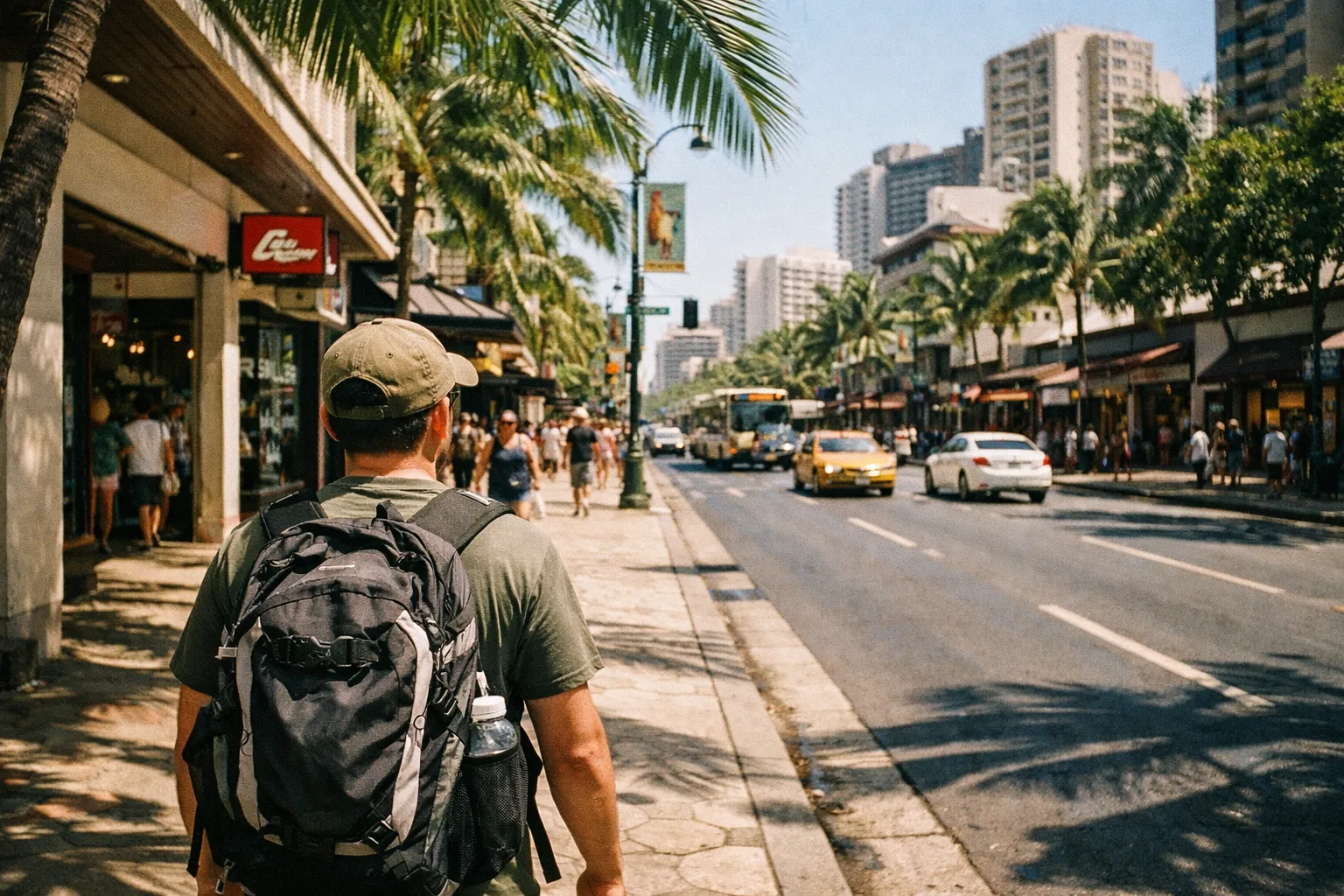
The beach itself splits into multiple named sections - Duke Kahanamoku Beach, Fort DeRussy Beach, Royal Hawaiian Beach, Kuhio Beach, and Sans Souci/Kaimana Beach - all within walking distance on the same shoreline. Water character shifts as you move east: calmer at Fort DeRussy, a genuine surf break off Queens. Most attractions, restaurants, and bars sit in a walkable 1 to 2 mile corridor. The Diamond Head trailhead is about 1.5 miles east of central Waikiki, roughly 20 to 30 minutes on foot or 10 to 15 minutes by car (1).
Here’s what Waikiki is not: it’s not the whole of Oahu. Treating it that way means skipping Iolani Palace in downtown Honolulu, Pearl Harbor, and the Windward Coast - all of which require leaving the district. Waikiki is one dense, well-organized part of a much bigger island. If you’re weighing best places to visit in Hawaii across multiple islands, Oahu is the strongest first-timer pick precisely because Waikiki gives you this kind of walkable density as a base.
The neighborhood keeps evolving. Recent additions include Birdie Time Mini Golf and the Chompeze animatronic dinosaur experience at International Market Place, plus the Peppermint Café & Pool Bar at Courtyard by Marriott (9). This guide reflects those 2025-2026 updates.
✓ Pros
- Entirely walkable - no car needed for most activities
- Eight beach sections with lifeguards, free access, and consistent surf
- Dense concentration of dining, shopping, and nightlife in a compact area
- Strong free-activity options: hula shows, fireworks, beach, Kapiolani Park
- Distinct itineraries for families, couples, solo travelers, and the nightlife crowd
✗ Cons
- Heavily touristed - Kalākaua Avenue restaurants skew toward tourist pricing
- Crowds peak mid-morning to mid-afternoon on the main beach sections
- Diamond Head requires advance reservations; walk-ins are increasingly restricted
- Nightlife and dining quality varies widely - bad choices are easy to make
- Limited shade and intense midday heat make timing critical for outdoor plans
Waikiki Beach - Eight Sections, One Shoreline
All eight sections are public, free, and lifeguarded. The City and County of Honolulu identifies Duke Kahanamoku, Fort DeRussy, Halekulani/Gray’s, Royal Hawaiian, Kuhio, Queens, and Sans Souci/Kaimana as the named segments, with free access and daily lifeguard coverage at the main stretches.
Waikiki’s two-mile shoreline comprises eight named beaches; Diamond Head hike spans 1.6 miles with 560 ft of elevation and 173 total stairs.
Where you set up depends on what you want. Duke Kahanamoku Beach at the western end sits near Hilton Hawaiian Village and has a protected lagoon - good for families with young kids. Fort DeRussy is broad and calmer. Royal Hawaiian Beach is the postcard center, busiest by mid-morning. Queens and Kuhio hold the gentle reef break where surf lessons run. Sans Souci/Kaimana at the eastern end, near Kapiolani Park, is smaller, more sheltered, and where locals actually swim. I’ve found it noticeably quieter than central Waikiki even on a busy Saturday morning.
The eastern end pairs naturally with Kapiolani Regional Park, a 160-acre public park adjoining the shoreline with open lawns, sports fields, and paths free to use during daylight hours. It’s the low-effort recovery stop between beach time and Diamond Head.
One time-sensitive item worth planning around: the Friday night fireworks at Hilton Hawaiian Village. According to TripAdvisor’s listing for the show, it starts at 8:00 PM from June to August and 7:45 PM from September to May, with reviewers recommending you arrive 15 to 30 minutes early on the western end of the beach for the clearest view. Stand near the Hilton lagoon, not central Waikiki, or you’ll be craning around hotel towers.
Water Activities Worth Booking in Advance
Surf lessons, catamaran cruises, and snorkeling tours all launch directly from the beach, but quality varies and morning slots go first. Book ahead. Surf schools featured by the Hawaii Tourism Authority report that standard group lessons run about 1 to 2 hours, use soft-top boards in the gentle reef break off Kuhio and Queens beaches, and are marketed specifically for first-timers. Waikiki’s forgiving waves make it one of the better places in the world to stand up for the first time - that’s not marketing copy, it’s just a genuinely easy wave.
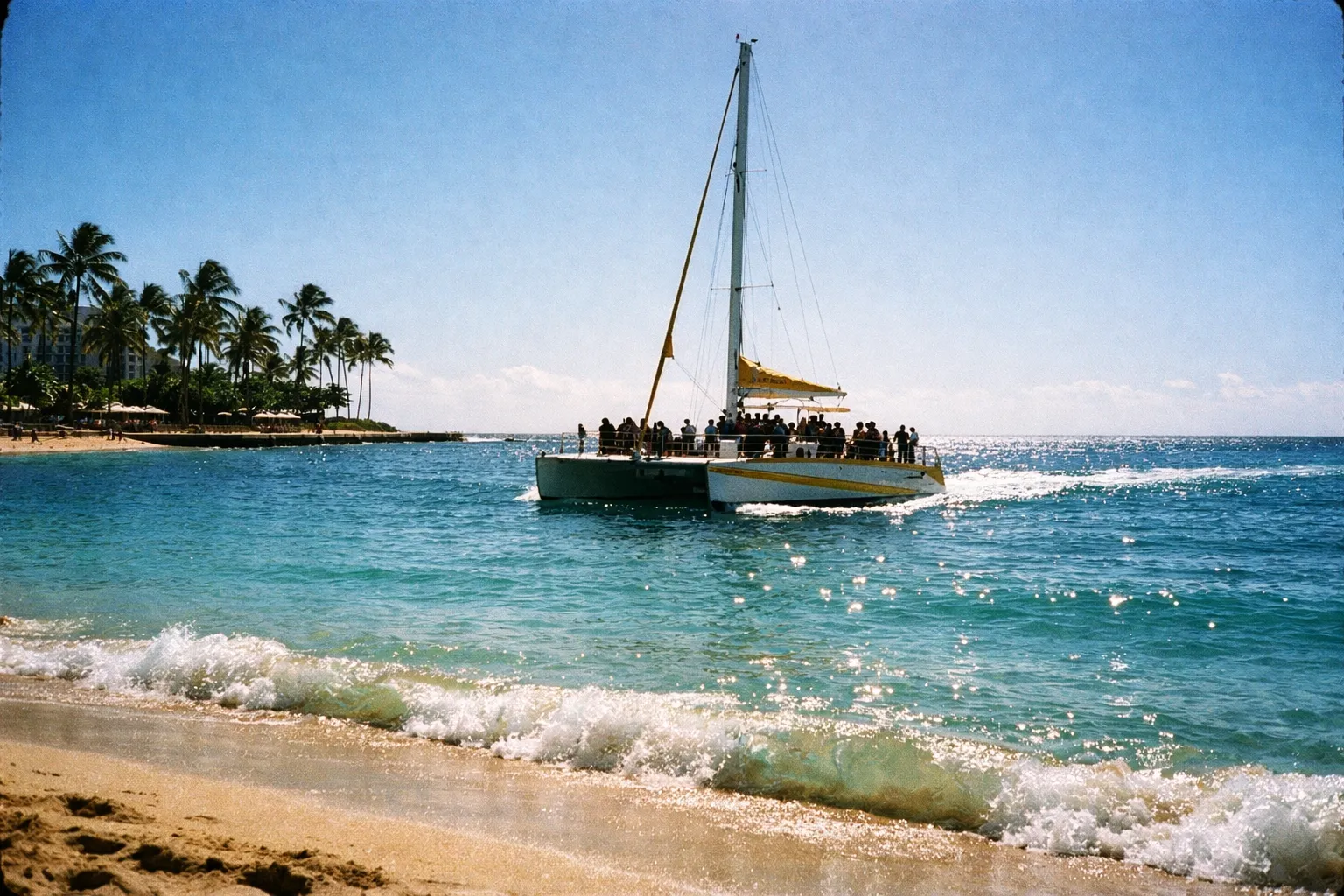
Beach operators line the shore hawking rides, but booking morning slots online beats walk-up rates, and dawn is when the water is calmest. Catamaran cruises run 1.5 to 2 hours and are one of the better ways to see the coastline without renting a car. Outrigger canoe rides and paddleboarding round out the from-the-sand options.
The Diamond Head Hike - What to Expect Before You Go
The Diamond Head hike is a 1.6-mile round-trip climb with about 560 feet of elevation gain, taking most visitors 1 to 2 hours. Non-residents now need an advance timed-entry reservation. According to the Hawaii Department of Land and Natural Resources, the Diamond Head Summit Trail runs approximately 0.8 miles each way from the crater floor to the summit lookout.
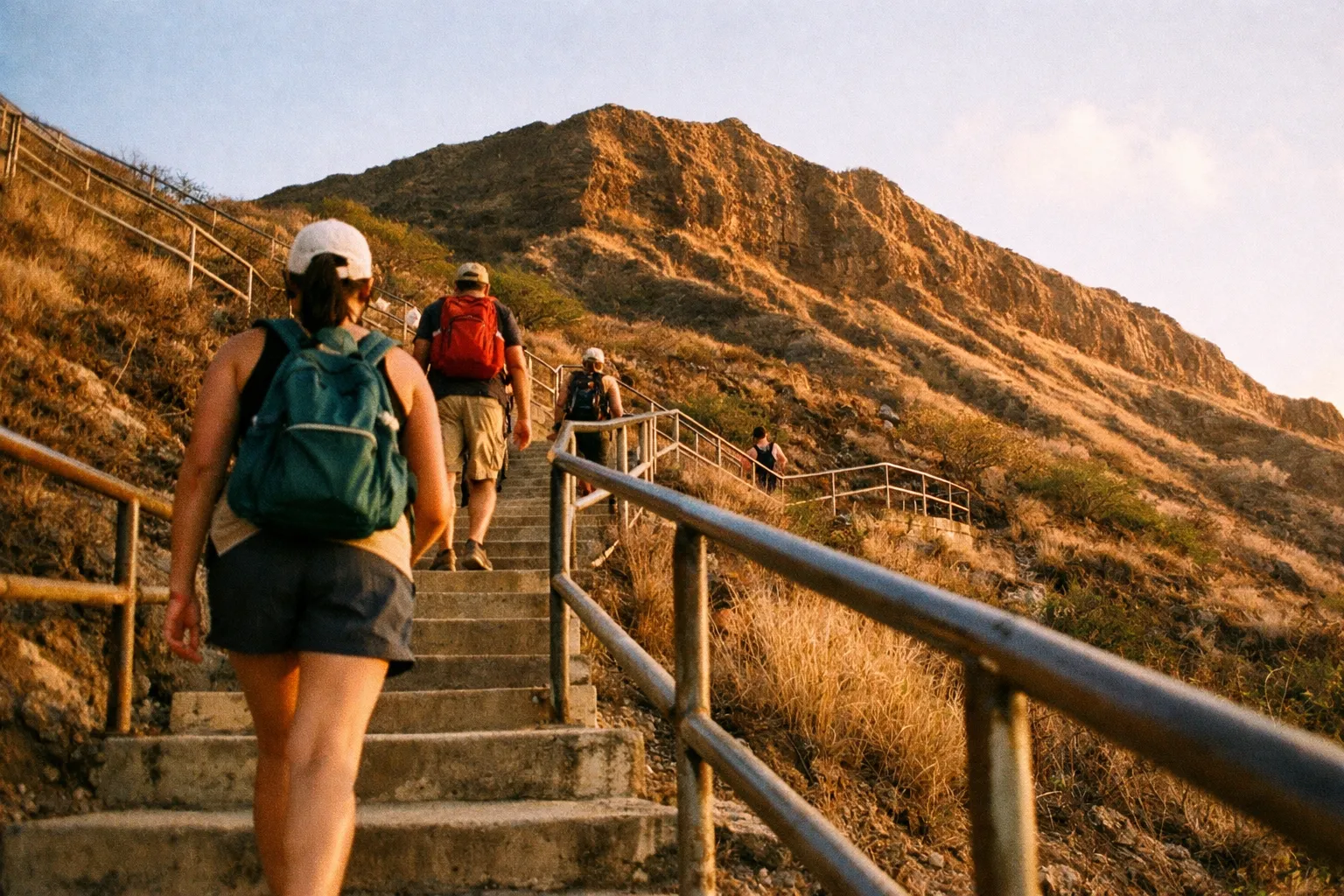
Don’t let the short distance fool you. DLNR’s trail description specifies two concrete stair sections - 74 steps and 99 steps respectively - plus a narrow tunnel and steep switchbacks leading to the summit bunkers. The upper portion is genuinely strenuous despite the modest mileage. I’ve watched plenty of visitors turn around before the top because they arrived without water in full midday sun. It’s a preventable mistake.
What you get at the summit is a wide-open panorama over Waikiki and the Pacific - the kind of view that makes the stairs worth it. The trail itself, though, is exposed and hot. DLNR advises starting early morning or late afternoon to avoid peak heat, and bringing water and sun protection because the upper trail has minimal shade and exposed concrete surfaces.
The critical logistics piece: the official Diamond Head State Monument reservation portal states that non-resident visitors must hold a timed-entry reservation, with a per-car vehicle fee and a separate per-person hiker fee, and same-day walk-in access for non-residents is no longer guaranteed. Morning slots sell out days ahead. Book before your trip, not the night before.
Getting there from central Waikiki is straightforward - about 1.5 miles east, reachable by bus, rideshare, or organized tour. No car required.
Diamond Head Hike Prep Checklist
1 to 2 hoursStep-by-step preparation and logistics for the Diamond Head hike
- 1
Book your timed-entry reservation online before your trip
Non-residents must reserve, and popular morning slots fill days ahead.
- 2
Arrive at the trailhead 10 to 15 minutes before your slot
Parking is limited; rideshare drop-off is easier than fighting for a space.
- 3
Bring at least 16 oz of water per person
There's no water on the trail and the upper switchbacks are fully exposed.
- 4
Wear closed-toe shoes
The 173 total stair steps and uneven crater path are not sandal-friendly.
- 5
Apply sunscreen before you start
The upper trail has almost no shade.
- 6
Plan 1 to 2 hours total
Add buffer if you're hiking with kids or want time at the summit lookout.
- 7
Time your descent around the heat
Early hikers should be heading down before midday; afternoon hikers should wait until 3 PM or later in summer.
Free Things to Do in Waikiki That Are Actually Worth Your Time
The best free things to do in Waikiki - the Kuhio Beach Hula Show, Friday fireworks, all eight beaches, Kapiolani Park, and sunset watching - can fill an entire day at zero cost. The City and County of Honolulu confirms all Waikiki beach sections are public and free, with no day-use fee for swimming, walking, or sunset viewing, and lifeguard towers staffed during daylight hours.
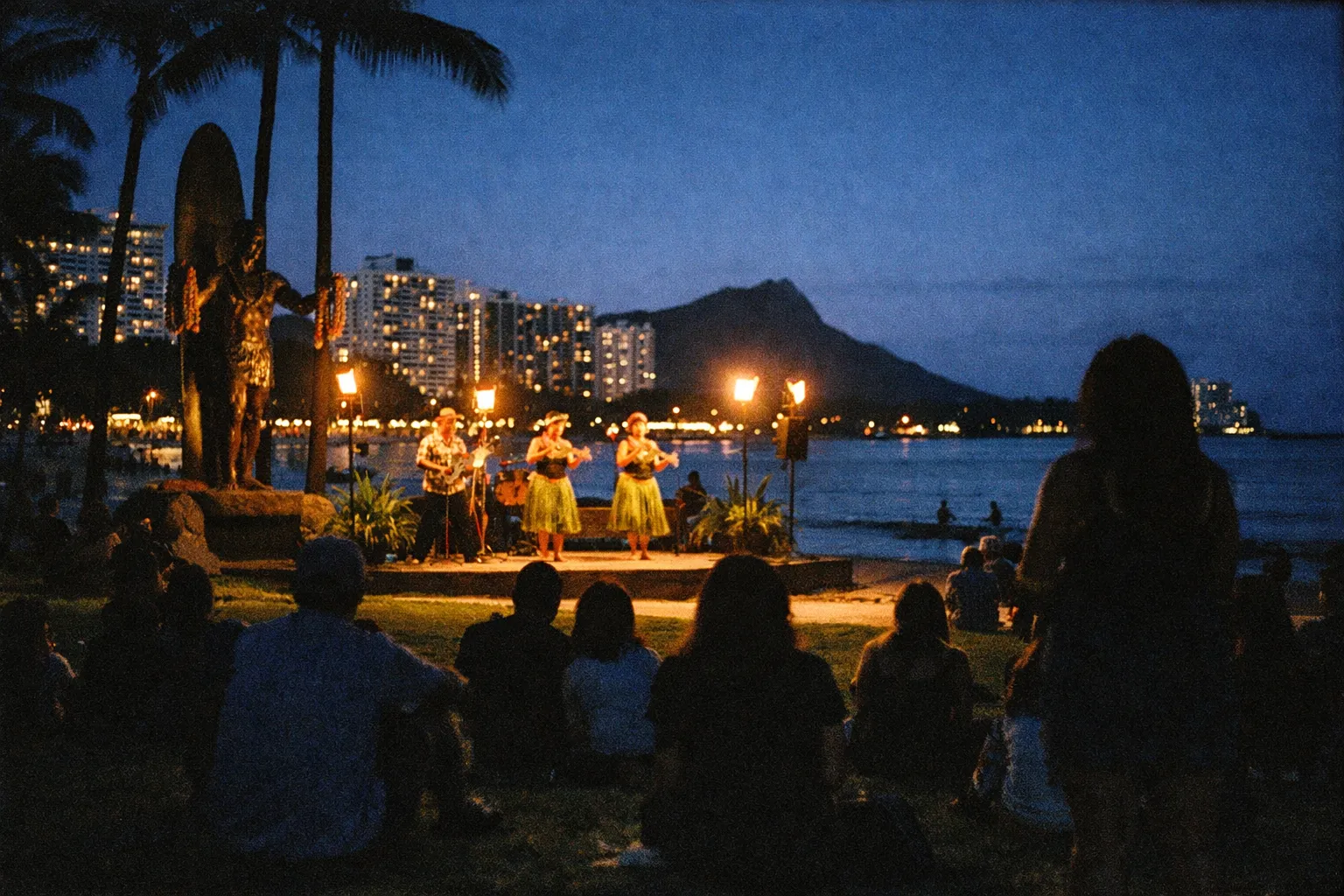
The Kuhio Beach Hula Show is the most consistent free cultural experience in the district. According to WaikikiGetDown, performances run Tuesdays, Thursdays, and Saturdays from 6:30 PM to 7:30 PM at the beachfront hula mound near the Duke Kahanamoku statue, free and open to the public, weather permitting. Arrive by 6:30 for a decent spot.
Friday night fireworks at Hilton Hawaiian Village (7:45 or 8:00 PM depending on season) cost nothing and draw a crowd to the western shoreline. Stake out a patch of sand rather than paying for a view.
Kalākaua Avenue window shopping is free to walk, and the Royal Hawaiian Center and International Market Place are air-conditioned and free to browse. The Royal Hawaiian Center’s event calendar lists free nightly and weekly cultural programming - hula shows, lei-making workshops, and ukulele lessons - at no cost on its three-level open-air mall.
Kapiolani Park gives you 160 acres of free public green space for walking, picnicking, and weekend sports, pairing naturally with the eastern beaches and the zoo and aquarium cluster.
Sunset watching happens every evening, no reservation required. The western end near Hilton Hawaiian Village faces the best angle.
Mana Up store browsing is worth a stop for a different reason. A December 2025 article from Hawaiinisumu reports the Mana Up store at Royal Hawaiian Center was expanded to showcase products from over 70 local Hawaii companies, with tasting experiences featuring Ko Hana Rum and Mānoa Chocolate on select days. Free to enter, and the tastings are a low-cost way to buy from local makers rather than mass-market souvenir shops.
For budget travelers, this is the headline: beach time, a hula show, the fireworks, and Kapiolani Park stack into a full day without spending a dollar beyond food. For a broader look at keeping costs down across the islands, the Hawaii on a Budget guide covers hostels, camping, and legal vacation rentals in detail.
The Full Activity List, Ranked by Value
Here’s the working list, ordered roughly the way you’d move through a day - beach and water first, then outdoor and cultural, then family and shopping. Each entry has a concrete detail so you can judge whether it’s worth your time.
-
Spend a morning on Waikiki Beach. Pick your section by what you want - the surf break at Queens, calmer water at Fort DeRussy. Arrive before 9 AM to claim space before the mid-morning crowds build.
-
Take a surf lesson. Beginner-friendly waves off Kuhio and Queens make this one of the better places in the world to learn. Lessons run about 1 to 2 hours from operators along the shore.
-
Book a sunset catamaran cruise. These run 1.5 to 2 hours, depart straight from the beach, and give you the coastline from the water without a rental car. Book a day or two ahead for sunset departures.
-
Hike Diamond Head. 1.6 miles round-trip, 173 stair steps across two sections, and a panorama over the Pacific at the top. Reserve your timed slot in advance - see the dedicated section above.
-
Visit the Honolulu Zoo. The zoo’s official site states it covers 42.5 acres in Kapiolani Park, houses over 300 animals including cheetahs, hippos, and tigers, and recommends 2 to 3 hours for a visit. Gates open at 10:00 AM and close at 4:00 PM, with last entry at 3:00 PM.
-
Explore the Waikiki Aquarium. The aquarium reports over 500 marine species and more than 3,500 individual organisms, including endangered Hawaiian monk seals and living coral reef displays, with an average visit of 1 to 1.5 hours. It sits on the waterfront near Kapiolani Park.
-
Catch the Friday night fireworks. Weekly at Hilton Hawaiian Village - 8:00 PM June through August, 7:45 PM the rest of the year. Position yourself on the western shoreline 15 to 30 minutes early.
-
Watch a free hula show. The Kuhio Beach Hula Show (Tue/Thu/Sat, 6:30-7:30 PM near the Duke Kahanamoku statue) is the most reliable free cultural experience in Waikiki.
-
Try an outrigger canoe ride or paddleboard session. Both launch directly from the beach. The outrigger canoe ride is a distinctly Hawaiian experience worth doing once.
-
Browse International Market Place and Royal Hawaiian Center. Together they hold 90-plus stores. New for 2025: Birdie Time Mini Golf, a 9-hole indoor course on the 3rd floor, and Chompeze, an 8-foot interactive animatronic dinosaur experience (9).
-
Snorkel a Turtle Canyon tour. These trips depart directly from Waikiki Beach, run 1.5 to 2 hours, and focus on a nearshore reef where Hawaiian green sea turtles are reliably sighted in calm conditions.
-
Walk the eastern Waikiki loop. The Honolulu Zoo, Waikiki Aquarium, Kapiolani Park, and Sans Souci/Kaimana Beach all sit within about a mile of each other - an efficient half-day with no car.
-
Tour Iolani Palace on a day trip. The official site notes the royal residence opened in 1882 and offers guided tours of roughly 60 to 90 minutes, about 10 to 15 minutes by car from central Waikiki. It adds genuine historical depth beyond the resort corridor.
-
Parasail or kayak from the beach. Higher-adrenaline options from beach operators. Parasailing gives you aerial coastline views without a helicopter price tag.
-
Check out the new 2025-2026 additions. The Peppermint Café & Pool Bar at Courtyard by Marriott Waikiki Beach and the expanded Mana Up store with local tastings are the additions worth knowing about (9).
If you only have time for a few, prioritize the Diamond Head hike, a morning on the beach, and the Friday fireworks if your dates line up. The zoo and aquarium are strong for families but skippable for couples short on time. The catamaran cruise is the best-value paid activity for seeing the coast. For the best things to do in Oahu beyond Waikiki, that guide covers the North Shore, the windward coast, and the wider island region by region, with booking mechanics and pricing.
Two from that list are bookable ahead rather than sorted out on the sand:
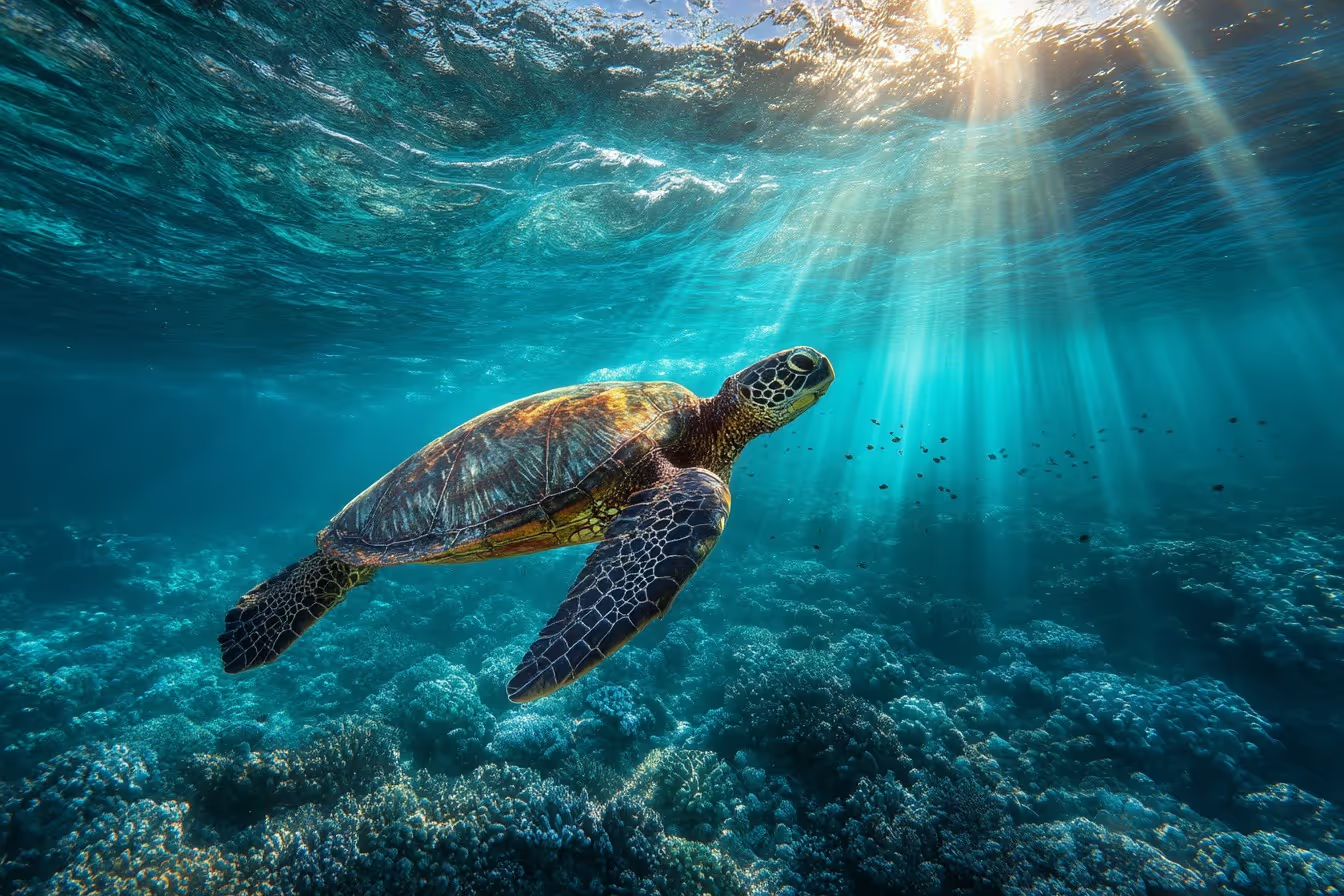
Waikiki Turtle Canyons Cruise and Snorkel
The nearshore turtle reef of item 11, reached without leaving the district.
Check availability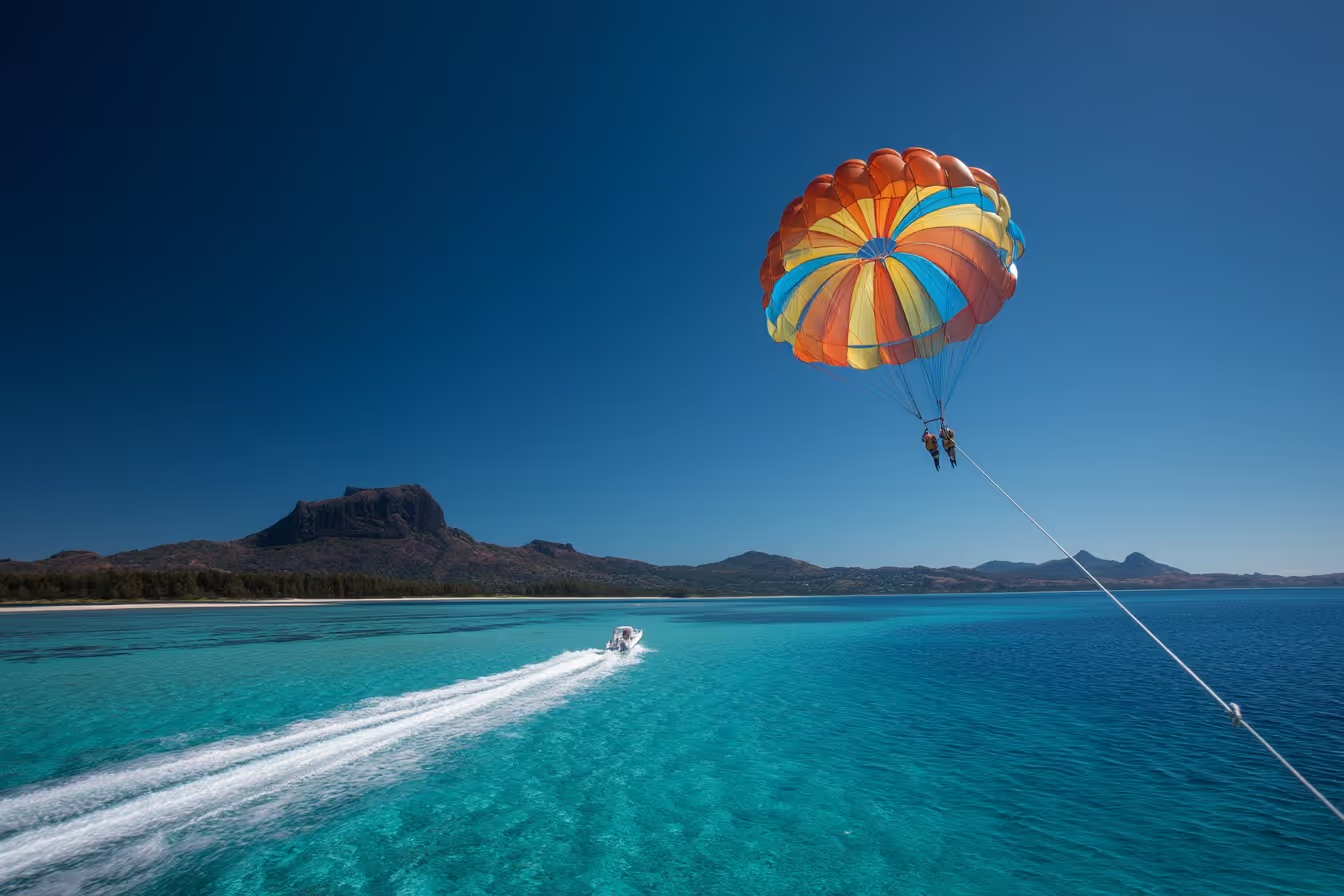
Waikiki Parasailing
The aerial view of the coastline, without the helicopter price tag.
Check availabilityFamily-Friendly Waikiki - Planning a Day With Kids
The eastern Waikiki cluster - Honolulu Zoo, Waikiki Aquarium, Kapiolani Park, and Sans Souci/Kaimana Beach - sits within about a mile with no car needed, making it the natural family anchor. The zoo’s 42.5 acres and 300-plus animals, including African savanna and reptile exhibits, sit adjacent to Kapiolani Park, walkable from most hotels. The Waikiki Aquarium is less than half a mile from the zoo entrance, with a Hawaiian monk seal habitat and interactive coral reef galleries built for school-age kids.
For rainy days or the worst of the midday heat, International Market Place has two family-specific backups: Birdie Time Mini Golf, a 9-hole indoor course, and the Chompeze dinosaur experience with its 8-foot animatronic (9). Both are indoor and air-conditioned. Worth knowing before you’re standing in the sun with a cranky eight-year-old.
On the beach, Fort DeRussy and Duke Kahanamoku have calmer water, and all main sections are lifeguarded. Honolulu describes Sans Souci/Kaimana as a smaller, more sheltered section with typically calmer water than central Waikiki, which is why local families use it rather than the busier central sections.
A workable half-day family loop: hit the zoo when it opens at 10 AM while temperatures are lower, break for lunch, do the aquarium in the early afternoon, rest at Kapiolani Park, then finish at Kaimana Beach in the late afternoon. That fills 4 to 5 hours without rushing. The free hula show at 6:30 PM lands right before most kids’ bedtimes, and the Friday fireworks are free and genuinely kid-friendly - get near Hilton Hawaiian Village by 7:30 PM.
Many surf operators offer lessons for children, and Waikiki’s gentle break is one of the few places where a beginner lesson for a kid is genuinely safe rather than a marketing line. For a broader look at planning Hawaii with kids across multiple islands, including real cost breakdowns and beach picks by age, that guide covers what Waikiki alone doesn’t.
Where to Eat in Waikiki - From Happy Hour to Late Night
Waikiki restaurants run the full arc from 2 PM happy hours to 1 AM late-night counters, and the smart move is knowing which window you’re eating in. The dense cluster of happy hour deals runs roughly 2:00 to 6:00 PM. Royal Hawaiian Center’s dining directory lists over 30 food and beverage outlets and highlights happy hour promotions in that window at venues including Wolfgang’s Steakhouse and Mai Tai Bar. Other reliable stops are SKY Waikiki, Maui Brewing Co., Heavenly Island Lifestyle, Basalt, TR Fire Grill, and Ruth’s Chris. Stacking two or three in one afternoon is the local move.
The single most useful dining tip: get off Kalākaua. Restaurants directly on the main strip skew toward tourist pricing. The side streets off Kalākaua hold Japanese izakayas and sushi spots where locals actually eat - worth the half-block detour for both price and quality. I’ve paid noticeably less for noticeably better food one street back from the main drag.
For view dining, SKY Waikiki is the most prominent rooftop option. Its official site notes it sits 19 stories above Kalākaua Avenue and strongly recommends advance reservations for sunset hours between 6:00 PM and 8:00 PM due to demand. Book ahead or arrive early - this is not a walk-in situation on a Friday.
For quick, cheaper meals, the food courts at Royal Hawaiian Center and International Market Place host local-favorite spots without sit-down prices. The International Market Place directory shows 90-plus shops and restaurants across three levels, with casual options priced below the oceanfront Kalākaua restaurants.
Late-night, the field narrows but doesn’t vanish. Yelp listings for the Waikiki core indicate several casual eateries - including Waikiki Shokudo and King of Thai - serve until roughly 1:00 AM, while Denny’s on Kuhio Avenue runs 24/7. Aloha Melt also runs late; Marukame Udon and Duke’s close between 10 PM and midnight; ABC Stores cover 24-hour snack runs.
New in 2025: the Peppermint Café & Pool Bar at Courtyard Waikiki Beach at 400 Royal Hawaiian Avenue, open 4:00 PM to 11:00 PM with fruit-and-herb cocktails and light bites.
Best Waikiki Happy Hours by Time Window
For the earliest deals, Basalt, Maui Brewing Co., and Heavenly Island Lifestyle tend to open their happy hour windows in the 2:00-4:00 PM range. Sliding later, Wolfgang’s Steakhouse, SKY Waikiki, Ruth’s Chris, and TR Fire Grill run deals into the 3:00-6:00 PM stretch. For rooftop happy hour at SKY Waikiki, reserve ahead - the sunset window fills fast.
Waikiki After Dark - Bars, Clubs, and What to Expect
Waikiki nightlife is genuinely varied, and the mistake is treating it as one scene. A dive bar crawl, a rooftop lounge evening, and a club night are three different experiences with different crowds and closing times. Pick the one that matches your night rather than wandering into whatever’s loudest.
For early-evening drinks with ocean proximity, the beach bars deliver: RumFire, the Mai Tai Bar at the Royal Hawaiian, LuLu’s, and Arnold’s Beach Bar. These are your sunset-cocktail spots, more about the setting than the scene.
For something lower-key, the Hideaway Bar is the no-frills, local-leaning dive with cheap drinks. On the later end, the Irish Rose Saloon stays open until about 2:00 AM per local nightlife listings, making it one of Waikiki’s later-closing pubs when the beach bars have shut around midnight. Hula’s Bar & Lei Stand, a long-running LGBTQ+ venue overlooking the beach, is open from early afternoon until around 2:00 AM per its official site, with daily drink specials - welcoming and worth knowing about regardless of who you are.
For dancing, the options thin out after the beach bars close. Check current club listings before your trip - venues in this category open and close with some regularity in Waikiki, and what’s operating when you land may differ from what was running when this was written.
If you want the evening to start with something other than a drink, guided ghost walks run the older blocks behind the strip - a way into the stretch of Waikiki’s history the hotels built over. Readers get a discount with the code LYNX10.

Waikiki Ghost Tour
The older Waikiki, walked after dark, before the beach bars fill up.
See tour timesWaikiki Nightlife Venues
| RumFire | Mai Tai Bar | LuLu's | Hideaway Bar | Irish Rose Saloon | Hula's Bar & Lei Stand | Addiction Nightclub | SKY Waikiki | |
|---|---|---|---|---|---|---|---|---|
| Type | Beach bar/lounge | Beach bar | Bar/restaurant | Dive bar | Irish pub | LGBTQ+ bar | Nightclub | Rooftop lounge |
| Vibe | Upscale-casual with ocean views | Classic, touristy but fun | Casual, lively | Low-key, cheap | Rowdy, late-night | Welcoming, fun | High-energy, loud | Upscale, views |
| Best For | Sunset drinks, couples | First-night drinks | Groups, early evening | Budget nights, locals | Late-night crowd | All welcome, LGBTQ+ | Dancing, late nights | Date night, cocktails |
| Approx. Closing Time | ~midnight | about 11 PM | ~midnight | Late | about 2 AM | about 2 AM | 3 AM (Thu-Sat) | ~midnight |
The critical nightlife-planning detail is food. Sort your post-bar meal before you need it: Waikiki Shokudo, King of Thai, and Aloha Melt run until roughly 1 AM, while Denny’s and ABC Stores cover 24 hours. Nothing derails the end of a night faster than a locked-up kitchen.
How to Spend a Day in Waikiki - A Practical Framework
If you want a structure rather than another list, here’s how a full Waikiki day actually divides by time of day. Treat it as modular - pick the blocks that match your style; you don’t need all of them.
Morning (7-11 AM). This is Diamond Head time. DLNR guidance notes most visitors complete the summit hike in 1 to 2 hours, which fits neatly before heat and crowds peak. If you’d rather stay flat, take beach time before the mid-morning rush or a booked surf lesson. A Kapiolani Park walk works too.
Midday (11 AM-2 PM). Duck the worst heat indoors. The Honolulu Zoo (10 AM-4 PM) and Waikiki Aquarium (roughly 10 AM-4 PM) both fit a late-morning-to-early-afternoon block, ideally paired with lunch nearby. On a hot or rainy day, International Market Place’s indoor options - including the mini golf and dinosaur exhibit - are the backup. Eat lunch on a side street off Kalākaua.
Afternoon (2-6 PM). This is the happy hour window - Royal Hawaiian Center’s schedules cluster deals between 2:00 PM and 6:00 PM, so stack two or three venues. Alternatively, take a catamaran cruise (1.5-2 hours from the beach) or shop the Royal Hawaiian Center.
Evening (6-10 PM). Dinner at a rooftop like SKY Waikiki or a local izakaya off the strip. If it’s Tuesday, Thursday, or Saturday, the free hula show runs 6:30-7:30 PM. If it’s Friday, the fireworks anchor a 7:30-8:30 PM slot near Hilton Hawaiian Village - build dinner around it.
Late night (10 PM+). Beach bars first, then the Irish Rose or Hula’s for later drinks, then check current club listings if dancing is the goal - the nightclub scene shifts, so verify what’s operating before your trip. Cap it with late-night food at Waikiki Shokudo or King of Thai.
Waikiki on a Budget - What’s Free, What’s Worth Paying For
A full day in Waikiki can genuinely cost nothing, but Hawaii is expensive overall, so the practical approach is planning free days around a small number of paid activities. The City and County of Honolulu confirms there’s no admission fee for the beaches or Kapiolani Park - you can swim, walk, picnic, and watch the sunset without paying for access.
What’s genuinely free: all eight beach sections, Kapiolani Park, the Kuhio Beach Hula Show, Friday fireworks, walking Kalākaua Avenue, and sunset watching. Royal Hawaiian Center’s free cultural programming adds to the list.
What costs money and earns it: the Diamond Head hike (non-resident per-person fee plus a vehicle fee), the Honolulu Zoo (general adult admission in the roughly $20-25 range, per the zoo’s ticket information - verify current pricing), the Waikiki Aquarium (adult tickets well below the price of most boat tours or luaus), a catamaran cruise, and a surf lesson.
What’s skippable: tourist-trap restaurants directly on Kalākaua, and overpriced beach-gear rentals from hotel concierges when independent operators sit 50 feet away.
Now the budget reality checks. Is $100 a day enough for Hawaii? Barely, and only if lodging is separate. BudgetYourTrip’s estimates for Honolulu show average daily spending near or above $200 per person for food, transport, and activities, so $100 a day works only by leaning on free activities and eating at food courts and side-street spots rather than Kalākaua sit-downs. Paid attractions like the zoo, aquarium, and surf lessons will push you over on those days.
Is $1,000 enough for a week in Hawaii? It’s tight. Frommers and general budgeting tools suggest $1,000 per person for a week works only with lower-cost or shared accommodation and a limited number of paid excursions. Figure shared lodging around $300 for six nights, leaving roughly $700 for food, activities, and transport - doable if you prioritize free days and cap paid attractions at two or three. It won’t cover a catamaran cruise, surf lessons, and the zoo in the same week.
Is $2,000 enough for a week in Hawaii? Yes, comfortably for most travelers. At $2,000 per person excluding flights, you can cover mid-range shared accommodation, a mix of free and paid activities, daily restaurant meals with a few nicer dinners, and still keep a buffer. You won’t be doing helicopter tours nightly, but Waikiki’s range of free and moderately priced options makes $2,000 a genuinely workable week. For travelers planning to extend beyond Oahu, the things to do in Hawaii ranked guide covers worth-the-detour activities across all the major islands with honest cost comparisons.
Frequently Asked Questions
- What is a must-do in Waikiki?
- The Diamond Head hike and a morning on Waikiki Beach define the district. Reserve your hike slot early; combine with beach time and happy hour for one day.
- Do you need a car in Waikiki?
- No car is needed within Waikiki. The beach, shopping, dining, and nightlife are walkable. Use bus or rideshare for Diamond Head; car needed only for day trips outside Waikiki.
- When is the best time to hike Diamond Head?
- Early morning shortly after opening or late afternoon after 3 PM in summer. Avoid midday heat and book timed-entry reservations well in advance.
- What are the best free things to do in Waikiki?
- Free options include Kuhio Beach Hula Show, Friday fireworks, all eight beach sections, Kapiolani Park, sunset watching, and Royal Hawaiian Center cultural events.
- Where do locals eat in Waikiki?
- Locals favor side streets off Kalākaua Avenue with Japanese izakayas and sushi spots. Food courts at Royal Hawaiian Center and International Market Place offer affordable local meals.
- Is Waikiki good for families with young kids?
- Yes. The eastern cluster with zoo, aquarium, park, and sheltered beaches is walkable. Indoor mini golf and dinosaur exhibits provide weather-proof family options.
- What's new in Waikiki for 2025-2026?
- New attractions include Birdie Time Mini Golf, Chompeze dinosaur exhibit, Peppermint Café & Pool Bar, expanded Mana Up store with tastings, and Allegrini Mozzarella Deli's second location.
Plan the Logistics, Let the Rest Fill In
Book your Diamond Head reservation before you land. That’s the one item that fails hardest if you leave it to the day of - morning slots go days in advance, and there’s no workaround for non-residents without one.
Everything else is more forgiving. Time your Friday fireworks arrival, map out a happy hour circuit, and you’ve handled the only pieces that require real advance action. The beach is genuinely good. The free activities are genuinely worth doing. The waikiki nightlife has real range once you know a dive bar night and a rooftop night are different plans that require different footwear.
Pick one or two paid activities that match your style - a surf lesson, a catamaran cruise, the zoo if you’ve got kids - and let the walkable corridor handle the rest. Waikiki is dense enough that you won’t run out of things to do. The only real mistake is skipping the handful of bookings that need advance action.