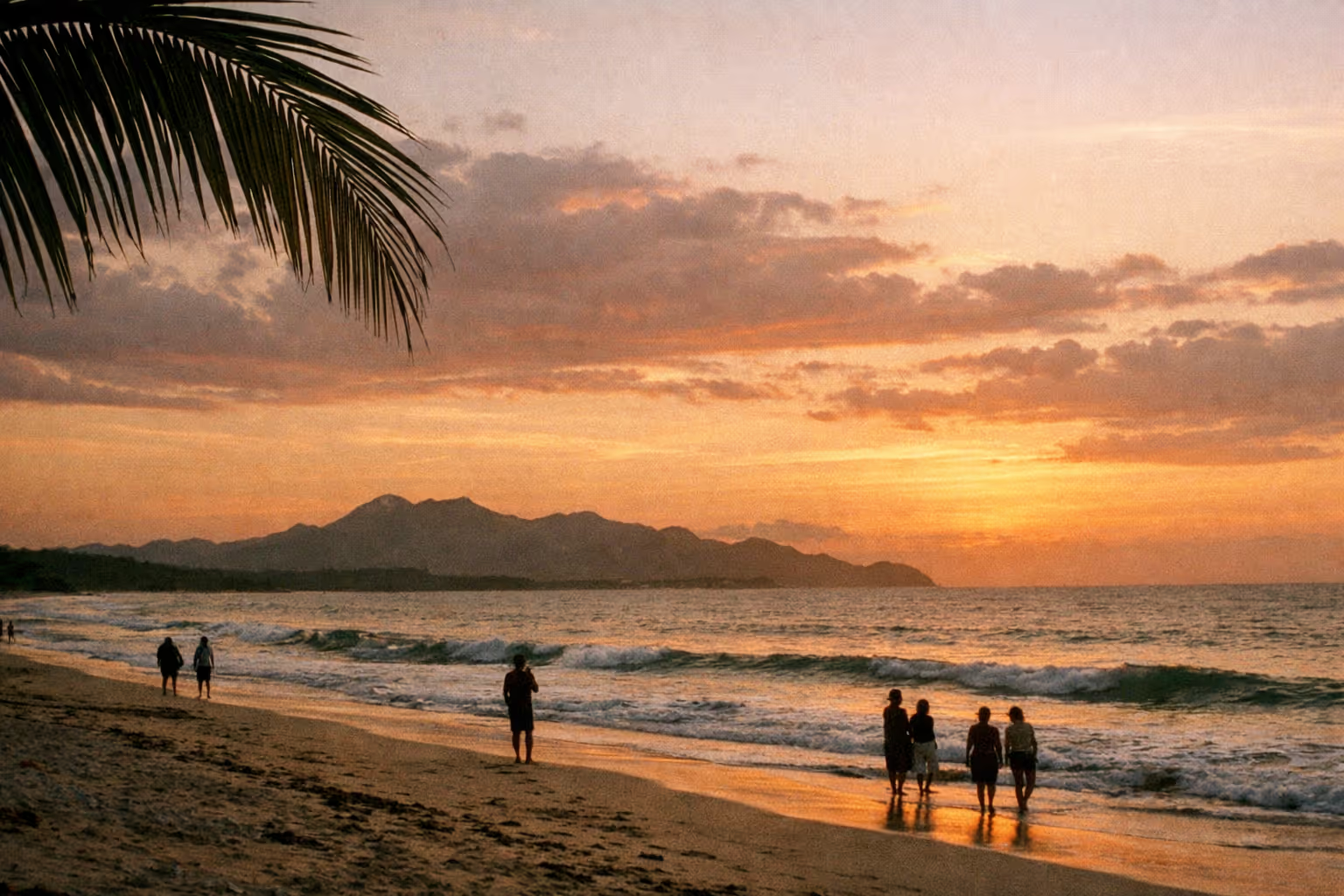
Things to do in Guanacaste Costa Rica split between the Gold Coast beaches and one volcano an hour inland, so you can surf at dawn and soak in a mud bath by afternoon. Fly into Liberia, not San Jose, and most beach towns sit under 90 minutes away. Chase Playa Conchal’s shell sand before 11 a.m., catch sunset from the Flamingo hilltop, and save a day for Rincon de la Vieja and the Rio Negro hot springs. Come in February, after the holiday crowds and before the March winds.
Things to do in Guanacaste Costa Rica: What to See, Surf, and Explore
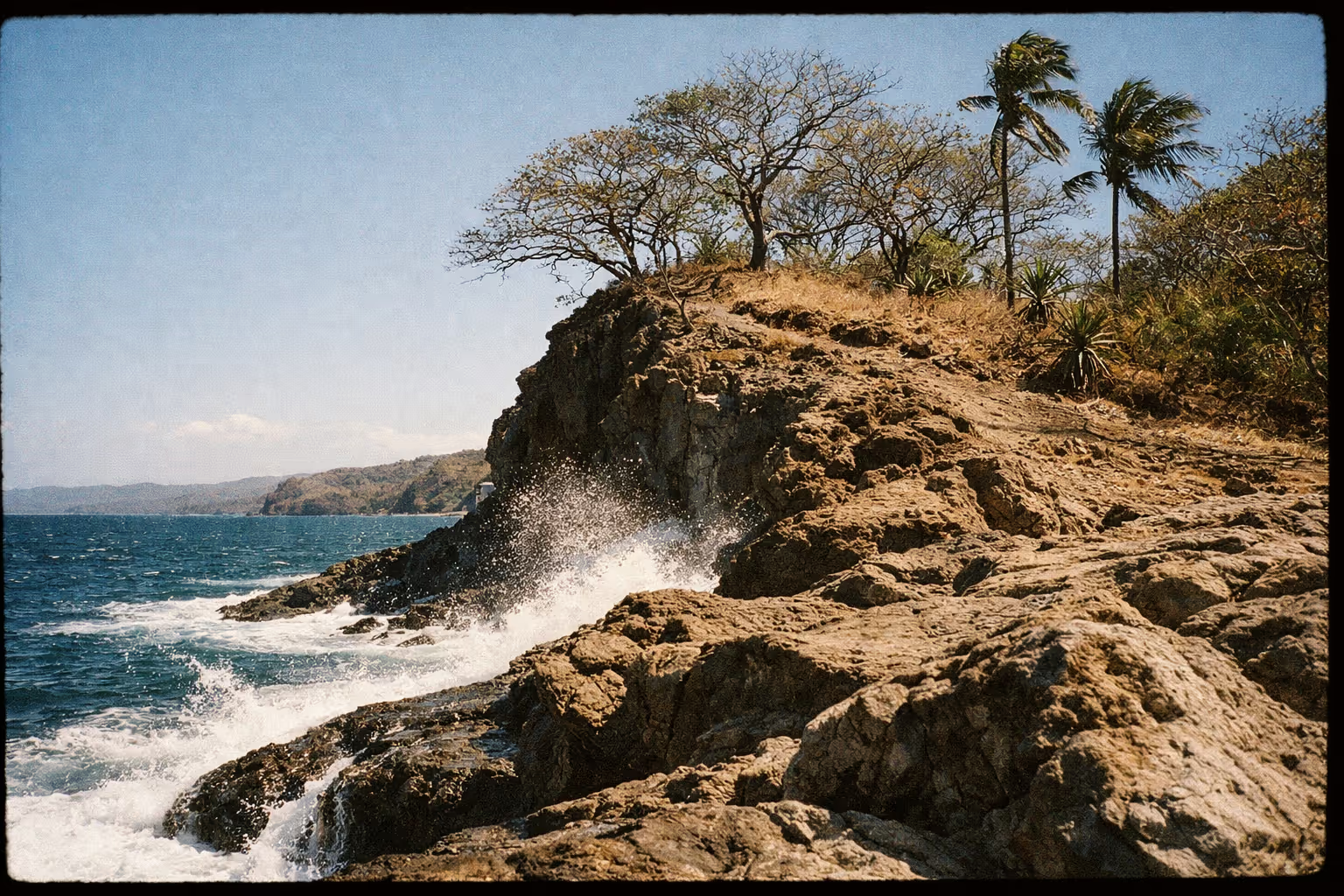
Guanacaste is Costa Rica’s northwest province and home to what locals call the Gold Coast - a string of Pacific beaches from Papagayo down to Tamarindo and beyond (3). Three things set it apart from the rest of the country:
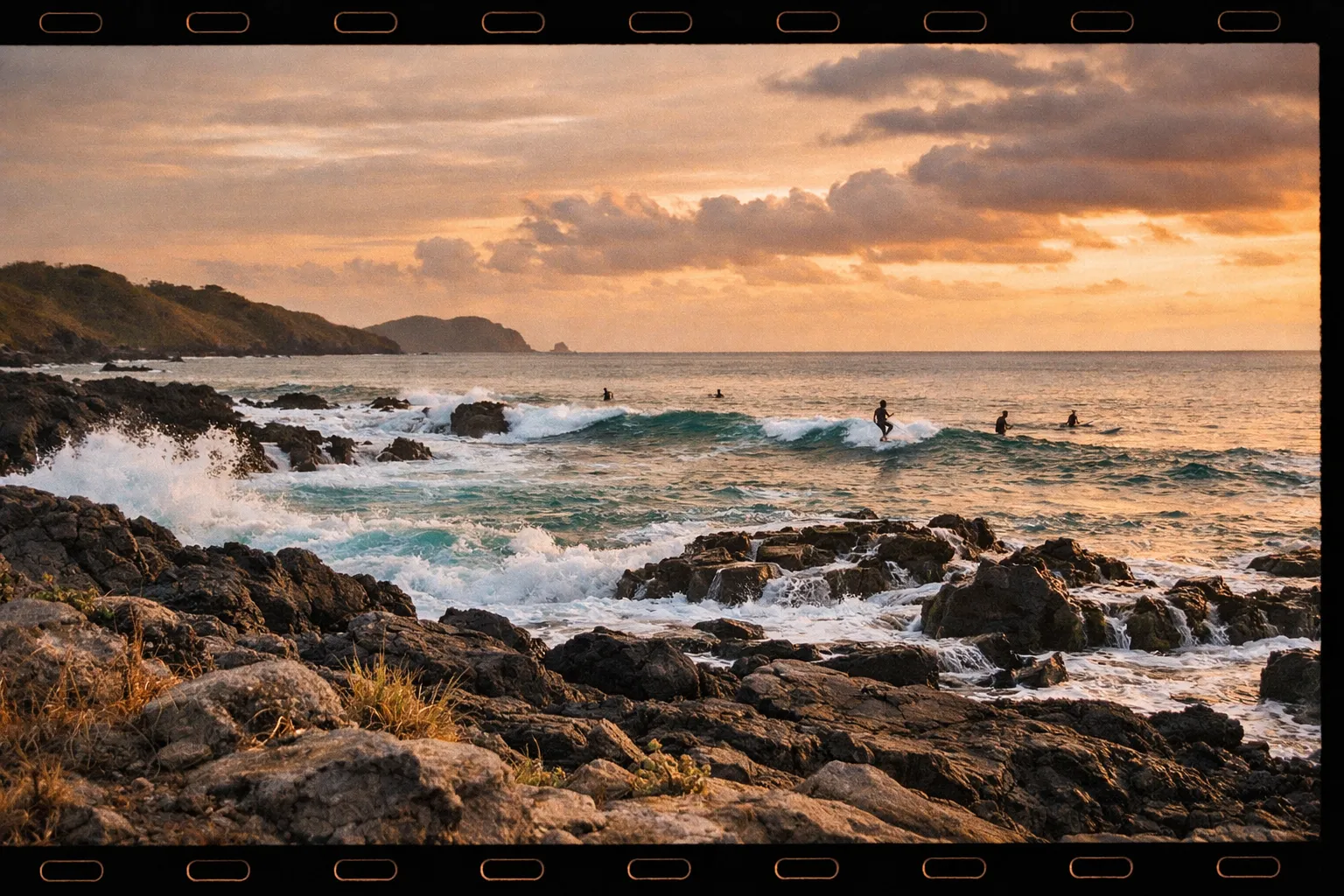
- Sun. Guanacaste has the country’s longest dry season - roughly December through April, with coastal highs of 85-100°F (29-38°C) and minimal rain (3). If you’re flying out of a U.S. winter, this is the most reliable warm-beach bet in Central America.
- Access. Liberia airport (LIR) puts most beach towns within 45-90 minutes by road. No domestic connection, no 4-hour shuttle from San José.
- Volcano + beach in one trip. Rincón de la Vieja volcano sits about 90 minutes inland from the coast - close enough that you can do hot springs, waterfalls, and mud baths as a day trip without changing hotels.
What it’s not known for: cloud forests, sloths in every tree, wet jungle. Those are in other regions. Don’t expect Monteverde here.
Liberia airport Costa Rica: getting in and out
Liberia airport Costa Rica - officially Daniel Oduber Quirós International Airport (LIR) - is the practical entry point for Guanacaste. Nonstop flights run from Houston, Miami, Dallas, Atlanta, Charlotte, Newark, JFK, LAX, and several Canadian hubs during high season.
Drive times from LIR:
- Playa del Coco: 25-30 minutes
- Papagayo Peninsula resorts: 30-40 minutes
- Playa Flamingo / Conchal: 60-75 minutes
- Tamarindo: 75-90 minutes
- Rincón de la Vieja park entrances: 60-90 minutes (depending on sector)
Car rental vs. shuttle math. A rental car runs roughly $40-80/day with the mandatory insurance. Costa Rica’s price-on-the-website-vs-price-at-the-counter gap is the country’s most-complained-about travel issue - budget for the full insurance, not the headline rate. Shared shuttles from LIR to Tamarindo run around $25-35 per person; private transfers $120-180 for the vehicle.
Booking-mechanics note: If you’re staying at an all-inclusive on Papagayo or Conchal and not planning day trips beyond what the resort offers, skip the rental car. If you want the 3-beach tour, Rincón, and a couple of restaurants in different towns, get the car. The savings on tour transfers will cover it.
Weather and seasons: when to go
The dry/wet split in Guanacaste is sharper than elsewhere in Costa Rica (3).
- December-April (dry season / “summer”): Almost no rain, brown landscapes inland, hot afternoons. Peak prices Dec 20-Jan 5 and during U.S. spring break weeks in March.
- May-early July (early green season): Afternoon showers, green hills, lower prices, still plenty of beach time in the mornings. My pick for value.
- September-October: Heaviest rain. Some dirt roads to remote beaches turn muddy. Surf is excellent if you’re chasing waves; otherwise consider another region.
- November: Transition month. Usually drying out by mid-November.
Best month to visit: February. Peak dry season is locked in, holiday crowds have left, and the trade winds that make March feel relentlessly windy haven’t fully kicked up yet.
Best beaches Guanacaste: the ones worth your time
The best beaches Guanacaste offers aren’t equal-weight. Here’s how I’d rank them by “worth the detour” vs. “skip if short on time.”
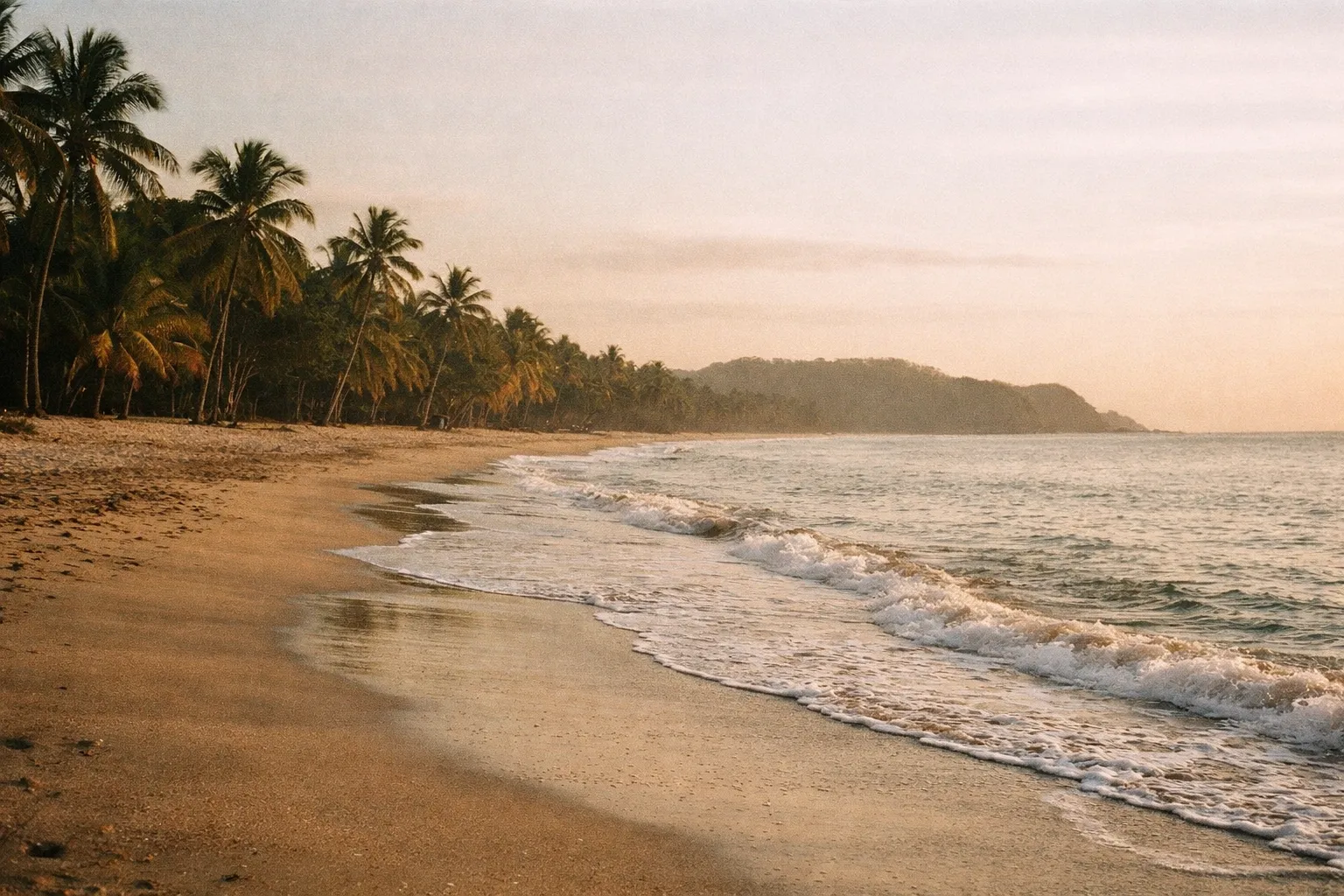
Tamarindo Beach - worth the detour
The hub. A wide sandy bay roughly 3 km long, with surf schools lined up along the southern half and calmer water at the northern end near the estuary. Walking the beach at sunrise - around 5:30 AM in dry season - is the closest thing this town gets to quiet. By 9 AM the surf lessons take over.
Swimming is generally fine but watch for rip currents, especially mid-beach. Families tend to stick to the northern stretch. The town itself is walkable, packed with restaurants from $8 casado plates to $35 entrées, and has the region’s only real nightlife.
Playa Conchal - worth the detour
The famous crushed-shell beach. The water clarity is the best of any easy-access beach in Guanacaste, and the shells underfoot are the actual draw - not “white sand” as some guides claim, but millions of pulverized seashells. Public access is via Playa Brasilito to the north (walk south along the sand for about 10 minutes), or through the Westin Reserva Conchal for guests.
Best time: mid-morning before the day-tour buses arrive around 11 AM.
Playa Flamingo - worth the detour
White sand, a new marina that’s repositioned this town as the catamaran and sport-fishing hub of Guanacaste, and a hilltop viewpoint above the bay that’s the best sunset spot in the region. Sleepier than Tamarindo at night, which most people consider an upgrade.
Playa del Coco - worth it if you want boats
Playas del Coco (locals just say “Coco”) is one of the oldest beach towns on this coast and the launch point for snorkel and dive trips out to Las Catalinas Islands. The beach itself is gray-brown and not the prettiest swim spot, but the boating infrastructure and the walkable town center make it a fair base. Lively, but not Tamarindo-loud.
Playa Blanca - skip unless you’re staying nearby
A small white-sand beach in the Papagayo area, often listed in roundups but mostly accessed via private resort land or by boat. Worth it if your resort is on Papagayo and Playa Blanca is the house beach. Not worth a special trip.
Playa Negra - skip if short on time, prioritize if you surf
Dark volcanic sand and a serious reef break that’s earned international surf-comp respect. The access road south of Tamarindo (through Paraíso) is mostly paved now but the last stretch can be rough in green season. If you’re an intermediate-or-better surfer, this is the wave. If you’re not, you’ll find a quiet beach with rocky entry and not much to do.
Playa Puerto Viejo - worth combining
A small bay between Conchal and Flamingo, usually folded into the 3-beach tour day (covered below). Quieter than its neighbors, fine for a midday swim.
The 3-beach tour day
This is the day trip most Tamarindo-based travelers should do. It packages Flamingo, Conchal, and Puerto Viejo into a single loop using either a rental car or a guided tour (2).
My recommended route, with a car:
- 8:30 AM: Leave Tamarindo, drive ~50 minutes north
- 9:30 AM: Arrive Playa Brasilito, walk south to Playa Conchal before the buses
- 11:30 AM: Drive 10 minutes to Playa Puerto Viejo for a quieter swim and lunch from a soda
- 2:00 PM: Continue 10 minutes to Playa Flamingo, beach time
- 5:30 PM: Drive up to the Flamingo hilltop lookout for sunset
- 7:00 PM: Dinner in Flamingo or drive back to Tamarindo (~50 min)
Total cost with rental car: ~$30 fuel, $10-15 parking total, $40-60 food. Group tours that cover the same itinerary run $90-130 per person but skip the sunset hilltop because they need to deliver you back before dark.
How to Do the 3-Beach Tour from Tamarindo
10 hoursA step-by-step itinerary for visiting Playa Conchal, Playa Puerto Viejo, and Playa Flamingo in one day.
- 1
Morning at Playa Conchal
Leave Tamarindo at 8:30 AM, drive about 50 minutes to Playa Brasilito, then walk south along the sand to Playa Conchal before the tour buses arrive.
- 2
Midday at Playa Puerto Viejo
Drive 10 minutes to Playa Puerto Viejo for a quieter swim and lunch at a local soda.
- 3
Afternoon and Evening at Playa Flamingo
Continue 10 minutes to Playa Flamingo for beach time, then drive up to the hilltop lookout for sunset. Have dinner in Flamingo or return to Tamarindo by 7 PM.
Surfing in Guanacaste Costa Rica: Where to Catch the Best Waves
Surfing Guanacaste Costa Rica ranges from “first wave ever” to “experienced reef break” within an hour’s drive.
Where to surf, by level:
- Beginner: Tamarindo Beach - sand bottom, forgiving white water, dozens of surf schools on the beach. Group lessons run $40-60 for 2-2.5 hours including board; private lessons $70-100.
- Beginner-intermediate: Playa Grande, just north across the estuary from Tamarindo. Less crowded, similar conditions, slightly stronger waves.
- Intermediate: Playa Avellanas, 30 minutes south of Tamarindo. Multiple breaks, sand bottom mostly.
- Advanced: Playa Negra - reef break, locals out early, not the place to learn anything.
- Advanced & remote: Witches Rock and Ollie’s Point in Santa Rosa National Park - boat access only, charters from Tamarindo or Coco run $300-500 per person for a full day.
Board rental: $15-20/day for a soft-top, $25-35/day for a fiberglass shortboard.
Best surf season: April through October generally has the most consistent swell, but Tamarindo works year-round for beginners. If you want to compare surf destinations across the country, whitewater rafting the Pacuare to surfing, ziplining, and more covers the full picture of Costa Rica’s adventure options.
Exploring Rincón de la Vieja volcano and its surroundings
The Rincón de la Vieja volcano is the inland anchor of any Guanacaste trip. The park has two main sectors:
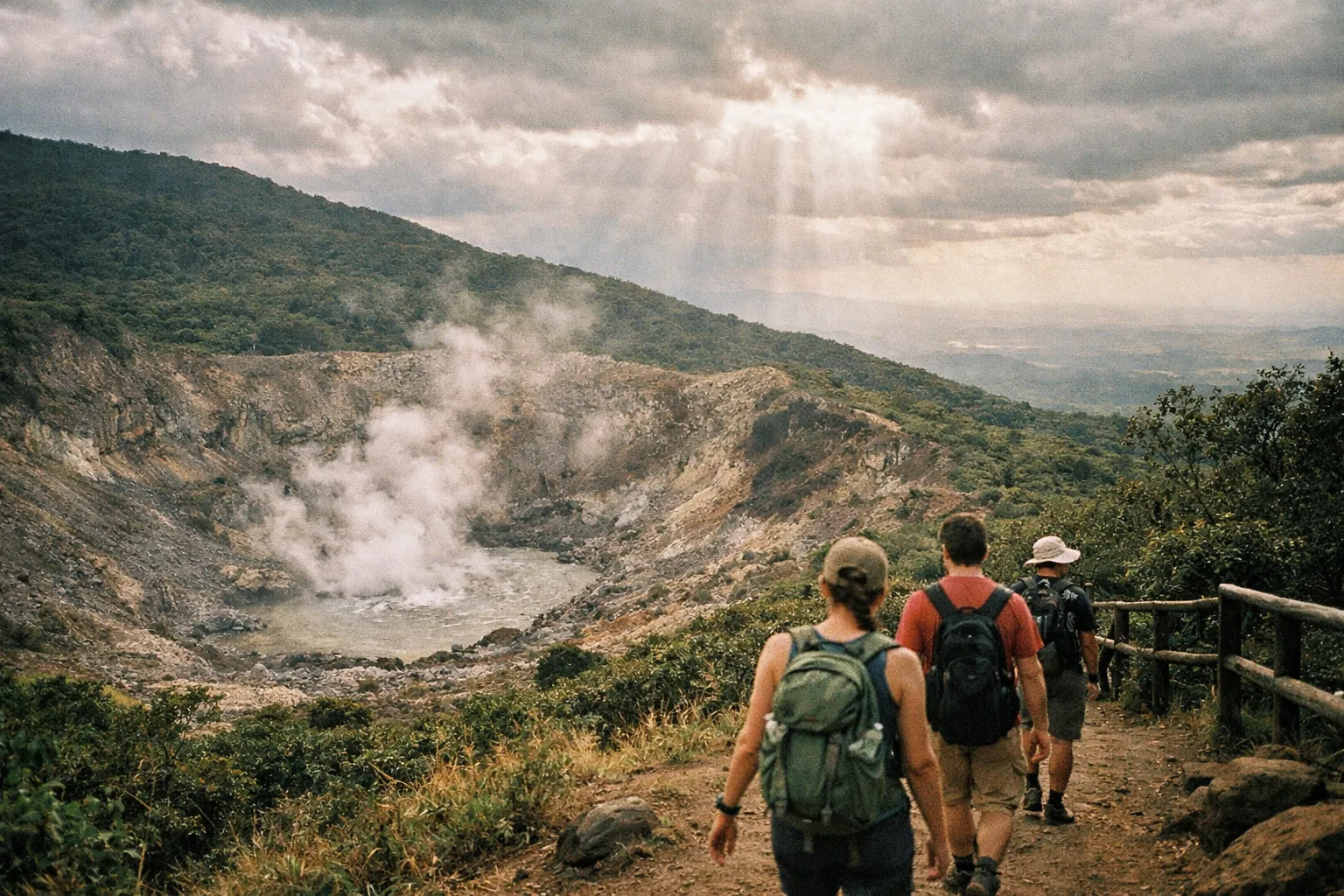
- Las Pailas sector - the main entrance, home to the geothermal trail (boiling mud pots, fumaroles), the waterfall loop (Cangreja and Escondidas falls), and the summit trail.
- Santa María sector - quieter, with hot spring pools you can soak in along the trails.
Park entrance: $16.95 for foreign adults and $5.65 for children aged 2 to 12, sold only online through SINAC’s reservation system, with no payment at the gate (7). Las Pailas is open Tuesday to Sunday, 8 AM to 3 PM, and closed Mondays (7). Get there at opening (8 AM) - the lot fills by 10:30 in dry season.
Two mistakes people make:
- The summit hike to the active crater is closed indefinitely due to volcanic activity. Don’t plan your trip around it.
- The waterfall loop (La Cangreja) is 10 km round trip with rocky terrain and afternoon sun. Bring more water than you think.
Tour vs. DIY: Full-day tours from beach towns run $120-170 including transport, entrance, lunch, and usually a hot springs stop on the way out (1)(4)(6). DIY by rental car saves around $60 per person if you’re a pair, but you lose the bundled hot springs.
I tested this in late February - Las Pailas sector at opening, waterfall loop midday, Rio Negro hot springs by 3 PM. It’s a long day, but the only way to fit it all without backtracking.
Guanacaste hot springs: where to soak and relax
The volcanic activity around Rincón creates the region’s Guanacaste hot springs, and there are several access points worth knowing:
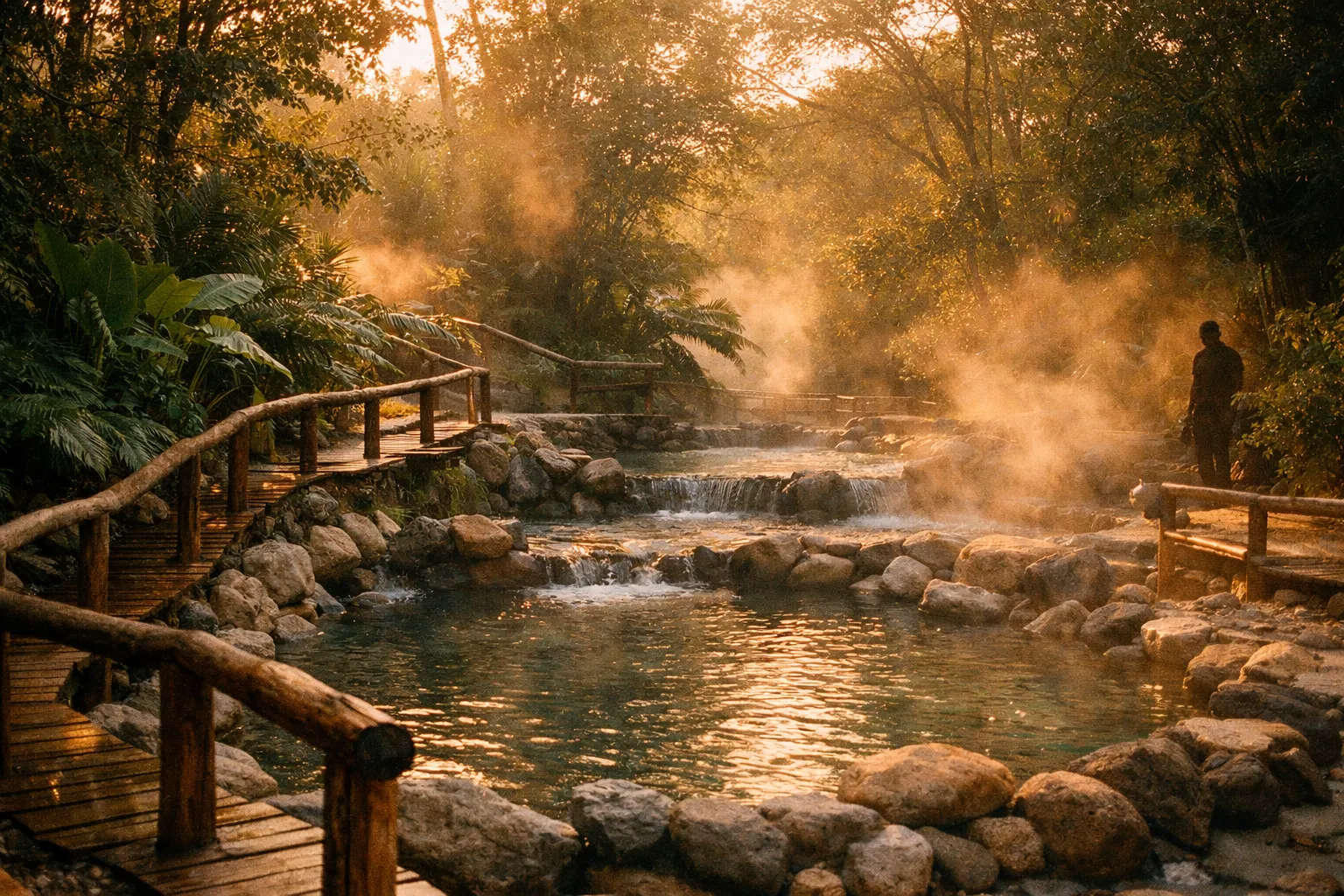
- Rio Negro Hot Springs (Hacienda Guachipelín): The classic option. Multiple stone pools at different temperatures along a river, plus the volcanic mud bath ritual. Day pass around $40-45, often bundled into volcano tours.
- Buena Vista Lodge: Hot springs plus an adventure park (waterslide built into the hillside, ziplines). Better for families wanting a one-stop activity day.
- Blue River Resort: Less crowded, blue mineral pools, also has a small zoo on site. Day pass around $35.
- Vandará Hot Springs Adventure Park: Adventure combo with springs included.
The tip most guides skip: The mud bath at Rio Negro is a 20-minute ritual - slather on the volcanic clay, let it dry in the sun, rinse in the river. It’s not optional theater; the clay genuinely leaves your skin different for a day or two. Worth doing once.
Other things worth doing
Ranked by worth-the-detour:
Worth the detour:
- Catamaran sunset cruise from Tamarindo, Flamingo, or Papagayo - open bar, snorkel stop, sunset on the water. ~$80-110 per person (1)(6).
- Snorkel/dive trip to Las Catalinas Islands from Coco or Flamingo - best marine life on this coast. Snorkel day around $90, two-tank dive around $130.
- Diamante Eco Adventure Park - ziplines, animal sanctuary, and cultural exhibits on a cliffside property near Papagayo. Combo passes $80-150 (3)(6).
Skip if short on time:
- Palo Verde River boat safari. Crocodiles and birds, fine if you’ve never done a wildlife river trip, but if you’re planning to visit Tortuguero or Caño Negro later in Costa Rica, you’ll see more there. For a deeper look at what Tortuguero offers, Limon, Costa Rica covers the Caribbean side including that national park.
- Generic “ATV tours” out of Tamarindo. Loud, dusty, expensive for what you get.
Where to stay Guanacaste
The where to stay Guanacaste decision comes down to which coast section matches your trip style. Four zones, north to south:
Papagayo Peninsula (luxury, secluded)
Gated peninsula with the high-end resort cluster: Four Seasons Papagayo, Andaz Papagayo, Nekajui (Ritz-Carlton Reserve), Waldorf Astoria Punta Cacique, and El Mangroove (Autograph Collection). Calm bays, private feel, expensive food and drink on property. You’ll need transport out for non-resort activities.
Rates: $500-1,500+/night dry season.
Playa Hermosa / Playa del Coco (mid-range, lively)
Better for travelers who want walkable restaurants and bars without Tamarindo’s spring-break energy. Coco has more nightlife; Hermosa is quieter. Mid-range hotels run $120-250/night.
Flamingo / Conchal / Brasilito (resort + beach access)
Home to Westin Reserva Conchal (large all-inclusive, $400-700/night), W Costa Rica - Reserva Conchal ($600+/night), Margaritaville Beach Resort Playa Flamingo, and the newer Casa Chameleon Las Catalinas in the car-free Las Catalinas community. The best zone for combining resort comfort with easy beach-hopping.
Tamarindo (surf-town hub)
Best base if you want the most variety per dollar. Range from hostels ($20-40 dorm beds) to mid-range hotels ($80-150) to boutique properties like Cala Luna and Occidental Tamarindo ($250-450). You can walk to dinner, walk to a surf lesson, and grab a tour from any of the dozens of operators on the main strip. Travelers who want to extend their Pacific coast adventure south will find Quepos, Costa Rica a natural next stop, with Manuel Antonio National Park on the doorstep.
Inland by Rincón (1-2 nights, adventure focus)
If you want to commit to the volcano without a long shuttle each way, Hacienda Guachipelín or Buena Vista Lodge offer 1-2 night stays with on-property hot springs and tour options. $150-300/night.
My split-stay recommendation for a week: 4 nights in Tamarindo (or Coco/Flamingo if you prefer quiet), 2 nights at Papagayo or inland by Rincón, fly out from LIR.
Sample 7-day Guanacaste itinerary
Duration: 7 days / Total cost estimate: $1,400-2,200 per person mid-range, excluding international flights.
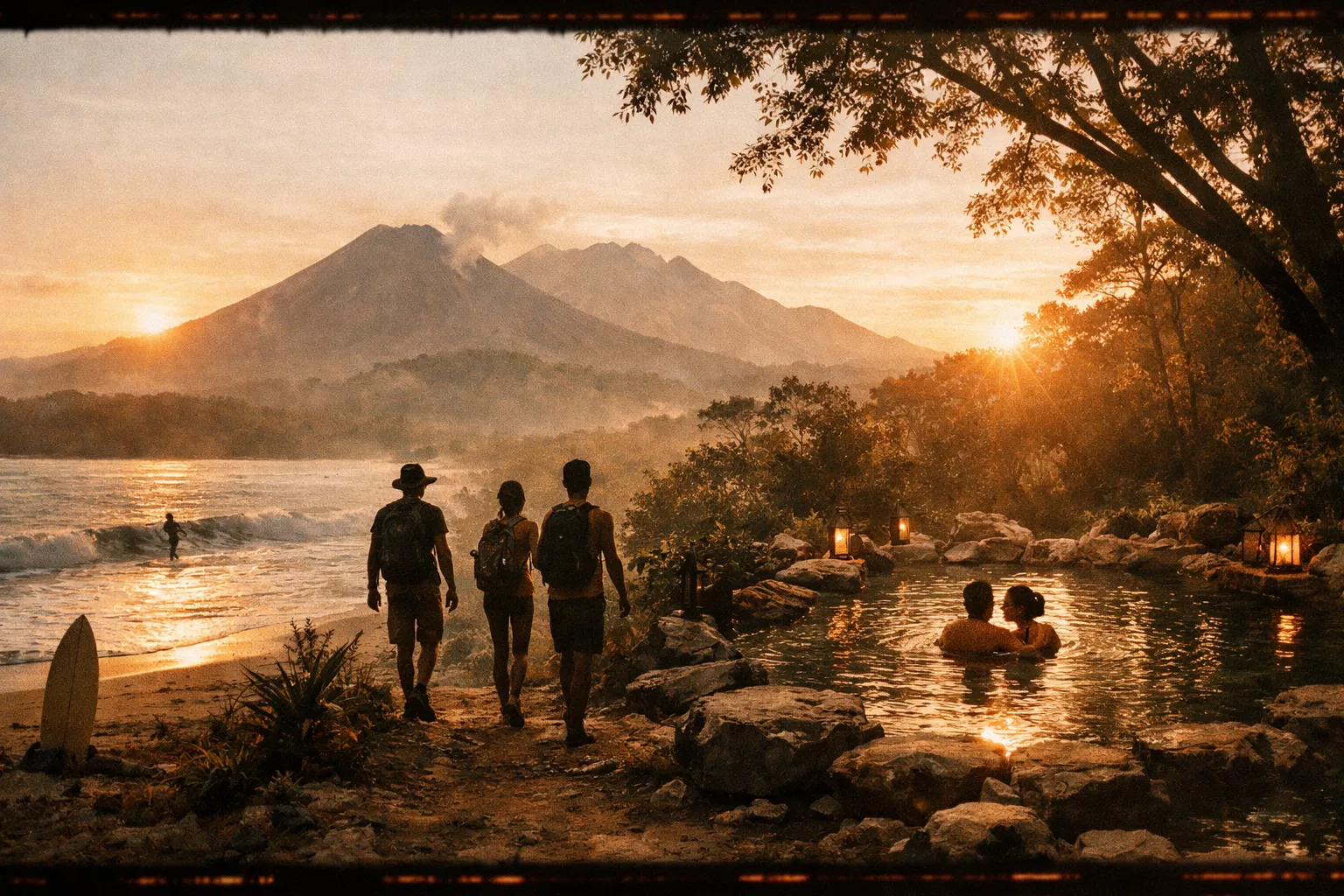
- Day 1: Fly into LIR, pick up rental car, drive to Tamarindo (90 min), beach sunset, casado dinner in town
- Day 2: Morning surf lesson, lazy afternoon, sunset walk on Tamarindo Beach
- Day 3: The 3-beach tour day (Conchal, Puerto Viejo, Flamingo sunset)
- Day 4: Catamaran day trip from Tamarindo or Flamingo
- Day 5: Drive inland to Hacienda Guachipelín area (90 min), afternoon hot springs and mud bath
- Day 6: Rincón de la Vieja Las Pailas hike (waterfall loop), late afternoon back to coast - overnight Papagayo or Coco
- Day 7: Resort morning, drive to LIR (30 min), fly home
Sample 7-Day Guanacaste Itinerary
7 daysA practical day-by-day plan for a week in Guanacaste balancing beach, volcano, and adventure.
- 1
Day 1: Arrival and Tamarindo
Fly into Liberia, pick up rental car, drive 90 minutes to Tamarindo. Enjoy a beach sunset and dinner in town.
- 2
Day 2: Surf and Relax
Take a morning surf lesson, spend a lazy afternoon, and walk the beach at sunset.
- 3
Day 3: 3-Beach Tour
Visit Playa Conchal, Playa Puerto Viejo, and Playa Flamingo with sunset at the hilltop lookout.
- 4
Day 4: Catamaran Cruise
Take a catamaran day trip from Tamarindo or Flamingo with snorkeling and sunset.
- 5
Day 5: Volcano Hot Springs
Drive inland to Hacienda Guachipelín area, enjoy afternoon hot springs and mud bath.
- 6
Day 6: Volcano Hike and Coast Overnight
Hike the Las Pailas waterfall loop at Rincón de la Vieja, then return to the coast for overnight.
- 7
Day 7: Departure
Relax at the resort in the morning, drive 30 minutes to Liberia airport, and fly home.
How to avoid getting sick in Costa Rica
Foodborne and waterborne issues are the most common trip-disruptors. Practical defenses:
- Water: Tap water is officially potable in most of Guanacaste’s developed areas, including Tamarindo, Coco, Flamingo, and the resort zones. That said, if your stomach is sensitive to mineral changes, stick to bottled water ($1-2 per liter) for the first few days while you acclimate. Avoid tap water in rural areas around Rincón.
- Ice and salads: In sit-down restaurants in tourist towns, both are fine. At basic roadside stands, skip the ice if you’re cautious.
- Eat where locals eat at lunch. Busy sodas (small local restaurants) have high turnover and food doesn’t sit. The $7 casado at a packed soda is usually safer than the $25 international menu at an empty tourist spot.
- Sun and dehydration disguise as “food poisoning.” A lot of “I got sick in Costa Rica” stories are actually heat exhaustion from a 95°F beach day with three beers and no water. Drink more than feels reasonable.
- Pack the basics: Oral rehydration salts, loperamide, ibuprofen. A small pharmacy kit weighs nothing and saves a panicked taxi to a clinic.
Frequently Asked Questions
- What is Guanacaste Costa Rica known for?
- Guanacaste is distinct for its Pacific 'Gold Coast' beaches, the longest dry season in Costa Rica, and the Rincón de la Vieja volcano with hot springs and mud baths. It differs significantly from the cloud forest and jungle regions.
- Is $1,000 enough for a week in Costa Rica?
- For a solo traveler on a budget, $1,000 is tight but feasible with modest lodging, local food, and a few paid activities. Sharing costs or opting for luxury accommodations will increase the budget significantly.
- Is it worth going to Guanacaste, Costa Rica?
- Guanacaste is ideal for travelers seeking reliable sun, short airport transfers, and a mix of beach and volcano activities. It's not the place for cloud forest or dense jungle experiences.
- Do I need a rental car in Guanacaste?
- If you stay at an all-inclusive resort and don't plan to explore beyond it, a rental car isn't necessary. For visiting multiple beaches, volcano trips, or dining in different towns, renting a car is recommended.
- When is the best time to surf Tamarindo for beginners?
- The best beginner surf season is April through June and September through November when swells are consistent but manageable. December to March works but can have bigger waves and more crowds.
- What are common mistakes when visiting Rincón de la Vieja volcano?
- Visitors often plan for the summit hike, which is closed indefinitely, and underestimate the difficulty of the 10 km waterfall loop, especially regarding water and sun exposure.
- Are Guanacaste hot springs worth visiting?
- Yes, especially Rio Negro Hot Springs for the volcanic mud bath ritual, which genuinely benefits the skin. Several other hot springs offer different experiences, from family-friendly parks to quieter mineral pools.
✓ Pros
- Reliable dry season with minimal rain during peak months
- Short transfer times from Liberia airport to major beach towns
- Variety of beaches and inland volcano adventures within a compact area
- Good infrastructure for rental cars and tours
✗ Cons
- Dry season landscapes inland are brown and hot, not lush green
- Some beaches are overrated or only worth visiting if staying nearby
- Volcano summit hike is closed indefinitely, limiting hiking options
- Car rental prices can be higher than advertised due to mandatory insurance
Bottom line
Guanacaste is where the logistics stop fighting you. Fly into Liberia, rent a car or take a shuttle, and within 90 minutes you’re in the surf, on a hot-spring deck, or at a resort pool. The smart move is to pick one base on the coast for 4-5 nights, add a Rincón day or an inland overnight, and resist the urge to also squeeze in Arenal or Manuel Antonio. Slow itinerary, fewer transfers, more time on the beach you flew here for.