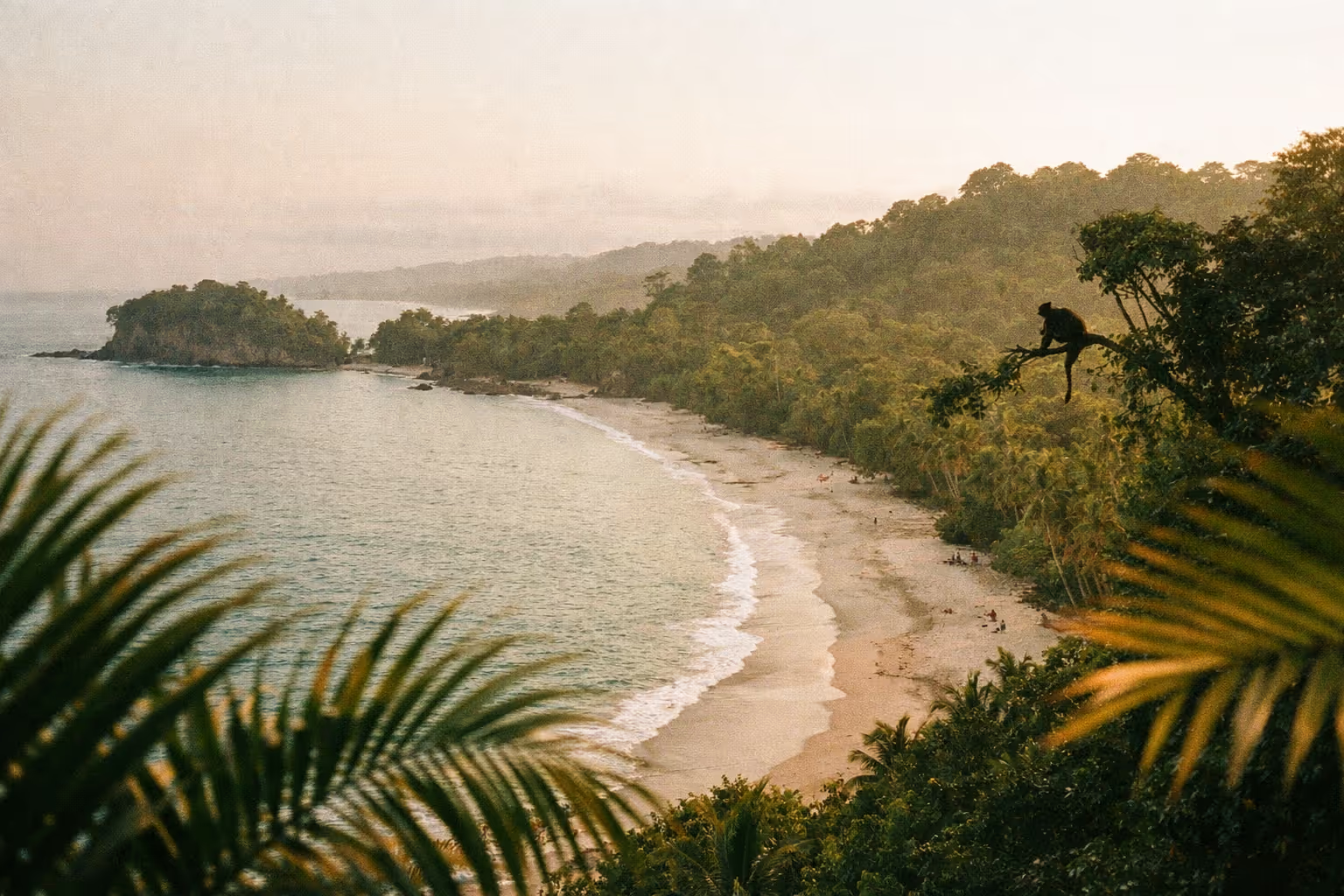
Manuel Antonio National Park drew 4,388,460 visitors between 2012 and 2022, making it the most-visited of Costa Rica’s 30 national parks despite being one of the smallest by land area (1). That number is the whole story of Manuel Antonio: it delivers genuinely dense wildlife and swimmable beaches inside a national park, all within about three hours of San José, but on a Saturday in January the main beach can feel like a European resort. The wildlife is real - white-faced capuchins on the sand, sloths overhead, a calm cove you can actually swim in. What you need to bring is a plan.
✓ Pros
- Highest wildlife density of any easily accessible park in Costa Rica - reliable monkeys, sloths, and birds without a multi-day expedition
- Two distinct beach types: calm park beaches inside the reserve, a long public surf beach outside
- Compact trail network walkable in a half-day; no technical hiking
- Easy access from San José (2.5 to 3.5 hours by road, or a 25-minute flight to Quepos)
- A year-round destination with clear seasonal trade-offs, not a narrow window
✗ Cons
- Costa Rica's most-visited national park - crowds are real, especially December through April weekends
- Daily visitor caps mean entry slots sell out; walk-ups get turned away in peak season
- Closed every Tuesday - a common and costly planning mistake
- Single-entry park pass; leaving mid-day means paying again
- Peak-season lodging and tour prices are among the highest on the Pacific coast
What Manuel Antonio, Costa Rica Actually Is - and Why It Gets So Crowded
Manuel Antonio sits on Costa Rica’s central Pacific coast, just south of the town of Quepos, roughly 157 km from San José. The park protects about 1,983 hectares of land plus a much larger 55,000-hectare marine area, making it one of the country’s smallest parks by land but its most popular by a wide margin (2).
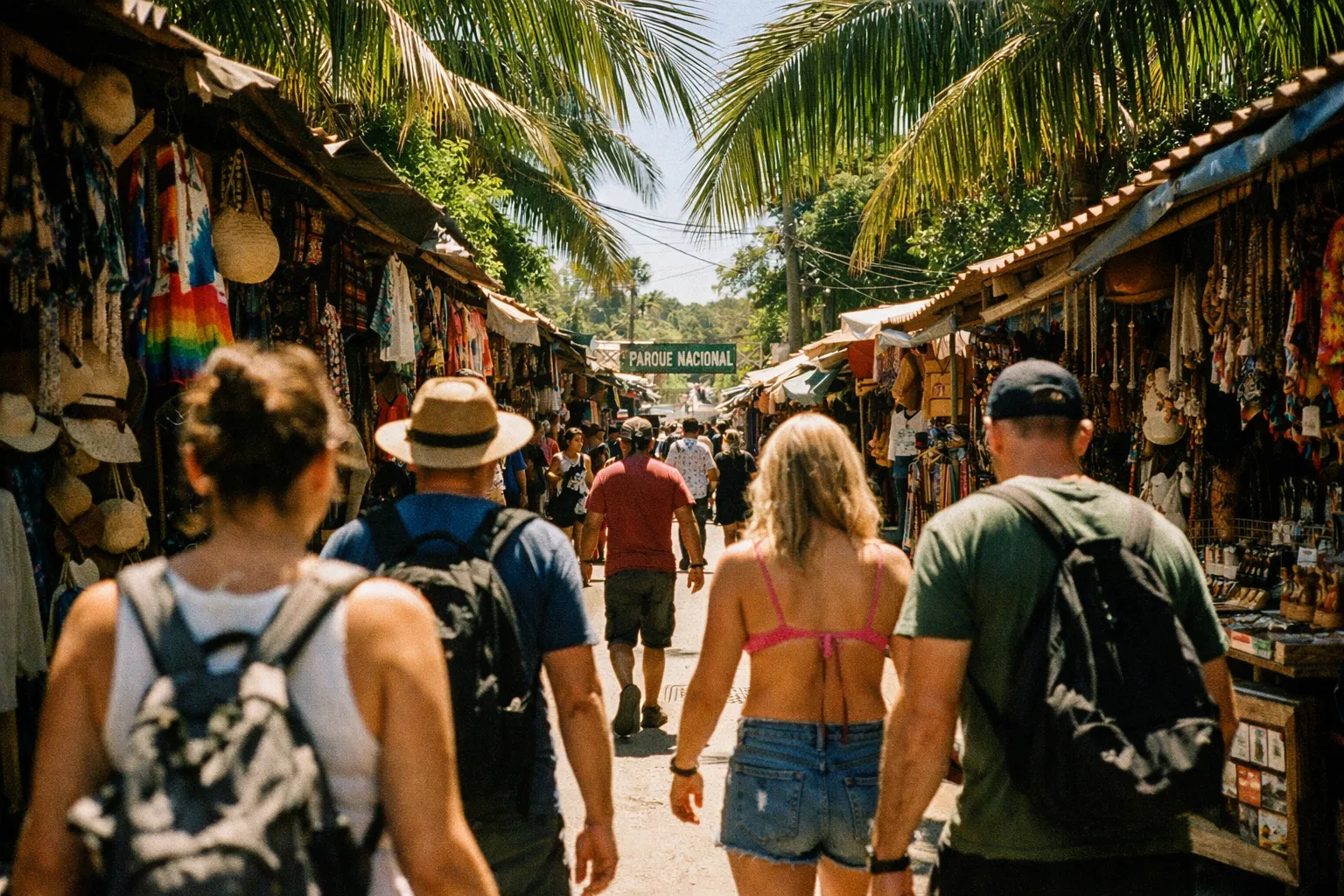
The visitor numbers tell you something useful. Tourism grew from around 25,000 people in 1982 to 524,835 in 2018 (3), and peak months in the dry season and July regularly push monthly totals above 40,000. On the ground, that means the main beach and the busiest trailheads fill up fast once the gates open. The draw is a combination that’s rare anywhere: rainforest trails, dependable wildlife sightings, and beaches you can actually swim at, all packed into a space small enough to cover in a morning.
Quepos, a few kilometers north, is the gateway town - it’s where you’ll find the airport, ATMs, pharmacies, the bus hub, and most of the region’s services. The village of Manuel Antonio, closer to the park entrance, is the more polished and pricier base.
Getting to Manuel Antonio
You have three realistic options from San José:
- By road: 2.5 to 3.5 hours depending on traffic, via the coastal highway. Shared shuttles run door-to-door and are the easiest choice for first-timers.
- By air: A domestic flight to Quepos’s La Managua Airport (XQP) takes about 30 minutes of airborne time, operated by small regional carriers like Sansa and Aerobell. It saves half a day of travel.
- By public bus: Slower but cheap. Once you’re in the area, the local bus between Quepos and Manuel Antonio runs every 20 to 30 minutes and costs under a dollar each way.
If you’re staying in the village and not planning day trips inland, you don’t need a rental car.
Manuel Antonio National Park - Hours, Tickets, and the Rules That Catch People Out
Manuel Antonio National Park is open Wednesday through Monday, 7:00 a.m. to 3:00 p.m., and closed every Tuesday, year-round (3). Sort out the logistics before you get excited about sloths, because the rules here turn away more people than the weather ever will.
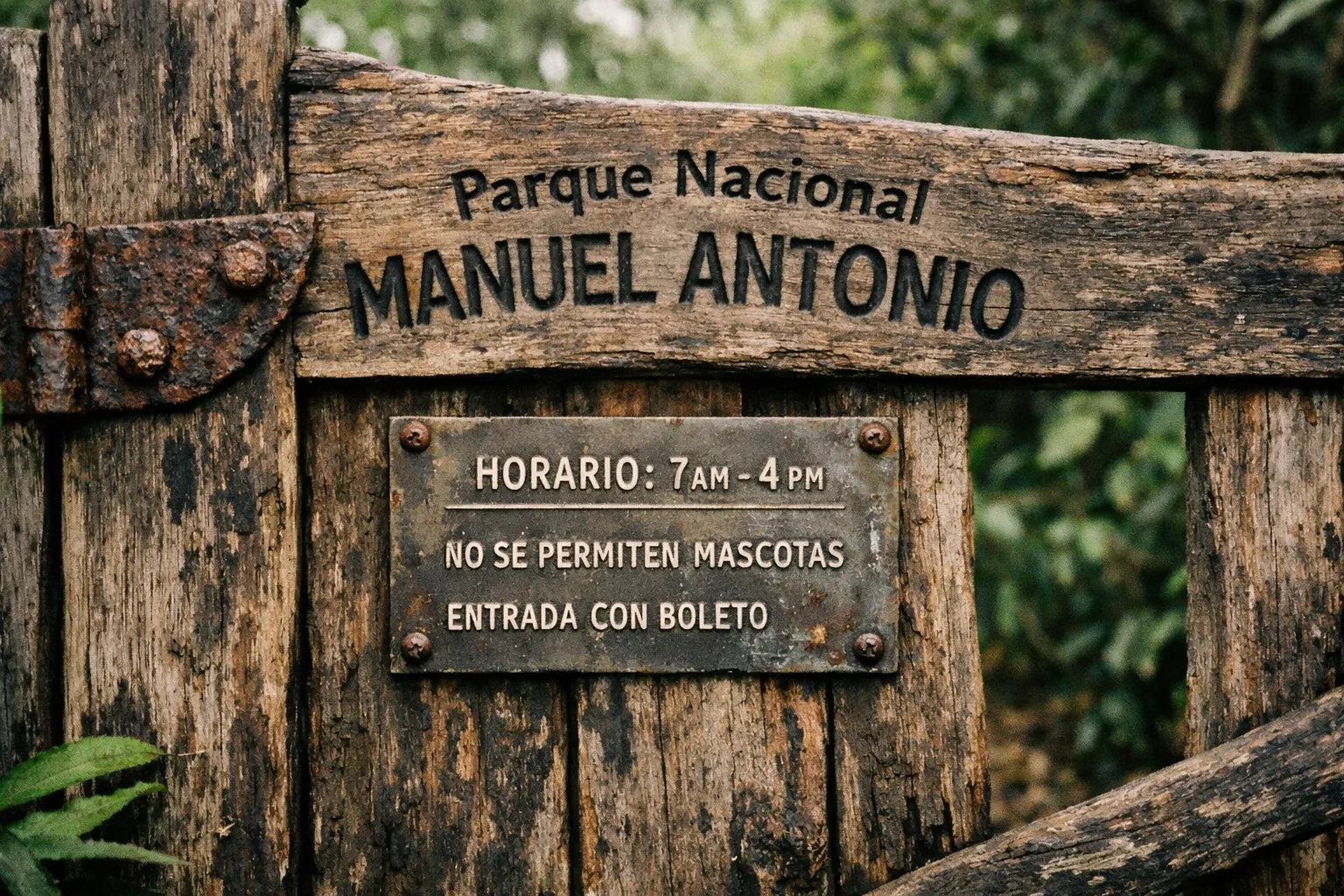
That Tuesday closure is the single most common planning mistake I see. Older articles still list Monday - ignore them. The official SINAC closing time is 3:00 p.m.; some older signage at the park reads 4:00, but rangers begin directing visitors toward the exit at 3:00 p.m. per the current SINAC schedule. Plan your day around 3:00 p.m. and treat anything later as a bonus, not a guarantee.
Capacity is capped and enforced. As of 2024 the daily limit is 1,806 people per day (SINAC 2024). Older figures - 1,120, or the earlier 600 weekday and 800 weekend caps - circulate widely in outdated guides; the current official number is 1,806. The cap is real, it’s enforced, and in dry season popular dates sell out well ahead. Same-day walk-up entry in December through April is a gamble you’ll usually lose.
Entry runs about $16 to $18 USD per non-resident adult, single-entry only, with non-resident children under 12 charged $5.65 (SINAC 2024). The single-entry rule matters: leave mid-day and you pay again to get back in. Costa Rican citizens and residents pay far less - 1,800 CRC (roughly $2.50 USD) at the April 2015 reference (4).
How to Book Manuel Antonio National Park Entry
How to Book Manuel Antonio National Park Entry
10 minutesSecure your park tickets in advance to avoid being turned away.
- 1
Go to the SINAC portal
Visit sinac.go.cr, the official Costa Rican National Parks booking website.
- 2
Select your date and number of visitors
Choose the day you want to visit and how many people are in your group.
- 3
Pay online with a card
Complete the payment securely through the portal.
- 4
Bring your confirmation to the gate
Have a printed or digital copy of your ticket ready for entry.
Book at least 24 hours ahead as a minimum. In dry season and around Easter, book a week or more out. One practical note: occasional temporary beach closures happen when water-quality testing flags a problem, so check current advisories before a peak-month visit.
The other tip that pays off: be at the gate just before 7:00 a.m. The first hour on the trail is the best wildlife window and the least crowded stretch of the entire day.
The Beaches - Inside the Park and Out
Manuel Antonio has two categories of beach: calm, forest-backed coves inside the park that require a paid ticket, and a long, free public beach outside the gates. Which you prioritize depends on whether you want swimming and wildlife or flexibility and surf.
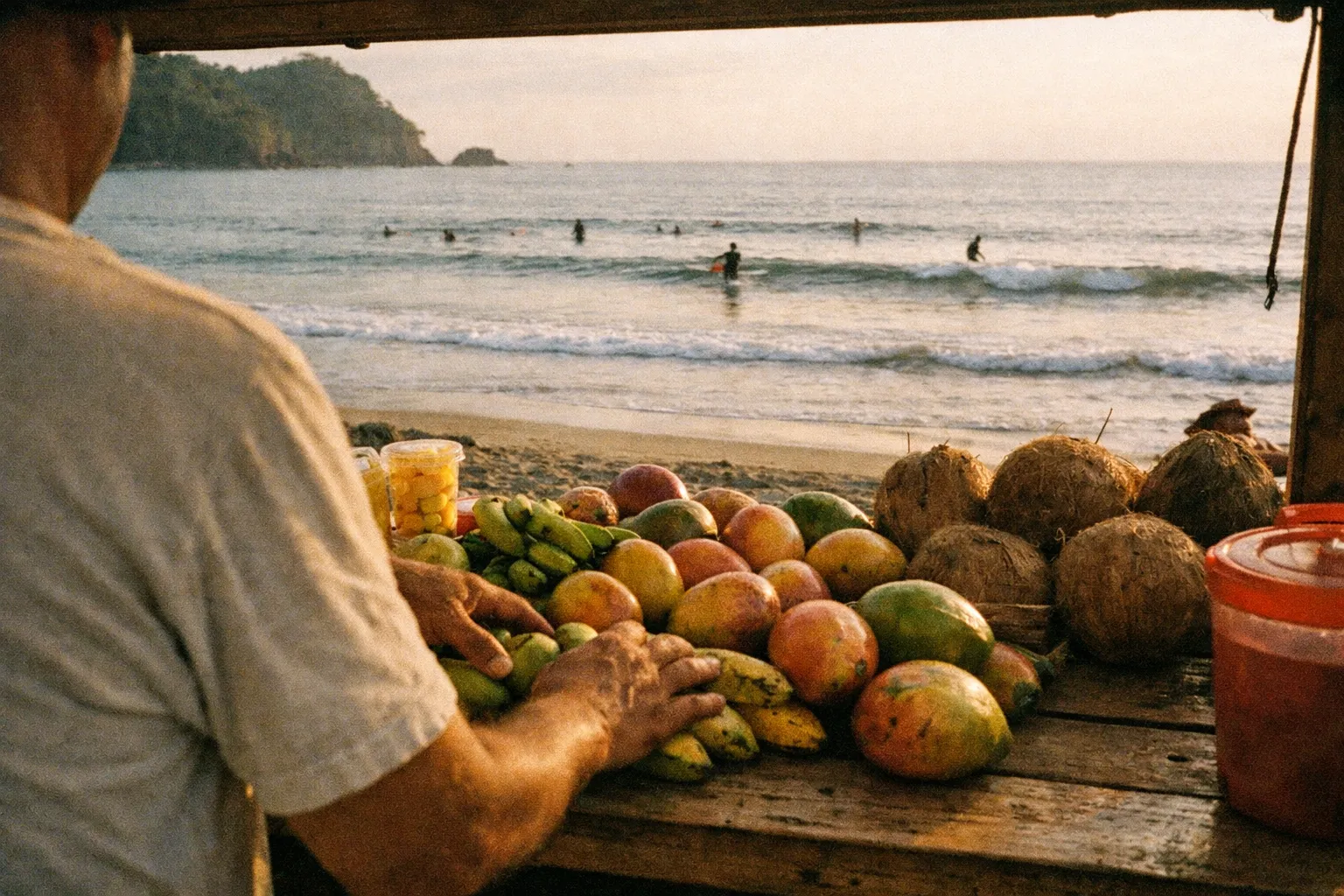
Playa Manuel Antonio is the postcard cove inside the park - white sand, calm water good for swimming, with monkeys and iguanas working the forest edge. It’s the beach most people picture, and it’s the one to aim for if you want wildlife-adjacent beach time.
Playa Espadilla Sur, also inside the park, sits just around from the main cove and tends to be slightly less crowded, with the same forest-edge wildlife. An estuary divides it from the public beach outside.
Playa Espadilla Norte is the 3.6 km public stretch outside the park gates (7). No ticket, no cap, open any time. This is your default beach for surf lessons, sunset walks, and flexible access. It gets busy but there’s room to spread out along its length.
Manuel Antonio Beaches Comparison
| Playa Manuel Antonio | Playa Espadilla Sur | Playa Espadilla Norte | |
|---|---|---|---|
| Access / Cost | Inside park, paid entry | Inside park, paid entry | Outside park, free |
| Crowd Level | Moderate to high | Moderate | Variable |
| Wildlife Proximity | High | High | Lower |
| Swimming Conditions | Calm, good for swimming | Calm | Open water |
| Surf | None | Minimal | Good for surfing |
| Best For | Swimming plus wildlife | Quieter park beach option | Surf lessons and sunsets |
Biesanz Beach
For a quieter cove, Biesanz Beach sits in the hills between the village and Quepos - smaller, more sheltered, and less known than the main beaches. It takes a short walk down from the road to reach. Worth it if solitude ranks higher than convenience.
Wildlife in the Park - What You’ll See and When
Manuel Antonio packs 109 mammal species and 184 bird species into its compact area (8), including four monkey species, both two-toed and three-toed sloths, coatis, agoutis, and several iguana species. For the average traveler on a short trip, no other Costa Rican park delivers more animals per hour of effort.
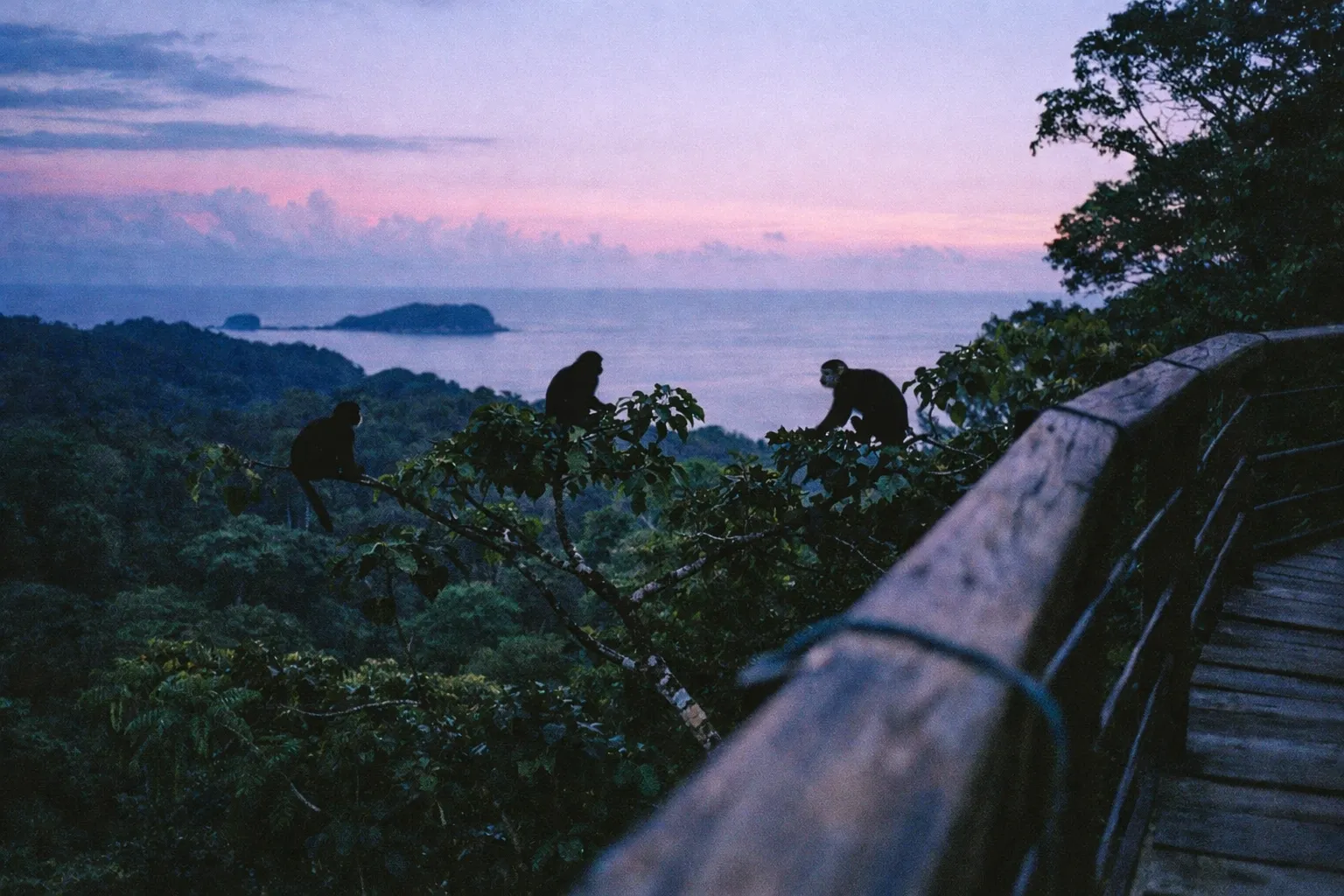
The monkey you’ll see most is the white-faced capuchin - bold, common, and often on the beach itself. Mantled howler monkeys announce themselves from the canopy. The rare one is the Central American squirrel monkey, part of an endangered subspecies endemic to Costa Rica’s Pacific lowlands (9); spotting one is a genuine highlight. Sloths are the other signature sighting, and the park’s density is unusually high - one estimate puts the local population around 1,500 Hoffmann’s two-toed sloths (10). They’re still hard to find without help, tucked motionless high in the canopy.
Birdlife is strong too, with toucans, tanagers, kingfishers, and brown pelicans among the reliable sightings across roughly 350 species reported in the broader area.
The optimal window is 7 to 10 a.m. (Pura Vida Traveling). Nocturnal animals are still settling into visible resting spots, diurnal species are active, temperatures are cooler, and the trails haven’t filled yet. Manuel Antonio ranks third nationally for wildlife density behind Corcovado and Tortuguero - but the MachuPicchu.org 2026 guide calls it the most efficient park in the country for high sightings per hour, precisely because the trails are short and accessible. That framing is accurate in my experience. You’re not getting Corcovado’s depth, but you’re also not spending two days getting there.
Guided vs. Self-Guided Wildlife Walks
A licensed naturalist guide with a spotting scope dramatically increases what you’ll see, especially sloths and small birds you’d walk right past. Guides charge roughly $28 to $39 per person for a 2 to 3 hour walk, and you can arrange one at the gate or pre-book.
Self-guided works if you arrive at 7 a.m., move quietly, and drift away from the busiest trailheads. You’ll reliably see monkeys on your own. Sloths are the sticking point - genuinely difficult to spot without a scope and a trained eye.
My recommendation for first-timers: a guided walk in the early morning, then beach time after 10 a.m. once the guide has shown you where to look.
When to Visit - Dry Season, Green Season, and the Months That Actually Make Sense
Manuel Antonio stays warm year-round, with average highs of 85 to 90°F (29 to 32°C) and lows around 75°F (24°C) regardless of season. The real variable is rain, and it’s a significant one.
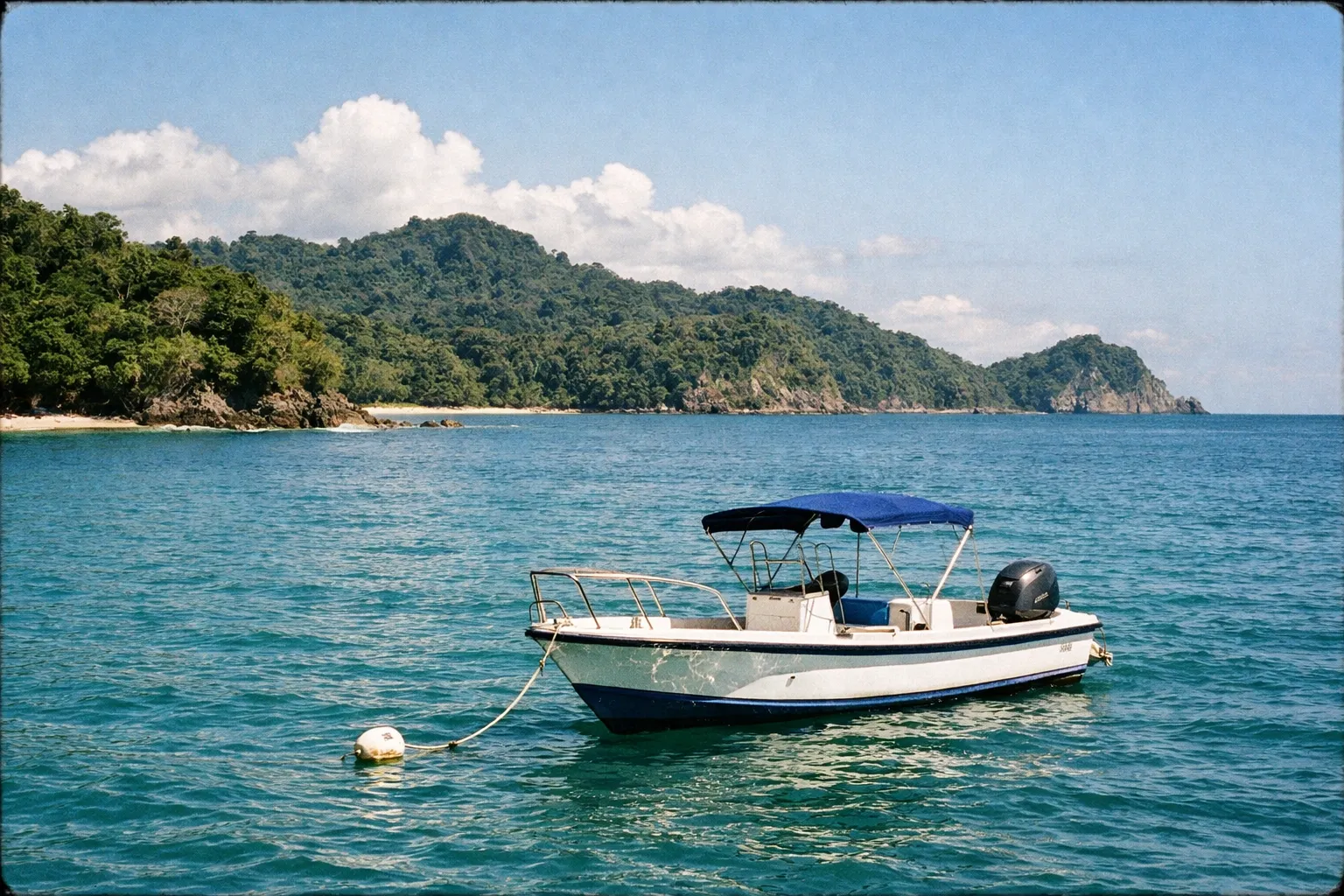
Dry season (mid-December to April) brings the best beach and trail conditions and the clearest water, with typically under 2 inches (50 mm) of rain per month. The trade-off is peak crowds, peak prices, and park slots that sell out fastest. February gets cited repeatedly as the single best month - reliably sunny and dry, with manageable crowds before the Easter rush.
Green season (May to November) means more frequent afternoon rain, greener and more atmospheric forest, and 20 to 40% lower accommodation and tour prices in the low-season months (MachuPicchu.org). Daily park visitation drops to around 200 to 400 people in these months, so trails feel far less crowded. The catch is September and October, the wettest months, when monthly rainfall can exceed 15 inches (380 mm). Trails get slippery, and beach plans collapse under afternoon storms.
Two shoulder windows stand out. November eases out of the rains with green forest and prices still below the December surge. Late November into early December is the underrated sweet spot - green landscapes, thinner crowds, improving weather, all before the holiday wave arrives.
Dry Season vs. Green Season in Manuel Antonio
| Dry Season | Green Season | |
|---|---|---|
| Weather | Sunny, dry, clear water | Frequent afternoon rain, greener |
| Crowds | High, slots sell out | Low to moderate |
| Price | Highest | 20-40% cheaper |
| Park Availability | Limited, book early | Easier to get tickets |
| Wildlife Viewing | Best conditions | Good but rain can disrupt |
Month-by-Month Quick Reference
February is the standout for sun and clear water. March and April stay dry but heat up and get crowded around Easter. May starts the rains but stays green and affordable. June through August bring intermittent rain and decent value. September and October are the wettest - fine for budget travelers who can work around afternoon storms, poor for anyone whose trip hinges on beach weather. November recovers fast and is the best value-to-weather pick of the year.
The Trail Network - What to Hike and How Long It Takes
The park is small enough to walk in a single day, with a typical visit running 4 to 6 hours to cover the main trails and at least one beach. Nothing here is technical.
The main trail connects the entrance to Playa Manuel Antonio and Espadilla Sur - relatively flat with a few short climbs, accessible to a wide range of fitness levels. If your legs are willing, the Mirador trail climbs to elevated views over the coastline and is worth the extra effort. Skip it if you’re short on time or traveling with young kids.
Trail conditions shift with the season: firm footing in the dry months, mud and humidity in green season. Closed-toe shoes or sandals with grip beat flip-flops either way. Because trails start closing around 3:00 p.m., plan your hiking for the morning and save midday for the beach rather than banking on late-afternoon trail access.
The efficient approach: enter at 7 a.m., do the wildlife trail first, reach the beach by 9:30 or 10, swim and eat, and exit by early afternoon before the heat peaks.
What to Bring Into the Park
- At least 1.5 liters of water per person - there’s no reliable potable water on the trails
- Reef-safe sunscreen (standard sunscreen is restricted in some areas to protect the marine ecosystem)
- Snacks - food vendors inside are limited
- A dry bag or waterproof pouch for beach time
- Binoculars if you’re self-guiding
Things to Do Beyond the Park Boundaries
Staying three to five nights? The park is a half-day activity. The surrounding region fills the rest easily.
Nauyaca Waterfalls is one of the best day trips in the region - a two-tiered cascade with an upper drop around 45 meters and a lower drop of about 20 meters (MachuPicchu.org), reached on full-day hiking or horseback tours inland from Manuel Antonio. Worth prioritizing if you have a second full day.
Savegre River rafting runs Class III to IV rapids about 30 to 45 minutes from Quepos, with 3 to 4 hours on the water and roughly 6 hours door-to-door. Expect prices in the $80 to $155 per person range depending on season and inclusions.
Damas Island mangrove tours run 2 to 3 hours through mangrove channels, focused on birdlife, crocodiles, and monkeys, and are usually timed around high tide for easier navigation (MachuPicchu.org). Skip this if wildlife was already the main event inside the park - there’s some overlap.
Catamaran and snorkeling cruises are typically half-day trips of about 4 hours, starting around $75 to $110 per person, with a high chance of dolphin sightings offshore. Sunset versions are available and worth booking ahead in peak season.
Whale watching is seasonal - humpbacks pass through the broader Pacific region roughly August to October and December to March, with day tours running from Quepos.
Quepos town itself is the functional gateway: local restaurants, markets, and a weekly feria. It’s less polished than Manuel Antonio village but more grounded in everyday Costa Rican life. Dinner here costs noticeably less than in the village.
How to Spend a Day in Manuel Antonio - A Practical Itinerary
Treat this as a template, not a rigid schedule. The bones of a good park day look like this:
- 6:45 a.m. - Arrive at the gate; meet your guide if you pre-booked one.
- 7:00 to 9:30 a.m. - Wildlife trail walk during the prime viewing window. Sloths, monkeys, birds. A guided walk fits neatly into this 2 to 3 hour block.
- 9:30 a.m. to 12:30 p.m. - Beach time at Playa Manuel Antonio. Swim, snorkel, rest.
- 12:30 p.m. - Exit the park. Remember the single-entry rule - do your beach time inside before you leave. Lunch in the village.
- Afternoon - Playa Espadilla Norte for a walk, a surf lesson, or more beach without needing park entry.
- Evening - Sunset from Espadilla Norte or a hilltop restaurant above the village, then dinner in Quepos.
Rangers start clearing the trails around 3:00 p.m., which caps the practical window at roughly eight hours - another reason the early start matters. Some visitors will want to split this across two days: one park day, one activity-and-beach day. That’s a reasonable call if you have the time.
Extending to 3 to 5 Nights
- Day 2: Nauyaca Waterfalls or Savegre rafting.
- Day 3: Mangrove tour in the morning, afternoon at leisure.
- Days 4 to 5: A catamaran cruise, the Quepos feria, or a day trip south toward Uvita or Dominical for a change of scenery.
Mistakes That Will Cost You a Day (or More)
These are the errors that turn a good trip into a wasted morning:
- Planning the park for Tuesday. It’s closed, full stop, year-round. No exceptions.
- Showing up without advance tickets in dry season. The daily cap is enforced, and same-day tickets in high season are often unavailable. Walk-ups get turned away.
- Arriving after 9 a.m. Hotter, more crowded, fewer visible animals. The 7 a.m. window isn’t optional if wildlife is the goal - and you’ll have fewer hours before the 3:00 p.m. trail closures.
- Leaving mid-day and expecting to re-enter. Single-entry pass. Do everything inside the park before you exit.
- Underestimating September and October rain. This isn’t “a bit rainy” - monthly totals can top 15 inches (380 mm), enough to close trails and scrap beach days.
- Expecting solitude in peak season. On a January Saturday, the main beach is genuinely crowded. If that’s a dealbreaker, come in November or head to Biesanz.
Practical Information for Planning Your Visit
Airport. Fly into Juan Santamaría International Airport (SJO) near San José, then drive or take a shuttle (2.5 to 3.5 hours). The faster option is a domestic flight to Quepos’s La Managua Airport (XQP), about 25 to 30 minutes of flight time, operated by Sansa and Aerobell. Book directly with the airline, not through an aggregator.
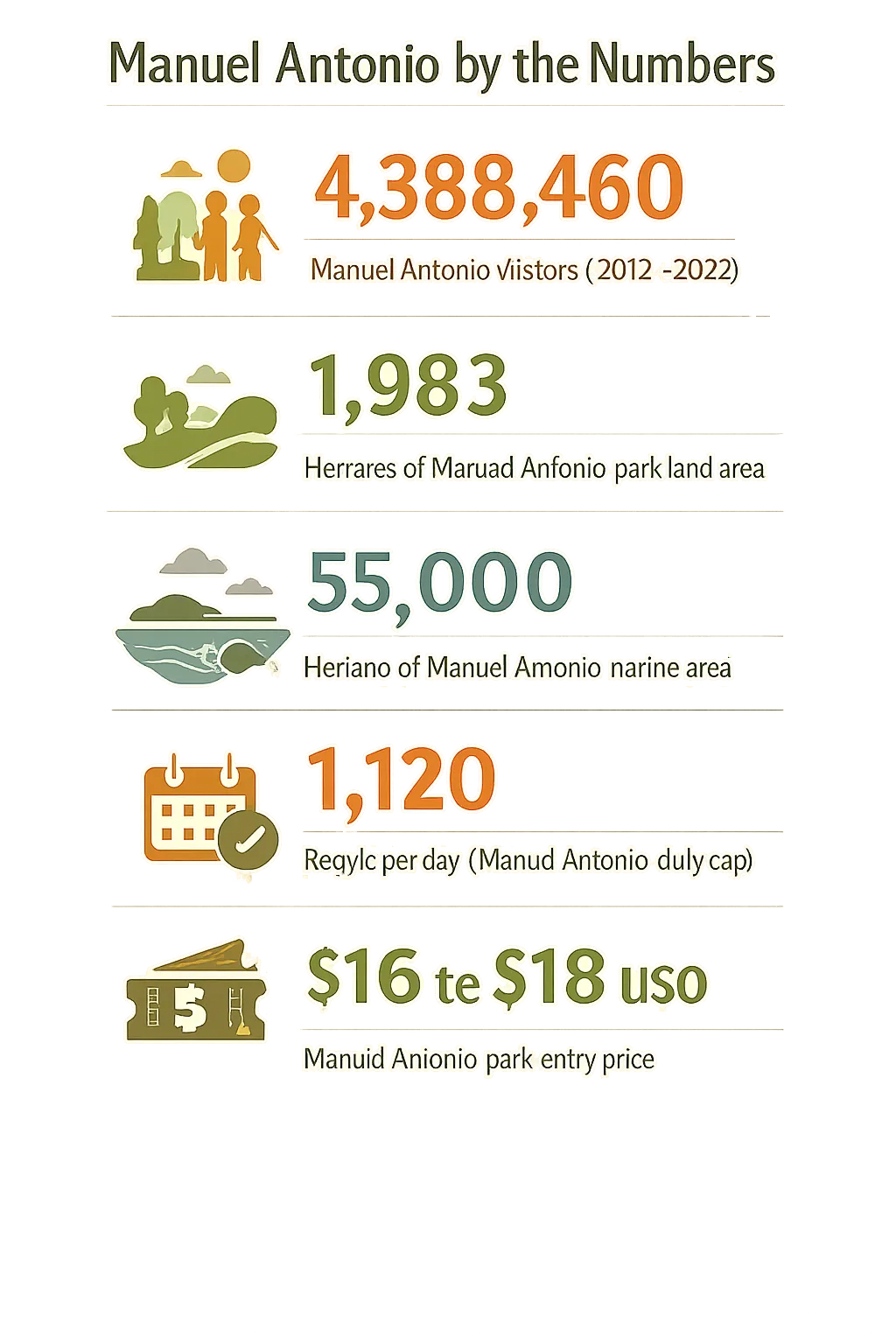 Manuel Antonio National Park by the numbers: 4,388,460 visitors (2012-2022); 1,983 hectares park land; 55,000 hectares marine area; 1,806 people per day; $16 to $18 USD entry.
Getting around locally. The public bus between Quepos and Manuel Antonio runs every 20 to 30 minutes for under a dollar. Short taxi hops run a few dollars. If you’re staying in the village and skipping inland day trips, you don’t need a car.
Weather. Highs in the high 80s to low 90s °F (high 20s to low 30s °C) year-round, with constant humidity - around 70 to 75% in dry season, 85% or higher in the rains. Pack light, breathable layers and a packable rain jacket for May through November.
Budget benchmarks. Park entry runs $16 to $18 USD per non-resident adult, with non-resident children under 12 at $5.65 (SINAC 2024). For guided walks, the lowest listed rate is around $29 per person for a 2 to 3 hour walk. Catamaran half-day tours run $75 to $110 per adult. Savegre River rafting is listed at $115 per person. Midrange hotels vary widely by season and booking platform; check current rates before planning.
Connectivity. Most hotels and restaurants in the village have reliable Wi-Fi. Quepos has ATMs and pharmacies.
Frequently Asked Questions
- Is Manuel Antonio, Costa Rica worth visiting?
- Yes, with realistic expectations. The wildlife density is genuinely impressive for a park this accessible - reliable monkey and sloth sightings, swimmable beaches inside a national park, and easy access from San José. The trade-off is crowds, especially December-April. If you plan around the visitor caps, book tickets in advance, and arrive at opening, it delivers. If you're expecting a remote wilderness experience, look at Corcovado instead.
- What's the worst month to visit Costa Rica?
- September and October are the wettest months across most of the country, including Manuel Antonio. Rainfall is frequent and heavy, trails can close, and beach days are unreliable. That said, prices drop 20-40% and the forest is at its greenest. If weather is the priority, avoid September-October. If budget is the priority, those months are workable with flexible plans.
- What airport do you fly into for Manuel Antonio, Costa Rica?
- Most travelers fly into Juan Santamaría International Airport (SJO) near San José, then drive or take a shared shuttle to Manuel Antonio - roughly 2.5-3.5 hours. A faster option is a domestic flight to Quepos Airport (XQP), about 25 minutes from San José by small plane. Sansa and Aerobell operate this route; book directly with the airline.
- Does Manuel Antonio National Park close on Mondays?
- No - the park is open Monday. It closes every Tuesday, year-round. This is a common mistake based on outdated information. Current SINAC schedule: open Wednesday through Monday, 7:00 a.m. to 3:00 p.m. Some older signage at the park reads 4:00, but plan around the official 3:00 p.m. closing time.
- Can I visit the park without a guide?
- Yes. Self-guided entry is allowed. But a licensed naturalist guide with a spotting scope significantly increases your wildlife sightings - sloths in particular are very hard to spot without one. Guides typically charge $28-$39 per person for a 2-3 hour walk and can be arranged at the gate or pre-booked.
- How far in advance should I book park tickets?
- At minimum, 24 hours ahead. In dry season (December-April) and around Easter, book at least a week out - popular dates sell out. The SINAC online system is the only official booking channel. Don't rely on buying at the gate in peak season.
- What is the prettiest town in Costa Rica?
- This is subjective, but Manuel Antonio consistently appears on short lists for its combination of forest-backed beaches and Pacific views. For colonial architecture, Cartago and Grecia are worth mentioning. For beach-town character, Montezuma and Puerto Viejo have their advocates. Manuel Antonio's appeal is the beach-plus-wildlife combination rather than the town itself - Quepos, the nearby gateway, is functional rather than scenic.
The Two Decisions That Make or Break the Trip
Manuel Antonio rewards the traveler who plans ahead and arrives early. It punishes the one who shows up on a Tuesday in January without a ticket expecting an empty beach.
The wildlife is real, the beaches are genuinely good, and the access from San José makes this the most efficient wildlife-plus-beach combination in the country for a short trip. I’ve watched people spend half a morning at the gate getting turned away in peak season because they assumed tickets would be available. They weren’t.
Everything in this guide comes down to two decisions. Book your park tickets through SINAC before you need them, and be at the gate before 7 a.m. Get those two right and the rest is detail.