A Costa Rica itinerary lives or dies on drive times, not distances. That two-hour hop your map promises routinely turns into three or four hours of switchbacks, potholes, and slow trucks, which is why cramming five stops into a week leaves you seeing mostly the inside of a rental car. Seven days split between La Fortuna and one wildlife coast is the honest sweet spot. Plan each travel leg as a half day, pick one base per region, and the country opens up.
Your Costa Rica Itinerary Starts Here: Nature, Adventure, and Pura Vida
Planning a Costa Rica itinerary means embracing the country’s motto, “Pura Vida,” - “pure life” - which is less a slogan than a practical operating principle. It shows up in how locals pace their days, and it’s worth letting it shape how you plan yours.

Adventure here usually starts with the obvious stuff: zip-lining through Monteverde’s cloud forest, trekking near Arenal Volcano, white-water rafting on the Pacuare. These aren’t just adrenaline checkboxes - they put you directly inside ecosystems that are genuinely worth paying attention to. The biodiversity visible from a zip-line platform or a hanging bridge is real, not staged.
But the trip falls apart if you stack too many high-output days in a row. I’ve seen it happen: someone books zip-lining, canyoning, and a night hike on consecutive days, and by day three they’re grinding through it instead of enjoying it. Alternate a big activity day with something slower - a beach afternoon, a hot springs soak near Rincón de la Vieja, or just a morning walk with binoculars. You’ll get more out of both.
How to get there and which airport to choose
Costa Rica has two international gateways, and picking the right one cuts hours off your drive time.
San José (SJO) handles the majority of international arrivals and sits roughly in the center of the country. Choose it if your route includes Manuel Antonio, Uvita, the Osa Peninsula, or the Caribbean coast. San José to La Fortuna is about 3.5 hours by road.
Liberia (LIR) sits in the northwest, closest to Guanacaste’s beaches. Choose it if your trip leans toward La Fortuna plus Guanacaste beach towns like Tamarindo, Playa Conchal, or Nosara - Liberia to La Fortuna runs about 2.5 hours, and you skip backtracking through San José entirely. For self-drive itineraries focused on the Nicoya Peninsula, LIR is almost always the smarter arrival point.
Round-trip flights from major U.S. hubs typically run $300-$600 depending on season, with December-April commanding the higher end.
Entry requirements: Most North American and EU visitors can stay 90 days visa-free. Your passport must be valid for the duration of your stay - many airlines and foreign ministry advisories recommend at least six months of validity beyond your entry date, so check your passport before booking. Costa Rica has a mandatory exit fee of about $29; most modern airline tickets bundle it in, but older guidance noted paying it at check-in (1). Confirm with your carrier before you go so you’re not caught at the counter.
One thing most guides get wrong: they quote map drive times. Mountain roads and traffic drop your real average to around 30-40 km/h. A “two-hour” drive between bases routinely takes 3-4 hours (1)(5). Plan travel legs as half days, not quick hops.
When to go: month-by-month tradeoffs
Costa Rica has two seasons, and they change the math on price, crowds, and what you can actually do.
Dry season (December-April) delivers the most reliable beach days and the easiest hiking. It’s also the busiest and most expensive - expect hotel and tour markups of 20-40% over green season, and sold-out morning park slots if you don’t book ahead. December holidays and Easter week (Semana Santa) are the absolute peak.
Green season (May-November) means more rain, but the rain usually comes as predictable afternoon downpours rather than all-day washouts. Mornings are often clear. You get lower prices, thinner crowds, and a rainforest that’s genuinely greener and more active. September and October are the wettest on the Pacific side.
Here’s the nuance most guides miss: the Caribbean coast runs on a different schedule. Its driest, sunniest window is roughly September-October - exactly when the Pacific is soaking. If you’re chasing sun, don’t assume the whole country follows one calendar.
Best month for most travelers: late November to early December, or April. You catch dry-season conditions without full peak-season pricing or crowds. I’ve done the Arenal-Monteverde stretch in early December and had clear volcano mornings with shoulder-season hotel rates - it’s a real window worth targeting.
What it costs: per-day budgets by traveler type
Knowing your daily spend before you commit to a route saves a lot of mid-trip stress. These ranges exclude international flights.
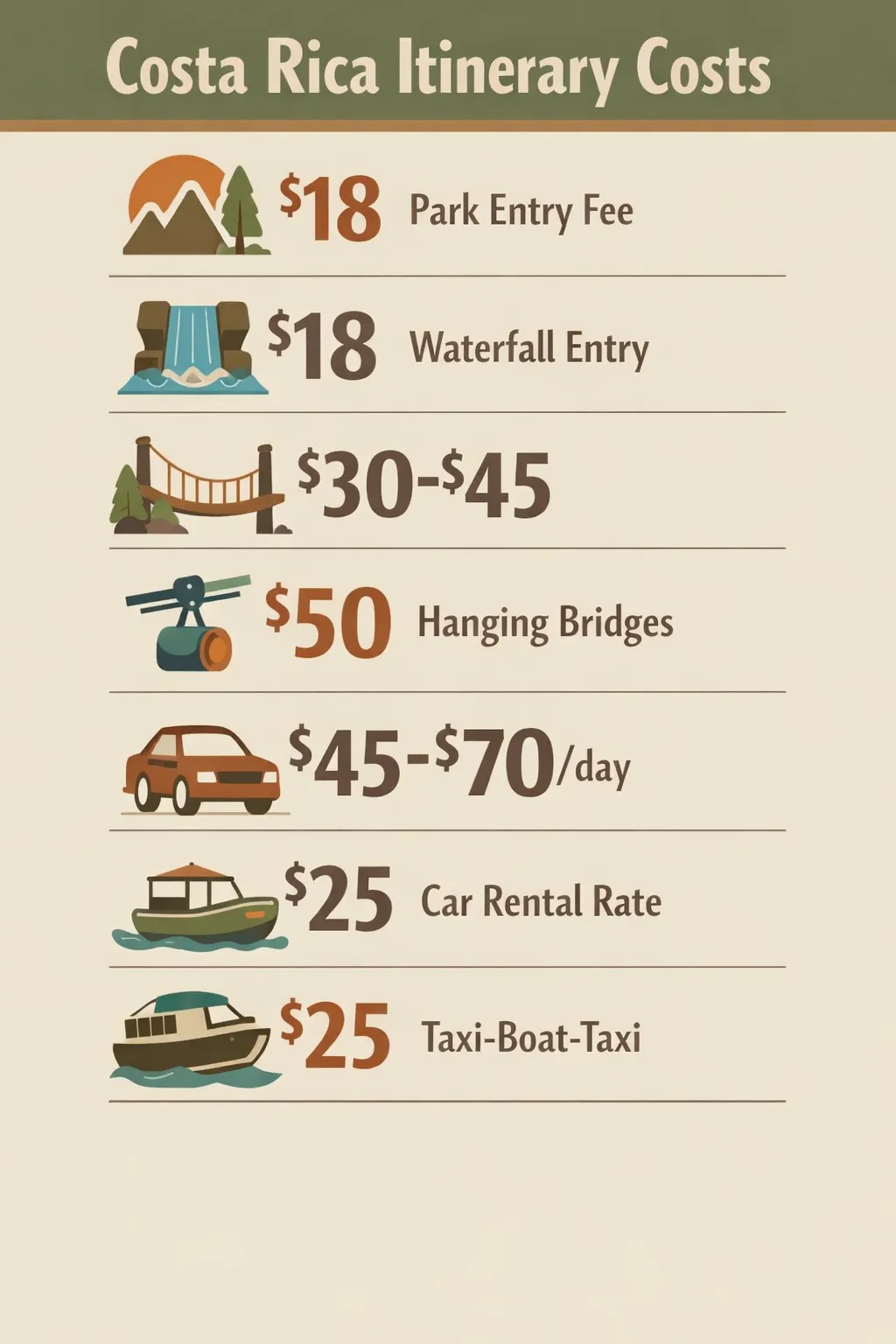 Sample costs for a Costa Rica itinerary include park entry $18 for adults, waterfall entry about $18, hanging bridges $30-$45, zip-line about $50 per person, car rental $45-$70 per day, and taxi-boat-taxi transfers at about $25 per person.
- Budget backpacker: $60-$80/day. Hostel dorms ($11/person in San José, up to $20 for a private room in surf towns), local buses ($1-$5 per segment), free hikes, and the occasional paid activity (1).
- Mid-range traveler: $150-$250/day. Private rooms or mid-range eco-lodges ($90-$200/room/night in high season), a rental car or shuttles, and a paid tour most days.
- High-end couple: $350-$600/day for two. Hot spring resorts, boutique jungle lodges, and private guided tours.
Common line items to budget:
- Zip-line canopy tour: about $50/person (1)
- Bungee jumping (Monteverde, Extremo Park): about $70/person (1)
- National park entry: $16-$18 for foreigners (1)
- La Fortuna Waterfall entry: about $18 adult (2)
- Mistico Arenal hanging bridges guided tour: $30-$45
- Coffee, chocolate, or wildlife tours: $35-$75/person
- Hot springs access: free (roadside near Tabacón) to $90 (resort day pass)
- Surfing lessons: $50-$80
- Sunset catamaran cruise: $80-$120
Sample total trip budgets (per person, no flights):
- 5 days: $300-$400 (strict backpacker) to $1,000+ (mid-range couple)
- 7 days: $420-$560 (budget) to $1,500-$2,000 (mid-range)
- 10 days: $600-$800 (budget) to $2,000-$3,000 (mid-range)
One number that surprises people: rental cars come with mandatory basic insurance that’s often not in the advertised daily rate. A car listed at $45/day can land closer to $70-$90 once coverage is added. Build that in from the start.
✓ Pros
- Diverse ecosystems packed into a small country allowing varied experiences in limited time
- Reasonable daily budgets for multiple traveler types
- Two international airports reduce driving time depending on itinerary
✗ Cons
- Mountain roads and traffic make drive times longer than maps suggest
- Peak dry season is crowded and expensive with advance booking required
- Rental car insurance often adds significant hidden costs
Costa Rica 5 day itinerary: one adventure base plus a beach
Duration: 5 days. Estimated cost: $300-$400 budget, up to $1,000+ mid-range per person, excluding flights.
Five days is tight. The mistake most people make is trying to hit three regions and spending 30-40% of the trip in transit(5). Pick one adventure base and one beach. Done right, this is a satisfying first taste of the country.
Option A - Arenal + Guanacaste beach (fly into LIR):
- Day 1: Arrive Liberia, drive to La Fortuna (about 2.5 hrs). Settle in, evening soak at the free roadside hot springs near Tabacón. Parking attendants charge 500-2,000 colones (about $1-$4) to watch your car - cash only (2).
- Day 2: La Fortuna Waterfall (about $18) in the morning, then Mistico hanging bridges ($30-$45). Wildlife is most active early, so start by 7am.
- Day 3: Zip-line canopy tour (about $50) mid-morning, then drive to Tamarindo (about 3 hrs).
- Day 4: Surf lesson in Tamarindo ($50-$80) or a beach day. Sunset catamaran cruise if you want a splurge.
- Day 5: Morning beach time, drive back to Liberia for your flight (about 1.25 hrs).
Option B - beach-focused budget loop (fly into SJO): San José (1 night) → Manuel Antonio (3 nights) → Jaco (1 night), all by local bus. Keeps costs near the floor and centers on wildlife beaches and surf (1).
Worth the detour: the La Fortuna Waterfall and a single zip-line day. Skip if short on time: trying to add Monteverde - the La Fortuna-Monteverde transfer alone eats 3-4 hours and you simply don’t have the days.
7 Days in Costa Rica: the sweet spot
Duration: 7 days. Estimated cost: $420-$560 budget, $1,500-$2,000 mid-range per person, excluding flights.
Seven days is the route most visitors should take. You get adventure, wildlife, and real beach time without living in the car (1)(2)(4). Two strong versions:
Version 1 - Adventure + wildlife + beach (fly into SJO):
- Day 1: Arrive San José, transfer to La Fortuna (about 3.5 hrs by car or $35-$60 shuttle). Free hot springs in the evening.
- Day 2: La Fortuna Waterfall and Bogarín Trail for DIY sloth spotting - you’ll often see plenty with patience and binoculars, no guide needed.
- Day 3: Zip-line or canyoning mid-morning, hanging bridges in the afternoon. End at a hot spring.
- Day 4: Drive to Manuel Antonio/Quepos (about 3.5 hrs). Afternoon at the beach.
- Day 5: Manuel Antonio National Park early entry. It costs $18 for adults, free for kids under 9, and is open Tuesday-Sunday, 7am-4pm - closed Mondays (1). Hiring a guide for $20-$30 dramatically increases sloth and toucan sightings.
- Day 6: Beach day in Manuel Antonio, or a half-day to Rainmaker Park near Quepos for a quieter rainforest walk (2).
- Day 7: Drive back to San José (2.5-3.5 hrs) for your flight (1)(5).
Version 2 - Pure nature week: Rio Celeste (2 nights) → La Fortuna (3 nights) → Monteverde (2 nights). This trades beach time for the turquoise Rio Celeste waterfall and the cloud forest. Better for hikers than for anyone craving sand.
Booking mechanic: the La Fortuna to Monteverde transfer is a taxi-boat-taxi at about $25/person, about 3-4 hours including a scenic Lake Arenal crossing (1). It’s more pleasant than the long drive around the lake and books up in high season - reserve a day or two ahead.
Costa Rica 10 day itinerary: volcano, cloud forest, and coast
Duration: 10 days. Estimated cost: $600-$800 budget, $2,000-$3,000 mid-range per person, excluding flights.
Ten days lets you add the cloud forest without rushing. This is the classic three-base loop, and it works because each base is genuinely different from the last.
Classic route (fly into SJO):
- Day 1: Arrive San José, overnight near the airport.
- Days 2-4: La Fortuna (3 nights). Waterfall, hanging bridges, zip-line, hot springs. Spread the adventure across days with rest built in.
- Days 5-6: Monteverde (2 nights). Transfer via taxi-boat-taxi (about $25, 3-4 hrs) (1). Cloud forest reserve hike, the Extremo Park zip-line (about $50) or bungee (about $70) (1), and a coffee or chocolate tour.
- Days 7-9: Manuel Antonio (3 nights). Drive from Monteverde (about 3 hrs) (5). National park, beach days, optional Rainmaker Park.
- Day 10: Drive back to San José (2.5-3.5 hrs) for departure (5).
Nicoya alternative (fly into LIR): La Fortuna (3 nights) → Tamarindo or Playa Conchal (4 nights) → Nosara or Sámara (3 nights). This swaps the cloud forest for more beach and a wellness/surf vibe, and the Liberia arrival keeps drive times short (4)(6)(7). Roads to some Nicoya beach towns like Santa Teresa are rough - an SUV is worth the extra $10-$20/day over a 2WD sedan (5).
Worth the detour: Monteverde’s cloud forest if you have the full 10 days - the ecosystem is genuinely different from the lowland rainforest, and the difference is obvious within an hour on the trail. Skip if short on time: cramming both Nicoya beaches and Manuel Antonio into one 10-day trip. Pick a coast.
Transport Options Between Bases
| Local buses | Shuttle vans | Rental car | |
|---|---|---|---|
| Price Range | $1-$5 per segment | $35-$60/person | $45-$100/day plus insurance |
| Speed | Slowest | Faster than buses | Fastest and most flexible |
| Comfort | Basic | Air-conditioned, door-to-door | Private, flexible |
| Best For | Budget travelers who don't mind time | Mid-range travelers | Those needing beach access off bus routes |
Your route is only as good as how you move between bases. A few route-specific notes the table above doesn’t capture: San José → La Fortuna by local bus runs about $3 and about 4 hours; Quepos ↔ Manuel Antonio runs every 15 minutes for under $1 (1). Rental car rates of $45-$70/day in low season and $70-$100/day in peak don’t include the mandatory insurance add-on - budget accordingly. Get the small SUV for Nicoya and Monteverde roads.
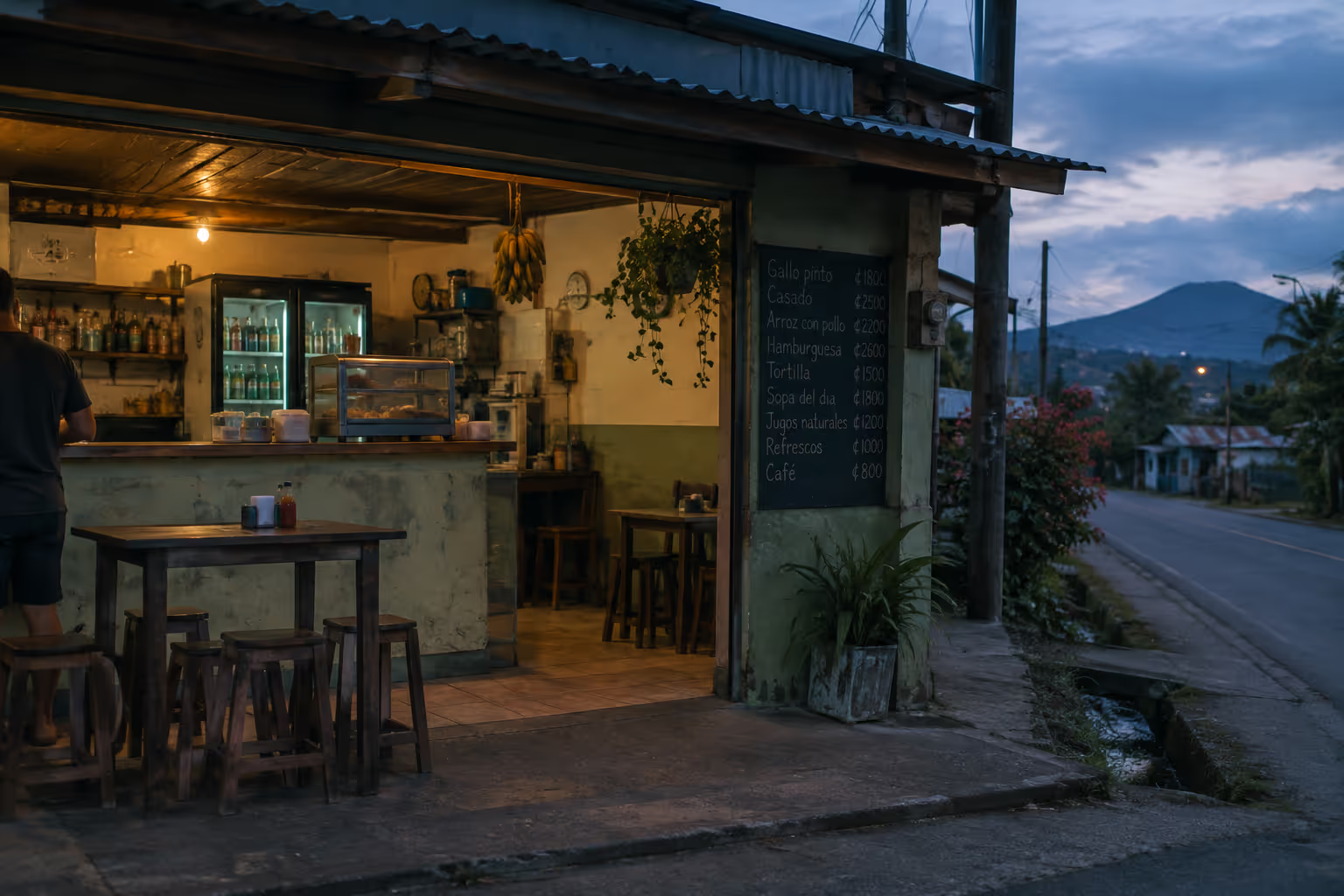
Download offline maps (Google Maps or Maps.me) before you leave any town with reliable signal. Cell coverage drops in Monteverde and the Nicoya interior (5). And carry cash - local restaurants (sodas), parking attendants, and some buses are cash-only. Running out of colones in a small beach town is a genuinely annoying problem.
Downtime at the beach: where to slow down
Duration note: build at least one full beach day into every 5-day block. The Pacific coast averages water temperatures of 27-29°C year-round; Manuel Antonio’s main beach is about a 10-minute walk from the park entrance, and Tamarindo’s surf break is directly in front of the main strip.
Downtime at the beach: unwind and reflect
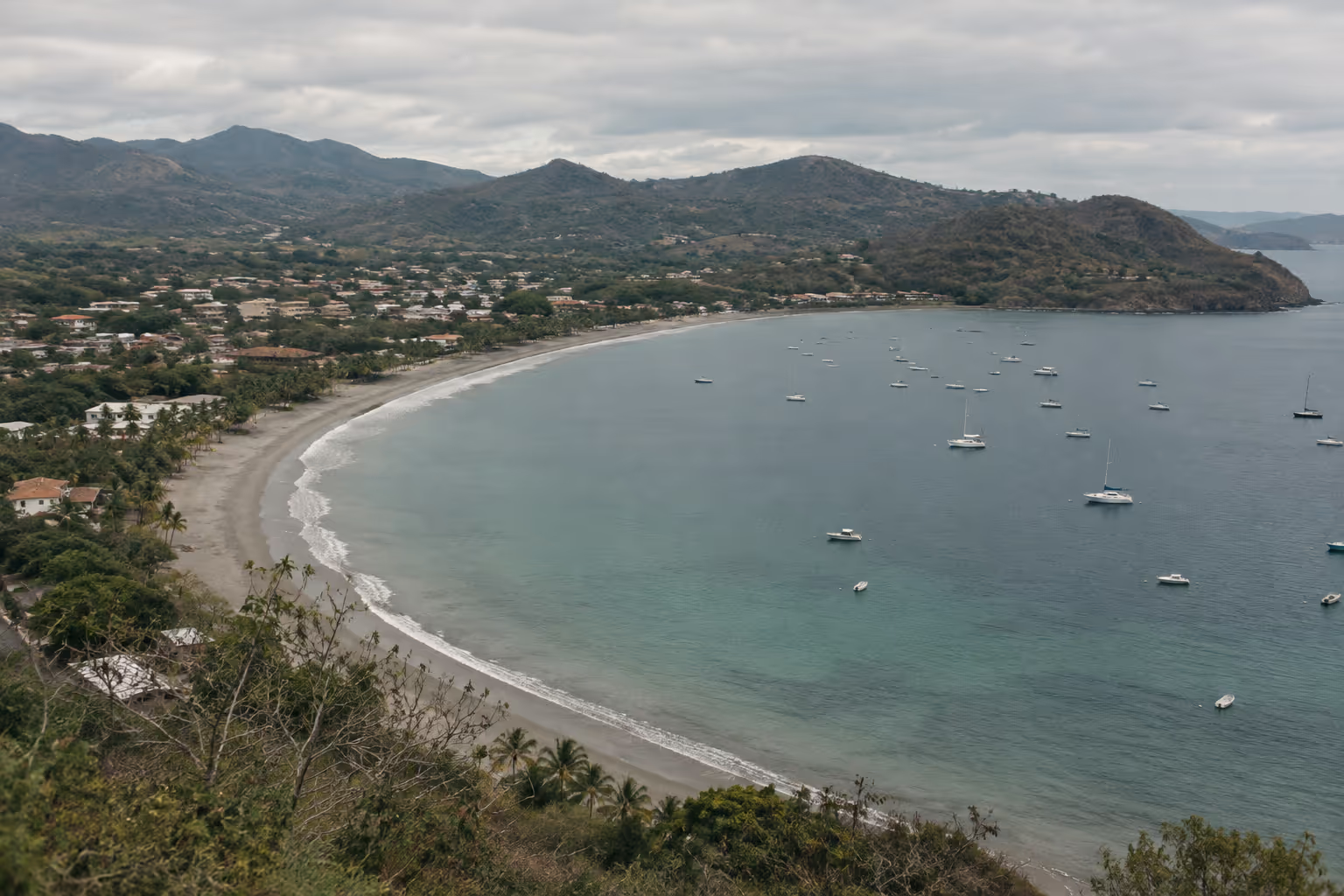
Every adventure trip needs downtime, and Costa Rica’s beaches are where the pace finally changes. On a visit to the Puntarenas beach, the sand and gentle waves made an easy place to slow down and trade stories with locals - the kind of afternoon that doesn’t make it into the itinerary but ends up being the part you remember.
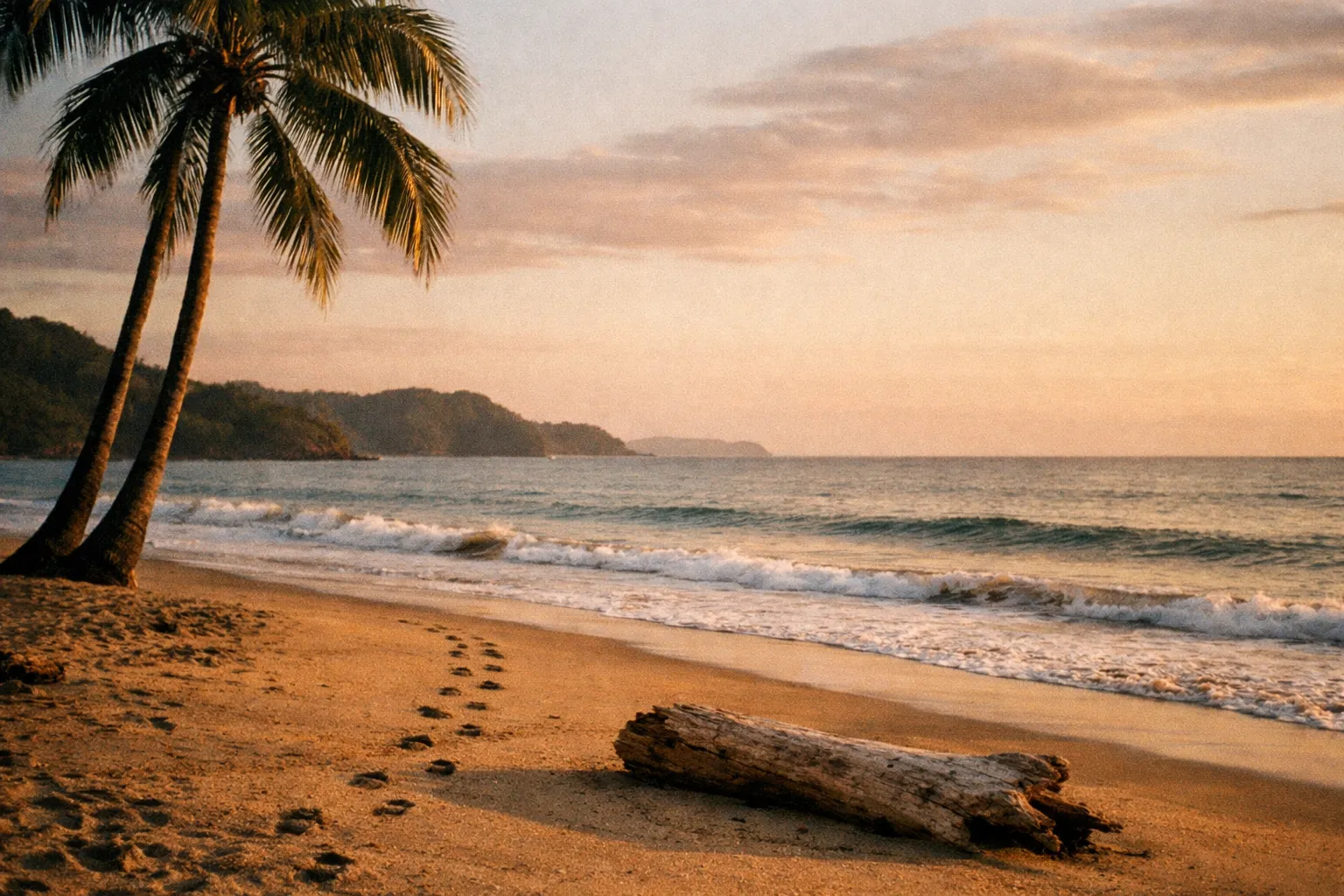
Match the beach to the trip you’re actually taking:
- Manuel Antonio - wildlife plus white sand. Monkeys and sloths near the beach, best for combining a national park day with swimming (1)(2)(4).
- Tamarindo or Jaco - surf and nightlife. Easy lessons, plenty of restaurants, lively after dark (1)(5).
- Santa Teresa, Nosara, Sámara - quieter, more remote, better for couples and surfers on longer trips. The access roads are rough (4)(5)(6).
- Conchal - calm, shell-flecked sand in Guanacaste, good for a quieter day without the surf-town crowds.
Beach days are also where you can work in something more purposeful if you want it. A beach clean-up or a visit to a sea turtle conservancy takes a few hours and puts you in contact with the conservation work that keeps these coastlines functioning.
Connecting with Costa Rican culture: beyond the surface
The tourist circuit is well-worn, and it’s easy to move through Costa Rica without actually engaging with the place. A cooking class focused on gallo pinto - the rice-and-beans breakfast that anchors rural life here - or an afternoon on a coffee farm watching how the crop gets processed from cherry to bag, gives you a different read on the country than another zip-line.
Local markets carry indigenous pottery and handwoven textiles with real craft traditions behind them. Worth understanding before you buy.
Cultural activities worth working into your itinerary:
- A coffee or chocolate farm tour ($35-$75)
- A cooking class focused on traditional dishes
- A local festival, if your dates line up
- A regional history museum on a rainy afternoon
That last one is also your contingency plan. When an afternoon downpour shuts down a hike, a coffee tour or museum keeps the day useful instead of wasted. Build at least one of these into every 7-day trip.
Avoiding the common mistakes
A few errors derail Costa Rica trips again and again. Most of them are avoidable with ten minutes of planning.
- Overpacking the route. Three-plus regions in 5-7 days means more transit than experience (1)(4)(5). Fewer bases, more days each.
- Underestimating drive times. Budget 3-4 hours for a “two-hour” map distance (1)(5).
- Ignoring park schedules. Manuel Antonio is closed Mondays - show up and you’ve lost a day (1). Major parks increasingly use online reservation windows, so book timed entry in high season.
- Misjudging weather by coast. Don’t plan Caribbean beach time during Pacific dry season expecting sun, or all-day Pacific plans in September-October without afternoon rain backups.
- Skipping rental car insurance in your budget. The mandatory coverage can nearly double the advertised rate.
- Assuming European or U.S. infrastructure. Spotty GPS, limited signage, and rough beach roads make a 2WD a poor choice for some routes (5).
- Not carrying cash. Cards work in cities, but parking, sodas, and some buses don’t take them.
Frequently Asked Questions
- How many days do you need in Costa Rica?
- Seven days balances adventure and wildlife with beach time without excessive transit. Five days suits a single adventure base plus one beach, while ten days adds the cloud forest or a second coast.
- What is the best month to visit Costa Rica?
- Late November to early December or April offers dry-season conditions on the Pacific side with fewer crowds and lower prices than peak season. The Caribbean coast has a different rain schedule, with its driest window in September-October.
- Should I fly into San José or Liberia?
- Fly into Liberia for trips focused on La Fortuna and Guanacaste beaches to reduce drive times. Fly into San José for routes including Manuel Antonio, Uvita, the Osa Peninsula, or the Caribbean coast.
- How much does a week in Costa Rica cost?
- Budget travelers spend about $420-$560 per person for seven days excluding flights, while mid-range travelers spend $1,500-$2,000 with private rooms, rental car or shuttles, and daily tours.
- Do I need a rental car in Costa Rica?
- Not always. Local buses and shuttle vans cover main routes well. A rental car is worth it for flexibility and access to beaches off bus routes, especially with a small SUV for rough roads.
- Is the rainy season a bad time to visit?
- No. Rain usually falls in afternoon downpours leaving mornings clear. You get lower prices, fewer crowds, and a greener rainforest. Plan rainy-day backups like coffee tours or museums.
Putting it together
Match the route to your days, pick the airport that minimizes driving, and resist the urge to add one more region.
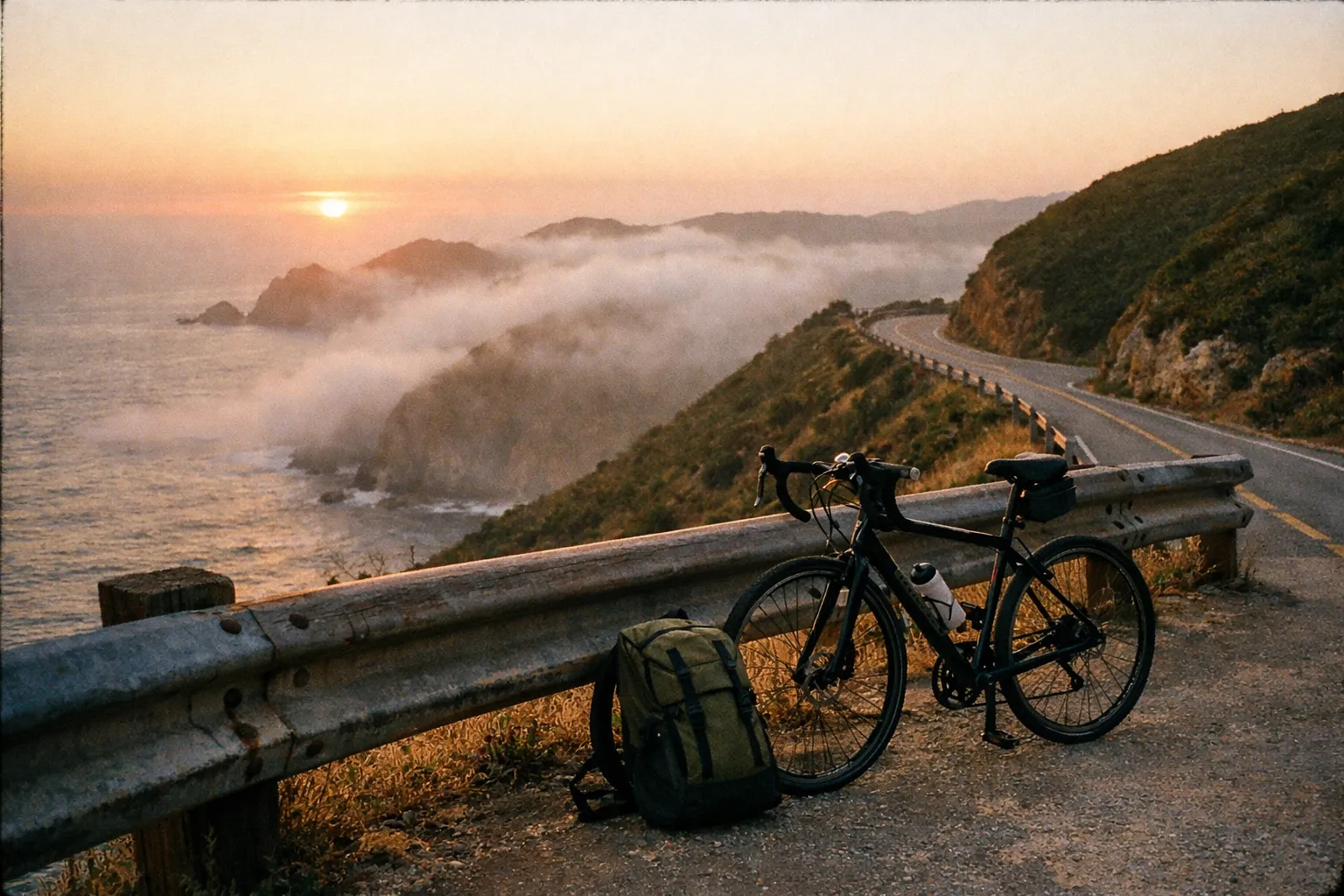
A 5-day trip is one adventure base and one beach. Seven days is La Fortuna plus a wildlife coast. Ten days adds the cloud forest or a second coast. Book your first and last nights near the airport, lock in peak-season Arenal and Manuel Antonio stays early, but leave a night or two flexible mid-trip for a spontaneous beach change. Carry cash, download offline maps before you lose signal, and plan travel legs as half days.
Do that, and the only surprises left are the good kind - a sloth on the Bogarín Trail, or an afternoon when the rain clears just in time for the light to go gold over the Pacific.