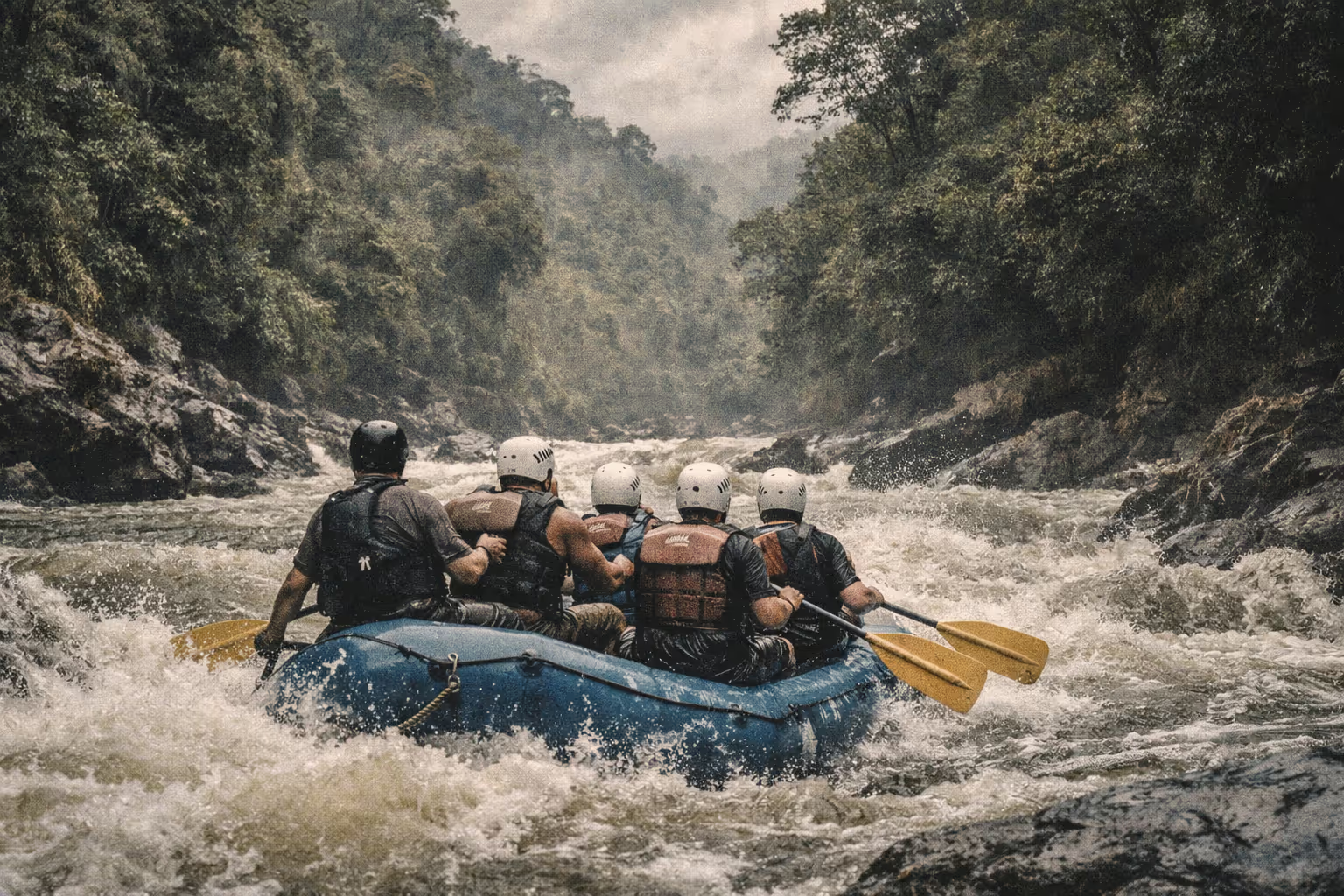
Costa Rica white water rafting almost never disappoints on the water; where trips fall apart is the logistics around it. The Pacuare, the country’s flagship run at roughly 38 rapids over five hours, hits its strongest Class III-IV flow from late June into October, and booking it from the wrong base can cost you a three-hour transfer each way. Match the river to your season and your home base and a great day is basically guaranteed. Get those two wrong and even the Pacuare is a slog.
Is Costa Rica White Water Rafting Good?
Yes - and not in a marketing sense. Costa Rica white water rafting benefits from the country’s perfect combination of mountains, rainfall, and short east-west drainage, producing dozens of raftable rivers in a country the size of West Virginia. Visit Costa Rica lists active commercial runs ranging from Class I family floats on Peñas Blancas and Corobicí to Class IV-V drops on the Reventazón Pascua section (6). The Pacuare is regularly ranked among the top rafting rivers in the world (3), and you can run something somewhere in the country every month of the year.
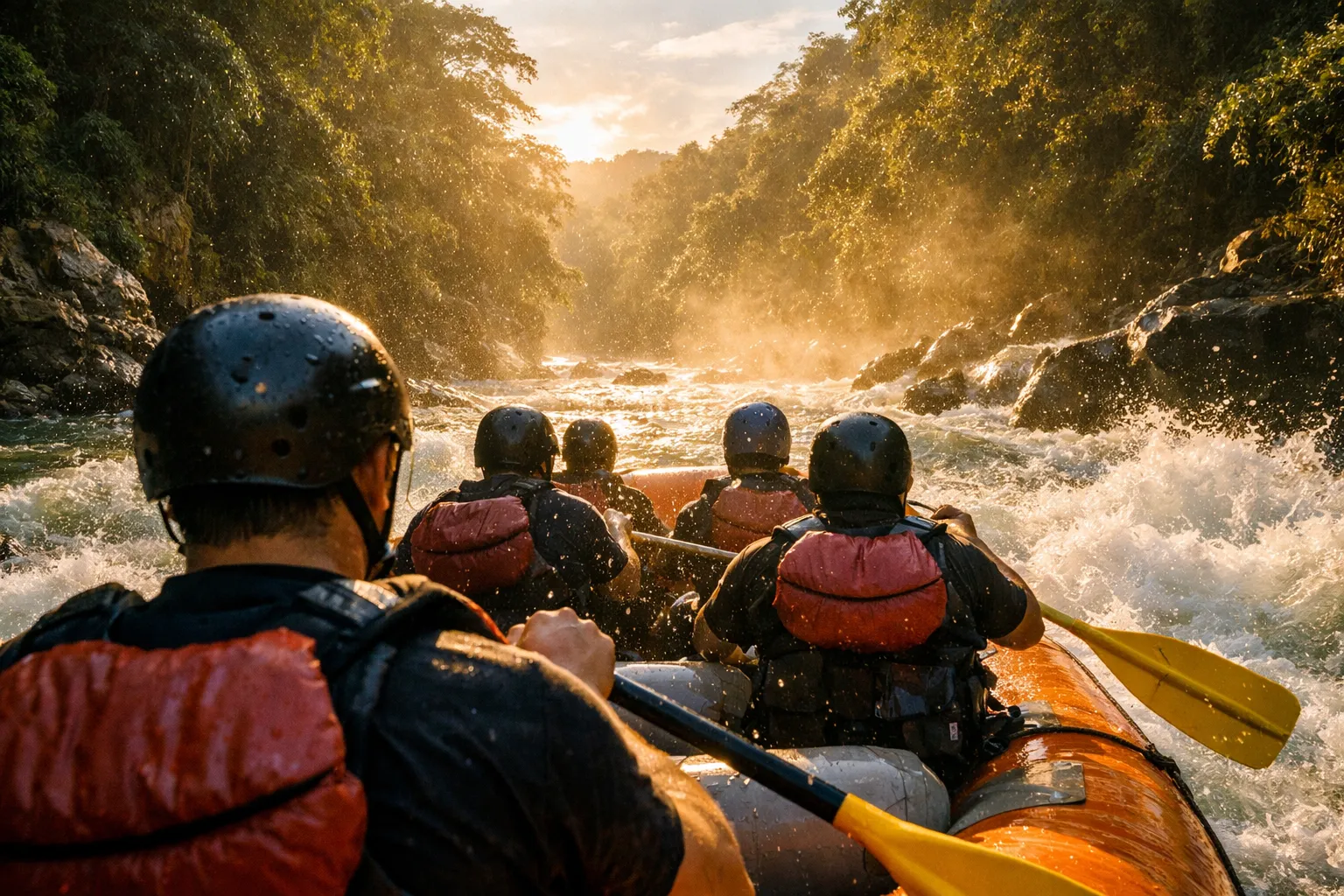
The thing most guides get wrong: they treat “rafting in Costa Rica” as one product. It isn’t. The river you pick changes by skill level, season, and where you’re sleeping the night before. Get those three variables right and the trip works; get them wrong and you’ll spend six hours in a van for a 90-minute float.
Costa Rica white water rafting rivers: the full lineup
Six rivers handle the bulk of commercial trips. Here’s how they sort out.
Pacuare River - Class III-IV, runnable mid-May through mid-March (6). Costa Rica’s flagship. Long jungle corridor, 108 km total length, and a standard day trip covers roughly 26-30 km with around 38 rapids and 5 hours of river time (2). Departures from San José, Arenal, or Puerto Viejo. Worth the detour even if it means a 5:30 a.m. pickup.
Sarapiquí River - Class II-III, mid-May through mid-March, easy access from San José or Arenal (6). The standard pick for beginners and families who still want real whitewater rather than a lazy float.
Savegre River - Class II-III, May through January, departures from Manuel Antonio and Quepos (6). First-timer-friendly with clear water and rainforest scenery.
Naranjo River - Class III-IV, June through November only, near Quepos (6). Short season but punchy rapids. Skip if you don’t have rafting experience.
Reventazón River - runs all year. The Tucurrique section is Class III and beginner-accessible; the Pascua section is Class IV-V for experienced rafters only (6). Useful when the Pacuare is too high or too low.
Peñas Blancas, Corobicí, Sarapiquí-Chilamate - Class I floats available year-round, good for kids under 8 or anyone who wants scenery without splash.
One thing worth repeating: the same river name can hide two completely different trips. Always confirm the section, not just the river.
✓ Pros
- Wide range of rivers from beginner to expert levels
- Year-round rafting options across multiple regions
- Pacuare River offers a world-class, scenic experience
- Good family-friendly options with Class I-III rivers
✗ Cons
- Logistics can be complex; some trips require long transfers
- Seasonal closures affect availability of certain rivers
- Early start times for flagship trips like Pacuare
- Price varies widely depending on river and trip type
The Pacuare River: Costa Rica’s Flagship Rafting Run
The Pacuare is the answer to the question of which river Costa Rica is actually famous for. Western River Expeditions and most international rafting outfits rank it among the world’s top rafting rivers (3), and Visit Costa Rica calls it the country’s longest and most spectacular trip (6).
The standard day trip:
- Pickup: 5:30-6:00 a.m. from San José hotels
- River distance: 26-30 km (16-18 miles)
- Rapids: around 38, mostly Class III with several Class IV (2)(5)
- River time: about 5 hours
- Return to hotel: around 5:00 p.m.
- Included: transfers, breakfast, safety briefing, guided rafting, riverside lunch (2)
- Price: roughly $99 USD + VAT for a standard day trip with Exploradores Outdoors (5); premium half-day options like the Pacuare Outdoor Center deluxe run around $175/person
- Minimum age: varies by operator and water level - some allow 6+ in the dry season, 8+ in the rainy season; others set a firm 12+ minimum (1)(5)
Overnight version: Worth the upgrade if you can spare a day. You raft the upper section, sleep at a riverside ecolodge accessible only by water, and finish the lower section the next morning. The lodges sit deep enough into the gorge that you’ll see toucans and probably hear howler monkeys at dawn. I’ve done the day trip version out of San José - the 5:30 a.m. pickup is brutal, but by the time you’re on the river at 9 a.m. you stop caring.
Booking mechanics: book at least 48 hours ahead in green season (May-November), a week ahead December-April. Operators run daily but trip sizes are capped, and the popular Saturday slots fill first.
The Sarapiquí River: Best for Beginners Near La Fortuna
The Sarapiquí River is the Pacuare’s calmer sibling and the river most La Fortuna visitors end up on. Class II-III, runs mid-May through mid-March, with departures bookable from both San José and Arenal (6).
What makes it work for beginners: rapids are spaced out, with flatwater sections between them. You get the splash and the swim without the relentless paddling required on the Pacuare. The scenery - banana plantations, rainforest, the occasional sloth - is fine but not as dramatic as the Pacuare gorge.
Price range sits below the Pacuare, typically $65-$90 per person for a half-day trip. If you’re choosing between Sarapiquí and a transfer-heavy Pacuare day from Arenal, the math usually favors Sarapiquí: shorter day, less driving, similar adrenaline if you stick to the upper section.
White Water Rafting From La Fortuna: Your Arenal-Area Options
La Fortuna is the awkward base for rafting - close to several rivers but not on top of any of them. Three options if you’re staying near Arenal:
- Sarapiquí River - closest, easiest logistics, Class II-III. The default choice. Operators run morning and afternoon trips with hotel pickup.
- Balsa River - Class II-III, very short transfer from La Fortuna. Marketed heavily by Arenal-based outfitters as their family-friendly option. Less impressive scenery than Sarapiquí but the shortest day.
- Pacuare River day trip from Arenal - possible but brutal. You’re looking at 3+ hours of transfer each way. Only worth it if you can’t reroute through San José.
If you’re spending two or more nights in La Fortuna, slot Sarapiquí in as a half-day. It pairs well with an afternoon at Tabacón hot springs or a late zipline tour.
Rafting Near Manuel Antonio: Savegre and Naranjo
Manuel Antonio visitors raft the Savegre or the Naranjo, both based out of Quepos (6). Two genuinely different trips:
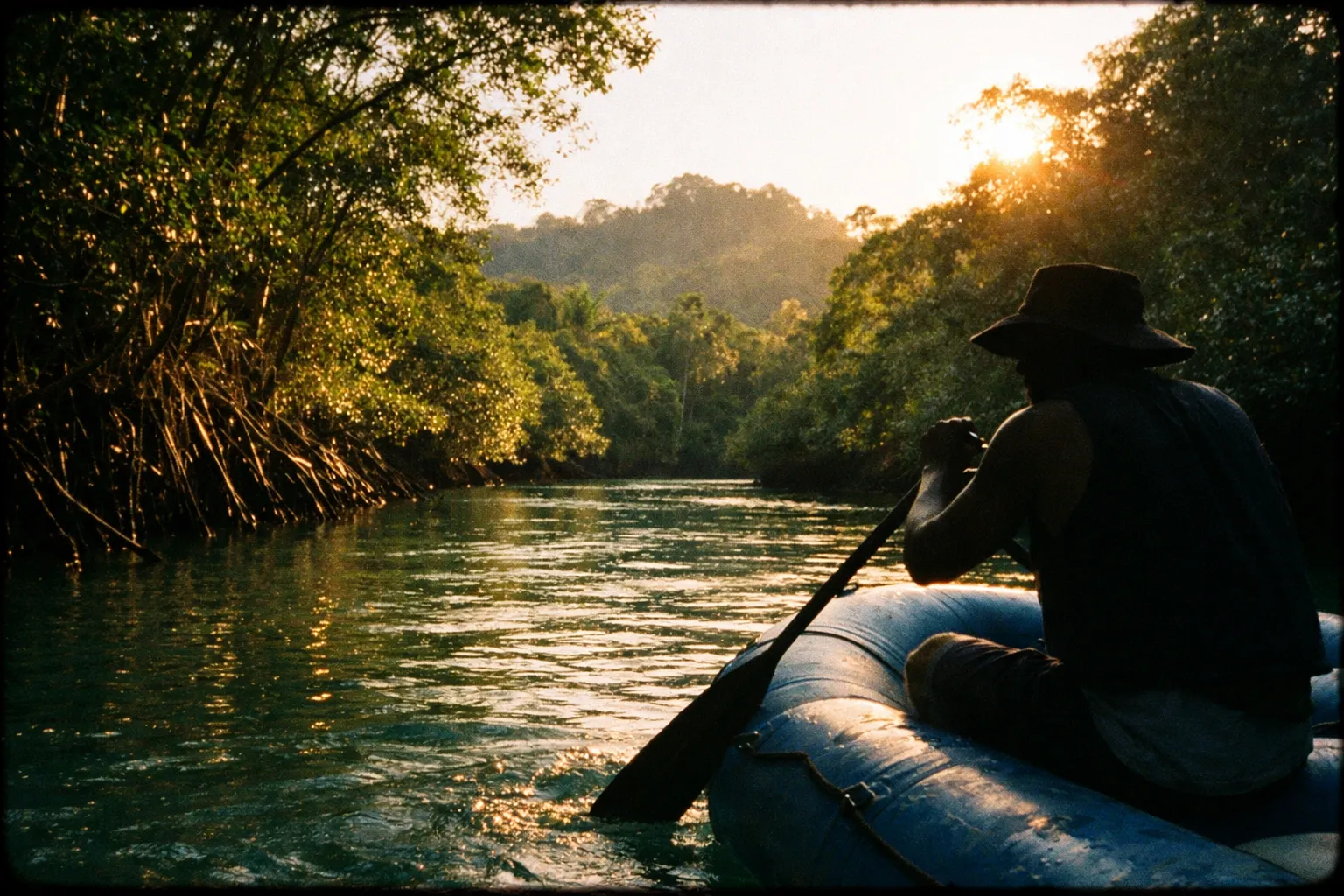
- Savegre - Class II-III, runs May through January. The friendlier of the two, with clear water and a riverside lunch stop. Good for families and mixed-ability groups.
- Naranjo - Class III-IV, runs June through November only. More technical, faster pace, not a first-timer’s river. The Naranjo’s narrow season catches people out - if you’re visiting in February or March, it’s not an option.
Half-day trips from Manuel Antonio typically run $75-$110 per person including transfers. Both rivers are short drives from Quepos, so unlike a Pacuare day from San José, you can comfortably raft in the morning and hit the national park or the beach in the afternoon.
If you only have one day in Manuel Antonio and you’re choosing between rafting and the national park, the park wins. Rafting is the second-day activity.
Which River Is Best: Matching the Right Run to Your Trip
Cutting through the marketing, here’s the decision tree most travelers actually need:
- First-time rafter, no swim confidence: Peñas Blancas or Corobicí (Class I float), or Sarapiquí-Chilamate. Year-round (6).
- Family with kids 8+: Sarapiquí or Savegre. Class II-III, scenic, manageable swim risk.
- Couple wanting one big adventure day: Pacuare from San José. Worth the early start.
- Experienced rafter chasing the best: Pacuare overnight, or Reventazón Pascua section if you’ve already done the Pacuare.
- Adrenaline tourist with limited time in Manuel Antonio: Naranjo (June-November only) or Savegre as fallback.
- La Fortuna base, half-day slot: Sarapiquí.
The honest market consensus is that the Pacuare is the best single river if you’re physically able and willing to commit a full day to it (1)(3)(4). Everything else is a trade-off between logistics and intensity.
How much is rafting in Costa Rica?
Current pricing across the major operators:
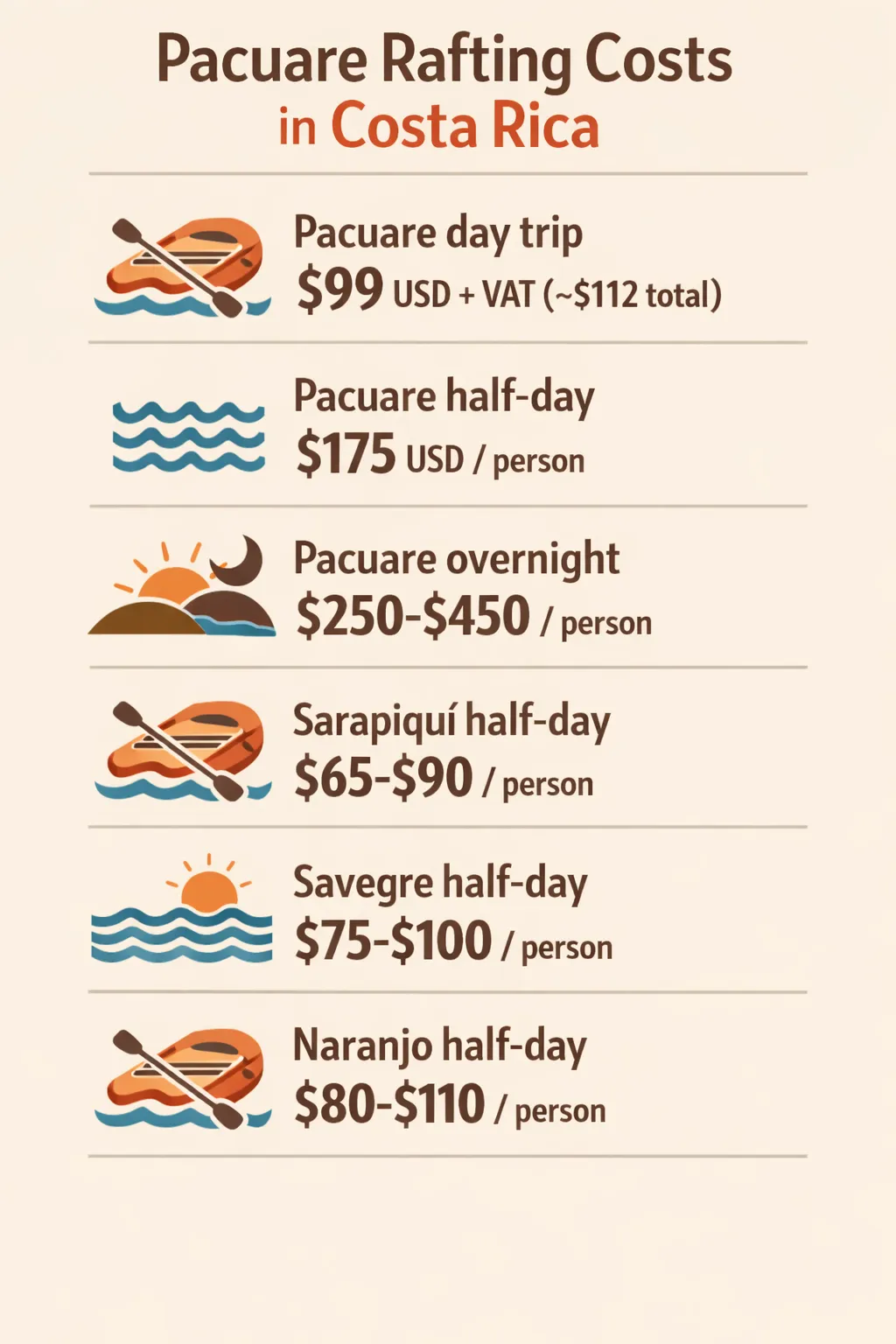 Rafting price ranges across Pacuare, Sarapiquí, Savegre, and Naranjo (2026): Pacuare day trip $99 USD + VAT (~$112 total); Pacuare half-day $175 USD/person; Pacuare overnight $250-$450/person; Sarapiquí half-day $65-$90; Savegre half-day $75-$100; Naranjo half-day $80-$110.
- Pacuare day trip, standard: $99 USD + VAT (~$112 total) - Exploradores Outdoors (5)
- Pacuare half-day deluxe: $175 USD/person - Pacuare Outdoor Center
- Pacuare overnight with ecolodge: $250-$450/person depending on lodge tier
- Sarapiquí half-day: $65-$90/person
- Savegre half-day from Manuel Antonio: $75-$100/person
- Naranjo half-day: $80-$110/person
- Class I family floats (Peñas Blancas, Corobicí): $55-$75/person
Inclusions vary. Most quotes cover transfers from a named city, gear, guide, and at least one meal. VAT (13%) is sometimes excluded from advertised rates - confirm before booking. Private transfers, hotel-specific pickup outside the operator’s standard zone, and GoPro footage are common upcharges.
What month is best for white water rafting in Costa Rica?
June through October is the sweet spot for serious rafting. Rainy season raises water levels and makes Class III-IV rivers run at their fullest, including the Naranjo, which only operates June through November. Worldly Adventurer notes that mid-May through mid-December is the peak window for Pacuare conditions (1).
November and December are solid compromise months - water is still high from the rainy season, but you get more sunny mornings and smaller crowds than peak wet season.
January through April is dry season. Rivers run lower, some rapids ease back a class, and a few seasonal rivers close. The Pacuare still runs (it operates mid-May through mid-March) (6), but expect a tamer ride.
Mid-March to mid-May is the weakest window. The Pacuare goes offline for its short closure, the Naranjo is dormant, and remaining rivers are at their lowest. Stick to year-round options like Reventazón Tucurrique or Class I floats.
If your trip is fixed, every month has a runnable option somewhere in the country. But if you have flexibility, target late June through early October for the strongest water.
What to wear and bring
Costa Rica rafting outfitters provide the raft, paddle, helmet, and PFD. You bring everything that touches your skin.
- Closed-toe water shoes or strapped river sandals. Crocs and flip-flops get torn off in rapids, and toes get crushed in the footwell without a stiff sole (1).
- Quick-dry shorts and a synthetic or wool top. Cotton stays wet and chafes.
- Sunglasses with a retainer strap. You will lose unsecured sunglasses on the first rapid.
- Reef-safe sunscreen. Most Pacuare operators run through a protected watershed and ask for non-aerosol, biodegradable formulas (1).
- A change of dry clothes and a towel for the van ride back. Operators usually hold these in a dry bag during the trip.
Leave behind: your phone (unless it’s in a tested waterproof case clipped to the raft), your good camera, any jewelry, and your hotel keycard. The river will test every pocket you have.
Pairing rafting with other Costa Rica adventures
Rafting works best as one node in a longer adventure itinerary. Three combinations that don’t waste travel time:
The San José-Pacuare-Caribbean route: Raft the Pacuare with a Puerto Viejo dropoff instead of returning to San José. Several operators including Exploradores Outdoors offer this (5). You finish the day on the Caribbean coast instead of doubling back - a genuinely efficient way to move between regions.
The Arenal combo: Sarapiquí rafting in the morning, hot springs in the afternoon, zipline canopy tour the next day. Ziplining the Arenal area - particularly the longer cables over the lake - is the natural pairing with rafting because both run from the same La Fortuna outfitters.
The Manuel Antonio combo: Naranjo or Savegre rafting one morning, national park the next, then drive 90 minutes to Jaco for surfing. Jaco’s beach breaks are forgiving for beginners and the surf schools rent boards by the hour. Tamarindo, further up the coast in Guanacaste, is the bigger surf town but it’s a full transfer day from Manuel Antonio.
Surfing: riding the waves of Tamarindo and Jaco
Costa Rica’s Pacific coast supports surf breaks for every level. Tamarindo is the Guanacaste hub - consistent beach break, plenty of surf schools, and a town built around the lifestyle. Jaco, closer to San José, has more powerful waves and easier logistics if you’re starting from the capital or pairing with Manuel Antonio.
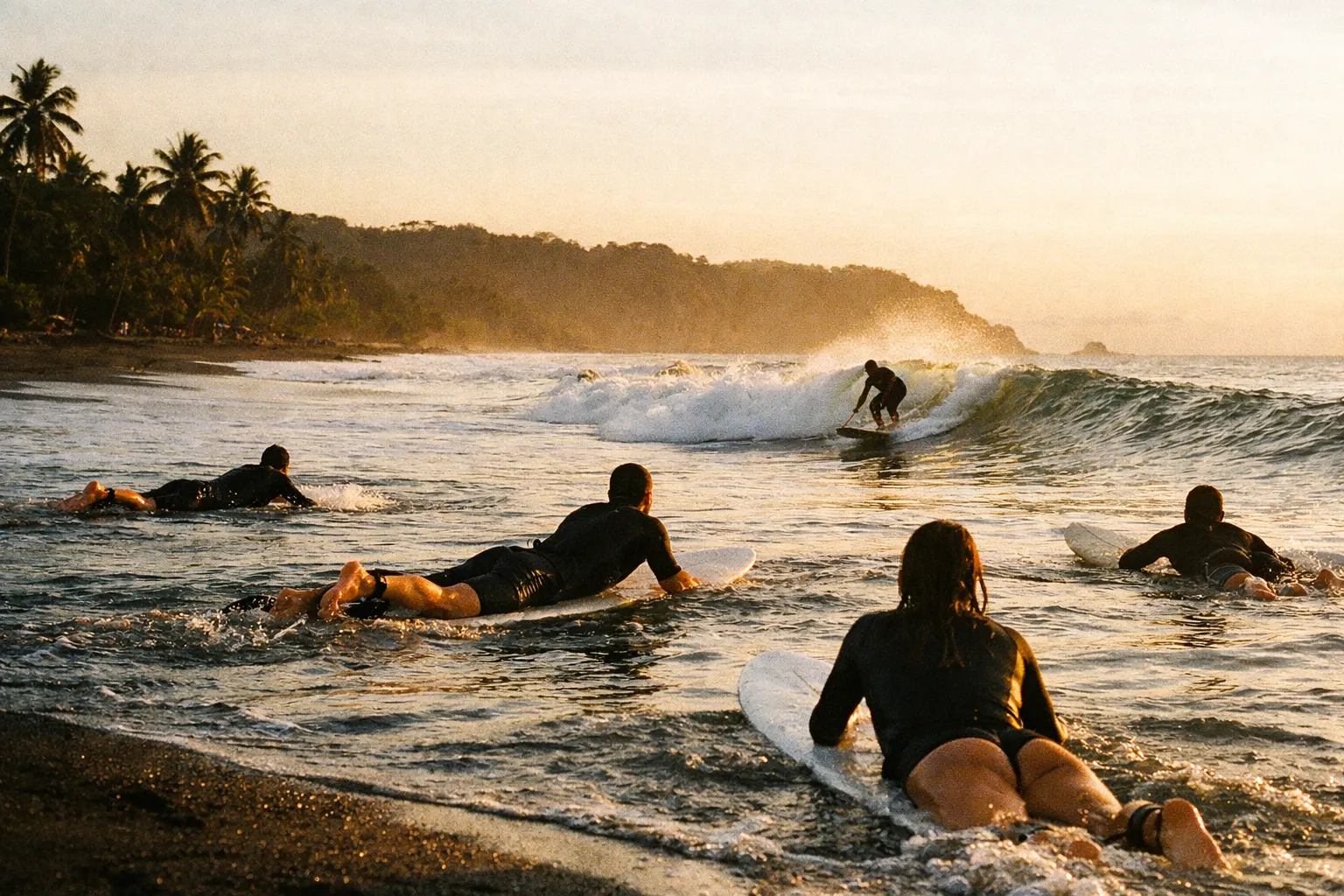
For beginners: Tamarindo’s main beach and Playa Hermosa (the Guanacaste one, not the Jaco one - they share a name) have small, predictable waves. Group lessons run $50-$70 for two hours including board rental.
For intermediate and advanced surfers: Witch’s Rock and Ollie’s Point near Tamarindo require a boat charter but deliver world-class rights. Playa Hermosa just south of Jaco is consistent, fast, and not friendly to learners.
Canopy tours: ziplining through the rainforest
Ziplining the canopy is the easy second activity to pair with rafting. Most Arenal and Monteverde outfitters run half-day tours with 10-14 cables, the longest stretching over a kilometer across the valley. Expect $55-$90 per person for a standard tour, more for combos that include a Tarzan swing or a rappel section.
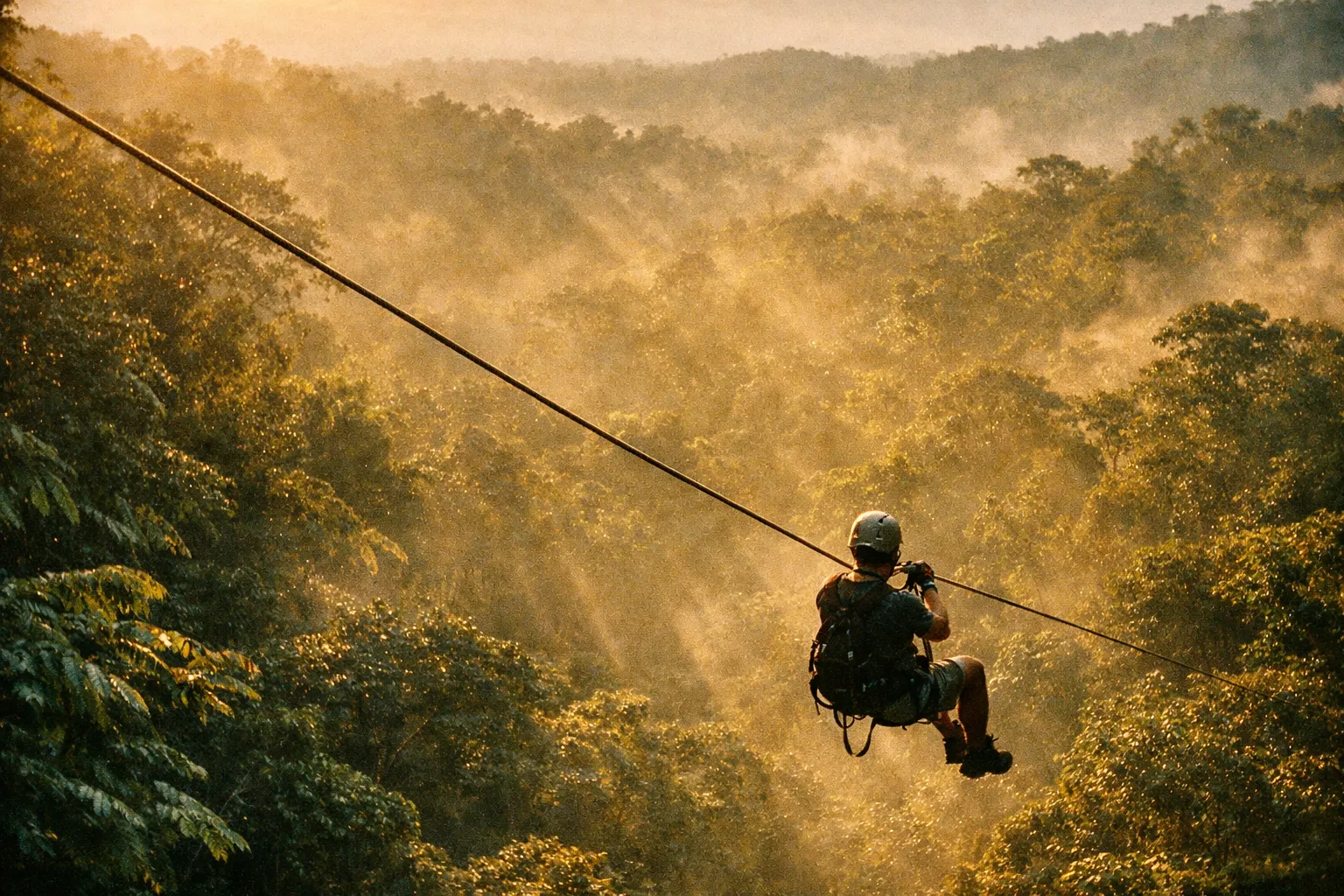
Monteverde’s cloud forest tours give you the more atmospheric ride - you’ll often be ziplining through actual cloud. Arenal’s cables are longer and faster but the views are of pasture and forest, not cloud forest. Neither is wrong; it depends on what you’re after.
Exploring the depths: Venado caves
The Venado Caves sit about 45 minutes northwest of La Fortuna and make a solid rainy-afternoon activity. The tour is a 2-hour underground scramble through narrow passages and shallow streams, with a guide pointing out stalactites, bats, and the occasional cave fish. Expect to get muddy and wet to the waist.
Minimum age is usually 8, and anyone with claustrophobia should skip it - at least one section requires squeezing through a narrow gap. Cost runs $50-$70 including transfers from La Fortuna, gear, and a guide.
Stand-up paddleboarding in bioluminescent bays
The bioluminescent paddleboarding trips run out of the Nicoya Peninsula (Paquera and Tambor areas) and a few spots on the Caribbean side. The microorganisms only glow when conditions are right - new moon, warm water, low wind - so check operator reviews from the past 2-3 weeks before booking. A trip that lit up brilliantly in March can be a dud in November.
Tours run $60-$85 per person and last 90 minutes to 2 hours. Go on the darkest night of the month you can; even a half-moon dims the effect significantly.
Frequently Asked Questions
- Can I book rafting trips last minute during the high season?
- High season trips fill quickly, especially on weekends. Booking at least a few days in advance is recommended to secure your preferred river and time slot.
- Are there rafting options suitable for non-swimmers?
- Yes, Class I and some Class II floats accept non-swimmers with properly fitted life jackets. Always inform the operator about swimming ability at booking.
- Is it possible to combine rafting with other adventure activities in Costa Rica?
- Absolutely. Common combos include rafting plus ziplining in Arenal, rafting followed by national park visits in Manuel Antonio, or rafting with a Caribbean coast dropoff from San José.
- Do rafting operators provide waterproof storage for valuables?
- Most operators provide dry bags for small items during the trip, but it's best to leave valuables like phones and cameras behind or use tested waterproof cases.
- What happens if weather conditions make a river unsafe on the day of my trip?
- Operators monitor river conditions closely and may reschedule or cancel trips for safety. Refund and rescheduling policies vary, so confirm these when booking.
- Are there guided overnight rafting trips with lodging included?
- Yes, some operators offer overnight trips on the Pacuare River with stays at riverside ecolodges accessible only by raft.