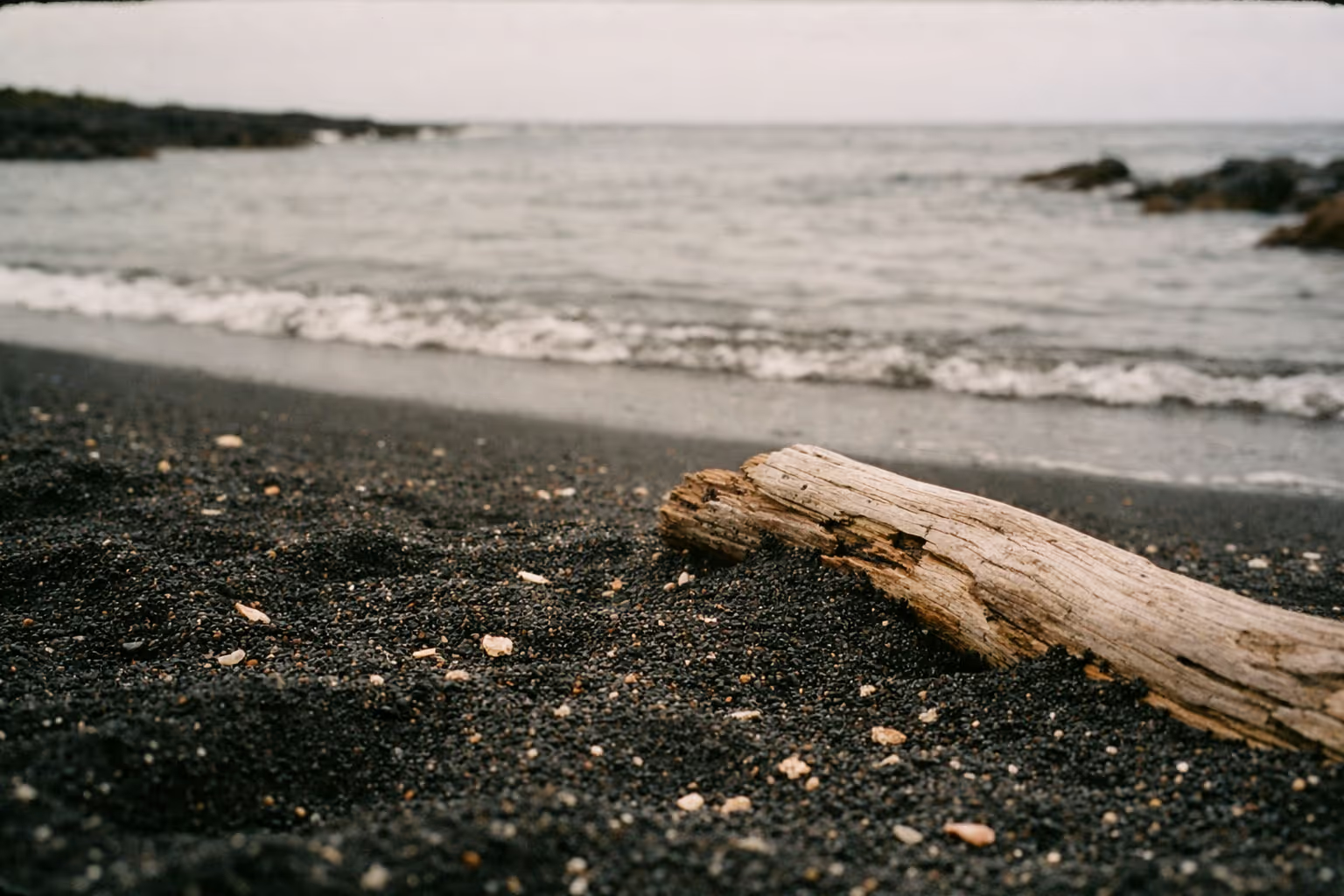
Punaluu Black Sand Beach is the rare Big Island stunner you can drive right up to, free, with a flat walk to the sand, no steep descent like Waipio or Pololu. The draw is the endangered green sea turtles basking on the black sand year-round, but keep ten feet back; touching them is a federal offense. You can swim in the sheltered northeast cove while lifeguards are on, but cold springs and currents make it poor for weak swimmers. Come before 9 a.m. to beat the parking crunch.
Where is Punaluu Black Sand Beach on the Big Island?
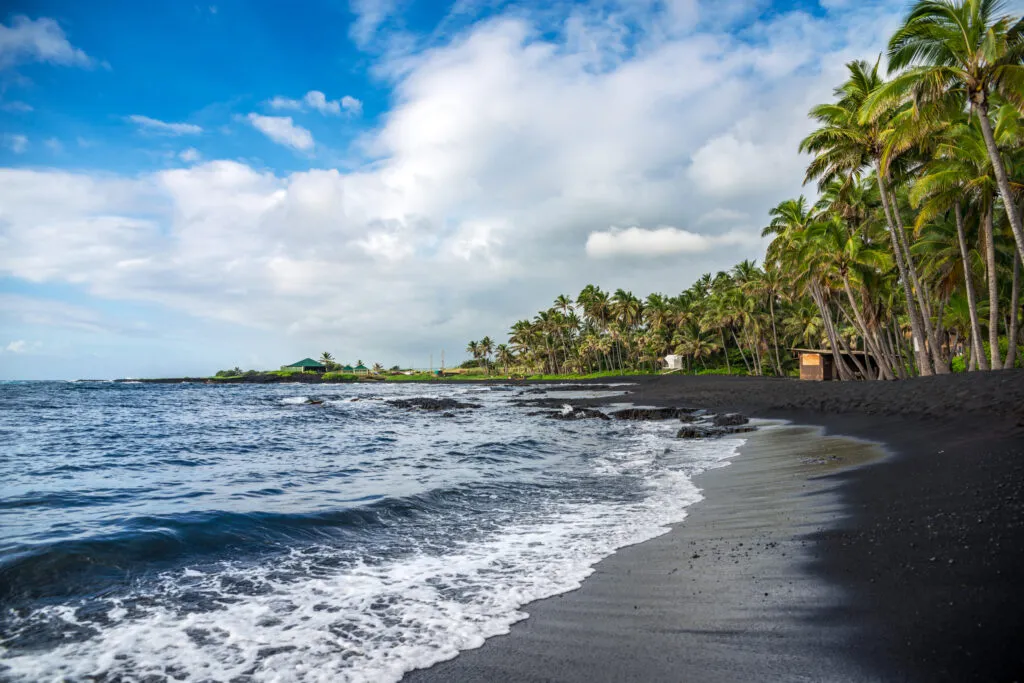
Punalu’u Beach Park sits on Highway 11 between mile markers 56 and 57 in the Ka’ū district (1)(4). From Hilo, it’s about 30-35 miles southwest - roughly a 45- to 60-minute drive. From Hawaiʻi Volcanoes National Park’s Kīlauea Visitor Center, it’s around 30 miles south on Hwy 11, about 45 minutes, which makes it an easy same-day add-on to a volcano day.
The turnoff is well signed, and the parking lot puts you a flat 1- to 3-minute walk from the sand. No trail, no elevation, no scrambling.
Kona to Punaluu Black Sand Beach
From Kailua-Kona, plan for the long haul: about 60-65 miles south on Highway 11, running 90 minutes to 2 hours each way depending on traffic and how many roadside coffee stands pull you off the road. The Kona to Punaluu black sand beach drive is doable as a round trip, but it makes far more sense as part of a loop. The popular route is Kona → Punalu’u → Hawaiʻi Volcanoes National Park → back via Saddle Road, which turns a long out-and-back into a full-day Big Island sampler.
Fuel up before you leave Kona. Services along the southern stretch of Hwy 11 are thin, and you don’t want to be watching the gas gauge on the way back.
Do you have to hike to Punaluu Black Sand Beach?
No. This trips up a lot of visitors who confuse Punalu’u with the black-sand beaches at Waipi’o or Pololū valleys, both of which require a steep hike in and a harder climb out. Punalu’u is drive-up. You park, you walk a minute or two across flat ground, and you’re on the sand (10).
That accessibility makes it a rare option for travelers with mobility limitations, families with small kids, or cruise passengers on a tight window who can’t spare an hour of hiking each way.
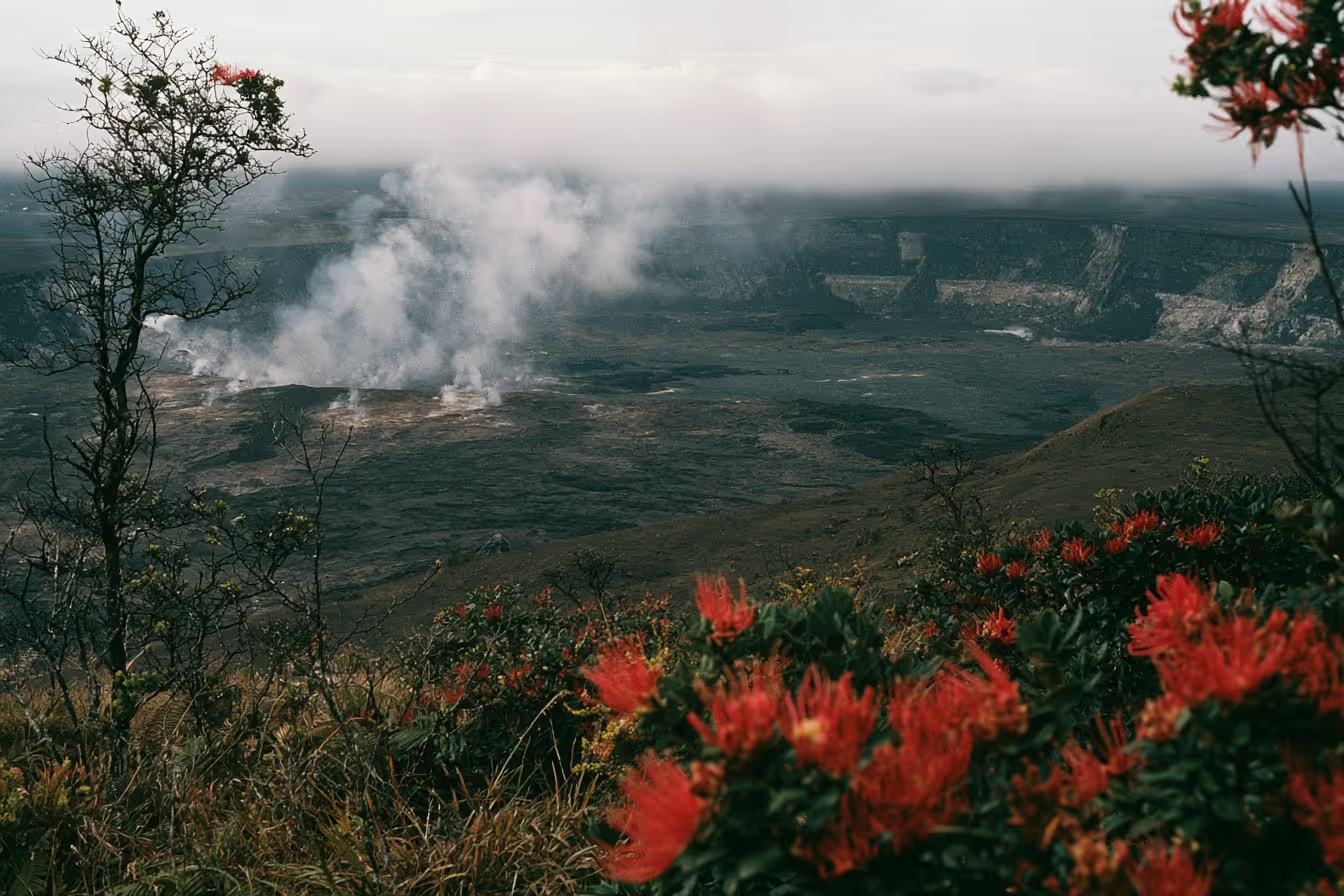
Big Island: Volcanoes, Waterfalls & Coffee Farm Day-Trip
The beach itself costs nothing. It is the 3 to 4 hours of driving that this replaces. A day trip picking up on the Kona side reaches Punalu'u as one stop among Volcanoes National Park, Akaka Falls and Rainbow Falls, which is a different day from a there-and-back run down Highway 11.
Check availabilityIs Punaluu Beach free?
Yes. Admission is $0 and parking is $0. No entrance fee, no meter, no gate. The lots are free and generally roomy, with plenty of shade under coconut palms (2). For a Big Island road trip where activities and luaus add up fast, a free stop with lifeguards, restrooms, and wild sea turtles is hard to top.
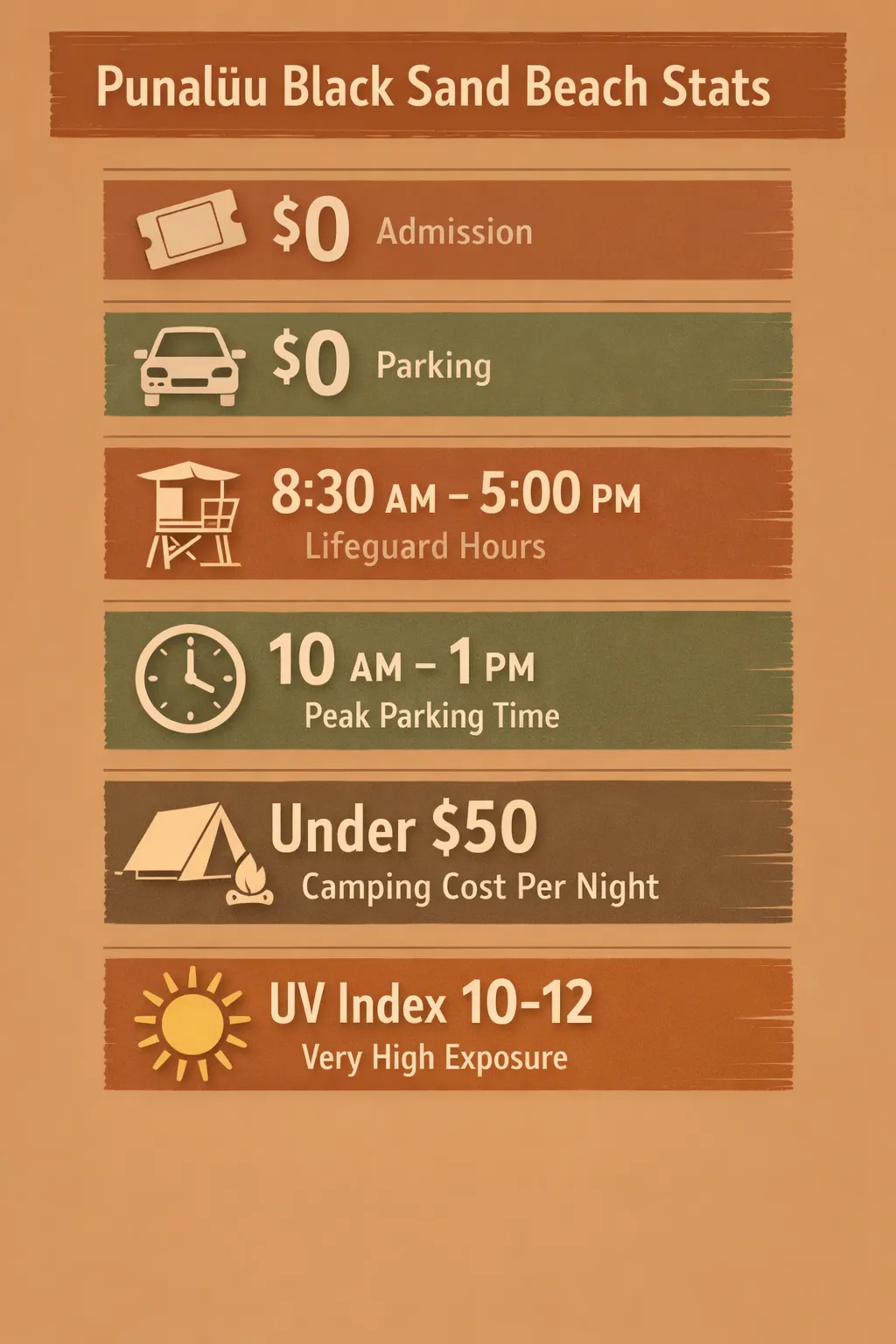 Punalu’u Black Sand Beach offers free entry and parking, lifeguards, camping under $50 per night, and UV index 10-12 on the Ka’u coast.
One caveat worth flagging: in May 2025, local news reported a foreclosure process affecting land around the beach, opening the door for conservation groups and lineal descendants to push for stewardship of the area (8). That could eventually change access rules or facilities, so check for updated guidance close to your travel date. For now, it’s free.
Can you swim at Punaluu Black Sand Beach?
Yes, but with real caveats - and this is where reading the beach matters.
Punalu’u has a lifeguarded main cove, staffed daily roughly 8:30 a.m. to 5:00 p.m. (3)(10). On calm days, confident swimmers can wade and swim in the more protected northeastern side of the beach, where there are fewer rocks and easier entry (1)(9). Multiple guides point to this as the safest entry when conditions allow.
The hazards are legitimate:
- Strong currents and shorebreak, especially away from the sheltered cove (1)(5).
- Lava rock underfoot and along the edges, which is why water shoes earn their spot in your pack (1).
- A cold freshwater layer from springs feeding the bay. Even when the open ocean runs 78-80°F (25-27°C), the surface at Punalu’u can feel genuinely chilly.
Before you get in, ask the lifeguard which section is safest that day - currents differ between the two ends of the bay (5). If there’s visible high surf, stay out. Weak swimmers should keep to wading and photos here, not push their luck.
Snorkeling and Swimming
Years of lava flow from nearby Kīlauea built this coastline of coarse black basalt sand. Swimming, wading, and turtle watching are the main draws.
If you want to snorkel, temper your expectations. Visibility typically runs 5-20 feet (1.5-6 m) and is often on the lower end. Advanced swimmers can attempt short sessions when surf is low, staying close to shore and clear of the rocky sections. Recent guides updated through 2023-2026 have deliberately shifted away from calling Punalu’u a snorkeling destination - it’s a wildlife and scenic stop first, a swim spot second.
Bring your own mask and fins if you’re set on it. There’s no reliable gear rental on the beach, and food service is limited to intermittent roadside stands selling coconuts and snacks - no full restaurant on site (2).
Swimming in the Tidepools
Along the edges of the bay you’ll find tide pools worth exploring on foot. Each holds its own small ecosystem - fish, crabs, and other nearshore critters. Low-effort, kid-friendly, and it doesn’t require getting into the surf.
A few practical notes:
- Wear water shoes or sturdy sandals. The lava rock is sharp, and the black sand gets hot enough to burn bare feet at midday - surface temps can exceed 100°F (38°C).
- Don’t handle marine life. Some species defend themselves, and you’re a guest in their home.
- Bring reef-safe sunscreen (SPF 30+), a hat, and sunglasses. The UV index on the Ka’ū coast regularly hits 10-12 in the dry season, and unprotected skin burns in 15-30 minutes.
Camping at Punaluu Beach Park
Day camping is allowed at Punalu’u Beach Park with a county permit - and this is where planning matters. Recent camper reports describe the permits as strictly enforced, “hard to get,” and with no walk-up camping allowed (7). Show up hoping to pitch a tent on the fly and you’ll be turned away.
Here’s the practical breakdown for Punaluu black sand beach camping:
- Permits come through Hawaiʻi County’s parks/camping system and should be secured well in advance of your travel date.
- Comparable Hawaiʻi County beach park sites run roughly $20-$40 per site per night, and Punalu’u falls under $50 per night (7). Fee schedules update regularly, so confirm the current rate close to your trip.
- Facilities are basic - picnic tables, restrooms, water, and shade. No RV hookups, no full-service campground infrastructure (7).
The payoff for camping here is timing. With a valid permit you can shoot sunrise, watch turtles bask through the quieter early hours before the day-trippers arrive, and catch sunset over the palms from a single base. For photographers and campervan travelers, that access to golden-hour light on black sand is the whole point.
Weather on the Ka’ū Coast
The Ka’ū coast is drier than rainy Hilo but tends to be windy. Expect daytime highs of 77-85°F (25-29°C) year-round, steady trade winds, and occasional passing showers. Ocean conditions can shift within hours as swell and wind direction change, which is exactly why the lifeguard is your best source before entering the water.
Punaluu black sand beach weather rarely shuts down a visit - so much of the appeal is scenery and turtles from dry land that most conditions still work. If you’re chasing calm water for a swim, aim for early morning, when the surface is often at its most settled.
Best month to visit: Late spring through early fall (roughly April-September) gives you the driest, most reliable conditions on this coast, though winter visits are perfectly fine for turtle watching and photography. Turtles are present year-round.
Animal Spotting
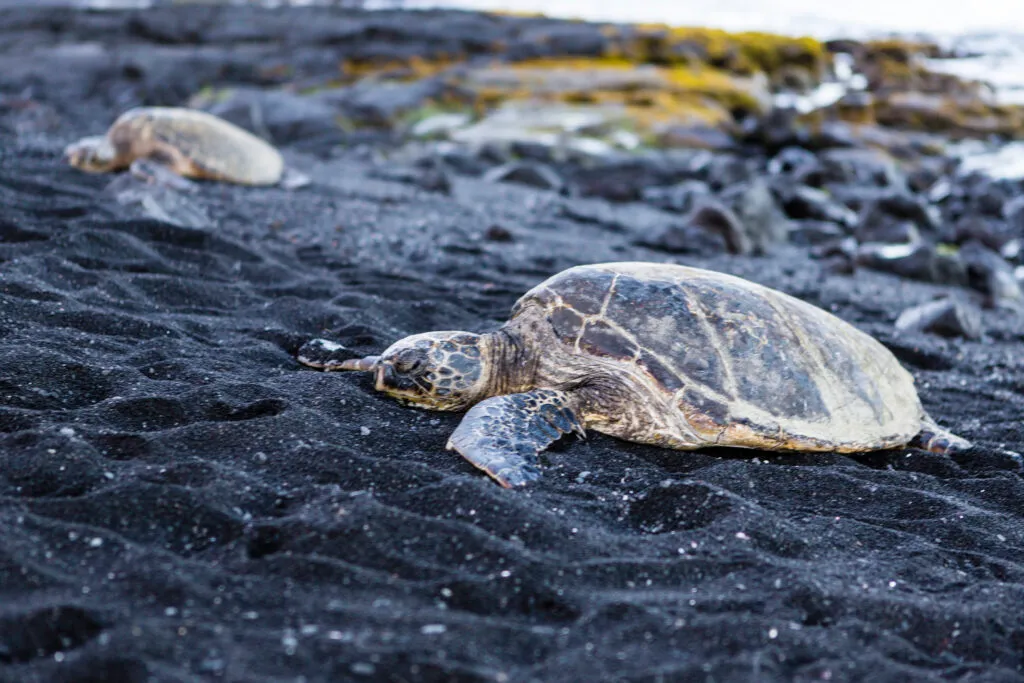
This is the reason to come. Punalu’u is one of the few places on Earth where endangered Hawaiian green sea turtles (honu) and, less commonly, hawksbill turtles regularly haul out to bask on the sand. You’ll also spot native Hawaiian birds around the beach and the freshwater ponds behind it.
The rules matter, and they’re enforced:
- Keep at least 10-15 feet (3-4.5 m) from any turtle, on land or in the water (6)(9). Local signage often specifies “at least 10 feet.”
- No touching, no feeding, no posing selfies inches from a turtle. This counts as harassment under wildlife protection laws and can bring fines (6).
- Never block a turtle’s path back to the ocean.
On cooler or cloudier days, turtles spend more time in the nearshore water and less time basking, so scan both the sand and the shallows. Expect more signage, roped-off zones, and volunteer stewards on busy days.
Possibilities for Photographers
Black sand against pale surf and green palms is a genuinely distinctive frame, and turtles resting on that dark canvas make for images you won’t get on a typical beach.
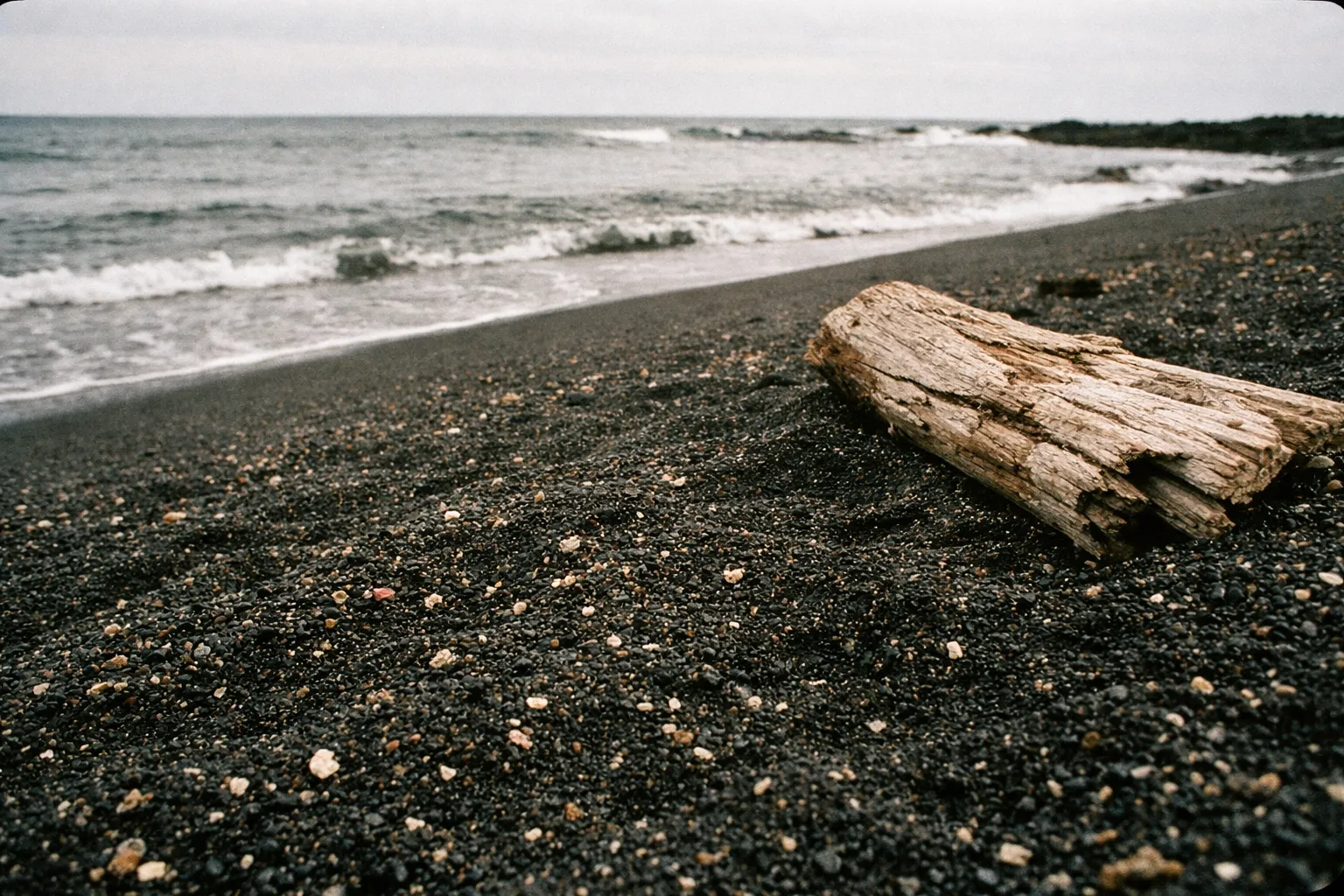
A few tips from experience:
- Bring a zoom lens (70-200mm or similar), or use your phone’s 3x lens, so you can stay 10-15 feet back and still fill the frame with turtle detail (6).
- Shoot early morning (7-9 a.m.) for cooler temps, softer light, and often calmer water - turtles may already be basking. Late afternoon (3-5 p.m.) delivers warm golden light on the black sand and thinner crowds.
- Midday sun blows out the contrast between black sand and bright surf, and the parking lot fills between 10 a.m. and 1 p.m. Arrive before 9 or after 3 for easier parking and better light.
I’ve found the palm-lined southern edge frames the bay best in the late-afternoon light, with the sand at its darkest and the surf catching the sun behind it.
How to Plan Your Visit: Three Scenarios
Knowing how much time and money to budget saves you from either rushing or overstaying. Here’s the scope up front, then the detail.
Planning Your Visit to Punaluu Black Sand Beach
Up to 5 hours, $0-$80Choose the right visit duration and activities based on your schedule and interests.
- 1
The Quick Stop (30-90 minutes, $0-$20)
Walk the beach, photograph turtles and black sand, sit at picnic tables, and check out the freshwater ponds. Ideal for cruise passengers or those with limited time.
- 2
The Half-Day (1.5-3 hours, $0-$50)
Add a cautious wade in the northeastern cove on calm days, explore tide pools, and enjoy a picnic lunch. Bring your own swim gear and focus on turtle watching.
- 3
The Ka'ū Coast Day Trip (3-5 hours, $0-$80)
Combine Punalu'u with nearby stops like Whittington Beach Park, Ka Lae (South Point), or a Ka'ū coffee farm tour. Keep driving under 5 hours for a full-day experience.
What to Pack
- Water shoes (about $20) - the single biggest comfort upgrade for lava rock and hot sand.
- Reef-safe sunscreen, SPF 30+, hat, and sunglasses. UV index runs high.
- A lightweight beach mat instead of a thick towel - it doesn’t trap hot black sand and shakes off clean.
- 1-2 liters of water per person and food, since full services are miles away.
- Cash or card for roadside fruit and snack stands (2).
- Snorkel gear only if you’re a confident swimmer and understand you’re bringing it for a maybe.
Booking note: The parking lot fills quickly between 10 a.m. and 1 p.m., so arriving before 9 a.m. or after 3 p.m. improves your chances of a spot.
Is Punaluu Worth It?
Yes - with the right expectations. If you arrive picturing soft white sand, warm gentle water, and all-day floating, you’ll leave disappointed by the coarse black grains, the cold spring-fed surface, and the average snorkel visibility (1)(3). That mismatch is the number-one reason people undersell this beach.
Come for what it actually is - one of the world’s most reliable spots to see endangered green turtles bask, a genuinely unusual landscape, free parking with lifeguards, and an easy add-on to a Volcanoes National Park day from Kona or Hilo, budget 45 minutes to half a day depending on your pace, and you’ll get one of the Big Island’s most distinctive stops for the price of parking - which is nothing.
Frequently Asked Questions
- What is the best time of day to see turtles at Punaluu Black Sand Beach?
- Early morning (7-9 a.m.) and late afternoon (3-5 p.m.) offer the best light and more active turtle sightings with fewer crowds.
- Are there any safety concerns for swimming at Punaluu Black Sand Beach?
- Yes, strong currents, sharp lava rocks, and cold freshwater springs make swimming risky; always check with lifeguards and avoid high surf days.
- How far in advance should I book a camping permit at Punaluu Beach Park?
- Camping permits must be secured well in advance; walk-up camping is not allowed and permits can be hard to obtain.
- Is there food or gear rental available at Punaluu Black Sand Beach?
- No full restaurants or gear rentals exist on site; bring your own snorkel gear and plan to buy snacks from occasional roadside stands.
- Can visitors touch or feed the turtles at Punaluu?
- No, touching or feeding turtles is illegal and considered harassment; maintain a distance of at least 10-15 feet to protect wildlife.
- What should I wear to explore the tide pools safely?
- Wear water shoes or sturdy sandals to protect against sharp lava rock and hot black sand, especially during midday.
- Is Punaluu Black Sand Beach accessible for visitors with mobility issues?
- Yes, the beach is drive-up with a flat 1-3 minute walk to the sand, making it accessible for those with mobility limitations.
Bottom Line
Punalu’u is a wildlife stop, not a lounging beach. Go early or late for light and parking, keep 10-15 feet from the turtles, wear water shoes, and check with the lifeguard before you swim. Slot it into a Volcanoes National Park day from Kona or Hilo, budget 45 minutes to half a day depending on your pace, and you’ll get one of the Big Island’s most distinctive stops for the price of parking - which is nothing.