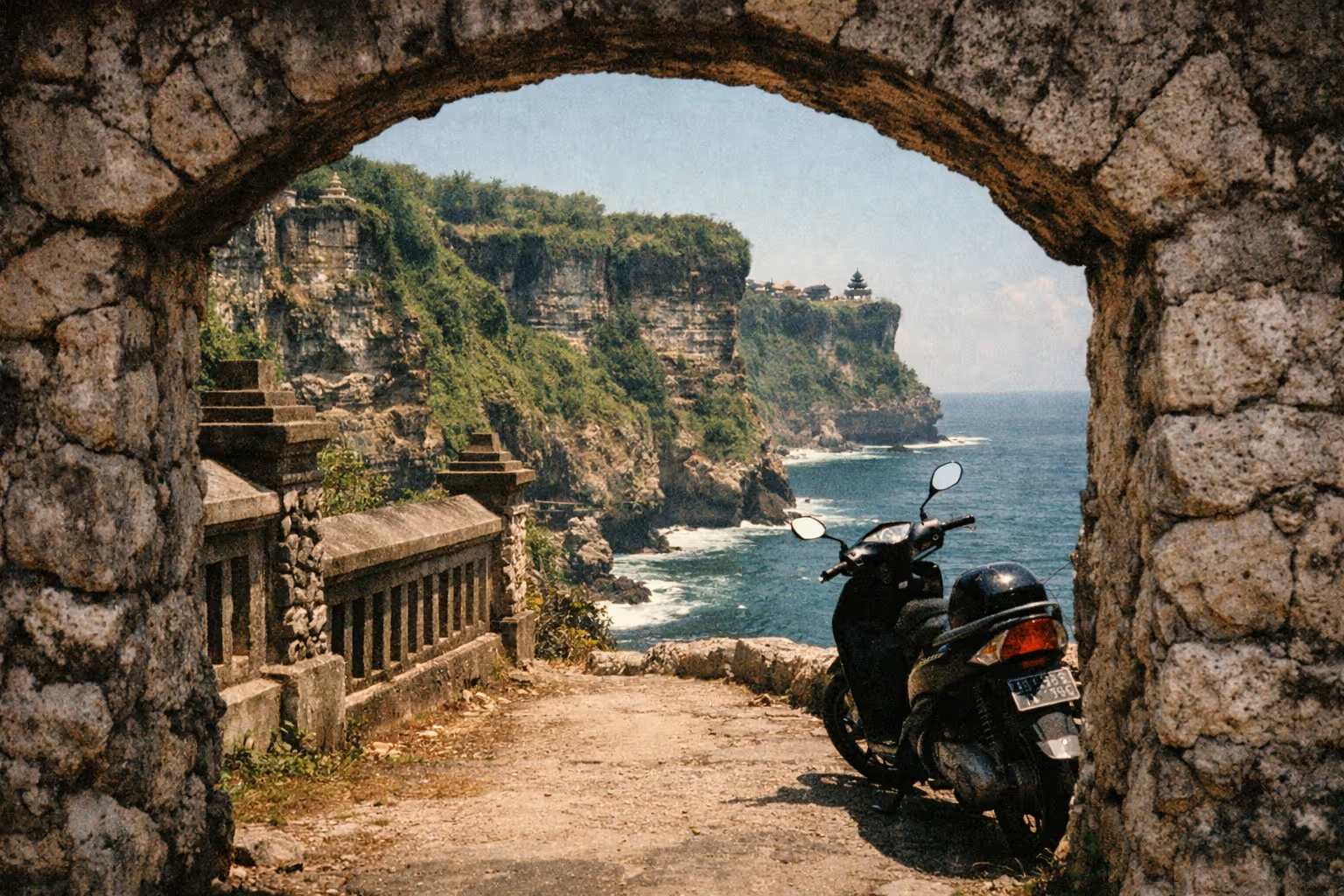
The kecak drums start before you see the temple. The sound carries across the whole clifftop, and by the time you reach the amphitheatre edge, the Indian Ocean is already turning orange below. That is the moment most visitors understand what Uluwatu actually is: not a beach town you stroll through, but a stretch of limestone cliffs at the southwestern tip of the Bukit Peninsula, about 45 to 60 minutes from the airport, where the temple sits about 70 metres above the water and the “beaches” are coves you reach down steep staircases.
There are three reasons to come here - Pura Luhur Uluwatu and its sunset dance, some of the best reef surf on the planet, and a string of cliff-access beaches - and each one has a timing catch or a logistics quirk that most visitors only discover on arrival.
This is a quieter, more spread-out version of Bali than Canggu or Seminyak. No nightlife strip, no easy walk to the sand. A scooter or a driver is not optional. Get the planning right and it is one of the best corners of the island; get it wrong and you spend the trip stuck in sunset traffic. This guide covers the temple logistics, the surf by skill level, the beaches, and a workable multi-day plan.
✓ Pros
- Dramatic clifftop temple with a genuine sunset performance, not a tourist afterthought
- Consistent left-hand reef surf with reliable swell April through October
- Several distinct beaches within scooter range, each with its own character
- More laid-back and less crowded than Canggu or Seminyak
- Clifftop beach clubs and warungs with open Indian Ocean views
✗ Cons
- Nothing is walkable - a scooter or driver is required for every beach and attraction
- All the main surf breaks are advanced reef; not suitable for beginners
- Wet season, roughly November to March, brings rain, wind, and possible dance cancellations
- Beach access often means steep, sometimes slippery cliff stairs
- Fewer restaurants and markets than the north Bali resort areas
What Uluwatu Bali Actually Is (and Isn’t)
Uluwatu is a coastal area, not a town. It is a loose cluster of cliffs, beaches, warungs, and beach clubs strung across several kilometres of the Bukit Peninsula’s southwestern tip. The name is usually glossed as ulu (head, or top) plus watu (stone), fitting for a temple on the cliff top. There is no compact centre to wander, no beachfront promenade. The main strip runs for kilometres and the beaches sit at the bottom of limestone cliffs, so you plan every move around transport.
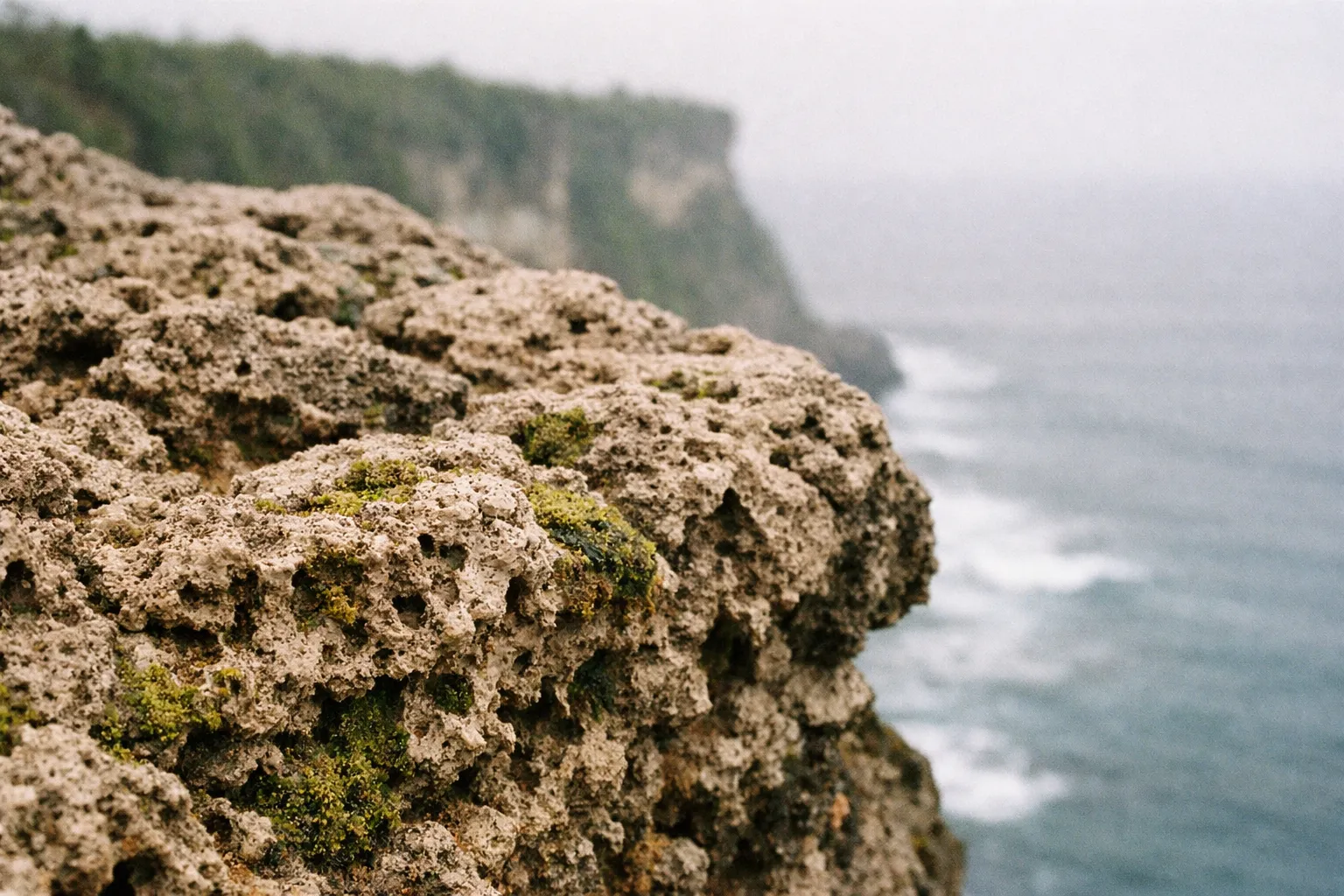
Is Uluwatu nice? Yes, if you want cliffs, surf, and sunsets at a slower pace. It is genuinely one of the more scenic parts of Bali, and markedly less frantic than the Canggu-Seminyak corridor. It is not nice for anyone expecting nightlife, a walkable town, or easy beginner beach days - those travellers will spend more time frustrated than charmed.
Is Uluwatu better than Ubud? Neither is objectively better; they serve different moods. Ubud is culture-dense and walkable, built around rice terraces, temples, markets, and a compact core you can explore on foot. Uluwatu is cliff-drama and surf, spread out and car-dependent. Most first-timers do both, and a common split is three or so nights in Ubud followed by two in Uluwatu.
Who Uluwatu suits: surfers, sunset chasers, beach club regulars, and travellers happy to trade convenience for coastal scenery. Who should reconsider: anyone chasing a party strip, learning to surf, or wanting a town they can navigate without a vehicle.
Uluwatu Temple - Timing, Tickets, and the Kecak Dance
Pura Luhur Uluwatu is a sea temple perched about 70 metres above the Indian Ocean on a limestone cliff, and one of Bali’s Sad Kahyangan, the six holiest temples, guarding the island’s southwest (16). According to the temple’s official site, the grounds are open to visitors 07:00-19:00 daily, and international adult entry is 60,000 IDR (40,000 IDR for a child) as of late September 2026, with the sarong and sash provided free at the entrance (16). The dress code is mandatory, not a suggestion - you cannot enter with bare legs.
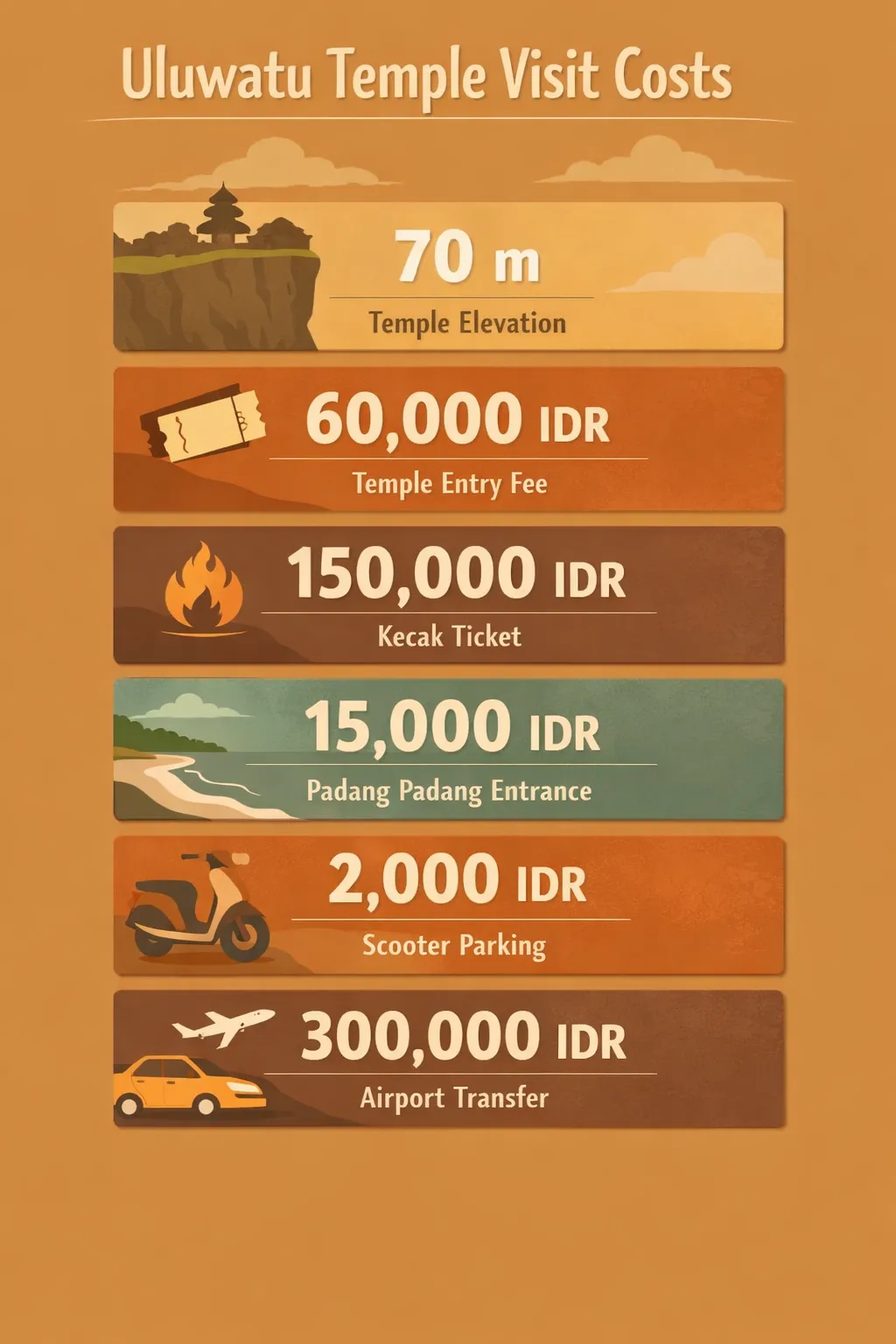 Key costs for planning a day at Uluwatu: temple entry 60,000 IDR; Kecak 150,000 IDR; Padang Padang entrance 15,000 IDR; scooter parking 2,000 IDR; airport transfer 300,000 IDR; temple elevation 70 m.
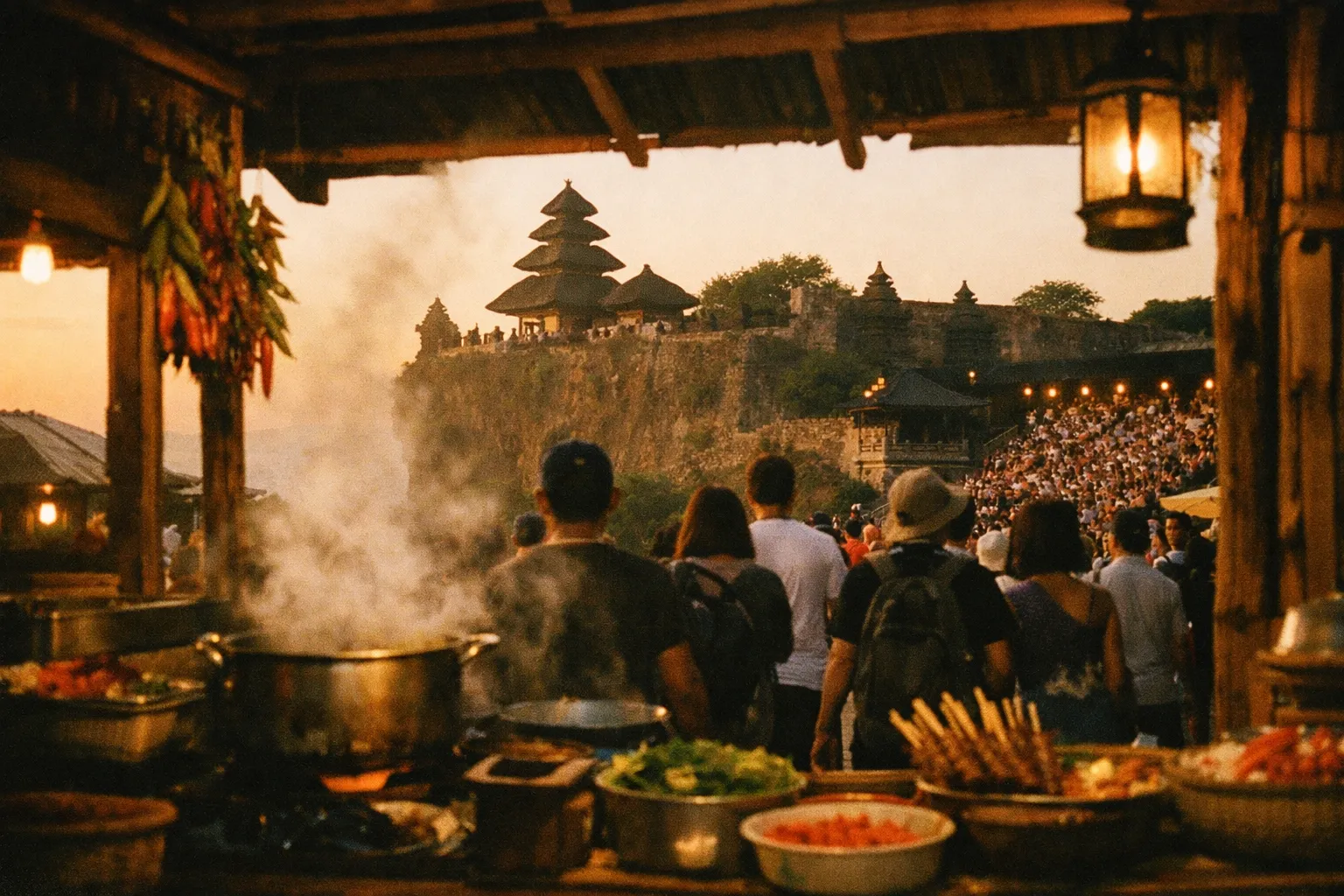
Two visit windows make sense. Come in the morning, roughly 07:00 to 10:00, for quiet, better light, and no dance. Come in the late afternoon, from around 16:30, for the sunset and the kecak. Both work; they just deliver different experiences.
How to Plan Your Uluwatu Temple Visit
2 hoursStep-by-step guide to timing your visit, booking tickets, and preparing for the dance and temple rules.
- 1
Pick your visit window
Choose morning for photography and calm, or afternoon for sunset and the kecak dance.
- 2
Confirm official hours
Check the official temple site for current opening hours (07:00-19:00) rather than third-party listings.
- 3
Buy kecak dance tickets
Tickets are sold at the official booth by the temple entrance, cash only; adults pay 150,000 IDR and shows sell out in peak season.
- 4
Prepare sarong and sash
The mandatory sarong and sash are provided free at the entrance.
- 5
Secure loose items
Put away glasses, phones, hats, and anything loose before entering the temple grounds.
- 6
Arrive early for the dance
Get there by 16:30 for the 18:00 show to secure good seating.
- 7
Check wet season status
If visiting November-March, confirm the dance is running on the day as rain can cancel or relocate it.
The kecak fire dance runs daily 18:00-19:00 in an open-air amphitheatre on the cliff edge, with the gate opening at 16:00; adult tickets cost 150,000 IDR (75,000 IDR for children aged 2 to 9), sold in cash at the booth by the temple entrance (17). It is one of the genuine highlights of a trip here, and in high season the amphitheatre fills fast. Late arrivals end up standing or watching through other people’s phones, so 16:30 is the practical benchmark for a decent seat. Kecak is performed at several sites across the island; for more on Bali’s temple dance traditions, the Uluwatu version is the most cliff-dramatic setting but not the only one.
Now the warning most guides bury: the macaques. Uluwatu Temple’s resident grey long-tailed monkeys actively target sunglasses, phones, hats, and anything dangling. This is a practical warning, not a cute one - they are fast, practiced, and they will take your sunglasses off your head. Secure everything before you enter the grounds.
Morning vs afternoon visit - which works better
Go in the morning if you care about photography and quiet. You get soft light, thin crowds, and the run of the grounds - but no dance. Go in the afternoon if the kecak is the point, and accept the trade-off: crowds, competition for seats, and heavier traffic on the way out. If you can only do one visit and the dance matters to you, take the afternoon and arrive early.
Uluwatu’s Beaches - What Each One Actually Offers
Uluwatu’s beaches are not resort beaches. They are coves and reef-edged strips at the bottom of limestone cliffs, and access matters as much as the sand itself. Wear proper shoes for anything with stairs, and check conditions before swimming - these are open-ocean beaches with variable currents.
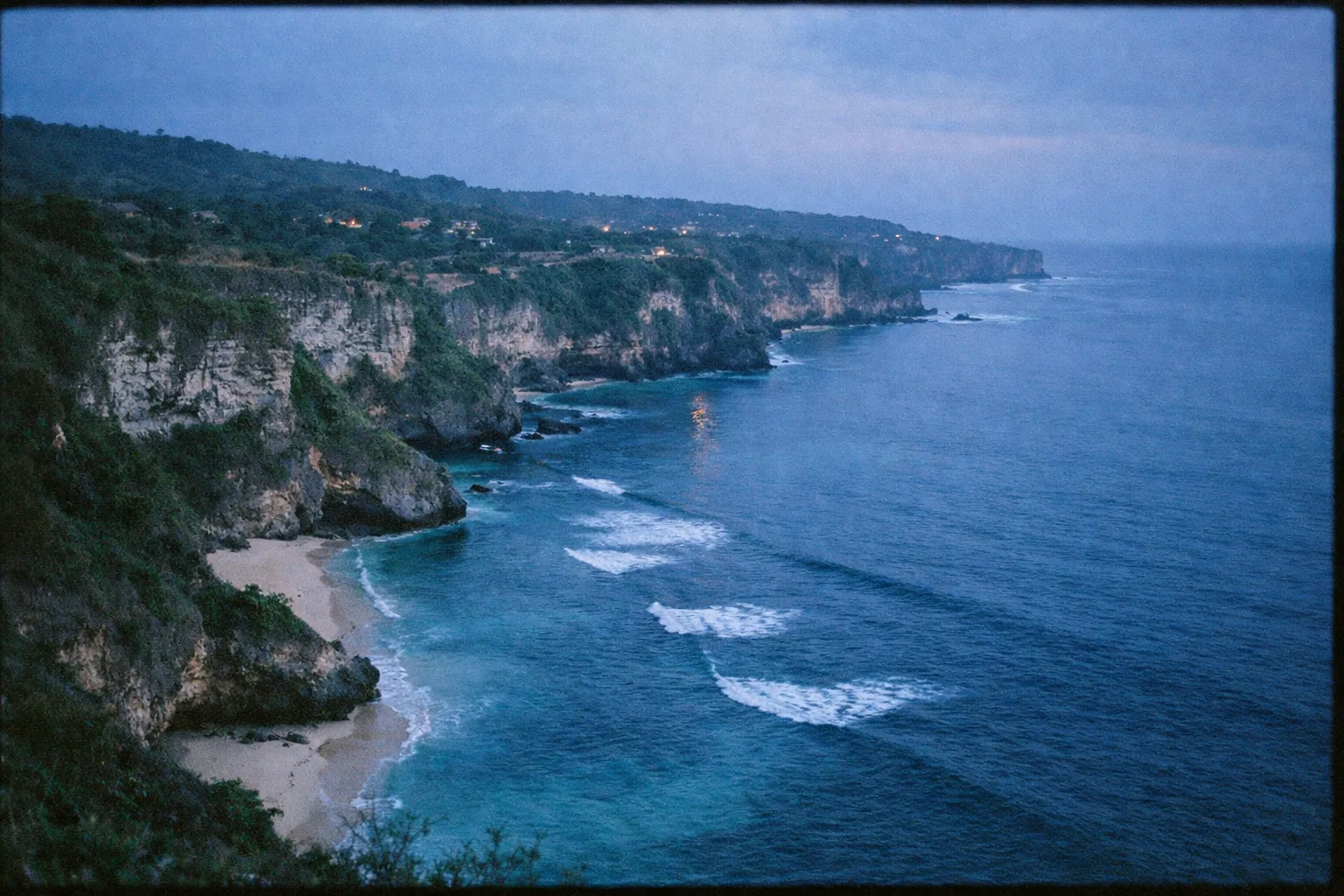
Padang Padang beach, also known as Labuan Sait, is a small cove reached through a narrow rock entrance, popular for sunbathing and swimming on calm days. Crowds build steadily through the day, so come early. International adults pay 15,000 IDR at the entrance (10,000 IDR for a child) (18), and parking is paid separately: about 2,000 IDR for a scooter and 3,000 IDR for a car, as of late September 2026 (20). It is also the launch point for the Padang Padang and Baby Padang surf breaks - check water safety conditions before swimming here.
Suluban Beach, often called Blue Point, is reached via a long staircase and a cave passage. The access route is genuinely part of the experience - you emerge through the rock onto bright blue water. Surf shops and bars sit above the cave. A SydAbroad write-up from April 2024 singles out its “unique entrance through a cave” (13), and it earns the attention.
Bingin Beach is a steep stair descent to a golden-sand cove, quieter than Padang Padang, with a mechanical left barrel breaking over shallow reef just offshore. Know before you go: in July 2025 the provincial government demolished 48 cliffside structures here - the bars, restaurants, and homestays that made Bingin famous - and as of mid-2026 the cliff is an active demolition and construction site, with only a couple of small carts selling light refreshments (19). A staged rebuild, starting with new beach access, a wider staircase, and toilets, begins in 2026 with a second phase in 2027 (19). The beach and the surf are still open; bring your own water and food.
Melasti Beach is the easy one. Road-accessible directly down to sea level - you drive to a car park near the sand rather than descending a cliff staircase - and it is wide and open with white sand and clear water. The most straightforward beach day in the area, and the best pick for swimming on calm days - check current conditions before you go.
Nyang Nyang Beach is a long, largely empty stretch reached by a longer, steeper descent with minimal development on the sand. Foot traffic is low. It suits travellers who want space over convenience and do not mind the climb back up.
Karang Boma Cliff is not a beach but belongs in this list - a clifftop viewpoint with flat rock ledges, good for sunset photography, and far less crowded than the temple. Expect only a small local fee (13).
Beach access at a glance
Beach Access at a Glance
| Padang Padang Beach | Suluban (Blue Point) | Bingin | Melasti | Nyang Nyang | Karang Boma Cliff | |
|---|---|---|---|---|---|---|
| Access Type | Narrow rock entrance and steps | Long staircase through cave | Steep stairs, construction on the cliff | Road access, no stairs | Long steep descent | Short walk to flat ledges |
| Best For | Sunbathing, swimming | Dramatic entrance, surf-watching | Cove vibe, surf-watching | Easy swim day, space | Solitude | Sunset without crowds |
| Crowd Level | Builds midday | Moderate | Quieter | Moderate | Low | Low |
| Swimming Suitability | Good on calm days | Not recommended | Swim with care, shallow reef | Most swim-friendly | Swim with caution | No swimming |
Uluwatu Surf - Breaks, Skill Levels, and Best Months
Let’s be direct: Uluwatu’s main reef breaks are advanced. Shallow coral, strong currents, and steep takeoffs are the norm. This is not beginner territory. If you are learning, the honest advice is to go to Kuta, Legian, or Canggu - the Uluwatu area has only two spots with any real margin for error.
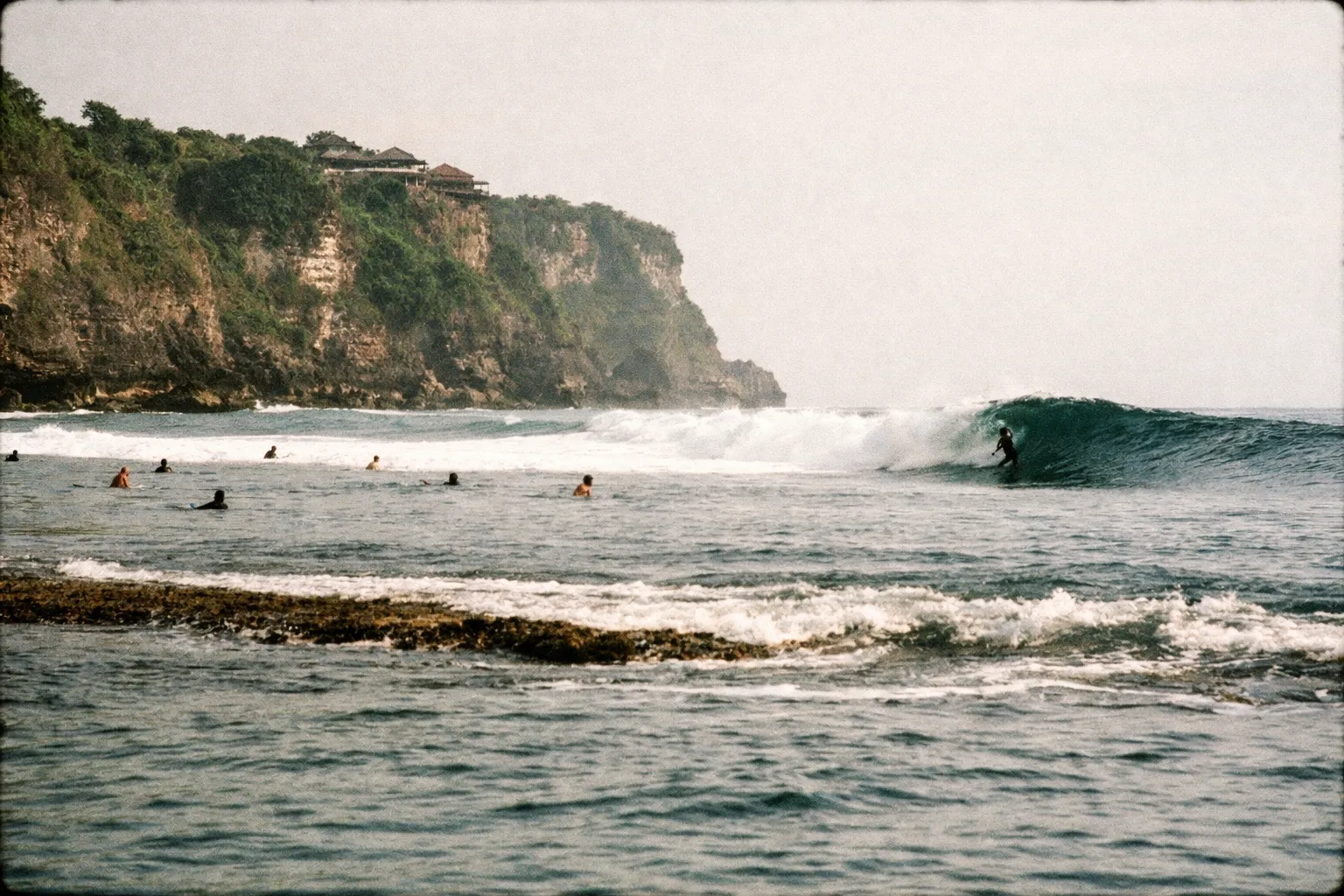
The Uluwatu main reef breaks in several sections - The Peak, Temples, Outside Corner, Racetracks - over lava-coral reef (2), forming one of the most consistent left-handers on the planet. You access it by descending the stairs at Suluban and paddling out through the cave opening; mid tide generally works best (4). The reef spots are tide-sensitive. Best April through October (5). Advanced only.
Padang Padang left is the wave surfers nickname the “Balinese Pipeline”: a short, hollow barrel over very shallow reef that needs a solid swell, which in practice means June to September, and it is for experts only (8). If you are not paddling out, it is spectacular to watch from the cliff above.
Baby Padang, the inside peak at the same beach, is the gentler wave and the logical first reef experience: it stays small and friendly on modest swells, and coaches work from the beach (8). This is the step-up spot for improvers.
Bingin is a mechanical left barrel over shallow reef - advanced on bigger days - and the cliff above gives non-surfers a free vantage point. Impossibles runs long, racing lefts between Padang Padang and Bingin on the same reef chain. According to the Impossibles spot profile cross-checked against Surfline, Stormrider and WannaSurf, it works from 4 to 12 ft, needs a moderate-to-large S or SW swell, and rewards intermediate-to-advanced surfers who can read fast reef lefts (10). The clifftop viewpoint above it is a free, worthwhile photo stop for non-surfers.
Dreamland, just north of Bingin, is the only break in the Uluwatu area with a primarily sandy bottom (5), which makes it one of the few spots suitable for beginners on small days. Surf schools operate there.
Surf by skill level
Surf Breaks by Skill Level
| Uluwatu Main Reef | Padang Padang Left | Baby Padang | Bingin | Impossibles | Dreamland | |
|---|---|---|---|---|---|---|
| Skill Level Required | Advanced | Expert only | Beginner to intermediate | Advanced on size | Intermediate to advanced | Beginner-friendly on small days |
| Best Swell | Dry-season S/SW swell | Solid S/SW swell | Small, modest swell | S/SW swell | Moderate-to-large S/SW swell | Small days |
| Reef Hazard | Shallow lava-coral reef | Very shallow reef | Low-to-moderate hazard | Shallow reef barrel | Shallow reef | Sandy bottom |
| Best Months | April-October | June-September | Year-round | Dry season | April-October | Year-round |
| Notes | Multiple sections; tide-sensitive | Short, hollow barrel | Surf coaches on hand | Cliff under reconstruction | Long racing lefts; photo viewpoint | Surf schools operate here |
Best months for Uluwatu surf
The surf season runs April to October, when the dry season brings consistent swells and offshore trade winds (5). June to September brings the biggest, cleanest swells (8), and late September into October offers the same water quality with fewer crowds (4). Outside that window the waves are smaller but can still be high-quality, with far fewer surfers (8) - see Bali’s best time to visit for the broader seasonal picture beyond surf.
Wet season, roughly November to March, is the off-season for the west coast breaks; Nyang Nyang runs the opposite calendar and fires best from November to April (4).
Single Fin and the Cliffside Beach Club Scene
Single Fin sits directly above Suluban Beach with an unobstructed sightline to the Uluwatu reef, which makes it the best clifftop seat in the area for watching surfers below. Its Sunday sessions are the social event of the week in Uluwatu - live DJs, a crowd spread across the terraces, and the surf as the backdrop. One Jones Around the World account from February 2023 called it about the best place to be on a Sunday in Bali (11), and on a good Sunday afternoon that holds up.
The wider beach club scene covers a range of price points. Ulu Cliffhouse has a multi-level terrace and an infinity pool over the ocean. Savaya, formerly Omnia, is the high-end, nightclub-adjacent option, with international DJs and minimums well above the local warungs. Sundays Beach Club, part of the Ungasan Clifftop Resort, gets you private beach access via a cable-car-style inclinator down the cliff rather than a public staircase.
For non-surfers, Single Fin and the clifftop above Impossibles are the best elevated spots to watch the reef breaks without paddling out. And if the beach club minimums are not for you, the warungs at the beach bases, around Padang Padang for instance, serve drinks and food with closer-to-the-action views at a fraction of the price.
One logistics note worth repeating: the roads around Single Fin, Uluwatu Temple, and the cliff clubs all converge at sunset. The ride out is slow. Leave earlier than you think you need to.
Activities Beyond the Temple and Surf in Uluwatu
There is enough here to fill a couple of days even if you never touch a surfboard. The best things to do in Uluwatu for non-surfers cluster around the cliffs, the beaches, and the food.
- Karang Boma Cliff is a low-fee clifftop viewpoint with flat rock ledges and sunset views, far quieter than the temple - a practical alternative once you have already done the kecak dance.
- Beach-hopping by scooter works because Padang Padang, Suluban, Bingin, and Melasti sit within a few kilometres of each other. Start early and you can cover all four in a day, each with a different character: cave entrance, hidden cove, open swimmable sand, and surf launch.
- Watching surf from above is free and genuinely absorbing. The clifftop viewpoint over Impossibles, the terraces around Single Fin, and the cliff above the Bingin barrel let you spend a whole morning watching top-level surfing without getting wet.
- Wellness and yoga studios and standalone spas operate across the area, generally cheaper than their Seminyak equivalents and well-suited to the slower pace of a multi-day stay.
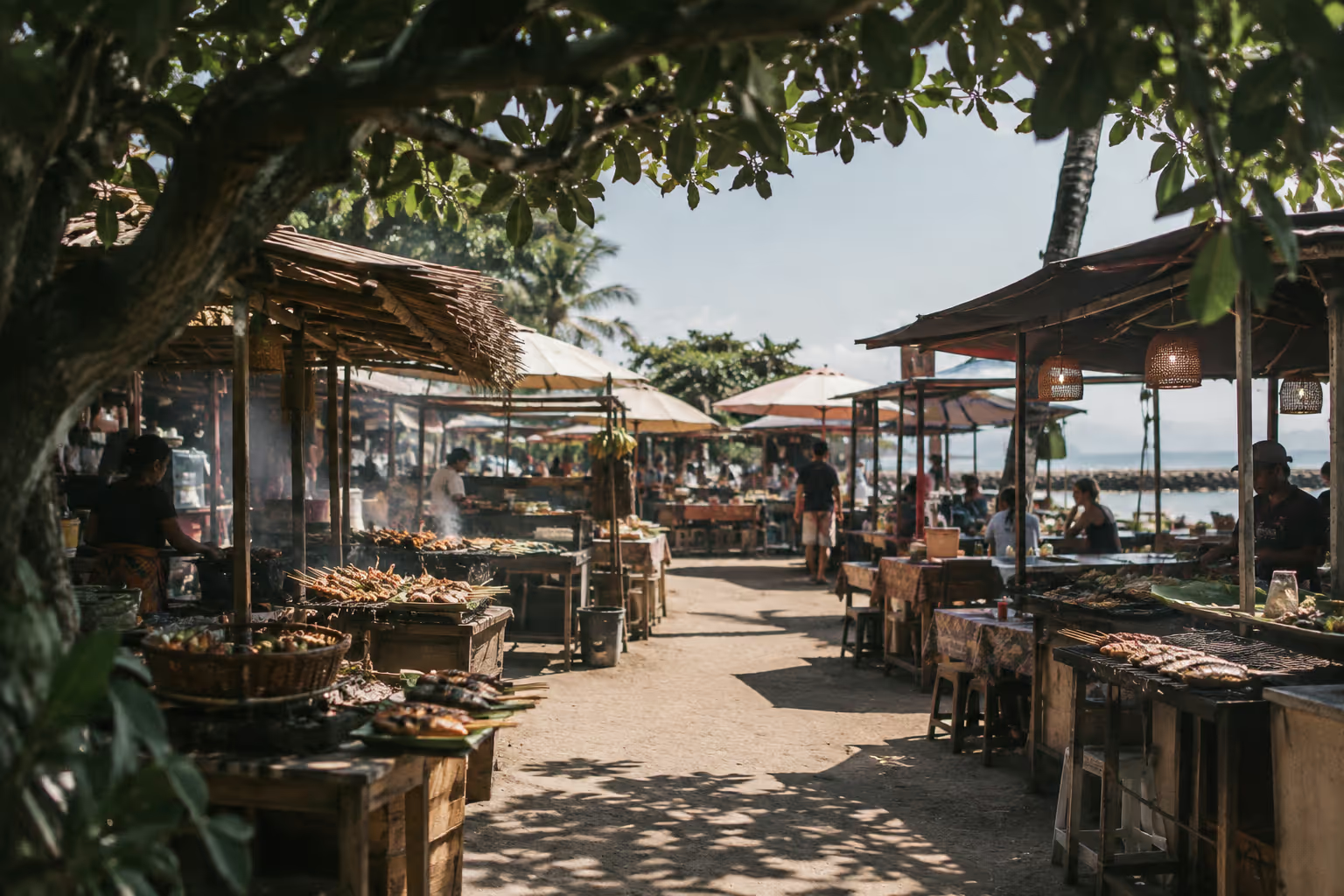
- Warung food is a real part of the experience, not just the budget option. A warung meal runs around 30,000-50,000 IDR (7), which makes a warung lunch worth planning around.
If you are based in Ubud or Canggu, Uluwatu works as a focused one-to-two-day add-on. The temple, one or two beaches, and a sunset spot cover the highlights without overstaying.
What is the prettiest place in Bali? It is subjective, but the Uluwatu cliffs are a strong contender. Melasti’s white sand and clear water for a beach, Karang Boma at golden hour for a viewpoint, and the temple itself for the drama of a clifftop sunset. If your definition of pretty is dramatic coastline rather than rice terraces, this corner of the island competes with anywhere.
When to Go - Seasons, Surf Windows, and Crowd Patterns
The dry season, April to October, is the clear window for Uluwatu: the cleanest skies, the most consistent surf, and reliable kecak performances. Within that, May through September is the sweet spot for beaches and temple visits.
The peak months of June to August bring the biggest swell but also the largest crowds and the highest accommodation prices. The shoulder months are the value window: late September into October keeps the same water quality with fewer crowds (4), and April opens the dry season well before the July-August peak.
Wet season, roughly November to March, brings heavier rain, and a downpour can cancel or move the kecak performance. On the upside, accommodation rates drop during the wet months.
Practical rule: if the kecak dance is a priority, favour the dry season, and during any wet-season visit, confirm the performance is running on the day. For rainfall, temperature and sea temperature month by month, see the Uluwatu weather guide.
Month-by-Month Conditions in Uluwatu
| April | May | June | July | August | September | October | November to March | |
|---|---|---|---|---|---|---|---|---|
| Weather | Dry, clear skies | Dry, clear skies | Dry, windy | Dry, windy | Dry, windy | Dry, clearer winds | Dry, clear | Wet season, rain, wind |
| Surf Quality | Dry season opens | Consistent swell | Biggest swells | Biggest swells | Biggest swells | Big, clean swell | Clean swell, fewer surfers | Off-season on the west coast |
| Crowds | Moderate | Increasing | High | High | High | Moderate | Moderate | Low |
| Verdict | Good start to the season | Sweet spot for beaches and temple | Best for surf watching | Crowded, expensive | Crowded, expensive | Value window | Shoulder-season sweet spot | Check the dance is running |
Getting to Uluwatu and Getting Around Once You’re There
From Ngurah Rai International Airport (DPS), Uluwatu is about 45 to 60 minutes by road depending on traffic (7). A pre-booked private transfer runs around 300,000 IDR and is the least stressful option; Grab is usually cheaper, picked up from the designated zone outside Arrivals (3). There is no direct public transit - a multi-day Bali itinerary that factors in these transfer times helps avoid surprises.
From central Bali - Canggu or Seminyak - ride-hail apps are the simplest option. If you are combining Uluwatu with other south Bali stops, a full-day private driver is the practical choice.
Once you are here, a scooter is the standard way to get around; a local rental guide puts a standard automatic at about 130,000-200,000 IDR per day as of 2026, and your home licence plus an International Driving Permit with the motorcycle category is required (7), helmets are mandatory, and police checks along the main Bukit roads are common. This is not a formality, so ride legal. Grab and Gojek work as a backup for longer trips or rainy days, but surge pricing hits at sunset when everyone leaves the temple and cliff clubs at once. The scooter rental and safety basics are the same island-wide.
Walking between spots is not realistic. The strip from Padang Padang to the temple spans several kilometres, and the beaches require cliff-stair descents. Plan every move around transport. To minimise scooter time, base yourself near Padang Padang, Bingin, or central Uluwatu - that puts you within easy range of the main beaches, surf, and dining.
How to Spend 2-3 Days in Uluwatu - A Practical Itinerary
Two to four nights is the right commitment. Day trips are possible but rushed, and the payoff here comes from slowing down. The key figures below - 16:30 temple arrival, 18:00 dance, 10-to-20-minute hops between stops - anchor the plan.
Day 1 - Temple and beaches
- Morning: Melasti Beach for an easy swim and space (road-accessible, no stairs, the efficient first stop).
- Lunch: a warung near Padang Padang.
- Late afternoon: Karang Boma Cliff for golden-hour light.
- 16:30: arrive at Uluwatu Temple; 18:00 kecak dance.
- Dinner near the temple area.
Day 2 - Surf and cliffs
- Early morning: check conditions and paddle out at Baby Padang or Dreamland if you are learning, or the Uluwatu main reef if you are advanced.
- Mid-morning: Suluban Beach via the cave entrance.
- Afternoon: Bingin Beach - steep stairs down (bring your own lunch while the cliff is rebuilt) and the barrel to watch from above.
- Sunset: Single Fin above the Uluwatu reef, especially on a Sunday.
Day 3 (optional extension)
- A slower morning at Padang Padang Beach.
- The Impossibles clifftop viewpoint for surf photography.
- An afternoon at a beach club - Ulu Cliffhouse or Savaya - or a spa day.
- Early-evening departure or onward to Canggu or Ubud.
Segments between the main stops - Padang Padang, Suluban, Bingin, the temple, Single Fin - generally run 10 to 20 minutes by scooter or car, since they cluster on the Bukit’s southwest corner. Build in extra time at sunset.
If you only have one day in Uluwatu
Do Padang Padang Beach in the morning, a warung lunch, then the temple by 16:30 for the 18:00 kecak dance, and finish with a drink at Single Fin. That covers the temple, a beach, and the sunset without the day falling apart - just accept that you will be watching surf rather than doing much else.
What to Watch Out For - Common Mistakes in Uluwatu
The monkeys. This gets its own paragraph because it happens constantly. Official temple guidance is explicit: the macaques snatch loose items. Secure glasses, phones, hats, and bags before you enter the grounds. They are fast, practiced, and completely indifferent to how expensive your sunglasses were. Losing a pair to a monkey is a rite of passage you can skip.
Surfing beyond your level. Beginners sometimes paddle out at Uluwatu or the Padang Padang left on big days. Shallow reef, strong currents, and heavy lineups make that genuinely dangerous. Baby Padang and Dreamland exist for a reason - use them, or head to Kuta, Legian, or Canggu to learn.
Underestimating beach access. The stairs at Suluban, Padang Padang, Bingin, and Nyang Nyang are steep, sometimes slippery, and hard work in midday heat, especially carrying a board. Wear shoes, not flip-flops.
Arriving late for the kecak dance. Tickets are sold at the booth by the entrance and sell out in peak season (17), and poor seating means watching through other people’s phones. Arrive by 16:30.
Sunset traffic. The roads around Single Fin, the temple, and the cliff clubs all converge at once. Add 20 to 30 minutes to any sunset-timed ride. This is not a maybe - it is a consistent pattern every dry-season evening.
Opening-hours confusion. Some third-party sites still list 09:00-20:00. The temple’s official site gives 07:00-19:00 for visitors (16). Trust the official source and plan around it.
What to be careful of in Bali more broadly? The same themes apply island-wide: ride scooters only with a valid licence and helmet, respect temple dress codes (sarong and covered shoulders), watch your belongings around the monkeys, and do not stack too many regions into one day - Bali’s traffic turns short distances into long drives.
Frequently Asked Questions
- Is Uluwatu in Bali worth visiting?
- Yes, for cliffs, surf, and sunset; not for nightlife, easy beach access, or beginner surfing. Two to four nights is ideal.
- Is Uluwatu better than Ubud?
- They serve different purposes: Ubud for culture and walkability; Uluwatu for cliffs, surf, and a slower coastal pace.
- Can beginners surf at Uluwatu?
- No. Main breaks are advanced reef waves. Baby Padang and Dreamland are beginner-adjacent; Kuta or Canggu are better for first lessons.
- What should I watch out for at Uluwatu Temple?
- The macaques. Secure all loose items before entering. Confirm official hours and arrive early for kecak tickets, which are sold at the entrance.
- How do I get from Bali airport to Uluwatu?
- By road, about 45-60 minutes depending on traffic; a private transfer runs around 300,000 IDR one way and Grab is usually cheaper. No direct public transit.
- What is the best time to visit Uluwatu?
- May to September for beaches and sunsets; June to September for the biggest, cleanest surf, or late September into October for the same waves with fewer crowds. In the wet season, confirm the kecak is running.
- Do I need a sarong for Uluwatu Temple?
- Yes. Sarong and sash are mandatory and provided free at the entrance.
Before You Book
Three things decide whether an Uluwatu trip works. Timing: come in the dry season, and if the kecak dance is on your list, arrive at the temple by 16:30 to buy tickets at the booth. Transport: a scooter or driver is non-negotiable, so plan every move around it and budget extra minutes for sunset traffic. Surf expectations: if you are not an advanced surfer, the main breaks are for watching, not paddling - Baby Padang and Dreamland are your only real options otherwise.
Everything else - which beach, which club, how many nights - is secondary. Get the dance timing and the transport sorted, and the rest of Uluwatu falls into place.