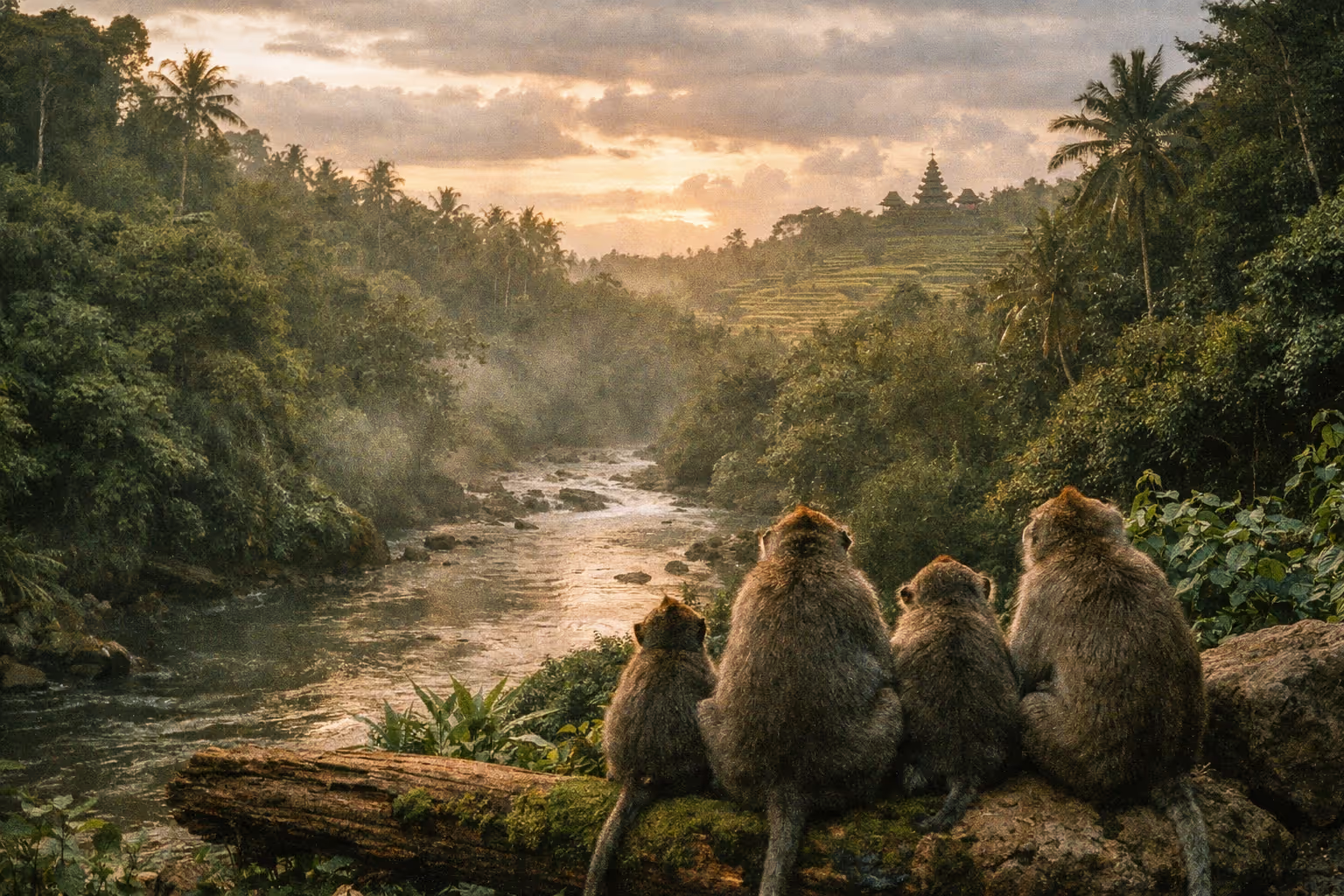
The biggest Ubud Bali mistake is booking a villa too far out; a ricefield view that looks idyllic online turns short outings into 30-to-60-minute transfers. Stay central near Jalan Raya Ubud, or just up in Penestanan for a five-minute scooter to town. Then cluster your stops into one six-to-eight-hour loop rather than crossing town twice. Reach the Sacred Monkey Forest at its 9 a.m. opening, carry no loose food, and keep a sarong in your bag for Goa Gajah and the palace to skip the gate fees.
Ubud Bali: A Practical Guide to Its Best Experiences
Ubud Bali is known for its dense, humid jungles that are genuinely interesting - not just as scenery but as working ecosystems with hidden temples tucked into the foliage. I’ve walked a few of the trails around town, and the thing that catches you off guard is how quickly the sounds of Jalan Raya Ubud drop away. Towering canopy, distant water, the occasional carved stone shrine you weren’t expecting. It doesn’t take long before the trek feels worthwhile.
Trekking here is also a good reason to slow down on the screen time. The trails around Ubud hide ancient relics and temple structures that don’t appear on most tourist maps, and finding them on foot feels like a fair reward for the sweat.
One practical note before you go: this is wet, slippery terrain for much of the year. Bring closed-toe sandals or water shoes, quick-dry clothing, and a small dry bag. In the wet season, muddy trails and afternoon rain are a common reason itineraries fall apart - plan jungle walks for the morning and keep an indoor backup ready, whether that’s a café, spa, or museum stop.
What to Actually Expect at the Sacred Monkey Forest
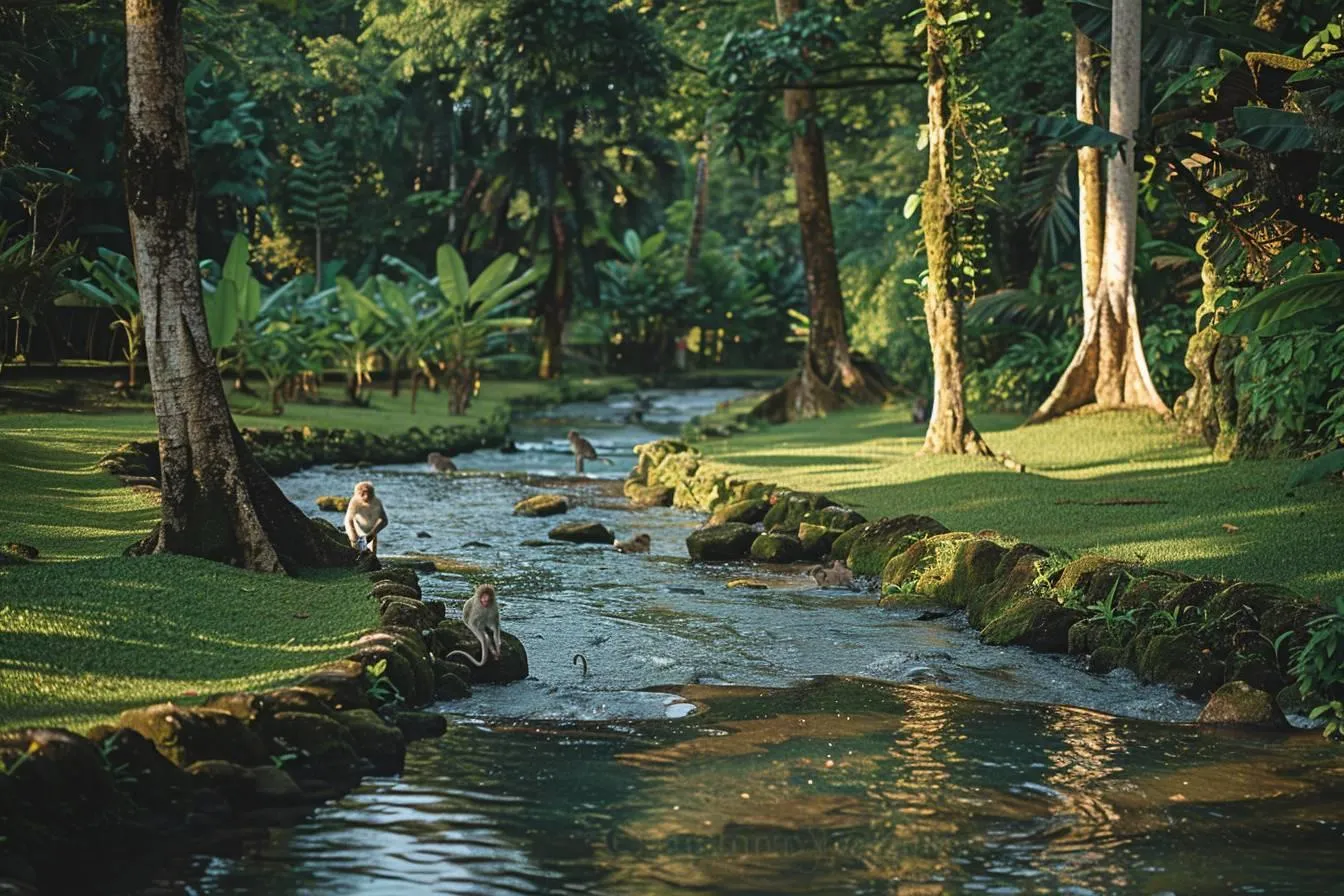
The Sacred Monkey Forest Sanctuary is home to a large community of long-tailed macaques living in a managed forest that also contains several active temples. It’s a genuine wildlife space, not a zoo, and the distinction matters. When I visited on a weekday morning in early 2025, the macaques were everywhere - on the trail, on the stone railings, occasionally on people - and the whole place had a slightly chaotic energy that I found more interesting than stressful.
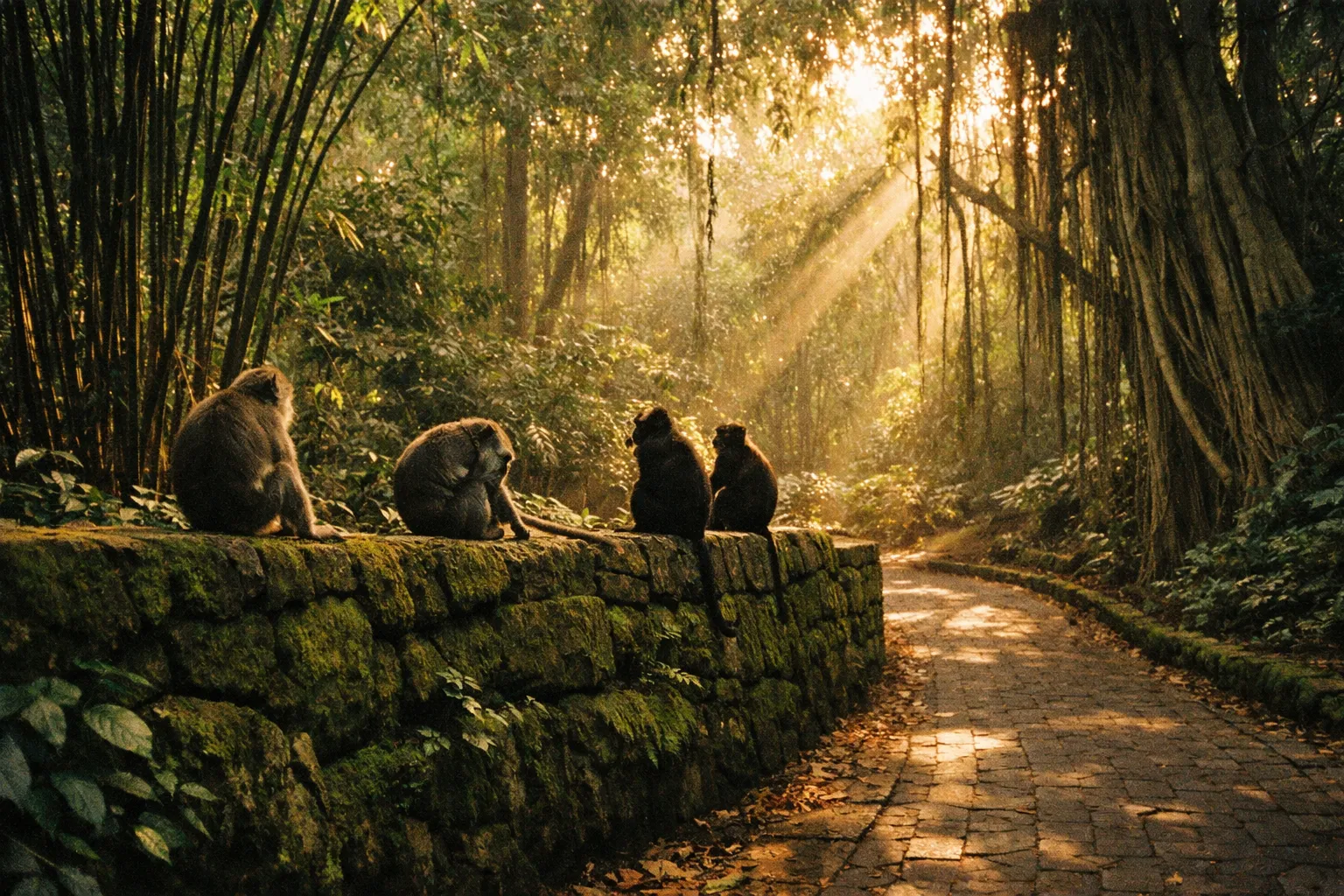
Practical details: Gates open around 9:00 AM and close at 6:00 PM, with last admission around 5:00 PM - don’t cut it close if you want a full walk (8). Arrive at opening. Crowds build through the day, and the monkeys are most active before the midday heat climbs toward 28°C (82°F). A few rules that save you grief:
- Don’t carry loose food, water bottles, or anything dangling - macaques are quick and unsentimental about taking it.
- Keep a firm grip on phones and sunglasses; the monkeys know exactly what these are.
- Don’t stare directly into a monkey’s eyes - it reads as a challenge.
- Don’t try to pry an object back if one grabs it. Let staff handle it.
This is a managed sanctuary, which is worth distinguishing from the rice terraces. Travelers often lump both under “nature stops,” but one is a wildlife enclosure and the other is a landscape viewpoint with very different access and etiquette.
White-water Rafting Adventures on the Ayung River
Most rafting runs near Ubud happen on the Ayung River, with varying difficulty that suits beginners and people who’ve done it before. The river alternates between proper rapids - the kind that demand focus and actual paddling - and calm stretches where you drift past deep gorge walls with waterfalls dropping in from the sides. It’s a genuinely physical day out, and the scenery is good enough that you’d enjoy it even without the rapids.
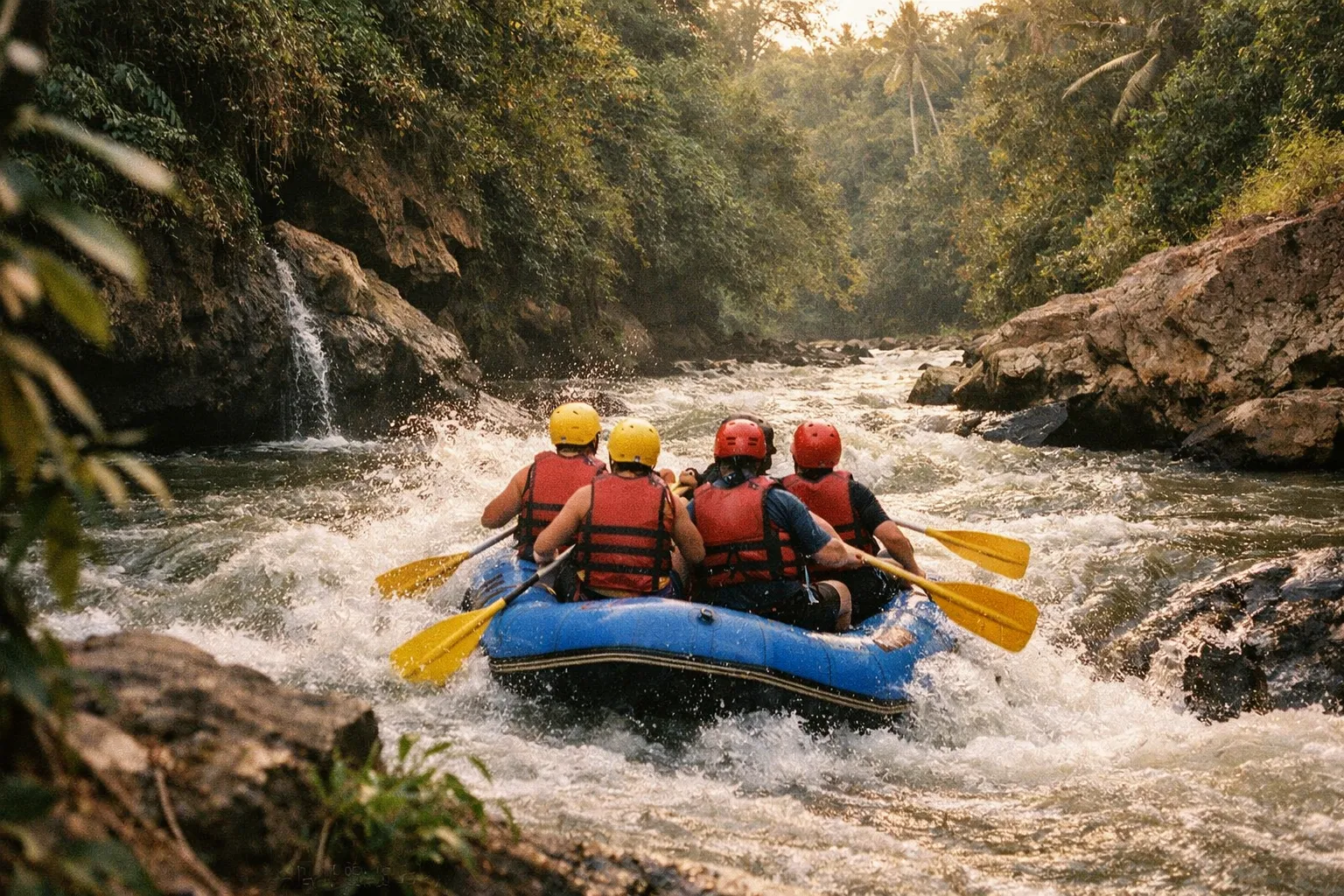
My first time on the Ayung was a leap of faith in the most literal sense. The current was stronger than I’d anticipated, and there’s a real adjustment period in the first ten minutes before you stop bracing and start paddling properly.
Rafting is rain-sensitive. Heavy wet-season downpours raise water levels and change run conditions, so book through an operator that monitors the river and bring water shoes plus a change of clothes. Don’t show up in flip-flops.
Exploring the Tegallalang Rice Terraces
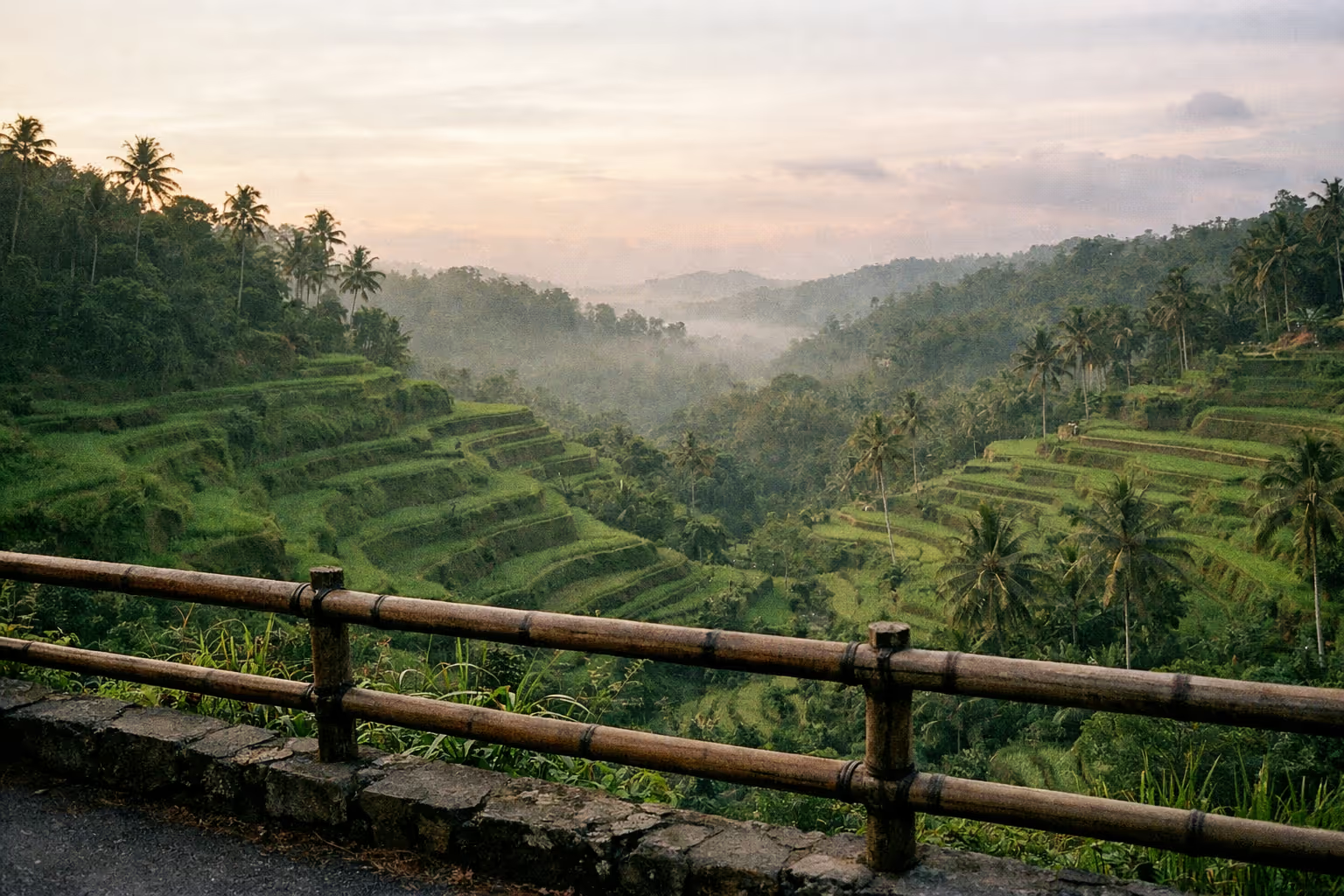
The Tegallalang Rice Terraces are the postcard image of Ubud - stacked emerald paddies cut into a valley using the centuries-old subak (traditional Balinese cooperative irrigation) system. Entry fees run roughly IDR 25,000-50,000 per person as of 2026, about US$1.50-$3 - the main booth charges IDR 25,000, while some access points along the ridge charge up to IDR 50,000 (1)(4)(5). That low headline price is deceptive. Parking, the famous jungle swing rides, and “donation” checkpoints along the trail can quietly double what you spend.
Go before lunch. Multiple guides flag the early window as the best time, before tour buses arrive and the heat peaks (1)(5). Wear shoes you don’t mind getting muddy - the trail down into the terraces is steep and slick after rain.
If you want a quieter walk through paddies without the swings and ticket gates, the Sweet Orange Rice Field Trail on the north edge of town delivers similar scenery. It’s a flat, self-guided loop of about an hour through working rice fields - roughly 2 km compared to Tegallalang’s steeper, shorter descent - with a couple of warungs (small family-run eateries) along the way for a coconut or a coffee. The trail stays at field level rather than dropping into a gorge, which means less mud on your shoes and a more relaxed pace. Better suited to a slow-travel day than a stacked sightseeing sprint.
Goa Gajah (Elephant Cave) and Ubud Palace Highlights
Two of Ubud’s main cultural stops sit close to town and pair well with the rest of the circuit.
Goa Gajah - marked as the Elephant Cave on every map - is an 11th-century religious site centered on a carved cave entrance surrounded by a menacing demon face, plus a set of ancient bathing pools fed by spring water (3)(7). The site is compact and usually takes under an hour unless you linger at the surrounding gardens and shrines. Modest clothing is expected, and you may be asked to wear a sarong (a wraparound cloth skirt worn at Balinese temples) if you arrive in shorts. Vendors at the entrance rent or sell them if you don’t have one.
Ubud Palace (Puri Saren Agung) sits right in the center of town, free to enter during the day, and takes 20-30 minutes to walk through. The carved stone gateways and courtyard pavilions are the draw. In the evenings the palace hosts traditional Balinese dance performances - Legong and Barong - which are worth catching if you’re staying nearby. It’s a short stroll from here to the market.
Etiquette across both sites: cover shoulders and knees at temples, remove your hat in shrine areas, and don’t climb on shrines or carvings for photos. A wrap or sarong tucked in your day bag saves you renting one at every gate.
Shopping at the Ubud Art Market and Nearby Boutiques
The Ubud art market - Pasar Seni, as locals call it - sits directly across from Ubud Palace, which makes the two an easy pair. Inside, stalls stack up batik textiles, woven bags, carved wood, silver jewelry, sarongs, and the usual run of souvenirs. The early morning is calmer and better lit for photos before the day-tour groups roll in.
This is not a fixed-price market. First offers are opening bids, not final numbers. A reasonable approach is to counter at roughly a third to half of the asking price and settle somewhere in the middle - friendly haggling is expected, and walking away often gets you a better last offer. Bring small-denomination cash; few stalls take cards.
Beyond the market, the streets radiating off Jalan Raya Ubud and Jalan Hanoman are lined with independent shops - ceramics studios, leather workshops, bookshops, and design boutiques that sell at fixed prices and are a calmer browse than the market floor.
Brunch, Yoga, and Wellness Experiences in Ubud
The wellness and food layer is where Ubud has shifted most in recent years, and it’s worth building into your plan rather than treating as an afterthought.
Ubud’s brunch scene: The town is dense with plant-forward cafés. The modern wellness-brunch crowd centers on spots like Zest Ubud, a hillside vegan café with valley views, alongside a long list of similar açaí-bowl-and-smoothie places around town. Expect a brunch plate to run roughly IDR 80,000-150,000 (about US$5-$10), more at the view-driven venues. Tables fill up - reserve 24-72 hours ahead in peak season for the popular ones.
Yoga: Ubud is one of Asia’s biggest yoga hubs, with studios running drop-in classes throughout the day. The Yoga Barn is the best-known, but smaller studios across town offer everything from gentle Hatha to dynamic Vinyasa. Single classes typically cost around IDR 130,000-180,000 (US$8-$12). If you want to explore Bali’s dance, temples and yoga culture more broadly, Ubud is the natural starting point for that kind of itinerary.
Sound healing at Pyramids of Chi: This venue runs sound-healing sessions inside two large pyramid structures, using gongs, singing bowls, and other resonant instruments. Sessions are scheduled at set times daily and book out fast - reserve ahead, and arrive early to settle in.
Spa treatments: Massage culture is woven through Ubud, from simple village-style parlors charging IDR 100,000-200,000 (US$6-$13) for an hour to luxury resort spas running many times that. A massage is also the ideal rainy-afternoon backup when an outdoor plan washes out (6).
One useful note: book a dragon temple tea ceremony or a guided wellness session through your villa or a reputable studio rather than walking in cold during high season. The best slots go to people who plan ahead.
Choosing Hotels and Private Villas in Ubud
The single biggest lodging mistake in Ubud isn’t safety - it’s location drift. Stay too far out and the short activities that make Ubud appealing turn into 30-60 minute transfers each way (8).
Central Ubud (near Jalan Raya Ubud, Monkey Forest Road, and Jalan Hanoman) keeps you walking distance from the palace, market, and Monkey Forest. This is the right base if you want to do things on foot and skip a driver for part of the trip.
Just outside the center - areas like Penestanan, Nyuh Kuning, and the Campuhan ridge - trade walkability for quiet and rice-field views, with a 5-15 minute scooter ride into town. Good for travelers who want calm but not isolation.
For hotels in Ubud, the spread runs from guesthouses (often under US$30 a night) to jungle-pool villas in the US$80-$200 range to resort properties well above that. For a private villa, the sweet spot is a private-pool property on a ricefield edge in Penestanan or Nyuh Kuning - the kind of base that suits a slow-travel route built around walking the Sweet Orange Rice Field Trail, browsing shops, and lingering at cafés rather than racing between stops. Travelers who want to compare the full range of beach bungalows to eco-luxury options across the island will find Ubud’s villa scene sits firmly in the middle of that spectrum.
Whichever you pick, confirm the actual drive time to central Ubud before booking. A listing’s “Ubud” label can mean a village 40 minutes away.
Planning Your Ubud Route: Practical Tips and Timing
Ubud rewards clustering over zigzagging. A realistic day with Monkey Forest, Ubud Palace, the art market, and Goa Gajah needs 6-8 hours once you factor in traffic and slow foot movement (8). The most practical approach is to hire a driver for 8-10 hours and ask them to group the day into one monkey/temple stop, one rice-field stop, one food stop, and one wellness stop, rather than crossing town repeatedly (8). A driver who knows the back roads and quieter terrace viewpoints can flatten a lot of the friction - many travelers find their best day comes from hiring one trusted person and letting them sequence the stops.
- First-timer route (1 day): Monkey Forest at opening → Ubud Palace → Ubud Art Market → brunch → Goa Gajah.
- Adventure route (8-10 hrs): Monkey Forest → Tegallalang Rice Terraces → Ayung River rafting → spa or pool club.
- Wellness route: morning yoga → sound healing at Pyramids of Chi → brunch at Zest Ubud → afternoon massage.
- Slow-travel route: villa base → Sweet Orange Rice Field Trail walk → town shops → long café afternoon.
If you want a Google map of the classic circuit, plot Monkey Forest, Ubud Palace, the Art Market, Goa Gajah, and Tegallalang as a single route - they cluster close enough to combine in a day but aren’t walkable as one loop (8). For those looking to extend beyond Ubud, the Nusa Islands offer a completely different side of Bali worth adding to your itinerary.
Frequently Asked Questions
- What should I wear for jungle trekking in Ubud?
- Wear closed-toe sandals or water shoes and quick-dry clothing. The terrain can be wet and slippery, especially in the rainy season, so proper footwear is essential.
- Are the monkeys in the Sacred Monkey Forest safe to interact with?
- While the macaques are accustomed to people, they can be quick and grab items like phones or sunglasses. Avoid carrying loose food or dangling items and don't stare them down to prevent aggressive behavior.
- How physically demanding is white-water rafting on the Ayung River?
- The rafting includes both calm stretches and challenging rapids requiring active paddling. Beginners can participate, but expect a physical day and an adjustment period to the river's current.
- Is haggling expected at the Ubud Art Market?
- Yes, friendly haggling is the norm. Initial prices are opening bids, and settling around halfway between your offer and theirs is common. Bring small cash denominations as most stalls don't accept cards.
- How can I avoid long transfers when staying in Ubud?
- Choose accommodation in central Ubud near Jalan Raya Ubud or just outside in Penestanan or Nyuh Kuning. Confirm actual drive times before booking, as some places labeled 'Ubud' can be 30-60 minutes away.
- When is the best time to visit the Tegallalang Rice Terraces?
- Morning before lunch is best to avoid tour buses and heat. The trail can be slippery after rain, so wear appropriate shoes and plan accordingly.
- What etiquette should I follow at temples like Goa Gajah and Ubud Palace?
- Cover shoulders and knees, remove hats in shrine areas, and avoid climbing on shrines or carvings. Carrying a sarong or wrap is helpful to meet dress code requirements.