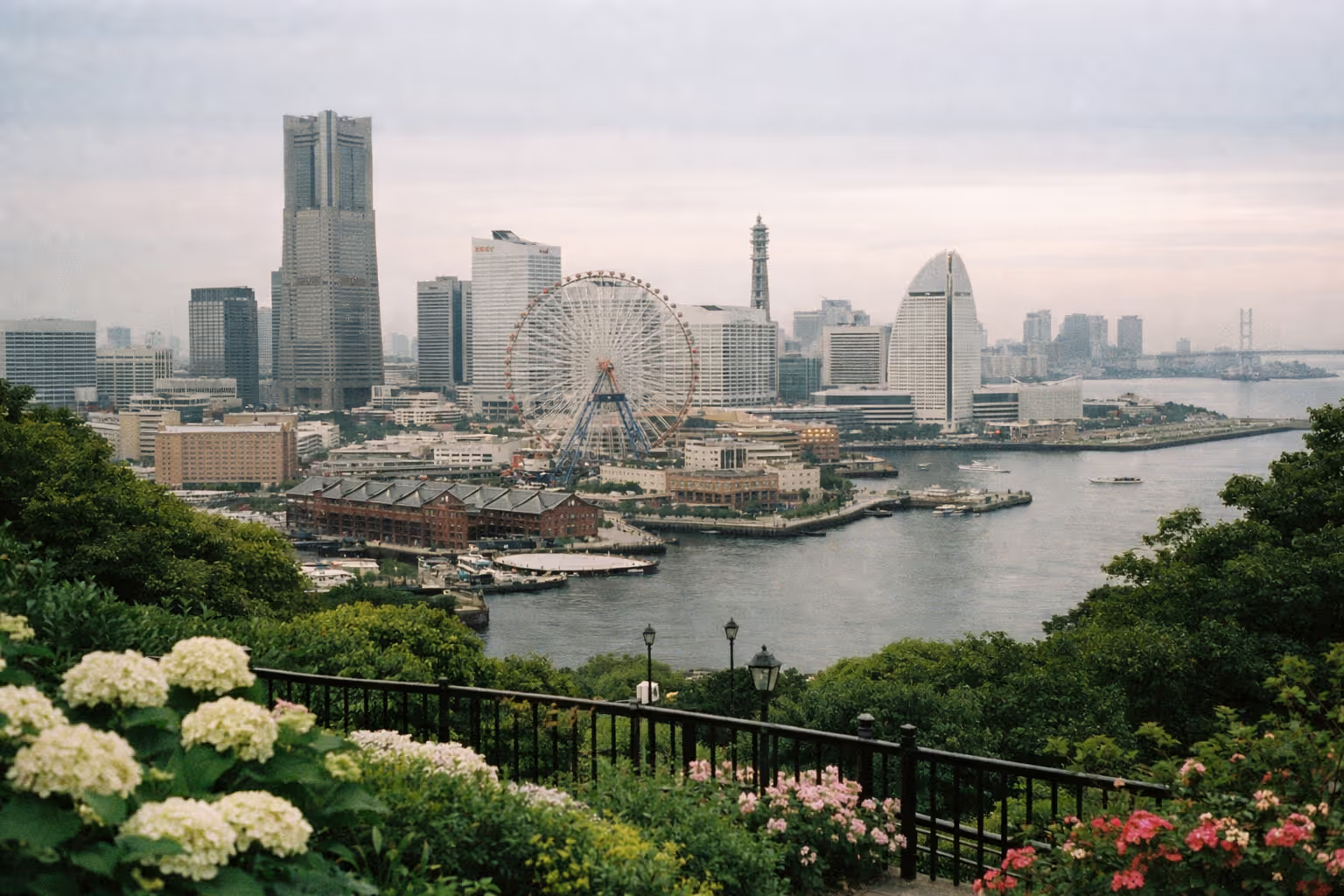
Yokohama sits 30 km south of Tokyo, close enough that most travelers treat it as a footnote on their Japan itinerary. That’s a mistake. The best things to do in Yokohama fill two full days without repeating yourself, and even on a tight schedule, a single well-sequenced day here earns its place. Japan’s second-largest city, home to about 3.76 million people by the city’s estimate for September 1, 2026 (42), Yokohama has a port identity that is genuinely distinct from Tokyo - waterfront skyscrapers, Japan’s largest Chinatown, interactive food museums, and harbor views that don’t exist an hour up the rail line.
This guide covers the full range: daytime sightseeing, food experiences, night views, family options, and the practical sequencing that decides whether your day works or dissolves into transit. Most attractions cluster into a few walkable zones, but a handful - Sankeien Garden, Hakkeijima Sea Paradise - need their own transit planning. Get the sequence right and Yokohama is one of the most efficient day trips in the Kanto region.
✓ Pros
- Genuinely distinct from Tokyo - port history, Chinatown, waterfront architecture
- Compact core (Minato Mirai → Yamashita Park → Chinatown) is walkable in a day
- Strong indoor options make it viable in bad weather
- Accessible and affordable from Tokyo - no Shinkansen needed
- Good mix of family, food, culture, and nightlife options
✗ Cons
- Outlying attractions (Sankeien Garden, Hakkeijima Sea Paradise, Zoorasia) require separate transit legs and can blow a tight schedule
- Chinatown and Cosmoworld get crowded on weekends - timing matters
- Easy to underestimate the city's spread and try to do too much in one day
- Some attractions (observation decks, theme parks) carry admission costs that add up
What Yokohama Is Actually Famous For
Yokohama is famous for being one of the first Japanese ports opened to foreign trade in 1859 (1), and that history still shapes the city’s Western-influenced architecture and cosmopolitan feel. When Japan ended centuries of isolation, Yokohama became a primary gateway - which is why you’ll find Western-style residences in the Yamate district and Japan’s largest Chinatown a short walk from the harbor. The city’s layout is still organized around that original port logic.
That Chinatown is not a tourist replica. It’s a functioning neighborhood packed with restaurants and street stalls, dense enough to spend an evening in without repeating a meal. It anchors the food side of Yokohama’s reputation, which extends to two interactive food museums that draw visitors specifically: the Cup Noodles Museum, where instant noodles get the cultural-history treatment, and the Shin-Yokohama Ramen Museum, a replica 1958 streetscape housing regional ramen shops from across Japan (24).
The modern face of the city is Minato Mirai, the waterfront district built on former dockland. Its landmarks are the Cosmo Clock 21 Ferris wheel - 112.5 m tall with a capacity of 480 people (19) - and the Landmark Tower. The tower’s 69th-floor Sky Garden observation deck, long the district’s classic night view, has been closed since January 1, 2026 for building-wide renovation work, with reopening planned for 2028 or later (21, 22). The bay promenade ties it together into a walkable strip.
So is Yokohama worth visiting? Yes, especially if you have more than a week in Japan. Even on a tight schedule, a day here gives you a port city that reads completely differently from Tokyo. If you only have four or five days in the country total, Yokohama is a harder sell against Kyoto or Hakone. But as an add-on to a Tokyo base, it’s one of the strongest day trips available.
The Core Things to Do in Yokohama: Attractions Worth Prioritizing
The classic first-time loop runs Minato Mirai → Yamashita Park → Chinatown, and it covers the attractions worth prioritizing over everything else. Here’s how to work it.
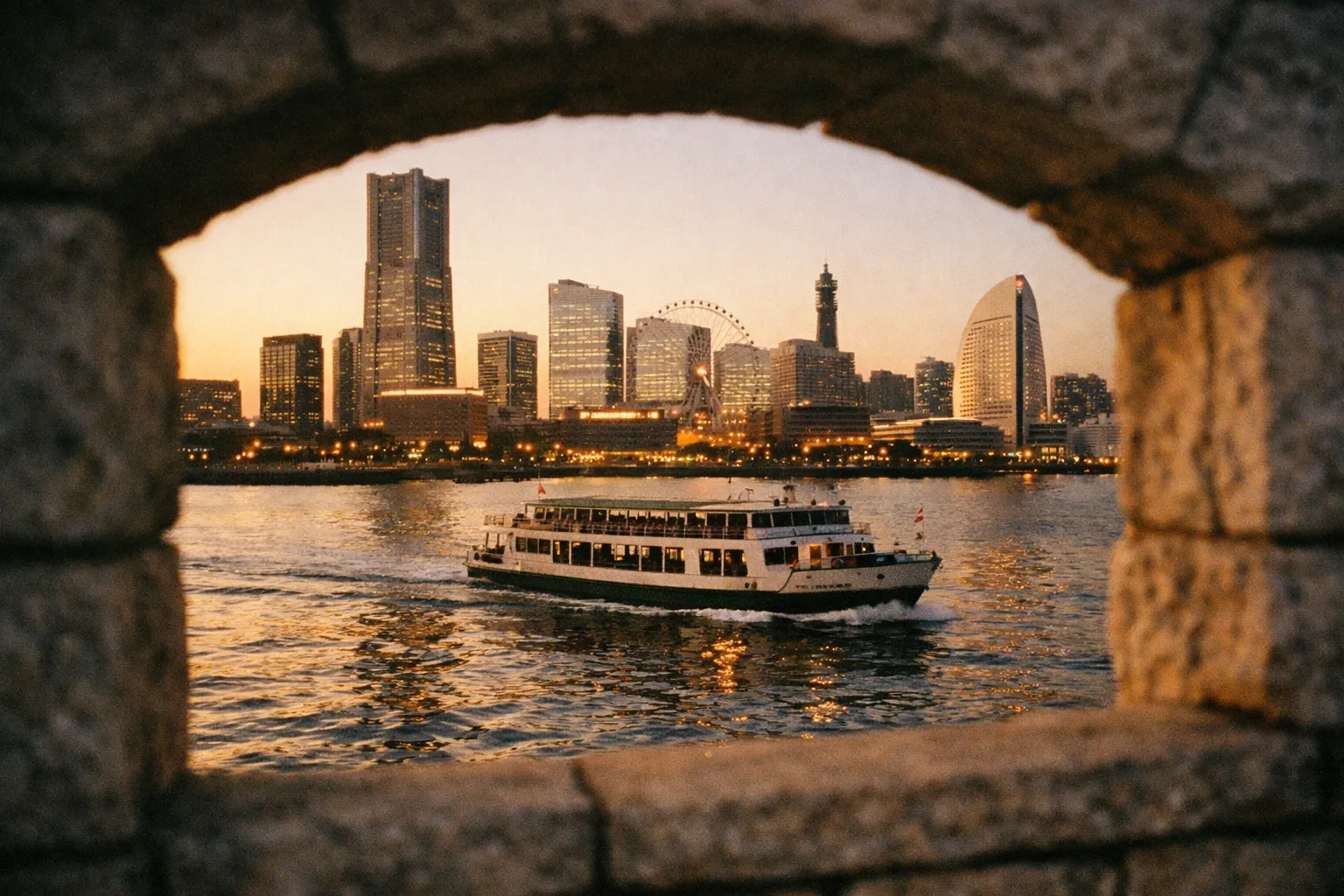
Minato Mirai - Yokohama’s Waterfront District
Minato Mirai is the walkable core, and it can fill a half-day on its own. The Cup Noodles Museum is the efficient starting point. Adult admission is 500 yen, with high school students and younger admitted free, and the museum opens 10:00-18:00 with last admission at 17:00; it closes on Tuesdays (the following day when Tuesday is a national holiday) and over the New Year holidays (16). The hands-on draw is the My CUPNOODLES Factory, where you design and seal your own instant noodle cup for 500 yen per cup (17). Places go by same-day numbered tickets handed out in order of arrival, and once they run out, reception closes for the day (17); the museum also sells an online admission ticket with a My CUPNOODLES Factory voucher for a set time slot until midnight the day before (18). Plan 1.5 to 2 hours for the museum and workshop together. On weekends, buy the voucher or arrive when the doors open.
A short walk away, Yokohama Cosmoworld is free to enter and charges per ride, with ride tickets sold for cash only (20). The centerpiece is Cosmo Clock 21, the 112.5 m Ferris wheel that doubles as the district’s most recognizable landmark; a ride takes about 15 minutes and costs 1,000 yen (19). Opening times vary by day, and on weekdays in late September 2026 the park opened at 11:00 (19), so pairing the Cup Noodles Museum (opens 10:00) with Cosmoworld is the most efficient morning sequence.
For a view from height, skip the Landmark Tower Sky Garden: the 69th-floor deck that used to anchor this district is closed until at least 2028 (21). The Cosmo Clock 21 gondolas are the practical substitute, and Yokohama Marine Tower, beside Yamashita Park, is open 10:00-22:00 (23).
The Red Brick Warehouse (Aka-Renga Soko) rounds out the district - former port warehouses now holding shops, restaurants, and event space. It’s a good lunch stop and a browse, and its plaza hosts seasonal events such as the Christmas Market from late November to December 25 and an illuminated Art Rink from early December to mid-February (39). The most efficient pairing here is the Cup Noodles Museum plus Cosmoworld, then the Red Brick Warehouse for a meal before walking south toward the water.
Yamashita Park and the Waterfront Walk
Yamashita Park is a flat, accessible waterfront strip along the harbor, free to enter, and it connects Minato Mirai to Chinatown on foot. Moored at the park is the Hikawa Maru, a 1930 liner preserved as a museum ship, open 10:00-17:00 and closed on Mondays (37) - worth boarding if maritime history interests you, easy to skip if it doesn’t. The park is also a departure point for bay cruises (27). In spring, cherry blossoms line the area; on summer evenings, the harbor views make it a pleasant walk between the two main clusters. Budget the walk at 15-20 minutes from the Red Brick Warehouse.
Yokohama Chinatown
Yokohama Chinatown is the largest in Japan (1), a dense walkable grid of shops and restaurants. Dim sum, Peking duck, nikuman (steamed pork buns) from street stalls, or an all-you-can-eat restaurant - the options don’t run out quickly.
Timing is the thing most guides skip. One Trip.com reviewer found Chinatown very crowded but lively, and noted that many shops accepted cash only (10). If you’re going once, go in the late afternoon and stay through dinner. The illuminated gates and lanterns after dark are the best version of the neighborhood. Don’t reduce it to a quick lunch stop - that’s the most common way to underuse it.
Yokohama’s Food Experiences Worth Planning Around
Yokohama’s food scene is a reason to visit in its own right, and one attraction in particular gets called the single best thing to do in the city.
Shin-Yokohama Ramen Museum
The Shin-Yokohama Ramen Museum is a ramen “theme park,” not a museum in the conventional sense - a recreated 1950s Japanese streetscape housing regional ramen shops from across the country. One-day admission is 450 yen for adults 19 and over and 100 yen for children aged 6-18, with free entry for children under 6; groups of 15 or more pay 400 yen per adult (24). The museum opens 11:00-21:00 on weekdays and from 10:30 on holidays, with the shops taking last orders 30 minutes before closing (24).
The writer behind The Awkward Traveller, in a guide published in January 2025 and updated that February, called it the best thing to do in Yokohama, praising the reconstructed streetscape of booths serving sample-sized bowls from around Japan, but warned that lines at some booths can take a while and recommended going at lunch rather than dinner so you have time for several bowls (14). That advice holds - go at lunchtime, and start early.
One logistical catch: the museum sits at 2-14-21 Shinyokohama in Kohoku-ku, about a 5-minute walk from Shin-Yokohama Station, in the inland Shin-Yokohama district rather than on the waterfront (24). It is not walkable from Minato Mirai. Factor in the transit and treat it as its own leg, not a quick add-on to a waterfront day.
Cup Noodles Museum, Revisited for Food
Even if you covered the Cup Noodles Museum in the Minato Mirai loop, the food angle deserves its own note. The My CUPNOODLES Factory (500 yen per cup) is the main event: you pick a soup flavor, design the packaging, and seal your own cup in a structured production line that takes about 45 minutes (17). The museum also runs a Chicken Ramen Factory as a separate, more hands-on workshop that requires a reservation (18) and costs 1,200 yen from junior high school age up and 600 yen for elementary school children (16). Even for non-foodies, the history of instant noodles as a Japanese invention holds up as a genuinely interesting exhibit - more so than you’d expect.
Kirin Beer Yokohama Factory
The Kirin Beer Yokohama Factory runs guided factory tours and has a restaurant on site, and the official visitors’ guide pitches it at families as well as beer lovers (9). The tour lasts about 90 minutes, is booked in advance, and includes a side-by-side tasting of first-press and second-press wort; for tours from October 1, 2026 the fee is 1,000 yen per adult aged 20 or over, up from 500 yen through September (25). The factory sits in Namamugi, Tsurumi-ku, about a 15-minute walk from Keikyu Namamugi Station (25), well north of the Minato Mirai cluster. Plan it as a standalone, or pair it with the Shin-Yokohama Ramen Museum, since both sit north of the city center and away from the waterfront.
Yokohama at Night: Views, Lights, and the Waterfront After Dark
Yokohama after dark is about views and atmosphere rather than clubs, which makes it better suited to couples and families than late-night bar-hoppers.
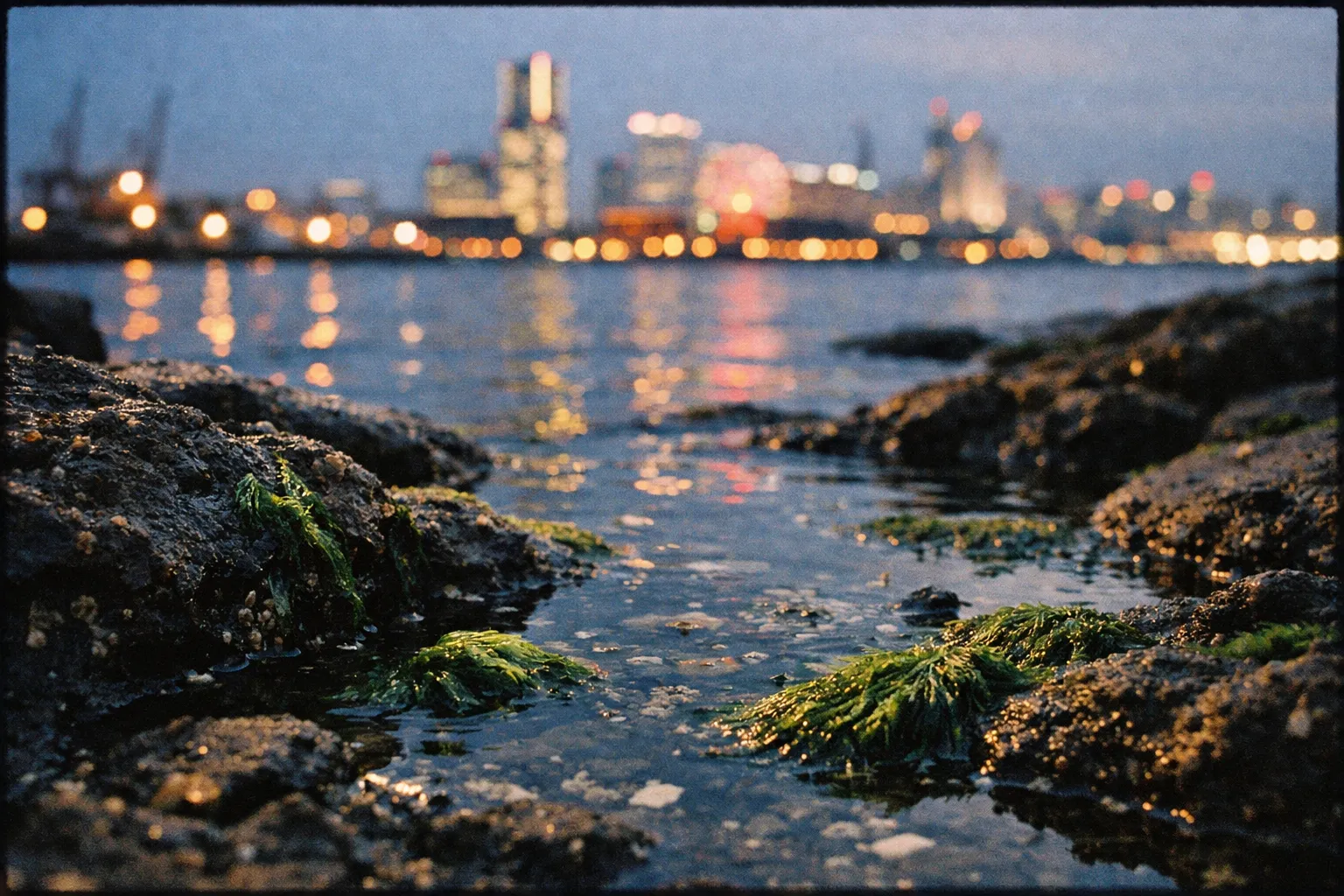
With the Landmark Tower’s Sky Garden closed for renovation (21), the headline night views come from the wheel and the water. Cosmo Clock 21 is lit from sunset until around midnight, and its 15-minute ride (1,000 yen) circles above the illuminated harbor (19). For a fixed viewpoint, Yokohama Marine Tower next to Yamashita Park stays open until 22:00 (23).
The Cosmo Clock 21 Ferris wheel is a different experience illuminated at night than during the day, and one Trip.com reviewer recommended coming after dark for the lit-up wheel (10). The Red Brick Warehouse promenade between the warehouses and the bay is well-lit and pleasant after dark, with seasonal illumination events worth checking against the official calendar.
For a different vantage, Y Cruise’s SEABASS runs a guided 60-minute Minato Mirai night cruise from its Yokohama Station East Exit pier at 19:30 on Fridays, weekends, and holidays, at 3,000 yen per adult (26), plus a 40-minute guided daytime harbor cruise from Yamashita Park on weekdays at 2,000 yen (27); both fares are as listed in late September 2026. Then circle back to Chinatown - if you passed through at lunch, the illuminated gates and lanterns after dinner are the version worth seeing.
Family-Friendly Attractions Beyond the Obvious
Yokohama’s family draws split into two groups: the waterfront attractions you’ll already be near, and outlying parks that need a dedicated trip.
Yokohama Hakkeijima Sea Paradise
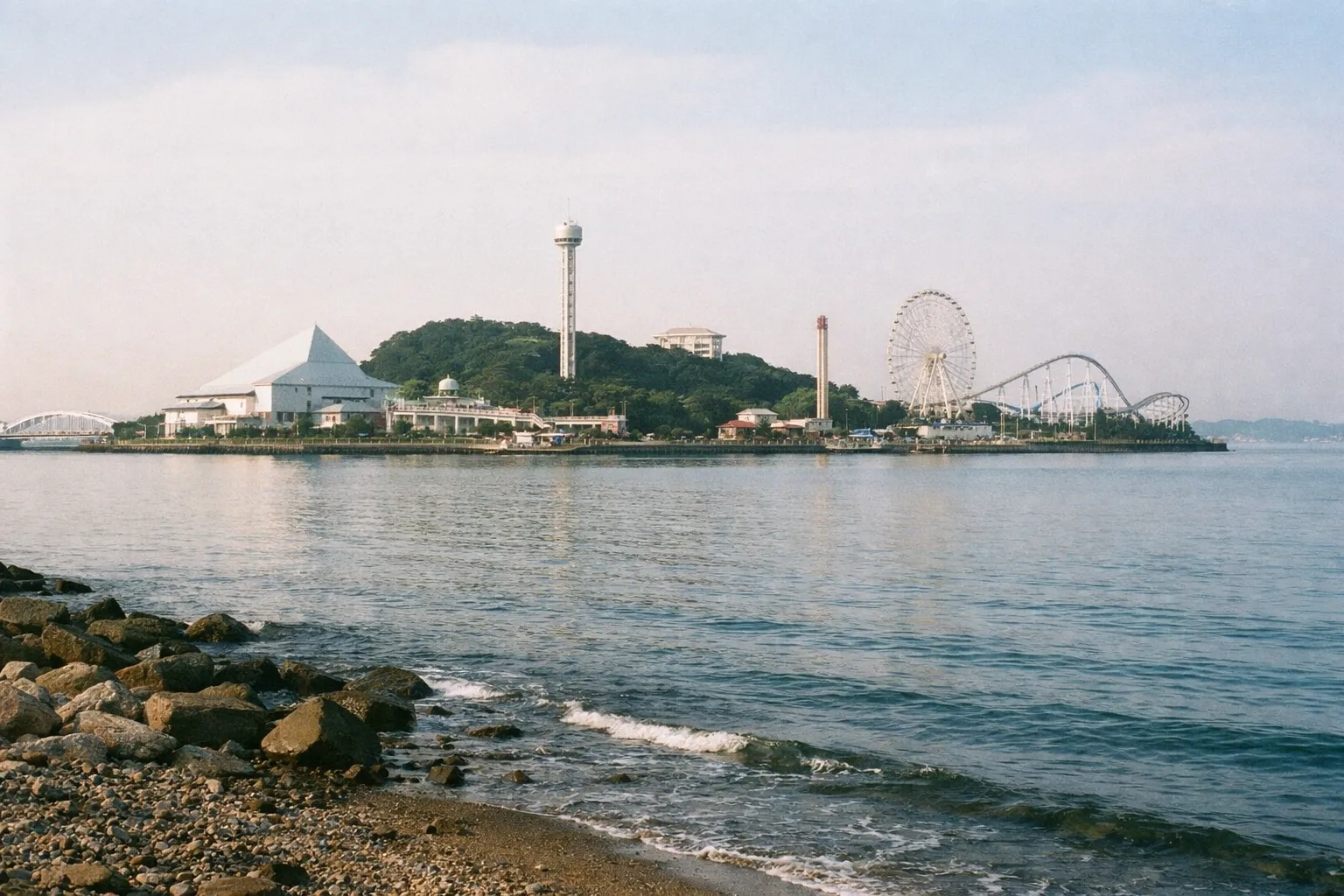
Hakkeijima Sea Paradise combines four aquariums with a ride park on an island in Yokohama Bay. On weekends, holidays, and set dates its LIGHTIA night show pairs dolphins with projections, sound, and fountains, and a fireworks show, Hanabi Symphonia, runs on set dates from May 2026 to March 2027 (28). The One Day Pass, covering the four aquariums and unlimited rides, costs 5,900 yen for adults and high school students and 4,300 yen for elementary and junior high students (29). A Trip.com reviewer found the park very large, with plenty to do, but noted that much of the explanatory signage is in Japanese only (10).
The catch is location: the park sits on an island served by the Yokohama Seaside Line, about 18 minutes from Shin-Sugita (JR Negishi Line) or 7 minutes from Kanazawa-Hakkei (Keikyu Line) to Hakkeijima Station (30), plus walking inside the park. Do not try to combine Sea Paradise with Minato Mirai on the same day - it needs its own dedicated trip.
Zoorasia Zoo
Zoorasia is one of Japan’s larger zoos, well-maintained with naturalistic enclosures and good for families with younger children. It opens 9:30-16:30 (last entry 16:00), closes on Tuesdays, and charges 800 yen for adults (31). The practical approach is the bus of about 15 minutes from Tsurugamine or Mitsukyo stations on the Sotetsu Line, or about 18 minutes from Nakayama Station; the direct bus from Yokohama Station takes about an hour and runs only a few times a day (31). It works as a half-day visit.
Cosmoworld and the Cup Noodles Museum for Kids
Both are kid-tested. A TripAdvisor review excerpt points to the Cup Noodles Museum’s make-your-own-cup station and big kids’ play area, and another notes that the Ferris wheel and roller coaster draw the longest queues at Cosmoworld (8). Arrive early - the numbered workshop tickets and ride lines are the pinch points.
Culture and History: The Quieter Side of the City
For travelers who want something beyond food museums and theme parks, Yokohama has real cultural depth. Most of it sits away from the waterfront crowds.
Sankeien Garden
Sankeien Garden is a traditional Japanese landscape garden of about 17.5 hectares, dotted with historic buildings relocated from around Japan, including the former Tomyo-ji three-story pagoda from Kyoto (32). It sits near the top of TripAdvisor’s list of Yokohama attractions (8).
Opening hours are 09:00-17:00, with last entry 30 minutes before closing; the garden closes from December 26 to 31, and hours can change during events (33). Adult admission is 900 yen, and 200 yen for elementary and junior high students (33). Seasonal highlights run through plum blossoms in late winter, cherry blossoms in spring, and autumn foliage, with a special autumn viewing from mid-November to mid-December (39).
Access is the planning point: from bus stop No. 2 at Yokohama Station East Exit, City Bus No. 8 or No. 168 takes about 40 minutes to the Sankeien-iriguchi stop, followed by a 5-minute walk; on weekends and holidays the Burari Sankeien Bus runs from the same stop to the garden itself (34). The fare is 220 yen per adult ride (35). Sankeien is not walkable from central Yokohama - treat it as a standalone half-day rather than tacking it onto a Minato Mirai day. That’s the most common planning mistake I see with this garden.
Yamate District and the Home of a Diplomat
The Yamate district was the former foreign residential area, dotted with Western-style buildings from the Meiji and Taisho eras. The Home of a Diplomat and the Yamate Western Houses offer an architectural texture completely different from the rest of the city. It’s a hillside location with harbor views, quieter than the waterfront, and suited to slower-paced exploration on foot.
Nippon Maru and the Port Museum
The Nippon Maru is a restored sail training ship moored near Sakuragicho Station in Minato Mirai, paired with the Yokohama Port Museum, which tells the story of the port (36). Both are small but interesting for maritime history, and their convenience to the Minato Mirai cluster makes them an easy add if the schedule allows.
Yokohama Day Trip Options
| Most Popular Classic Waterfront Day | Food & Culture Day | Family Full Day | |
|---|---|---|---|
| Key Attractions | Minato Mirai, Chinatown, Yamashita Park | Shin-Yokohama Ramen Museum, Kirin Brewery, Chinatown | Hakkeijima Sea Paradise or Zoorasia |
| Districts Covered | Minato Mirai, Waterfront, Chinatown | Shin-Yokohama, Chinatown | Outlying parks |
| Best For | First-timers, general sightseeing | Foodies, cultural explorers | Families with children |
| Main Entry Fees (adult, Sept 2026) | Cup Noodles Museum ¥500, one My CUPNOODLES cup ¥500, Cosmo Clock 21 ¥1,000; meals extra | Ramen Museum ¥450, Kirin tour ¥1,000 (from Oct 1); ramen and meals extra | Sea Paradise One Day Pass ¥5,900, or Zoorasia ¥800; meals extra |
| Transit Required? | No | Yes | Yes |
How to Spend a Day in Yokohama: A Practical Sequence
Duration: one day. The whole loop is roughly 5-6 km of flat walking, manageable at a relaxed pace, covering Minato Mirai, the waterfront, and Chinatown without doubling back.
How to Spend a Day in Yokohama
About 11 hours (including transit and breaks)A practical, sequenced itinerary covering Minato Mirai, the waterfront, and Chinatown.
- 1
Step 1 - Morning: Minato Mirai (9:00-12:00)
Arrive at Minato Mirai Station via the Tokyu Toyoko Line from Shibuya (about 30 minutes) or Sakuragicho Station on the JR Keihin-Tohoku Line. Head to the Cup Noodles Museum when it opens at 10:00 (closed Tuesdays) to beat the workshop queue - My CUPNOODLES Factory numbered tickets go in order of arrival and can run out on busy days. Then walk to Cosmoworld; rides open around 11:00 on weekdays, and the Cosmo Clock 21 Ferris wheel is quick and worth it.
- 2
Step 2 - Midday: Red Brick Warehouse and Waterfront (12:00-14:00)
Have lunch at the Red Brick Warehouse restaurants or food stalls, then walk the bay promenade toward Yamashita Park - 15-20 minutes on foot.
- 3
Step 3 - Afternoon: Yamashita Park and Chinatown (14:00-17:00)
Make a brief stop at Yamashita Park and board the Hikawa Maru if maritime history appeals. Enter Chinatown from the Yamashita Park side, browse, snack on street food, and pick a restaurant for an early dinner.
- 4
Step 4 - Evening: Chinatown dinner and night views (17:00-20:00)
Eat in Chinatown, arriving before 18:00 to dodge the worst weekend waits. Then return to Minato Mirai for the illuminated Cosmo Clock 21, or head up Yokohama Marine Tower beside Yamashita Park (open until 22:00).
What does not fit: Sankeien Garden, Hakkeijima Sea Paradise, and the Shin-Yokohama Ramen Museum each need their own half-day or full day. Don’t try to force them into this loop - you’ll rush everything and enjoy nothing.
Rainy-day swap: Replace the waterfront walk with the Shin-Yokohama Ramen Museum or the Kirin Beer factory tour - both are fully indoors and work well as an alternative spine for the day.
Getting to Yokohama from Tokyo and Getting Around
Yokohama is a straightforward day trip - no Shinkansen, no special pass, just an IC card.
From Tokyo Station, JR Tokaido or Yokosuka Line trains reach Yokohama Station in about 25 minutes, and from Shibuya the Tokyu Toyoko Line reaches Yokohama in about 25 minutes (38). Toyoko Line trains run straight through onto the Minatomirai Line, so you can stay aboard to Minato Mirai Station - the most convenient route for the waterfront. For Sakuragicho, take a JR Keihin-Tohoku Line train one stop past Yokohama.
A Suica or Pasmo IC card covers all these routes. You don’t need a special pass for a day trip.
Getting around once you arrive: the Minato Mirai → Yamashita Park → Chinatown loop is walkable. For Sankeien Garden, take City Bus No. 8 or 168 from Yokohama Station East Exit (about 40 minutes) (34). For Hakkeijima Sea Paradise, take the Seaside Line from Shin-Sugita (about 18 minutes) or Kanazawa-Hakkei (about 7 minutes) (30). For Zoorasia, take the bus from Nakayama, Tsurugamine, or Mitsukyo stations (31).
One booking note: Sea Paradise sells its passes online in advance (29), and the Cup Noodles Museum sells its own online admission ticket with a My CUPNOODLES Factory voucher until midnight the day before (18), which saves time at the ticket window on busy days. Resellers such as Klook also list Yokohama attraction tickets (4).
Seasonal Timing and When to Visit
Spring (March-April) brings cherry blossoms to Sankeien Garden and Yamashita Park. Crowds peak during Golden Week in late April to early May, so book ahead and start early.
Summer (June-August) brings Chinatown’s Kanteitan festival for Guan Yu in early August and the Kanazawa fireworks at Marine Park (Umi no Koen) in late August (40), while Hakkeijima Sea Paradise stages its Hanabi Symphonia fireworks show on set dates through March 2027 (28). The heat is real - prioritize morning starts and shift to indoor attractions midday.
Autumn (September-November) is arguably the best window. Sankeien Garden’s autumn viewing runs from mid-November to mid-December (39), the weather cools off, crowds thin compared to spring, and the light on the waterfront is at its best. Sankeien’s 09:00-17:00 hours give you ample daylight for foliage viewing (33).
Winter (December-February) is illumination season: the Red Brick Warehouse runs its Christmas Market until December 25 and an illuminated Art Rink from early December to mid-February, and Minato Mirai’s office towers stage the one-day MM21 Towers Milight in late December (39). Chinatown is especially lively around Chinese New Year in January or February (41). Cold but manageable.
Rainy days are where Yokohama outperforms most Japanese cities. The Cup Noodles Museum (open 10:00-18:00, closed Tuesdays), the Shin-Yokohama Ramen Museum, the Kirin factory tour, Konica Minolta Planetaria Yokohama, and the indoor malls - Landmark Plaza, World Porters - are all indoor venues listed in the official visitors’ guide (12). A wet day here is genuinely workable in a way it isn’t in, say, Nikko or Kamakura.
Common Mistakes That Waste Your Day
Trying to do everything in one day. Sea Paradise plus Sankeien plus Minato Mirai plus Chinatown plus the Ramen Museum is physically impossible without rushing all of them. Sankeien alone runs about 40 minutes each way by city bus (34), plus a couple of hours on site. Pick a focus.
Assuming everything is walkable from Yokohama Station. Sankeien needs a bus, Zoorasia needs a bus, and Sea Paradise needs the Seaside Line. Check the transit before you lock in an itinerary.
Visiting Chinatown only at lunch. The evening illuminations and atmosphere are a different experience. If you go once, go in the late afternoon and stay through dinner.
Skipping advance planning. The Cup Noodles Museum’s My CUPNOODLES Factory runs on same-day numbered tickets, and once they are gone, reception closes for the day (17). Sea Paradise draws queues on weekends. Buying the museum’s factory voucher or Sea Paradise passes online lets you skip the ticket line.
Not checking hours and closing days. Red Brick Warehouse events, Sea Paradise shows, and Cosmoworld hours shift seasonally, and several sights have a weekly closing day: the Cup Noodles Museum and Zoorasia close on Tuesdays (16, 31), the Hikawa Maru on Mondays (37). The official visitors’ guide is worth a look before you go to avoid arriving after last entry or during an event closure (11).
Treating Yokohama as a half-day. The city holds enough for two full days once you include the outlying attractions. A rushed half-day means you’ll only scratch Minato Mirai - which is fine, but it’s not Yokohama.
Frequently Asked Questions
- Is Yokohama worth visiting if I only have one day?
- Yes. The Minato Mirai → Yamashita Park → Chinatown loop fits comfortably into a day and gives you a port city that reads completely differently from Tokyo.
- Is Yokohama, Japan worth visiting for a longer stay?
- Yes. Sankeien Garden, Sea Paradise, and the Shin-Yokohama Ramen Museum provide reasons to stay beyond a day trip.
- Is there anything worth seeing in Yokohama beyond the waterfront?
- Yes. Sankeien Garden, Yamate district, Shin-Yokohama Ramen Museum, and Kirin Brewery offer cultural depth beyond Minato Mirai.
- How do I get from Tokyo to Yokohama?
- JR trains from Tokyo Station take about 25 minutes to Yokohama Station; the Tokyu Toyoko Line from Shibuya takes about 25 minutes to Yokohama and runs through to Minato Mirai.
- What is Yokohama known for?
- Its 1859 port history, Japan's largest Chinatown, Minato Mirai waterfront, Cup Noodles Museum, and the Cosmo Clock 21 Ferris wheel.
- What should I do in Yokohama in November?
- Visit Sankeien Garden for its autumn viewing, which runs from mid-November to mid-December, and enjoy waterfront walks and Chinatown; November offers cooler weather and lighter crowds.
- Are there good rainy-day options in Yokohama?
- Yes. The Cup Noodles Museum, Shin-Yokohama Ramen Museum, Kirin Brewery, Planetaria Yokohama, and indoor malls provide full indoor coverage.
The Bottom Line
One day means the classic waterfront loop: Minato Mirai in the morning, the Red Brick Warehouse and Yamashita Park midday, Chinatown from late afternoon through dinner, and a night view to close. Two days lets you add Sankeien Garden and the Shin-Yokohama Ramen Museum without rushing. Traveling with kids? Hakkeijima Sea Paradise earns its own full day - don’t try to bolt it onto anything else.
For current event listings, seasonal hours, and closures, the official Yokohama Visitors’ Guide at yokohamajapan.com is updated regularly and more reliable than third-party aggregators. What actually determines whether your day works isn’t the number of attractions you attempt. It’s the sequencing and honest time estimates. Get those right, and Yokohama repays the trip.