Step off the Hakone Tozan Train at Gora and it takes about thirty seconds to realize that Hakone isn’t a town. It’s a caldera region spread across several valleys, and the best things to do in Hakone are stitched together by eight different transport modes - a mountain railway, a cable car, a ropeway over an active volcano, a lake cruise, and a web of buses. The classic loop alone typically eats 6 to 8 hours before you’ve set foot in a museum or a single onsen. This guide walks you through the loop, the art, the baths, the quieter corners, and the logistics, so you can decide up front: day trip or overnight, what to prioritize, and what to skip when time is short.
✓ Pros
- 80 to 90 minutes from Tokyo - genuinely easy to reach
- The Hakone Freepass bundles eight transport modes and around 70 discounts into one ticket
- A rare stack of volcanic scenery, art museums showing Monet, Rodin, and Picasso, and onsen in one compact area
- Works as a day trip or a one-to-two-night stay depending on your pace
- The cruise, ropeway, and mountain railway are attractions in themselves, not just transfers
✗ Cons
- Major sights are spread across multiple valleys; transfers add up fast
- Mt. Fuji views are weather-dependent, and clouds are common, especially in summer
- The Owakudani ropeway and trails can close without notice during volcanic alerts
- Weekends and autumn foliage season fill ryokan quickly; last-minute booking is risky
- Trying to do the full loop plus museums plus onsen in one day almost always ends in a rush
What to Do in Hakone - and Why It Takes Planning
Hakone is a mountainous hot-spring region inside Fuji-Hakone-Izu National Park in western Kanagawa Prefecture, centered on Lake Ashi and the Owakudani volcanic valley. It’s not a single town but a spread of micro-areas. The national park was designated in 1936 and today spans about 1,218 km² of land, from Mt. Fuji down through the Izu Peninsula and islands (19).
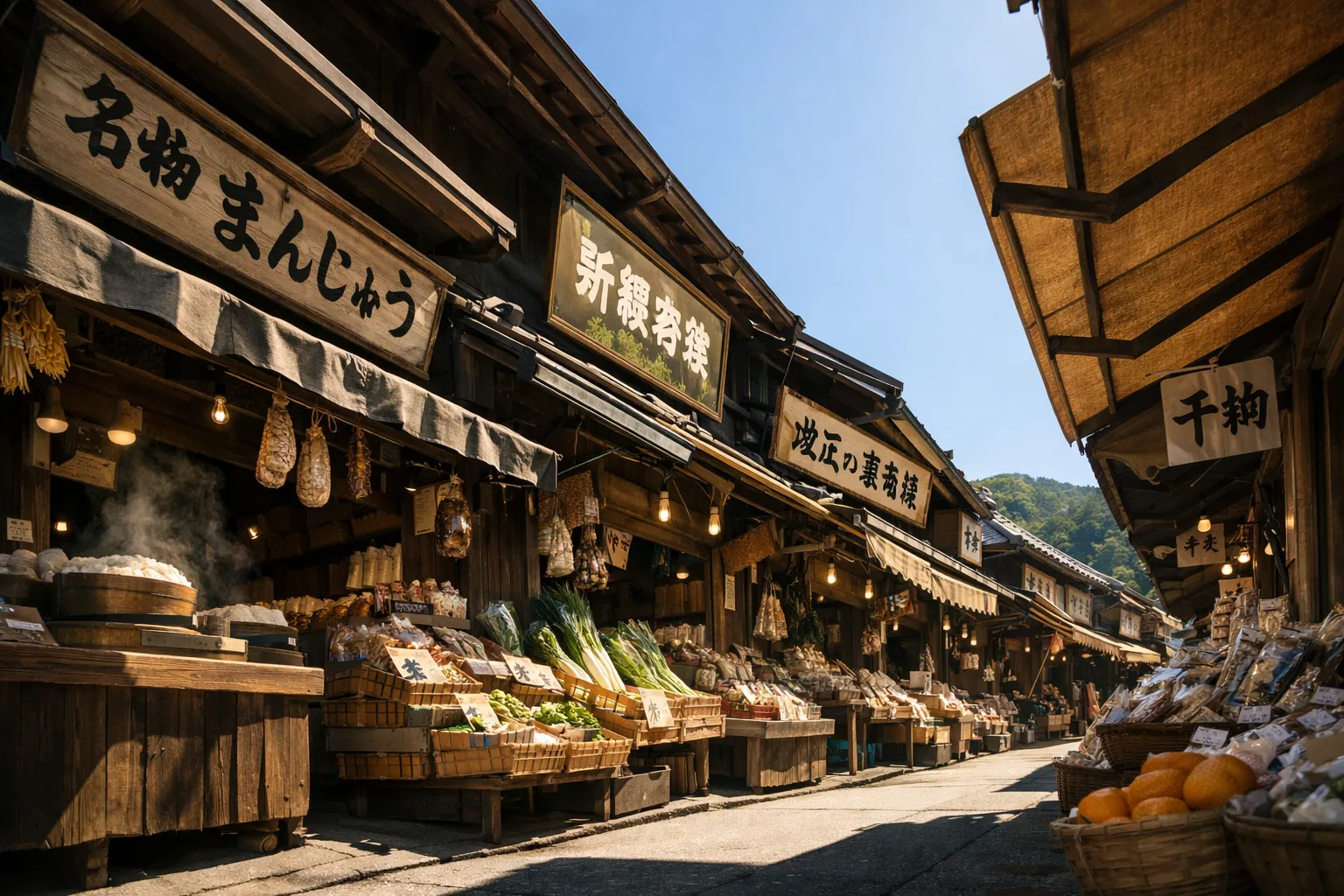
The distances matter more than most guides admit. Here’s how the micro-areas break down:
- Hakone-Yumoto - the gateway town where most trains arrive; good for day-use onsen and dining
- Gora - the cable car hub with a small café and craft scene
- Owakudani - the volcanic valley with sulfur vents and black eggs
- Lake Ashi / Hakone-machi - the cruise, Hakone Shrine, and the lakeside torii
- Sengokuhara - a plateau on the west side, home to the densest art-museum cluster
A round trip from Hakone-Yumoto out to Lake Ashi involves four different transport modes. That’s part of the appeal, but it’s also why you can’t treat Hakone like a compact day out. The Hakone Tozan Railway from Hakone-Yumoto to Gora runs 8.9 km and takes about 40 minutes, climbing the mountainside via switchbacks (16).
If you’ll use more than two transport modes - and you will - the Hakone Freepass is the default ticket. Full breakdown is in the logistics section below.
One expectation to set now: Mt. Fuji views from Lake Ashi and the ropeway are not guaranteed. Clear winter mornings give the best odds. Summer haze frequently hides the mountain entirely.
The Hakone Round Course - The Classic Loop Explained
The Hakone Round Course is the standard clockwise loop connecting the mountain railway, cable car, ropeway, lake cruise, and Hakone Shrine. Circling it typically takes six to eight hours (5), before you add a single museum stop, and it’s the clearest answer to what not to miss in Hakone for first-timers.
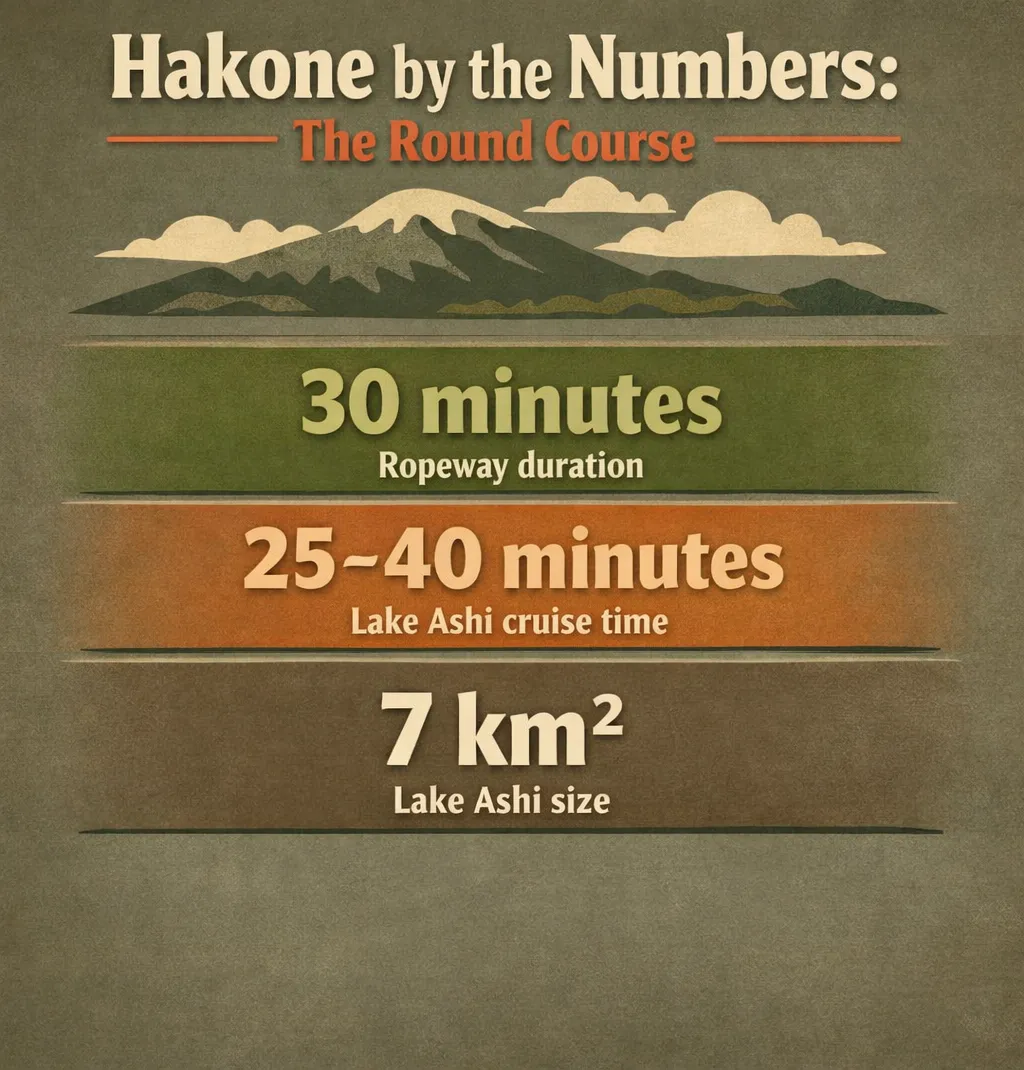 Hakone Round Course stats: ropeway about 30 min; lake cruise 25-40 min; Lake Ashi about 7 km².
Here’s the standard sequence:
- Hakone-Yumoto → Gora on the Hakone Tozan Railway - about 40 minutes through switchbacks (16)
- Gora → Sounzan on the Hakone Tozan Cable Car - about 10 minutes up the slope
- Sounzan → Owakudani → Togendai on the Hakone Ropeway - the full ride runs around 30 minutes, with cabins every minute or so
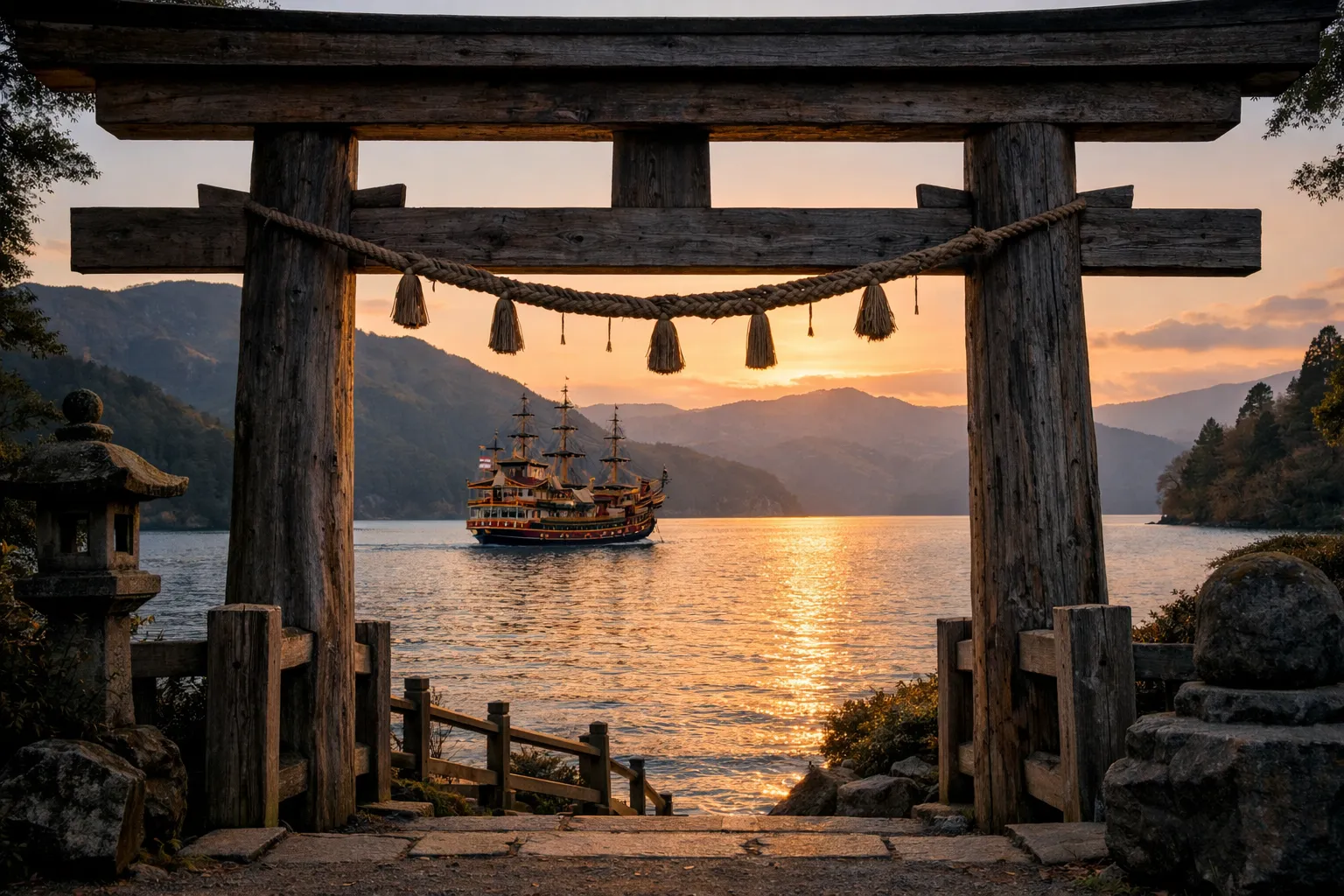
- Lake Ashi Sightseeing Cruise from Togendai - a one-way leg of 25 to 40 minutes on the pirate-ship-style boats
- Hakone Shrine near Moto-Hakone - allow 30 to 45 minutes
- Bus back to Hakone-Yumoto or Odawara
The time reality check is the single most useful thing to internalize: budget six to eight hours for the loop with its standard stops (5). Add one museum and you’re past eight hours - doable, but tight. Start with the first Romancecar out of Shinjuku.
One move worth knowing: on busy weekends, run the loop in reverse. Start at Lake Ashi and Hakone Shrine, then take the ropeway up to Owakudani later in the day. Most crowds move clockwise, so going against them thins out the queues at the ropeway and the cruise dock noticeably.
Owakudani - Volcanic Valley and Black Eggs
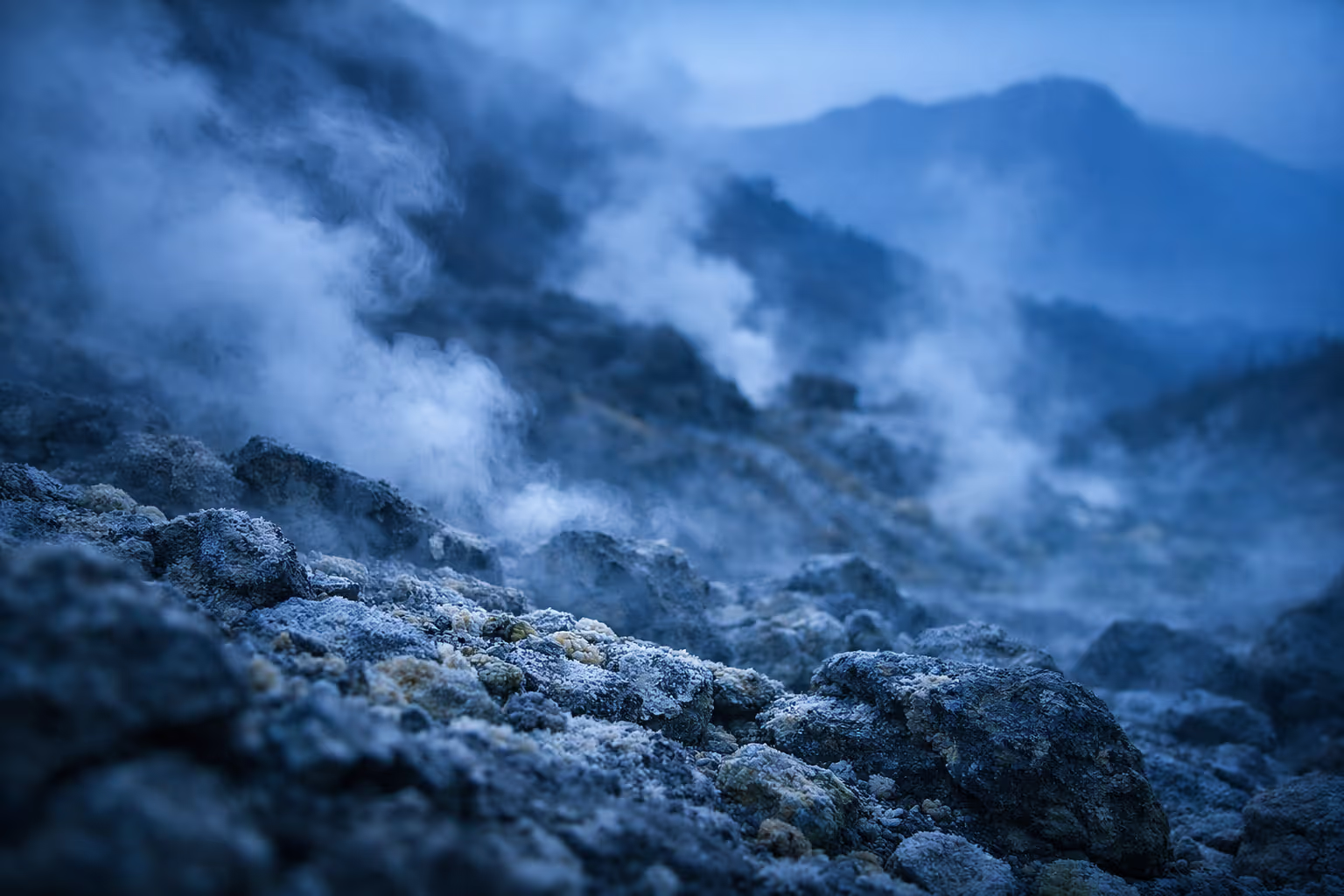
Owakudani is an exposed volcanic mountainside of steaming vents and sulfur gases, reached directly by ropeway from Sounzan or Togendai. The draw here is the fumarole field and the kuro-tamago - eggs boiled black in the volcanic hot springs. Folklore says one adds seven years to your life; the Kurotamago-kan by the ropeway station sells them in packs of four for ¥500 (20).
Two practical warnings. First, the sulfur smell is strong - if you have respiratory sensitivities, factor that in before committing to a long stop. Second, this is an active volcanic area. Rising volcanic activity closed the Owakudani tourist site in May 2015, and it only partly reopened in April 2016; the trail down toward the steaming vents has stayed shut since (15). Check the ropeway’s operation status the morning of your visit before building your whole day around it.
Lake Ashi and the Hakone Shrine Torii
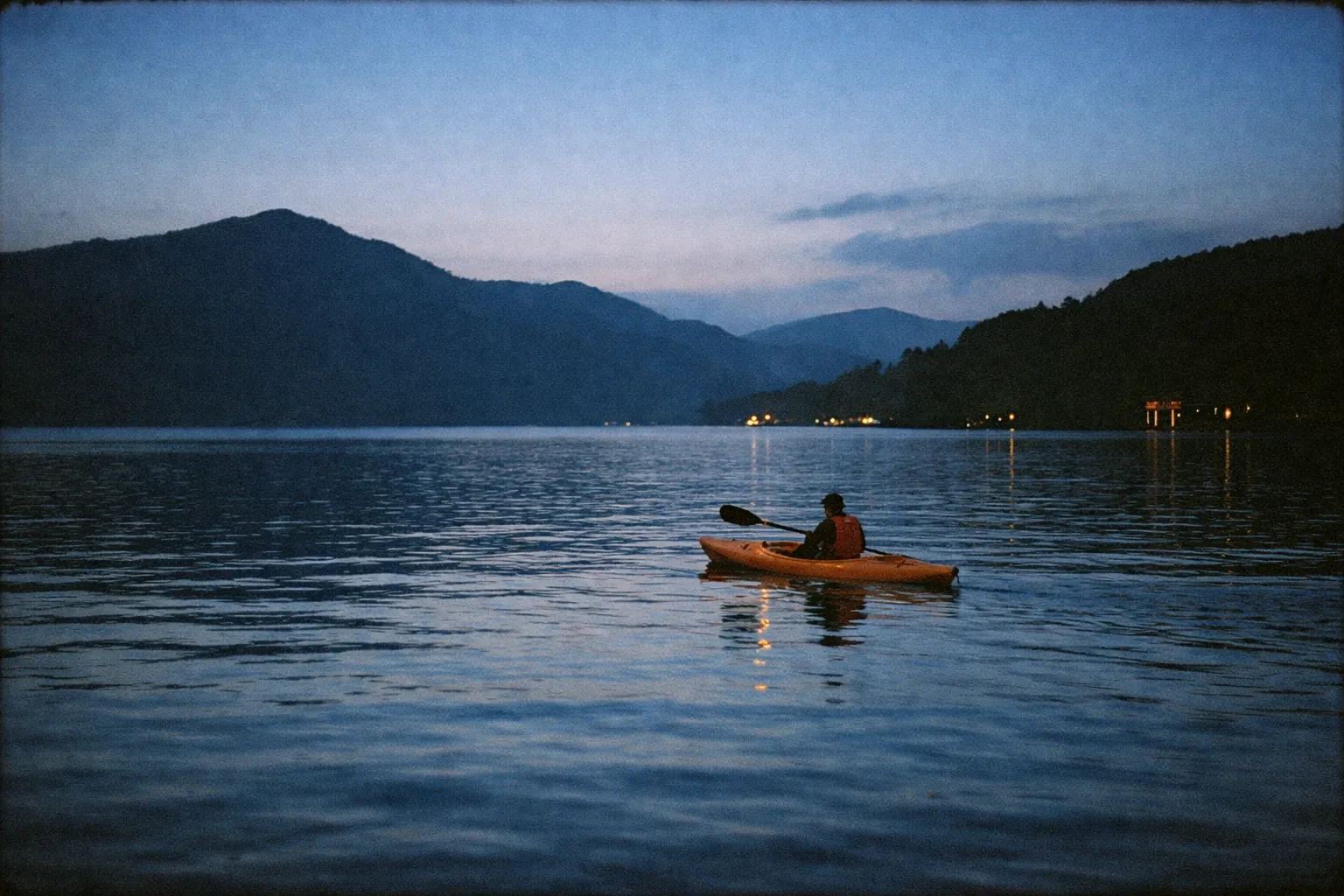
Lake Ashi is a crater lake covering about 7 km² at roughly 724 m elevation, formed by volcanic activity along the southwestern wall of the Mount Hakone caldera. On clear days it’s one of Hakone’s best-known viewpoints for Mt. Fuji.
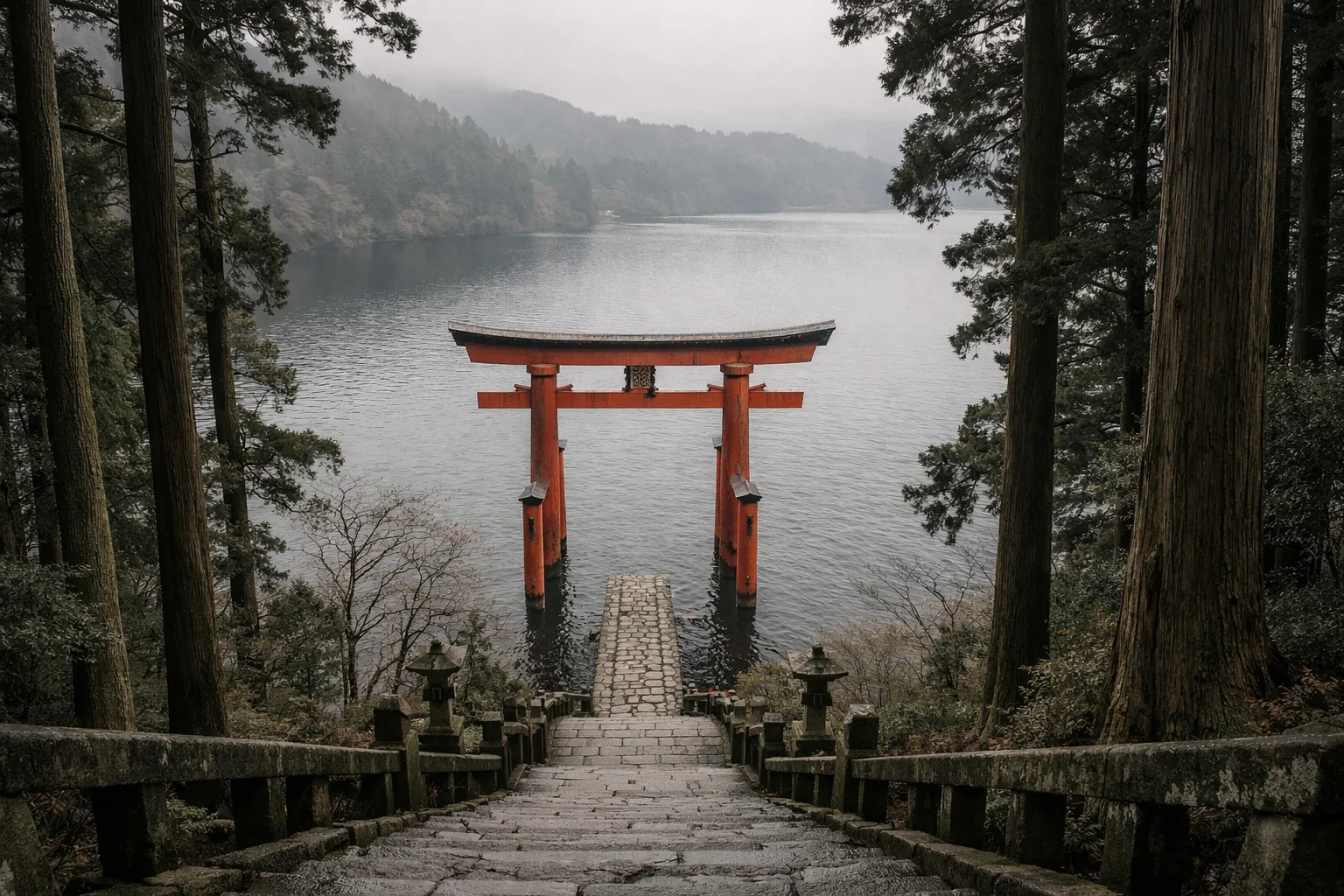
The lake’s most photographed feature is the “floating” red torii of Hakone Shrine, standing in the shallows below a cedar-lined approach. The shrine is an active Shinto site - walk the approach, see the lakeside gate, and allow 30 to 45 minutes. From the cruise deck, the standard leg between Moto-Hakone and Togendai runs about 25 to 40 minutes, framing the torii and, weather permitting, the mountain behind it.
A special-cabin upgrade on the cruise costs ¥800 one way for adults (¥400 for children) between Togendai and Moto-Hakone or Hakone-machi, per the Hakone Sightseeing Cruise fare table (17) - a modest surcharge for a quieter deck. Fuji visibility, again, is the variable. Winter mornings give you the best chance; summer humidity the worst.
How to Do the Hakone Round Course Loop
6 to 8 hoursStep-by-step sequence for the classic Hakone sightseeing loop
- 1
Hakone-Yumoto to Gora by Hakone Tozan Railway
Ride the mountain railway through switchbacks for about 40 minutes.
- 2
Gora to Sounzan by Cable Car
Take the Hakone Tozan Cable Car uphill for about 10 minutes to reach Sounzan.
- 3
Sounzan to Togendai via Owakudani on the Ropeway
Ride the ropeway for approximately 30 minutes, stopping at Owakudani to see volcanic vents and try kuro-tamago eggs.
- 4
Lake Ashi Sightseeing Cruise
Board the pirate-ship-style cruise from Togendai to Hakone-machi or Moto-Hakone, about 25 to 40 minutes.
- 5
Visit Hakone Shrine
Explore the cedar-lined approach and lakeside torii of the active Shinto shrine; allow 30 to 45 minutes.
- 6
Return by Bus
Take a bus back to Hakone-Yumoto or Odawara to complete the loop.
Hakone’s Art Museums - More Than a Rainy-Day Backup
Hakone holds one of the strongest concentrations of art museums in Japan, and they’re a primary reason to visit, not just a wet-weather fallback. The cluster spans outdoor sculpture, Impressionist painting, East Asian art, and specialty glass collections.
- Hakone Open-Air Museum - an outdoor sculpture park with works by Moore, Rodin, and others, plus a dedicated Picasso pavilion that doubles as an all-weather indoor hall. Adult admission is ¥2,000 and it’s open daily 9:00 to 17:00, last admission 16:30 (21); Freepass holders get ¥100 off. Allow 2 to 3 hours.
- Pola Museum of Art - a forest-set museum in Sengokuhara housing 19th and 20th century Western and Japanese art, with Monet, Renoir, and Cézanne alongside Japanese masters. Adult tickets are ¥2,200; junior-high students and younger enter free; open 9:00 to 17:00 (22).
- Okada Museum of Art - large-scale Japanese, Chinese, and Korean art in a purpose-built building near Kowakidani; adult admission ¥2,800, with a separate ¥500 footbath fee waived for museum visitors (24).
- Narukawa Art Museum - contemporary Japanese nihonga painting with Lake Ashi views from the gallery windows. Worth prioritizing for the view alone, even if Japanese painting isn’t your usual thing.
- Hakone Venetian Glass Museum and Lalique Museum - specialty collections close to the Pola Museum; group these three for a Sengokuhara art day.
On the Freepass: it provides discounts at most museums, not free entry. Gora Park is the notable exception - its ¥650 adult admission is fully covered.
Planning a Museum Cluster Day
The Pola Museum, Venetian Glass Museum, and Lalique Museum sit close together in Sengokuhara, so grouping them cuts transit time sharply. The simplest way in is from Gora Station, where the museum’s free shuttle bus reaches the Pola Museum in about 8 minutes (23).
Plan your return before you start - buses from Sengokuhara connect back to both Hakone-Yumoto and Odawara, but they don’t run late. Two major museums in a day is realistic: many guides advise 1 to 2 hours at the Pola Museum and 2 to 3 hours at the Open-Air Museum, so two plus transit fills most of a day. Three is possible but rushed, and you’ll feel it.
Onsen in Hakone - Ryokan Stays and Day-Use Baths
Onsen is the other core reason people come to Hakone, and you can approach it three ways: an overnight ryokan stay, a day-use public bath, or a swimsuit-friendly spa complex. The main onsen areas are Hakone-Yumoto (most accessible, strong for day-use), Gora (quieter, ryokan-heavy), and Sengokuhara (spread out across the plateau).
For an overnight ryokan, expect a bundled kaiseki dinner and breakfast, with onsen access folded into a per-person rate. Rooms with a private open-air bath, or rotenburo, sit at the premium end. Book well ahead for weekends and autumn foliage season; this is not a last-minute category.
For day-use, Hakone Yuryo near Hakone-Yumoto is frequently cited as one of the better facilities, with both private and communal baths. It’s about 3 minutes from Hakone-Yumoto Station via a free shuttle running every 10 to 15 minutes, open 10:00 to 20:00 weekdays and until 21:00 on weekends and holidays. Adult admission runs ¥1,700 to ¥1,800 on weekdays and ¥2,000 to ¥2,200 on weekends and holidays (25) - a fraction of a ryokan night, and a real soak regardless.
Onsen etiquette basics, if this is your first: bathe nude, wash thoroughly at the seated showers before entering the communal bath, and keep your towel out of the water. Tattoo policies vary widely - check ahead or look for tattoo-friendly properties or private baths.
Onsen with Kids - What Actually Works
For families, Hakone Kowakien Yunessun is the practical answer. It’s a large spa complex with themed pools and a swimsuit-friendly area where mixed-gender bathing is allowed. The swimsuit zone runs roughly 10:00 to 18:00 on weekdays and 9:00 to 19:00 on weekends; children under 3 get in free, and toddlers still in diapers can use the swimsuit zone in swim diapers.
It’s a different experience from a traditional soak, but it removes most of the friction of bringing young kids to a nude communal bath.
One caveat on tattoos: Yunessun requires them to be fully covered by swimwear, rash guards, or cover seals in most areas, and the adjacent nude Mori no Yu section admits tattooed guests only if fully covered.
Private family baths, or kashikiri onsen, at some ryokan are the other route - book these when you reserve the room, not on arrival.
Sengokuhara and the Quieter Side of Hakone
Sengokuhara and the western plateau reward anyone who stays longer than a day. Silver-grass meadows, imperial park grounds, and a slower pace than the main shrine circuit - this is where Hakone opens up beyond the loop.
- Sengokuhara Plateau - the pampas grass, or susuki, fields have been selected among Kanagawa’s “50 Scenic Spots,” with the plumes turning golden from late September to early November. Peak color in the mid-elevation band lands around early November. It’s one of the better autumn nature walks in the Kanto region, and far less crowded than the main shrine circuit.
- Onshi Hakone Park - former imperial villa grounds overlooking Lake Ashi, free and open at all hours, with wide lake-and-mountain views; the lakeside observation pavilion keeps 9:00 to 16:30 hours. It’s far less crowded than the main shrine area.
- Gora area - beyond the cable car, Gora has a small café and craft scene. Gora Park entry is fully covered by the Freepass (standard adult admission is ¥650), so it makes an easy, relaxed mid-loop stop; the Hakone Crafthouse inside runs hands-on workshops.
- Hakone Checkpoint (Hakone Sekisho) - a reconstructed Edo-period checkpoint on the old Tokaido road near Lake Ashi. Open 9:00 to 17:00 (16:30 in winter), admission ¥500 for adults and ¥250 for children. Good historical context if the Edo period interests you.
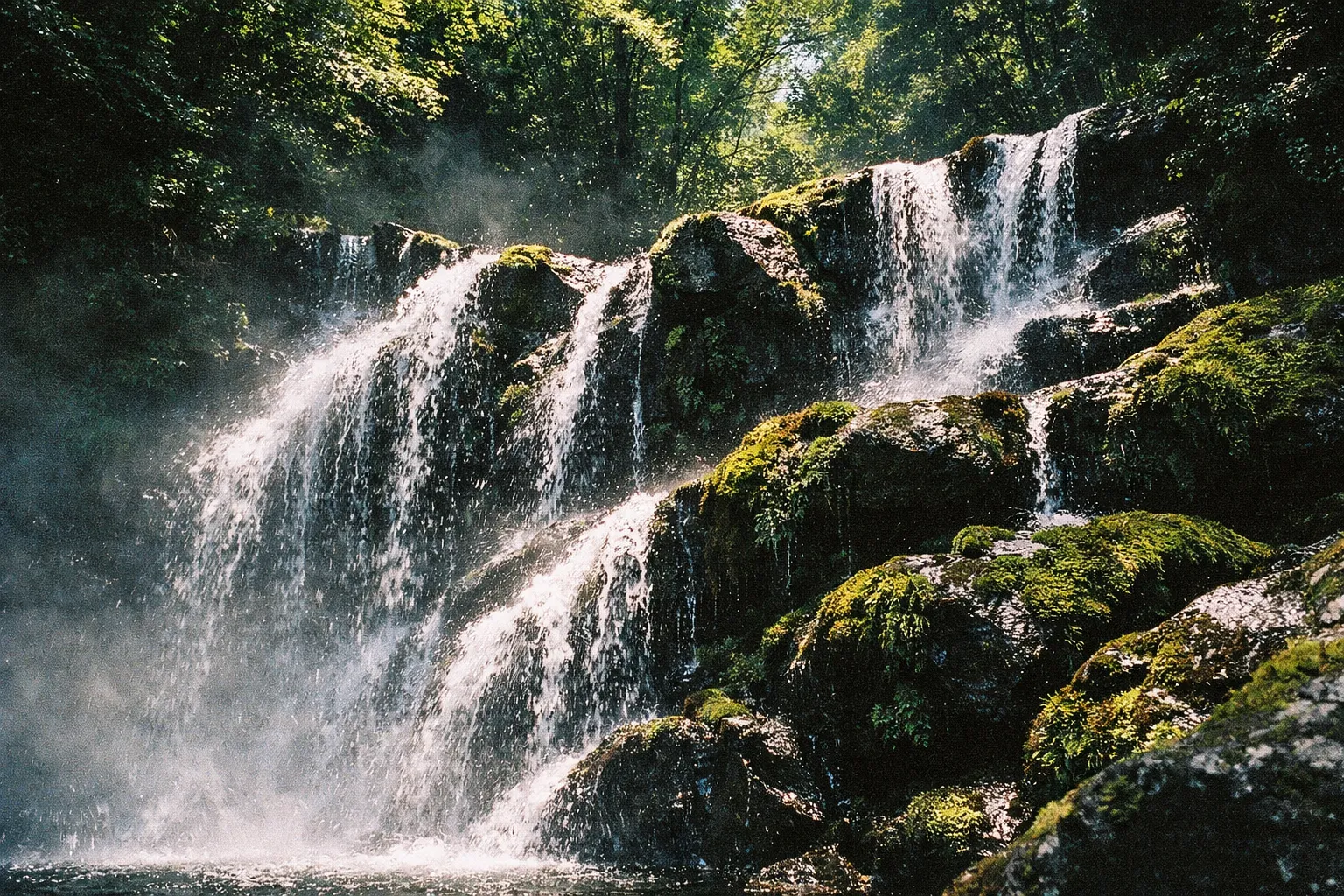
- Chisuji Falls - a small waterfall that shows up on Hakone’s attraction lists. Worth a stop if you’re already nearby; not worth a dedicated trip.
Rainy-Day Options Worth Knowing About
On a rainy day in Hakone, pivot to indoor-first options: the Open-Air Museum’s covered halls, the Sengokuhara art museums, an onsen soak, and the Hakone Checkpoint. The ropeway and open-air sculpture grounds lose most of their appeal in heavy rain, so restructure around what stays good.
The best rainy-day sequence starts at the Hakone Open-Air Museum, which is built to work in all weather. The Picasso Pavilion and covered structures like the “Symphonic Sculpture” keep you dry, and the recommended 2 to 3 hours holds up even in rain. From there, move to the Pola Museum of Art, fully indoor and open 9:00 to 17:00, or the Okada Museum.
Onsen is arguably better in the rain. The contrast of cold, wet air against a hot rotenburo is one of the more memorable things Hakone offers - lean into it rather than fighting the weather.
The Hakone Checkpoint takes about 45 minutes, a compact historical stop with an indoor museum hall. And Gora’s café scene makes a reasonable way to wait out morning rain with coffee before the cable car.
One structural warning: if the ropeway is closed - whether from weather or a volcanic alert - the loop breaks. Buses can substitute for the ropeway segment, but the experience changes significantly. Check status before committing your day around it.
Hakone in Winter and Other Seasons - When to Go
Winter, roughly December through February, is arguably Hakone’s best season. Cold, dry air gives the clearest Mt. Fuji views from Lake Ashi and the ropeway - far more reliable than in humid summer. Onsen also feels most rewarding when the air is cold, and crowds are lower outside the New Year period.
Here’s how the seasons stack up:
- Winter (Dec-Feb) - best Fuji odds, most rewarding onsen, thinner crowds. Pair a clear day with the cu-mo Hakone viewing terrace and footbath at Sounzan Station (terrace open 9:00 to 16:45, footbath until 16:00) (27).
- Autumn (Oct-Nov) - peak foliage. Sengokuhara’s silver grass peaks late September to early November, and the maples around Lake Ashi and Sengokuhara color in early November (26). Ryokan book out months ahead - reserve early.
- Spring (Mar-May) - cherry blossoms at Onshi Hakone Park and along the Tozan Railway route; pleasant temperatures and moderate crowds.
- Summer (Jun-Aug) - most crowded, most humid, and the season when Fuji is most often hidden behind haze and cloud. Ropeway views are frequently disappointing. Come only if onsen or museums are your primary draw.
How to Get to Hakone from Tokyo and Get Around
Hakone is 80 to 90 minutes from Tokyo, and the Hakone Freepass is the ticket that makes the whole region cost-efficient by bundling eight transport systems into one pass. Get the transport right first; everything else follows.
Getting there from Tokyo: The Odakyu Limited Express Romancecar from Shinjuku reaches Hakone-Yumoto in about 80 minutes with all-reserved seating; the limited-express surcharge comes on top of the regular fare. Alternatively, take the Odakyu line to Odawara and change to the Hakone Tozan Railway. A Shinkansen to Odawara is faster (about 35 minutes) but more expensive, and you’ll still need local transport from there.
The Hakone Freepass: The 2-day pass costs ¥7,100 for adults from Shinjuku and ¥6,000 from Odawara; a 3-day version costs ¥7,500 from Shinjuku, and there is no 1-day pass. It covers unlimited rides on eight Hakone-area systems - the Hakone Tozan Railway, Hakone Tozan Cable Car, Hakone Ropeway, Hakone Sightseeing Cruise, Hakone Tozan Bus, Odakyu Hakone Highway Bus and Tokai Bus on their designated sections, and the Kanko Shisetsu-Meguri sightseeing bus - plus one round trip on the Odakyu Line to Odawara and discounts at around 70 attractions (18). The Romancecar requires a separate limited-express surcharge on top of the pass.
What the Freepass does not do: It gives discounts at most museums, not free entry. Gora Park is the main fully-covered exception. Misreading this is one of the most common Hakone budgeting mistakes - budget entry fees separately before you go.
Buses fill the gaps: The Hakone Tozan Bus and Odakyu Highway Bus reach the places the rail-ropeway-cruise loop doesn’t - especially the Sengokuhara museums - and give you flexible return routing. Highway buses also connect to Gotemba Premium Outlets, a viable second-day add-on.
Volcanic caveat, again: Owakudani ropeway segments can suspend without much notice. Check the Hakone Ropeway operation status the morning you plan to ride it.
Day Trip vs 1 Night vs 2 Nights in Hakone
| Tight Schedule Day Trip | 1 Night | 2 Nights | |
|---|---|---|---|
| Full loop (train/cable car/ropeway/cruise) | ✓ (tight) | ✓ | ✓ |
| Onsen experience | Day-use only | Ryokan rotenburo | Ryokan + day-use option |
| Museum time | 1 max (rushed) | 1-2 | 2-3 (clustered) |
| Sengokuhara / silver grass | No | Possible | ✓ |
| Recommended for | First-timers on a tight schedule | Most visitors | Art lovers, onsen enthusiasts |
| Freepass version | 2-day (no 1-day pass) | 2-day | 3-day |
Hakone for Families, Couples, and Solo Travelers
Hakone flexes to different travel styles, and matching the area to your group saves you from a generic, half-optimized itinerary.
Families with kids: Lead with Yunessun for the onsen experience - swimsuit-friendly and low-friction. The Hakone Tozan Railway switchbacks are genuinely entertaining for children, the pirate-ship cruise on Lake Ashi is a reliable hit, and Owakudani’s black eggs are a good food hook. The Sightseeing Cruise’s standard one-way adult fare of ¥1,700, with an ¥800 special-cabin surcharge (17), makes it a mid-priced but high-impact activity. Skip the art museums unless your kids are unusually patient.
Couples: An overnight ryokan with a private rotenburo is the core experience. Add the Narukawa Art Museum for its Lake Ashi views, the ropeway at dusk if timing works, and a slow Gora morning with coffee before the cable car.
Solo travelers: The loop is easy to self-navigate, and the Freepass handles every leg. Hakone-Yumoto has solid solo dining. The Hakone Open-Air Museum is one of the better solo half-days in the region - you move through the sculpture grounds at your own pace, and two to three hours there doesn’t feel like time wasted.
Budget travelers: Maximize the Freepass transport coverage, use the free-with-pass Gora Park entry, and focus on the loop plus one discounted museum rather than paying full price at several. Day-use onsen at Hakone-Yumoto (¥1,700 to ¥2,200 at Hakone Yuryo) beats a ryokan night on cost while still delivering a real soak.
Common Mistakes That Derail a Hakone Trip
Most disappointing Hakone trips come down to five avoidable planning errors, not the destination itself.
Underestimating distances. Hakone-Yumoto, Gora, Owakudani, and Lake Ashi sit in different valleys. The loop alone typically takes six to eight hours (5). Treat every transfer as a 15-to-30-minute commitment.
Treating Mt. Fuji views as guaranteed. Clouds hide the mountain often, especially in summer and on humid days. If Fuji is your main goal, come in winter, when clear days are most common, and have a backup plan.
Ignoring volcanic alert status. Owakudani is active. Ropeway service is subject to suspension for weather or volcanic activity, and rising activity closed the area for almost a year in 2015-16 (15). Check the official status the morning of.
Overpacking a day trip. Full loop plus multiple museums plus onsen in one day is almost always too much. Pick two of the three and do them properly.
Misreading the Freepass. It covers transport and discounts most attractions - it does not make museums free. Gora Park is the exception. Budget entry fees separately.
Skipping the onsen entirely. Hakone without at least one soak is a diminished trip. Even a day-use bath at Hakone Yuryo is worth the time.
Frequently Asked Questions
- What not to miss in Hakone?
- The Hakone Ropeway over Owakudani, the Lake Ashi sightseeing cruise with its lakeside torii views, and at least one onsen soak are the non-negotiables. If you have time for one museum, the Hakone Open-Air Museum is the most distinctive - outdoor sculpture on that scale is rare. The kuro-tamago at Owakudani is worth trying for the experience, not just the folklore.
- Is 1 day enough in Hakone?
- For the classic loop - train, cable car, ropeway, Owakudani, cruise, shrine - yes, if you start early and move efficiently. The first Romancecar from Shinjuku gets you to Hakone-Yumoto by mid-morning; you can complete the loop and be back in Tokyo by evening. Add a museum or onsen and you're pushing the limits. One night is a noticeably better experience.
- Is 2 days enough in Hakone?
- Two days is the sweet spot for most visitors. Day one covers the full loop; day two handles a museum cluster (Pola, Venetian Glass, Lalique in Sengokuhara) or a slower Gora morning followed by a proper onsen afternoon. If you're staying overnight in a ryokan, the second morning before checkout is genuinely relaxed.
- Is Hakone a tourist trap?
- No - but it's easy to have an expensive, rushed, underwhelming trip if you don't plan well. The Freepass makes transport genuinely cost-efficient. The art museums show real Monet, Rodin, and Picasso pieces, not souvenir-shop filler. The onsen experience is real. The main risk is cramming too much into a day trip and ending up with a series of brief stops rather than any one thing done properly.
- Can you see Mt. Fuji from Hakone?
- Yes, from Lake Ashi and from the Hakone Ropeway - on clear days. The key qualifier is weather. Summer and humid days frequently produce cloud cover that hides the mountain entirely. Winter mornings, particularly December through February, give the best odds. Don't build your entire itinerary around a Fuji view; treat it as a bonus.
- Does the Hakone Freepass cover the Hakone Ropeway?
- Yes, unlimited rides on the Hakone Ropeway are included in the Freepass. It also covers the Hakone Tozan Train, Hakone Tozan Cable Car, Hakone Sightseeing Cruise, and several bus lines. What it doesn't do is give free entry to most museums - those get a discount, not free admission. Gora Park is the main exception: entry is fully covered.
- What are the best things to do in Hakone in winter?
- Winter is arguably Hakone's best season. Mt. Fuji views from Lake Ashi and the ropeway are clearest on cold, dry days. Onsen feels most rewarding when the air is cold - a rotenburo in December or January is hard to beat. Crowds are lower than autumn. The cu-mo Hakone viewing terrace with its footbath is a good addition to a clear winter day.
The Bottom Line
Match the plan to your time. One day: run the loop, catch the first Romancecar, and add one day-use onsen stop - don’t try to bolt on museums. Two days: add a Sengokuhara museum cluster and a proper ryokan night with a rotenburo. If a Mt. Fuji view is the whole point, come in winter and check the forecast the morning of, because even the best season has its cloudy days.
Whatever the length, buy the Hakone Freepass before you leave Shinjuku - ¥7,100 for two days from there, ¥6,000 from Odawara - and the transport planning largely takes care of itself. Check the ropeway’s operation status the morning you plan to ride it, and you’ve sidestepped the two mistakes that derail most trips.