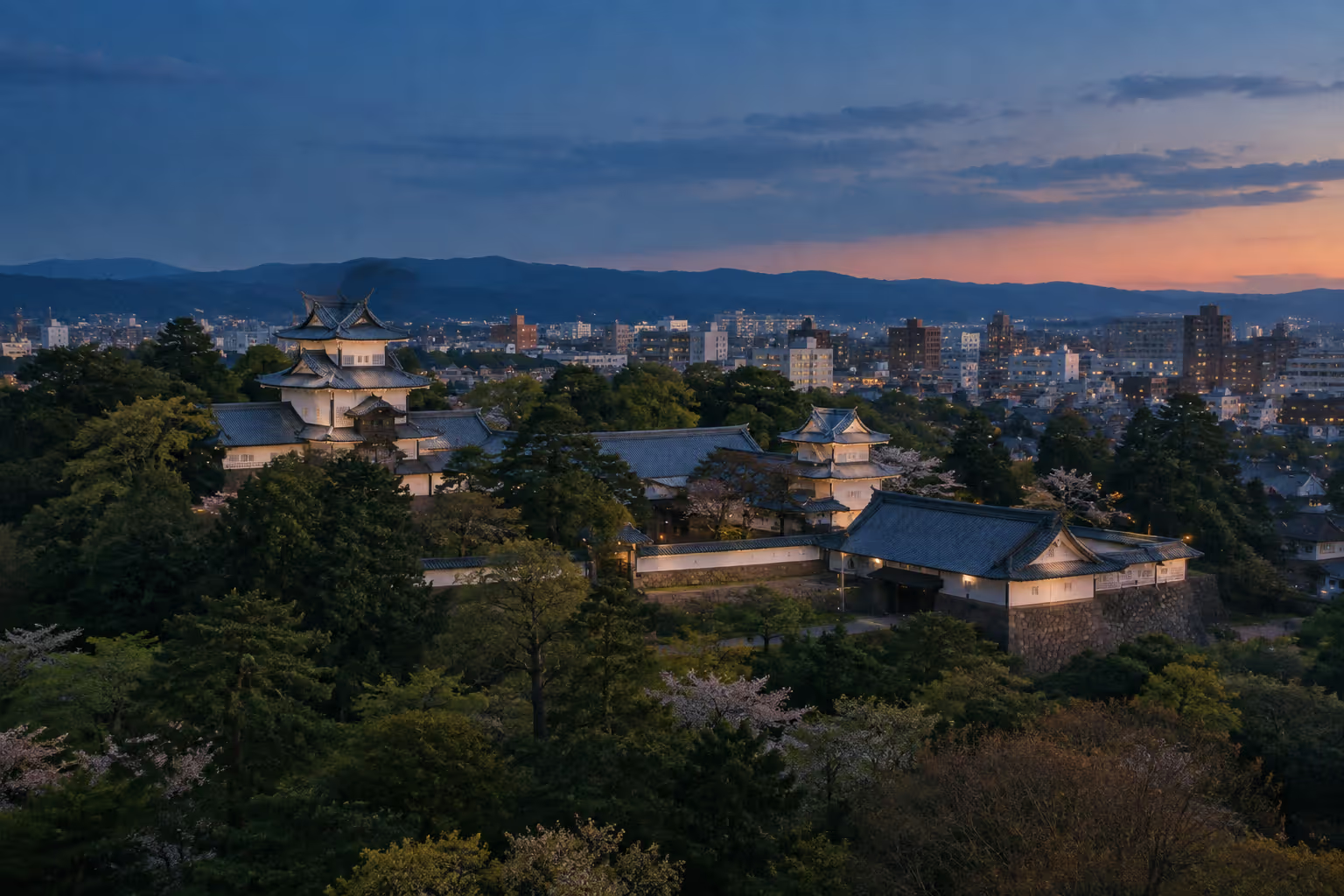
The best things to do in Kanazawa sit within a 2 km (1.2 mile) radius of Kanazawa Castle (11), so Kenrokuen Garden, Omicho Market, and the Higashi Chaya District fit into one walking day. Kenrokuen Garden and the 21st Century Museum are about 3 minutes apart on foot, and the Nagamachi Samurai District is roughly 15 minutes from the garden (11). The difficulty is timing, not distance. The garden has a free pre-opening window that works through only two gates. Market stalls keep their own hours. The geisha teahouses don’t accept walk-ins. This guide gives you the order that avoids all three problems.
✓ Pros
- The compact core makes it possible to see several major sights without relying on transit.
- Garden and castle grounds offer ways to spend time without paying admission.
- A full day can cover the main sights, with a second day for slower visits and optional stops.
✗ Cons
- A one-day visit requires early starts and attention to opening hours.
- Working ochaya are not open to first-time visitors, limiting access to the geisha-district interiors.
- Winter's shorter garden schedule leaves less room to fit the sights around market and castle hours.
Why Kanazawa Is Worth the Detour
Kanazawa is worth a stop for three reasons: Kenrokuen Garden, one of Japan’s three most celebrated gardens (5); a castle district shaped by more than 280 years of Maeda family rule (4); and Omicho Market, with about 170 stalls (16). All three are close enough to walk between.
Kanazawa has clear strengths and a few real drawbacks. On the plus side, the core is compact, the garden and castle grounds can be seen for free early in the morning, and admission to the paid sights is cheap. On the minus side, crowds have grown since the Shinkansen extension opened in March 2024 (8). Winter shortens garden hours, and the famous teahouse district is mostly a streetscape for first-time visitors because the ochaya themselves are closed to walk-ins. The city is still far more manageable than Kyoto, which is a large part of why it’s worth the train fare.
What Kanazawa is known for
Kanazawa’s reputation comes from its time as the seat of the Kaga Domain. The Maeda family governed present-day Ishikawa and Toyama from Kanazawa Castle for over 280 years (4). During the Edo period the city grew past 100,000 people, which made it one of the largest castle towns in feudal Japan. Its population rivaled that of Rome and Madrid at the time (12).
Centuries of occupation are visible across the city. Kenrokuen Garden was maintained by the Maeda family from generation to generation and covers 11.4 hectares (28 acres) next to the castle (5). The Nagamachi Samurai District keeps a town layout that matches Edo-period maps (10). Omicho Market has supplied the city’s kitchens for more than 300 years (7). The city is also known for gold leaf. Leading gold-leaf manufacturers such as HAKUICHI run workshops in the Higashi Chaya District (9). Contemporary art is a more recent draw, centered on the 21st Century Museum, which opened in 2004 (13).
How many days you need
One full day covers the core sights of Kenrokuen Garden, Kanazawa Castle, Omicho Market, and the Higashi Chaya District. Two days lets you add Nagamachi and the museum without rushing. Japan-Guide’s full-day walking route covers about 7 km (4.3 miles) and allocates 60 minutes to Omicho Market and 60-90 minutes to Kenrokuen Garden (17). Those are sensible planning numbers, and they show why a single day fills up quickly once you add lunch and a teahouse district.
Stay overnight if you can. A night in the city lets you use the garden’s early-entry window, which starts well before any train from Kyoto or Osaka could get you there.
The best month depends on your priority. November is the choice for food. Crab, yellowtail, and shrimp from the Sea of Japan are at their most prized around then, and Omicho Market fills with tourists and locals as a result (7). The trade-off is that Kenrokuen Garden runs its shorter 8:00-17:00 schedule from October 16 (5). If you care more about long garden days than seafood, go between April and August. Early entry starts at 4:00 in those months (3), and standard hours run 7:00-18:00 (5).
Things to Do in Kanazawa: An Overview of the Top Sights
The top things to do in Kanazawa are Kenrokuen Garden, the Kanazawa Castle grounds, Omicho Market, and the Higashi Chaya District, with Nagamachi and the 21st Century Museum as strong optional additions. These sights are not equal, and your time is limited, so they are ranked below.
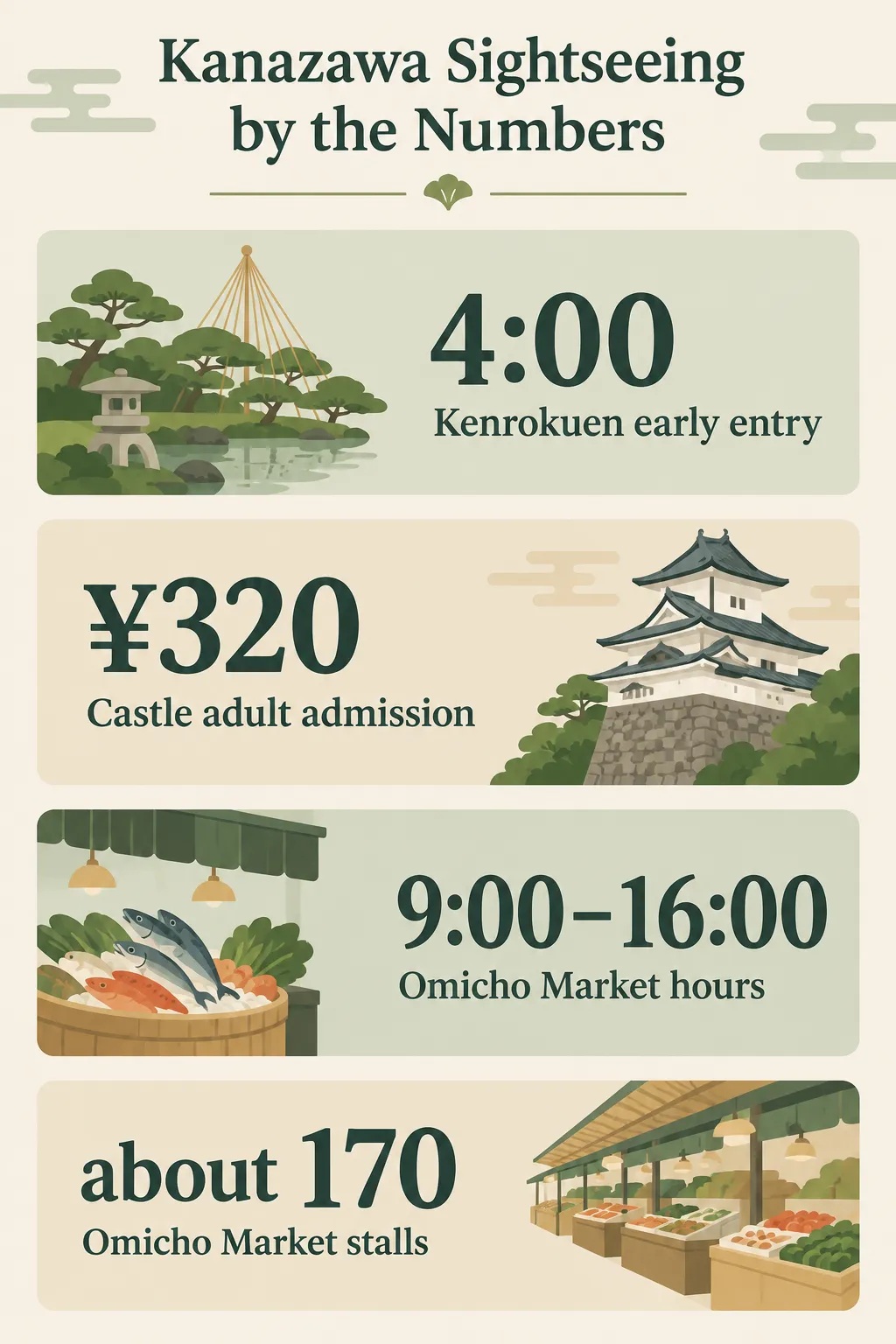 Kanazawa’s early-entry garden visit starts at 4:00 from April through August; adult castle-building admission is ¥320, and Omicho Market lists hours of 9:00-16:00 across about 170 stalls.
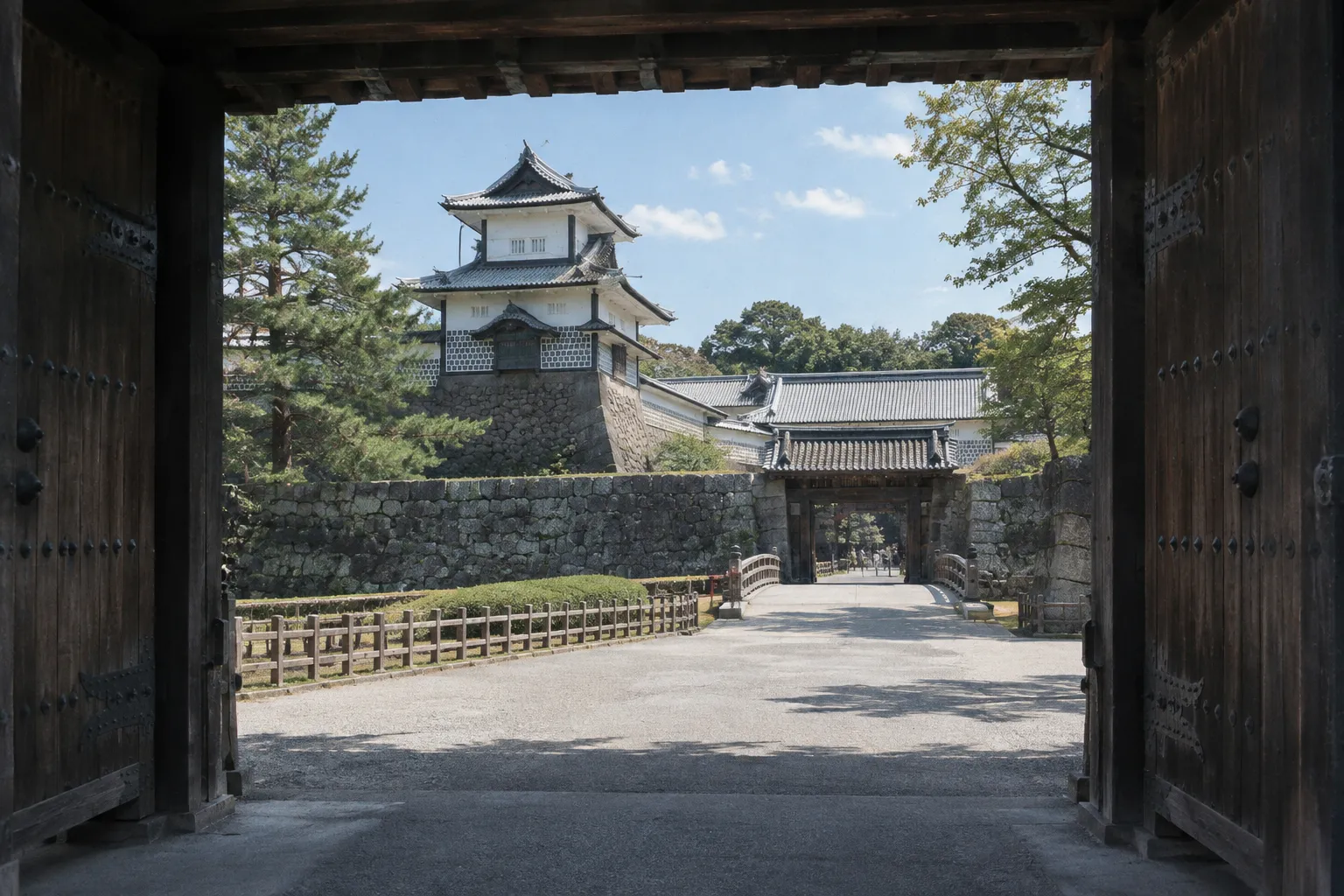
These sights are worth the detour:
- Kenrokuen Garden: Open 7:00-18:00 from March 1 to October 15 and 8:00-17:00 from October 16 through February (5). Adult admission is ¥320 (3), or free during early entry. Allow 60-90 minutes (17). It is the best stop for landscape design, seasonal color, and early-morning quiet.
- Kanazawa Castle: The park grounds are free (2). The historic buildings cost ¥320 for adults and are open 9:00-16:30 (1). Allow about an hour for the grounds plus the interiors. It is the best stop for architecture and Maeda-era history.
- Omicho Market: Listed hours are 9:00-16:00, although individual stores vary (7). Entry is free, and you pay for what you eat. Allow about 60 minutes (17). It is the best stop for seafood lunches and local produce.
- Higashi Chaya District: The district has no admission fee, and most shops open roughly 10:00-17:00 (18). Allow 1-2 hours (18), or longer with a gold-leaf workshop. It is the best stop for teahouse architecture, gold-leaf shopping, and crafts.
These sights are worth skipping if you’re short on time:
- Nagamachi Samurai District: The circuit takes about 60 minutes (12). The earthen walls and cobblestone alleys are handsome, but many of the houses are private homes, so there is less to enter than the photos suggest (10).
- 21st Century Museum of Contemporary Art: The free zone opens 9:00-22:00 (13). If your day is tight, walk through the free areas on your way from the garden rather than buying a paid exhibition ticket.
Distances between sights are short. According to the city’s official tourism bureau, Kanazawa Station to Omicho Market is about 15 minutes on foot, and Omicho Market to the castle’s Otemon Gate is about 9 minutes (11). Omicho Market also sits a short distance from Kanazawa Castle’s Kuromon Gate (16). Kenrokuen Garden is about 3 minutes from the 21st Century Museum (11). The Higashi Chaya District is the one core sight that requires a longer walk or a short bus ride from the castle, so it works best at the end of the day.
Kenrokuen Garden: Hours, Early Entry, and Seasonal Highlights
Kenrokuen Garden is open 365 days a year, from 7:00-18:00 between March 1 and October 15 and from 8:00-17:00 between October 16 and the end of February (5). Adult admission is ¥320 as of October 2026 (3).
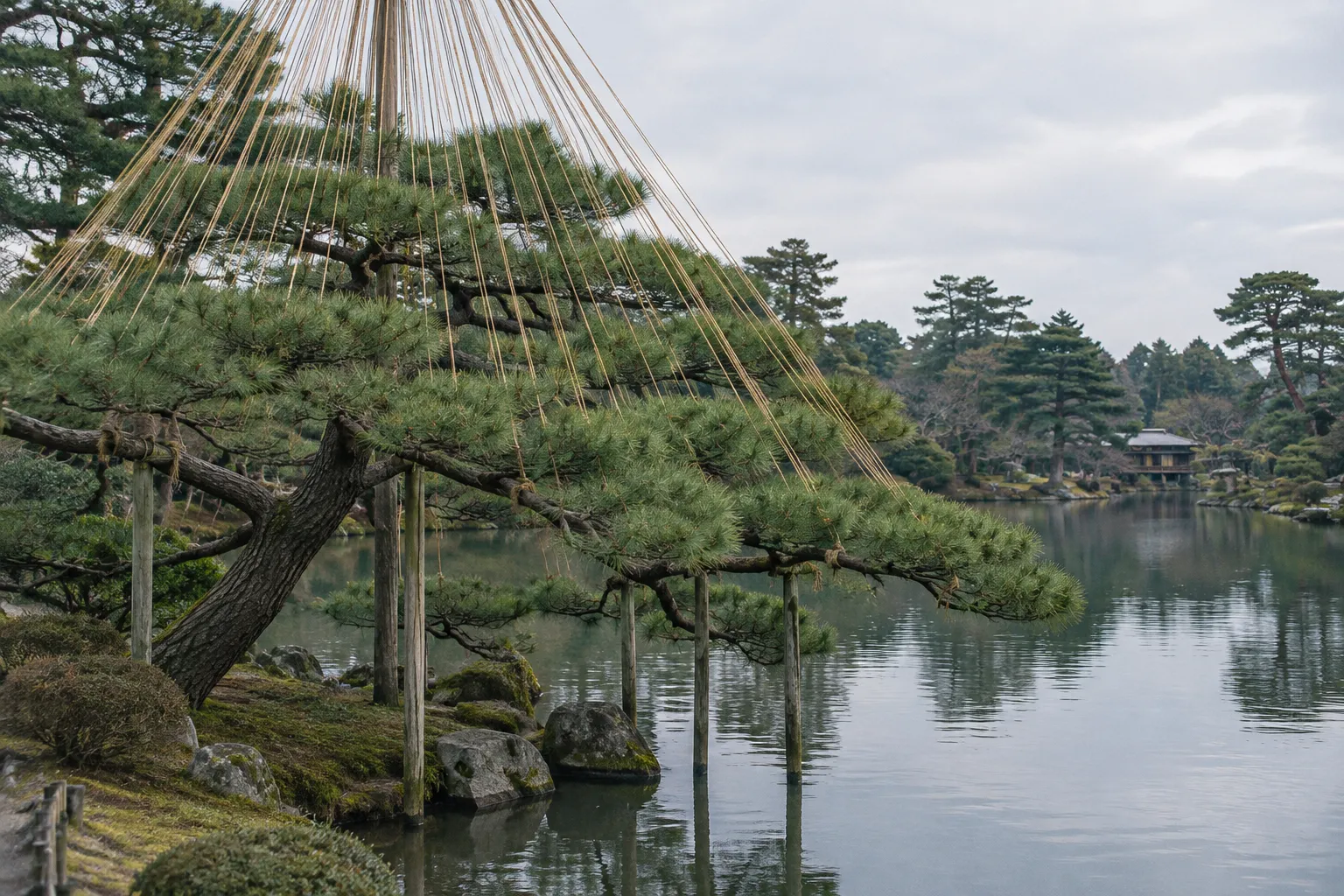
Children aged 6 to 17 pay ¥100 (3). Visitors 65 and over enter free with ID (5). Kenrokuen Garden admission is cash only (3), and coupons are not accepted, so bring yen before you reach the gate.
The garden’s name means “having six factors”: spaciousness, tranquility, artifice, antiquity, water sources, and views (5). Kasumigaike, the large artificial pond, is the centerpiece. Horai Island sits near its middle and symbolizes a sacred island out at sea (5). The garden occupies high ground in the center of the city next to Kanazawa Castle (5), so expect slopes. Wheelchairs are available free at the entrances, but the official guidance warns that the many slopes need care (3). Smoking and pets are not allowed (3). If you want to sit down properly, the Shigure-tei tea house inside the garden is open 9:00-16:30, with last entry at 16:00, and closes December 29 through January 3 (3).
Standard hours by season
Kenrokuen Garden’s summer schedule gives you two more hours than the winter schedule: eleven hours a day from March 1 to October 15, compared with nine hours from October 16 through February (5). That affects your plan. A late-October or November visit means the garden opens at 8:00 and closes at 17:00, and those hours overlap directly with the market and castle interiors. In summer, you can see the garden before the castle buildings open and still have time for a second pass in the evening.
The castle grounds follow the same seasonal pattern, 7:00-18:00 from March 1 to October 15 and 8:00-17:00 from October 16 through February. On certain event days, the gardens stay open until 21:00 (2).
Free early-entry window and which gates to use
Most guides get this wrong. They list Kenrokuen Garden’s opening time as 7:00 and stop there, but the garden opens earlier, and it is free before the standard opening. The early-entry periods are 4:00 from April through August, 5:00 in March and September-October, and 6:00 from November through February (3).
There are two conditions. First, only the Renchi-mon and Zuishinzaka entrances are open during early entry (3). If you arrive at any other gate before opening, you will be walking around the perimeter. Second, early-entry visitors must leave 15 minutes before standard opening (3). In summer, that means you can stay from 4:00 until 6:45. In winter, you can stay from 6:00 until 7:45.
Kanazawa Castle Park has matching early-opening times, 5:00 in March, 4:00 from April through August, 5:00 in September-October, and 6:00 from November through February. Staff are still preparing during these hours, so some facilities may not be available (2).
The practical result is that an overnight visitor in summer can see Kenrokuen Garden at dawn for free, with far fewer people than at 10:00. If early starts suit you, this is one of the best things you can do in the city.
Kanazawa Castle: Free Grounds vs Paid Historic Buildings
Kanazawa Castle Park is free to enter and open every day. The reconstructed historic buildings, including Hishi Yagura and Gojikken Nagaya, need a separate ticket, which costs ¥320 for adults as of October 2026 (1).
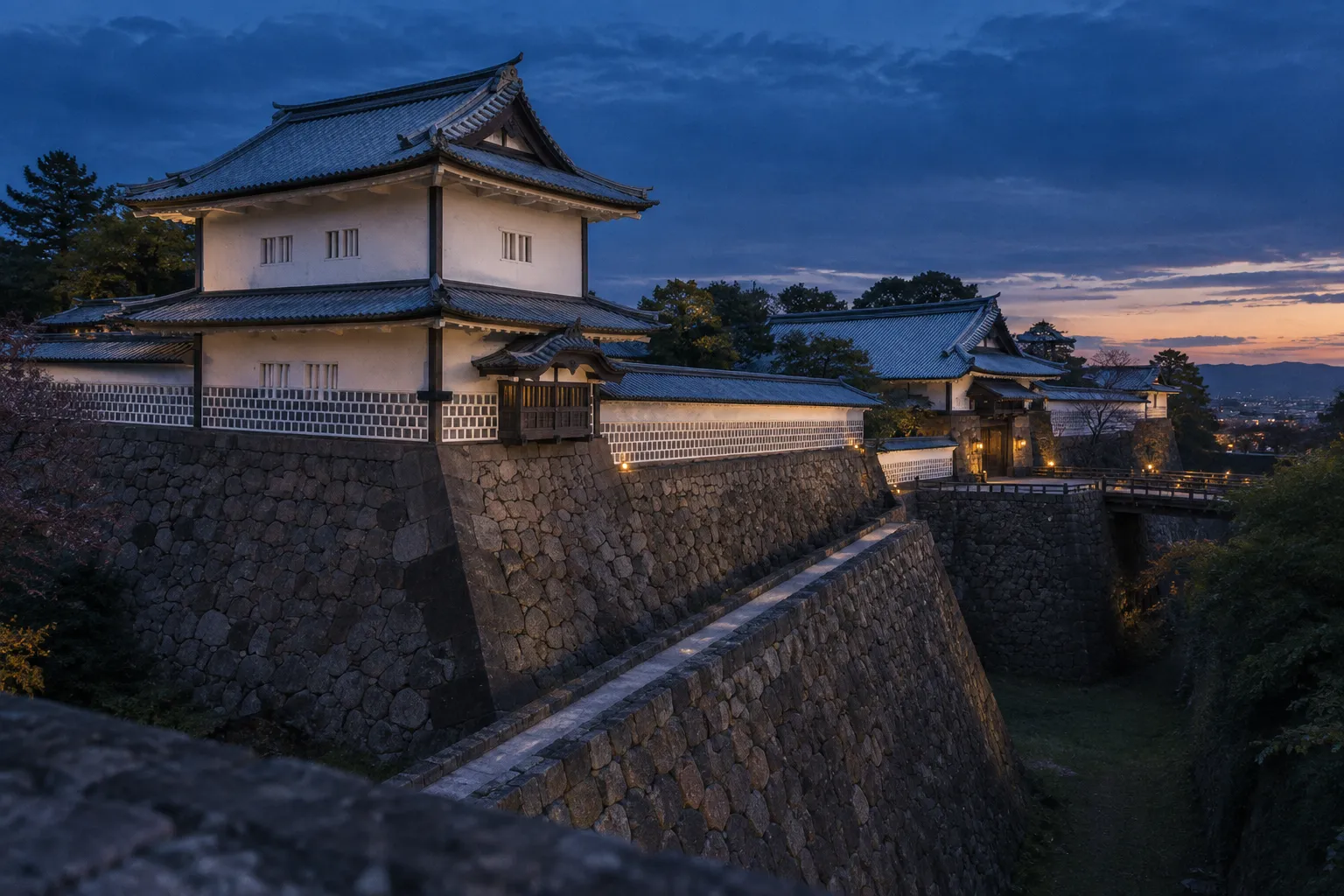
This is the second most common mistake visitors make. They see “free” on a listing and assume it includes everything, or they see “¥320” and assume they need a ticket just to walk through the park. The official fee page lists the interior structures separately from the grounds (1). Knowing this helps you keep costs down.
What’s free in Castle Park
The park grounds are free and have no closing days (2). You can walk the stone walls, gates, and open lawns without buying anything. The Kahoku-mon and Nezumita-mon gates are also free, although they follow the buildings’ 9:00-16:30 hours rather than the park’s (1). The Tsurunomaru Rest House offers a rest spot, an exhibition, and light food at no charge (1).
Pay attention to the stonework. The walls vary in style because they were built in different periods, and the oldest sections are more than 400 years old (4). Two of the castle’s longest-surviving structures are the Ishikawa-mon Gate, rebuilt in 1788, and the Sanjikken Nagaya, rebuilt in 1858. Both are designated important cultural assets (4). The original castle tower was lost to fire, as were many other features over the years (4). Before its restoration, the site served as a Japanese army base and later as a Kanazawa University campus. It was designated a National Historic Site in 2008 (4).
Paying to enter the historic buildings
The paid buildings, Hishi Yagura, Gojikken Nagaya, and related structures, are open every day from 9:00 to 16:30, with final entry at 16:00 (1). Adult tickets cost ¥320, children aged 6-17 pay ¥100, and visitors over 65 enter free with government-issued ID. Photocopies of ID are accepted (1). Unlike the garden, the castle accepts cash, digital money, and credit cards (1).
The cheapest morning plan works like this:
- Enter Kenrokuen Garden free during early entry through Renchi-mon or Zuishinzaka (3).
- Leave 15 minutes before the garden’s standard opening and walk through the free Kanazawa Castle Park grounds (2).
- Buy a castle building ticket when the buildings open at 9:00 (1).
With this sequence, your total admission for both headline sights is ¥320 per adult. If you visit Kenrokuen Garden during standard hours instead, garden and castle tickets bought separately come to ¥640 (3)(1). The castle’s own fee page also lists a Kenrokuen+1 ticket for ¥500, which covers the garden plus one additional cultural-facility admission (1)(3). Confirm at the counter which facilities qualify. If you are skipping early entry, the combined ticket is the better deal.
Omicho Market: Best Times to Eat and Shop
Omicho Market is a covered market with about 170 stalls selling seafood, produce, and prepared food (16). Its listed hours are 9:00-16:00, but the official page states that hours vary from store to store (7).
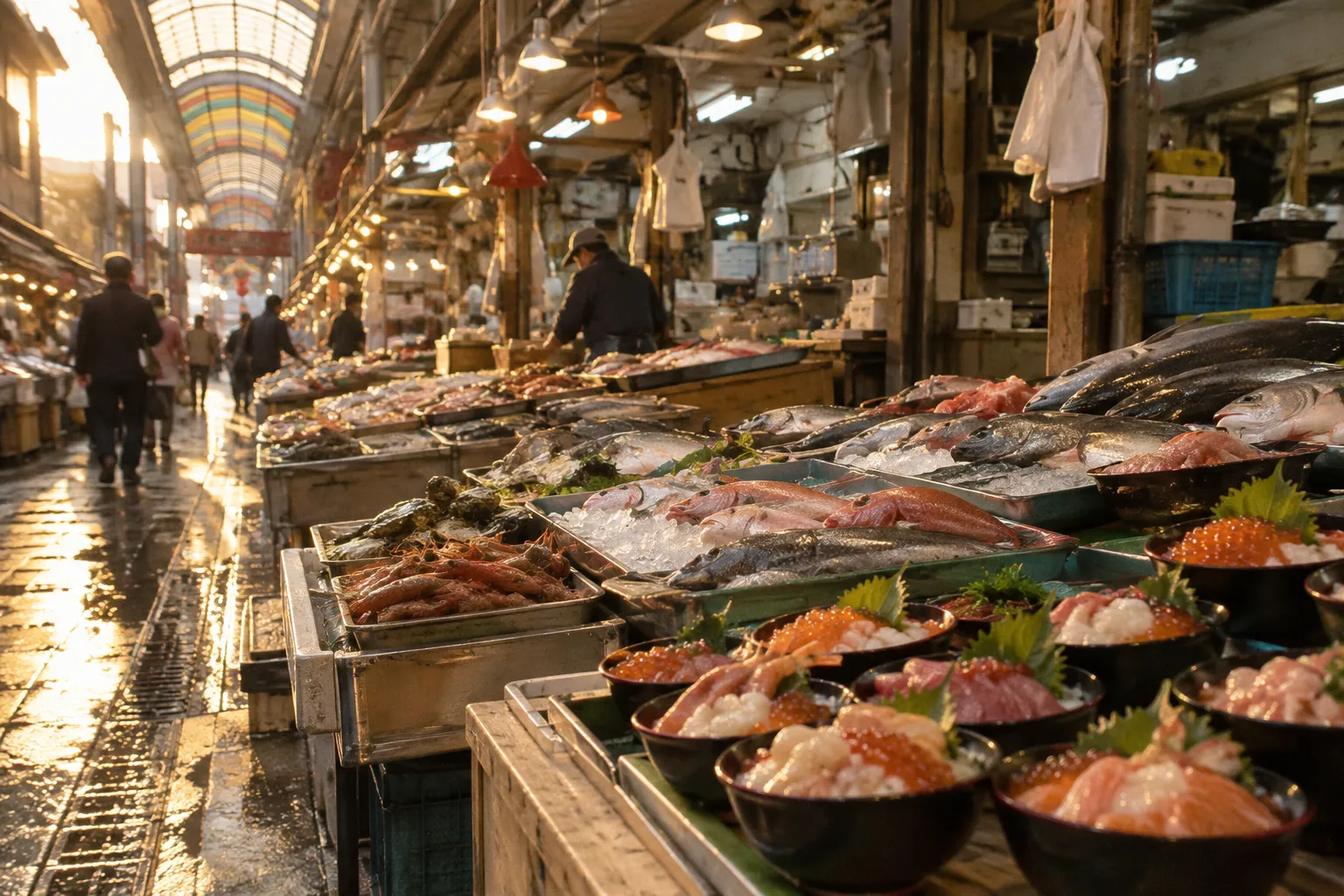
The market dates from the Edo period and has been central to Kanazawa’s food culture for more than 300 years (7). Fishmongers make up much of the market and sell seafood from the Sea of Japan. There are also produce stands, groceries, clothing shops, and restaurants (7). Omicho Ichibakan, a refurbished building inside the market, holds several popular restaurants and stores (7). The market closes over the New Year holidays (7), so if you are traveling in late December or early January, check before you build a day around it.
When to go for food
Go between late morning and early afternoon. The 9:00-16:00 window is only a guideline, since hours vary from store to store (7), so a 15:30 arrival risks finding some counters already shuttered. Arriving after the garden and castle, somewhere around 10:30 to 12:30, puts you there when most stalls are fully running. After eating, you can continue to the Higashi Chaya District for the afternoon.
November is the peak month. Crab, yellowtail, and shrimp season draws both tourists and locals (7), so expect lines at the popular seafood-bowl counters. On a tight schedule, budget about 60 minutes (17). Add more time if you plan to sit down at a restaurant rather than eat standing at a stall.
Getting from the market to the castle
Omicho Market sits a short walk from Kanazawa Castle’s Kuromon Gate (16). The tourism bureau’s route puts Omicho Market to Otemon Gate at about 9 minutes on foot (11). If you are coming by bus, the Musashigatsuji Omicho Market stop is a 1-minute walk away and is served by the Kanazawa Loop Bus, Hokutetsu Bus, and West Japan JR Bus (7).
You can run the route in either direction. If you are coming straight from the station, the market is about 15 minutes on foot (11), and you could eat first. If you plan to use early entry, reverse the order and do the garden and castle first, then eat at the market. The early-entry plan uses the day better.
Higashi Chaya District: Geisha Teahouses, Gold Leaf, and Shopping
The Higashi Chaya District has no admission fee and no set district-wide opening hours. Most shops open roughly 10:00-17:00 (18), so arrive by mid-afternoon if you want the shops open while you walk.
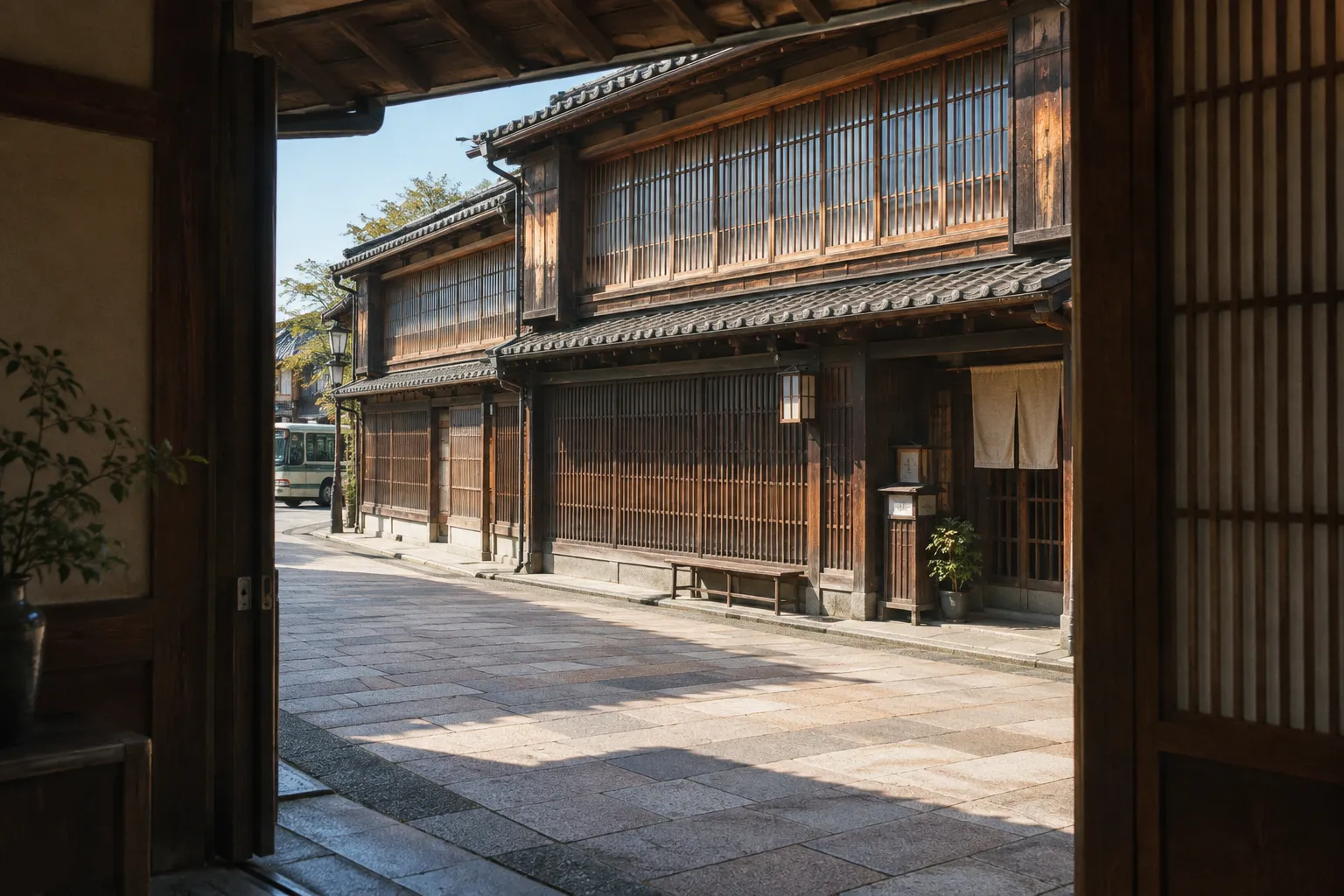
This is Kanazawa’s geisha quarter. It is a preserved street of wooden teahouse facades that now hold craft shops, cafés, and gold-leaf businesses. Because shops start opening around 10:00, the district works best after lunch. It is also the one core sight that makes little sense to visit at dawn, when everything is closed.
Visiting the ochaya teahouses
You cannot walk into a working ochaya as a first-time visitor. Five ochaya still operate in the Higashi Chaya District, and the traditional “no first-time visitors allowed” custom remains in force (18). An evening with geisha requires an introduction or an arranged booking, not a knock on the door.
Many first-time visitors expect otherwise, and it causes a lot of disappointed afternoons. Plan to see the architecture from the street and visit the shops and cafés that occupy former teahouse buildings. Treat the working ochaya as private businesses. If a geisha evening matters to you, arrange it in advance through a proper intermediary rather than hoping to find one on arrival.
Gold-leaf shopping and workshops
The gold-leaf craft experience is the best hands-on activity in the district. The tourism bureau lists a one-hour workshop in a preserved traditional townhouse, run by HAKUICHI, one of Kanazawa’s leading gold-leaf manufacturers (9). You decorate an accessory box, hand mirror, or plum-shaped umezara plate. You choose from more than 50 pre-cut sticker designs, including seasonal patterns, and the sticker masks the surface while you apply leaf around it (9). Staff guide you step by step, so no craft experience is needed (9).
Timing is flexible. Sessions start at 10:00, 11:00, 13:00, 14:00, and 15:00 every day except January 1, last 30 to 60 minutes, and cost from ¥2,000 depending on the item, as of October 2026 (9). Booking ahead is recommended, although walk-ins are accepted when space allows (9). Upstairs activity aside, the first floor sells crafts by young local artists, including accessories and tableware (9). These make better souvenirs than the generic gold-leaf items sold along the main street.
Nagamachi Samurai District and the 21st Century Museum
The Nagamachi Samurai District takes about 60 minutes to walk (12), and the 21st Century Museum’s free zone is open 9:00-22:00 (13). Both are worthwhile second-tier stops, but neither should push a core sight out of a one-day plan.
Nagamachi Samurai District circuit
Nagamachi was home to middle- and high-ranking samurai families (12). It keeps its earthen walls, row-house gates, and narrow cobblestone alleys (10). In winter you’ll see komogake straw mats protecting the walls and yukitsuri rope supports protecting the trees from heavy snow (10). The Nomura-ke Samurai Residence is open to the public and gives you a way inside (10). Most houses in the district are occupied, however (10), so keep noise down and don’t photograph people’s doorsteps.
The real time commitment is about 75 minutes, not 60. From Kanazawa Station, it is a 10-minute bus ride to Korinbo and then a 5-minute walk to the district (10)(12). Add the roughly 60-minute circuit (12), and you have about 75 minutes before counting the trip back or on to your next stop. From Kenrokuen Garden, the walk is about 15 minutes (11). Nagamachi is best on a second day or as a late-afternoon add-on if the Higashi Chaya District is finished early.
21st Century Museum hours and free zone
The museum’s paid exhibitions are open 10:00-18:00, with a later 20:00 close on Fridays and Saturdays. The free zone is open 9:00-22:00 (13). Exhibition prices vary by show (13). The circular glass building has five entrances facing different parts of the city, and much of the art is designed to be touched or sat on (13). Leandro Erlich’s The Swimming Pool, where visitors appear to stand at the bottom of a filled pool, is the best-known piece (13).
The museum is about 3 minutes from Kenrokuen Garden (11), so it’s easy to add. If you’re short on time, walk through the free zone for 20 minutes. Buy a paid ticket only if the current exhibition appeals to you. The late free-zone hours also make it a good evening option after the shops have closed.
Planning a Kanazawa Day Trip: Getting There and Around
A Kanazawa day trip works best from Tokyo on the Hokuriku Shinkansen. From Kyoto or Osaka, you now change trains at Tsuruga, which is why an overnight stay usually makes more sense than a round trip in one day (19).
Shinkansen routes from Tokyo, Kyoto, and Osaka
The Hokuriku Shinkansen runs from Tokyo to Kanazawa, and the extension to Tsuruga opened on March 16, 2024 (19). For travelers from Tokyo, the route is a direct Shinkansen ride. For travelers from Kyoto or Osaka, the extension removed the old through-train. You now take a limited express to Tsuruga and transfer to the Shinkansen for the final leg to Kanazawa (19). The transfer adds friction to a day trip, and it’s the main reason why a same-day return from the Kansai region feels rushed.
Kanazawa Station is worth a few minutes on arrival. The glass Motenashi Dome shelters the forecourt from rain and snow, and the wooden Tsuzumi-mon Gate refers to the city’s Noh theater tradition (16). For taxis to the historic areas, use the covered stand at the Kenrokuen Exit (East Exit) (11).
Walking times between central sights
The official walking times from the tourism bureau (11) are the most useful planning numbers:
- Kanazawa Station to Omicho Market: about 15 minutes
- Omicho Market to Otemon Gate (castle): about 9 minutes
- Kenrokuen Garden to the 21st Century Museum: about 3 minutes
- Kenrokuen Garden to the Nagamachi Samurai District: about 15 minutes
For longer legs or bad weather, a circular tourist bus route links all the major areas with Kanazawa Station (16). Kanazawa is known for sudden coastal showers, and the tourism bureau notes that taxis are an efficient choice in rain because the distances are short. A taxi from the station to Omicho Market takes about 7 minutes (11). Pack a compact umbrella regardless of the forecast.
Plan a One-Day Visit to Kanazawa
One daySequence Kanazawa's central sights around the garden's early-entry window, castle opening time, and market hours.
- 1
Start at Kenrokuen Garden
Use the early-entry gates covered above, then move on before the crowds arrive.
- 2
Walk through the castle grounds
Use the time before the historic buildings open to explore the free Kanazawa Castle Park grounds.
- 3
Visit the castle buildings at opening
Enter the paid historic buildings when they open at 9:00.
- 4
Have lunch at Omicho Market
Continue to the market late in the morning, while more stalls are still serving.
- 5
Spend the afternoon in Higashi Chaya
Browse the district's shops, or fit in a gold-leaf workshop if you have arranged one.
- 6
Add one optional stop if time allows
Choose Nagamachi or the 21st Century Museum rather than squeezing both into an already full day.
Day trip or overnight stay
Stay overnight if the free early-entry hours at the garden and castle are part of your plan, and they should be. A day trip means arriving after the early-entry window has closed, paying standard admission, and running into mid-morning crowds. One night gives you the full sequence below. Two nights let you add Nagamachi and the museum at an easy pace.
The core admissions for this sequence run about ¥320 to ¥640 per adult (3)(1), plus whatever you spend on food. The HowTo steps above give you the order; the pricing and specific gate names are the details worth remembering as you walk it.
Frequently Asked Questions
- Is Kanazawa practical as a day trip from Kyoto or Osaka?
- Kanazawa is more practical as an overnight stop from Kyoto or Osaka because the route requires a train change at Tsuruga.
- Can I see the 21st Century Museum without buying an exhibition ticket?
- Yes, visitors can use the museum's free zone without purchasing admission to a paid exhibition.
- Should I visit Omicho Market before or after Kenrokuen?
- Visit Kenrokuen first if you want to use its early-entry window, then reach Omicho Market before vendors begin closing.
- Is the gold-leaf workshop available every day?
- Yes. The HAKUICHI workshop in the Higashi Chaya District lists sessions every day except January 1, starting between 10:00 and 15:00.
- What should I do if rain disrupts a walking day in Kanazawa?
- Use the circular tourist bus or a short taxi ride to link the central areas when rain makes walking less comfortable.
- Is the 21st Century Museum worth adding to a packed first day?
- The free zone is an easy brief stop near Kenrokuen, while a paid exhibition makes more sense when its current show interests you.
Putting Your Kanazawa Plan Together
Kanazawa’s core sights are close enough to see in one focused day or spread across two relaxed ones. Timing matters more than distance. Book at least one night so you can use the garden’s free early-entry window. Arrive at the Renchi-mon or Zuishinzaka gate rather than the nearest one on your map, and be at the castle buildings when they open at 9:00. Eat at Omicho Market before stalls start closing early, and leave the Higashi Chaya District for the afternoon, when its shops are open. If you’re coming from Kyoto or Osaka, build the Tsuruga transfer into your schedule. Bring cash for Kenrokuen Garden, and pack an umbrella for the coastal showers.