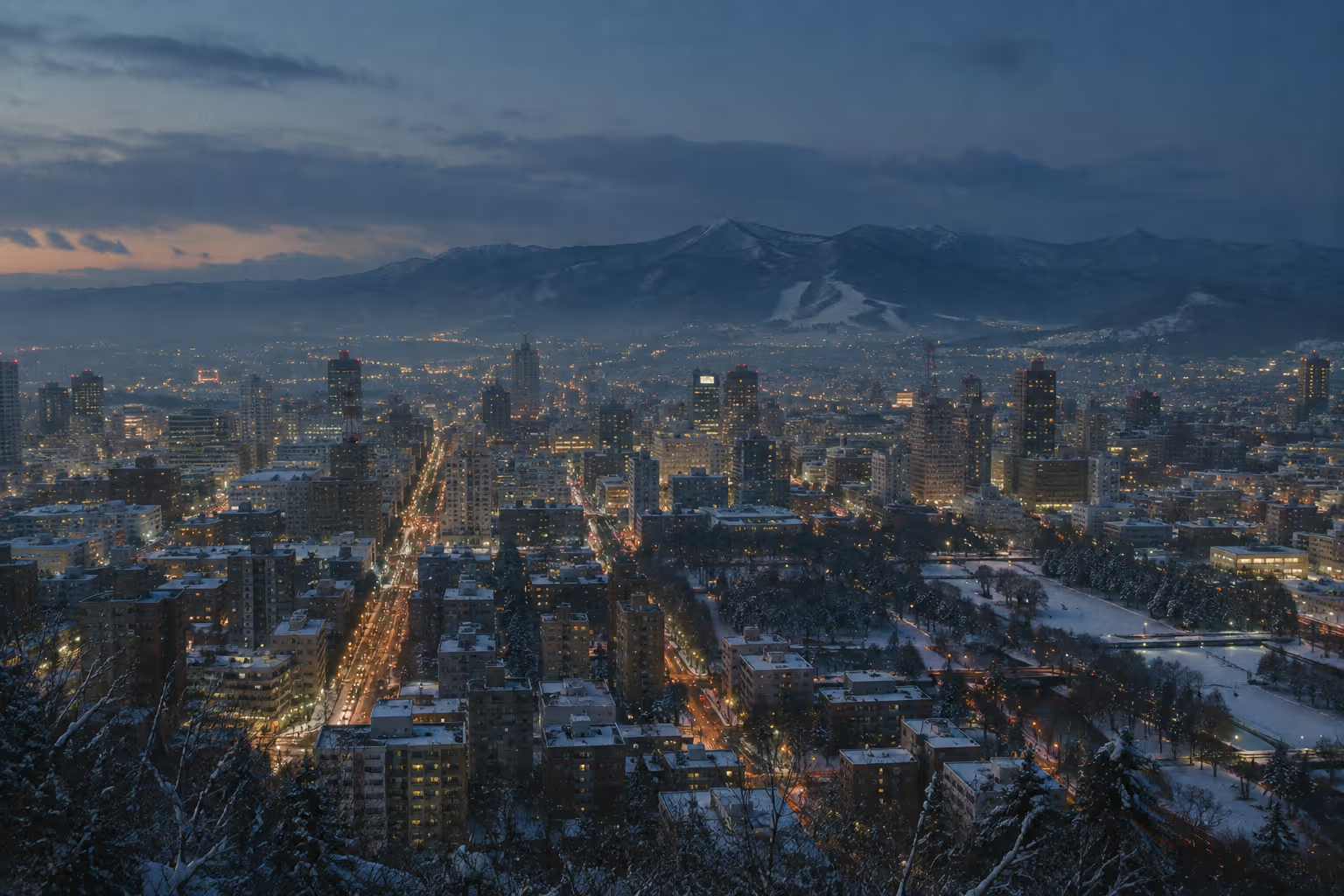
Hokkaido’s official tourism site says seeing the whole island properly takes more than two weeks (9). The useful question about things to do in Hokkaido is which slice of the island fits your trip, not what’s there. Pick a season, pick one base, and add day trips from it. That approach will get more out of 7 or 10 days than a loop that spends half your time on trains.
✓ Pros
- Distinct seasonal trips let you match the island to a specific interest.
- Strong food culture gives city stops value beyond sightseeing.
- Several regions offer outdoor activities alongside cultural and hot-spring visits.
✗ Cons
- Long distances make a full-island itinerary inefficient on a short visit.
- Weather can disrupt outdoor plans, including cloud-viewing and seasonal activities.
- Choosing one region means leaving other parts of Hokkaido for another trip.
Things to Do in Hokkaido: What It’s Known For
Hokkaido is worth visiting if you match the season to the region, because the island covers over 20% of Japan’s land area and changes completely between winter and summer (9). It’s famous for powder skiing, which comes from a crisp, dry climate and a snow season that runs from late November to early May (7). It’s also known for flower fields that bloom from June to August, autumn foliage in September and October, and abundant hot springs (9). Ainu heritage sets it apart from the rest of Japan.
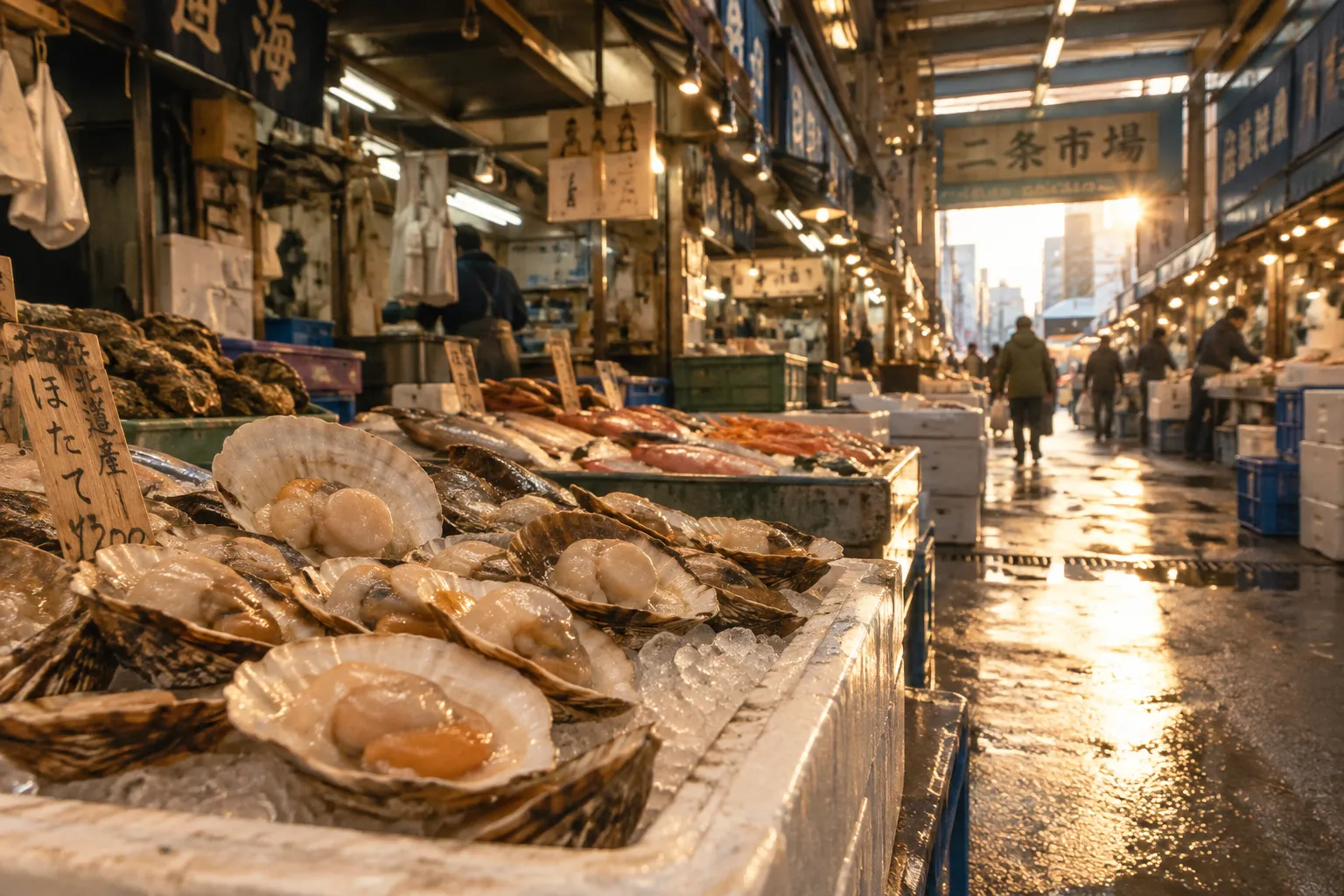
The food earns its reputation. Nijo Market in Sapporo sells just-caught scallops (8). Otaru’s LeTAO is the standard stop for cheesecake (8). Sapporo ramen and the island’s dairy fill in the rest.
The four bases most first-timers choose serve different trips:
- Sapporo is the city base for winter events. It’s best from December to March and anchors the Snow Festival in early February.
- Niseko is the ski base. It sits about three hours from Sapporo by bus or two hours by car (5), and its season runs from late November into May.
- Otaru is the slower canal town. It’s close enough to Sapporo for a day trip and works year-round, especially at night.
- Furano is the summer scenery base, built around lavender that peaks in mid-July.
Best Time to Visit Hokkaido: Weighing the Seasons
The best time to visit Hokkaido is February for the Snow Festival, January for the driest powder, mid-July for lavender, and September-October for foliage. Budget travelers should target the shoulder months instead (6). There’s no single best month. There’s the right month for what you came to do.
Winter, Summer, Autumn: What Each Season Delivers
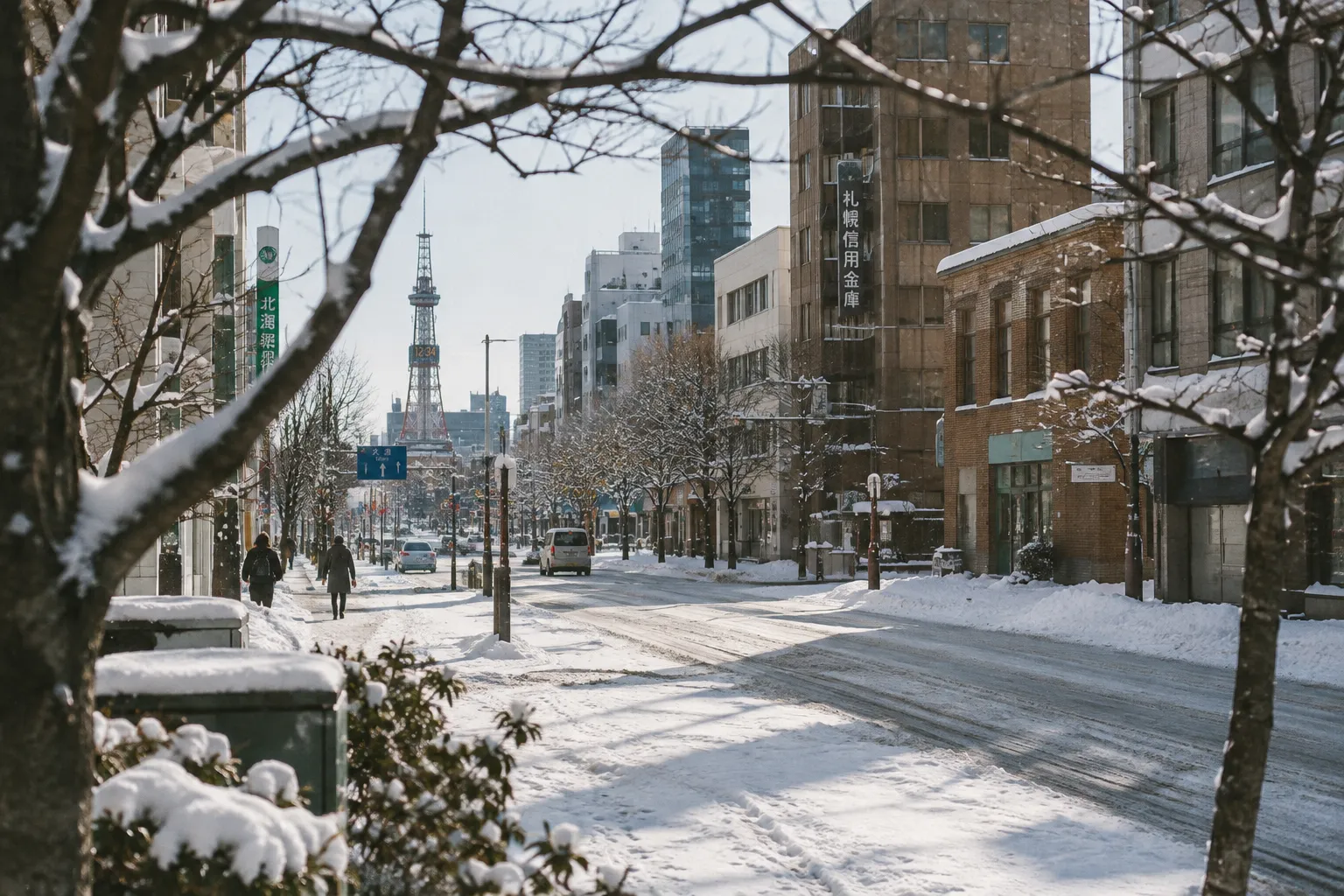
Sapporo’s official winter guide defines Hokkaido in winter as approximately December to March (5). Niseko doesn’t follow that calendar. Niseko United is scheduled to open November 28, 2026, and two of its resorts stay open until May 5, 2027 (1). That means skiers can find open slopes nearly a month before, and over a month after, what Sapporo calls winter.
January is the coldest stretch. Sapporo averages roughly 19-25°F (-7 to -4°C), and eastern Hokkaido drops to -4 to 5°F (-20 to -15°C) (6). Full winter gear is required, not optional.
Spring arrives late. Cherry blossoms typically peak from late April to early May (9). Summer brings the flower fields, which run from June through August (9). It stays cooler than mainland Japan’s humid summers. Autumn foliage fills September and October.
Shoulder Months Worth Considering
July and February are the peak months for both prices and visitors, driven by lavender season and the Snow Festival (6). March, May, June and October are the value months, with thinner crowds and lower prices (6). April and November fall between seasons and feel like it.
If space matters more to you than marquee events, March works well, though how much skiing you get depends on the resort. Niseko United’s 2026-27 schedule runs its regular season through March 22 and a spring season from March 23 to April 4, with the four linked resorts closing on different dates (1). Check the specific resort’s calendar before you book, but the festival crowds will have left either way.
Things to Do in Sapporo
Sapporo’s biggest draw is the Snow Festival in early February, which began in 1950 and now brings about 2 million visitors to the city each year (10). The city also gets over 5 m (16 ft) of annual snowfall (10). That makes it one of the few large cities where you can go sledding and cross-country skiing without leaving town.
Snow Festival Highlights
The festival started when local middle and high school students built snow sculptures in Odori Park (10). The Odori Site is still the centerpiece, with sculptures over 10 m tall (10). The Susukino site handles the ice sculptures. For something more active than photography, the Tsudome Site has giant slides and snow tubing (10).
Check the official event page for the year’s exact dates before you book anything. The annual timing is fixed to early February, but future dates are published year by year. February is also a peak-price month (6), so book your hotel early.
Sapporo Beyond the Festival
These are worth the detour:
- Nijo Market for fresh scallops and a seafood breakfast (8)
- Takino Snow World, which has a 200 m sled slope, one of the longest in Japan (14)
- Moerenuma Park for cross-country ski, snowshoe and sled rentals (5)
Skip if short on time: Jozankei winter river rafting (5). It’s pleasant, but it’s the least essential of the city’s snow options if you’re only in Sapporo for two days. Hokkaido Shrine is an easy add-on if you’re already nearby, not a destination in its own right.
Niseko: Skiing, Lift Passes and Season Length
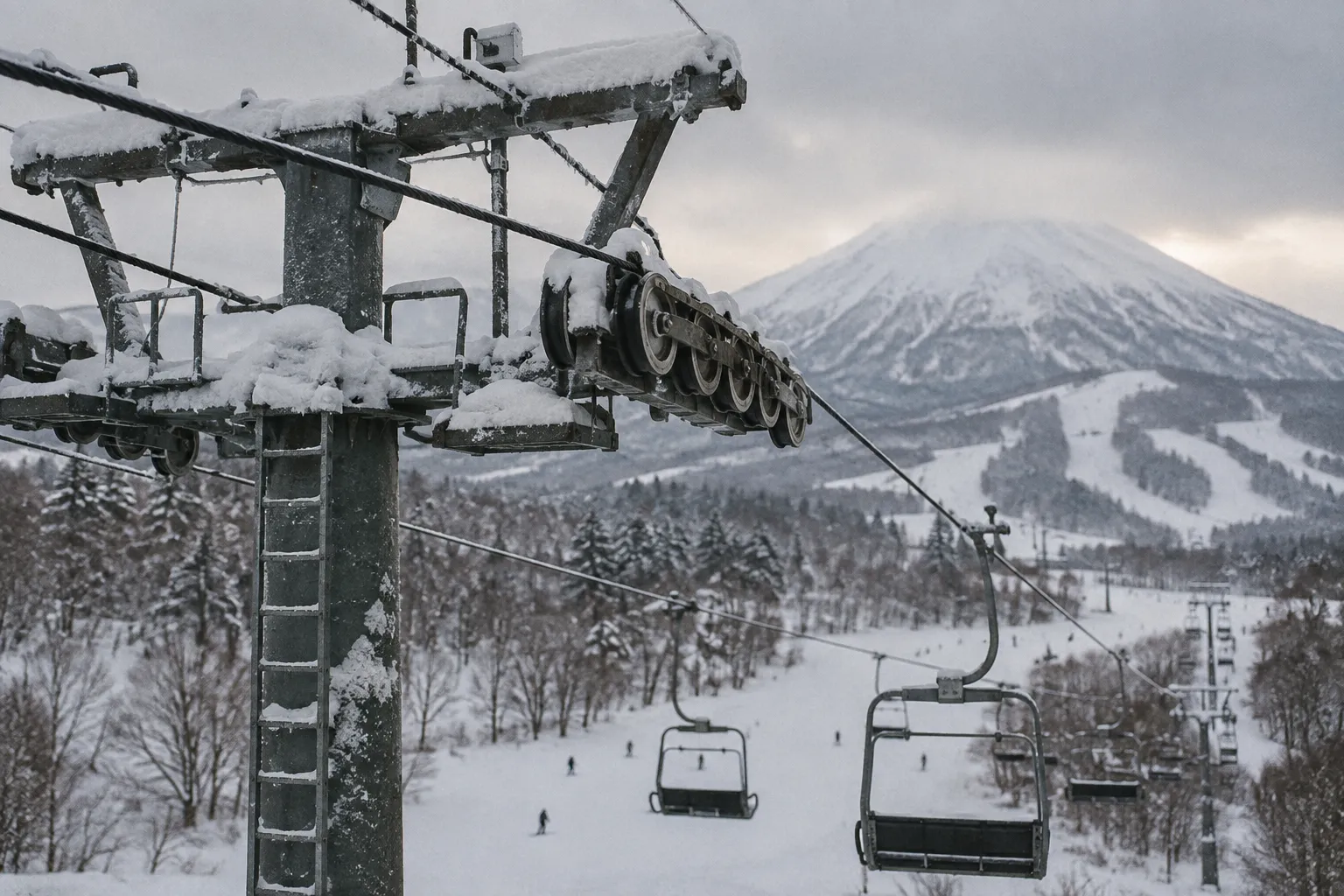
Niseko United is four linked ski resorts: Niseko Village, Hanazono, Annupuri and Grand Hirafu. All four are scheduled to open November 28, 2026, but they close on different dates in spring (1). Niseko is the best-known of the Hokkaido ski resorts, alongside Furano, Rusutsu, Kiroro and Tomamu (6)(7).
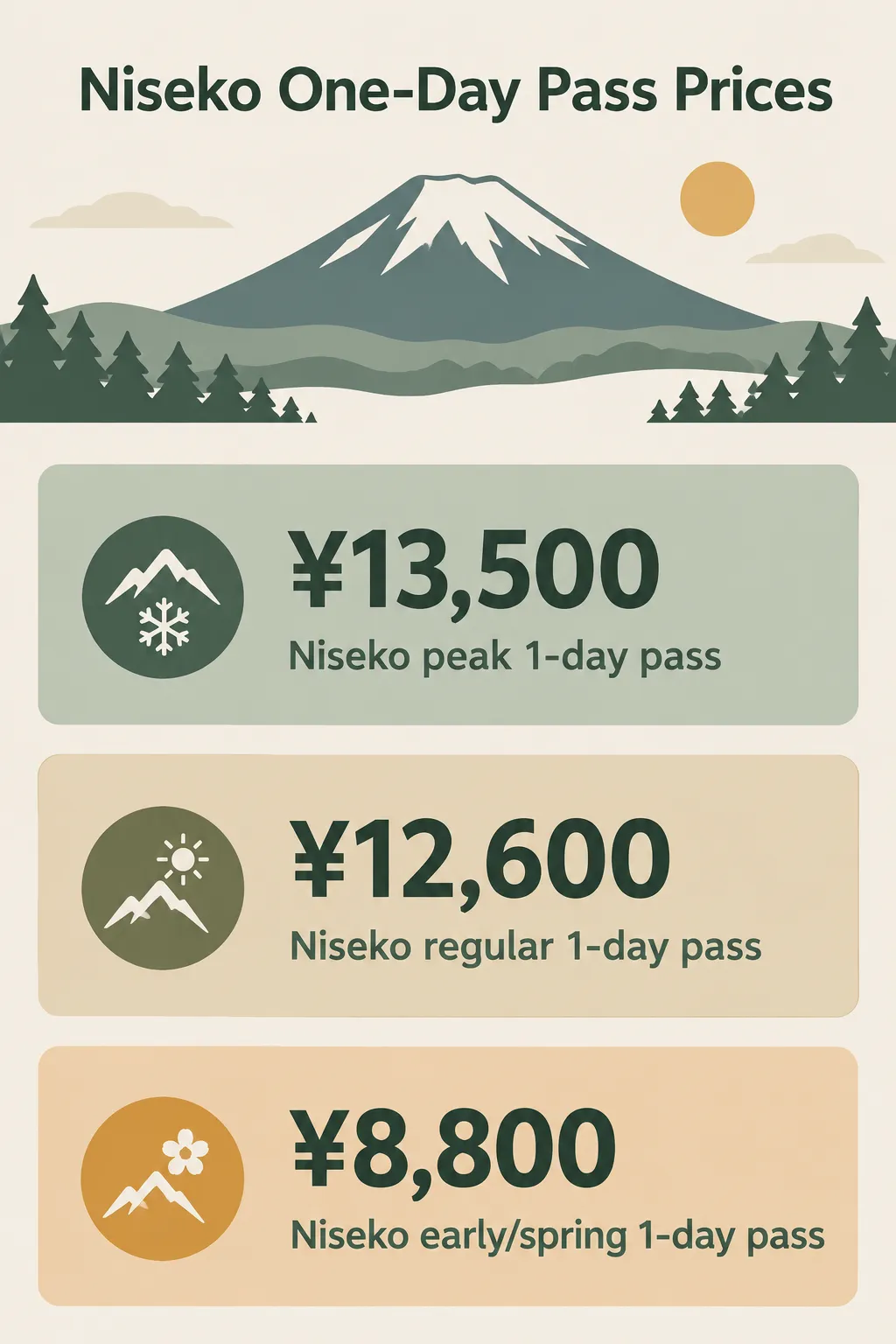 Niseko United’s official 2026-27 adult one-day All Mountain Pass prices are ¥13,500 in peak season, ¥12,600 in regular season and ¥8,800 in early and spring season.
All Mountain Pass vs Single-Resort Tickets
The operator sells both an All Mountain Pass covering all four resorts and single-resort tickets (3). The official 2026-27 prices for an adult 1-day All Mountain Pass are (1):
- ¥13,500 in peak season (December 24, 2026 to February 28, 2027)
- ¥12,600 in regular season (December 12-23, 2026 and March 1-22, 2027)
- ¥8,800 in early and spring season (November 28 to December 11, 2026 and March 23 to April 4, 2027)
- ¥6,300 in final season (April 5 to May 5, 2027), when only Annupuri and Grand Hirafu are still scheduled to run
We didn’t find a sourced 2026-27 price for single-resort tickets, so check the operator’s lift page before comparing. The decision rule is simple. If you’re skiing multiple days and want to move between areas, the All Mountain Pass is the better value. If you’re staying at one base and plan to ski only that mountain, a single-resort ticket keeps things simple.
Why Closing Dates Differ by Resort
Most guides get this wrong: Niseko does not close all at once. For 2026-27, Niseko Village is scheduled to close April 4, Hanazono April 11, and Annupuri and Grand Hirafu May 5 (1). If you’re planning late-season skiing, base yourself near Grand Hirafu or Annupuri. The operator notes that dates and hours can change, so recheck before booking (1).
Booking mechanics matter here. Niseko accommodation for 2026-27 began releasing in spring 2026 across hotels, apartments and chalets (2). The reservation-only ski buses from Sapporo and New Chitose Airport are scheduled to open 2026-27 bookings around October, with the new timetable published at the same time (4). As of early October 2026, the operator’s access page still showed last season’s timetable, so treat any timetable or fare you find online as outdated until it’s updated.
Otaru Canal and Harbor
Otaru is the slower alternative to Sapporo and Niseko. Its canal waterfront is lined with stone warehouses, a cobbled promenade and 63 gas lamps (9). It’s close enough to Sapporo that most visitors treat it as a day or evening trip instead of a base.
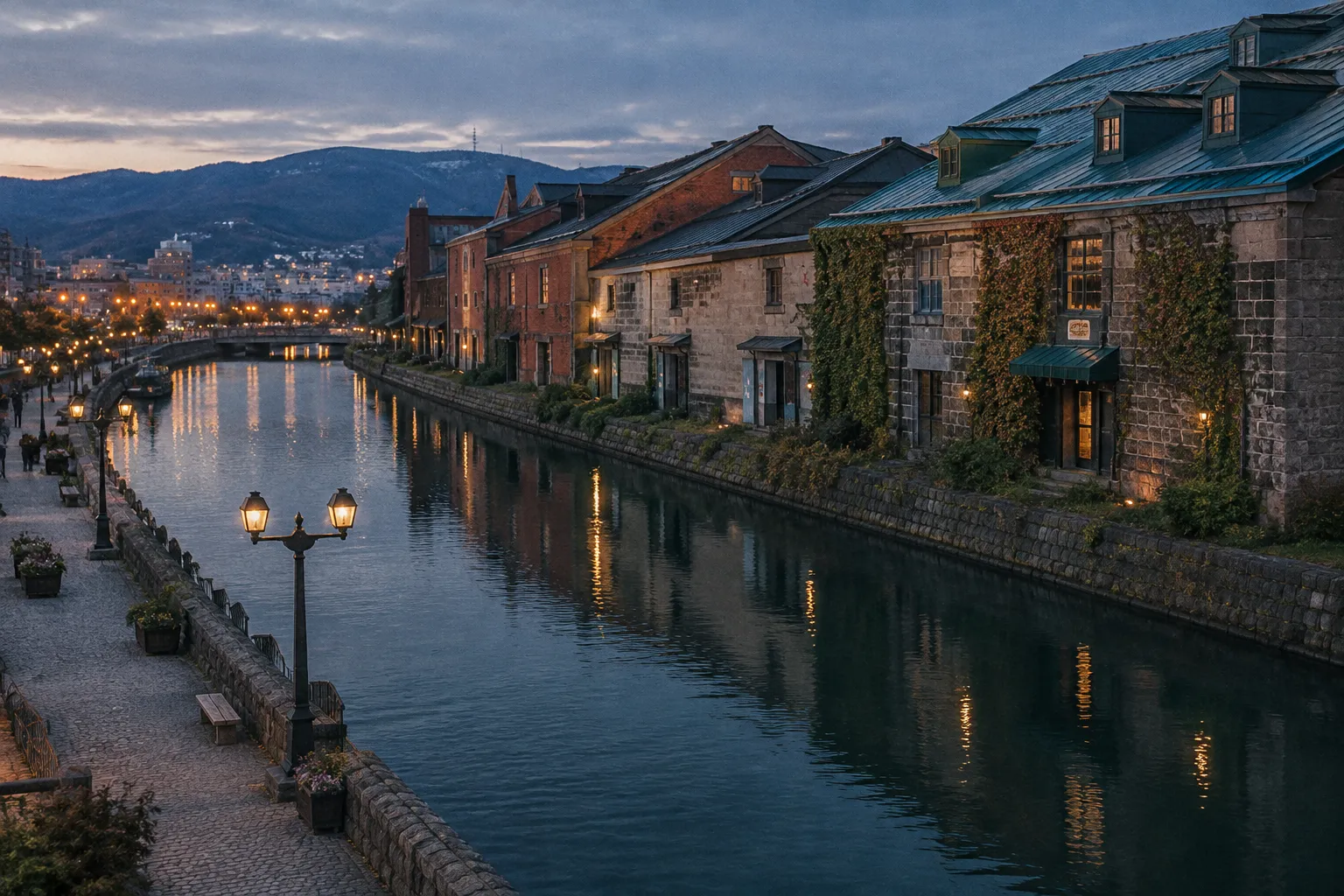
The main decision is day or night. The daytime cruise lasts 40 minutes and gives you a straightforward sightseeing pass along the waterfront (9). The official tourism site specifically recommends the night cruise for the illuminated atmosphere (9). If you only do one, go at night. The gas lamps matter more once the light is gone, and the warehouses look flat at midday.
Walking the canal on foot covers most of what the cruise shows you, so the boat is optional if you’re on a tight schedule. For food, LeTAO’s cheesecake is the stop most itineraries include (8). The harbor-town seafood makes a good second reason to stay through dinner.
Furano’s Lavender Fields and Summer Scenery
Furano’s lavender typically peaks around mid-July, though fields begin blooming as early as late June (9). The most common mistake is arriving too early. A late-June visit can mean patchy color, while mid-July delivers the full purple fields you see on posters. Mid-July is also the peak-price month (6), so book early or accept the premium.
If lavender isn’t the whole point, you have more flexibility. Hokkaido’s broader flower fields bloom from June through August (9), so a June or August trip still gets you color with fewer crowds. June is also one of the value months (6).
Pack a jacket. Summer evenings can be cool even after a warm day, and the Hokkaido tourism board advises bringing one (9). A light layer you can stuff into a daypack handles it.
Hokkaido Nature, Hiking and Culture
Hokkaido’s outdoor side goes well beyond the four main hubs. The official guide lists hiking, wildlife, Ainu culture and hot springs among its core themes (9). Most of these sit farther from Sapporo, so they reward longer trips.
These are worth the detour:
- Daisetsuzan National Park is the main summer hiking destination (8). We found no sourced trail distances, so check route details locally.
- Kushiro red-crowned cranes gather at feeding stations in January (6). The Kushiro-Shitsugen wetland also offers winter canoeing with wildlife viewing (7).
- Shiretoko Peninsula drift ice arrives around February (7), and cruises go out to see it.
These are skip if short on time:
- Lake Shikotsu winter canoeing and its Ice Festival, which starts in late January (6)(7)
- Dog sledding and fat-bike tours (7)
For a sea of clouds, the best-known viewpoint is the Unkai Terrace at Tomamu. It runs as an early-morning mountain-top experience in the warmer months, and cloud formation isn’t guaranteed on any given day. Hot springs are everywhere on the island, and a ryokan stay pairs well with them (8)(9).
Getting to Hokkaido and Around It
Most travelers reach Hokkaido by flying from Tokyo to Sapporo’s New Chitose Airport, which takes about 90 minutes (13). The rail route takes about eight hours and requires a transfer at Shin-Hakodate-Hokuto (13).
The Shinkansen does not run directly to Sapporo. You’ll need to change trains partway, and the full rail journey covers about eight hours door to door once you count the transfer (13). The Japan Rail Pass covers the full route (13), which makes the train a reasonable choice if you already hold one and want to see Hakodate. Otherwise, fly. Most flights use Tokyo’s Haneda Airport, though several also depart from Narita (13).
How to Travel from Tokyo to Sapporo by Train
Reach Sapporo by taking the Shinkansen to Shin-Hakodate-Hokuto, then changing to the Hokuto limited express.
- 1
Take the Shinkansen to Shin-Hakodate-Hokuto
Board the JR Tohoku/Hokkaido Shinkansen from Tokyo and travel to Shin-Hakodate-Hokuto; the journey takes about four hours.
- 2
Transfer to the Hokuto limited express
Change trains at Shin-Hakodate-Hokuto and continue to Sapporo on the Hokuto limited express, which takes about 3.5 hours.
- 3
Check rail-pass coverage before choosing the route
The Japan Rail Pass covers the full route. If you do not hold one and are not stopping in Hakodate, compare the rail journey with flying.
Once you’re on the island, distances add up. Niseko is about three hours from Sapporo by bus or two hours by car (5). That’s why pairing a Sapporo stay with Niseko skiing works as a two-base trip rather than a day trip.
Building Your Hokkaido Itinerary: How Many Days You Need
A 10-day Hokkaido itinerary is not too long. It’s too short to cover the whole island, which the official tourism site says takes more than two weeks (9). So the question isn’t whether to fill the time. It’s which base and nearby stops to prioritize. Choose one of Sapporo, Niseko, Otaru or Furano as the anchor, then add one or two nearby stops.
Short Trips (4-6 Days)
Stick to one base with day trips. These layouts work well:
- Winter, city-focused: 3-4 days in Sapporo around the Snow Festival, plus an evening in Otaru for the canal.
- Winter, ski-focused: 1-2 days in Sapporo, then 3-4 days in Niseko.
- Summer: 2 days in Sapporo, then 2-3 days around Furano in mid-July.
Don’t add eastern Hokkaido on a short trip. The transit time will eat the days.
Longer Trips (10+ Days)
With 10 days, you can combine two bases and add one farther region. A winter version could be 3 days in Sapporo and Otaru, 5 days in Niseko, and 2 days for Kushiro’s cranes or Shiretoko drift ice. A summer version could be Sapporo and Otaru, then Furano, then hiking in Daisetsuzan. A full loop still needs more than two weeks (9), so leave something for a second trip.
Frequently Asked Questions
- Is 10 days in Hokkaido too long?
- No; ten days is a practical length for combining two bases and one farther region without trying to circle the whole island.
- Is Hokkaido worth visiting if I have already been to Tokyo and Kyoto?
- Yes; Hokkaido offers a different trip built around regional food, outdoor activities and seasonal conditions rather than another major-city itinerary.
- What should I prioritize if I can visit Hokkaido only once?
- Choose the region that fits your main reason for going, then add nearby stops instead of trying to visit every part of the island.
- Can I visit Otaru without changing hotels?
- Yes; Otaru works as a day or evening outing from Sapporo, so travelers can see the canal without moving their base.
- What should I check before booking a late-season Niseko ski trip?
- Check the individual resort's closing date and recheck the operator's current schedule, because Niseko's four resorts do not all close together.
- Is the Unkai Terrace a guaranteed place to see a sea of clouds?
- No; cloud formation is not guaranteed, so plan a backup morning activity rather than making it the sole reason for a visit.
- Should I plan a Sapporo-to-Niseko day trip for skiing?
- A two-base stay is more practical for skiing; the journey from Sapporo takes hours each way, leaving less time on the slopes.
Pick Your Base Before You Book Anything
No single trip covers all of Hokkaido. Choose your base first:
- Sapporo for winter events in early February
- Niseko for skiing, with late-season trips based at Grand Hirafu or Annupuri
- Otaru or Furano for a slower pace, with Furano timed to mid-July
Then set your trip length and dates around that choice. Before you pay deposits, confirm the Snow Festival dates on the official page, check the Niseko resort closing dates, and book the Sapporo or airport ski bus once its 2026-27 timetable is published.