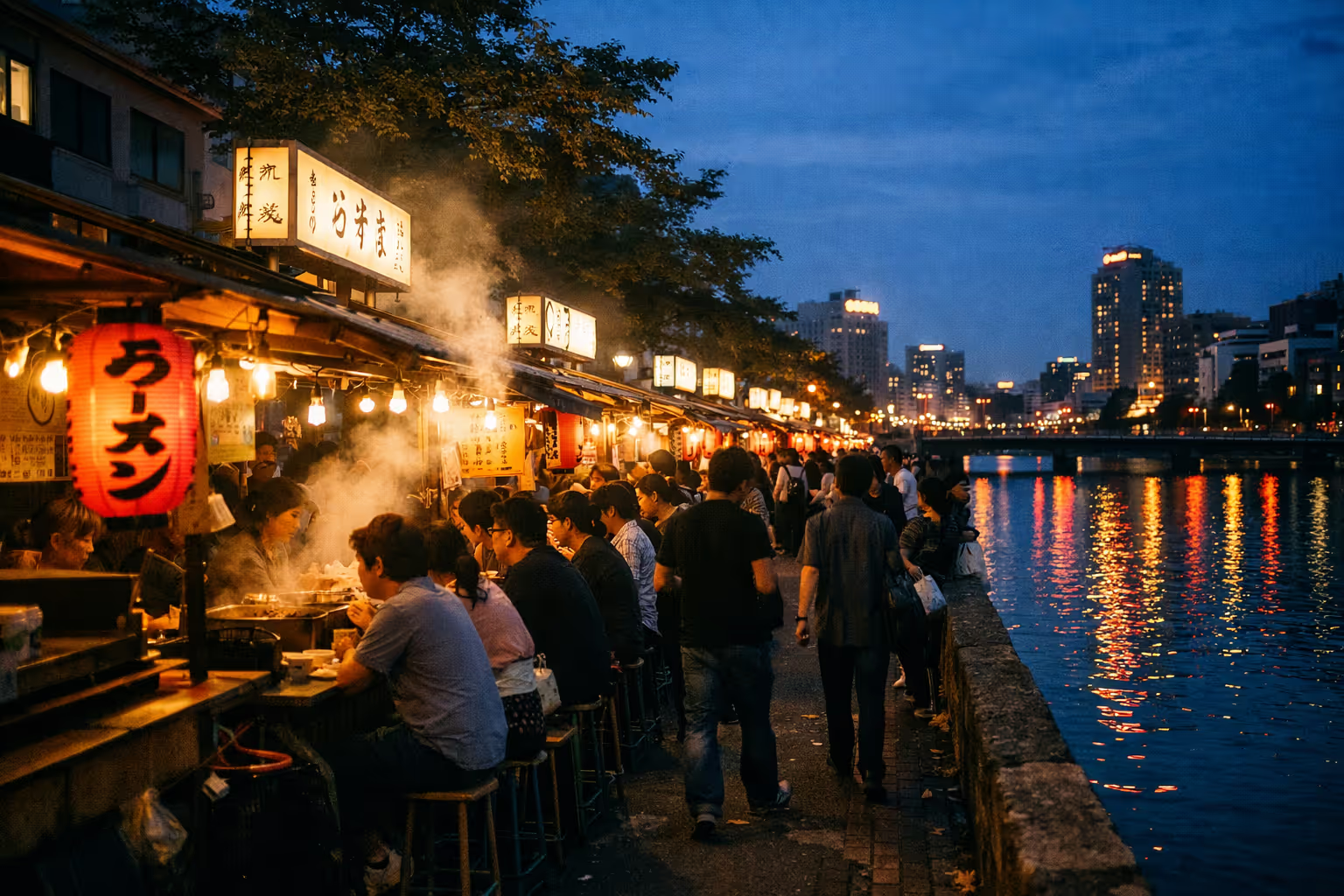
Fukuoka is Japan’s sixth-largest city and the one most travelers skip on the way to somewhere else. That’s a mistake. The things to do in Fukuoka - a serious ramen and street-food scene, coastal parks, festival culture, and a stack of easy day trips into wider Kyushu - can fill three to five days without padding the itinerary. The city sits at the northern tip of Kyushu, roughly 1,100 km southwest of Tokyo by Shinkansen, close enough to South Korea that it draws more Korean day-trippers than most Japanese cities. Fukuoka doesn’t need defending. It just needs to be on the itinerary.
With 1.6 million residents and a compact layout built around Hakata Station, the city lets you cover a lot in a short stay. What follows breaks down the core urban attractions, the food, the temples and coastline, the best day trips, and the practical planning notes that decide how good the trip actually is.
✓ Pros
- Compact city layout - most attractions within 20-30 minutes of Hakata Station
- One of Japan's best food cities, with a distinct regional identity (Hakata ramen, yatai, mentaiko)
- Direct access to Kyushu's best day trips (Dazaifu, Yufuin, Itoshima)
- Fukuoka Airport is 5 minutes from the city center by subway - no long transfer
- Fewer international tourists than Kyoto or Tokyo; less crowding at major sites
- Strong English-language support at major attractions and official tourism resources
✗ Cons
- Seasonal attractions (cherry blossoms, wisteria, beach season) require timing your visit carefully
- Some outlying attractions (Uminonakamichi, Itoshima) require 30-40 minutes of transit each way
- Yatai stalls are cash-only and can fill up fast on weekends
- A few specialist sites (Mongol Invasion Museum) require advance reservations
- Summer heat and humidity make midday outdoor sightseeing uncomfortable
What Fukuoka Is Actually Known For
Fukuoka is famous for Hakata ramen, its yatai street-food stalls, and two of Japan’s biggest festivals - and it doubles as the main transport gateway to Kyushu. Start with the name confusion: Hakata and Fukuoka are the same city. Hakata was the historic merchant district; Fukuoka was the samurai district. The two were administratively merged in 1889, but Hakata Station kept the old name, which is why your train arrives in “Hakata” while your ticket says Fukuoka.
The food identity is the headline. Tonkotsu (pork-bone broth) ramen originated here, and the city is dense with it. Beyond ramen, the local roster runs to mentaiko (spicy cod roe), motsunabe (offal hot pot), and Hakata-style gyoza. The yatai - open-air stalls that set up at night - are the format Fukuoka is most identified with, and you won’t find them at this scale anywhere else in Japan.
Then there’s the transport role. Hakata Station is Kyushu’s central rail node, which makes the city a natural base for exploring the rest of the island. Festival culture is the other draw: Hakata Gion Yamakasa runs July 1 to 15, and the Hakata Dontaku Port Festival on May 3 to 4 regularly pulls over 2 million spectators across two days (about 2.15 million in 2026, per the organizers) (15). One more thing that surprises first-timers: the city has actual beaches within its limits, unusual for a Japanese urban center this size.
Things to Do in Fukuoka: The City’s Core Attractions, Ranked
The core of any first-time Fukuoka trip is a compact loop through the Hakata district, Ohori Park, and the Momochi seaside area - all reachable within 30 minutes of central Hakata Station. Here’s what earns the time, ranked by whether it’s worth prioritizing or skippable if you’re short on days.
Ohori Park and Fukuoka Castle Ruins
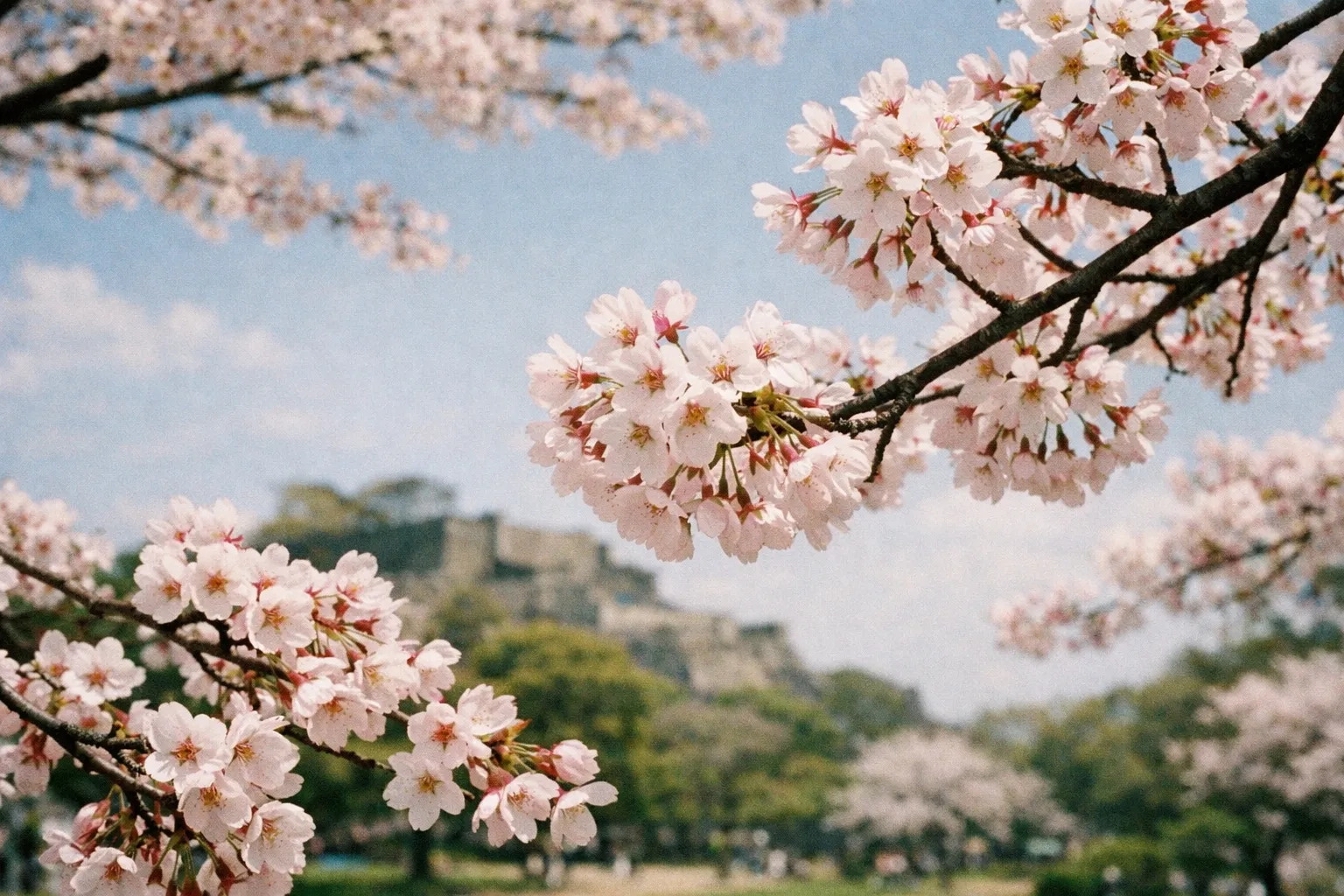
Worth prioritizing. Ohori Park covers roughly 40 hectares around a central lake that was once part of Fukuoka Castle’s moat - good for a morning walk or a picnic. The adjacent Maizuru Park holds the Fukuoka Castle ruins and about 1,000 cherry trees, making it the city’s top blossom spot when they bloom from late March to early April. Entry to the grounds is free outside special events, and so are the two small visitor facilities, the Fukuoka Castle Mukashi Tanbokan and the Korokan Ruins Exhibition Hall (16). Budget two to three hours to combine both; they share the same area.
Kushida Shrine
Worth prioritizing. The city’s most important Shinto shrine, said to have been founded in 757, sits in the Hakata district and displays a full-size kazariyama festival float from Hakata Gion Yamakasa year-round - it stands about 10 meters high and weighs several tons. Entry is free. Visit early morning before tour groups arrive, and chain it with Canal City and the Hakata Machiya Folk Museum, both a short walk away.
Canal City Hakata
Worth the detour on a rain day or an evening. This large shopping and entertainment complex is built around an indoor canal, which makes it more interesting architecturally than a standard mall. There’s retail, restaurants, a cinema, and regular fountain shows. It sits a short walk from Hakata Station and works best as a filler stop rather than a destination in its own right.
Fukuoka Tower and Momochi Seaside Park
Worth prioritizing as a coastal half-day. Fukuoka Tower stands 234 m tall - Japan’s tallest seaside tower, per its operator - with an observation deck at 123 m looking across Hakata Bay. It’s open 9:30 to 22:00 (last entry 21:30), and admission runs ¥1,000 for adults (high-school age and over), ¥500 for elementary and junior-high students, and ¥200 for children aged 4 and over, with under-4s free; a ¥900 senior rate applies only to Fukuoka City residents aged 65 and over (17). Momochi Seaside Park and PayPay Dome (home of the Fukuoka SoftBank Hawks) sit within 500 to 800 m, roughly a 10-minute walk. Aim for late afternoon so you catch sunset from the tower. The Momochi area is about 20 minutes by bus from Hakata Station.
teamLab Forest Fukuoka
Worth prioritizing if you book ahead. This permanent digital-art installation lives in the BOSS E·ZO FUKUOKA complex next to PayPay Dome. It’s interactive and works for adults and older kids alike. Timed-entry slots sell out on weekends and holidays, so book online in advance. This is not a walk-in.
Hakata Machiya Folk Museum
Worth the detour if you’re already on the Hakata route. Small but well-curated, it covers Hakata’s merchant history, traditional crafts, and the Gion Yamakasa festival. Adult admission is ¥200 (free for junior-high students and younger; groups of 20 or more pay ¥150 each). Hours are 10:00 to 18:00 (last entry 17:30), shifting to 9:30 to 17:30 (last entry 17:00) from July to September, and it’s closed the 4th Monday of each month (the next weekday when that Monday is a holiday) plus December 29 to 31 (18). Check that before you go - assuming daily opening is a common way to miss it.
How to Do the Hakata District in Half a Day
3 to 4 hoursA practical walking route chaining the main Hakata attractions efficiently
- 1
Start at Hakata Station
Orient yourself and grab a coffee from one of the station's basement food halls.
- 2
Walk to Rakusuien Garden
An 8-minute walk to a small traditional garden; spend about 20 minutes if it's open.
- 3
Visit Sumiyoshi Shrine
Continue 5 minutes to this quick, free-entry shrine.
- 4
Explore Canal City Hakata
Walk 10 minutes to the shopping complex; check the fountain show schedule.
- 5
See Kushida Shrine
A 3-minute walk to the shrine; allow 30 to 45 minutes to see the Yamakasa float and grounds.
- 6
Visit Hakata Machiya Folk Museum
Walk 2 minutes to the museum; allow 45 to 60 minutes. Admission ¥200.
- 7
Return or continue
Walk 10 minutes back to Hakata Station or move on to nearby restaurants for lunch.
Fukuoka’s Food Scene - Ramen, Yatai, and Local Specialties
Fukuoka’s defining meals are Hakata ramen and a yatai dinner, and both are cheap by Japanese city standards. This is the part of the trip most worth planning around.
Hakata Ramen
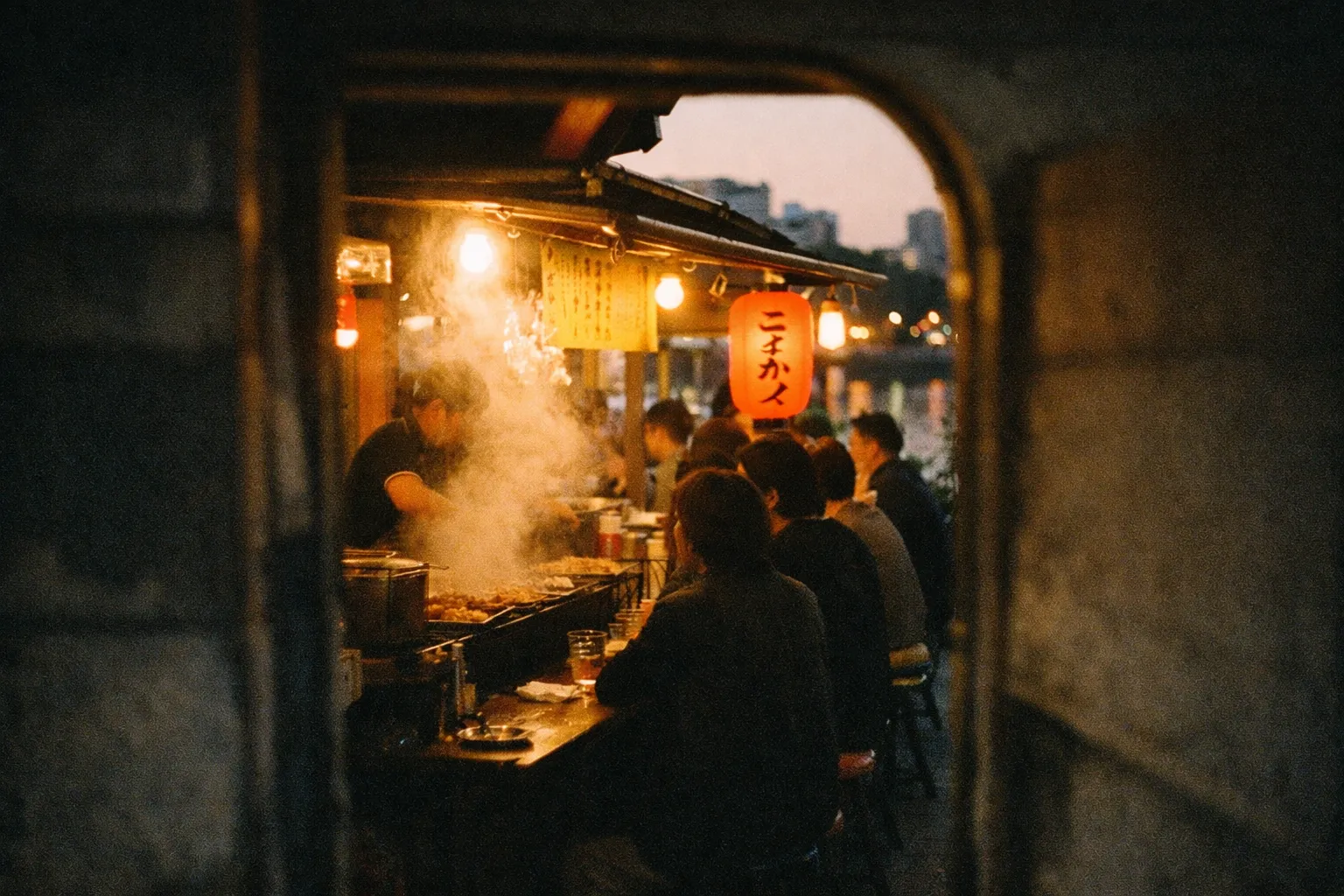
Tonkotsu ramen originated here, and the local style runs to a richer broth and thinner noodles than most regional versions. Ichiran and Ippudo both have flagship locations in the city - Ichiran’s solo-booth format, where you eat in a partitioned counter seat, is worth doing once for the novelty. A bowl at mainstream shops usually runs ¥800 to ¥1,200.
Yatai Street Food Stalls
The city licenses roughly 100 yatai - open-air stalls that set up at night, with the largest concentrations along the Nakasu riverbank and around Tenjin. The experience is social: you sit elbow-to-elbow with strangers at a counter under a tarp, eating ramen, yakitori, or oden. Lonely Planet writer Jessica Korteman, in an April 2026 guide, frames the yatai as a “nightly dinner party” (4), which captures the atmosphere well. Most stalls run from about 18:00 to 24:00, with peak crowds after 20:00 and especially on Friday and Saturday nights. Nakasu has the densest cluster; Tenjin’s stalls feel slightly more local. Bring cash - most are cash-only - and arrive early on weekends to get a seat.
Other Local Specialties Worth Trying
- Mentaiko: spicy marinated cod roe, sold everywhere from convenience stores to dedicated shops. The local brand Yamaya has produced mentaiko since 1974 and runs dedicated shops and restaurants around the city.
- Motsunabe: offal hot pot, a Fukuoka winter staple - a rich, collagen-heavy broth with vegetables and noodles added at the end.
- Hakata-style gyoza: thinner-skinned than Osaka or Tokyo versions, usually served with a vinegar-soy dip.
Temples, Shrines, and History Beyond the City Center
The two cultural day trips worth building into a Fukuoka stay are Dazaifu Tenmangu, about 25 minutes out, and Nanzoin Temple’s giant reclining Buddha. Both go well beyond urban sightseeing and reward a half-day each.
Dazaifu Tenmangu Shrine
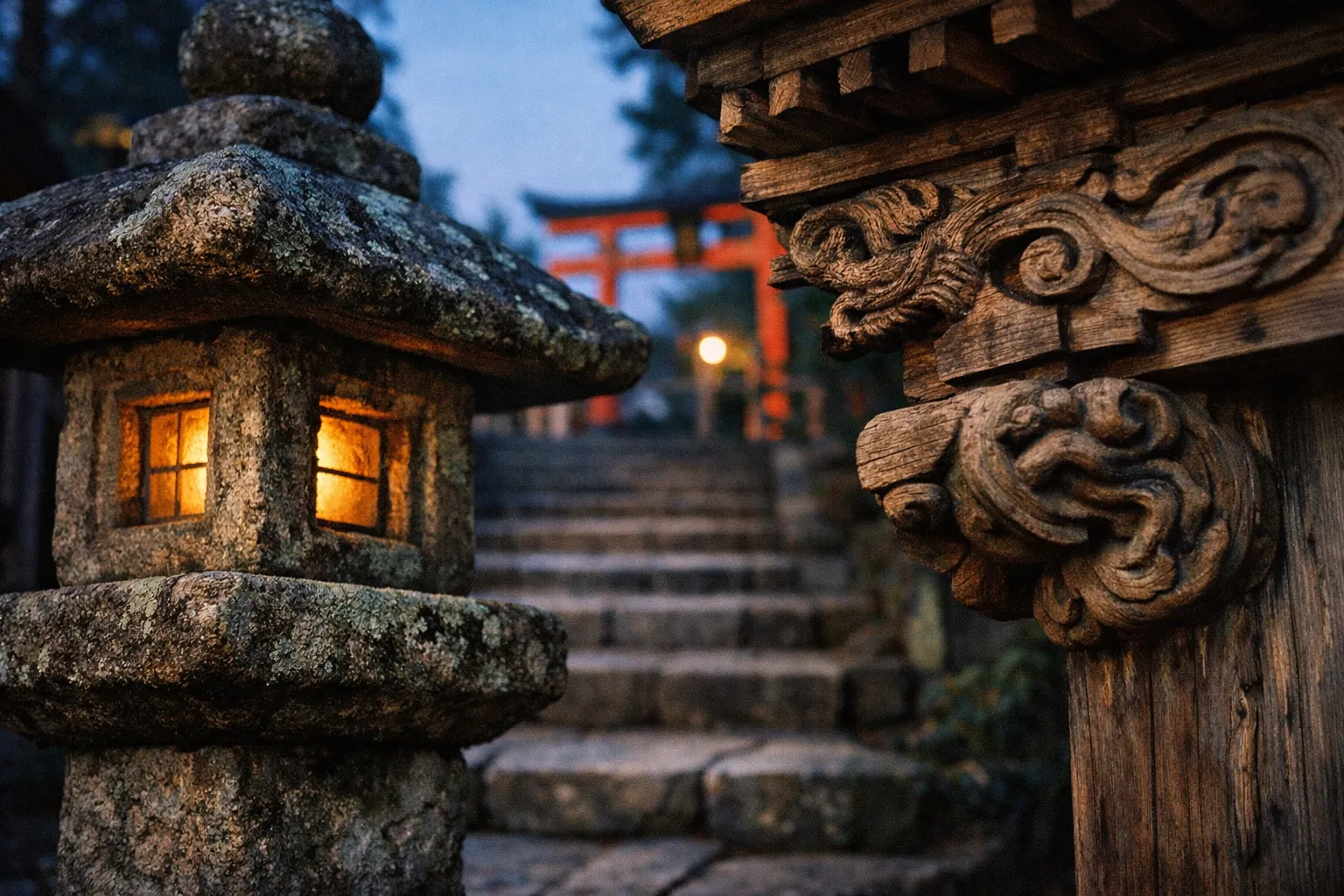
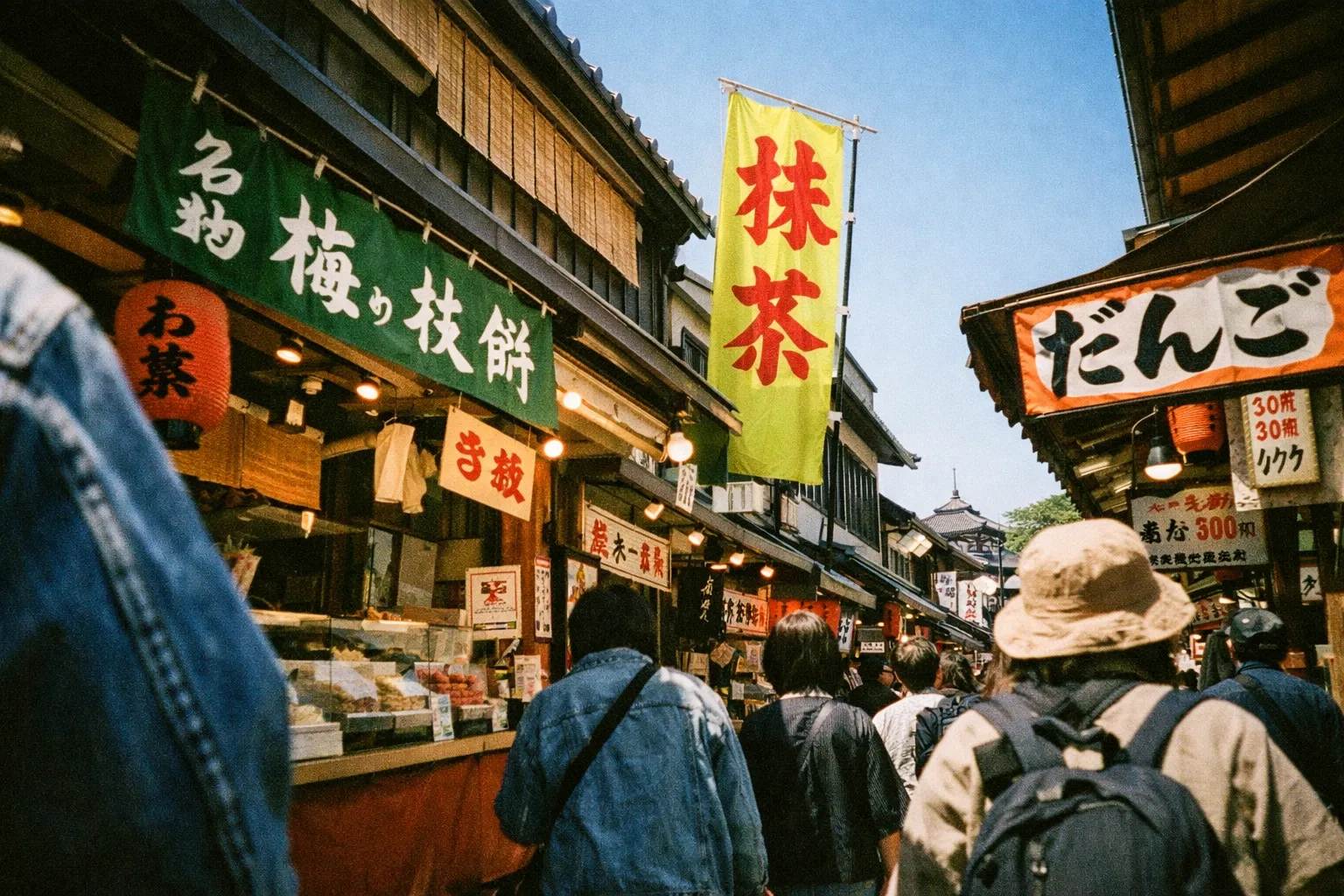
One of Kyushu’s most important shrines, dedicated to the scholar-deity Tenjin (Sugawara no Michizane), Dazaifu Tenmangu is the main draw of a town that saw more than 10 million visitors a year at its peak, according to Dazaifu City’s 2024 tourism plan (19) - many of them students praying for exam success. It’s about 25 minutes from Nishitetsu Fukuoka (Tenjin) Station via the Tenjin-Omuta and Dazaifu lines, with one transfer at Futsukaichi. The approach path (sando) is lined with shops selling umegae mochi, grilled rice cakes filled with red bean paste. Go early morning or late afternoon to dodge the midday crowd surge. The Kengo Kuma-designed Starbucks near the approach is worth a look for anyone interested in architecture.
Nanzoin Temple and the Reclining Buddha
Nanzoin houses a bronze reclining Buddha roughly 41 m long and 11 m high, weighing around 300 tons - one of the largest reclining Buddha statues in the world. It’s in Sasaguri, reached in about 25 to 30 minutes from Hakata Station on the JR Sasaguri Line to Kido-Nanzoin-mae Station, then a 5-to-10-minute walk. The grounds are atmospheric, with smaller statues and forest paths. Pair it with Dazaifu only if you have a full day - they lie in different directions from the city.
Sumiyoshi Shrine and Hakata’s Smaller Sacred Sites
Sumiyoshi Shrine is one of Japan’s oldest, tucked into the Hakata district and easy to fold into the Hakata walking route. Higashi Park holds a monument tied to the 13th-century Mongol invasions; the adjacent Mongol Invasion Museum requires advance reservations, so check before you turn up. These suit travelers who want to go deeper than the headline shrines without leaving the city.
Coastal Fukuoka - Beaches, Islands, and Waterfront Parks
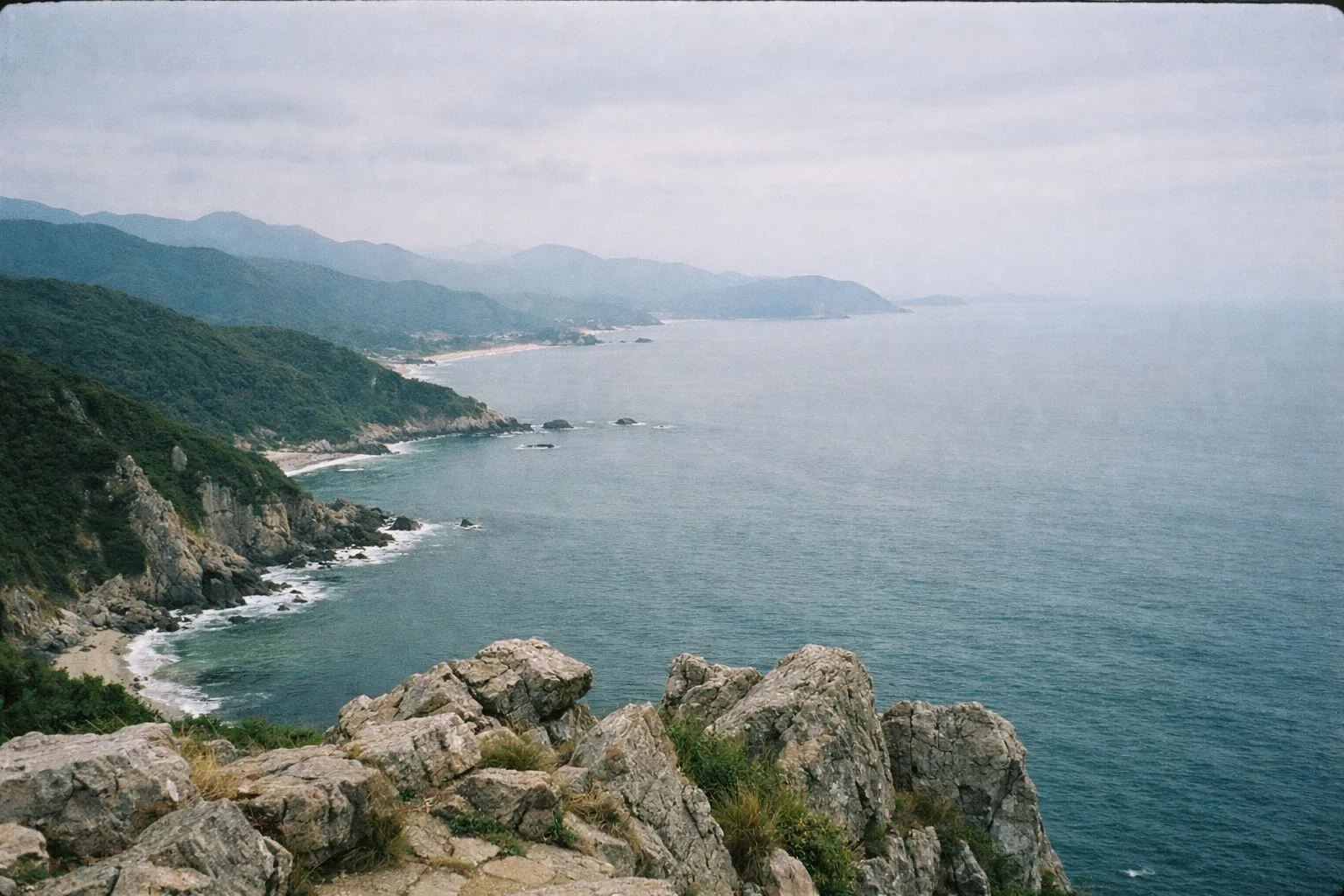
Fukuoka has beaches and coastal parks within reach of the center, which is rare for a Japanese city this size. They’re best in spring for flowers or summer for swimming.
Uminonakamichi Seaside Park and Marine World
Uminonakamichi Seaside Park, a national government park on a peninsula northeast of the center, has about 350 hectares open to the public (20), with over 10 km of cycling paths, open lawns, and large seasonal flower fields. From Hakata Station, take the JR Kagoshima Main Line to Kashii and change to the JR Kashii Line, which stops at Uminonakamichi Station by the park entrance. Marine World Uminonakamichi sits adjacent, showing some 350 species from the seas around Kyushu - one of the region’s better aquariums and a solid pick for families with younger kids. Spring flower season (late March to May) is when the park is most worth the trip. Plan a half-day minimum.
Nokonoshima Island Park
A small island in Hakata Bay, Nokonoshima is reachable by a 10-minute ferry from Meinohama Port, with departures roughly hourly during the day; the island park is about 15 minutes by bus from the ferry terminal. It’s known for seasonal flowers - cosmos in autumn, canola in spring - and stays relatively uncrowded compared to mainland parks. A good low-key half-day without leaving the city area.
Itoshima - Beaches and Scenery West of the City
Itoshima is a coastal area about 30 to 40 minutes west of Hakata by subway, with trains running straight through onto the JR Chikuhi Line at Meinohama. It’s known for beaches, seafood restaurants, and photogenic spots like the Sakurai Futamigaura twin rocks, where a torii gate stands in the sea. Summer is best for swimming; spring and autumn give you the scenery without the crowds. A rental car makes it easier to cover multiple spots, but the train reaches the main beach areas fine.
Day Trips from Fukuoka Worth the Train Ride
Fukuoka’s real advantage as a base is how many worthwhile trips sit within about two and a half hours of Hakata Station. Here’s how the top four compare.
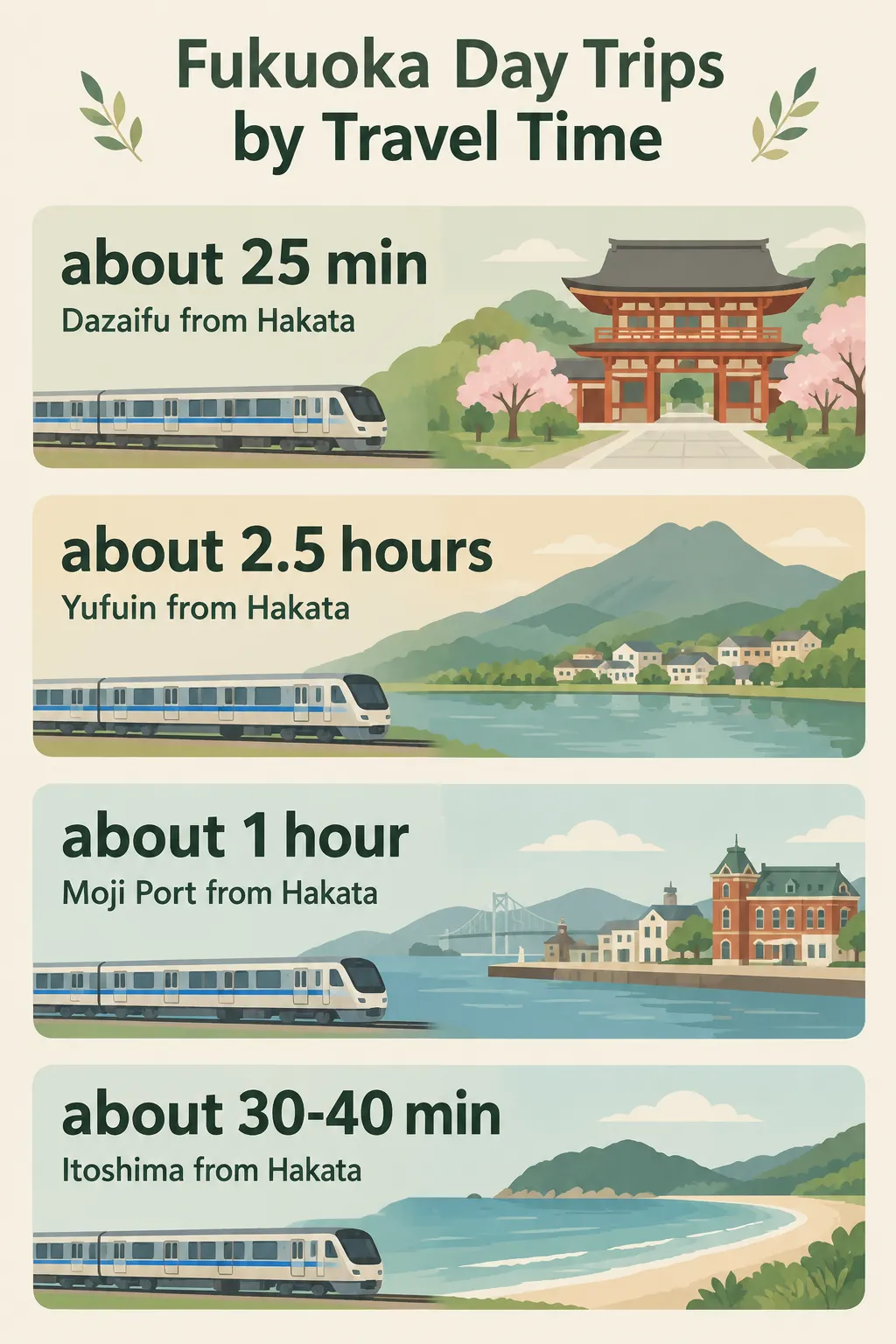 Travel times from Hakata: about 25 minutes to Dazaifu, 1 hour to Moji Port, 30 to 40 minutes to Itoshima, and 2.5 hours to Yufuin.
Top Day Trips from Fukuoka
| Dazaifu | Yufuin | Moji Port / Kitakyushu | Itoshima | |
|---|---|---|---|---|
| Travel Time from Hakata | about 25 min | about 2.5 hours | about 1 hour | about 30-40 min |
| Best Season | Year-round | Autumn, winter | Year-round | Summer, spring |
| Best For | History, culture, first-timers | Onsen, scenery, couples | Architecture, history | Beaches, coastal scenery |
| Transport | Nishitetsu train | JR limited express | JR Shinkansen or local | JR Chikuhi Line or car |
Yufuin (Oita Prefecture)
An onsen resort town in the mountains, Yufuin offers ryokan stays, boutique shops, and the scenic Yufuin no Mori limited express. It and the regular Yufu limited express run direct from Hakata in around 2.5 hours. According to Japan Guide, the one-way fare runs ¥5,000 to ¥6,500 depending on travel date, train and seat type, fully covered by the Japan Rail Pass and Kyushu Rail Pass; a direct highway bus takes about as long for ¥3,250 (21). It’s better as an overnight than a day trip, but doable in a long day, and it suits travelers who want onsen culture without committing to a full Beppu visit.
Kitakyushu and Moji Port
Moji Port (Mojiko) is a Meiji-era port town with preserved Western-style architecture and a retro feel, about 1 hour from Hakata - the quickest combination is the Shinkansen to Kokura, then a local train to Mojiko. Combine it with Kokura Castle for a half-day of history and architecture. Also near Kitakyushu is Kawachi Wisteria Garden, famous for its tunnels of wisteria. The wisteria season is a short window from late April to early May (April 18 to May 6 in 2026), and during it the garden sells no tickets on site: you need a reserved ticket bought beforehand, online or at a convenience store (22). JapanStartsHere’s Fukuoka guide warns that getting there requires renting a car (7) - worth heeding, since access is the main planning hurdle.
Miyajidake Shrine
A large coastal shrine about 40 minutes from Hakata via the JR Kagoshima Main Line to Fukuma Station, then a short bus or taxi ride, Miyajidake is known for one of Japan’s largest shimenawa (sacred ropes). Twice a year, around February and October, the setting sun aligns directly with the main approach path - a phenomenon called Hikarimichi, or “Path of Light.” If that’s the draw, check the exact dates before locking in your visit.
Fukuoka for Families - What Works With Kids
Fukuoka clusters most of its family-friendly attractions in two areas - the Momochi waterfront and the Hakata-Nakasu area - so you can group a full day without long transit legs. The standouts:
- teamLab Forest Fukuoka: interactive digital art, engaging for kids 6 and up. Admission starts at ¥2,400 for visitors 16 and over and ¥1,000 for ages 4 to 15, with under-4s free (23); book ahead for weekends and holidays.
- Marine World Uminonakamichi: a solid aquarium with dolphin shows and touch tanks. Admission is ¥2,500 for adults, ¥1,200 for elementary and junior-high students, and ¥700 for children aged 3 and up (24).
- Fukuoka City Zoological Garden (Fukuoka Zoo): a large zoo near Ohori Park, with adult admission at ¥600, high-schoolers at ¥300, and middle-school-age children and younger free.
- Anpanman Children’s Museum in Fukuoka: dedicated to the cartoon character, best for kids under 8, in the Hakata Riverain mall with a direct link to Nakasu-Kawabata subway station; admission runs ¥2,000 to ¥2,200 per person depending on the date (children and adults pay the same), under-1s free (25).
- Gundam Park Fukuoka: a large Gundam statue and themed retail in the BOSS E·ZO complex, appealing to older kids and adults with an anime or mecha interest.
The Momochi area - teamLab, Gundam Park, PayPay Dome, and the tower - clusters several of these together. Plan a full day there and cut the back-and-forth.
Seasonal Timing - When Fukuoka Looks Its Best
Fukuoka’s best month depends on what you’re after: late March to early April for cherry blossoms, July for its biggest festival, and autumn for comfortable weather and flower fields.
Spring (late March to early May) brings cherry blossoms to Maizuru Park and the Fukuoka Castle ruins at full bloom in late March to early April, wisteria at Kawachi Wisteria Garden in late April to early May, and the Hakata Dontaku Port Festival on May 3 to 4 - one of Japan’s largest festivals by attendance, drawing over 2 million people (15).
Summer (June to August) is beach season at Itoshima and Momochi. It’s also when Hakata Gion Yamakasa runs, July 1 to 15, culminating in the Oiyama race at around 4:59 a.m. on July 15, when teams sprint through Hakata carrying floats weighing roughly a ton. It’s the city’s most dramatic event. Daytime highs sit around 31 to 33°C with heavy humidity, so schedule outdoor sites for the morning.
Autumn (September to November) offers comfortable temperatures, cosmos at Nokonoshima, and ginkgo color in late November - including the Taibaru no Ichō grove in Hirokawa, about an hour south, a private grove that opens to the public for only about seven days in late November: November 17 to 23 in 2026, 9:00 to 17:00, with no entry outside those dates (26). The window moves each year, so confirm it before planning a trip around it.
Winter (December to February) is quieter, with January highs around 9 to 10°C, illumination events in Tenjin and Canal City, and motsunabe at its seasonal best. Dazaifu is less crowded and genuinely atmospheric in the cold.
How Many Days You Actually Need in Fukuoka
Three days is the practical sweet spot for a first visit: enough to cover the core city and one day trip without rushing. The city’s compact layout - most central attractions lie within 2 to 5 km of Hakata Station, reachable in 20 to 30 minutes by subway or on foot - means you cover more per day than in a sprawling city like Tokyo.
- 2 days: the Hakata district (Kushida Shrine, Canal City, Hakata Machiya Museum), Ohori Park, Fukuoka Tower and Momochi, and one yatai night. A solid sampler, but no day trips.
- 3 days: add Dazaifu as a half-day and either Itoshima or Uminonakamichi. This is where most first-timers should land.
- 4 to 5 days: fit in a day trip to Yufuin or Kitakyushu, a full coastal day at Itoshima, and more time to eat properly - multiple ramen shops, a yatai night or two.
Honest take: three days is enough to see the highlights comfortably. Four or five is better only if you plan to use Fukuoka as a base for wider Kyushu exploration rather than as a standalone city stop.
Getting Around Fukuoka Without Getting Lost
Fukuoka runs on three subway lines, and the Airport Line links Fukuoka Airport, Hakata, and Tenjin in under 15 minutes end to end - one of the most convenient airport connections in Japan. The airport-to-Hakata leg takes just 5 minutes; airport to Tenjin about 11, with trains every 4 to 8 minutes during the day.
Hakata Station and Tenjin are the two main hubs, and most central attractions are walkable or one subway stop from one of them. The one-way subway fare between the airport and Hakata is typically ¥260, and between Hakata and Tenjin ¥210. The Hakata walking route - Hakata Station to Rakusuien, Sumiyoshi Shrine, Canal City, Kushida Shrine, and the Hakata Machiya Folk Museum - covers roughly 2 to 3 km, about 40 to 60 minutes of walking plus stops, and chains six or seven spots efficiently.
For coastal areas like Momochi and Uminonakamichi, and for Itoshima, you’ll need buses or the JR Chikuhi Line - factor in 20 to 40 minutes each way. Day trips to Dazaifu use the Nishitetsu private line, which isn’t covered by the JR Pass; Yufuin and Kitakyushu run on JR, so check your pass coverage before buying anything. IC cards - Suica, Nimoca, Pasmo - are interoperable here and work on subways, most buses, and JR trains.
Frequently Asked Questions
- What is a must-do in Fukuoka?
- A yatai dinner in Nakasu or Tenjin is the experience most specific to Fukuoka, paired with Hakata ramen and Kushida Shrine.
- Is 3 days enough for Fukuoka?
- Three days covers core city attractions and one day trip comfortably, including Ohori Park, Hakata district, and Dazaifu.
- What is Fukuoka famous for?
- Hakata ramen, yatai street-food stalls, and the Hakata Gion Yamakasa festival are the city's top associations.
- How many days in Fukuoka is enough?
- Two days minimum for a meaningful visit; three days is the sweet spot; four to five days for Kyushu day trips.
- What are the best things to do in Fukuoka in winter?
- Winter suits temple visits like Dazaifu Tenmangu, motsunabe dining, and illumination events in Tenjin and Canal City.
- Do I need to book attractions in advance?
- Book teamLab Forest Fukuoka and the Mongol Invasion Museum in advance; most other sites are walk-in.
What Most Fukuoka Guides Get Wrong
Most guides treat Fukuoka as a food-and-festival city and leave it at that - which undersells the day-trip radius and oversells the yatai as a spontaneous experience. The bigger miss is the framing of Hakata Station as a transit hub you pass through rather than a base you stay in. Travelers who spend one night and move on to Hiroshima or Nagasaki skip the coastal half of the city entirely: Itoshima, Nokonoshima, and Uminonakamichi don’t appear in the standard two-hour Fukuoka layover. The other thing guides consistently get wrong is the Kawachi Wisteria Garden - it’s listed as a Kitakyushu attraction, which it technically is, but the planning logistics (advance reservations, a short bloom window, and awkward public transport) mean most visitors who read about it don’t actually get there. If that’s on your list, treat it as a standalone half-day with a rental car, not an add-on to a Moji Port visit.
Bottom Line
Fukuoka suits the traveler who wants a Japanese city with a strong food identity, a manageable scale, and good rail links for wider Kyushu exploration - without the crowds of Kyoto or Tokyo. Three days is the baseline; the city rewards slower pacing if you have it.
Two decisions shape the trip most: whether to time it around a festival - Hakata Dontaku in early May or Gion Yamakasa in July - and whether to treat Fukuoka as a standalone destination or a base for day trips. Sort those first. Then handle the logistics that actually make or break the days: book teamLab in advance, carry cash for the yatai, and check the seasonal windows for cherry blossoms and wisteria before you lock in dates.