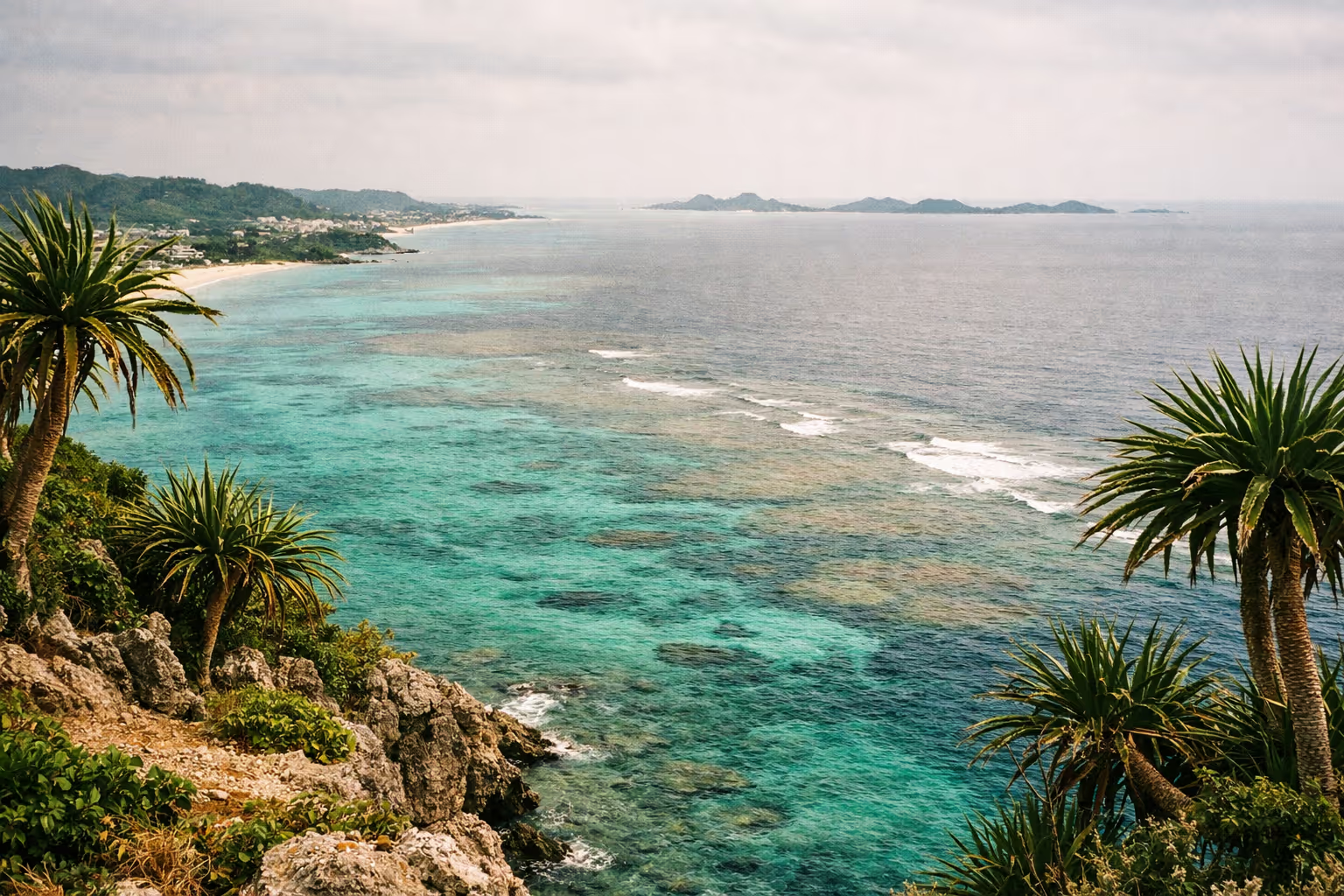
Okinawa doesn’t run on the same logic as the rest of Japan. It’s a subtropical prefecture of 160+ islands with its own language history, its own food, and its own set of trade-offs - which means the best things to do in Okinawa depend heavily on which island group you pick and when you show up. The single biggest planning mistake is treating it like one destination you can knock out in three days. You can’t, and this guide is built to stop you from trying.
Most travelers arrive at Naha Airport on the main island, use Naha as a base, and split their time between marine activities and cultural sightseeing. That works well. What doesn’t work is stacking the main island, the Kerama Islands, Miyako, and Ishigaki into a four-day trip and spending most of it in ferry terminals. This guide covers the main island’s top draws first, then the outer island options, then the practical logistics of sequencing it all - so you can jump to what fits your trip.
Okinawa at a Glance: The Honest Pros and Cons
Okinawa earns its reputation as Japan’s best marine destination, but it comes with real logistical friction that most guides gloss over.
✓ Pros
- Exceptional marine environments - coral reefs, sea turtles, and visibility of 30-50 metres in the Kerama Islands under ideal conditions
- A distinct Ryukyuan culture that genuinely differs from mainland Japan - different food, different architecture, its own history as an independent kingdom
- Accessible from Naha as a base - the headline activities (Kerama snorkeling, Churaumi Aquarium, Blue Cave) all run as guided day tours, no rental car required
- A year-round warm climate; even winter stays viable for cultural sightseeing and whale watching
- Something for most traveler profiles - families, divers, history buffs, and hikers all find a lane
✗ Cons
- Typhoon activity - most concentrated in August and September, though storms can arrive outside that window - can cancel ferries and boat tours with little notice
- Distances are deceptive. Churaumi Aquarium sits about 90 km from Naha - about 2 hours by car - not a quick hop
- Outer islands (Miyako, Yaeyama) require additional flights of about an hour per leg, plus ground transfers at each end
- Peak July-August crowds push monthly visitors past 900,000, and availability tightens fast
- English support is improving but patchy once you step away from major attractions
What to Know Before You Pick Your Activities
Okinawa is a prefecture of 160+ islands split into four clusters that each demand separate travel planning: the main island, the Kerama Islands, the Miyako Islands, and the Yaeyama Islands. The most important decision you make isn’t which attractions to see - it’s which cluster to build your trip around.
For a first visit, focus on one of three options: the main island plus a Kerama day trip; Miyako; or Yaeyama and Iriomote. Trying to do all three in a short trip means more transit than experience. As a rough minimum, budget 4 to 5 days for the main island alone, and 7 or more days if you want to add an outer island group in a way that feels worthwhile rather than rushed.
Naha Airport is the entry point for nearly everyone. Outer islands need domestic flights or ferries, but many main island activities run as guided day tours from Naha, which removes the rental car question entirely for first-timers.
Main Island vs. Outer Islands - Which Suits Your Trip
The main island is the right call for first-timers. It holds the cultural sites (Shuri Castle sits in Naha), the accessible beaches, and the day-trip snorkeling, and its logistics are forgiving. Churaumi Aquarium is on the northern main island, about 2 hours by car from Naha Airport, so it belongs in a main-island itinerary with transit time built in - not treated as an add-on you squeeze between other stops.
The Kerama Islands are the sweet spot for anyone who wants 30-50 metre visibility snorkeling without committing to a full island-hop. They support full-day guided tours from Naha, so you get the coral and the sea turtles without needing to overnight.
Go further only if your priorities demand it. Miyako is beach-focused - Yonaha Maehama and calm, shallow water suit swimmers and non-divers. Yaeyama and Iriomote deliver jungle, waterfalls, mangroves, and remote diving for travelers who want something beyond beaches. Both require separate flights from Naha, which is why they work as dedicated stays, not quick detours.
When to Go and What Each Season Actually Delivers
There’s no single best month. It depends on what you’re after.
- July-August: the warmest water and the busiest crowds, but also the highest typhoon risk. If you travel now, book tours with flexible cancellation.
- October and March: the shoulder-season sweet spots. Warm enough for water activities, meaningfully fewer people, and better tour availability.
- December through March: whale watching season off the Kerama Islands and Naha runs January through March. Beach swimming is cooler, but cultural sites, cave tours, and hiking are all more pleasant in the drier air.
- June: the early rainy season. Warm water, low crowds, and an underrated window for budget travelers willing to accept occasional rain.
Things to Do in Okinawa: Main Island Priorities
The main island is where most visitors spend the bulk of their trip, and its greatest hits split cleanly into marine activities, cultural and historical sites, urban draws, and northern nature. Here’s what’s worth prioritizing and what to skip if you’re short on time - not an equal-weight list.
Blue Cave Snorkeling and Diving at Cape Maeda
The Blue Cave at Cape Maeda on the Onna coast is one of the most popular snorkel and dive spots on the main island, and it’s built for a half-day outing (6). It’s beginner-friendly: try-dives are available for non-certified divers, while certified divers can do full dives. Most tours include gear - mask, fins, and wetsuit - and private tours are available for smaller groups.
Because Cape Maeda sits on the west coast, it combines naturally with other Onna stops rather than working as a standalone day trip from Naha. Pair it with an afternoon at Cape Manzamo or a stretch of the Onna coastline and you’ve got a full day without doubling back.
Okinawa Churaumi Aquarium and Emerald Beach
Okinawa Churaumi Aquarium’s headline draw is the massive Kuroshio Tank, one of the world’s largest acrylic tanks, where whale sharks and manta rays share the water (1). The adult ticket is ¥2,180 (11). Standard hours are 8:30 a.m. to 6:30 p.m., last entry 5:30 p.m.; in 2026 the aquarium stayed open until 8:00 p.m. over Golden Week and in late July, and until 9:00 p.m. through August (12). Emerald Beach sits within the same Ocean Expo Park, calm and swimmable, which makes it a natural pairing for families.
Here’s the logistics reality most guides underplay: Churaumi is about 90 km from Naha, about 2 hours by car from Naha Airport, or roughly 3 hours by express bus (13). Plan it as a full-day coach tour, not a morning detour. A guided tour also eliminates the rental car question. On the same northern run, Cape Manzamo is worth adding for its limestone-arch coastline.
Shuri Castle Park and Ryukyu Heritage Sites
Shuri Castle Park in Naha is a UNESCO-listed Ryukyu heritage site, and its status is unusual right now: the main hall was destroyed in the October 31, 2019 fire, and the rebuilt hall opens to the public on November 23, 2026, the day after a completion ceremony hosted by the Cabinet Office’s Okinawa General Bureau (14). Entry to the hall is by advance booking only, in timed slots (10). Until that date the hall itself stays closed, so if the throne room is the point of going, schedule Shuri after November 23.
If Ryukyu castles are a priority, two more Gusuku sites on the UNESCO list are worth a dedicated heritage day: Nakijin Castle in the north and Katsuren Castle in the central-east. Shuri is a half-day commitment on its own and pairs well with the Okinawa Prefectural Peace Memorial Museum for a full cultural and historical day.
Okinawa World and Gyokusendo Cave
Okinawa World combines the large Gyokusendo Cave limestone system with a Ryukyu cultural park - craft demonstrations, performances, and workshops. The official park advises allowing 3 to 5 hours for a visit (15), so treat it as a genuine half-day rather than a quick stop. It’s family-friendly and a solid wet-weather option, since the cave keeps you covered regardless of what’s happening outside.
It sits in southern Okinawa, which makes it logical to pair with the Peace Memorial Museum in the same travel day.
Kokusai Dori, Makishi Public Market, and Naha’s Urban Core
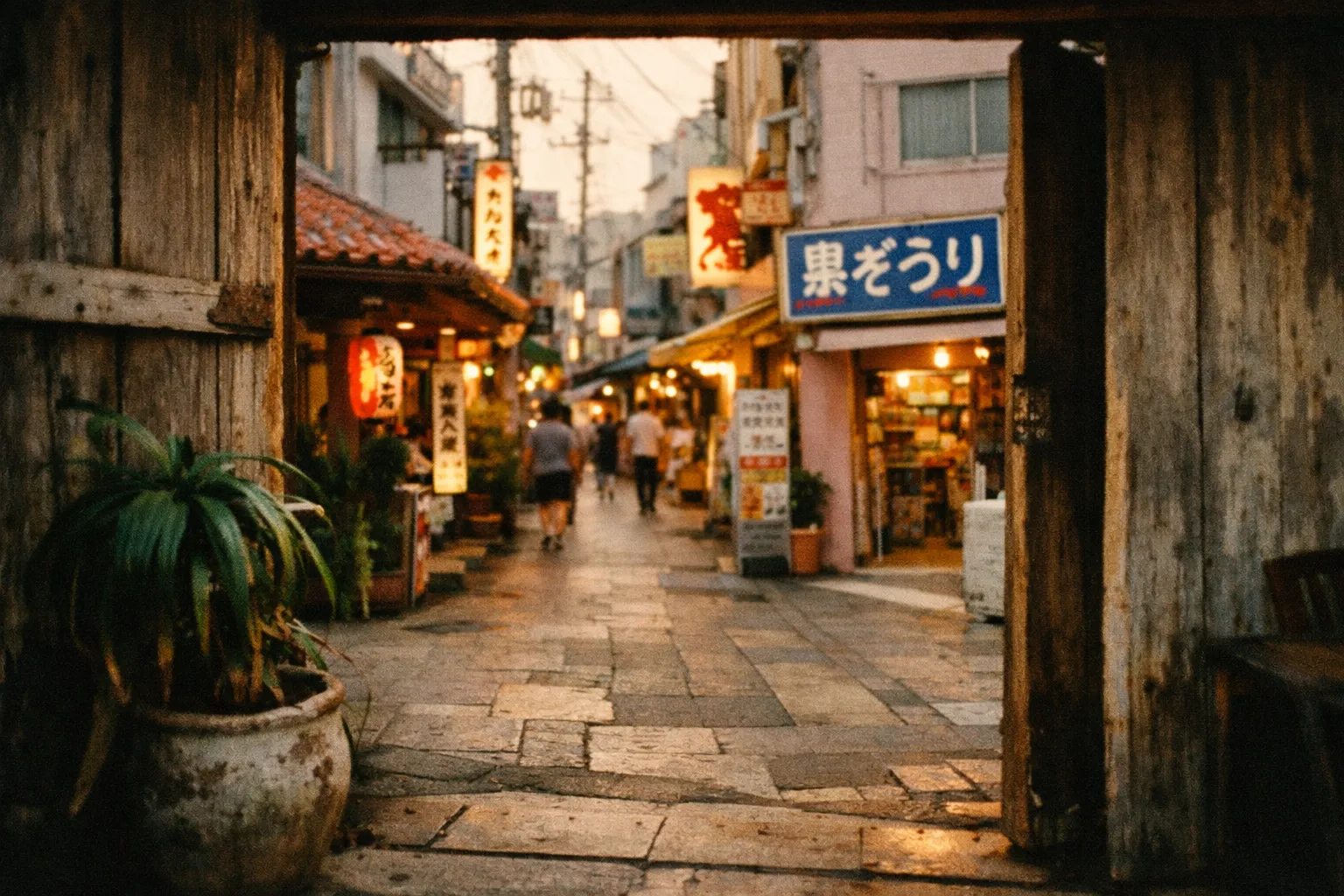
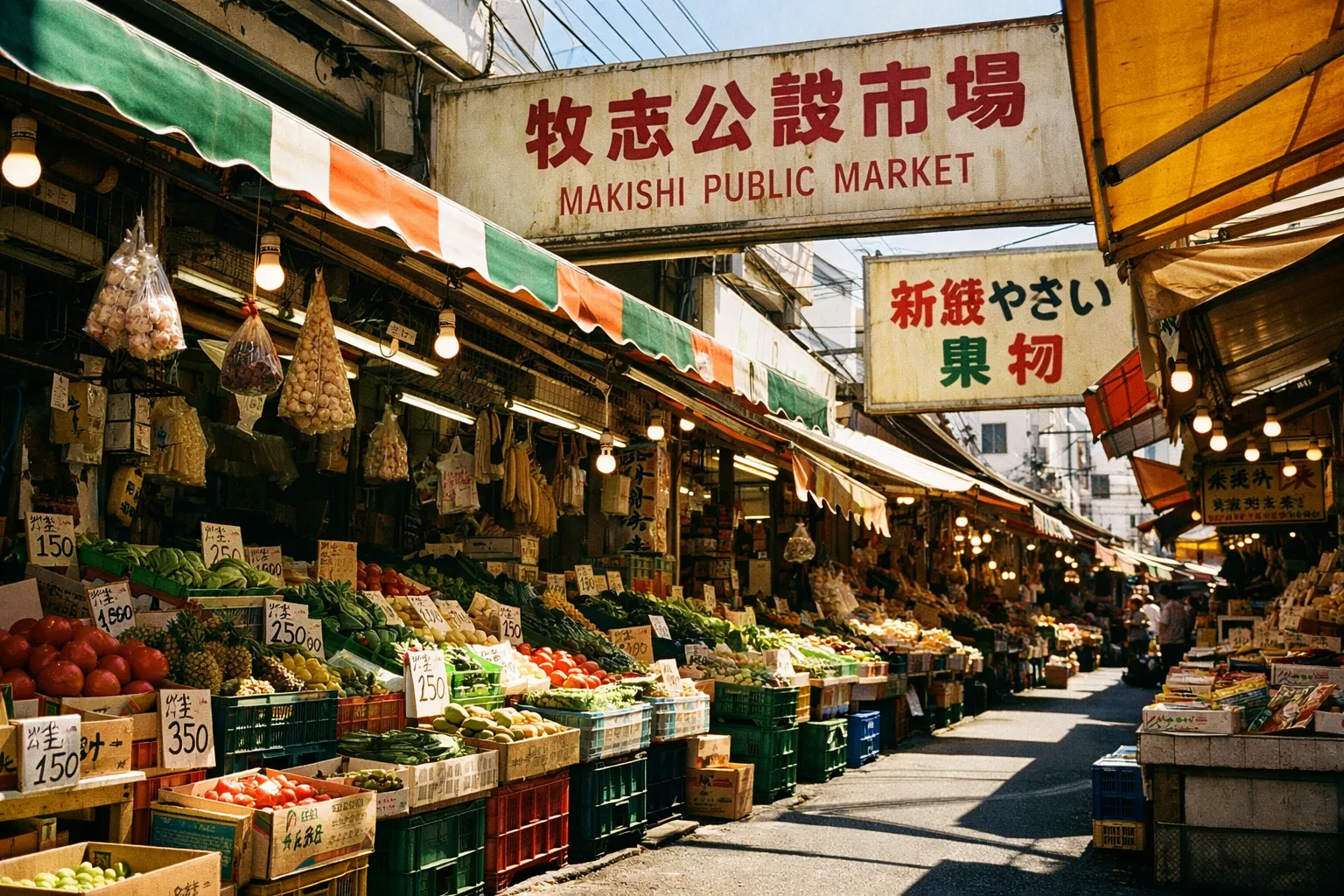
Kokusai Dori is Naha’s central street, about 1.6 km long, lined with izakaya, souvenir shops, live music, and street food. Just off it, Makishi Public Market is the local food market - fresh seafood and Okinawan produce, often with stalls that will cook what you buy. This is the one part of Okinawa that functions like a walkable city.
You don’t need a car here. It’s the natural evening add-on after your tour-based day trips return to Naha, and it’s easy enough on foot that you won’t need to plan it at all - just show up.
Mihama American Village and Chatan’s Beaches
Mihama American Village in Chatan is a large entertainment complex - shopping, restaurants, a cinema complex, and the nearby Sunset Beach and Araha Beach. Its Ferris wheel, long the area’s landmark, was taken down in 2022. It’s an easy half-day, accessible by bus from Naha, and works for families and travelers who aren’t purely beach-focused.
The area’s American-oriented streetscape reflects Okinawa’s postwar U.S. presence, tied to the ongoing military footprint in central Okinawa. It’s a genuinely distinct cultural layer, and worth a stop if you want to understand that side of the island rather than just the Ryukyu one.
Northern Okinawa - Daisekirinzan and Cape Hedo
The far north rewards travelers who want subtropical forest and karst over another beach. Daisekirinzan park offers short hikes through jungle and limestone landscapes, and Cape Hedo, Okinawa’s northernmost point, delivers cliffside coastal views with a wide-open feel that’s hard to find on the busier southern stretches. Wear closed footwear and bring rain protection - the humidity keeps trails slick year-round. Skip the Hiji Falls trail that older guides still list: the trail and its campground have been fully closed since the November 2024 storm damage, and the Kunigami tourism association expects reopening to take several years (16).
Given the northern location, this pairs well with a Churaumi Aquarium day. Both sit in the same broad part of the island, so a rental car plus an early start lets you combine them without backtracking.
Water Activities Beyond the Main Island - Kerama, Miyako, and Yaeyama
If marine experiences are why you’re coming, the outer islands are where Okinawa gets distinctive. Each cluster serves a different traveler, and picking the wrong one for your skill level or timeframe wastes a big chunk of the trip.
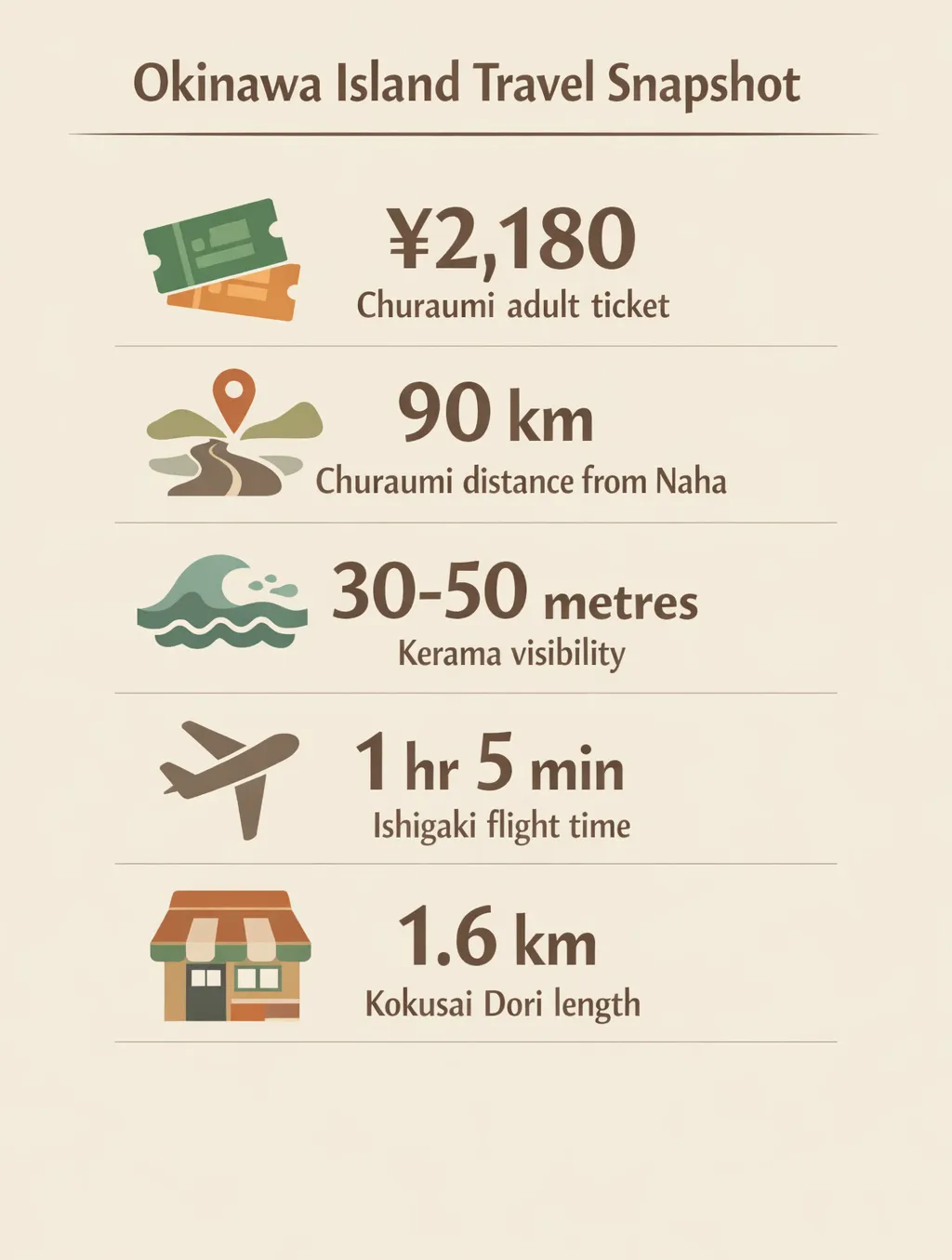 Key Okinawa travel figures: Churaumi ticket ¥2,180; 90 km from Naha to Churaumi; Kerama visibility 30-50 metres; Ishigaki flight time 1 hour 5 minutes; Kokusai Dori length 1.6 km.
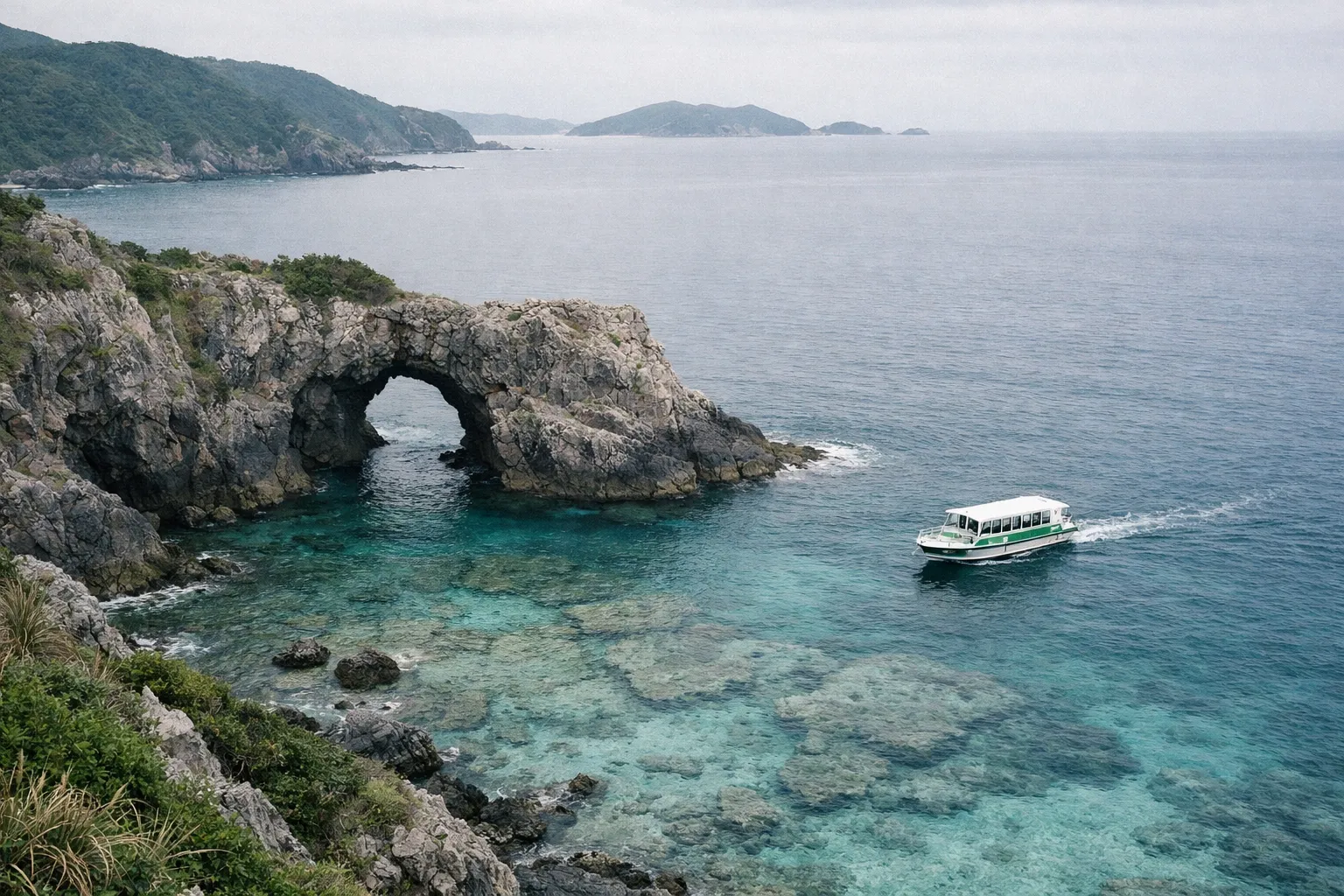
Here’s how the three clusters compare:
Okinawa Island Clusters at a Glance
| Kerama Islands | Miyako Islands | Yaeyama (Ishigaki + Iriomote) | |
|---|---|---|---|
| Best For | Snorkelers and day-trippers | Beach-focused travelers and non-divers | Jungle, waterfalls, and advanced diving |
| Travel Time from Naha | Short boat ride | About 55-minute flight | 1 hour 5 minute flight |
| Minimum Recommended Days | 1 day (no overnight needed) | 2 days | 2-3 days |
| Signature Activity | Reef and sea-turtle snorkeling | Beach swimming and relaxing | Kayaking, hiking, advanced diving |
| Skill/Effort Level | Beginner-friendly | Low effort, swimmer-friendly | Moderate to advanced |
| Standout Beach or Site | Furuzamami and Nishibama beaches | Yonaha Maehama Beach | Kabira Bay and Kondoi Beach on Taketomi |
Kerama Islands Snorkeling - The Best Day Trip from Naha
The Kerama Islands - Zamami, Aka, and Tokashiki - are the single best marine day trip for most visitors. Full-day guided boat tours from Naha typically run three snorkel stops, and sea turtle sightings are common (6). If you would rather take the ferry and pick your own beach, Zamami’s Furuzamami Beach is the main swimming spot and Ama Beach the better bet for turtles, while Nishibama on Aka has reef fish a few metres from the sand (10). Water visibility can reach 30-50 metres in ideal conditions, which is the main quantitative reason the Keramas stand out from anything on the main island.
Try-diving is available for non-certified divers, and gear is included on most tours. You don’t need to overnight on Kerama for a first visit - the day tour format works cleanly. Time it right and there’s a winter bonus: humpback whale season runs January through March in Kerama waters (17), so cold-season tours can combine snorkeling with whale watching in the same day.
Miyako and Yaeyama - When to Go Further
Go beyond Kerama when you have the days to justify it. Miyako is the beach pick - Yonaha Maehama suits swimmers and non-divers - and even with a flight of only 50 to 55 minutes from Naha (18), it works as a two-night add-on rather than a day trip. Ishigaki, at about 1 hour 5 minutes by direct flight (19), is the base for exploring Yaeyama: Kabira Bay’s glass-bottom boats let you see the reef without swimming, a short boat hop reaches Kondoi Beach on Taketomi, and Manta Scramble is a target for certified divers. Iriomote adds jungle, mangrove kayaking, and the Pinaisara Falls hike.
Each outer-island cluster realistically needs 2 days minimum. Don’t try to stack Miyako and Yaeyama into the same short trip on top of the main island - pick one per visit. Advanced options like Yonaguni’s underwater “ruins” demand experienced divers comfortable with strong currents and dedicated travel, so treat those as a trip of their own.
Ryukyu Culture, History, and Specialist Interests
Okinawa isn’t just a beach prefecture, and the cultural depth here genuinely differs from mainland Japan. If history, martial arts, or craft traditions are your thing, there’s enough to fill several days without touching the water once.
WWII History and the Peace Memorial Museum
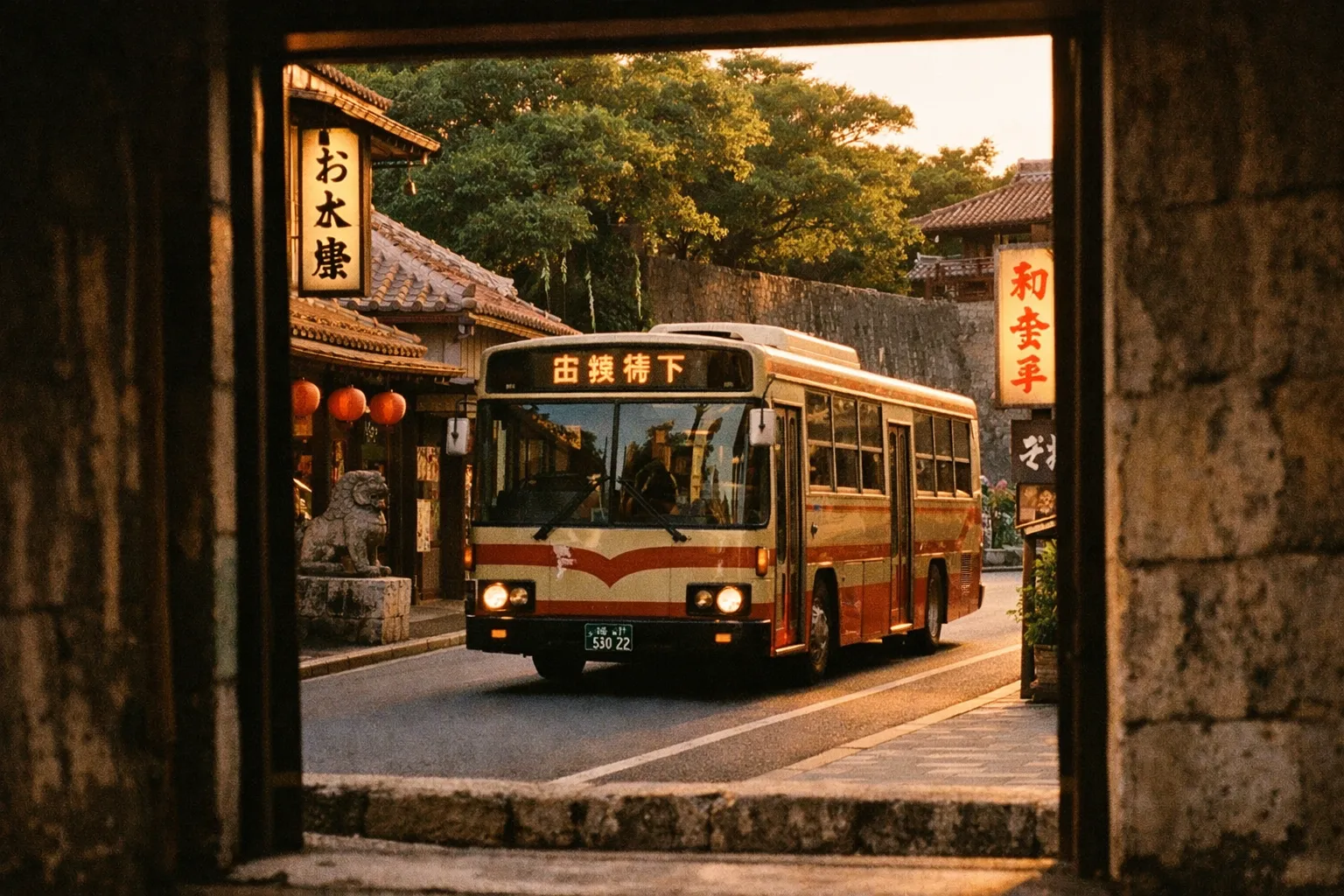
The Okinawa Prefectural Peace Memorial Museum, in Itoman in southern Okinawa, is the primary destination for understanding the Battle of Okinawa and the wartime history of the prefecture. Its permanent exhibition traces Okinawan history leading up to the battle and its causes. The museum opens 9 a.m. to 5 p.m., with entry to the permanent exhibition until 4:30 p.m. (20).
This is emotionally heavy and deserves at least half a day. Its southern location makes it logical to combine with Okinawa World and Gyokusendo Cave in the same travel day, giving you a concentrated southern circuit that covers both history and culture without excessive driving.
Karate, Crafts, and the Living Culture of the Ryukyu Islands
Okinawa is the birthplace of karate, and the Okinawa Karate Kaikan offers training sessions and cultural exhibits - a niche but meaningful stop for practitioners and curious visitors alike. Beyond it, the living culture shows up in several forms:
- Ryukyu Mura: a theme park recreating a Ryukyuan village, with traditional houses, Eisa drum performances, and craftspeople dyeing fabric and making pottery (1).
- Bise Fukugi village: ancient fukugi tree-lined lanes near the northern coast, quieter and less touristed - a photogenic walk rather than a headline attraction.
- Ogimi longevity village: for travelers interested in Okinawa’s Blue Zone reputation and the local principle of eating to 80 percent full.
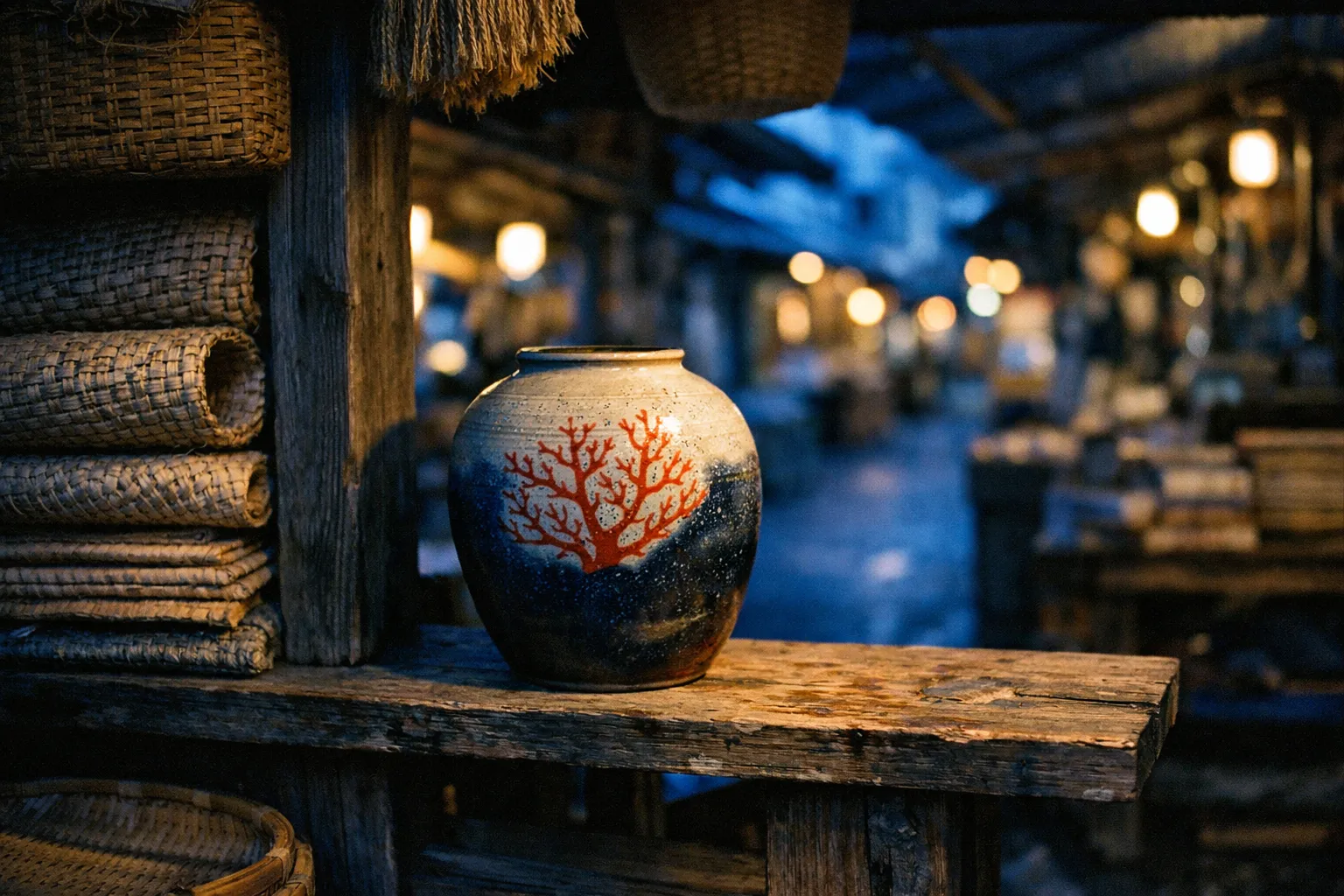
- Awamori distilleries: Okinawa’s native rice spirit, with tastings available around Naha - a low-key alternative to another beach day, and an easy pairing with a Kokusai Dori evening.
How to Structure Your Days - Practical Itinerary Logic
Most guides list attractions and leave you to sequence them. That’s where trips fall apart.
A Logical 4-Day Main Island Framework
4-Day Main Island Itinerary Framework
4 daysA practical day-by-day plan for a first Okinawa trip without a rental car.
- 1
Day 1 - Naha Base
Explore Kokusai Dori (1.6 km) and Makishi Public Market, then visit Shuri Castle Park in the afternoon. All are walkable or accessible by monorail.
- 2
Day 2 - Blue Cave Snorkeling
Half-day snorkeling or diving trip at Blue Cave on the Onna coast, followed by an afternoon at Mihama American Village or Onna coastline.
- 3
Day 3 - Churaumi Aquarium Coach Tour
Full-day tour including Churaumi Aquarium, Emerald Beach, and Cape Manzamo. Expect about 2 hours driving each way from Naha.
- 4
Day 4 - Kerama Islands Snorkeling
Full-day guided snorkeling tour from Naha with three snorkel stops, returning in the evening.
If you have a fifth day, slow it down - add the Peace Memorial Museum and Okinawa World as a southern history-and-caves day.
Adding Outer Islands Without Overpacking the Trip
To reach an outer island properly, add days rather than swapping them in. Domestic flights from Naha take about 50 to 55 minutes to Miyako and about 1 hour 5 minutes to Ishigaki - book ahead, especially in peak season.
- Miyako add-on: 2 nights minimum, built around Yonaha Maehama.
- Yaeyama/Iriomote add-on: 2-3 nights. A Kabira Bay glass-bottom boat, Kondoi Beach on Taketomi, the Pinaisara Falls kayak tour and, if certified, a Manta Scramble dive.
The practical minimum for main island plus one outer island group done properly is 7 or more days. Trying to fit both Miyako and Yaeyama on top of the main island in under a week means you’ll spend more time at airports than in the water.
Common Mistakes That Waste Time (and How to Avoid Them)
The difference between a good Okinawa trip and a frustrating one usually comes down to a handful of avoidable errors.
- Underestimating distances. Churaumi Aquarium is about 90 km and 2 hours each way from Naha. It’s a full-day commitment, full stop. Plan the day around it rather than wedging it between other stops.
- Ignoring typhoon risk. Travel between August and October without flexible bookings, and a single storm can cancel ferries and boat tours for two to three days. Build a buffer day, or shift to mid-October when typhoon frequency drops noticeably.
- Overpacking islands into short stays. Main island plus Kerama plus Miyako plus Ishigaki in four days means more ferry terminals and airport gates than actual Okinawa. Pick a lane.
- Assuming English everywhere. Major attractions and tour operators increasingly offer English support, but local buses, small guesthouses, and neighborhood restaurants run primarily in Japanese. Keep a translation app ready.
- Neglecting sun and heat. Summer midday UV is severe. Schedule indoor or shaded activities - the aquarium, Gyokusendo Cave, cultural sites - for the 11 a.m. to 2 p.m. window on beach and snorkel days. Hats, reef-safe sunscreen, and hydration are non-negotiable.
Frequently Asked Questions
Frequently Asked Questions
- What not to miss in Okinawa?
- Kerama Islands snorkeling, Blue Cave, Churaumi Aquarium, Shuri Castle Park, and Kokusai Dori cover the essential range. Kerama day trip offers the best coral, sea turtles, and visibility. For culture, Shuri Castle and Peace Memorial Museum provide the full Ryukyu and WWII picture.
- How many days in Okinawa is sufficient?
- Four days covers main island highlights without rushing - Naha, Blue Cave, Churaumi, and a Kerama day trip. Add two days for Miyako or Yaeyama. Seven days is the realistic minimum for main island plus one outer island group. Less than three days means more transit than sightseeing.
- What are the top 10 things to do in Okinawa?
- Top activities include Kerama snorkeling, Blue Cave snorkeling/diving, Churaumi Aquarium, Shuri Castle Park, Okinawa World and Gyokusendo Cave, Peace Memorial Museum, Kokusai Dori and Makishi Market, Mihama American Village, Yonaha Maehama beach, and Pinaisara Falls kayak tour. The first five fit a main-island trip; others need outer islands.
- What do tourists do in Okinawa?
- Most split time between marine activities (snorkeling, diving, beach) and cultural sightseeing (Shuri Castle, Okinawa World, Kokusai Dori). Popular day tours include Kerama Islands and Churaumi Aquarium. Families prefer aquarium and calm beaches; divers target Keramas and Ishigaki; history buffs focus on Ryukyu heritage and Peace Memorial Museum.
- Is Okinawa good to visit in winter?
- Yes, with adjusted expectations. December to February is too cool for beach swimming, but whale watching off Kerama and Naha runs January to March. Cultural sites, caves, and hiking are more pleasant in cooler, drier air. Crowds thin and accommodation is easier. Pack a light layer for evenings.
- Do I need a rental car in Okinawa?
- Not necessarily for a first visit. Major day trips run as guided tours with coach transport from Naha, and Naha itself is walkable. A rental car is useful for exploring central and northern main island at your own pace, especially smaller beaches and viewpoints tours skip.
- When is typhoon season in Okinawa?
- Typhoon risk peaks in August and September, though storms can occur outside that window. Direct hits can cancel ferry and boat services for 2-3 days. Book tours with flexible cancellation and build buffer days. By mid-October, typhoon frequency drops but water remains warm for activities.
How to Get to Okinawa
Nearly all international and domestic visitors arrive at Naha Airport on the main island. Direct flights connect Naha to Tokyo (Haneda and Narita), Osaka, Nagoya, Fukuoka, and other major Japanese cities, with flight times from Tokyo running roughly 2.5 hours. International routes serve Naha from Seoul, Taipei, Shanghai, and Hong Kong, among others - check seasonal schedules, as some routes run limited frequencies outside peak summer.
Once you land, Naha’s Yui Rail monorail connects the airport to central Naha and Shuri in under 30 minutes. For outer islands, domestic flights from Naha serve Miyako (about 50 to 55 minutes) and Ishigaki (about 1 hour 5 minutes) - book these ahead in peak season, as seats fill fast and prices climb closer to departure.
One thing most guides get wrong: they treat Naha Airport as a quick pass-through and underestimate how much the airport-to-activity transfer time shapes your first and last days. Build at least a half-day buffer on arrival and departure days rather than scheduling a full tour on either end.
The Practical Close
Okinawa rewards travelers who pick a lane. For a first trip, that means the main island plus a Kerama day trip - and only if you have seven days or more should you add a single outer island group. The biggest waste isn’t skipping an attraction; it’s trying to cover everything and ending up on ferries and flights instead of reefs and castles.
October and March are the practical sweet spots for most travelers who want water activities without peak-season crowds. Three concrete moves before you go: book the Kerama day tour and the Churaumi coach tour before you land, build a typhoon buffer day if you’re traveling August through October, and resist the urge to bolt a fourth island cluster onto a five-day itinerary.