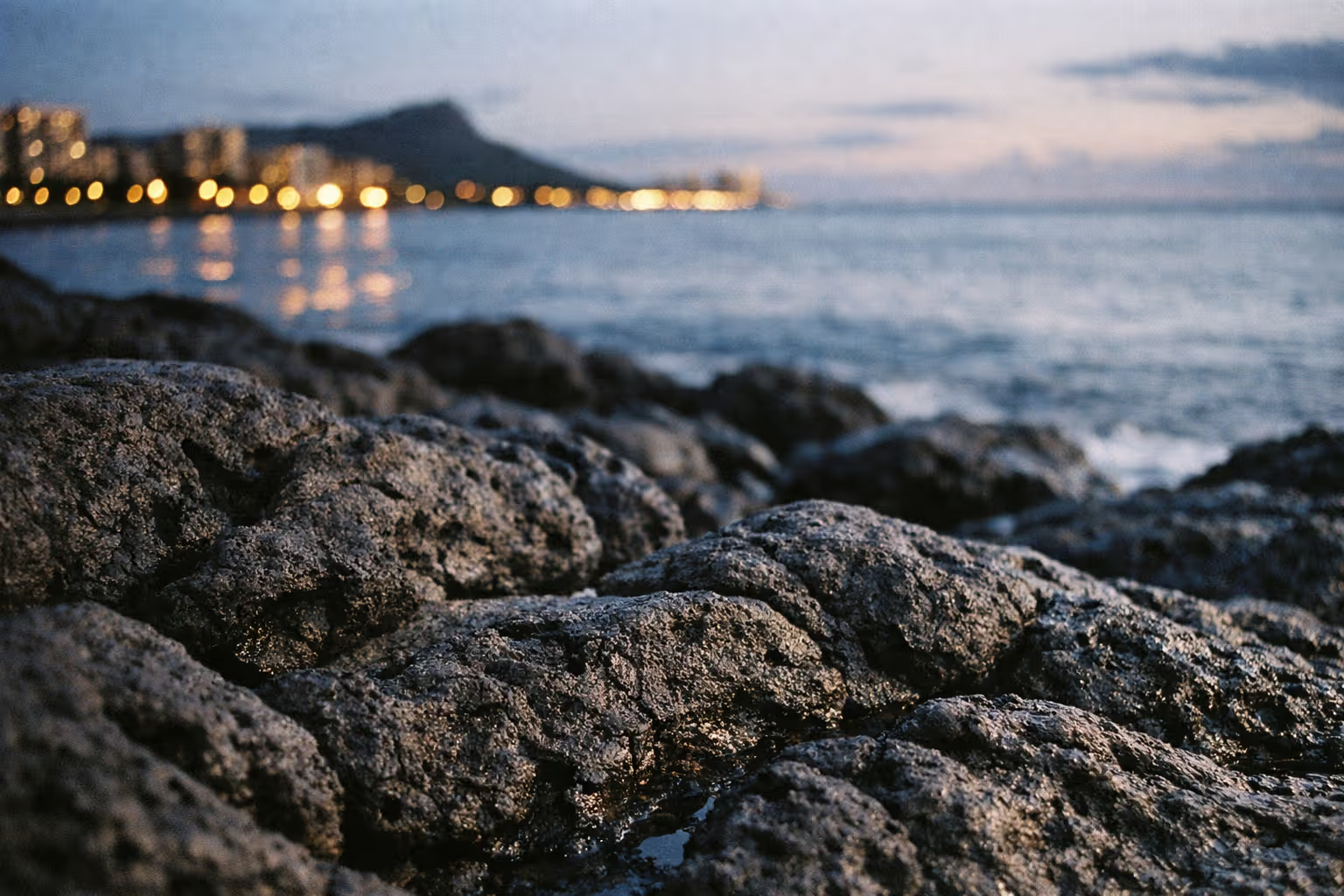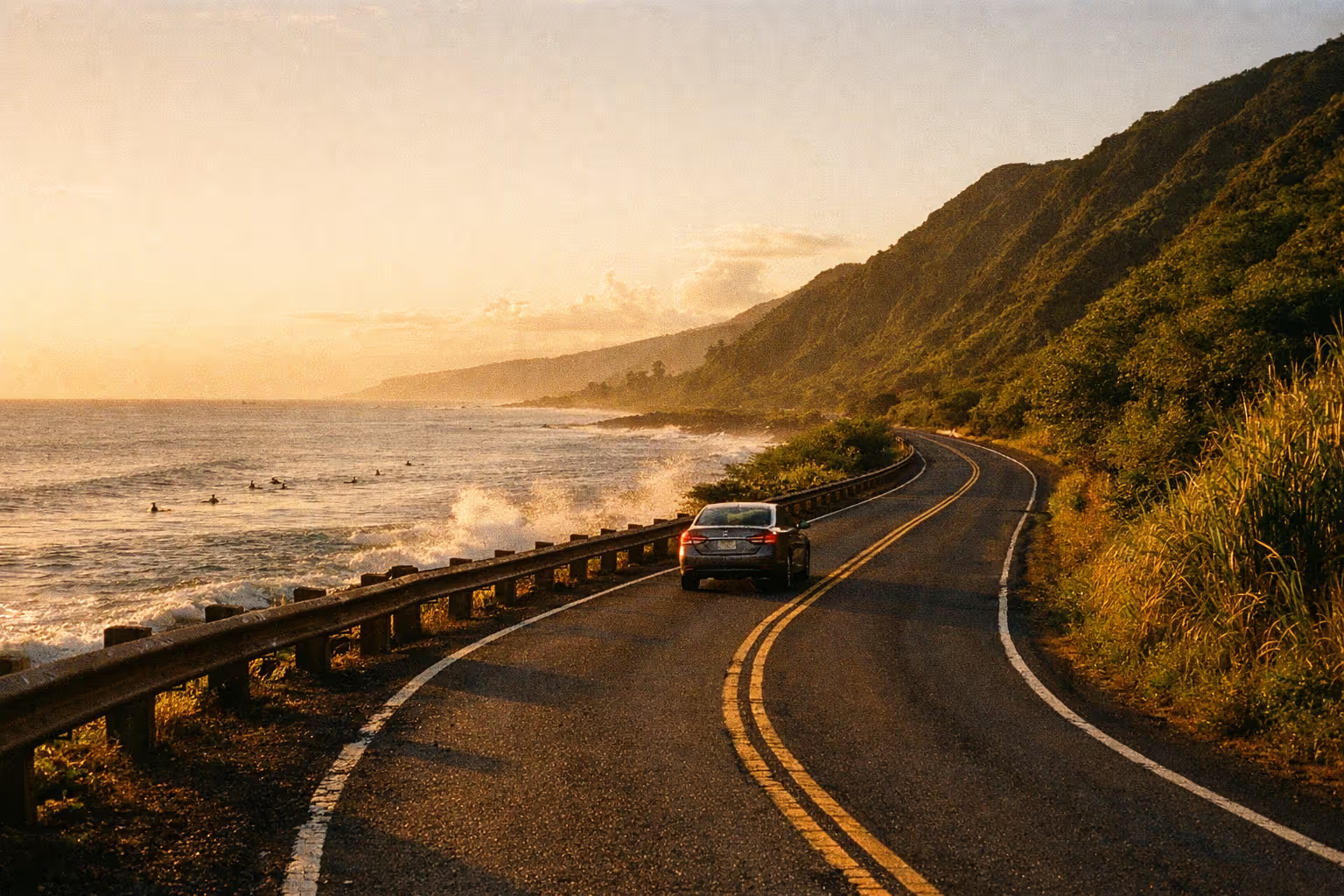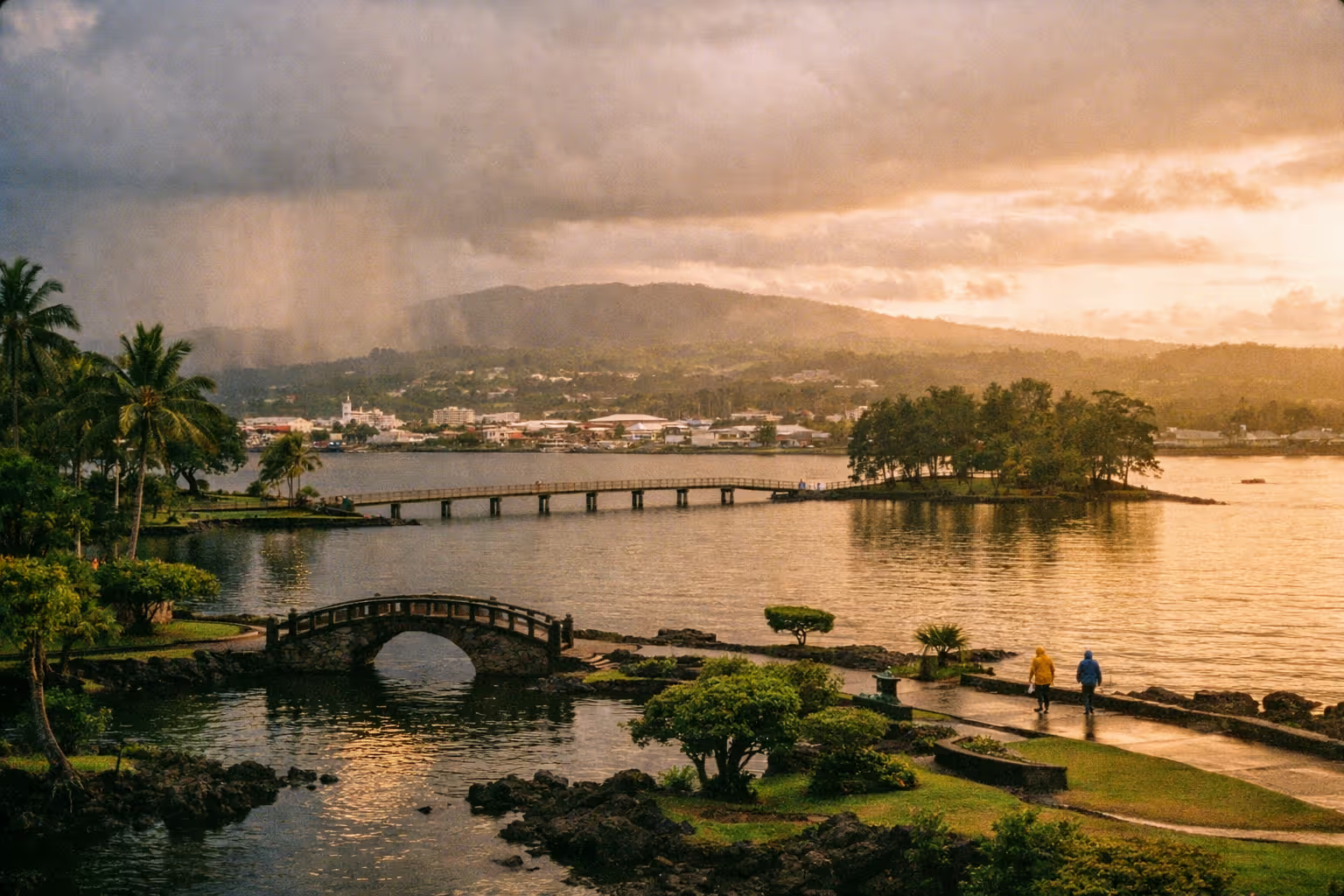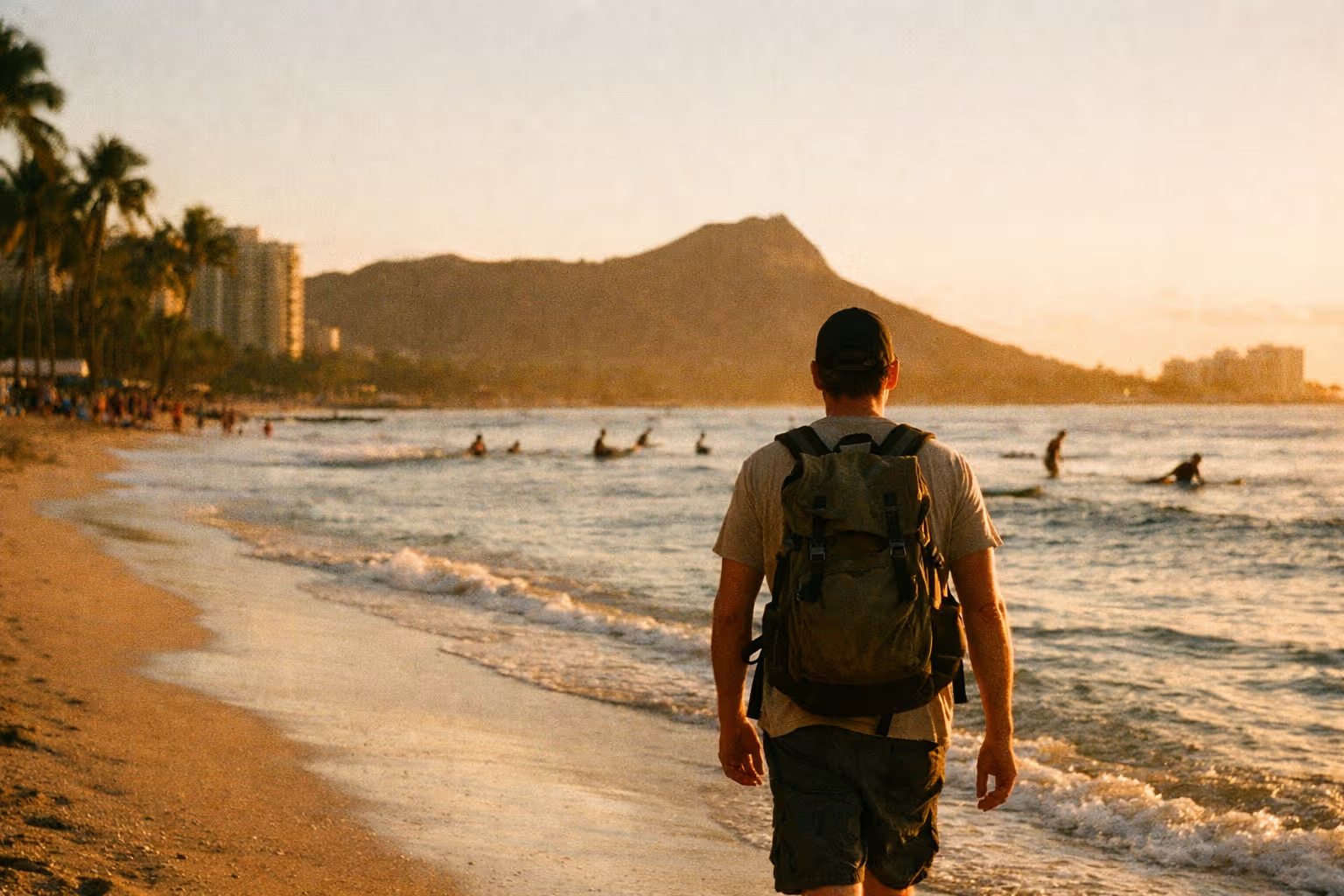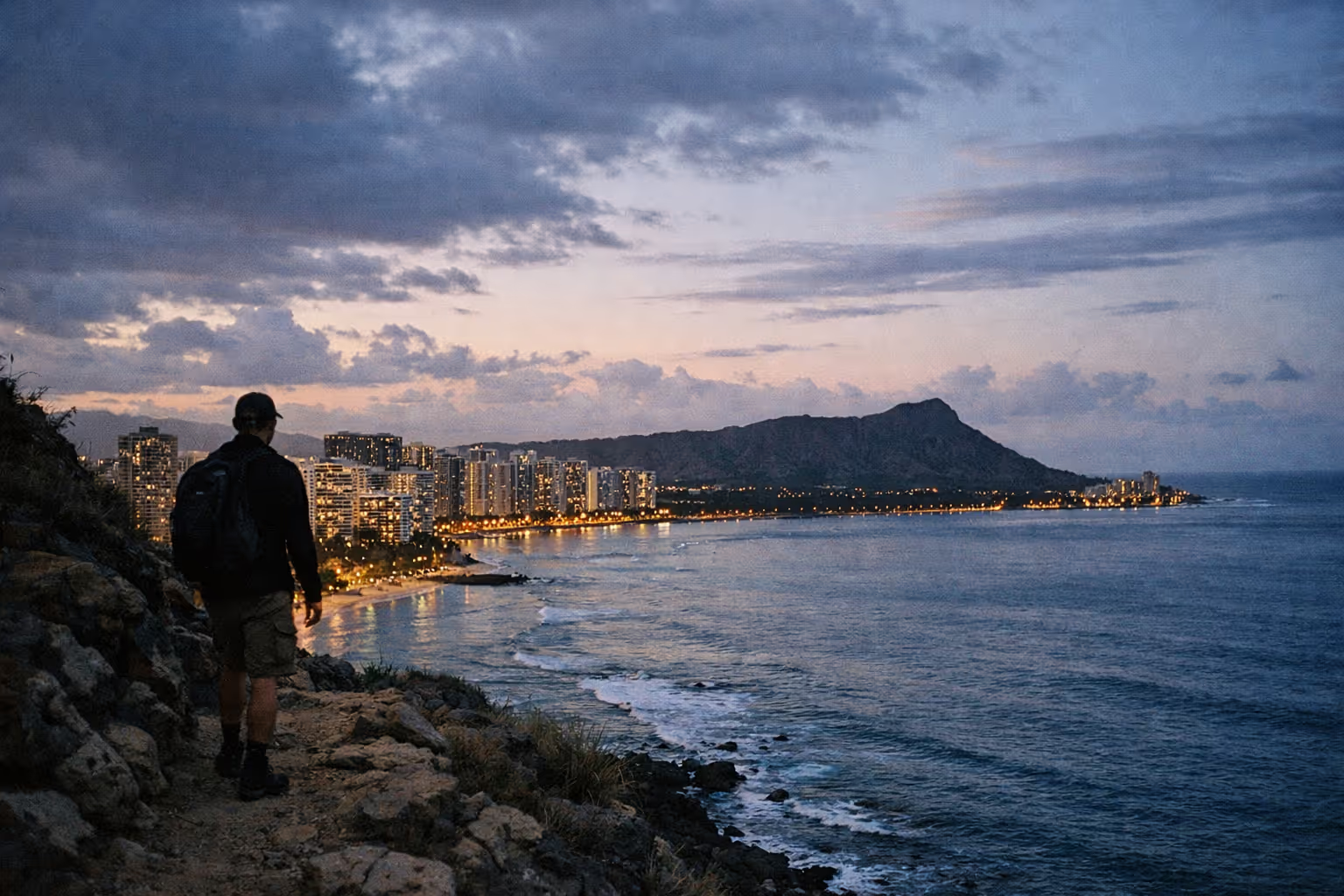
Honolulu is the only American city where you can hike a volcanic crater before breakfast, stand at a World War II memorial by mid-morning, and be back on the sand by noon. That compactness is what makes the best things to do in Honolulu so easy to overload - most first-timers try to cram four coasts into a single day and end up spending it in traffic. This guide covers the attractions that actually deliver, a realistic day-by-day itinerary, the logistics most guides skip, and the 2026 reservation rules that will turn you away at the gate if you show up unprepared.
Honolulu is the hub of Oʻahu and the state’s main tourism entry point. Hawaiʻi drew 3.38 million visitors through April 2026, up 2.7% year over year, with $7.89 billion in statewide spending over the same four months (4). The city stretches well beyond Waikīkī - history, museums, rainforest hikes, and coastal drives all sit within 30 to 60 minutes of the main hotel strip. The planning reality for 2026: Diamond Head and Hanauma Bay now require advance reservations, and Pearl Harbor’s free memorial program books out weeks ahead in summer. Lock those in before you do anything else.
✓ Pros
- Unmatched concentration of history, beach, and hiking within a compact area
- Strong public infrastructure: lifeguarded beaches, free Pearl Harbor grounds, walkable Waikīkī
- Year-round warm weather; no bad season for most activities
- Accessible for first-timers: English-speaking, well-signposted, easy airport connections
✗ Cons
- High demand at top sites means reservations are now mandatory for Diamond Head and Hanauma Bay
- Traffic in and around Waikīkī can disrupt timing, especially late afternoon
- Costs add up fast - parking, tours, and dining are expensive relative to mainland cities
- Easy to over-schedule; many visitors try to combine too many sites in a single day
Best Things to Do in Honolulu - The Attractions That Actually Deliver
The best things to do in Honolulu cluster into four groups: beaches and outdoors, history and culture, family stops, and evening entertainment. Diamond Head consistently ranks among the top three Honolulu attractions alongside Waikīkī Beach and Hanauma Bay on major activity platforms (6). Below are 15 that earn their spot, each with the one logistics note that matters most.
Waikīkī Beach and Kapi’olani Park
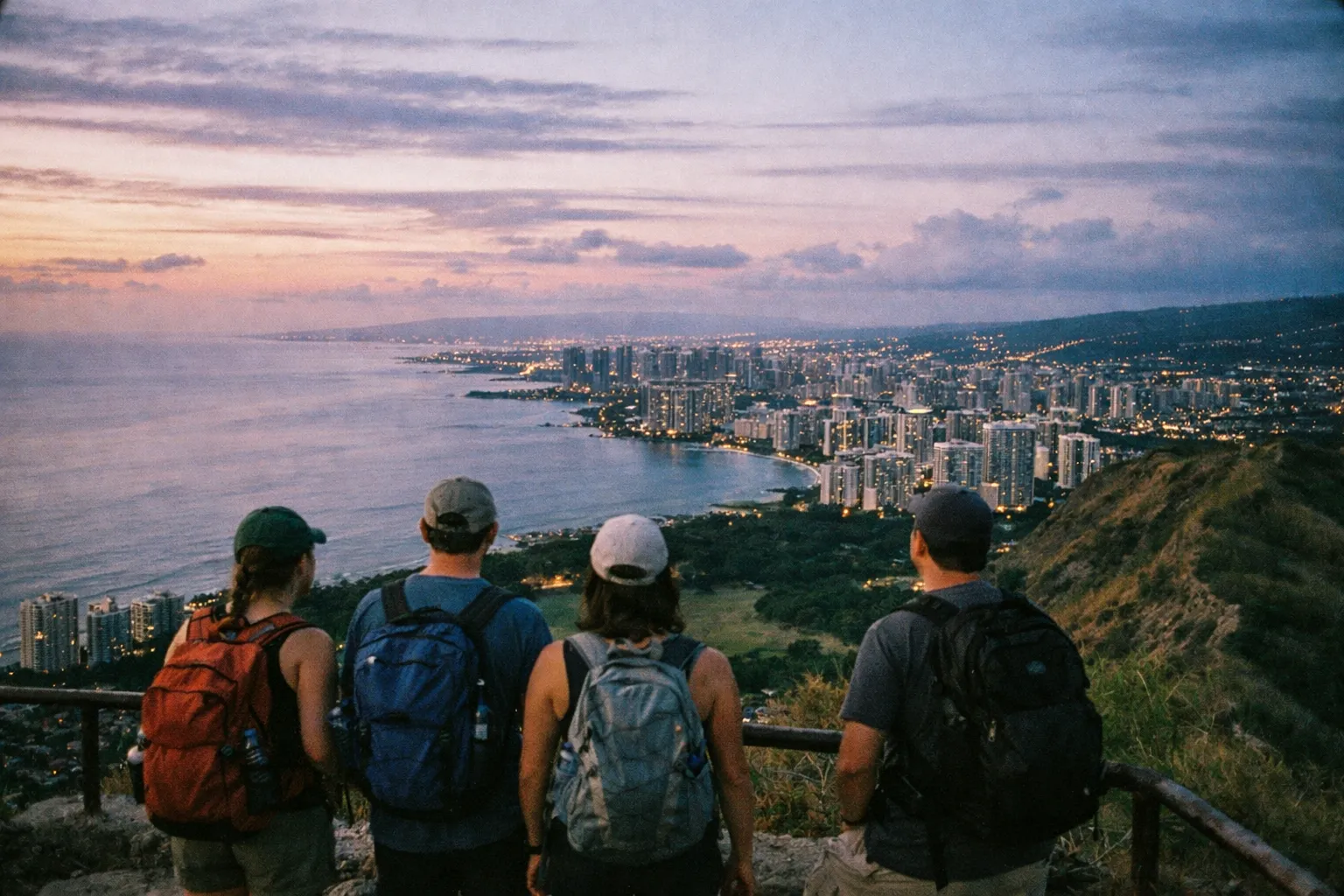
Waikīkī is one of the world’s most recognized stretches of sand, and it’s fully public with lifeguard service on designated sections during posted hours. At its eastern end, Kapi’olani Regional Park covers roughly 160 acres directly beneath Diamond Head - the largest and oldest public park in Honolulu. Access is free and everything is walkable from most Waikīkī hotels. Treat Waikīkī as your base rather than a single activity: you’ll return here for surf lessons, morning runs, stand-up paddleboarding, and the free Kūhiō Beach Hula Show. Plan to come back multiple times rather than trying to “do” it once and move on.
Diamond Head State Monument
Diamond Head is a moderate hike - about 0.8 miles each way, 1.6 miles round-trip, with roughly 560 feet of elevation gain, and Hawaiʻi State Parks recommends allowing 1.5 to 2 hours. Non-resident visitors must hold an advance reservation for entry; parking reservations are separate and also recommended, with peak morning slots regularly selling out. Book before you land, not the night before. Start at sunrise or early morning for cooler air, softer light, and thinner crowds. The trail runs through staircases and narrow tunnels; the crater interior is surprisingly lush, and the summit gives you wide views over Waikīkī and the south shore.
Pearl Harbor National Memorial
The USS Arizona Memorial boat program is free but requires a timed reservation through Recreation.gov, with a mandatory $1 non-refundable service fee per ticket. The National Park Service keeps the visitor center open daily from 7:00 a.m. to 5:00 p.m.; check the NPS Pearl Harbor site for current holiday closures before you go, as the official list is subject to change. The mistake here is scope: budget 4 to 6 hours for the full complex, not 2 to 3. Alongside the free memorial sit three paid attractions - the USS Bowfin Submarine Museum, the Battleship Missouri Memorial, and the Pearl Harbor Aviation Museum. It’s about a 45-minute drive west of Waikīkī. Book the Arizona program weeks ahead for summer 2026, and pack light - bags larger than a small clutch are prohibited inside the secure area.
The Missouri’s ticket is separate from the free Arizona reservation, and bookable ahead:
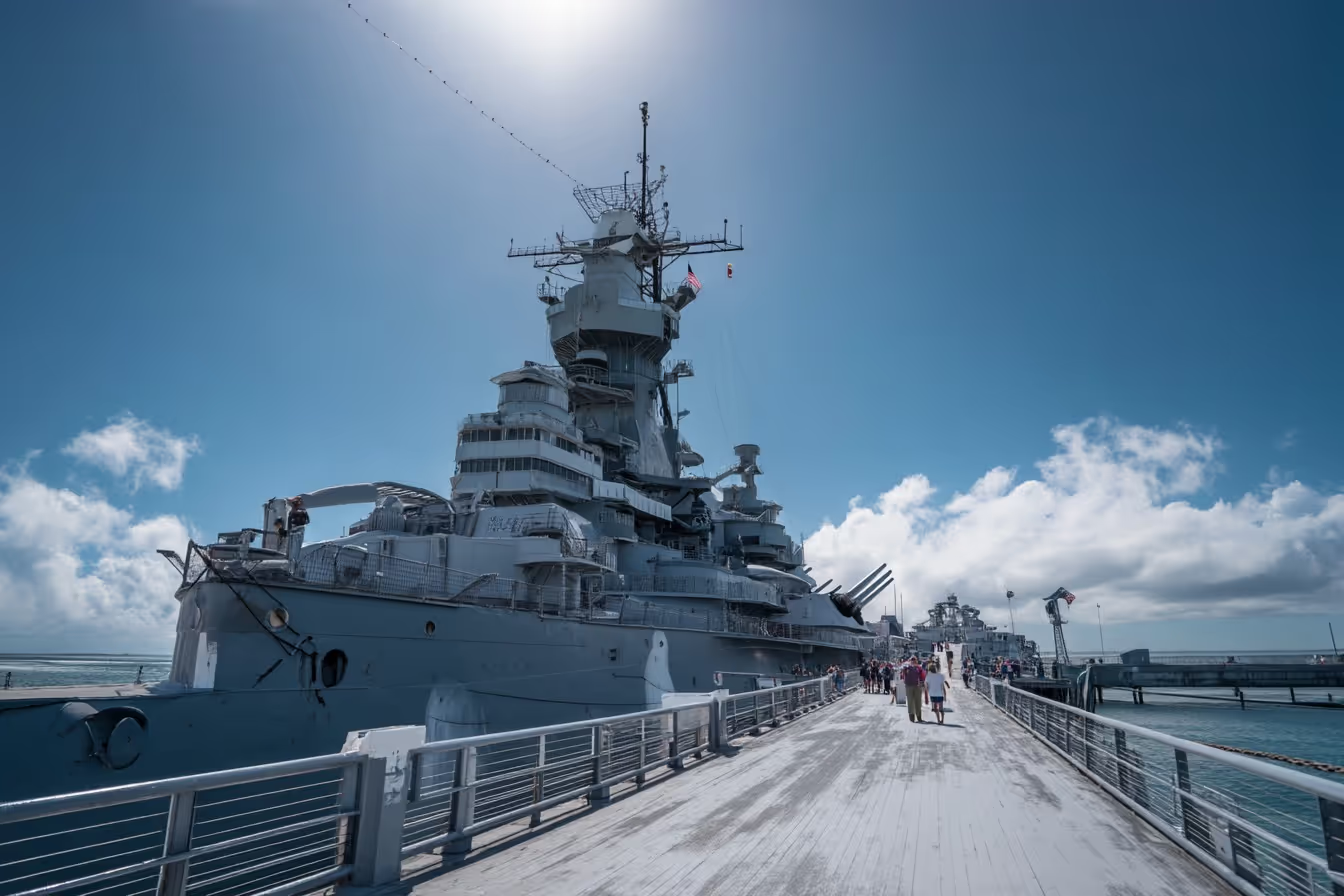
Battleship Missouri Memorial
One of the three paid stops beside the free memorial. Book it alongside the Arizona slot, not instead of it.
Check availabilityHanauma Bay Nature Preserve
Hanauma Bay is the top snorkeling site on Oʻahu, and daily capacity is capped at roughly 1,000 to 1,200 visitors. According to the City and County of Honolulu, online reservations for non-residents open exactly 48 hours before your visit date at 7:00 a.m. Hawaiʻi Standard Time - and many dates sell out within minutes. Set a reminder. Plan 2.5 to 3 hours on site. Every visitor must watch a short mandatory marine education video before entering the water, and reef-safe sunscreen is required. Pair it with the Halona Blowhole Lookout and Koko Marina Center for an efficient East Honolulu half-day.
‘Iolani Palace and Downtown Honolulu
‘Iolani Palace, built in 1882 for King Kalākaua, is the only official royal residence in the United States. Standard guided or audio tours run 60 to 90 minutes; allow 2 to 3 hours with exhibits. Most visitors walk right past it, which is a real miss - it’s the strongest cultural differentiator in the city. Combine it with the King Kamehameha Statue, Ali’iōlani Hale, and Aloha Tower for a self-guided downtown walk. The smart pairing: do Pearl Harbor early, then downtown in the afternoon, and you minimize backtracking considerably.
Bishop Museum and Honolulu Museum of Art
Bishop Museum preserves more than 24 million cultural and natural history objects and identifies itself as the largest museum in Hawaiʻi and the premier institution for Hawaiian and Pacific cultures - strong for families and history-focused visitors. The Honolulu Museum of Art holds roughly 50,000 works spanning Asia, Europe, and the Americas; plan 2 to 3 hours. Both run fixed daily hours, so build your day around them rather than the reverse. Together with ‘Iolani Palace, these two fill a complete indoor day when the weather turns.
Ala Moana Beach Park and Center
Ala Moana Regional Park covers about 100 acres of shoreline and green space between Waikīkī and downtown, with free access and calm, protected water that’s better for families and lap swimmers than the Waikīkī surf. Next door, Ala Moana Center hosts over 350 shops and restaurants and bills itself as one of the largest open-air shopping centers in the world - useful for a half-day or an evening. Beach parking is free but fills fast on weekends.
Honolulu Zoo and Waikīkī Aquarium
Both sit within walking distance of Waikīkī and consistently rank among the top 15 honolulu attractions on major activity platforms. The Honolulu Zoo occupies 42 acres at the edge of Kapi’olani Park, with 2026 adult admission around $19 to $21 and discounted children’s rates; allow 2 to 3 hours and go in the morning before the heat peaks. The Waikīkī Aquarium keeps more than 3,500 organisms across over 500 species, and most visitors spend 60 to 90 minutes there. Adult admission runs around $12. Both are solid rainy-morning options.
Manoa Falls Trail
Manoa Falls is a 1.6-mile round-trip rainforest hike with about 800 feet of elevation gain, typically 60 to 90 minutes for most hikers. It’s rated easy to moderate, but mud and slippery footing are near-constant - closed-toe shoes are essential, not optional. It sits about 15 minutes from Waikīkī by car and pairs well with a morning before beach time.
Makapu’u Lighthouse Trail
The Makapu’u Point Lighthouse Trail is a paved route of roughly 2 miles round-trip with about 500 feet of elevation gain, hugging the southeastern coast with views of Koko Crater and, on clear days, Molokaʻi and Lānaʻi. It’s one of Oʻahu’s most popular hikes, it’s free, and the offshore whale-watching between January and March is worth timing a winter visit around. Because the trail is paved, the lower section works for strollers. It slots naturally into the East Honolulu coastal loop.
Koko Head Crater Trail
The Koko Crater Railway Trail climbs around 1,048 former railway ties, gaining nearly 990 feet in under a mile. The City and County of Honolulu describes it as strenuous and not recommended during the heat of the day - this is an advanced workout, not a casual walk despite the short distance. Allow 1.5 to 3 hours round-trip and start before 7:00 a.m., because there is no shade and the midday heat is brutal. Bring two liters of water per person. The summit views over Hanauma Bay and the Windward coast are the payoff.
Evening Entertainment - Luaus, Live Music, and New Shows
For a beach-day evening that needs no driving, the Queens Waikīkī Luau is one of the more accessible options near the strip. New in 2026, Cirque du Soleil’s ‘Auana is a high-production resident show with tiered ticket prices starting in the low-$70s range - a departure from the traditional luau format. Blue Note Hawaiʻi is a 300-seat jazz and live-music club in Waikīkī with multiple nightly shows; ticket pricing often starts around $25 to $45 per person depending on the performer. Sunset cruises and glass-bottom boat tours depart from Honolulu Harbor and Waikīkī, running 1.5 to 2 hours - ideal after a full beach day.
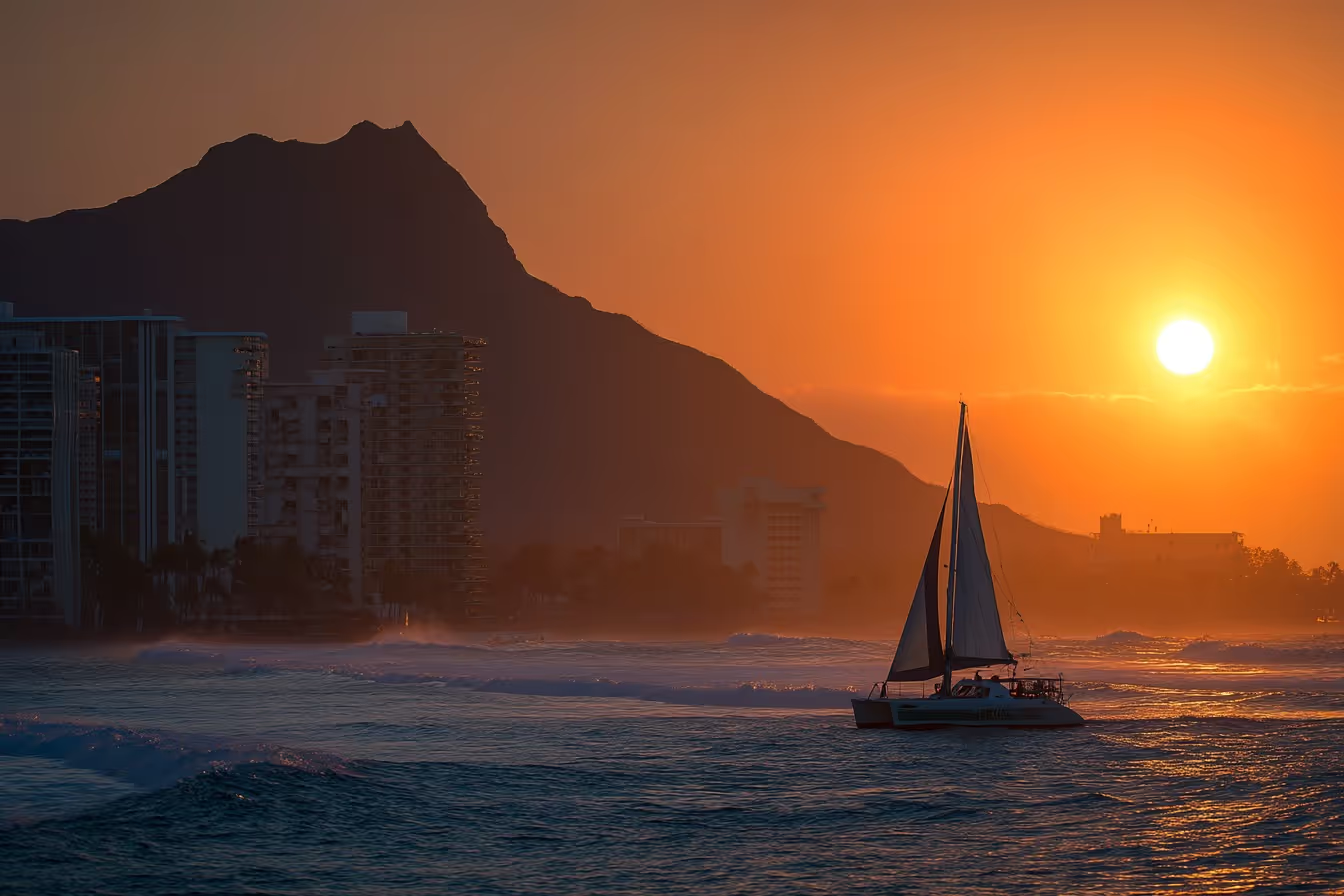
Waikiki Sunset Splash & Cruise
The evening spent on the water instead of at a table.
Check availabilityFor an evening on foot instead of in a seat, guided ghost walks cover the older downtown blocks and the stories that predate the resort strip. Readers get a discount with the code LYNX10.

Honolulu Ghost Tour
Downtown Honolulu after dark: the layer of the city the beach itinerary never reaches.
See tour timesWaikīkī, Honolulu - What to Know Before You Base Here
Waikīkī, Honolulu, is the logical base for most first-timers: a 1.5-mile neighborhood fronting the south shore, densely walkable along Kalākaua and Kūhiō avenues, with direct beach access from most major hotels and a quick connection to the airport. Oʻahu consistently takes the largest share of statewide visitors and spending, with February 2026 spending on the island alone hitting about $738 million. That popularity is the trade-off: crowds, traffic, and parking friction are real, and they peak on Kalākaua Avenue in the late afternoon.
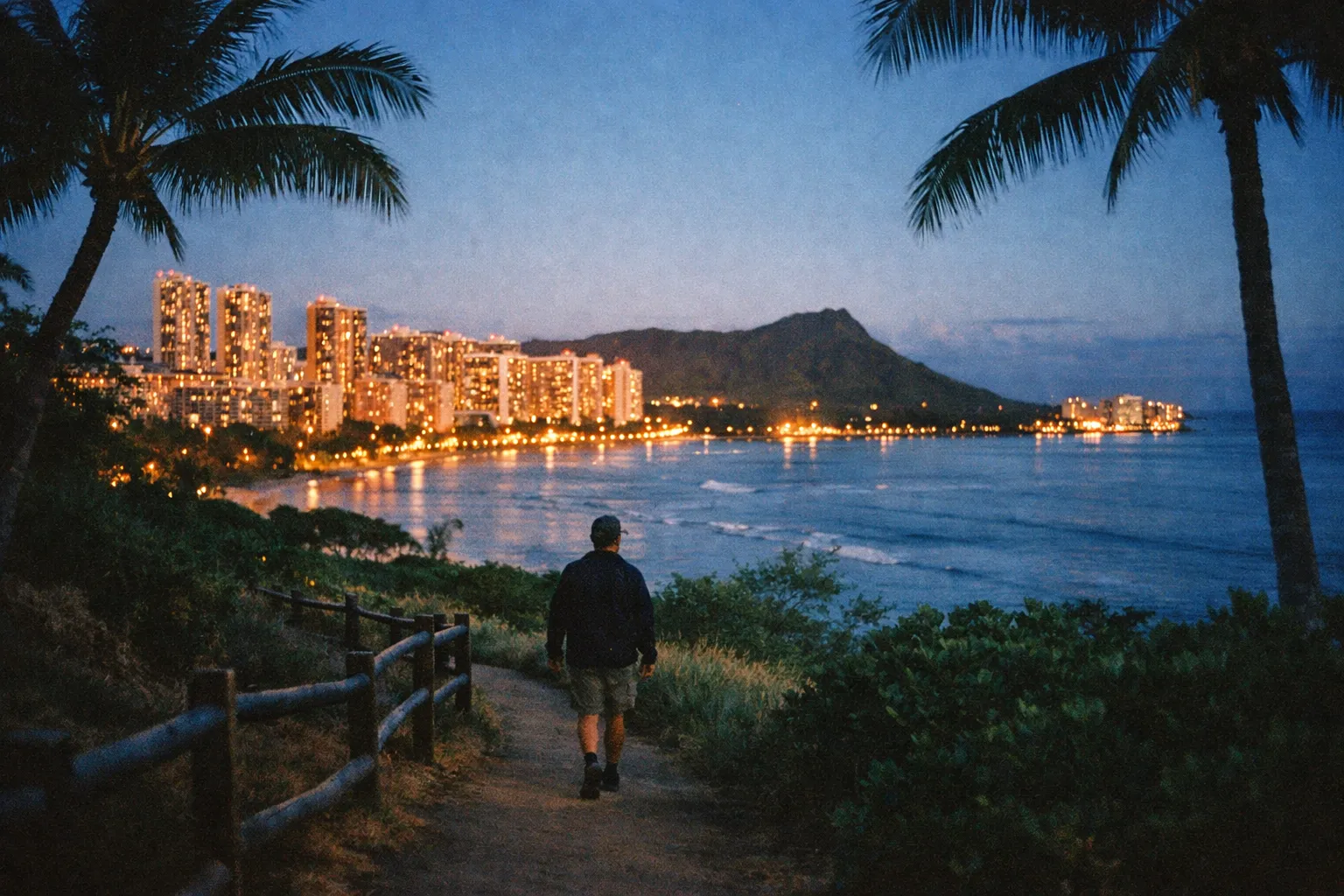
What’s genuinely walkable from Waikīkī: Kapi’olani Park, the Honolulu Zoo, the Waikīkī Aquarium, the Kūhiō Beach Hula Show, and - with a short bus or rideshare hop - Ala Moana Center. What needs a car or rideshare: Pearl Harbor (about 10 miles and 30 to 45 minutes west via H-1), Hanauma Bay (about 20 minutes east), Diamond Head (about 10 minutes east), and Manoa Falls (about 15 minutes north).
Waikīkī isn’t only a resort strip. Adjacent Kaka’ako has murals, maker markets, and a local food scene that’s worth an evening away from the hotel restaurants.
Getting Around Honolulu Without Losing Half Your Day
Rent a car only on the days you leave Waikīkī - Hanauma Bay, Koko Head, Makapu’u, the Windward Coast, and the North Shore all sit 30 to 60 minutes out depending on traffic. A car gives you the early-morning trailhead starts that matter most on exposed hikes.
TheBus, operated by the City and County of Honolulu, is markedly cheaper than rideshare or Waikīkī parking - check current fares and HOLO card daily caps at thebus.org before you go, as rates update periodically. It’s viable for Kailua, the North Shore, and Ala Moana without a car. Rideshare works well for Waikīkī-area trips but gets expensive out to trailheads. The core rule: don’t rent a car for every day. Parking in Waikīkī is limited and pricey, and a car sitting in a hotel garage is money you’re not spending on the trip.
Honolulu Beyond the City - Day Trips Worth the Drive
Honolulu, Oʻahu, Hawaiʻi is not just the city - the island’s best day trips sit 30 to 60 minutes out, and most visitors don’t realize how accessible they are. Three distinct circuits cover the range, each running 3 to 4 hours of driving plus activity time. Pick one per day. Don’t try to chain them.
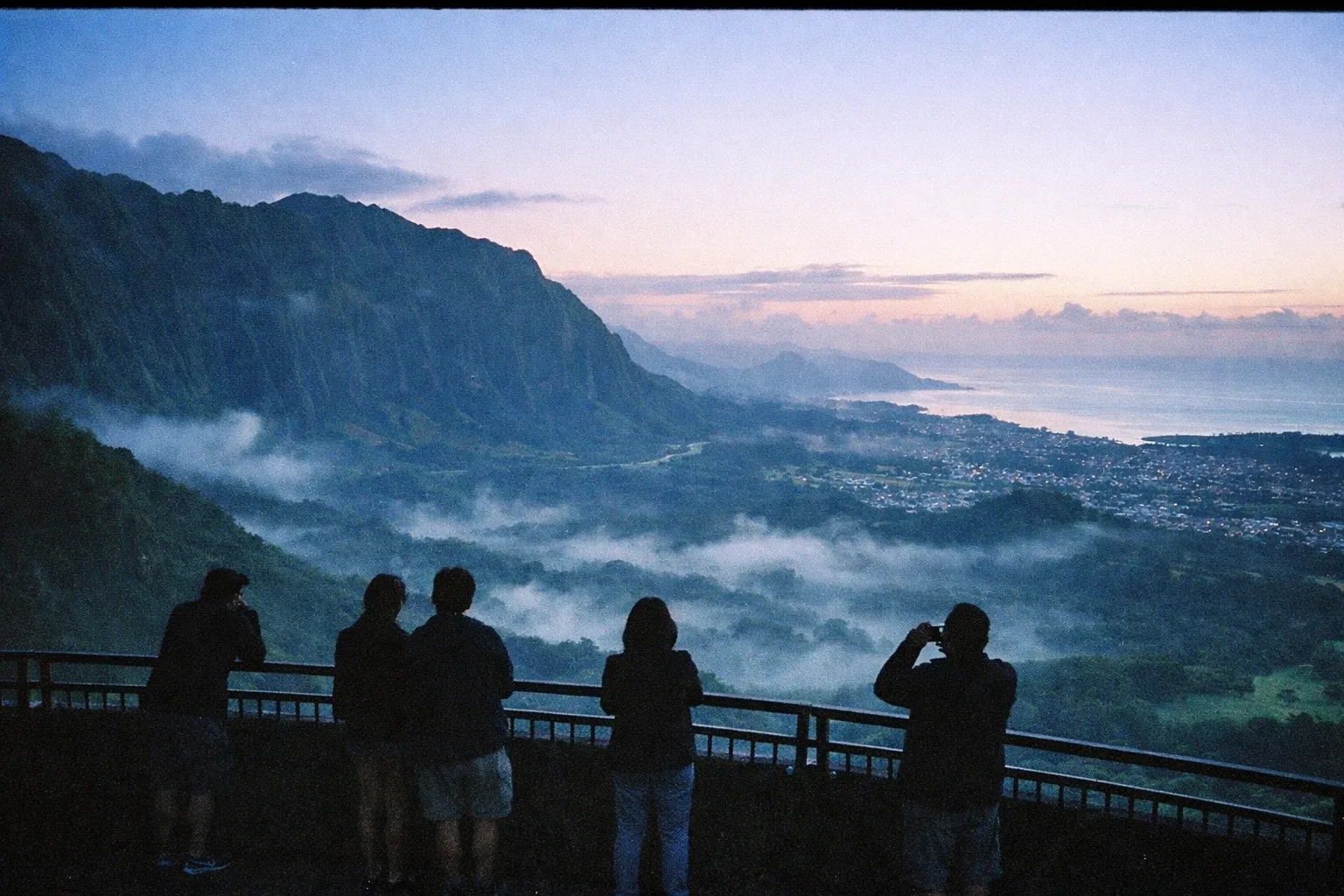
The Windward Coast Circuit (Pali Highway to Kailua to Lanikai)
Take the Pali Highway and stop first at the Nu’uanu Pali Lookout, which sits at about 1,200 feet elevation and is reachable from Honolulu in roughly 20 to 25 minutes by car (per the Hawaiʻi Department of Transportation). It’s a high-elevation overlook and a historic battle site - a 20-minute stop that earns its place. Continue to Ho’omaluhia Botanical Garden, about 400 acres in Kāne’ohe with free admission and the Ko’olau Range rising directly behind it. Finish at Kailua Beach - about 2.5 miles long, with lifeguards and restrooms and calmer water than Waikīkī - and neighboring Lanikai. If you want a workout, the Lanikai Pillbox hike (Kaiwa Ridge) is 1.8 miles round-trip with about 500 feet of gain, 60 to 90 minutes, with a steep start best done at sunrise. Run this circuit on a day you’re not doing Pearl Harbor or Diamond Head.
East Honolulu Coastal Loop (Hanauma Bay to Halona to Makapu’u)
The East Honolulu coastal loop from Waikīkī out to Hanauma Bay, the Halona Blowhole, and the Makapu’u Lighthouse Trail runs roughly 15 to 20 miles one way, with individual stops just 5 to 10 minutes apart - a tight half-day with minimal backtracking. Start with your reserved Hanauma Bay snorkel, hit the Halona Blowhole Lookout for a 15-minute stop, watch (don’t swim, unless you’re experienced) the strong shore break at Sandy Beach, and close with the Makapu’u Lighthouse Trail. If you want a harder morning before the snorkel, add Koko Head.
North Shore (Hale’iwa to Sunset Beach to Laniakea)
The North Shore is about 60 to 75 minutes from Waikīkī via H-2 and Kamehameha Highway. Time it by season: summer for calm snorkeling at Sharks Cove, winter for surf spectating at Banzai Pipeline and Sunset Beach. Laniakea Beach is the turtle-watching spot, with turtles typically hauled out from roughly 10 a.m. to 3 p.m. in peak season - free to watch. Budget 1 to 2 hours for Hale’iwa town: shave ice, shrimp trucks, local shops. Do not try to combine the North Shore with the Windward Coast in a single day unless you have 8-plus hours and are willing to skip most stops.
A Practical Honolulu Itinerary for First-Timers
A tight two-day Honolulu itinerary covers the highlights; three to four days is more realistic if you want Pearl Harbor, Diamond Head, museums, beach time, and an evening show without rushing. Here’s the structure, built around geography and the fixed-hour attractions that anchor each day.
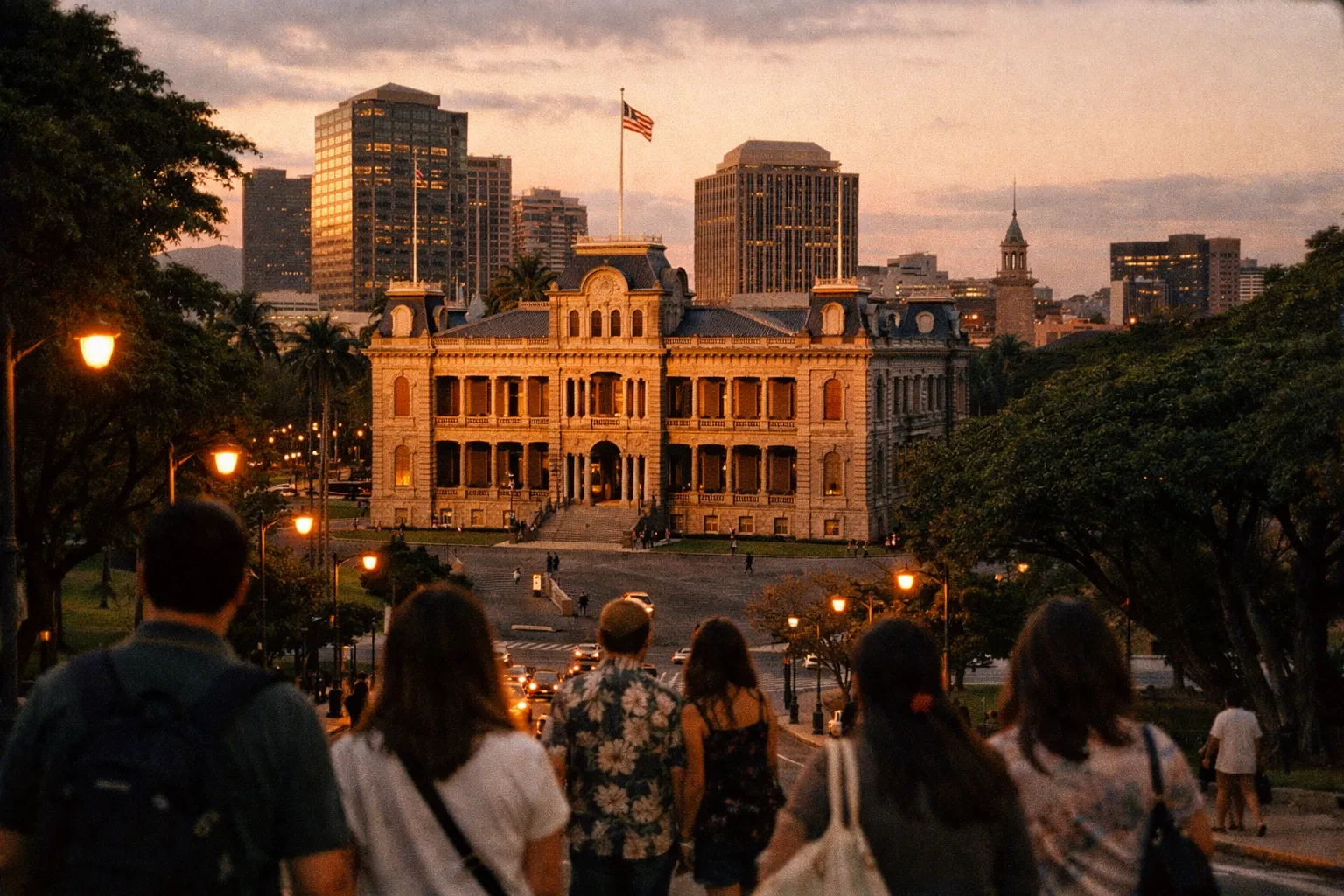
Day 1 - Waikīkī, Diamond Head, and the East Side
- Morning (6:30-9:00 a.m.): Diamond Head, on the earliest reserved slot you can get. Hawaiʻi State Parks recommends starting between 6:00 and 8:00 a.m. to beat heat and congestion; the round trip runs about 1.5 to 2 hours.
- Mid-morning (9:30-11:30 a.m.): Back to Waikīkī for breakfast near Kapi’olani Park.
- Afternoon (noon-4:00 p.m.): Waikīkī Beach. Families can swap in the Honolulu Zoo or Waikīkī Aquarium; shoppers can hit Ala Moana Center.
- Evening (5:00-8:00 p.m.): The free Kūhiō Beach Hula Show (Tuesday, Thursday, Saturday near the Duke Kahanamoku statue - arrive by 6:00 to 6:30 p.m.) or a sunset cruise from Honolulu Harbor, no driving required.
Day 2 - Pearl Harbor and Downtown Honolulu
- Early morning (7:00-7:30 a.m.): Arrive at Pearl Harbor for your timed USS Arizona program. The National Park Service advises a minimum of half a day - 4 to 5 hours - if you’re adding the museums and ships, so treat this as the morning-into-afternoon anchor.
- Afternoon (1:00-5:00 p.m.): Drive to downtown Honolulu for a self-guided walk: ‘Iolani Palace, then the King Kamehameha Statue, Ali’iōlani Hale, and Aloha Tower. ‘Iolani Palace’s last entry is mid-afternoon, so time it accordingly; allow 2 to 3 hours downtown.
- Evening: Chinatown for dinner, or Kaka’ako for local food and murals.
Day 3 (If You Have It) - East Coast Loop or Windward Side
- Option A (nature): Hanauma Bay snorkel (reserved 48 hours ahead) plus Halona Blowhole and the Makapu’u Lighthouse Trail.
- Option B (culture): Bishop Museum in the morning, Honolulu Museum of Art in the afternoon.
- Option C (Windward): Pali Highway to Nu’uanu Pali Lookout to Ho’omaluhia Botanical Garden to Kailua and Lanikai.
Rainy-Day Honolulu - Indoor Options That Hold Up
Bishop Museum, the Honolulu Museum of Art, and ‘Iolani Palace fill a complete indoor day between them. Pearl Harbor’s visitor center and museums are largely covered, so a wet forecast doesn’t kill that plan. Add the Cirque du Soleil ‘Auana evening show, a chocolate farm tour, or a low-effort afternoon at Ala Moana Center.
Honolulu with Kids - Adjusting the Itinerary
Swap Diamond Head for the Makapu’u Lighthouse Trail - paved and stroller-friendly on its lower section. Block the Honolulu Zoo and Waikīkī Aquarium together as a half-day. Choose Ala Moana Beach Park over Waikīkī for calmer water. Glass-bottom boat tours from Waikīkī run about 1.5 hours with no driving, which works for toddlers. The four calm, free-access Ko Olina Lagoons, about 45 minutes west with free parking, are hard to beat for young kids.
Honolulu Hikes Ranked by Difficulty and Time
Honolulu Hikes Comparison
| Manoa Falls | Makapu'u Lighthouse | Diamond Head | Lanikai Pillbox | Koko Head Crater | |
|---|---|---|---|---|---|
| Difficulty | Easy-Moderate | Easy-Moderate | Moderate | Moderate | Advanced |
| Round-Trip Distance | 1.6 mi (2.6 km) | 2 mi (3.2 km) | 1.6 mi (2.6 km) | 1.8 mi (2.9 km) | <1 mi (1.6 km) |
| Elevation Gain | about 800 ft (244 m) | about 500 ft (152 m) | about 560 ft (171 m) | about 500 ft (152 m) | about 990 ft (302 m) |
| Best Start Time | 7-9 a.m. | 7-9 a.m. | 6-8 a.m. | Before 8 a.m. | Before 7 a.m. |
| Key Logistics | Muddy; closed-toe shoes | Paved; whales Jan-Mar | Advance reservation required | Steep start; sunrise best | 1,048 steps; no shade; 2L water |
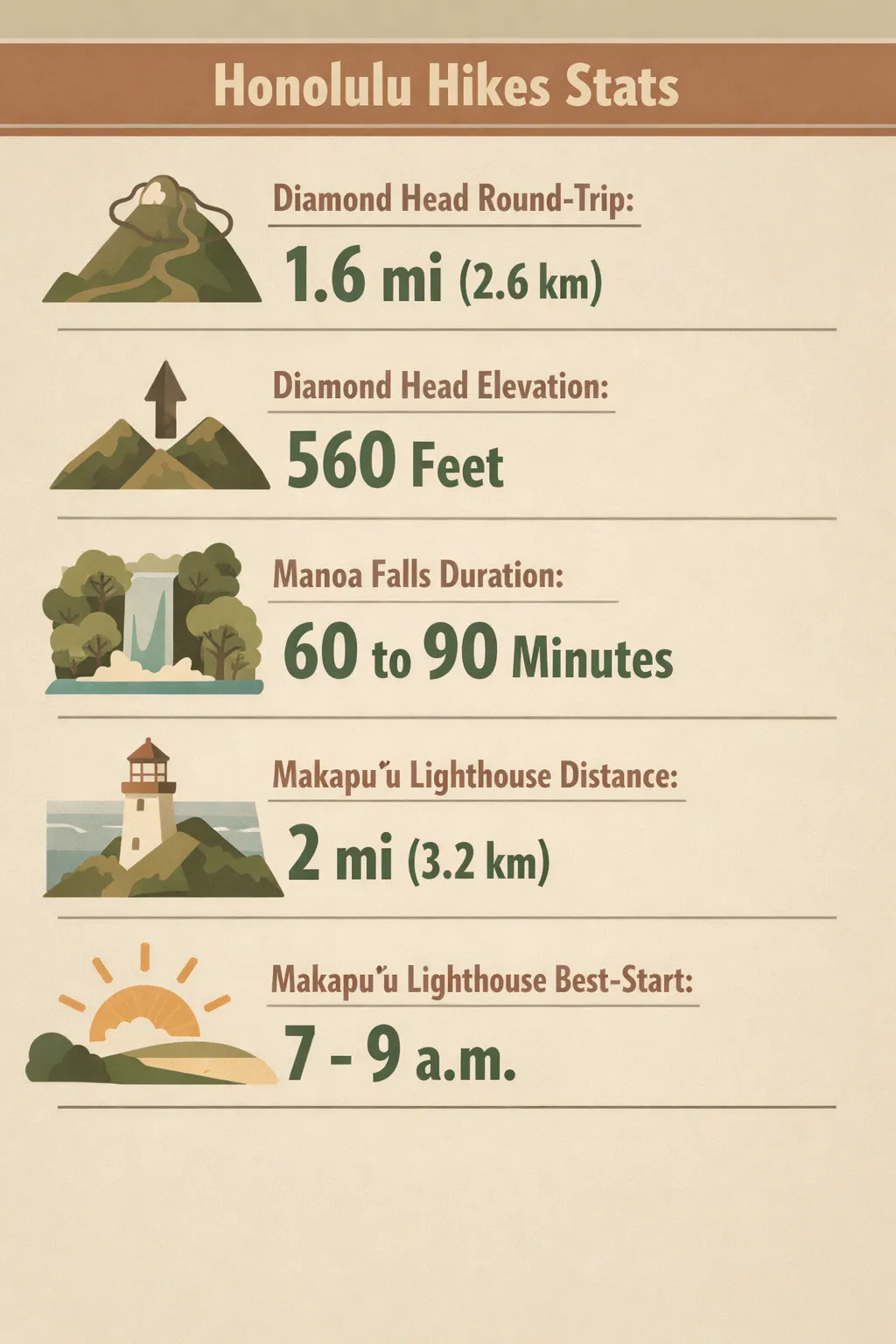 Honolulu hike stats show Diamond Head 1.6 mi round-trip with 560 ft gain; Manoa Falls 60-90 minutes; Makapu’u Lighthouse 2 mi, best-start 7-9 a.m.
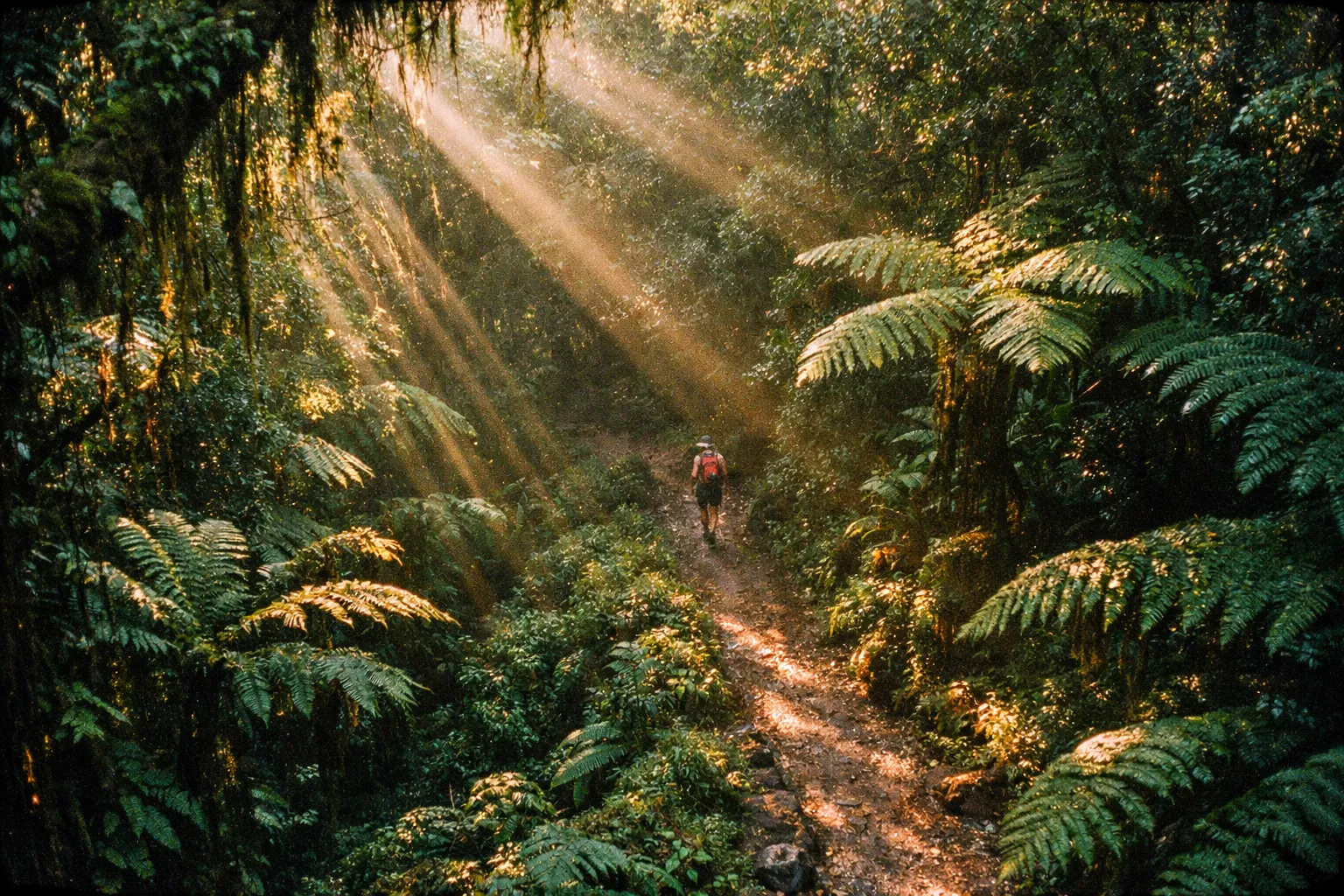
The biggest mistake is treating Koko Head as a quick warm-up. It’s a genuine workout on exposed railway ties, and the City and County of Honolulu explicitly warns that unprepared hikers overestimate their ability - heat-exhaustion responses on the trail aren’t rare. Give it its own morning.
I’ve done the Diamond Head trail at 6:30 a.m. and again closer to 9:00 a.m. - the difference in temperature and crowd density is significant enough that the early slot isn’t just a preference, it’s the right call.
Heat and sun exposure are the main hazard across all five hikes. Midday starts on the exposed trails - Diamond Head, Koko Head, Makapu’u - are uncomfortable at best and dangerous at worst. Carry one to two liters of water per person, wear reef-safe sunscreen, and use closed-toe shoes on any crater trail.
What Not to Miss - and What First-Timers Get Wrong
The things that look optional but aren’t: ‘Iolani Palace, Pearl Harbor’s indoor museums, and at least one evening in Kaka’ako or Chinatown. ‘Iolani Palace is the only royal palace on American soil and the strongest cultural stop in the city - most itineraries skip it and shouldn’t. At Pearl Harbor, the free USS Arizona boat ride gets the attention, but the depth is in the museums beside it, which is exactly why the NPS recommends half a day. The city also has a real local food scene beyond the resort strip; one evening in Kaka’ako or Chinatown shows you a Honolulu the hotels don’t.
Now the mistakes that cost you half a day:
- Showing up at Diamond Head without a reservation. Non-residents are turned away. Book before you fly.
- Planning 2 to 3 hours at Pearl Harbor. The full complex needs 4 to 6. Anything less is a rush.
- Chaining Diamond Head, Hanauma Bay, the Windward Coast, and the North Shore in one day. The Hawaiʻi Tourism Authority notes this easily involves 4-plus hours of driving and leaves little time anywhere. You’ll see everything and experience nothing.
- Treating Koko Head as an easy hike. It’s advanced. Unprepared visitors struggle badly.
- Ignoring Waikīkī parking and traffic. Missed tour departures and wasted afternoons follow.
One dry aside: the beach will still be there in the afternoon. Do the hike first.
Honolulu on a Budget - Free and Low-Cost Activities
Is $1,000 enough for a week in Hawaii? Tight but possible - if flights are already covered and you share lodging. Daily costs vary widely depending on lodging type, how often you eat off the resort strip, and how many paid attractions you stack. Admission prices at major attractions shift regularly, so verify current rates directly with each venue before budgeting. Lean on free activities - beaches, hikes, the hula show - and keep paid tours to one or two, and a week is manageable on a lean budget. Add a premium experience like a sunset cruise and the math gets tighter fast; stack a helicopter tour and a shark dive on top of that and you’re looking at a meaningfully higher total. If you’re comparing best places to visit in Hawaii across islands, Honolulu’s free-to-low-cost attraction density is genuinely hard to beat.
The good news: Honolulu’s core attractions are cheap or free. The expensive parts are lodging, food, and premium tours - not the sights themselves. If you’re budgeting the wider trip, our guide to exploring Hawaii on a budget breaks down lodging, food, and tour costs island by island.
Free or near-free:
- All the beaches - Waikīkī, Ala Moana Beach Park, Kailua, Lanikai. Free except parking.
- Kūhiō Beach Hula Show - free, three evenings a week.
- Pearl Harbor National Memorial grounds and visitor center - free, per the NPS, with only the $1 non-refundable Arizona reservation fee.
- Manoa Falls and Makapu’u Lighthouse Trail - free hikes.
- Chinatown murals and the self-guided downtown walk - free.
- Kapi’olani Park - free.
- Pu’u ‘Ualaka’a State Wayside (Tantalus / Round Top) - about $7 per vehicle for non-residents, roughly 15 minutes from Waikīkī, with a 180-degree view from Diamond Head to Pearl Harbor. An underrated sunset stop.
Paid but moderate: Honolulu Zoo, Waikīkī Aquarium, Hanauma Bay (check current fees at the City and County of Honolulu’s reservation site), and Diamond Head’s non-resident entry and parking fees. The budget move is to build days around free mornings - a hike or the beach - and save the paid attractions for when you want a change of pace.
2026 Planning Essentials - Reservations, Hours, and What’s Changed
Three attractions require advance booking, and the windows are strict. Get all three locked before you board your flight.
Diamond Head: Advance reservations are mandatory for non-residents, covering both entry and parking. Time slots release up to 30 days ahead, and morning windows (6:00 to 8:00 a.m.) book out first. Reserve one to two weeks ahead at minimum.
Hanauma Bay: Reservations open exactly 48 hours before your visit date at 7:00 a.m. HST, with daily capacity capped at roughly 1,000 to 1,200 visitors. Dates sell out within minutes. Set a calendar reminder and log in the moment the window opens, payment ready.
Pearl Harbor USS Arizona Memorial: Free timed-entry reservations run through Recreation.gov and open up to eight weeks in advance, with a $1 non-refundable fee per ticket. During summer and major holidays, same-day walk-up availability is effectively nonexistent. The visitor center runs 7:00 a.m. to 5:00 p.m., closed three days a year, and bags larger than a small clutch are barred from the secure area.
New and date-specific for 2026: Cirque du Soleil’s ‘Auana is a new resident evening show. The Pan-Pacific Festival runs in Waikīkī in June, with parade and block-party closures along Kalākaua Avenue. The Made in Hawaiʻi Festival is set for August 20-23, 2026, at the Hawaiʻi Convention Center (3). The Honolulu Marathon lands on Sunday, December 13, 2026, bringing road closures and packed hotels to Waikīkī that weekend. The broader trend: state and city agencies have been tightening capacity controls at high-demand sites, and that direction is continuing - expect more reservation requirements over time, not fewer. Timing the trip itself matters as much as booking windows - our best time to visit Hawaii guide breaks down weather, crowds, and prices by season.
How to Book Honolulu's Reservation-Required Attractions
15 minutesStep-by-step booking for Diamond Head, Hanauma Bay, and Pearl Harbor reservations
- 1
Diamond Head
Go to the Hawaiʻi DLNR reservation portal and book your time slot at least one to two weeks ahead. Morning slots (6-8 a.m.) go first.
- 2
Hanauma Bay
Set a calendar reminder for exactly 48 hours before your planned visit date. Log in at 7:00 a.m. HST on the dot, payment ready.
- 3
Pearl Harbor USS Arizona Memorial
Go to Recreation.gov, search 'USS Arizona Memorial,' select your date and time, and pay the $1 non-refundable fee.
- 4
Confirm Reservations
Make sure all three reservations are confirmed before you board your flight to Honolulu.
Frequently Asked Questions
Frequently Asked Questions
- What are the top 10 things to do in Honolulu?
- Waikīkī Beach, Diamond Head hike, Pearl Harbor National Memorial, Hanauma Bay snorkeling, 'Iolani Palace, Bishop Museum, Honolulu Museum of Art, Ala Moana Beach Park, Manoa Falls Trail, and an evening luau or sunset cruise.
- Do I need a rental car in Honolulu?
- Not every day. Waikīkī is walkable and TheBus covers the island at a low flat fare - check current rates at thebus.org. Rent a car only for days leaving Waikīkī like Hanauma Bay or the North Shore.
- When is the best time to visit Honolulu?
- April to early June and September to mid-October offer lower crowds and prices. Summer is peak season with calm snorkeling; winter brings whale-watching and big surf.
- How many days do you need in Honolulu?
- Two days covers highlights efficiently; three to four days is more realistic for museums, Hanauma Bay, Windward drives, and evening shows.
- How far in advance should I book Diamond Head and Hanauma Bay?
- Diamond Head slots release up to 30 days ahead; book 1-2 weeks early. Hanauma Bay opens reservations exactly 48 hours before visit at 7 a.m. HST and sells out fast.
- Is Hanauma Bay worth it with the reservation hassle?
- Yes, it's Oʻahu's best accessible reef with clear water and abundant fish. If you can't book, Sharks Cove on the North Shore is a free summer alternative.
- Can I see Pearl Harbor without a reservation?
- You can visit the free visitor center and grounds without booking, but the USS Arizona boat program requires a timed reservation, especially in summer.
- Are there free things to do in Honolulu?
- Yes. Beaches, Kūhiō Beach Hula Show, Pearl Harbor grounds, Manoa Falls, Makapu'u Trail, Chinatown murals, and Kapi'olani Park are free or nearly free.
Before You Book Anything Else
Honolulu rewards visitors who plan ahead and structure their days by geography: Pearl Harbor and downtown on one day, the East Honolulu coast on another, the Windward side on a third. Don’t scatter. The two things that matter most before you land are the Diamond Head reservation and the Pearl Harbor USS Arizona timed entry - get those locked first, then build everything else around them. If Oʻahu is just one stop on a longer trip, the broader guide to things to do in Hawaii covers how the islands stack up against each other for different travel styles. What ultimately decides the quality of the trip isn’t which beach you pick or which luau you attend. It’s whether you’ve left enough time at each place to actually be there.