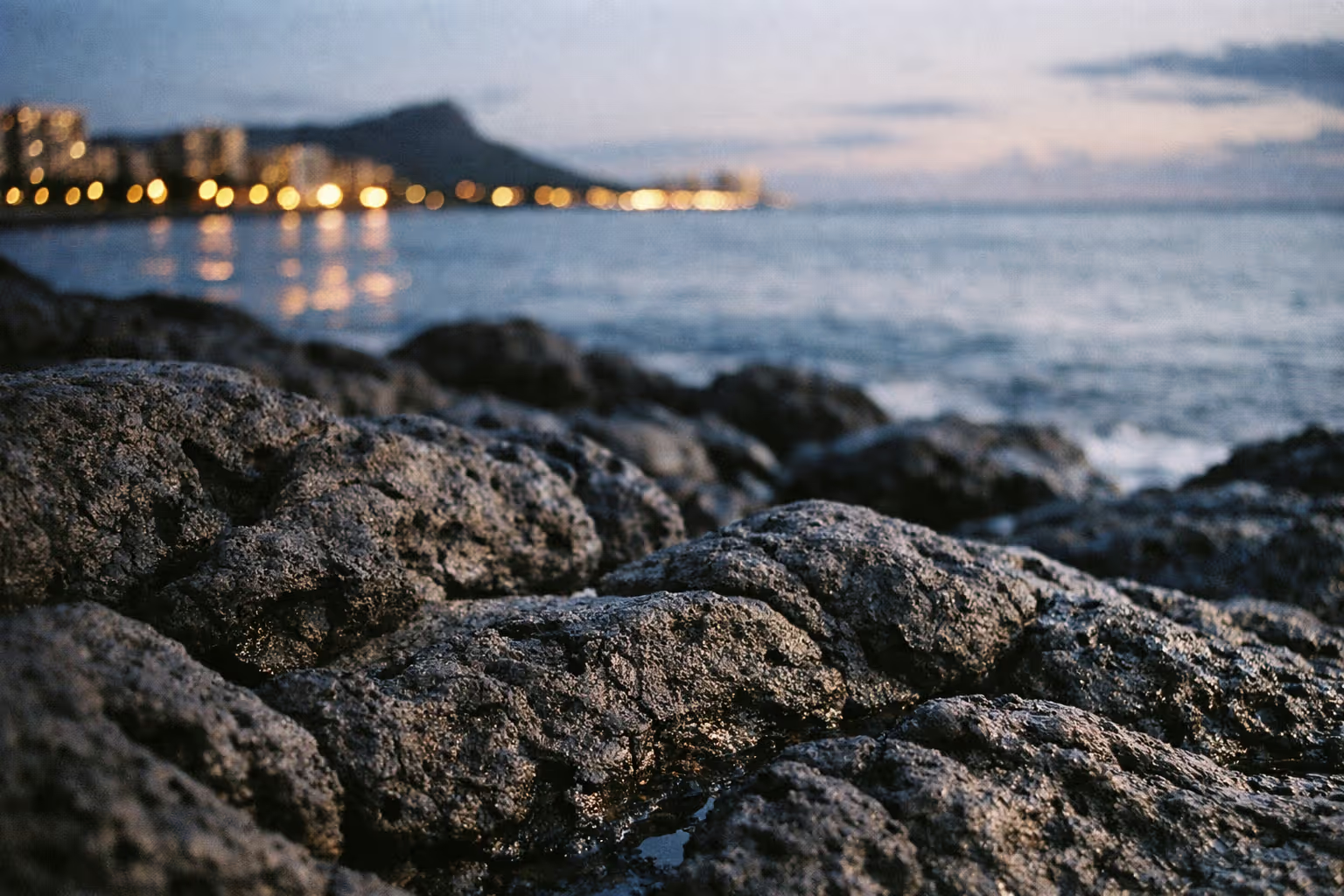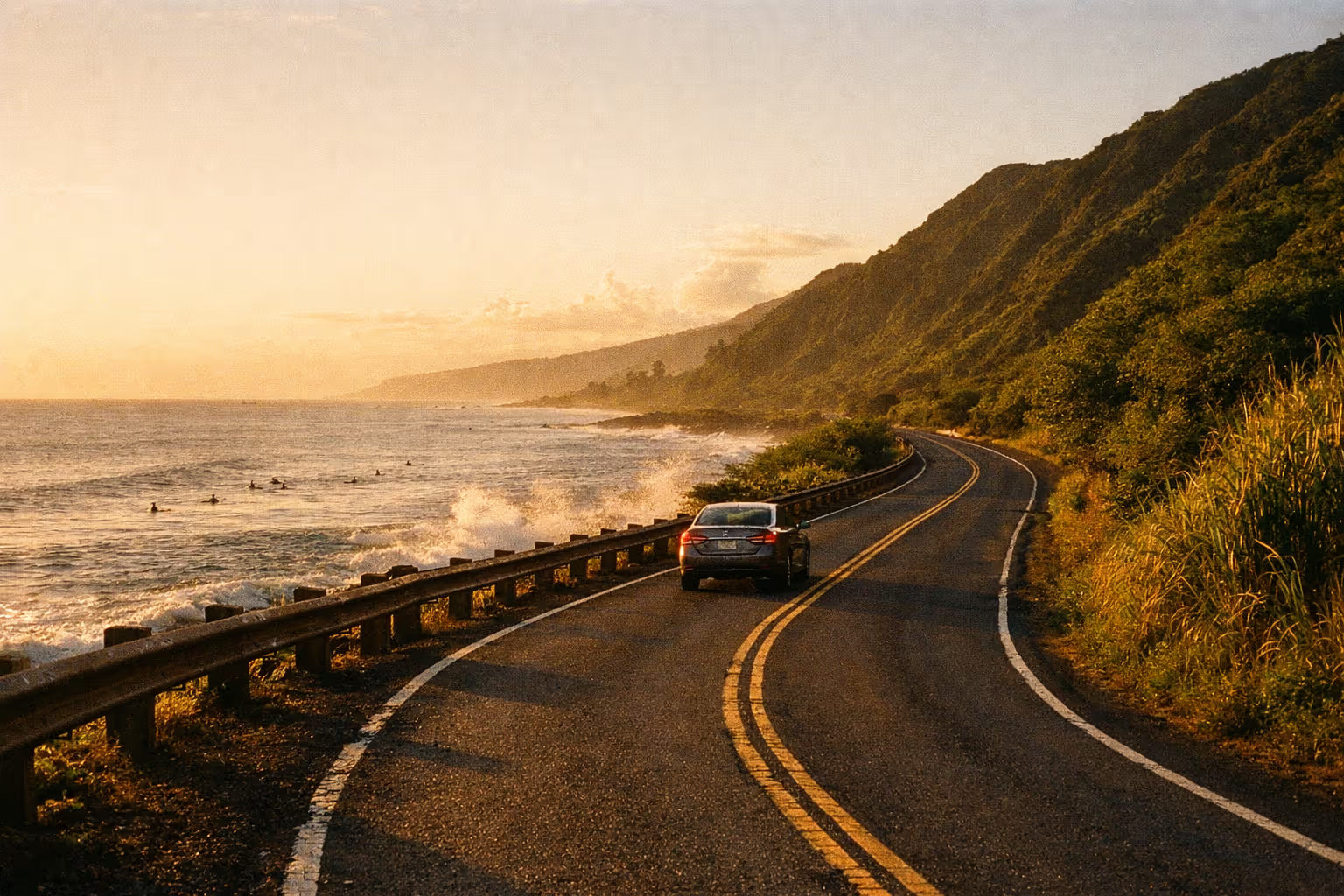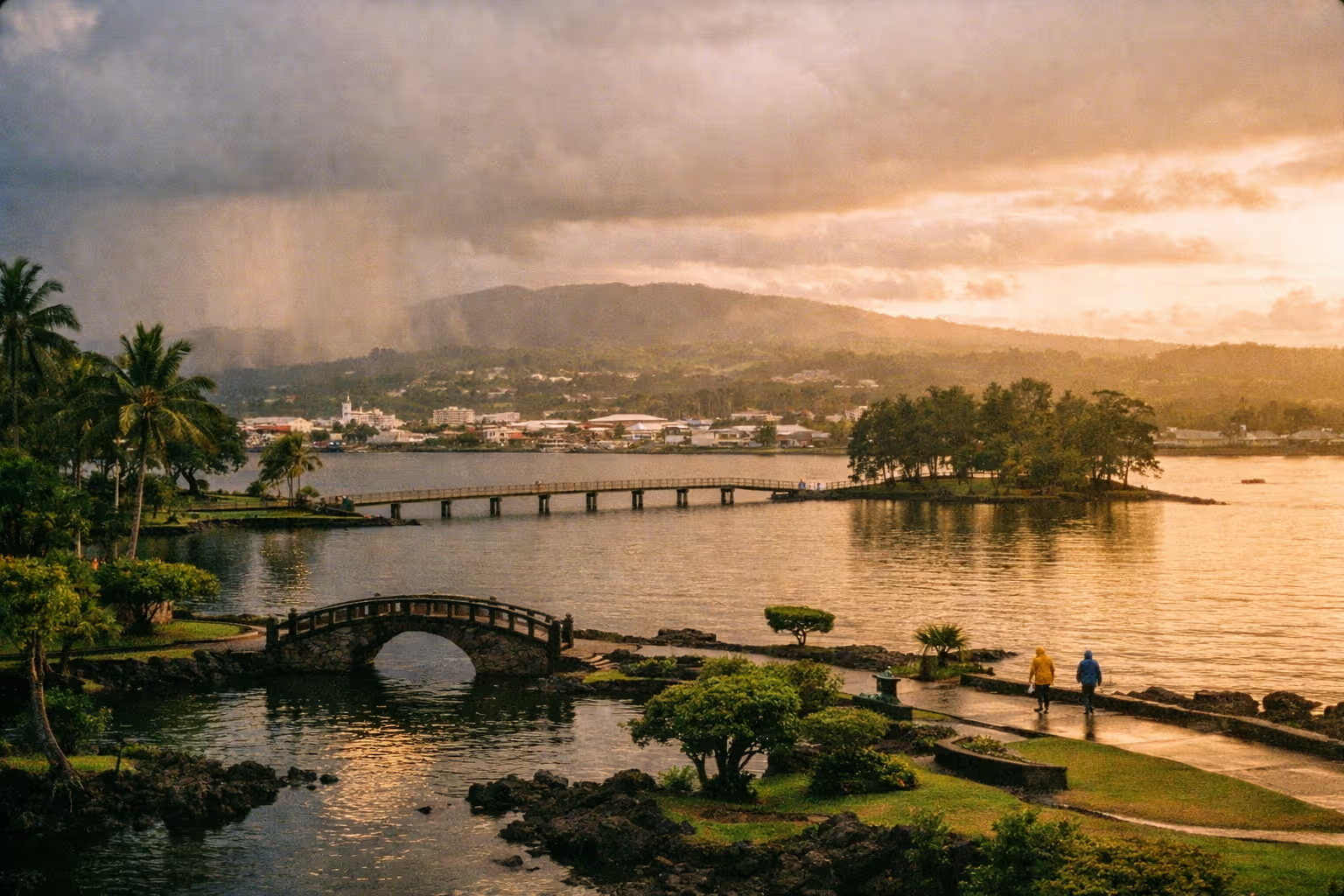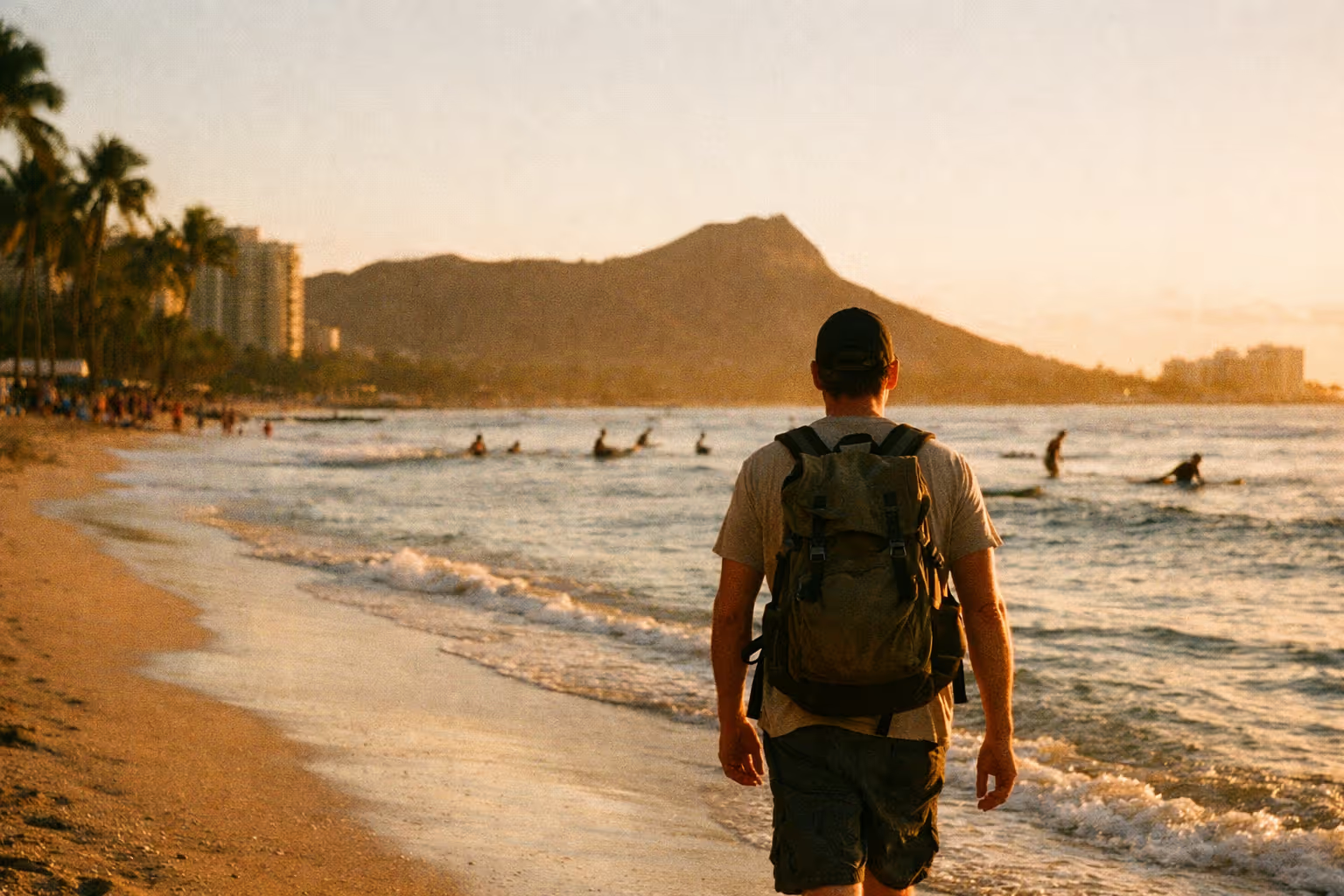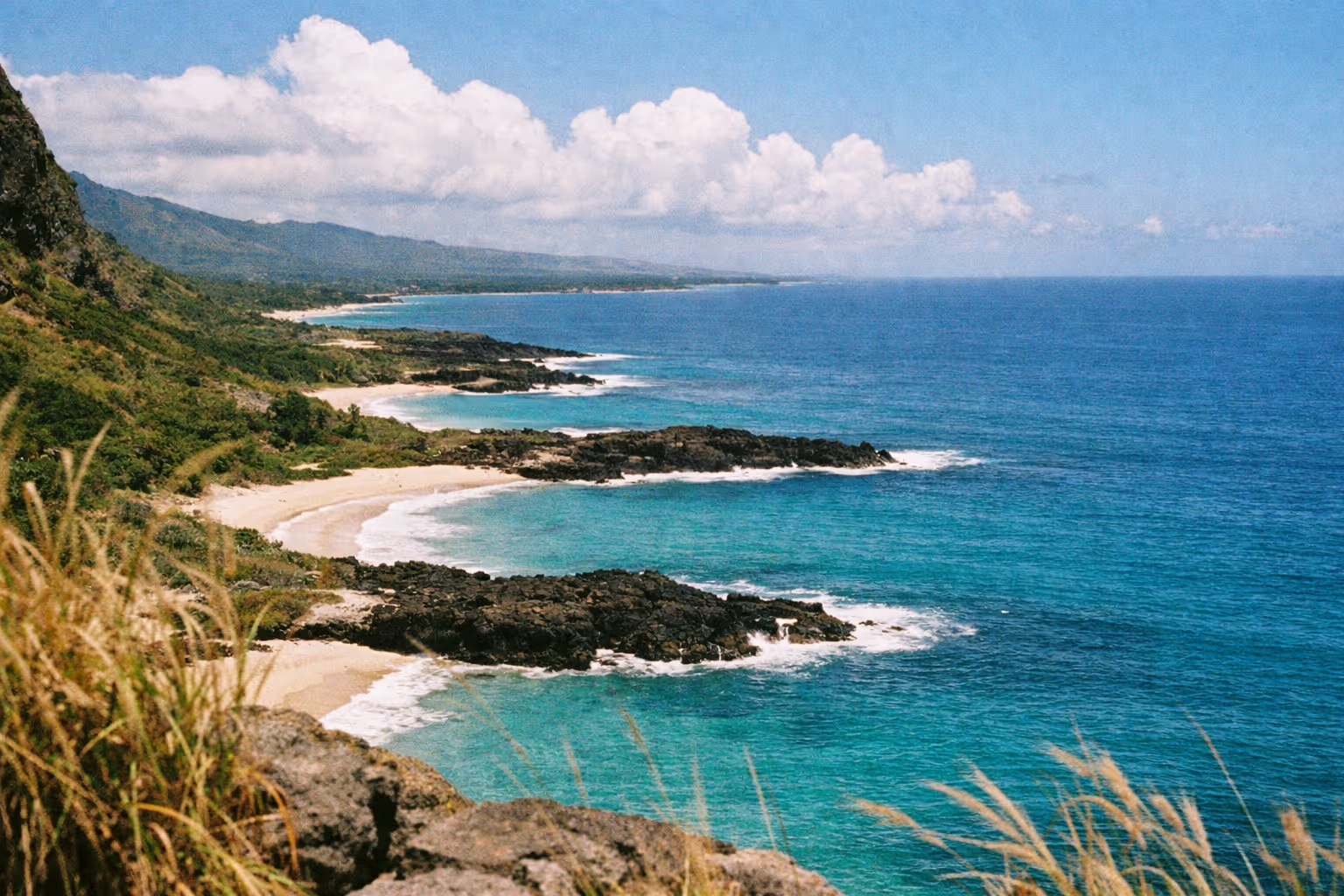
Hawaii has more than 300 swimmable beaches spread across eight main islands, and the best beaches in Hawaii are not the ones with the most Instagram tags. They’re the ones that match your swimming ability, your tolerance for crowds, and your willingness to deal with a reservation window or a residential parking hassle. This guide organizes them island by island, pairing scenic rankings with 2026 water-quality data so you can tell a genuinely clean, safe beach from one that just photographs well. I’ve tested most of these on foot - showed up at Lanikai before sunrise to beat the parking enforcement, got turned away from a Hanauma Bay walk-in attempt before the reservation system existed, and drove the Hāna Highway both ways in a single day so you don’t have to wonder whether it’s doable (it is, barely, and only if you start early). You’re not visiting “Hawaii.” You’re visiting one or two specific islands, and the structure below is built to match a real trip.
✓ Pros
- Water quality among the best in the U.S. at top-ranked spots (multiple Low 1/5 bacteria risk beaches)
- Year-round warm water; south-shore beaches stay swimmable even in winter
- Variety across islands: white sand, black sand, green sand, snorkeling coves, surf breaks
- Strong lifeguard presence at key family beaches (Po'ipū, Hapuna)
✗ Cons
- High-demand beaches (Hanauma Bay) require advance reservations; walk-ins turned away
- Some top-ranked beaches have zero facilities (Lanikai: no restrooms, no parking lots)
- Crowding has increased post-2023; marquee beaches can feel busy by mid-morning
- Remote beaches (Wai'anapanapa) require long drives - the Hāna Highway is not a quick detour
How to Use This Guide (Island Structure and What the Rankings Mean)
Pick one or two islands and go deep. Hawaii spreads its beaches across multiple islands, and Beachapedia’s “State of the Beach” report counts 141 public beach parks and 184.9 miles of sandy shoreline across six islands alone - which is why a focused, island-by-island approach beats a generic “top 20” list every time.
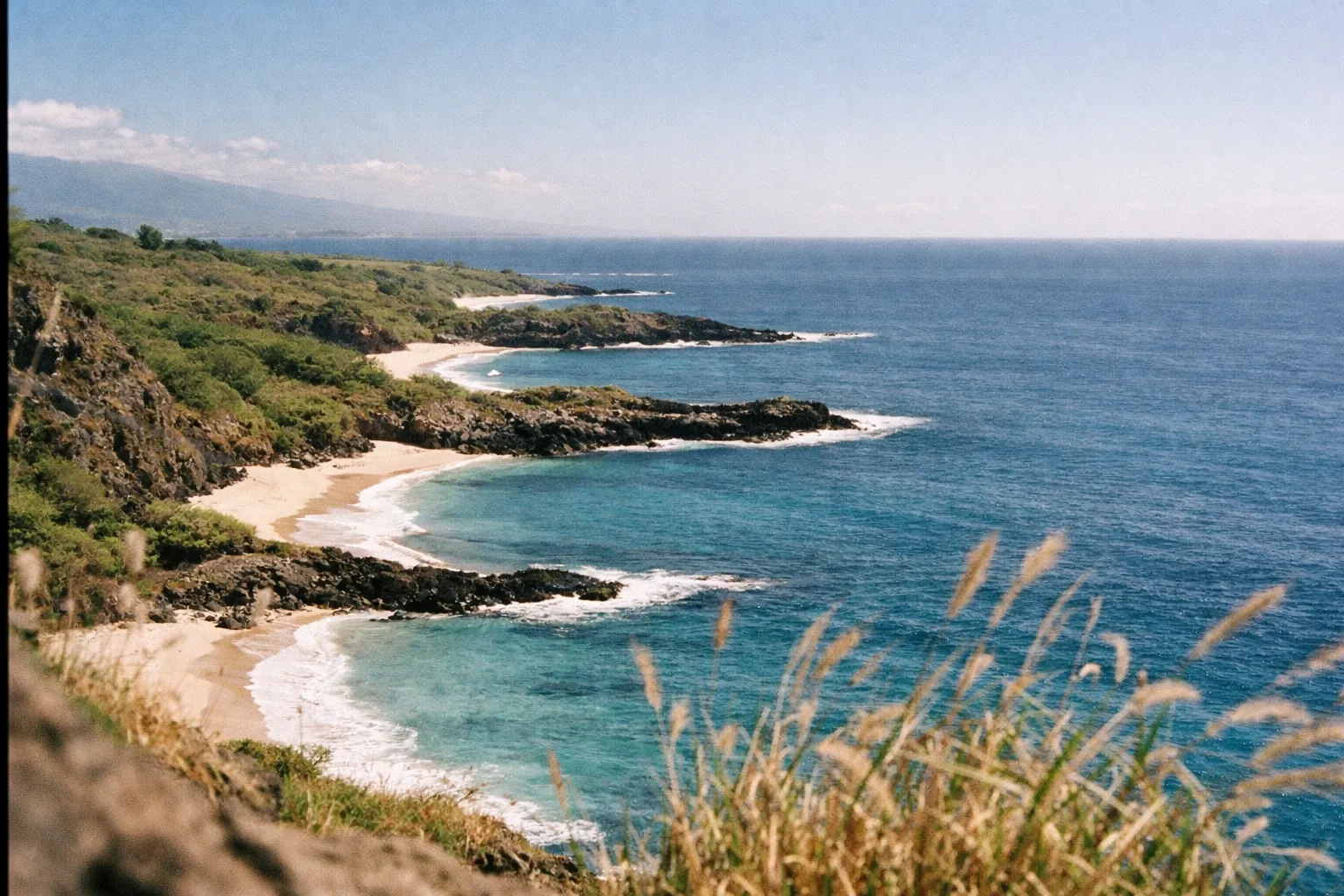
Two ranking lenses run through this guide. The first is scenic and traveler consensus - Dr. Beach, TripAdvisor’s Travelers’ Choice, and editorial rankings. The second is water-quality data: 2026 bacteria-risk scores running from 1/5 (Excellent) to 5/5 (High) (2). According to SafeToSwimHawaii, the Department of Health regularly tests only about 57 beaches statewide out of more than 300 swimmable shores, so the beaches flagged here with 1/5 or 2/5 scores are among the subset with ongoing lab data - not just scenic reputations.
Post-2023 crowding has made access logistics as important as the beach itself. A reservation window, a parking situation, or a two-hour drive can make or break the day. Islands are covered in this order: Oʻahu, Maui, Kauaʻi, then the Island of Hawaiʻi (Big Island). Molokā’i and Lānaʻi have standout beaches - Pāpōhaku and Hulopoe Bay respectively - but they’re specialist trips requiring a ferry or commuter flight, so they’re noted here rather than expanded.
Best Beaches in Hawaii for Every Type of Traveler (Quick Comparison)
Before the island deep-dives, here’s the fast answer for readers who want to match a beach to their situation. The nine beaches below span four islands, scored on water quality (2026 bacteria risk), lifeguard presence, facilities, and crowding. Water-quality scores come from 2026 rankings (3); crowding levels are editorial assessments based on visitor patterns.
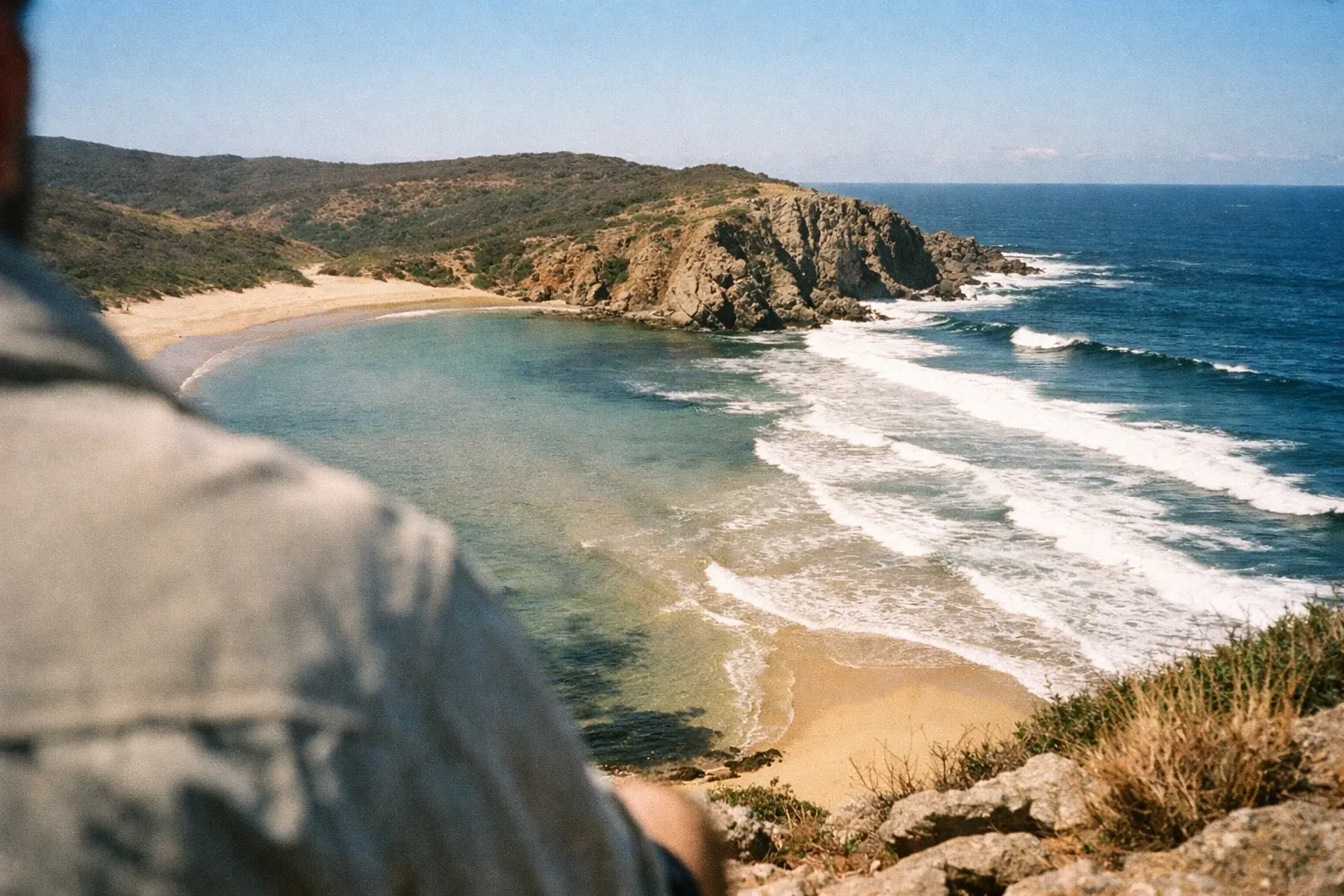
Read it this way: if you have kids or you’re a nervous swimmer, prioritize the lifeguarded, full-facility rows. If you want clear water and don’t mind arriving at dawn, the 1/5 beaches with minimal facilities reward the effort.
Hawaii Beach Comparison by Island
| Lanikai Beach | Hanauma Bay | Kapalua Bay | Ka'anapali Beach | Wailea Beach | Po'ipū Beach | Hanalei Bay | Hapuna Beach | Kua Bay | |
|---|---|---|---|---|---|---|---|---|---|
| Island | Oʻahu | Oʻahu | Maui | Maui | Maui | Kauaʻi | Kauaʻi | Big Island | Big Island |
| Water Quality | Excellent (1/5) | Very Good (2/5) | Excellent (1/5) | Good | Excellent (1/5) | Excellent (1/5) | Good | Excellent (1/5) | Excellent (1/5) |
| Lifeguard Present | ✗ | ✓ | ✗ | ✓ | ✓ | ✓ | Seasonal | ✓ | ✗ |
| Facilities | None | Full | Limited | Full (resort) | Full (resort) | Full | Limited | Full (state park) | Minimal |
| Best For | Photography, swimming, kayaking | Snorkeling | Snorkeling, families | Resort beach, families | Couples, families | Families, beginners | Scenery, summer swimming | Families, all levels | Experienced swimmers, scenery |
| Crowding Level | Moderate (early a.m. best) | High (reservation required) | Moderate | High | Moderate | Moderate | Low-Moderate | Moderate | Low-Moderate |
TripAdvisor’s Travelers’ Choice awards ranked Lanikai Beach as the #1 U.S. beach, with Ka’anapali at #2 and Hanalei nearby at #4 - a useful cross-check against the water-quality view, which tells a slightly different story.
Best Beaches on Oʻahu - From Waikīkī to the Windward Coast
Oʻahu is the most-visited island, and its beaches span the full range from urban to remote-feeling. Waikīkī is a walkable city beach. Lanikai on the Windward coast feels like another world, despite being a 30 to 40-minute drive from central Honolulu. That drive is worth it. The best beaches on Oahu reward visitors willing to leave Waikīkī for the day. The same Windward stretch also holds Sea Life Park, which is where that side of the island goes on a rain day.
Hanauma Bay Nature Preserve is the snorkeling standout and one of the main reasons people fly to Oʻahu specifically. TripAdvisor ranked it among the top U.S. beaches, and its 2026 bacteria risk is 2/5 (Very Good) - impressive given the visitor volume (4). It’s a managed preserve with a mandatory marine-education video before entry, and you should plan 4 to 6 hours for the full visit including check-in and snorkeling (5). Book the earliest slot for the clearest water, use reef-safe sunscreen only, and never stand on the coral.
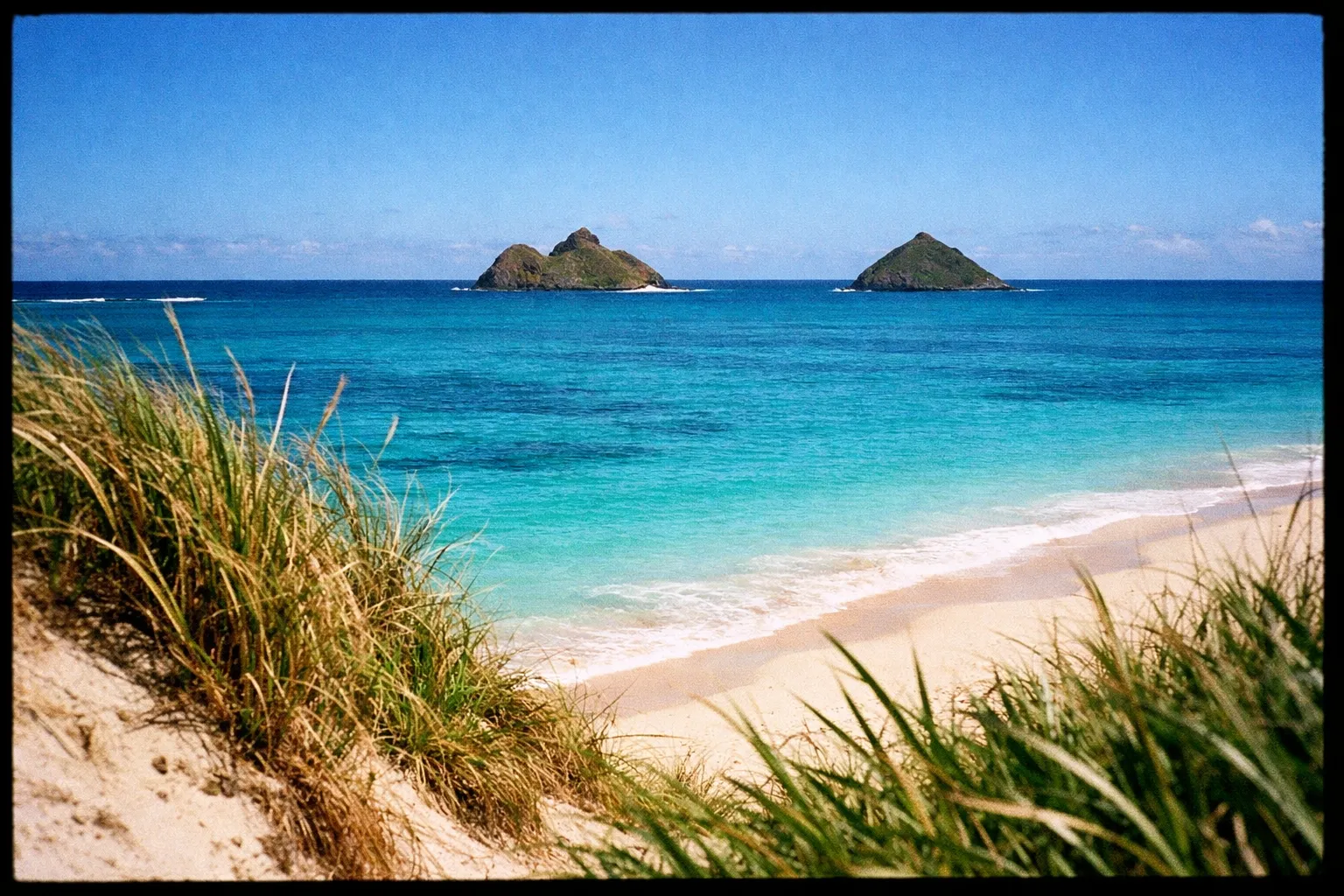
Lanikai beach is the water-quality winner on the island - 1/5 (Excellent), among the cleanest in the state thanks to strong tidal flushing and limited runoff (6). It’s also the beach most guides get wrong. There are no restrooms, no showers, and no parking lots. You park on the street in a residential neighborhood where enforcement is active. Go at sunrise for both parking and the calmest water; the two Mokulua islands sitting offshore make it worth the early alarm.
Waikīkī Beach is the convenient choice - crowded, but with lifeguards, abundant facilities, and easy surf lessons. It’s the right call for first-timers and for anyone basing in Honolulu without a car. Waimānalo Beach is the lower-profile alternative on the Windward side, with strong water quality and fewer crowds than Lanikai - a better family pick if you want room to spread out.
One safety note: Waimea Bay on the North Shore is a serious winter surf break and swimmable in summer, but the currents from November through February are no place for weak swimmers. Check conditions before you get in.
Hanauma Bay - Reservations, Rules, and How to Make the Most of It
How to Book Hanauma Bay
4 to 6 hoursStep-by-step guide to secure your reservation and prepare for your visit
- 1
Visit the official reservation site
Go to the official Hawaii DLNR Hanauma Bay reservation site, avoiding third-party resellers.
- 2
Book exactly 2 days in advance
Reservations open at 7:00 a.m. Hawaii Standard Time two days before your desired date; be online right at 7:00 a.m.
- 3
Choose the earliest available slot
Early slots offer the clearest water and fewer crowds before sand gets stirred.
- 4
Prepare payment
Have payment ready for the per-person entry fee and separate parking fee.
- 5
Watch the mandatory marine-education video
On-site, you must watch the marine-education video before entering the water; this is non-negotiable.
- 6
Arrive early
Get there 10 to 15 minutes before your slot; late arrivals risk losing their reservation.
Lanikai Beach - What No One Tells You About Parking and Facilities
The Lanikai checklist is short but non-negotiable. Arrive before 7 a.m. for a shot at street parking. Bring everything: at least 2 liters of water per person, reef-safe sunscreen, a hat, portable shade, and snacks. Use the restrooms in Kailua town before you drive over, because there are none on-site. Pack out all your trash.
You’re also parking in someone’s neighborhood. Keep the noise down, don’t block driveways, and treat the residential streets accordingly. Enforcement here is active, and fines are real.
Best Beaches on Maui - Resort Shores, Snorkeling Coves, and One Black Sand Road Trip
Maui’s beaches split into three categories: west-shore resort strips (Ka’anapali, Kapalua), quieter south-shore coves (Wailea, Mākena), and the black-sand outlier at Wai’anapanapa that requires a full-day commitment. The best beaches on Maui cover more variety than any other single island, which is a big part of why first-timers gravitate here.
Ka’anapali Beach is the flagship - a long walking beach fronted by resorts, ranked #2 among U.S. beaches in TripAdvisor’s list and #4 worldwide in a 2024 Forbes summary of the Travelers’ Choice awards. It’s good for families who want amenities within reach. Post-wildfire, West Maui beaches including Ka’anapali are accessible and operating as of the 2025-26 season.
Kapalua Bay is the water-quality and snorkeling standout: 1/5 (Excellent) bacteria risk and a protected cove with calm water. Dr. Beach has ranked it as high as #2 in the USA. The sheltered crescent shape makes it one of the best choices in the state for families and non-strong swimmers.
Wailea Beach scores 1/5 (Excellent) as well, with calm south-shore water and public access despite the resort frontage. It’s quieter than Ka’anapali and works well for couples and families alike. Mākena Beach (Big Beach) is the dramatic counterpoint - a striking setting with a strong shorebreak that experienced swimmers love and casual swimmers should respect. The shorebreak here injures people every year. It is not a wading beach.
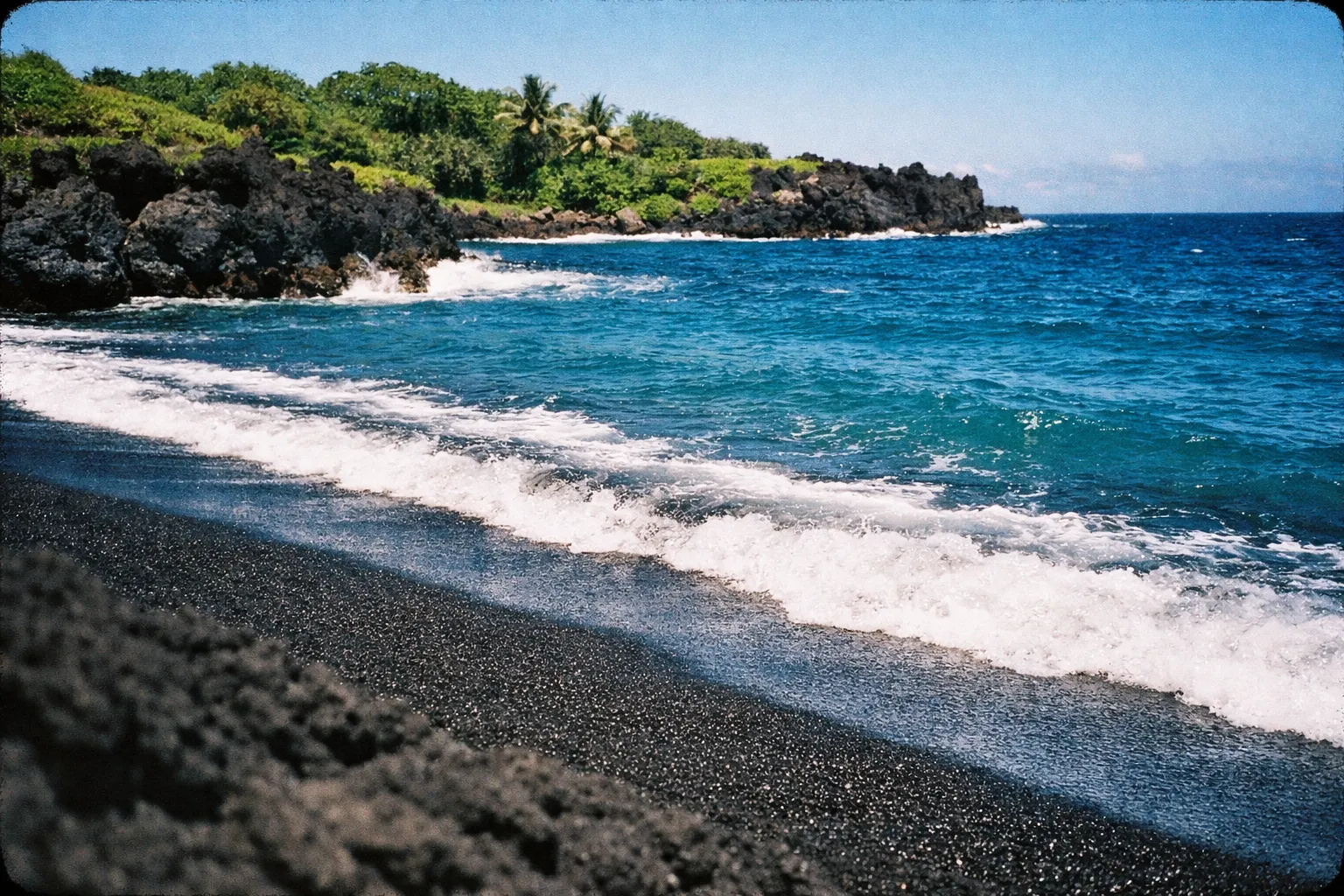
Wai’anapanapa State Park is the black-sand beach that anchors so many Maui itineraries. It requires a timed-entry reservation to access, and it sits near Hāna - roughly 2 to 3 hours of driving each way from West Maui along the Hāna Highway. Plan a full day minimum, and never drive the Hāna Highway after dark.
For a quieter alternative to Kapalua with similar calm-water character, Napili Bay is the local move - same sheltered feel, slightly less traffic.
Kapalua Bay vs. Wailea Beach - Which Maui Cove Suits You
Both Kapalua Bay and Wailea Beach score 1/5 on bacteria risk, so water quality is a wash. The decision comes down to what’s near your lodging and what you want from the day.
Kapalua is snorkeling-first: more sheltered, better reef life, and slightly more remote on the west shore. Wailea is the easier logistical pick on the south shore, with resort amenities nearby and simpler parking. If you’re staying in West Maui, Kapalua wins by proximity. If you’re in Wailea or Kihei, there’s no reason to drive across the island for equally clean water.
Wai’anapanapa - Planning the Hāna Highway Beach Day
Wai’anapanapa is a full-day excursion, not a detour. The state park requires a reservation to enter, so book that in advance. Start the drive by 7 a.m. from West Maui to give yourself daylight on both ends, because the 2 to 3-hour drive each way is on a narrow, winding road you don’t want to tackle after dark.
To make the drive worthwhile, string together the classic Hāna Highway stops - waterfalls, roadside fruit stands, and short trails - rather than treating the black sand beach as the sole objective. The drive is the experience as much as the destination.
Best Beaches on Kauaʻi - North Shore Drama and South Shore Reliability
Kauaʻi’s beaches split sharply by coast. The north shore (Hanalei, Ke’e) is scenic and dramatic but can turn rough in winter. The south shore (Po’ipū, Anini) is drier, calmer, and far more consistent year-round. Kauaʻi also has one main road, so traffic and access logistics matter more here than on other islands - plan your drives accordingly.
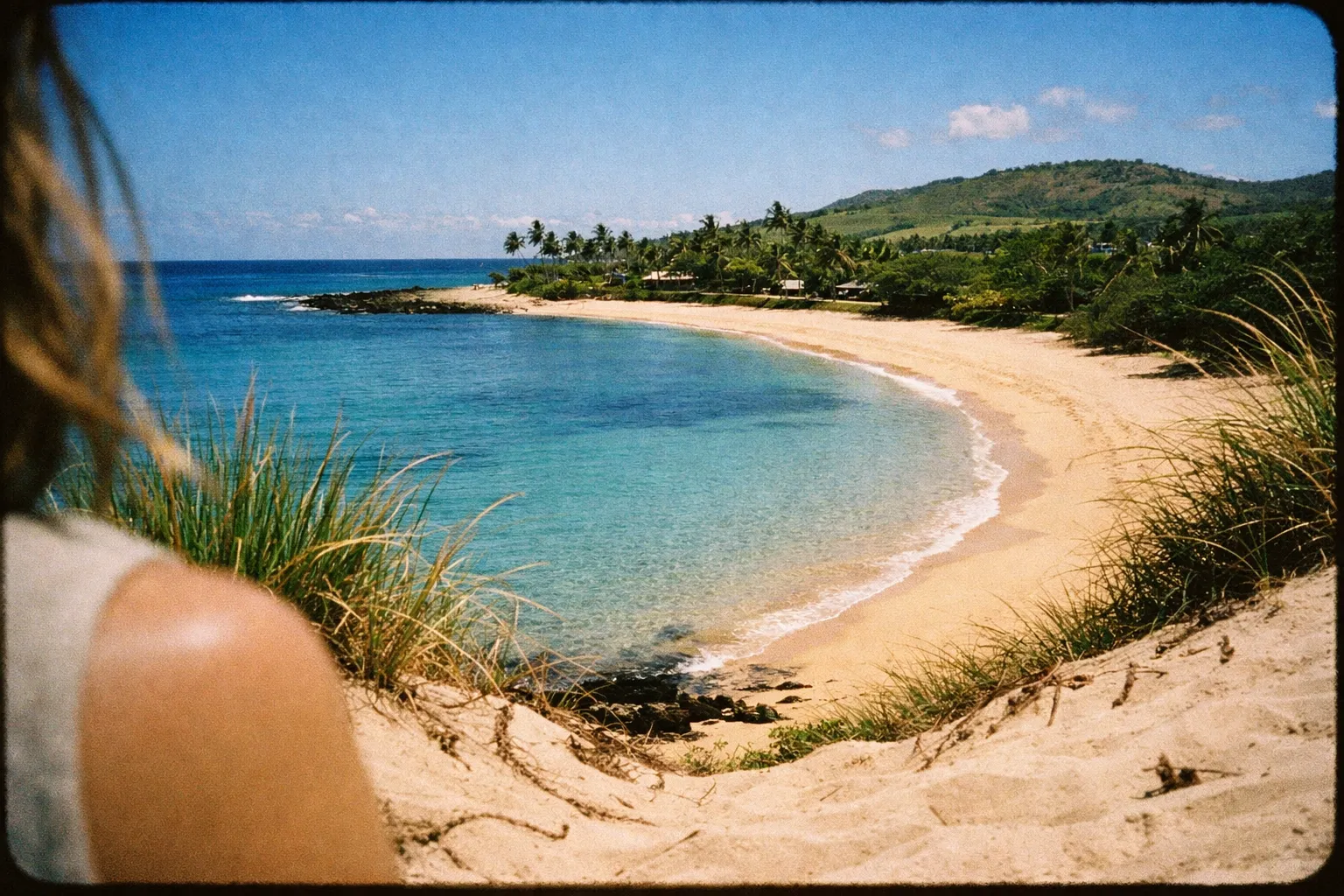
Po’ipū Beach is the safest bet on the island: 1/5 (Excellent) bacteria risk, lifeguards seven days a week, and a protected swimming area on Kauaʻi’s driest shore. The Hawaii Tourism Authority’s GoHawaii page lists parking, restrooms, showers, picnic tables, and a natural wading pool for young swimmers. Good year-round, which is more than you can say for most of the north shore.
Hanalei Bay ranks as the #1 beach on Kauaʻi editorially, with a mountain backdrop that earns the postcards. It’s calm in summer and holds large surf in winter, so check conditions before swimming from November through March. Anini Beach scores 2/5 (Very Good) and offers lagoon-style, reef-protected water that’s excellent for snorkeling and calm enough for children and beginners. No permanent lifeguard, so your judgment is your own.
Ke’e Beach sits at the end of the north-shore road and doubles as the trailhead for the Nā Pali Coast Kalalau Trail. Snorkeling is good in summer, but parking is limited - arrive early or you won’t get in at all.
Po’ipū Beach - Why It’s the Safest Bet for Families on Kauaʻi
Po’ipū earns the family recommendation on three counts. Kauaʻi Lifeguards confirms a staffed tower at Po’ipū Beach Park, so there’s daily professional coverage. The protected wading pool near the tombolo gives small kids shallow, calm water. And the south-shore location means it’s the most reliably sunny beach on the island - SafeToSwimHawaii notes the south shore “stays dry even when the North Shore is socked in with rain.”
The water quality backs the reputation: 1/5 bacteria risk, rated Excellent in 2026 rankings. Add the surrounding Po’ipū resort area for food and amenities, and it’s the lowest-friction beach day on Kauaʻi.
Top Kohala Coast Shores on the Big Island - White Sand on a Volcanic Coast
The Big Island’s reputation for lava coastline undersells its beaches. The Kohala Coast has some of the cleanest water in the state, and the white sand genuinely surprises visitors who expected only black rock. The best beaches on the Big Island cluster along that western coast, close enough to pair two in a single day.
Hapuna Beach is the all-around anchor: a wide white-sand state-park beach with a gentle gradient, lifeguards, and 1/5 (Excellent) water quality. Dr. Beach has ranked it in the U.S. Top 10. Non-resident entry runs $5 per person (per the Hawaii Department of Land and Natural Resources, Division of State Parks) plus $10 per vehicle (per Hawaiʻi State Parks), with park hours from 7:00 a.m. to 7:30 p.m. It sits off Highway 19 at Mile Marker 69, about 30 minutes north of Kona Airport. Gates close when the lots fill, so arrive early.
Kua Bay (Manini’ōwali) is the more dramatic, smaller option - turquoise water, 1/5 (Excellent) bacteria risk, and a stronger shorebreak than Hapuna. No lifeguard, minimal facilities, and the parking lot fills fast. Same advice: arrive early.
Green Sand Beach (Papakōlea) is a geology destination, not a swim beach. The olivine sand is genuinely rare, but reaching it means a 2.5-mile hike each way from the South Point parking area, or a local shuttle. The final descent involves a roughly 25-foot metal staircase into the cinder cone, there are no facilities, and Hawaii Guide warns of rough surf and strong currents. Go early before the heat and crowds, and treat it as a hike.
Waipi’o Valley is a scenic stop with black sand and dramatic valley walls, but the currents make swimming genuinely dangerous. Flag this one clearly: it’s a lookout and a photo, not a swim beach.
A Kohala Coast base makes the logistics easy. Hapuna and Kua Bay in one day is a realistic, satisfying pairing.
Hapuna Beach vs. Kua Bay - Picking Your Kohala Coast Day
Both beaches score 1/5 on bacteria risk, so water quality doesn’t decide it - crowd tolerance and swimming ability do.
Hapuna is bigger, has more facilities, has lifeguards, and suits families and weaker swimmers. Kua Bay is smaller, more visually striking, and carries a stronger shorebreak with fewer amenities and no lifeguard. If you have confident swimmers and want the more photogenic setting, do Kua Bay early and Hapuna in the afternoon when it’s easier to find room.
Maui vs. Kauaʻi - Which Island Has Better Beaches?
There’s no definitive winner here. But the trade-offs are clear enough to guide the decision.
Maui wins for variety and volume. TripAdvisor’s U.S. rankings put multiple Maui beaches in the national top tier - Ka’anapali, Wai’anapanapa, Wailea - covering white sand, black sand, snorkeling coves, and resort strips. It’s the more accessible option from a resort base, and post-wildfire recovery means West Maui is open. If you want a beach-heavy trip with lots of options, Maui delivers.
Kauaʻi wins for scenery-to-crowd ratio and consistency. Po’ipū and Anini both score well on water quality, Hanalei Bay brings the north-shore mountain drama, and the whole island runs quieter. SafeToSwimHawaii describes Po’ipū as Kauaʻi’s most reliably sunny beach with calm, shallow water near the tombolo - a strong argument for reliable south-shore family conditions.
For families, both islands are strong: Maui has Kapalua and Wailea, Kauaʻi has Po’ipū. Maui offers more options; Kauaʻi offers more reliable south-shore conditions. For snorkelers, Maui edges ahead with Kapalua Bay and Molokini nearby, though Kauaʻi’s Anini is excellent in its own right.
First-timers who want a beach-heavy trip lean Maui. Travelers who want fewer crowds and don’t mind a simpler island lean Kauaʻi.
Water Quality, Safety, and What the Rankings Don’t Tell You
The cleanest water in Hawaii belongs to the 1/5 (Excellent) bacteria-risk beaches: Lanikai, Kapalua, Wailea, Hapuna, Kua Bay, and Po’ipū, with Hanauma Bay and Anini close behind at 2/5 (Very Good). Scenic rankings tell you where the photos come from. The bacteria scores tell you where it’s actually cleanest to swim.
Hawaii beach infrastructure: 184.9 miles of shoreline, 141 public beach parks, and 57 beaches statewide (DOH data cited in article, 2026).
For clearest water specifically, Lanikai on Oʻahu and Kapalua Bay on Maui are the most consistently cited, both scoring 1/5 and both frequently photographed for underwater visibility. Hanauma Bay’s clarity is best at the earliest reservation slot, before visitor activity stirs up the sand.
For warmest water, look to south-shore leeward beaches - Po’ipū on Kauaʻi, Wailea and Ka’anapali on Maui. They stay warmest because they’re sheltered from trade-wind chop and face the sun longer. Ocean temperatures across Hawaii run roughly 75-80°F (24-27°C) year-round with minimal island-to-island variation, so “warmest” is really about sun exposure and leeward shelter, not meaningful differences in water temperature.
The safety flags matter as much as the scores. Mākena and Kua Bay have strong shorebreak. Waimea Bay and Hanalei Bay carry serious winter surf from November through March. Waipi’o Valley has current risk that makes it a no-swim beach. And even excellent beaches close temporarily - a SafeToSwimHawaii water-quality report for April 2026 listed 15 active advisories statewide, and USA Today reported simultaneous brown-water advisories on Oʻahu’s North Shore and Maui’s south shore that same month while Hawaii Island had none. Always check posted lifeguard advisories and Department of Health beach advisory postings before you get in. Reef-safe sunscreen is required at Hanauma Bay and strongly recommended everywhere, because standard sunscreen chemicals damage coral.
Practical Planning - Access, Reservations, and Avoiding the Common Mistakes
A good Hawaii beach day is mostly won before you leave your accommodation. Here’s what actually trips people up.
Hanauma Bay reservations open exactly 2 days in advance at 7:00 a.m. HST on the official state site, and slots go fast because each time slot holds a limited number. Log in before 7:00 a.m., pick a time with capacity, and plan 4 to 6 hours for the full visit including the mandatory marine-education video.
Lanikai parking is the classic mistake. There are no lots - just street parking in a residential neighborhood with active enforcement. Arrive before 7 a.m. or take a rideshare from Kailua, and bring everything, because there are no facilities on-site.
Wai’anapanapa and the Hāna Highway require a state-park reservation in advance. Start the drive by 7 a.m. from West Maui, don’t attempt the return after dark, and treat it as a full-day commitment rather than a quick stop.
Water-quality advisories change fast. Even highly ranked beaches can close temporarily after heavy rain, so check the Hawaii Department of Health beach advisory page before visiting - the April 2026 snapshot of 15 active advisories is a reminder that a 1/5 score is a baseline, not a guarantee for a given day.
Crowd strategy works best when you pair one marquee beach (Ka’anapali, Hanauma Bay) with one lower-profile, high-quality beach (Waimānalo, Anini, Kua Bay) per trip. You get the iconic experience and the peaceful day.
Seasonal note: south-shore beaches (Po’ipū, Wailea, Ka’anapali) are more reliable in winter, while north-shore beaches (Hanalei, Ke’e, Waimea Bay) are calmer in summer. Match the coast to the season and you’ll avoid most of the surf and rain problems.
Frequently Asked Questions
- What is the warmest beach in Hawaii?
- South-shore leeward beaches stay warmest year-round: Po'ipū (Kauaʻi), Wailea and Ka'anapali (Maui), and Ko Olina (Oʻahu) are sheltered from trade winds and face more direct sun.
- Which beach in Hawaii has the clearest water?
- Lanikai Beach (Oʻahu) and Kapalua Bay (Maui) are consistently cited for water clarity alongside the lowest bacteria risk scores (1/5, Excellent). Hanauma Bay's clarity is best at the earliest reservation slot.
- What is considered the most beautiful beach in Hawaii?
- No single answer exists. Lanikai Beach is known for sunrise views and offshore islands; Kapalua Bay ranks high nationally; Hanalei Bay has mountain backdrops; Green Sand Beach is geologically unique.
- Is Maui or Kauaʻi better for beaches?
- Maui offers more top-ranked beaches and variety; Kauaʻi has better scenery-to-crowd ratios and reliable south-shore conditions. Families and snorkelers lean Maui; quieter travelers lean Kauaʻi.
- Do I need a reservation for Hawaii beaches?
- Most beaches allow walk-up access. Exceptions are Hanauma Bay (Oʻahu) and Wai'anapanapa State Park (Maui), both requiring advance reservations.
- Are Hawaii beaches safe for swimming?
- Top-ranked beaches are generally safe, especially those with lifeguards. Avoid swimming at Waipi'o Valley and during winter surf at some north-shore beaches. Check advisories before entering.
- What should I bring to Lanikai Beach?
- Bring everything needed: at least 2 liters of water per person, reef-safe sunscreen, a hat, portable shade, and snacks. No facilities exist on-site.
The Bottom Line
Match the beach to your situation, not to a ranking. On Oʻahu, Hanauma Bay and Lanikai are worth the reservation and parking effort - just get there at dawn. On Maui, Kapalua Bay and Wailea are the cleanest and most consistent, and Wai’anapanapa is a full-day trip you should commit to or skip entirely. Kauaʻi’s Po’ipū is the safest family call on the island. The Big Island’s Hapuna is the most underrated all-around beach in the state, and most visitors who fly there walk straight past it to somewhere flashier.
Before you leave your accommodation, do two things: check the Department of Health water-quality advisories for the day, and confirm any reservation windows. The beaches aren’t going anywhere - but your Hanauma Bay slot or Wai’anapanapa entry can close before you’ve had your coffee.