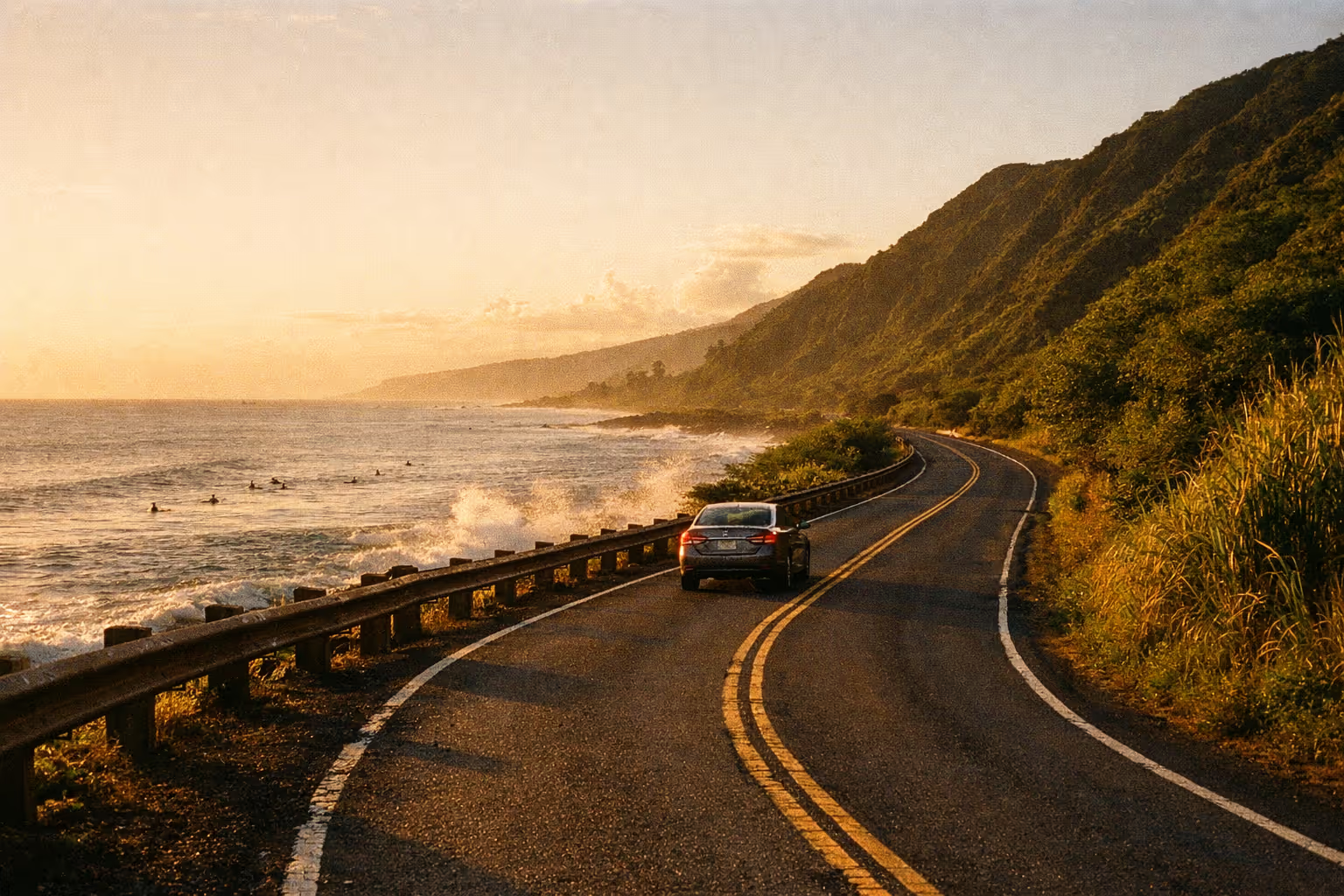
On an average day in 2023, roughly 12,088 visitors were present somewhere along the North Shore Oahu coastline, and over half of everyone who flew into Oʻahu that year made the trip up to experience what the North Shore Oahu has to offer (1). That’s a lot of people for a two-lane highway. Here’s what most of them get wrong: there are two North Shores, and they don’t happen at the same time. The winter version is 30-foot surf and camera-clogged parking lots. The summer version is calm water you can actually swim in. Get the season right and everything else falls into place.
✓ Pros
- Watching world-class surf costs nothing - you stand on the sand and the pros do the work
- Hale'iwa is one of the few towns on Oʻahu that still feels genuinely local, not staged for tourists
- Summer beaches here are calm, swimmable, and far less crowded than Waikīkī
- The activity mix is deep: snorkeling, food trucks, hiking, turtle watching, shark cage diving
- It works as a day trip from Waikīkī, 45 to 60 minutes each way in light traffic
✗ Cons
- Winter parking and traffic near Pipeline and Sunset can turn a one-hour drive into a multi-hour slog
- Surf danger at the major breaks is real and underestimated by visitors every single year
- Resident sentiment around overtourism is a live issue - support for tourism swung from 38% (Spring 2023) to 72% (Spring 2024), so how you behave matters (1)
- Overpacking your itinerary is the most common mistake; the main beach corridor sounds short until crowds compress your time
- No public transit option works well on high-surf days
What North Shore Oahu Actually Is (and Where It Sits on the Map)
North Shore Oahu is a roughly 7-mile stretch of coastline running from Hale’iwa through Pūpūkea to Kahuku and Turtle Bay, strung along Kamehameha Highway (Route 83). That’s the whole thing. You can drive its length in 20 minutes with no traffic, which almost never happens in winter.
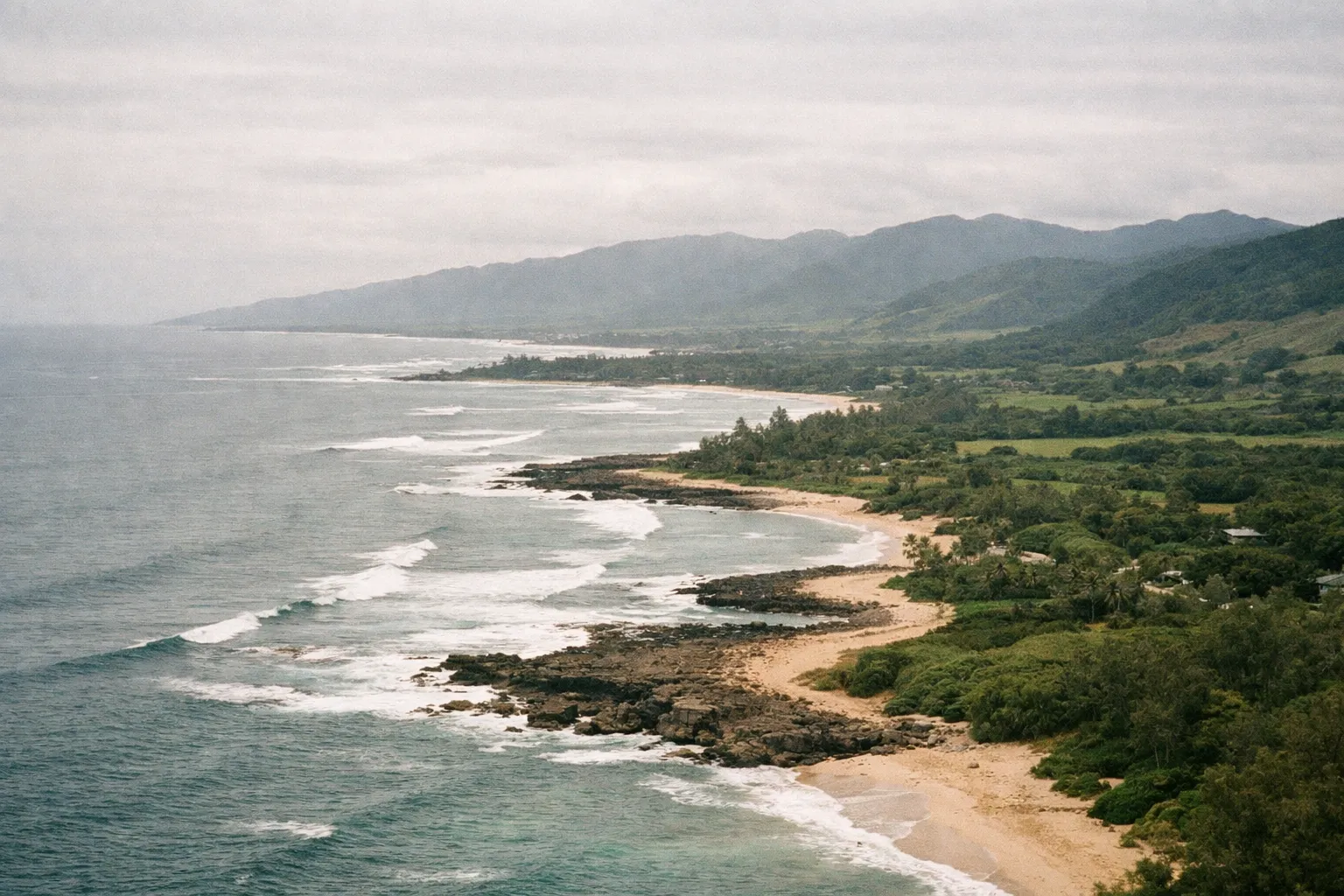
From Waikīkī, the standard route is H-1 to H-2 to Route 99 toward Hale’iwa, then Route 83 along the coast. Figure 45 to 60 minutes in light traffic. On a contest day or a big swell, add a lot more.
The coast has two distinct personalities. October through April is surf season: big waves, big crowds, professional contests. May through September the wave energy drops and the beaches become swimmable. Same sand, completely different ocean.
The crowding is not your imagination. According to the Hawaiʻi DBEDT North Shore visitors report, the area saw an average of 12,088 visitors on a typical day in 2023, with over half of all Oʻahu air visitors making the trip, and about three-quarters of them coming from the U.S. mainland (1). That volume explains both the appeal and the parking situation. It also explains why resident sentiment matters: the share of residents who felt tourism was “worth the issues” fell to 38% in Spring 2023 before rebounding to 72% in Spring 2024 (1). Follow posted signs, don’t block driveways, and the place stays welcoming.
When to Go - Surf Season vs. Swimming Season
The single most important planning decision for the North Shore is timing, because the season determines whether you’ll be watching giant waves from the sand or floating over a reef with a snorkel. You cannot do both on the same trip.
October through April is surf season. Faces at Pipeline, Sunset, and Waimea Bay can exceed 30 to 40 feet, with peak conditions usually landing in December through February. Recent surf analytics show 70 to 80% of December days producing rideable swell (2). This is when the professional contests run and when the coast feels most electric - and most congested.
May through September is swimming season. Wave energy drops enough for snorkeling, swimming, and beginner water activities (3). This is when Waimea Bay flattens into a calm cove and Sharks Cove becomes the best free snorkel spot on the coast.
If you want the sweet spot, look at November. Roughly 50 to 60% of November days see swell of at least 4 feet, and crowds and prices run slightly lower than the December-January peak (2). You get a real shot at big surf without the worst of the crush.
Practical translation: if you want to watch massive waves, plan for mid-November through mid-March. If you want to safely get in the water, plan for summer. A few things don’t change by season - Hale’iwa town, the food trucks, hiking, and turtle watching at Laniakea run year-round.
Checking Surf Forecasts Before You Go
Big surf is not guaranteed on any given winter day, so check before you commit. The National Weather Service Honolulu office posts swell forecasts and high surf advisories, and the World Surf League publishes contest holding periods for its Pipeline and Sunset events (2). Those holding periods span several weeks rather than fixed dates - organizers wait for the best waves within the window. Checking both the swell forecast and the contest calendar the night before dramatically improves your odds of seeing top-tier surf instead of a flat, gray ocean.
The Beaches Worth Your Time on the North Shore
The north shore oahu beaches behave so differently by season that a single beach can be a big-wave arena in January and a kiddie pool in July. Below, ranked by whether they’re worth prioritizing or fine to skip if you’re short on time, with the season that matters for each.
Quick comparison before the detail: Waimea Bay is the marquee stop - winter viewing, summer swimming, lifeguards, parking that fills early. Banzai Pipeline is winter viewing only, over sharp reef, with a lot that fills by mid-morning. Sunset Beach is a wider, more forgiving viewing spot that hosts the Vans Triple Crown. Laniakea is for turtles, not surf. Sharks Cove is a summer-only snorkel spot that’s genuinely dangerous in winter.
North Shore Beaches at a Glance
| Waimea Bay | Banzai Pipeline | Sunset Beach | Laniakea Beach | Sharks Cove | |
|---|---|---|---|---|---|
| Best Season | Winter & Summer | Winter | Winter & Summer | Year-round | Summer |
| What to Do There | Surf viewing (winter), swimming, cliff jumping (summer) | Surf viewing only; no swimming | Surf viewing, summer snorkeling at north end | Turtle watching | Snorkeling |
| Lifeguards | ✓ | ✓ | ✓ | ✗ | ✗ |
| Parking | Fills early on big days | Fills by mid-morning | Limited; roadside pullouts available | Small roadside pullout | Street parking |
| Swim-Safe in Winter? | No | No | No | N/A | No |
Waimea Bay - Two Completely Different Beaches in One
Waimea Bay is the most iconic single beach on the North Shore, and it is genuinely two beaches depending on when you show up. In winter, waves here reach 20 to 30 feet, and the bay hosts the Eddie Aikau Invitational, a big-wave event held only when waves exceed 20 feet - which means it doesn’t run most years (3). In summer, the same bay flattens into one of the best swimming spots on the island, complete with a cliff-jump rock that draws a steady line of people all morning.
There’s a lifeguard tower and restrooms on site. Parking fills early on big days, so treat it like Pipeline and arrive before mid-morning. Worth prioritizing in either season - it’s the clearest illustration of the two-North-Shores reality anywhere on the coast.
Banzai Pipeline - How to Watch It Safely
Banzai Pipeline, at ‘Ehukai Beach Park in Pūpūkea, is arguably the most photographed wave in the world - a hollow, left-hand barrel breaking over sharp, shallow reef (5). In winter, watching it from the sand is free and genuinely worth the detour. Watching it, not swimming in it. Do not enter the water here in winter under any circumstances, no matter how strong a swimmer you are.
The parking lot fills by mid-morning on swell days. Arrive before 9 a.m. or use the roadside pullouts along Route 83 as backup. The pullouts near Sunset and Rocky Point also give you elevated vantage points without fighting the packed lots.
Laniakea, Sharks Cove, and the Quieter Spots
Laniakea Beach - Turtle Beach to most visitors - is not a surf spot. It’s known for Hawaiian green sea turtles (honu) that rest on the sand, with peak activity roughly 10 a.m. to 3 p.m.. The roadside pullout is small and gets crowded fast, and Hawaiʻi law requires you to keep your distance. Look, photograph, don’t touch.
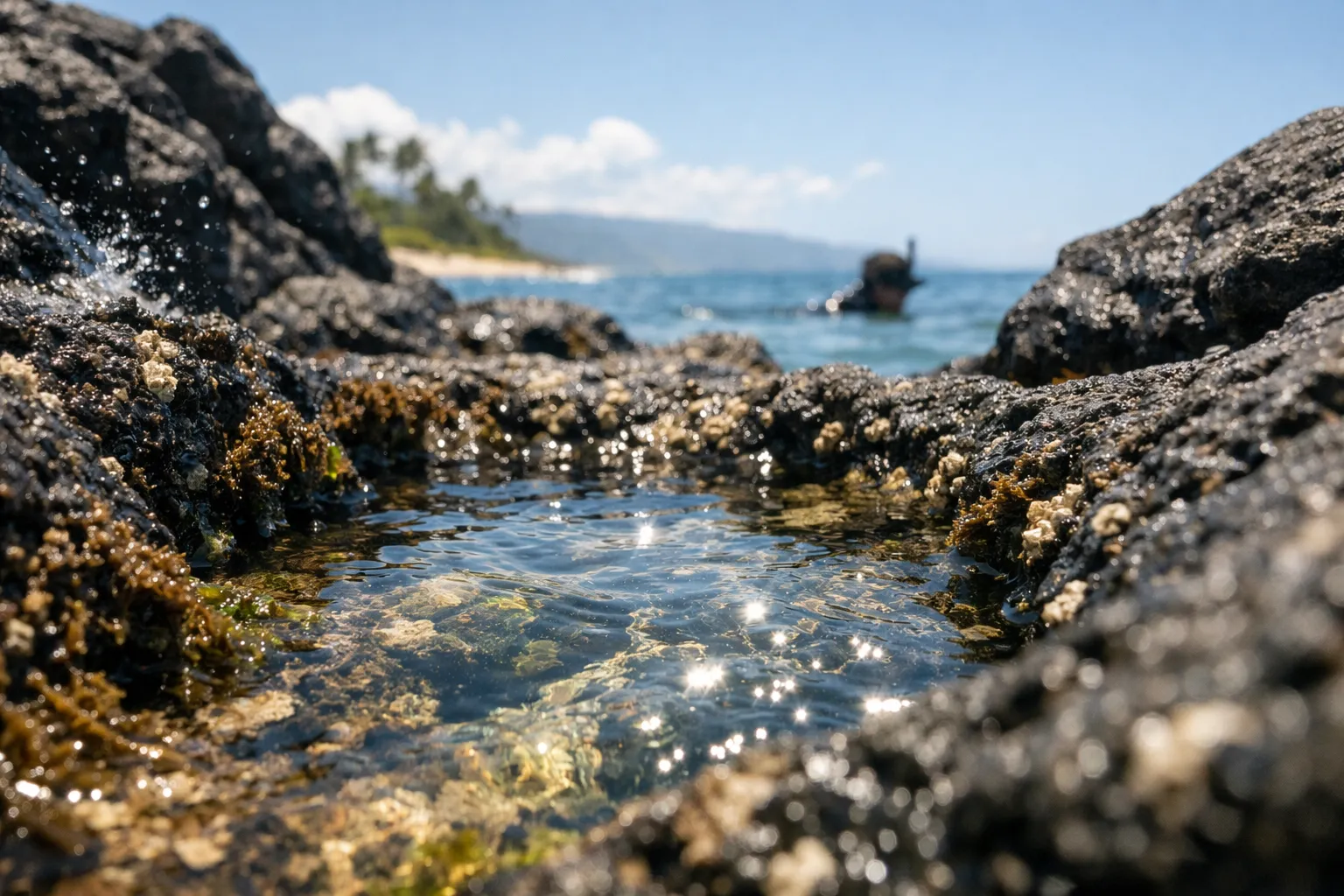
Sharks Cove in Pūpūkea is the North Shore’s best free snorkeling in summer if you bring your own gear - a protected rocky cove with good visibility. Skip it entirely in winter, when surge makes it dangerous. Three Tables Beach next door is a solid alternative snorkel spot in summer, and Ehukai Beach is worth a look if you have extra time. Sunset Beach, longer and wider than Pipeline, is a more forgiving viewing spot and hosts the Vans Triple Crown contests; the north end has summer snorkeling.
Hale’iwa - The Town That Holds the North Shore Together
Hale’iwa is the entry point to the North Shore from Honolulu and the main place to eat, shop, and slow down. Building height here is capped at no taller than a palm tree, which keeps the scale small - even the chain stores are styled to blend in. It’s one of the few towns on Oʻahu that still feels like itself, and that’s not an accident.
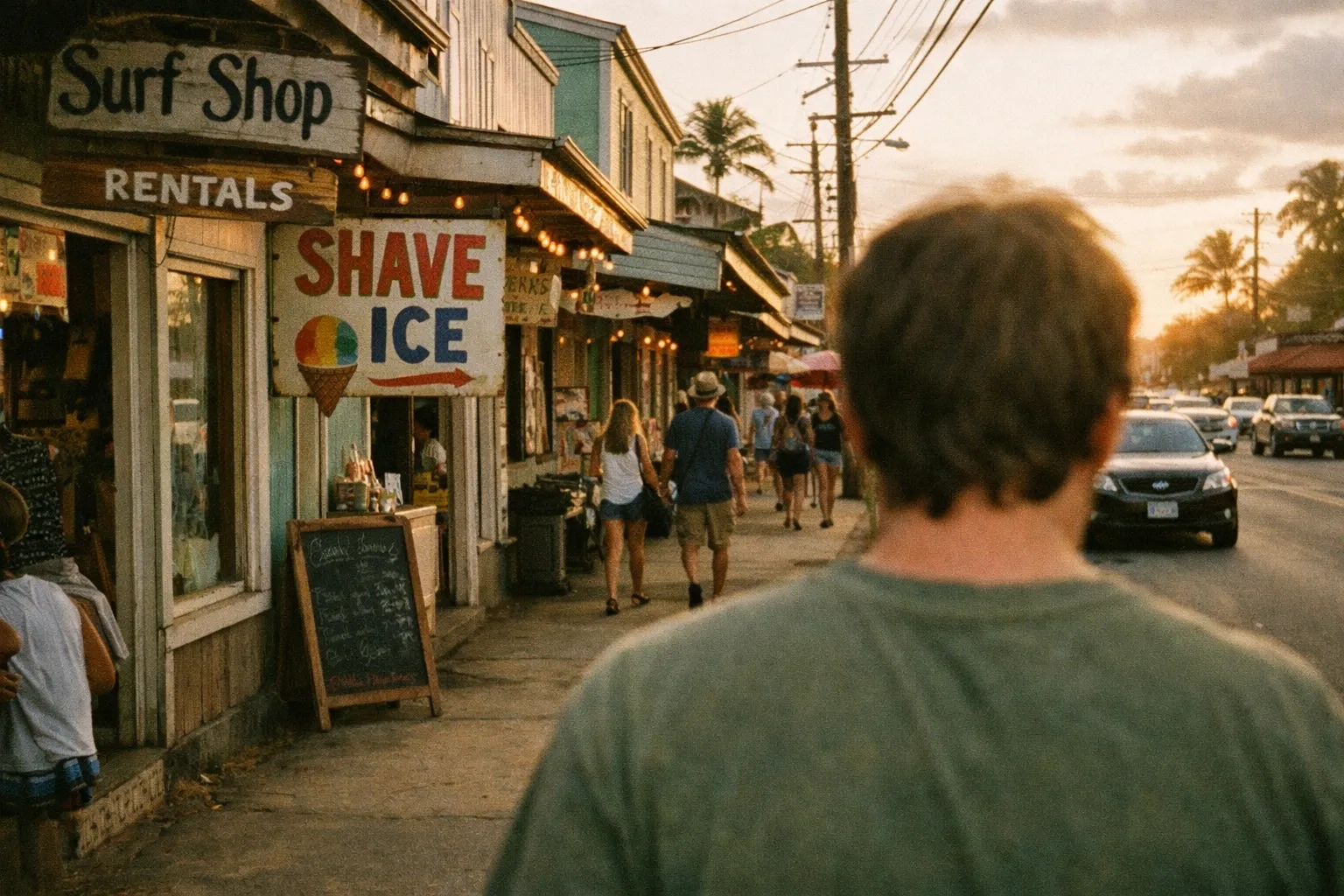
Plan 2 to 3 hours here and fold it into a beach day rather than treating it as a separate trip. The surf shops lining Kamehameha Highway carry boards, gear, and apparel, and they’re where you book surf lessons. They’re also a cultural touchstone - this is a surf town first and a shopping stop second. Hale’iwa has a real arts community too, with galleries and local-owned businesses that predate the tourism surge. Given the ongoing debate over how tourism dollars get distributed, spending your money at locally owned shops here genuinely matters.
Shave Ice, Shrimp Trucks, and Where to Actually Eat
Matsumoto’s and Aoki’s are the two shave ice institutions in Hale’iwa, and the lines can stretch long at midday. Go early or late. And yes, shave ice here is different from a mainland snow cone - it’s finely shaved, almost powdery, not crushed ice. Worth the wait once; after that you’ll time it better.
The broader food scene punches above the town’s size: plate lunch spots, açaí bowls, sit-down restaurants, and the shrimp trucks. The Kahuku shrimp trucks are a short drive further north on Route 83 and worth the detour if you’re already headed toward Turtle Bay. Build a lunch stop into your beach sequence rather than making a special trip.
Surf Lessons and Water Activities for Non-Experts
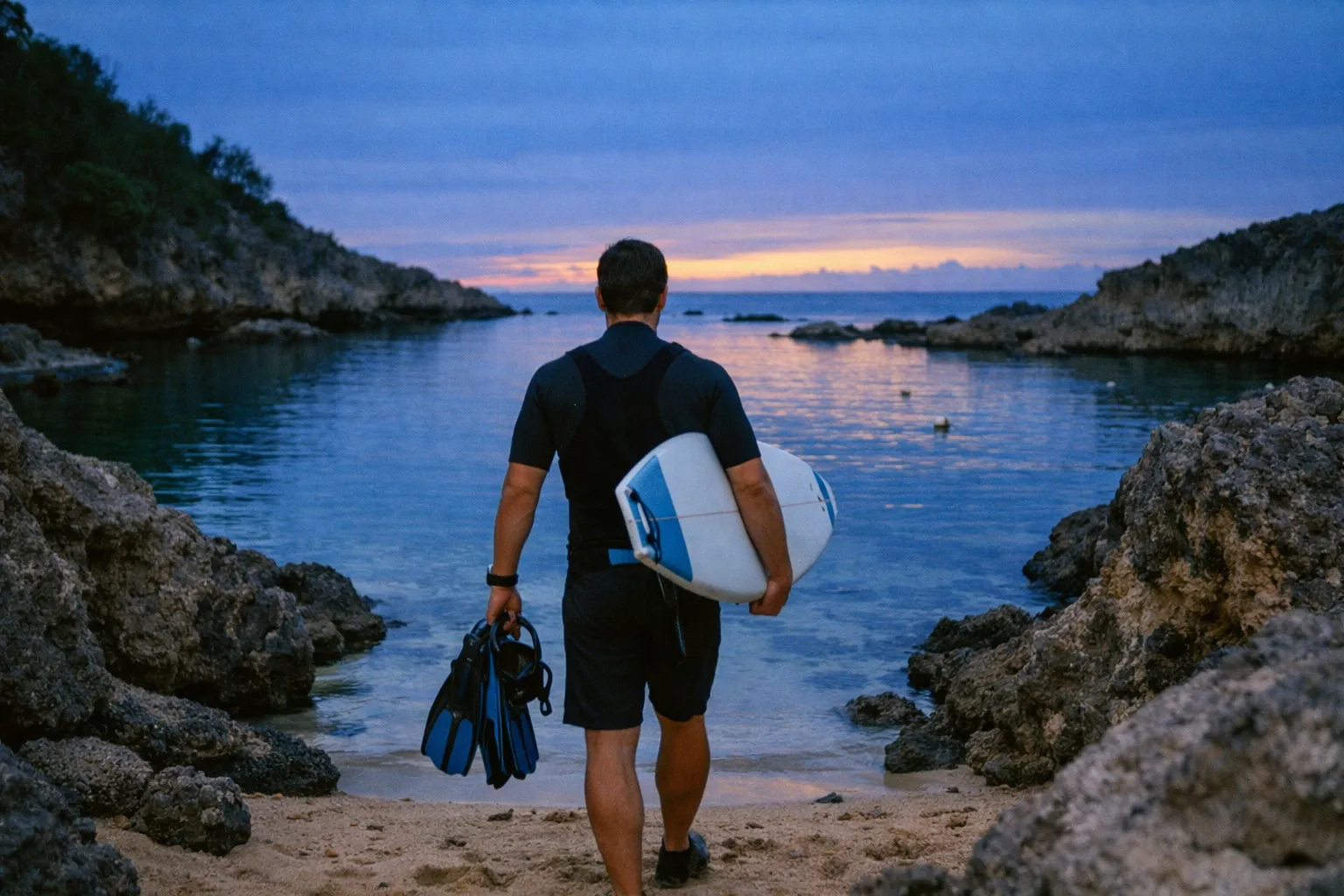
You don’t need to be a pro to engage with the water here - you just need to pick the right spot and the right season. Beginners should never attempt Pipeline or Waimea; surf lessons on the North Shore of Oahu are run at more sheltered, forgiving breaks out of Hale’iwa and nearby beaches, and summer is the right season for them.
The non-expert menu:
- Snorkeling: Sharks Cove (summer only) is the best free option; Three Tables Beach is the backup. Bring your own gear or rent in Hale’iwa.
- Shark cage diving and dolphin tours: These run year-round and give non-surfers a genuinely different ocean experience.
- Hiking: The Pūpūkea area has trails, and the broader North Shore connects into Ko’olau Range hiking - a good fallback when surf is flat or conditions are too dangerous for water entry.
- Skydiving: The drop zone near Waialua offers tandem jumps with coastal views. Base tandem prices vary by operator and altitude - check Pacific Skydiving Center and Skydive Hawaii directly for current rates, and budget extra if you want video or photos of the jump.
For families with kids, summer is the clear pick. Waimea Bay (summer), Sharks Cove (summer), and Laniakea turtle watching all work well for mixed-age groups without putting anyone in dangerous water.
Turtle Bay Resort and Staying on the North Shore
Turtle Bay Resort in Kahuku sits at the far northeastern end of the North Shore and is the primary full-service resort option on this stretch of coast. It offers direct beach access, coastal trails, golf, and proximity to multiple surf and snorkel spots - which lets it function as a self-contained base rather than just a hotel.
Staying overnight changes the experience more than you’d expect. You get sunrise and sunset on the beach, you can watch the surf across multiple days to catch a good swell instead of gambling on one, and you skip the Waikīkī-to-North-Shore commute during peak traffic. If your main goal is surf spectating during a contest window, staying up here is worth it.
Beyond Turtle Bay, there are vacation rentals and smaller guesthouses in and around Hale’iwa. These book out early during contest season - roughly November through February - so reserve well ahead if you’re targeting winter. One logistical note: Turtle Bay sits about 10 to 15 minutes further along the coast from Pipeline and Sunset, so factor that into your beach-access planning if you’re basing there.
Getting There, Getting Around, and Not Getting Stuck in Traffic
The standard drive from Waikīkī is H-1 to H-2 to Route 99 toward Hale’iwa, then Route 83 along the coast - 45 to 60 minutes in light traffic. On contest days or major swells, that number goes out the window.
North Shore Oʻahu at a glance: 12,088 daily visitors in 2023; Waikīkī to North Shore drive about 20 minutes; typical day trip 6-10 hours; November experiences 50-60% swell days with ~4 ft waves; circle-island extension adds 2-4 hours.
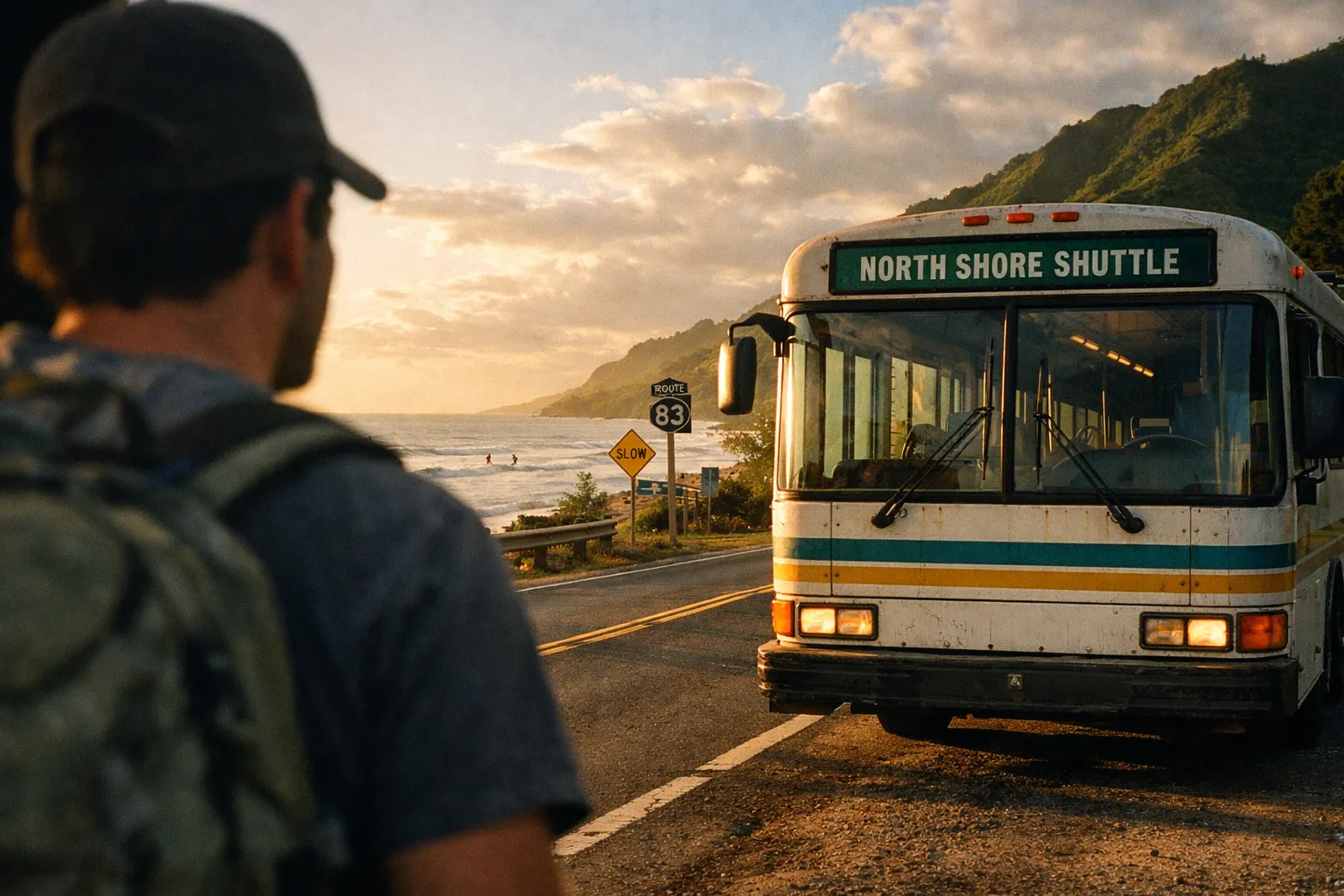
A rental car is the practical choice. TheBus does run out here, but it’s slow and gets crowded on high-surf days, and it won’t give you the flexibility to move between beaches or bail early when a lot fills. Guided island tours are an option if you’d rather not drive, but they lock you into someone else’s schedule.
On parking: Waimea Bay and ‘Ehukai/Pipeline both have lifeguard towers, restrooms, and lots - but the lots fill by mid-morning on big swell days. Arrive before 9 a.m. on high-surf days. When the lots are full, the roadside pullouts along Route 83 near Sunset and Rocky Point give you alternative viewing without the fight (9).
Contest-day traffic is the real hazard. Congestion near Pipeline and Sunset can turn a one-hour drive into a multi-hour ordeal, which is exactly why you check the WSL schedule and NWS swell forecast before committing to a specific day. Treat the community with respect: don’t block driveways, don’t park in residential areas without permission, follow the posted signs. With resident sentiment around tourism still a live issue, this isn’t just etiquette - it’s the difference between the North Shore staying welcoming or not.
Ocean Safety - What the Surf Actually Means for You
The North Shore’s surf danger is not exaggerated, and the people who get hurt are not only beginners. Pipeline breaks over sharp, shallow reef. The shorebreak at Waimea Bay can knock you off your feet even on a moderate day, and strong currents run at most major breaks through the winter. Experienced ocean swimmers from other coasts get caught out here every year because they misread conditions they’ve never encountered at this scale.
The rule is simple: if there’s a high surf advisory posted, do not enter the water at Pipeline, Sunset, or Waimea Bay. Watch from the sand. This applies to strong swimmers too - the ocean does not grade on a curve. Lifeguard towers stand at the major beaches; heed their flags and warnings, and never turn your back on the ocean at any North Shore beach in winter.
A few season-specific notes. The Waimea Bay cliff jump is a summer-only tradition - only attempt it when the bay is calm and flat, never in winter or when any swell is running. Sharks Cove is safe for snorkeling in summer but genuinely dangerous in winter, when surge transforms the same gentle cove into something else entirely. If you take one thing from this section: the ocean here is not the ocean you know from home, and the sand is a perfectly good place to spend big-wave days. For a broader look at Hawaii ocean safety tips covering flags, wildlife rules, and current risks across the islands, that guide goes deeper on what to watch for before you enter the water anywhere in the state.
How to Spend a Day on the North Shore (A Practical Framework)
A North Shore day trip from Waikīkī runs 6 to 10 hours. Overnight visitors can spread this across two days for a more relaxed pace. The key constraint: don’t try to hit every major beach plus Hale’iwa plus a full circle-island loop in one day. Prioritize two or three beaches and either Hale’iwa or the extended drive - not both. The circle-island continuation around the windward coast adds 2 to 4 hours and only works if you leave very early or skip extended stops.
Winter Day Itinerary - Surf Spectating from Waikīkī
How to Plan a Winter Surf-Spectating Day on the North Shore
8 hoursStep-by-step guide to timing and logistics for a successful winter surf day trip
- 1
Check the forecast the night before
Pull up the NWS Honolulu swell forecast and the WSL contest calendar to confirm surf conditions.
- 2
Leave Waikīkī by 7:30 a.m.
Take H-1 to H-2 to Route 99 toward Hale'iwa.
- 3
Arrive at 'Ehukai Beach Park (Pipeline) before 9 a.m.
Secure parking before the lot fills on swell days.
- 4
Watch Pipeline for 1 to 2 hours from the sand
Use roadside pullouts along Route 83 if the parking lot is full.
- 5
Drive a couple of minutes to Waimea Bay
Get a different vantage point and sense of scale for the big waves.
- 6
Head to Hale'iwa for lunch
Enjoy plate lunch or shrimp trucks; allow 30 to 45 minutes.
- 7
Browse Hale'iwa town
Explore shave ice shops, surf stores, and galleries for 1 to 2 hours.
- 8
Begin the return drive by 3:30 to 4 p.m.
Beat the peak traffic back toward Honolulu.
Summer Day Itinerary - Swimming, Snorkeling, and Hale’iwa
Summer flips the priorities toward getting in the water while it’s calm:
- Leave Waikīkī by 8 a.m.
- Snorkel Sharks Cove in the morning, when the water is calmest and clearest.
- Swim and cliff-jump at Waimea Bay while the bay is flat.
- Stop at Laniakea Beach for turtle watching, best between 10 a.m. and 3 p.m.
- Eat in Hale’iwa - food trucks, açaí bowls, shave ice.
- Optional Kahuku shrimp trucks on the way back if you’re continuing north.
Either way, resist the urge to cram. I’ve watched people try to hit six beaches in a single day and end up frustrated at every parking lot. Two or three beaches done well beats six done badly, and the crowds will eat any time you think you’re saving.
The North Shore fits naturally into a broader Oʻahu itinerary. If you’re still deciding how to split your time across the island, the best things to do in Oahu Hawaii guide covers the full range of activities - including how skydiving over the North Shore compares to other big-ticket experiences on the island. And if you’re weighing Oʻahu against other islands entirely, best places to visit in Hawaii breaks down each island by trip type to help you decide where your days are best spent.
Frequently Asked Questions
- What should I not miss on the North Shore, Oʻahu?
- In winter, prioritize watching Pipeline surf on a swell day. In summer, swim at Waimea Bay and snorkel at Sharks Cove. Year-round, visit Hale'iwa town and Laniakea Beach for turtles.
- Is the North Shore worth visiting if you're not a surfer?
- Yes, especially in summer. Enjoy calm swimming, snorkeling, turtle watching, hiking, and a strong food scene. Surf watching from the sand is free and worthwhile year-round.
- How far is the North Shore from Waikīkī?
- About 45 to 60 minutes by car via H-1, H-2, and Route 99 in light traffic. Contest days or big swells can extend travel times significantly.
- When are the big waves on the North Shore?
- Big waves occur October through April, peaking December to February. November offers a strategic window with good surf and fewer crowds.
- Can you swim at Pipeline or Waimea Bay?
- Waimea Bay is safe for swimming in summer but not winter. Pipeline is almost never safe for casual swimmers and should be avoided during high surf.
- What should I do on the North Shore if it's raining?
- Surf watching continues regardless of rain. Hale'iwa offers covered shopping and galleries. Sharks Cove snorkeling is possible in light rain if water is calm.
The North Shore you visit in December is a fundamentally different place than the one you visit in July. Get the timing right and the rest follows - big surf and camera lenses in winter, calm water and snorkels in summer.
This is also one of the few places on Oʻahu that still feels like itself. Patronize the local businesses in Hale’iwa, follow the posted rules at the beaches, keep your distance from the turtles. The place gives back more than it takes when you treat it right. And if you only have one winter day, the move is simple: leave early, park early, and let the surf do the work. It’s already happening on the sand in front of you.