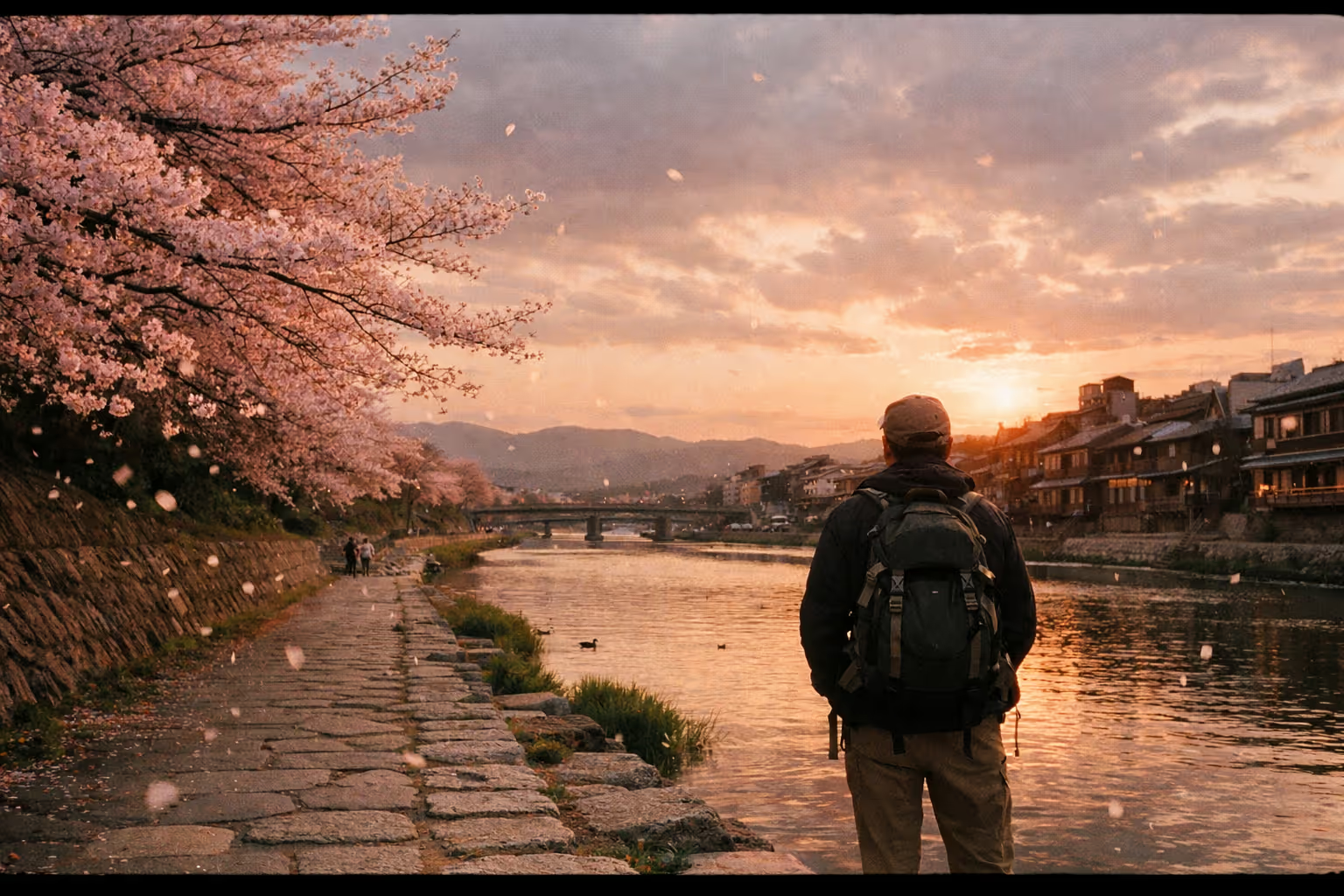
Cherry blossom season in Japan is shorter and more local than most visitors plan for: any single city holds peak bloom for roughly a week, and the wave rolls north for two solid months. Tokyo and Kyoto usually peak in the first days of April, but Sapporo trails them by nearly three weeks, so one nationwide date is a recipe for missing it everywhere. Book two to six months out. Here are the 2026 city-by-city windows, and how to chase the bloom.
When Is the Best Time to Visit Japan for Cherry Blossom Season?
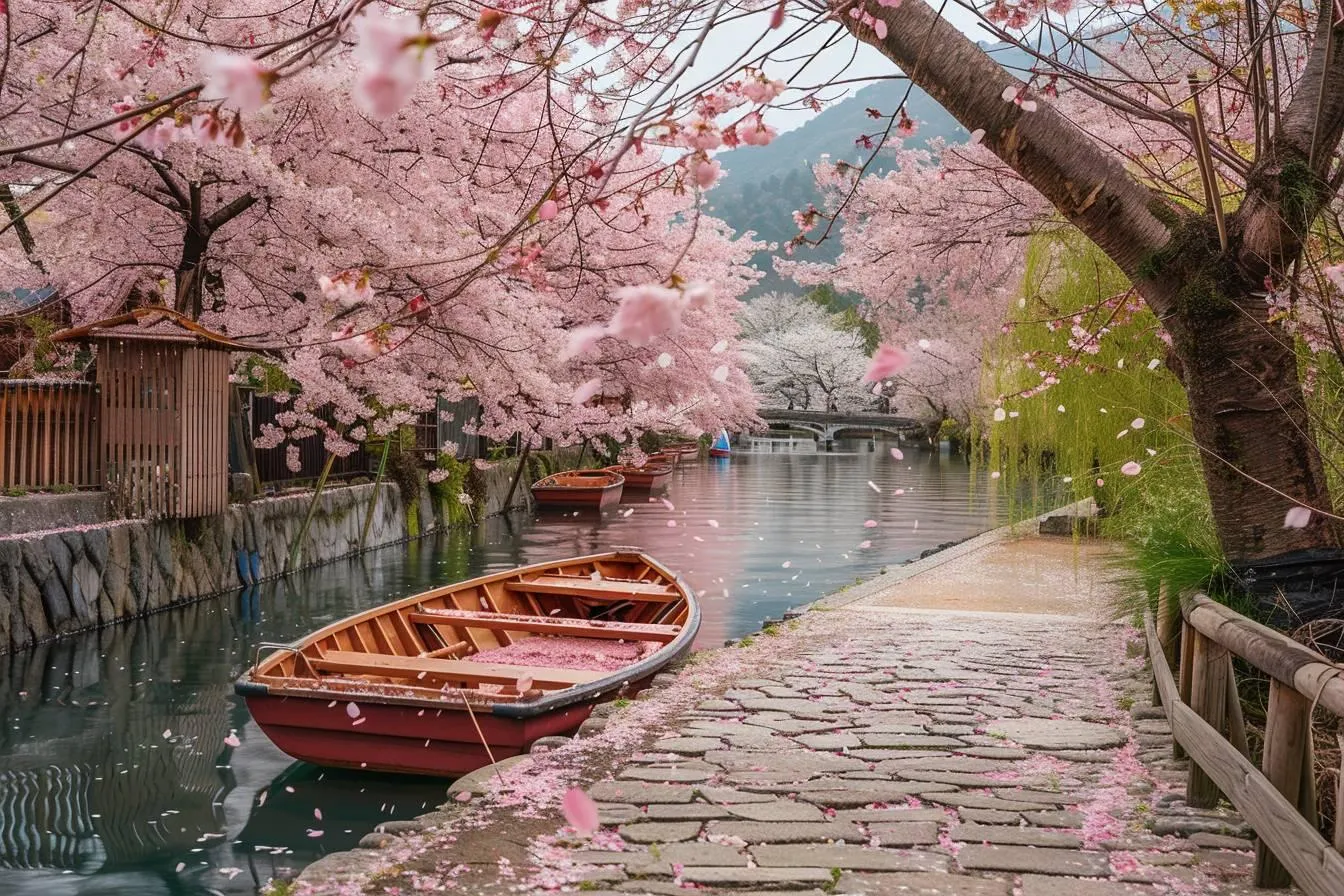
Cherry blossom season Japan is a staggered event rather than a single nationwide occurrence. The bloom begins in the warm south and gradually moves north over six to eight weeks, so the best time to visit depends entirely on where you plan to be.
Blooming begins in Kyushu in March - Fukuoka’s Maizuru Park and the castle grounds in Kumamoto are the first major urban sites to open - and extends all the way to Hokkaido in May. In the cities most visitors target - Tokyo, Kyoto, and Osaka - peak bloom typically lands in late March to early April. Fukuoka’s other March bloom is not sakura at all: Yellow Spring Road, a canola-lined lane an hour south of the city.
Here’s the city-level breakdown most useful for planning, drawn from Japan Guide’s 2026 forecast (7):
- Tokyo: best viewing March 28-April 4
- Kyoto: March 29-April 5
- Osaka: April 1-7
- Fukuoka: April 1-8
- Nara: roughly early April
- Kanazawa, Takayama, Matsumoto: early-to-mid April
- Sendai and Fukushima: mid-April
- Kitakami, Kakunodate, Hirosaki: mid-to-late April
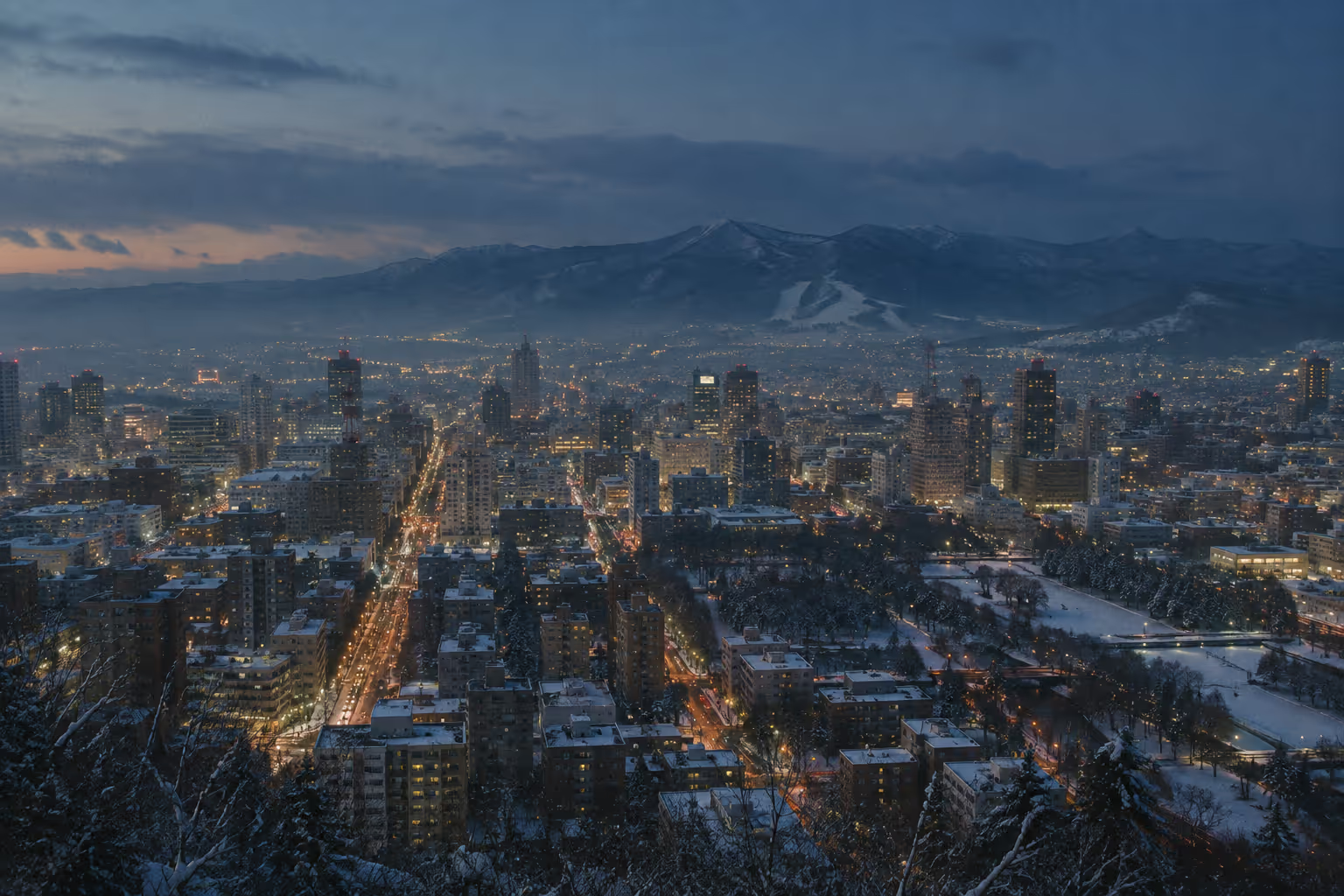
- Hakodate and Sapporo: April 18-28
One trap I see people fall into constantly: assuming Tokyo’s dates apply everywhere. Tokyo can be done while Sapporo hasn’t even started. WeatherMap’s 2026 data puts Sapporo’s first bloom around April 18 with full bloom April 24, and Hakodate’s first bloom April 18 with full bloom April 20 (2). Book Hokkaido for early April expecting blossoms and you’ll arrive to bare branches.
The full-bloom window in any one city lasts only about a week, and the best viewing often begins a few days before peak - the trees are already photogenic, and the crowds are slightly thinner (7).
2026 Forecast and How to Track the Bloom
Forecast dates are an estimate, not a promise. The single most important habit for a sakura trip is checking updates repeatedly as your travel dates approach.
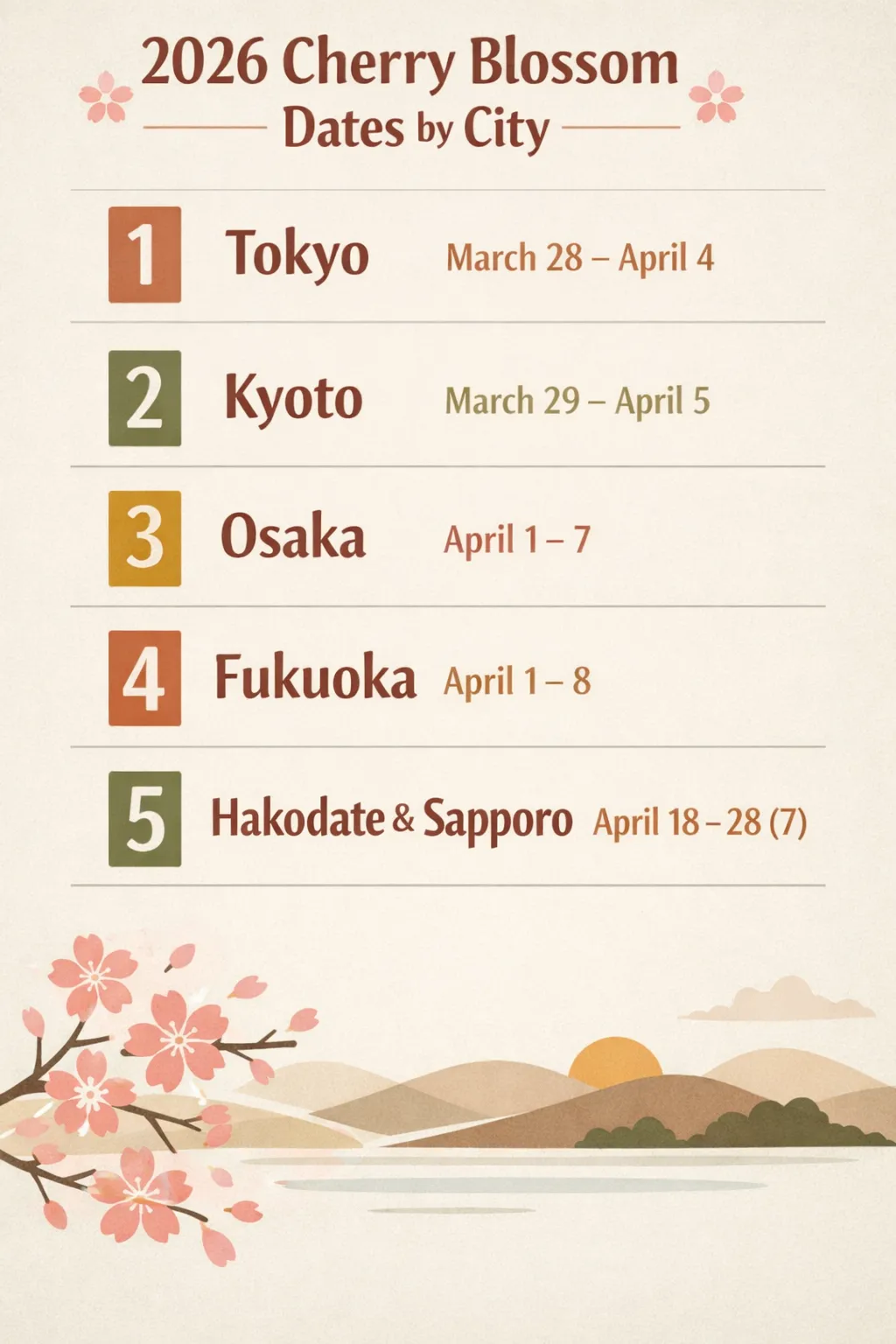 City-level bloom windows forecast for 2026 by city (Tokyo 3/28-4/4; Kyoto 3/29-4/5; Osaka 4/1-7; Fukuoka 4/1-8; Hakodate & Sapporo 4/18-28) per Japan Guide.
Japan’s major forecast providers revise their predictions throughout the season. The Japan Meteorological Corporation (JMC) released its 14th forecast update of 2026 on April 23, 2026 - proof that these numbers keep moving deep into spring (3). The Japan National Tourism Organization (JNTO) publishes its own forecast on a different rhythm, so checking both gives you a clearer picture of whether your dates are slipping earlier or later (3)(4).
A practical workflow:
- Book flights and hotels 2-6 months out based on the early forecast windows above.
- Re-check JNTO and JMC forecasts at the 6-week, 3-week, and 1-week marks (3).
- Keep your in-country itinerary flexible enough to shift a day or two, or to move north or south, if the bloom slides.
There’s a longer-term wrinkle worth knowing about. A 2026 report in Science found that warmer winters are starting to disrupt bloom quality, not just timing - some trees in southern Japan are failing to reach full bloom at all, and researchers estimate a 2°C rise in winter temperature can be enough to interfere with the dormancy signal trees rely on (1). The same research notes that milder winters can push flowering as much as 32 days later than usual in parts of southern Japan, reversing the earlier-bloom trend people have come to expect (1). None of this should put you off the trip. It’s simply a reason to lean on current-year forecasts rather than historical averages.
What City in Japan Is Famous for Cherry Blossoms?
Tokyo and Kyoto are the two names that dominate, for different reasons. Tokyo offers the highest concentration of accessible viewing spots and the biggest festival energy. Kyoto pairs blossoms with temples, canals, and a slower pace.
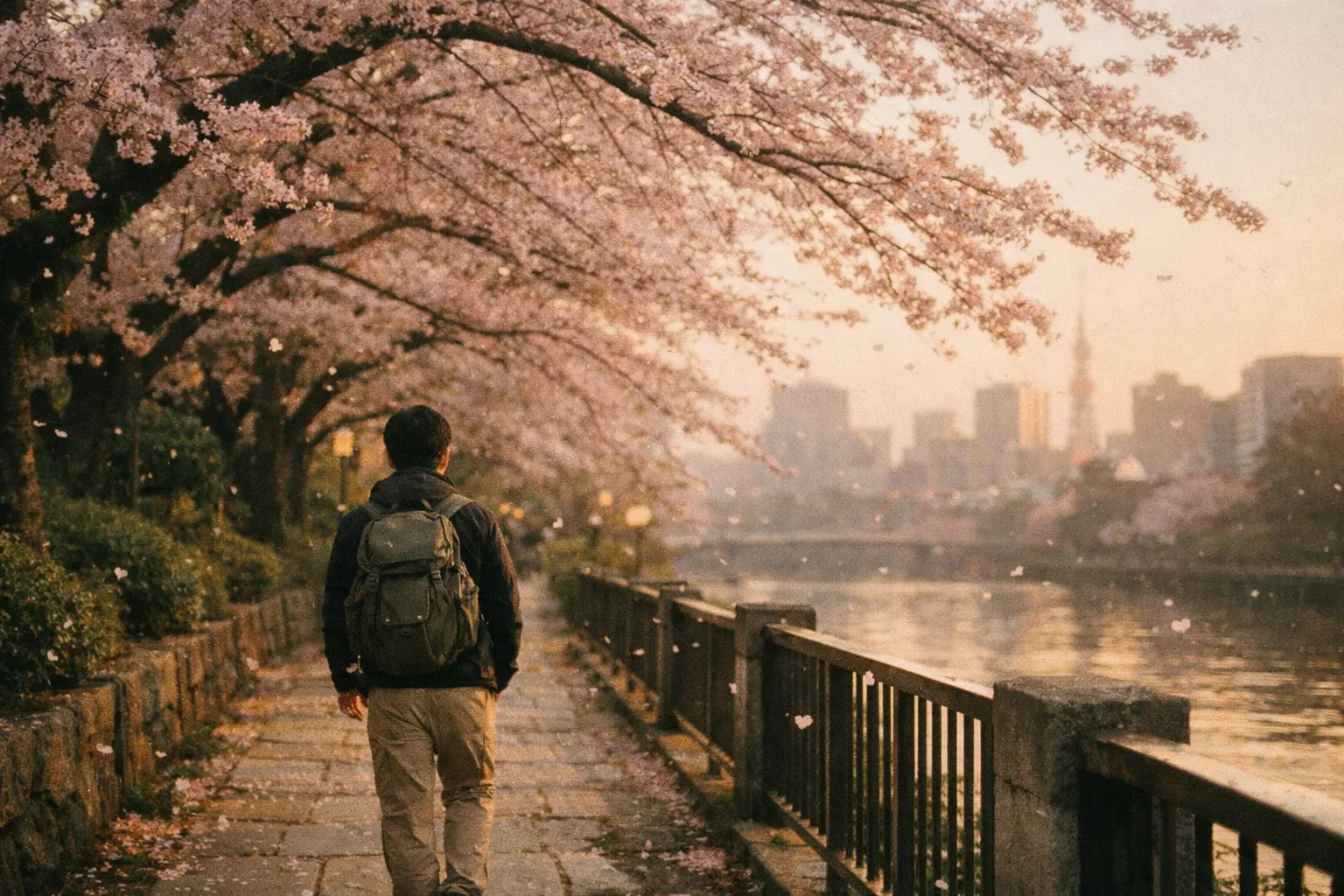
If you only have time for one base, Tokyo is the easier first-timer choice - more flights, more hotels, more viewing sites within a single train ride. Kyoto rewards travelers who want the blossoms framed against wooden temples and stone paths rather than skyscrapers.
“Famous” extends well beyond those two, though. Mount Yoshino in Nara, blanketed with over 30,000 cherry trees, layers blossoms up a hillside in waves that bloom at slightly different elevations, stretching the viewing window across several zones. Osaka, Fukuoka, Kanazawa, and the northern cities of Hirosaki and Kakunodate all have devoted followings - and for good reason. If you want to discover astonishing facts about Japan before you go, the depth of regional variation in sakura culture alone is worth exploring.
Cherry Blossom Viewing in Tokyo: Best Spots to See the Sakura
Tokyo viewing works best when you spread yourself across a few sites to dodge the worst of the crowds. A solid strategy mixes free public parks with paid gardens and night viewing (5).
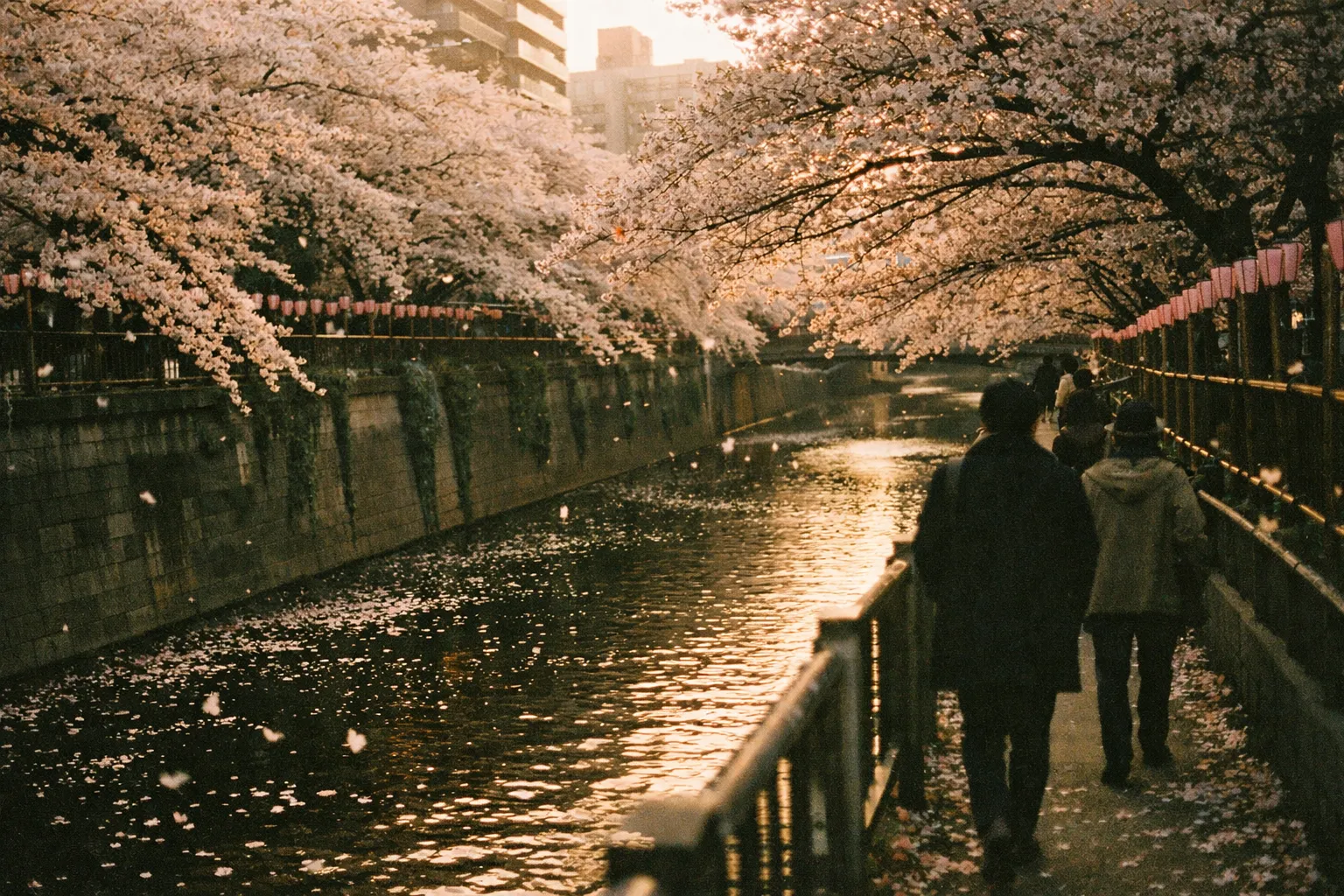
Ueno Park, in Taito ward, is the city’s most famous - and most crowded - spot. Roughly 1,000 cherry trees line the central pathway, and the hanami (flower-viewing picnic) crowds here are intense at peak. I visited on a Saturday morning during the first week of April and arrived at 7AM, which was just barely early enough to move freely. By 9AM, the main path was shoulder-to-shoulder. Go early if you want to actually see the trees rather than the backs of other visitors’ heads. Entry is free.
Other Tokyo sites worth building around:
- Shinjuku Gyoen - a large, manicured garden with multiple cherry varieties that bloom at staggered times, extending the viewing window. Admission is ¥500 (about $3.30 USD). Alcohol is not permitted, which keeps the atmosphere noticeably calmer than the open parks.
- Chidorigafuchi Greenway - a moat beside the Imperial Palace lined with a tunnel of cherry trees. You can rent a rowboat to drift beneath the blossoms, though boats are popular and often have long queues at peak.
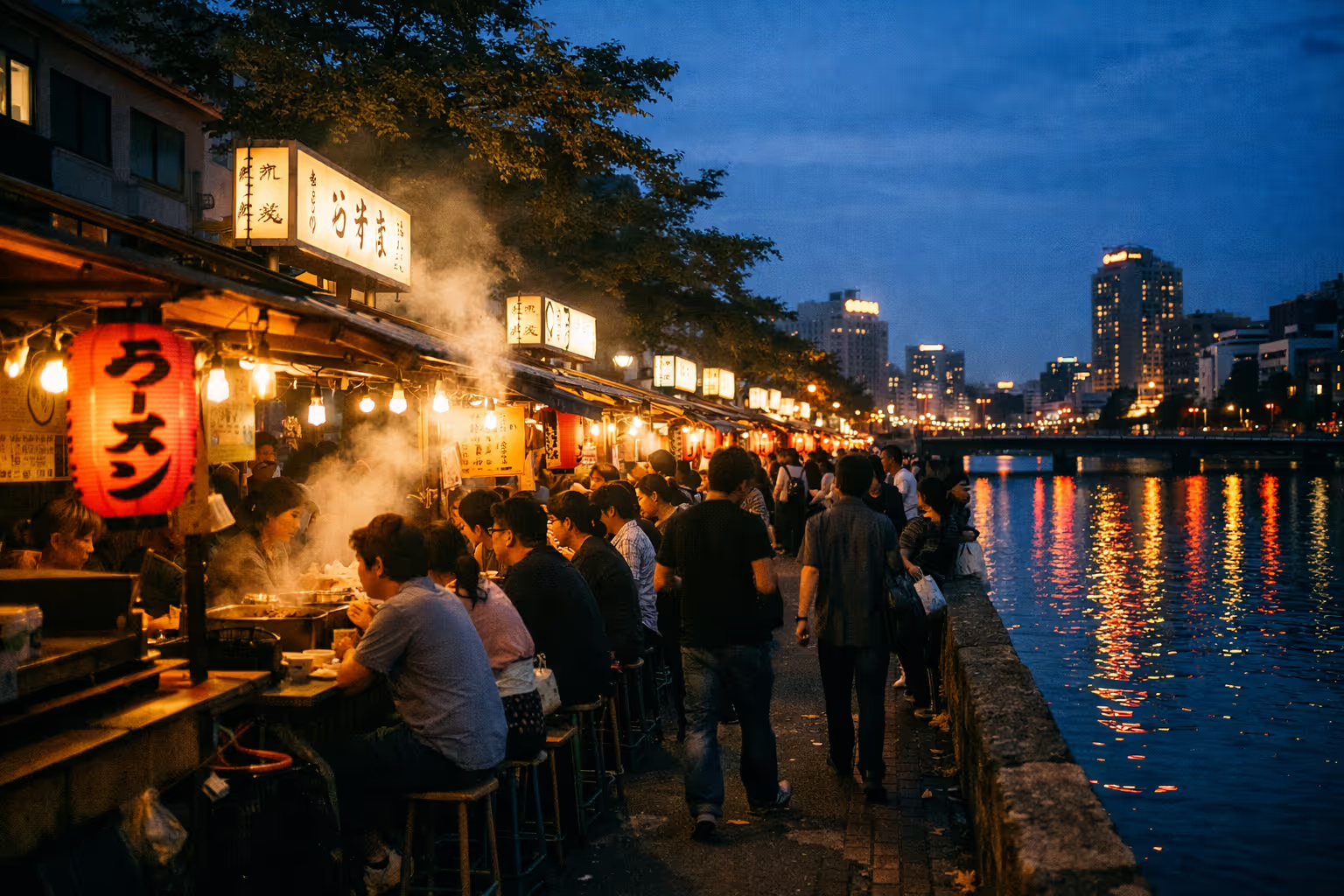
- Meguro River - a canal running through Nakameguro, lined with hundreds of trees and food stalls, best known for evening illuminations. This is where to go for yozakura (night viewing) without the deepest park congestion.
For night photography and lighter crowds, combining an early-morning park visit with an evening river or illumination spot works well (5)(6). The light at both ends of the day is better anyway.
Cherry Blossoms in Kyoto and Beyond
Kyoto’s Philosopher’s Path is a stone walkway in the Okazaki and Shishigatani neighborhoods, running alongside a canal, with cherry trees arching overhead and petals drifting onto the water. It’s at its best in the early morning before tour groups arrive - I walked it around 6:30AM on a weekday and had long stretches almost entirely to myself. Maruyama Park in Gion, Arashiyama to the west, and the grounds around several temples round out the city’s viewing.
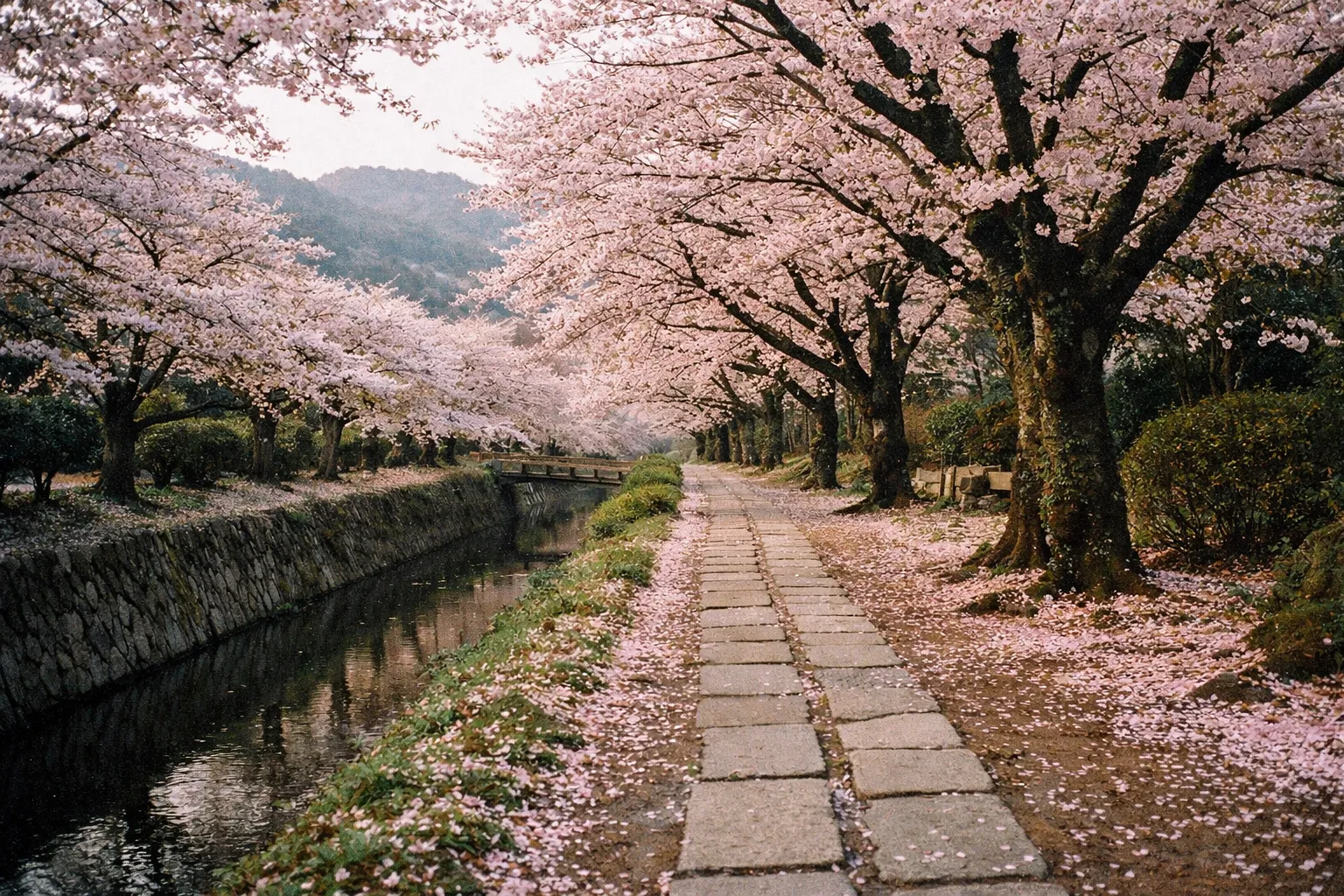
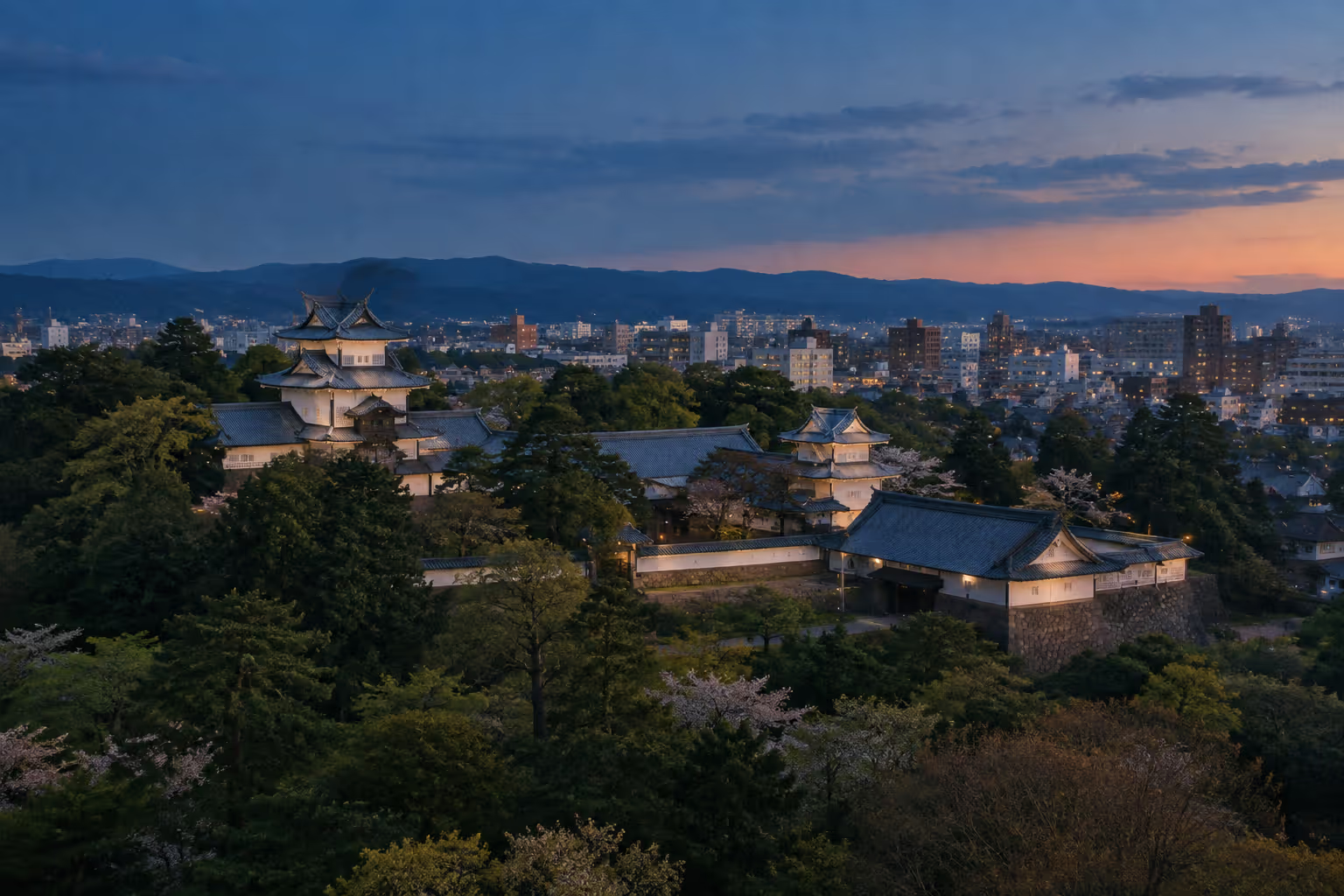
If your goal is photography over festival atmosphere, smaller cities deliver strong visuals with far less compression than central Tokyo. Kakunodate and Hirosaki in the north are particularly good for this - samurai-district streets and castle grounds frame the blossoms in a way that feels genuinely different from anything in the major cities. In Kakunodate, the main viewing strip runs along Bukeyashiki-dori, the preserved samurai quarter, where weeping cherry trees overhang the earthen walls of old clan residences. In Hirosaki, the castle park’s outer moat fills with fallen petals during late bloom, creating a pink carpet on the water that photographers specifically time their visits around. Kanazawa, Takayama, and Matsumoto are solid mid-April options that stay well below Tokyo crowd levels. In Kanazawa, the best concentration of trees sits inside Kenroku-en garden and along the Saigawa River embankment in the Teramachi district.
If you want the longest possible sakura season, travel south-to-north over two to three weeks - start in Kyushu and end in Tohoku or Hokkaido, where bloom dates arrive much later (4)(7). This is also the smartest hedge against forecast error: if the south peaks early or late, the north gives you a second chance. For a broader look at hidden wonders in Japanese cities beyond the standard sakura circuit, smaller destinations reward the extra planning.
Japan Cherry Blossom Tours: Guided vs. Independent
You don’t need a tour to see cherry blossoms. Japan’s rail network makes independent Japan cherry blossom viewing entirely doable, and I’ve done it both ways. But guided cherry blossom Japan tours earn their cost in specific situations.
Where guided tours help:
- Transport coordination across multiple cities - Tokyo, Kyoto, Osaka, Hiroshima, Tohoku - without you wrangling rail bookings and luggage forwarding.
- Night illumination access and reserved boat rides, which can sell out during the peak two-week window (6).
- Timed admissions to popular gardens, cutting out queue time.
Where independent travel wins:
- Budget control - public rail plus free spots like Ueno Park and riverside viewing keep costs down.
- Flexibility - you can chase the forecast and shift days, which a fixed-departure tour simply can’t do (3).
By traveler type:
- Budget: Free parks and riverfront viewing, public rail only - expect to spend roughly ¥1,000-¥2,000 ($7-$13 USD) per day on transport within a single city.
- Midrange: Free parks plus one paid garden or a yakatabune (traditional roofed boat) dinner cruise; budget-hotel rates in Tokyo during peak bloom typically run ¥12,000-¥20,000 ($80-$135 USD) per night.
- Premium: Boutique hotels near major sakura sites run ¥35,000-¥80,000 ($235-$535 USD) per night during the peak fortnight, and curated tours with night illuminations, reserved boats, and timed entries add ¥15,000-¥40,000 ($100-$270 USD) per person on top.
Whatever you choose, book accommodation within walking distance of one major sakura site. Peak-hour rail congestion and late-night transfers after illuminations are a real drag, and staying close lets you hit a park at dawn before the crowds build.
Is Japan More Expensive During Cherry Blossom Season?
Yes. Cherry blossom season is one of Japan’s peak travel windows, and it shows up in the price of nearly everything tied to the trip.
Flights, hotels, and tours all carry premium pricing during the late-March-to-early-April window in Tokyo, Kyoto, and Osaka, because demand concentrates into the same 7-10 days in each city. There’s no single official nationwide surcharge - pricing is driven by supply and demand - but the practical effect is consistent: the best dates in the headline cities sell out, and what’s left costs more.
How to manage it:
- Book early. Two to six months ahead for flights and peak-bloom hotels in the major cities is the realistic minimum.
- Shift your base. Secondary cities like Kanazawa, Takayama, Matsumoto, Kakunodate, and Kitakami still have strong viewing windows in the 2026 forecast at lower nightly rates and with fewer crowds.
- Lean on free viewing. Ueno Park, the Meguro River, and Kyoto’s Philosopher’s Path cost nothing beyond getting there.
- Travel the shoulder of the bloom. The few days just before peak are already photogenic, slightly less crowded, and sometimes cheaper.
The Cultural Significance of Sakura
Appreciating cherry blossoms in Japan goes beyond looking at flowers.
Hanami - the custom of enjoying the transient beauty of blossoms - typically means gathering under the trees with food, drink, and friends or family. Spread a tarp, bring snacks, settle in. Festivities often run into the night as yozakura, where paper lanterns light up the blossoms from below.
Seasonal treats tied to the bloom appear everywhere: sakura mochi (sweet rice cake wrapped in a pickled cherry leaf), cherry-flavored drinks, and limited-edition snacks that disappear the moment the petals do (6). For deeper context on things to do in Japan beyond the blossom season, the country’s layered history and rail network open up a much wider itinerary.
One etiquette note: at popular parks, people often reserve picnic spots early in the day by laying down a tarp. It’s accepted practice, but don’t take more space than your group needs, take your trash with you, and don’t shake branches or pick blossoms for photos. The trees are shared by thousands of people each day, and the parks stay remarkably clean because most visitors treat them that way.
More Flowers to See in Spring
If your dates miss peak bloom, or you want to extend the trip, sakura isn’t the only show. Japan’s spring runs through a sequence of seasonal flowers, and many viewing spots overlap with cherry blossom destinations.
- Plum blossoms (ume) bloom before cherry blossoms, peaking in late February to early March. If you arrive early and the cherries haven’t opened, plum gardens are your backup.
- Wisteria (fuji) follows the cherries, peaking late April into early May, with draped purple flower tunnels at gardens like Ashikaga Flower Park.
- Azaleas (tsutsuji) light up parks and temple grounds in mid-to-late April.
- Tulips and nemophila (baby blue eyes) fill northern and coastal parks through late April and early May, with Hitachi Seaside Park’s blue hills among the most photographed.
Routing one of these into the back end of your itinerary gives you a second floral peak even if the sakura forecast slips - a useful hedge given how much bloom dates can move (1). Travelers planning a broader trip might also consider Japan: 5 Stops for History, Nature & Pop Culture to layer seasonal flowers into a fuller itinerary.
Frequently Asked Questions
- Can cherry blossom viewing be combined with other seasonal flower festivals?
- Yes, many cherry blossom viewing spots overlap with plum, wisteria, azalea, and nemophila blooms, allowing you to extend your spring flower experience.
- What should I do if the cherry blossom forecast changes after I arrive?
- Keep your itinerary flexible to shift locations north or south by a day or two, or visit secondary cities with later bloom dates to catch the flowers.
- Are there any special rules for hanami picnics in public parks?
- It's customary to reserve spots early with a tarp, but avoid taking excessive space, clean up all trash, and never shake or pick blossoms to protect the trees.
- How do guided cherry blossom tours differ from independent travel?
- Guided tours offer transport coordination, reserved access, and timed admissions, while independent travel provides budget control and flexibility to chase changing forecasts.
- Is it worth visiting northern cities like Kakunodate or Hirosaki for cherry blossoms?
- Absolutely. These cities offer less crowded, visually distinct settings with samurai streets and castle grounds, ideal for photography and a quieter experience.
- What are the best times to check cherry blossom forecasts before traveling?
- Check forecasts at 6 weeks, 3 weeks, and 1 week before your trip to stay updated on bloom timing and adjust plans accordingly.
Planning Your Sakura Trip
Two things matter most for a cherry blossom trip: book early, and stay flexible. Lock in flights and peak-bloom hotels two to six months out, then track the JNTO and JMC forecasts as your dates approach (3)(4)(5). If your budget allows a two-city hedge - Tokyo plus Kyoto, or Tokyo plus a northern city - one location can absorb a forecast error of several days.
Match the destination to what you actually want. Festival atmosphere and easy logistics point to Tokyo. Temples and canals point to Kyoto. Photography with room to breathe points north, to Kakunodate or Hirosaki. And if the blossoms slip past you entirely, wisteria and azaleas are already opening. The spring isn’t over when the petals fall.