Japanese etiquette for travelers is less about memorizing rules than packing for them. You will take your shoes off five to fifteen times a day, at ryokan, temples, and tatami rooms, so bring slip-ons and clean socks. At the table, never stand your chopsticks upright in rice or pass food chopstick to chopstick, but do slurp your ramen; it signals you are enjoying it. And do not tip; it is not done, can be refused, and a polite gochisousama deshita says far more.
Japanese Etiquette for Travelers: Pack and Budget With the Customs in Mind
Understanding Japanese etiquette for travelers starts before you board the plane. These japan cultural rules aren’t policed by signs - they’re absorbed from how locals move - and a few choices at the packing and budgeting stage make the rest of the trip easier.
What to pack with etiquette in mind:
- Slip-on shoes. Expect to remove them 5-15 times a day at ryokan, temples, izakaya with tatami seating, and some museums. Lace-up boots become a daily ordeal.
- Clean socks without holes. You’ll be in stockinged feet often. Bring extras.
- A foldable tote and a small zip pouch for trash. Public bins are scarce in Japan, and you’ll often carry rubbish for hours before finding a sorted bin.
- A small hand towel. Many public restrooms don’t supply paper towels or hand dryers - Japanese people carry their own.
- A pocket phrasebook (~$8-15 USD) or download Google Translate’s Japanese offline pack before you arrive.
Budget notes tied to etiquette:
- No tipping. Don’t budget 10-15% on top of restaurant or taxi bills. Tips can be politely refused or returned (1)(5).
- Cash still matters. Carry yen for small restaurants, temples, and rural areas, and place it in the tray at registers rather than handing it directly to staff.
- IC card (Suica, PASMO, or ICOCA) - about ¥500 (~$3.50 USD) deposit plus top-up - handles trains, buses, and most convenience stores. The unregistered Welcome Suica for tourists is the easiest version to obtain at major airports.
- Onsen budget: ¥600-¥1,800 (~$4-$12 USD) for a public bath; ¥3,000-¥6,000 (~$20-$40 USD) for upscale day onsen; ryokan with onsen and meals start around ¥12,000-¥22,000 (~$80-$150 USD) per person per night.
If you want to practice etiquette in a controlled setting, book a ryokan night early in the trip. The staff will walk you through shoes, slippers, yukata, dinner, and the bath in sequence - it’s the fastest way to internalize the rules. I did this on my second Japan trip and learned more in one evening than I had from two days of reading beforehand.
Mastering the art of proper bowing
Bowing etiquette japan visitors stumble on early is less about formality than about reading the room - it’s the default expression of respect, gratitude, and greeting, and the angle and duration tell people exactly where they stand in the interaction.
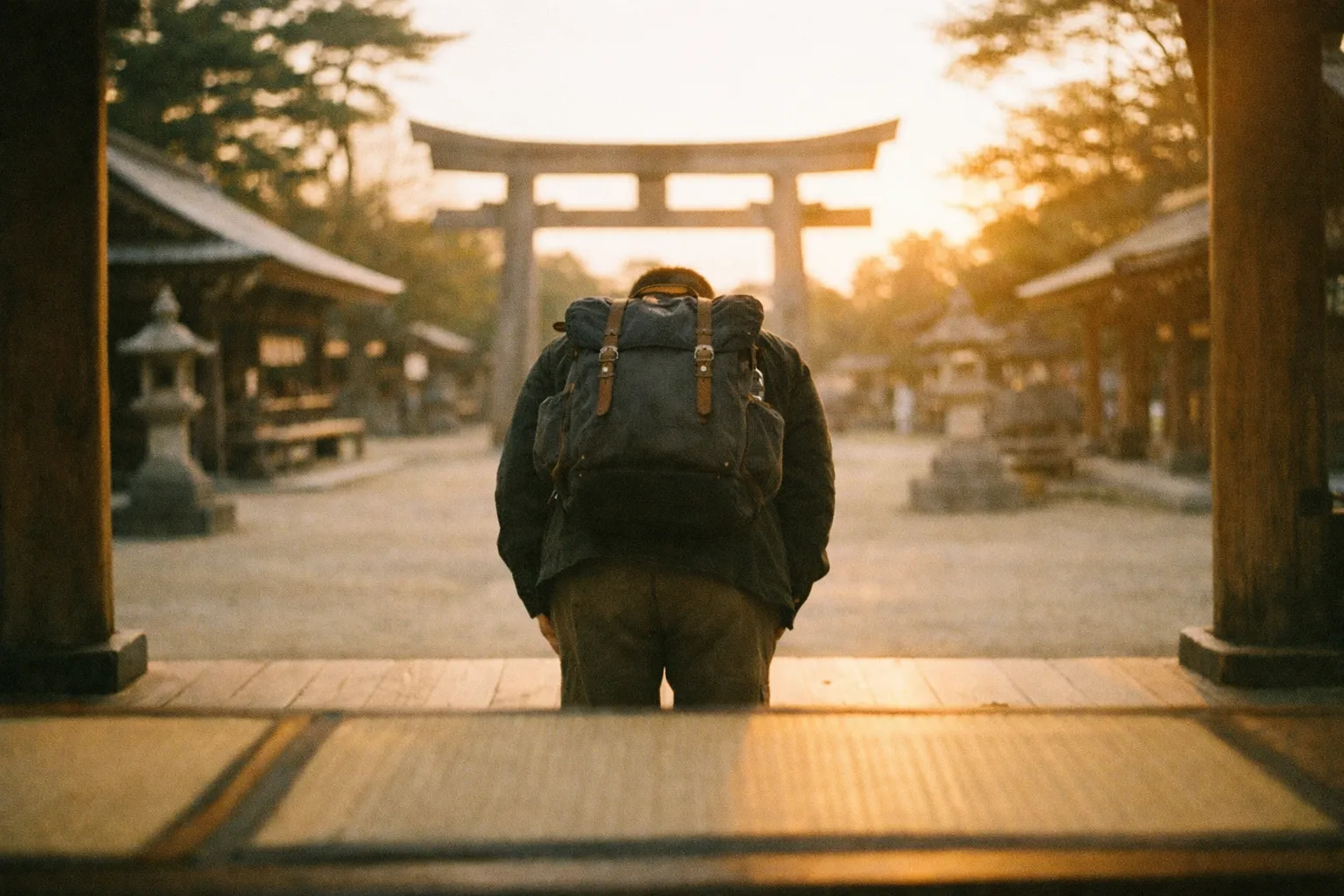
Three rough categories cover almost every traveler situation (3):
- 15° (eshaku) - a light bow for casual thanks, greetings, passing someone in a hallway.
- 30° (keirei) - a respectful bow for shopkeepers who’ve helped you, hosts at a ryokan, formal introductions.
- 45° (saikeirei) - reserved for deep gratitude, sincere apology, or meeting someone of significantly higher status. You won’t need this often.
As a traveler, the safest approach is to mirror the bow you receive and add a slight nod. Handshakes are increasingly common in tourist-facing settings, but a bow is never wrong (3).
Two small details locals notice: keep your back straight rather than just bobbing your head from the neck, and don’t bow while walking. Stop, bow, then continue. In a business context, hold the bow a beat longer than the most senior person in the room.
Embracing the ritual of removing shoes indoors
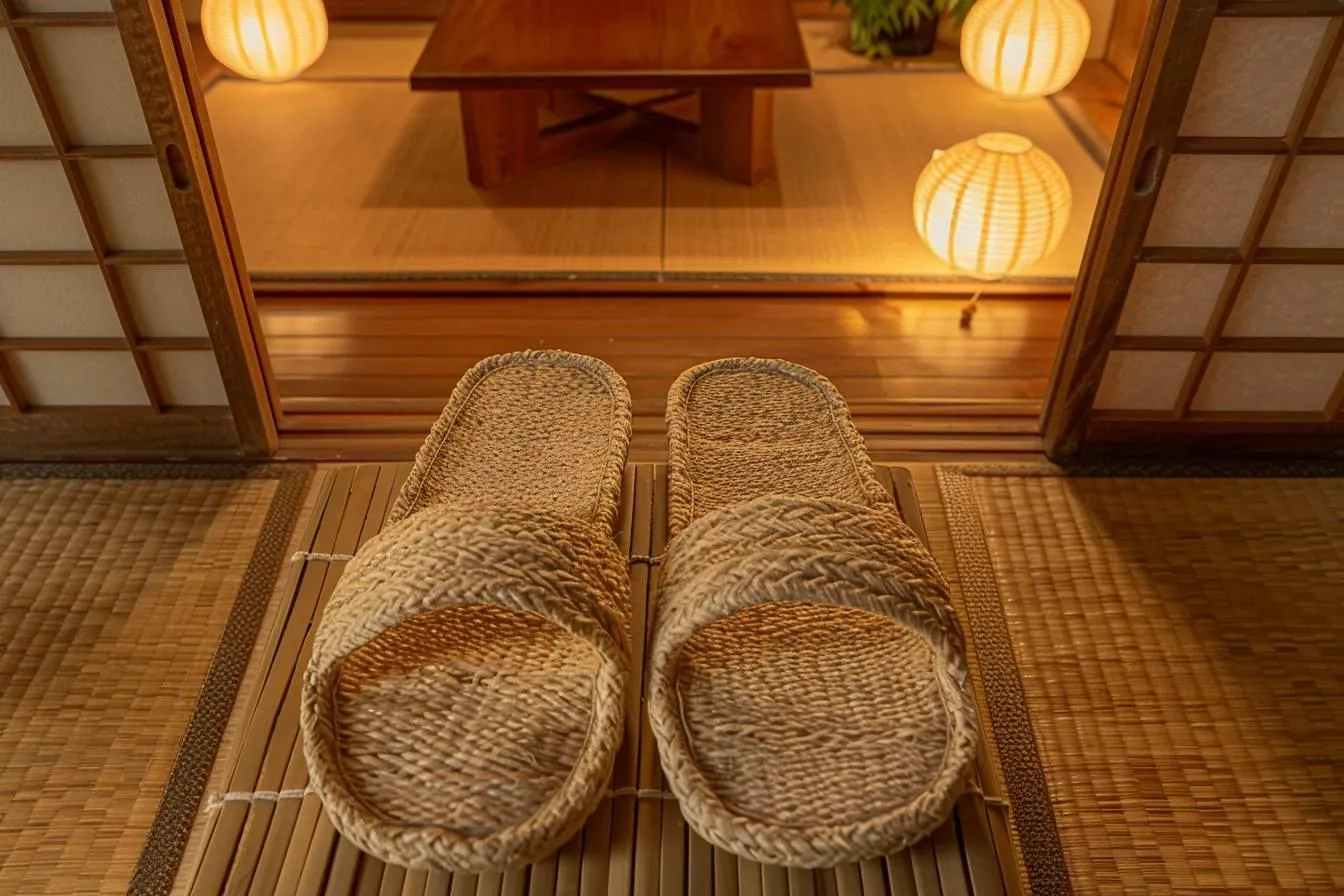
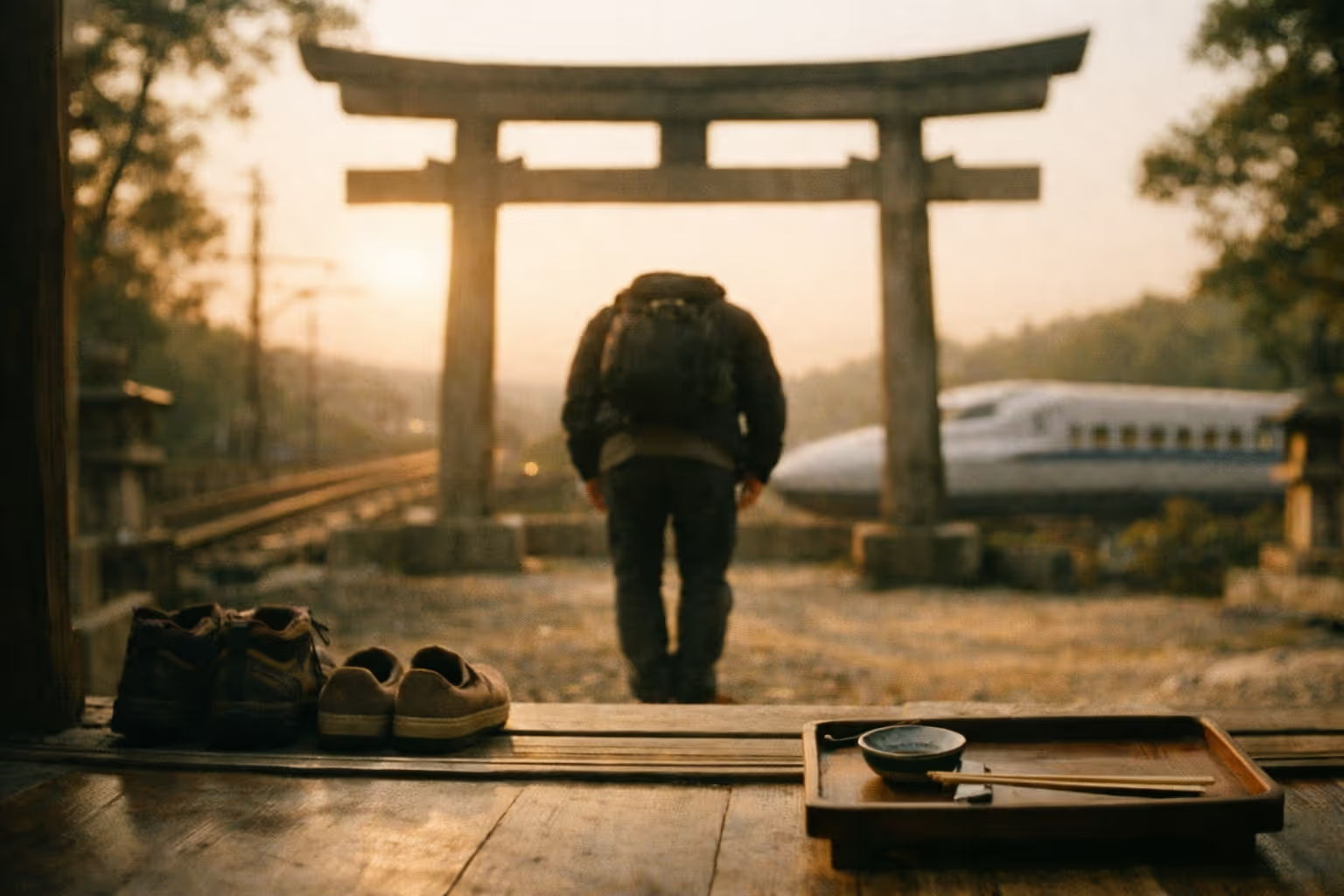
The shoes off Japan rule applies whenever you step up into a home, a ryokan room, many izakaya and traditional restaurants, temples with raised wooden floors, tea rooms, and any space with tatami (woven straw mats) (1).
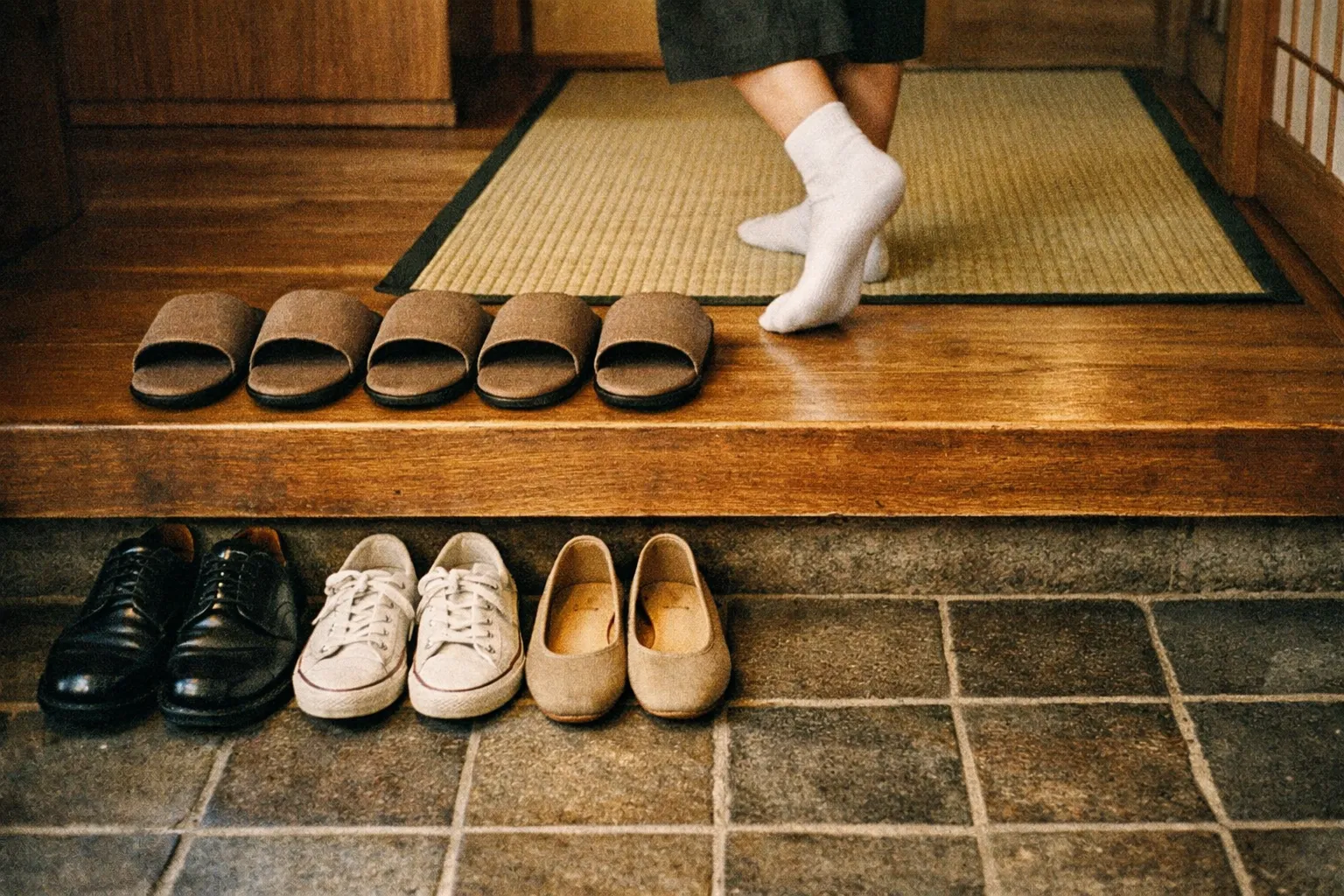
How to read the cues:
- A genkan (recessed entry area with a clear step up) is the universal signal.
- Shoe racks or lined-up shoes at the entrance mean shoes off.
- Slippers laid out for you means shoes off, slippers on.
A few rules that trip up first-timers:
- Never step on tatami in shoes or slippers - only socks or bare feet (4). This is the most visible mistake travelers make, and it’s the one that gets the most visible reaction.
- Toilet slippers are separate. Many homes and ryokan provide a different pair just for the bathroom. Swap into them when you enter, swap back when you leave, and never walk into the main room wearing toilet slippers - it’s the classic faux pas.
- Turn your shoes to face the door after removing them, so you can step into them cleanly when leaving. Staff sometimes do this for guests; doing it yourself is noticed positively.
When I stayed at a ryokan in Hakone in November 2024, I watched three separate guests walk out of the bathroom in toilet slippers without noticing. The staff corrected them gently each time, but the embarrassment was obvious. It’s worth the thirty seconds to double-check.
If you’re not sure whether to remove shoes, look at what other guests have done. When in doubt, take them off.
Refining table manners and chopstick etiquette
Japanese table manners cover chopstick handling, bowl posture, sounds, and pacing. The high-end places enforce more rules; ramen counters are forgiving. The fundamentals apply everywhere.
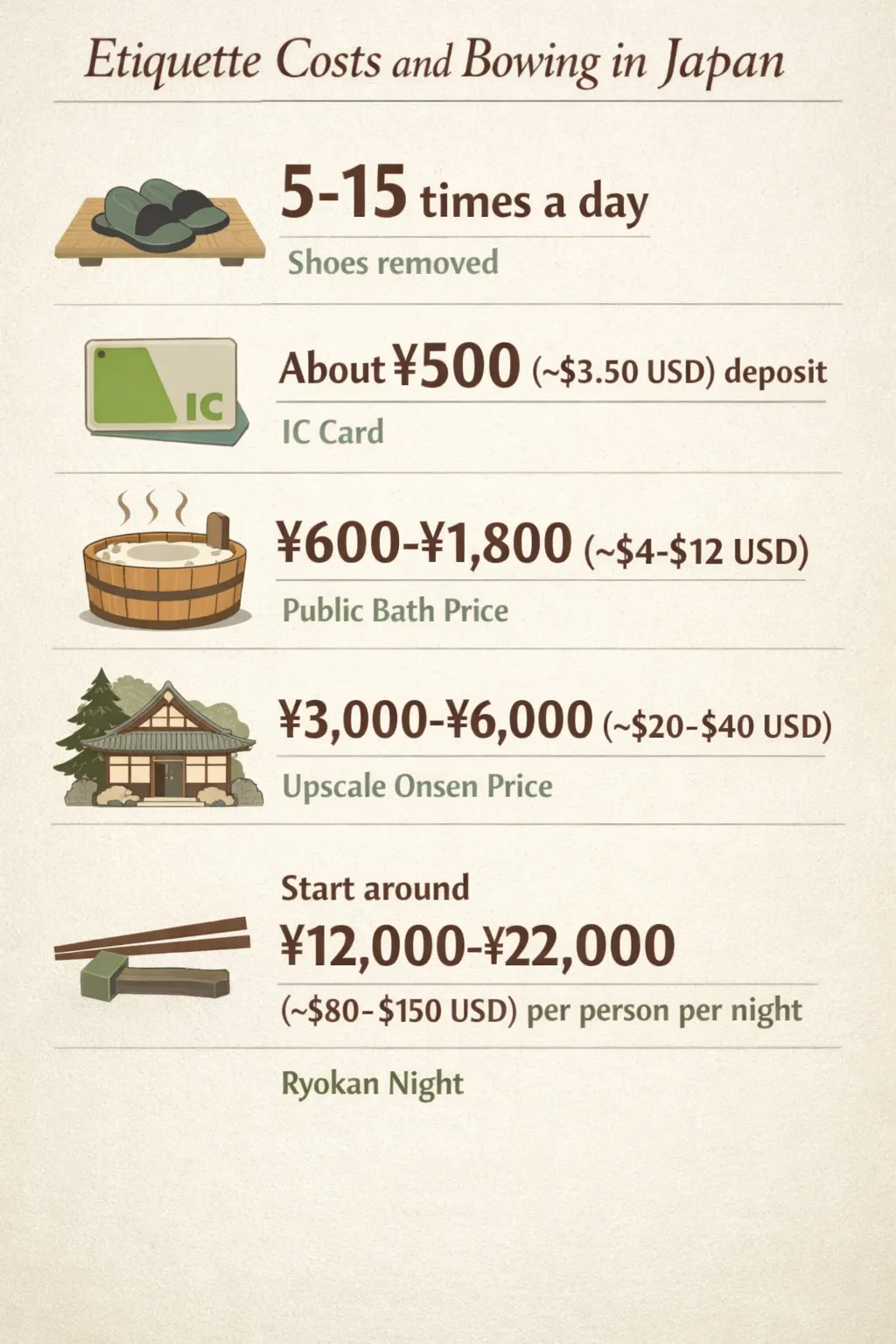 Budget-friendly etiquette snapshot: shoes removed 5-15 times daily; IC card deposit about ¥500; public bath ¥600-¥1,800; upscale day onsen ¥3,000-¥6,000; ryokan with onsen start around ¥12,000-¥22,000 per person per night.
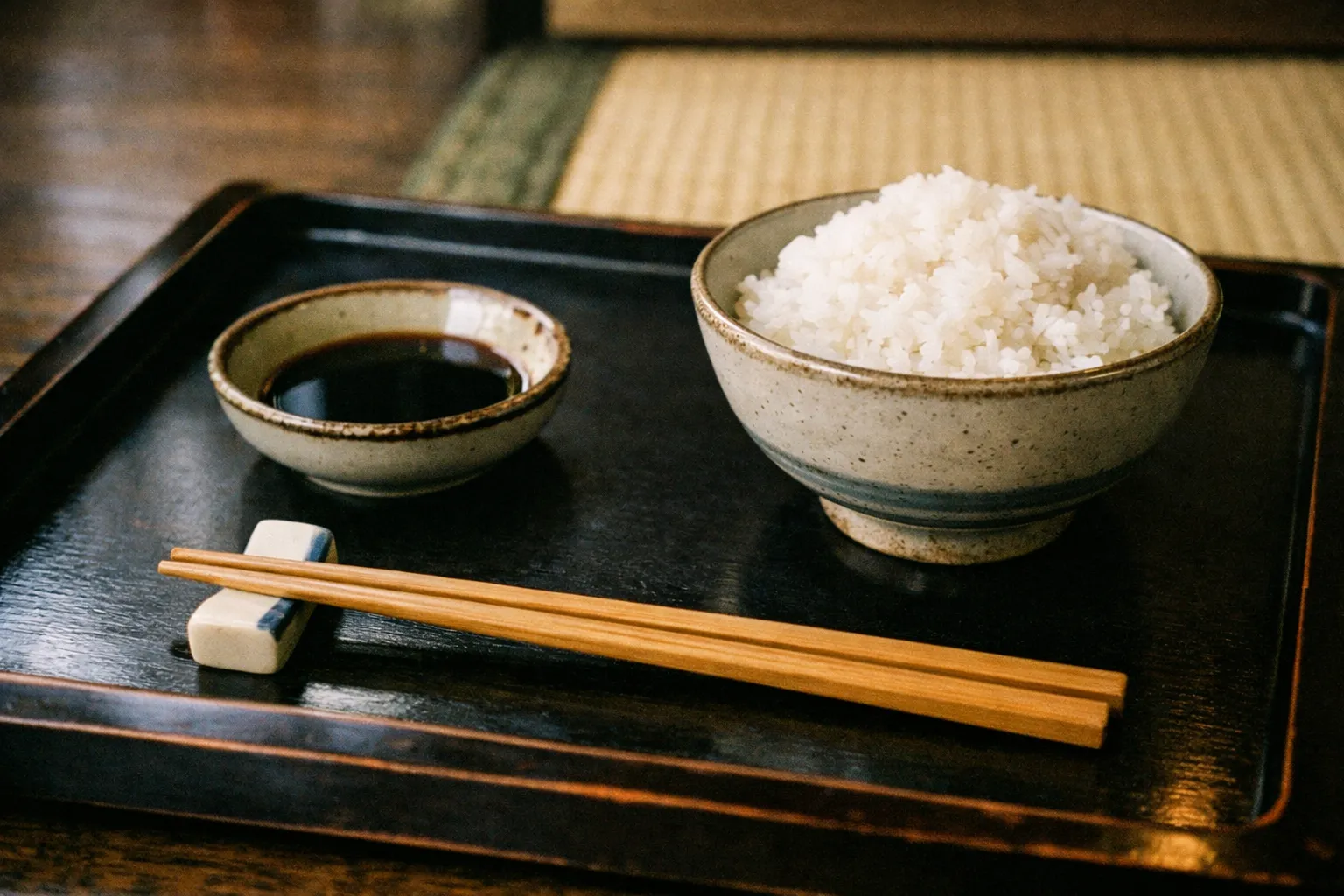
Mind your chopstick and bowl manners
Chopstick taboos to avoid(3)(5)(6):
- Don’t stick chopsticks upright in rice. This mimics incense at a funeral.
- Don’t pass food chopstick-to-chopstick. Also a funeral ritual - bones are passed this way at cremations.
- Don’t point with chopsticks or wave them around while talking.
- Don’t spear food with a chopstick like a fork.
- Don’t cross your chopsticks on the table.
- Don’t lick chopsticks clean.
What to do instead:
- Rest chopsticks on the hashioki (chopstick rest) when you pause. If there’s no rest, lay them neatly across the edge of your tray or the soy sauce dish - not across your bowl.
- For shared dishes, flip your chopsticks and use the clean end to transfer food to your plate, or use the communal serving chopsticks if provided (5)(6).
- Lift small bowls to your mouth. Rice bowls, miso soup, and small donburi (rice bowls with toppings) can be brought up close so chopsticks have less distance to travel (6). Don’t lift large shared plates or sushi platters.
- Rub disposable chopsticks together to remove splinters if needed - this is still considered rude by many and best avoided.
It’s okay to slurp
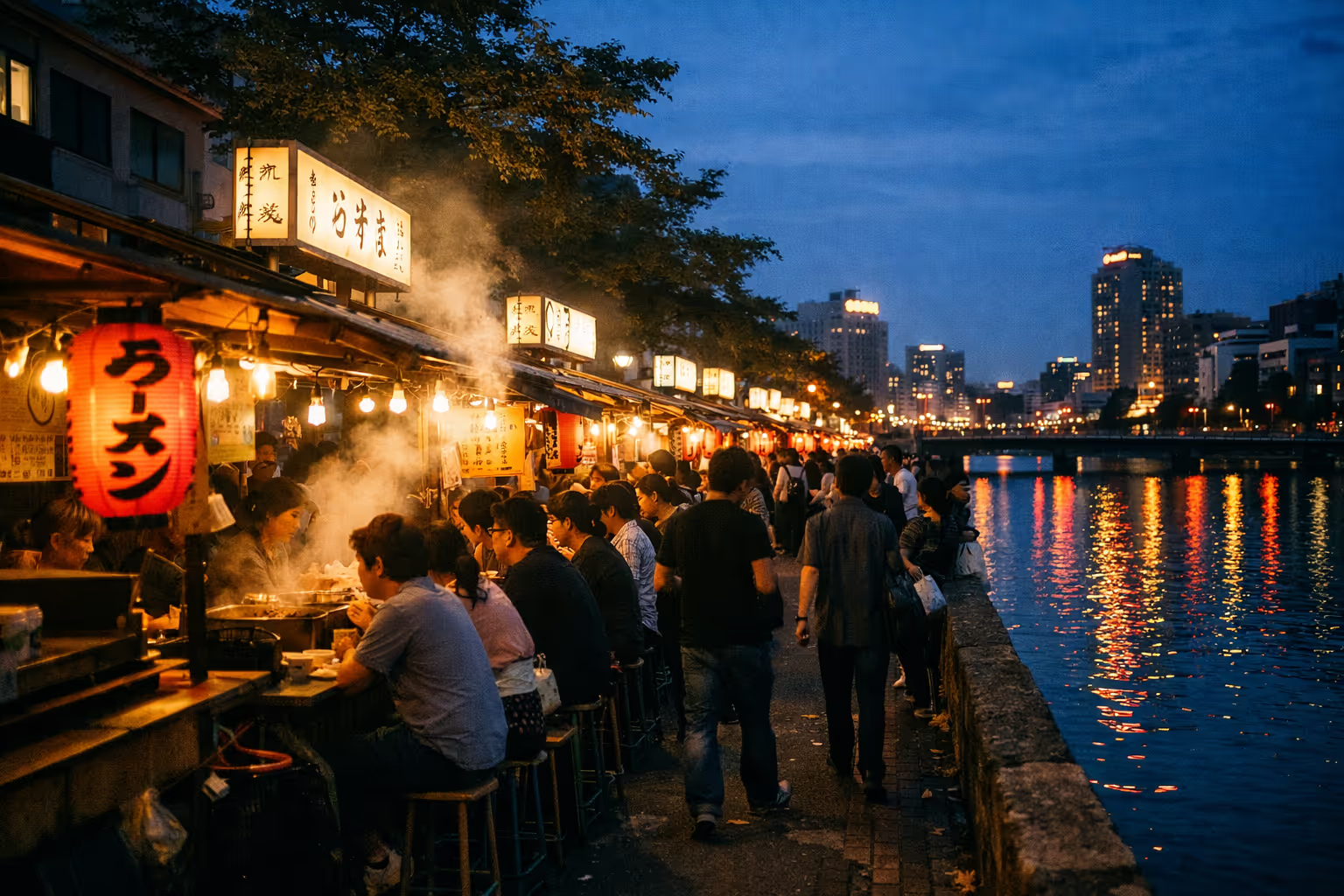
Slurping noodles in broth - ramen, udon, soba - is acceptable and often read as a signal of enjoyment (1)(6). There’s a practical reason too: it cools the noodles as they travel and pulls broth flavor with each bite.
The nuance: slurp efficiently, not theatrically. Aim the noodles in cleanly and avoid spraying broth on your neighbor at the counter. For non-broth dishes - Western pasta, cold soba dipped in tsuyu (dipping sauce), anything dry - keep slurping minimal.
Restaurant lingo
A small phrase kit covers most situations (3):
- Itadakimasu - said before eating, roughly “I gratefully receive.”
- Gochisousama deshita - said after, “thank you for the meal.”
- Sumimasen - excuse me / sorry / thank you (the all-purpose word).
- Arigatou gozaimasu - thank you (formal).
- O-kanjou onegaishimasu - the check, please.
- Oishii desu - it’s delicious. Say it once with a smile and you’ll often get an immediate warm response.
- Kampai - cheers, when drinking.
- Osusume wa nan desu ka? - what do you recommend?
To call staff, raise your hand slightly and say sumimasen in a clear but not loud voice. Don’t snap fingers, whistle, or shout.
Many casual places use ticket machines: pick your dish on a vending-style machine near the door, pay, hand the ticket to the cook. No conversation required. Picture menus and plastic food displays are common in tourist areas too.
Leave no noodle - or yen - behind
Finishing your food is a quiet rule. Leaving significant leftovers is read as wasteful, and doggy bags are generally not offered in ordinary restaurants (4). At an izakaya (Japanese pub-style restaurant), start with two or three small dishes and add more - ordering one more plate at a time is completely standard.
The “yen” side: tipping is not customary and can confuse or embarrass staff (1)(5). The service charge is built in. At the register:
- Place cash in the tray, not in the cashier’s hand (5).
- Take any change from the tray the same way.
- Cards and contactless payments are increasingly accepted, but the tray ritual often still applies - drop the card in, take it back.
If you genuinely want to thank someone beyond words, a small gift (a snack from your home country, wrapped) is the cultural equivalent of a tip in private hospitality contexts.
Navigating public spaces with grace
Japan’s public spaces run on wa (harmony). The collective effort to keep trains, sidewalks, and shops pleasant is what makes the Shibuya and Nakameguro neighborhoods in Tokyo feel calm despite being some of the densest urban areas on earth. Public behavior Japan rules are easy to learn and the single biggest source of complaints about tourists when ignored.
No need to respond
When you walk into a shop or restaurant, staff will often shout “irasshaimase!” (“welcome”). You don’t need to reply. A small nod, a smile, or nothing at all is fine - it’s a broadcast greeting, not a question. First-timers often feel pressured to respond verbally; locals don’t. Same for the chorus of “arigatou gozaimashita” as you leave.
Turn down the volume
On trains, locals are quiet. Phones go on manner mode (silent), and calls are not made in the carriage (5). If you can hear your own music through your earbuds, the volume is too high. Group chatter at restaurant-level volume on a train will get glances - sometimes a polite request from staff on the Shinkansen (bullet train).
A few specifics:
- Priority seats near doors are for elderly, pregnant, injured, or disabled passengers. Avoid them at busy times.
- Quiet cars on the Shinkansen mean genuinely quiet - no calls, no loud conversation.
- Public displays of affection beyond hand-holding are uncommon in public, especially outside Tokyo and Osaka.
Public snacking
Eating while walking is treated as sloppy in most situations (5)(6). Buy your convenience store onigiri (rice ball) and eat it standing near the shop, on a bench, in a park, or in the eat-in corner some konbini (convenience stores) now have. Exceptions:
- Festivals - street food at matsuri (traditional festivals) is meant to be eaten on the move.
- Long-distance trains - eki-ben (station bento box) on the Shinkansen is a tradition. Local trains and subways, not so much.
- Ice cream and crepes sold from street stalls - usually eaten near the stall.
Drinking coffee from a takeaway cup while walking has become more accepted in central Tokyo since 2020, but still feels out of place in residential neighborhoods and smaller towns.
Hold on to your rubbish
Public bins are scarce because Japan moved away from them after the 1995 Tokyo subway attack and never fully reinstated them. Plan for it (1):
- Carry a small zip pouch for wrappers, tissues, and PET bottle caps.
- Use vending machine recycling bins for the bottle or can you just bought - they’re for that specific drink, not for general trash.
- Convenience stores have bins inside or just outside; use them if you bought something there.
- Train stations often have sorted bins past the ticket gates.
- Sort by category at your accommodation: burnable, plastics, bottles, cans. Diagrams are usually posted in English.
I carried a small zip pouch in my jacket pocket for most of a two-week trip in 2024 and filled it more times than I expected. It becomes automatic after a day or two.
Hot tips for hot springs
Onsen etiquette has the steepest learning curve and is where mistakes are most visible. The flow at a traditional onsen (1)(4):
- Pay and enter the locker room for your gender (red curtain = women, blue = men, but check the kanji 女 / 男).
- Strip completely. Swimsuits are not allowed in traditional onsen unless explicitly permitted (rare).
- Take only the small towel into the bathing area. Leave the large one in the locker.
- Wash thoroughly at a shower stool with soap and shampoo before entering the bath. This isn’t optional. Rinse off all suds.
- Enter the bath slowly. Locals often pour several bowls of hot water over themselves first to acclimate.
- Keep the small towel out of the water. Fold it on your head or rest it on the edge.
- Tie up long hair. It mustn’t touch the bath water.
- Soak quietly. No swimming, no splashing, no loud conversation.
- Rinse off (or don’t) when leaving - some onsen waters are mineral-rich and locals leave them on the skin.
- Dry off in the changing area, hydrate, rest.
Tattoo policies are loosening but still vary. Many traditional onsen prohibit tattoos. Options:
- Cover-up seals sold at pharmacies and some onsen front desks, for small tattoos.
- Tattoo-friendly onsen - search “tattoo friendly onsen [town name]”; the list has grown noticeably since 2020.
- Private baths (kashikiri) - book in advance at ryokan; rates run ¥2,000-¥5,000 (~$13-$33 USD) for 45-60 minutes.
Confirm policy by email or via your hotel’s front desk before you arrive. Showing up and being turned away is a waste of everyone’s time.
Don’t escalate traffic
City sightseeing involves more etiquette than you’d think:
- Don’t jaywalk. Even on empty streets at midnight, locals wait for the green signal. Some municipalities issue fines, and it’s socially disapproved.
- Escalators - stand on one side, walk on the other. Stand on the left and walk on the right in most of Japan, but in Osaka/Kansai stand on the right and walk on the left. Watch the locals and follow. Don’t block both sides with luggage.
- Sidewalks - keep left when walking in dense areas like Shibuya or Shinjuku. Don’t stop in the middle of a flow to check your phone; step to the side.
- Bicycles are often on the sidewalk in Japan - listen for bells and move aside.
- Queueing is sacred. There are painted lines on train platforms for boarding positions; stand in them, let passengers exit first, then board.
Temple and shrine basics
Two short rules that cover most visits:
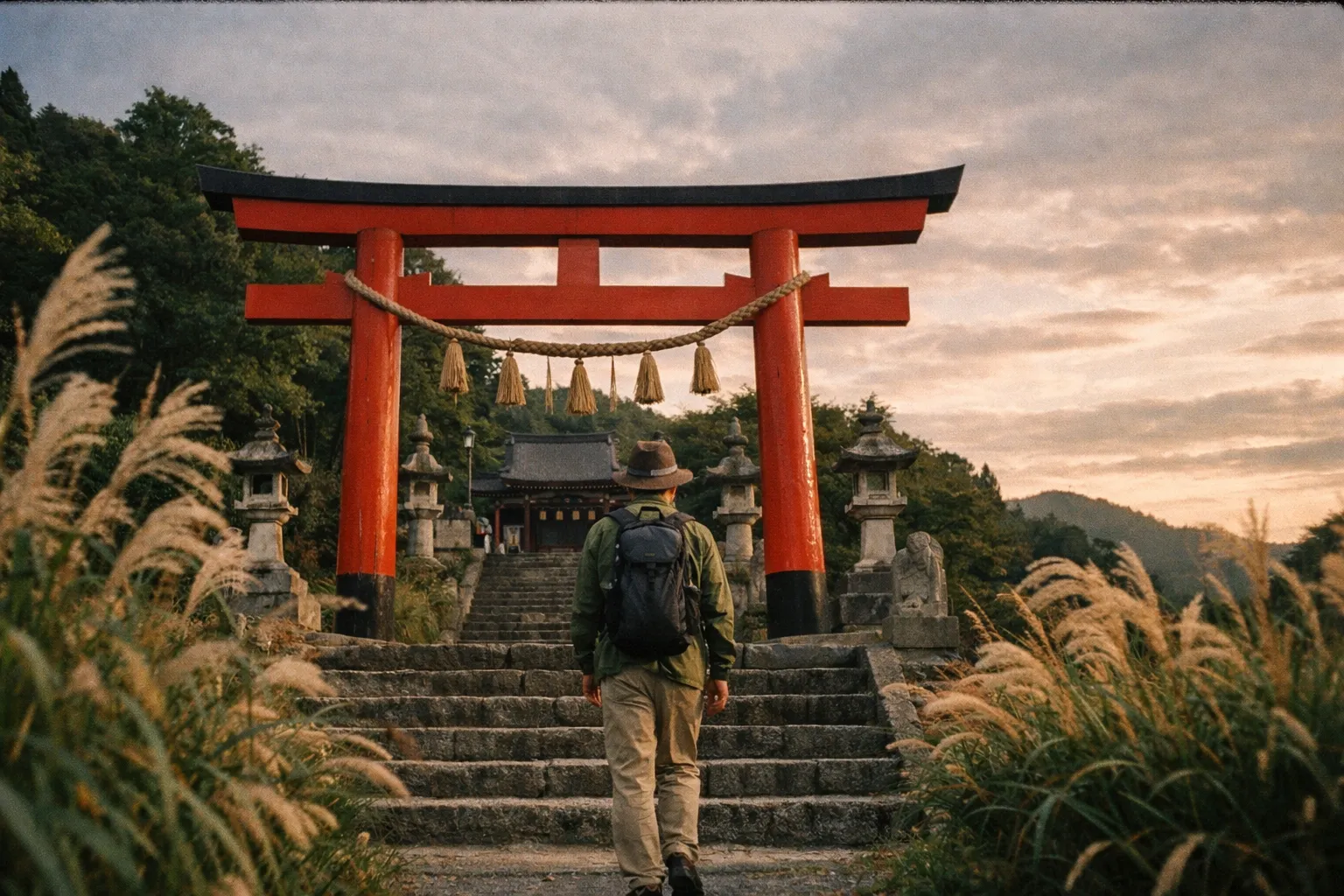
- At a Shinto shrine: rinse your left hand, then right, then mouth (don’t touch the ladle to your lips - pour into your cupped hand) at the temizuya (purification fountain) before approaching. At the offering box, toss a coin (¥5 is traditional - it sounds like “go-en,” meaning good fortune), bow twice, clap twice, pray, bow once.
- At a Buddhist temple: no clapping. Bow, offer incense or a coin, pray quietly, bow again.
Photography is fine in outdoor areas but often prohibited inside main halls - look for signs. Keep your voice low everywhere on temple grounds.
Recent shifts worth knowing (2024-2025)
A few things have changed in the post-pandemic tourism rebound (2):
- Masking has gone from near-universal to recommended only in crowded indoor spaces or when sick. You don’t need a mask outdoors. Carry one for clinics and some older restaurants.
- Contactless payment is much more common, but the tray ritual at checkout persists - even with cards.
- Train announcements about phone use, luggage placement, and quiet cars are now multilingual on Shinkansen and major JR lines.
- Onsen tattoo policies are loosening but inconsistently - always check ahead.
- Tourist-heavy spots (Kyoto’s Gion, parts of Kamakura) have new rules about photography of geisha and entering private streets. Signs are posted; respect them - fines exist in Gion since 2024.
Frequently Asked Questions
- What is considered rude in Japan as a tourist?
- Common offenses include speaking loudly or taking phone calls on trains, eating while walking in non-festival areas, wearing shoes on tatami mats, sticking chopsticks upright in rice, tipping, entering an onsen without washing, leaving rubbish behind, and photographing people without permission, especially geisha in Kyoto.
- Do you tip in Japan?
- Tipping is not customary and can cause confusion or be refused. Service is included in prices. A small wrapped gift in private hospitality contexts like ryokan stays is the cultural equivalent.
- Is it OK to slurp noodles in Japan?
- Yes, for noodles in broth such as ramen, udon, and soba. Slurping cools noodles and signals enjoyment. For non-broth dishes, slurping should be minimal.
- How many times do you bow in Japan?
- Once is sufficient for casual greetings and thanks. In formal contexts, holding a deeper bow slightly longer matters more than repeating it. Travelers should mirror the bow they receive and add a slight nod.
- Can you wear shoes inside in Japan?
- No. Shoes are removed in homes, ryokan, temples with raised floors, tea rooms, many traditional restaurants, and any space with tatami mats. Look for a genkan, shoe racks, or lined-up shoes. Slippers are usually provided for hard floors but never worn on tatami.
- Can I go to an onsen with tattoos?
- Policies vary. Many traditional onsen prohibit tattoos, but options include cover-up seals, tattoo-friendly onsen (search by town), or private baths bookable at ryokan. Always confirm before arrival.
- What should I say before and after eating in Japan?
- Say "Itadakimasu" before eating to acknowledge the food and those who prepared it, and "Gochisousama deshita" after to thank for the meal. These phrases are appropriate in any dining setting.
- Is it rude to leave food on your plate in Japan?
- Generally yes, especially rice. Leftovers are seen as wasteful and doggy bags are uncommon. At izakaya or buffets, order conservatively and add more if needed. Mention allergies when ordering using simple phrases.
Etiquette in Japan isn’t a test you pass or fail. Locals can spot a tourist a block away and don’t expect you to know every rule. What they notice is the effort: shoes pulled off neatly at the door, a quieter voice on the train, chopsticks resting on the hashioki instead of stabbed into the rice.
Pack slip-on shoes, a trash pouch, and a short phrase list. Book one ryokan night early to practice the full sequence. Watch what locals do and copy them. That’s the whole playbook.