Swimming in Costa Rica is safest once you accept that rip currents, not sharks, cause more than 80 percent of rescues. Learn the flags, but confirm them locally, since they vary by beach; Santa Teresa uses a black flag for no-entry zones not on the standard chart. If a rip grabs you, swim parallel to shore to slip the channel, then angle back in, never fight straight for the beach. Stick to calm water like Playa Conchal or reef-protected Punta Uva, and swim before noon, before the surf builds.
Decoding beach flags for safe swimming in Costa Rica
Swimming in Costa Rica can be an incredible experience, but understanding the local beach flag system is essential for safety. Most beaches use the USLA standard color system (6)(7):
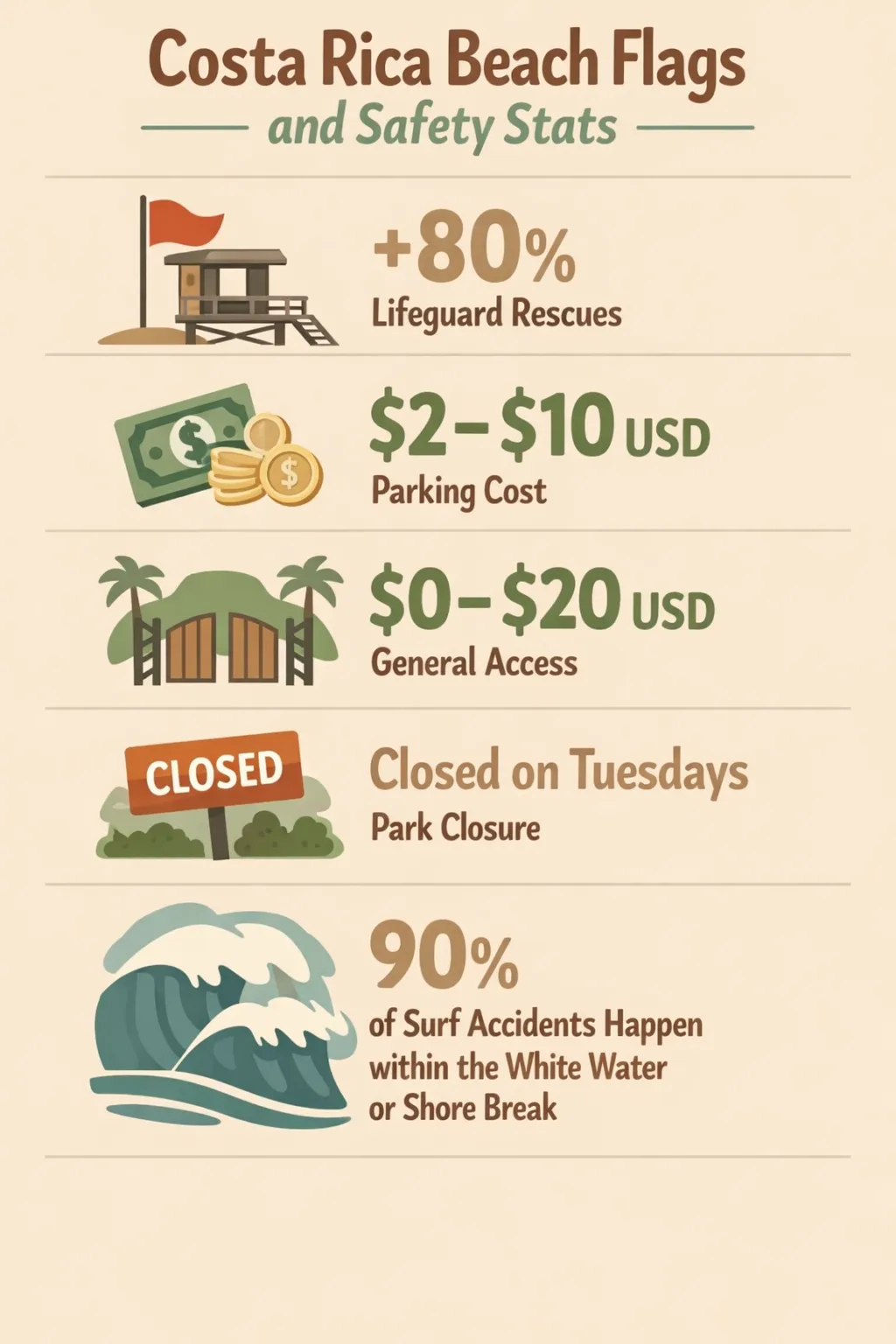 Costa Rica beach flags, lifeguard data, and costs: more than 80% of rescues from rip currents; parking $2-$10; general access $0-$20.
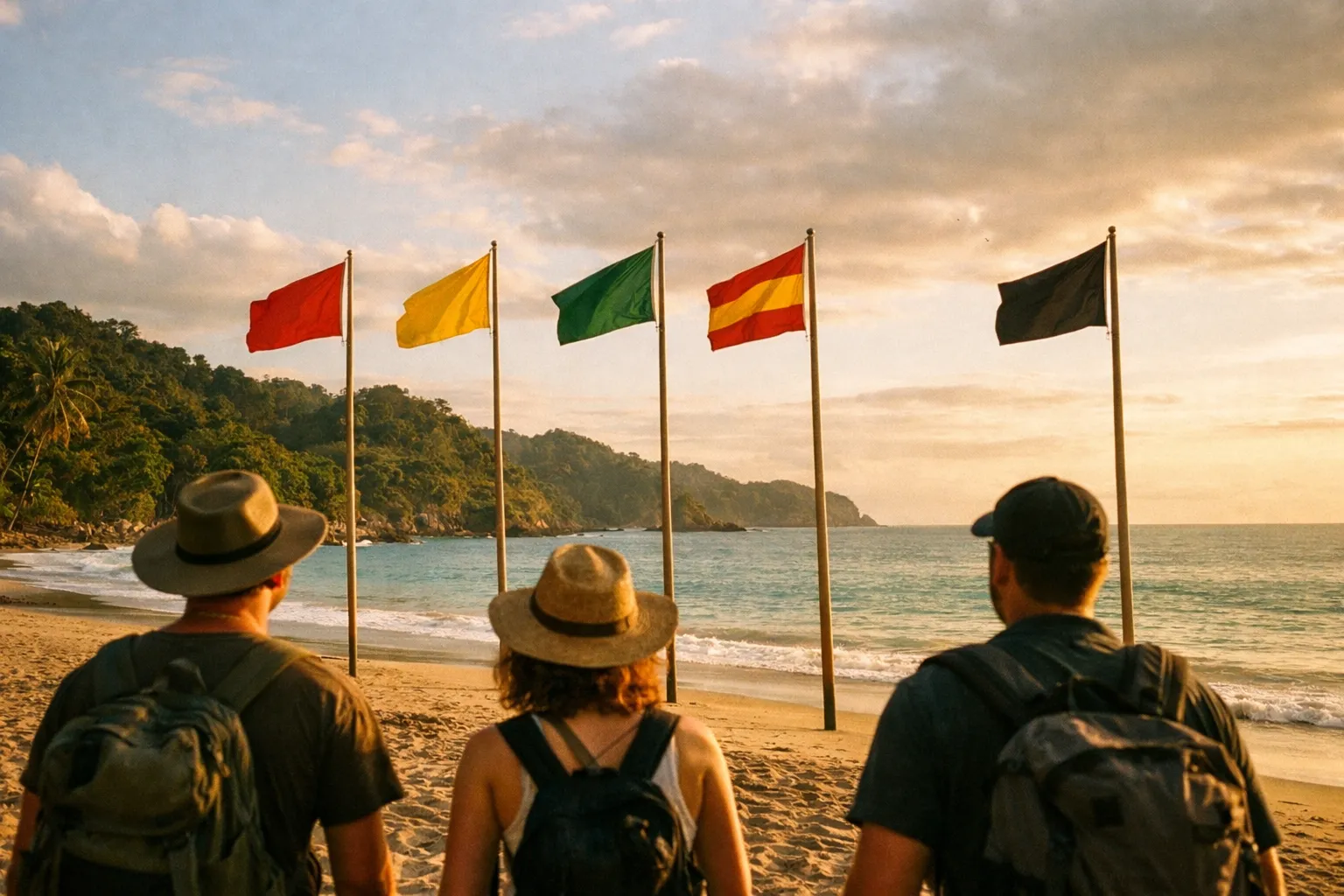
- Green - low hazard, calm conditions
- Yellow - medium hazard, moderate surf or currents
- Single red - high hazard, strong surf or currents
- Double red - water closed to the public
- Red and yellow - lifeguarded swimming area (swim here)
- Black and white quartered - surfing zone, no swimming
- Purple - marine pests such as jellyfish or stingrays
One thing most guides get wrong: they imply there’s a single national flag standard. There isn’t. The U.S. Embassy in Costa Rica explicitly warns that flag systems vary by location, and travelers should confirm meaning locally before entering the water (5). At Santa Teresa, for example, local lifeguards use black to mark a very dangerous zone where swimmers should not enter at all (3) - a color you won’t find in the standard USLA chart. Ask a lifeguard or hotel staffer what the flags mean at that beach before you go in.
Why paying attention matters
Yellow does not mean “fine.” It means medium hazard (2)(5). I’ve watched plenty of confident swimmers wade in under a yellow flag, get knocked around by a set, and come out looking rattled. The flag is telling you something - the question is whether you’re listening.
Two mistakes I see repeatedly. First, the absence of a flag does not mean the water is safe - plenty of Costa Rican beaches have no flag system at all (2). Second, don’t treat a Blue Flag as a swim-safety signal. The Blue Flag program is an environmental and management accreditation, not a real-time surf forecast (1)(8). A Blue Flag beach can still have a vicious rip the day you show up.
Best swimming beaches in Costa Rica
Costa Rica’s coasts vary sharply, and the safest planning approach is beach-by-beach. The Caribbean side often offers more protected swimming pockets, while the Pacific side frequently has stronger surf and more rip-current risk. The swimming beaches in Costa Rica listed below are sorted by location and ranked by how forgiving the water tends to be.
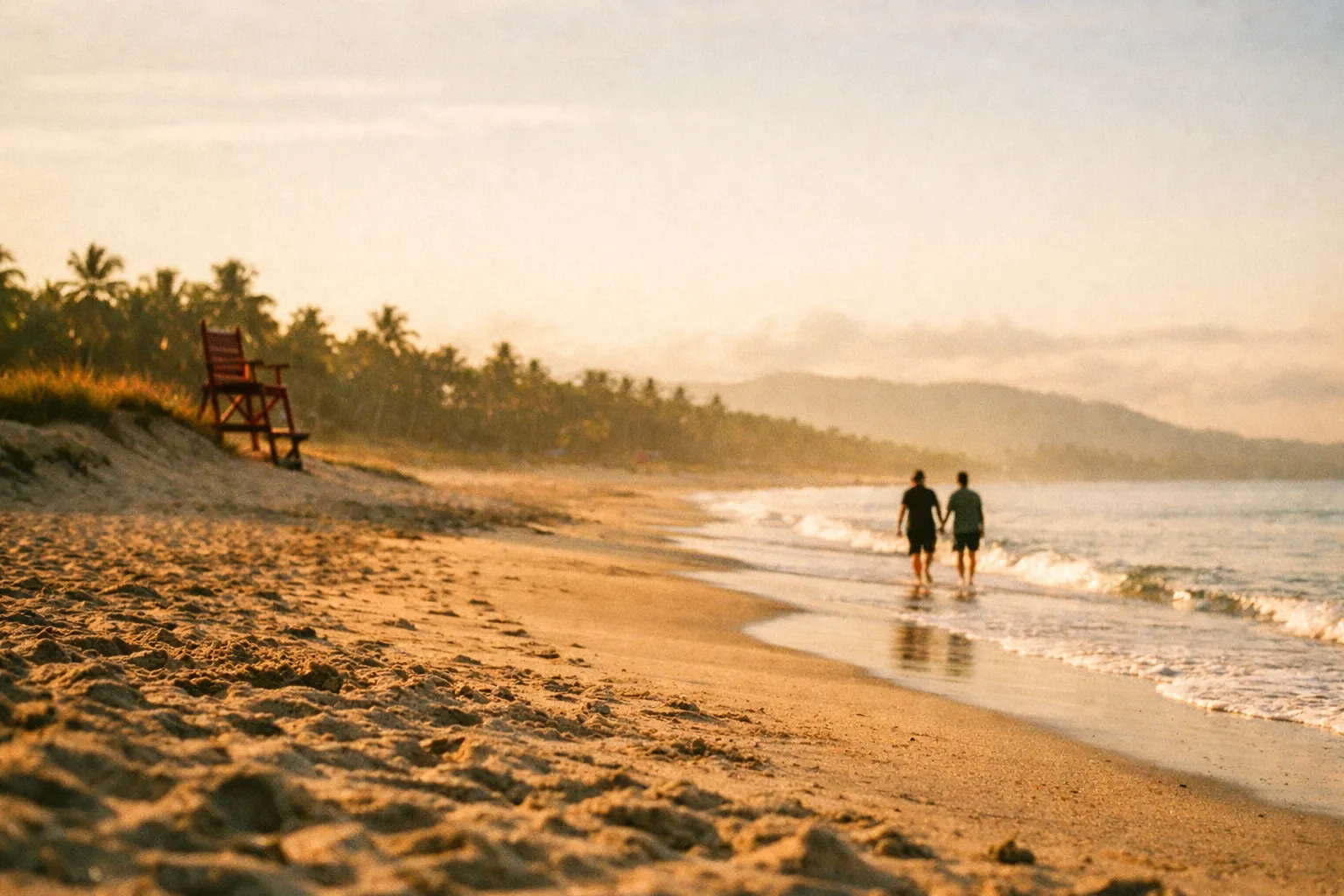
A quick note on geography before the list: Guanacaste (the northwest) holds the largest concentration of calm-water beaches and the country’s busiest beach tourism. The Caribbean coast around Limón is smaller and greener, with reef-protected coves. Manuel Antonio sits mid-Pacific coast. Get that mental map locked in and you’ll save yourself a lot of cross-country driving.
Manuel Antonio Beach (Central Pacific) - worth the detour
Manuel Antonio Beach, fronting the national park of the same name, is one of the more reliable swimming spots on the Pacific coast. The main beach - Playa Espadilla Sur, inside the park - sits in a protected bay with gentler surf than the open coast, and it’s lifeguarded during busy periods. Soft sand, no water shoes needed.
Booking mechanics matter here. The national park requires advance tickets purchased online through the SINAC/ADI system, and the park is closed on Tuesdays. Daily capacity is capped, so buy your entry a few days ahead in high season (December through April). If the park is full or closed, Playa Espadilla - the public beach just outside the entrance - is free and still swimmable, though it gets a stronger shore break.
Playa Conchal (Guanacaste) - worth the detour
Playa Conchal is the standout for calm, clear water on the Pacific. The beach is made of crushed shell rather than sand, the water turns a pale turquoise in the shallows, and the gradual entry makes it one of the best beaches in Costa Rica for swimming with kids. It’s a Blue Flag beach (1) and the bay shelters it from the worst of the surf.
There’s no road directly onto Conchal - you reach it by walking about 15 minutes north from Playa Brasilito or through the Westin resort access. Bring water and shade. Facilities on the sand itself are minimal.
Flamingo Beach (Guanacaste) - worth the detour
A few minutes north of Conchal, Flamingo Beach is a wide arc of light sand with generally calm water and good swimming most of the year. It’s more developed than Conchal - parking, restaurants, a nearby marina - which makes it an easier logistical call if you have young kids and want amenities close by.
Playa Hermosa, Guanacaste (GTE) - worth the detour
Don’t confuse this with the surf-famous Playa Hermosa near Jacó. Playa Hermosa Guanacaste (GTE), in the far northwest near Playas del Coco, is a calm, horseshoe-shaped bay with reliably gentle water - one of the more dependable swimming beaches in the country. The entry is sandy with some pebbly stretches, so water shoes help. It’s a popular base for families and snorkeling day trips.
Tamarindo Beach (Guanacaste) - worth it, with a caveat
Tamarindo Beach is a long sandy stretch that swims fine in the central section on calm days, and it’s a solid base for travelers who want restaurants, nightlife, and surf lessons in one place. The caveat: avoid the river mouth at the north end toward Playa Grande - currents there are strong and water quality drops after rain. Stay in front of the main beach, watch for the red-and-yellow lifeguard zone, and you’ll be fine (5).
Playa Pelada (Nosara) - worth the detour
In the Nosara area, Playa Pelada is the calmer counterpart to the surf-heavy Playa Guiones next door. It’s a small, rocky-edged cove with tide pools at low tide and a sandy center for swimming. Wear water shoes - the rocks are sharp - and check the tide before you go. The swimmable window is best around mid-to-high tide.
Santa Teresa, Playa Carmen and Hermosa Beach (Nicoya Peninsula) - skip for swimming, go for surf
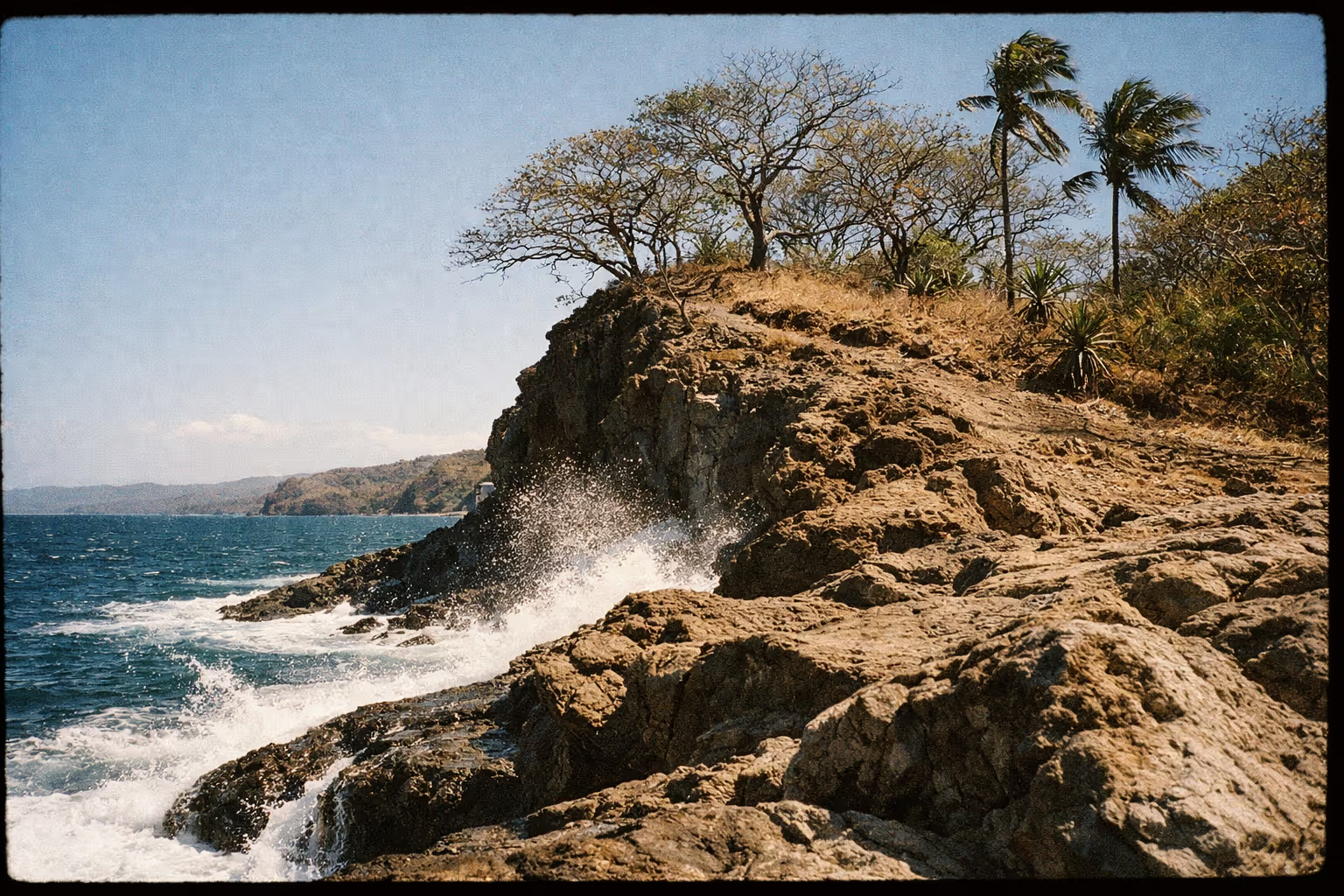
Santa Teresa, Playa Carmen, and the local Playa Hermosa are surf beaches first. The water is fun but the shore break is heavy, and Santa Teresa lifeguards note that 90% of surf accidents happen within the white water or shore break (3). If you’re a strong swimmer, swim only in the red-and-yellow guarded zone and never alone (3). If you came to float with kids, this stretch is the wrong choice - head to the Guanacaste bays instead.
Montezuma Beach (Nicoya Peninsula) - worth it if you’re already nearby
Montezuma, on the southern tip of the Nicoya Peninsula, has a string of small coves separated by rocks. The main beach swims well on calm days, and the area’s bigger draw is the Montezuma waterfalls just inland - a freshwater alternative when the surf is up. It’s a long, winding drive from the Guanacaste airports, so it makes sense mainly if you’re already exploring the southern peninsula.
Best Caribbean swimming beaches near Limón
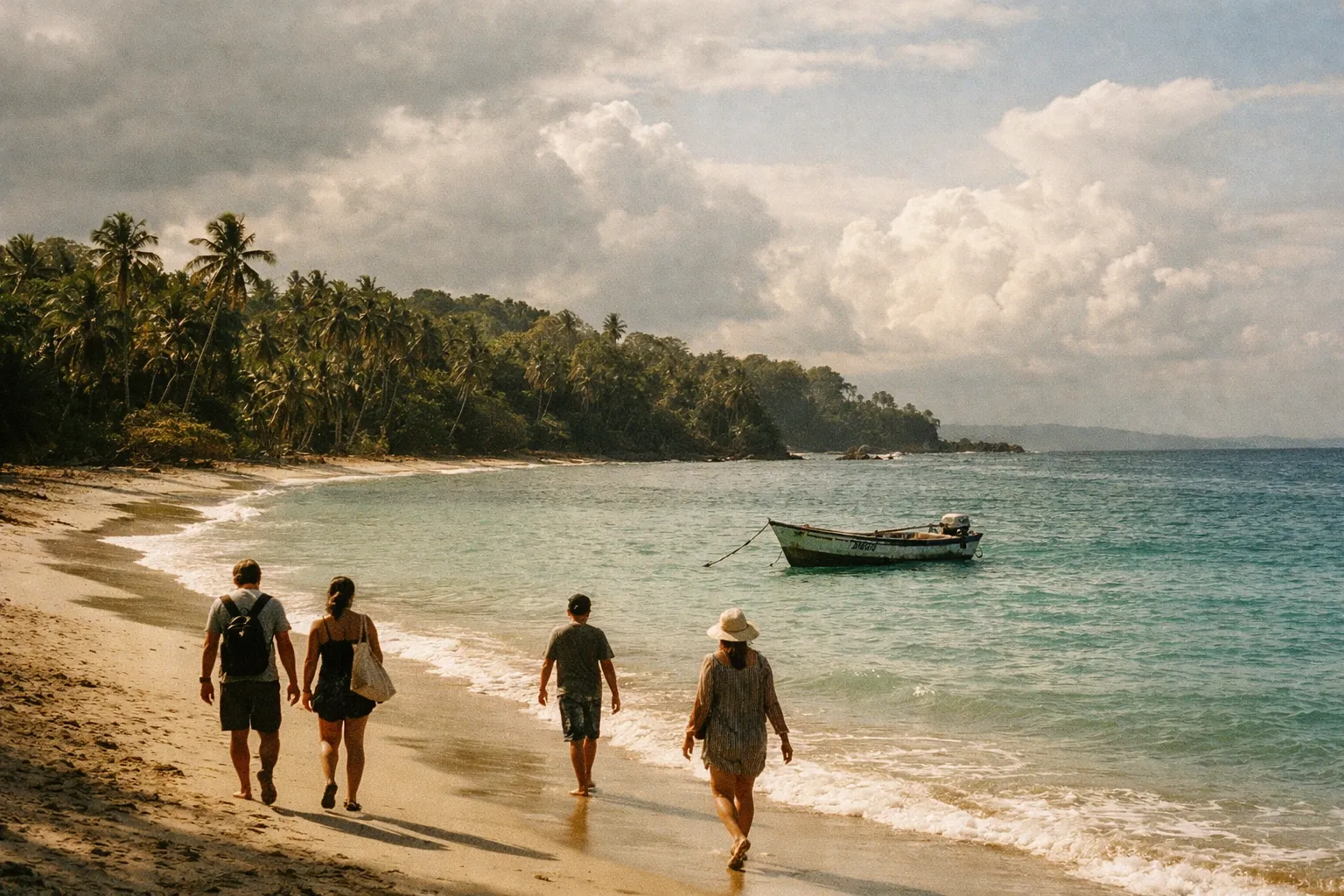
The Caribbean coast around Puerto Viejo de Talamanca gets less attention than Guanacaste, but its reef-protected coves are some of the best swimming in the country. The jungle-backed scenery is a different world from the Pacific side. The trade-off is logistics: it’s a four-to-five-hour drive from San José via Route 32, and the rainiest months differ from the Pacific - the Caribbean often has its driest, calmest spell in September and October, when the Pacific is getting hammered. According to the U.S. Embassy in Costa Rica, the Caribbean coast’s distinct weather pattern means travelers planning a swimming-focused trip should treat it as a separate destination with its own seasonal logic, not an add-on to a Guanacaste itinerary.
Punta Uva and Playa Arrecife (Limón) - worth the detour
Punta Uva is the standout for calm water on the Caribbean side. A reef offshore knocks down the swell, leaving clear, warm, gentle water that’s genuinely good for kids and weak swimmers. Playa Arrecife sits just beside it with similar reef protection. Both have rocky and reefy patches underfoot, so water shoes are worth packing (1).
Cahuita (Limón) - worth the detour
Cahuita National Park fronts a long beach inside a protected bay, with a coral reef just offshore that’s good for snorkeling. The swimming is calm in the sheltered sections, and the park trail along the shore lets you find a quieter cove. Entry to the national park is by donation at the Kelly Creek entrance - an unusually good deal for a park beach.
Playa Cocles (Limón) - strong swimmers only
Playa Cocles, just south of Puerto Viejo, is a beautiful beach but a surf beach. It has more rip-current activity than Punta Uva or Cahuita, and conditions shift quickly (1). It’s lifeguarded in season - swim in the guarded zone or don’t swim. If you want the calm Caribbean experience, drive the extra few minutes to Punta Uva.
How much swimming in Costa Rica costs
Most public beaches are free, and your only real cost is parking - typically $2-$10 USD where it’s charged, often collected informally by local attendants. Budget a $0-$20 USD range for general beach access and parking at most public beaches.
The exceptions are national park beaches. Manuel Antonio and Cahuita both sit inside parks with their own entry systems - Manuel Antonio charges a foreigner entrance fee and caps daily capacity, while Cahuita’s Kelly Creek entrance runs on a donation basis. A few beaches reached through private resort land (like the Westin route to Conchal) are technically public but practically gated.
The rest of your swimming budget is gear, not access. Reef-safe sunscreen, water shoes for rocky entries, and plenty of drinking water are the core toolkit (4). Water shoes in particular save a lot of pain on the Caribbean reef beaches and the rocky Nicoya coves - don’t skip them.
Overcoming rip current challenges
Rip currents don’t pull you underwater. They pull you away from shore. That distinction matters, because the instinct to fight straight back toward the beach is exactly what exhausts people. The correct move is to swim parallel to the shoreline, escape the current’s lateral grip, and then angle back in once you’re clear of it (3)(4). If you can’t make progress, float, conserve energy, and signal for help.
I got caught in a rip current on my second trip to Costa Rica - a narrow channel of fast-moving water on a beach I thought I knew. The water was pulling hard and the shore wasn’t getting any closer. What worked was stopping the fight, swimming sideways, and staying calm long enough to get out of the channel. It took about 90 seconds. It felt longer.
Spotting and avoiding rip currents
Look for areas where waves aren’t breaking - a channel of choppy, churning water where the surf on either side is breaking normally. A line of foam, seaweed, or debris moving seaward is another indicator (4). The USLA estimates that rip currents account for more than 80% of lifeguard rescues at surf beaches - making them the single most common hazard swimmers face, not sharks or jellyfish. These signs are easier to read from a higher vantage point, like a beach access dune.
I now spend 5 to 10 minutes watching the water before I get in - checking wave patterns, current lines, and where the flags are placed. That short pause is specifically recommended by coastal safety guidance (4) and it costs you nothing. Rip currents are more likely around low tide and with strong onshore wind, and since wind and surf often build through the afternoon on the Pacific, swimming before noon stacks the odds in your favor.
Making lifeguard-protected beaches a priority
Lifeguard coverage in Costa Rica is patchy. Major destinations like Manuel Antonio, Tamarindo, Santa Teresa, and Playa Cocles have guarded zones in high season, marked with the red-and-yellow flags. Many beautiful beaches have no guard at all. When there’s no lifeguard present, I’m more conservative: I rely harder on what I know about rip currents, I don’t swim alone, and I bring a personal flotation device if anyone in the group is a weak swimmer.
Lifeguards also double as local intel. Before I get in anywhere unfamiliar, I ask the guard on duty what the conditions are like that day - not just what the flag says, but whether there’s anything unusual. That 30-second conversation has changed my plans more than once.
The importance of heeding lifeguard instructions
The Santa Teresa lifeguards’ core advice is blunt and worth memorizing: don’t swim or surf alone, stay out of black-flag zones entirely, and remember that the shore break - not the deep water - is where most accidents happen (3).
Regardless of how experienced you feel in the water, ocean dynamics can shift fast. A calm morning can turn into a messy afternoon. The flag system and the lifeguard on duty are the most current information you have.
Frequently Asked Questions
- How do local flag systems differ across Costa Rica's beaches?
- Flag colors and meanings can vary significantly by location. Some beaches use colors like black to mark dangerous zones, which aren't part of the USLA standard. Always ask a local lifeguard or hotel staff about the flag meanings before swimming.
- What should I do if I get caught in a rip current and can't swim out?
- If you can't swim out of a rip current, float to conserve energy and signal for help. Panicking or trying to swim directly back to shore exhausts you quickly. Swimming parallel to the shore is the safest escape route.
- Are Blue Flag beaches always safe for swimming?
- No. The Blue Flag program certifies environmental and management standards, not real-time water safety. A Blue Flag beach can still have dangerous surf or rip currents on any given day.
- Can I rely on the absence of beach flags to assume safe swimming conditions?
- No. Many Costa Rican beaches have no flag system at all, so the absence of flags does not guarantee safety. Always observe water conditions carefully and seek local advice.
- What is the best time of day to swim to minimize rip current risk?
- Swimming before noon is generally safer because wind and surf often build through the afternoon, increasing rip current risk. Also, rip currents are more common around low tide and with strong onshore winds.
- Are there freshwater swimming options in Costa Rica besides the ocean?
- Yes. Natural freshwater swimming holes like the Montezuma waterfalls and inland river spots near La Fortuna and Nicoya offer alternatives. However, check for currents after rain and avoid jumping into unknown depths.
Plan your swim days around conditions, not just destinations
The best habit for swimming in Costa Rica is to decide where you’ll swim that morning, based on the flags, the wind, and what a local tells you - not weeks ahead based on a photo. Build your trip so you have both a calm-water beach and a surf beach within reach, and let the day’s conditions pick which one you use.
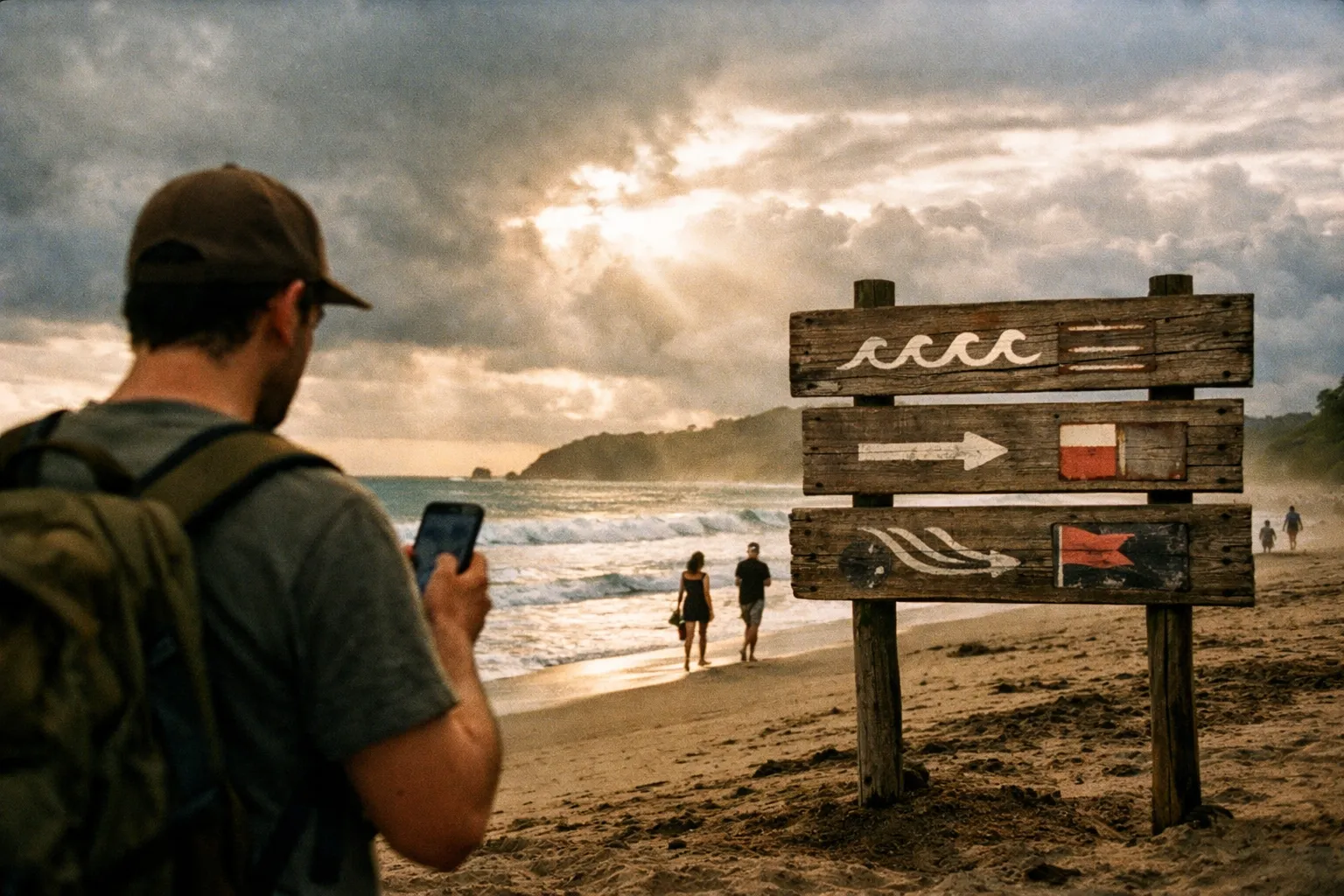
If you only remember three things: confirm the flag meaning at each specific beach per U.S. Embassy guidance (5), swim parallel to shore if a rip grabs you per USLA protocol, and pack water shoes for the Caribbean reef beaches and the rocky Nicoya coves. Get those right and the water here is some of the most rewarding you’ll find anywhere in the Americas.