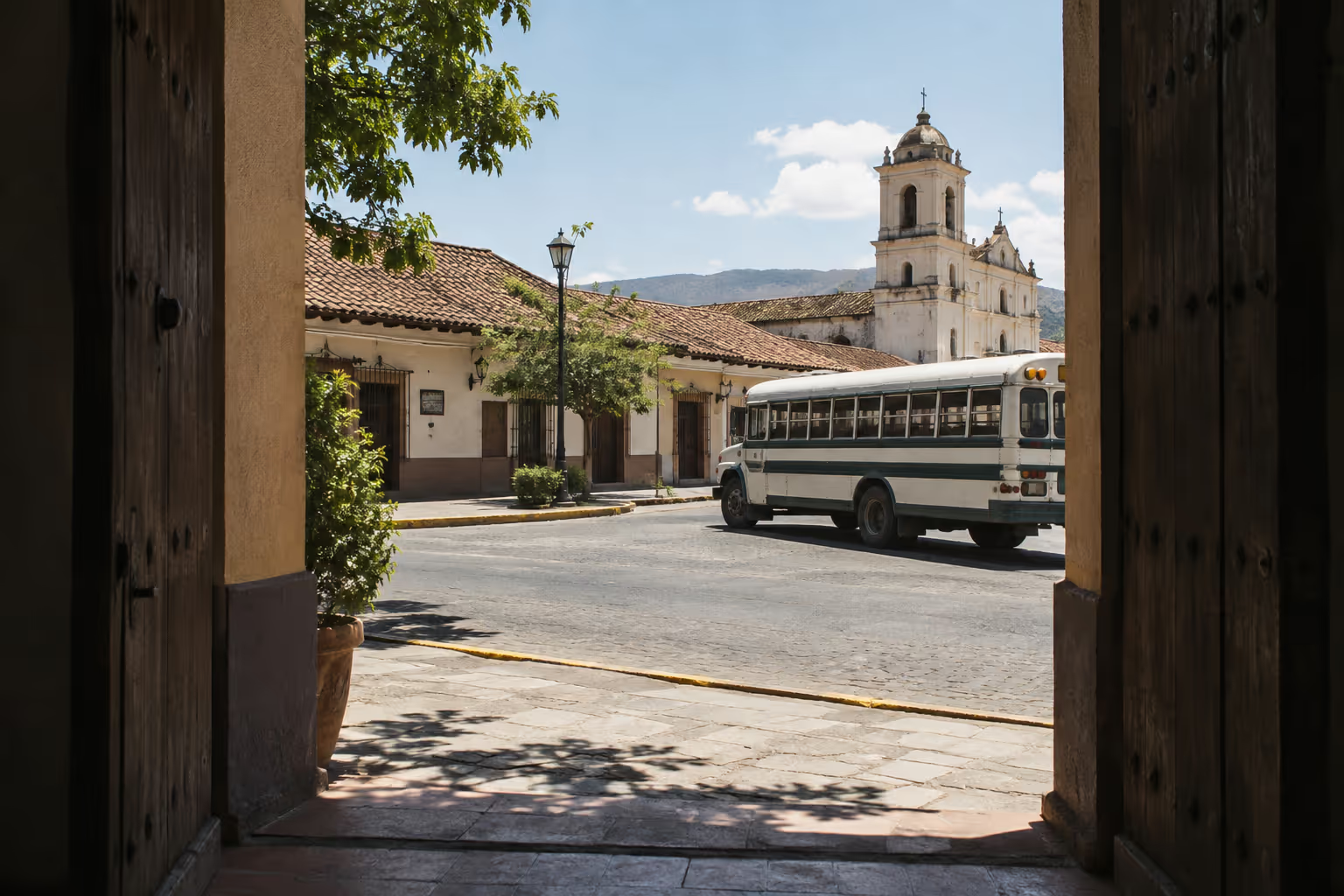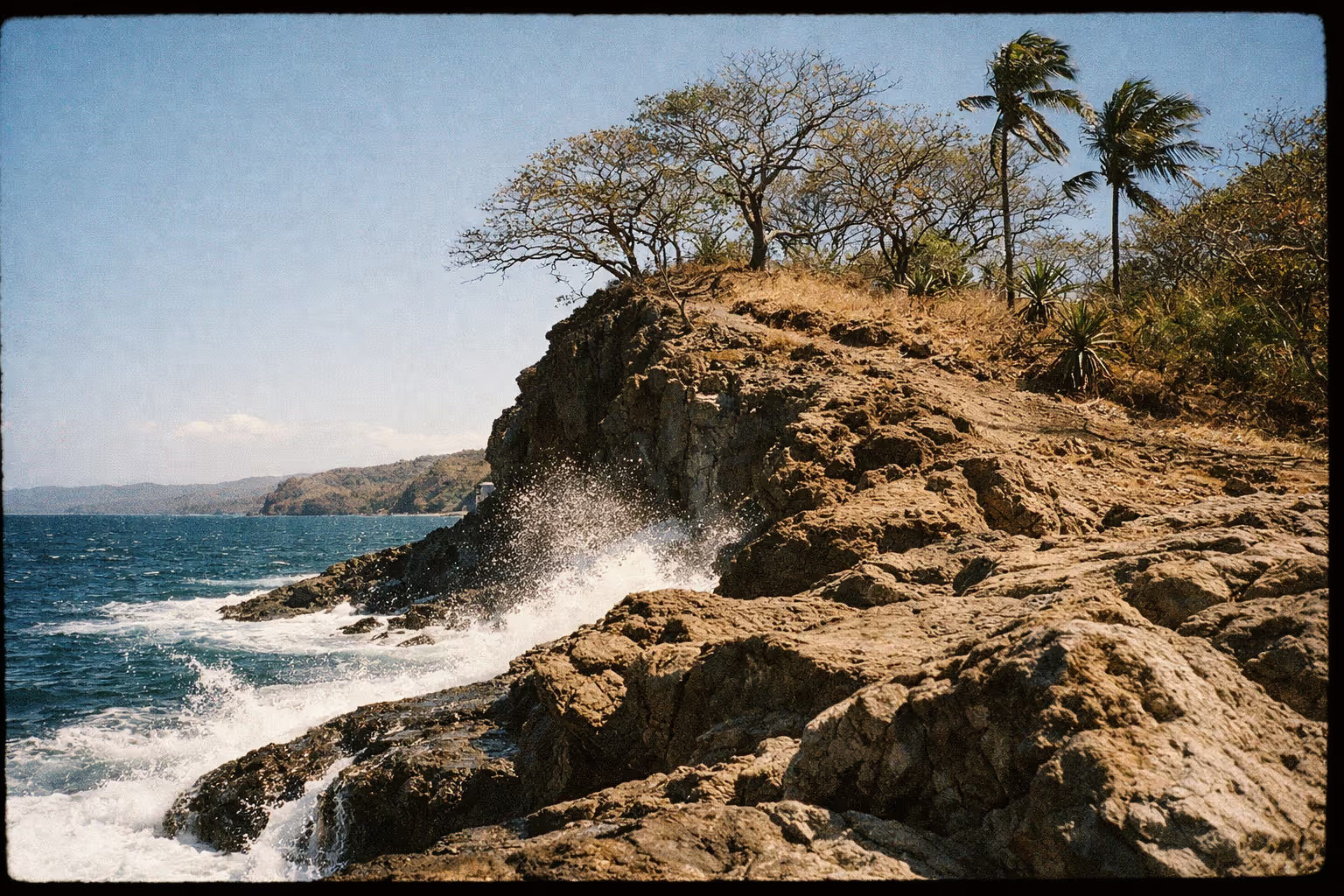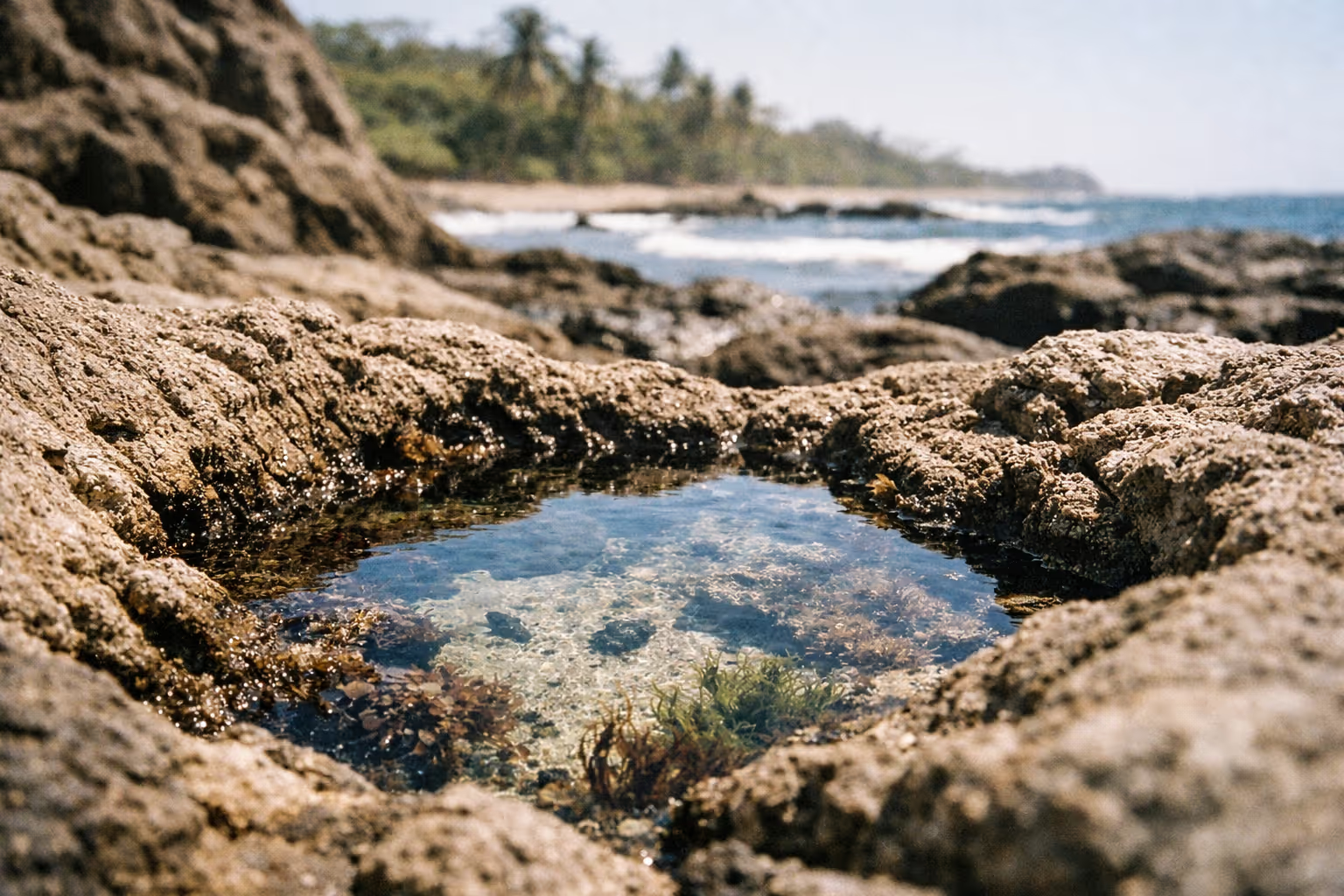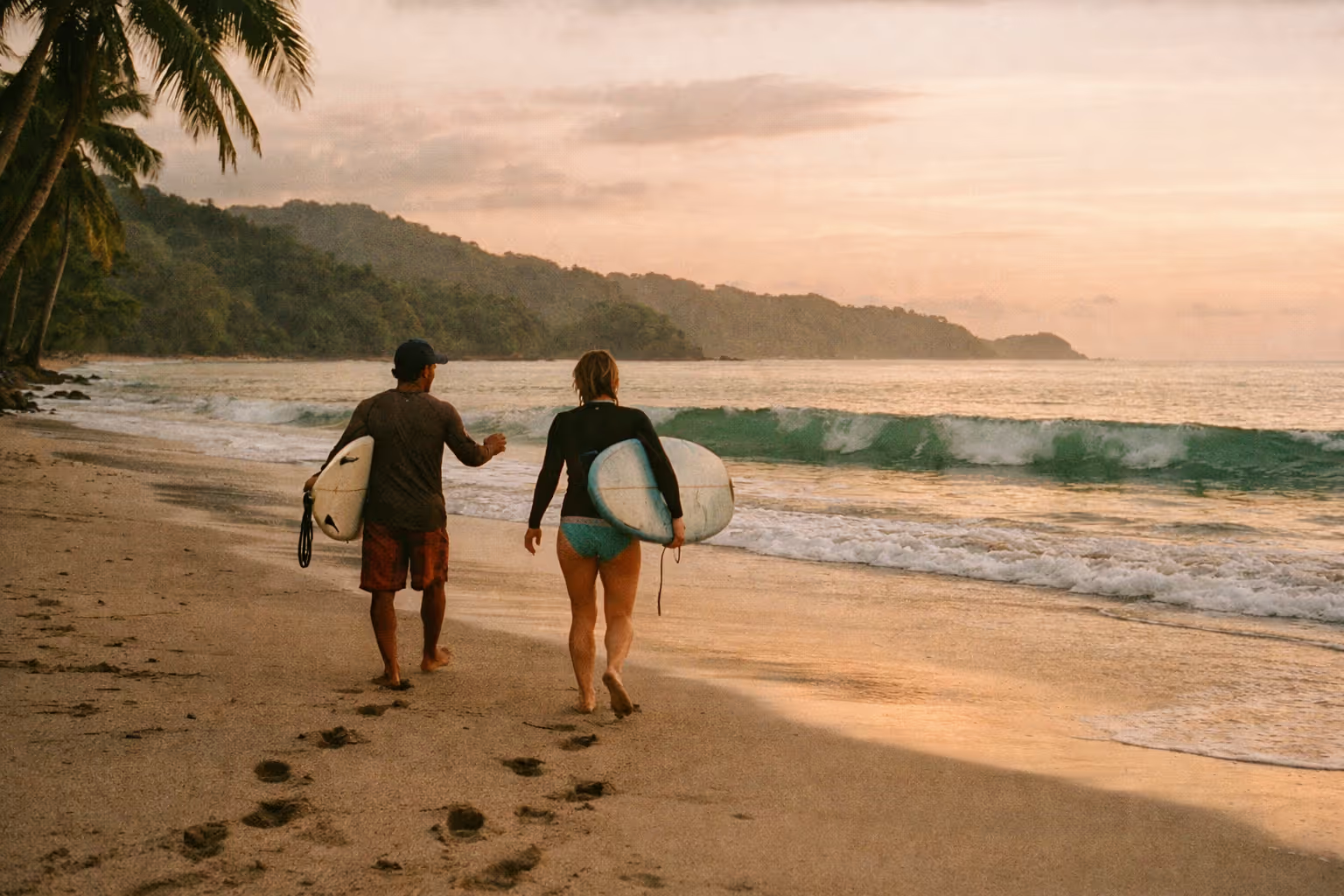
Costa Rica surfing rewards whoever matches the season to their skill. Beginners get the friendliest Pacific waves November to February; the south swells at Pavones and Playa Hermosa arrive May to September. Group lessons run $40 to $65, and easy bases like Tamarindo or Jaco sit under two hours from an airport. The part guides undersell is the immersion: a morning lesson and an afternoon learning gallo pinto with your host. The part they skip is the real danger: rip currents and night driving, not crime.
Learning to surf and experience Costa Rica surfing with the locals
Costa rica surfing rewards the planner. With roughly 800 miles of coastline split across the Caribbean and three distinct Pacific zones, the country gives you 300-plus surfable days a year, water sitting at 80-84°F, and surf towns where you can take a lesson in the morning and learn to cook gallo pinto with your host that afternoon. This guide covers the breaks, the logistics, and the local-immersion angle - surf lessons, cooking classes, and the safety details most guides skip. I’ll walk you through Tamarindo, Jaco, Santa Teresa, Witch’s Rock, and Pavones, with costs in USD and the best months to go.
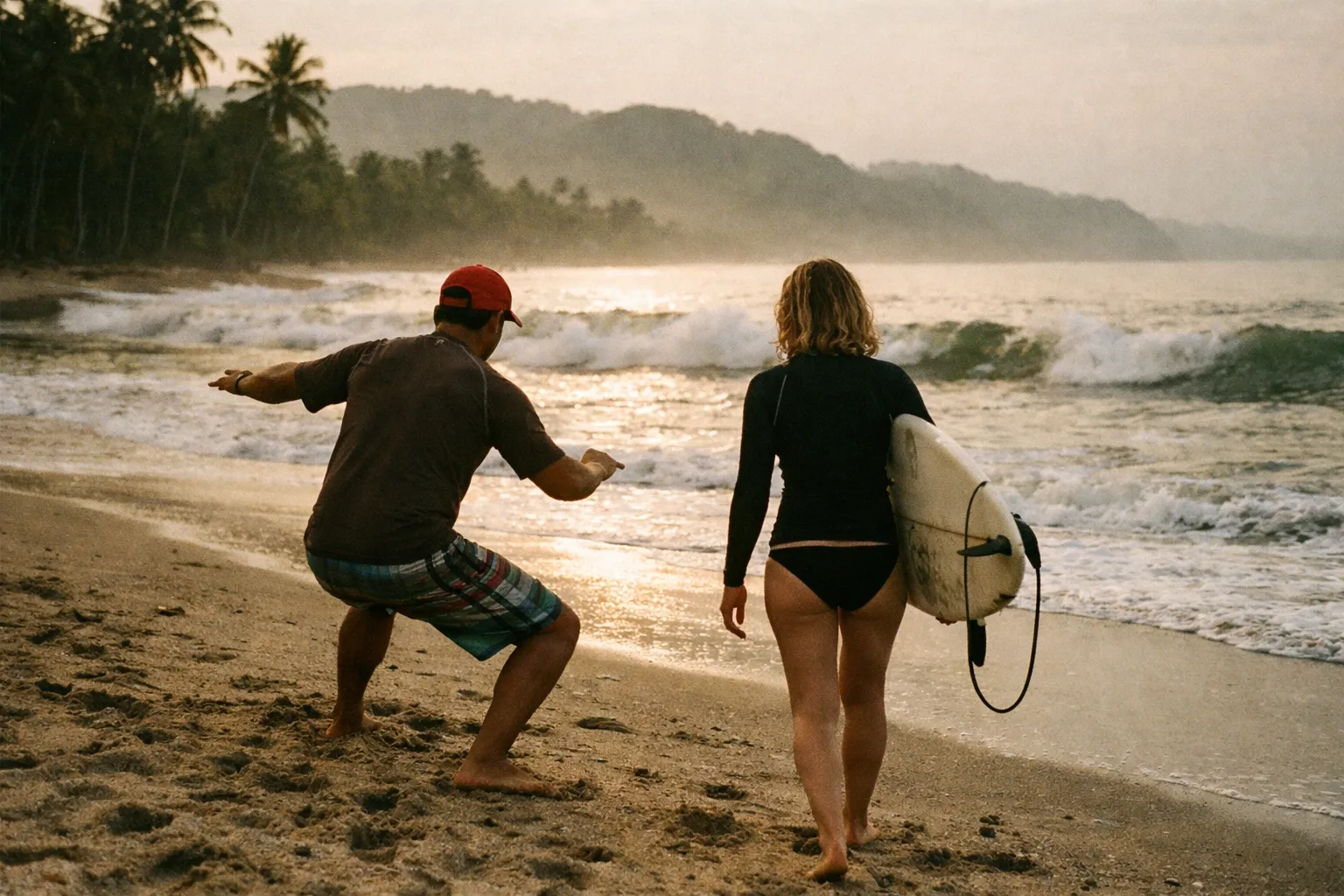
The first time I stood up on a board in Tamarindo, I wasn’t thinking about technique. I was just trying not to fall sideways. My instructor - a Tico who’d been surfing that rivermouth since he was nine - had a way of reading the water that no YouTube tutorial replicates. That’s the thing about learning here: the instructors grew up on these specific breaks. They know which inside section is forgiving on a small swell and which one will bury you if you hesitate.
Here’s the practical layer most booking pages leave out. Surfing lessons in Costa Rica run $40-$65 per person for a group session of two to three hours, including a soft-top board and rashguard. Private lessons cost $70-$120 for a two-hour session, depending on the town and the school’s reputation. Board rentals are $10-$20 a day, or $60-$120 for a week. Tamarindo, Jaco, and Santa Teresa schools consistently pull 4.7-5.0 ratings on the main booking platforms.
A few notes from experience:
- Book Tico-owned schools where you can. Many advertise it directly. The money stays in the community, and the instructors usually grew up surfing the break you’re learning on.
- You need basic swimming ability and comfort in waist- to chest-deep water. That’s the real prerequisite - not fitness.
- Reserve weeks ahead for Christmas-New Year and Easter (Semana Santa). Schools in Tamarindo, Nosara, and Santa Teresa sell out.
✓ Pros
- Warm water year-round eliminates need for wetsuits
- Wide range of surf breaks from beginner to advanced
- Strong local surf schools with community reinvestment
- Combination of surf with cultural immersion like cooking classes
✗ Cons
- Remote breaks require long drives on rough roads
- Peak seasons require booking weeks in advance
- Rip currents, and crocodiles in estuaries including Tamarindo's
- Petty theft risk in tourist areas
Best surf breaks across Costa Rica’s coastline
Costa Rica’s breaks span beginner beachbreaks to point waves that run for a kilometer. Here’s how they sort by skill and worth-the-detour value.
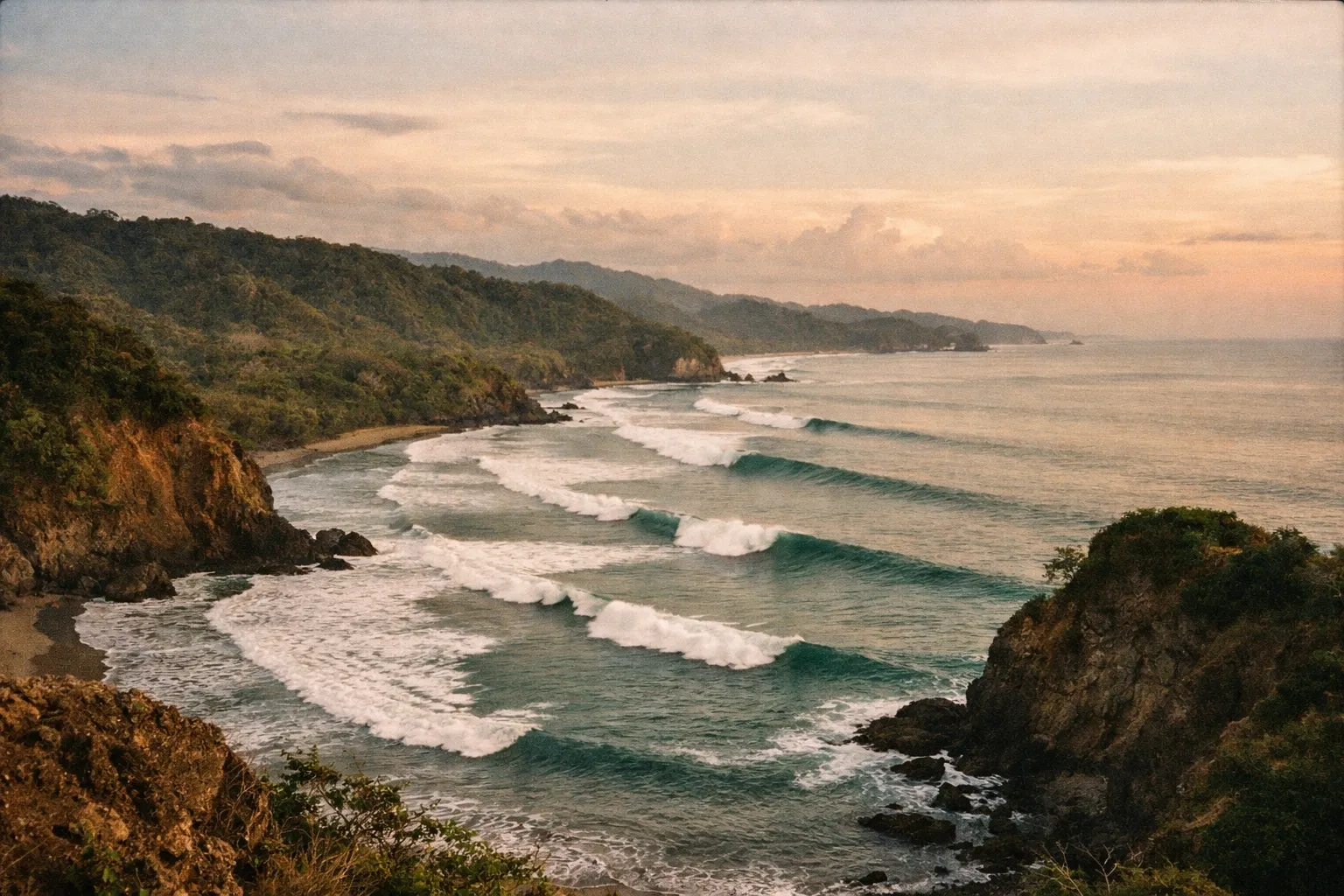
Tamarindo (Northern Pacific) - start here. Tamarindo is the de facto capital of surfing in Costa Rica: the most developed surf town, the easiest learning waves, and the densest cluster of schools. The main beach has gentle inside sections for beginners and faster peaks at the rivermouth for intermediates. Surf the peaks, but stay out of the estuary itself and never wade it to reach Playa Grande: it is known crocodile habitat, and three surfers were attacked there between 2013 and 2016 (5). From Liberia (LIR) it’s about a 1h15 to 1h30 drive on paved road, longer over Christmas and Easter. If you have a week and you’re new to surfing, this is the base.
Jaco and Playa Hermosa (Central Pacific) - worth the detour for intermediates. Jaco is the Central Pacific’s service hub - lodging, board shops, bars, lessons. Surfing in Jaco, Costa Rica suits beginners on the inside sections, but the real prize is Playa Hermosa just south. Hermosa is a high-performance beachbreak with some of the most consistent waves anywhere, and in 2022 it was dedicated as the first World Surfing Reserve in Central America, having been approved in 2020 (1). It is not a beginner wave on a sizeable swell - respect that. Jaco is 1.5-2 hours from San José (SJO).
Santa Teresa (Nicoya Peninsula) - worth the detour. Santa Teresa, Costa Rica surfing centers on multiple beachbreak peaks that work across a range of sizes, plus a fast-growing surf-yoga retreat scene. Roads here are mostly dirt; a scooter with a surf rack or an ATV is often more practical than a car for short hops between your lodging and the break.
Witch’s Rock / Roca Bruja (Santa Rosa National Park) - for advanced surfers. Surfing Witch’s Rock, Costa Rica means a fast, hollow, tubing beachbreak inside a protected national park. Access is the catch, and driving in is not an open option. Area de Conservacion Guanacaste requires an online reservation, opens the sector Wednesday to Monday only, takes entries from 8am to 2pm with everyone out by 6pm, caps it at 100 visitors a day, requires a high-clearance 4x4 even in the dry season, and closes the access road to all vehicles from September to early December (2). That leaves the boat: about 45 minutes from Playas del Coco, about 1h30 from Tamarindo, with park entry paid on board. Crocodiles are present at the rivermouth here as well. Don’t linger at the rivermouth at dawn or dusk.
Pavones (Southern Pacific) - for advanced surfers willing to travel. Pavones, Costa Rica surfing is about one of the longest left point waves on the planet - rides over half a mile (roughly 1 km) on a good south swell. It’s remote, in the Osa/Golfito region, with long drives and partially unpaved roads. Bring cash (ATMs are scarce), spare leashes, and a ding-repair kit; surf shops are few and pricier than in Jaco. I drove toward the Osa last October - plan extra time, because afternoon rain in the green season turns the back roads slick fast.
Other breaks worth knowing:
- Nosara (Playa Guiones): among the most consistent breaks in the country, a beachbreak that works on almost any swell. The “330 rideable days a year” you’ll see quoted comes from surf camps and travel magazines, with no published method behind it. Excellent for beginners and intermediates, mellow town.
- Boca Barranca (Central Pacific): a long left running up to 950 m - a longboarder’s wave.
- Salsa Brava, Puerto Viejo (Caribbean): heavy reef tubes, experienced surfers only.
- Avellanas, Negra, Dominical, Playa Grande: solid intermediate options near the main hubs.
Know before you go: surf, weather & travel info
Pacific dry season (mid-December-April): sunny, lighter winds, cleaner but generally smaller surf. Good for beginners who want predictable, manageable conditions.
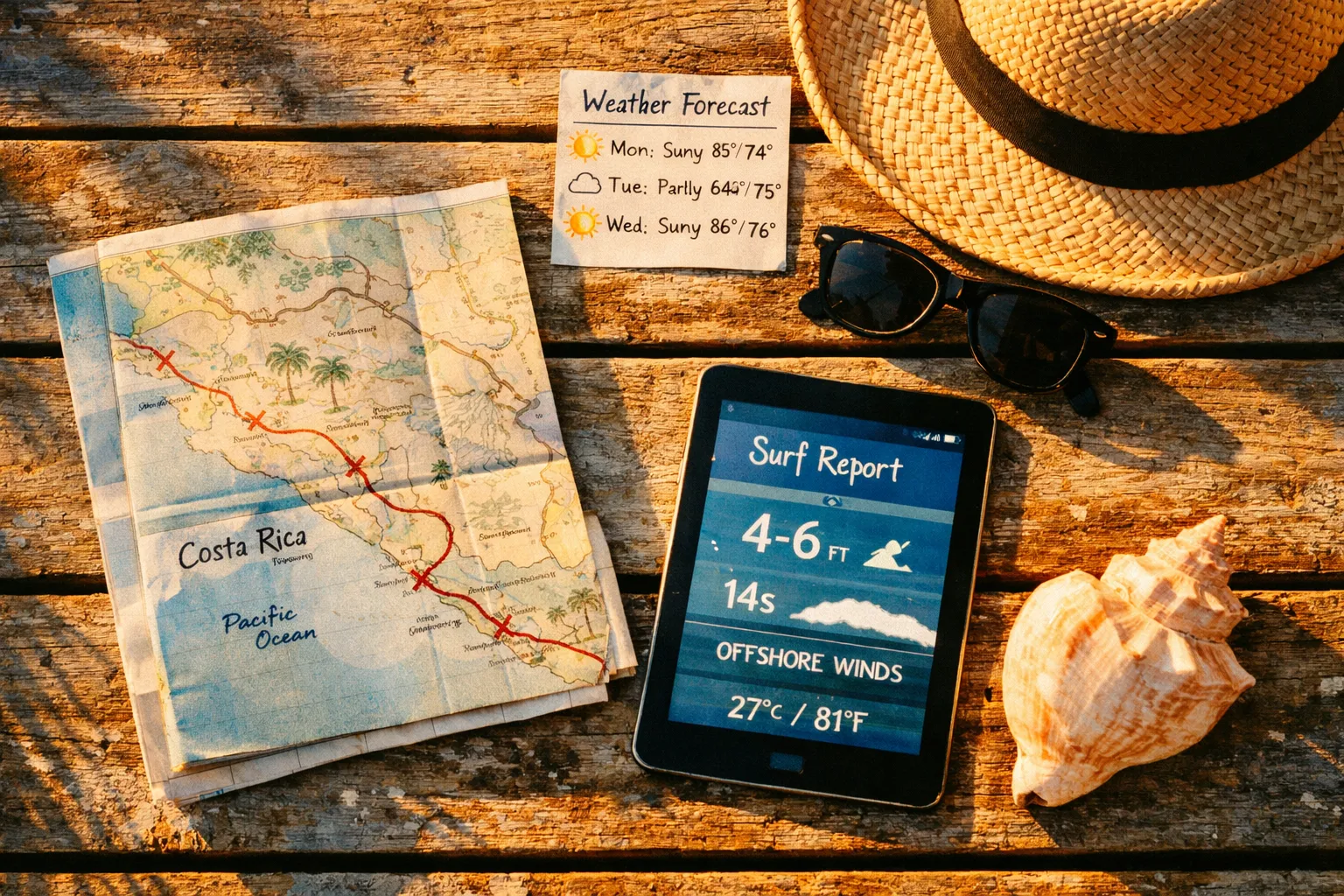
Pacific green/rainy season (May-November): bigger, more consistent south swells. More rain, but the mornings are often clean and the landscape goes lush. November is the sweet spot many surfers target - strong waves before the dry-season crowds arrive, and green hills.
Caribbean (Puerto Viejo / Salsa Brava): best December-March, with occasional mid-year tropical swells. If you’re planning a pure Caribbean trip, build in a Pacific backup - flat spells happen.
For beginners on the west coast, aim for November-February in Tamarindo, Nosara, or Jaco: still-frequent swells at manageable sizes, plus sunnier weather. Experienced surfers chasing Pavones or Hermosa watch the south swell window of roughly May-September.
Don’t panic under, don’t rush back out. The “12-second rule” you’ll hear quoted in surf circles is not about waiting on the surface: it describes hold-downs, the observation that in small to roughly double-overhead surf a wave will almost never keep you under longer than about twelve seconds. Knowing that is what stops you burning oxygen fighting the water. The surface habit is a separate thing, and just as useful: after a wipeout, take a breath and read the set before you paddle, instead of going straight back into the impact zone.
Quick facts
- Coastline: roughly 760 to 800 miles (1,228 to 1,290 km) depending on whose measurement you take, split between the Caribbean (212 km) and three Pacific surf zones.
- Surfable days: 300+ per year on much of the Pacific, a figure the local surf industry quotes rather than a measured statistic.
- Water temp: usually 79-84°F (26-29°C). The Caribbean stays warm all year; northern Guanacaste is the exception, where dry-season upwelling can pull the water into the mid-70s°F (24-25°C) for spells in January and February. Still no wetsuit needed: the break guides for Tamarindo, Playa Guiones and Playas del Coco all conclude that a rash vest and board shorts are fine at any time of year.
- Best all-round months (Pacific): April-November, with November a standout.
- Currency: Costa Rican colón (CRC). The colón has appreciated hard: the Banco Central reference rate was around 450-455 CRC to the dollar in August 2026, against roughly 500 at the start of the year. Check bccr.fi.cr for the rate on the day rather than budgeting off a fixed figure (3). USD is widely accepted in surf towns, but carry colones for small vendors and remote spots.
- Lesson costs: $40-$65 group, $70-$120 private. Board rental $10-$20/day.
- Visa: Since 17 November 2025, nationals of the countries in Costa Rica’s Grupo 1 (US, Canada, UK, most of the EU) can enter visa-free for up to 180 days (4). The officer at the border sets the number of days you actually get, and it is often fewer, so check what you were stamped for and confirm the current rules at migracion.go.cr before you fly.
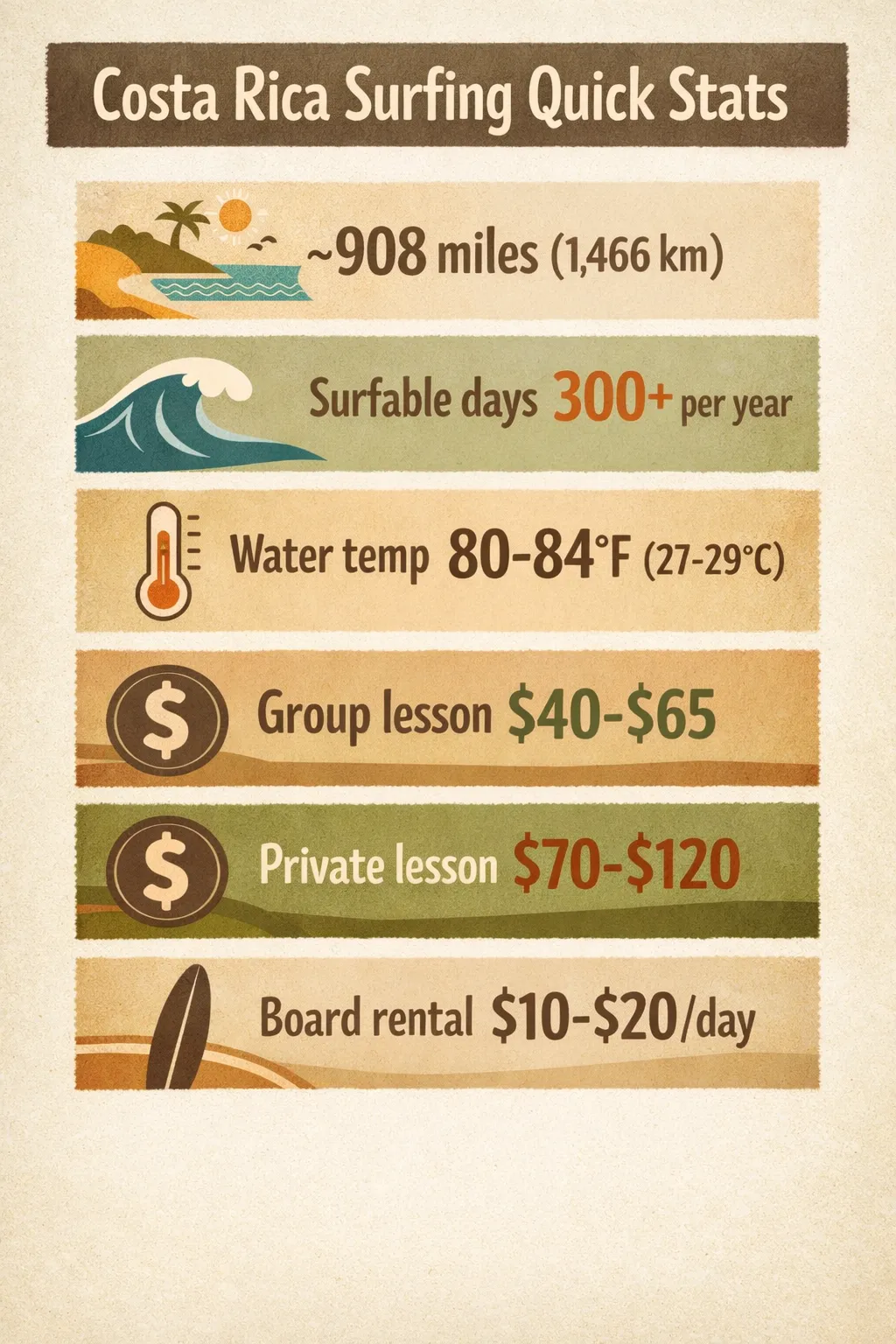 Costa Rica surfing costs: group lessons $40-$65; private $70-$120; board rentals $10-$20 daily, $60-$120 weekly; water temp 79-84°F.
Travel information
Airports. Fly into San José (SJO) for the Central Pacific and south, or Liberia (LIR) for Guanacaste and the northern breaks. Low-cost flights into LIR have made Tamarindo and the northern Pacific genuinely weekend-trip-friendly from North America.
Drive times. Tamarindo is about 1h15 to 1h30 from LIR, all on paved road, and longer at Christmas and Easter; Jaco is 1.5-2 hours from SJO. Santa Teresa, Pavones, and Punta Banco involve longer drives on partially unpaved roads.
Getting around. Public buses reach all the main Central Pacific beaches and most surf towns, supplemented by shuttle vans. For Witch’s Rock, Pavones, Matapalo, and Potrero Grande, you’ll want a 4x4 - sometimes with river crossings - or a boat. Avoid driving unpaved roads to remote breaks at night; potholes, loose gravel, and unmarked crossings are the real hazard, not crime.
Insurance. Get travel-medical coverage that includes surf injuries and remote evacuation. Some camps require proof for advanced trips, and the nearest hospital to a break like Pavones is hours away.
Gear checklist:
- Beginners: soft-top 8-9 ft board (your school provides it), rashguard, reef-safe SPF 30-50, zinc.
- Intermediate/advanced: correct-length leash, spare fins, booties for Caribbean reef and rocky points, a small first-aid kit for reef cuts.
Combining surf with cooking and local life
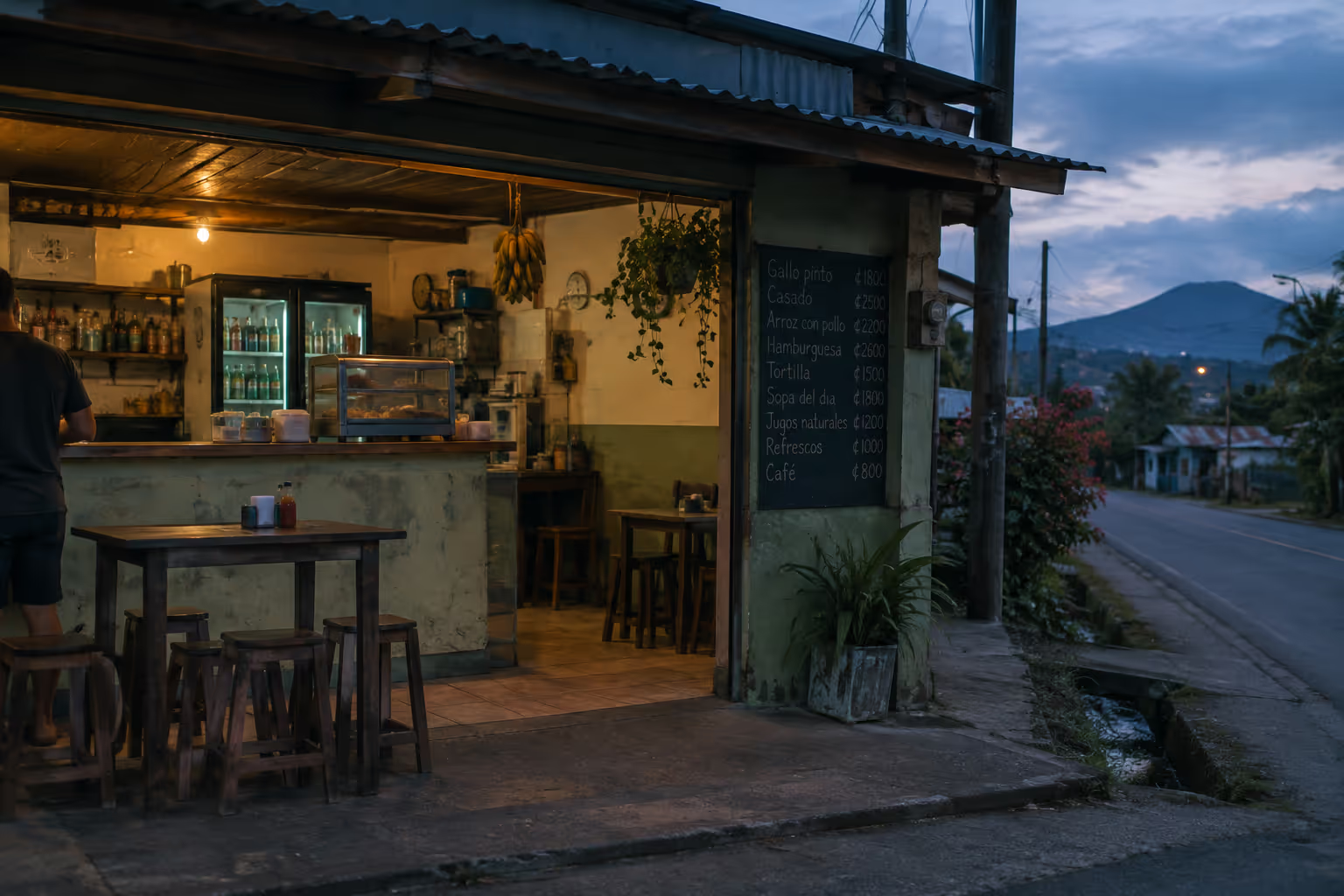
The surf-and-culture combination is more practical than most guides make it sound. Market or home-style cooking classes in Tamarindo, Nosara, and Santa Teresa run $40-$90 for a two- to three-hour session, usually covering gallo pinto, casado, and ceviche. Cheaper still - ask a homestay host to teach you. I’ve done exactly this in the Central Valley: you show up, you help chop, you eat what you make. The lesson on gallo pinto technique cost me about $7 in ingredients and ended with the best rice and beans I had the entire trip.
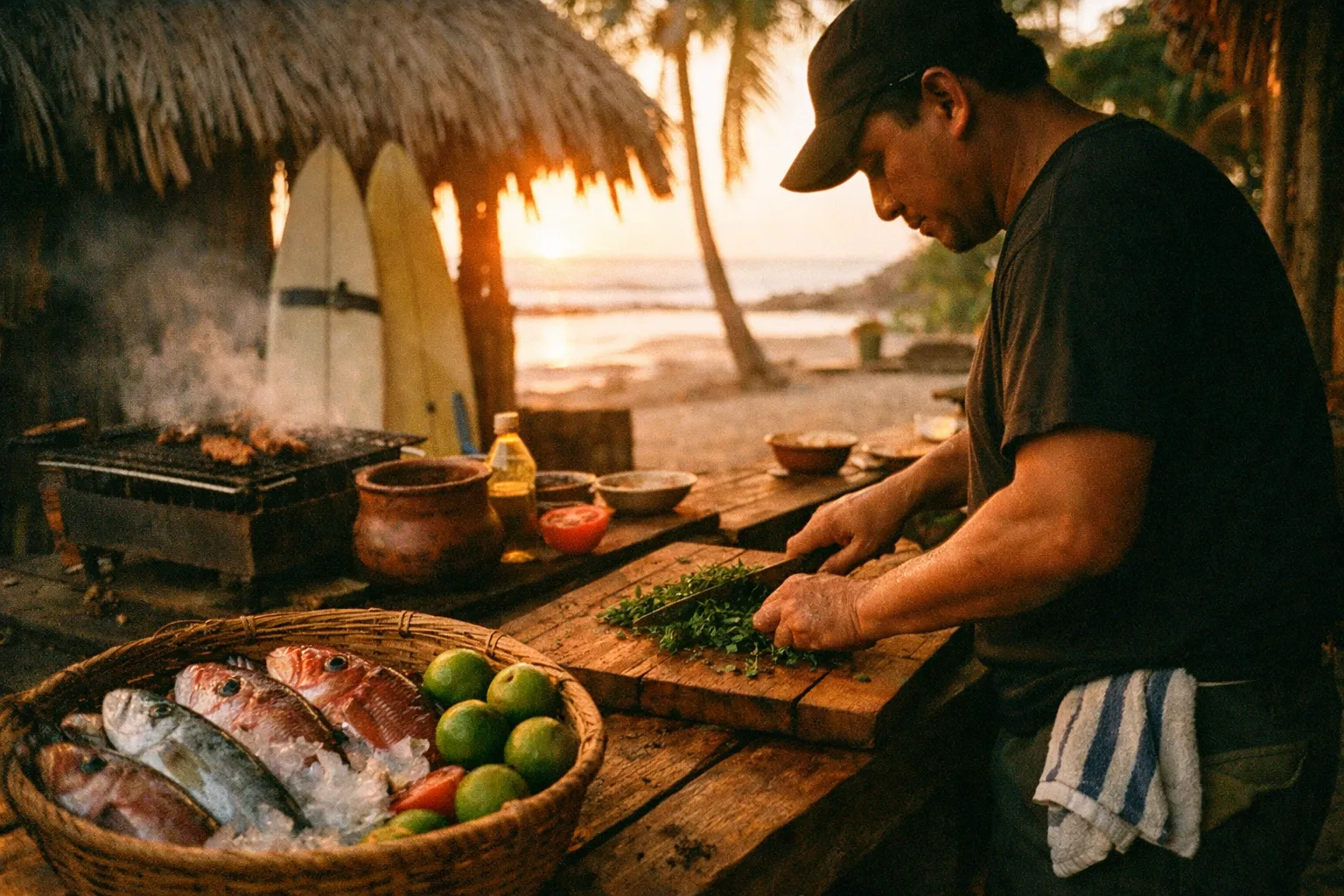
Homestay nights with local families around Jaco, the Central Valley, and Nicoya commonly cost $25-$45/night including breakfast, and a hands-on gallo pinto or patacones lesson often costs nothing beyond the ingredients (about $5-$10 for a few people).
On the Nicoya Peninsula, look for retreats that pair surf with sustainable farm visits, coffee-farm tours, or a trip to the seafood market before you cook. Small groups of six to ten people mean you actually talk to your hosts instead of watching a demo. This is also where the “surf with empathy” idea earns its keep: book Tico-owned schools and co-ops, choose homestays over chain hotels where you can, and put your money toward communities rather than extracting a wave and leaving. For more on local ingredients, the flavors of Costa Rica’s cuisine is worth reading before your class.
What to be careful of in Costa Rica
The thing most surf guides get wrong about Costa Rica: they sell the waves and skip the hazards. Here’s the concise version.
In the water:
- Rip currents and shifting sandbars are the most common cause of rescues on Pacific beachbreaks. Learn to spot a rip - a channel of darker, flatter water moving seaward - before you paddle out.
- Wave power. The tourism board is blunt: never surf beyond your skill level. Playa Hermosa, Witch’s Rock, Dominical, and Salsa Brava have humbled plenty of confident visitors.
- Crocodiles. The one that matters for most readers is not a remote break: it is the estuary at the north end of Tamarindo beach, the town this guide recommends as a base. Three surfers were attacked there between 2013 and 2016, the last of them losing his right leg (The Tico Times, 22 July 2016) (5). MINAE’s local officer put it plainly: the estuary is crocodile habitat, and nobody should swim in it or cross it (Teletica, 18 June 2018) (6). Never wade the estuary to reach Playa Grande, and do not read a missing warning sign as an all-clear, because MINAE has publicly complained that local businesses take those signs down. Crocodiles are present at the rivermouth by Witch’s Rock too. Stay out of rivermouths and estuaries at dawn, dusk, and after heavy rain.
On land:
- Petty theft beats violent crime as the real risk in tourist towns. Don’t leave phones, passports, or bags on the beach or in unlocked cars.
- Roads. Night driving on unpaved roads to Santa Teresa or Pavones is genuinely dangerous.
- Sun and dehydration. Equatorial sun plus multi-session surf days adds up fast. Reapply sunscreen, drink more than you think you need.
- Mosquitoes carry dengue risk in the rainy season; pack repellent.
Etiquette. Dropping in on locals at crowded peaks in Tamarindo, Jaco, Santa Teresa, or Pavones is the fastest way to sour the “surf with the locals” experience. Wait your turn, respect the pecking order, and you’ll be welcomed back.
Recommended places to stay, by budget
- Budget ($15-$35/night): Hostels in Tamarindo, Jaco, and Santa Teresa with shared kitchens, board rental, and group lessons on-site. Bus-friendly and social.
- Mid-range ($60-$140/night): Small hotels and cabinas near the break, often with a few guided surf days and a cooking class included. The sweet spot for most readers.
- Premium eco-resorts ($250-$600+/night): On-site surf coaches, yoga shalas, and farm-to-table kitchens, concentrated in Nosara, Santa Teresa, and Tamarindo. Increasingly marketed on solar and grey-water credentials.
Surf-yoga-cook retreats packaged over 5-7 nights run $800-$1,200 at the budget end and $1,800-$3,500 per person (double occupancy, flights excluded) at upscale eco-resorts in Samara, Nosara, and Santa Teresa. Book Christmas, New Year, and Easter weeks well in advance.
One conservation note worth knowing: the wave itself is contested. A publicly funded dock, the Embarcadero Vecinal de Pavones, is going up at the point where the wave ends, and opponents say it advanced without the oceanographic and coastal studies that would show how the pilings and fill affect currents, sediment transport and the ride (The Tico Times, 31 March 2026) (7). Demolitions and an asphalting plan have added to local fears about resort development crowding out fishermen and public beach access. If you go, support the local groups working to protect the long left and the rainforest behind it.
Nearby & similar destinations
If you’re comparison-shopping warm-water surf trips, here’s where Costa Rica sits against the alternatives:
- Nicaragua (Popoyo, San Juan del Sur): often cheaper, similarly consistent, with more variable infrastructure.
- El Salvador (El Tunco, Las Flores): world-class right points, growing scene, lower prices.
- Panama (Santa Catalina, Bocas del Toro): less crowded, more remote, mixed access.
- Lombok, Indonesia (surf-yoga retreats): the same daily formula - surf, yoga, shared meals - but the flights from North America are far longer. Costa Rica wins on proximity, and on healthcare and safety infrastructure if those matter to you. Lombok is a separate trip with its own logistics; this guide is for the Pacific-coast Costa Rica version.
Costa Rica’s edge for North Americans is straightforward math: short flights, no wetsuit, strong infrastructure, and the option to wrap surf, cooking, and homestays into one trip.
Frequently Asked Questions
- Can I surf in Costa Rica year-round?
- While Costa Rica offers surfable waves most of the year, conditions vary by coast and season. The Pacific coast has 300+ surfable days, but the Caribbean side is more seasonal with best conditions December to March.
- Are there surf schools suitable for complete beginners?
- Yes, Tamarindo, Nosara, and Jaco have many surf schools specializing in beginner lessons with soft-top boards and patient instructors who grew up on the local breaks.
- What should I pack for surfing in Costa Rica?
- Besides your swimwear, pack reef-safe sunscreen, a rashguard, and for advanced surfers, spare leashes and fins. Some reef breaks require booties. Schools usually provide boards for lessons.
- How do I safely access Witch's Rock?
- Most visitors go by boat: about 45 minutes from Playas del Coco, about 1h30 from Tamarindo, with park entry paid on board. Driving in needs an online reservation with Area de Conservacion Guanacaste, a high-clearance 4x4, and a day the sector is open: Wednesday to Monday, entry 8am to 2pm, out by 6pm, 100 visitors maximum, and the access road is shut to all vehicles from September to early December. A boat avoids the driving restrictions, not the crocodiles: they live in the estuary here just as they do in Tamarindo's.
- Is it safe to drive to remote surf spots at night?
- No. Night driving on unpaved roads to places like Santa Teresa or Pavones is dangerous due to potholes, loose gravel, and unmarked river crossings.
- Can I combine surfing with cultural experiences?
- Absolutely. Many surf towns offer cooking classes, homestays, and sustainable farm visits that let you engage with local culture beyond the waves.
- What is the best way to avoid rip currents?
- Learn to identify rip currents as channels of darker, flatter water moving seaward. Always surf within your skill level and heed local advice.