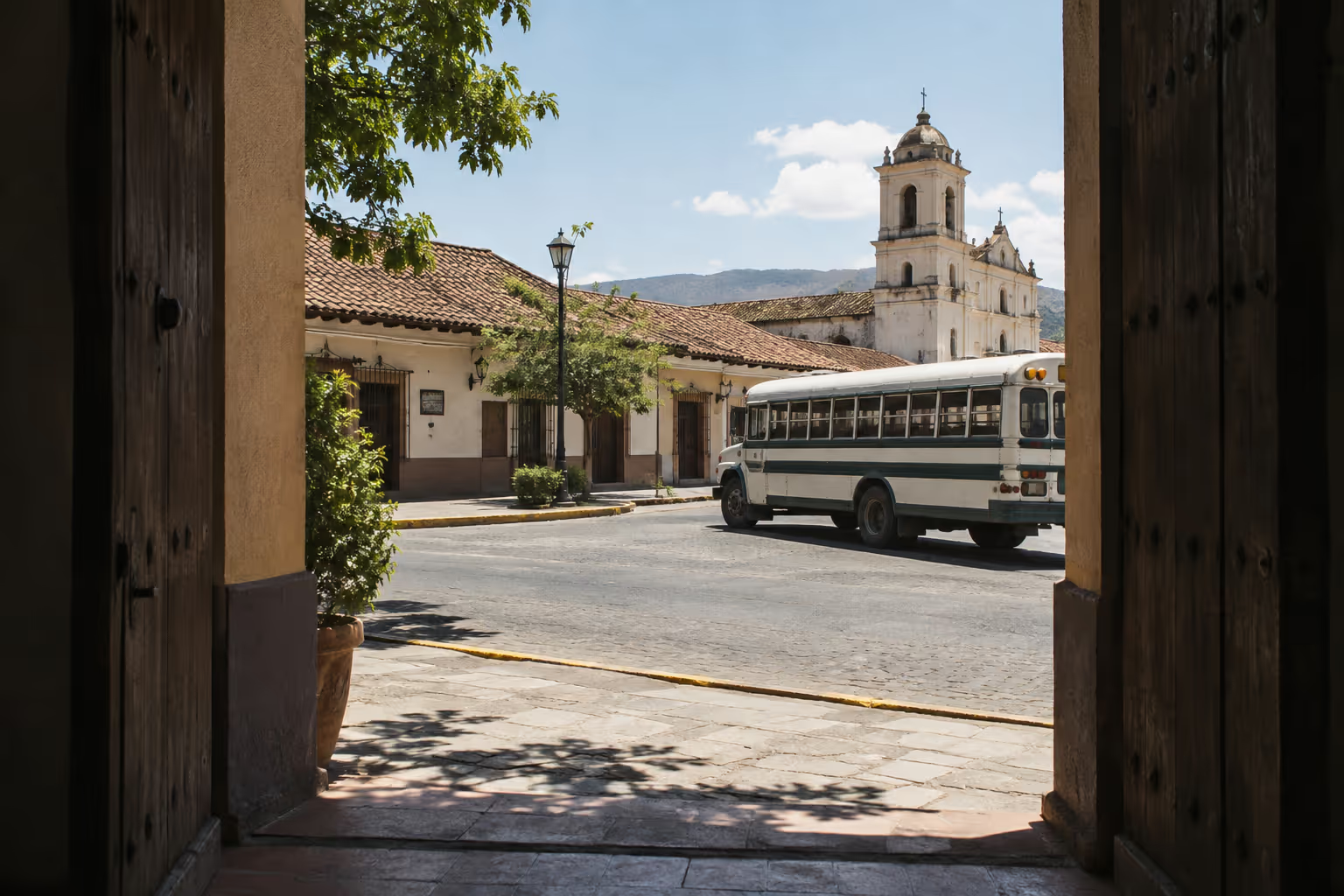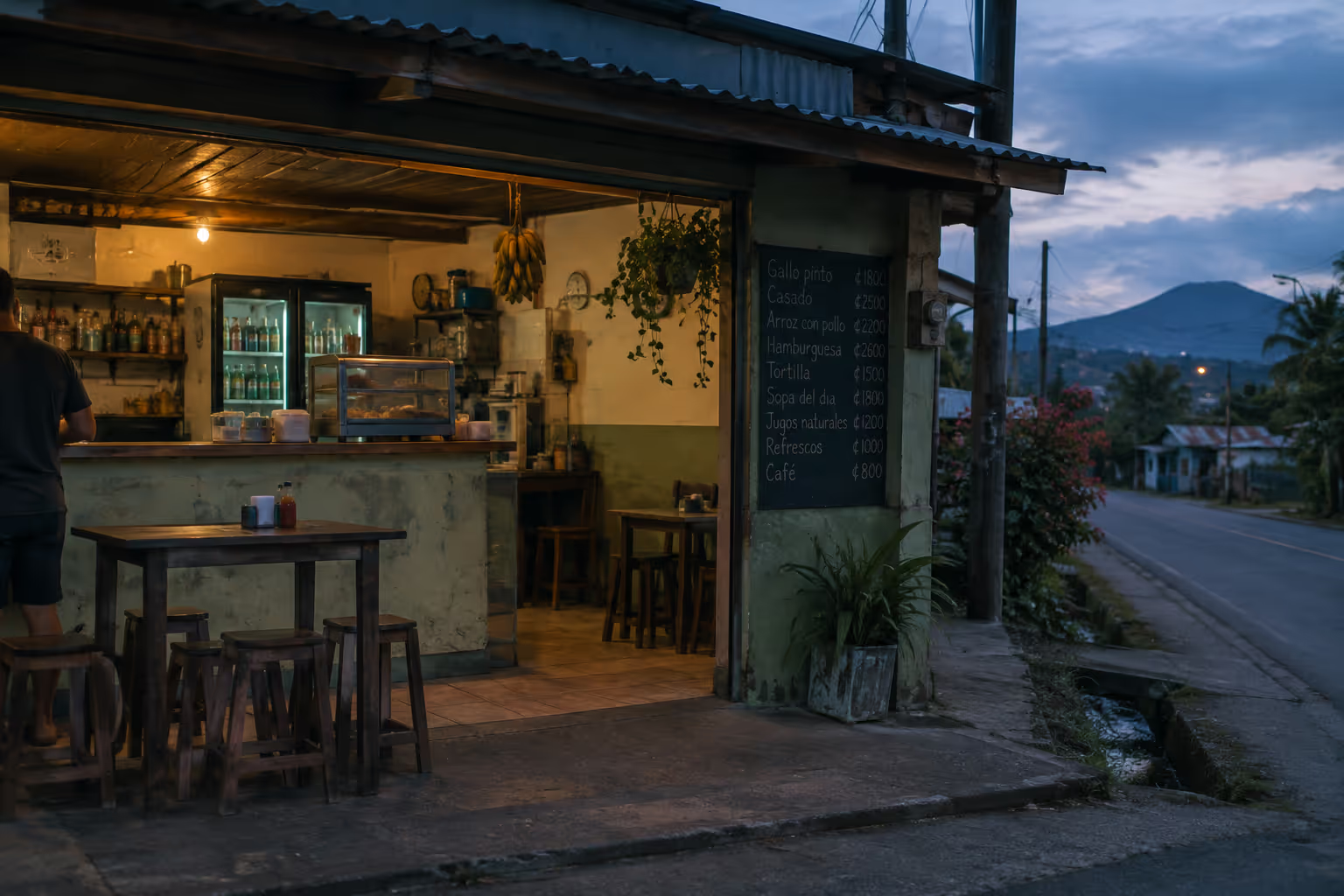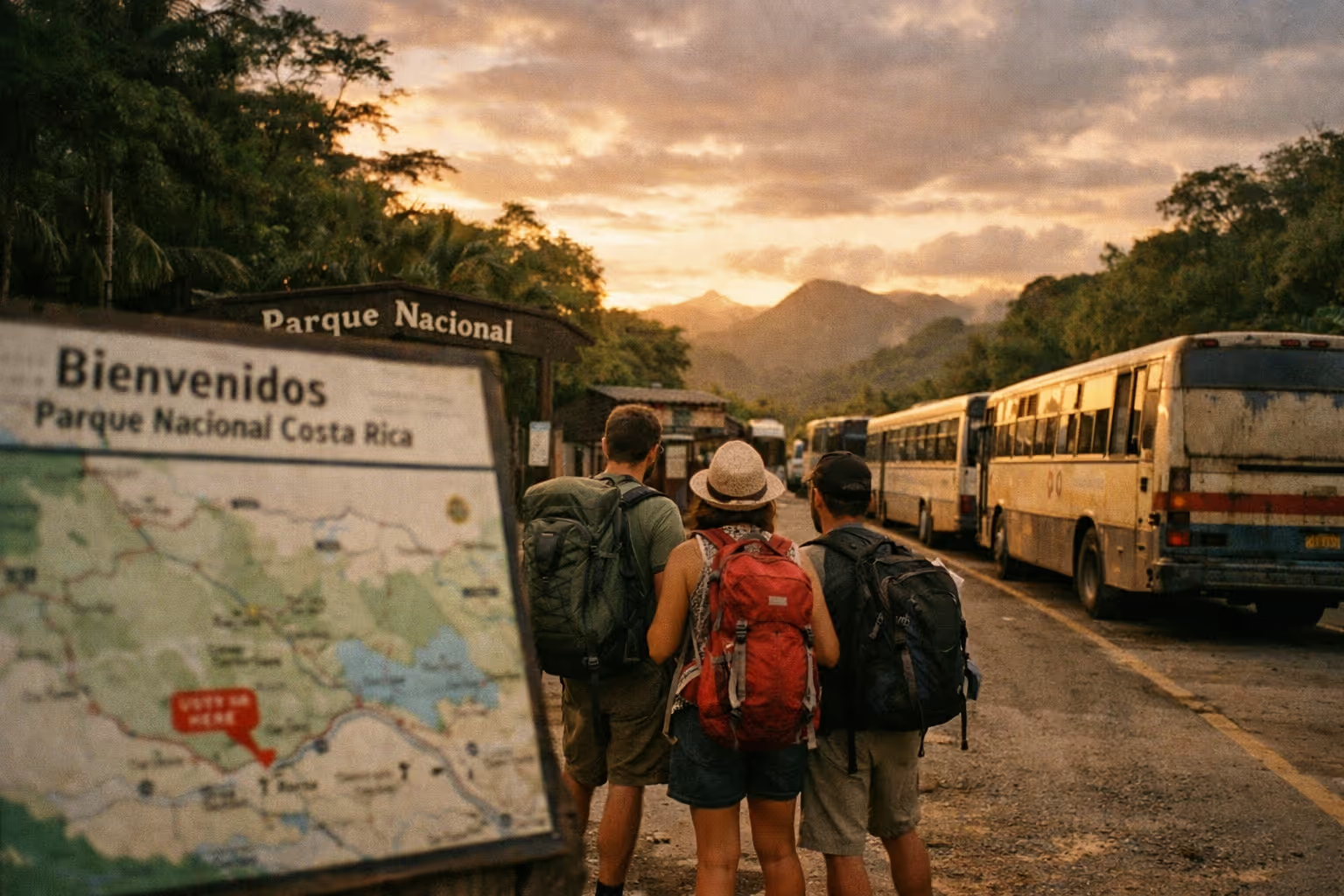
Public transport Costa Rica runs cheap and dense, but only rewards travelers willing to plan around its quirks. A ride from San Jose to Tamarindo costs about $13, a fraction of a rental car with fuel and insurance. The catch: San Jose has no central station, so Tracopa, Mepe, and the rest each run their own terminal, a few dollars apart by taxi. There is no official schedule PDF, so lean on the Yo Viajo app; and Manuel Antonio is the only park with a frequent bus to the gate.
Is public transport in Costa Rica actually good?
Short answer: yes for budget travelers willing to plan, no if you want hop-on convenience.
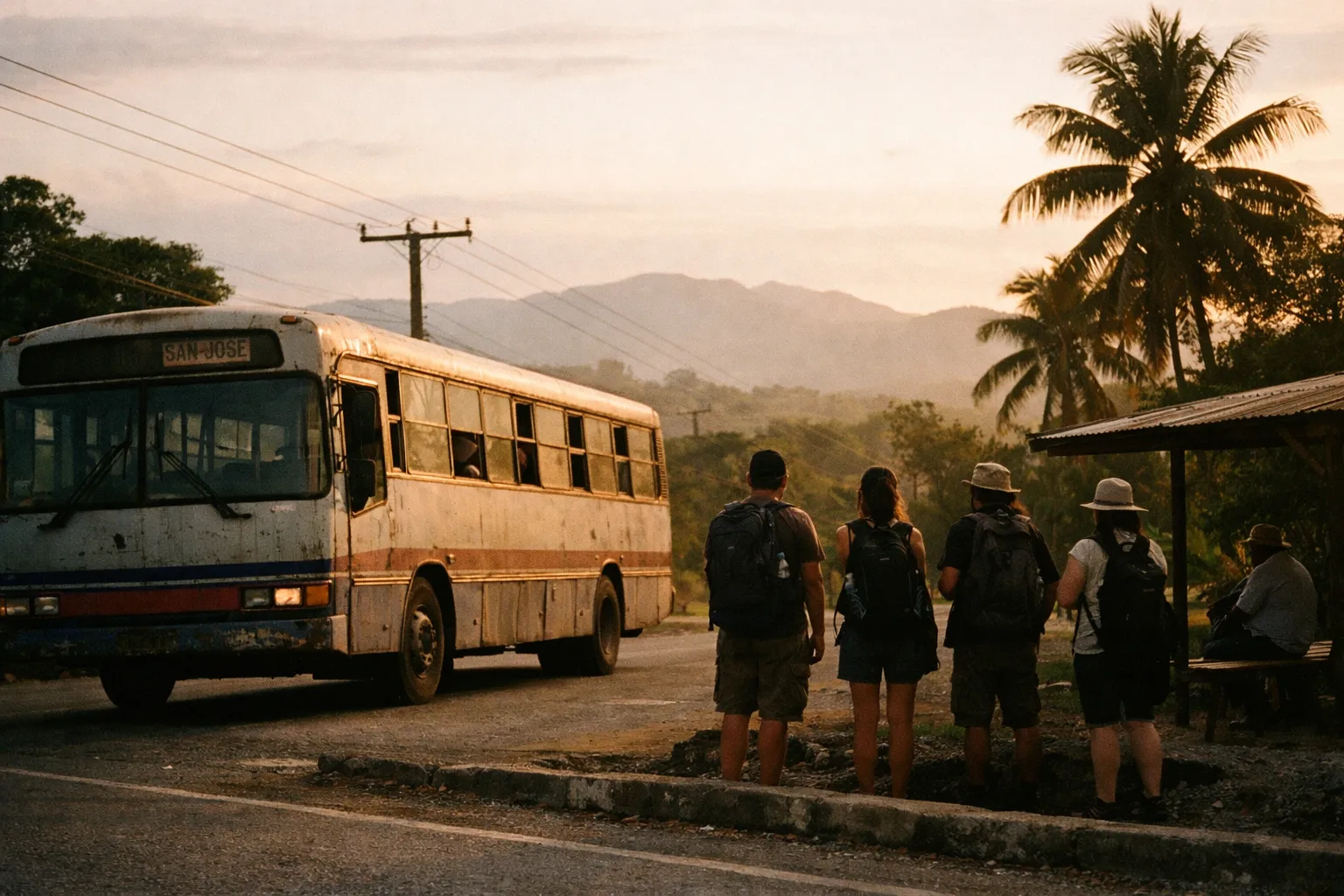
Public transport Costa Rica offers is dense, cheap, and used daily by locals - which is the best functional safety endorsement you’ll get. Intercity buses reach Tamarindo, Monteverde, La Fortuna, Jacó, Quepos/Manuel Antonio, Puerto Viejo, Puerto Jiménez, and most other tourist anchors. A 258 km ride from San José to Tamarindo runs about $13 USD per adult with Transporte Inteligente de Guanacaste, which has held the route since 2022. ARESEP sets the fare and moved it twice in 2026, so check tiguanacaste.com before you budget. Try that in a rental car after fuel and insurance and you’re looking at $80+ for the same trip.
What’s not good:
- No unified operator. Buses are privately owned, and each company runs its own terminal (2). San José alone has roughly a dozen scattered across downtown.
- Schedules drift. Times posted on third-party blogs are often 6-24 months out of date. Always cross-check at the terminal or in the Yo Viajo app the day before.
- Slow. Bus trips usually take 20-40% longer than driving. San José to La Fortuna is 3-4.5 hours by car and 4.5-6.5 hours by bus.
- Limited English signage. Drivers and ticket clerks speak basic English at best. A handful of Spanish phrases makes everything smoother.
The system is good enough that a classic loop - San José → Arenal → Monteverde → Manuel Antonio → San José - works fine without a rental car. It’s not good enough for spontaneous, multi-park itineraries that change daily.
How tourists actually get around Costa Rica
Most visitors use a mix, not a single mode. Here’s the realistic breakdown:
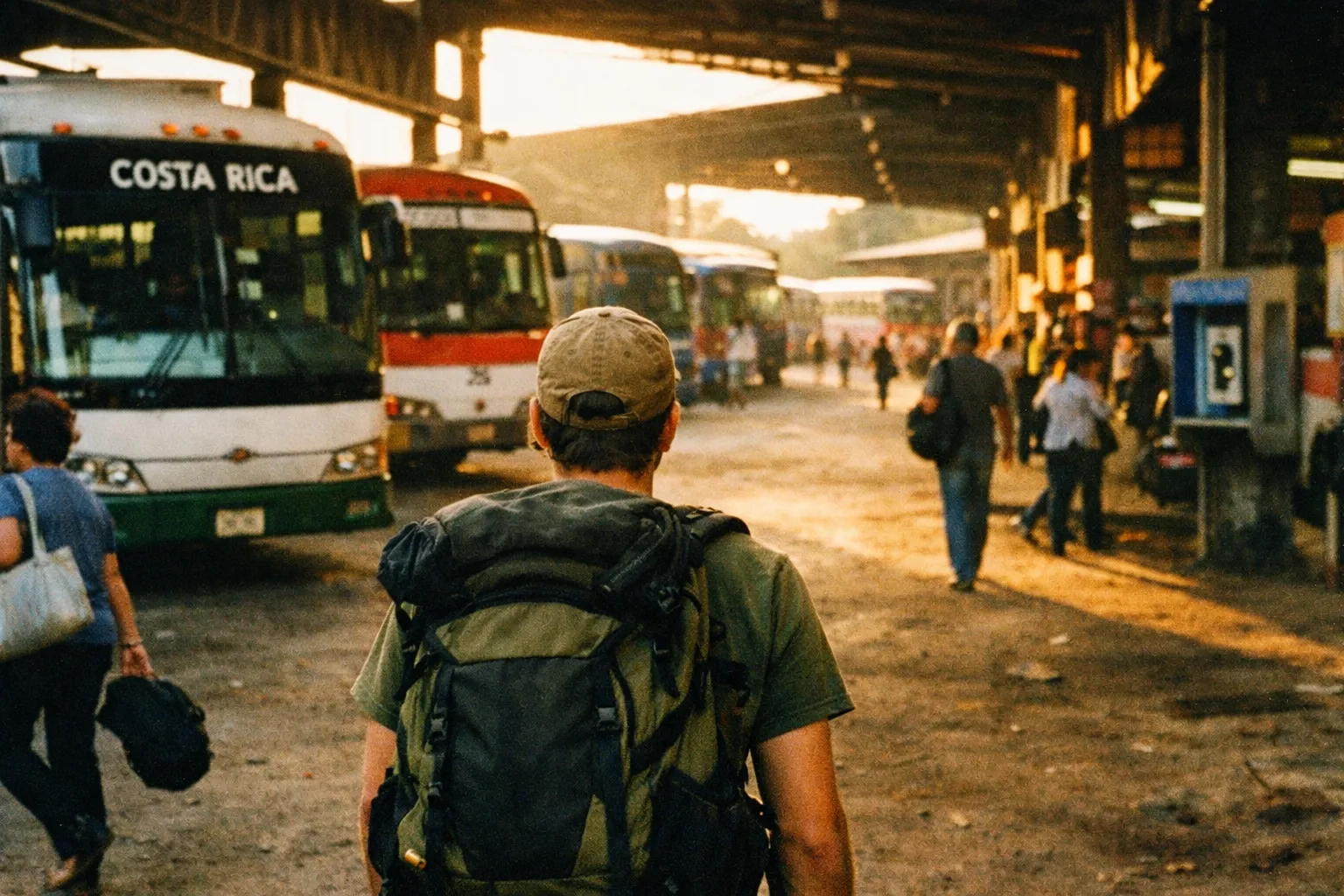
- Public buses - backbone for budget travelers and anyone moving between major towns. $3-12 per intercity leg.
- Shared tourist shuttles - door-to-door minivans run by operators like Interbus and Gray Line. $35-60 USD per person, one way for routes like San José-La Fortuna or Monteverde-Manuel Antonio. Faster than the bus by 1-2 hours and they handle terminal-switching for you.
- Licensed taxis - red urban taxis with the “maría” meter (ARESEP set the 2026 sedan start at CRC 840 / ~$1.65), orange taxis at SJO airport.
- Uber and DiDi - operational in San José, Liberia, Jacó, and a few other tourist hubs. Legally gray but widely used. Cheaper than taxis and usually more reliable than hailing one on the street.
- Domestic flights - Sansa runs San José to Quepos, Tamarindo, Drake Bay, Puerto Jiménez, and others. $60-130 USD one way. Saves 4-7 hours on long routes like San José to the Osa Peninsula.
- Rental cars - $50-70+ per day with mandatory insurance. Best for remote parks (Rincón de la Vieja, Tenorio, Corcovado area) and travelers who want to set their own pace.
A common smart pattern: buses for the long inter-town hauls, shuttles for the awkward connections (anything involving Monteverde’s gravel roads), and the occasional taxi or Uber for last-mile to a hotel.
San Jose Costa Rica public transportation - terminals, city buses, and survival tips
San Jose Costa Rica public transportation is the single most confusing part of the whole system. There is no central bus station. Each company operates from its own terminal, scattered across downtown and nearby neighborhoods.
Plan around this fact or lose half a day to it.
The main companies and where they go
- Pulmitan: Liberia and Playas del Coco (5)
- Tracopa: Pacific south coast (Quepos, Manuel Antonio, Dominical, Uvita, Golfito, Paso Canoas) (6)
- Tuasa - Alajuela and the SJO airport corridor
- Mepe - Caribbean coast (Puerto Viejo, Cahuita, Sixaola) (3)
- Autotransportes San José-San Carlos: Ciudad Quesada, La Fortuna and the northern zone, out of Terminal Atlántico Norte
- Blanco Lobo: Puerto Jiménez and the Osa Peninsula
Terminals to know: Terminal Atlántico Norte (Avenida 9, Calle 12, Barrio México, 450 m north of Parque La Merced) is the one most travelers need, handling Mepe’s Caribbean routes plus Monteverde, Ciudad Quesada and La Fortuna, Jacó and Zarcero(4). Gran Terminal del Caribe (Calle Central, Avenida 11) covers Guápiles, Cariari, Siquirres and Limón. Guanacaste routes (Tamarindo, Santa Cruz, Nicoya, Flamingo) and the Cóbano buses leave from the Transporte Inteligente de Guanacaste terminal on Paseo Colón, and Tracopa keeps its own terminal for the south Pacific. Terminal 7-10 closed on 30 April 2025 and its companies were dispersed to the terminals above, so ignore any guide or app that still sends you there.
If you arrive on one bus and need to transfer to another company’s terminal, take a licensed red taxi. It’s $3-6 USD, takes 10-15 minutes, and beats dragging your pack through downtown traffic.
City buses within San José
Local urban buses run from roughly 5:00 AM to 10:30 PM, with reduced frequency at night. A single ride costs CRC 350-450 (~$0.70-0.90) paid in coins when you board. Routes are dense but unintuitive - use Moovit to plan trips. For airport transfers, the Tuasa bus from Alajuela runs to SJO and downtown for under $2; the alternative is an orange airport taxi (~$30) or Uber (~$20-25).
Apps that actually help
- Yo Viajo - Bus Info Costa Rica - recently redesigned with an English interface. Shows routes, fares, and terminals for intercity buses. Download before arrival.
- Moovit - best for San José city buses and metropolitan area connections.
- Visit Costa Rica (the official tourism board site) - publishes a national bus itinerary that functions as the closest thing to a Costa Rica bus schedule pdf the country offers. Bookmark it. There is no single downloadable nationwide PDF, and anyone promising one is usually pointing at an outdated blog post.
Costa Rica bus routes map and key intercity routes
There’s no official printed costa rica bus routes map - the network is too fragmented for one. The practical equivalent is the Visit Costa Rica online itinerary tool plus the Yo Viajo app, which together cover every route you’d actually take as a tourist. For a visual overview, Rome2Rio and Google Maps both render intercity bus paths reasonably well, though fare and schedule data tend to lag.
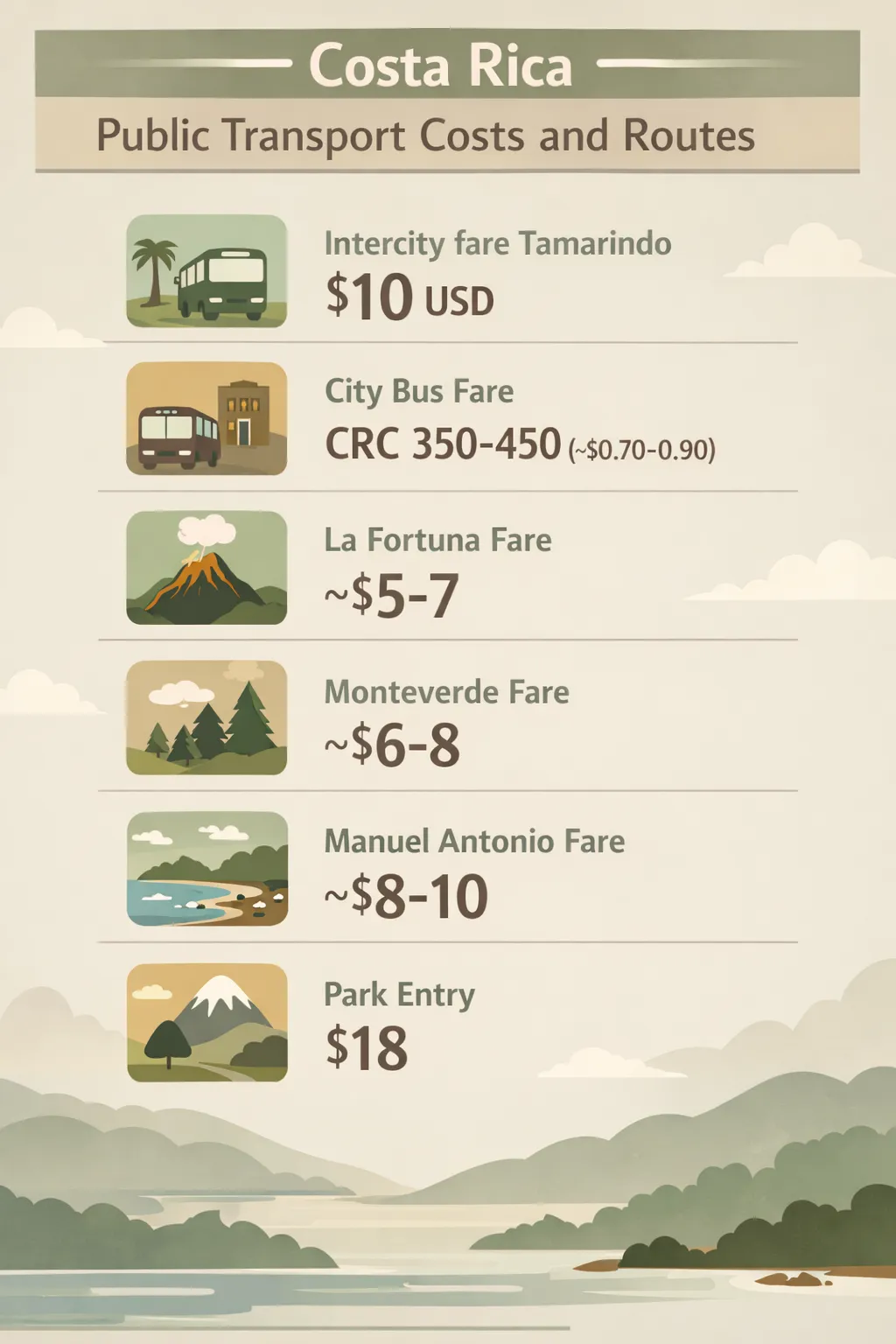 San José to Tamarindo: 258 km, 5.5-6 hr, $13; San José to Quepos/Manuel Antonio: 160 km, 3.5-4 hr, $8-10.

The routes worth knowing from San José:
| Route | Distance | Bus time | Fare (one way) | Company |
|---|---|---|---|---|
| San José → La Fortuna | 130 km | 4-4.5 hr | ~$5-7 | San José-San Carlos (Terminal Atlántico Norte) |
| San José → Monteverde (Santa Elena) | 165 km | 4.5-5 hr | ~$6-8 | Transmonteverde (Terminal Atlántico Norte) |
| San José → Quepos / Manuel Antonio | 160 km | 3.5-4 hr | ~$8-10 | Tracopa |
| San José → Tamarindo | 258 km | 5.5-6 hr | ~$13 | Transporte Inteligente de Guanacaste (Paseo Colón) |
| San José → Puerto Viejo de Talamanca | 215 km | 4.5-5 hr | ~$10-12 | Mepe |
| San José → Puerto Jiménez | 365 km | 8 hr | ~$15 | Blanco Lobo |
| San José → Liberia | 215 km | 4 hr | ~$8 | Pulmitan |
Most of these run 3-6 departures per day. Book a day ahead in the December-April high season and around Easter week (Semana Santa), when buses sell out. I’ve seen the La Fortuna departure full by 8 AM on a Saturday in February - don’t assume you can walk up.
Reaching the national parks by public transport
This is where most guides go vague. Here’s the park-by-park breakdown, ranked by how realistic it is to get there without a car.
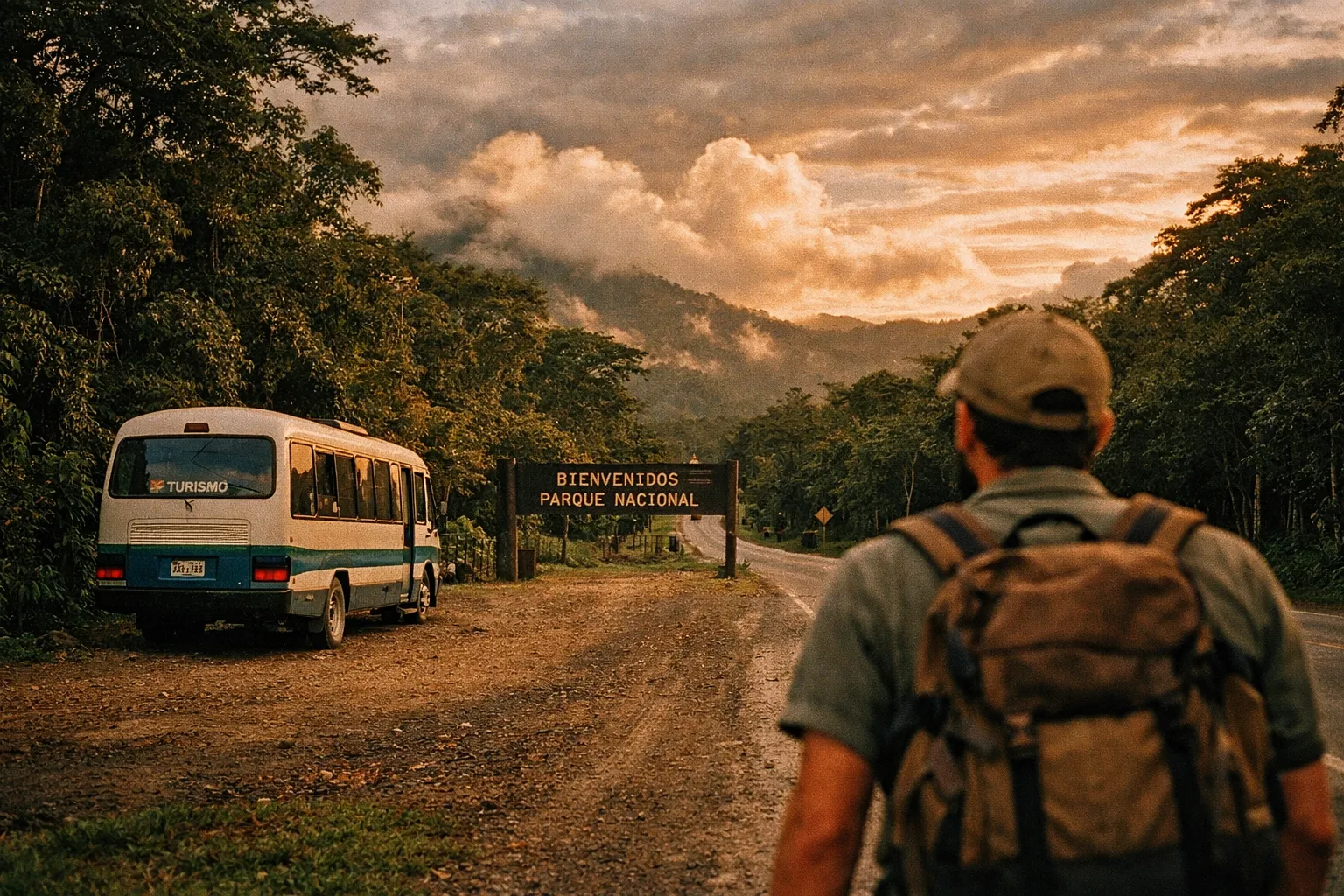
Manuel Antonio National Park
The easiest park to reach without a car. Take the Tracopa bus from San José to Quepos (~$8-10, 3.5-4 hr). From the Quepos bus terminal, the local Quepos-Manuel Antonio bus runs every 20-30 minutes, costs under $1, and drops you at the park entrance. Park entry is $18.08 for non-resident adults, and tickets are sold online only through serviciosenlinea.sinac.go.cr; there is no ticket window at the gate. The park is closed on Tuesdays for maintenance and runs 7:00 AM to 3:00 PM the rest of the week.
Worth prioritizing. This is the one park where the bus actually delivers you to the gate.
La Fortuna / Arenal Volcano
Bus from San José’s Terminal Atlántico Norte (Avenida 9, Calle 12, Barrio México) to La Fortuna (~$5-7, 4-4.5 hr). The town itself is the base - most hotels, restaurants, and tour operators are walkable from the main strip. For Arenal Volcano National Park (15 km west), take a local bus to the park entrance or a taxi (~$15-20 each way). La Fortuna Waterfall, hot springs, and most tour pickups are arranged from town.
Monteverde Cloud Forest Reserve
Transmonteverde bus from San José’s Terminal Atlántico Norte to Santa Elena (~$6-8, 4.5-5 hr). The reserve is 6 km from Santa Elena - there’s a local bus that runs a few times daily for around $2, or a taxi for $10-12. Santa Elena Reserve (a separate, less crowded option) sits about 5 km north of town. Roads here are gravel and slow; budget extra time on both ends.
Tortuguero National Park
No roads in, and no single bus gets you there. From the Gran Terminal del Caribe in San José, take a Caribeños bus to Cariari (~2 hr), change buses in Cariari for La Pavona (~1 hr), then take the boat (~1-1.5 hr) to Tortuguero village. The two bus legs run about $6 total. Boats meet the bus arrivals, but leave San José in the morning: miss the last connection and you overnight in Cariari. Alternatively, fly Sansa from San José (~$100, 30 min). If you’re tight on time, the flight is worth it.
Cahuita National Park
Mepe bus from San José to Cahuita (~$8-10, 4 hr). The park entrance is a 5-minute walk from town. Donation-based entry at the Kelly Creek (Cahuita town) gate - one of the better deals in the national park system.
Rincón de la Vieja National Park
Bus from San José to Liberia (~$8, 4 hr), then a taxi or 4×4 shuttle for the final 25 km to the park gates. No public bus reaches the park itself. Budget $30-40 round trip for the transfer or join a Liberia-based day tour. Skip if you’re short on time and don’t have a car - the logistics add up fast.
Poás Volcano National Park
The classic day trip from San José, but the last leg is the catch. Take the Tuasa bus to Alajuela, then the Coopetransasi bus that climbs to the crater: it is not a daily service, it runs only on a handful of days (typically weekends and holidays), and there is a single morning departure, so confirm the current days with the operator before you commit. Otherwise take a tour or a taxi from Alajuela. Park entry now requires advance online reservations through SINAC - slots fill up, especially on weekends (1). Reserve before you leave home, not the morning you plan to go.
Corcovado National Park (Osa Peninsula)
The hardest park to reach by public transport. Bus from San José to Puerto Jiménez (~$15, 8 hr) or a Sansa flight (~$110). From there, all park entry requires a licensed guide and pre-arranged boat or 4×4 transport to ranger stations like Sirena. Plan this through an operator weeks ahead - this is not a show-up-and-figure-it-out situation.
Is $500 enough for a week in Costa Rica?
Yes - barely - if you stick to buses, hostels, and a short list of parks. Most travelers are more comfortable around $700-900/week. Here’s the math.
$500/week budget (frugal, public transport only)
- Lodging: 6 nights × $25 (hostel dorm or basic cabina) = $150
- Food: 3 meals × $7 at sodas (local diners) × 7 days = $147
- Intercity buses: 4 legs × $8 average = $32
- Local buses and taxis: $25
- National park entries: 3 parks × $18 = $54
- Activities (1 budget tour or self-guided hike): $50
- Buffer/snacks/water: $42
- Total: ~$500
This works if you base in 2-3 spots - say San José → La Fortuna → Manuel Antonio - and skip the high-cost tours like night kayaking or canyoning.
$800/week budget (mid-range, mix of buses and shuttles)
- Lodging: 6 nights × $45 (private room, guesthouse) = $270
- Food: mix of sodas and casual restaurants = $180
- Transport (some shuttles): $120
- Parks + 2 guided tours: $180
- Misc: $50
- Total: ~$800
Costa Rica on a budget is achievable, but it’s the most expensive country in Central America by a wide margin. Prices on the Pacific coast and around La Fortuna run noticeably higher than the Caribbean side or the central valley. That’s not a complaint, just something to factor in before you assume the $500 budget is comfortable.
What to be cautious of on Costa Rica buses
Violent crime against tourists is uncommon. The real risks are logistical and petty - and almost all are avoidable.
Pickpocketing at terminals and on crowded buses. Keep your daypack on your lap, not under the seat or in the overhead rack. Don’t put a phone in a back pocket. San José terminals - especially around the old Coca-Cola area and Gran Terminal del Caribe at peak hours - are the highest-risk zones.
“Pirate” taxis. Unmarked cars at bus terminals and airports sometimes overcharge 2-3× or carry no insurance. Use red urban taxis with a working meter (“maría”), orange airport taxis at SJO and Liberia, or Uber/DiDi in supported cities.
Schedule changes and missed connections. Confirm departure times the day before, in person at the terminal or via Yo Viajo. Don’t trust a blog post from 2022. Build buffer time into multi-leg days - this is where most itineraries fall apart.
Night arrivals to small towns. Buses to Monteverde, La Fortuna, Puerto Viejo, and other gateway towns sometimes pull in after dark. Pre-book your hotel, have the address written in Spanish, and arrange a taxi pickup if walking isn’t an option. Street lighting in these towns is minimal.
Weather-related delays. Mountain roads to Monteverde and Cerro de la Muerte get fogged in or washed out during the rainy season (May-November). I drove the route to Monteverde last October - the last 30 km took 90 minutes because of a slow truck and standing water on the road. Buses are slower still.
Underestimating travel times. A common mistake is planning three regions in seven days using only buses. You’ll spend 25-30% of your trip in transit. Two regions in a week, or three in ten days, is more realistic.
Carrying valuables visibly. Standard urban travel sense applies. Skip the flashy watch on the bus to Puerto Viejo.
Best time of year to use public transport
The bus system runs year-round, but the experience changes with the season.
- December-April (dry season / high season): Buses are crowded, especially around Christmas, New Year, and Semana Santa. Book intercity tickets 1-2 days ahead. Roads are dry and reliable.
- May-November (green season): Fewer crowds, easier seat availability, but afternoon thunderstorms can delay mountain routes. September and October are the wettest months - Tortuguero, Osa, and Monteverde routes are most affected.
- Best month for a public transport trip: February or early March. Dry, less crowded than peak Christmas weeks, and shoulder pricing on lodging.
Booking tickets and payment logistics
- Most short and city bus fares are cash in colones only, paid when boarding. Carry CRC 1,000 and 2,000 notes plus coins.
- Long-distance buses sell assigned-seat tickets at the terminal counter. Some companies accept credit cards for long routes; bring cash as backup.
- Withdraw CRC 50,000-100,000 (~$90-180) at a time from a bank ATM (BAC, BCR, Banco Nacional) - better rates than airport exchanges.
- Some companies accept USD at a slightly worse exchange rate. Acceptable in a pinch, not ideal.
- For Sansa domestic flights, book online 2-6 weeks ahead for the best fares. Sansa publishes no single checked-bag weight: the allowance depends on the fare you buy, and the rule that applies is the one on your ticket confirmation. The free personal item is capped at 10 lb (4.5 kg), and checked bags are limited by size (76 x 46 x 34 cm) (7).
Shuttles and ride-sharing as supplements to public transport
When the bus schedule doesn’t align or you want to skip the terminal shuffle, shared shuttles fill the gap. Operators like Interbus, Gray Line, Caribe Shuttle, and Easy Ride run scheduled door-to-door minivans between every major tourist town. Typical fare: $35-60 USD per person one way. Booking is online, 24+ hours in advance.
When shuttles make sense:
- San José ↔ Monteverde (avoids the worst of the gravel road stress)
- Anywhere ↔ Tortuguero connections (boat coordination is handled for you)
- Multi-stop transfers like La Fortuna ↔ Monteverde (no direct public bus; the “Jeep-Boat-Jeep” shuttle takes 3 hours vs an all-day bus route through Tilarán)
Uber and DiDi work well in San José for hotel transfers, terminal switches, and short trips. Outside the central valley, coverage thins out fast - Tamarindo and Jacó have some, smaller beach towns have none.
A sample 7-day public transport itinerary
Duration: 7 days. Total transport cost: roughly $120-150 per person depending on bus vs shuttle choices.
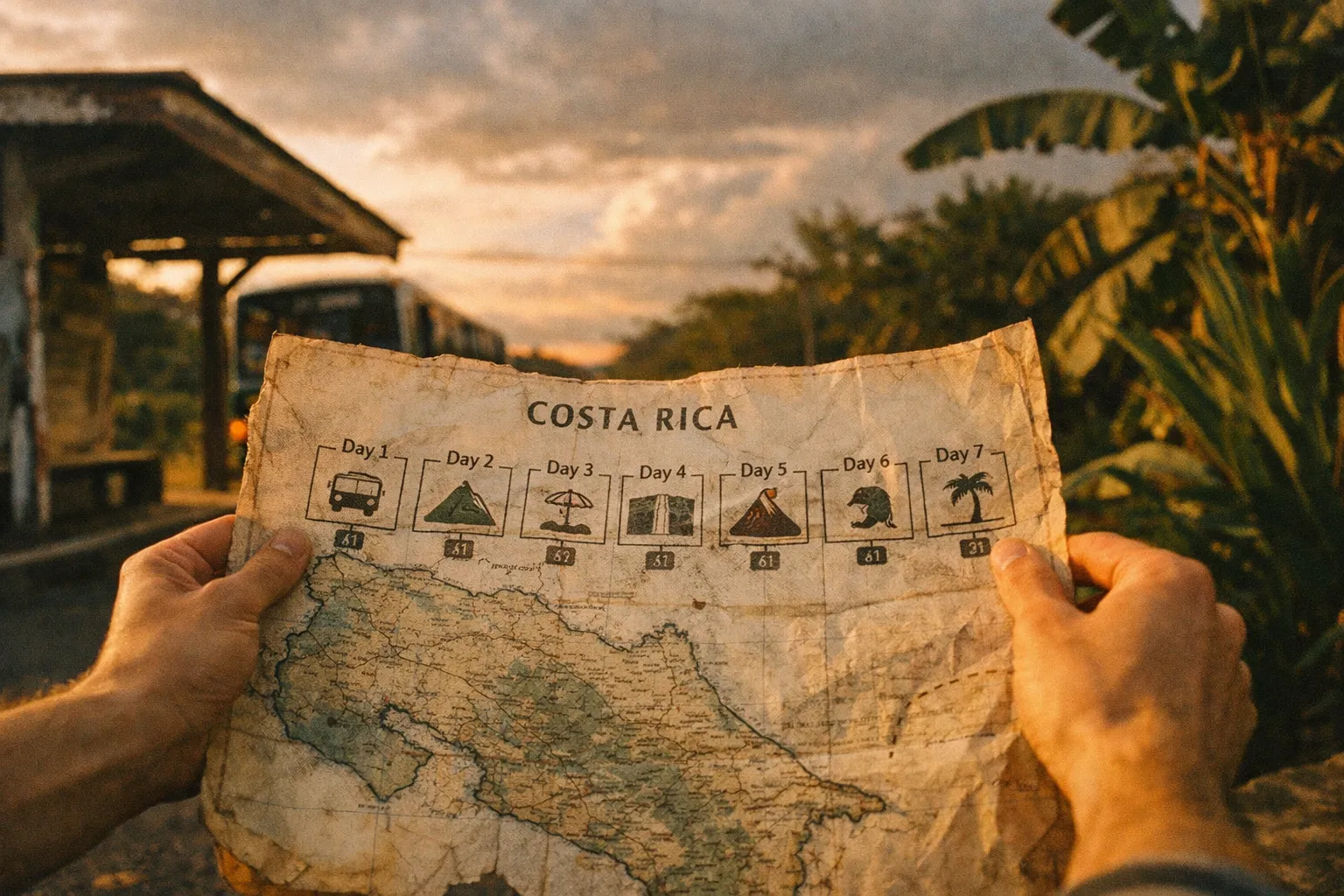
7-Day Costa Rica Public Transport Itinerary
7 daysA practical loop covering San José, La Fortuna, Monteverde, and Manuel Antonio using buses and shuttles.
- 1
Day 1: Arrival and Transfer to San José Hotel
Arrive at SJO airport, take an Uber or Tuasa bus to your hotel in San José ($2-25). Overnight in San José.
- 2
Day 2: Travel to La Fortuna
Morning bus from Terminal Atlántico Norte (Barrio México) to La Fortuna ($5-7, 4.5 hr). Explore La Fortuna Waterfall or hot springs in the afternoon. Overnight in La Fortuna.
- 3
Day 3: Arenal Volcano Activities
Hike or tour Arenal Volcano National Park. Overnight in La Fortuna.
- 4
Day 4: Shuttle to Monteverde
Jeep-Boat-Jeep shuttle to Monteverde ($30, 3 hr). Afternoon in Santa Elena. Overnight in Monteverde.
- 5
Day 5: Monteverde and Travel to Manuel Antonio
Morning visit to Monteverde Cloud Forest Reserve. Afternoon bus or shuttle to Quepos ($35-50 shuttle, or full-day bus via San José). Overnight near Manuel Antonio.
- 6
Day 6: Manuel Antonio National Park
Arrive at park opening (7 AM) with your SINAC ticket already booked online, and avoid Tuesday, when the park is closed. Enjoy the beach and trails. Overnight near Manuel Antonio.
- 7
Day 7: Return to San José
Morning Tracopa bus back to San José ($8-10, 3.5 hr). Evening departure from SJO.
This loop is the most field-tested public transport route in Costa Rica. It works, the connections are reliable, and nothing requires a rental car.
Recent changes and what’s coming
Transport is Costa Rica’s single largest source of emissions and its heaviest consumer of imported fuel, which is why the national push to electrify buses and taxis carries real policy weight. Under the National Decarbonization Plan, the target is 30% of public buses and taxis zero-emission by 2035 and 85% by 2050. Law 10209 (2022) extended tax exemptions on electric vehicles through 2035 to accelerate fleet turnover.
The public charging network keeps growing, but it stays concentrated around San José. Don’t expect to see electric intercity buses on rural routes yet: the metropolitan area is gradually shifting, while the buses you’ll ride today are still diesel.
The Yo Viajo app’s English-language redesign over the last year is the single most useful recent change for foreign travelers. It’s the closest thing the country has to a centralized bus information system.
Frequently Asked Questions
- Is public transport in Costa Rica suitable for spontaneous travel?
- No. The system requires planning, especially because schedules vary by operator and can be outdated online. It's best for travelers who book at least a day in advance.
- Are there any safety concerns using public buses in Costa Rica?
- Violent crime is rare, but pickpocketing at busy terminals and on crowded buses is common. Keep valuables secure and avoid unmarked taxis.
- How do I handle luggage transfers between different bus terminals in San José?
- Use licensed red taxis to transfer between terminals. They cost $3-6 and save time and hassle compared to walking with luggage through traffic.
- Can I rely on ride-sharing apps outside San José?
- Coverage is limited outside major hubs like San José, Liberia, Jacó, and Tamarindo. In smaller towns, rely on taxis or pre-arranged transfers.
- What's the best way to get to remote parks like Corcovado without a car?
- Use a combination of public bus or flight to gateway towns, then book licensed guides and pre-arranged boats or 4×4 transport well in advance.
- Are there any official printed bus schedules for Costa Rica?
- No official nationwide PDF exists. The best resources are the Visit Costa Rica online itinerary and the Yo Viajo app, which consolidate current route and fare info.
- How far in advance should I book Sansa domestic flights?
- Book 2-6 weeks ahead for best fares and availability, especially during high season.
Bottom line
Public transport in Costa Rica isn’t seamless. The system rewards travelers who download Yo Viajo before they land, plan one day ahead, carry colones in small bills, and pad their schedule with buffer time. Do that and you’ll spend less on a week of buses than two days of rental car fees - and you’ll cover the same ground. The classic loop works. The parks are reachable. The math is good. Just don’t show up expecting it to run like a metro.