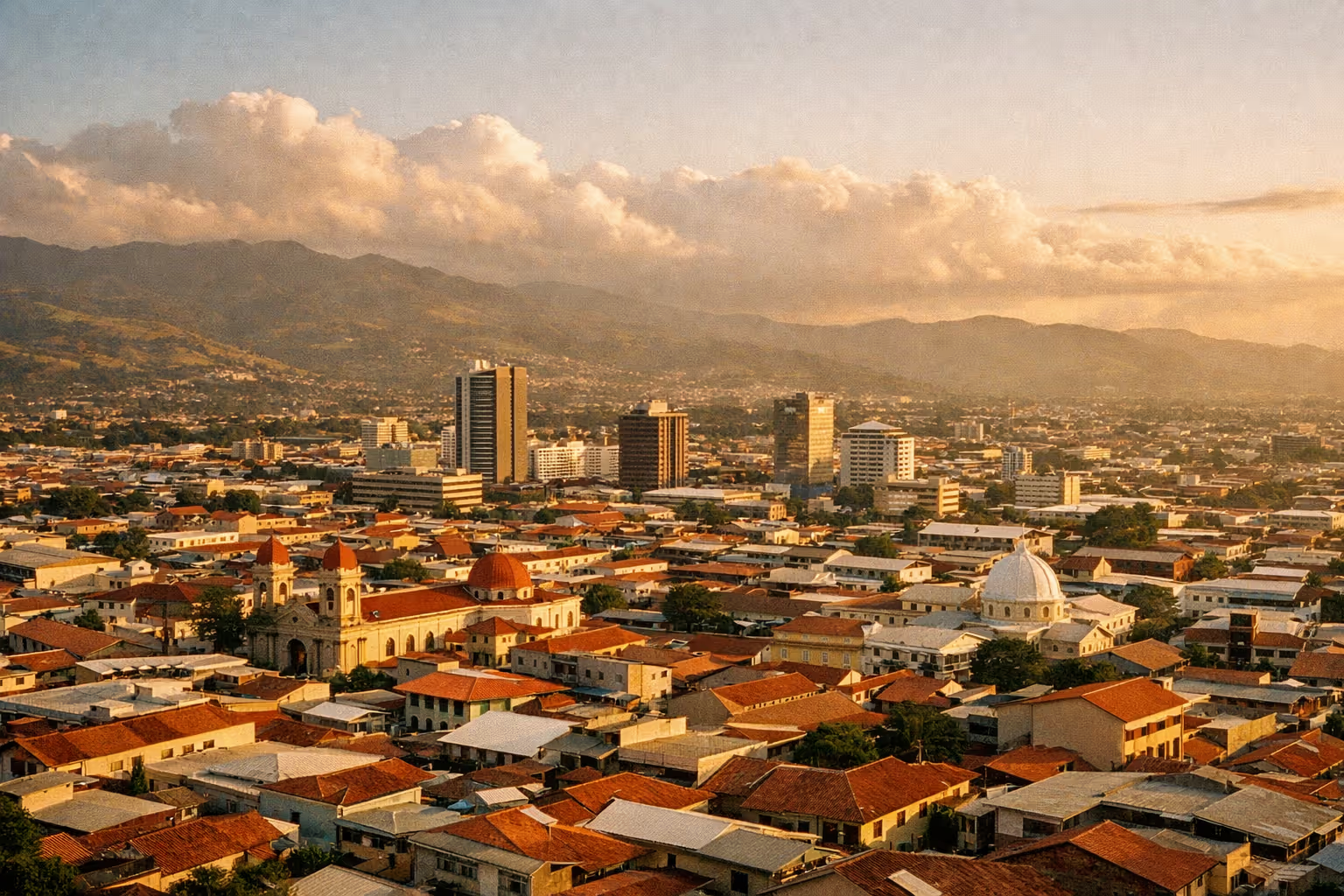
The honest answer on things to do in San Jose Costa Rica: one or two days cover it. Tour the National Theater for $7, eat a casado at Mercado Central, then use the city as a base for Poas Volcano, which needs a SINAC reservation and caps crater time at 20 minutes. On safety, the country rates the same level as France; the real risk is pickpocketing near the Coca-Cola terminal, not violence. Sleep in Barrio Amon or Escalante and skip anything by that terminal.
Orientation: how the city is laid out
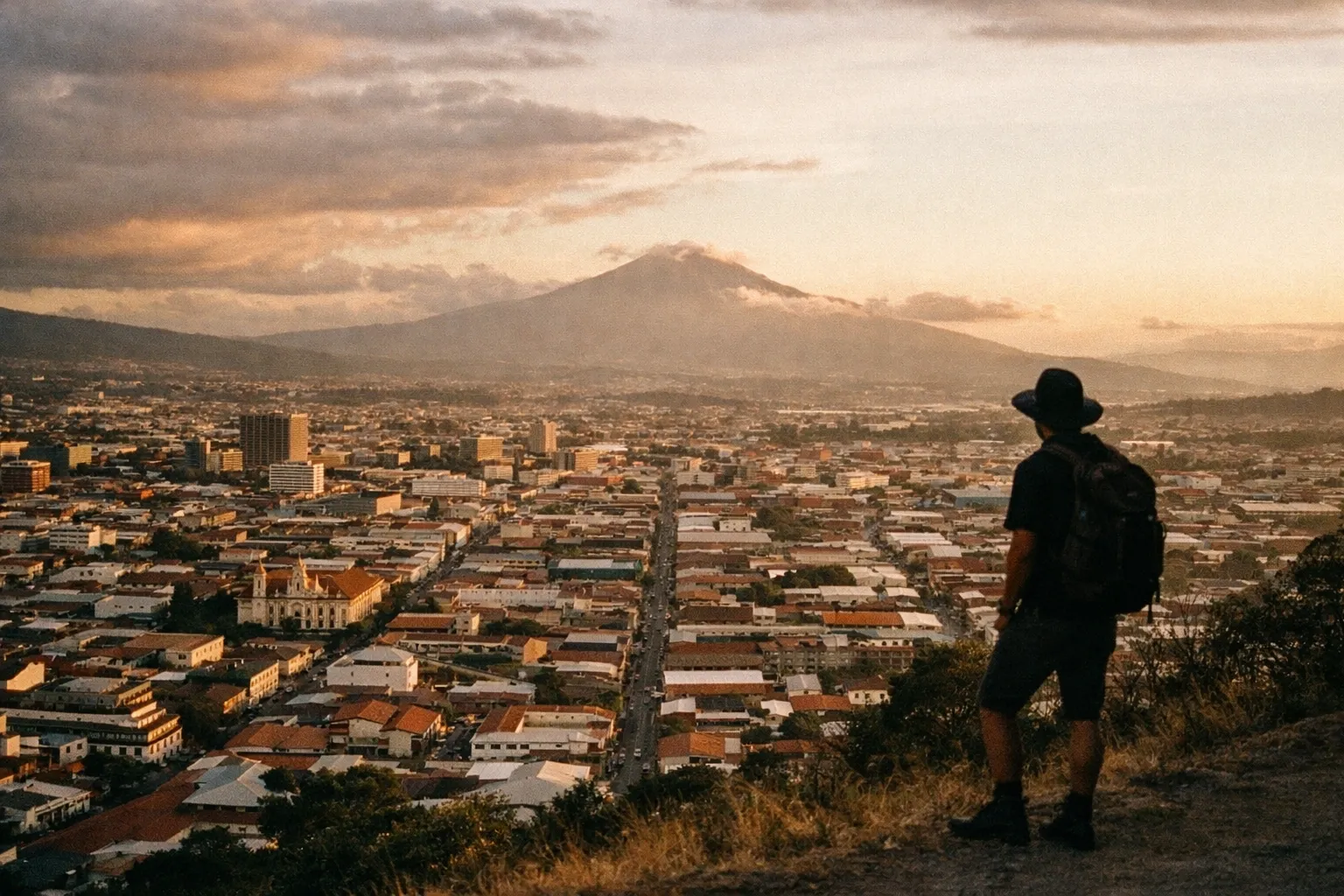
If you’re wondering about things to do in San Jose Costa Rica, understanding the city’s layout is a great place to start. San José runs on a grid, and once you understand that grid, you don’t need a map. The historic core sits between Avenida Central (the pedestrianized main drag) and Avenida 2, running east-west. Plaza de la Cultura is your anchor - the National Theater sits on its south edge, the Gold Museum is underneath it, and most other major sights are within a 15-minute walk (5).
Here’s the mental map:
- Downtown core (Centro): National Theater, Plaza de la Cultura, Mercado Central, National Museum, Jade Museum. Walkable, busy, fine by day.
- Barrio Amón and Otoya: Just north of downtown. Historic neighborhoods full of coffee-baron mansions from the late 19th and early 20th centuries, many now converted into boutique hotels, cafés, and bars (3)(4).
- Barrio Escalante: East of the center. The food and bar district - where you actually want to eat dinner.
- Escazú and Sabana: West side. Greener, wealthier, with Parque La Sabana (the city’s main park) and decent hiking nearby.
- SJO airport: Actually in Alajuela, about 25-45 minutes from downtown depending on traffic. Uber runs $20-$30.
The pedestrian stretch of Avenida Central is your spine. Walk it once and you’ll see how everything connects.
A bit about the city
San José is the capital and largest city of Costa Rica, with a metro population around 2.2-2.4 million. It became important in the 1820s when coffee made it rich, and most of the architecture worth looking at - the National Theater, the mansions in Barrio Amón - dates from that coffee-boom era when the country was exporting beans to Europe.
It is not a beautiful city in the way that Cartagena or Antigua are beautiful - Cartagena’s walled old city alone has more intact colonial architecture than all of San José combined. The earthquakes of the 19th and 20th centuries leveled much of the colonial-era building stock, and what replaced it was functional more than ornate. What San José offers instead is density - culture, food, and tour logistics packed into a small footprint. You can hit three museums, a market lunch, and a coffee tour in one day without ever getting in a car.
One thing most guides get wrong: they pitch San José as either skippable or as a “hidden cultural gem.” It’s neither. It’s a useful 1-2 day stop with specific, concrete attractions. Calibrate your expectations to “small capital with good museums and excellent coffee logistics” and you’ll enjoy it.
Is San Jose Costa Rica safe?
The short answer: yes, with the usual urban precautions. Costa Rica’s overall homicide rate has climbed in recent years to around 12-13 per 100,000, but that violence is concentrated in specific neighborhoods and is largely tied to drug-trafficking disputes - not tourists (4). What you actually need to worry about in San José is petty theft.
Here’s the practical breakdown:
Generally safe by day:
- The downtown core along Avenida Central and Plaza de la Cultura
- Barrio Amón and Otoya
- Parque La Sabana and surrounding Sabana neighborhood
- Barrio Escalante
Be alert in:
- Mercado Central and crowded buses (pickpocketing)
- The area around the Coca-Cola bus terminal (sketchy day and night)
- Any quiet side street after dark
Practical rules I follow:
- Use Uber or licensed red taxis after dark. Uber works well throughout the city.
- Don’t flash a phone on Avenida Central. Pull it out, use it, put it away.
- Carry one card and limited cash. Leave the rest in the hotel safe.
- Keep a phone photo of your passport - police can ask for ID.
- Don’t walk between Barrio Escalante and downtown at night. It’s only 20 minutes on foot but it crosses a few quiet blocks. Take a $4 Uber instead.
I’ve walked downtown alone at 10pm coming back from dinner and been fine. I’ve also watched a guy get his backpack slashed at the central market. Both things are true. Apply normal big-city judgment.
Things to Do in San Jose Costa Rica: Tourist Attractions Worth Your Time
Ranked by worth-the-detour value, not alphabetically:
Worth the detour
National Theater (Teatro Nacional) - The single most impressive building in Costa Rica. Built in 1897 with coffee tax money, decorated with imported Italian marble and ceiling murals. The guided tour costs about 3,500 colones (~$7), runs hourly from 9:00 to 16:00, and takes 45 minutes. Do this even if you do nothing else in the city.
Pre-Columbian Gold Museum - Underneath Plaza de la Cultura, run by the Central Bank. The collection of pre-Columbian gold figures is dense and well-curated. Around $16-17 entry for adults (approximately 8,400 colones at current exchange rates). Pair it with the National Theater since they share a plaza - there’s no reason to separate them.
Jade Museum (Museo del Jade) - Five floors, over 7,000 pieces, modern building near Plaza de la Democracia. Entry is $16 for adults, $5 for students, $3 for kids 6-12, open 8:00-17:00. If you only do one museum, make it this one - it’s the most engaging of the three.
Mercado Central (San Jose Central Market Costa Rica) - More on this below. Only skip it if you’ve already eaten lunch somewhere else.
Worth it if you have time
National Museum - Housed in a former military fortress. You can still see bullet holes from the 1948 civil war on the exterior, which is a detail most visitors walk right past. $11 adults, free under 12, open 8:30-16:30, closed Mondays. Strong on Costa Rican history and there’s a butterfly garden inside.
Children’s Museum (Museo de los Niños) - Built inside a former prison, which makes the building itself worth a look. Interactive exhibits, around $6 adults, open Tuesday-Sunday 9:00-17:00, closed Mondays (2). Good with kids; easy to skip if you’re traveling solo.
Museum of Contemporary Art and Design (MADC) - Free entry, open Tuesday-Saturday 10:00-16:50 (2). Small but worth a 30-minute walk-through if design is your thing.
Skip if short on time
Spirogyra Butterfly Garden - $5 entry, 1.7-acre property (4)(6). Pleasant but you’ll see better wildlife anywhere else in the country. If Monteverde or Tortuguero is already on your itinerary, don’t bother.
Closed-Monday warning: The National Museum, Children’s Museum, and MADC are all closed Mondays. If Monday is your only day in San José, plan around the Jade Museum and the National Theater tour - both stay open.
San Jose Central Market Costa Rica: what to actually eat
Mercado Central has been operating since 1880. It’s a covered warren of food stalls, butcher counters, flower vendors, and small kitchens called sodas - two blocks north of Avenida Central in the middle of downtown.
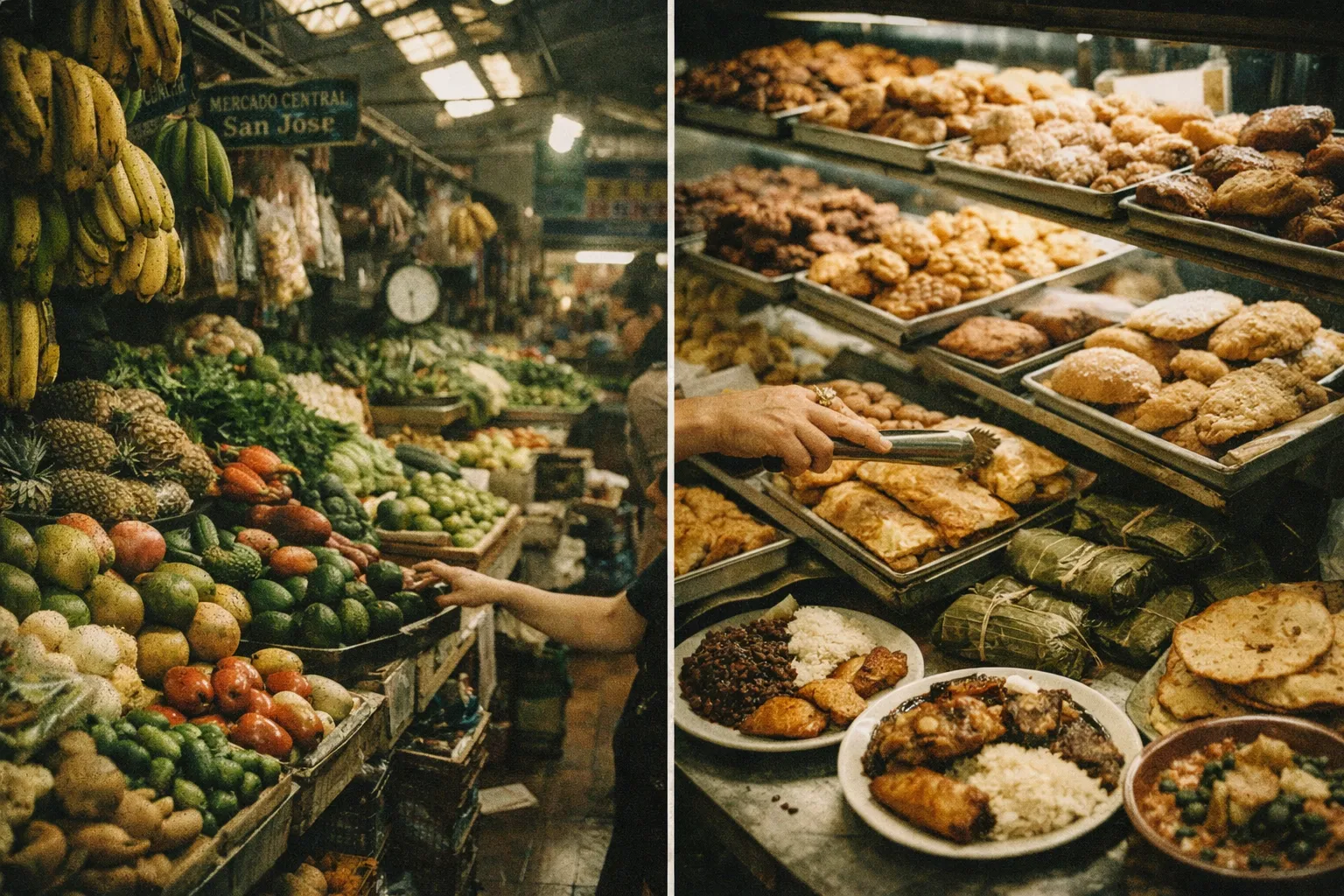
Go before 11:00. It’s cooler, less crowded, and the food turnover is best. After 13:00 the lunch rush thins and selection drops noticeably.
What to order:
- Casado - the set plate. Rice, beans, salad, plantains, and a protein (chicken, fish, or beef). $6-$8 at most stalls (1).
- Gallo pinto - rice and beans, the Costa Rican breakfast. $3-$5 with eggs.
- Olla de carne - beef and vegetable stew. $7.
- Fresh juice (refresco natural) - cas, tamarindo, or guanábana. $2.
- Coffee - order it negro (black) or con leche. $1-$2 a cup.
The two stalls I keep returning to: Soda Tala for casados and La Sorbetera de Lolo Mora for sorbet (operating since 1901 - try the vainica).
Practical note: pickpockets work the crowded aisles. Daypack on your front, phone in your pocket, no open shoulder bags. I’ve never had a problem here, but I’ve also never relaxed about it.
Historical San José walking tour
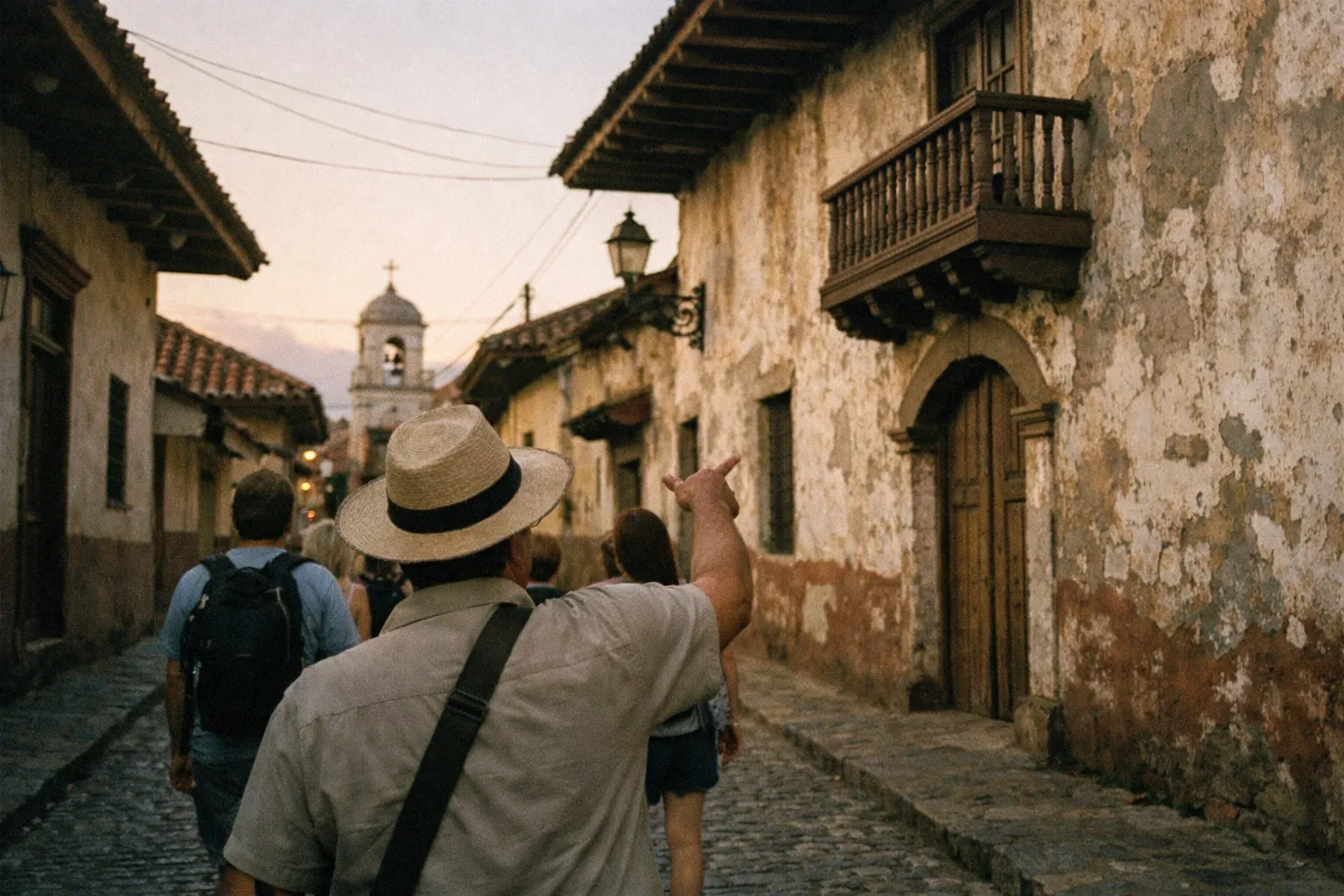
This is the highest-leverage way to spend a morning in the city. Two to three hours gives you orientation, history, and a sense of the layout that makes everything else more efficient (3). You can do it self-guided for free or join an organized tour for $25-$45 per person.
Self-Guided Historical Walking Tour of San José
2.5 hoursA 2.5-hour route covering key historic parks, neighborhoods, and landmarks.
- 1
Start at Parque Nacional
Begin on the east side of downtown at the monument commemorating the 1856 battle against William Walker's invasion.
- 2
Walk west to Parque España and Parque Morazán
Visit the Templo de Música bandstand, a city landmark.
- 3
Explore Barrio Amón
Walk one block north from Morazán and spend 30-40 minutes admiring coffee-baron mansions, many now boutique hotels.
- 4
Return to Plaza de la Cultura and National Theater
Take the 9:00, 10:00, or 11:00 guided tour of the National Theater.
- 5
Walk west on Avenida Central to Mercado Central
End with lunch at the bustling central market.
Organized tours worth considering: Costa Rica Expeditions runs guided historical walks. Carpe Chepe (a local outfit) runs a $30 walking tour that includes a coffee tasting - good value if you want context with your route.
San Jose Costa Rica day trips
This is where San José earns its place on your itinerary. It’s the country’s transport hub, and you can run excellent half-day or full-day trips and be back for dinner. Most organized tours run $60-$150 per person including transport(7).
Poás Volcano National Park
Worth the detour. Poás is an active volcano with a turquoise crater lake about 90 minutes north of San José by car (3). The crater viewing platform sits at 2,708 meters. On clear mornings the view is dramatic; on cloudy afternoons you’re looking at fog. Go early.
Critical logistics:
- Advance online reservations are mandatory through the SINAC system. Book a morning time slot - the 7:00 or 8:00 slots have the best chance of clear weather. Don’t show up without a reservation; you will be turned away.
- Entry is around $15 for non-residents.
- Crater visibility is best March through May; clouds typically roll in after 11:00.
- The actual time on the crater rim is limited to 20 minutes due to volcanic gas safety rules.
How to get there: Organized tour ($60-$90 including transport), private driver ($120-$150 round trip), or rental car. There’s no convenient public bus option.
Doka Estate coffee tour
Combine this with Poás - they’re 20 minutes apart in Alajuela province. Doka has been a working coffee farm since 1931 and runs tours covering the full process from seedling to roast (3). Tour cost is around $30 per person with tastings included.
Most operators bundle Poás + Doka + La Paz Waterfall Gardens into a single full-day tour for $120-$140. That’s the highest-density day trip you can run from San José - three distinct stops, one car, one long day.
6 things you’ll actually learn on a coffee tour
If you’re doing a coffee tour, here’s what guides cover:
- Costa Rica legally bans growing anything but 100% Arabica. A 1989 law made lower-quality robusta illegal. The country bet on quality over volume.
- Coffee made San José rich in the 1830s. It was the country’s first major export, and the mansions in Barrio Amón were built with those profits.
- The “Tarrazú” region produces the country’s most prized beans. High elevation (1,200-1,900m) plus volcanic soil plus the right rainfall pattern.
- Pickers are paid by the cajuela - a 13-liter basket. A fast picker fills 20 cajuelas a day in peak season (November-February).
- Only the red, ripe cherries are picked. Each tree gets harvested multiple times over the season because cherries ripen at different rates.
- The “honey process” - a specialty Costa Rican drying method that leaves some fruit pulp on the bean during drying - is what gives many local coffees their distinctive sweetness.
Other day trips worth doing
- Cartago and Lankester Botanical Garden - 40 minutes by bus or car. Cartago is the old colonial capital; the basilica there is the country’s most important pilgrimage site. Lankester (run by the University of Costa Rica) has one of the best orchid collections in the Americas. Full day, around $60 with a tour.
- Irazú Volcano - Another active volcano, 90 minutes east. Less reliable for views than Poás - cloud cover closes in by 10:00 on most days versus Poás where a 7:00 slot gives you a reasonable shot at clear skies - but easier to access without advance reservations.
- Hacienda La Chimba - 65-hectare property with coffee fields, hiking trails, and a zipline. Combined hike + coffee tour around $50 per person (4)(6).
- La Paz Waterfall Gardens - Often bundled with Poás. Five waterfalls plus a wildlife rescue center. $48 entry on its own.
- Manuel Antonio or Arenal - Technically doable as a long day trip but not recommended. You’ll spend 6+ hours in transit. If these are on your list, base there instead.
Hotels in downtown San Jose Costa Rica
Where you stay matters more than usual here because some neighborhoods are genuinely good and some are genuinely bleak. My ranked picks:
Best area: Barrio Amón/Otoya ($80-$150/night for doubles) Historic mansions converted into boutique hotels. Walkable to everything downtown, quiet at night, good cafés nearby. Try Hotel Don Carlos, Hotel Aranjuez (excellent breakfast included), or Hemingways Hotel in a colonial building (3).
Best for foodies: Barrio Escalante ($90-$160/night) A 20-minute walk or $4 Uber to downtown. The best restaurants and bars in the city are here. Hotel options are more limited but quality is high.
Best for transit convenience: Around Avenida Central ($60-$120/night) Chain hotels (Holiday Inn, Best Western, Park Inn) cluster here. Functional but soulless. Choose this option if you’re flying in late and out early.
Best budget: Hostels around downtown ($15-$35/night for dorms) Selina San José, Costa Rica Backpackers, and Hostel Pangea all sit in walkable areas with decent security.
Avoid: anything near the Coca-Cola bus terminal, and anything advertising itself as “near the airport” (the airport is in Alajuela, 18km away - those hotels are only useful for early-morning departures).
Restaurant picks beyond the market
For dinner, leave downtown and head to Barrio Escalante - specifically Calle 33, which locals call “Paseo Gastronómico La Luz”:
- Sikwa - High-end Costa Rican tasting menu focused on indigenous ingredients. $80-$100 per person. Book ahead.
- Al Mercat - Farm-to-table, market-driven menu. Around $35-$50 per person.
- Apotecario - Cocktail bar with a strong small-plates menu.
- Café Miel - Casual breakfast spot, excellent gallo pinto.
For the classic Costa Rican view dinner: Restaurante Tiquicia in the hills above Escazú still does the cultural performance with marimba and folk dancers on Friday and Saturday nights. Touristy, yes - but the view of the Central Valley lights is genuinely good. $25-$40 per person.
Best time to visit San José
San José sits at 1,170 meters elevation, which gives it what locals call “eternal spring” - temperatures between 18°C and 26°C year-round. The variable is rain, not temperature.
- December-April (dry season): The obvious choice. Sunny mornings, no rain. Peak prices and Poás reservations book out further in advance.
- May, November (shoulder): My preferred windows. The landscape is green from rain but mornings are usually clear. Prices drop, crowds thin.
- September-October (peak rain): Heavy afternoon downpours. Plan all outdoor activities for mornings. October can shut down some day trips entirely due to mudslides on mountain roads.
- June-August: Moderate rain, busier with summer vacationers from North America.
If you have to pick one month: February. Dry, clear, and Poás visibility is reliable.
Getting around
| Mode | Cost | When to use it |
|---|---|---|
| Walking | Free | Anywhere within the downtown core (Avenida Central, Plaza de la Cultura, Mercado Central, museums) |
| Uber | $3-$8 within the city, $20-$30 to SJO airport | After dark, longer distances, Barrio Escalante to downtown |
| Licensed red taxi | Similar to Uber | When Uber surge is high; always confirm the meter (“la maría”) is running |
| Public bus | Under $1 per ride | Day trips to Cartago, Heredia, Alajuela; not great within central San José due to language barriers |
| Rental car | $40-$70/day | Only if you’re continuing on a road trip; useless for downtown |
Uber is technically in a legal gray area but operates openly throughout the city. I’ve used it dozens of times without issue.
Budget questions answered
Is $1000 enough for a week in Costa Rica?
Yes, but with constraints. $1,000 over 7 days works out to about $143/day, which is workable for a mid-range trip if you base smartly and don’t overdo the premium tours. Here’s a realistic breakdown:
Tight $1,000/week budget (1 person):
- Hostel dorm or budget hotel: $30/night × 7 = $210
- Food (sodas for lunch, casual dinners): $25/day × 7 = $175
- 2 day tours (Poás + Doka combo, plus one other): $200
- Local transport, Ubers, buses: $80
- Museum entries and walking attractions: $60
- Buffer/drinks/incidentals: $275
That works. You’ll eat well, see Poás, do the museums, and not feel like you’re cutting corners. If you want a private room every night, budget closer to $1,400 for the week.
Where $1,000 stops being enough:
- If you want to visit multiple regions (San José + Arenal + Manuel Antonio), transport costs eat your budget fast.
- If you want premium tours (sportfishing, scuba certification, helicopter rides).
- If you’re traveling in peak season (Dec 20-Jan 5) when lodging prices double.
Is $20 a lot in Costa Rica?
In tourist contexts, $20 is a modest amount - useful but not transformative. With the exchange rate around 510 colones to the dollar, $20 equals about 10,200 CRC. Here’s what that actually buys:
- 2-3 casados at a soda (lunch for one for two days)
- A National Theater tour ($7) plus a museum entry plus a coffee
- A 20-minute Uber across the city, plus dinner
- Entry to the Jade Museum ($16) with $4 left over for coffee
- A round-trip bus to Cartago ($3) plus lunch ($8) plus the basilica visit (free)
For locals, $20 is a meaningful sum - roughly half a day’s wage for many service workers. For travelers, treat it as approximately the cost of one museum-plus-meal or one short tour activity. Tip in $1-$5 increments rather than $20s.
What to be cautious of in Costa Rica?
A practical list, ranked by how likely you are to encounter each:
- Petty theft in crowded areas - markets, buses, the airport pickup zone. Front-pocket your phone, lock your daypack.
- Unlicensed taxis - at SJO airport and bus terminals, men will offer rides. Use only the official orange “Taxis Unidos” at the airport or call Uber.
- Riptides at Pacific beaches - drownings happen every year. If you’re going to Jacó, Tamarindo, or Santa Teresa, ask locals which beaches are safe to swim.
- Rental car break-ins - never leave anything visible in a parked car, even for five minutes. Beach parking lots are the worst for this.
- Mountain roads in the rainy season - landslides and washed-out bridges happen. Check road conditions for your route the morning of travel.
- ATM skimmers - use ATMs inside banks (BAC, Scotiabank, BCR) rather than freestanding street machines.
- The “your tire is flat” scam - someone flags you down claiming your tire is flat, then robs you while you check. If you’re flagged down on the road, drive to a gas station before stopping.
- Wildlife - don’t feed monkeys, don’t approach crocodiles, shake out your shoes for scorpions if you’re in coastal areas.
Costa Rica is not a dangerous country by Latin American standards. The U.S. State Department currently rates it at Level 2 (Exercise Increased Caution) - the same level as France or the UK.
Frequently Asked Questions
- What is the best way to book Poás Volcano visits?
- You must reserve your visit online in advance through the SINAC system, selecting a morning time slot for the best chance of clear views. Walk-ins are not allowed.
- Are there any reliable public transport options to Poás Volcano?
- No convenient public bus option exists for Poás. Most visitors use organized tours, private drivers, or rental cars.
- Can I combine multiple day trips from San José in one day?
- Yes, some operators offer bundled tours combining Poás Volcano, Doka Coffee Estate, and La Paz Waterfall Gardens for a full-day itinerary.
- Is it safe to use Uber in San José?
- Uber operates openly throughout San José and is generally safe and reliable, but always confirm your driver and vehicle before entering.
- What are the best neighborhoods to stay in for food and nightlife?
- Barrio Escalante is the top choice for dining and bars, while Barrio Amón offers boutique hotels and quieter nights.
- Are there any days when major museums in San José are closed?
- The National Museum, Children's Museum, and Museum of Contemporary Art and Design are closed on Mondays. Plan accordingly.
- How do I avoid pickpockets at Mercado Central?
- Keep your daypack in front, avoid open shoulder bags, and keep phones and wallets in secure pockets.
The honest take
San José gets a bad rap from travelers who blow through it in a panicked airport transfer and decide the country starts at Arenal. That’s understandable but wrong.
Give the city one full day on the front end of your trip - Theater tour in the morning, market lunch, one museum, an afternoon rest, dinner in Escalante. Use the second day for a Poás-plus-coffee combo. Then move on.
You won’t fall in love with San José. What you will do is get oriented to Costa Rica, eat the best casado of your trip for $7, understand why the coffee here tastes different from anything you’ve had at home, and start the rest of your itinerary with your feet under you instead of fumbling out of an airport hotel at 6am. That’s the trade. Take it.