How to get around Japan comes down to one early decision: whether the JR Pass is even worth it anymore. Since the 2023 hike past 50,000 yen, most trips win without it, so run your route first. Get an IC card, Suica or ICOCA, that taps you onto every train, subway, and bus nationwide, then reach for a regional pass over the nationwide one, 20 to 40 percent cheaper. For the long hauls, an overnight highway bus from Tokyo to Osaka undercuts the bullet train and saves a hotel night.
How to Get Around Japan: the basic workflow foreigners actually use
✓ Pros
- Trains run with near-perfect punctuality - major lines stay within about a minute of timetable
- IC cards (Suica, PASMO, ICOCA) work across trains, subways, buses, vending machines, and convenience stores
- Bilingual signage and Google Maps integration make navigation realistic without Japanese language skills
- Regional passes can cut long-distance costs by 20-40% compared to the nationwide JR Pass
- Overnight highway buses save both transport and accommodation costs on long hauls
✗ Cons
- The nationwide JR Pass (JPY 50,000+, about USD 330-350 for 7 days) only pays off with multiple long shinkansen trips
- Oversized suitcases require advance baggage-space reservations on many shinkansen or risk a surcharge
- Rural areas and smaller operators may not accept IC cards
- Peak periods - Golden Week, Obon, and New Year - see popular shinkansen lines sell out well in advance
- Airport transfers and time padding erode the cost advantage of domestic flights on routes under about 600 km
Understanding how to get around Japan can seem daunting at first, but once you land, the system is more approachable than the wall of train-line maps suggests. Here’s the workflow nearly every visitor follows:
- Set up an IC card. Suica, PASMO, and ICOCA are rechargeable tap cards that work on trains, subways, and buses across most of the country. They require a refundable JPY 500 (about USD 3.30) deposit and top up in JPY 1,000 (about USD 6.60) increments. If you have an iPhone or Apple Watch, you can add Mobile Suica to Apple Wallet and skip the physical card entirely - handy given the periodic shortages of plastic cards (5). Some Android phones bought outside Japan still have spotty support, so check before relying on it.
- Get connected. A travel eSIM or pocket Wi-Fi makes the next step possible.
- Use Google Maps or Navitime. These show door-to-door routes, the exact departure platform, transfer times, and fare estimates in seconds. Most foreigners navigate the entire trip on Google Maps alone (4)(9).
- Choose your mode per journey. Shinkansen or limited express for long intercity hops, local trains and subways for everything within a region, the occasional taxi for late nights or heavy luggage.
You almost never need a rental car unless you’re heading into rural areas with thin bus schedules (3). City ticket machines and signage are bilingual, so buying even a complex ticket without visiting a staffed counter is realistic (7).
One etiquette note that trips up newcomers: taxi doors open and close automatically. Don’t grab the handle - the driver controls it, and yanking it open is a minor faux pas (5). Keep phone calls off the train entirely, too. Talking loudly or taking calls in a carriage is considered rude, and locals observe it strictly. For a deeper look at the unwritten rules that shape daily life here, mastering Japanese etiquette before you travel will save you from a dozen small missteps.
Mastering the JR lines: your gateway to Japan’s rail network
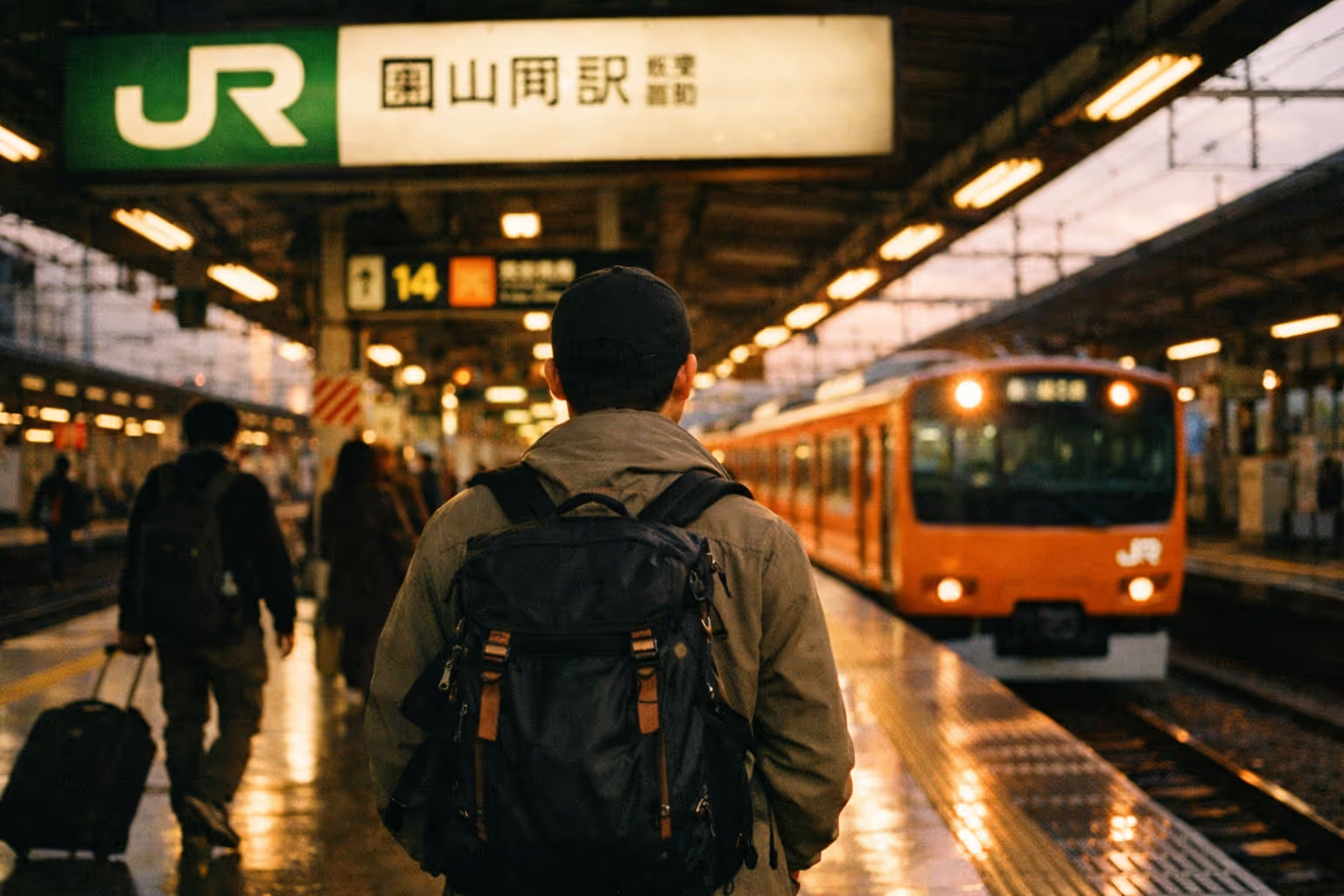
One of the first things worth understanding is the Japan Rail (JR) system. The JR lines aren’t just a mode of transport - they connect the country’s geography in a way that shapes how your whole itinerary fits together.
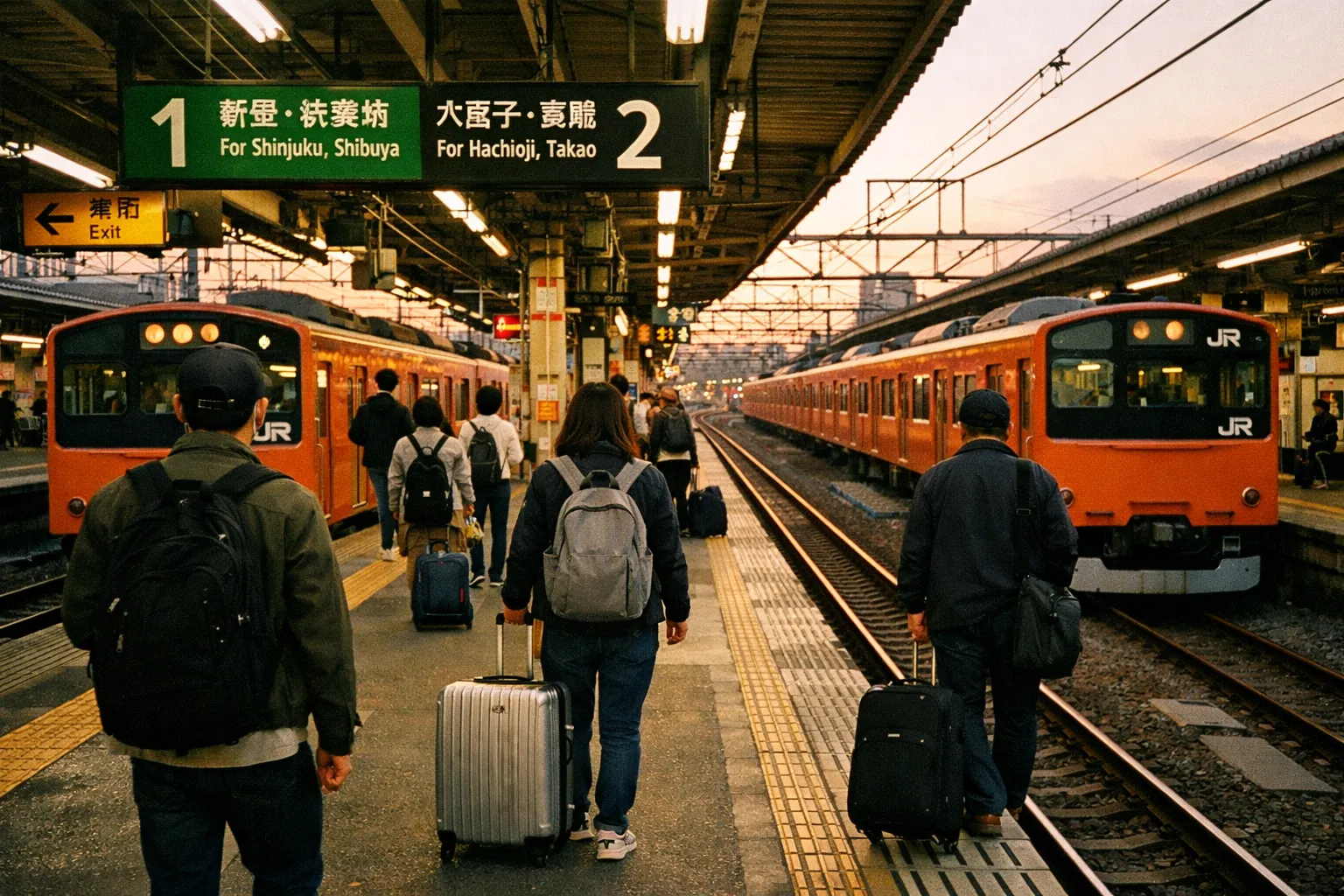
My first ride on the Shinkansen - Japan’s high-speed bullet train network - cut through the countryside from central Tokyo to Kyoto in a little over two hours. The Tokyo-Kyoto leg on a Nozomi train runs about JPY 13,320-14,170 (about USD 85-92) one-way for a reserved standard seat (6) - fast, but not cheap, which is exactly why the pass-versus-tickets question matters so much.
The JR lines are more than the shinkansen, though. They run a vast network of local trains and buses that reach even remote spots. Taking the JR line toward the forests of Yakushima introduced me to landscapes I’d only seen in Studio Ghibli films.
A few practical things to know about train categories, because confusing them is a classic mistake (4)(6):
- Local trains stop at every station - slow but cheap.
- Rapid and express trains skip minor stops.
- Limited express trains are faster and usually carry a surcharge.
- Shinkansen are the high-speed lines and require a shinkansen ticket - your standard IC card won’t get you through the gate.
Pro tip: Reserve your shinkansen seats in advance during peak periods. Post-pandemic tourism has packed popular lines, and Golden Week (late April to early May), Obon (the mid-August Buddhist festival honoring ancestors), and New Year see trains sell out (5)(6). You can book Tokaido-Sanyo-Kyushu shinkansen online through SmartEx, or at any JR machine.
One more rule that’s caught travelers off guard recently: oversized suitcases - where length, width, and height sum to more than 160 cm - now require a free advance reservation for the designated baggage space on many shinkansen. Show up without one and you risk a surcharge or being asked to move.
Skipping the JR Pass: when point-to-point beats the nationwide ticket
Since the October 2023 price hike, the nationwide JR Pass costs around JPY 50,000+ (about USD 330-350) for the 7-day ordinary version, up from about JPY 29,650 (about USD 200) before. That changed the calculus for a lot of itineraries. The pass now only pays off if you’re taking several long shinkansen trips inside the validity window.
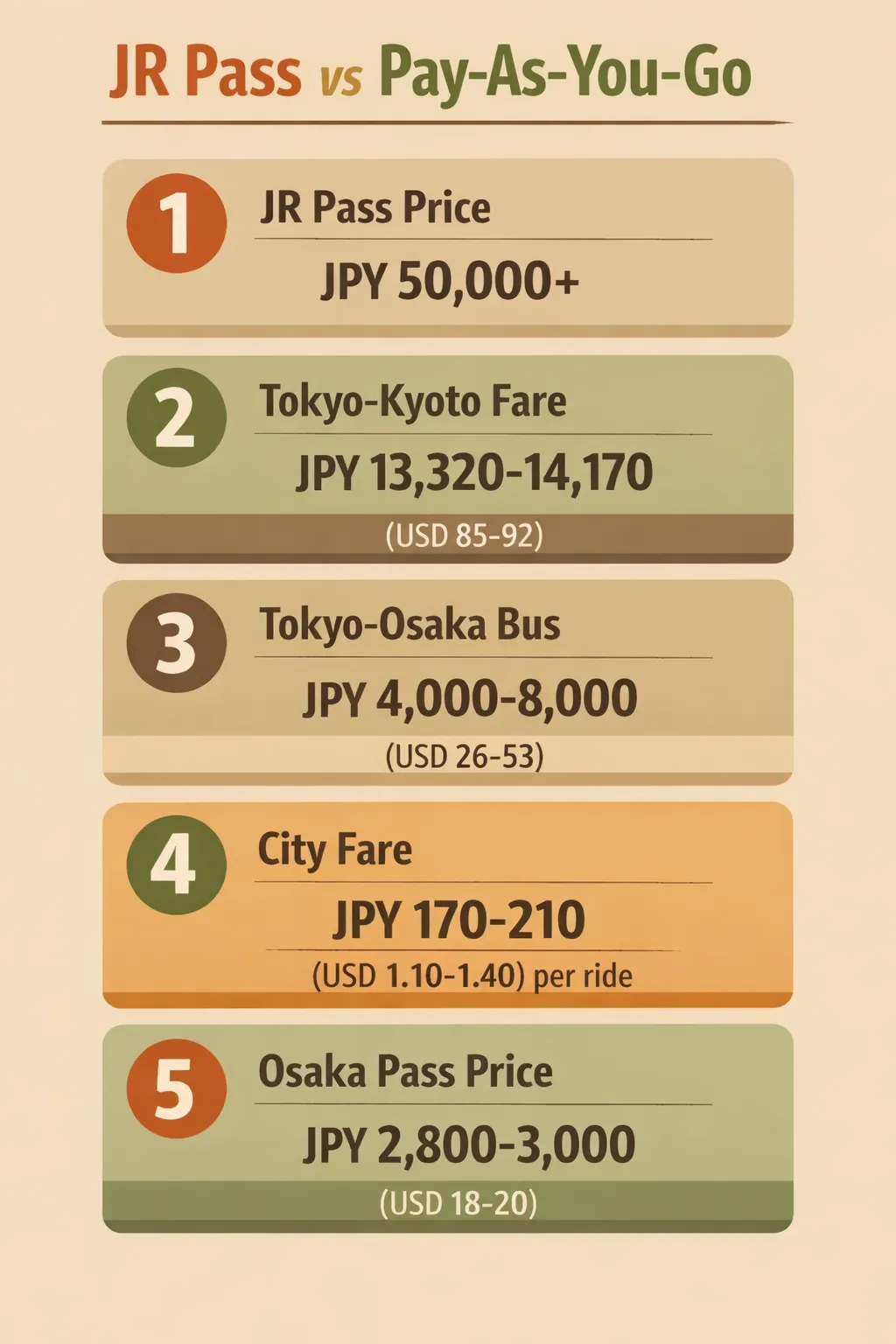 Cost comparison: JR Pass price vs point-to-point tickets, long-haul buses, city fares, and regional passes.
So how to get around Japan without a JR Pass? Three strategies, often combined:
- Buy point-to-point shinkansen tickets only when you actually need them. A single Tokyo-Kyoto round trip plus local trains often costs less than a 7-day nationwide pass.
- Use regional passes targeted to where you’re actually going. The JR West Kansai-Hiroshima Pass runs roughly JPY 19,000-25,000 (about USD 125-165), and a JR East Tohoku area pass is around JPY 20,000+ (about USD 135) for 5 flexible days (2). For a trip concentrated in one region, these beat the nationwide pass by 20-40%.
- Base yourself in one city and do day trips on cheap local rail. Kyoto as a hub for Nara and Osaka, for example, avoids cross-country hops entirely.
Quick gut-check: count your planned long-distance shinkansen rides. Two or fewer? Skip the nationwide pass and pay as you go. Four or more in a week, all on JR lines? Run the numbers in Navitime - the pass might still win (5).
Trading time for money: the budget playbook for long-distance travel
For the budget tier, the cheapest way to travel around Japan comes down to trading time for money. Highway buses depart from major hubs like Tokyo’s Shinjuku Expressway Bus Terminal and Osaka’s Namba OCAT, so you’re not hunting for obscure stops. Here’s the playbook:
- Highway buses for long hauls. An overnight Tokyo-Osaka bus runs JPY 4,000-8,000 (about USD 26-53) depending on class and date - roughly 40-60% cheaper than the shinkansen (8). The catch: 7-9 hours versus about 2.5 hours by train. Take the overnight bus and you also save a hotel night. Some buses offer reclining seats and women-only sections (8).
- Local trains over shinkansen. Slower, far cheaper, and you see more of the country.
- Limit shinkansen to one or two segments for the trips where the time savings genuinely matter.
- Focus on one or two regions rather than crisscrossing the whole country. Kanto plus Kansai gives you Tokyo, Kyoto, Nara, and Osaka without burning cash on Hokkaido-to-Kyushu hauls.
- Walk. Most visitors clock 10,000-20,000 steps a day (8-16 km) just moving between stations and sights. It’s free and often the fastest way across a dense neighborhood.
Domestic low-cost carriers - Peach, Jetstar Japan, Skymark - can undercut the shinkansen on long routes like Tokyo-Sapporo or Tokyo-Fukuoka, with fares from JPY 5,000-12,000 (about USD 33-80) when booked early. Factor in airport transfers and the time padding, though. For anything under about 600 km the train usually wins door-to-door. If you want to explore Japan on a budget, combining overnight buses with regional passes is one of the most effective strategies available to foreign visitors.
Getting around Japan by train within cities and regions
City transit is where the network really shines. Subway and metro fares start around JPY 170-210 (about USD 1.10-1.40) per ride in Tokyo and Osaka and rise with distance. Tap your IC card at the gate and the right fare deducts automatically - no need to calculate anything.
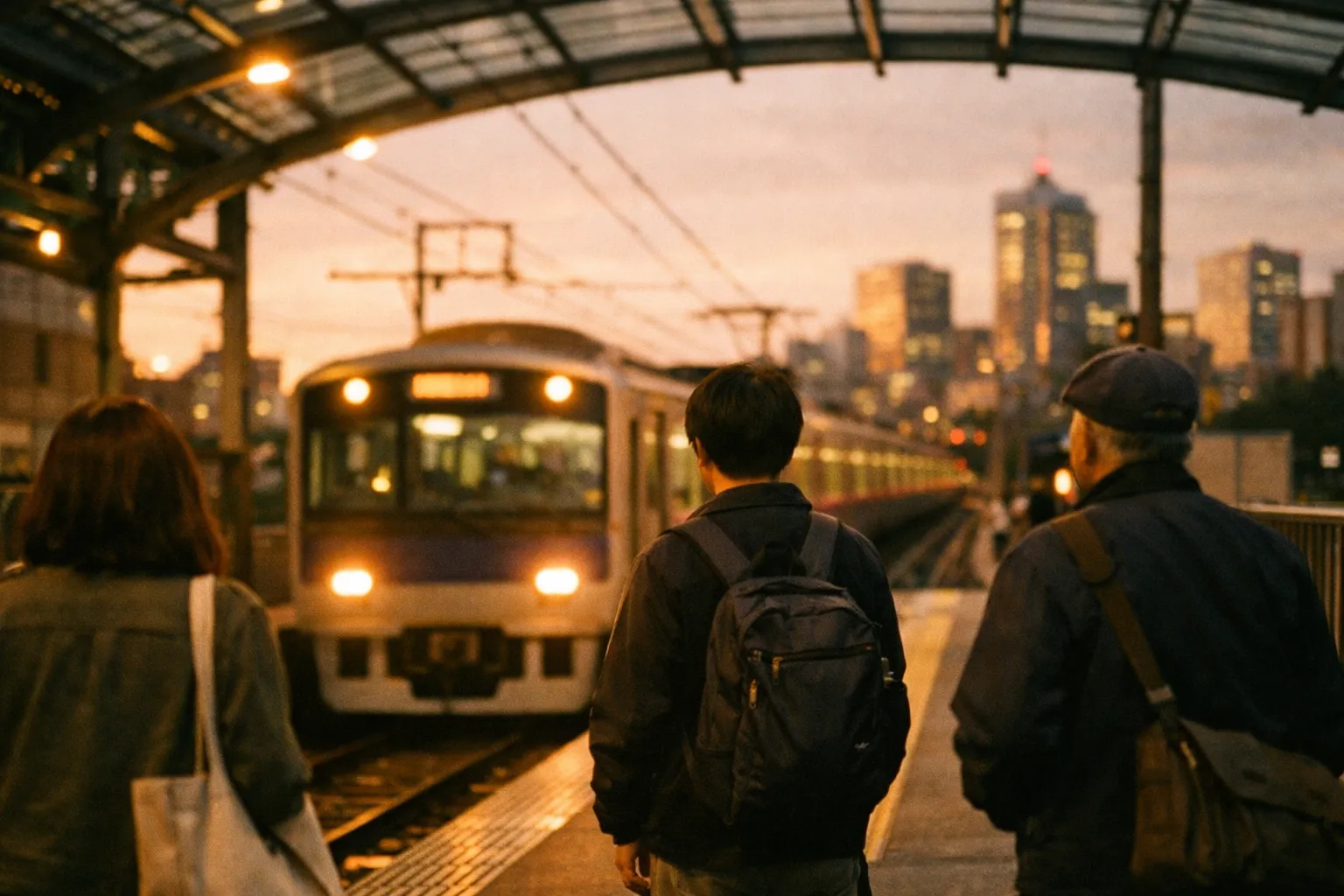
Tokyo’s metro is color-coded with English signage and connects every district. Pasmo and Suica cards handle trains and buses, and you can buy them at vending machines and convenience stores. On one visit I spent a full day weaving from historic Asakusa in Taito ward to the scramble crossing at Shibuya, all on a single Suica tap - not a single paper ticket in sight. In Osaka, the same IC card logic applies whether you’re moving between Namba and Umeda or catching a local bus out toward Tennoji.
A few city-transit tips worth knowing:
- IC cards pay for more than transport. Use them at vending machines, convenience stores, and coin lockers - they double as a small wallet (1)(4).
- Tourist day passes can pay off if you ride heavily. Tokyo’s 72-hour subway ticket for foreign visitors has historically run around JPY 1,500 (about USD 10); the Osaka Amazing Pass is about JPY 2,800-3,000 (about USD 18-20) for a day and bundles in attractions.
- Use taxi apps like Go or DiDi when station queues are long or it’s late at night - fares match street hails (4). A 15-20 minute ride runs roughly JPY 1,500-2,000 (about USD 10-13), with flag-fall around JPY 420-500 (about USD 2.70-3.30). For groups of three or four with luggage, a taxi can beat buying multiple metro tickets on a late-night return.
- Store your bags. Station coin lockers cost JPY 300-800 (about USD 2-5) and let you sightsee between check-out and your train (4). For bigger loads, takkyubin (luggage delivery) ships a suitcase overnight to your next hotel for about JPY 2,000-3,000 (about USD 13-20) per piece (3) - a lifesaver on travel days.
Prices noted; fares shift, so confirm in Navitime before you book.
Exploring cities by bicycle
Cycling reveals layers of a place the hurried traveler misses.
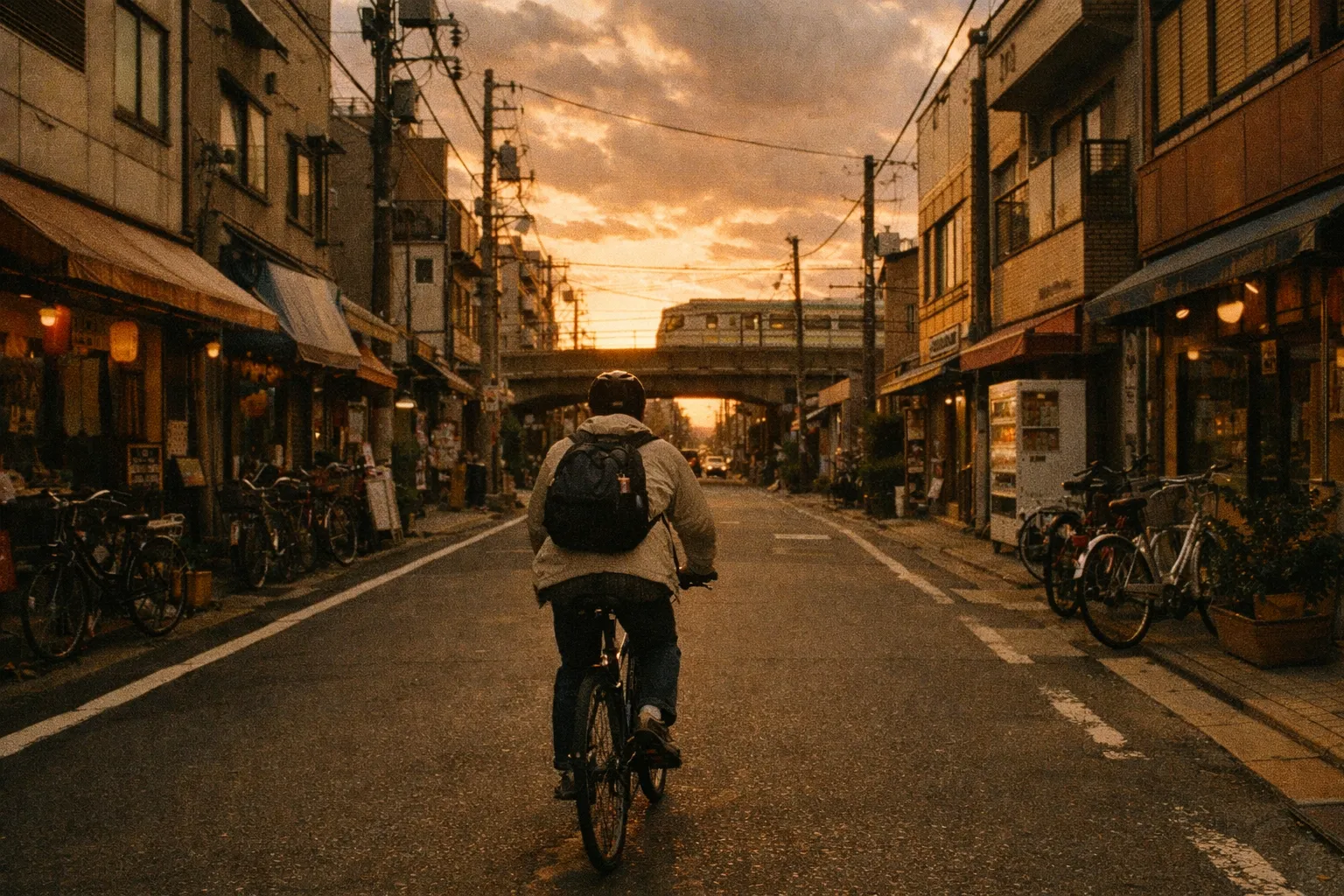
There’s something to be said for pedaling the narrow lanes of Kyoto’s Gion district or alongside Nara’s deer parks at a pace that actually lets you stop. A day I spent riding around the Arashiyama bamboo grove stayed with me - the sound of the bamboo, the gentle inclines, the tea houses tucked along the route - all of it felt more immediate than it would have from a train window. Bike rentals are widely available, and many cities maintain clear cycling paths.
In Tokyo, the Edo-Tokyo Open Air Architectural Museum - a collection of relocated historic buildings, from thatched farmhouses to merchant shops - is reachable via cycling paths that skirt the city’s edges. It’s the kind of place that rewards arriving slowly. Choosing where to stay in Japan by neighborhood can make a real difference here - a well-placed base cuts the distance between your accommodation and the cycling routes or transit hubs you’ll use most.
What is the 5-minute rule in Japan?
The so-called “5-minute rule” is an informal expectation that you arrive at the platform at least 5 minutes before departure. Japanese trains run with near-religious punctuality - major lines stay within about a minute of timetable, and doors can close 30-60 seconds before the listed departure (1)(3)(6). Show up one or two minutes early and you may genuinely miss the train.
In practice, most locals and guides recommend a bigger buffer of 10-15 minutes, especially at large hubs (1). Stations like Shinjuku and Tokyo Station can require 10-15 minutes just to walk between platforms (7), and for the shinkansen you’ll want time to find your car and seat. Don’t schedule back-to-back transfers with only a few minutes of slack. It’s the fastest way to derail an otherwise smooth day.
How much to budget: is $100 a day or $1,000 a week enough?
These two questions come up constantly, and the honest answer is: it depends entirely on how often you ride the shinkansen and whether you stay in one region or bounce around.
Is $100 a day enough in Japan? For a comfortable mid-range trip, usually yes. A typical mid-range day - a few shinkansen rides spread across the trip, mid-tier hotels, the occasional taxi - lands around USD 100-150 per day. If you’re not taking the shinkansen daily and you skip luxury dining, USD 100 covers transport, food, and basic sightseeing comfortably. The day you take a long-distance bullet train is the day you’ll blow past it - a single Tokyo-Kyoto ticket alone is around USD 85-92 (6).
Is $1,000 enough for one week in Japan? For in-country costs, USD 1,000 is generous for seven days if you travel smart. Here’s how the tiers break down:
- Shoestring (highway buses plus local trains, dorms, cheap food): about USD 50-70 per day, so roughly USD 350-490 for the week on the ground. USD 1,000 leaves real breathing room - though it won’t cover international airfare on top.
- Mid-range (some shinkansen, mid hotels, occasional taxis): USD 100-150 per day, or USD 700-1,050 for the week. USD 1,000 is right at the comfortable edge - tighten it by limiting shinkansen segments and using IC cards over taxis.
The single biggest lever in either scenario is long-distance rail. Cut your nationwide hops, lean on regional passes and local trains, and your daily spend drops fast. Savvy travelers also use discount travel apps that could save you a fortune on everything from transit to sightseeing - worth setting up before you arrive.
Putting it together
The core decision for how to get around Japan is straightforward once you’ve mapped your route: tap an IC card for everything local, and decide trip-by-trip whether each long haul justifies a shinkansen ticket, a regional pass, or an overnight bus. Run your actual dates through Navitime before you commit to any pass - after the 2023 price hike, the nationwide JR Pass is no longer the automatic answer it once was (5).
Set up Mobile Suica or grab a physical IC card the moment you land. Give yourself 10-15 minutes at every platform. Ship your bags ahead on travel days or stash them in a locker. Do those three things and the network that looks intimidating on a map becomes one of the most reliable parts of your Japan itinerary.
Frequently Asked Questions
- Can I use a single IC card across all regions in Japan?
- Most IC cards like Suica, PASMO, and ICOCA are interoperable across major cities and regions, but some rural areas or smaller operators may not accept them. Check coverage before relying solely on an IC card.
- Are regional rail passes refundable if my plans change?
- Refund policies vary by pass and vendor. Generally, unused passes can be refunded with a cancellation fee if returned before the start date, but confirm terms when purchasing.
- Is it better to buy shinkansen tickets in advance or on the day of travel?
- During peak travel seasons like Golden Week or New Year, reserving seats in advance is highly recommended to avoid sold-out trains. Otherwise, tickets can often be purchased on the day, but early booking provides peace of mind.
- How do I handle oversized luggage on trains?
- For suitcases exceeding 160 cm in combined dimensions, you must reserve a designated baggage space on many shinkansen trains in advance to avoid surcharges or being asked to move.
- Are taxi apps widely used and reliable in Japan?
- Taxi apps like Go and DiDi are increasingly popular in major cities and offer fares comparable to street hails. They are especially useful during late-night hours or when station queues are long.
- Can I use my IC card for purchases outside of transportation?
- Yes, IC cards function as electronic wallets at many vending machines, convenience stores, and coin lockers, making them handy beyond just transit fares.
- What happens if I arrive late at the train platform?
- Japanese trains run with extreme punctuality, often closing doors 30-60 seconds before departure. Arriving late, even by a minute or two, can result in missing the train.