Japan guided tours earn their price in the countryside and waste it in the cities. On rural routes like the Nakasendo Way, a guide books the farmhouse inns foreigners cannot and moves your luggage; DIY is possible but punishing. In Tokyo or Kyoto, trains beat a private driver on both speed and cost. A few add-ons pay off anywhere: a first-night food tour teaches you the menu, and a Fuji hike needs booking two months out, non-refundable if you turn back. Match the guide to the terrain.
What Japan tour packages actually cost in 2026
Prices have shifted enough that older blogs and some operator sites are outdated. Here’s the current range for japan tour packages, excluding international flights:
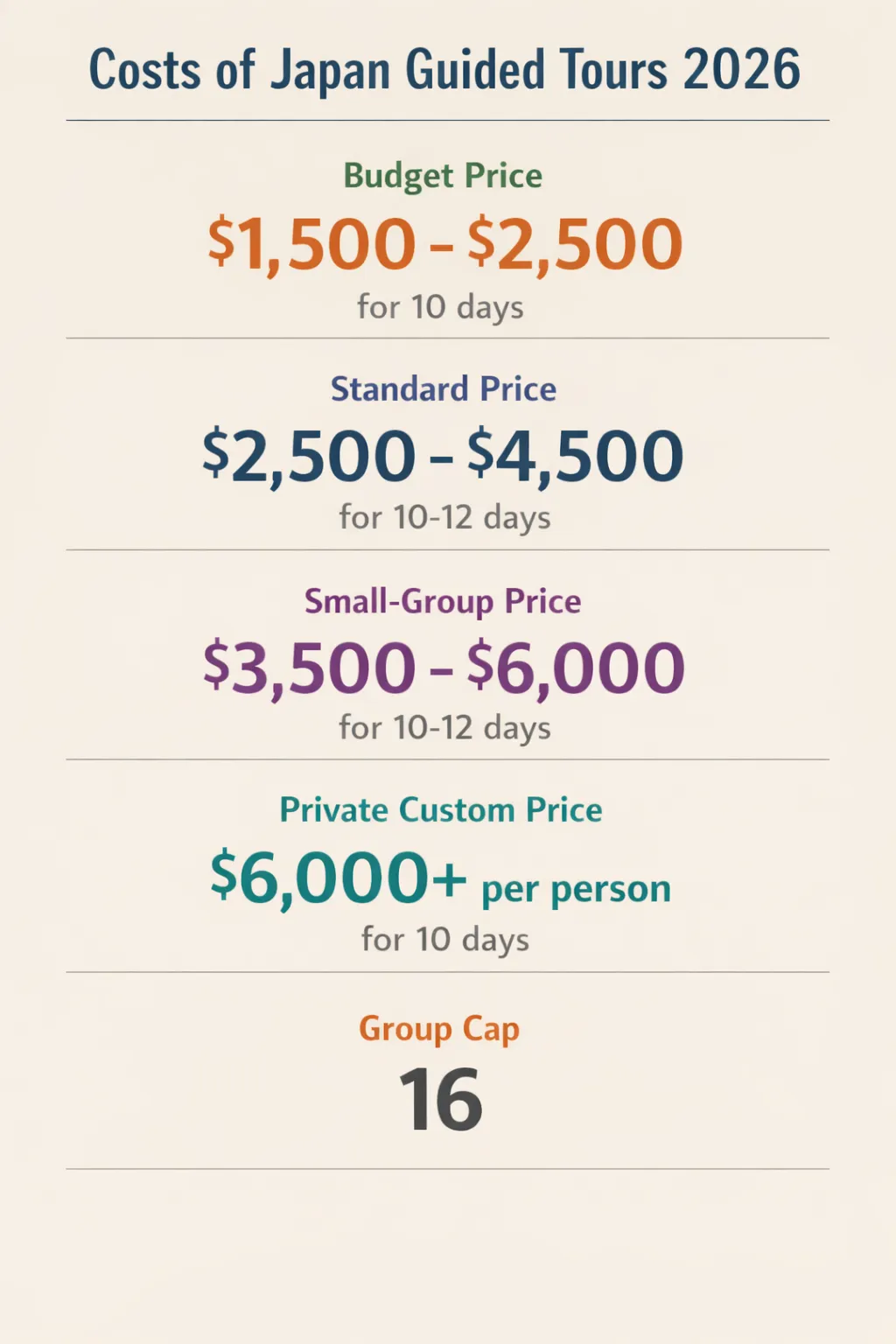 Japan guided tour costs range from $1,500 to $6,000+ for 10–12 days; typical mid-market trips run $2,500–$4,500, with group sizes often capped at 16.
- Budget, partially guided (day tours only): $1,500-$2,500 for 10 days
- Standard escorted group tour, 3-4★ hotels: $2,500-$4,500 for 10-12 days
- Small-group premium with ryokan stays or walking focus: $3,500-$6,000 for 10-12 days
- Private custom with driver most days: $6,000+ per person for 10 days
A typical mid-market trip is On The Go Tours’ 11-day Heart of Japan, covering Tokyo, Hakone, Kyoto, Hiroshima, Miyajima, and Osaka with 10 breakfasts, 2 dinners, and groups capped at 16 (2). Collette’s 12-day Journey Through the Heart of Japan adds a ryokan night, Shinkansen rides, a Mt. Fuji 5th Station stop, Nara’s deer park, and a hands-on sushi class (3)(6).
Deposits usually run 10-30% at booking, with full payment due 60-90 days before departure. Cancellation penalties get steep inside the 30-60 day window(3)(4). Factor that into your travel insurance - coverage of at least $50,000-$100,000 for emergency medical and $2,000+ for trip cancellation is a smart baseline.
When are Japan guided tours worth the cost?
Short answer: yes, but rarely for the entire trip. Guided tours shine in three situations.
Rural and trail travel. Routes like the Nakasendo Way between Kyoto and Tokyo, or the Kumano Kodo pilgrimage trails, involve farmhouse inns that often don’t accept foreign bookings and luggage transfers between stops. Walk Japan’s Nakasendo Way handles all this and covers 10-24 km daily over selected sections of the old highway (4). DIY is possible but punishing.
Cultural decoding early on. A 3-4 hour food tour or a half-day temple walk in Kyoto pays for itself by showing you how to order, what to skip, and what “this is the line for the famous one” really means. That knowledge sticks for the whole trip.
Saving time on complex logistics. An English-speaking guide, pre-booked rail, included entrance fees, and a known meeting point can save 5-15 hours of planning per week. If you want to maximize your vacation time and minimize headaches, escorted travel is a fair trade.
Where guided tours are less useful: navigating Tokyo and Kyoto by metro and JR trains (the signage is good in English), eating at casual izakaya, or filling a free afternoon. For those, you’re paying extra for hand-holding you don’t need.
The best tour company for Japan depends on what you want
There’s no one-size-fits-all best operator. It comes down to matching the company with your style.
Top Japan Tour Operators by Style
| Cultural Hiking Walk Japan | Japan Deluxe Tours | Collette | On The Go Tours | JNTO Volunteer Guide Groups | |
|---|---|---|---|---|---|
| Focus | Rural walking, cultural immersion | First-timers, variety | Comfort-focused, older travelers | Mid-market group travelers | Budget travelers, solo explorers |
| Group Size | Small (12-14) | Medium | Medium | Small (up to 16) | Small |
| Price Range (USD) | $3,500-$6,000 | $2,500-$4,500 | $3,500-$6,000 | $2,500-$4,500 | Free guide (transport & entry fees only) |
| Notable Features | Nakasendo Way, farmhouse inns, deep rural access | Themed departures, Golden Route, English guides | 4★ hotels, sushi classes, polished itineraries | Hiroshima, Miyajima included | Half-day neighborhood walks, volunteer guides |
For luxury, the Virtuoso network lists vetted private operators for custom itineraries - handy if you want a tailored trip with a single point of contact (6).
Why a Tokyo food tour is the best $100 you’ll spend
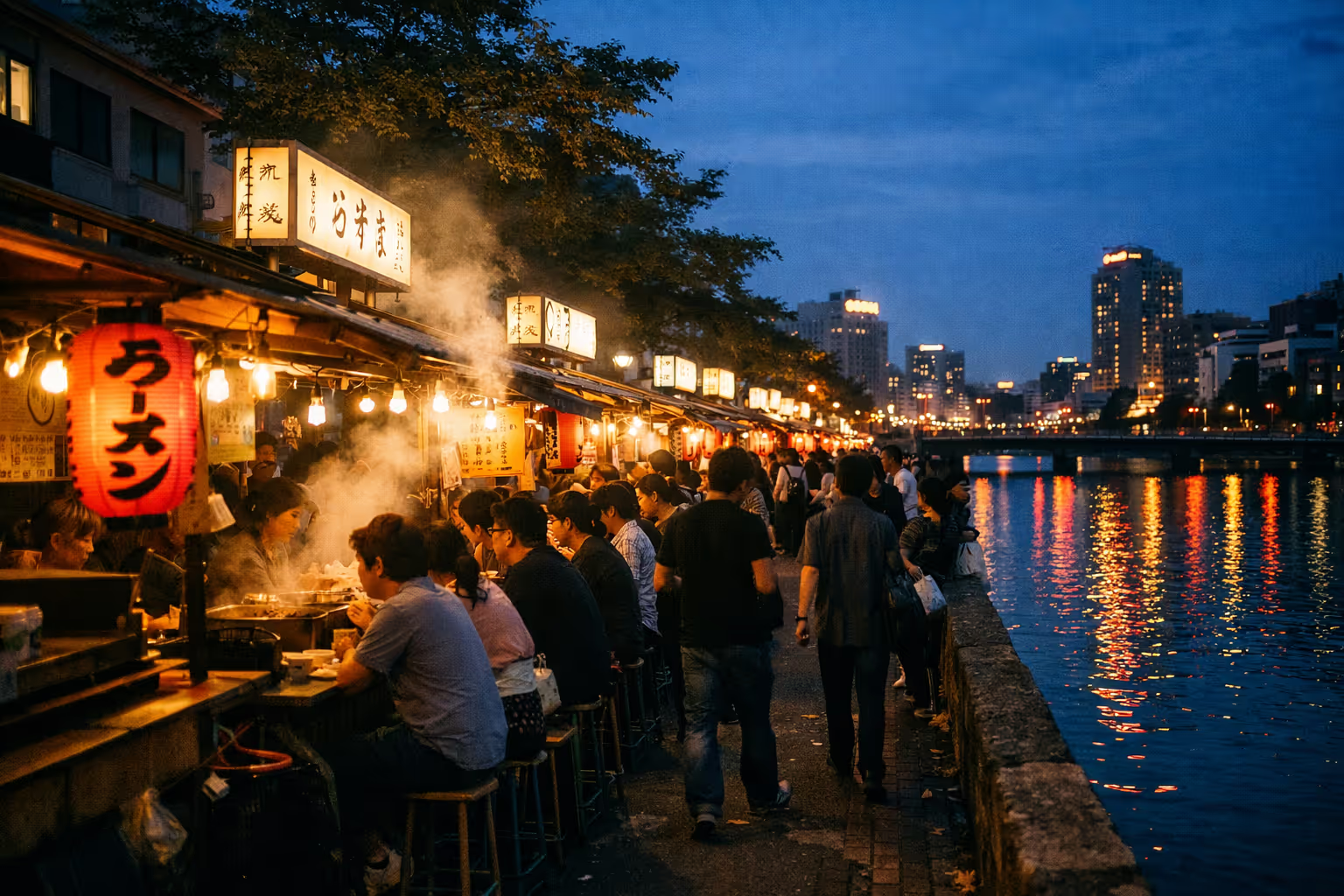
Booking a tokyo food tour on your first or second night is the highest-leverage move you can make. Small groups of 6-10 guests spend 2.5-4 hours exploring neighborhoods like Shinjuku’s Omoide Yokocho (“Memory Lane”), Asakusa’s backstreets, or Yurakucho’s yakitori joints under the tracks. Prices range $90-$150 per person for group tours, $200-$400 for private tours for two. You’ll sample 6-10 dishes - yakitori (grilled chicken skewers), ramen, wagyu bites, sweets like dorayaki (red-bean pancakes) - plus a drink or two.
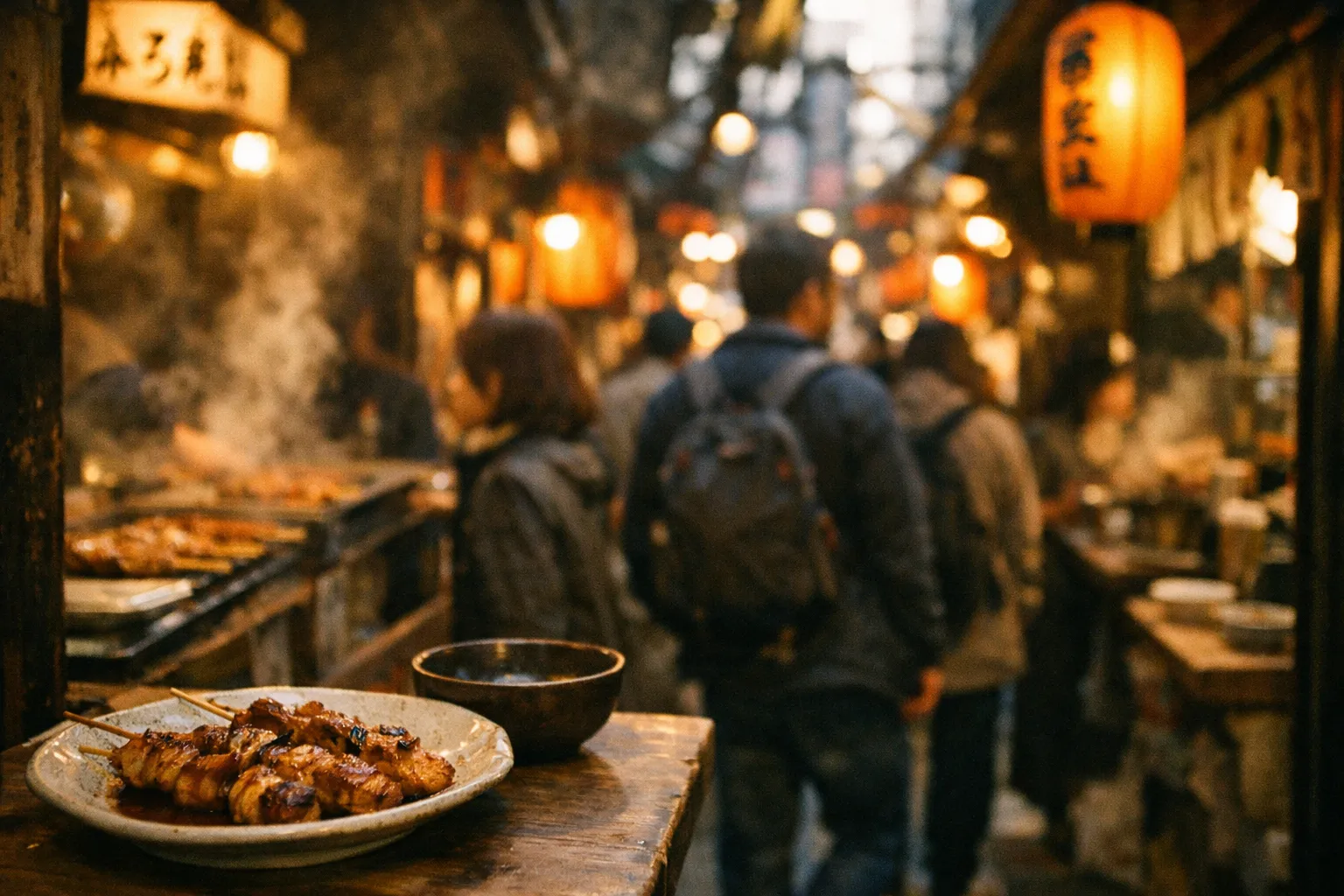
What you really get is menu literacy. Most Tokyo izakaya menus have no English. A good guide explains the difference between ordering counters and table service, what “otōshi” (a small appetizer charge) means on your bill, and which conveyor-belt sushi chains are worth trying. You’ll order better food for the rest of your trip.
Neighborhoods worth targeting:
- Shinjuku - Omoide Yokocho and Golden Gai for late-night yakitori and tiny bars
- Asakusa - old-Tokyo street food, monjayaki (savory griddle batter), Edo-era sweets
- Tsukiji Outer Market - morning tour for tamagoyaki (rolled egg), uni, and knife shops
- Ebisu / Naka-Meguro - modern izakaya and craft sake, less tourist-heavy
Etiquette note: tipping isn’t expected and can confuse staff. Pay at the register, not the table, in most casual spots.
Exploring Japan cultural tours: tea ceremonies, temples, and the Nakasendo
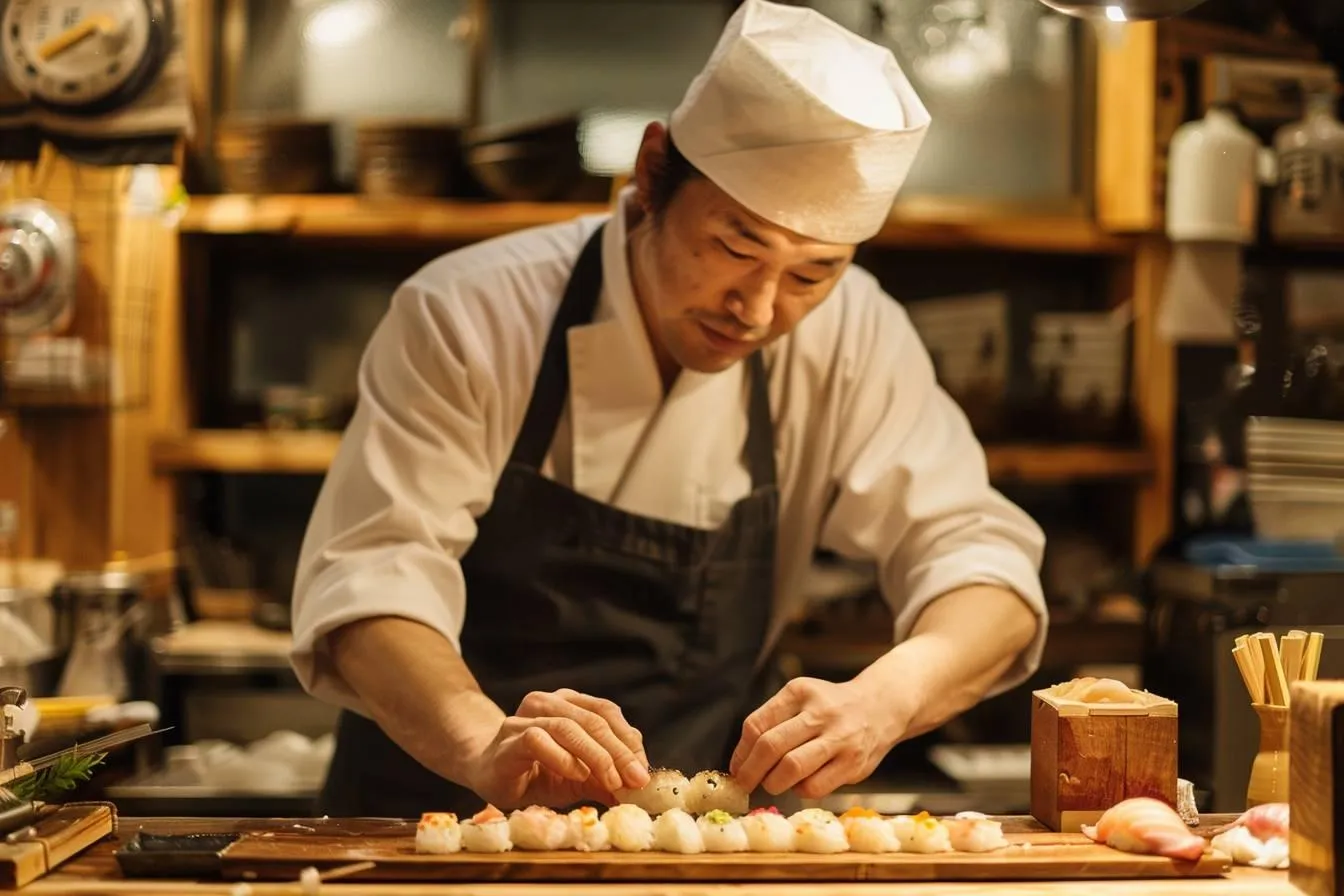
Japan cultural tours range from half-day tea ceremonies in Kyoto to 12-day walks along historic post roads. Choose by depth, not price.
Single-day cultural experiences in Kyoto cost $80-$200 per person and usually include a temple visit, a tea ceremony in a tatami room, and a guided walk through Higashiyama or Arashiyama. I recommend doing this on day three or four of your Kyoto stay, after you’ve seen the main sights and want some context.
Multi-day immersive tours offer more. Walk Japan’s Nakasendo Way covers sections of the Edo-period highway between Kyoto and Tokyo, with stays in minshuku (family-run inns) and modern hotels. Daily walks range 10-24 km, luggage is forwarded, and you carry only a 5-8 kg daypack. Groups stay small - usually 12-14 guests.
A few cultural concepts you’ll hear:
- Ichigo ichie (“one time, one meeting”) - the idea that every encounter is unique and deserves attention. Tea ceremony hosts often mention this.
- Wagashi (traditional sweets) - served with matcha; eat the sweet first, then drink the tea.
- Onsen (hot spring) etiquette - wash thoroughly before entering, no swimsuits, tattoos may exclude you from public baths (private onsen at ryokan usually okay).
If you have one cultural day in Kyoto, pick a small-group walk that combines a working temple, a tea ceremony, and time with an artisan (kimono weaver, knife maker, indigo dyer). It beats visiting four temples in a row and hitting “temple fatigue” by lunch.
What’s new for a Mount Fuji guided hike in 2026
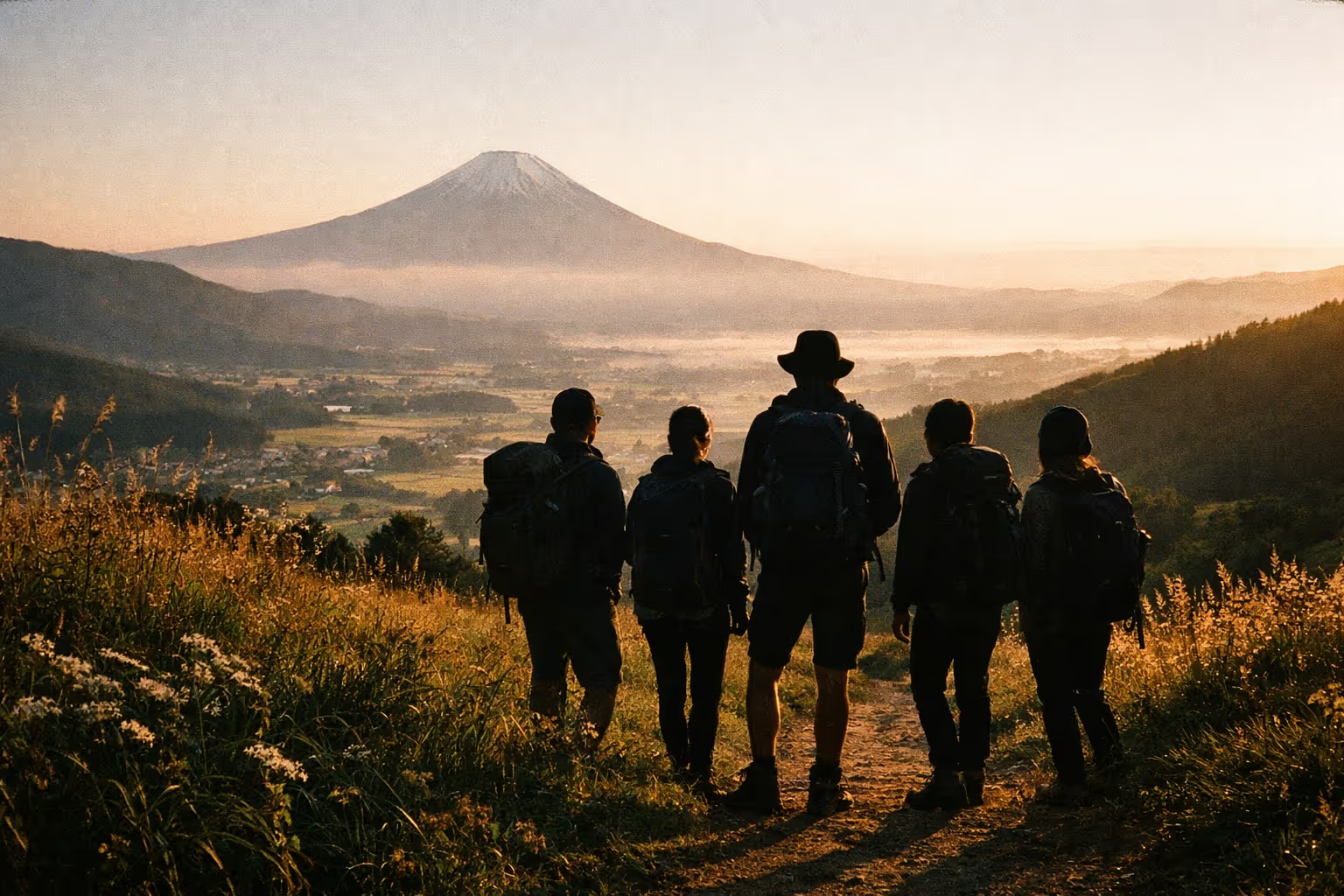
A mount fuji guided hike in 2026 is quite different from a few years ago. The climbing season runs early July to early September. New conservation fees and daily climber caps on the Yoshida Trail mean availability is tighter. Book at least two months ahead for August weekends.
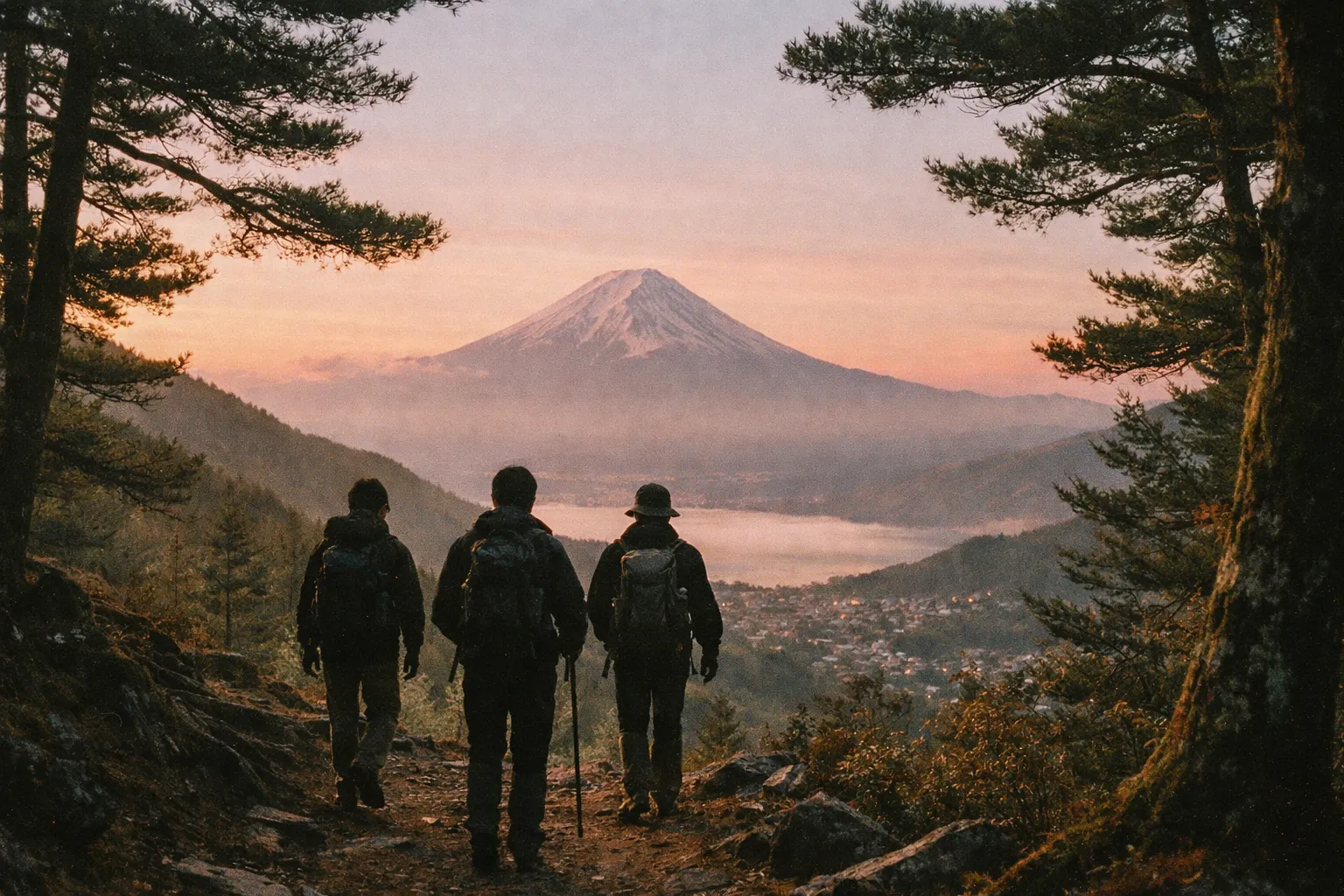
Mount Fuji Guided Hike Options
| Standard 2-day summit hike | Fuji 5th Station day tour | Hakone day trip | Fuji Five Lakes visit | |
|---|---|---|---|---|
| Type | Guided group hike | Bus/van tour | Sightseeing day trip | Independent sightseeing |
| Price Range (USD) | $350-$700 | $100-$180 | Varies | Varies |
| Duration | 2 days | Day trip | Day trip | Flexible |
| Fitness Needed | 1,300-1,500 m elevation gain, 6-8 hrs/day | Low | Low | Low |
| Features | Mountain hut stay, sunrise summit (goraikō) | Scenic stops, no hiking | Lake Ashi pirate ship, Owakudani valley, Fuji views | Lake Kawaguchi reflection shots, easy trails |
A practical warning: if you book a summit hike and turn back due to weather or fitness, the $350-$700 is usually non-refundable, as are hut fees. Avoid Obon week in mid-August - trails and huts get overcrowded.
When a private driver in Japan makes sense
A private driver japan costs $60-$100 per hour in Tokyo or Kyoto, with 4-8 hour minimums, plus tolls and parking. Airport transfers between Narita and central Tokyo run $180-$250 per vehicle. That’s far more than a Narita Express ticket - but there are days when it pays off.
Use a private driver for:
- Airport transfers with luggage, kids, or after a long flight
- Rural temple and shrine days - Nikko’s outer shrines, Koyasan, Kii Peninsula, where buses run hourly at best
- Multi-stop sightseeing in Kyoto combining Arashiyama, Fushimi Inari approach, and outlying temples in one day
- Travelers with mobility issues, young children, or heavy gear
Skip the driver for:
- City days inside Tokyo, Osaka, or central Kyoto - trains are faster and cheaper
- Long-distance city-to-city travel - the Shinkansen wins on time and cost
- Solo travelers on a budget - the per-person math rarely works
Split a private driver day among 3-6 travelers and the per-person cost can drop below joining a premium group tour. Book 3-8 weeks ahead for peak seasons. Note this is separate from renting a self-drive car, which requires an International Driving Permit.
Is $5,000 enough for two weeks in Japan?
Yes, for one mid-range traveler or two on a budget plan - flights excluded. Here’s a realistic 14-day independent breakdown:
- Lodging: $120-$200 per night × 13 nights = $1,560-$2,600
- Food: $35-$60 per day × 14 = $490-$840
- Transport (JR Pass or point-to-point Shinkansen + metros): $400-$600
- Sightseeing and activities: $300-$600
- Total (excluding flights): roughly $2,750-$4,640
That leaves room for a guided food tour, a Mt. Fuji day trip, and a cultural experience or two. Two travelers on $5,000 combined will need to stick to 3★ business hotels at $70-$120 per night and eat more conveyor-belt sushi than kaiseki.
One note on the JR Pass: prices jumped in late 2023, so it’s no longer automatically the best deal. Run the numbers for your route before buying. For a Tokyo-Kyoto-Osaka loop with a Hiroshima side trip, it usually still pays. For Tokyo-heavy trips with just one Shinkansen leg, individual tickets are cheaper.
How to save up to $600 per person on a Japan trip
That “save up to $600” claim isn’t marketing fluff - it’s the real difference between a peak-season, 4★, fully escorted booking and a well-timed mid-range version of the same trip. Three moves do most of the work.
How to Save Up to $600 per Person on a Japan Trip
Two weeksThree practical strategies to reduce your guided tour costs without sacrificing experience.
- 1
Shift to shoulder season
Travel in late May, early June, or early December to save 10-20% compared to cherry blossom or autumn foliage peak weeks, avoiding crowds and higher prices.
- 2
Mix guided days with independent rail travel
Choose 2-3 high-value guided experiences like a Tokyo food tour, Kyoto cultural day, and Mt. Fuji hike, and use rail passes for the rest to cut $600-$1,200 per person.
- 3
Drop one hotel tier
Swap 4★ hotels ($150-$250/night) for central 3★ business hotels ($70-$120/night), saving $800-$1,500 over two weeks without sacrificing cleanliness or location.
Stack two of these moves and you’re past the $600 mark per person. Stack all three for two weeks and you’ve saved enough to add a ryokan night or a private driver day.
The 5-minute rule in Japan
The “5-minute rule” matters in two ways.
On trains and tours: Shinkansen and most local trains leave exactly on time. Stations like Tokyo, Shinjuku, and Kyoto have long walks between gates and platforms. Arrive at least 5-10 minutes early. The same goes for guided tours - your leader starts the briefing on time. If you stroll up at the listed start, you’ll miss it.
In social and dining contexts: Punctuality is valued. Showing up more than 5 minutes late to a reservation, tea ceremony, or guide meet-up without notice comes off as rude. If you’re running late, call or message ahead. Most restaurants and inns will hold a reservation for a short delay if you let them know.
The principle behind both: time is respect. Build that 5-minute buffer and you’ll feel less rushed, not more.
Common booking mistakes to avoid
Some traps catch first-timers more often than they should.
- Underestimating transfer times. Tokyo to Kyoto is 2 hours 15 minutes by Shinkansen, but add 45 minutes each end for station navigation and pack handling. Don’t plan a temple visit the same afternoon you change cities.
- Booking Mt. Fuji without the fitness. Turning back means losing $350-$700 in non-refundable hut and tour fees. If you haven’t done a long hike recently, opt for a Fuji-area day tour instead.
- Last-minute peak-season bookings. Small-group walks, premium food tours, and Nakasendo-style trips fill 2-6 months ahead for cherry blossom and autumn(3)(4).
- Tipping confusion. Tipping isn’t expected in Japan and can be politely refused. But many international tour companies add service charges or “optional gratuities” - check the fine print so you’re not surprised.
- Assuming all guides are fluent. Quality varies between premium and budget tours. Read recent reviews specifically about guide English if that matters to you.
Frequently Asked Questions
- Can I book guided tours last minute in peak seasons?
- Popular small-group walks and cultural tours often fill 2-6 months in advance during cherry blossom and autumn foliage seasons, so last-minute bookings are risky.
- Are private drivers in Japan worth the cost?
- Private drivers are best for rural or multi-stop days where public transport is limited, but they are expensive for city travel or solo travelers.
- What should I know about tipping on guided tours in Japan?
- Tipping is not customary in Japan and can confuse staff. Some international tours add service charges, so check details to avoid surprises.
- How strict is the 5-minute rule in social contexts?
- Arriving more than 5 minutes late without notice is considered rude in Japan. Calling ahead if delayed is appreciated and can prevent lost reservations.
- Is the JR Pass still the best value for travel?
- Since price increases in late 2023, the JR Pass is best for multi-city loops like Tokyo-Kyoto-Osaka with side trips. For limited Shinkansen use, individual tickets may be cheaper.
- What cultural etiquette should I observe at onsen?
- Wash thoroughly before entering, avoid swimsuits, and be aware that tattoos may restrict access to public baths, though private ryokan onsen usually allow them.
Putting it together
The best Japan trip in 2026 isn’t a single 12-day escorted package or a fully independent rail-pass blitz. It’s a hybrid: a Tokyo food tour on night one, a cultural day in Kyoto with a small-group guide, a Mt. Fuji guided hike that fits your fitness, a private driver for rural days where buses don’t run, and independent travel everywhere else. That mix gives you expert decoding where it counts and freedom where you don’t need a hand.
Book high-demand pieces - Nakasendo walks, summit hikes, top-rated food tours - at least 2-3 months ahead for spring and autumn. Shift to shoulder season if your dates are flexible. Keep the 5-minute buffer in mind for every train and meet-up. And read cancellation fine print carefully before paying any deposit - the 60-90 day full-payment window comes up fast.