Sustainable travel in Japan is easy to fake and easy to verify, if you know the one label that matters. Skip the green marketing and look for a destination aligned with the JSTS-D standard the Global Sustainable Tourism Council recognizes. The most useful move is spreading your nights beyond Kyoto and Fuji into regions like Tohoku or Noto, which eases crowding and costs less. A week runs well under $5,000. And ignore the viral 5-minute rule; the real etiquette is quieter, carry your trash, no eating while walking.
How Japan built sustainable tourism into national policy
Japan’s tourism strategy now lists “Create Sustainable Tourism Destinations” as a core pillar of its national tourism basic plan, tied to a 2025 implementation horizon (2). This isn’t aspirational language buried in a report. It shapes how regions market themselves and how funding flows toward areas outside the Tokyo-Kyoto-Osaka corridor.
The most useful tool for travelers is the Japan Sustainable Tourism Standard for Destinations (JSTS-D), which the Global Sustainable Tourism Council (GSTC) has formally recognized (5). What that means in practice: a destination claiming to manage tourism sustainably can now be measured against a benchmark rather than its own brochure. When you’re choosing where to base yourself, a region aligned with JSTS-D is a stronger signal than a town that simply calls itself “green.”
This matters because sustainable tourism Japan as a phrase gets attached to a lot of marketing. The GSTC recognition gives you a way to separate destinations doing real demand management from those riding the trend.
Where sustainable travel in Japan actually shows up on the ground
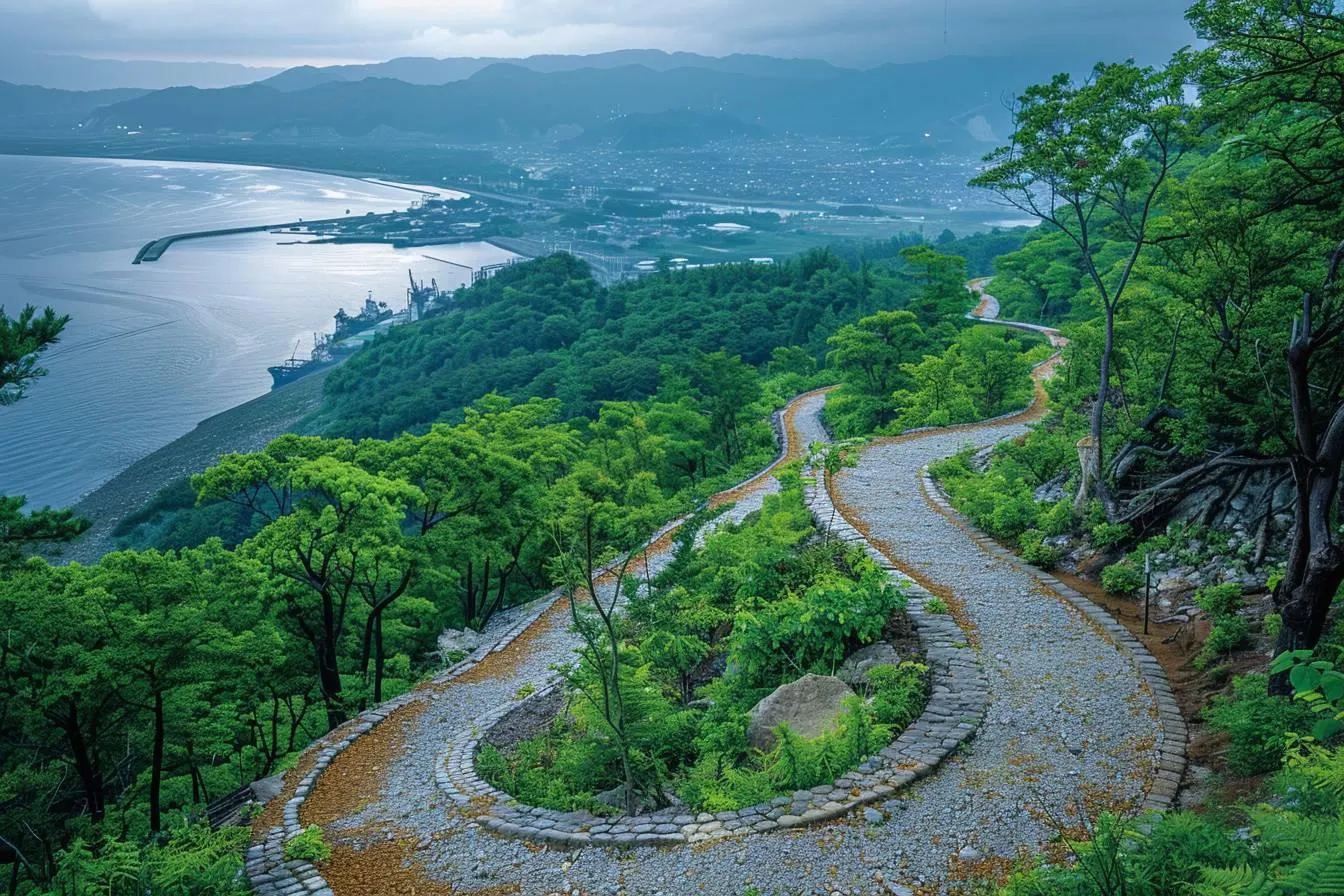
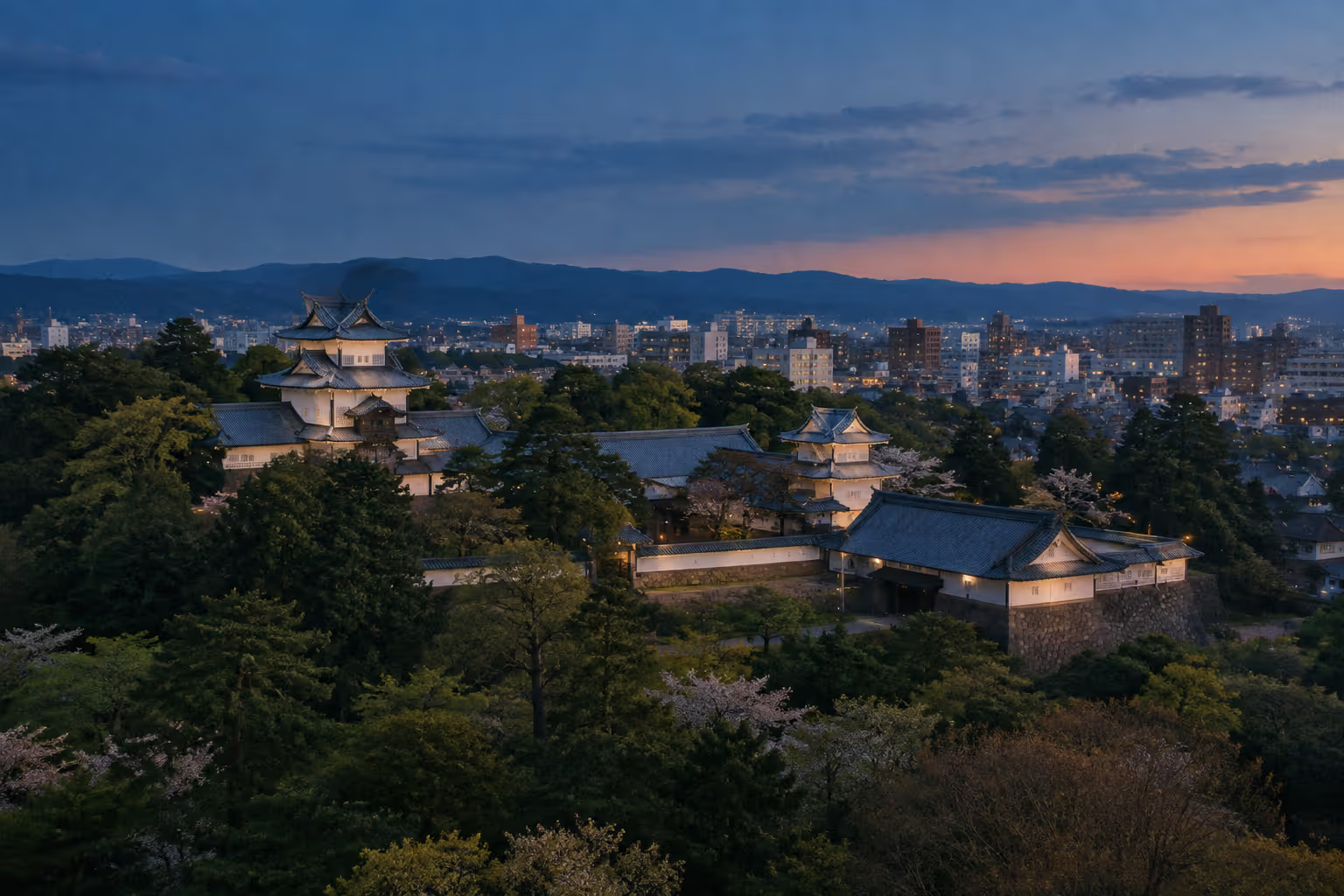
The Noto Peninsula is one of the places I keep returning to in conversation when people ask where sustainable travel in Japan actually looks like something. With its globally recognized Satoyama (managed woodland-and-farmland landscapes) and Satoumi (managed coastal zones) traditions, the Noto Peninsula shows how agricultural and coastal management can work alongside nature rather than against it. Biodiversity holds here because the land has been actively tended for generations, not preserved under glass.
The terraced Senmaida Rice Fields near Wajima are worth the detour. Local farmers practice traditional agriculture on these slopes, and after dark, the terraces are lit by thousands of LED lights - a detail that says something about how seriously the community takes keeping this landscape alive and visible.
Kamikochi, in the Chubu Sangaku National Park (one of Japan’s alpine national parks), works differently. This high valley is only accessible part of the year, and private vehicles are banned outright - you reach it by bus or taxi from Sawando or Hirayu. I trekked the forested trails to Myojin Pond on a cool October morning and the absence of parking lots was immediately noticeable. The Azusa River runs clear, the mountains sit close, and the whole place is quieter than it has any right to be given how many people visit. That quiet is not accidental - it’s the direct result of the vehicle restriction.
Sustainable Practices in Key Japanese Destinations
| Noto Peninsula | Kamikochi, Nagano | |
|---|---|---|
| Key Sustainable Practice | Traditional Satoyama and Satoumi management | Vehicle restrictions to reduce carbon footprint |
Engaging with indigenous culture respectfully
Hokkaido, Japan’s northern island, is where indigenous practices and sustainability intersect in ways that are worth understanding before you arrive. The Ainu - the indigenous people of Hokkaido - have a spiritual relationship with the natural world that predates Japanese settlement of the island by centuries.
At the National Ainu Museum and Park - known as Upopoy, in Shiraoi - I’ve watched demonstrations of traditional fishing, crafting with natural materials, and oral performance that carry real cultural weight. The museum opened in 2020 and was built with Ainu community involvement, which matters. Their relationship with the environment isn’t a tourism product - it’s a living practice, and the museum reflects that distinction reasonably well.
Further south, in Kamaishi on the Tohoku coast, the story is different but equally grounded. The city was devastated by the 2011 earthquake and tsunami, and its recovery has centered on renewable energy and sustainable tourism as practical pillars, not just symbolic ones. The rebuilt Unosumai district, where the tsunami memorial stands alongside new community facilities, is the clearest place to see how that recovery has been shaped. The Michinoku Coastal Trail, running more than 1,000 km along the Tohoku coastline, winds through this region and connects communities that have rebuilt with a clear sense of what they want the land and the visitor relationship to look like. Walking sections of it is slow travel in the most literal sense - and the communities along the route benefit directly from the foot traffic. The trail passes through fishing villages where guesthouses are family-run and meals are built around the morning’s catch, so your spending stays close to the people who rebuilt these places.
How to choose eco lodges that actually earn the label
The hardest part of finding eco lodges Japan isn’t the search - it’s separating verified properties from those using sustainability language with nothing behind it. Many “eco” stays use the word with no third-party check, so I look for concrete operational signs rather than slogans.
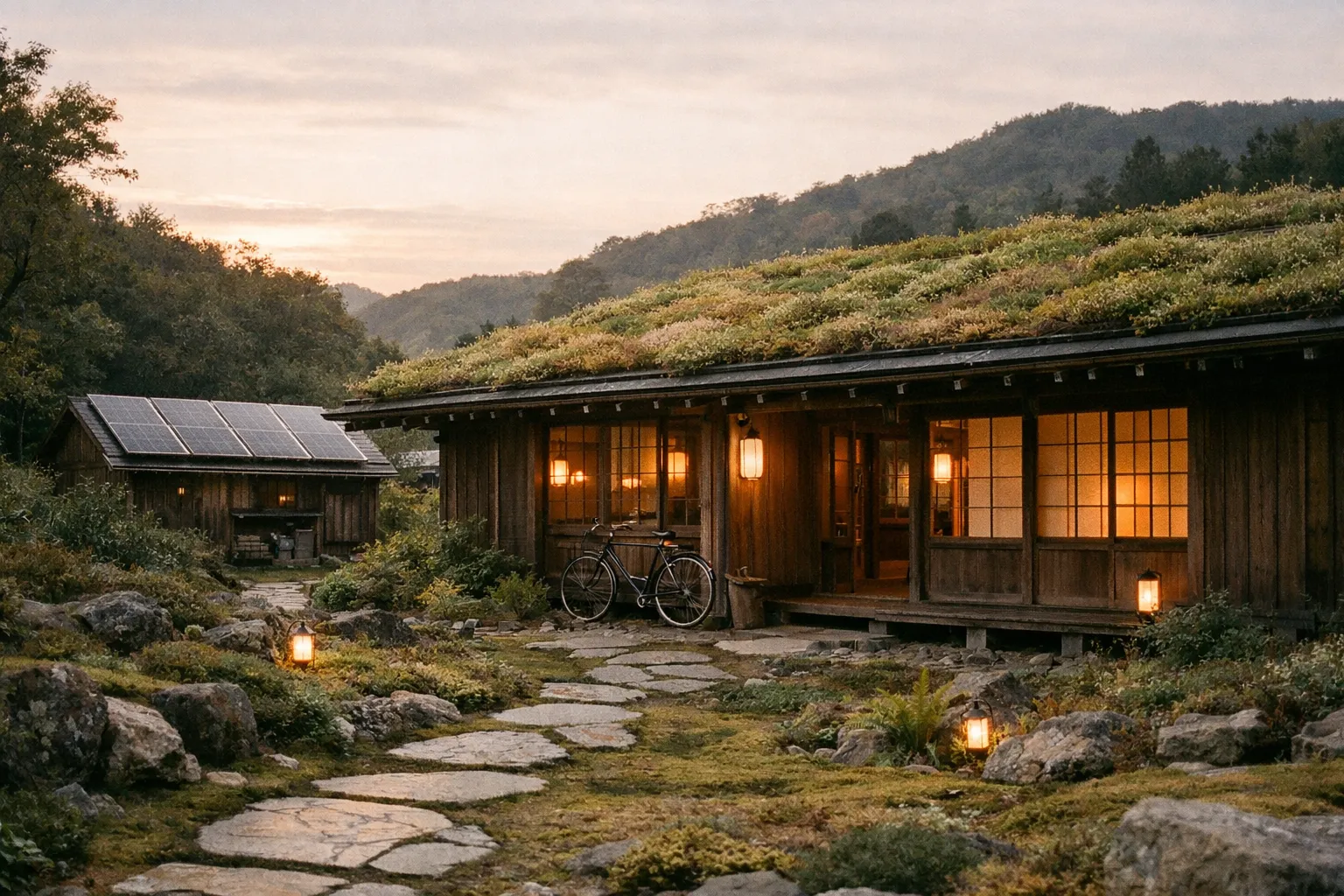
When I evaluate a property, I check for:
- Waste sorting into Japan’s local categories (burnable, non-burnable, recyclables) - a sign the hotel follows municipal systems rather than skipping them
- Refillable amenities instead of single-use plastic bottles in the bathroom
- Linen and towel reuse programs that are an actual default, not just a card on the bed
- Local procurement - meals built around seasonal, regional ingredients, which keeps spending in the community and shortens supply chains
- Renewable energy use or at least a stated energy policy
The strongest signal is whether a property sits in a destination aligned with JSTS-D or the GSTC-recognized standard (5). Two formats consistently deliver on Japan green travel tips in practice:
- Minshuku (family-run guesthouses) and family-run inns in rural areas. Small, locally owned, and your money goes directly to the household. Expect roughly ¥6,000-¥12,000 per person per night (about $40-$90 USD), often including dinner and breakfast.
- Ryokan (traditional Japanese inns) with onsen (hot spring baths) for the premium end. JNTO foregrounds hot springs and locally sourced food as low-impact travel categories, and a good ryokan combines long guest stays, regional cooking, and high service. These run ¥20,000-¥50,000+ per person per night ($130-$330 USD), meals included.
Book these 30-90 days ahead for peak periods - spring cherry blossom season and autumn foliage in particular. Rural eco-lodges have far fewer rooms than city hotels, and last-minute availability is thin. This is where people usually get caught out. If you want to explore unique places to stay in Japan beyond the standard hotel, temple lodgings and machiya townhouses are worth researching early.
Green mobility: rail, ferry, and slow travel
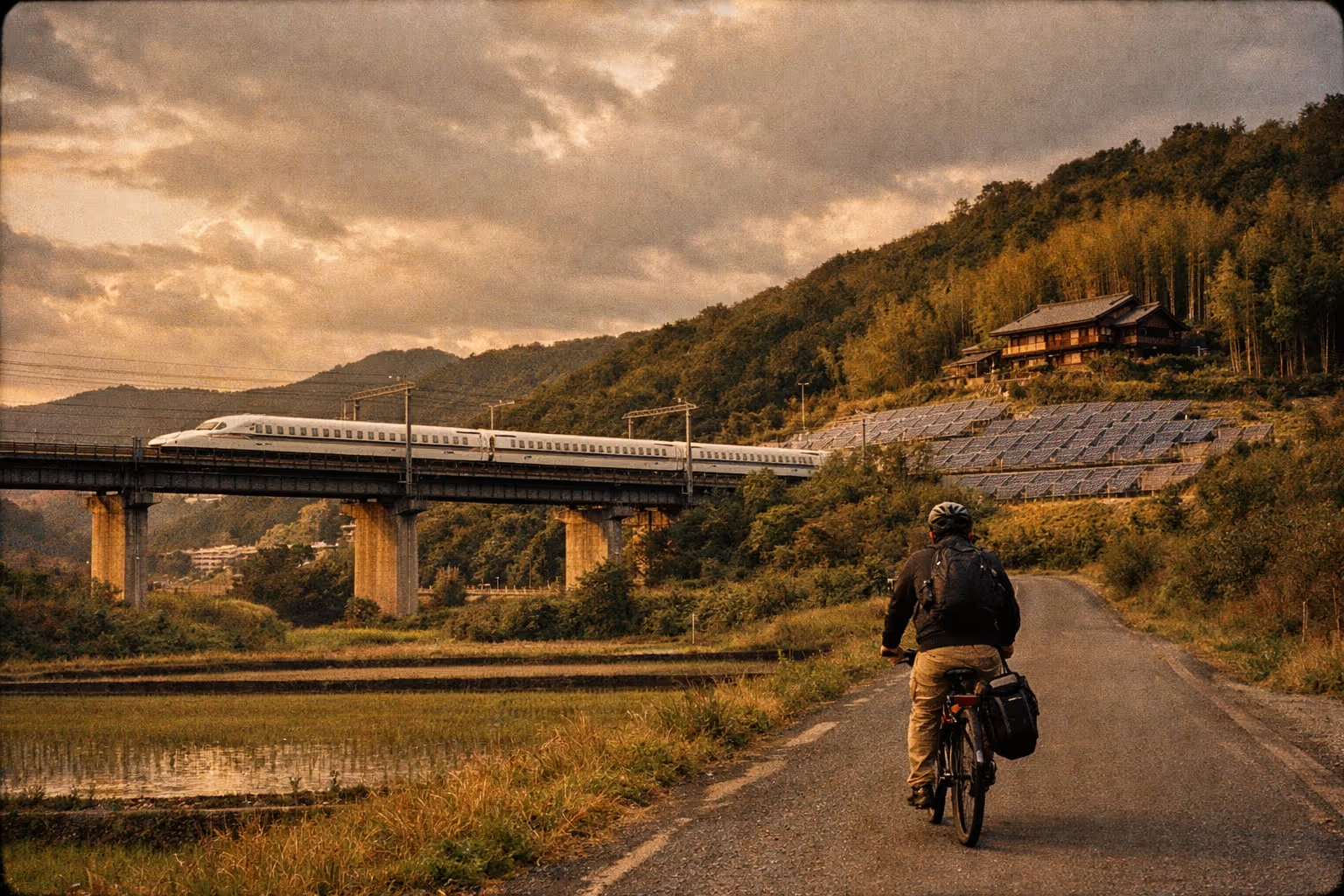
Japan’s railway network is the backbone of any low-carbon trip. Trains move you efficiently between regions while cutting the need for car rental or short-haul domestic flights, and the range - from Tokyo’s dense urban rail to regional lines threading through rice fields and mountain passes - makes it genuinely practical rather than aspirational.
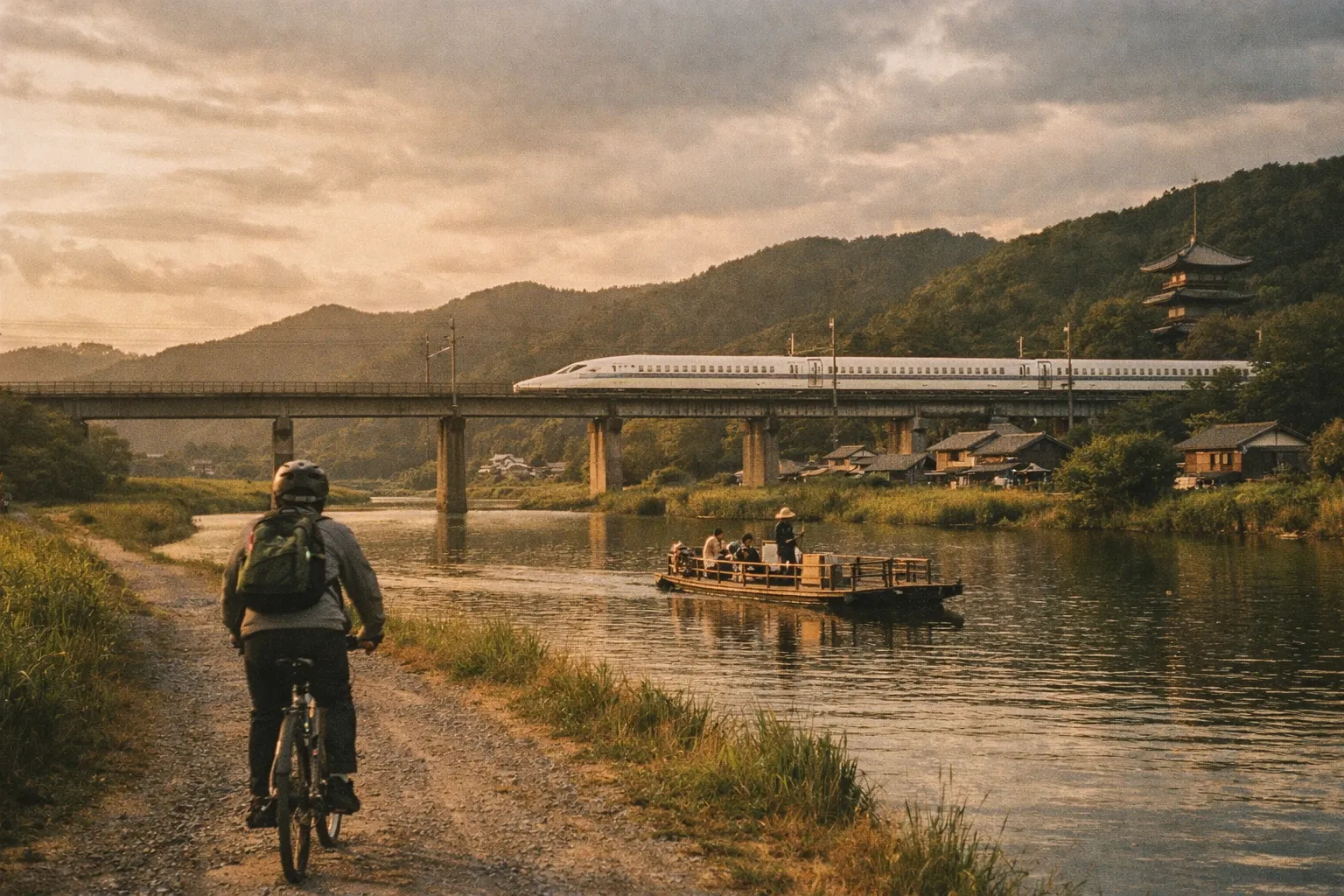
That said, trains aren’t automatically the greenest choice in every situation. Occupancy, route length, and whether the alternative is a single direct flight or a multi-leg slog all factor in. My rule: prioritize rail where the journey runs under about 4-5 hours, since the airport-access and transfer overhead of flying usually cancels out any time savings on shorter routes.
A few practical patterns worth building into your itinerary:
- Book weekday departures. Avoiding Friday evenings and Sunday returns cuts crowding and improves seat availability at no extra cost.
- Base yourself 2-4 nights per stop instead of changing hotels daily. Fewer transfers mean fewer emissions and more money spent locally.
- Consider ferries for slow travel. Operators like Shin Nihonkai Ferry now actively market overnight sea routes as a tourism product, not just transport (3). An overnight ferry doubles as your accommodation and reaches regions that pull visitors away from the crowded core.
One logistical caveat worth flagging: watch the rural transport gaps. A train may reach the prefecture, but the final 10-40 km to an eco-lodge can require a bus, a taxi, or a prebooked transfer. Budget an extra $20-$80 USD for those legs and carry cash - card acceptance still thins out considerably in smaller towns. Understanding how to get around Japan before you go will help you plan those last-mile connections without surprises.
How to visit Japan without making the common mistakes
Ethical visitation in Japan comes down to three things: spreading out, spending locally, and behaving with restraint in shared spaces.
Spread your nights out. Kyoto, Tokyo, and Mount Fuji are the most pressure-sensitive destinations, and overconcentrating there is the single most common sustainability mistake travelers make (7). Spreading nights across secondary regions - Tohoku, the Noto Peninsula, the San’in coast - eases the strain, and it’s often cheaper and quieter too. I’ve had some of my best meals and most interesting conversations in places that weren’t on the standard circuit. Travelers looking for hidden gems in Japan will find that cities beyond Tokyo and Kyoto often reward exactly this kind of deliberate detour.
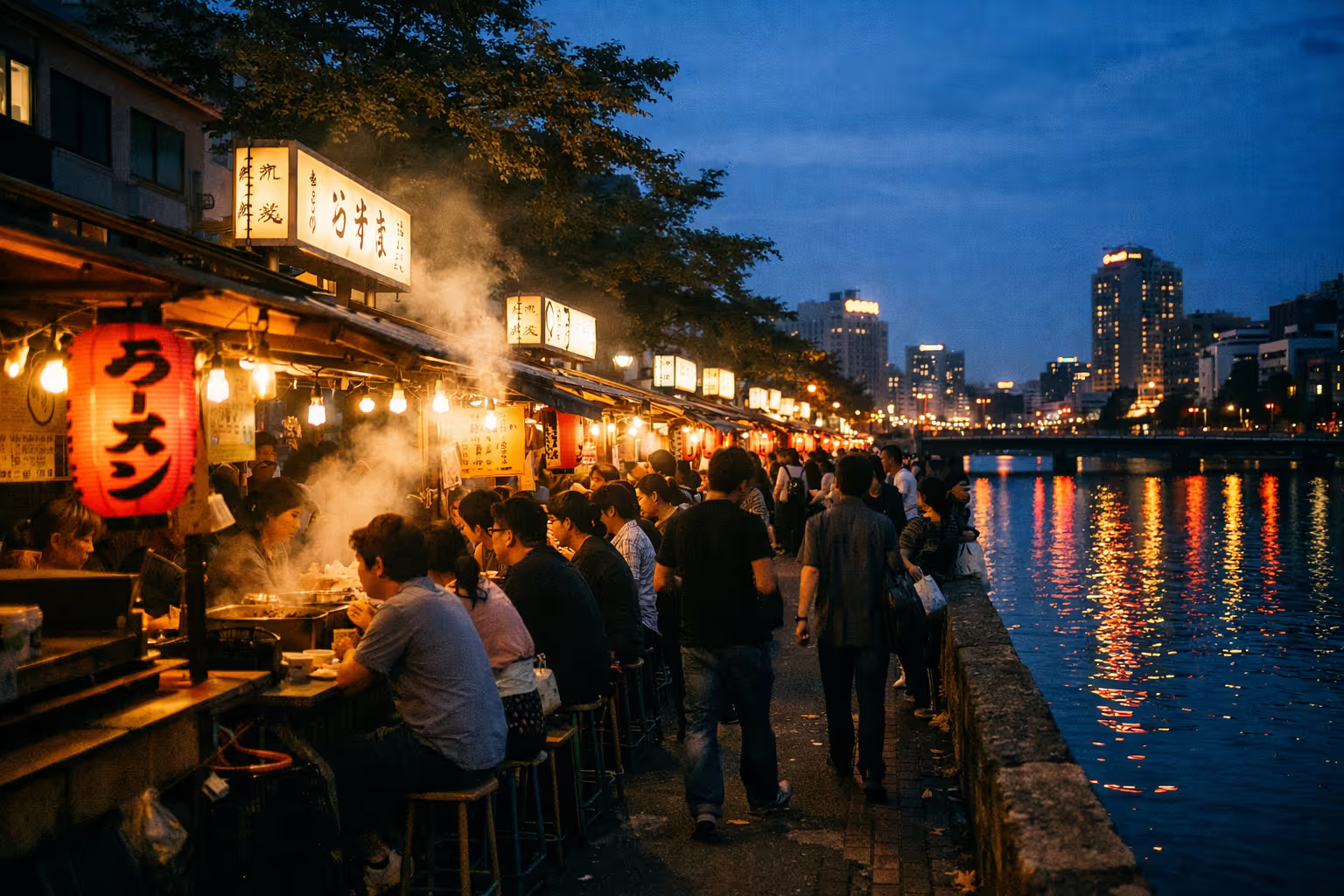
Spend where it stays. Eat at locally owned restaurants, buy from regional producers, and choose family-run lodging over chains where you can. Locally sourced, seasonal dining is the easiest way to keep your spending in the community, because the supply chain is short and the money doesn’t leak out to distant corporate owners.
Mind the etiquette. This is where a lot of visitors stumble, and getting it wrong is noticeable in a country where public norms are taken seriously. A few non-negotiables:
- Eat where you buy, or wait. Walking and eating is frowned upon in most of Japan - finish street food near the stall or pocket it for later.
- Carry your trash. Public bins are scarce. A small bag in your pack is essential - you’ll often hold rubbish for hours before you find a place to sort it.
- Shoes off in homes, many ryokan, temples, and some restaurants. Watch for a step up and a row of slippers at the entrance - that’s your cue.
- Keep your voice down on trains. Phone calls in train cars are a genuine taboo, not a suggestion.
- Photography: ask before photographing people, especially geisha in Kyoto’s Gion district, where some private streets now ban tourist photography outright.
Choosing destinations aligned with the GSTC-recognized JSTS-D standard is the structural version of ethical travel - you’re directing your spending toward regions that have committed to managing visitors responsibly (5).
Is $5,000 enough for a week in Japan?
Yes - for most travelers, $5,000 covers a week comfortably, and a sustainable itinerary doesn’t change that math much.
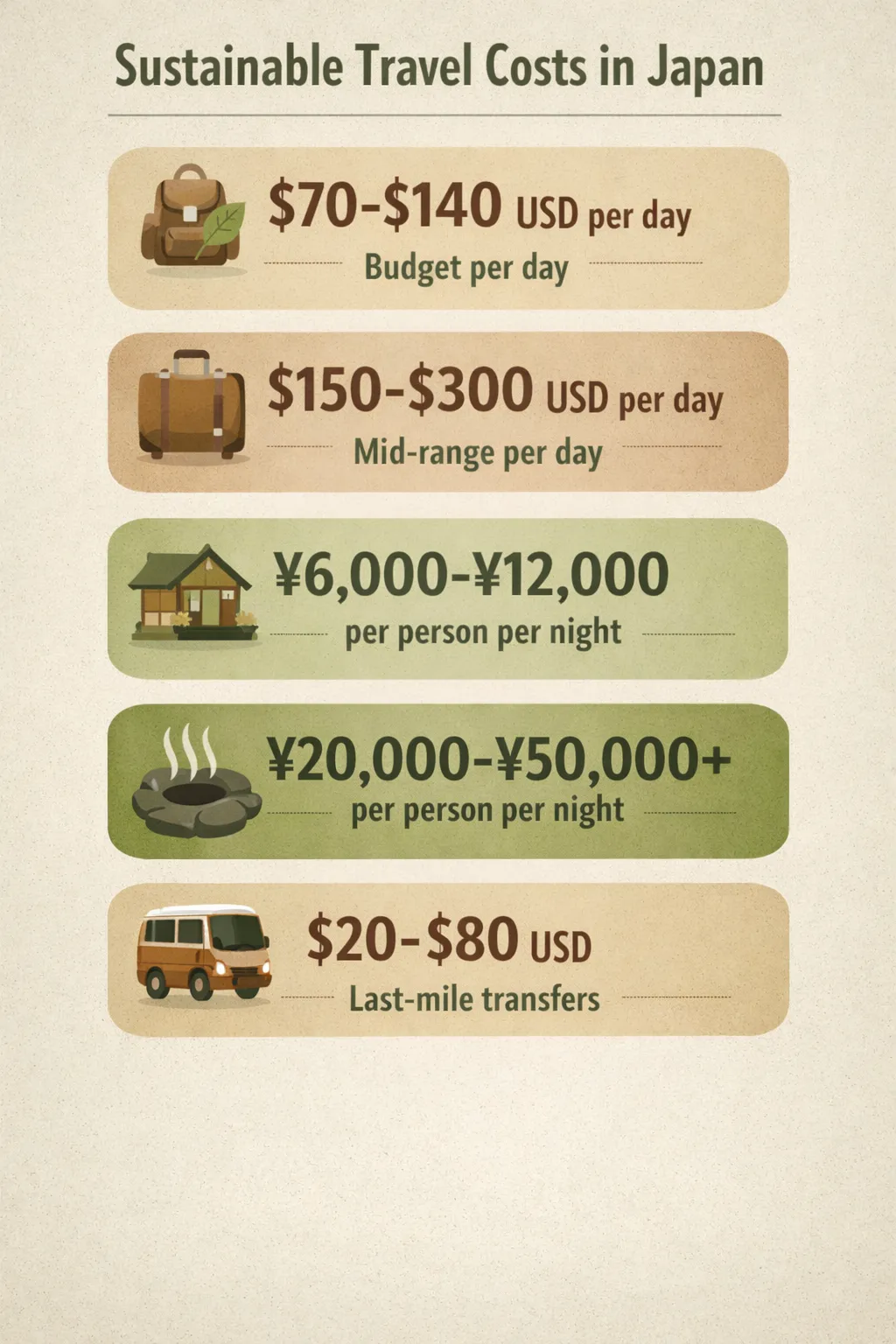 Costs overview: Budget $70-$140/day; Mid-range $150-$300/day; Minshuku ¥6,000-¥12,000 pp/nt; Ryokan ¥20,000-¥50,000+ pp/nt; Last-mile $20-$80.
Here’s the breakdown. Sustainable travel in Japan tends to land in two budget bands:
- Budget approach (minshuku, rail passes, locally sourced meals): roughly $70-$140 USD per day
- Mid-range sustainable (locally run inns, point-to-point rail, the occasional ryokan): roughly $150-$300 USD per day
Run the numbers on a 7-day trip:
- At $300/day, a week totals about $2,100, leaving substantial room for international flights, a premium ryokan night, or guided experiences.
- Even at a generous $700/day, a week comes to $4,900 - still inside $5,000.
The only thing that breaks the budget is stacking nightly luxury ryokan stays with private guides and domestic flights. Build a lower-carbon itinerary instead - rail, longer stays per base, locally owned lodging - and you’ll likely come in under budget while spending more of your money in the communities you visit. For a closer look at how the daily numbers stack up, Japan on a budget breaks down tight and comfortable spending across a two-week trip.
Japan as a reference point for sustainable tourism globally
Japan’s approach to responsible tourism isn’t an isolated endeavor - other countries are actively studying it. The country pairs measurable policy targets with practical infrastructure that makes low-impact travel genuinely easy, rather than something you have to work around the system to achieve (2)(7).
What stands out, having traveled widely, is how little friction there is between traveling well and traveling responsibly here. The rail network already exists. The cultural norms around restraint and care for shared space already exist. The destination standards now exist too - GSTC-recognized and measurable rather than self-declared (5).
For you as a traveler, the choices that actually matter are mostly upstream: where you base yourself, how far you spread your nights, and whether you verify a lodge’s practices before booking. Get those right and the rest of the trip largely handles itself. A Japan itinerary covering 5 stops is one practical way to structure that spread across regions, history, and nature from the start.
Frequently Asked Questions
- What is the 5 minute rule in Japan?
- There's no official "5 minute rule" in Japanese travel or etiquette - it's social-media shorthand rather than a formal guideline, and you won't find it in any government tourism material. If you've seen it referenced, treat it as casual content, not an actual rule you need to follow. The etiquette that genuinely matters is concrete: don't walk and eat, carry your trash, take your shoes off where indicated, and keep quiet on trains.
- What is the 1 3 rule in Japan?
- Like the "5 minute rule," the "1 3 rule" isn't a standard national travel or etiquette convention in any official source. It's internet shorthand rather than guidance you need to plan around. Focus instead on the well-established norms: respect photography restrictions, spread your visit across regions to ease pressure on hotspots, and spend at locally owned businesses.
- How do I find genuinely eco-friendly lodging instead of marketing-only "green" stays?
- Check for concrete operational practices rather than language. Look for waste sorting into Japan's local categories, refillable amenities, real linen-reuse defaults, local food procurement, and a stated energy policy. The strongest signal is a property located in a destination aligned with the GSTC-recognized JSTS-D standard, which gives you a verified benchmark rather than a self-declared claim.
- Are trains always the greenest way to travel in Japan?
- Not automatically. Rail is usually the best choice for journeys under about 4-5 hours, but on longer routes the full picture depends on train occupancy, route length, and whether the alternative is a single direct flight or a multi-leg trip. For longer hauls, overnight ferries and trains can be both lower-impact and more comfortable - operators now market sea-based slow travel as a product in its own right (3).