The best Japanese cultural experiences reward a little planning, and the tea ceremony is where that pays off most. Decide by time and budget before you book: a short chakai runs 20 to 60 minutes with sweets and matcha for $30 to $70, while a full chaji is a four-hour ritual with a kaiseki meal, well past $150. One practical tip, if kneeling in seiza is hard, email the venue ahead, since many quietly keep a low bench so you can still take part. Come in clean plain socks.
Immersive Japanese Cultural Experiences You Need to Try
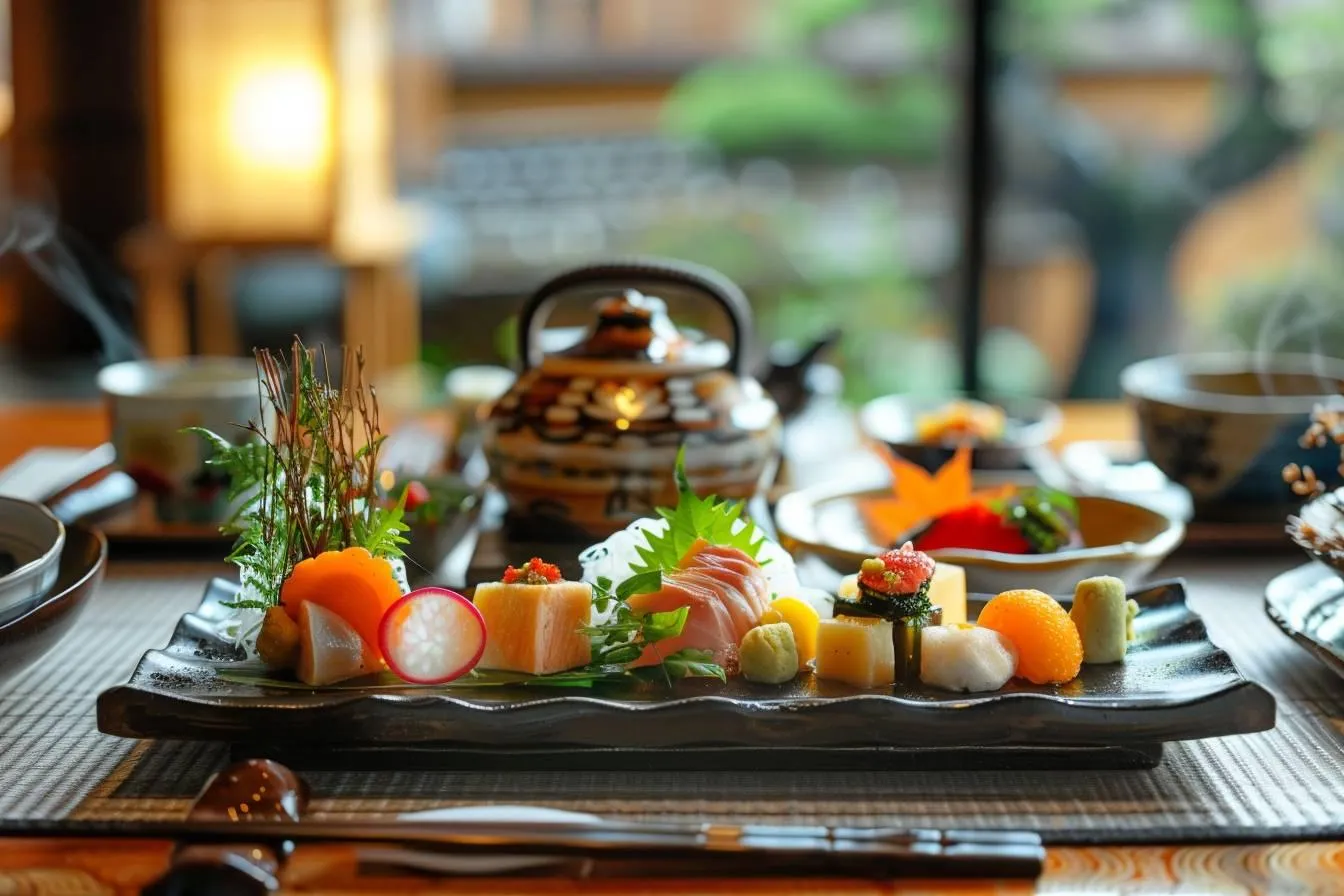
I’ve been chasing the kind of Japanese cultural experiences that actually tell you something about a place rather than just giving you a nice photo. Japan had been at the top of my list for years - the layered traditions, the landscapes, the way aesthetics show up in everything from architecture to food. When I finally made it to Kyoto, the experiences that landed hardest weren’t the ones I’d seen most on Instagram. They were slower, quieter, and required a bit of preparation to get right.
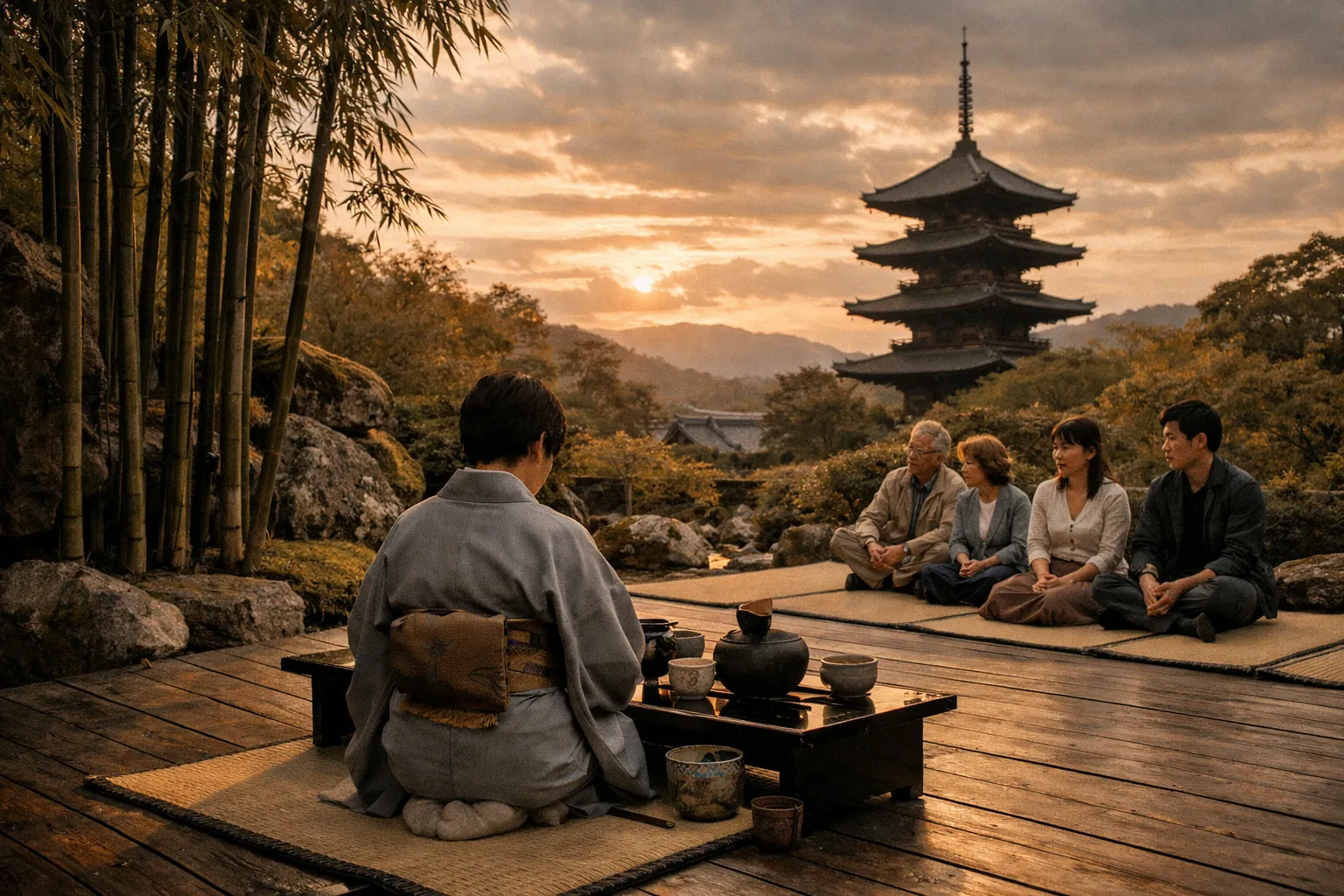
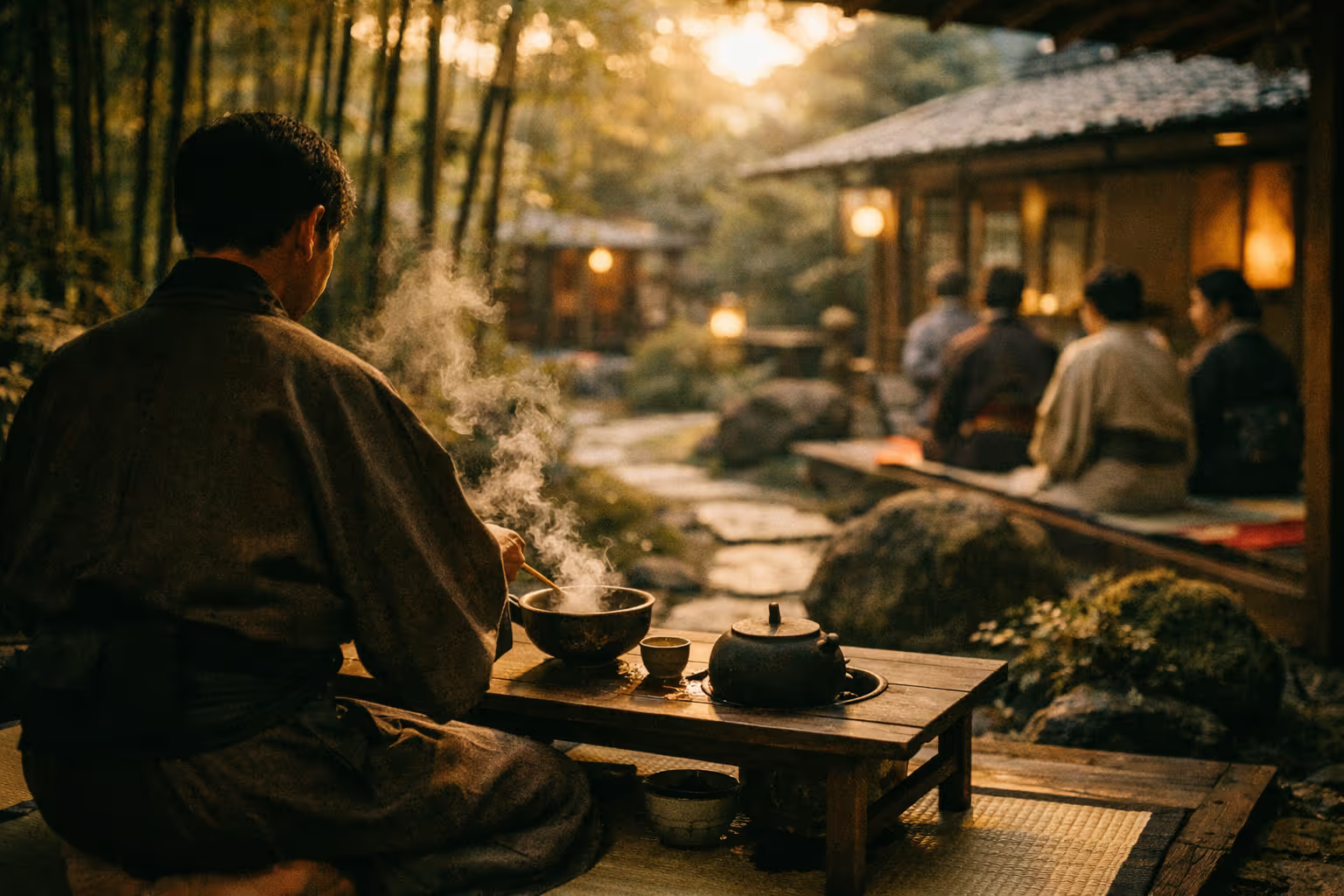
The one I keep coming back to is the tea ceremony. Dressed in a borrowed kimono, I was introduced to chado (the “way of tea”) - which is far more than drinking tea. It’s a codified ritual built around four ideals: harmony, respect, purity, and tranquility (2).
Tea itself arrived in Japan between 618 and 907 AD, carried back by Buddhist monks studying in Tang-dynasty China (4). A Zen monk served sencha to Emperor Saga in 815, which led to the first imperial tea plantations in the Kansai region around Kyoto (2). The rules, utensils, and stripped-back teahouse aesthetics most ceremonies still follow today were largely set by the 16th-century tea master Sen no Rikyu, whose influence shaped the wabi-sabi sensibility you feel in the room (2).
Learning the gestures from a seasoned tea master felt like active meditation - every movement purposeful, nothing wasted. I sat in seiza (kneeling with legs folded under you), which is the standard posture on tatami (4). My legs went numb after about fifteen minutes. Here’s a tip I wish I’d had: most tourist-focused venues in Kyoto will quietly offer a low bench or chair if you email ahead or ask politely. You don’t have to suffer through it.
A few etiquette beats that matter:
- Turn the bowl. When you receive the chawan (tea bowl), rotate it so the decorated “front” doesn’t touch your lips, then turn it back before returning it (4).
- Socks, not bare feet. Shoes come off at the entrance, so wear clean, plain socks.
- Dress modestly. Skip very short skirts, low necklines, and gym wear - bowing and kneeling get awkward fast, and it reads as too casual (4).
- Watch when you photograph. Many hosts allow photos before or after the ritual but prefer none during whisking and serving.
If you want to follow what’s happening in real time, spend ten or fifteen minutes beforehand learning a handful of terms: chawan (tea bowl), chasen (bamboo whisk), fukusa (silk cloth used to purify utensils), and tokonoma (the alcove holding the scroll and flowers) (4). The seasonal choices - the scroll, the sweets, the flower arrangement - are the whole point. Everything in the room reflects a chosen theme (1).
I also spent a morning on traditional calligraphy - shodō (brush-and-ink writing). Guided by a master calligrapher, the session was about expressing feeling through brush strokes rather than producing perfect characters. Fumbling my way through a single kanji, I felt the same connection to centuries of practice that the tea room had hinted at. The two experiences pair well together.
Both the tea ceremony and calligraphy are rooted in the same Zen-influenced aesthetic: economy of movement, attention to materials, and the idea that how you do something matters as much as what you produce. Booking them back to back - many Kyoto cultural centers offer combined half-day packages running around ¥12,000-¥15,000 (roughly USD 80-100) - gives you a morning that covers a lot of ground without feeling rushed. The calligraphy session typically runs 45 to 60 minutes and requires no prior experience; hosts usually provide ink, brushes, and paper, and you leave with your own piece to keep.
✓ Pros
- Offers a slow, contemplative insight into Japanese aesthetics and philosophy
- Accessible in multiple formats to suit different schedules and budgets
- Includes tactile and sensory learning through gestures, posture, and seasonal themes
✗ Cons
- Proper posture (seiza) can be physically challenging for some visitors
- Full formal ceremonies require significant time and sometimes language familiarity
- Peak seasons require advance booking and can be expensive
What a tea ceremony actually involves: formats and prices
Not all tea ceremonies are the same thing, and mismatched expectations are the most common way travelers end up disappointed.
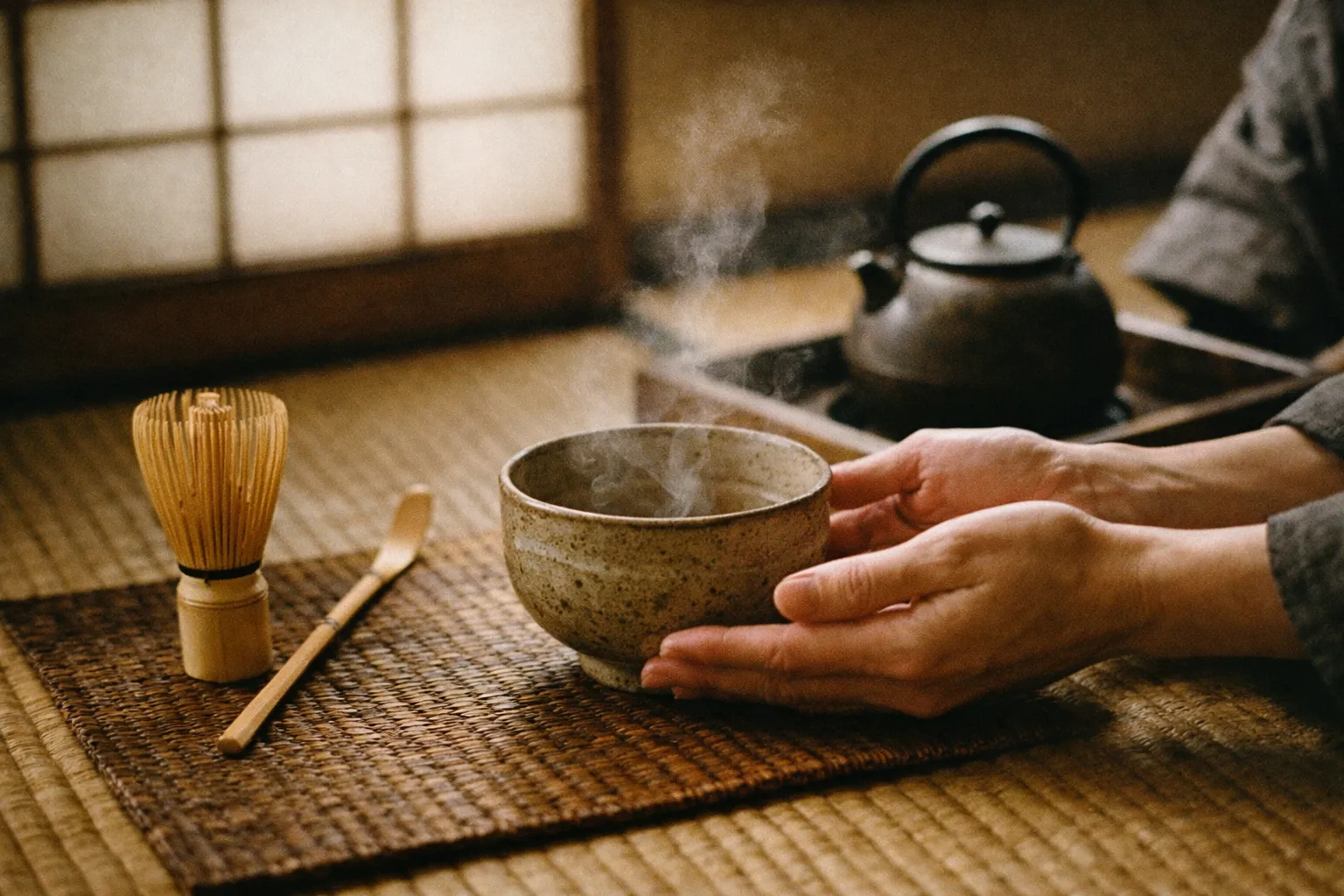
A full formal chaji is the complete event: a multi-course kaiseki meal, two charcoal rituals, sweets, thick tea (koicha), and thin tea (usucha), running about four hours for a small group in a garden teahouse (3). Koicha uses a higher ratio of matcha to water than usucha, producing a noticeably thicker, more intense brew; guests share from one bowl in sequence rather than receiving individual servings (4). Usucha is the lighter, individually served bowl most travelers encounter in shorter sessions. In winter, chaji is often scheduled around noon, when a portable brazier carries extra symbolic weight (3).
A chakai (tea gathering) is the lighter version - 20 to 60 minutes, focused on sweets and a bowl or two of matcha without the full meal (3). This is closer to what most travelers actually book.
The traveler-oriented sessions you’ll find online are shorter still. A documented Kyoto matcha session runs ¥9,000 (about USD 60-65) for 30 minutes, conducted entirely in English, with time slots between 10:30 and 15:00 (5). Booking platforms like Klook now publish curated lists aimed squarely at international visitors, so demand and availability are both high (6).
Rough price tiers to plan around (per person, early 2026):
- Compact group session, 30-60 min, with sweets: USD 30-70 (5).
- Private or intensive session, often with a kimono or calligraphy add-on: USD 80-150.
- Full chaji with kaiseki at a specialist venue: typically over USD 150, rarer, and sometimes requiring Japanese language ability and an introduction.
For a basic ceremony, block out 1 to 1.5 hours door-to-door once you account for shoe removal, photos, and browsing afterward. For a full chaji, plan four hours plus transit. In peak seasons - late March through April for cherry blossoms, and November for autumn leaves - popular Kyoto and Tokyo experiences sell out days to weeks ahead, and traditional schools may want several weeks’ notice and a written invitation.
Tokyo’s cultural experiences: the urban counterpoint
Kyoto holds the deepest concentration of tradition, but the cultural experiences in Tokyo are more accessible and easier to slot into a packed day. Department store tea counters and cultural centers near hubs like Shinjuku’s Kabukicho district and Asakusa’s Nakamise Street run short, scheduled tea demonstrations built for foreign visitors - convenient when you only have a couple of hours between other plans.
What makes experiences in Japan, Tokyo edition work well is the contrast you can build into a single day. Pair a morning tea ceremony with sumo morning practice, an afternoon at a teamLab digital art museum, or a wander through Akihabara’s anime shops. You see old and new Japan back to back, which sharpens your appreciation for both. After a ceremony, I’d point you toward a department store tea counter to buy the same matcha and wagashi (traditional sweets) you just tasted - it turns a one-off ritual into something you can recreate at home.
Tokyo’s version of these experiences tends to be shorter and more demonstration-focused than Kyoto’s, which is exactly right if your itinerary is tight. You trade some depth for flexibility. For a slower, more meditative session, save the ceremony for Kyoto.
Japanese cultural activities designed for students
Tea ceremony is one of the most common Japanese cultural activities for students, used in schools and homestays to introduce etiquette, Zen concepts, and aesthetics in a single sitting (7). Sessions built for student groups usually run 45 to 60 minutes to fit a school schedule, and they prioritize values - respect, mindfulness, simplicity - over flawless posture.
If you’re organizing an educational itinerary, a few things make these sessions land:
- Pair activities into a half-day block. Tea ceremony combines naturally with calligraphy (shodō), kimono dressing, origami, or taiko drumming for a fuller cultural program (7).
- Choose a hands-on matcha-making class. Students whisk their own bowls, handle the chasen and chawan, and can branch into discussions about tea agriculture in the Kansai region or the sustainability of the supply chain (2).
- Use a primer. Many hosts hand out bilingual sheets with key terms; teachers often prepare reflection worksheets so students connect the ritual to broader ideas about Japanese aesthetics.
The etiquette instruction for student sessions is deliberately simplified - clear do/don’t lists, step-by-step bowl handling, and a Q&A segment that invites questions rather than passive watching. For a first encounter with Japanese culture, that structure does more than a lecture ever could.
Accommodation experiences in Japan
My search for cultural immersion led me to stay at a traditional ryokan (a Japanese inn) in the Gion district in the heart of Kyoto. Sliding paper doors, tatami mats, futon bedding - it felt like stepping into a different century, which is either appealing or slightly disorienting depending on how you feel about sleeping on the floor.
The ryokan looked onto a meticulously kept garden, bringing the landscape indoors. The highlight was the onsen (hot spring bath), where the natural warmth made a good argument for slowing down. The stay wasn’t only about comfort - it was about a way of life that celebrates simplicity and the seasons.
After the onsen, the staff served a kaiseki dinner, moving silently and efficiently between courses. Each dish was arranged to reflect the season - the kind of presentation that makes you realize how much effort goes into something you’ll eat in ten minutes. Kaiseki is also the meal at the heart of a full chaji tea event, so if you eat one at a ryokan, you’re already halfway to understanding the formal ceremony.
Traditional cultural journeys through Japan
Going further into Japan’s cultural heart, I hiked the Kumano Kodo pilgrimage trails - a network of ancient paths winding through mountains, forests, and small villages, walked by emperors and pilgrims for centuries.
Every step on those moss-covered stones felt like moving backward through time, each shrine and torii gate a marker of Japan’s spiritual landscape. The pilgrimage was both physical and reflective. It made clear how tightly the relationship between the Japanese people and their land is woven into the culture - something that’s easy to read about and harder to actually feel until you’re standing in the middle of it.
I also volunteered at a matsuri (traditional festival) in a small town. Wearing the festival’s happi coat and helping carry the mikoshi (portable shrine), I was pulled straight into the energy of it. The taiko drums, the costumes, the shared purpose - it drove home how much tradition and community still anchor daily life here. If your timing lines up with a local festival, drop your other plans and join. It’s one of the more genuine ways to spend an afternoon.
Nature experiences in Japan
No journey through Japan is complete without its natural side. From the Arashiyama Bamboo Grove in Kyoto to the long views of Mount Fuji, the landscapes are as varied as they are striking.
I found a quiet kind of clarity at these sites - which, like the cultural practices, carry a deep respect for nature that runs through Japanese philosophy. This is also where “Kyoto’s soul” comes full circle: the same ideals of simplicity and asymmetry you see in a tea room show up in a Zen rock garden or a moss temple. Book a morning ceremony and an afternoon at a Zen garden and you’ll watch the same aesthetic move from a bowl of matcha into architecture and landscape (3).
Kayaking the Seto Inland Sea, I was struck by how still everything felt - the calm water against a rugged coastline that has inspired Japanese poets and painters for generations. These stretches of solitude balanced out the more social cultural moments and rounded out the trip.
Frequently Asked Questions
- What is the most popular Japanese cultural experience?
- The tea ceremony (*chado*) is among the most widely booked cultural experiences in Kyoto, which has over 2,000 temples and shrines and served as Japan's imperial capital for more than 1,000 years. It is offered in formats ranging from 30-minute traveler sessions to four-hour formal *chaji* events, suiting various itineraries and budgets.
- Do I need to know Japanese to attend a tea ceremony?
- Tourist-focused tea ceremonies in Kyoto and Tokyo are commonly conducted entirely in English with hosts explaining each step and etiquette. However, traditional tea schools may expect Japanese language ability and familiarity with protocol, making them better suited for residents or longtime students.
- Can I do a tea ceremony if I can't sit on the floor?
- Yes. While the proper posture is *seiza* (kneeling), most tourist-oriented venues in Kyoto and Tokyo discreetly provide a chair or low bench if requested in advance. Visitors with knee or back issues should email the venue before booking to ensure accommodations.
- What cultural experiences can students do in Japan?
- Student programs commonly include tea ceremony, calligraphy (*shodō*), kimono dressing, origami, and taiko drumming, often bundled into half-day cultural blocks. Sessions focus on values and basic etiquette rather than technical perfection and typically run 45-60 minutes.
- How much does a tea ceremony in Kyoto cost?
- Compact 30-to-60-minute group sessions with sweets typically cost between USD 30-70 per person. Private sessions with add-ons range from USD 80-150, while a full chaji with kaiseki usually exceeds USD 150. Prices are based on early 2026 data.
Planning your own immersion
The single most useful thing you can do is match the format to your time and interest before you book. A 30-minute matcha session and a four-hour chaji are different experiences with different price tags, and knowing which one you want saves both you and your host a lot of disappointment (3).
Spend fifteen minutes learning a few terms beforehand. Email ahead if you need a chair. Wear plain socks. Pick a venue that explains the seasonal theme behind its scroll and sweets rather than just walking you through the motions.
Do that, and even a short session in a century-old Kyoto machiya stops being something you checked off a list and becomes the part of the trip you keep thinking about weeks later.