Japan on a budget is more doable than its reputation suggests: two careful weeks run $1,400 to $2,000 before flights. A capsule bed and konbini meals hold your day near $65 to $100, and supermarkets slash bento by half after 9 p.m., so eat late. Skip the nationwide rail pass now that prices have jumped; a regional Kansai pass plus an overnight bus that doubles as your bed does the same job for less. Fly in January or the autumn shoulder and you dodge the cherry-blossom markup.
Japan on a Budget: A Guide to Daily Costs
Before anything else, it helps to understand what you’re actually working with. Accommodation, transport, food, and sightseeing all add up - but the ceiling is lower than most people expect.
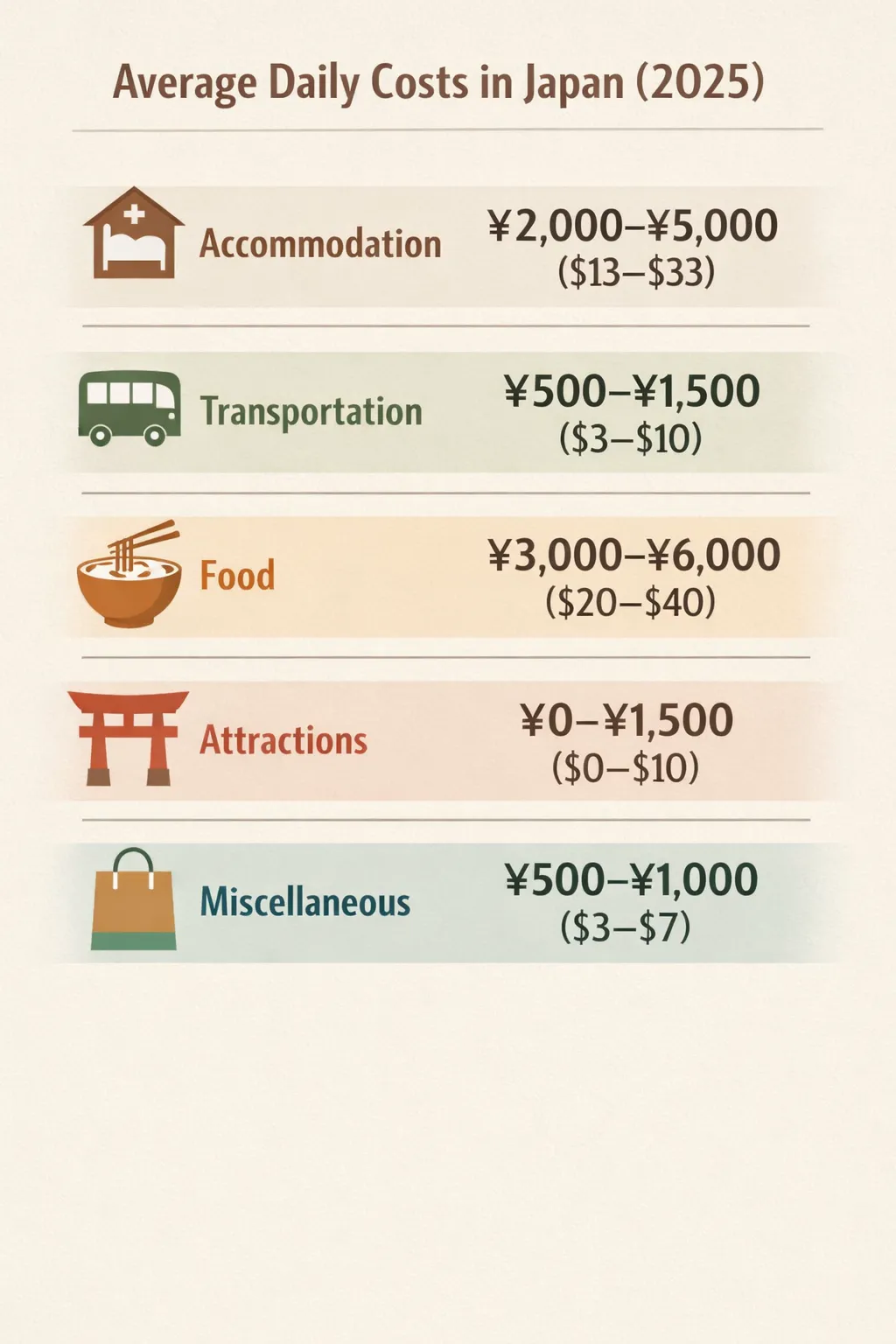 Daily cost breakdown by category in Japan with figures in ¥ and $ (Accommodation, Transportation, Food, Attractions, Miscellaneous).
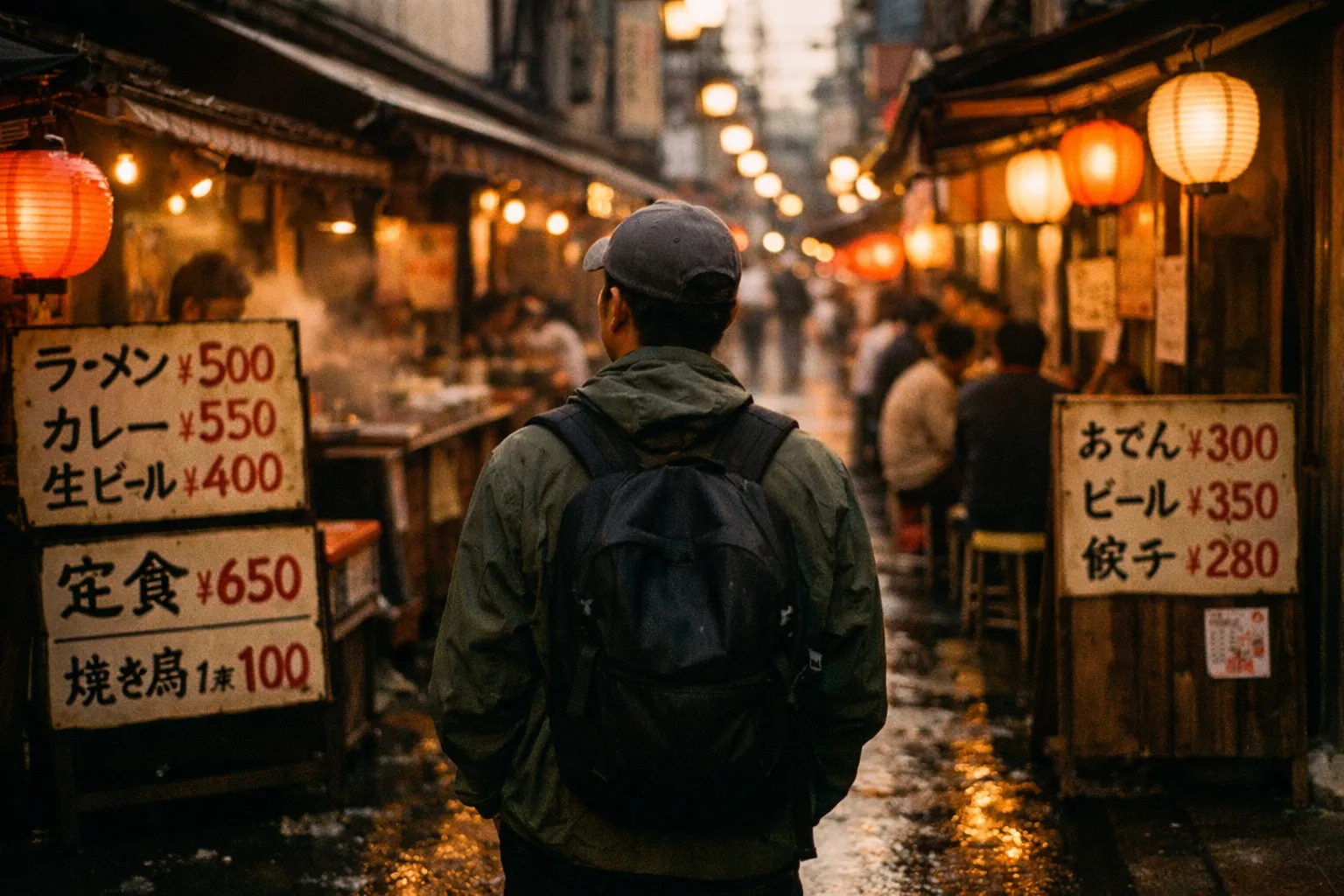
A frugal traveler can realistically expect a daily budget in the range of ¥10,000-15,000 (roughly $65-$100) for a dorm or capsule bed, cheap eats, and local transit (2)(7). Japan Guide puts low-budget single travel even lower, at ¥5,000-13,000/day (about $32-$85), with mid-range running ¥13,000-28,000 (about $85-$185) (7). Push toward the bottom of that band and you’re in hardcore backpacker territory. The upper end buys you the occasional sit-down meal and a private room.
Average Daily Costs in Japan (2025)
| Accommodation | Transportation | Food | Attractions | Miscellaneous | |
|---|---|---|---|---|---|
| Average Daily Cost | ¥2,000-¥5,000 ($13-$33) | ¥500-¥1,500 ($3-$10) | ¥3,000-¥6,000 ($20-$40) | ¥0-¥1,500 ($0-$10) | ¥500-¥1,000 ($3-$7) |
These are estimates, not guarantees. Your actual spend depends heavily on how often you eat at restaurants versus convenience stores and how much intercity travel you do.
Stay in unique Japanese accommodations
Japan offers some of the most distinctive places to stay in Japan I’ve ever booked - traditional inns, Buddhist temple lodgings, and pods that feel like something from a science fiction film. Here are the options that won’t strain your budget, with prices verified for 2025:
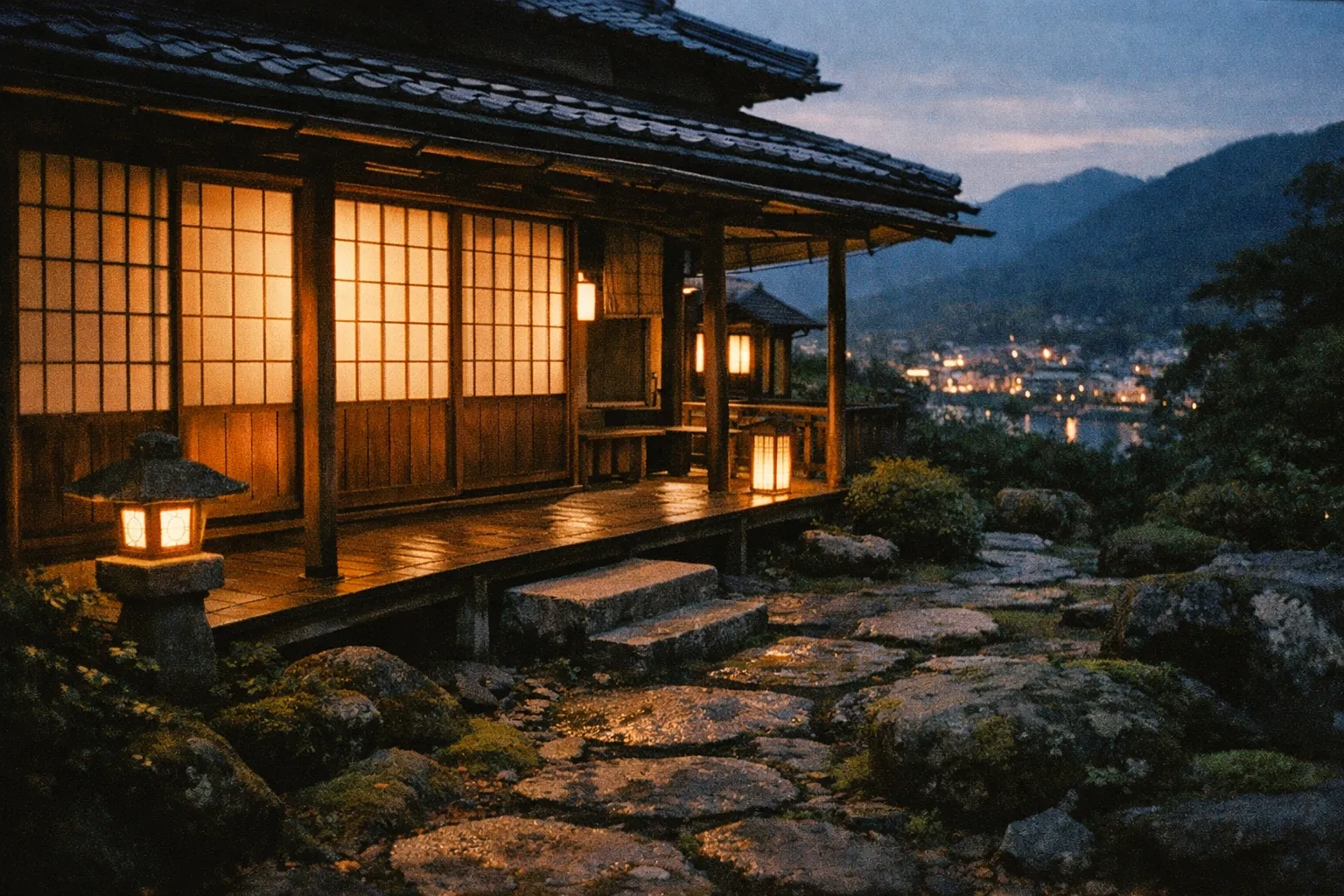
- Hostel dorms: A dorm bed runs ¥2,000-4,000 ($13-$26) per night and is the backbone of cheap accommodation in Japan (4). Book direct with small guesthouses where you can - some offer lower rates or cash discounts that the booking platforms won’t show you (2).
- Capsule hotels in major cities: Capsule hotels cost ¥2,000-5,000 ($13-$33) and suit solo travelers who want a clean, secure sleep without paying for a full room (4). I spent a night in one in Osaka and found it surprisingly comfortable - compact, yes, but the pod had a reading light, a small shelf, and a privacy curtain that actually blocked sound.
- Budget business hotels: The secret weapon for couples. Small but genuinely private rooms with Wi-Fi and an ensuite bathroom for ¥5,000-10,000 ($33-$65) a night, often including breakfast, even in big cities if you stay slightly outside the prime districts.
- Guesthouses and ryokan in historic districts: A ryokan (a traditional Japanese inn with tatami-mat rooms) in a place like Gion in Kyoto is a different experience entirely. A simple ryokan with two meals runs ¥10,000-15,000+ ($65-$100+) per person - a splurge, but worth one night (7). A ryokan guesthouse in Kyoto booked room-only can be more affordable if you’re eating elsewhere.
- Monastery stays (shukubo): I stayed overnight at a Buddhist temple in Koyasan, a mountain town about two hours south of Osaka. Joining the morning prayers at 6am and eating shojin ryori (Buddhist vegetarian cuisine) prepared by the monks was one of the more grounding nights of that trip. The temple stay in Koyasan experience is worth budgeting for at least once.
- Manga cafés and internet cafés: For the absolute lowest-cost sleep, a reclining seat or private booth at a manga kissa (24-hour internet café) costs a few hundred yen per hour, often with free drinks and showers. Not glamorous, but functional in a pinch.
Reserve early during Golden Week (late April-early May), Obon (mid-August), and New Year, when rates can spike 30-100%.
Etiquette note: Shoes come off at the entrance of ryokan, temple lodgings, and many guesthouses - look for the genkan (sunken entryway) and swap into the slippers provided. Never wear slippers onto tatami mats, and never step on the threshold strip of a tatami room. People notice.
Opt for hikes and walking tours
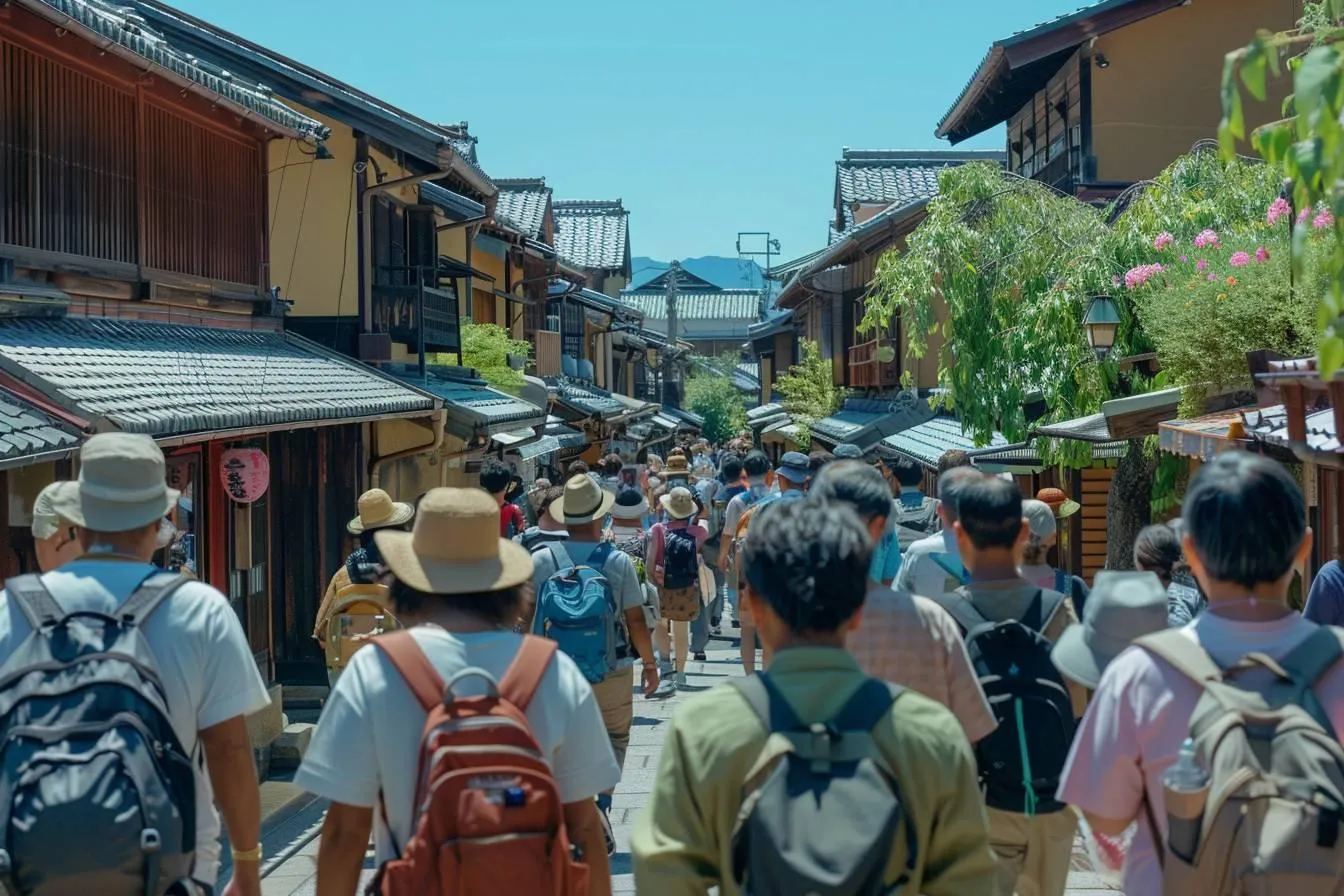
Japan’s balance between dense cities and genuinely quiet natural spaces is something you don’t fully appreciate until you’re standing on a forested trail twenty minutes from a major train station.
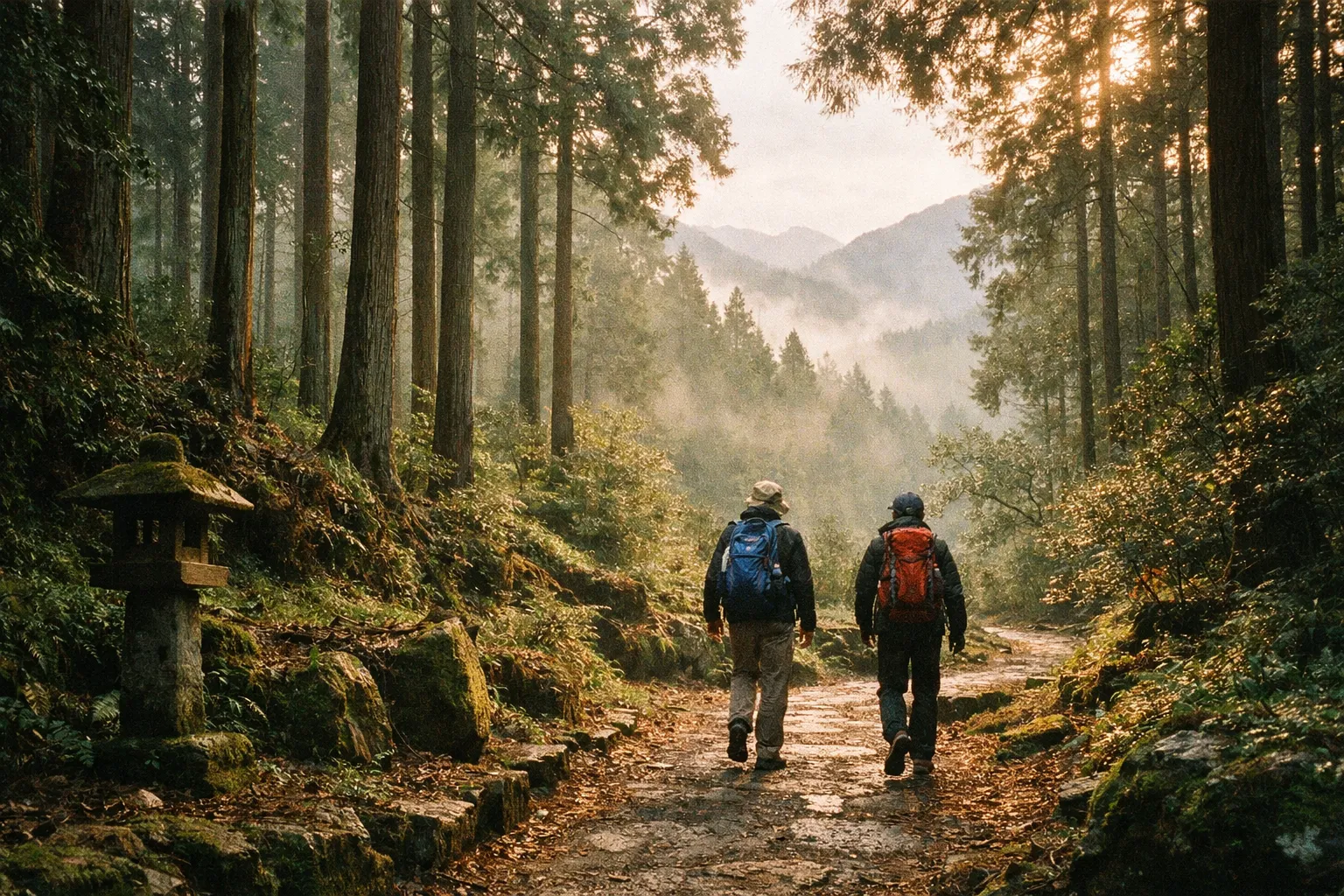
From the historic streets around Higashiyama in Kyoto to the trails of Mount Takao just outside Tokyo, walking lets you experience the country at a pace that public transit doesn’t allow. The contrast between quiet green trails and the density of the cities below is hard to replicate any other way.
Walking tours in historic districts reveal a city’s layers without an entry fee. Many run on a tip basis, and they’re a good way to talk to people - both locals and other travelers who’ve already figured out the neighborhood. Pair them with the country’s free cultural infrastructure: temples, shrines, and city parks cost little or nothing and fill a full day without any planning.
Free and cheap things to do in Japan
You can fill a two-week itinerary almost entirely with free or near-free experiences, which is what keeps the daily attractions line in the table above so low.
- Temples and shrines: Most are free or charge ¥300-600 ($2-$4) (5). Senso-ji in Asakusa and Meiji-Jingu near Harajuku are both free and among Tokyo’s most rewarding stops (3).
- Free observation decks: Skip the paid towers. The Tokyo Metropolitan Government Building in Shinjuku has free observation floors with views that rival the paid decks (3).
- City parks and gardens: Most parks are free. Shinjuku Gyoen charges about ¥500 ($3.30) for an immaculate landscape garden that’s worth every yen (5).
- Free festivals: Snow festivals, dance festivals, and seasonal celebrations run all year at no ticket cost and show you the country at its most alive (5).
- Sake breweries: Many offer free tours and tastings - call ahead to confirm availability and timing.
- Affordable museums: The Ghibli Museum in Mitaka costs about ¥1,000 ($6-$7) but books out weeks ahead (5). Reserve early or skip it entirely.
Savor local flavors on a budget
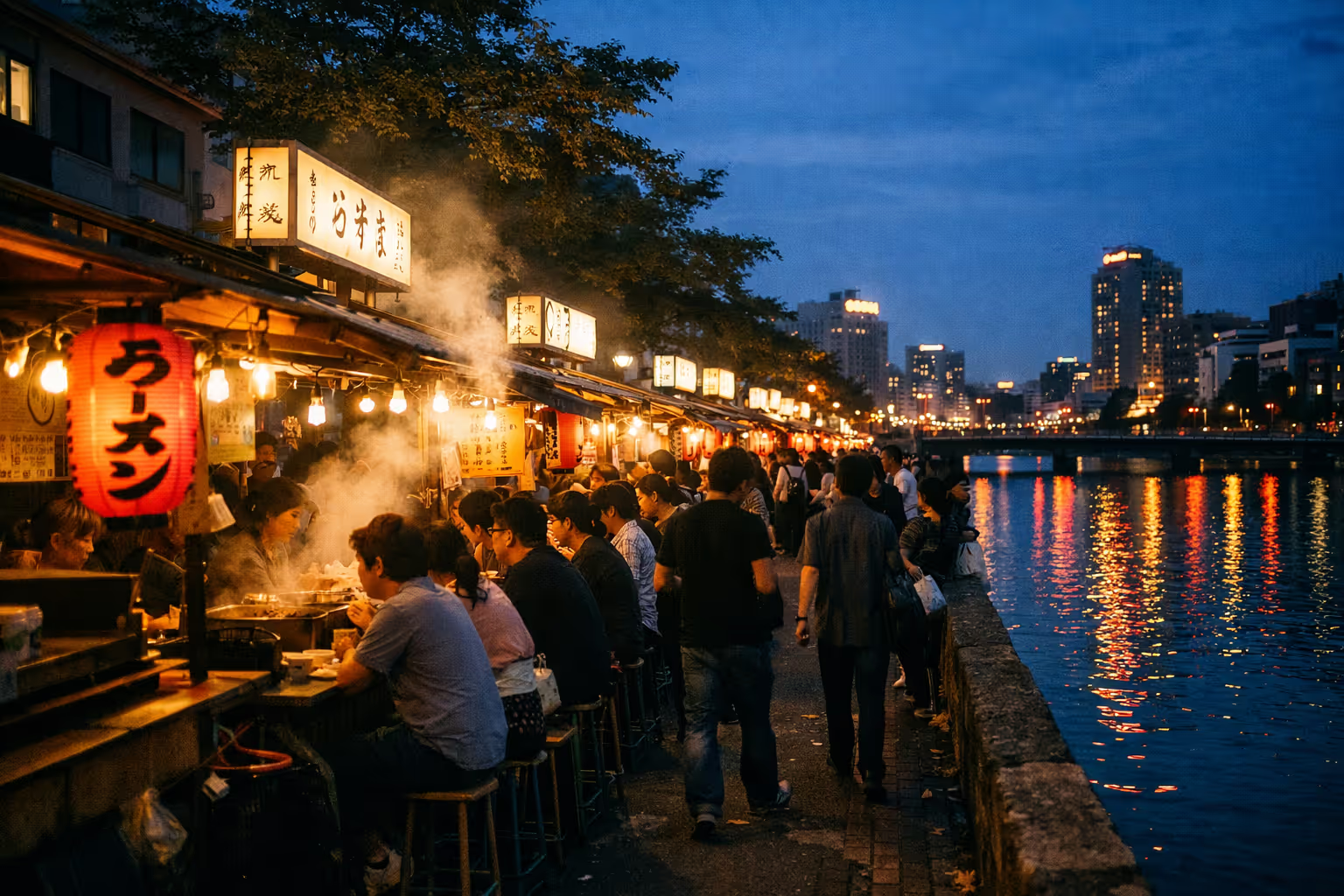
Food in Japan is varied and cheap if you eat the way most people actually eat. Budget on ¥3,000-6,000/day ($20-$40) for three meals using convenience stores, ramen shops, and lunch sets (4).
- Convenience stores (konbini): Lawson, FamilyMart, and 7-Eleven sell onigiri (rice balls), bento boxes, and ready-made salads for ¥300-700 ($2-$5). Quality is genuinely high. Eat at a konbini at least once a day and you can keep food spend under ¥1,500-2,000 ($10-$13).
- Standing noodle bars: Stand-up udon or ramen counters inside train stations serve a hot bowl for ¥300-600 ($2-$4) (5). A proper ramen shop runs ¥500-1,500 ($3-$10). I had a bowl of tonkotsu ramen (pork bone broth noodles) at a standing counter in Shinjuku Station that cost ¥480 and was better than meals I’ve paid three times that for elsewhere.
- Lunch sets and happy hours: Restaurants that charge a premium at dinner offer fixed lunch sets at a fraction of the price. Eat your main meal at midday and keep dinner light.
- Late-night supermarket discounts: Supermarkets slash bento and sushi prices by 50-60% after 9-11 pm to clear stock (5). Time your dinner shop accordingly and save $5-$10 a day. This is probably the single most underused budget trick in Japan.
- Bento boxes: Pre-packed meals from supermarkets or train station kiosks are a practical and often delicious option. I ate more than a few in parks and temple grounds with nothing else needed.
- Tap water: Safe to drink nationwide, so carry a refillable bottle instead of buying water (3).
- 100-yen stores: Daiso and similar chains sell snacks, toiletries, and small souvenirs for ¥100-110 each, which keeps gift budgets manageable (3).
Etiquette note: No tipping, anywhere in Japan. It’s not customary and can cause genuine confusion. Slurping noodles is fine and even expected. Eating while walking down the street is mildly frowned upon - stand near the stall or step to the side.
Unlock the value of transportation passes
Japan’s transport system is precise and reliable, and the right approach keeps it cheap. The calculus has shifted, though: after recent Japan Rail Pass price hikes, the nationwide pass no longer pays off for most budget travelers, and current budget guides increasingly favor buses and regional passes instead (4).
Here’s how to think about it:
- IC cards (Suica, PASMO, ICOCA): Tap-on cards that work on buses and trains nationwide. They save you buying single tickets and help you track a daily local transit budget of about ¥500-1,000 ($3-$7). Local rides typically cost ¥200-220 ($1.30-$1.50).
- Night buses for long distances: A long-haul bus like Tokyo-Hiroshima runs ¥5,000-9,000 ($33-$60) and doubles as a night’s accommodation - you save the hostel fee and arrive in the morning. This is the single biggest intercity saving available to budget travelers.
- Regional rail passes: If you’re focusing on one area - say the Kansai region around Kyoto, Osaka, and Nara - a regional pass usually beats the nationwide JR Pass on price. Buy the pass that matches your actual route, not the broadest one available.
- Low-cost domestic flights: Carriers like Peach and Jetstar can undercut the train for routes like Tokyo-Fukuoka if you book ahead (2).
- Skip taxis: Flagfall is several times a metro fare, and the subway covers almost everything in Tokyo, Osaka, and Kyoto.
Tips for maximizing passes:
- Plan your route first, then buy the narrowest pass that covers it.
- Compare a regional pass against pay-as-you-go on your IC card - sometimes the card wins.
- For one or two long hops, price a night bus against rail before committing to any pass.
For a deeper look at navigating buses, trains, and IC cards across the country, Pasmo or Suica cards are indispensable tools for seamless travel across Tokyo’s public transit and beyond.
Flights and timing: how to travel to Japan on a budget
Knowing how to travel to Japan on a budget starts before you land, because flights and travel season drive a huge share of the total cost.
Cheapest months to fly. Budget guides consistently point to January and February (excluding New Year and Chinese New Year) as the lowest-fare window, followed by the September-October shoulder season (4). Cherry blossom week in spring and the autumn foliage peak push flights and hotels up by 30-100%. If your dates are flexible, the off-season saving alone can fund several days on the ground. For a full breakdown of when crowds thin and prices drop, see the best time to visit Japan for less crowds.
Booking strategy:
- Book 3-6 months ahead using Skyscanner, Google Flights, or Expedia to track fares (1).
- Consider secondary airports - flying into Osaka (Kansai/KIX) or Fukuoka is often cheaper than Tokyo.
- A round-trip from North America or Europe in low season typically lands around $700-$1,200. That range is the biggest single variable in your whole trip budget.
Booking Your Flight to Japan on a Budget
10 minutesSteps to secure the best airfare for your trip to Japan.
- 1
Use flight comparison tools
Check fares on Skyscanner, Google Flights, and Expedia to compare prices and set fare alerts.
- 2
Book 3-6 months in advance
Secure tickets early to access the lowest fares, especially for January, February, and September-October travel.
- 3
Consider alternative airports
Look at flying into Osaka (Kansai/KIX) or Fukuoka instead of Tokyo to find cheaper options.
What 2 weeks in Japan actually costs
A Japan on a budget 2 weeks trip is very doable. Here’s what the numbers actually look like, excluding flights, for one traveler (1)(2)(4)(7):
- Tight budget (hostel dorms, night buses, konbini and supermarket food): $900-$1,400
- Comfortable budget (mix of hostels and business hotels, one restaurant meal a day): $1,400-$2,000
- Mid-range comfort (private rooms, some ryokan nights, regular restaurant meals): $2,000-$3,000
A sensible structure for traveling Japan on a budget over two weeks: spend roughly 7 days in Tokyo and the surrounding area, then 5-7 days in Kansai covering Kyoto, Osaka, and Nara. Connect them with a night bus rather than the bullet train - you save both the fare and a night’s lodging. Skip the nationwide JR Pass and buy a Kansai regional pass for the second leg.
For budgeting, allocate roughly 40-50% to lodging, 25-30% to food, 10-15% to transport, and 10-15% to attractions and miscellaneous. Including a low-season flight, a careful 2-week trip from North America or Europe lands around $2,000-$3,000 all in.
Traveling with kids? Cut accommodation costs by staying in neighborhood hotels or rentals outside the central tourist hubs - one family guide cites savings from basing in Tokyo’s Hatagaya neighborhood (6). Lean on public transport, skip taxis entirely, and reserve splurges like theme parks for one or two priorities (6).
Frequently asked questions
Frequently Asked Questions
- Is it possible to do Japan on a budget?
- Yes, many travelers manage comfortably on about ¥10,000/day (about $65) by using hostels, convenience stores, and public transit. Backpackers can go even lower by relying on free temples and night buses.
- Is $10,000 enough for a week in Japan?
- Absolutely. Even a high mid-range budget of about ¥30,000/day (about $200) totals roughly $1,400 for a week, excluding flights. $10,000 covers flights, upscale stays, shopping, and leaves a large buffer.
- What month is the cheapest to fly to Japan?
- January and February (excluding New Year and Chinese New Year) are the cheapest months, followed by the September-October shoulder season. Avoid cherry blossom and autumn foliage peak times due to price surges.
- What is the 5-minute rule in Japan?
- This etiquette expectation means arriving 5-10 minutes early for tours, meetups, and appointments to be considered punctual. Arriving exactly on time or late can be seen as inconsiderate.
- Are there any hidden costs to watch for when traveling on a budget in Japan?
- Booking accommodation during peak holidays without advance reservations can cause price spikes. Also, relying on taxis instead of public transit can quickly add up.
- Can I use the nationwide Japan Rail Pass for budget travel?
- Recent price hikes have made the nationwide JR Pass less cost-effective for budget travelers. Regional passes or night buses often offer better value depending on your itinerary.
- Is tap water safe to drink in Japan?
- Yes, tap water is safe nationwide, so carrying a refillable bottle helps save money and reduce plastic waste.
The bottom line
Japan rewards planning more than it punishes a tight budget. Book flights 3-6 months out for January-February or September-October, sleep in capsules and business hotels, eat from konbini and lunch sets, drink the tap water, and move between cities by night bus instead of buying a nationwide rail pass you won’t fully use.
Do that and a comfortable two weeks lands between $1,400 and $2,000 before flights - less if you go hard on hostels and supermarkets. Build the small punctuality buffer into your days, reserve Golden Week and Obon stays early, and you’ll spend your yen on the experiences that actually matter.