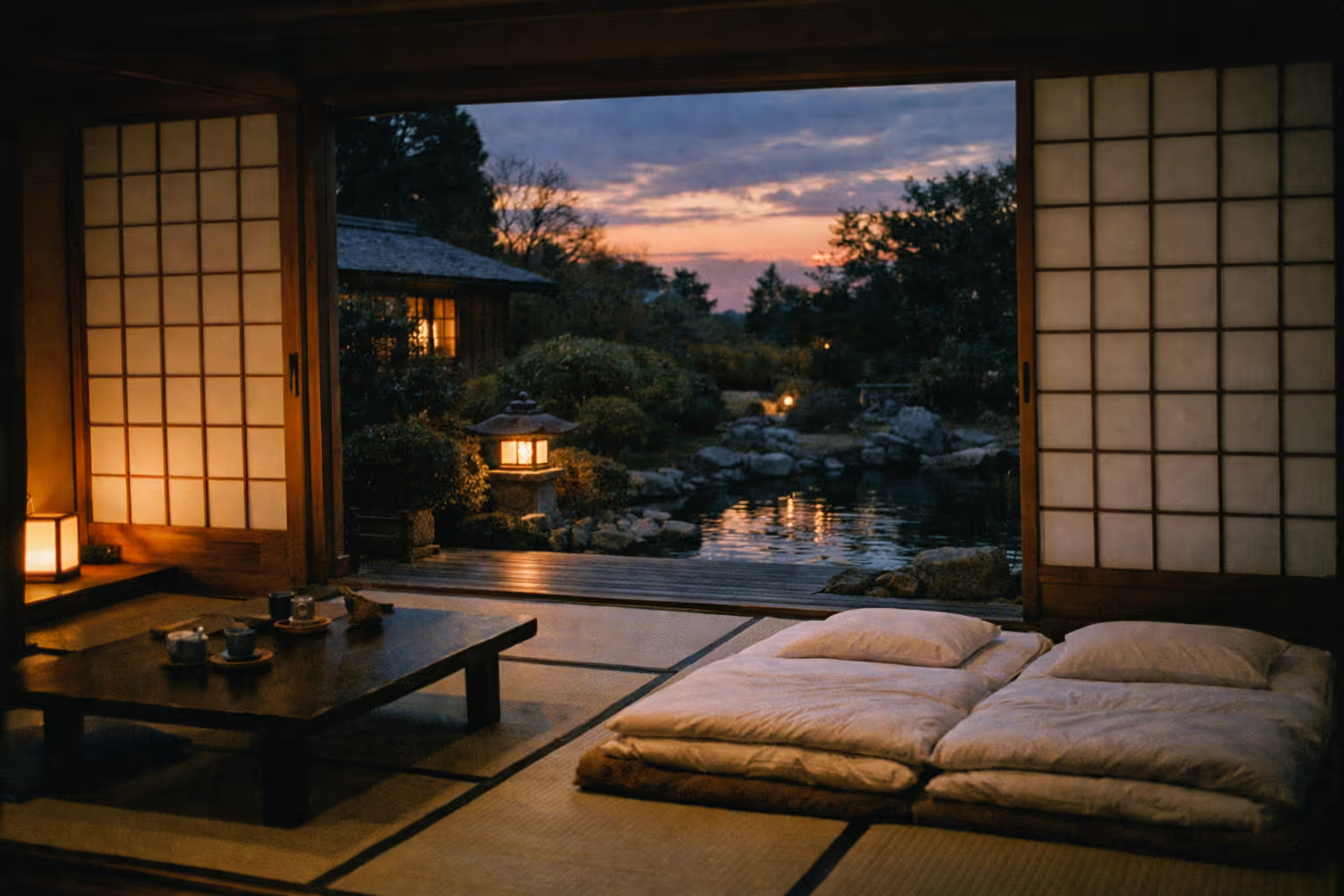
Japan rewards travelers who treat the room as part of the trip rather than just a place to crash. The unique places to stay in Japan run an enormous range - a ¥3,500 capsule pod next to a train station, a ¥665 luxury ryokan with private cypress baths, a thousand-year-old temple where monks serve you breakfast. This guide walks through the main lodging categories worth booking, what each actually costs, and how to slot them into one trip without turning every night into a logistics puzzle.
Temple stays in Japan: a shukubo night in Koyasan
One of my most grounding nights among the many unique places to stay in Japan was spent in Koyasan, the temple complex tucked into Wakayama’s cedar-covered mountains roughly two hours south of Osaka. Staying in a shukubo (temple lodging) means waking to monks chanting morning prayers, eating shojin ryori (Buddhist vegetarian cuisine) served on lacquered trays in your room, and walking the Okunoin cemetery path under cedars that pre-date most of Tokyo.
A typical shukubo night runs ¥12,000-¥25,000 per person (roughly $80-$165 USD), and that price almost always includes both dinner and breakfast - a detail worth checking before you compare it against a city business hotel at half the rate(8). Eko-in and Sekishoin are the two temples most often recommended for first-timers because their staff handle English bookings and walk guests through the etiquette: shoes off at the entrance, futons rolled out by attendants in the evening, communal onsen (hot spring bath) on a posted schedule, lights-out around 10 PM.
A few practical notes for koyasan lodging:
- Get there before dark. The Nankai Koya Line train plus cable car from Osaka takes about two hours, and the village goes quiet by sunset.
- Book 2-3 months ahead for cherry blossom and autumn foliage seasons. Inventory is small - these are working temples, not hotels.
- Join the morning fire ritual (goma) at Eko-in if you can. It starts around 6:30 AM and is included with the stay.
- Plan two nights, not one. A single night gets eaten by transit. Two gives you the Okunoin night walk, the Danjo Garan complex, and a proper morning service.
The shukubo isn’t a “spiritual experience” you have to perform. It’s just a quieter way to sleep in a place where Buddhism has been practiced for 1,200 years. That’s the appeal.
A stroll through traditional Japanese houses in Kyoto’s machiya neighborhoods
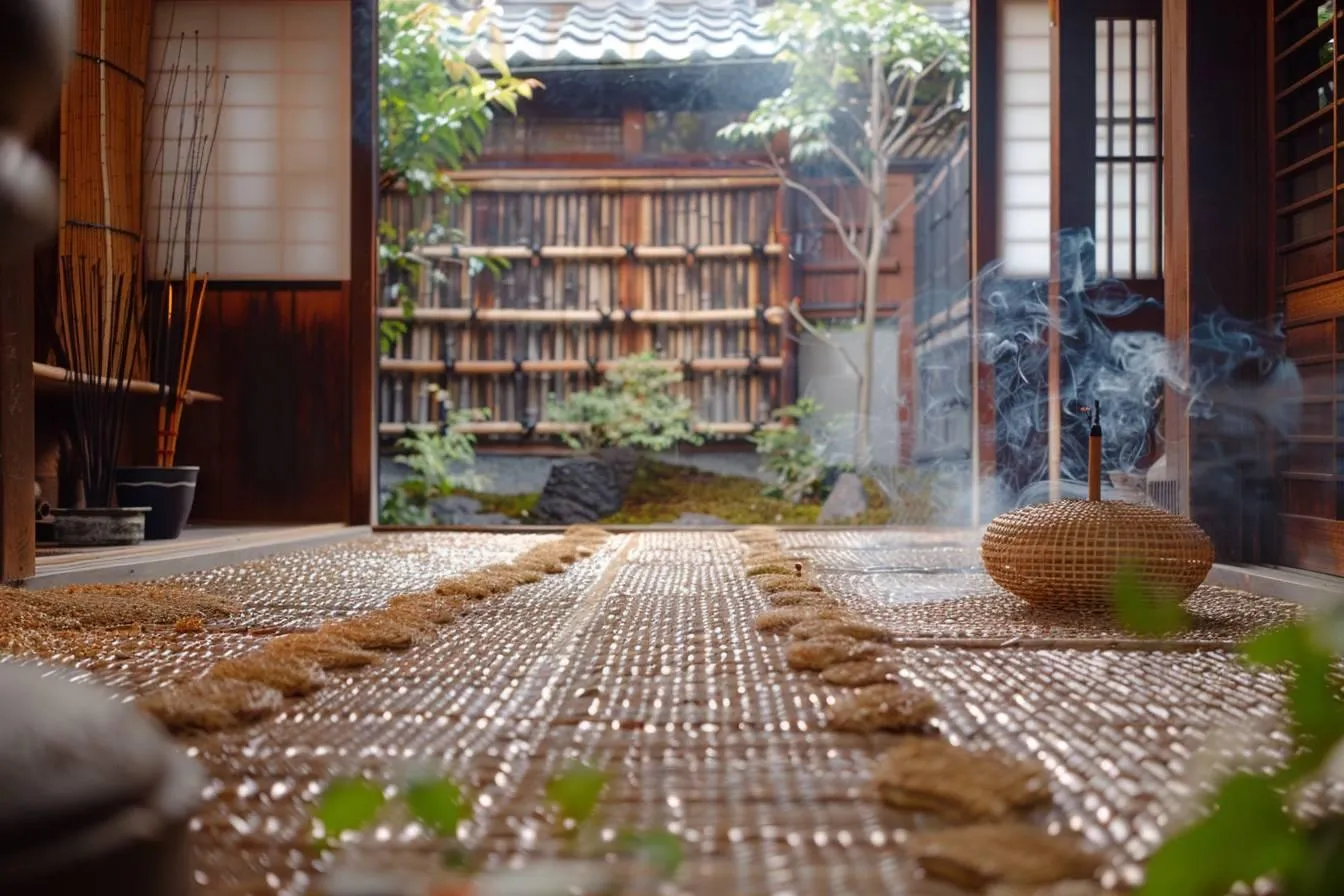
Kyoto’s machiya are the wooden townhouses that lined the city’s merchant streets for centuries - narrow front, long depth (“eel’s bed” is the local nickname), tatami rooms separated by sliding paper screens, and an interior courtyard garden called a tsuboniwa. Hundreds have been restored as private rentals over the past decade, and a kyoto machiya stay has become one of the most-requested lodging types for repeat visitors.
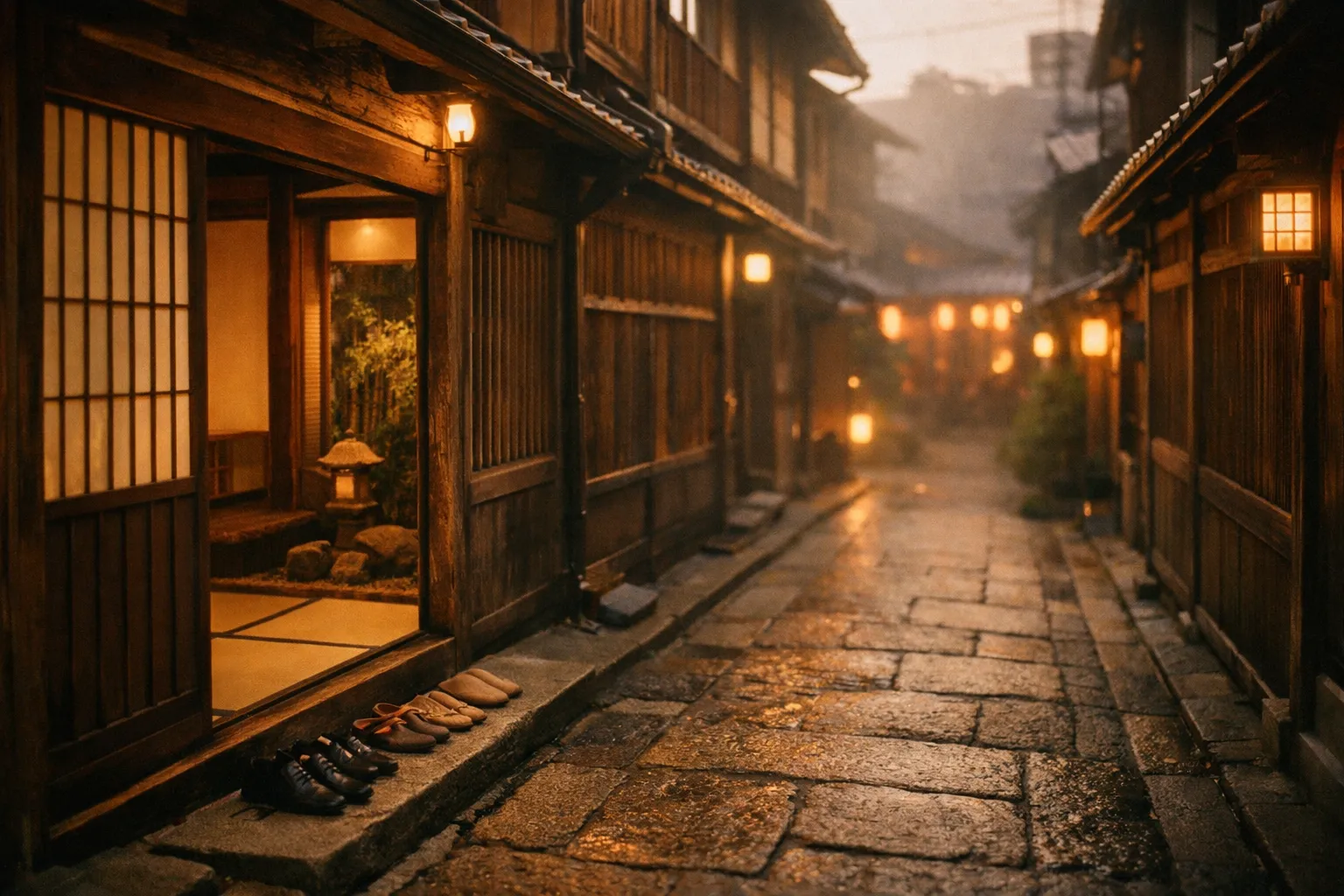
The neighborhoods worth targeting: Gion and the streets around Yasaka Shrine for proximity to the geisha district; the area around Nishiki Market for food access; and Nishijin in the north for a quieter, more residential machiya pocket. Expect to pay ¥25,000-¥60,000 per night for a whole-house rental sleeping 2-4 people (roughly $165-$400 USD), with the higher end going to renovated properties with private cypress-wood baths.
What you actually get versus a hotel:
- A full kitchen, which matters if you want to cook market finds from Nishiki.
- No daily housekeeping in most cases - these are self-check-in rentals.
- Real privacy, including a garden you can sit in alone with a coffee.
- Sound-permeable walls - machiya are wood and paper, so don’t expect hotel-grade insulation from street noise.
Etiquette note: shoes come off at the genkan (sunken entryway), and you change into the slippers provided. Tatami rooms get bare feet or socks only - never slippers on the straw mats. If the machiya has a wood-fired bath, the operator will leave instructions; rinse fully at the seated shower station before getting in.
Capsule hotels for short stays and tight budgets in Japan
The capsule hotel japan category has matured well past the 1980s salaryman cliché. Current operators like Nine Hours (with properties at Hakata Station in Fukuoka, near Narita Airport, and in central Kyoto) and Book and Bed (which builds sleep pods directly into floor-to-ceiling bookshelves) treat the format as design, not desperation (1)(3).
A capsule slot runs ¥3,500-¥7,000 per night (roughly $23-$47 USD, early 2025), which makes it the cheapest novelty night in Japan by a wide margin. You get a single sleeping pod with a curtain or sliding door, a small locker for luggage, communal bathrooms, and - at the better operators - a proper sento-style bath.
Who it works for:
- Solo travelers doing a one-night layover near a station or airport.
- Budget itineraries that need to free up money for one splurge night elsewhere.
- Anyone curious about the format who wants to try it without committing a full trip.
Who it doesn’t work for:
- Couples - most capsules are single-occupancy, and many properties are gender-segregated by floor.
- Anyone with claustrophobia - the pod is roughly the size of a single mattress with about a meter of headroom.
- Travelers with large luggage - lockers fit a carry-on, not a checked bag. Most properties offer a separate baggage room, but check before booking.
Practical tip: capsule hotels enforce quiet hours - typically somewhere between 10 PM and midnight, though the exact cutoff varies by property, so check the house rules when you book. Phones on silent, no calls from inside the pod, and most operators ask you to use the lounge for anything louder than turning a page.
Ryokan (traditional inn): the classic Japanese lodging experience
A ryokan is the category most travelers conflate with “unique stay in Japan,” and it deserves its own section because it’s structurally different from a hotel. You sleep on a futon laid out on tatami, wear a yukata (cotton robe) provided by the inn for dinner and around the property, and meals are typically multi-course kaiseki served either in your room or a dedicated dining space.
Price bands:
- Budget ryokan: ¥8,000-¥15,000 per person per night ($55-$100 USD), often without meals or with breakfast only. Common in regional towns.
- Mid-range ryokan: ¥18,000-¥35,000 per person ($120-$235 USD), usually including kaiseki dinner and breakfast.
- Luxury ryokan: ¥40,000-¥100,000+ per person ($265-$665+ USD). Properties like Hoshinoya Kyoto and Tawaraya in Kyoto sit here (2)(3).
The pricing is per person, not per room, because meals are bundled. This trips up a lot of first-time bookers comparing ryokan rates against hotel rates.
Hot spring towns worth targeting for a ryokan night: Hakone (easy from Tokyo), Kinosaki Onsen (north of Kyoto, seven public baths walkable in yukata), Kurokawa Onsen (Kyushu, riverside), and Gero Onsen (between Nagoya and Takayama). Book three to four months ahead for autumn foliage and one to two months for shoulder seasons.
The etiquette load is real: no tattoos in some public baths (cover-up patches available at some onsen towns now), full body wash before entering the communal tub, and no swimsuits - bathing is unclothed and gender-segregated.
Thrills of ski chalets in the Japanese Alps
The chalets and small lodges around Niseko (Hokkaido), Hakuba (Nagano), and Nozawa Onsen are the lodging story of Japan’s ski season, which typically runs December through early April. Niseko gets the international powder crowd and the highest prices; Hakuba balances terrain variety with slightly lower rates; Nozawa keeps a traditional onsen-village character that the other two have largely lost.
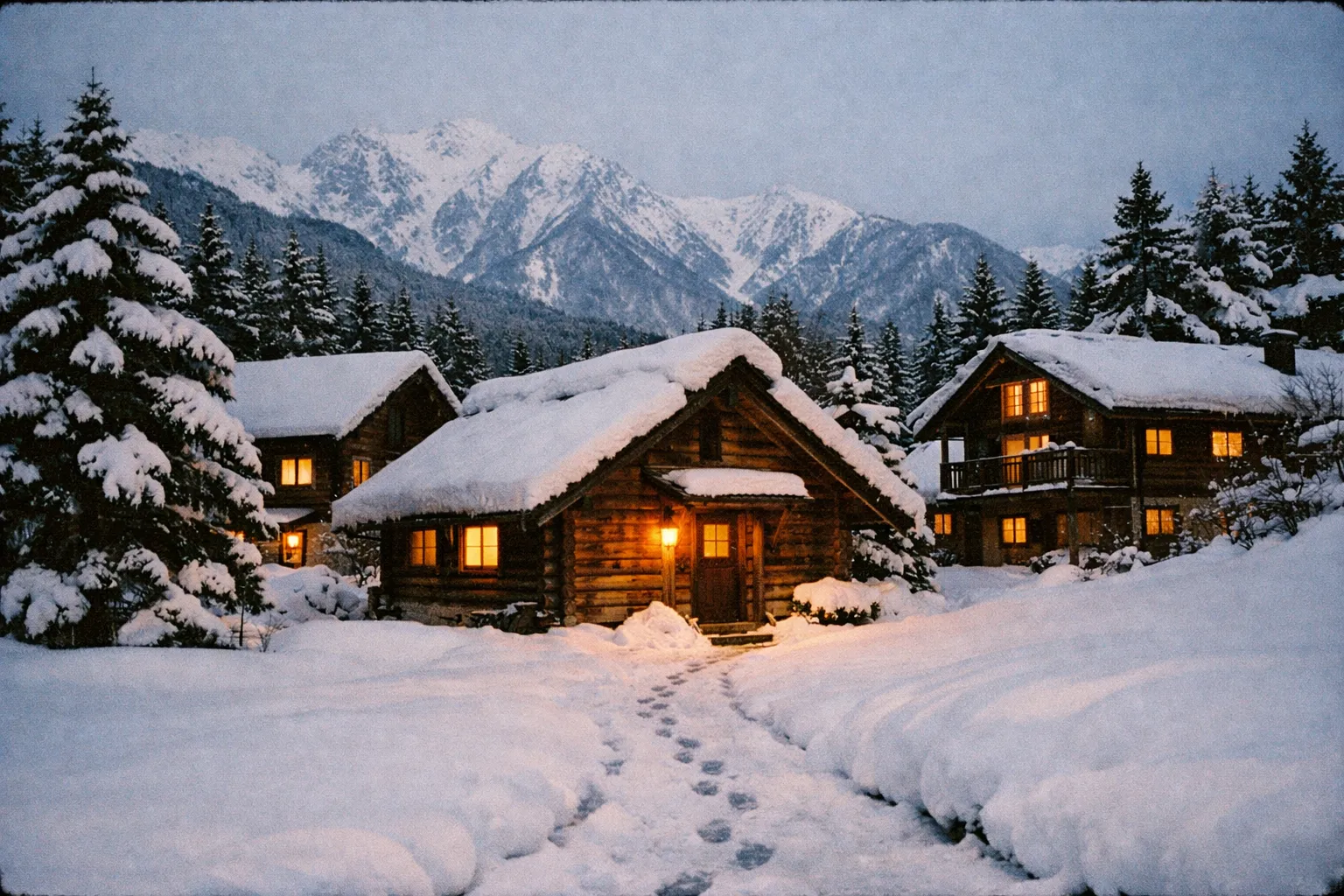
Expect ¥15,000-¥40,000 per person per night for chalet-style lodging in peak season (roughly $100-$265 USD), with whole-chalet rentals for groups running ¥80,000-¥300,000+ per night depending on size and amenities. January and February book up six months out - if you’re targeting the famous mid-January powder window in Niseko, treat that as a hard planning deadline.
What the better chalets get right: a genkan for ski boots, a drying room for outerwear, an onsen or private cedar tub for after the slopes, and proximity to a free shuttle to the gondola base. The slope-side properties charge a premium that’s only worth it if you ski hard daily; otherwise stay in the village and shuttle in.
A useful pairing: book three or four nights at a Hakuba or Nozawa chalet, then transit to a single ryokan night in a non-ski onsen town on the way back to Tokyo. The contrast does more for the trip than another night on snow.
Unwinding in beachfront bungalows on Okinawa’s outer islands
Okinawa is the part of Japan most travelers skip and most repeat visitors prioritize. The Ryukyu archipelago has subtropical water, coral reefs that still snorkel well, and a lodging mix that ranges from resort towers on the main island to small okinawa beach bungalow properties on the outer islands of Ishigaki, Iriomote, and the Kerama group.
For the bungalow experience specifically, target the outer islands rather than Naha. Ishigaki has small-scale beachfront cottages in the ¥18,000-¥45,000 per night range ($120-$300 USD, early 2025) for two people, often with breakfast included. Iriomote is wilder - mangrove forest, fewer properties, more eco-lodge in character. The Kerama Islands (Tokashiki and Zamami, an hour from Naha by fast ferry) have the clearest water and the smallest inventory; book two to three months ahead for summer.
What to plan around:
- Typhoon season runs roughly June through October with August and September the peak risk. Flights cancel; ferries cancel more often.
- Snorkeling is best from May to early November. Water is swimmable year-round on the southern islands but cooler December through February.
- Rental car or scooter is effectively mandatory on most outer islands. Public transit is sparse.
Okinawan food is its own cuisine - goya champuru (bitter melon stir-fry), rafute (braised pork belly), awamori (rice spirit). Most bungalow operators can point you to small restaurants run by neighbors; the resort buffets are skippable.
Robot hotels, art rooms, and Japan’s themed lodging
Tokyo and Osaka anchor a category of lodging that’s hard to find anywhere else: hotels built around a single design or technology concept. Henn na Hotel, often described as the world’s first hotel staffed primarily by robots, runs check-in via robot reception at multiple properties across Japan, with rooms starting around ¥10,000 per night (roughly $65 USD) (3)(4). BnA Hotel in Tokyo’s Akihabara and Koenji neighborhoods commissions individual artists to design each room - you’re essentially sleeping inside an art installation, with proceeds shared with the artist.
Other concepts worth knowing:
- Book and Bed Tokyo - sleep pods inside a working bookshop. Locations have shifted over time, so confirm current open branches on their official site before booking.
- Hotel Tavinos - manga-illustrated walls in Hamamatsucho and Asakusa, mid-range pricing.
- Petals Tokyo - four houseboats moored on the Tennozu Canal in Tokyo, one of the few floating stays in the city (1).
- The Toretore Village (Wakayama) - dozens of dome-shaped cottages sleeping 2-6, including panda-themed units. Family-oriented (1).
- Hirafu Station (Niseko area) - three rooms converted from a working train station, plus a log cabin on the property (1).
The trap with this category: many of these chains have a few signature rooms and a lot of standard inventory. If the photos that drew you in are of a specific themed suite, confirm the room type at booking. A “Henn na Hotel” stay in a plain twin room doesn’t deliver the concept you were paying for.
Getting between unique stays without hauling bags
The logistics of moving between these stays matter more than the room photos suggest. A two-week trip that strings together a Kyoto machiya, a Hakone ryokan, and an Okinawa bungalow involves three or four train transfers, and dragging a suitcase up a rural inn’s stairs gets old fast.
The fix most first-timers miss is takkyubin (luggage forwarding), Japan’s overnight courier network run by Yamato and Sagawa. Hand your suitcase to a hotel front desk or a convenience store counter by mid-morning and it reaches your next accommodation the following afternoon, usually for ¥1,500-¥2,500 ($10-$17 USD) per bag. You travel between cities with a daypack while the heavy bag moves separately. Most machiya operators and ryokan accept forwarded luggage as long as you message them the tracking number ahead of arrival.
A few rules make it work:
- Forward one day ahead. Same-day delivery only works within a single city, not across regions.
- Keep a night bag. Pack a change of clothes and toiletries in your daypack for the gap between drop-off and arrival.
- Check rural reception hours. Many small inns staff their front desk only from mid-afternoon, so confirm the property accepts deliveries before you ship.
For the transit itself, a regional rail pass often beats the nationwide JR Pass now that the latter has climbed to ¥50,000 for seven days. Map your actual route first, then price the regional and national passes against paying per leg - on a Kyoto-Osaka-Okinawa loop, none of the rail passes may win at all, since the Okinawa leg flies.
How to choose among the unique places to stay in Japan
After enough of these bookings, a few decision rules tend to hold:
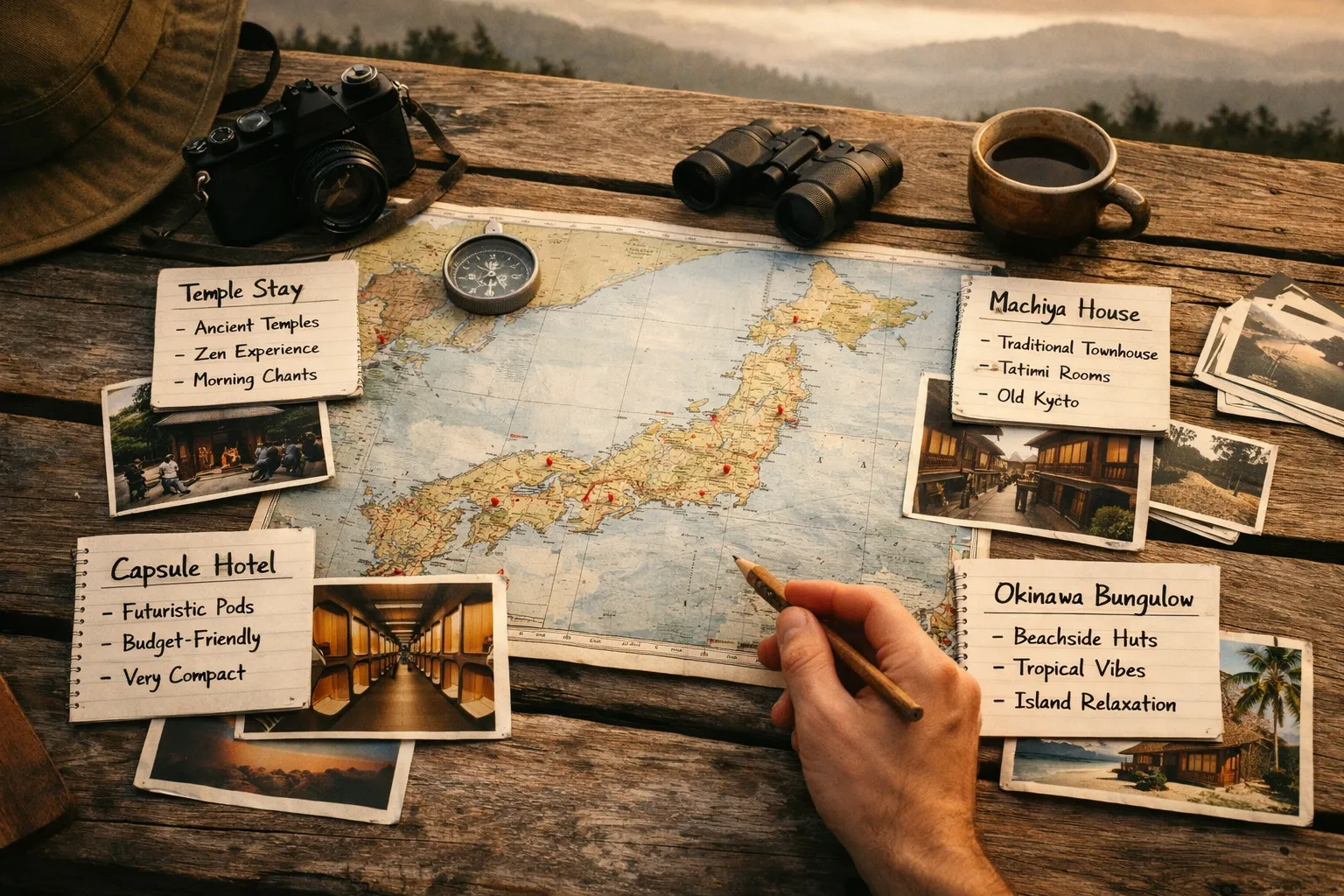
- Don’t book every night as a novelty stay. Two or three “experience nights” across a two-week trip is plenty. The rest should be efficient base hotels near transit. Hauling luggage between three different machiya in five days wastes the trip.
- Match the stay to the destination. Koyasan lodging makes sense because you’re already at a temple complex. A capsule hotel near Tokyo Station makes sense for an early shinkansen. An Okinawa beach bungalow makes sense when you’re on an outer island for three nights of snorkeling. Mismatched bookings create transit problems.
- Confirm what’s included. Ryokan and shukubo rates usually include two meals. Machiya and chalet rates almost never do. Capsule and themed hotel rates rarely include anything beyond the bed.
- Read the room-type listing carefully. “Themed hotel” doesn’t mean every room is themed. Filter by the specific room name if the operator lists them.
- Build in buffer time for rural check-ins. Many small operators have manned check-in windows from 3-6 PM only. Arriving at 9 PM to a self-check-in code is fine; arriving at 9 PM expecting a host is not.
A useful budgeting heuristic: capsule and budget ryokan at $50-$100 per person per night, mid-range machiya and themed hotels at $120-$250, luxury ryokan and design properties at $300+. Plan your splurge nights first, then fill in the cheaper anchor nights around them.
Frequently Asked Questions
- What is the most unique place to stay in Japan?
- Uniqueness depends on your priorities: cultural depth favors Koyasan temple stays or kaiseki ryokan in Kinosaki Onsen; design and novelty highlight BnA Hotel's artist rooms and Henn na Hotel's robot staff; setting-wise, Okinawa beach bungalows or Petals Tokyo houseboats stand out.
- Are capsule hotels in Japan suitable for couples or families?
- Standard capsule hotels are mostly single-occupancy and gender-segregated, limiting suitability for couples or families. Exceptions exist but are rare. Families often prefer machiya rentals, dome villages, or family rooms at business hotels.
- Do I need to speak Japanese to book a machiya or temple stay?
- English booking is widely available through major OTAs for larger machiya and temples like Eko-in and Sekishoin. Smaller operators may only list in Japanese but can be booked via specialized English-friendly services.
- What's the difference between a ryokan and a minshuku?
- Ryokan are traditional inns with professional service, multi-course meals, and yukata provided. Minshuku are family-run B&Bs with simpler rooms, home-style meals, and lower prices, common in rural and hiking areas.
- When should I book unique accommodations in Japan?
- For peak seasons like cherry blossom, Golden Week, summer in Okinawa, autumn foliage, and ski season, book three to six months ahead. Small-inventory stays like temple lodgings and outer-island bungalows sell out fastest. Shoulder seasons allow shorter notice.
- Can I stay in a Japanese castle?
- A few castles like Ozu and Hirado offer overnight stays with traditional ceremonies at very high prices and limited availability. More accessible are samurai residences in Kanazawa and Kitsuki bookable as whole-house rentals.